Ask ChatGPT

 PBD Podcast
10 Nov 2026 · 1h 55m · 48 chapters
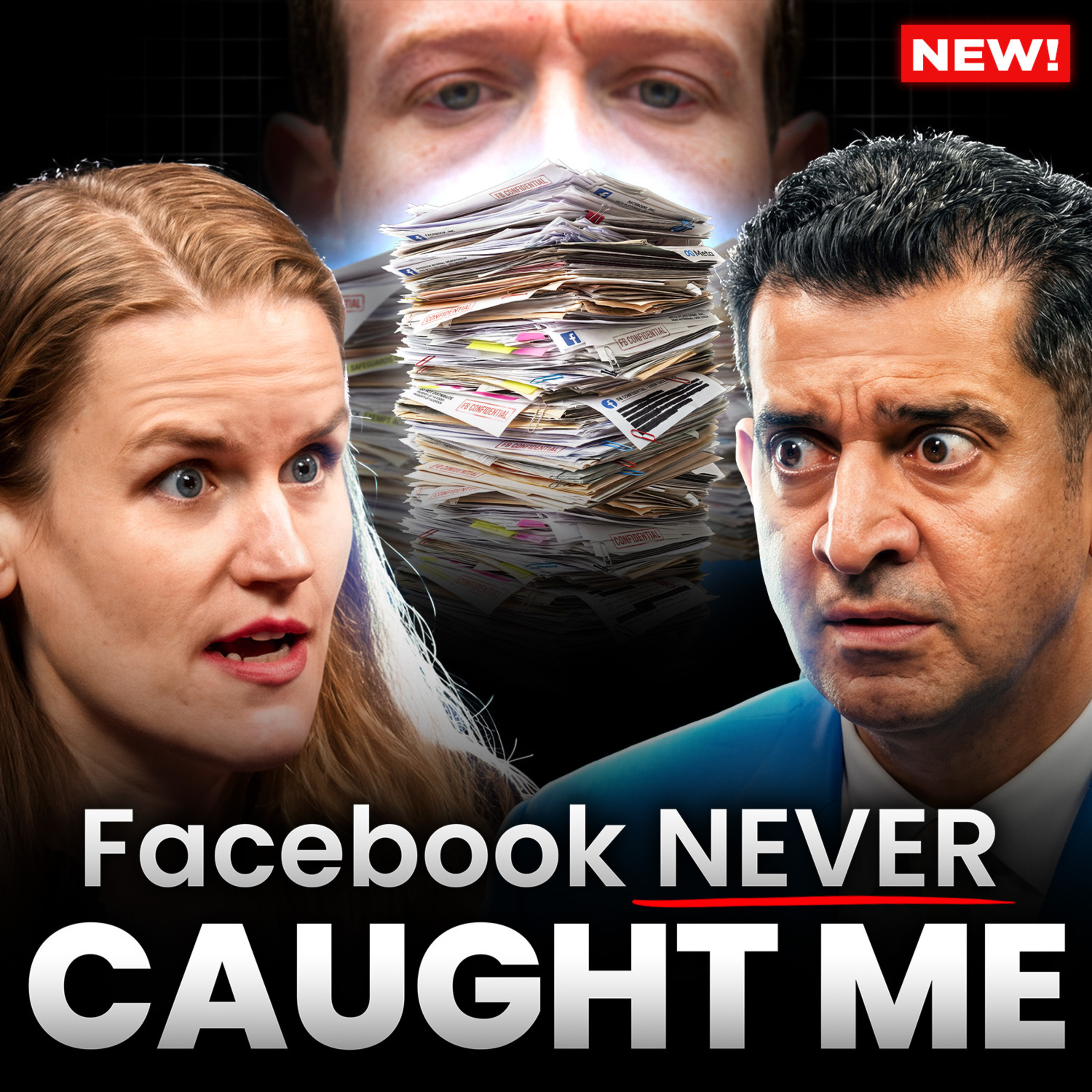
The episode argues that Facebook’s power is overly centralized in Mark Zuckerberg, that platform governance decisions are too slow and too dependent on one person, and that AI and misinformation will be disruptive without structural change. It also discusses California’s proposed wealth tax and a reported board deal allowing Zuckerberg to keep voting control while cashing out tens of billions.
The main guest is a Facebook whistleblower who says they worked on misinformation and threat-intelligence-related projects inside Facebook (including “civic misinformation,” “social cohesion,” and later counterespionage). They describe being reassigned frequently (every ~6 months) and leaving Facebook in May 2021, with whistleblowing in April/May 2021. The host is PBD (Patreon/YouTube “PBD Podcast”), and the episode also references a film adaptation of the whistleblower’s story, The Social Reckoning, starring Mikey Madison.
Zuckerberg has ~60% voting control, making him “the only voice that matters.” The board deal creates “C-class” shares so he can sell large amounts without losing control. The whistleblower claims Facebook’s fact-checking is too limited (hundreds of stories/month) and that misinformation can contribute to real-world violence (e.g., ethnic violence dynamics). They argue content moderation should use timeouts rather than permanent bans, and that January 6th enforcement was delayed until Mark Zuckerberg acted.
Modi’s anti-Muslim rhetoric in India (April 2019) and a 40-person internal task force; Ethiopia’s social-media-fueled ethnic violence; Facebook’s January 6th “knobs” and delayed activation; weaponization via coordinated group admins; and the BBC clip-editing controversy around Trump’s speech.
Written by AI. May contain mistakes.
Discussion on Zuckerberg's power at Facebook and recent developments with California's wealth tax.
“Our mission is to make the world more open and connected.”
Exploration of the effectiveness and implications of California's proposed wealth tax.
“Yeah, because, you know, I think it was yesterday where Sergey Brin announced that he saved$15 billion by leaving California to Miami, but lives in a$174 million house.”
Analyzing reasons behind California's budget mismanagement and its impact.
“because if a lot of money is tied to stocks, I have to sell my stock.”
Discussion about the role of misinformation at Facebook and personal experiences within the company.
“But those obligations come due eventually.”
Learn how Facebook's algorithms can influence violence in delicate areas.
“countries, Facebook isn't just a thing we go and look at pictures of cats on.”
Understand the chaotic culture at Facebook and its impact on employees.
“But by the time that happens, I've already been moved between three separate projects.”
Explore how Zuckerberg's dominance affects decision-making and company stability.
“So because the company is so flat and so static.”
Discover the challenges Facebook faces in moderating dangerous political speech.
“Because it's their feud with Pakistan and what they have.”
Learn about the internal debates at Facebook regarding policy implementation.
“Did he say if it's a world leader, if it's tier one, tier two?”
Examine Facebook's response to political leaders who incite violence.
“So were you there to see what was behind the decision making of feeling comfortable to remove Trump?”
Analyze the decision-making process behind Trump's removal from Facebook.
“did you guys know that was going to be the decision?”
Discuss the balance between free speech and the need for moderation on platforms.
“And then Snapchat indefinitely suspended Trump's account.”
Discusses the need for personal growth and the complexities of free speech in society.
“But the idea that people don't change or they don't grow, that excludes a future.”
Examines the impact of social media on political events and violence, including the January 6th Capitol riots.
“Like we need to be able to, like my husband likes to say that we have a very traditional marriage in that it used to be people were married to people who didn't agree.”
Explores how media manipulation influenced perceptions of Trump's actions during January 6th.
“There's a clip of Nancy Pelosi talking to her daughter.”
Details the whistleblower's experiences and the broader issues of systemic weaponization on social media platforms.
“So can you go back to the previous chat, GBT, when you pulled it up?”
Discusses the need for less centralized and more democratically governed social media platforms.
“Yeah, but the part that's very important on what you're saying, I totally get that.”
Exploring the need for less centralized and more democratically governed social media platforms.
“I think in my ideal world, we have social media platforms that are less centralized.”
Personal anecdotes about political beliefs and the shifts in ideology over time.
“Like I met this girl and like many people who go off into the fringes.”
Discussing the implications of media manipulation and the pressure of cancel culture on individuals.
“So a lot of people were turned off by the amount of manipulation and brainwashing.”
The journey of becoming a whistleblower and the motivations behind it.
“And then all of a sudden you're like, I have all the documents.”
Insights into the internal culture of Facebook and the impact on employees' mental health.
“And only then like as in, in the larger threat intelligence framework.”
Examining how Facebook moderates content and the special treatment for influential figures.
“six months in i realized oh if i want to continue working on facebook and that's like around when COVID hit and I was like, oh, I don't want to lose my job.”
Discussing how changes in Facebook's policies affected news traffic and revenue.
“80, 90 % of the views you were going to get anyhow.”
Exploration of Zuckerberg's capabilities beyond public perception.
“He's much more competent than with the movie.”
Insights into the decision-making process of going public as a whistleblower.
“Vanta helps companies build and prove trust from day one.”
Discussion on the role of the Wall Street Journal and editorial pressures during the investigation.
“and like people will say like, I'm going to cut this cactus down from my front yard because anyone wanted.”
Investigating Instagram's impact on child safety based on internal findings.
“You acknowledged it during your congressional hearings.”
Discusses the challenges parents face in monitoring their children's social media use.
“Adam Sari, head of Instagram's oldest child, was nine.”
Explores the alarming trends of sextortion and the consequences for teens online.
“To give you context on why it's so important for parents to have really awkward conversations with their kids about these technologies is the things that kids do online, they don't stay online.”
Examines how algorithms can endanger children by connecting them with inappropriate content.
“So to me, my challenge becomes— And then it went step worse.”
Discusses recent legislative actions in states to protect minors on social media platforms.
“DeSantis said something about under 16, you can't be on social media.”
Discussion on the implications of including LGBTQ characters in children's media.
“And here to tell you, Toy Story 5 is now on Disney+.”
Analyzes the societal impact of media on children's identity and behavior.
“And now all the 10 year olds want to be 25 years old.”
Discussing the implications of social media on youth and societal values.
“We realize, yeah, the Biden administration.”
Exploring Facebook's scoring system for user engagement across political views.
“So I'll give you an example of like, you know, where, where, where the things in terms of interventions on social media that like, I think are, have interesting opportunities that like, they're not in the discussion.”
Analyzing the concentration of advertising revenue in major social media platforms.
Discussing Facebook's responsibilities in managing content and user safety.
“every dollar that's spent on advertising for social media goes to Instagram, Facebook, or YouTube.”
Examining Zuckerberg's leadership and decision-making processes at Facebook.
“They didn't even have people who could get messages.”
Contrasting the leadership styles and responsibilities of Musk and Zuckerberg.
“They came out with new augmented reality glasses recently, right?”
Discussion on Facebook's future direction and potential structural changes.
“They tell him whatever story they need to tell him that lets him be able to accept the way the world is.”
Examination of current AI risks and the need for immediate cybersecurity measures.
“And like with the new stock deal that he got just today, like he can take out tens of billions of dollars each year and not lose any control over the company.”
Comparison of past nuclear activism with current AI discussions, emphasizing urgency in cybersecurity investments.
“Definitely not enough conversation on that.”
Analyzing how modern warfare and cyber threats have evolved, highlighting vulnerabilities in current defenses.
“Who is actually spearheading that conversation?”
Explore the evolving threats posed by cyber operations and espionage from China.
“The we need to understand that we are no longer a maritime power.”
Learn what to do if you suspect espionage within your organization.
“Like they know that their specific coworker is an actual spy.”
Gain insights into the unique culture and organization of Burning Man.
“Tell me about, you know, we heard about Nicole Shanahan, you know, she's like, oh, I was partying at this, you know, the Burning Man and all that.”
Discuss the impact of social media on children and advice for parents.
“I know about, you know, back in the days when I was younger, we would go.”

Get the gist, explore an idea or ask about something said.
 Claude
On PBD Podcast, what are the key points of this episode?
Searching your listeningAutomatic transcript. May contain errors.
0:00Mark Zuckerberg is the only voice that matters when it comes to Facebook. Mark Zuckerberg is making the case for putting super intelligent AI in the hands of everyone. It's my mistake, and I'm sorry. Do you think Zuck is evil? I worry about Mark a lot more. I worry he burns the candle at both ends. The people around Mark are there because Mark wants them to be there. They make Mark feel good. They tell him whatever story they need to tell him that lets him be able to accept the way the world is. And that's not good for any human being. Zuck announced yesterday that he may be leaving California because of the wealth tax that Ro Khanna, Newsom, others may be pushing in the state of California.
0:37And it's already something that's on the ballot that may take place. The deal that the board cut with him this morning is shocking. He's made it so that over the next eight years, he can cash out tens of billions of dollars and still maintain complete control over the company. Our mission is to make the world more open and connected. Negative motives long term. Do you worry about this much power to Zuck or Elon? We don't need AI any smarter than the AI we have today for it to be incredibly disruptive. The only reason we are not seeing more chaos right now with the level of AI we have right now is just because people aren't trying.
1:15So I appreciate you for coming down. My pleasure. We just watched your movie, the movie that's based on your story with The Social Reckoning. I think Mikey Madison plays you. The movie was very interesting on what happened with Facebook. And even the guy that played Zuck, who's a very well-known actor, he was in The Judge. He's been in a lot of different movies. Yeah, he crushed it. And my favorite scene was the scene where they're challenging him to get ready for the hearing. And they're getting under his skin. And they brought Bill Burr that was really getting under his skin. Very interesting movie.
1:47But before we get into the whole story, something just broke that I think is a good idea for us to start off with. So yesterday, New Mexico, because of the Cambridge Analytica story that happened in 2018, which we had Brittany Kaiser on the podcast, I think like eight years ago, she talked about it. Their order to pay$25 billion penalty to New Mexico. Same time while that happens, the next day today, I think nine hours ago, story broke, WSGA, that Zuck announced yesterday that he may be leaving California because of the wealth tax that Ro Khanna, Newsom, others may be pushing in the state of California.
2:21and it's already something that's on the ballot that may take place. I think it's a Proposition 40 that they're announcing. So then the board came out, and they tried to give them a new agreement, eight years,$20 billion, still keep the control. Maybe talk about the importance of those two happening at the same time. I think it's more than$20 billion. So the thing that people should be aware of. So one of the reasons why Facebook is so unique is you have one person, Mark Zuckerberg, who has 60 % of the votes to control the company. So in most big companies, like even Google, which is one of the most concentrated companies in the world, you have two people who have most of the votes.
2:56Three if you tack on Eric Schmidt. I think for anyone who's ever been married or in a relationship, once you even have a second person who you have to negotiate with, it really, really pulls you back to reality, right? Mark Zuckerberg is the only voice that matters when it comes to Facebook because he has those voting shares. The deal that the board cut with him this morning is shocking in that they basically came in and said, okay, so right now we have these A-class shares, which most people have. We have B-class shares where you get 10 times as many votes. And then we're going to do the C-class shares where everyone who has an A or B-class share is going to get one of these C-class shares that have no votes.
3:31And the reason why this matters is it means Mark can now progressively sell half of his fortune and not lose any control of the company. And he tried to get this deal all the way back in 2017 and the shareholders blocked it. They were like, no, no, no. You either get to be the king or you get to be rich. You don't get to be both. But the fact that he is now basically taking the money off the table, because he didn't ask for just enough to pay his 5 % wealth tax. He's made it so that over the next eight years, he can cash out tens of billions of dollars and still maintain complete control over the company.
4:01Yeah. And so this was, even though he only owns 13.6 % of the shares, right? Is this the old Peter Thiel structure of the founder shares where you get four times the amount of votes per? Ten times the amount of votes. It used to be ten. I think they, is it four times or still ten? I don't know what the current best practice is, but in his case, it's 10. At that time, it used to be 10. Yeah. Jake. Okay. So Zuck still has those shares. So they are also asking him to stay near the headquarters because of the AI. In California. In California. They don't want him to leave. Do you think it's going to go through?
4:34Because they're allowing him to take$20 billion off the table. Oh, so they've already done it. You have to remember. So because he controls the company, the Chan Zuckerberg entities, the things that hold these votes today, They already voted on it. Like, there's not going to be a big shareholder vote. So this is done. This is done. So this is not, it's going to happen. This deal is broken. This morning, yeah. It's done. He's staying in California. He's not leaving. Yeah. So Zucker's not leaving California. Eight years. To be near the headquarters. Yeah, because, you know, I think it was yesterday where Sergey Brin announced that he saved$15 billion by leaving California to Miami, but lives in a$174 million house.
5:10So the timing of all these stories that are going on. What do you think about the wealth tax? Do you think it's a good idea? It doesn't, as an applied math person, it drives me a little crazy from the perspective of, it doesn't raise that much money. Think of how disruptive it has been to California. A 5 % wealth tax does not cover almost any of the gap on a 10-year basis. So I think it's been very harmful in terms of the level of disruption it's caused for how little benefit it got. And my understanding was they never expected it to get this far. They thought it was just like a negotiating ploy.
5:45And then - A fear tactic? Yeah, a fear tactic. Like, hey, if you guys don't do this, we're going to tax you. And yet it all ran away from them. Oh, shit. That's what I've read. Got it. So even though it was, if you guys don't listen to us, we're going to tax them. And then, this was around December of 2025, I want to say, when I first heard about this, that, was it 25 or 24? It could have been 25, where they need to get this many votes, and they actually ended up getting the votes. And so it ended up being on the ballot. and by June or something, they had hit a certain number. So do you think for somebody who is there, with a lot of billionaires that are, you know, the All In Podcast talked about this a lot.
6:22Shamat was very vocal about this, which is not really a 5 % tax. It's really closer to an 8 % to 10 % because if a lot of money is tied to stocks, I have to sell my stock. Appreciation. And I have to sell the assets. And then, you know, me leaving could hurt the job market. So you're not fully supportive for it. Well, I think the issue is like the gap it's meant to close is issues around health premiums, right? So they have these health obligations for public employees. So in California, there's very lucrative public pensions, public health obligations. This is for teachers, firefighters, nurses.
6:54These are people who do hard jobs. They're important for society. At the same time, because the budget of California has been mismanaged for decades, right? This is not a problem that happened in the last year or two. This is a decades-long problem. It's only giving me a liability that is going to explode more in the next 20 years. A wealth tax may plug the hole for one or two years, but it is not a sustainable solution. And so given the level of disruption, I think it is very attractive to go after billionaires. It's easy to be like, oh, just take it from them. But it's not going to address the larger issue, which is that California's budget is in a really unhealthy place, especially when we look forward 10 years.
7:29How did they get to a place like that? You're a math person. How did they screw it up so bad? I used to live in California 24 years. Yeah. I think a big part of it is it's always easy to say, we'll catch up in the future, right? Because remember, states don't get to run deficits. They can only accumulate so much debt. They can't declare bankruptcy easily. They can't print more money. At the federal level, we can print more money. So if you, say, get cheaper salaries today because you promised someone a pension in the future, you can be like, oh, it's going to be fine. We'll be able to catch up with it in the future.
8:01But those obligations come due eventually. And if you haven't planned for it over time, then someone else gets stuck with the bill. So let's go to the story. You're in Silicon Valley. You're doing your thing. You're career-oriented. You high school debate. You were known for that. You did great. And then you're at Facebook, and suddenly you get to this point where you're like, ah, this data with Instagram that's coming out and how it's harming young girls, and I think we need to tell the public about this. maybe walk me to your story of what happened before you released the 20 something thousand document so in the like january 2019 i get this email from facebook saying hey have you ever considered working at facebook um where were you at that time where was at the time i think i was i think i was on a on a break so like i was uh looking at um like i was thinking about doing a startup like you know it's like one of these things in silicon valley like sometimes you leave a thing and you're like oh i'm gonna take a few months and decide what i want to do next and um the i i get this email from facebook and they're like have you considered working there and i wrote back i had to reread my old email when i wrote my memoir and i maybe wrote a less polite email than i should have um but i was very curt about how i would never work at facebook um in the email you said yeah i was like i would the only thing i would ever work on on facebook is misinformation because like in 2016 um i had a friend go like way off the deep end um politically So he had been like a Bernie Sanders supporter and Bernie lost the primary.
9:32Which he shouldn't have. So that's part of what happened. He should have beaten Hillary. It was very weird what happened there. He was dominating. And so he was sufficiently upset about what the DNC had done and all the other weird things that happened around Hillary that he was looking for comfort online. And over the course of six months, like he just disconnected from reality. right like the last conversation i had with him um was like after the 2016 election and he was talking about things like george soros running the world economy like it was just like and he we couldn't even have a conversation about was this a conspiracy theory um because he was so disconnected from um any kind of new source that had a connection to reality um and uh the so i i say like the only thing i'd work on is misinformation and they come back to me like we have a job for you.
10:19We have this thing called civic misinformation. And so I assumed being it's 2019, my with like this very US centered, you know, I'm a normal Silicon Valley tech person. I don't really think of the rest of the world. I'm just thinking about Silicon Valley. I show up expecting to work on the US 2020 election, you know, getting things locked down, maybe information operations, foreign interference, that kind of thing. Oh, no, no, no, no. I find out the thing I'm going to work on is all misinformation beyond third-party fact-checking. So third-party fact-checking is like Hunter Biden laptop, right?
10:52It's like journalists get paid to go write fact-checks and Facebook decides what Ken and Kennappi said. So imagine only 300 stories get fact-checked a month. Like it's very, very few. What do you mean? So Facebook talks this huge game about how these fact-checkers are the thing between you and chaos. And yet they're only fact-checking a few hundred stories globally every month. This is in 2019? This is in 2019. This episode is brought to you by Indeed. You're ready to level up your business, but the pressure to find the right person to make that happen is intense. Indeed Sponsored Jobs can help carry the load.
11:27It boosts your job post to help it reach quality talent fast. Cut through the chaos with Indeed Sponsored Jobs. Get a$75 sponsored job credit at indeed.com slash podcast. Terms and conditions apply. Hiring now? Then this is a job for Indeed Sponsored Jobs. Holiday drinks are now at McDonald's. Like the new Red Bull Frosted Cranberry Energizer. It's Red Bull meets cranberry flavors topped with cold foam and sprinkles. Made to charge your holiday spirit. Now at McDonald's. Sam's Club is the club for every holiday club. Guess who's joining the club this season? Walmart Plus. Yep, Sam's Club Plus membership now comes with Walmart Plus at no extra cost.
12:10Two Two memberships, one great price. Just$120 a year can save you time and over$700. Want to get in on the membership duo of the century? Visit samsclub.com. Come join us. Sam's Club. Annual plan only, auto renews, TNC apply, estimate based on average combined. Walmart Plus and Sam's Club Plus savings among members of both for one plus year versus non-member or club member pricing slash fees. Excludes membership fees. See Walmart Plus terms and Sam's Club terms for more info. It's officially the holiday season and Abercrombie's new collection has outfits for everything on your calendar. It's the busiest time of year, and between shopping and party invites, I don't have time to plan every look.
12:42But Abercrombie's always got me covered. Their sweaters are the perfect easy layer for low-key plans, and on a nice night out, I'm reaching for their classic trousers. Fill your closet with the pieces you'll need all season long. Have a very Abercrombie holiday. Shop in the app, online, and in stores. When you're building a company, you learn that trust is what closes deals. You may have the best product, but buyers won't sign without proof that your product is secure, especially if it has AI. Vanta gets you compliant fast with SOC 2, ISO 27001 and more, and keeps you secure with continuous monitoring.
13:17Hyperbound, a YC-backed startup, used Vanta to unlock the Fortune 100 in under a year. Snowfire got audit ready in a month and closed a multi-million dollar deal. Trust matters. Get started at Vanta.com. so at that time they don't have a way of fact checking stories automatically these are manually oh yeah they're paying three thousand dollars to a journalist to go and research it and write a little thing being like no the pope did not endorse donald trump got it yeah 300 only yeah multi-trillion dollar company yeah interesting so uh but there's a bigger problem which is like billions of pieces of content are produced over the course of a month um and in places like Myanmar, places like Sri Lanka, places like Ethiopia, African countries, Southeast Asian countries, Facebook isn't just a thing we go and look at pictures of cats on.
14:07It is the internet. I had been completely oblivious to the role of how Facebook had evolved in some of the most fragile places on earth. Here I am, never having really thought about the idea that algorithms could cause violence. Because remember, part of why I got this job was I used to run the recommendations, the algorithms for Pinterest. What's the most dangerous thing that comes out of Pinterest? Maybe make a bad dinner. Maybe make some fashion choices you shouldn't have made. What's the most dangerous thing that comes from this algorithm? I get to Facebook and I'm sitting down every day with these researchers who are going into these places and watching civil wars happen because of misinformation.
14:49Fast forward a year later and they dissolve the whole part of the company I work in. The civic integrity as a whole. Misinformation is under that. Misinformation is under that. But by the time that happens, I've already been moved between three separate projects. Because inside of Facebook, things are so chaotic. People are regularly reassigned every six months. That's cultural. That's cultural. So you know if I'm doing this, I only have six months here. Yeah. And why do they do it that way? I think part of it is a lack of conviction. I think it's a little bit like... So when you don't have market constraints, right?
15:28Like when you have to make profit and you have a 10 % profit margin or a 5 % profit margin, you have to constantly work on execution. When you get 35 % profit margins because you've locked in with a monopoly, you get sloppy. Inside of Facebook, they know the reason why their company succeeds is because your friends are there. Like your friends aren't going anywhere. You're locked in. Anything can happen. That's what they think. Yeah. Okay. Is it sometimes companies move positions within six months because they want to make in more all-around persons so they can move you up in better executive positions?
16:02No. This is the wild thing. So because the company is so flat and so static. So remember, the one voice that matters inside Facebook is Mark Zuckerberg. He has 60 % of the votes. The next tier under him are people who are there because they make Mark feel good. The next tier under them are basically the same people who have been there for five years. The people who are running the company are the same people who've been there since day one with Mark or came in five years after that. So there's very little movement above, like maybe you'll get promoted once or twice, but the company is flat and static because there's nowhere to go.
16:31Now, would you say the way the employees look at Mark, is he loved, respected, liked, feared, or trusted? How do the employees view him? So within the part of the company I worked with, I think there was kind of an acceptance that Mark was in charge. but it made things kind of chaotic. So I'll give you an example. Maybe three months before I joined, there was a situation in India. So Modi is the prime minister of India. He had started making comments about Muslims that referred to them as like insects or rodents, like language that is otherizing. Modi. Like Modi, yeah. He's actually making these comments.
17:10Yeah, public comments on Facebook. And these are considered precursor comments to ethnic violence. Like when you start talking about an ethnic group in your country as like vermin, this is like on the steps. Documented, he said these things. Oh, yeah, yeah, yeah. Because it's their feud with Pakistan and what they have. Maybe part of it could be that. He's also like a Hindu nationalist. Sure, yeah. I mean, this is a big part of his political power. When people study how ethnic violence happens, you first start out with this kind of like delegitimizing language and you go from there. So this conversation came about being like, oh, interesting.
17:39He has started doing these things. What does Facebook do if he starts posting you should kill the Muslims? Like, what do we do? Like, this is a reasonable question. And so a task force was formed. So 40 people spend six months trying to figure out, at what point can you not allow a national leader to post on Facebook? Like, what's the threshold where you're like, okay, we're not going to let him coordinate a genocide on our platform? Right? Like, what is that bar? Because I think everyone would agree, there's some bar. Who knows? Like, we can have a conversation about where's that bar, but probably, like, calling for the deaths of the Muslims in India is probably above that bar.
18:13um and uh so they all agreed all 40 agreed so yeah so at the end of six months you know they've talked to people in ads and public policy and government relations in the there's literally a genocide group inside of facebook it's called social cohesion um all all these different people people phds they write a proposal they come to one final thing they present it to mark on like a friday he says i don't like this i can do better he goes home he writes a policy he comes out and he announces it on Monday. How would that make you feel? Like if you know that like 40 people have like hashed this out and argued about it and like consulted people inside the company, outside the company, figured out a thing that they all can agree to over six months and your leader goes, oh, no, no, I can do better over the weekend.
18:57Was his better? Well, the challenge with his was it wasn't implementable. So he said we will never censor the voice of a politician. And the only problem with this is in some jurisdictions, your local dog catcher is an elected position. Do they count as a politician? I mean, they're an elected official. And how did he qualify that? Did he say if it's a world leader, if it's tier one, tier two? No, no, no, elected official. That's it. Yeah. And so the problem, and part of the reason why this policy was not suggested originally, was like the advertising team doesn't know who the dog catchers are.
19:28Right? There's like, in the United States alone, there's hundreds of thousands of people who have elected jobs. Right? Now, what percentage of the three and a half billion users on Facebook are from India? Oh, from India. Oh, great question. Can you pull it up? I'm curious. I don't know. Because I would say, hey, we have to be careful with the clients that we have and the users that we have in India. So I'm thinking selfishly now to see maybe that's what it is. I don't know. So I know only 11 % of users spoke English when I left in 2021. In India. Only 11 % of users on Facebook spoke English? Yeah.
19:58Then that's a big part of it. It has to be India if that's the case. Okay. So in your position, in the 40 people that were a part of that, you said the cohesion, social cohesion group. So that was one of the groups was social cohesion. And how did they react to Zuck saying, I can write it better? So my boss, so he's the head of civic integrity. I can't tell you exactly what social cohesion did, but I can tell you what my boss did. So my boss called together all 200, 300 of us into a big conference room, big auditorium, and showed us pictures of an MRI of his spine. This was your boss? This is my boss.
20:33So imagine you're sitting there and like everyone knew this policy was coming. They knew it was a big deal. Like across the order. I didn't even work on this policy and I knew it was coming. So when the news came out that like Mark had written his own thing and announced it, and he called us all together and my boss gets up there and he starts showing us MRIs of his mind. And we're all like, what is going on here? Like, is he going to quit? Like, and he's talking about how he worked so hard that he hurt his own back. You know, like how much he's given for this company, how much he's sacrificed and like how dispiriting it is.
21:01He's showing this to you guys. Yes. How many people are in the room? There's like 200 people in this room. Oh, so this is a heavyweight. This is a heavyweight. And he reports directly to Mark. He's like one step down. And he's up there talking about how much he has personally sacrificed for this mission, right? Like he's showing us his spine. And we're all like, God, he's going to quit. Like this is, there's only one way this talk ends. And at the last minute he's like, but no, we must fight onwards. so like people were really devastated by having it be like like we have just told you there is a risk of people dying at like a huge scale and to be clear within two years of that you had the ethnic violence in Ethiopia that was fanned by social media and like half a million people died so when was this with his position on by the way it's 12 to 13 percent of users are from India around three to four hundred million people are from India so when was the date of Modi making the comments it's like april 2019 april 2019 so if we go april 2019 trump is president right and modi and trump are somewhat close they did they did an event to get i don't remember when the event was and they had a big um formal state dinner right i remember there's something and there was also a live event that they were to get i can't remember what it was maybe it was after that so that happens elected official if they say anything they can't be removed how much longer after that did Facebook and Zuck agree to remove Trump off the platform?
22:24After January 6th. After January 6th. So were you there to see what was behind the decision making of feeling comfortable to remove Trump? So by the time that decision came down the pipeline, I had already been moved. So I was telling you, like, I never thought I would work on ethnic violence. Within three months of getting that job, they moved us back into the United States to focus on misinformation sent to targeted groups because police officers, it had been found that a Russian foreign interference, like a Russian foreign information operation kind of thing, was sending targeted misinformation to police officers.
22:59And within six months of that, I was on to a different sub-project. And three months after that, I was on to counterespionage. So by the time January 6th came up, I was working within threat intelligence on counterespionage just because, like I told you, Facebook is chaotic. Six months. constantly moving you around a different thing. So now were you, but I'm sure the entire company is talking to each other. When that decision was made, did you guys know that was going to be the decision? Because you guys were the second to ban him, right? I don't think you were the first. Trying to see who was the first that banned him.
23:30I think it was Twitter that banned him first. And then it was Google, then you, YouTube, then you, one of those. I don't remember how it was, but. Fascinating. What was the internal decision? Was it, oh shoot, Twitter just did that. Let's follow the lead. Or was it, you know, this is what we're doing, no matter what Twitter and others do? All I saw, so I only had visibility at the level of like, I was within the group of people that was getting updates. But I was not like in the war room itself. Like, remember, this is a virtual thing because it's still during COVID, like everything's still locked down.
24:04All I do know is I documented what protections were on at 10 a.m. on January 6th and what protections were on the next day. So we had a list of maybe 35 to 40 different little knobs you could turn on Facebook to make it like less viral, less heated. This is not like specific ideas. This is like how should the platform perform overall. In terms of those 35 to 40 knobs, where they were set on election day versus on January 6th, because all of the measures had been turned off, like it was back running at 11, 12, right? Right. At 10 a.m. on January 6th, maybe 20 % of those had been turned on. By January 7th, all of them had been turned back on.
24:47So people had just been asleep at the wheel. People had not been paying attention to it until there was actively rioting happening in D.C. Do you think it was a right move to remove the president off of Facebook? I think given the circumstances in that moment, he had many opportunities to say, go home, de-escalate. and he chose not to. I think in at least that localized moment, that was an appropriate decision. I think I'm very cautious on whether or not hard actions, like exclusionary policies are appropriate. Like that has never been, like a big part of what I brought out was on how content moderation doesn't work, right?
25:28Like the concept that AI can save us in that way is just a lie. But I think in moments where you actively have leaders leading to fanning the flames of violence is appropriate in the short term. So short term for you would be what? 24 hours, 48 hours? Probably a week or two. A week or two, but let them back in after a week. I think in software engineering, we have a concept known as progressive back off. So if you have a situation where like, let's say your server's not responding. So you're asking a server to send you something. You might first ask every minute, then you might ask every two minutes.
26:04They might ask every four minutes. They might ask every, you know, you progressively go longer and longer. You can imagine waiting a couple of days and seeing what they do because maybe they need a timeout for a day or two or a week. And then if they come back and they're like, hey, I was I was really wound up. Like it was clearly not the right thing to do to attack the Capitol. That is a very different thing than saying you can never come back again. Yeah. So I think if you want to go back to the timeline, Twitter did it first on J6 account. They suspended for 12 hours and then removed three tweets.
26:37And then Facebook and Instagram followed suit for 24 hours. And then Snapchat indefinitely suspended Trump's account. And then Facebook and Instagram extended the suspension, lasting at least through the presidential transition. And Twitter became the first of three, these major platforms to announce permanent ban of Trump's personal account. And in January 13, Snapchat made its ban and then everybody else followed suit. And how long did the ban last? Was it two or three years? I feel like it was a couple of years. that he couldn't get back on. Yeah, I don't think that's appropriate. To not keep him on for that long.
27:10Like permanent bans are not appropriate. Period for people or for elected officials? I think for people. Like I think this idea, like I think right now we have this notion in our society that like there are good people and there are bad people and that denies the chance for growth and change. So take the two extremists politically, let's just say. Some would say Hassan Piker, America deserved 9-11. Yeah. Or Nick Fuentes, you know, he says what he says. you're from the position that let them speak, let the audience decide for themselves. I'm of the position that you can give people timeouts. The idea that that person doesn't change, that they're not going to be different in a year.
27:46They're not going to be different in six months. I think it's one of these things where we're saying, hey, you have to have rules in social spaces. There's a saying, if you create a space that bans witch hunts, the problem is it becomes full of only witches. We need to have rules, But the idea that people don't change or they don't grow, that excludes a future. And in the United States, we have this idea that we can cancel people forever. We need to have consequences, but we need to have the idea that someone can come back and say, I'm a different person. And so an indefinite ban doesn't give you an opportunity to grow and change.
28:21Would you consider yourself a freedom of speech absolutist? That is a very inflammatory phrase. right so there's this question of like let's say you do see something like uh an ethnic violence incident like meyanmar are you really telling me that the so we we know now that the meyanmarese government sent governmental officials people in their military to russia to learn how to run information operations on their own people they came back they triggered uh an information operation they built it for years saying let's kill the muslims in our country i think it is appropriate for Facebook to cut off that speech.
28:59Like, I don't think your tool, I think private entities have a right to say, I don't have to be part of killing someone else. At the same time, I don't think it's appropriate to, um, I think people need to be more uncomfortable than they are today. Right. Like due to free speech, hear what people are going to say, make up your own mind. I think it's a question of, we don't get to grow and change if we are not challenged. And this idea that there are ideas that are too dangerous for us to talk about them. that is a great way to stop having ideas. Like we need to be able to, like my husband likes to say that we have a very traditional marriage in that it used to be people were married to people who didn't agree.
29:39Like you'd have a Republican married to a Democrat and that almost never happens anymore. And I would say both my husband and I are political orphans. Like we are part of the large number of Americans who don't really associate with either party. But we definitely don't agree politically either. Like we're both like very opinionated people in our own different ways. But we can have arguments and learn from each other. And I think that is one of the greatest gifts that the world has. The idea that you can be exposed to an idea that challenges you and makes you think. And you both grow and you both change.
30:06So maybe let me restate what I'm thinking you're saying is when it comes down to violence, that is. Calls for violence, yeah. Calls for violence. I think reasonable people can say, I don't have to participate. I don't have to platform you. So reasonable people would say, I understand if Facebook or Twitter or somebody takes them down. Okay. Now, the suspension for Trump, I think the only one that still has it is Snapchat. They still haven't lifted it. Twitter's lasted one year and 10 months. And he came back November 19, 2022, I think a month after Elon bought X. Facebook was two years and a month, 763 days.
30:45Instagram, same day. YouTube was two years and two months. A month after the other guys did it. And Snap still hasn't lifted it. So you would have only kept them off for one week. Now, let me ask the. I would come and see what he does, right? Because if he comes back after a week and he starts delegitimizing the election again and calling for violence, then you have to be like, okay, now we have to go for two weeks. Like, are you actually acknowledging that you lost the election? Where was the part where we called for violence? Because I think a couple part of it was, I remember when they called the police.
31:14Yeah. There's a clip of Nancy Pelosi talking to her daughter. I don't know if you've seen it in the car or not. I was like, you know what? I called them off. You know, whoa. Why are you guys even documenting this? So Nancy Pelosi didn't want to send the security in. And, you know, BBC and some of these guys got sued because of the way they cut the clips to manipulate. And showed that Trump said this. And yet they didn't show the whole clip. So they lost the lawsuit. Yeah. Even to the point where the CEO, I think BBC had to step down, if I'm not mistaken. The lady. Yeah. You remember, am I saying it correctly?
31:42Please fact check me. It was either the editor in chief or the CEO. of a, it was a lady that stepped down and she quit and she didn't want to say anything about it. So now that we look at the story that some of it was the media manipulating what Trump really said, does your position change with that or does it stay? So I want to be real clear. I have not looked in great depth at what Trump did on the day of January 6th. I can tell you a great depth, what we knew inside of Facebook was going on in terms of like the, the much larger thing that drove January 6th was not Trump. It was that a group of people actively weaponized Facebook.
32:18So, for example, the most prolific inviter to stop the steal groups, one person, invited 300 ,000 people to stop the steal groups. Or, for example, we had groups of people. So in Facebook, you are not allowed to found two groups or three groups where you have, say, the same eight mods, same eight admins who own the group, and they all have basically the same name. And the reason for that is if I get you to join those three groups, I can send you three times as much content. You had a small number of people who founded 20, 30 groups each and flooded people's feeds with content. And one of the things that I have a huge amount of empathy for the people who stormed the Capitol that day is a lot of those people said the exact same thing.
32:56They said, my feed was full. It was completely full of content. I know, exactly. So I'm saying that I can't tell you the great details on exactly what Trump did, but I'm saying that if there are calls for that, And so I'm not going to be able to defend Facebook's policies on what were the exact words that they did. You have to realize, I mean, that was a moment that divided America in a big way. So can you go back to the previous chat, GBT, when you pulled it up? So this is the one. So the top two BBC executives resigned over the controversy surrounding the BBC's misleading editing of Trump's January 6th speech.
33:31They resigned before Trump formally filed his lawsuit on November 9th. So the BBC director general, Tim Davey, the broadcaster's highest ranking executive and Deborah Ternis, the CEO of BBC News, because they manipulated the clip. And can you ask what they did? Because it was a he put a this is it. So if you watch this, I'm so glad you're seeing this. Go for it. We're going to walk down to the Capitol. That's BBC. And I'll be there with you. And we fight. We fight like hell. We're going to walk down to the Capitol and we're going to cheer on our brave senators and congressmen and women. We're going to walk down.
34:16That's a. Do you have the sentence after that? Can you pull up what he said? There's a longer format of this clip. I also think if you could ask ChatGPT, like, can you give context on like what were the public statements that Facebook said were why they did this? Because like I told you, I'm an information operations person. I don't deal with individual pieces of content. But what's important is to go back and look, they made a movie about your story and what you did with Facebook. And the person that starred, played you, was an Academy Award winning actress. And it was a, so this is a massive story.
34:50It divided a lot of people that went through this. And it kind of takes me back to, and we're going to do that. Because I want you to see exactly, and I want to see exactly what the speech was afterwards. But I want to do a key tiny, just remind you, when I came forward, I left Facebook in May of 2021. Most of my whistleblowing happened in April, May of that year. The reasons I came forward didn't involve January 6th. It involved systemic weaponization of platforms. So I worked within threat intelligence. And like every day, the thing that I worked on was China and Russia and Iran and North Korea actively weaponizing the platform.
35:30Yeah, but the part that's very important on what you're saying, I totally get that. But you started off when I asked the question from you, you said you saw a friend of yours. Yeah. Hillary Clinton did what she did to Bernie and they kind of bullied him out. I wanted to see a Bernie against Trump. That's what I wanted to see. Because I think that's the message we all wanted. Like, so then your friend went from there to Soros and all this stuff that happened. And which, by the way, some of the stuff with Soros makes sense. There's some real investigation that's done. This is not the, you know, he said in an interview with LA Times that I fancy myself as a god.
36:06I don't know a lot of people that say stuff like that. So my friend said he funds violent revolutionaries. And like, I was a Cold War Studies minor in college. like the revolutions that he was referring to, like people did things like hold flowers in public squares. The idea that like, if you are having a revolution where you have people basically doing civil disobedience is a violent revolution. Like it's things like that. We're like, we guys not allowed in his own country. Francis Soros is not allowed in his own country. Think, think about, I mean, he had some restrictions where his own country is like, we don't let this guy come back here because of how divisive and manipulative he was.
36:40So overly involved in the process, overly involved in funding some charities, that are going and creating havoc in streets and protesting and riots that become chaotic. And he needs that noise to kind of do what he does. Yeah, what is this one here? Oh, is this, okay. Anyone you want, but I think right now we're going to walk down to the Capitol and we're going to cheer our brave senators and congressmen and women. And we're probably not going to be cheering so much for some of them because you'll never take back our country with weakness. You have to show strength and you have to be strong. We have come to demand that Congress do the right thing and only the elected electors who have been lawfully slated, lawfully slated.
37:16I know that everyone here will be soon marching over to the Capitol building to peacefully and patriotically make your voice assert. This is very different than what the news played 24-7. And they brainwashed us. And because of the way they cut the clips, they silenced the president. He and his speech says peacefully and patriotically. So you can see how a lot of people could be confused with this. Sorry, can you scroll back up real quick? I was like, I'm just interested. Uh, table sealer. Stands draw for integrity. This episode is brought to you by Indeed. You're ready to level up your business, but the pressure to find the right person to make that happen is intense.
37:54Indeed sponsored jobs can help carry the load. It boosts your job post to help it reach quality talent fast. Cut through the chaos with Indeed sponsored jobs. Get a$75 sponsored job credit at indeed.com slash podcast. Terms and conditions apply. Hiring now? then this is a job for Indeed Sponsor Jobs. Holiday drinks are now at McDonald's. Like the new Red Bull Frosted Cranberry Energizer. It's Red Bull meets cranberry flavors, topped with cold foam and sprinkles, made to charge your holiday spirit. Now at McDonald's. Sam's Club is the club for every holiday club. Guess who's joining the club this season?
38:35Walmart Plus. Yep, Sam's Club Plus membership now comes with Walmart Plus at no extra cost. Two memberships, one great price. Just$120 a year can save you time and over$700. Want to get in on the membership duo of the century? Visit samsclub.com. Come join us. Sam's Club. Annual plan only, auto renews, TNC apply, estimate based on average combined Walmart Plus and Sam's Club Plus savings among members of both for one plus year versus non-member or club member pricing slash fees. Excludes membership fees. See Walmart Plus terms and Sam's Club terms for more info. This is Blue from the UPS store with a very special holiday announcement for small business owners.
39:06We're open. Let's be real. Your deadlines don't take holidays. So while the other guys are checking out, the UPS Store is here to pack, ship, print, shred, notarize, and check more things off your list all year long. With over 5 ,500 locations, there's a blue near you at the UPS Store. Shredding services are provided by Iron Mountain as is. Visit the upsstore.com slash shredding for full details. Most locations are independently owned. Products, services, prices, and hours of operation may vary. See store for details. When you spend enough time around great companies, you notice that the best ones treat trust as a growth strategy, not a box to check.
39:38Vanta helps companies build and prove trust from day one. Its agentic trust platform connects compliance, risk, and trust at enterprise scale. Vanta delivers a 526 % return on investment over three years and pays for itself in just three months. Learn why over 16 ,000 of the fastest growing companies use Vanta at Vanta.com. Are you reading in the bottom? Yeah, I'm reading the bottom, yeah. So I want to be clear. So it's one of these things where I think one of the things that is captured well in the movie is that Facebook. So one of the things we learned from Sarah Wynne Williams' book. So she had a book called Careless People that came out maybe a year ago, a year and a half ago.
40:25So Sarah Wynne Williams has been basically banned by Facebook. So they've sued her for$200 or$300 million. Like it completely silenced her. But she came into the company right when Arab Spring was going on. right so similar period of time in terms of like facebook is right in the middle of violence whether or not we want to connect them or not we can have a conversation on that but i think one of the things the movie captured well was back in arab spring back in on january 6th they didn't think they were going to have the ability to influence anything right like they're in facebook they're like we're a place for connecting people like we were right like it's much bigger than and And so it's one of these things where I think on January 6th, because there wasn't the kind of thoughtful preparation.
41:07So the point of having a task force of 40 people go and talk to elected officials and talk to the advertisers and talk to all the different stakeholders is that you can have a plan for what to do if shit like this hits the fan. But if you say, oh, no, no, no, we don't need to do anything like like we can just be, you know, for example, if we say we're going to be free speech absolutists. I hope you actually have the conviction to be a free speech absolutist because otherwise you're going to make an emotional last minute decision. And in the end, what happened on January 6th was there, nothing was done until he got scared enough that he did something.
41:38Who? Mark, the only person whose decision happened. Even he was brainwashed. Yeah. Even he was brainwashed. And do you really want a single person making these decisions? Him? Zuck? Yeah. Because that's what happened. Like, like he, Trump got taken down because at some point Mark got scared enough. So instead of him, who would you have rather be making that decision? The government? Or how would you have set it up? I think in my ideal world, we have social media platforms that are less centralized. Because right now, this is a private company. You guys to do whatever they want to do with our public businesses.
42:12They'd be less centralized. They would be more democratically governed. Because right now, there's lots of things about Facebook that the reason why it could even be weaponized is because it was optimized to grow and for virality and for maximizing the number of advertising impressions you look at. If you have smaller places that are more run by the people who actually use them, you have less systemic risk. And then it matters less whether or not a single person is saying something inflammatory on them. Yeah, but where I'm trying to go with this is maybe your friend was right. Maybe your friend in 2016, by the way, is he still in the same position today?
42:47No, yeah. He is more independent, libertarian type? He moved to, he left the Bay Area for Indiana with some people who, I don't want to say he got some very politically extreme people. He ended up meeting a lovely woman. He ended up going back to church. He has a farm now. They have ducks. He lives a simple life now. He lives a simple life now. Okay. And I called him when I did 60 Minutes because I knew that I had talked about him on 60 Minutes. And I was like, hey, I want you to know I talked about you in the abstract. No name. Just no name. No. Yeah. And he was like, I'm actually fine now. Like I met this girl and like many people who go off into the fringes.
43:31The thing that brought him back was people. Oh, no question. Yeah. But but where I'm trying to go with this is the following. So I'm still a registered independent till today. OK, just so you know, I went from a Democrat to Republican to a registered independent myself. I think Bill Clinton was a good president. and I know, oh my God, I can't believe you say this. Take Monica Lewinsky and all the other stuff out. Not a fan of his wife, but I think Bill was a good person. I've met him. We've had our conversations. Say that again? Economy did great. Yeah, him and Newt worked together and he was willing to go talk to the other side.
44:02I think I like that. I'm good with that. I wish we did more of that. Fully, fully, but a part of this, we have to ask how we got here. I think the part that I saw a lot of people who were liberals who left to become independent libertarian and then they voted Republican is what they thought happened with Russia collusion. Then they're like, oh, shoot, Hillary was behind it. The$35 million dollar dossier. I didn't know this thing here. She's what a great woman. Then when you go and say, OK, maybe COVID, you know, COVID, you better get the shot and all this stuff. And then Bobby Kennedy, who's a guy that's a last time is Kennedy.
44:37He's been a left. You know, he's criticized Trump, all these guys. He then goes there. So it's like, wait, am I forced to take the shot? And then the last one was, is when you saw guys like Elon, Elon was always on the left. Elon was always a liberal supporting a bunch of different things. Rogan. Totally. How did these guys all of a sudden say, wait a minute, you're trying to brainwash me by, you know, keeping information and manipulating me through media. I'm not going to play this game. You lost me. Now, it doesn't mean Rogan's a 100 % Trump guy. And they cancel lots of people. So a lot of people were turned off by the amount of manipulation and brainwashing.
45:11And I also think even Zuck was in the middle of it and he's like, I don't know if I'm part of this. So do you think there was a little bit of credence of all the manipulation that media did that some of the people on the left left? I think for a number of those people on the left, it wasn't just this question of like, are there ideas that are okay or not okay? And to just repeat again, a big part of what I brought out was about how Facebook claimed that they could tell you what ideas were good or bad and they could take the bad ones off. And that was all a lie. AI cannot do that. And we can talk about why, but it just doesn't work.
45:44But the place that we were at as a country in 2020, like very much was like a very black and white lens. Like there were good people and there were bad people, right? And the channel that was left available that you had to walk to be a good person got smaller and smaller and smaller. And I think one of the good things that has happened over the last couple of years is that the space of range of what is acceptable behavior is wider than it was in 2020. And even, God, what's her name? AOC has said woke 1.0 was crazy. And I think that kind of intolerance, that level of moral purity that they expected from people or they would cancel you, is a very, very exclusionary thing.
46:33Like it's very hard to constantly be in this prison of behavior and say like, if I do anything outside of it, I may be canceled forever. And one of the things I worry a lot about kids these days is kids are terrified of being canceled. Like they're terrified of doing the wrong thing and ending up on the Internet and having everyone tell them they're horrible. And as a result, their lives get smaller and smaller and smaller because they're always on stage. So maybe walk me through when you were having a meeting with Wall Street Journal and you're like, should I do this? Should I not? I don't want to do it.
47:00I know what you're asking me. Maybe, you know, I should. And then all of a sudden you're like, I have all the documents. I took all the pictures. I'm coming out. I think the world needs to know. What was that process? Sure. So when I originally came to Jeff, my main issue was we had done internal research where we had talked to political parties in Europe. And they had said, hey, we are intentionally running different political positions post you changing the algorithm. So the idea that a private company can make a decision about what information we get to see or not see, and that public entities, public political parties are saying we don't give voters the same options because of choices you made in Menlo Park.
47:36That seems like a thing that the public had a right to know so initially that was my big focus was saying like hey They know what's going on. They're not telling people our elections are being influenced even in the options that get to choose I Worked with Jeff. We always try to leave this part slightly ambiguous. I've been told my lawyers not to give too many details Exactly on timeline on a variety of things But the vast majority of what I brought forward came out in just the last few weeks So it was one of these things where I cared a lot about these questions on platform design and algorithms and how content censorship AIs work, that kind of thing.
48:13In the last couple weeks, that's when we started grabbing things like the stuff around kids, the stuff on teen mental health. I knew that I had no business case to touch that. I worked on foreign governments interfering in the United States and interfering around the world. I had lots of reasonable business cases to touch that information. I never worked on kids mental health beyond like child predators. And only then like as in, in the larger threat intelligence framework. And so when we started grabbing that kind of information, I assumed Facebook would catch me. That's when it happened. That's when I assumed they, well, they never caught me.
48:49Like we got all the way out the door before they, they ever realized it. Like I, I take it ever get close. Even the other girl that sat right across from you, she kind of had was, would that scene where she comes and she tells you, Oh, there's the chip. Did that ever happen? That never happened. That never happened. So that's just movie. That's just movie. Okay, got it. Were there other people involved internally trying to help? No, just Jeff Man. Just you. Yeah. And did anybody, like, you know, nowadays with HR softwares, everybody wants to know sentiment. They want to know, you know, like almost a minority report to find out we're about to lose Francis.
49:23And based on email communication, you know, she's probably 90 days away from quitting, and she's hit tier one crisis mode for the company. Let's have a conversation with her. Did anybody approach and say, you seem very unhappy? So I think I had that moment in my first six months at Facebook. So when I was working on ethnic violence, like more hands-on, when I was working on people targeting Americans with these targeted misinformation campaigns, the level of seriousness that the company brought to it, I was very concerned that not enough was being done. Because remember, I am watching things like I have friends who work on the ethnic violence team, and they're getting depression and having to talk about going on medical leave like it's that bad right people are feeling suicidal because like the company is is like the reality you learn inside the company versus like what you can do the gap is so big right um uh during that period of time that's when i kind of clued in that you it was unacceptable to be unhappy inside the company right like they made it very clear that like you were not allowed to be negative and so after about six months in i realized oh if i want to continue working on facebook and that's like around when COVID hit and I was like, oh, I don't want to lose my job.
50:31You cannot visibly ever be unhappy with the company. And so at that point, I kind of like straightened up and flew right. Like I was just - Like you were acting and you were being fake? I would say I chose what to focus on, right? And the good thing was that I had gotten shifted at that point because remember, they move you around constantly. So you never get very deep in any one thing. At that point, they had moved me on to modeling how much influence anyone on the platform had. So like at that point, we were trying to identify who, not just elected officials, like let's say you are a labor organizer.
51:06Can we identify that you have effectively power on Facebook? Would you guys give a score to that person? We would give a score to everyone. Almost like that back in the days, there was a website called Clout. Yeah. If you remember Clout with the K. We kind of were calculating Clout scores for everyone. And you have that on the back? We made a prototype of it. I got moved off onto threat intelligence towards the end of that summer. So we made a prototype that was actually quite interesting. And it's private. It's yours, not public. It's only for Facebook. So we put it in place because Facebook treats influential people differently than it does average people.
51:38In what way? So one of the big revelations I brought out was a program called CrossCheck. So Facebook had been public about the idea that this thing called CrossCheck existed. They had never disclosed the details of how you got on CrossCheck. So you probably are on Crosscheck, given the amount of influence you have on the internet. So if you're on Crosscheck, if you're a celebrity, you're a big elected politician, Facebook will not apply any of the content moderation tools to your content. You will end up in a human queue that will take days. So by the time someone actually looks at your content, you have already gotten all the views you're going to get, probably.
52:1480, 90 % of the views you were going to get anyhow. But no AI. It takes 24 hours plus. No, yeah, yeah, yeah. Back then it was taking 73 days. Yeah. And this was a huge problem. Like I'll give you an example. There was a Brazilian soccer player who sexually assaulted a woman and she came out and accused him. And he turned his fans on her, like basically actively called for them to go after her. And because he was in this special queue, it took days for them to get to his content. And like she got death threats. She got people show up at her home. Like all kinds of stuff happened because he could call for violence against her.
52:49And by the time a human looked at the content, it had been days and days down the road. So there's this question, which is Facebook has these different programs in place to protect, say, a local politician, a state-level politician. If we don't have data sources that can tell us this is who needs protection, we have to figure out on our own who needs protection. because some of the other things are things like making sure you have an extra recovery phone number or like we make sure you turn on two-factor authentication because you're more likely to get hacked you know the the intention of that project was to make sure that you the people who needed protection got protection so on the back end did you have the highest cross check score on influence for people was trump number one who was elan ranked so so i my focus was not on people we already had data on so we trump would already have been under like one of our major federal federal politicians there were like 35 different lists that might be how you'd get on cross-track protection if i'm in a room i could see the ranking of who's the most influential to the least yeah for the prototype that we built and you probably see it moving like this right it's like but we we only focused everyone who already had protection we filtered them out because we're like oh you're already protected so we focused on everyone beyond that and so um for example um I remember one of the people in our top 10 was a national medal of freedom winner.
54:10Right. Like she's she's she's gone returned more than like a million acres of Native American land. Right. She's very, very influential, but she is not elected official. Those are the kinds of people who we didn't know about until we minded them for influence. Did you reach out to them or you just watched them? They didn't know you're doing this. You're just watching. So my specific job was just to find them because there are other parts of the company that provide them with. protection. Because I'm just a data scientist figuring out, like, can we find the people with influence so that then the parts of the company that give them special treatment can give them special treatment?
54:44Yeah, because I remember something happened with Facebook where guys who were making 30, 40, 50,$100 ,000 a month with Facebook revenue that was coming, and all of a sudden it split to a fifth. And a lot of people that were relying on that income, they lost it. I don't know what the event was. So that's a huge deal. Like, most online news sources had this happen to them. You remember this when this happened? So this happened maybe 2021, 2022. Right. Basically, Facebook came and said, we are no longer going to prioritize the news. And so all these online news sites suddenly lost all their traffic.
55:16And revenue. And revenue. Yeah, yeah. Yeah, traffic is revenue. Was that intentional? I think Facebook, one, they knew that they were facing in some countries, like Canada, for example. Canada has put in place laws that say, hey, Facebook, like your business is built on distributing the content of people who didn't pay. Like, if you want there to be a news ecosystem, you have to give at least a little bit of funding to the news sector. I think Facebook looked at them, looked at the Australians, and basically said, we're just going to distribute less news because we don't want to risk having governmental interference in the future.
55:50So when you were going through blowing the whistle on Facebook and you're dealing with Jeff, Jeff, you know, he's a known guy in this space. I hope I'm saying his name correctly. He's much more competent than with the movie. It was, they made him seem like he's a dummy. I got to defend him. Got to defend him. Okay, that's good to know because I was not convinced you're going to be that guy and be as dumb as they made him out to be. Not dumb, but oblivious. He won a boulder, too. Yeah, that's what I'm saying. So he knows what he's doing. So while you're going, was it, did he at all tilt you? Did he at all influence you to go?
56:22Like, did he say something like, hey, you're about to change the world. You're going to be on everything. Do you want to take this? Or was he kind of like encouraging, discouraging? You sure you want to do this? What role did he play?
57:01So, um... Holiday drinks are now at McDonald's. Like the new Red Bull Frosted Cranberry Energizer, it's Red Bull meets cranberry flavors, topped with cold foam and sprinkles, made to charge your holiday spirit. Now at McDonald's. Sam's Club is the club for every holiday club. Guess who's joining the club this season? Walmart Plus. Yep, Sam's Club Plus membership now comes with Walmart Plus at no extra cost. Two memberships, one great price. Just$120 a year can save you time and over$700. Want to get in on the membership duo of the century? Visit samsclub.com. Come join us. Sam's Club. Annual plan only, auto renews, TNC apply, estimate based on average combined Walmart Plus and Sam's Club Plus savings among members of both for one plus year versus non-member or club member pricing slash fees.
57:46Excludes membership fees. See Walmart Plus terms and Sam's Club terms for more info. The Viore Core Short moves with you. With everyday versatility and classic athletic fit. it's the one short for everything your day brings invest in your happiness and get 20 off your first purchase at viore.com slash core 20 that's v-u-o-r-i dot com slash k-o-r-e-2-0 exclusions apply visit the website for full terms and conditions When you spend enough time around great companies, you notice that the best ones treat trust as a growth strategy, not a box to check. Vanta helps companies build and prove trust from day one.
58:30Its agentic trust platform connects compliance, risk, and trust at enterprise scale. Vanta delivers a 526 % return on investment over three years and pays for itself in just three months. Learn why over 16 ,000 of the fastest growing companies use Vanta at Vanta.com.
58:56Handcrafted across five Italian factories, with builder technology underfoot, it may be the most comfortable shoe you will ever own. Introducing the all-new FLB shoe, finished in new chocolate caretza leather. made to move, built to endure, designed to impress.
59:20I never intended to come forward publicly. So like that decision was made like six weeks before the first Wall Street Journal article, maybe six weeks, maybe four weeks before the first Wall Street Journal article came out. So he definitely counseled me against coming forward publicly. But like when we were in the thick of it, I never really wavered on that I was going to provide him with materials. The question was, when we started out, I think I probably never expected to work with him for more than a month or two. And I never thought we would bring out 20 ,000 pages of documents. I never thought we would end up being the reason why 47 states sued and won against Facebook.
1:00:06I never saw this future in front of us. but he was really one of the things he told me that I was very very grateful for and I've always carried with me is he's always said you can stop anytime you want to like you owe no one anything like this is not you're like at some point it's not fun anymore don't like you don't have to be a public whistle so that happened was there ever a flirtatious moment between the two of you or no he's married and the thing that I think is so sad about the movie is so the place we actually met. So he did not live in a hotel. He lives in Oakland. His wife is a garden designer.
1:00:43And the place we actually met most often in San Francisco was his wife has built this glorious garden. Like they rescue cactuses. Like they go down to like Joshua Tree and like people will say like, I'm going to cut this cactus down from my front yard because anyone wanted. They will go and rescue cactuses. So they have like these giant cacti and like trellises with flowers and it would never look realistic on camera but like that's where we met rescue cactuses yes you can rescue a cactus how do you because it's not going away how do you rescue so like um uh if a cactus like lays on the ground it can like put down roots so you can like take an arm off a cactus and replant it it's wild yeah it's pretty wild yeah yeah so so imagine like the place that so i'm it's like cold in san francisco it's like dreary foggy and you get to go to a nice sunny oakland because remember the the rich used to have their summer homes in oakland because it's sunny and more pleasant i don't know that Yeah.
1:01:35So, you know, and so that's where we met. Wow. Okay. And so the, when, when you're at a point, you're like, I'm going public with this and you know, I'm going to go and I'm going to be on camera and they're going to see my face. They're going to know who Francis Hagen, I'm going to be doing that. Did you get any weird calls? Did you get any weird visits? Did you get any weird texts? Did you get any weird people wanting to talk to you or no? So no one knew who I was until the day of 60 minutes, right? So the only people who knew who I was was the Wall Street Journal. So they knew my name. That scene where the Francis Houghton character comes in and meets all the Wall Street Journal people, that actually happened.
1:02:18That did happen. Was the lady as mean as she was? So his actual editor is a dude. Was he a jerk? No, he's wonderful. Are you just being diplomatic? No, I was telling Jeff, I thought it was a little sad because his editor was as much a part of the team almost, right? Because we'd have to call him and defend what we were doing, right? Because we'd call him up and be like, we found this thing. And the job of an editor is to be skeptical, right? And the job of the editor is to be like, is that really true? How can you prove that? And so having someone who is skeptical and is like the wall you bounce things off of is how you have better ideas.
1:02:56And so I feel like that role is missing from the movie. Interesting. And your experience now with Wall Street Journal leaving them, what's your level of respect and credibility for their approach and how they do things? I thought they did a really good job. The one thing where I think they, I don't know what happened on the inside, but I think they got a bunch of pressure because there were like 11 stories all done, ready to go. And after the first, say, week came out, they were like, oh, we can't publish anything more for a while. Like one of the big places of conflict was Jeff had, he had a team of like four journalists who worked with him and they had fleshed out these giant stories that were out of the files.
1:03:43And by the time we had to open things up to the rest of the press consortium, he was like chomping at the bit. Like he wanted to be able to publish these stories and I don't know what was happening inside the journal that they held him back. Because he could have been the one who broke more big stories than he did, but they didn't let him actually push out the door until sometimes weeks or months later, some of those stories. Was there anything that was left out? That was left out. I mean, the fact that the Press Consortium published lots more stories, there is all this question of scale, right?
1:04:13So the Wall Street Journal has a certain level of staffing and they have a certain focus. And so there's going to be stories that are relevant, say, only in Poland. So for example, there was a couple of stories around politically influential people that came out of some of these cross-check documents, that those stories are not going to get published by the Wall Street Journal because they don't care about Polish politicians. But the paper out of Warsaw is going to publish them. Got it. So now they did come out. I think when that was going on, Facebook came out and says, you weren't a senior executive.
1:04:46You worked there for less than two years. You never attended a decision-making meeting with C-suite executives. You acknowledged it during your congressional hearings. Zuck said your allegations were false. I think he responded publicly on October 5, 2021. He rejected the allegation that Facebook knowingly prioritized profits over user safety. Then Facebook said she wasn't an expert on Instagram's effects on children. Andy Stone emphasized that Hagen hadn't personally worked on Instagram child safety research. Zuck said most of us just don't recognize the false picture of the company that is being painted.
1:05:17His response was that Francis' interpretation failed to acknowledge the company's extensive investment in safety and research. Zuck says your accusations unfairly characterized. Thousands of employees who genuinely care about protecting users. These are some of the things that he took. Do you agree with him on what he said? What I find so funny about the, like, we don't agree with this characterization thing, is one of the things that came out from the lawsuits against the company about Instagram was an email from Adam Masseri to Mark Zuckerberg and a couple of other C-suite folks about Instagram and child safety that came out.
1:05:50the email happened like one or two weeks before the first story was published in the Wall Street Journal. And the reason why this timing is so interesting is we gave them three weeks to do comment. Right, like the Wall Street Journal was cautious enough, impaired enough that they didn't give them three days to do comment. They gave them three weeks. So sometime between when they were tipped off that these stories about kids and Instagram were coming, a week or two later, Adam Seri writes to Mark and says, in order for us to actually do what we claim we're doing publicly, to protect kids. We need another 45 people working on kids.
1:06:25And the CFO writes back, there's no money to do that. This is documented. This is documented. This is an email that came out through the court cases. And they have since claimed, oh no, no, no, no, we actually did fund that later on. But like the email thread that we have, like we don't, allegedly how all this got funded is via verbal commands. There's no paper trail saying this ever did get funded. But Adam and Sarah said, in order just to do what we say we're doing publicly, it would take 45 more people. What is, for the people that don't know, Adam's role, how much power does Adam have? He's the head of Instagram.
1:06:55He's the head of Instagram. The head of Instagram, yeah. Okay. And so on the findings for Instagram with specifically young teenage girls, what patterns did they notice? So there's, I would say there's a range of things that I brought out, and there's a range of things that we know now from the court cases. So what initially kicked off a lot of the storm around Instagram and kids was a series of focus groups that Facebook ran with teenage girls where they asked them questions like when you feel bad about your body, does Instagram make you feel worse? And that's like where the famous stat of like 65 % said it made them feel worse or 35 % or whatever.
1:07:33I remember that. And what has happened since then is much, much larger scale studies have been leaked. So this man named Arturo Behar, who was the first engineer on safety at Facebook way, way, way back in the day, like 2019, 2010. He left the company when he had kids, like basically retired, came back when his daughter was 14. So he, she and him like to fix up cars together. She made an Instagram account about fixing up cars. And when he looked at the guy, yeah, or to obey her, he's wonderful. When he came back to work for Facebook. So he, she, she started posting on Instagram about the cars.
1:08:10He looked at the comments and it was a bunch of middle-aged men talking about his 14 her girl's body. And he's like, how is this possible? Like she's talking about this car she's fixing up. How is she getting sexually harassed? Like why is she getting sent lewd photos that she didn't ask for? They must not know. Like that was his immediate response. Like, you know, when I was at Facebook, they cared about safety. They must just not know this is a problem. So he returned to Instagram around the time that I was coming forward as a whistleblower. So he joined maybe a year before I came forward as a whistleblower.
1:08:40And at the same time that Facebook was making these public statements saying this is not what's happening to kids on the platform, he was running surveys of 100 ,000 children on the platform. So this is 13 to 15 years. As an insider. As an insider. Yeah, he's running the studies right at the same time. And the results that are coming back are things like one in eight girls between the ages of 13 and 15. Let's be honest, kids lie about their age on Instagram. So this is like 10 year olds. One in eight girls between 13 and 15 said they received an unwanted sexual message in the last seven days. so he's sitting there being like wait they're saying publicly that nothing's wrong and i'm asking a hundred thousand children so i'm getting real responses on like are you getting bullied are you seeing violence has violence been committed against you like like what like he's seeing the raw data and then the company's saying publicly nothing is wrong and that's why he came forward how much of that investigation did you guys on the inside like the workers the executives How did they handle Instagram with their own daughters?
1:09:37Great question. You can't, my daughter's not on Instagram. What did they do with their personal lives? So at the time that I came forward, which was like 2021, so this is, I think, part of the systemic problem of Instagram and Facebook, which is in Silicon Valley, people have kids a little bit older. Facebook was founded by a bunch of 19 and 20-year-olds. When you add those two facts together, it means that even at the time that I left the company, which is 2021, Mark's eldest child was nine. Adam Sari, head of Instagram's oldest child, was nine. So they could say publicly, like seriously, my children are not on these products because they're not old enough.
1:10:11Ignoring the fact that like 30 % of seven to nine-year-olds are on social media. Today, Adam Sari says, my kid is on social media because she's like, I don't know, 14 now, right? I don't know how they use the products with their own kids though. Do they put time caps? Do they look at their kids' phones? Do they use other kinds of software to supervise their kids on their devices? I don't know. How much of the onus do you put, curious for you as an insider, how much of the onus do you put on parents versus Facebook, the platform? So one of the really big challenges with these apps is I think you can safely have kids on social media, but it requires a level of oversight from parents that not all parents have the time or energy to execute or technical sophistication.
1:10:58Right. It's things like, you know, you have to sit down with your kid at least once a week and look at their feed with them and talk to them about it. Right. And that's an awkward conversation. Like how many 14 year olds want to show their mom their Instagram feed? None of them. None of them. Right. Or you have to do things like you can't let your kid charge their phone in their bedroom at night because they're not going to go to bed. Jonathan High talks about this. Huge, huge, huge, huge, huge lever you have. But that means you have to fight with your kid every night to make sure their phone stays in your room to charge.
1:11:25So you have a two-year-old daughter. When she's 14, are you going to let her be on Instagram? I'm assuming Instagram will not be Instagram in 12 years, given the rate of how things are changing. Will she be on the internet? She'll almost certainly be on the internet. I'm assuming even in the next five years, we are probably going to have AIs that ride along with kids in a much more active way. And I think that is going to really change how we view children on the internet. If she was 14 today, would you let her be on Instagram? No, I would not let her be on Instagram. When would you let her be on Instagram?
1:12:00Somewhere between 14 and 16. I'd have to know the kid. I don't know if I'm even doing it. My oldest son is 14, about to be 15. He's still not on Instagram. To give you context on why it's so important for parents to have really awkward conversations with their kids about these technologies is the things that kids do online, they don't stay online. And one of the things that is happening at higher and higher rates is sextortion. So 14-year-old boys get messaged by supposedly very gorgeous women and lured into situations that... I'm sure you're dangling and then boom, next day in school. There was a movie that did this, Disconnected.
1:12:39I don't know if you... I haven't seen it, no. Can you type in disconnect or disconnected? You know who's in it? The guy from, that's the one, Disconnect. Disconnect movie is the sister walks into the room. The brothers is about to commit suicide because a girl he's in love with in school, the three bullies that were bullying him, send a picture of her as if it's her profile. Yeah. And they send a private part picture of just any girl naked without the face on her and says, if I send you mine, will you send me yours? He sent his with him in the picture. The boys released it in school the next day.
1:13:14Yeah. And then he came in committing suicide, wanting to commit suicide, and a sister found him. It's terrifying. But that depiction in that movie, I think every parent needs to watch this movie. So to me, my challenge becomes— And then it went step worse. Now they're doing it with AI, so your kid might not even expose himself, and they'll generate a photo and say, hey, see this photo with your face on it where, like, you're doing something that seems— What do you do about that? I mean, that's like— Well, I think one of the questions is who should have access to your children, right? One of the things that has been a big change that has happened as a result of the kids' lawsuit is one of the things that came out from, and this is really sad, one of the things that came out as a result of the kids' lawsuits was when we talk about the algorithm on Instagram, there's not one algorithm, there's a bunch of algorithms.
1:13:58So yes, there's one that picks out your posts, but there's also one that suggests hashtags to you, and there's one that suggests people to you amongst other things that it suggests. The one that suggests people to you, one of the ways it prioritizes who it suggests to you is based on what friends you've accepted from that list before. So if you are a 55-year-old guy who likes 13-year-old girls, the algorithm will continue to show you more 13-year-old girls. And it will show you not just 13-year-old girls, it will show you 13-year-old girls who actually accept friend requests from 55-year-old guys.
1:14:29Stop it. Yes, because those are the highest probability. Today? So now it doesn't because of the lawsuit. So now kids are opted into private accounts by default. Oh my God. Because should your kid get shown to some random stranger? Till when was it doing that? Depends where in the world you were. It's one of these questions of Facebook complies with local laws. So if you have a country that says kids get private accounts, you have more private situations. I think we can thank the Australians because the first beginning to close down those holes didn't happen until Australia threatened to ban social media for under 16s.
1:15:03And that's only like two years ago. What did Florida do? Florida made a decision. DeSantis said something about under 16, you can't be on social media. Can you find out? I think they appealed it. Who appealed it? A meta did. And they won? I don't know. I don't know where it is in the current state law. Florida state law. Under 14 are banned from creating, holding social media. 14 to 15 teens are allowed to have accounts only with parental consent. And Target, a platform, the law applies to social media. That's awesome. Yeah, Florida. Santa's drove this. So you support this. So I believe we can design social media that is good for kids.
1:15:39We do not have a system of incentives in place right now that encourages companies like Instagram to actually comply. Can I ask you a weird question? Who do you think politically protects young teenage girls more, conservatives or liberals? Ooh, great question. Because even Jonathan Hyde was asked this question. I wonder what you say about this. Well, right now, it's kind of wild. So, like, for example, the Kids Online Safety Act is the main piece of legislation at the federal level that is in the Senate. You know, it has over 75 co-signers. So it's like both Republicans and Democrats are supporting it, and yet it gets stuck in the House, right?
1:16:18And I think so far we have seen more right-leaning states be willing to step up and take action. So I think Utah, Florida, and Texas have all done things. So when you look at just the legislative history, definitely the right has done more to protect kids online than the left. I think they understand better that kids, that the Internet is not an unadulterated, like a pure good. There are lots of dark corners to the Internet. And one thing that's really complicated is, like I said before, I don't believe we should just exclude children from the Internet. At the same time, we have not seen these tech companies being willing to do the changes they need to do to make these places safe for kids.
1:17:00So when you have a conflict like that, are you more biased towards action or are you more biased towards continuing to negotiate with these companies? And I think states like Florida have said, we're not gonna negotiate anymore. We're just gonna put our foot down. This episode is brought to you by Indeed. You're ready to level up your business, but the pressure to find the right person to make that happen is intense. Indeed-sponsored jobs can help carry the load. It boosts your job post to help it reach quality talent fast. Cut through the chaos with Indeed Sponsored Jobs. Get a$75 sponsored job credit at Indeed.com slash podcast.
1:17:36Terms and conditions apply. Hiring now? Then this is a job for Indeed Sponsored Jobs. Holiday drinks are now at McDonald's. Like the new Red Bull Frosted Cranberry Energizer, it's Red Bull meets cranberry flavors topped with cold foam and sprinkles. made to charge your holiday spirit. Now at McDonald's. The Viore Core Short moves with you. With everyday versatility and classic athletic fit. It's the one short for everything your day brings. Invest in your happiness and get 20 % off your first purchase at viore.com slash core20. That's V-U-O-R-I dot com slash K-O-R-E-2-0. Exclusions apply. Visit the website for full terms and conditions.
1:18:29This is Blue from the UPS Store with a very special holiday announcement for small business owners. We're open! Let's be real. Your deadlines don't take holidays. So while the other guys are checking out, the UPS Store is here to pack, ship, print, shred, notarize, and check more things off your list all year long. With over 5 ,500 locations, there's a Blue near you at the UPS Store. Shredding services are provided by Iron Mountain as is. Visit the upsstore.com slash shredding for full details. Most locations are independently owned. Products, services, prices, and hours of operation may vary.
1:18:58See store for details. Hi there. I am fully charged. And here to tell you, Toy Story 5 is now on Disney+. Woody! It's been too long, cowboy. Woody, Buzz, and Jesse are back for a brand new adventure with some seriously cool new tech. What? Holy butterscotch! You said it, Jesse. So, save your batteries and watch the global phenomenon at home. And the best part? It's perfect for the whole family. Power up your movie night and watch Disney and Pixar's Toy Story 5, now streaming on Disney Plus, rated PG. Would you support? I think until we see these companies being willing to make changes, I think one of the only ways to protect kids is banning.
1:19:39So let me ask a different question to see how you, so let's just say you get hired by Disney. And you're working with Bob Iger or Chapek or even the newest guy that they have, Josh DiMaro or Kathleen Kennedy. Let's take any of those executives you're working with. And you see a pattern with Disney all of a sudden coming up with all these LGBTQ characters in cartoons. They've never done this before. First time ever a character in a Disney cartoon or movie said I am gay was 2019, I think. I just had Bob Chapik on here a month ago and we talked about this. if you if if a francis hagan is working at disney and you're noticing the pattern of the more lgbtq characters you put in cartoons to meet your esgdi score is increasing the influence of kids identifying as gay or part of the lgbt not as an adult but as an eight-year-old nine-year-old ten-year-old 12-year-old do you find that inappropriate do i find it inappropriate it um so the the question is are are they depicting adults that are are no they're targeting kids to tell them you may you you may be yeah maybe i am lgbtq sorry sorry can like who is the who are the characters they're putting like one of the parents in the disney movie is gay or like no one of the young kids are gay yeah uh not adults at all and girls kissing girls young girls kissing girls i think I like girls I think I like boys I think for for children's media um like it's all a question on like what age range are you targeting like I don't think in movies targeting four-year-olds you should have eight-year-olds kissing like that kind of thing but that's just you know my personal bias like I don't think you should say I think we sexualize children too much in our culture that's one of the major um unfortunate things that has come out of Instagram is we no longer have tween spaces like it used to be we treated in depictions of media kids who were 12 to 14 differently than we did 16 year olds.
1:21:34And now all the 10 year olds want to be 25 years old. Right. So I think I don't have enough context on the Disney thing of like who this queer character is. I'd want to see like, what, what, what are the, what's their rationale? Why are they including? Let's just say they're doing that. Let's just say you're doing that. You're so let's politically, I try to see where you're at politically. I think you're, you got a libertarian side to you. I'm an anti-statist. Yeah. I fear the government. Yeah. Yeah. I think you have a libertarian side to you. You're a crypto person. You live in Puerto Rico, so you probably don't like high taxes.
1:22:08COVID got you to leave California. You probably want the freedom. Too much control you don't like. Again, I'm speculating, but at the same time. We love our kids. You love your kids. I do as well. And you're all about education. That's great. You have supported AOC in the past. I have given money to Rand Paul. Not Rand Paul. Original Paul. Ron Paul. Ron Paul. Oh, really? He came to Google way back in the day. Yeah, you know, he raised like$6 million on MySpace in 24 hours in 2004. He holds the record. It was crazy. So I have you there, right? Which means... I think if we had Mitt Romney today, we'd all be really happy with Mitt Romney.
1:22:47Wow. Because think about it. Like, if you had to choose between any of the politicians that are currently on the national scale in Mitt Romney... I never thought you would say that. Everyone would pick Mitt Romney. Mitt Romney? Think back. Think about how much chaos there is today. if you had to choose the chaos of today and Mitt Romney, how many Americans would choose Mitt Romney? I think a lot of Americans would choose Mitt Romney. Over Trump. And I never was Mitt Romney. In the last two years, I'm like, God, what if we had Mitt Romney? Your husband's doing something to you. Let me tell you, I don't know what conversations you guys are having with this debate.
1:23:17Maybe it's my, so I went to Harvard Business School, so I'm a practical person. I get that vibe from you. I get that vibe from you. So to me, like I try to be, I have, you know, I run multiple businesses and we have employees that come from many different backgrounds. The part to me was don't manipulate like the BBC stuff when the CEO had to step down. He never said what you claimed he said. And you got sued and you have to pay money to Trump, which is embarrassing. Don't contact Facebook and Google and Twitter and say, hey, don't release the New York Post story about Hunter Biden laptop. That would have made a difference in the election or else they wouldn't have gotten involved.
1:23:55That never happened. Elon buys Twitter. They do the Twitter files by Matt Taibbi and Barry Weiss and all these other guys. We realize, yeah, the Biden administration. And then Zuck comes out and Zuck says, they would call me and say this. He said that on the, I think it was the Rogan podcast and all this stuff. And then to me, then it was the LGBTQ stuff. Why are you so concerned whether my kids are going to be gay or not? If a person's gay, they know they're gay. Leave them alone. They'll become gay later on in life. You don't need to try to impose. And then stats came out recently that the number of teenage girls identifying as lesbian has the highest drop off in the last 12 months.
1:24:29Why do you think that is? Well, because finally Trump came in and it's like, hey, stop with all this stupidity. Disney lost 200 billion dollars in valuation. Nike just went from 261 billion to 50 billion dollar valuation. You know, Netflix is flatline a little bit with all the different things that they try to do. and maybe common sense is like leave the kids alone. No, my kids don't need to be targeted by 55-year-olds that are liking 13-year-old videos. And I think that part, a lot of people on the left that were common sense and the ones on the right, maybe someone's on the left that's pro-choice.
1:25:02And I'm pro-life. Okay, great, but we can agree on these certain areas. I think that's the part that I had and maybe a lot of Americans had problems with. Why are you trying to make cartoons and movies towards kids? Leave them alone. So I'll give you an example of like, you know, where, where, where the things in terms of interventions on social media that like, I think are, have interesting opportunities that like, they're not in the discussion. So one of the documents that I brought forward out of Facebook was an experiment where they said, Hey, there are some people who, even though they disagree politically, they're really good at talking to people who are different than themselves.
1:25:34Right. Like we can look at it. Like, so this is one of the things that I think most people are not aware about Facebook. Facebook had a score for every person. Is that the cross check program? No, this is a different program. So is this who's the most reasonable and willing to talk? So imagine for everyone in the United States, we have a score of where we think you fall on the left to the right. So everyone has that. I would assume Facebook has that for everybody. Yeah, so they have that at least for the United States. I don't know if they have it globally. Imagine we look at it and we say, interesting, you are on the left, you are on the right, but you're really good at getting positive comments from people different than you.
1:26:08So during COVID, there was like an epidemiologist. What an important data to have. Isn't that interesting? So there was an epidemiologist, for example, during COVID that got famous for being able to talk to people on the right. So she was on the left, but she was an epidemiologist. I don't remember her name, but she got famous on YouTube because she was willing to take people seriously and meet them where they were and like have open conversations. Right. So let's say in general, we can look at the data and say, hey, there's some people who are able to get people who are different than them to put likes on their posts or get them put comments on their posts.
1:26:37And they comment back. And like very clearly, they are connecting with people different than themselves. If you say, you know what, that's a really hard skill, and it might not show up in likes and reachers. Maybe the hardest skill. What if we, when we see this pattern taking place, we just presume your content is a little better on average, and we give you a little tiny boost. What happens to the ecosystem as a whole? It turns out when you make just that one change, you say, hey, people who are good at talking to people different than them, let's give them a little tiny boost. You get less violence.
1:27:06You get less hate speech. You get less misinformation. So there's a lot of these things where we don't have to go in there and pick individuals' topics and say, you can't talk about that, you can't talk about that. But we can come in there and say, hey, maybe we should not prioritize things that have super long chains of reshares. And maybe we should reward people who can talk to people different than themselves. There's a bunch of these things where these are systemic interventions. And the question is, who has the right to know they exist? And who has the right to chime in on, of all the different ways we have to solve these problems which should which should be the tools in our tool chest that we go to that that may be the most important data that i would want i mean that's a for any marketer for anybody running for office um different demos who to target for facebook to have that kind of a data it's scary it's powerful it's super powerful and and is it fair to assume that both google and youtube and twitter has access to that as well how different would they be than facebook yes so so it requires you to have enough staff to actually go and check right and one of the challenges right now is where you look at where the money is within the industry uh 75 cents of every dollar that's spent on advertising for social media goes to Instagram, Facebook, or YouTube.
1:28:3390 cents of every dollar of profit goes to Instagram, Facebook, or YouTube. So anyone who is outside those three platforms is working with much, much less money to do anything. So Twitter, because they run so thinly, I bet they don't have that data just because they don't have someone who's gone and computed it. The question is, does Facebook still do that today? How much does it cost to do this, by the way? Is it a big cost? No, it's just you need to staff someone on it and develop the model. Like a person. A person. Yeah, a person. Someone has to go and spend a month or two. You don't think Elon would do that?
1:29:06I mean, Elon's got the engineers from Tesla to transfer over there. So the question is, is it a priority for him? If he's involved in elections, massive priority for him. Don't you think? Didn't he just give like$185 million or something to, I don't know who it was, Tallarico or massive amount? If you're given that kind of money, you better have the data on the back end to believe that maybe Telerico has a chance of losing, that Paxton can beat him, or else why would I put my money there? Yeah. So I would assume he probably does. We just don't know. Do you think Elon buying X was good for society, that at least somebody from the other side owned one of the big social media platforms?
1:29:44I think Twitter was slowly falling apart. Like one of the things that is good about Elon buying Twitter is like he is just better at technology than most other people are. And I think Twitter was going to be in a situation where there's a chance they would have gone bankrupt or they could have gotten bought by someone even worse. Like think of Yahoo, like Yahoo buying Tumblr. I remember that. Right? Like what did Yahoo do to Tumblr? They kind of ran into the group. Well, I think Yahoo was one of the people that they were saying could potentially buy Twitter. I see those kinds of things. Like people who are even worse at technology than Twitter.
1:30:17So I think the fact that Elon bought it and it is still alive today, that is an asset to the world. Because we do need discourse. And Twitter plays a role, and this is going to make a lot of people angry, Twitter plays a role for conversation that it is not filled in any other space today. And so the fact that it is still a going concern and I think will be a going concern going into the future, I think that is a positive thing. I think the fact that he fired all of his safety people on the pathway to getting there, that caused, Mark has been very open that he fired his safety people because Elon was able to and nothing bad happened to him.
1:30:49He brought a few of them back because he realized he needed them. I don't know. You know the stories like, I messed up. Hey, can you come back? But in the case of Mark, like, you know, after I came forward and said, hey, like, you're not investing in non-English safety. Like, only 11 % of users speak English yet. Like, you spend half the safety budget on English speakers. Like, you're clearly only doing this to, like, look kind of okay in the United States so you don't get regulated. Like, you have to care about people who Facebook is the internet for. When you say 11 % is only English-speaking, what percentage of the revenue Facebook gets is from English-speaking customers?
1:31:24I'm sure. Because then you have to target the English-speaking customers. If the other guys are not buying, why would I target them? Well, I think the issue is like, and this is one of the things I raised in the fine lines, was Facebook went into places like African countries, Southeast Asia, when the internet was just being born, and said, if you use Facebook, we will pay for your data. If you want to use anything else, you're going to have to go pay for your data yourself. and understandably alternatives to Facebook did not emerge. So Facebook is a much, much larger share of the internet in those places than anywhere else because Facebook came in and made sure that competition did not take place.
1:31:57So the question is, if you have a situation where people, it's harder for them to leave than on the English-speaking world and you're treating them worse, what are your responsibilities, especially when you have something like Myanmar take place? So that's the question. The question is, you intentionally took on this extra responsibility by killing your competitors or making sure they weren't born. Should you have to deal with the mess you created? And so the situation was, there's 3 ,000 languages in the world. Facebook was choosing to use content. They didn't even have people who could get messages.
1:32:32When the Myanmar genocide happened, one of the big things the UN flagged was that there was only one person in the entire company who even spoke Burmese. So as people were getting shot or as these messages were going, they didn't even know. This is a heavy job. Yeah, it's wild. Do you think Zuck is evil? Do you think he's an evil person? No, I don't think he's evil. Same with Elon. You don't think neither one? It's just, what do you think Zuck is? I think Elon, the difference between Elon and Mark is actually really, really important. I've watched videos of Elon hanging out at SpaceX when they recovered, when the missile touched down and didn't blow up.
1:33:06You could just see him interacting with his employees. Elon is a much more fully formed adult than Mark is. What does that mean? Mark became CEO when he was 19 years old. Oh, I got it. He has been surrounded only by people that he chose to be around. Since he was 19 years old. Interesting. It's a heavy burden, by the way. It's a heavy burden, right? And they say, you know, power is the ultimate drug. In the addiction community, they say the age at which you start using is the age at which you stop emotionally maturing. So if you dry out when you're 35, you still solve problems like a 19-year-old, right?
1:33:41And when we look at the emails that came out through the court cases or just his testimony, I'll give you an example.
1:33:54When Snapchat started doing augmented reality filters, this is like, I'm a cat, that kind of thing. Instagram rolled out augmented reality filters. And one of the filters that rolled out was one that let you simulate plastic surgery. So let you mark up your face as if you're about to get plastic surgery. And understandably, people wrote in and said, do we really want 13-year-old girls imagining themselves being marked up for plastic surgery? Like, do we want to normalize the idea that you should get plastic surgery for small children? And they went and were like, okay, we're going to go talk to experts.
1:34:25So we'll bring a bunch of child psychologists. We'll consult outside people, inside people. They paid like 20, 25 experts to like give their opinions on like what is the impact of making this accessible to kids. across the board on the inside and the outside, they said, even if this wasn't bad, and it is bad, it's a really bad look for us to be promoting this. And it goes up to Mark, and Mark says, I think it's patronizing to restrict access to this, to kids. And like when he got confronted at the court case, so he had to give testimony, they asked him, do you still think, now that you know, all the more that you know, because this happened in like 2019 or something, do you still think it's inappropriate to not have this be available for 13-year-old girls?
1:35:06And he goes, I still think it's patronizing. The position didn't change. He's not in circumstances where he grows. Does that tell you he's a true believer? Or does that tell you it's just money? Because that doesn't tell me it's money. That tells me he really believes in that position. Or, I mean, like, or, so like there's others. It could be a blind spot. Yeah, I think it's a blind spot thing. So I'll give you an example. They came out with new augmented reality glasses recently, right? And the day after, the day of, there's this interview with them where this journalist is like, hey, I noticed you now have augmented reality glasses that don't have a camera.
1:35:38So for context for your listeners, there's a lot of people who have been calling these things creeper glasses, right? Because like people have been taking pictures in locker rooms and - By the way, just so you know, I don't like it when I see some guys that are, you know, you're wondering, hey, what are you doing? What are you recording? What are you - And people are covering up the light on them, right? So the journalist was like, hey, I noticed you now have ones that don't have a camera. Is this because like you heard the feedback? that like people are really freaked out by these because like people will attack other people in public for wearing these glasses because like they're so, they feel their privacy is violated so much.
1:36:11And he goes, oh, no, no, no, no, no. They're just so much cheaper. Like you save like 140 bucks if you don't put a camera in them. And like people, there's always been people who want the cheapest option. And like there's so much lighter if you don't have a camera in them. And like they look just like normal glasses. So either no one told him how upset people are or he doesn't care. And we just don't know. And that's part of what's like so scary about him dabbling in like frontier AI stuff is, you know, I think the public's been pretty clear about how big an impact the creeper glasses have had.
1:36:38What do you think the long-term, if we were to analyze, and we're not psychoanalyzing these folks, but negative motives long-term, do you worry about this much power to Zuck or Elon? Do you worry or do you think it's all positive? I worry much less. So I worry about Elon's well-being. I genuinely think Elon really tries. Again, this is probably a controversial opinion for some quarters. Elon has invested so much in trying to advance things. He did electric cars because he cares about the environment. It's very clear. Or he has done more for internet access than anyone in the world. There are more people through Starlink.
1:37:20I think Elon genuinely believes, and he has a history of executing. And yes, he is a showman, and he oversells things, and it takes him a lot longer to do things than maybe he initially promises. Lots of businessmen have that problem, right? I worry he burns the candle at both ends. I worry he's also probably surrounded by people who don't give him enough bad news. But I worry about Mark a lot more, right? And part of that is Elon has to deliver. Like, he doesn't own 60 % of the voting shares. He doesn't get full control. He has to negotiate with other people. And that means Elon stays grounded in reality much more than Mark does.
1:37:58The people around Mark are there because Mark wants them to be there. They make Mark feel good. They tell him whatever story they need to tell him that lets him be able to accept the way the world is. And that's not good for any human being. Like that keeps you from getting to grow and be a fully fleshed adult. Who are the top three heavyweights at Facebook, at Meta? If something were to happen to Zub, who would be the three heavyweights that could replace him? Could replace him. I don't know now because like the, the shift to AI, like what is Facebook now? Like is the, is the future of Facebook AI or is the future of Facebook social media?
1:38:31They don't have a choice but to go to AI. Yeah. I think they don't. I think, I think there's a very good chance that the lawsuits are going to be so lucrative that they're going to have to split the company at some point. You think that'll happen? I think that'll probably happen. They were trying to do that a few years ago, right? Who was it? Elizabeth Warren was that was presenting that. I don't know who it was, but it was. That was, that was a breaking it up. That was like WhatsApp and Instagram and all this stuff. Yeah. But you're saying even bigger than that. Because if the AI part of the company is like the part that has a future, right?
1:38:56Like you can imagine a situation where they say, okay, we will sell off the social media side of the company and Marco will continue to have full control over his AI side of his company. And like with the new stock deal that he got just today, like he can take out tens of billions of dollars each year and not lose any control over the company. He would still pay the 5 % tax. He would still have to pay all that money. That's a one-time thing. It's not every year. Yeah, but that's still a lot of money for the guy, right? I get it. But right now, he can only sell shares if he loses control. Do you think this wealth tax is going to pass?
1:39:27Do you think that's not most? I mean, if they're having these types of talks, it's probably high likelihood that it's going to pass in California. Yeah, I try not to follow California politics anymore. They're very intense. I live thousands of miles away. I don't. It really is intense. Talking about AI. So we have Jacob Coxon on here. He's the guy, the fellow from Anthropic that he was there for a few weeks. He was three years at OpenAI. he says, I think I'm resigning today because I'm worried about what's going to happen to safety. Do you have a similar position with AI? So I think the focus on the danger of AI five years from now is really misguided because we don't need AI any smarter than the AI we have today for it to be incredibly disruptive.
1:40:06Right? Like, we don't need AI smarter than today to run information operations at a scale beyond anything we ever saw in 2016. Like, we don't need AI smarter than today to hack computers in really devastating ways. I think there was a bunch of websites that were out over the last few days because of huge hacking. PHP, the coding, massive. This happened the last 24 hours. Massive. The only reason we are not seeing more chaos right now with the level of AI we have right now is just because people aren't trying. The reason the lights are on right now is because no one is trying to turn the lights off.
1:40:33The reason the water is flowing is because no one is trying to turn the water off. But we invade Iran. Will the water stay on? Really invade Iran, not the current dabbling thing we're doing right now. that is the thing we should be talking about is what are we doing to harden cybersecurity? What are we doing to get early access, like early detection on bioweapons? Are we investing in broad spectrum antivirals? Definitely not enough conversation on that. The idea that the AI is going to wake up and kill us all, I feel like there's a lot of things in that space where it's like, I haven't heard plausible war games.
1:41:08It's like, is this a suicidal AI? Like, you know, at least as of our level of automation today, they kill us, all the lights go off for them too. Right. And so I think it's good that we are talking about technology having a downside, but we need to be like doubling down right now on the things we can control because the danger is right now. It's not from the AI waking up five years from now. So you don't give that much credence to the fear porn. I think the focusing on the apocalyptic five years from now, it distracts us from doing things we need to be doing right now. But doesn't that create urgency?
1:41:42It's like, hey, let's go because shit could happen in five years. You don't think the urgency is there yet? I think we should be saying, hey, like, I think the much more pressing thing is like, so a week or two ago, Axios leaked a story about the big AI companies war gaming, like red teaming situations around like the lights going out and like the banks getting hacked and that kind of thing. That is the thing that people should be asking lots and lots of questions about right now. Like what is the federal government doing to make sure that the federal government is safe right now? I don't think enough.
1:42:12Like that's the thing we should be terrified by right now. Not like will the AI wake up and decide like to snuff us out in five years. Because that is a problem that's going to happen two months from now. Not the hypothetical five years from now. And when we talk about things that are like apocalyptic, it makes us freeze. You know, when we get too scared, we stop acting. Like it takes away agency. There's a lot of people who like it, like when you get apocalyptic, like what, so like all the talk on the pause, for example, right? Like talking about the pause at length versus talking about what are we doing to harden cybersecurity right now?
1:42:47Those are two very different conversations. Tell me more. Right? So I am a Cold War studies minor. So I have an engineering degree as my primary. I have a Cold War studies minor. I focused on civil disobedience against civil defense. So back in the early 1960s, late 1950s, we used to role play nuclear war. Right? So we'd, like New York state, for example, passed law saying once a year, we are going to simulate having a nuclear war. If you do not go into the shelters with everyone else, we can ticket you. Like that level of like, we're going to role game. This is actually a thing New York did. Yeah.
1:43:20Real thing New York did. What year was that? 1954ish to like 1962ish. Okay. So 1959, this woman is having like a crisis of conscience. She's like, oh my God, I just had a baby. Like she's 21, because back then people had lots of babies at 21. I don't want to raise my child to live underground. I cannot do this. And she put a roast in the oven for her husband, because she assumed she was going to get arrested, because that's what they did to people who did civil disobedience back then. She left her baby with the husband. They went in the shelter. She went out and sat on like a park bench, and nothing happened.
1:43:58It was like very anti-anticlimactic. But the next day, she opens up the newspaper, and this woman named Janice Smith is sitting on a park bench in front of City Hall. And there's big police officers looming over her. She's holding her infant. She's got a toddler on the bench next to her. The idea that that was a news story, like a single person saying, I'm not willing to go underground, was a news story in the New York Times. It shows you how different the circumstances were. Right now, the talk on the pause says, hey, those people, the people who started those protests right then, within three years, they got a partial test ban treaty.
1:44:38Right? They organized and they started with like four people and the next year they had like 100 people and the next year they had a couple thousand people. By the early 1960s, we had a partial test ban treaty. We did not have a full test ban treaty. The reason we had a partial treaty and not a full treaty was we banned tests in space, tests in the air, tests on land, tests in the water. We never banned them underground. We didn't ban them underground for another, I don't know, like five years, six years, because we invented a technology called Fourier fast transforms. So you might have heard of FFTs.
1:45:09Fourier. Fourier. Yeah. Fast transform. FFT. Yeah. You use them every day. So your video right now uses Fourier fast transforms in its codex, right? Like it's a way of basically extracting out waveforms and things like that. We didn't ban nuclear tests underground because we couldn't tell if it was an earthquake or if it was a nuclear bomb. We don't ban things unless we can confirm that the thing is actually not happening. So when all the nuclear activists are like, these people cared, they knew the world was going to end. Like that's why we have to ban it. That's why we need a pause right now.
1:45:41We did it before for nuclear weapons. No, we didn't. We didn't ban it until we had the ability to confirm that cheating was not taking place. And right now, tons and tons and tons of mental bandwidth is going into we need to pause and not into we need to be investing way more in cybersecurity. We need to be investing way more in broad spectrum antivirals. These are the things that we have to be doing the work on right now. We are not having those conversations because we are talking about the pause. And the pause isn't even what we did with nuclear weapons. Wow. Drives me crazy every time I hear about it.
1:46:14Cybersecurity. Yeah. Huh. Because it's one of these things where, like, I'll give you an example. We roll back in time to 1999. Like, I'm old enough to remember Y2K, right? We realized we were running the world on software from the 70s. And we had literally said, well, it's going to take so long for us to need four digits to have time. Like, we can just do two digits for the year, right? So, like, 95 instead of 1995, right? You know, we invested huge amounts of effort, like, tremendous amount of efforts across society to rewrite tons and tons and tons of software to make it so we can do Y2K. We should be having that level of crisis about AI and cybersecurity right now.
1:46:52And instead, we're talking about the pause. This episode is brought to you by Indeed. You're ready to level up your business, but the pressure to find the right person to make that happen is intense. Indeed Sponsored Jobs can help carry the load. It boosts your job post to help it reach quality talent fast. Cut through the chaos with Indeed Sponsored Jobs. Get a$75 sponsored job credit at indeed.com slash podcast. Terms and conditions apply. Hiring now? Then this is a job for Indeed Sponsored Jobs. Holiday drinks are now at McDonald's. Like the new Red Bull Frosted Cranberry Energizer. It's Red Bull mixed cranberry flavors topped with cold foam and sprinkles.
1:47:34Made to charge your holiday spirit. Now at McDonald's. Sam's Club is the club for every holiday club. Guess who's joining the club this season? Walmart Plus. Yep, Sam's Club Plus membership now comes with Walmart Plus at no extra cost. Two memberships, one great price. Just$120 a year can save you time and over$700. Want to get in on the membership duo of the century? Visit samsclub.com. Come join us. Sam's Club. Annual plan only, auto renews, T &C apply, estimate based on average combined Walmart Plus and Sam's Club Plus savings among members of both for one plus year versus non-member or club member pricing slash fees.
1:48:05Excludes membership fees. See Walmart Plus terms and Sam's Club terms for more info. This is Blue from the UPS Store with a very special holiday announcement for small business owners. We're open! Let's be real. Your deadlines don't take holidays. So while the other guys are checking out, the UPS Store is here to pack, ship, print, shred, notarize, and check more things off your list all year long. With over 5 ,500 locations, there's a Blue near you at the UPS Store. Shredding services are provided by Iron Mountain as is. Visit the upsstore.com slash shredding for full details. Most locations are independently owned.
1:48:35Products, services, prices, and hours of operation may vary. See store for details. When you're building a company, you learn that trust is what closes deals. You may have the best product, but buyers won't sign without proof that your product is secure, especially if it has AI. Vanta gets you compliant fast with SOC 2, ISO 27001, and more, and keeps you secure with continuous monitoring. Hyperbound, a YC-backed startup, used Vanta to unlock the Fortune 100 in under a year. Snowfire got audit ready in a month and closed a multi-million dollar deal. Trust matters. Get started at Vanta.com.
1:49:10Who is actually spearheading that conversation? Is there somebody out there that's saying we should be paying attention to this instead of the pause? So I think the situation, like if you were going to go talk to people who are doing activism in this AI space, I think what they would say is, sure, getting hacked sucks, right? Like, yes, having a website that's going on is bad. But like if the thing that we're talking about is the extinction of humanity, it's more important to talk about the extinction of humanity. And I think the main issue right now is the plausibility of what is that scenario.
1:49:45And so I think part of why we're getting distracted and not talking about those kind of brass tacks, like we have work we need to do right now to deal with AI, that stuff is less sexy. It will cost money. And if you are a nonprofit who has to go raise money from donors, it's a lot easier to raise money on, I'm going to save humanity from the apocalypse. And so there, I don't think there's enough voices right now. They're talking about the, you know, not sexy. Like, let's make sure all the systems are hardened. But if you're the enemy, is that how you would attack? Would you go, like even warfare change, right?
1:50:21We didn't know Russia is going to destroy Ukraine. Now we got these drones that we make. We got a half a million. I'm going to hit your, you know, warhead. I'm going to hit your ships. I'm going to hit, you can't move. So what do you want to do? I'm the smaller guy. And then Iran had their drone. So you kind of realize warfare has changed. It's not what we thought it's going to be. right so for change so are we not paranoid about the right things where the way enemy or in iran or china or russia or somebody would attack us would be the power grid are we you know how would they do it you know if it's drones that threw us off and now you got palmer lucky that's building what he's building have you had him on your podcast no we're having a conversation about going and seeing how he makes the drones he's fascinating he's fascinating yeah um i i i um I think it's fairly public knowledge that people assume that if we were to say attack, if there was a conflict between Taiwan and China, like China probably would attack American infrastructure, right?
1:51:13Like, I think one way to think about it is historically, strategists have talked about the world as being land powers or sea powers. So a sea power is like England. You know, they're completely defended by the ocean all around them. Or a land power is like Russia, right? Like Russia has no clean boundaries. So sea powers don't have to invest a ton in their military or in their armies. they invest in their navies, right? Like they're able to focus on things like trade because they can reach anywhere. As long as they keep that maritime defense, they can have security within their society. They can have stability.
1:51:44A country like Russia, because they have porous borders, they are constantly having to fund the military. They have to have very different kinds of social structures. The United States has historically governed itself as if it is a maritime power, right? We were protected by the oceans on the sides. Mexico and Canada have not invaded us since like the 1800s, right? Right. The we need to understand that we are no longer a maritime power. Right. In a world where China can attack the homeland through cyber things, we are vulnerable in a very different way or where they can run an information operation and sound like they're a person from Iowa.
1:52:20Back in 2016, I kind of rolled my eyes at the Russian foreign interference stuff because they weren't nearly as effective as the Macedonian teenagers who were running for-profit AdSense fake news sites. They had way more warm bodies that were working on that than the Russians were. And the Russians all sounded like Russians. Today, you can run the same influence operation and run it through Claude, and you sound just like you're from Wisconsin. You sound just like you're from Minnesota. right we are now vulnerable in a way that we haven't haven't been vulnerable in 200 300 years do you think a country like china has been thinking about this for decades way longer than us because the way they control power is different than ours where they have so many chinese nationals or spies within different parts of our ecosystem that they know exactly what's going on in america when i was at um google uh this this wild thing took place which was um uh china hacked I don't know if it was like 50 of the top 100.
1:53:19It was like 50 of the biggest companies in the United States. And only two of them realized they were hacked. So Google realized they were hacked. And one other company that I don't know the name of realized they were hacked. And the level of intrusion that China did to get into Google was they clearly had spies inside the company that got the employee directory. They figured out who was in charge of the single sign-on team. So this is like the team that basically controls access to things. Sure. They figured out who the guy's wife was. They had her send him a link with like a photo album so that he clicked on it.
1:53:54And this is the classic, like, don't click on links. You don't know. Phishing, all this stuff, password. So even this Googler clicked on the link from his wife because who's that hypervigilant, right? It installed some kind of malware on his computer. It stole his credentials, which shouldn't matter because they're encrypted. They must have run basically a whole data center for a month to crack his credentials. And they used his credentials to log back into Google and plant all the stuff that happened. Right? Like that was the level of intrusion that they could do. And this is like in 2011. What damage did they do?
1:54:25Was it extract information or actual damage? I know that we had a fire drill where we changed all the passwords that were in the code base in like less than a week. So imagine hundreds of Googlers all responsible for basically changing how access controls are done throughout the code base. Because I think the whole code base was stolen. And this is back in 2011. So imagine what they're doing today. Was Sheryl Sandberg there? Was she there at that time? Sheryl was in sales, so she was not a technical thing. But I think she had already left her Facebook by 2011. Got it.
1:55:01Interesting. But this is the kind of thing where we should assume that China has people embedded in every major institution. Did they identify who were the internal people working at the— I'm sure they weren't able to figure out who was the one who gave it over. Even with that, fingerprints weren't left behind? Well, because if you have an employee directory, there's a lot— Remember how I talked about how when I was at Facebook and I was getting documents, there were documents where I felt confident this will never raise a red flag because I work on issues around societal violence, right? But the second I looked at a document about kids or made a search about kids, I was like, oh, I must be on the list now.
1:55:35They must be watching me now. There's so many people who have a legitimate business reason to contact that person that just because he looked up his name in the employee directory doesn't mean, like, it would be almost impossible to figure out which Chinese national in the company is this guy. If that was the case back in the days, how much worse do you think it is today with Anthropic, OpenAI, all these other companies? I think given the geopolitical significance of AI and the conflict between China and the United States, I'm sure there are people inside those companies. I don't know for, I don't have evidence, but given the level of severity of these situations, like I don't know how you would prevent it.
1:56:11So let's just say if somebody works over there and they know that there's Chinese nationals that are working and releasing information back, as a whistleblower yourself, what would you tell them? Let's just say they're watching this right now. Yeah. Like they know. Like they know that their specific coworker is an actual spy. Well, I would encourage them in that situation, like they should go talk to security inside of Anthropic. Because like Anthropic, I guarantee you, would love to find the Chinese spies inside of Anthropic. Tell me why. Why? Because they're engaged with competition with the AI companies in China, right?
1:56:42Like the number one thing that's threatening the valuation of Anthropic, right, is the AI models out of China. So they wouldn't want to know more than anything else. Got it. Last couple of things before we wrap up. Tell me about, you know, we heard about Nicole Shanahan, you know, she's like, oh, I was partying at this, you know, the Burning Man and all that. What is this with billionaires partying at this Burning Man? What is that all about? Yeah. So Burning Man is, how would you describe Burning Man? I've seen the videos of it. It's kind of. It's funny. So I was a ranger at Burning Man. So Burning Man is an arts festival.
1:57:16It's a self-created city that is built in the Nevada desert every year. And there's a great documentary called The Man Will Burn that's on HBO now. I highly recommend it. It's about the years of COVID when they shut down Burning Man. Because even when the org did not go run Burning Man, the community of Burning Man went and recreated Burning Man in 2021. Did they get arrested? Did they do anything? They did not stop. They were warned. They were warned, like, you might get arrested on the way in, but no one stopped them. Like, 20 ,000 people showed up. How many people typically show up? If it was a non-COVID?
1:57:50It's like 75 ,000 to 85 ,000. So they still have 20 ,000 people show up. Yeah, very impressive. And what is it? It's art? So people build a city. So it's like a crescent-shaped city. And people bring large art installations. And there's lots of interactive art. So, for example, you might have a camp that serves bacon to everyone every morning. So after you've been out dancing all night and you're hungry and something salty would be delicious. Imagine walking down the street and someone just gives you some bacon, right? But so both my husband and I, so even before I met my husband. Like this? This is what it looks like?
1:58:20Yeah, it looks like that. And that's 75 ,000 people there. 75 ,000 people. Are they partying? Are they hanging out? Are they talking? It's a huge range of things. So it's everything from like my dad really wants to go and volunteer for their airport. So they run the third largest airport in the state of Nevada for a week. There's so many planes come in and out. And my dad wants to go and like he used to fly small planes. So he like really. A lot of PJs, but these are money people that are going to this. This is not. There's, there's everyday people who go to this too. So this is like a Woodstock.
1:58:48How different is it from the Woodstock? Woodstock was, was chaos. There's a lot. There's for, for how decentralized and disorderly this is, there's a lot of order. So like, you know, you have individual camps that might be 50 people who self-govern their community. There's, if you notice, there's like very clean streets, right? So someone goes out there and lays out all those streets and put street signs up and there's porta potties that get cleaned every day, multiple times a day. um so it's gonna be dusty it's like chaotic it's not it's not um going to you know uh hawaii and going on vacation on the beach um the dust is a very alkaline so it reacts with your skin so like you have to like rinse your feet with like um vinegar at the end of the day because it'll hurt your skin otherwise so it's it's not easy but it's like really really fun and interactive what is it businesses being done deals are being done a lot of deals a lot of deals get done there's a lot of marriages that happen after destruction burning men's orgy dome back in 20 what is the orgy dome i i the the is that a naked lady in the middle that is definitely a woman with less clothes actually there's a lot of people in there with not very many clothes on is this a family friendly yeah i know it's fine it's it's so um and uh go a little bit lower in the story what happened oh windstorm how funny so the orgy dome blew down Orgy Dome serves anywhere to 8 to 10 ,000, 10 ,000, 10 ,000, 10 ,000, 10 ,000.
2:00:05Exposed sexuality, but after 50 miles per hour. What's that even policy? 7 % board of directors went to work after Burning Man ended trying to find a replacement for damaged 4 ,000 square foot structure. Oh my God, 10 % of attendees make their way through the Orgy Dome over the course of a week. Can you imagine 7 ,000 people through it? What did it say? 10 % of all? Down at the bottom says over 10 % of all Burning Man attendees make their way through the Orgy Dome. Holy shit. Okay, so. That's like 7 ,000 people. So it's kind of like, what is the other thing that happens in Palm Springs? There's another one that they do.
2:00:35Coachella. Coachella. Yeah. So Coachella has way less infrastructure. So like people, I know people who go just because they like building domes. Like every year they go and they put up a three-story dome. It's not a concert like Coachella. So some people go just for the music. They like to go and they like to dance. There's people who are artists and they bring their art and present their art. There's some people like my husband's father. He used to run a camp that just fed artists. So his contribution to the playa was it takes a lot of energy to put up art. They'd show up, and they'd drive around in a little golf cart, and they'd hand out free food to the artists as they set up their art.
2:01:11That was his art. And then what's the thing that they do that they burn something at the end? So if you pull up the man, so every year they build this effigy called the man, and they light it on fire as like the second-to-last event of the thing. This guy? Yeah, every year, lighting on fire. They have fireworks, they have explosives, full pyrotechnics. But you should watch the documentary. It will do a much better job. I have to go watch it. Very interesting. It turned out, so I didn't know my husband until I met him in Puerto Rico. So we had both lived in San Francisco, two blocks apart. We had both been Burning Man Rangers, so like the Boy Scouts of Burning Man.
2:01:53So let's say you go to Burning Man and you've been watching YouTube videos for 10 years. You're very excited about this. You show up, you set up your camp, you walk out on the playa, and you see all these fantastical things all day. And you come back at 10 p.m. and you realize you have no idea where your tent is. This is like a real thing that happens. Because of how messed up you are? No, just because of how hard it is to find it. A bunch of other people set their tents up while you were gone. You got distracted. You're actually one street over. Who knows? There's a lot of reasons you might not be able to find your tent.
2:02:21It's like 75 ,000 people's worth of tents, right? So is it drugs, sex? Exhaustion. Maybe you didn't eat enough. Maybe you're dehydrated. There's a lot of reasons that you cannot find your way back to camp. But, like, the job of the rangers is, like, when you've been looking for your tent for two hours, and now it's, like, midnight, and you still can't wait. My job is to find your camp. My job is to walk around with you and at least make sure you have, like, a safe place to sleep that night. And is there a fraternity? Is it like, oh, my God, I go to the burn. I'll see you next year. Is it that kind of a fraternity?
2:02:49So people do have, like, camps that they belong to year after year after year that are like their fraternal order. Like they say, I've camped with this camp for a decade. The Rangers are in some ways like that. It's a public service organization. Our way of giving back to the playa is by taking care of other people, you know? Very cool. They brought it up. I'd never heard of Burning Man. This is the first. I know about Coachella. I know about, you know, back in the days when I was younger, we would go. But the thing that the billionaires that go, the thing that they're famous for are these things called pay to play.
2:03:19So Burning Man is supposed to be self-sufficient. Like the whole point is you bring in your own water, you bring in your own food. Coachella, you can buy your food, right? You can take an Uber into Coachella. So this is truly a BYO whatever. Yeah, you're gonna haul your ass all the way out there. And often billionaires fly in, they don't drive in. They often have other people who come in earlier and set up all their stuff. And so there's this question of, is that level of accommodation, is it aligned with like the can't-do spirit of Burning Man? I guess it doesn't, right? Because you don't really do anything.
2:03:51You weren't involved in the dirty part. How did you contribute to it? I really enjoyed this, talking to you. And I truly appreciate you making time. Is there anything you want folks to go? Is there an article, site? Is there somewhere that can follow you? So I have a Substack. So there's Francis Haugen on Substack. I need to do some form of social media. Understandably, I'm not a big social media person. I think one thing I would leave folks with is if you have kids the number one thing I can leave you with is even if you're skeptical that social media is in some way harmful for your kid, the thing I most hope you take from today is at least go and do a little bit more reading on the dangers of social media for kids because I think there's a lot of parents out there who feel like I have no option but to give my kids a phone.
2:04:45You can still give your kids a phone and be able to provide them with other supports. And so, you know, Jonathan Haidt's book, The Anxious Generation, I think is a really important read for parents. And just if I can leave folks with a little ray of hope of being like, please look into how your kids use technology. Don't assume it's neutral because we are actively waking up to the consequences of this over the last 10 years. And I fully support reading that book. We read it last year and it changed a lot of different patterns in the way. We're already very involved with the kids, but it gave you systems.
2:05:17I really like the way he teaches. And I think he's got another book coming out here soon as well. But Francis, thank you so much for your time. Happy to be here. This was great. Yes. Take care, everybody. Bye-bye, bye-bye. Handmade in Portugal. Their craftsmanship is a way of life. For those who move through life differently. From sunlit decks to nights that never need an occasion. Every detail is considered. Every step, effortless. crafted from fine suede and built with builder technology designed to move with you because true luxury isn't about being noticed it's about how you feel when you arrive the flb icon loafer made for the life you've earned
2:06:13All new holiday drinks are now at McDonald's. Like the Frosted Cranberry Splash with Sprite, the Red Bull Frosted Cranberry Energizer, and cookie butter coffees. It is the season for seasonal drinks at McDonald's. Sam's Club is the club for every holiday club. Guess who's joining the club this season? Walmart Plus. Yep, Sam's Club Plus membership now comes with Walmart Plus at no extra cost. Two memberships, one great price. Just$120 a year can save you time and over$700. Want to get in on the membership duo of the century? Visit samsclub.com. Come join us. Sam's Club. Annual plan only, auto renews, TNC apply, estimate based on average combined Walmart Plus and Sam's Club Plus savings among members of both for one plus year versus non-member or club member pricing slash fees.
2:06:55Excludes membership fees. See Walmart Plus terms and Sam's Club terms for more info. This is Blue from the UPS Store with a very special holiday announcement for small business owners. We're open! Let's be real. Your deadlines don't take holidays. So while the other guys are checking out, the UPS Store is here to pack, ship, print, shred, notarize, and check more things off your list all year long. With over 5 ,500 locations, there's a Blue near you at the UPS Store. Shredding services are provided by Iron Mountain as is. Visit the upsstore.com slash shredding for full details. Most locations are independently owned.
2:07:25Products, services, prices, and hours of operation may vary. See store for details.
2:07:58When you're building a company, you learn that trust is what closes deals. You may have the best product, but buyers won't sign without proof that your product is secure, especially if it has AI. Vanta gets you compliant fast with SOC 2, ISO 27001, and more, and keeps you secure with continuous monitoring. Hyperbound, a YC-backed startup, used Vanta to unlock the Fortune 100 in under a year. Snowfire got audit-ready in a month and closed a multi-million dollar deal. Trust matters. Get started at Vanta.com.
Facebook whistleblower Frances Haugen explains why Zuckerberg's immense power worries her more than Elon Musk's. She debates Trump's ban with Patrick Bet-David, details Instagram's risks to children, and argues that modern AI threats demand action now, long before any hypothetical future apocalypse.----.👞 Get the NEW Billionaire Suede Loafer: https://bit.ly/4ym5oRA.👔 BET-DAVID CONSULTING: https://bit.ly/4lzQph2.🇰 KALSHI: http://kalshi.com/pbd.👕 SHOP THE ICON COLLECTION: https://bit.ly/3TuUU3x.👞 GET THE FLB1's: https://bit.ly/4mC4uf6.Ⓜ️ CONNECT ON MINNECT: https://bit.ly/4kSVkso.Ⓜ️ PBD PODCAST CIRCLES: https://bit.ly/4mAWQAP.🥃 BOARDROOM CIGAR LOUNGE: https://bit.ly/4pzLEXj.SUBSCRIBE TO:@VALUETAINMENT@BetDavidConsulting@[email protected] US:Patrick Bet-David is the founder and CEO of Valuetainment Media. He is the author of the #1 Wall Street Journal Bestseller “Your Next Five Moves” (Simon & Schuster) and a father of 2 boys and 2 girls. He currently resides in Ft. Lauderdale, Florida. He currently resides in Ft. Lauderdale, Florida.