Ask ChatGPT


 PBD Podcast
6 Nov 2026 · 1h 25m · 39 chapters
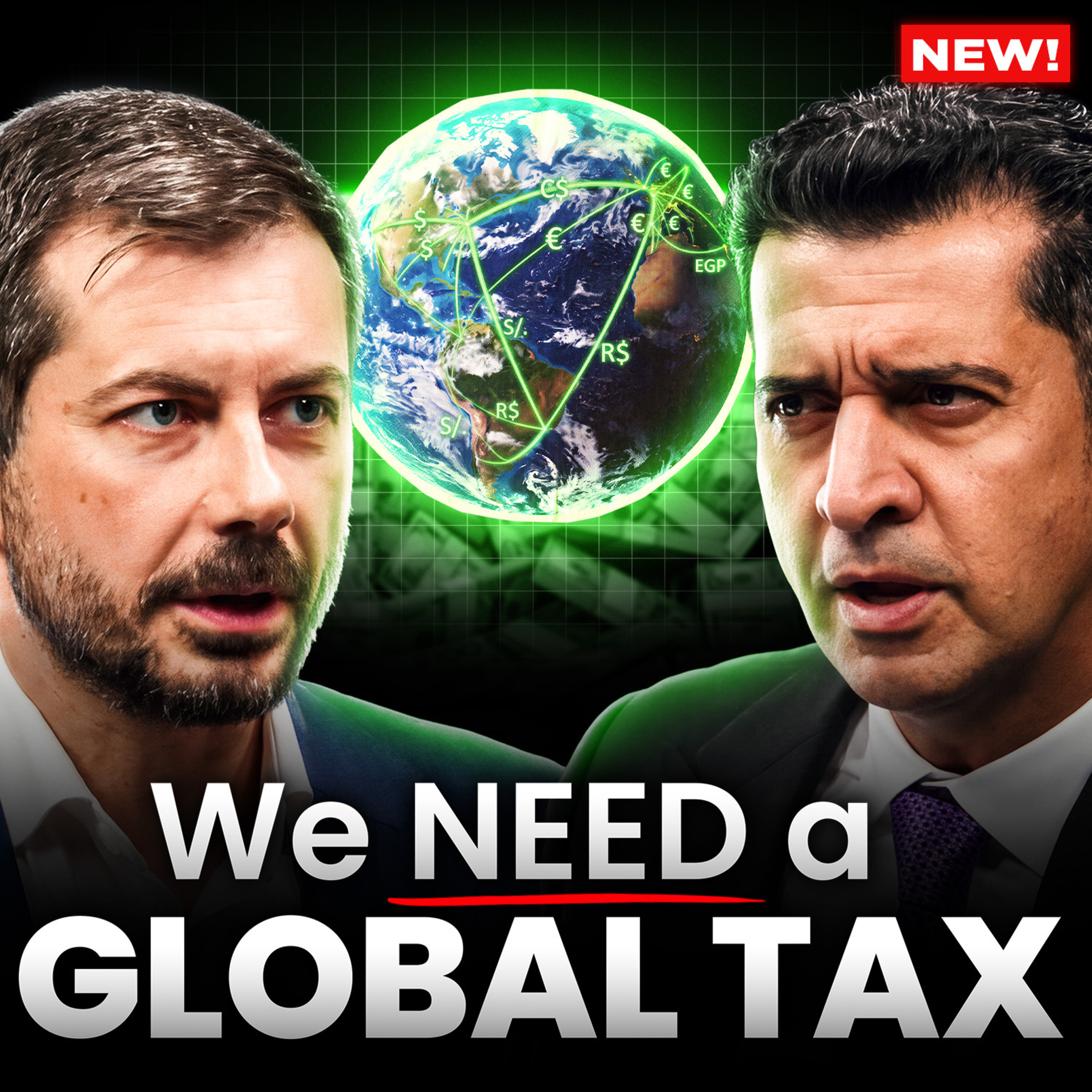
Pete Buttigieg discusses Democrats’ 2028 agenda and wealth taxes, arguing Democrats should focus on policies that match broad public agreement (border security + lawful immigration + citizenship pathway; minimum wage; gun background checks; Affordable Care Act; taxing wealth/corporations fairly) rather than “restoring the past.” He also defends international tax coordination as anti–tax undercutting (not “globalism”), supports voter ID with easier access, and argues LGBTQ policy for minors should prioritize safety and mental-health treatment.
Pete Buttigieg (former U.S. Secretary of Transportation; former Mayor of South Bend; McKinsey consultant; Navy Reserve; Harvard; speaks multiple languages). The other speaker is the PBD Podcast host (Scott Besson is mentioned as a gay man, but no clear guest identity beyond Buttigieg is provided in the transcript).
Border and immigration can be a “grand bargain” with majority support; Democrats lose politically when they misread public pain (prices/cost of living) and messaging; gerrymandering and money-in-politics should be addressed; voter fraud is extremely rare; wealth taxes should be national (state taxes cause “tax refugees”); international agreements prevent profit/tax sheltering; AI/wealth should be shared via ownership-focused policies.
Infrastructure bill results (70,000 projects launched, 20,000 completed); “Trump slump” affecting Canadian visitors to Las Vegas; California wealth-tax “tax refugees” example (Elon Musk/others); voter ID friction for people needing birth certificates after name changes; parents describing improved outcomes after gender dysphoria treatment; references to minimum-wage research and “Wage Standard.”
Written by AI. May contain mistakes.
Discussion on public perception and readiness for a gay president.
“Do you think America's ready for a gay president?”
Buttigieg discusses what he has been working on and his goals for the future.
“So what have you been up to and what are you running for next?”
Buttigieg reflects on what Democrats did right and wrong during the 2020 elections.
“Worker candidates and to make sure that we're looking at the future.”
Discussion on the key political issues and mistakes made by both parties.
“of trying to tell people that the economy was better than they felt it was.”
Exploration of public opinion on policies like minimum wage and healthcare.
“And part of what I'm trying to urge my party to do is really double down on those issues, those many, many issues, especially around the economy, where people agree with us.”
Discussion on the concept of wealth taxes and their implications.
“So you so far addressed the 80-20 on the liberals, on the conservative side, which background checks on guns.”
Discussion on whether the wealth tax should be national or state-level.
“And I also think that's a bit of a marketing campaign.”
Exploring how revenue is raised and the implications of a wealth tax.
“Because at a state level, basically somebody says, okay, I'll just go to another state.”
Examining the impact of taxes on job creation and wealth distribution.
“Some people are worried because he's got a lot of power.”
Discussing the fairness of the tax code and its treatment of automation.
“These are two different things, respectfully.”
The role of ownership in economic mobility and the impact of AI.
“But I think these are the kinds of things that would at least help.”
Analyzing tax contributions from the wealthy and wealth distribution statistics.
“And by the way, you know, the American taxpayer did fund the invention of the internet.”
Discussing globalism, national tax policies, and international agreements.
“He says, you got seven states to choose from.”
A discussion on the implications of wealth taxation and globalist policies.
“Well, but when I hear the word globalist, it sounds like a conspiracy theory.”
Exploring the arguments for and against voter ID laws in the U.S.
“Then you said, okay, so I'm going to ask you two questions.”
A conversation on the challenges faced by LGBTQ+ youth and the role of parents.
“we just got to make sure that as you do that, you do things like automatic voter registration for citizens or other things that make it easier, not harder.”
A conversation on the challenges faced by LGBTQ+ youth and the role of parents.
“Designed to impress I think the most important thing for kids who are gay or transgender or whatever difference they might have from most people when it comes to identity is that they're safe.”
Explore the complexity of parental reactions when children come out, focusing on support and societal pressures.
“and they've already come out and they've told their parents, and this is what I am.”
Discuss the availability of puberty blockers for minors and the differing opinions surrounding the issue.
“Look, I haven't studied transgender issues as closely as you have.”
Analyze how political narratives shape public perception of transgender issues and the implications for families.
“then i don't want some law to block that parent from working with metal medical professionals to take care of the student but again i want to turn to the politics of this because here's the question on my mind.”
Delve into the complexities of immigration policies and the need for a balanced approach to border security.
“Of course they're going to be on your side.”
Investigate the economic impact of immigration and the arguments surrounding the treatment of undocumented individuals.
“You don't think it was the executive orders?”
Consider potential paths forward for immigration policy that balance security and compassion toward immigrants.
“I mean, those are two pretty big extremes to pick from.”
Discussing the financial implications of deporting undocumented immigrants.
“When a guy who's in the space, he sends me a proposal.”
Examining the impact of birth rates and immigration on U.S. population growth.
“There was about, what's the number of self-deportation?”
Defining and contrasting capitalism, socialism, and communism.
“We're seeing what's happening in Europe right now with immigration.”
Discussing the advantages and disadvantages of capitalism and communism.
“Um, but the fundamentally are, we have a market economy.”
Exploring the influence of Antonio Gramsci's ideas on modern politics.
“And so for capitalism to work, you got to have certain guardrails around it.”
Analyzing how Gramsci's ideas have been adopted by conservative movements.
“What part of your dad's, um, uh, admiration for Antonio Gramsci, because you've said good things about your dad, that he was a big influence in your life.”
Discussing the necessity of long-term strategic planning in political movements.
“For example, one of these sayings that's attributed to Breitbart, politics is downstream from culture.”
The need for deeper intellectual engagement from the left compared to the right.
“So when I think about the 30, 40, 50 year project to end the right to choose in America, that was the result of some really patient and organized work.”
Exploring how social media influences political discourse and public perception.
“No, I'm just saying like, you need to have a relationship between your first principles and your foundational philosophical beliefs and what you're doing all day in your campaigns and your policy ideas.”
Learn how Facebook's algorithms impact political discourse and user engagement.
“That was the most interesting thing, Pete.”
Explore the shifting power dynamics between the presidency and tech billionaires.
“I've asked this of a lot of different people.”
Discuss the implications of Elon Musk's influence on politics and governance.
“or anything else that's not where you don't have a lot of choice.”
Learn about the government's response to the East Palestine train derailment and its aftermath.
“He's, whoever offended him, really offended him to the point where he is not going away.”
Understand the challenges in passing railway safety reforms post-derailment.
“And by the way, with that, and so here's a pattern.”
Explore Pete Buttigieg's views on identity politics and his future in politics.
“Some Republicans are for it, some are not.”
Discussion emphasizes the importance of voters over candidates in elections.
“And they are giving Democrats another chance.”

Get the gist, explore an idea or ask about something said.
 Claude
On PBD Podcast, what are the key points of this episode?
Searching your listeningAutomatic transcript. May contain errors.
0:00Do you think America's ready for a gay president? Hmm. The kind of marriage voters have seen before. It isn't about you. It's about what people think you will do to help or hurt them. Most people voting vote based on how they think their lives are going to go different, better or worse. Guess what happens next? People are going to leave the country. Not if you establish an international agreement, which we did. That's what scares the crap out of people, because now you sound like a globalist. Whoa, hold on. Corporate consultant, a globalist. My side likes to think of ourselves as the more intellectual ones.
0:32But I think sometimes we've been outgunned by the right. I just think we need certain standards in this country on what's okay and what's not okay. And we should apply them to everybody. See, the thing is, Democrats really care about making sure that vulnerable groups are protected. I don't want to be like the other countries around the world internationally. Yeah, but I want the other countries to have to sign a deal with us, not to undercut us. That is bullshit.
1:05Great to have you here. Thanks a lot for having me. Yes. It's, you know, obviously we watch you on stage. I was talking to a group of people the other day. I said, he's one of the most polished, talented, capable guys on stage. You do great work when you're on stage. Carry yourself very well. Thanks for saying so. Yes. And so your background, you know, of course, you know, when you, when you look at your background, you know, Harvard, I think you speak eight languages, if I'm not mistaken, or you can say a few phrases. Yeah, some of them are pretty rusty by now. I was disappointed that Armenian and Assyrian wasn't there, but that's okay.
1:34Someday. You worked at McKinsey three years, Navy Reserve eight years, then you go become a mayor. From 2012, if I'm not mistaken, you're mayor eight years, you run for office, then you become Secretary of Transportation. Then from 2025, you've kind of been a free agent. So what have you been up to and what are you running for next? So basically there's two things that I've been trying to do for the last year or two. One is to help candidates and causes I believe in. I'm not on the ballot right now, but there are a lot of people who are. It's what I'm doing right now, traveling the country, trying to be there for candidates that I think would do a great job.
2:07And then the other thing is kind of a little more inside my party. I'm trying to make sure that our focus is to move to the future and not to go back to the past. Because I think, like, I obviously am extremely opposed to most of what the president is doing and most of what congressional Republicans are doing. That does not mean that the right thing to do is to turn back the clock and just go back to whatever we were doing before. So my message to my own party is we can't be there to just restore some previous status quo because a lot of that from the past is what led to the situation we're in right now.
2:41So those are my two drives right now. Very interesting. Worker candidates and to make sure that we're looking at the future. What do you think didn't work? Like, you know, when you look at even when I look at the Republican or Democratic Party, I'm like, that was a bad move. Bad timing. That ad, what are you doing talking about the guy's mom at a time like this? Yeah. So what do you think Democrats got it wrong in 2020 when you guys won? You had a lot of power. You had a lot of control. What did you guys screw up? Well, a few things. I mean, look, I want to start with the things we did right. I believe in the policies that we had that were about supporting the working class.
3:16Obviously, I was a big believer in the infrastructure bill, which is what I spent most of my effort on when I was secretary of transportation. We got 70 ,000 projects launched, 20 ,000 of them are done. There's still people right now with good paying construction jobs doing that. I'm proud of all that. There's also a lot of things that we didn't get right, both in terms of the politics and sometimes in terms of the substance. You know, I think that the administration I was part of let the issue of the border get away from us. I think we were too quick to think that that was being kind of played up by Fox News and not the real issue that it really was for a lot of communities around the border.
3:51and not just on the border, but cities around America. You had places like New York getting to an emergency level because they weren't able to handle what was going on. That was a problem. I can point to plenty of others. On the political level, I think that there was a sense, by the way, this is a mistake I think the Trump administration is repeating, of trying to tell people that the economy was better than they felt it was. So we were proud of the fact that we had unemployment at very low levels. but the reality is uh you know what people were feeling the most pain around wasn't the number of jobs it was prices it was the cost of living and anytime we did or said anything that made it seem like we were focused on anything else there was a political cost to that i think the same thing's going on right now where people know that the cost of living is not going down the way donald trump promised it would uh they're upset about that and that's one of those where it doesn't matter whether you're watching Fox News or MSNBC.
4:48It doesn't matter whether you're on right-wing Twitter or left-wing Twitter, because the evidence that you get that is the opposite of what the president is saying isn't coming from the news. It's coming from your own budget. It's coming at the pump when you're filling up your car. It's coming at the grocery store. And so I think that, you know, that's not a mistake that is unique to Democrats or Republicans, but it's certainly a mistake I see happening right now. Okay. So this is your sport, right? You're in this game. Like, this is the sport you're playing. What do you think are the 80-20 issues that Democrats screw up?
5:15And what do you think are the 80-20 issues that Republicans screw up in? Well, you know, to take the second part. So let's say border being one of them, because you kind of brought that up. Yeah, although I think the border is a really interesting one, right? Because if you look at the kind of what I would call the grand bargain, the three-legged stool of what most people can get on board with, it's what I believe in, what I think most elected Democrats believe in, which is three pieces. A secure border, sorting out lawful immigration, so it's more rational process when you're coming into this country legally.
5:46And for everybody who is in the country without documentation, who's not a criminal, not dangerous, creating some kind of pathway to citizenship, a tough but fair pathway to get fully into the responsibilities and privileges of being an American citizen. So that's an example of some of the two thirds of American support. More than two thirds of Americans believe we ought to raise the minimum wage. A majority of Republicans believe we ought to raise the minimum wage. This is the 720. This is the national minimum wage, not state-wise, but yeah, I'm talking about the federal minimum wage. Some states have a high, right?
6:18Right. But a majority of Republicans. So it's really interesting to me on an issue like that, where you got a majority of Republicans agree with most Democrats, we ought to do something, but Washington Republicans are systematically against it. Uh, you know, even on something like background checks on guns. So obviously there's a lot of policies around second amendment that there's a lot of controversy over, but the idea that everybody ought to be subject to background checks, something like 80 % of Americans, about 80 % of Republicans, of gun owners, more than 70 % of gun owners think we ought to at least do that, right?
6:47On the economy, most Americans support the Affordable Care Act. That wasn't true when I was getting started in politics. My first time on the ballot was 2010. The Affordable Care Act, Obamacare, was a terrible political issue for us. Now, it is a winning issue for us because most people agree that government ought to do more to make healthcare more affordable. You look at the tax code. Most Americans agree with us and disagree with the Republicans that if you're asking are the wealthiest people and the biggest corporations paying too high a tax, too low a tax or just right? Most people think that the wealthiest people and the biggest corporations are paying too low of a tax.
7:23You look at the Iran war. Look, either the American people are wrong and the president is right, or the American people are right and the president is wrong. That's like a two to one issue, maybe not 80 to 20, but definitely more than a 60-40 issue that we should not be in that war. So one of the things I've noticed is when you look at a list of what most people in surveys say they care about the most, most of those are actually issues where most of them agree with Democrats and are against the position of this White House or congressional Republicans. And so I think the question for us politically is, how do we get to a place where our policies are more popular than our politicians or our politics?
8:03And part of what I'm trying to urge my party to do is really double down on those issues, those many, many issues, especially around the economy, where people agree with us. Just one more thing I would mention, the system itself. So there's certain things about our system that I think most people, left, right, and center, can agree are messed up. It shouldn't be a Democrat-Republican issue. Gerrymandering would be example number one. This idea that you draw the districts. I agree. Right? So we can agree on that. Totally, yeah. The idea that you've got politicians picking their voters instead of the other way around, that shouldn't be a left-right thing.
8:35It's just that one side does it and the 10 years and the other side, if you're going to do it, I'm going to do it. So it's a back and forth thing, unfortunately. Yeah, so we should just say nobody do it. Now, certain states have done that. Could you do that? Could you at the top say we get rid of that? Yes. Could a president pass that? I believe so. You could have federal legislation that's, that bans partisan gerrymandering. Is that a two thirds you need from Senate or what do you need? I don't think it's a constitutional change. I believe you could have just through statute. You could do that.
8:59So how come others haven't done it? That's a great question. Well, I think it's because there's so many people in Congress who the one thing they, if you and I, most Americans left and right can agree that we don't want gerrymandering, but most people in Congress can agree that they want to keep their job. Right. And so, you know, it's been hard to get that through Congress as we know it. I would say the same about money in politics. Now, this may be a little more left versus right, but, you know, fundamentally, campaign finance reform, as we know it, came from John McCain, right? And most people believe, and I believe, that there's too much money in politics, that Citizens United was a disaster for our democracy.
9:34You know, living in Florida, I'm sure every time you're trying to watch a football game or just, you know, trying to watch anything, you're getting bombarded with these ads. Most of them are paid for, this kind of dark money superbank. If we get money out of politics. So, so far, gerrymandering in that, yes. Right. But good luck with that one. Right. Because it's a business that's the industry of politics. It's sure. So much money's being made. But keep going. I'm buying one. Well, I think one of the things I'm pushing for is that we need to have bigger ambitions. And I don't just mean like be further left, be further right.
10:04I mean that there's so many things we just take as a given. It can't change when, of course, it can. Yeah. Like we've had 27 constitutional amendments, right? But we haven't had a meaningful one in about 50 years. There was one very technical one about, I think, congressional pay in the 90s, but we used to do that more often. We don't do it lightly, but I think if a constitutional amendment is what it takes to establish that for the purposes of spending money to manipulate elections, corporations are not the same thing as people and using money that way is not the same thing as speech, then we ought to.
10:36And if it takes 10 years to do it, fine, let's get to work. We should have done it 10 years ago. We'd be there. So now give me the other 80-20. So you so far addressed the 80-20 on the liberals, on the conservative side, which background checks on guns. Fine. I don't know if it's 80%, but it's up there. Most people don't have a problem with that. Minimum wage, whatever. 720. Leave it to the state. I don't think it makes a difference anyways, because do you know how many people in America today make 720 an hour? Do you know the number? It's relatively few, but this is important. Yeah, because it's like 1%.
11:06No, it's not 1%. Or 1 million workers, something like that. Oh, it's 79 ,000. Right, but there have been some really good analysis. Yeah, it's worth looking up. But then the next thing I would look at, this is about 1 % of hourly workers. But you know what it is, though? The way they add it up to, say, people make that is because they're adding it as tips and all the other stuff, and so they take a hit. Because very few people make$7.25 an hour. It's not that many people. Right, but here's the thing. If you raise it to, let's say,$12 or$15, you're not just raising it for people who make$7.25. You're raising it for anybody who makes less than$15.
11:36Do you know who that hurts, though? Like, let's address that one. Let's talk about it just purely on issue. So who do you think is impacted if you raise minimum wage to 15 bucks an hour? The numbers I did when I ran data on this, Amazon, Anthropic, Walmart, Target alike, raise it. The guy that can't afford it is that small shop in Hope, Arkansas, that has got a small little place. Amazon's across the street. Walmart's across the street. Dude, put it 20 bucks. Oh, Joey's place that's been there for 60 years. He's out of business. I think raising the minimum wage hurts that guy doesn't hurt the fortune 500 companies at all.
12:13I'm not interested in who it hurts. I'm interested in who it helps. And now, now let me be clear. You got to fire those. No, no. Look, look, small businesses, you definitely got to do it in a way that, that, uh, cushion. You know what I'm saying? Yeah, no, I know what you mean. And, and yeah, I've talked to restaurant owners, small business owners. I don't mean to dismiss what you're saying. Um, but we have enough experience now, both as a country and states doing it on their own, that we know that you can do it gradually enough that it doesn't kill the small business owners. And they used to think it would cause a lot of inflation.
12:40They used to think it would add to unemployment. But we have enough cases where there's basically a controlled experiment because the states, it's been since 2009 since the federal minimum wage was raised. So some of the states have done it on their own. And sometimes on both sides of a state line, one state does it and the other state doesn't. And so you get a really good experiment in the same economic market on what happens. And there's been a lot of good research. There's a whole book on this called The Wage Standard that talks about why it turns out fears were overblown about the idea that it would lead to a lot of inflation or lead to unemployment.
13:12What it does for sure is it raises the standard of living for a lot of people. But Pete, respectfully, what it does do is I don't pay anybody less than 20 bucks an hour here. Right. And I know I don't think most people do. But if I'm in a small market, this like I think the Fortune 500 companies are going to be ecstatic about this. Like I remember the first time when Bernie Sanders called out Jeff Bezos, 15 bucks. He said, let's do it. I don't know if you remember that exchange on Twitter or something like that going back and forth. And then they found that Bernie was paying his helpers 13 bucks.
13:42And I was like, wait a minute, what are you doing? So that controversy kind of came out. I don't know if you remember that. That was a few years back. So to me, fair. Let's keep that on there. Let's have the conversation. Next one is the Affordable Care Act. You talked about, okay, fine. Next one you talked about that they feel the wealthy is not paying their fair share. And I also think that's a bit of a marketing campaign. Because if you look at the taxes, the top 1 % pays 41 % of all the taxes today. I don't know if you've seen this chart or not. Right, but also look at how much of the money they're making, right?
14:14So you've got to consider this. A billionaire pays a lower tax rate than a teacher. Look this up. This is a good one. For the top, what is the effective tax rate on the top 0.01 %? So the very, very richest. Billionaires are even paying lower taxes than millionaires. Billionaires contribute more to the job market than anybody else does. So then my concern becomes the following. So this is the part for us to debate. Do you think the wealth tax should be a national thing? Do you think it should be state or do you think it should be a national thing? I definitely think it makes way more, if you're going to do it, makes way more sense to do it nationally than at a state level.
14:54Because at a state level, basically somebody says, okay, I'll just go to another state. I mean, I met a bunch of people here in Florida who were like tax refugees from other states. right? So I get that. I think that it could make sense to do nationally. Look, I started out as a mayor. The way that we raised revenue to pay for things like streets and cops and firefighters was property taxes. A wealth tax is a property tax by another name. So philosophically, I'm okay with it. Having said that, let me point to some other things. Before we go creating a whole new category of tax, the categories we already have, right?
15:25We were talking about top income tax rates, capital gains tax rates, a lot of estate tax, right? Which is only paid by the wealthiest. And, you know, that's when you die. So it's just, it's not about what you earn. It's about what you inherit, right? Those have all been slashed. And, you know, economists have found that you can explain most or all of today's debt and deficit by the Bush tax cuts, the first Trump tax cuts, and the most recent Trump tax. Like if we didn't have all of those things, we would not have the deficits that we have and by the way when they cut those tax rates they said we got to do this because it's going to speed up economic growth and economic growth slowed down but it's much more of course it's complicated but it's true and but the reason is it's not it's not necessarily true it's half the story because the other part is also the following is would i rather have a hundred billion dollars handed to politicians at the white house or would i rather keep in the free market that's a political you know philosophical but i could restate your question a different way Go for it.
16:26Would I rather have that hundred billion dollars spent by one dude or would I rather have it spent according to something that the public can have input on? Well, but that's not your business, though, because that guy who created the jobs, he's earned the right to have that. Right. So if he went out there and earned that money, no one's created more jobs for America than a guy like Elon Musk. I get it. Some people are worried because he's got a lot of power. And when you're talking about the money and politics of how much money you put out. But the basic fundamental issue in this is the wealth.
16:56If you go with the wealth tax nationally, and you're one of the first people that at this level says, I think we need to take it nationally. What does that do next? So watch. California says they're going to do the wealth tax. Who leaves? Bryn leaves. You got a bunch of other billionaires left. Elon Musk obviously left with the issue with Newsom. But now, Zuck, who was about to pay the 5%, the board came to him and they said, hey, we'll still let you have the power. I know the$21 billion you got to pay, but California lost a bunch of people leaving. If you make it a national wall tax, guess what happens next?
17:28People are going to leave the country. Not if you establish an international agreement, which we did during the Biden administration on a minimum. And that's what scares the crap out of people, because now you sound like a globalist. Well, hold on. If you go to Internet, you just. No, no. Just an international agreement to stop the international. That's what I fear the most. I don't want to be like the other countries around the world internationally. Yeah, but I want the other countries to have to sign a deal with us, not to undercut us. That is bullshit. That was the exact thing. No, no. We've got to force other countries to, if they want to do business with us, they cannot be undercutting the American taxpayer.
17:57There was an agreement that I think you guys were trying to pass about making the corporate taxes the same everywhere. No, it wasn't that. It was making sure they couldn't undercut us. I know. I mean, it's the same thing to not be undercut. It's not the same everywhere. I get that. But that means I want the market to be able to compete. I want Puerto Rico to say, come to me. You don't pay any taxes. I want Singapore to be able to compete. I want these other markets to be able to compete. But if you think, Pete, like when you go to the policies, and then it's like, well, why don't we get to this point where internationally let's protect this.
18:28So if people want to leave America, let's get everybody around the world on World Economic Forum to agree that you can't do this as well, so they cannot go to a different country. Now I have no competition. I can't go anywhere. No, we have competition based on who's actually got a better economy, not based on tax trickery. But why go eliminate competition without what the other people want to do? Let them do it. So this brings me to my other point though, right? Which is that if we just had tax rates that were more like they were under Clinton, under Reagan, when we had perfectly good economic growth, but we had more reasonable tax rates, we wouldn't have to be thinking about a whole new category of tax.
18:59These are two different things. These are two different things, respectfully. One is proposing a tax idea. Fair. Go ahead and do it. The other one is what you just said. Two things. You said, well, taxed nationally. It's going to scare shit out a lot of different people. Because you know, California was moving people to Texas. Chicago was moving people to New York. Look, I'm skeptical that a bunch of people are going to choose to not be Americans anymore over this, but let's park that to the side. Again, I think just the categories of taxes we have could be more fair. Here's another example. You've got a tax code right now that privileges wealth over work.
19:29In other words, the effective tax on hiring somebody is higher than the effective tax on replacing them with a machine or a piece of software. So we're already worried about it. That's a different concern. But it's part of the tax code, right? But that's a valid concern. and also share with me your solution to that. Well, I think they should be closer to level, right? So when you look at just how much, for example, the effective tax rate on software or machinery, some computed to be 10 % or 5%, whereas the effective tax rate on labor, this is from a firm perspective, is more like in the 20s. So we're basically subsidizing automation at a moment where we're already worried that automation is going to come in and take a lot of people's jobs.
20:10And I grew up in the industrial Midwest. I saw what happened. And look. It's a real concern right now for both parties. Someone's got to have a better solution for it. Yeah, and we don't see much, right? No, no. Neither side has figured it out. Yeah. But I think these are the kinds of things that would at least help. Do you like when an Elon or I think it's Anthropic who, correct me if I'm wrong on this one here, where one of them said they want to give a SpaceX stock to everybody, which that one's going to be Elon. But I think Anthropic said they want to give 5 % of the company and raise it all the way up to 20 % where the public's participating in that.
20:40Do you think the solution for what's going to happen with AI will be solved by the government or do you think it'll be free market? Look, I think both. I think every economic problem or every new economic thing that comes up, you have, remember, markets are structured by government, right? A market only exists if you have certain things, you know, starting with very basic things like being able to protect the right to property, right, with policing all the way up through, you know, tax structures and all of these things that set up a market. Because sometimes I think people talk about the market like it's this kind of cosmic thing created by God.
21:10The market is something that we shape through policy decisions. But to actually answer your question, I'm really interested in these ideas because I think they deal people in on ownership and more of an ownership society. I think especially when you have a lot of people who what you start out with, what the economists would call your initial endowment, unfortunately still plays a huge role in what's going to happen for the rest of your life. Yeah, you can beat that. That's the American dream, right? But the American dream has been slipping away. If you were born the year my mother was born, which is the end of World War II, you had a 90 % shot of coming out economically ahead of your parents.
21:46If you were born when I was born in the early 80s, that was like 50-50, coin flip. And I think for a new generation, it might be worse than that. So there's a lot of things we got to do about that. But if one of them is to make sure people just start out owning more, if people are participating, including in this huge wealth that maybe is about to be created by AI. And by the way, you know, the American taxpayer did fund the invention of the internet. So to me, there's something philosophically fair about this too. If these firms are making huge amounts of money, having benefited, yes, from their own creativity, but also from public investment, then we should make sure some of those returns are getting out to people.
22:23So let's go to the, if you, if you can pull this up, because this is one of the questions I ask and I want you to be a rebuttal to this. I interrupted you. So I want you to give you a response back to this is what percentage of taxes comes from the top 1%. You look at this and you were going to say something on the, so what percent tax? So top 1 % go a little bit lower to see. Whoa, but that's federal individual income taxes. That leaves out payroll taxes. Oh, we can do that as well. Say include payroll tax. Let's look at this one first and then we'll go to the next one. So top 1%, 38.4. Top 5%, 59.3.
22:52Top 10%, 70 and a half. The bottom 50%, can you go to the bottom 50 %? Pays 3.3 % of taxes. So the wealthy are really funding the majority. Well, again, that's income taxes. So you've completely left out capital gains. And put in capital gains too. Capital gains is by who though? Who gives capital gains? Where does capital gains come from? It comes from investors making money off their money. That's great. So, okay, great. See how different it is when you go to all federal taxes? It's 26%, not 38%. Now, capital gains taxes, you're going to see it go back up, right? Because the wealthy tend to have more in terms of corporate earnings.
23:30So that's going to moderate it again. Now, one more thing I'd like you to do. Do what percentage of U.S. wealth is owned by the top 1 %? You're going to be an 80 % to 90%. You think? I don't actually know the answer to this. It's going to be a high number. Maybe it's less than that, but it's a big number. Okay. So this is where we get, and we might just be in a philosophically different place on this, but look, I admire when somebody creates a business, creates something new, and earns a lot more. There you go. 31 % of people own 30 % of everything. Does that shock you, though? Yeah. The top 1 % of NBA players have scored the most points ever.
24:03Good for them. The top 1 % of baseball players have hit the most home runs ever. Is that a bad thing? Like, should we punish them because they hit more home runs than high school players? It's not about punishing anybody. I guess what I'd say is these are back— But that's normal to me. But back when we had normal taxes, they were just as productive. As a matter of fact, productivity increased more back when these top tax rates were higher. The numbers don't—the outcome and results doesn't validate that. Well, of course it does. You're a data guy. Like, why wouldn't you look at the results? Look at the innovation.
24:28But even if you're talking about this, you're talking about capital gains. Who feeds capital gains? Like even for me when I lived in California, I lived in California 24 years. I never wanted to leave California. But then I sat there, my accountant comes and says, you know, if you sell this company, for every$100 million you sell, you're going to pay$13.3 million in California. I said, you're kidding me. He says, no. I said, so what do I do? He says, you got seven states to choose from. I said, I'll go to Texas. I went to Texas. Then I went to Florida. No state income tax. You know how much money I saved?
24:57I sold a business for a quarter of a billion dollars. How much money do you think I saved? I want 88 % of it. A good amount. That money could go to me and my kids instead of going to my governor, Newsom, or that state. Well, I would have said instead of going toward cops and firefighters in streets and schools, but okay. But does it bother you that much for it to go to cops and firefighters in streets and schools? Look what you're doing. You're pantering now. No, I'm serious. The same amount happens here. Cops are moving to Florida from New York because they're not happy in New York because they're not protected in New York.
25:22So are you okay with cops being told that we should defund the police and you shouldn't be protected? Are you okay with that? You don't support that. So there's a part of it here that we can pander to each other. I don't want to do that with you. I really want to have a logical conversation with you. But the argument then goes to, do we want to lose those guys? My concern, so I'm at a dinner and I said, hey, I'm going to have Pete on the podcast. We're going to have a conversation together. Okay, great. Why don't you ask him the following thing? I said, what's that? Ask him the globalist conversation, right?
25:55Where, hey, is the plan for globalists to get protection in a way where America declines and other people catch up and so people can't leave here to have different opportunities elsewhere? Kind of like what we talked about earlier when I talked about wall tax. You said national wall tax. Earlier, I think this was in May 2026 when you guys were at a meeting in Canada. that I think Mark Carney, yourself, Slotkin, Obama, you guys were at this closed door event that you were part of. Well, it was just a gathering of center left people from around the world. What was the outcome of that meeting? What was the meeting about?
26:28Basically, we were sharing what we were seeing in our countries and kind of sharing our values and our views in the same way that you see the center right and the right doing, right? Maybe a little different. I don't know. I don't know what goes on at the right wing version of this when you got like the far right German party and the Hungarians and all of that with with JD Vance and that kind of thing. Um, but yeah, I look, I love international relations. Uh, one of the, you know, not a big part of my job at the U S department of transportation, but a significant part of it was dealing with other countries.
26:58We signed open skies agreements with other countries to facilitate international air travel. We signed one with Mongolia. Uh, we worked with Ukraine. I went to Kiev and sat down with Zelensky to try to make sure that we were being helpful in their war effort. A lot of things related to supply chains and civil aviation. So I believe that we should be talking to people from other countries. I especially believe we ought to be talking to the Canadians right now because the president's done so much to piss them off. Canadians are the most polite laid back people I can think of and they are pissed.
27:29And by the way, this isn't just some question for fellow foreign policy geeks. When I was in Las Vegas, talking to the cocktail servers and the workers there in the culinary union, They were talking about what they call a Trump slump, partly because a lot of people, including Canadians, have stopped coming to Las Vegas in February, March because they're so pissed off at the U.S. Right. So I think it's really important to have these engagements. I know anytime anybody does anything internationally now, there's just conspiracy stuff around it. I just believe it's important to engage with other countries.
28:00I don't know if it's conspiracy. Well, but when I hear the word globalist, it sounds like a conspiracy theory. You just said something that's a globalist position. I just told you. Which is a globalist position? You want me to tell you? Signing a tax agreement with another country so they can't undercut you is globalist? I just asked you, do you believe wealth tax should be a national thing or state by state? You said, I think we need to make it nationally. I said, why is that? He says, well, because if, I said, what if they choose to leave the country? Well, this is why we need to get everybody around the world to be on the same page.
28:27What do you mean by that? This is what we do, it's trade all the time. That's the crap out of people. If a country is going to undercut us on trade, we do something about that. Yeah, but. We have deals with other countries on trade. Why don't you just take care of the guys here so they don't want to leave you to a different place? Why don't you make the state so competitive so they don't want to leave you to a different place? Well, look, I think we have. But there are going to be some cynical people who would turn their back on the United States just to save a buck. I was born and raised in Iran.
28:49Okay? So what do my mom and dad do? You think they want to leave Iran? They speak Farsi. They know all the places. They know all the places. They don't want to go to Iran. They know the music. They're Armenian. They're Syrian. They got their life there. And then all of a sudden Shah leaves. Khomeini comes in. And my mom's a communist, hardcore, from the two-day party. Their Bible was Karl Marx. God read Karl Marx. We studied all the philosophies. And so I had influence from this side, on my mother's side. And my dad, on the other side, is an imperialist. He believes in what the child was believing in.
29:17So these guys married and divorced each other twice, Pete. Same people. What were politics, do you think? Oh, the worst debates I've seen in my life was in my house. One would say poor people are lazy. The other one would say rich people are greedy. And I'm in the middle. Who's right? Who do I listen to? And each of them have a blind spot in their argument. But we came here. And then guess what? Go build your life. And I lived in California, then Texas, then Florida. If you take that opportunity away and you go and do that, that's why some people will look at you and say, this is a globalist. But take what opportunity away?
29:49If the element of American president no longer has to fear losing talent to another country. Whoa, whoa, whoa, whoa. You're going to them. I got to stop you right there. Losing talent to another country is something Donald Trump is driving. I don't believe, look, people, whether people are here or not, it's going to happen. We'll do it internationally. Those are your words. I'm saying that for the profits, if you try to cheat the American taxpayer by parking your profits elsewhere, we can have agreements that will make it harder to do that, to undercut and cheat on your tax. You're eliminated.
30:22You can still live here. You live wherever you like. But right now you've got people who live here, but they hide their profits elsewhere. No, no, no. You don't think there's a problem with tax shelters? Seriously, though. You don't think there's a problem with tax shelters right now? It's not as big as you think it is. So this is, again, the conspiracy to make it much bigger. You think Elon's trillion dollars is off of other countries? You think he's got his money in other places? I don't know about him. Elon's trillion dollars. What do you think is money? We think Bezos' money is - Let's look it up.
30:47Let's look it up. How much tax revenue does the U.S. lose to overseas tax shelters in a typical year? I don't know the answer. This is a good faith question. Maybe you're right. Maybe I'm overstating it, but - I think this is a real problem. It's going to be a 1 % issue. It's not going to be a - You think it's going to be a 20 % issue? I don't know. Let's find out. I don't think so. I think it's going to be a 1 % issue. 60 to 130. That's not even 1%. That's probably.001%. 130 billion. No, that's a lot more than that. 130 billion was the entire budget of the Department of Transportation when I was there.
31:16But wait a minute. The entire thing. Loses 60 billion to 130 billion. Annually. Yeah, that's not as big as a number as you think. What number do you think that falls on? You think that's a 30 % issue? Say what percent of the U.S. federal budget is that? It's more than 1%, that's for sure. Federal budget? It's going to be more than 1%, but it's going to be less than 30%. Less than 30? Sure. I'll give you that. This is fun, by the way. Usually on these, I can look stuff up in real time. This is what you do for a living. This is your world. Well, yours too, in a different way. 7 trillion. All right.
31:49So about 2 % of the budget. It's nothing. Less than 1%. That was my entire budget. You just said, you just called yourself out. You got 0.86%. I'll give you that. It's lower than I thought as a percent. But this is the part, Pete. Stay with me here. If I am worried about leaving, if I'm not worried as a state, as a governor, for me to fear losing you to another state, that's a very good thing. So I think if you do well taxed, tested by states, and let's see how it does. Maybe it works. Maybe other billionaires want to come to your state. Maybe other people want to come and live in California because the weather is so great.
32:20Doesn't there ought to be a federal floor to this kind of stuff? No, I don't think. Not on well taxed because, Pete, it's not 5%. it goes, it ends up becoming 8 to 12 % because you're going to force the guy to sell things and I'm going to lose jobs. I have to fire people. I have to pay money. It's not going to be a positive thing for the smallest person. Let's go to the next story. I don't want to stay on this. Let's go to the next one. 80-20. Then you said, okay, so I'm going to ask you two questions. I'm curious what you say on this. Voter ID. That was an 80-20 issue, right? But many of the Democrats on the left were like, no, this is not a good idea.
32:53We shouldn't do this. Close call Supreme Court. five to four. Do you think that's a good idea? Look, I'm used to voter ID. That's how it was in Indiana when I was a voter there for years. Michigan. It's, any way you cut it, you got to be able to show that you are who you say you are. Now, some of the voter ID. You don't need it when you vote. Yeah, and those states, when they audit them, any kind of like voter fraud through impersonation is tiny. And I'll tell you why. Two reasons. One, remember that you only record one vote per voter, right? If I come in and I say, I'm as you and I try to fake your signature.
33:26Yep. And then you go in and vote. They're going to say, sorry, but you already voted, right? There's a reason why this doesn't happen. And there's a simple auditability that you can only record one vote per person. That's reason number one. Reason number two, and again, in fact, this is another good thing to Google. What percent of votes cast in America have been found to be fraudulent? The other reason is, look, I was just going to get out the vote rally just now, trying to help a candidate I believe in running for Congress. It is hard work to get people to vote. Eligible U.S. citizens making sure they actually vote.
34:00We got to really push them sometimes. So the idea that people in large numbers are out there risking jail. Let's say you're right. Here we go. Here we go. Let's look at the look. It is generally far below 0.01 % of votes. Then if it's not an issue, then have everybody have an idea. All these states that don't want photo IDs. Why not just. No, look, I think some way to. Make that a federal thing. Yeah. You think it's not a big deal. As long as you do one other thing. What's that? Make sure everybody gets an ID. What do you mean? Well, right now. Oh, I see that. That's a, you're funny. You are good.
34:32So you mean all the, the, the ones that you were saying with the illegals, give them a path towards citizenship. That's what you mean on them getting an ID? No, no. I'm saying eligible U.S. citizens should have an ID. I agree. But a lot of them don't. Most people. Let's see. Let's look it up. What percentage of U.S. citizens do not have photo ID? Pete, come on. And they're almost always the poor citizens. So, Pete, do you know how many clips I got I can pull up of black people saying, stop assuming I'm dumb that I can't get an ID? So watch this. One of the things that you had that came up on, I think Bill Maher had Stephen A.
35:05Smith on, okay? And you've been on Bill many times, so you know who Stephen A. Smith is. And Bill Maher asked Stephen A. Smith, I don't know if you have that clip or not. I wasn't planning on, go for it. Watch this here. Go back, play. Democratic primary voters, 16 % would support Buttigieg. That's the highest of any candidate. Pete Buttigieg. I don't believe it. I think that's just a poll number. I can't see that happening. Okay, but wait. 16 percent. Black voters? Zero. Zero. You don't usually see zero anywhere. Zero's low. For who? For Buttigieg. Explain that. I mean, why do black voters have this?
35:46I mean, he's a nice guy. Yeah, he's under-indexing a little bit with black voters, yeah. What is that all about? He doesn't move us.
35:59I respect the man. I've interviewed him before. Very nice man. Highly intelligent. But you got to be able to move us, bro. You can possibly move us. So to me, there are a lot of clips where people were being asked, hey, do you have an ID? Can you get an ID? I can get an ID. Why do you think I'm dumb enough that I get the ID? so then when you think your messaging because your challenge is I think it's the black vote to me you're the best guy on stage no one is better on stage than you and by the way I said this two years ago this is not they can go document me saying this no one's better on stage than you it's cool calm collected the argument you make didn't you get Iowa caucus like before didn't you yeah we won that yeah yeah you won that so it's not like I'm saying this because I'm trying to make you feel good you are there but if you look at numbers the black vote But sometimes when you say voter ID, the lower pay people, they're like, dude, don't assume automatically I'm not smart enough to get an ID.
36:52It's not about that, though. But what it is about is an 80-20 issue. Why not have everybody have a voter ID? Again, that's fine. As long as we make sure it's easy to get an ID. Easier than it is now. How hard is it to get an ID? Well, for example, this bill that the president's pushing makes it impossible to vote with just a driver's license. You would have to go pull a birth certificate if you have changed your name. So if you're a married woman, you change your name. By the way, this will actually disproportionately hurt conservatives. So I'm not making this as a partisan claim. Then if you think it does, hoard it.
37:22Why not do it? Because it's wrong. Would you campaign on that? Would you campaign on people having ideas to vote? What's that? Yeah, I think it's fine to make sure that people have to have a way to show that they are who they say they are. And I don't have a huge problem. I know some people say like it's just never okay. I don't want to beat a dead horse if you support it. I can move on to the next topic. If you say you support it, I'll move on. Yeah. No, I'm okay with it. we just got to make sure that as you do that, you do things like automatic voter registration for citizens or other things that make it easier, not harder.
37:51Cause there are these frictions and in elections that are decided by 1%, if 1 % of people, not because they're dumb, but because they're working three jobs, right? And they're low income and maybe they don't have a driver's license. Find it a little difficult to get that. It's going to be harder for them to vote. And that 1 % could make a huge difference. I just think it ought to be fair. That's all I'm saying. I do not have a problem. I think it's very important. In fact, and you and I, I'm sure agree, that only eligible U.S. citizens should ever be voting. Thank you for that. Can you pull up what states don't require a photo ID?
38:19I don't know what the number is, but I think it's 16 or 21. How many states don't require a photo ID? So this part will be on the same page. So, so far, we're on the same page on gerrymandering. We're on the same page with, what was the second one you said that I grew up? Oh, money out of politics. Minimal wage, I don't think it's going to do anything, but it is what it is. what states don't require photo ID, go a little bit higher. So states requiring no documents, 14 plus DC, states accepting non-photo identification, 12 states. So you got 26 states that don't require a photo ID to go vote. I think that's catastrophic.
38:56I think that's a scary thing to put that. But I'll give you final words if you want to say something or else I can go to the next one. Let's keep going. Okay, so next one. All right, so you're a gay man. Scott Besson is a gay man. Both of you very successful. You've moved up in your life. You're net positive to society. You've done good work. But I think one of the issues, and I want to know what you're going to be saying, because I asked the same question of Governor Westmore. We become good friends. We talk. I really like, you know, where he's open to it. We'll disagree on a lot of different topics, but he's very respectful about it.
39:29One of the 80-20 issues that I think happened, I had, who was the former CEO of Disney? Bob Chapek was just here six weeks ago, five weeks ago. And I asked him the question, I said, listen, why drive LGBTQ towards kids or even maybe not him, other people? I asked this from Governor Westmore, puberty blockers and transgender, all that stuff with kids under the age of 18. After 18, do whatever you want to do. Why push that? I think that's an 80-20 issue that pushed a lot of independents out and saying, guys, this is a little bit out of control. Right? What do you think? What's your position on that?
40:12Handcrafted across five Italian factories With builder technology underfoot It may be the most comfortable shoe you will ever own Introducing the all-new FLB shoe Finished in new chocolate Carizza leather Made to move Built to endure Designed to impress
40:36I think the most important thing for kids who are gay or transgender or whatever difference they might have from most people when it comes to identity is that they're safe. That's the most important thing. And, you know, I've talked to parents who describe the experience of having a kid who seems normal, healthy, doing well. And they hit a certain stage in their development. They're teenagers usually. And something changes. And something feels like it's wrong. And their student is increasingly having trouble with mental health. They are not themselves. They are depressed. Sometimes their lives are in danger.
41:15And it becomes clear that this has something to do with what's called gender dysphoria. This person figuring out that the gender they need to be is not the one that they are assigned. And when they get treatment, everything changes. and I've talked to parents who talk about their students, who they would do anything to help, who were at risk of death from suicide and mental health problems. When they get the right kind of support, what happens next is they are back to focusing on their friends, focusing on their studies, and they're thriving again. I think any parent would want that for their children.
41:52So those are two different things. Let me isolate it because I want to really understand what you're saying here. One is, if a child, you know, if a kid is gay or lesbian, and they've already come out and they've told their parents, and this is what I am. And we have friends that have done. This happens. I had a very, very, very conservative guy that's my neighbor, whose son was a piano player. Of course, I won't give this name, but if he watches this, he'll know who I'm talking about. At 14 years old, this guy's a diehard Trump supporter, by the way. Major money donor. He comes out and his 14-year-old son comes in and says, Dad, I'm gay.
42:26and you know when I told him on his birthday he says Pat I'm devastated crying he says so what did you do he says exactly what I'm supposed to do I supported him and I was his father and he moved on whatever you want to do some we're going to help you out throughout the process great relationship everything ended up being good of course that part is welcoming I'm not talking about that I want to isolate this with you and I want you to I want to see what you're going to say I'm specifically talking about the constant pushing of allowing puberty blockers under the age of 18 and certain material that's accessible to them to teach kids at a young age.
43:04Do you think that's a good decision? So you just use two extremely different words as if they were the same. You can isolate both of them. You just, okay, you use two different words. Do me a favor and isolate each one of them. Address each of them. And allowing. Pushing and allowing, which you just used like it was the same thing, are completely different. Pushing and allowing. You just said pushing and allowing. Then let me restate the word. Let me clarify myself, and I'm going to see what you're going to say about that. Let's use puberty blockers. Do you think puberty blockers should be available to kids under the age of 18?
43:32I think if the medical community says that's important for their health, then as a politician, I'm not going to disagree. I think that's going to hurt you guys. Well, maybe it will. Look, I haven't studied transgender issues as closely as you have. I can already tell. But what I will say is sometimes, especially when it comes to something that many believe saves the lives of children, if you have to take a somewhat politically awkward position to help those young people, you have to. How much have you studied? How much, how many of them transitioned and then one came, come back and their lives was completely devastated as adults?
44:05Have you ever met with one? Again, I've clearly not studied this issue as much as you have. But what I'm saying is, as a parent, that is a true issue that bothers a lot of parents when it's being pushed to them. But see, now you said pushed. But it is, though. I'm talking about, look. It is, though. I want to make sure. Certain states don't even allow puberty blockers. Certain states are like, we're not even going to allow that to happen. Because if somebody wants to do it after the, do you think it's a good idea for a 13-year-old to have a driver's license? No. Do you think it's a good idea for a 13-year-old to have a gun?
44:33No. But what makes you think it's okay for a 13-year-old to have a puberty blocker? I have no idea whether it is. I'm just saying that I would trust. Yeah, but it's probably illegal because politicians made it illegal. Let's listen to the medical community. Okay. Legal in many states. Okay. Then let's listen to people who have a history of finding out what kinds of treatment helped these students thrive instead of them being in extreme danger. And look, I just don't think it's the job of politicians to decide this stuff. I think when families are concerned about the well-being of their students and they engage mental health support or medical support, it is not my job as a politician to get in the middle of that.
45:11Can I send you material for you to look? Sure. Yeah, by all means. You can still disagree, but I want to send it to you and I want to see what you say about that. Sure. But I also want to talk about the politics around this for sure. Because maybe you're right. Maybe this is an issue where, see the thing is, Democrats really care about making sure that vulnerable groups are protected and are discriminated. So do independence, so do libertarians. And maybe the, maybe the disconnect here is you think we take that too far sometimes i think it's overlapping the parent to get in front of the my child rather than letting it happen when he becomes 18 or she becomes 18 right but if a parent thinks that their child who is younger than that that their life is in danger then i don't want some law to block that parent from working with metal medical professionals to take care of the student but again i want to turn to the politics of this because here's the question on my mind.
46:00Doctors were using cocaine. A hundred years ago, doctors were using cocaine thinking that was good for you and then they realized that was bad and they got rid of it. Sure, but you know who's wrong even more than doctors? Politicians. So the idea that politicians getting in the middle, and this brings me to the political side of this. I keep asking myself, this is an issue that affects a tiny, and by the way, extremely vulnerable minority of Americans. If you ask most people, what are your top five issues? This is not a top five issue. But it is the top five in what Republicans spend money to put in the ads.
46:28No, not, I mean, it was the number, I'm pretty sure, I'm pretty sure it was the number one ad buy of the 2024 election was the trans ad. It could be because of what many schools were teaching. Who's pushing this into, I think that this is, if a young person hears transgender this, transgender that, they're way more likely to hear that from political ads than they are from something in their school. All you guys had to do was leave it alone. That's all you had to do. We tried. No, you didn't try. We were not the one I was spending unbelievable amounts of money to try to make it a top political issue.
46:58issue. That's why. Why would they, why Americans disagreed with you? Right. So if Americans disagree with Republicans on. No, they disagreed with Democrats on transgender. What I'm saying is if Americans disagree with the Republicans on taxes, which affects every American and disagree with the Republicans on healthcare, which affects every American and disagree with the Republicans on the minimum wage, which affects every American and disagree with Republicans on the war, which affects every American. And meanwhile, Republicans want to make it as though one of the top, one of the most important things is this issue.
47:35There was a bill on trans, I forget what state, on the sports thing that affect one. It's their kids. It's their kids. It's none of anybody's business to try to manipulate kids on what they need to do with their bodies. Ask the parents of transgender kids who they think is supporting their kids' well-being. Of course it's going to be you because they're probably 99 % chance they're liberals themselves. No, that's not true. Of course they're going to be on your side. We've got to get away from this idea. I'd love to know how many conservatives have transgender kids. I'd love to know that number.
48:03What if you do? What percentage do you think it is? You know, Musk does. You think he got it because he wanted his kid to be a transgender? What do you mean got it? What do you mean got it? This is not like a disease. You think if he raised a kid himself, that would have happened? Maybe. That's my point. You think if other politics got involved because they made Elon to be an evil guy that pinned everybody against them, you don't think that's a reason? I guarantee you that me being gay had absolutely nothing to do with my parents. And I believe that when - Not talking gay. Now, I also believe that when somebody experiences - And what age did you come out, by the way?
48:39What age did you come out? Later in life. I was in my 20s. Yeah. Okay. 30s. Yeah, you're right. Yeah, 33 years old I read when you came out. Because it took that long. Just one. No problem. Right. Right. But what I'm saying is there's a lot of, not a lot. There's a small, but real number of young people who experienced this gender dysphoria. Such a small percentage, man. And yet we've already spent a huge percentage of this podcast talking about it. Why? Because the politics are better for yourself. No, because you guys supported ideas that were terrible and it backfired. That was one of them.
49:07We just want to make sure people don't get hurt. So now let's go to the other one that you gave credit to the president is of the border, right? The board of that, overnight, he becomes president. Boom. Well, I do need to stop you. I want to let you go. I don't want to interrupt you. You can interrupt all you want. Please feel free about that. So he becomes president. All of a sudden, what happens? And I remember six weeks before he became president. Oh, my God. Biden, Lord, amount of people coming in. But over the four years, he was president. Whether you want to call Kamala Harris the border czar.
49:38No, I'm not the border czar. All this other stuff. The moment he came in, Tom Holman, whoever he had as his team. immediately went away. The border issue hasn't been talked about for two years because it was cleaned up like this. It wasn't that complicated. Why didn't Democrats do it? Okay. So let me complicate that story a little bit. I don't agree. I don't disagree with the big picture, which is the Democrats should have done more, should have done it sooner. We need a secure border. There was a real problem with the border. And excuse me, my party was way too quick to ignore it. I will say the story you just told was one for all four years of Biden.
50:14You have this huge huge amount of crossings at the border. And then I think the way you just told the story, the moment Trump comes in, it drops. The truth is there was a pretty big drop in 2024, in the summer of 2024. They knew Trump was coming in. Come on. No, no, I agree. You're a guy in the space. No, no, no. I don't think it was because it was because of the executive orders. You're a guy in the space. You don't think it was the executive orders? Oh my God, Pete. Wait, wait. Are you seriously arguing that the executive orders of June 2024 had no effect on border crossings? Yeah, but you had three and a half years.
50:43You could have done it earlier. You're right. I agree. Why didn't you? So to me, so now watch this. This is the concern. I asked you a question, open-ended. I asked you, so, you know, you were at McKinsey, you speak eight languages, da, da, da. You're like, oh, what are you up to? So I'm working on these three issues, right? And I asked you about something, and you said, secure the border, illegal, lawful immigration, and then you said, given a path for the people to. So the third one is the concern of conservatives, independents, and libertarians that the democratic playbook is let them in, open the floodgates, and let's find a path towards citizenship.
51:20And then let's eliminate electoral college. And then let's pack the court. And guess what? We'll have this for many, many decades under control. And we can do our globalist agenda. You're laughing at this. This is the process. That sounds pretty fanatical, though. It doesn't sound fanatical. Globalist agenda. Look, first of all, one thing on my part I learned the hard way is just because somebody's an immigrant or the son of an immigrant doesn't mean they're going to vote for us. Another thing that's really important is, and this is where, look, I agree with you. Most of them will. 60 % will for you.
51:48But here's the thing. That data's out there. I think that you're right, that in order to satisfy concerns about what happens with the pathway to citizenship, you first have to satisfy concerns about the border actually being secure. And I will give the Trump administration credit for that. Now, I think they also went way too far. Rounding up people. Just yesterday I met somebody, a citizen, by the way, US citizen, Cuban American, gets detained at the airport for no reason. They never give him a reason. They treat him like shit. And it's clearly the only real reason he can think of is he's Latino and he looks Latino.
52:21He has a bit of an accent. He's Cuban and he's a citizen. And people have stories like this by the millions. Not to mention, citizens being dragged off their doors, people getting shot in the street. I think most of us can agree. I'm sure I haven't looked up a poll, but I'm pretty sure most of us can agree that the Trump administration has gone way too far with the way ICE is roaming the streets and some of this stuff. But I think I really believe there's a grand bargain here where most of us agree on most of what has to happen. Border security. Lawful immigration done the right way and doing something that is not just deporting every single man, woman and child who's in this country who isn't documented.
53:02Because I think about a lot of people who came to this country undocumented, had been here for five years, 10 years, 20 years, paying taxes, by the way, payroll taxes, property taxes, sales taxes, maybe not income taxes, paying taxes, building businesses, whether it's, you know, somebody owns a diner. This happened in my part of Indiana. A guy got deported or, you know, whether it's, you know, somebody people rely on to work for their family or for their business. but we've also got to face that we're in a situation right now where the u.s economy has taken advantage of this situation so you have some people who say our immigration system is broken i often say that there are other people who have a point when they say that this immigration system is working exactly as intended and what they mean by that is it creates this kind of underclass of people right who don't have protections don't have status they get underpaid but the reality is we've allowed this gap to open up between the level of immigration that our economy needs and the level that our law allows.
54:06And the last person to deal with that was Ronald Reagan. They had an immigration reform in the 1980s that dealt with that. Bush tried, came close, didn't happen. They tried under Obama, John Banner, didn't happen. I really think there's a chance to get to some common ground here where maybe not everybody, you know, whether it's the far left of my party who really do believe in open borders or the far right in the Republican Party who are just against immigration, period. But everybody in between those polls, which I think is most people, including most Democrats, and I hope most Republicans, can find their way to a grand bargain around a balance of those three issues.
54:41I think that's fair. I think to be able to figure something out there is fair. I do think it needs to be a way of you earning the right to get it and somehow to pay. I don't know what that is, to be honest with you. Like, you know, if you're under a certain age, go join the military. If you're in this, go do this. It's got to be some way that you contribute. Like back in the days with LSI, if it's like that, if you don't have to earn and it's like, no, we are lucky to get you here. No, no. We have to go back to your, I'm lucky to come to America. America's not lucky to have me. I'm the guest. I'm grateful.
55:17That mentality of, I had 200 countries to choose from. I chose to come here. They gave me a green card. We waited almost eight years. The day we found out we're coming here, we're doing backflips at celebrations. So I think that's the only thing about it. But it's fair to, you know, it's fair. I respect the fact that you're saying on the immigration side. So to be fair, if let's just say you were to win, your mindset is not going to be with the border. Like let's let the border in and let people come in as much as they want. That's not you. You mean like open up the border? Open up the border like Biden did.
55:46You wouldn't do it that way. Your strategy would be more along the way Trump did it than the way Biden did it with the border. I mean, those are two pretty big extremes to pick from. But one of them got zero. The other one got quite a few millions of people that came here. By the way, you know how difficult it is. I knew this was going to be horrible. When a guy who's in the space, he sends me a proposal. He says, can you please give this to the president? I said, what's this? Here's how much it's going to cost them to deport all the illegals that came here. So I'm going through this thing. And it was like a$600 billion cost to deport the people.
56:21I said, how? He says, you need this many, this, this many, that, this many, this. And it was actually a very methodical way. He broke it down. Okay. So he says, Pat, this is not going to happen. Right. Because no one's going to prove that budget. And what's going to happen is the moment they need one story with an ICE incident, he has to shut the whole thing down. The guy ended up being right. They had one incident from there. It's like the left is going, look what they did. Oh, they're trying to do this. And then he had to stop it. So those people stayed in here. So guess what? Democrats ended up winning.
56:48So they ended up winning because we didn't deport those guys. There was about, what's the number of self-deportation? Did you see that number, Pete? I think it was like a million and a half or something like that. I don't know what the number was. Here's another area where I care about something that I think conservatives care about maybe in a slightly different way, which is the population of the country. And two things go into that, right? Birth rate, immigration. That's how countries grow, obviously. We are now on track for negative net migration as a country. Might even be there right now.
57:16I'm not sure. I know we were close. 2.2 million self-deportations. I agree that we want immigration to be lawful. We want it to be controlled. We want it to be safe. We want it to be reasonable. If the level is too high, that causes all kinds of problems. But if it's zero or if it's net zero, that could be fatal to our economy. For a period, no. For a long-term, yes. So I think you want them to come here. You want them to still be the land of the free and American dream. You still want that, but you want to be selective of who comes, not just anybody and everybody. We're seeing what's happening in Europe right now with immigration.
57:57I don't know if, of course, you're following what's going on in France, you know, some of these other places. That's a whole different model of immigration, of who they let in. Hopefully, we won't be making decisions like that here. So, question. I'm a business podcast. You know, we talk politics, but we're also business guys that watch the content. 39 % of the audience are business owners. your philosophy or your definition of what capitalism is what socialism is what communism is what is your definition of each of those three so i think capitalism is that the market allocates capital and most transactions take place in a market that is structured but what we would consider a free market uh that you make sure you have the government there to make sure there's things like property rights, uh, also to make sure that you don't have things like monopolies that cheat the system.
58:48Um, but the fundamentally are, we have a market economy. Communism is pretty much the opposite. Government controls the means of production. If you work for any number of industries, you are a government employee, even if you're making Cheerios or, uh, tires or whatever. And socialism is a word that I think is actually losing meaning over time. because usually when I hear it, it's being thrown around in politics. So I hesitate to offer a definition for socialism because it's been twisted beyond all recognition by, by politics. Do you, uh, what is the pro of each in your opinion? I mean, look, the intention of communism is to create equality.
59:28The problem is, uh, first of all, that doesn't actually happen because you have corruption. And the other problem is, uh, even, even to the extent that it's equal, it's, it's a pretty terrible way to live, right? The pros of capitalism is you got more production, build more wealth, grows more. The problem is you get these concentrations of power that happen. And I think it's happening right now with an extremely high level of inequality, both measured by income and measured by wealth. Usually when you have a Republic, and I'm going back to the Roman empire, when you have a Republic that hits a level of inequality, like what we've got right now, it doesn't last very long as a republic.
1:00:08And so for capitalism to work, you got to have certain guardrails around it. You got to make sure that nobody can get extreme amounts of power. And part of the problem with money in politics, where I think you and I broadly might agree, is that it allows a concentration of wealth to turn into a concentration of power. And then of course, people can use that to gain even more wealth and even more power. I think that's happening right now, whether it's the corruption that we see in the Trump administration or whether it's just the thumb on the scale that industries are able to put in elections by using that money to try to make sure that their preferred candidate wins.
1:00:42And I hope we take that money out. And if that's ever on the ballot, I'm voting for it. Awesome. Get that money out. They're doing it in Montana right now, actually. If it's out there, I've been saying, I had Paul, is it Paul Manafort? Is he, who was the lobbyist? Was it, am I saying the name correctly? Yeah, he was one of the guys that was in it. I said, why don't we take the money out of politics? This was like five years ago, maybe four years ago. He says, well, if the other side does it, sure. But neither side wants to do it. So we don't, you know. I make that deal. You do it. You can get a lot of people that are going to want to entertain that.
1:01:11But my mother was a massive communist. Massive supporter. Her entire family. They're from Azerbaijan, Baku. You know, father side. They were communists. Your father was a professor at Notre Dame. And he was a big supporter of Antonio Gramsci. You can correct me on any time. But this is what I've read from the internet. and Gramsci is an interesting guy, right? Very much of a, probably a pro-communist himself. Some of the leanings that he had, Marxist, whatever you want to call it. And some would even sell it. He was more influential than Marx was because he was able to bring it into the systems.
1:01:48And when you study the guy, you're like, all right, the whole hegemony, you know, what's going to happen again, you know, first get the kids, let's win the teachers over. Let's get the kids and then send them to different industries and then keep replicating this. And then eventually we'd get enough people that want to be communists. all this stuff. What part of your dad's, um, uh, admiration for Antonio Gramsci, because you've said good things about your dad, that he was a big influence in your life. What did you debate with your dad and say, dad, I disagree with the following philosophies that Antonio Gramsci had?
1:02:17Oh, we debated all the time. We used to have, I think that's how I learned to debate was, uh, obviously I love my father arguing with my father. Usually it'd be after dinner. We'd, we'd have dinner. Uh, sometimes him, but usually my mom would do the cooking. Um, But he and I were in charge of the dishwashing and we start dishwashing. I'm bringing in the dishes. I'm loading the dishwasher. He's scrubbing the pots and pans and we get arguing about something. And usually not always, but usually it was him being a little more politically left than I was and us kind of hashing it out. He was somebody who was pretty skeptical of communist governments.
1:02:51He was extremely skeptical of Cuba, the Soviet Union, but he was a scholar of Gramsci. and so like you said Antonio Gramsci is a leftist Italian thinker. He did most of his work in prison. Mussolini the fascist dictator locked him up and he spent most of his life writing in these little notebooks in prison that eventually got smuggled out and what he wrote turned out to be pretty important. Your father translated it out. Yeah, he translated many of those notebooks. It went everywhere, went everywhere. And the really interesting thing is most of the people in America right now who have put Gramsci's ideas into practice are on the right.
1:03:31So you look at Breitbart, for example. Breitbart was famously somebody who paid a lot of attention to Gramsci. Now, this isn't just in the US. In Hungary, Viktor Orban actually wrote his thesis on Gramsci. In Italy right now, there's a minister in the Meloni government who wrote a whole book on Gramsci. So even though Gramsci was a leftist, most of the people who have used his ideas recently have been on the right. And as a leftist, I think my dad would probably be rolling over in his grave if he knew that it was really Trumpism that kind of beat the left to some of these insights. For example, one of these sayings that's attributed to Breitbart, politics is downstream from culture.
1:04:09Steve Bannon says that too. I forget which one of them said it first, but it's the kind of thing that Grumshi talked a lot about this idea of hegemony that, that. I think the strategy is true, but the end in mind was different. Of course, Gramsci wanted a different result at the end than the other ones do. Gramsci gave the marketing strategy, but his intention was at the end to have a different world than the ones conservatives would build. Would you agree with that? Probably. I mean, to be honest, I'm not the expert that my father was on his whole political theory. What I know is that the part that seems most relevant in our time is this strategy question.
1:04:43And, you know, my side likes to think of ourselves as the more intellectual ones, but I think sometimes we've been outgunned by the right. You look at, yeah, you look at things like the Heritage Foundation. and you know the truth is we don't have quite the cato institute that whole ecosystem of think tanks yeah i think they set those up you know 30 40 50 years ago because they felt like they needed a balance to the universities they were kind of they felt doing the same thing to the left for the left i think over the years the universities have actually become less connected to the political left and the right and these think tanks have become very i mean you look at things like project 2025.
1:05:23You remember we had a whole fight over Project 2025? Trump swore up and down. He had nothing to do with it. He had no idea what it was. What was the biggest thing, though? I don't even remember what the biggest field was. Oh, it's like a thousand pages of stuff. What was the most intimidating thing? I don't know. Stuff like getting rid of the Department of Education. Stuff they're actually doing now. So the Heritage Foundation boasts that the majority of Project 2025 is now reality. And it was an extremely unpopular set of ideas. It was politically toxic, which is why we tried to use it as a matter of campaign strategy.
1:05:51You remember we held up big copies of it at the end. Sure. Yeah. Um, I think it even worked a little bit because we didn't win, but, uh, it worked in the sense that, you know, I got a mail. Trump distance himself. That's a form of workings. Yeah. Yeah. Then he put the guy in charge of it in charge of the, uh, Russ Vaught. Right. So he was a big project. So I had the president on, what was the guy's name? Kevin Roberts, I think. Yeah. Oh, president heritage. Yeah. Oh, you're talking about, yeah. President. Jesse.
1:06:20So obviously I don't think the president was telling the truth when he distanced himself from it. But anyway, my point is that level of strategic thinking, actually, there's not been as much of that in my party. So when I think about the 30, 40, 50 year project to end the right to choose in America, that was the result of some really patient and organized work. I think my side has been a little more caught up in the moment and a little bit less attentive to kind of the longer term strategy of how to build a country that reflects the values that guide us, which, again, I would argue are values that most Americans share, which is why most Americans are increasingly aligning with us in a lot of these big issues like health care, taxes, wages, political reform.
1:07:04um so part of what i'm trying to get my side my party to do is to be to frankly learn from the right and be a little more strategic be a little more thoughtful be even a little more intellectual it's a weird thing for somebody left to center to say but be as intellectual as the right wing is but because i think the right wing doesn't get enough credit for um strategic credit define intellectual to me because i mean a relationship between your first principles your big ideas? You're not talking schooling, degrees. You're saying... No, no, yeah, yeah. No, I'm just saying like, you need to have a relationship between your first principles and your foundational philosophical beliefs and what you're doing all day in your campaigns and your policy ideas.
1:07:45I actually think sometimes the right pays more attention to that than we do. Interesting. How much of that do you think was a new age guy like the late Charlie Kirk? Or do you think it's others who were leading it even before him. How much do you think it was him playing that role? Because obviously he's no longer here. He was, I think he was the most intimidating person for the left, my opinion. Because for the longest time, the left had the youth. I mean, Antonio Gramsci's philosophy, hey, get him in school, get him early. And next thing you know, it's like, yeah, I don't need to go to school.
1:08:20Oh, no, no, we can't do that. Kids need to go to school. What happens if we lose the kids that are going to school? And then we saw girls are getting degrees, bachelor's degrees ladies more than men were so then you know they have a certain role they're playing but do you put it as somebody like a charlie kirk he was one of the guys that had the influence um i think it's probably upstream of somebody like him okay but i do think he did something that yeah obviously i have enormous disagreements with him um but he did something that is really important which is going out on those campuses and having those debates And I think that's harder now, especially because young people live more and more online, right?
1:08:58So you're in this online world where most of what you see is somebody that you already agree with looking good. Or when you do see somebody you disagree with, they're making an ass of themselves. Like I would guess that your feed as somebody who's more conservative, when it features people from my party, it's usually our biggest gaffes, our dumbest moments, right? And vice versa, right? Like if I see JD Vance in my feed, it's definitely some moment where he's doing something dumb. But in both directions, that's obviously very cherry picked, right? But that's what the algorithm gives us because you don't have to challenge your own ideas.
1:09:32You're just looking at this. You're like, well, it doesn't make you stop and think. I mean, part of why I like trying to engage more conservative media is, you know, first of all, I think I'm responsible for bringing my worldview into spaces where it isn't always there. Perhaps it's just more interesting, right? Like you learn more and you think more. You think harder. You know who I had on last week? Francis Haugen. You know who Frances Hogan is, the social reckoning girl that was a whistleblower at Facebook, and they had to end up paying a$25 billion fine, and 47 states sued Meadow. You know what she said?
1:10:01That was the most interesting thing, Pete. She said at Facebook, they had a program called CrossCheck. And then under CrossCheck, they started a new thing that they measured, say you're a liberal yourself. And they wanted to see why do so many people on the conservative side like your post? Or you're a conservative. Why do so many people on the left still like this guy? And then they rank those people. Like even you right now sitting here, most people on your side don't do this. Like they're not going to come and sit down. But they'll sit this and they'll say, at least this guy's willing to have the conversation.
1:10:35They widened the algorithm. She said Facebook started doing that. For people that had a high reasonable score that they can sit down and talk to a person on the other side. So it's funny you're saying that. You mean they score us as users on how reasonable we are? You, specifically you, because you're sitting here with me. Oh, like as a speaker. So they're going to say, he just got, let's just say your post gets on Instagram 20 ,000 likes. I'm just making it up. But 2 ,800 were conservatives. Why did 2 ,800 people like me? Who is this guy? Oh, it's Pete Buttigieg. Interesting. Whatever he says, he's getting people on the opposite side to also agree with them on certain issues.
1:11:09Oh, that's interesting. Let's widen his audience. That's just something they started. You know, this was like when she was talking about it. I thought it was fascinating. And I think we need more of that. Whoever that is, it's a question for you. So who do you think has more power in America? I've asked this of a lot of different people. I'm curious what you'll say. The president, the people who run universities, you've got the people who control the algorithms, or the billionaires. Who do you think has the most power? I mean, I'm still going to say the president, but I think whoever controls the algorithms, which is increasingly billionaires, is a pretty close second.
1:11:43So do you think, okay, so do you think it's still going to be presidents Let's just say 10 years from now, and Elon's Starlink, we saw what happened with Ukraine, where he's like, hey, they were going 250 miles an hour. He lowered it to 100 miles an hour, so the drones couldn't hit the place and kill people. And he's like, no, I'm going to lower the speed. Do you think if a person like that, he's doing the long distance service, he's doing the batteries, cars, Starlink, satellites. Do you think a person like that by five, three, five, 10 years from now could be more powerful than a president? Yes, I think that's possible.
1:12:18Tell me why. Because more and more is going to depend on these systems that are controlled by fewer and fewer people. Like it'd be one thing if there were like 10 competitors to Starlink, right? Or 10 competitors to the, you know, Instagram algorithm. There's obviously different social media, but so much of it is concentrated into so few hands. And the problem is no one person should have too much power. or the whole point of this country, right? Was we had one person who had way too much power, namely the King of England. And we said, we're out. We're not going to let it be that way. And one reason the founders were even a little bit conflicted about creating the presidency in the first place is there was a lot of hesitation around even the amount of power that a president could have.
1:13:02And I'm, you know, I'm somebody who believes that the current president is using power in a lot of dangerous ways. But at least with a president, even this president, but certainly a normal president. There's a level of, if you had a functioning Congress and good courts, you have some accountability that that person can be constrained. They're constrained by law and they're constrained by the electorate that can vote them out or vote out their party. There's no constraints like that. Those political constraints don't exist on, on somebody who controls some, you know, like a private satellite network.
1:13:35There still might be legal constraints, but if that person can flex so much political power that they can have to control over the people who write those laws. And they're not really constrained by anything. And to me, freedom requires two things. You need a government to be constrained that it can't take away your freedom, but you also need a government capable of constraining anybody else who could take away, take away your freedom, including somebody who controls communications, uh, media, or anything else that's not where you don't have a lot of choice. So with Elon moving forward, how do you view him?
1:14:18How do you view Elon? Because he's going to be a formidable guy for you guys to go up against. He's not a fan of, he just had something. Kara Swisher was just, I don't know who she was. I think maybe she was talking to Hillary Clinton. And she came out and she said, you know, we should go after Elon afterwards words and we should, you know, put him in prison and do this and do that. And she's like, wait, really? You know, and he tweets in the bottom response back and says, I will pay attention to everybody. He says, I'm not just going to look at the handlers. I'm going to identify who's behind it.
1:14:45I'm going to come after you. If you come after me, he flat out said that. So part of it is, you know, they're, they're egging him on. The other side is this is not a guy that's going to sit around and just allow people to bully him. How do you feel about, how do you feel about Ilan? I don't believe in going after people. I do believe in going after behaviors. And if something happens that is against the law, that needs to be constrained. Now, as far as Elon specifically, look, I've dealt with him from time to time when I was Secretary of Transportation. We had relatively normal interactions. And I would like to engage with him or anybody else on relatively normal terms.
1:15:22I think that with a lot of these Silicon Valley folks, they, and he's obviously a pretty special case, pretty unique guy. But a lot of these tech leaders, two different things were going on. One was that they were taking certain actions that created a policy concern. And you had a kind of a typical tug of war like you get sometimes between government and industry. And sometimes you fight over that the way I sometimes fought with the airlines, but sometimes I was working with them on other stuff. But then something else happened, which is there was a sense that we were, the Democrats were kind of poking them in the eye, like trying to have them be an enemy.
1:15:58And I think when that happened, that created something that was so much harder to handle than just a normal policy disagreement. It became this very emotional thing and this highly politicized thing. I think a bit of that happened with him. So I just believe in government should call balls and strikes. And if somebody is doing something that is wrong or illegal, that needs to be stopped. And I don't care whether they give a lot of money to Republicans or Democrats or whatever. I just think we need certain standards in this country on what's okay and what's not okay. And we should apply them to everybody.
1:16:29Yeah, it's going to be interesting what happens. He's, whoever offended him, really offended him to the point where he is not going away. and I don't know how he became a Republican, by the way, because he was the biggest person on the left. Everybody drove his car. Everybody loved him. Yeah, I mean, he's the person most responsible for electric vehicles being in America. And all of a sudden he became the enemy. And I don't even know what the tipping point was, but at some point something happened and he says, I'm going the other side with this. One of your challenges, I have to ask you this question because I can't do a podcast without asking you this.
1:17:03The 2023 East Palestine train, the railing that happened. The biggest thing you'll hear about, they'll say 22 days to come visit. What would you have done differently? So I would have gone out earlier. Look, I was trying to respect protocol. Normally, a secretary of transportation does not go to a derailment site, whether it's non-fatal or fatal. Normally, secretaries don't do that because you're trying to stay out of the way of the NTSB. And in the early days after that disaster, it's funny. I gave like a dozen interviews. The national media weren't asking us about it. To be clear, as a department, we were responding right away.
1:17:36We had people on the ground on day one. Paying a visit, like going out. You would have gone there the next day. I would have gone there sooner. And I'll tell you why, even though it was a little bit outside of protocol. The reason is the people of East Palestine were victimized twice. First, they got hurt by the actual derailment. And if you talk to people there, I was talking to somebody actually recently who's there because she's trying to do some good work on railway safety reform. She said the cloud of black smoke when they decided to burn off the chemicals was so big, you couldn't tell whether it was coming from the sky or coming from the ground.
1:18:12And in the early days, nobody was really paying attention. I mean, even J.D. Vance, who was the senator from Ohio, didn't go there for about 10 days. And I don't think that's because he's a bad guy. I'm just saying that's an indication of how it didn't get a lot of attention at first and then the attention increased. And then they got victimized a second time by the information circus that started to surround them. You started to see certain players, especially online, who found that they could take advantage of the confusion and the pain of the people on the ground. And later on, the Associated Press kind of analyzed the different accounts that were tweeting, sometimes tweeting identical images and information about what was happening in East Palestine.
1:18:51Some were far left, some were far right, and some were linked to the Kremlin. all of them trying to take political advantage. And it became a circus out there. Rudy Giuliani was there for some reason. It was a circus atmosphere. I think it could have been eliminated. I think it could have been eliminated if you would have gone a little bit earlier. Yeah, I think I could have got ahead of that information issue. But here's the other thing. And by the way, with that, and so here's a pattern. And again, feel free to push back. There seems to be a lack of urgency of going to issues like that. One of them was you.
1:19:21The other one was Kamala Harris with the border. Have you been to the border? No, but I've also not been to Paris. That one comment she made, and I think, you know, she's one of the worst candidates in the left. I don't think she makes your party look good. My opinion. I can't say that about you. I can't say that about a couple, but I don't think she makes the party look good. I think she is, you know, there are certain people you want on stage talking more, more, more, more, more, because it hurts the party. My opinion. This is your friend. I'm not, you don't need to agree. I'm just giving you my opinion.
1:19:49But I think there was a lack of urgency. There's issues with border. Taking your time. There's issues with, you know, taking your time. There was a certain lack of urgency. You can push back. There was a lot of urgency about the response. Again, we had people there within hours. I did not have a lot of urgency about a photo op. But what I realized was that being there became very important for this information situation that was terrorizing people in the community because they didn't know who to believe. Now, the other thing I'll say, and this is one of many experiences that was borderline radicalizing, seeing how Washington works is the same week that the president went there and gave out cheeseburgers, president Trump, I went out there and laid out railway safety reforms that I thought would make a difference.
1:20:34And I put them in three categories, things we were working on, but I wanted to accelerate inside the department that we had the power to do things. I thought industry should do better. And I was going to pressure them to do. And then the biggest category of all things that Congress needed to do. And a bill was put together, bipartisan, Sherrod Brown, Democrat of Ohio, J.D. Vance, then Democratic Senator from Ohio, a railway safety act that was doing a lot of the things that I was calling for. And some of the same people who, including congressional Republicans, who couldn't wait to try to exploit what happened to East Palestine for political purposes, to attack the administration, to attack me, they were nowhere to be found when I was trying to get votes for that Railway Safety Act.
1:21:16And to this day, it has not passed because in today's Washington, by the way, Democrats are all for it. Some Republicans are for it, some are not. But I believe that if it came to a vote, it would pass overwhelmingly. But the railway industry lobby has so much power that they've been able to stop it. You said something when you said - No, I'm talking about East Palestine. I know, no, I know. But there was a comment you said that, maybe that's a different story I'm thinking about that you made. I don't remember race being much of an issue in the derailment. Last question for you before we wrap up.
1:21:47Are you running 2028? I'm assuming you are. I don't know. Okay. So do you follow the Cal-Shea markets and all that stuff? Yeah, once in a while. Okay. I think if I'm a betting man, I am counting on you running. Here's a question for you. Do you think America is ready for a gay president? Yeah. I mean, I ran for president once, and I wouldn't have done that if I didn't think the answer to that was yes. Yes. So in what areas do you think you need to win over for you to have a shot? Because there is a, so you have the Muslim vote that generally may not vote for a gay president. Then you have the African-American vote, which Stephen A.
1:22:25had the one that I played earlier for you. What's going to be your strategy on getting some of those votes? Well, look, I would not have got reelected the way I did in South Bend without support from the black voters who knew me best. So part of the challenge that I was not able to do when I ran for president in 2020, and remember I'm in South Carolina, I'm introducing myself for the first time. Nobody's heard of me. They don't feel like I've done anything for them and they're right. Uh, and I'm running against one of the most trusted people in the black community in the democratic party. It was Joe Biden, right?
1:22:58Not to mention a number of black candidates. So pretty uphill then. But you know, what I'd say is, you know, when I came out, that was before the general election in my reelection in South Bend, South Bend's not the country is one city, but I'll tell you, it's pretty socially conservative place. And I got a higher vote the second time after I came out than I did the first time. So what I, what I believe as part of that, and also the fact that when I won the Iowa caucuses, when I was running for president. You know, my margin of victory really came from some conservatives and independents crossing over to caucus with Democrats.
1:23:34What that tells me is more than anything else, politics isn't about you. It's about what people think you will do to help or hurt them. Most people voting, I'm convinced, vote based on how they think their lives are going to go different, better or worse. I think a lot of people voted for President Trump because they thought, even if they didn't like him, They thought he would make their lives better. I think one reason Democrats are doing well right now is because they've seen that he's made life more expensive with the tariffs and the war and everything. And they are giving Democrats another chance.
1:24:06I just think it is way less about the candidate, the politician, and way more about the voter. And I think anybody running for office should focus that way. It'll be interesting. It'll definitely be interesting. Pete, thank you so much for coming down. Appreciate it. Really enjoyed it. Likewise. Take care, everybody. Bye-bye, bye-bye. Handmade in Portugal, where craftsmanship is a way of life. For those who move through life differently. From sunlit decks to nights that never need an occasion. Every detail is considered. Every step, effortless. Crafted from fine suede and built with builder technology.
1:24:43Designed to move with you. Because true luxury isn't about being noticed. It's about how you feel when you arrive. The FLB Icon Loafer Made for the life you've earned.
Former Transportation Secretary Pete Buttigieg debates Patrick Bet-David over a national wealth tax and explains why he favors coordinating taxes internationally. He reflects on how Democrats misjudged the border crisis and why he thinks the right put Antonio Gramsci’s ideas about culture to work first.
———
.
👞 Get the NEW Billionaire Suede Loafer: https://bit.ly/4ym5oRA
.
🇰 GET STARTED ON KALSHI WITH $10 ON US! SIGN UP HERE: http://kalshi.com/pbd
.
👕 SHOP THE ICON COLLECTION: https://bit.ly/3TuUU3x
.
👞 GET THE FLB1's: https://bit.ly/4mC4uf6
.
Ⓜ️ CONNECT ON MINNECT: https://bit.ly/4kSVkso
.
Ⓜ️ PBD PODCAST CIRCLES: https://bit.ly/4mAWQAP
.
👔 BET-DAVID CONSULTING: https://bit.ly/4lzQph2
.
🥃 BOARDROOM CIGAR LOUNGE: https://bit.ly/4pzLEXj
.
SUBSCRIBE TO:
@VALUETAINMENT
@BetDavidConsulting
@vtgenz
@ValuetainmentComedy
.
ABOUT US:
Patrick Bet-David is the founder and CEO of Valuetainment Media. He is the author of the #1 Wall Street Journal Bestseller “Your Next Five Moves” (Simon & Schuster) and a father of 2 boys and 2 girls. He currently resides in Ft. Lauderdale, Florida. He currently resides in Ft. Lauderdale, Florida.