Ask ChatGPT

 PBD Podcast
29 Oct 2026 · 1h 30m · 49 chapters
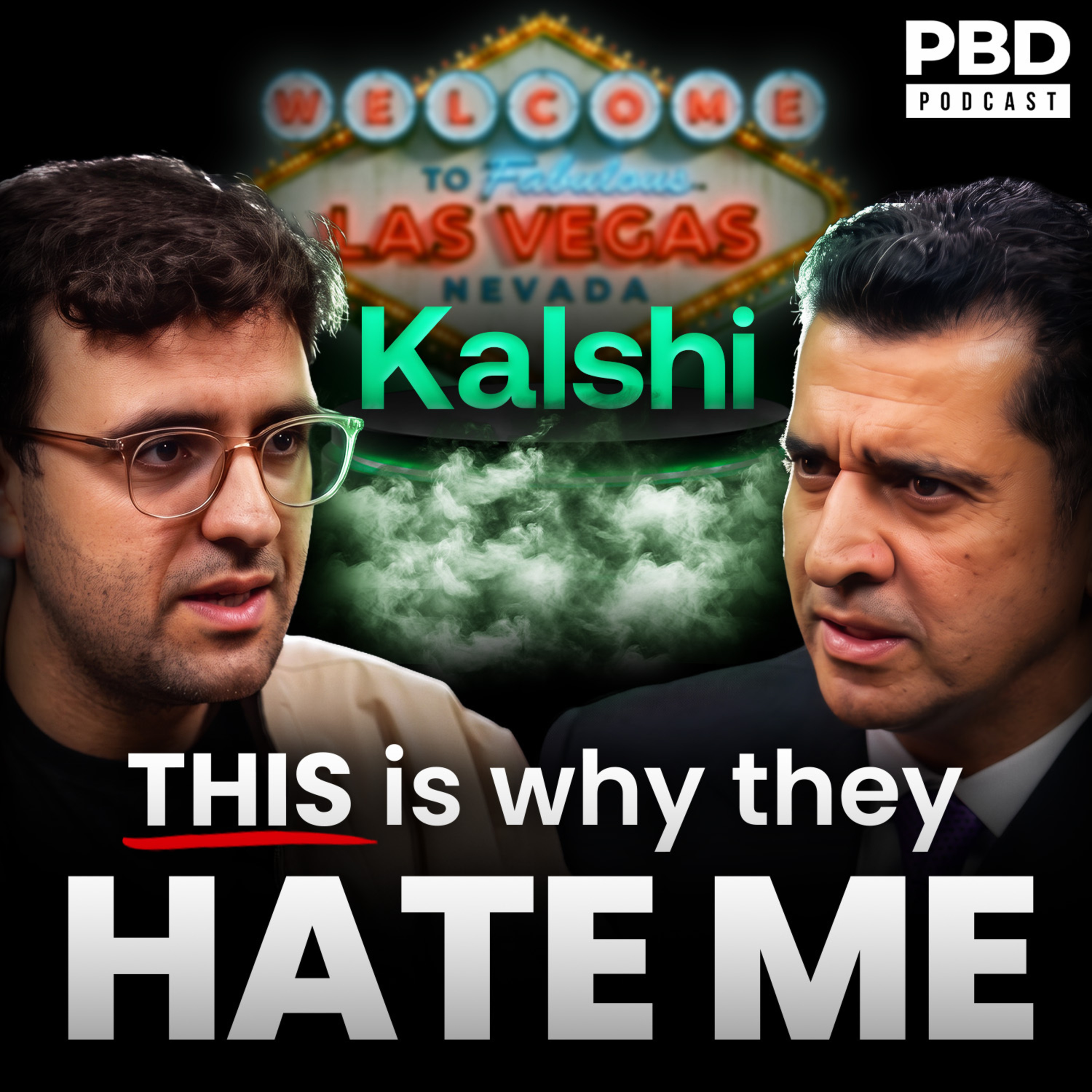
Kalshi (a prediction market) and its CEO Tarek Mansoor argue that prediction markets are a skill-based, transparent “financial market” that aggregates information to produce accurate probabilities, unlike casinos/sportsbooks that profit from customer losses. They discuss how Kalshi works (open order book with bids/asks, trading and hedging), why elites and polls are less reliable, and how markets respond to new information in real time (example: Brazil election odds shifting toward Lula). They also address regulation, “gambling vs hedging,” and why casinos and some event venues oppose Kalshi.
Tarek Mansoor, co-founder and CEO of Kalshi. Background: Lebanese-American; grew up in Lebanon with a single mother; became anxious and turned to math; studied at MIT (undergrad and master’s). Worked at Goldman Sachs in 2016 in equity derivatives trading (swaps/swaptions/credit default), where he saw “complexification” and experienced a failed “Trump trade” framing (shorting the S&P).
Kalshi’s structure incentivizes research and self-calibration; misinformation traders lose money. Main Street traders outperform some Wall Street forecasts (citing a Fed comparison). Most volume comes from sophisticated traders/institutions. Markets provide price discovery and enable hedging/insurance-like use cases.
Trump election “short the S&P” trade; Iowa election markets; Tetlock’s “Superforecasting” research; Kansas “random dude” inflation forecaster; Brazil election odds flipping to Lula; hedging examples like hurricane markets and a restaurant chain shorting Dodgers to hedge playoff revenue.
Written by AI. May contain mistakes.
Discover the rapid rise of Kalshi and its significant financial implications.
“I mean, this year we have people that are making over$100 million this year.”
Learn about Tarek Mansoor's journey and his early influences.
“I can't turn on TV without seeing Kalshi, right?”
Explore how growing up in an unpredictable environment shaped Tarek's analytical skills.
“And then at a young age, I moved back to Lebanon because my parents are Lebanese.”
Tarek discusses his transition from academia to finance and his experiences at Goldman Sachs.
“The everyday layman doesn't understand any of this stuff.”
Uncover Tarek's vision for a modern financial market that challenges traditional methods.
“Like if you and I want to figure out what the price of Apple is, we're not going to go and like debate what the price of Apple.”
Dive into the concept of information markets and their historical context.
“They are magnets for all that information, for all the people to kind of bring it up and then predict the future.”
Examine the diverse backgrounds of Kalshi's users and their surprising accuracy.
“And that shift of balance of power, it's what free markets do so well.”
Discuss how prediction markets democratize information and challenge elite narratives.
“They think, you know, you could buy Republicans or Democrats.”
Exploring the concept of prediction markets and their relevance to financial markets.
“You remember those two guys, the guys that were in the basement that were, was it Lone Pine Capital or something like that?”
Understanding the structural differences between gambling and prediction markets.
“They incentivize people to go out and get smarter about the world.”
Discussing how predictability affects investment and business decisions.
“and buying a put at the same time option?”
Insights into how individuals can improve their trading strategies on Calshi.
“So is there a way for somebody to get good at CalShea where, hey, let me teach you how to be a better trader on CalShea.”
Analyzing the performance metrics of traders and market competition.
“What percentage of hedge funds outperform the S &P every year?”
Comparing the dynamics of prediction markets with traditional sports betting.
“And you give the bonuses and promos so you can keep these losers coming back.”
Explaining the mechanics of trading shares in prediction markets.
“Unlike blackjack, where the enemy is the casino here.”
Exploring how prediction markets react to political events and elections.
“They're not shares of a stock or shares of like oil futures.”
Understanding how markets aggregate information and adjust predictions.
“A market aggregates all the data, right?”
Learn how probability applies to predicting outcomes in various scenarios.
“where it says, what is the probability that we're saying something is going to happen with?”
Explore how market predictions work and their implications for elections.
“There was a 25 % chance, one in four possibility that Lula wins.”
Discuss the differences between prediction markets and traditional casinos.
“It's like a three-sided coin where two sides are Democrat, one side is Republican.”
Investigate the conflicts between casinos and prediction markets over customer bases.
“Like that's how, you know, that's a model that's more transparent.”
Understand who participates in prediction markets and their motivations.
“Because 70-80 % of our volume is a sophisticated multi-monitor.”
Learn about the differences in revenue models between prediction markets and sportsbooks.
“Is this sports team going to win or not?”
Discover the vision behind creating a new type of financial marketplace.
“And then Danny McBride keeps getting them.”
See how prediction markets can serve practical applications beyond gambling.
“I'm building the next generation CME, the Chicago Board of Trade.”
Learn how businesses can diversify and hedge their risks in financial markets.
“And it happened, and he got paid$500 ,000 that he's now using to diversify his business and stay afloat for another 18 months.”
Explore how Calshi provides liquidity and valuable information for traders.
“Handcrafted across five Italian factories with builder technology underfoot, it may be the most comfortable shoe you will ever own.”
Discover the importance of engaging with regulators and addressing societal issues.
“We're not listening to a handful of people telling us here's the truth and he's not what's true.”
Understand the competitive landscape and the regulatory approach of Calshi.
“Do you think you'll ever will get in there?”
Learn about the measures taken to ensure market integrity and fight against insider trading.
“Competition, some winners and some losers, you know.”
Discover how AI enhances productivity in prediction markets and trading.
“And in Cal, she is going to impose a financial penalty.”
Learn how creativity and authenticity drive effective marketing strategies.
“And this is why I think I'm going on my gut intuition.”
Explore the exciting partnerships that enhance predictive market capabilities.
“And you just put yourself out there, have some fun with it, explain what it is, why it's a good thing for society.”
Gain insights on market manipulation and the regulatory measures in place.
“They'll say, like, go to the Tallarico one.”
Discuss the ethical considerations in prediction markets and user trust.
“That$2 million or whatever,$1.25 million they put on that.”
Learn about the legal framework and rules governing event contracts.
“But, you know, the rules, you know, these markets, if you go back to the Senate race, let's go back to that for a second.”
Discover how specific definitions are set for market conditions.
“to a T, then you're buying, you know, then you're not, never going to trust that we're going to settle it the right way.”
Explore the step-by-step process of creating and listing new markets.
“That when somebody wants to create a position, then who writes the contract?”
Understand the role of liquidity in trading and market efficiency.
“I mean, like look at the Dodgers market real quick.”
Hear about some of the weirdest and most interesting trading markets.
“We always think about what are the markets that will have enough liquidity where people are going to be speculating, trading enough.”
Learn how celebrity actions can influence stock prices and economies.
“So isn't that a lot of opportunities there for somebody, for even for her team to go to Dior and say, hey,$50 million will have you be the dress up?”
Discuss the need for regulations to prevent market manipulation.
“So if you go down a little bit, a little bit more, you're gonna find the chart a little bit more here.”
Explore the relationship between work ethic, leadership, and structure in organizations.
“Like, you know, and I want to talk a little bit about this.”
Find out how to inspire the next generation to embrace innovation and creativity.
“And learn how to make it better for next time, right?”
Learn the importance of pursuing what excites you and following your instincts.
“They should jump into the game and start playing.”
Discover how anime influences creativity and personal growth.
“Like you have the tools now to imbue your personality and your thing on a lot of like society.”
Exploration of character dynamics in anime and their relation to self-improvement.
“The main guy is usually mostly focused on himself and like getting better.”
Discussion on the importance of purpose and how to find what truly excites you.
“And I thought, well, it's exactly what I'm doing right now.”
Insights into Kalshi's significance in markets and its future potential.
“And I'm so curious to know where you take it next.”

Get the gist, explore an idea or ask about something said.
 Claude
On PBD Podcast, what are the key points of this episode?
Searching your listeningAutomatic transcript. May contain errors.
0:00I mean, this year we have people that are making over$100 million this year. Just on CalShe. And they're like not even 30 years old. Stop it. Yeah. And no one knows who these people are. They're pretty secretive. ... companies in the world, but also one of the most controversial. CalShe calls itself a prediction market, but a lot of people consider it a gambling. You find the card counter and what do you do with them? You kick them out of the casino. And so if anyone is doing smart research, you incentivize them not to. You push them out. We have an open market where winners can win. Actually, that incentivizes people to do research and get better at the thing.
0:28Those guys are banned from the casino anyways. So then why do they hate you? I'm building the modern day financial market. That's what I'm building. Instead of giving the microphone to select few, we're giving the megaphone to millions of people that are battling it out in the open in a complete transparent way, putting money where their mouth is. Imagine millions of people are doing that, competing on the open market all the time. You get truth out of that. But what if some of these guys try to manipulate this because they see how much of an impact it has? What would that do to the market? Complete waste of money.
0:56Where should they have put it? giving it to the campaign, put a bunch of ads on TV, attack ads on the other candidate, or they should have commissioned their own polls that will say whatever they want them to say, which by the way, you know, now we're in the last stretch of the election. What is going to happen?
1:18So it's great to have you on. Thanks for having me. I'm excited. Kalshi, you're everywhere. I can't turn on TV without seeing Kalshi, right? Tarek Mansoor, co-founder of CalShe went from what? Zero to now. They're saying it's 22 billion, soon to be 40 billion, depending on who's reading what article. But for the audience that doesn't know, maybe walk me through how the whole story of CalShe came about. Your background before starting CalShe. I was born in California. And then at a young age, I moved back to Lebanon because my parents are Lebanese. I grew up with a single mom. And Lebanon is, you read some of it.
1:54it's a crazy country. It's very volatile. And it's kind of a shit show, honestly. But there's a lot of positive about it. It's beautiful. And I probably hear some from friends, like we have a great nightlife, great restaurants, et cetera. But it's just the most defining thing is that everything's unpredictable. Like you don't know what you're going to wake up to the next day. And especially with a single mom, that makes you an anxious kid. And I was very anxious. I still am. That led me to love math. I always liked math. And I would play around with, I would read like papers and, and because math, you know, what's nice about it is like, you have an answer.
2:28There's no debate. There's no my opinion versus your opinion. Black and white. Yeah. There's an answer. Like either the proof works or it doesn't work. Right. That led me to, okay, I want to go where the math people go. And at the time I was thinking like MIT, this is the place. I went to MIT and then where are the math people going? Finance. Because finance is a very good application of math. And, and, um, you know, it's funny, like there's this saying in, um, uh, at time because I also did the masters during MIT and in academia circles And in Wall Street, there's always this joke, which is like, you know, doing data science and research in academia is the same as Wall Street because people do data science and research on both.
2:58The only difference in Wall Street is they have to be right, you know, because you put a paper out. But in Wall Street, you have to make money. And, you know, that's why I always liked markets, because markets are a good application of incentives. Because what do markets incentivize? If you're right, if you get a piece of remission, if you're knowledgeable about the world, you make money. And if you're wrong, you lose money. Went to work at Goldman as an intern in 2016. and all these complicated products. The everyday layman doesn't understand any of this stuff. Swaps and swaptions and credit default and all these weird, crazy terms.
3:27I think Wall Street, what they do over time is they complexify everything. They add more and more layers so that the average person doesn't understand what's going on. That kind of frustrated me a little bit. And the second thing is people are coming and asking us simple questions about the future. They're like, hey, I think Trump is going to win. How do I bet on it? And these are, by the way, hedge funds, large corporations, like institutional investors. How do I trade on Trump winning the election? So who are you working under at Goldman? Are you working under Charmin or are you - Equity derivatives in the trading side.
3:54Got it. So I was in the trading business. And they would say, okay, I think Trump is going to win. How do I play it out in the markets? And we would say, at the time, I remember the Trump trade was you short the S &P. Because Trump is a populist candidate. If he wins, he's obviously going to tank the markets. So if you think he's going to win, you should short the S &P. So that's what a lot of people did. Come November, he won. People were right about the prediction when the S &P went up, they all lost money. Bad trade, really bad way to express that opinion. So I started thinking, okay. And that was Goldman's position at the time?
4:22No, we sold to a lot of customers. But that's what happens. Like the banks, at the end of the day, you're not taking the position necessarily. You're selling it to. But the key thing to me is like, what is a market? A market is a place that aggregates a large number of, a large diversity of participants, people from all walks of life, to trade on their difference of opinions, to predict the price of stock, Apple, or price of grain, or oil. What if you build the same mechanic where buyers and sellers, we match buyers and sellers, like the New York Stock Exchange, exactly the same thing. But the underlying thing is something that people care about or relate to, whether it's politics, like Trump is going to win or not, Brexit happens, whether tomorrow, if it's going to rain, if OKC is going to win the next game, if inflation is going to go up or down.
5:03Just simple questions about the future that can bring in a much larger number of people. And the more I read about it, you know, the idea wasn't new. A lot of economists love the idea of information markets dating back to World War II. Why? Because at the time, you know, when they would talk about the idea that market prices are the only form of truth. Why? Because markets, what they do is they aggregate information from everybody. Like, you know, you have a piece of information in Hawaii and California and Texas, and markets are like a magnet. They incentivize you. If you have a valuable information, what do you do?
5:31You go trade on it and you think something is underpriced. You move it up a little bit. And if you think something is overpriced, you move down a little bit. And imagine millions of people are doing that competing on the open market all the time. You get truth out of that. And that's what an information market does. And I love that idea. It's like the application of free markets to the pursuit of truth, right? Like if you and I want to figure out what the price of Apple is, we're not going to go and like debate what the price of Apple. We're going to look at the New York Stock Exchange. There's a big why because there's rigor in it.
5:59The incentive is to get it right. But now in politics, what do we do? We debate. But now we build a market with the same level of financial rigor where people are, there's quants and hedge funds and people that are doing research. And if they have good information, they're going to come trade on it and make money. And if they have bad information, they're having stupid opinions. They're going to trade on those opinions and lose money. And that's what the beauty of your market is. It filters out bad information from good information and then aggregates it beautifully across the wisdom of the crowds, millions of people.
6:25So I had to start a company. I was like, I got to do this. I was going to go work at Citadel, which I love, by the way. Citadel is a great place. But I was like, I got to do this. This is like, I think, too important to not do. Was anybody doing that at the time? You know, there was a lot of trials. So there was a University of Iowa that tried an election market in the 90s, way back in the 90s. And it was super accurate. small scale, not-for-profit. Yeah. I was like, this is interesting. And then - How did you find out about it? I just started reading online and because economists really love the idea forever.
6:55They really wanted this to exist. And then there was a book, Super Forecasters, written by an MIT professor, which I was, Philip Tetlock. And it's about this idea like about super forecasting and like the art of, who are the people that are good at forecasting the future? Who are the people that are good at doing this? and you know he did he did this very interesting analysis where he put a bunch of geopolitical experts like elites from DC the big guys the big talking heads and he put them against a bunch of random dudes to predict you know random dudes and random women to predict geopolitics the thing that the experts are experts in guess who did better?
7:36The random people why? Because this is what's beautiful about it it's like what he realized is like actually information doesn't sit with the elites We are always making decisions based on what the elite tell us. Top down. Wow. So it sits with the people instead of the elite. It sits with people. A lot of decisions are made by a handful of people, but the information that's important sits with millions of people on the nodes, on the extreme, everywhere. It's decentralized. It's distributed. And so markets surface that. They are magnets for all that information, for all the people to kind of bring it up and then predict the future.
8:06And I love that. And to me right now, as you look at it, why is calcium more accurate than all these other places? You know, and, you know, the Federal Reserve put our paper in February. They compared our forecast, the Calci, which is Main Street, average people, to Wall Street on the economy, like inflation, Fed, interest rates, GDP, unemployment, which are the things that Wall Street, Bloomberg and all these guys are very good at. Guess who did better? Calci. And people come to me, he's like, who are these traders? Like, who are these people doing it? And like, you know, and there's actually some research.
8:37I don't know if you can pull it up about who the traders are. I think it's one of these. Yeah, this one. If you go down a little bit on the chart, and I love this. I mean, a little bit higher, that chart that's right here. Like 80 % of our customers went to public school. If you look at our customers, our top customers, they're twice as likely to have worked in retail than have worked on Wall Street. You know, our best inflation forecaster is a random dude in Kansas, never traded financial markets, just loves reading about the economy and ask people about what do you think about prices? And imagine millions of these people, but that's the beauty.
9:07We're giving people the opportunity. How did you find a guy in Kansas? I mean, now we build a, you know, the people know. Because on the back end, you keep asking, why does this guy keep getting it right? Yeah. And I talk, you know, I talk to him. He's very anonymous. And like, there's others that are like that, but the people that I know. But do you look at people that are the best at picking? Like, is there like a leader's bulletin on the back end? There is some, but they're public. Some of them don't opt into like showing it because they want to be very private. So they don't want people to know.
9:28It's like Wall Street. A lot of people don't want to know. But do you have the ability to find out who are the people? Oh, we do. We do. We do. And what pattern? Would I give a names?
9:39blower who was here. That's right. That's right. The movie that they just did the social reckoning, whatever it was called. She told me about a program Facebook had what was called cross check. And under that division, they developed a group where they looked at how many people who high score of reason, reasonability, meaning say this person's a conservative, but they get the most people from the left that like their posts or say this person's a liberal. How many people on the right listen to them? And they say, this is a reasonable human being, and give them a bigger wide audience because they're reasonable.
10:09They're fair, even though we know which side they lean on. What patterns did you notice with who gets the most things right? What you just described. Because the people, and so this is what's important. It's not the elites. It really is. That's wild to me. I mean, this is the key thing. And that's why, by the way, prediction markets, you look at the news and the elites, they don't like them because it's like at the core, it's moving power from information, from being centered with a few gatekeepers and a few people that tell us here's what to believe and what not to believe. And it's giving it to millions of people.
10:40Nobody controls the prediction markets. So I don't. All the trading activity is public and you can see who's trading and what they're doing. But it's millions of people saying, here's the percentage of something happening or not happening. And that shift of balance of power, it's what free markets do so well. It's they're giving, instead of giving the microphone to select few, we're giving the megaphone to millions of people that are battling it out in the open in a completely transparent way and competing on their opinions. And if you look at it, who they really are, It's not like the same people that predict sports are good at predicting politics, economics, financial markets.
11:11Would you notice a pattern? Like if you're able to be specific. Not age, not gender, not who they are or what their background is. It's more a skill, which is a skill of self-calibration, which is you go out. They're always reading below the headline. They look for information, like opposing views. They look for information that comes from opposing views at the center to understand what the other side has. Cover their own blind spots. Yes. Where am I wrong? They're always thinking. They're not thinking. They're trying to self-calibrate. Because, you know, humans, we have this thing called the affect heuristic.
11:44Have you heard of it? No. The affect heuristic is this thing where humans, when you put something in front of them, in the first five seconds, we have this thing where emotionally we decide whether we like it or not immediately. And that's why social media has really fueled that. That's why we're becoming so polarized is because you see a 10 second reel about a person. If it's positive the first time, you're gonna like the person pretty much forever. And if it's negative the first time, you're gonna hate that person pretty much forever. And it's gonna be so hard to get it off. And you know how hard it is for us to change opinions.
12:12We don't like changing opinions. The guys are really good at prediction markets. The women and guys are very good at prediction markets are the ones that like resist it. They're the ones that are like, why do I believe what I believe? Let me go seek out the opposite side and see what they believe and why they believe it. And like, I'm always calibrating. Am I too certain? Am I not certain enough? And by the way, they're not, when people say, you know, people are betting on cash. Sure, the people are betting. And they're the same way they bet on the stock market and the same way they bet on anything else.
12:36But a lot of what they do is they trade in the sense that like they're buying low and selling high. They think, you know, you could buy Republicans or Democrats. The same people are buying Democrats or Republicans winning the Senate. Not because that's what they want to happen. That's because they're thinking what will happen. And right now, for example, a lot of people tell me, I think that Republicans are underpriced for winning the Senate. I think the odds of Republicans are like 36 % right now. That's underpriced, right? And they maybe like buy at 36 and then if it goes up to 50, they'll sell it at that point.
13:04And they're not thinking, they don't wait till the election. They basically buy and sell, buy low, sell high. They're always figuring out where the value stands. And that's a very different type of thinking than just sort of emotional clickbait that we have on Twitter. On Twitter and social media, you don't get rewarded for truth, you get rewarded for, if you put out a bunch of misinformation and you don't get punished, you actually get rewarded, you get more likes. In prediction markets, if you trade based on misinformation, you get punished. You lose money. So do you have a top 50 earners that you look at who have made the most money?
13:31You have to have that. Yeah, we have top. I mean, really, we look at the top 15 ,000 because we have 30 million customers now. Top 15 ,000. Yeah. And what does a top make? There's people that make millions of dollars, people that make tens of millions of dollars. Off of CalShield. Yeah, yeah. And some of them are regular people or well-known people? They're pretty much all. Like the vast majority are regular people. People think that Wall Street is outperforming on Cal Street, but we're a new Wall Street. We're enabling a much broader people. You know the big short? You know those two guys that were in the basement?
14:00You remember those two guys, the guys that were in the basement that were, was it Lone Pine Capital or something like that? I forgot. The ones that like the two kids that were in their mom's garage, and then they were like. I do. So the guy goes to them and talks to them. I remember. Exactly. Those guys. Pull it up. Pull up in the images so people can do it. The two boys in a basement. Just type in next to Big Short. Basement, yeah. Yeah. Let's see. No, in the movie. Type in in the movie. I think you should just do like two, yeah. What is it called? Lone Pine Capital or something like that? I forgot.
14:36Okay, keep going. I'll find it. I'll send it to him. No, not bad, not bad. Yeah. But I think those guys are, you know, no, it's not this one. It's one, I think, I forgot what the name is. Maybe it's not Loan Pyle. It's something capital. Charlie Geller and Jamie Shipley. That's exactly right. From Brownfield Capital. Brownfield, Brownfield. Yes. And that's the customer. It's the people that are like, you know, looking at the world and trying to get smarter about the world. And that's prediction markets like financial markets. What do they do? They incentivize people to go out and get smarter about the world.
15:12and get more diligent. And if they do the analysis and they get smart, they get rewarded for it because they're bringing information to open market. And when people tell me always like, well, how is this different from gambling, right? Like, how is that? What is the difference, right? And I always say, it's actually very simple structural difference. You know, back in the day when society, when we got grain futures, which I think now we all see it as a financial instrument, boring financial instrument. Society thought it was gambling. Why? Because farmers were betting on the price of grain. Some farmers were betting, some farmers were hedging.
15:39And like, how do we decide that this is gambling versus not gambling? And the way they decided, But yes, some people are speculating. Do people bet or gamble on Robinhood? Certainly they do a form of it. The question is not whether there is some behavior that's like this. The question is like, are you doing it in an open competitive marketplace that rewards you for being smarter and for knowledge? Or are you betting against a sports book or a casino that actually doesn't reward you? It rewards you for basically losing money, right? Like the person that gets the suite at the casino is not a card counter.
16:05That's actually trying to be smart and like do smart things. It's the person that's basically losing a lot of money to the book and has signs of addiction and is in there for the entertainment. And those are regulated differently and treated differently because the markets have a lot of positive externality, which is the forecast, right? That's why we look at the forecast of what's going to happen in the midterms or a sports event or other. And then some people are actually using it, and I think you're going to like this, they're putting a position not to speculate to make money, they're putting it to hedge themselves as a form of insurance.
16:33What does that mean? So when green futures came around, they were helpful because of the prediction. It would tell the farmers, Here's how much you can like sell your, here's the prediction of prices in six months of how much you can sell for. And then hedging, which is like farmers would basically short the price of grain so that if the price of grain goes down and they lose revenue, the short pays them the offset of the revenue, right? And so you see this on events, right? Like for example, in hurricanes and the keys in Florida. Is this like buying a stock and buying a put at the same time option?
17:02Exactly, same thing. It's the same as buying insurance. So like a lot of people in the keys in Florida, they buy yes on our hurricane markets as a way to basically get paid if the hurricane hits their town instead of going to insurance companies because insurance companies don't insure a lot of these homes. The other board, sports is a big source of hedging for us. So last week there was an article and there's, you know, hundreds of businesses do the same. We have a restaurant chain that owns 25 bars and they made their math that they make$120 ,000 if the Dodgers make it past the playoffs. You know why?
17:29Because, you know, if they make it, you're going to have a lot of customers that come watch the games and they sell and$0 if they don't or like much lower. So what did they do? They basically shorted the Dodgers. They bought Noah and the Dodgers making it past the playoffs so that the event contracts, the hedge pays them the revenue loss. It offsets the revenue loss. So now they're$60 ,000 up. But that's very important. It's very deep. It's brilliant. It's brilliant and it's critical. Because why did Congress step in and create a national-wide model and regulation for grain futures? Why is it so important, even though people are betting on the price of grain, like when people are saying it's gambling?
18:06Imagine farmers had less predictability of their business in six months. What would they do? They would invest less. They get less lines of credit. Predictability in business is one of the key. Anyone who's run a business would know this. Would you pick a cash flow that's zero or$120 ,000 or you'd pick a cash flow that's$60 ,000 either way? You'd pick the predictable cash flow. And the reason is that you can give it better loans over time. Predictability helps you invest more certainly for the future. And so over time, this is what derivatives markets do. As we get smarter about what's going to happen, who's going to win the midterms, we can make better decisions and then hedge all the things that impact us negatively over time, which helps promote investment and so on.
18:38So is there a way for somebody to get good at CalShea where, hey, let me teach you how to be a better trader on CalShea. Is there things like that as well on how to succeed? It's a skill, right? Let me ask this question. For sure. Without giving a name, again, I'm not looking for names. I just went on chat, GBT, and asked the question, who are the top 10 traders on CalShea? These are some of the names that came up. VM Markets, 951. Can you go back to it? you know, lost buck. And so the win rate to the right is what matters the most to me, right? 55%, 73%, 41%. Does this mean based on the position they make, that's how often they win?
19:15Yeah. Win rate is like, yes, exactly. Out of each position you take, how often is the right position? Is the highest ever public on the reported profits? We have people that are making like over, I mean, this year we have people that are making over$100 million this year. Just on Cal sheet? And they're like not even 30 years old. Stop it. Yeah. And no one knows who these people are. They're pretty secretive. In the States. It's like the brownfield capital. In the States. Yeah, yeah, yeah. I mean, by the way, it's not like we have a lot of people that are making millions and they tend to be more like private.
19:44By the way, that's not everybody. That's what I always say. People tell me, but there's a lot of people that lose. For sure. It's a competition. How many people win the NBA five? Is it an 80-20 split? What's the number? It's like more 65-35. 65 lose 35. By the way, here's what's interesting. What percentage of hedge funds outperform the S &P every year? It's a much smaller number. 20%. Yeah. 80 % underperform the S &P. 80 % of hedge funds lose against their benchmark. So you're better off just betting an S &P than betting on any hedge fund, right? But hedge funds are benchmark against the S &P because if you're below S &P, you're a loss.
20:14But the reason it's financial markets, including prediction markets, whether it's sports or weather or politics, et cetera, they're a skill-based game. If it was a game of chance, then it'd be 50-50. 50 % of people would win and 50 % of people would lose, which, by the way, is what you would see in a casino or whatever. But because it's a skill, some people are going to put more effort and get better at it over time. The top guy made$100 million this year so far? Now he has a small team. He's like a few people on the team. So do you think it's going to get to a point where a Calci person is going to make a billion?
20:45It's going to be? I mean, it's like the markets, right? Like Jane Street and these guys make billions of dollars in the open markets. So as the market grows, I mean, now we're doing a trillion dollars of volume here. So as the market grows, it's going to be, yeah. Okay. What number shocked you the most? You just said we're going to do a trillion. How much did you guys do during the World Cup? I mean, I don't know what it was. We did. I mean, yeah, I don't know. We're bigger than we were now, than we were at the time, actually. So I did a billion, billion and some. Yeah, I think that was July. That's one game, right?
21:15Welcome home. Yeah, but that month, I mean, we're doing right now, because we have prediction markets, we have perpetual futures, traditional commodity futures. I think the prediction markets are annualizing something like$600 billion a year and then the rest is$400 billion. So we're like around a trillion dollars of annualized volume. And what is the business model? We take a small fee. So that's the key. This is also one of the difference of being a market versus a sportsbook. A sportsbook business model, that's why betting and gambling people don't like in society. Your revenue is equal to your customers' losses.
21:41So what do you do? You figure out who the winners are and you ban them. You find the card counter and what do you do with them? You kick them out of the casino. And so if anyone is doing smart research, you incentivize them not to. You push them out. If anyone is signs of addiction and they keep losing money and they're doing it without really thinking, you incentivize them to keep doing it. That's how you get rewarded. And you give the bonuses and promos so you can keep these losers coming back. Markets, I am a marketplace. You are matching you as a buyer to somebody who's selling to you. And if you open, for example, the Senate or any of the sports markets we have, if you go down a bit and you click on Democrat Party, I don't know, yeah, right here.
22:16And then you, yeah, if you look at this, if you go down a little bit, yeah, right here. No, yeah, right, right in the middle. The top, the asks is, if you scroll slightly up, just so that we see, yeah, right here. The ask are people that are selling and the bids are people that are buying. It's the same as the stock market. This is what a New York stock chain looks like. And we match buyers and sellers. And I take a small percentage. So if people trade, let's say$1 ,000 a year, I'll take 0.7%. So I'll take, you know, let's call it$7, right? On 1 ,000. Yeah. Is that relatively the number? Yeah, it's like the New York stock chain.
22:46Exactly, yeah. And I think that, like, that is key because I do it whether somebody wins or loses. I'm indifferent. Actually, I want the card counters or the smart people. Like, the New York Stock Exchange wants the smart traders. Why? Because the smart traders are the ones that create efficient markets and accurate prices. No one would use my forecasts if it's not calibrated over time. Those people that are very skilled are, and that's why the difference in model is so important. It's like poker. You're not the enemy. You're blackjack. Unlike blackjack, where the enemy is the casino here. it's different from poker in one other sense is we're discovering the prices of something that has real human impact.
23:21So on poker, when people are like, you know, betting against each other, you're not learning anything because you know what the probability of a card flipping is. Here, you're learning this idea of price discovery. You're learning the prices. If you go back up to the chart, that chart, you would never like, you know, have a chart on which poker hand is going to play next because, you know, that chart is a fixed probability. Whereas here, we're like that positive externality of getting smarter about the world is what makes markets different. Okay, so let's just say, walk me through it. If somebody right here puts$100 ,000 on no 37 cents Democratic Party, what does that mean?
23:56So if you look at it here, yeah, on the right, if you click on dollars all the way to the right, just a little bit, yeah, right here, shares. And then if you type in 1 ,000 shares in the thing, it tells you immediately. So you're buying 1 ,000 shares. The average price you're going to get filled out is$0.64, and you're going to pay$650 after fees and they're going to get paid$1 ,000 if you end up being right. Now you own those 1 ,000 shares. They're not shares of a stock or shares of like oil futures. They're shares of the Democrats winning the Senate. And then in a few weeks, if that goes up to like, let's say 75%, you can sell those shares and you get like - You're not even waiting till the end.
24:3711%. That's what most people do. The vast majority of them, they're buying and selling. What percentage doesn't wait till the end? Of the volume, I think it's like 70%. 70 % doesn't wait till the end. Yeah, I mean, because they're traders. They're trading. They're freaking out. Again, you and I discussed this. There are people that are in the middle. A lot of these guys are also like, sometimes they're kind of swing voters because they're dispassionate about the outcome. They're unburdened by ideology. They're thinking, okay, the Democrats are a little bit too overpriced or underpriced right now.
25:05So if I think it's overpriced, I'm going to sell. Wow. It's like a stock. That totally makes sense. But that level of rigor is markets. Okay. So let me ask you. So today, today's a special day. Why? Brazil, election, president, Bolsonaro, Lula, right? Day one, you guys had him at 80%. That's right. And if you go to it, widen it a little bit more. Yeah. So day one, go back to like two days ago. Go back two days ago. You had him at 87%. That's about two weeks ago, a week ago. That's fine. 87%. Yeah, 75%. So and all of a sudden, this flips. That's right. Lula wins. 15 out of 7, 17 districts that were doing the counting of the votes said Bolsonaro is going to win.
25:48Last minute, he pleads with the Supreme Court to open up the voting in areas that are pro-Lula. And all of a sudden, he comes out of nowhere, wins. I don't know how many he gets. Plus, minus 10.6 million. This has never happened in history, right? So for you, when you watch it, because you have a data that we don't have, what do you speculate is going on? This is what's important to understand. There's two things. One, a market doesn't create new data. A market aggregates all the data, right? Like Apple stock doesn't run the product for Apple, right? Now, Apple stock is at$100 a share today, let's call it.
26:21If Apple does a series of actions, like for example, if some bad regulatory action comes out that they were doing something bad in some of their factories, what's going to happen to the stock? It's going to go down. Why? Because new information has come to light that is now going to be priced in by the market. The market is going to absorb that information in real time. If Apple releases a bunch of great products over the next three weeks, what's going to happen to the stock? It's going to go up. So what, and this is always important. Markets, what they do is they absorb new information in real time.
26:52They're an aggregate of, and in the elections is of the polls, the news, candidate quality. If a candidate has a scandal, what's going to happen to their odds? They're going to tank. So markets, that's what they do. They do a very good job at summarizing all the information that's out there. And you know that the incentive to summarize it is clean because there's no partisan lens or bias. Like why is Fox saying something or CNN saying something? There's a partisan lens in the air. Whereas the only lens for prediction is that people are trying to get to ground truth because if they're closer to the truth, they're going to make money.
27:18If they're further from the truth, they're going to lose money. Now, sometimes there's new piece of information that's very material, right? Like if a candidate is doing very well, but then their scandal happens, they're going to tank very quickly. And that's what happened. There's a big new shift that happened yesterday on the election. Could you guys pinpoint it what it was? I think a big shift happened when I think the extensions started happening, but I hadn't looked at it quite yet. But the more interesting way to evaluate the prediction markets, I think, if you go back to the calibration plot, I think we have it in open, yeah, right now.
27:47If you go down a little bit, it's this. So if you zoom in a little bit on some of these charts, that's what we call a calibration plot. So you cannot evaluate a prediction market accuracy on one market. There's a study on like 2 million markets that's public, anyone can replicate it, where it says, what is the probability that we're saying something is going to happen with? And how often does it happen? So if you say something has 20 % chance, it doesn't mean it's not going to happen. It means it's going to happen one in five times. It's going to happen two in 10 times. It's going to happen 20 % of the time, right?
28:15And that's so important. It's like sometimes the 10 %er, if you run the race 10 times, what's going to happen? It's going to happen one out of 10 races. It's not. And so that's what shows you in this plot, which is actually very accurate. It's like when we say something has 20 % chance, it actually does happen 20 % of the time. So on the back end, what did it show to you guys? Did you, did Kalshi know that there is a possibility that Lula wins? There was a 25 % chance, one in four possibility that Lula wins. And that was, you know, looking at all the prevailing factors. And that changed obviously dramatically when the new material information came to light.
28:48But like, again, if Lula, if you play that election four times and Lula wins zero out of those four times, then we would be wrong. He should win one out of those four times. And that happens. And so what I say with the midterms right now is people ask me, oh, how do you evaluate the midterms? Like, look, look at 100 races that Calci is predicting and assume that, you know, it's saying that the Republican is winning 50 % of the time or like 40 % of the time. How many of those 100 races should go Republican? 40. It shouldn't be zero. It's not like every one of those races should go Democrat. And that one makes more sense because it's a volume of races, right?
29:20You're not dealing on one. That's right. But you have to look at elections over time. It's a probabilistic model, right? Like right now we're seeing the Senate is going to go 64 % Democrat, 60 whatever. It's like a three-sided coin where two sides are Democrat, one side is Republican. It's a three-sided die. There's three sides, two dem, one Republican. If you roll that die, you could still land Republican, one in three chances. It's not a poll. And people really confuse markets with polls because polls are what are you going to vote for? It's checking who's going to vote for what. Markets are what is the probability?
29:48What do you think will happen, that something will happen? So of the guy that does 100 million, does he do a lot of trades? Yes, yes. So it's not one. It's like diversifying. Is that kind of a - For sure, for sure. Got it. It's very diverse. You're trading. You're trading in and out. And those are the guys that make the markets accurate. Those guys would never be allowed on a sports book. Why? Because if they were making that amount of profit, who is it going from? The casino. Yeah. It's a very different model. So you brought up - The casino is a way to move money from people to the casino. So who hates you?
30:16Who is the enemy? Is it the casino? Yes, because - Who were the top three enemies of you? in the casinos. Mainly casinos at the time. I mean, like some, yeah, because I think that they are the ones that are pushing the states to come after us and because they want a monopoly on this too, right? Like that's how, you know, that's a model that's more transparent. It's healthier, but also it's a market. Like, you know, institutional, we have institutional clients that are using Calci signals, but also using it to hedge against different events. You can now use a sportsbook to hedge against different events.
30:45Like that will never happen. Yeah, so we were doing an event in Las Vegas and I don't know if this got to you or not, MGM Grand Arena. We got the big vault conference. And while we're doing that, all of a sudden, last minute, they're like, you can't have Calci here. We're like, what does it have to do with anything? Calci cannot be a sponsor. I said, Calci can't be a sponsor. No, they can't. I said, it's our sponsor. No, you can't have Calci in here because Cal... So what is the feud with an MGM in Cal? It's one monopoly on this too. I mean, some industries don't want more transparency into something.
31:16You don't think they want more transparency? Yeah, because think about it. Like if we have an open market where winners can win, actually that incentivizes people to do research and get better at the thing. And now it compares to the model where like every time you do a little bit of research, you get punished for it. You get kicked out of the casino. What does that tell people? Actually, oh, I'm getting really screwed with these odds. These odds are terrible. They're giving me bad odds. And then also they want a monopoly on any market. It's big business now. And they feel like, oh, we should have a monopoly on this too.
31:43That's the age old question. Why did the taxis go after Uber? Is it because Uber was worse for a customer? No, absolutely not. It's never what this is about. It's never about, because I'm actually, you know, and by the way, this issue of young men and addiction, I think it's a very real issue. And I've been always saying, the beauty of cash is, I don't make money off the people that are like losing money and getting addicted, et cetera, as much as the DraftKings does. Because, you know, the sports books, they're betting against those customers. And so they need them. They keep getting more of them over time.
32:11The prediction markets, if somebody is losing all the time, they're losing it to somebody else. And so in my view, I always tell the federal government, it's like, if you're worried about customer protection, let's regulate this and let's put sensible guardrails where like people that are using it in a way that's dangerous for them and irresponsible and irresponsibly, we use tools to add friction to their accounts and make sure that we're giving them, hey, you lost a lot, relax, stop. Maybe you have to take a pause. Maybe you have to exclude yourself and move on. Guess who is the most against those types of things?
32:40Casinos. For sure, because those are the most profitable customers. Interesting. And those are the people that are coming out publicly saying, oh, you know, the prediction marks are the issue with young men. Prediction marks were never the issue with young men. How much money did they lose to you? I don't think they are. Because 70-80 % of our volume is a sophisticated multi-monitor. They're doing modeling. They're doing all this sort of thing. Those guys are banned from the casino anyways. The smart traders cannot be in a sports book. You said 80 % of them only have a public school diploma, right?
33:09Yeah, yeah, yeah. I'm saying it's a separate stat. which is 80 % of people that are like, the volume that comes from, 80 % of the volume comes from a small percentage of people that are very, that are doing very highly, like a lot of research, a lot of analysis. Got it. So the 24 % or the banking, well, they know what they're doing. These guys are in the space. Yeah, and those guys, the point is like, it's not a high percentage as you'd imagine. People would think, oh, but it's not. It's actually 50 % of our customers worked in retail. Okay, so one of the, yeah, that's absolutely amazing. But so.
33:40It's like anyone can, And like, if you put the effort, you can win. Now, look, not a lot of people put the effort. A lot of people just do it on the side or - Define effort. Yeah, like research, time, energy. You have to read a lot about what's going on in Texas, who's voting how. I'm gonna break down the different demographics. Like, you have to get deep. The same way that you get deep on a stock. If you're a bank, if you're a bank analyst and Morgan Stanley, what are you doing all day? You're doing quantitative analysis, qualitative analysis. You're doing surveys. You're polling. You're researching the stock.
34:12Is the product going to work? You're asking customers, do you like the product? Do you hate the product? And then based on that information, you go and say, oh, I think the stock is overpriced or underpriced, and you trade based on that. And that's how you make money. You get rewarded by the open market for that information that you brought. That's the same thing that's happening here. But you're doing it on a much broader set of things. Is inflation too high? Is this sports team going to win or not? And that provides us a public good that is this bottom-up, people-driven forecast of what's going to happen in the world.
34:38So I asked the question here. I said, how much money have casinos lost to Calci? I'll read it to you. You can pull up the same question, see what it tells you. How much casinos have already lost? In a January 2026 analysis by Citizen Estimates, that prediction markets have diverted approximately 5 % of legal sports betting volume. This translates to$8 billion in annual betting volume redirected to prediction markets. Approximately$800 million in potential annual sportsbook revenue, assuming a 10 % sports book hold, $1.3 billion in potential state gaming revenue for taxes diverted since 2025. Does that sound about right?
35:18I don't think so. You think it's smaller? Yeah, I mean, like the CEOs of DraftKings and FanDuel in their quarterly earnings said that there's less than 1 % cannibalization from prediction. They've said this. And they're right about that, yeah. So why are they so worried about you? You know, there's a message, like in the casino, by the way, and this is certainly true for casinos, like casinos, no one is deciding to go and trade on Calci versus going with their buddies and have a few drinks at the casino. If anything, actually, the people that we canalized, if we really did that study, we're canalizing Robinhood and NASDAQ and people that are in the financial markets that now have another financial tool and a financial instrument, but on things that they relate to.
35:57Because a lot of people, when they trade in options on zero data expiry options on S &P or NASDAQ, they think they don't have an edge against the big Wall Street guys. Whereas this is the same thing. You're buying and selling. You're trading in an open marketplace, but on things that you may have an edge. People read the economy. People read politics. People like the weather and they do studies on the weather. I mean, our best, by the way, there's some analysis, an independent school did a study on our weather markets. It showed that it's 10 % more accurate than the weather stations. Think about that.
36:27We're 10 % more accurate than the weather stations at predicting the weather. And that's because of our customers. Like they're doing all sorts of crazy analysis on weather patterns, et cetera, that do it. We just did an ad with Shane Gillis on this. I don't know if you saw it. People loved it. Is that one with Peyton Manning or no? It was the one with Shane Gillis and Danny McBride. Which one is it? It came out on Friday. It's fun, but it's a whole skit about how Shane. This guy? They're both meter up. Oh, yes, yes, yes. And then Danny McBride keeps getting them. They're both weathermen, and Danny McBride keeps getting it right, and Shane gets it right.
37:03Ha, ha, ha, ha. Two phenomenal guys to get to do this. They're a lot of fun. Yeah, so the DraftKings CEO, Jason Robbins, in August 2026 said only 1%. And he also said 80 % to 90 % of prediction markets volume in states with legal sports book came from professional traders and institutions. He's exactly right. Rather than traditional sports book customers. And he's right. So then why do they hate you? Then why do they? He's right. I mean, we're not. It's not just about them. It's the broader casino because I think that casinos feel like they should also get a monopoly on this. So they want to - Are they in the space or they're not in it yet?
37:35They want to get into it. It's too late for them. It's always interesting. You know, a lot of these guys, the casinos, first they came to us and they were figuring out if there's a way for them to get into it. Then they realized they're too late. When did they come to you? First time? 18 months ago. And then what did they say? Can we work together? They were figuring out if there's a way for them to get into the space, et cetera. And a lot of them realized that they were late. So what did they do? They're like, let's litigate. You know, it's always litigate, legislate. And then when you finally realize that this is here to stay and the consumers have adopted it and they don't want to change it, you finally innovate.
38:05But the state versus federal is never about customer protection. They're trying to ban prediction markets. Why? Because prediction markets, why are markets regulated at the federal level? Why is New York Stock Exchange regulated at the federal level or the grain futures, even though states want it to regulate as gambling? Because you need a large global liquidity pool. You need a large diversity of participants. Imagine having 50 New York Stock Exchanges where in Oregon, you can only buy Tesla stock from someone in Oregon. They wouldn't make any sense. You wouldn't be able to get as much as you want.
38:33You would get worse prices. It would be completely inefficient. It's the complete opposite of free markets, right? If free markets get everybody on a uniform set of rules and have people in Texas trade against California, how would we even get our prediction if the person in Texas, if the people in California are the only ones trading, only trading against Californians for the Texas election? It would never work. Is it too late for them? Because if you think about the language learning, right? Look, I'm of the view that you should always innovate because even if you're late in the market, Do it anyways.
39:01Yeah, the market is always big. I'm a positive sum thinker, right? And if they wanted to get, but I think it's a bit different because the professional traders, they're not going to really, they don't abide by the traditional casino or sports book. Like my biggest competitors are like Robin Hood and Goldman over time. And my customers, because the customers are the same. Those professional traders that Jason's talking about, he's right. 80, 90 % are coming from professional traders. And he's right about that because those are traders that otherwise are trading in equities and commodities. Would you get into their space or you're not touching what they're doing?
39:29I'm not doing it. You have no desire to get into what casinos are doing. No, no, no. Gaming is different. Gaming is not you. Gaming is completely different. So what is the upside? Because there's no price discovery coming from it. So then what's the upside for Calgary? I'm building the modern day financial market. That's what I'm building. I'm building the next generation CME, the Chicago Board of Trade. Because historically, why do the derivatives markets exist? They give us a predictability about an industry. And once that industry matures, it needs instruments to manage that unpredictability for lenders, for certainty, for investment.
39:58How do we start? We started with grain futures. Why? 100 years, 150 years ago. Because the American economy was primarily agriculture. Then we moved into industrializing. So what did we get? Oil futures, metal futures, things that are basically inputs and outputs of the industrial phase. Then we move into interest rate swaps and interest rate futures and credits and all these other indices, S &P futures. Why? Because banks and the services sector started growing. Financial services became bigger. And to me, Calci is a generalization of that. It's like, do we believe there's economic impact from politics, from sports?
40:28from weather, from all these different things? Certainly. And do we need an industry to help predict the risks around those different industries? For sure, over time. And that demand is going to only grow. And CalShare is in some ways generalizing the stock market. Who would CalShare take business away from? If it's not sports gambling, who would it be? I believe these things tend to be more additive than people make it out to be. You think so? Yeah, I think so. Because like, liquidity begets liquidity. So when I add, so, okay. Okay, there's a farmer in California a month or two ago. He's in the goat herding business, the goat herder.
41:03He has 3 ,000 goats. Why do these goats exist? They eat the grass that usually leads to wildfires, okay? And that farmer, you know, he had a risk, which is that there was a bill in the legislature in California that was going to up goat herding wages from$70 ,000 to$40 ,000. It's going to drive him out of business because he can't afford these. $70 to$240. More than$3X. More than$3X. So it's going to drive him out of business because how could you afford these wages? He went to insurance companies. Can you please underwrite this risk for me? What'd they say? No, there's no way. Like, who is in the business of underwriting these different risks?
41:38So he came to us. He's like, can you list the market on it? Like, certainly. Within two hours, the market started trading. We have, you know, again,$30 million. We have a hive mind that can, you know, price. It says that there's 10 % chance of this thing happening. If you search for goat herder, you'll see it directly. Goat herder, yeah, first one. And then he bought$50 ,000 at 10%, which pays out$500 ,000 if the bad thing happens as a hedge, as insurance. And it happened, and he got paid$500 ,000 that he's now using to diversify his business and stay afloat for another 18 months. He put 50K on cows, she made a half a million dollars.
42:11As a hedge. As a hedge, yeah. Because now he has to pay all the different, so he's offsetting some of the additional costs. Who are we taking business from there? Nobody. We're bringing liquidity to a much larger set of things that wouldn't have been liquid otherwise. Like when a sports business, a bar or a marketer comes up and puts a hedge on Calci to hedge themselves against sports risk, what is the alternative historically? Like going and doing on DraftKings? They were never going to do that on DraftKings. It doesn't make any sense. They need a financial instrument that is traded in an open market where people are going to compete and provide them competitive bids and ask, competitive pricing, so they can book it on their financials as a financial instrument.
42:46and place that hedge as a real hedge. And so it's a new market that's being created that basically creates more opportunities to price risk and manage risk. Well, who is an enemy? Who is not happy with Calci?
43:06Handcrafted across five Italian factories with builder technology underfoot, it may be the most comfortable shoe you will ever own. introducing the all-new FLB shoe finished in new chocolate Carreza leather made to move, built to endure, designed to impress.
43:31I generally feel at my core like elites were always not loving because I think that's really what we're over. Like 80 % of our customers, active, they don't trade. So if 30 million customers that have trading accounts, but really close to 100 million in America that use it for the forecast. You see it, Fox, CNN, you see it, the campaigns are all using Calci. What's the problem? 80 % use it, but don't trade on it. They use it for the information. They use it for the information. That's the public good that comes out of markets. Would a sportsbook be able to say 80 % of my customers don't? No, there's no use to it.
44:01What is the information that you're getting out of the sportsbook, right? But that's what markets do. They surface information to people. But here's the key thing about it. Elites will never love these markets and they'll always attack us. That's why we often get attacked in the press, et cetera, because it's the first time that information is flowing from people bottom up. There's no gatekeepers. There's no elite. We're not listening to a handful of people telling us here's the truth and he's not what's true. We don't have gatekeepers of the truth. The truth here is being produced by millions of American people putting money where their mouth is, having skin in the game.
44:32Okay, so how about Fanatics? How about a Robinhood? How about state gaming regulators? How about those guys? I think we always say we're happy to engage. Like I always tell states, it was never about if people want to tax us, people say, oh, we're avoiding taxes. It's not at all true. I've always told states if you want to tax us at a sensible rate, I'm actually not the type that is completely against taxes. I'm fine with it. Let's come to a reasonable deal. This is a very fast growing industry. And look, if there's ways where we can promote more education and like fund education resources or education in general or health care, I'm all for it.
45:05I actually, that's my personal view. I'm a free markets guy and I love capitalism. But at the same time, I think things are a little bit too out of whack. There's too much wealth inequality right now. We have to adjust it a little bit to make sure we bring in more people into the system. I think when people are out of the system and they're sitting on the sidelines, it's normal that over time they're going to bubble up feelings that they don't like the system. Because, you know, if I was out of the system, I wouldn't like it either. Right. And so that's my view. And then if there's really if people are worried about consumer protections, if we feel like there's not.
45:29And I'm a pro regulations guy. I think there needs to be sensible guardrails on any market. Why? Because you need to make sure that it's fair. If a marketplace is not fair, there's corruption in the marketplace. What happens? People stop trusting it. why would you ever participate in a marketplace that is not fair, where the guy on the other side may have a knife and you don't, right? Like that's unfair. And so I'm a believer in regulation and tell states, look, let's have a good faith discussion of if you think there's a, if you think that we are regulated, the federal, we spend the first four days getting regulated, but if you think there should be additional consumer protections in your state, let's have a conversation about that.
45:58We're open to it. As long as it doesn't hamper on the free markets principles of a federal regulated exchange. Are you in all 50 states right now? Except for Nevada, which you can. Makes sense. Do you think you'll ever will get in there? I think, you know, it's bubbling up. There's some litigation. There's litigation that's going on. And I think, you know, we feel very good about like, you know, the way that this needs to be regulated. It's federal. And I think that there's a bit of kind of, I think there's some confusion. Plus, you know, the casino lobby is doing a lot of work right now, I guess.
46:27How about Polymarket? Look, I think I like competition. I think competition is great. And, you know, we have competition from Polymarket. We have Robinhood. We have, you know, the big banks are getting, they've announced they're getting into the prediction market space, which is exciting. I mean, we just announced a partnership with S &P, which is the largest. And the NBA. And the NBA. Yeah. But I'm excited about S &P because it's the largest financial data provider on the planet. It's, you know, and I think the difference I have with Polymark is we took a regulatory first approach to building the business.
46:56I wanted to build it in America, the American exchange and pro-regulation, regulate it first. And I like got regulated as a financial market and like have all the right rules around banning insider trading and banning market manipulation, making sure miners are not on the product, all the kind of sensible guardrails that it needs to be. And I spent the first four years doing that, right? They just launched offshore and then started growing before. And you remember this, a few years ago, Polymarket was the brand, it wasn't Calci. I remember that clearly. But I was so committed to the regulatory first and doing the right thing.
47:23And they didn't, right? And they didn't. Something happened, yeah. And that's the, I think, the philosophical misalignment we have because that's why you start hearing about the insider trades are going on police. They have markets on war, and now maybe they're, now they're stopping, but they used to have them. They don't verify customers. And so all these bad things started happening, but that wasn't us because we were doing it under the right umbrella with the right consumer protections and the right guardrails. But because it's a nascent industry, people commingle us. People think it's the same.
47:48But no, there's an American regulated market and there's an offshore market that was not really abiding by rules. Now they're coming in and abiding by rules, which I think is a good thing. I hope they do more and more of that. But as long as you have the right sensible rules, I think you need more competition. Competition pushes us to get better. And so I hope over time that they really embrace doing things the right way, which I think they're starting to. Is there anything different between the two of you today? Oh, for sure. I mean, we're regulated. They're not. They're still not. I mean, a lot of it is not.
48:13And then we ban insider traders and we police it. We verify our customers when they're coming in. We have consumer guarders on if people are doing, you know. I think any of these products, there's some irresponsible use. People can, losing is not bad. Competition, some winners and some losers, you know. Like you don't, when somebody loses in the NBA, you don't go give them a trophy. Like that's how it works. What's bad is like irresponsible use and addiction. Those exist on prediction markets. They exist in gaming, but they also exist in Robinhood and they exist in like, you know, the financial markets, right?
48:43How many people, how many times do you hear about like a guy who lost his shirt on trading options in the open market? It's very common. And you need to regulate that, right? You have to have sensible guardrails on making sure that like, look, I believe people should make their own decisions, but you have to give them warnings. You have to say, look, you're getting off your skis. You're doing more than you should. Here's all the friction that we're going to add to your account. Make sure that like, you know, you look at how much you're losing, Make sure to use these risk management tools and diversify.
49:07You're going a little too crazy. And I think it's important to have these guardrails because otherwise you're going to have some of the irresponsible users goes unregulated. And that's not a good thing. Now, but with you guys and Polymer, is it NBA teamed up with both of you or just Cal She? I believe they teamed up with both of us today, which I think is good because it's the league saying. How does that happen? How does it happen to team up with them? It happens. I mean, these big leagues have multi-partners and they do it with broadcasts. Within the same space. Sometimes they do it with broadcasts, right?
49:33you do broadcast deals with two different. Right, right. I think it's important because one of the key things that are important about that. What are we going to see as a fan? Are you going to see Polymarket and CalSheet? Oh, it's more complicated than that. Yeah, I mean, we have different teams that we partner with, et cetera. But the key pillar of that, actually, partnership that, you know, usually people don't talk about that. That's really what's important about this partner. We're very excited about them. It's not the marketing. Marketing is a piece of it. It's the market integrity piece.
49:56Because now, what we have at NHL, we have at MLB, we have now at the NBA, is a data sharing agreement to police the bad actors. And that's what's important. Because market integrity is one of the foundations of a free market. I always say this. What's the opposite of a free market? It's corruption. Free markets and corruption cannot coexist. Why? Because free markets has a requirement of a free, open, and fair competition. The competition needs to be fair. Some people have access to special rules. It's not a fair competition, and nobody's going to participate. It ruins the competition. And so markets have to work.
50:34If they have to work, they have to be fair. And so what we do with these leagues is like, for example, we ban athletes from trading on the league. We have a bunch of market integrity and game integrity measures, which is like if we ever catch an athlete that was trying to do something weird, they're going to get punished and they're going to get criminally indicted. Do they currently do it? They do it on the sports books in general. Most of the cases that happen. Not with you guys. We have a very stiff regime around policing that. How do you find it? How do you identify it? A few things. So one, customer verification.
50:59And by the way, it's the same thing with elections. So actually, if you open the Senate race in Texas, or, you know, either any of these races in the elections. Yeah, if you go down a little bit, a little bit more. Slightly more, slightly more. A little bit more, I'll tell you when. No, no, no, that other market. Yeah, but if you scroll down. So a little bit more, I'll tell you when. Stop, right, slightly. A little bit lower, lower, lower. A little bit lower. Okay, if you look at here, insider trading is prohibited. You open that. Those are all the people that are not allowed to trade on this market.
51:35So people that are involved in the campaigns. And so who are these? These are the people that have insider information. And you want to police them and you want to ban them out of the system. And we do that. We actually, if our systems, when you do the customer verification flags, okay, this person might be involved in that campaign. So we ban them proactively. Now what people do is they, you know, when you want to, if you have a cousin at Tesla that wants to trade on insider information, what do they do? They don't do it themselves. They give you the information so you trade on it. How do you catch them?
51:58We use the same systems as the NASDAQ. We have actually a partnership with the NASDAQ and a bunch of other systems. It's the same system. So what happens is there's a suspicious pattern. And when we look at a suspicious pattern, we're on investigation. A third of our team is like compliance. Those guys have investigatory. A third of your team is compliant. A lot, yeah. How many compliance people do you have? We have now, I mean, over 50, 60. I mean, it's like the compliance market regulation lawyers. And they are basically in the business of like, they look at these flags that the system brings and they look at a case, who is the person, how they trade, why they trade.
52:26and then if they find that there's something wrong, it goes from fines all the way to criminal prosecution. We can refer to the DOJ, which we have. We've referred, you know, George Santos to the DOJ. What happened there, by the way? Something happened with that. He tried to manipulate the market and we caught him immediately. You know, the other thing that's great about prediction markets, there's not more insider trading on prediction markets than the stock market. What's great is it's all transparent. All the traders look at it and they say, hey, something is weird here. Oh, they tell you. For sure, because all the trades are transparent.
52:53And like when somebody cheats against you, you're incentivized to say, hey, somebody cheated. And so when we look at it, like, okay, well, there was cheating here and like, we're going to enforce it. It's like a crime. It's a financial crime. How do you police crime long-term? You catch it and then you heavily punish it so you deter the next person from doing the same thing. And that's what we do. That's what the New York Stock Exchange does. The difference in prediction markets is like, I think more of the, I think there's more insider trading in the stock market than the prediction markets. The difference in prediction markets is we catch more of it because it's so transparent.
53:19Tell me why. All the trading activity is transparent. Everybody can see it. So is it kind of like a decentralized, like on Bitcoin, where you can kind of see what's going on? We're not decentralized. We just like show all the trading activity publicly. And then it's so obvious, you know, if somebody is, something is trading at 10 % and all of a sudden somebody is buying it in bulk, you're going to look at that. Why are you buying at 10 %? Something is, what do you know? What happened here? Who are you? Who'd you call? What is the piece of information? Do you reach out to them? Does compliance?
53:46Our investigation team reply. And do you, are you getting faster? I want to put a stop to it. So that's manipulation. We're very fast on it. We immediately banned the account. But here's the key thing. Instead of trading cases on your obstruction, they take time to bring. Why? Because you have to bring a real case, a standard in America, which is a good standard. It's innocent until proven guilty. So you have to establish a fact pattern and go through due process. You have to go through the courts and then show that you – I mean, sometimes people settle. They say, I'm sorry, I did the wrong thing.
54:12Let me know what I need to do. And a lot of people do that. But a lot of people decide to fight it, and there you have to – What happened with Santos? I don't remember, honestly. I think he decided to fight it. I forgot. Or he paid the fine. I'm not sure. I completely forgot, to be honest. for a life after prediction market company found he misled public about whether he would have We fined him$70 ,000. And in Cal, she is going to impose a financial penalty. You guys fined him$72 ,000. Which is way more than he made, yeah. Wow. And then when we make those fines, we give them to a non-profit that basically works on educational resources around insider trading and training people to business.
54:48So you don't even take that money. You give it to the charity. Yeah, yeah. Very cool. I mean, you know, we now hire like a bunch of FBI, ex-FBI agents and forensics experts to police the markets. Because they're very good. You know, they do it. You almost have to, right? Yes, yes. You know, it's systems. People ask me, are you done? No, because it's like cybersecurity. Are we ever safe from cybersecurity? You know, like fraudsters get better at like circumventing the defenses. And so the defenses need to keep getting better. What role does AI play in CalShi for you guys? We use a lot of AI. You know, I mean, it's amazing.
55:17Honestly, it's truly amazing how much productivity gains you can get. And look, I think I've been thinking about this a lot, like how much AI is being used in traders? Are they using AI? And what I've seen is I talk to our top traders, it's AI plus human that is their best strategy. So the AI lets you code faster, lets you summarize information better, but the layer of human judgment is necessary. because I think AI, what it does is it memorizes all of our past. But you know how there's an idiom which is like past performance in the financial markets are not indicative of future performance. And I think that's true in prediction markets and in these financial markets too.
55:57And so humans still have this unique judgment of like, I think this one is different this time. And this is why I think I'm going on my gut intuition. And that gut intuition has, I'd like to believe that it hasn't been replaced yet. So partnerships, is it, Is it, are you watching like what the, I saw Polymarket got LeBron James and it was a bunch of thing about it. 20 to 50 million bucks. I don't know what they paid the guy, but it was a big number. I was seeing a guy talking about on the podcast. Who, do you see spaces and industries to go and say, these guys will be good. This will be a good spokesperson.
56:27Is that kind of like the lobbying and the creativity between the two organizations today? Yeah, it's creativity. And look, I think our view, I always think the product needs to be the thing that sells itself. And that's our biggest emotion is people like the product and they tell others about it. And our biggest motion is people use the forecast. You know how you see the cashier charts and your podcast, you see it on Twitter. People use it as a way to get informed and that's a way to kind of get more and more people known. Phenomenal. Right, more people. Now Fox and CNN use their data as well and have partnerships with them as well because the data works.
56:59It's a market-driven way to think about the work, right? Now, and so all of our marketing, if you see cashier's market, it's never this hard sell. Like, oh, come use the product. and I don't like any of that stuff. What I try to think is we try to just be human. It's like, let's have, let's explain these complicated market-based concepts in a fun and human way. Because what's the best, what are the two emotions that like get people to do something? One is hatred, but I don't want to go there. That's not a good thing for a consumer brand. That's for politicians. Let them do the hatred stuff. You know, they keep hitting on each other and that's the way to get clicks.
57:31The second one is laughter, like light. People have already hard lives. Like, you know, I grew up a single mom in Lebanon. You know, like our day-to-day was brutal. And what do people like? How do people think about things? 111. So, for example, Shane Gillis, I just find him to be very funny. I think he's a very funny guy. And he gets canceled. Some people don't like him. But what I liked about him is he's simple. He just explains things in a simple way. And, like, I wanted to explain a lot about how a lot of people use Kalshi as a weather forecast. Because it's more accurate than the weather station.
58:00How do we explain that concept? And he came up with this weatherman concept that I love. He came up with it. Yeah, he was like, we need to do this. And we need to do it with Danny McBride. And it's going to be amazing. And he was right about that. Did he approach you guys with the idea? We were talking to each other. Got it. And it was really about, I always say it has to be authentic. Don't sell something to the customers. If you sell something to the customers, they're not going to like it. They're going to be pissed. And you just put yourself out there, have some fun with it, explain what it is, why it's a good thing for society.
58:27I mean, think about it. We're a little bit more accurate about predicting the weather thanks to markets. How incredible is that? And you're not going to explain it by putting a bunch of math and data and statistics in front of people. But you're going to explain it by doing something lighthearted that people can watch and not throw up when they look at another ad on live TV. That's pretty wild. Is there going to be more bigger things being announced here soon with different partnerships? I'm really excited about the S &P partnership. Yeah, you were talking about that earlier. Their core partner historically has been CME.
58:53I feel like this Caltech S &P, I really feel today, I really felt it's the start of a new era. Because it feels like we're finally being perceived as the next generation of financial markets. because they're going to distribute our products to institutions and we're going to be developing a bunch of indices. You know, what's S &P's most famous index is the S &P 500, which is a pulse on where America's market is. What if you build the Calci S &P economic index, inflation index, sports index, which is what are different teams and how they're performing over time. Political index, are we leaning more Republican or Democrat?
59:24Not like who's going to win this next midterm. It's like, is the country going towards Republican or country going towards Democrat? We have this thing called KPOW. If you pull it up on Google, Calci, K-Pow. And if you open this thing, look at this chart. I mean, this is, for example, one of the recent, if you go down a little bit, this is like the Calci political index, which is an aggregate of all the prediction market data into one piece of information, which is are we projected to lean more Republican or Democrat over time? And you can see - By the day. By the day, real time. Like the S &P for politics, but this is the beauty of that partnership.
59:58We're gonna build the S &P. Here's the thing. Do you think the only thing that's worthy of predicting right now is American stocks? Do you think it's worthy of predicting of the economics, the politics, the sports, the weather? All these things are worthy of prediction. And now we have finally a financial market with financial market rigor to predict these things. And this partnership with S &P is, I think, kind of propelled that to a whole new hype. Let's look at this here. If we look at this chart, January 2026, Republicans are up, right? It was plus, let's just say, eight or nine. Okay, whatever that number is.
1:00:25Go a little bit. Yeah, plus eight. Okay. So then when it goes blue, is that the war? If you look at that dot. Go to the dot. Go to the black dot, one behind you right there. Operation in Iran. Got it. So then it goes. So then what caused it to go back to red? Go to the next dot. Supreme Court decision, Louisiana versus, okay. Districting. I remember that. So Virginia Supreme Court nullifies. It explains every one of them. Generic. And then go back down to Democrat. Go all the way down to the next dot. What's it say? Average gas price. And you had something you were showing me about the gas price.
1:00:59Yes, I'm going to show it to you. But just think about it. It's the rigor. And if you're going to open that as well, you look at the Democrat control of odds. And, you know, that's the probability of the Democrats winning the Senate, the market base, what millions of people are predicting. And you layer it now. You can do analysis and insights like you layer it against national gas prices, how it moved over time. Look at that correlation. But this is the beauty. You're bringing a level of rigor into these processes. And if you go back to the K-POW, right, like that is a financial market. That is a market-driven, a prediction market, financial market-driven number that is not what the pundits are saying or the elites are saying or my opinion is or your opinion is.
1:01:36Markets don't lie. And that's the rigor that I want to bring to everything. People ask this question sometimes. They'll say, like, go to the Tallarico one. Go to the Tallarico one. Senate race, you just had it like a minute ago. Yeah. Keep going all the way up. So they'll say, okay,$45 million here,$552,$600. Okay. What if a billionaire in the back end puts$20 million into Tallarica? Does that kind of manipulate the market to believe that Tallarica has got that big of a lead? So there's a study, and I don't know if you can find it, I think, in calibration. If you go to publications, I think we might be able to find it there.
1:02:07Let me see. If you click on publications on the top tab, you go down a little bit. Let's see if it's anywhere here. Okay, it's not here. I'll surface it later. But there was a study we did on Spencer Pratt at Mayer Race. He was a 10 % chance of winning the Mayer Race. And someone put$2 million, I think$1.5 million, to move the odds up. So the person moved the odds to, I think, 30%. From 10 to 30? Yeah, 25, 30. I forgot the exact numbers. But it moved up. Oh, here it is. If you go down. Oh, that's great. Let's find the chart. If you go down a little bit. Okay. If you zoom out a little bit so I can see that.
1:02:43See how it jumped? It's actually, okay. Okay, 27 to 45. Didn't make a difference. But what happened right after? Do you know that delta? Guess how much time it took for it to correct? One day. Nine seconds. Stop it. Stop it. Markets. This is the beauty of markets. So what happened when I went to 45? What happened to the people that are trading on this thing? What did they see? This is mispriced. The same thing you were talking about. It's mispriced. Got it. If I give you Apple stock, if you know that my Apple stock is worth$100, and all of a sudden now it's trading at$60, what are you going to do?
1:03:13You're going to buy it. You're going to keep buying it all the way to$100. So then let me ask you a question. Isn't that beautiful? That's fascinating. By the way, I want to just say one last thing. When people put out a bad poll, you know, Wedgwood, you saw that poll last week. There were two guys that come up with fake numbers, and it was quoted all of media. Who's correcting that? Isn't that influencing public perception? This is the beauty of it. Markets don't lie. They have an embedded structure to constantly calibrate towards the truth, average out towards the truth. Okay, so do this. What if somebody does?
1:03:43By the way, we're at an investigation on this guy. I'm going to ask you multiple questions. So let's just say they say, all right, let's do a million dollars, but 20 times over the next week. What would that do? Same thing. Same thing. I mean, it would always, the market is always thinking, is this person knows something? Are they trying to do something else? Why are they trading it? So maybe it moves, but then after that, it's kind of like, it's the same as the stock market. So when someone puts a big order on Apple, the market thinks about it. They're like, look, are they putting it because there's a new piece of information that we're not aware of?
1:04:11Or are they putting it because they're trying to buy a lot? Or are they putting it for some other reason? Yeah, and this is great because this is overcoming a lot of the objections that people think about. Back in the days, there was a business where— And by the way, it's illegal if you're actually trying to manipulate the market. It's a financial crime. I get that, but this won't be the first time someone's trying to— For sure, but like the polls, what is the punishment that these guys got? Nothing happens to them. They go away and it's like, ah, it's a funny spoof, whatever. Nothing happens.
1:04:35It's gone. But remember back in the days, they would say, hey, pay us$200 ,000. We're going to have 6 ,000 people that are going to buy your book to help you become a New York Times. And then that company got caught. I don't know if you remember that or not. The company ended up getting caught. You can even pull this up. You may find a story on it. But what if some of these guys try to manipulate this because they see how much of an impact it has. They say, hey, we're going to give you this much money. You keep$250 of it. But do this, do that. What would that do to the market? So here's the way.
1:05:02Go back to thinking about that thing. That$2 million or whatever,$1.25 million they put on that. What happened at the end? They just wasted it. Waste. complete waste of money. Where should they have put it? They should put it, giving it to the campaign that have been a better use of money, put a bunch of ads on TV, attack ads on the other candidates, or they should have commissioned their own polls that will say whatever they want them to say, which by the way, you know, now we're in the last stretch of the election. What is going to happen in the next seven days? The Democrats and the Republicans are going to both put polls that are saying the opposite thing.
1:05:30The Democrats are going to say the Democrats are up by whatever points and the Republicans are going to say I'm up by whatever points because they commissioned the polls to make them say whatever they want to say. That money would have been much better used done in a more opaque system. On an open market, it's much harder to game the market because people are seeing it in broad daylight. And if we catch you, if we catch you doing this, you'll commit a financial crime and we're going to enforce against you. And see, look at this. It's very hard not to catch this. It's going to happen to that guy that did the 1.2.
1:05:55So I actually don't know because there's an ongoing investigation going on. I'm not privy to what's happening because the market regulation department is, like the way that we regulate, we regulate it as a financial exchange, like the New York Stock Exchange. Those exchanges, is this compliance and regulatory functions don't report directly to the CEO. They report to regulatory oversight committee. So these investigations, I don't know about them up until they're basically done. And the reason is because you don't want the business side to impact the regulation. So there was a couple of stories with military.
1:06:23I don't know if you heard Hex said a couple of days ago, Hex said, you can't, you know, if you're in a military service, you can no longer do anything with Cal, she, poly, none of that. That just happened like - I'm in favor of that. That's great. I'm sure you are. But there was something with a sold who was the Maduro trader. That's right. What was that all about? It was on Polymark. I mean, because there, there's no customer verification. So by the way, that trader tried to do it on Calci, and he blocked him. Same trader tried to do it on Calci. The DOJ indictment, they tell you like, oh, there was another exchange where he tried to open an account, and we got back.
1:06:56What caught it? And it doesn't always work. We have a system. That's the whole point. We have a system that catches people up front to ban them from proactively ban them from trading on things they might have control over. And by the way, to be clear, we don't do war, terrorism, assassination, violence, like missile strikes, markets, et cetera, that exist offshore. We don't do them. We cannot do them. They do them. They used to. Now I think they're starting to clean up and take them out, which I'm in favor of. But they're still like wildfires. They've done them. I think those are bad. But that's the key thing of distinction between the regulated onshore American markets versus offshore unregulated markets.
1:07:27Right? And that distinction is very important. But the press lumps us in. So in this case, this is a soldier that's working on the project with Maduro. Yeah, bad. That's bad. And he ends up, he's a special forces guy. Does he end up getting the money or gets caught? He got caught. He got caught. I mean, honestly, by luck because he uses his name on the email. So he's also not a smart criminal. They don't do a customer verification there. That's the problem. You have to KYC, what you call know your customers, like the banks. So they caught him by luck because his name was in the email. Now, for us, we have systems because we asked him for your Social Security.
1:08:00You do ask him for Social Security. Yeah, yeah. We're like opening a Shrubba. And they're not asking for Social Security. Now they're working on a regulated U.S. platform, which I'm very favored. I'm happy that they're doing that. It's where they regulate it properly. So there's Polymarket Offshore, Polymarket U.S., which is great. But I think over time, we want more of the regulated onshore. What happened with the Khamenei situation, the$54 million? Oh, that's an interesting one. So that one actually, and I don't think that lawsuit is going to go anywhere because what's happened is we had a market on whether the leader was going to be out.
1:08:28Now, here's the thing that's very important. I told you we don't do death markets. What does that mean? All of our markets have a death car, and it's very clear. It's always clear in the box right when you're trading that says if a candidate, God forbid, dies or other things, we settle the market at the price before the event happened. So no one can ever profit from a death. because you don't want to create the incentive for someone to do something bad. For sure, yeah. But obviously people were like, oh, well, I should have profited because he was out. And when people don't, they wanted to get paid because you would have made a lot of money.
1:09:02But we stood by our principles. It's like, we are not going to pay based on death. That's the principle. That's the rules from the start. And some people are going to get pissed about that. And that's what's hard about building a business that has 30 million customers now. It's like, sometimes you're going to have to make decisions that are right. I strongly believe that was the right decision. I would never change it. And I would do it again. But some people are going to be pissed about that. That's just how it is. And we reimbursed what we did. It's like, look, if to the extent that there was confusion, if there was, we're going to reimburse you all your fees.
1:09:26We didn't make any money on this market. And all your losses. If you lost on this market, we're going to reimburse you. They were still pissed because they felt like they should have won. Oh, that happens in consumer products. We had a person here, okay? We had a person here who won. He's like, oh, my God. You know, I keep my obesity. He's like, hey, you know, I put on the whole thing with Khamenei. And, you know, and then all of a sudden he comes like, oh, man, I'm not getting anything because they decided to do everything back. And I didn't lose any money, but I didn't make the money. Nobody lost.
1:09:54I made sure of that. But like we made it clear. The rules are the rules. You remember this when that happened here? Conor, you remember that whole. Yeah. But, you know, the rules, you know, these markets, if you go back to the Senate race, let's go back to that for a second. And if you go down, there's something called if you control F rules, you'll see it. But maybe go down a little bit more. here on the view of full rules on the bottom. Each market is a legal contract. That's why we call them event contracts. There's rules of exactly how it's going to settle. Zoom in a little bit. Minimum trade size, a penny.
1:10:30And payout criteria. And it's like encompasses that. The first candidate who presents certification of election, et cetera, et cetera. And that's what it's, the market has to have certainty on what is going to be a yes and what is going to be a no. And we can never move away from those rules. Because if the rule, if people don't trust that we're going to follow the rules to a T, then you're buying, you know, then you're not, never going to trust that we're going to settle it the right way. Right. And that's the key thing. And it's important to understand that because, you know, sometimes what is a yes, what is a no?
1:10:56Right. How do you define if the whole straight of Hormuz is open? And so we have a very specific definition of like the seven day average of boats reported by this agency. That's the kind of definition that we have. And that's always been a challenge for financial markets. You know, I'll give you this funny example. Have you ever heard of butter futures? No. Butter futures are one of the big futures are traded. Okay. and because butter producers needed futures to hedge, et cetera. It took a while to define butter because people would freak out on the Chicago Board of Trade and the CME at the time saying, no, no, no, you're not accounting for butter the right way because that form of milk should be accounted as butter.
1:11:29And then at some point, how they resolve it, they're like, you know what? I don't care what everybody's definition of butter is. The definition of butter that we're going to use in this market is this level of saturation, this level of density, this level of salt. But that's what you guys do. You have to. It's the only way to create a military. So what's the step process? That when somebody wants to create a position, then who writes the contract? Then we have a team that like, so a lot of customers want to trade it. Then we have a team that is now very good because we've listed so many tens of thousands of markets.
1:11:57So most markets look and feel like a market that we had in the past. So we pull up templates and then we see if there needs refinement on like the specific rules. If it's something completely new that we haven't done before, we create a very uniform set of rules on it that is certain upfront. Then we list, and then we have to make sure that the regulation department is okay with it. which is like we're not doing some of the markets that are banned, and then we basically put it out in the open market. How many total markets have you guys ever had? We have tens of thousands. All time. Millions now.
1:12:22Millions now. How many active do you have right now? I think tens of thousands. Tens of thousands. Yeah. And the method of creating, tracking, approving, what is that process? Like there's a group coming in. What things will you say no for? I mean, like look at the Dodgers market real quick. So if you Google maybe like Dodgers or Calci Hatch, maybe just Google it. Calci Dodgers, I mean, maybe Reuters, the article right below that one.
1:12:57You know, that was a market that we already had. I mean, we already had markets on the teams. They were like, okay, I want that specific market and then not bringing it past the playoffs because that's the risk that we really incur. and you see that$60 ,000 hedge, they didn't do it to make money. They did it to offset some of the risks that they had. And we discussed this a little bit. Sometimes these market formations is like specific to the risks that a person has. And sometimes it's more broad where like they basically buy the index. Like, oh, the Dodgers are gonna do well over time or do less well over time.
1:13:29And we always have to balance like, is there gonna be enough liquidity? Are there gonna be enough participants? How do liquidity comes? It's from people that are speculating, right? Because whenever someone is hedging, who's on the other side? It's a speculator. Someone who's doing it for making money. And that's the key thing. We always think about what are the markets that will have enough liquidity where people are going to be speculating, trading enough. You know, people say, do people bet on cash? Like, yeah, they bet like they bet on the stock market. But that speculation is the thing that helps get the market efficiency and the prices to help the hedgers do what they need to do.
1:13:55Give me the weirdest markets you've had, weirdest positions you've had. Oh, the goat herder is one of them. That's one of them. What else have you had? Taylor Swift is always very popular. Taylor Swift. Any kind. Where she was going to get married. You know, I have a deal with MSG. So people always, you know, when I talk to policymakers, they come to me and they say, why are people trading on Taylor Swift? Like, what is the economic purpose of her? Like, it's, you know, wedding dress is another example. And I'll tell you that. So whether she picks Dior or not, do you believe it's going to move the Dior stock price?
1:14:27Now they're a private company, but do you believe it will move it? I think so. For sure. I mean, like, I mean, think about - 402 ,000. So what - Think about the number of people. Think about the number of people that will pick Dior as their wedding dress just because Taylor Swift picked her wedding dress as Dior. Just think about that. Just surely that. So isn't that a lot of opportunities there for somebody, for even for her team to go to Dior and say, hey,$50 million will have you be the dress up? Isn't there like opportunities like that? I mean, but they probably pay her to do that, by the way.
1:14:59Think about it. You don't think Dior is going to pay Taylor Swift? That's what I'm saying. I would. But that's advertisers. I mean, you know, people, we had a market where she was going to get married. Okay. People were like, well, that's frivolous. Why would anyone care about that? I'll tell you, like, I care about, I mean, I have a partnership with MSG, where the concourse on the sixth floor is now the cashy concourse. And I can tell you right now, we have an internal model that tells you how much value is that part. You know, we pay, let's call it, that's not the right number, but let's say we call it, we pay a million dollars a year for that partnership.
1:15:26After Taylor Swift decided to get married there, that million dollars a year of value is now$2.5 million a year of value. Think about it. I mean, it's, you have, but think about, you know, when adverts, people always tell me sports have economic consequences. Obviously they have economic consequences. Like if you, if you sponsor, like do you think my MSG deal, the deal value of my MSG partnership went up after the next one? No, 3X, 2.5X. Exactly. So is that a binary risk that I actually hold? They're 0-3 this season so far. They gotta get away. They gotta do better. But is there an economic impact from the next winning or losing?
1:16:03There's no question about that. Again, the main thing is the manipulation. And that's why it's regulated. That's why it's regulated, right? Like the regulatory. What do you do? There's manipulation in the stock market. I mean, actually, you know, this is funny. You know that onion futures are illegal in America? Illegal? Illegal. Look at the Onion Act. No, there's no way. You're going to find if the Onion Act is going to be repealed. You're not going to have to. If you look at Wikipedia, Onion Act. You know why? So onion is the only vegetable where it's illegal to have a future on in America. Why is that?
1:16:36So onion, no, just do onion, onion act. Act. Yeah. Onion future that. It's the United States law banning the trading of futures contract on onions as well as motion picture box office. Motion picture box office is another story and we can talk about that. But what happened? Two guys, 1955, Sam Siegel and Vincent Kosuga, what did they do? Have you heard of a short squeeze? They put a short squeeze. Yeah, of course. Yeah, they bought all the onion supply, put a short squeeze and then tanked the market, which bankrupted a lot of farmers. They manipulated the onion markets to make a profit. What did Congress decide?
1:17:11What was Congress' conclusion at the time? Congress was like, you know what? The problem is clearly onions here, not humans. So we should ban onion futures. That will fix the issue. As if that could never happen in corn futures or soybean futures or financial markets at large. The answer is not banning onion futures, as we know. The answer is actually regulating them. Add the right set of guardrails and the same guardrails at risk exist anyways. Humans will always try to game a system. And by the way, you know this is a bad outcome because onion futures are one of, so if you go to my Twitter, you'll see a tweet I put out recently on I compared the oil price volatility to onion prices, which is not a one-to-one comparison, but still it gives you a little bit of a feeling.
1:17:49So if you go down a little bit, a little bit more, you're gonna find the chart a little bit more here. If you open that chart, look at the volatility of onion prices against oil. And by the way, oil is considered to be a volatile, you know how oil will be excluded from inflation because it's a very volatile commodity. Look at the volatility of onion prices. You know why? There's no futures market for it. It's less predictable. That's a bad thing. So because of that, interesting. Isn't that like, isn't that, I mean, this is an actual, should we have banned onions? And the answer is unequivocally no.
1:18:23That was a terrible decision. Very interesting. Very interesting. I read somewhere where for you, you had 150 people reporting to you. Is that true? Yeah, me and Luan, I'm like. How do you have 150 people reporting to you? I work a lot. I really do. Like, you know, and I want to talk a little bit about this. And I know you talked a lot about this, but, you know, I believe in hard work. I really believe in like being committed to the thing and really believing it. And the soul of an organization is going to be the founder at the end because you're making the decisions. I think I pretty much work like seven days a week and long hours.
1:18:55I think it's scalable because we have a lot of tools now to scale companies, especially with AI. Like I think companies over time, the traditional structure is you have a boss who has reports and those reports are bosses for other reports and you go down in a tree-like structure. And then that layer in the middle is what we call the management layer. And you know, when people complain all the time, what do they say? The management layer is the worst. They don't get things done. is where all innovation dies. And why? Because managers are in the business of politics. No matter what, when an industry gets big enough, what you need is leadership.
1:19:30And what is leadership? It's like you point the vision and communicate and motivate your people to go and row in one direction. And management is the thing that like checks in on people all the time, make sure they're done. That whole thing, the checking in, making sure something was done, making sure it was not done, guess what's very good at doing it right now? Yeah. it's very good at tracking and measuring and like summarizing and all these different things you don't need that massive management layer so I think organization can be structured more as a circle over time where founders and leaders can like use AI to track a much greater number of people than they could have in their brain beforehand and that's what we were trying to build at Kalshi we've been really very kind of at the front of using AI and that's what excites me by the way we're a 250 people company now which is very small given the size of the company and I always say these young people You're a$22 billion company with 350 people?
1:20:17250, yeah. 250 people. That's it. Yeah, we're actually the highest revenue per employee company in the planet. But that, to me, is the opportunity. And I want more young people to really, you have all these tools now. You can go and build things. You can go do things. And I want young people to trust themselves more. And, like, if you have a good idea, put it out in the world. You'll be surprised. And you have a bad idea, put it out in the world and fail. And learn how to make it better for next time, right? And I think I worry that young people are not thinking about the world that way. I think they're too negative.
1:20:48And I think it's very important. Why do you think they're negative? I think it's a little bit what we discussed. I think a lot of people feel like that, you know, capitalism is pushing them out of the system. And, you know, I mean, I grew up in Lebanon. And that stuff upsets me a little bit. It saddens me. Because, like, when I came to the country, I was so pumped. Like, I was so excited, you know. And I was born here, grew up in Lebanon. My mom was always, go to America. If you work hard, you're going to make it. And, you know, you're the same thing, right? Like you build, you work hard, you push yourself to your extreme and you get rewarded.
1:21:12It's a country that rewards you. And I worry that a lot of people don't believe that anymore. Do you think they're right or do you think they've been brainwashed? Do you think they've given up? Do you think the influence is from the outside to inside? What do you think? My feeling is it doesn't really matter because they think that, right? Your feeling is it doesn't really matter what's causing it. It's just the fact that I think that that's a bad thing. We are where we are, right? And so we got to fix it. We got to figure out ways of fixing it. And I think that, you know, my feeling is like the fix is going to have to be a way to educate and communicate to a lot of people that they can.
1:21:46They don't. They shouldn't sit on the sidelines. They shouldn't be on the sidelines. They should jump into the game and start playing. And now with AI, with all these tools, it's so much easier to start playing and start doing cool things. Right. And, you know, what's the process? Walk me through it. So let's just say the way you came up with the idea of Calci in a meeting, you're like, okay, what if we did this? What if we created these markets, right? And you read about what happened in Iowa and you read this book, Superforecaster, whatever it was, and Superforecaster, which, by the way, I looked at the book.
1:22:14The book came out in 2016. You started Calci in 18. So what is the lens to look at something and say, I'm going to get into this industry. I'm going to get into that industry. My honest feeling, and like, look, I'm a risk-averse guy, by the way. I told you I'm a little bit anxious. And Luana was, my co-founder is always more risk on. She's faith-based. She likes to, you know, she believes that things are going to work out. She's the Brazilian. Brazilian. Yeah. Yeah. She believes that things are going to work out. She pushes, she pushes things. Right. And, and it took me a while to really come to terms, but my, my, the core thing is I really believe people should just like follow their instincts and do the thing they really are like, like childishly excited about.
1:22:53If you're childishly excited about something like everybody has a child in them. I don't think that ever expires. Some people ignore it. Because like, oh, I have to become an adult and do all these different things. But you don't have to ignore it. And like, you should just like follow the things that like you kind of, you find yourself sometimes at night just reading about. It doesn't matter what it is. It could be sports. It could be, I don't know. Some people are into like Reddit channels. Some people, whatever it is, that thing that like gets you going and you know, you start talking about it.
1:23:18Like that thing that gets your friends to eye roll when somebody brings it up because they know that you're gonna like not stop talking for another 45 minutes. That's probably the thing that you should work on. I really believe that. And people think too much about how do I be successful, et cetera. Like you have the tools now to imbue your personality and your thing on a lot of like society. Like, and if you're excited enough about something, I think over time, I'm going to bring enough people on the journey. When's your birthday? May 7th, 96. I was born in 96. Okay. And anime, what role did anime play for you?
1:23:46Oh, I love anime. Tell me why. I love, you know. And is there a favorite one? Is there one that you. You know, I was like kind of a lot. I mean, Dragon Ball, One Piece. there's a lot of new ones I mean I mean I was like you know a nerd in high school so like a lot of nerds at the time you know it's funny like a lot of people were like closeted anime watchers and now it's kind of cool because people are into Japanese culture and it's become a cool thing so a lot of people that like I didn't know would watch when we were younger now I realized we were all watching but we never told each other because you know you'd get bullied in recess if like you ever said that but I love it because there's something about it you know it's the thing that I love the most about it is like there's sort of this notion of like all the characters of some unifying traits, which are on self-improvements.
1:24:28Like I always think, you know, the people that do the best, that are essentially at the top of the food chain and like, you know, most of the animes, there's always like this dynamic of the main protagonist and then like the secondary protagonist that's usually their arch rival or arch enemy or their competitor. The main guy is usually mostly focused on himself and like getting better. He's always competing against himself. He's always stressed about not achieving his full potential and not doing enough versus what he's capable of. And the second guy is the guy who's trying to beat the main guy.
1:24:56He's usually a little bit more envious, more, you know, he's desiring what the main guy. And the main guy, you know, always outperforms. And there's always that foundational thing of like, be the main guy. Be the guy who's just pushing yourself. Because if you push yourself and deliver the best you can, you're probably going to get somewhere. And there's something neat about that. It's a positive view of society. You don't have to beat others to do your thing. Just find your own path and beat yourself and keep beating yourself every week. And if you do that for a long enough period of time, beautiful results will happen.
1:25:23It really does. What's your, you go from zero, you're at Goldman, a little bit at Citadel, in Chicago or here? Probably in Chicago. I was in New York, actually. Oh, New York. Okay, so New York Citadel. But all these as an intern. I never really had a full-time job. So at what point these guys watch Jujutsu Kaisen? I watch Jujutsu Kaisen, yeah. My son's gone through, like, he's like. What are they saying? Jujutsu Kaisen is incredible. JJK, you said. JJK is all he talks about. I love, I love. Between two of them, this and another one. What is the main character's name? Gojo. Yeah, Joe. But Gojo is the same, what I just described, by the way.
1:25:57He never cares about beating others. He just cares about just beating himself. When he sits with me, explains it to me for 45 minutes, when I tell you the way he breaks up. He lights up, right? Yeah, he says there's this one character that he cuts himself, and he's able to cut you, and it's fascinating. He lights up when he talks. He got everybody recruited in the Hamptons to watch it, and they're just saying they're 20-minute episodes, one after another after another. Well, go back to. So you go from Goldman, then Citadel, New York, and then you got, and then you got. And I was going in and out to MIT.
1:26:29So I did Citadel, then I went back to finish my master's. And you're doing the stuff with MIT. So when you're doing that, when you're going through it, in your mind, when you're saying, okay, I'm going to get in, and all of a sudden you got a company that has$22 billion, you know, whatever, it's about to get a valuation of$40 billion, 250 employees. You have influence, enemies, all these people that are. How do you keep yourself sane? How do you not lose your sanity? I think the core is interesting. I always tell people, I like what I'm doing. I like markets. I really like free markets, and I believe in free markets.
1:27:00I believe that we should have more of them. The more we have of them, the more – every time we did more free markets, we got better results for society every single time. It never misses. Now, you have to have some sensible guardrails, and I believe in the mission of markets. I believe in prediction markets. They will depolarize us over time. They will make us smarter. You know, people ask me, what's the difference? Like, you know, we talk a little bit about the gambling. The gambling is incentivizing bad behaviors, keep losing and, you know, doing it for entertainment. Prediction markets incentivize people to think more over time, to think more rationally, to think probabilistically.
1:27:30You know, the truth is not Republicans are going to win or Democrats are going to win. The truth right now is 40 % chance it's going to move over the next week as new information develops. And I want people to get more and more mathematical about the world. That excitement that I have, the thing that I just described, the childish excitement about what I'm building is the thing that gives you fame because I'm not doing, at the core, obviously I'm very happy. And like things are, you know, we've got, we're very lucky to have all the success we had. In some ways I'm living the American dream and it's amazing.
1:27:57But like, I don't spend much more than I used to. Like I, you know, I like fly better. I think that's one of the best things about making some money is like, you can fly more comfortably because honestly like flights are getting really tough these days. I eat nice things and like, you know, but things have not changed materially. I just like what I'm doing and I'm locked in on like, I love doing it. It's like work is fun for me. It's play. Like we're like, oh, why do you go to a weekend? Are you miserable? No, I love going to the office. It's like amazing. You know, I like go and like there's new ideas and there's like this thing that I can build and like, oh my God.
1:28:30And like, wait, what do customers, oh, customers didn't like that feature. They're liking that new one. And that's why I always tell people like, that's the best thing to do because I think over time, and we've got acquisition offers over time and like we didn't really want to sell because I thought about it. I was like, okay, if I sold and made a lot of money, what would I do? I don't know. I know myself. If I go and like do nothing with a bunch of money, I think I'm going to get depressed. People always think about, if you don't have purpose, it doesn't matter. You can have all the money in the world.
1:28:52It doesn't really matter. And you know this, right? Like I was like, I probably would go back to maybe being in financial markets and being a builder. And I thought, well, it's exactly what I'm doing right now. So yeah, I feel like I would go back to, I would be building, you know, I know I have a girlfriend for four years now. And so I think like, I tell people, figure out the thing that makes you light up. And if you don't know what it is, ask your friends what it is. They will know. And you should probably work on that. I tell you what, Calci, incredible concept. And it's amazing what it's turned into.
1:29:24And I'm so curious to know where you take it next. Because for us, when we look at anything with election decision, any of that stuff, we go straight to Calci. And if you're not already doing it, you ought to go out there and do it for yourself as well. Thanks so much. This has been a pleasure, man. I really enjoyed it. That was really fun. Thank you. Handmade in Portugal. Their craftsmanship is a way of life. For those who move through life differently. From sunlit decks to nights that never need an occasion. Every detail is considered. Every step, effortless. Crafted from fine suede and built with builder technology.
1:30:00Designed to move with you. Because true luxury isn't about being noticed. It's about how you feel when you arrive. The FLB Icon Loafer. Made for the life you've earned.
Kalshi co-founder Tarek Mansour joins Patrick Bet-David to reveal how prediction markets are challenging Wall Street, threatening casinos, and creating millionaires. He breaks down the company's explosive growth, $100 million in traders, election forecasting, insider trading, and the future of finance.
———
.
👞 Get the NEW Billionaire Suede Loafer: https://bit.ly/4ym5oRA
.
🇰 GET STARTED ON KALSHI WITH $10 ON US! SIGN UP HERE: http://kalshi.com/pbd
.
👕 SHOP THE ICON COLLECTION: https://bit.ly/3TuUU3x
.
👞 GET THE FLB1's: https://bit.ly/4mC4uf6
.
Ⓜ️ CONNECT ON MINNECT: https://bit.ly/4kSVkso
.
Ⓜ️ PBD PODCAST CIRCLES: https://bit.ly/4mAWQAP
.
👔 BET-DAVID CONSULTING: https://bit.ly/4lzQph2
.
🥃 BOARDROOM CIGAR LOUNGE: https://bit.ly/4pzLEXj
.
SUBSCRIBE TO:
@VALUETAINMENT
@BetDavidConsulting
@vtgenz
@ValuetainmentComedy
.
ABOUT US:
Patrick Bet-David is the founder and CEO of Valuetainment Media. He is the author of the #1 Wall Street Journal Bestseller “Your Next Five Moves” (Simon & Schuster) and a father of 2 boys and 2 girls. He currently resides in Ft. Lauderdale, Florida. He currently resides in Ft. Lauderdale, Florida.