
 Ask ChatGPT


- Podcasts
- Problem Solvers
- How "Dead People's Stuff" Turned a Dusty Antiques Shop Into a Destination
Problem Solvers24 Nov 2026 · 28m · 14 chapters
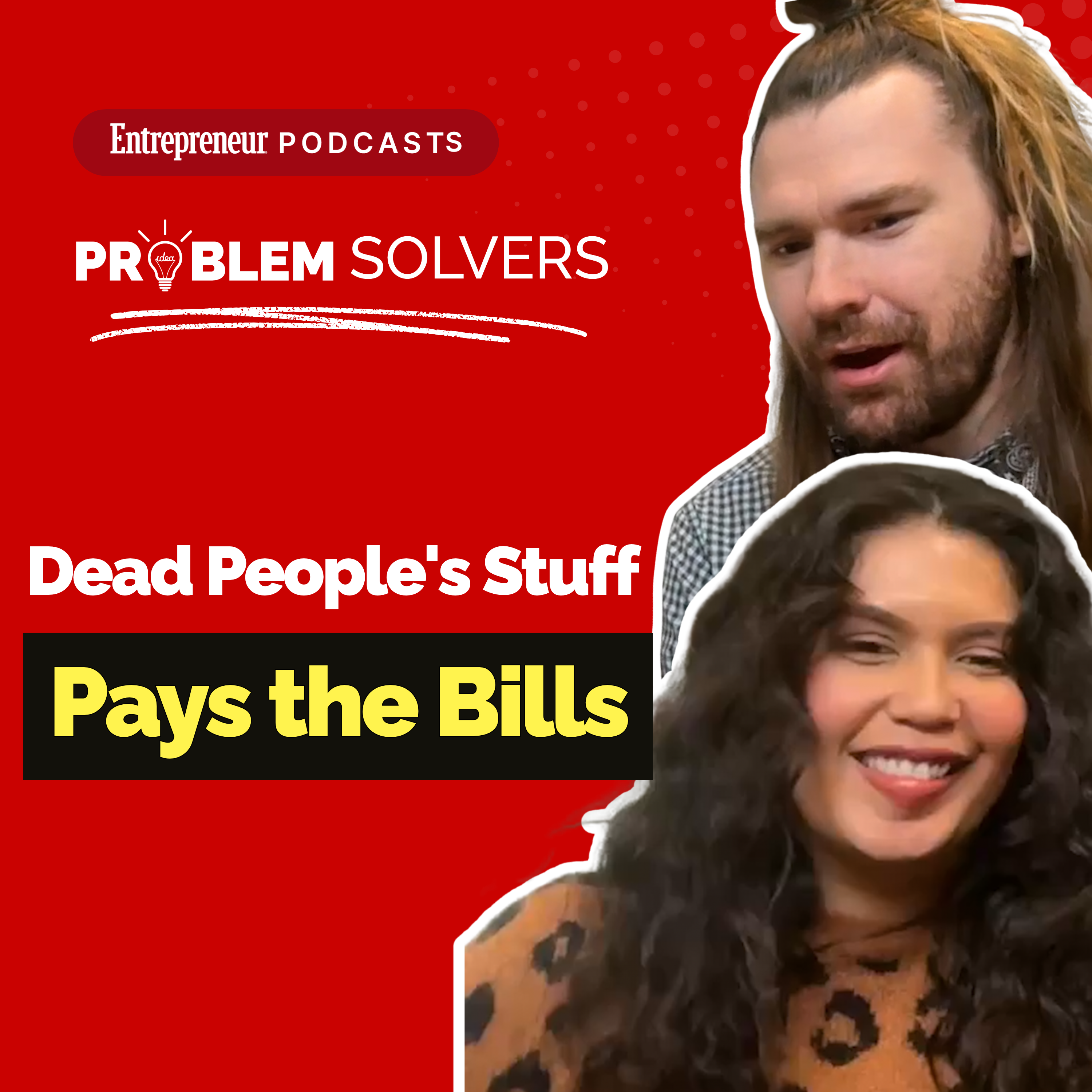
How "Dead People's Stuff" Turned a Dusty Antiques Shop Into a Destination
In short
How Mary Mar and Curran Fudge turned a damaged 40,000-square-foot antiques warehouse in Oklahoma City into “Dead People’s Stuff,” a destination for architectural salvage and statement pieces, using rebranding, playful marketing, and a builder-focused inventory.
Guests/backgrounds
Mary Mar and Curran Fudge are married real-estate/historic-preservation entrepreneurs who bought the former “Architectural Antiques” warehouse (since 1978) from a prior owner; they had no retail/antiques operating experience.
Key claims
“But I don’t know how to do that” is an excuse; they learned by renovating for five years, rebranding (keeping “Architectural Antiques” for legitimacy), and targeting the 20% of customers who spend most. They source items via salvage rights from buildings being torn down and from overseas travel.
Notable examples
guerrilla-style stickers and coffin-shaped business cards; organized sections (e.g., stained glass, light fixtures); film-industry buyers (e.g., Killers of the Flower Moon, Scorsese).
Written by AI. May contain mistakes.
Chapters
1:00
Overcoming Business Doubts
Exploring the common excuse of not knowing how to succeed in business.
“Hi, I'm Jason Pfeiffer, editor-in-chief of Entrepreneur Magazine, and this is Problem Solvers.”
2:25
Introduction of Dead People's Stuff
Meet Mary Mar and Curran Fudge, owners of Dead People's Stuff.
“Mary Mar and Curran, welcome to Problem Solvers.”
3:17
The Journey to Acquisition
Mary and Curran share their unexpected path to owning an antique warehouse.
“So when we came home, we started working in real estate and doing our thing in historic preservation and working along.”
6:05
Renovating a Treasure Trove
Details on the renovation process of a dilapidated warehouse.
“We don't know anything about retail or antiques.”
7:11
Rebranding the Business
How the Fudges rebranded their business to attract customers.
“I would not expect that a business like this knows how to run itself.”
8:04
Creating Curiosity Through Marketing
The importance of marketing strategies that intrigue potential customers.
“One was kind of the estate sell stuff more.”
9:22
Innovative Business Card Strategies
Using creative business cards and guerrilla marketing to stand out.
“Everyone, when they see a sticker, they're like, well, either puts it on their computer, like in what is that people's stuff.”
11:14
Understanding the Customer Base
Identifying the target customers and how to cater to their needs.
“Any little distinguishing deal, you know, I mean, it grabs a little gluer attention.”
14:01
The Unique Appeal of Antiques
Learn about how a unique approach to sourcing antiques can set a shop apart.
“to what you're looking for, stained glass.”
16:41
Navigating the Challenges of Antique Sourcing
Discover the complexities of sourcing and pricing antiques and the importance of mentorship.
“And people always ask the same thing that they are clearly asking you.”
Show all 14 chapters
19:06
Collaborating as Partners in Business
Explore how distinct roles and responsibilities can enhance collaboration in business partnerships.
“the book was set in the magazine industry.”
20:52
Innovating Through Custom Restoration
Understand how in-housing construction capabilities can innovate and expand a business.
“And sometimes caring about what they care about more than what you care about.”
23:23
Engaging with the Film Industry
Learn how connecting with the film industry can benefit an antique business.
“And so there's so many little things you could rabbit hole on of, but each little milestone, you know, you, you, you relish in those tiny little wins and it just makes every day exciting.”
25:50
Visiting Dead People's Stuff
Find out what unique attractions customers can enjoy when visiting the antique shop.
“in the killers of the flower moon right uh well guys this has been really awesome and congratulations on everything you've built.”

Ask about this episode
Get the gist, explore an idea or ask about something said.
 Claude
On Problem Solvers, what are the key points of this episode?
Searching your listeningTranscript
Automatic transcript. May contain errors.
0:00Mary Fudge: At CLA, we're in your corner and on it. We coach tax strategies and Little League First Base. We help you adopt AI data tools and we adopt rescues named Buddy. We walk your factory floor and jog the local 5K, though sometimes we walk that too. Wherever you're coming from, we're right there with you. Wherever you're going, we'll get you there. CLA, CPAs, consultants and advisors. Learn more at claconnect.com slash with you. You know, we buy from buildings getting torn down, the salvage rights, and we buy the salvage rights and save all the good stuff from, you know, getting hauled off to the landfill.
0:39Mary Fudge: We also go and travel abroad. We love traveling and we have two. You got to ride off your vacation, you know. That's right. We took last year.
0:48Curran Fudge: Listen up, IRS. They are working. But we are working hard. Running a business means solving problems. I tell you how the smartest entrepreneurs do it. Hi, I'm Jason Pfeiffer, editor-in-chief of Entrepreneur Magazine, and this is Problem Solvers.
1:08Curran Fudge: You know what the dumbest phrase in business is? It's this. But I don't know how to do that. It doesn't sound like it would be the dumbest phrase. It sounds like it would be a very reasonable phrase, as basically anyone who has succeeded in business can tell you. But I don't know how to do that is actually just an excuse. You can figure out how to do that. So many people have. Look around you. People who are operating successful businesses all around you did not know how to do that at all. They had no idea how to do that. They just figured that out. And today, I have a really interesting and fun example of exactly that, of but I don't know how to do that.
1:44Curran Fudge: It is a married couple named Mary Mar and Curran Fudge. They are the owners and operators of Dead People's Stuff. How fun is that? What do you think Dead People's Stuff is? Well, they sell Dead People's Stuff. It's an architectural antique warehouse. It is gigantic. They are sitting there. They showed me just before we got talking, and you'll hear from them in a second. And it is just this massive showroom of dead people's stuff. And they didn't know how to sell dead people's stuff, but they figured it out. And they built a business that is so successful and so thriving that it landed on our entrepreneur magazine, America's Favorite Mom and Pop Shops list in 2026.
2:24Curran Fudge: And the goal of this conversation is to help you. Well, I don't know if you're building a small business, maybe build it to the point where it also lands on America's favorite mom and pop shops, but more so to just get over that fear of, but I don't know how to do that because they didn't either. And look what they did. Mary Mar and Curran, welcome to Problem Solvers.
2:45Mary Fudge: Howdy, howdy. Thanks for having us. Jason.
2:47Curran Fudge: Okay. So before we talk about dead people's stuff and how you figured out how to build a business like this. I said you guys didn't, you weren't coming from this industry. In fact, this business kind of got foisted upon you in a very unexpected way. So give me the quick background about how you two are and how you ended up with a giant 40 ,000 square foot warehouse full of antiques that you call dead people stuff.
3:16Mary Fudge: Sure. So we met in Southern California at the University of Redlands, and we had a silly idea to go backpack India for a year after undergrad and had an even sillier idea to bring Eastern tribal doors to middle America and kind of be careful what you wish for. So when we came home, we started working in real estate and doing our thing in historic preservation and working along. And this warehouse that my dad had always been a customer for, ended up coming to be for sale. That's where Architecture Antiques was. That was the name before. Architecture Antiques and Dead People Stuff. Right.
3:53Curran Fudge: Before we bought it. There was this business. You guys are in Oklahoma City. This business had been in Oklahoma City since 1978. It was called Architectural Antiques. Your dad was buying stuff from there, I suppose, as you guys are doing historical renovation projects. projects. Yeah. You're, you're, you're, you're, you guys are customers of this business and just so people can picture it. Imagine just a massive warehouse, uh, where, uh, it's stuffed with, uh, I, what am I seeing in there? Chandeliers, doors, every kind of crazy thing. So, so this business has been around a long time. You're a customer, your dad's a customer.
4:29Curran Fudge: And, uh, and then suddenly
4:31Mary Fudge: it's for sale right and this warehouse was not uh in in the safest or best condition when we got it so they have it was in temper the roof was like leaking when it was raining five ten foot of water ten inches of water in the building i mean it was just a mess but it had treasure and and it was incredible coming in here and it like feel it felt like a music like a museum but it was like dark and moody. It was like a life-size treasure chest is kind of the way we described it in a dilapidated building. So you kind of had to get it. Sometimes you had to get out a flashlight and walk through this, you know, dingy old warehouse.
5:12Mary Fudge: And I remember running around as a kid. It was kind of like a dream, just a weird, you know, am I allowed to be in here? Is this safe or what is all the stuff in here? And so it took us five years to renovate. Wait, wait, wait, wait.
5:24Curran Fudge: But you're skipping over the part where you decided to buy it. So, right. So, so here you are, you're telling me you've got familiarity with this business as a customer, you growing up going there. But number one, you don't know how to run an antiques business. And then number two, this isn't a sounds like a fully functioning antiques business at the time. It's in a dilapidated warehouse. It sounds like so much work would have to be done. Why on earth did you say yes to this?
5:49Mary Fudge: that's a great question why I mean Mary Mar was a big fan of the Bigger Pockets podcast yes we always wanted to scale up in our real estate business so I always say current I think it's time to go into the commercial aspect not just residential and then and we saw this building beautiful building 40 ,000 square feet it's an old caterpillar 1940s caterpillar cat bulldozer it just was massive so much potential I mean huge 20 foot 20 foot ceilings old working crane just a really cool building just the bones of it itself but yeah it was in it was in rough shape and so you know just being young ambitious individuals you know young entrepreneurs were kind of naive to what it really was going to take to do it but we we kind of jumped in head first and but jack jack's mick check that was the last owner he said he said if we're gonna buy this building you gotta run that people's stuff and we're like We don't know anything about retail.
6:47Mary Fudge: We don't know anything about retail or antiques. We love antiques, and we use them for historic preservation in our projects, but not enough to run the whole business. So we're like, we thought about it. We went and... Yeah, he said, oh, it's easy. Oh, you'll figure it. He said, oh, antiques, the kids can do it. Yeah, and so it was quite the undertaking. But five years later, we've got a beautiful warehouse. And I wouldn't say a thriving business. Yeah, definitely. We're doing well for ourselves. Yeah.
7:17Curran Fudge: I would not expect that a business like this knows how to run itself. I would expect that if you bought a McDonald's in a popular part of town, that that business knows how to run itself because the customer is clear, the product is clear. Antiques sounds like a really challenging business. First of all, who are the buyers? Number two, how do you make sure that you're reaching them? And then number three, I imagine curation is really important.
7:45Mary Fudge: Well, first, we, so we rebranded a company. So we like work with a marketing company and they did the logo. They said, you got to put that people stuff first.
7:54Curran Fudge: And again, just to be, just to be clear, because the business was called architectural antiques and you renamed it.
8:02Mary Fudge: And dead people stuff. It was both. So it was two different businesses. And so you're right. One was kind of the estate sell stuff more. So it was architectural antiques, all the old building materials and dead people stuff. And that was kind of more bric-or-brac, little stuff from people's homes. But when we worked at the marketing company, they loved the stick. They're like, you got to do dead people stuff first. Just the glue of dead people stuff. You know, like, what is that? What the heck? You can't not remember that, you know? And we kept the architectural antiques because that's what we are.
8:30Mary Fudge: That's what we sell. The legitimacy. And then we added design because we want just the aspect of projects and the creativeness of it. And Mary Mara was adamant that we get the design just because that really did open us up to design designers and developers. And that was probably more of the legitimacy of, you know, architectural antiques and dead people stuff and design. And it just, yeah.
8:54Curran Fudge: That's interesting. and I think is not something enough small business owners and local business owners think about, which is marketing. I think a lot of people think about utility or offering. They just need to be there and they just need to be known that they are there. But you're thinking, no, this has to be intriguing and we have to think about the aesthetic of it. Why was that important and And have you seen that actually pay off?
9:20Mary Fudge: A hundred percent pay off. I mean, this guy is, we have stickers that we hand out to everyone. Well, he does. Everyone, when they see a sticker, they're like, well, either puts it on their computer, like in what is that people's stuff. And then they're intrigued. We have billboards with just the logo and our name and people, they're like, they just come in because they saw our logo. they don't even know what we are but they're like okay i want to i'm intrigued what is this i think back to my like oklahoma state uh marketing class like 101 freshman class and you know talked about guerrilla marketing and how do you differentiate yourself and i i remember one of the examples is a a company grew they put flowers and seeds down and their logo happened to be in the low library lawn of a big campus you know so i was kind of intrigued by that and then Stan Clark, a local business owner here in Oklahoma State.
10:12Mary Fudge: He has Eskimo Joes. They always feature him on ESPN anytime there's a game there. He started, he made it to YPO, which is a huge young presence organization, major accomplishment shirt. And so he was just a bar selling t-shirts, but he had like the number two most sold t-shirt in the world. And it's a silly little Eskimo. But how he did that was his guerrilla marketing. He would throw t-shirts. He'd go to those concerts and he'd throw t-shirts up on stage at all these music festivals. And it's a silly thing. And, you know, that nugget was in my head. He was a young mentor, mentor for me as a kid growing up.
10:43Mary Fudge: And so I'm like, you know what? I got these stickers. I'm going to pass this out to every individual. Any person I shake hands with, have a conversation with, yada, yada. I give a sticker. Here's a sticker for Deadpool stuff. Check out our TikTok. And who doesn't love stickers? Everybody loves stickers. And then they look at it like, oh, this is cool. What is this? You know, curiosity can't get the better. You can't not get the better of them. They have to, you know, Google it or check out the Instagram or come to the warehouse. And also standing out. Like, for example, our business cars are coffins.
11:08Mary Fudge: Sure. So it's like, how can you make things like a little different that people are going to remember you? Yeah. Any little distinguishing deal, you know, I mean, it grabs a little gluer attention. But yeah, I mean, they're they're pretty cute. These little coffins. Oh, wow.
11:22Curran Fudge: Yeah. You're holding for people who can't see you're holding up the business card. And it is. Oh, yeah. It is. It is shaped like a call. And that is really smart. And so you're really you're leaning into that that distinguishing factor. And it makes it feel like you're not just a stuffy antiques dealer. I think a lot of businesses don't necessarily feel welcome to people who are curious about it. If I am just passing by and I see something that maybe is just called antiques, I think, oh, I'm not an antiques person. They might look at me and be like, what's this guy doing here? But in a way, dead people stuff and the playfulness of everything that you're doing, the stickers, the business cards, is lowering the barrier to entry and inviting people and their curiosity in.
12:10Curran Fudge: Sure.
12:11Mary Fudge: Correct. I mean, we have all ages come to the store and it gets full on Saturdays, on the weekends, just people being curious. And it's like a museum in here that you just can walk and admire all this history and architectural items. it's a pretty fun place. I mean, typically there's no money in antiques. You know, everyone is like the old retirement job of the couple who just, they're just kind of having fun. You know, they get to go around and buy stuff for us. It's, it's, I mean, there's, there's money in building materials. You know, the, our customer, our main, our 1 % customers, the, the 20%, you know, the 20, 80 rule, those guys are the ones who are, you know, building out, they need that statement piece.
12:52Mary Fudge: They don't care. They're putting it on their line of credit. They, they want, you know, So we've really leaned into the bigger statement pieces to just really make a project pop.
13:02Curran Fudge: Let's unpack that. Let's unpack that. Because earlier I had said, how do you figure out how to run a business like this? How do you figure out what to carry? And so the answer is that you stepped back and you said, well, who is our best customer? Who's the person who's coming back the most, who's spending the most money? And then what's driving their purchasing decision and how do I solve their problem? And what you're telling me is that the number one customer isn't somebody wandering in off the street and maybe curious about something. It is a builder. And they are looking for something distinctive that they can bring into the project.
13:35Curran Fudge: And you said a statement piece. I'll have you explain what that is in a second. And so you know that you've got this network of people. You want to be the trusted source for them. and that you're solving a problem for them because they want to build something that has these distinctive elements. Absolutely.
13:52Mary Fudge: And I think we even at the store, we try to put things together. Like light fixtures are going to be in one area. You know, organize it where it's easy to just go to the store, to what you're looking for, stained glass. I mean, yes, there's still things all around, but it's more organized than I would say your typical. Typical antique shop. Yeah, I mean, because yeah, strength of numbers for sure. Yes, and it's like not everyone has the time to look around for a long time. It's like, okay, the stained glass is in this section. Well, and, you know, building, you want, when you build a new house, a remodeled new house, you want the modern amenities.
14:26Mary Fudge: You want to be comfortable. But you want these little, for people who live in old homes such as yourself, you want these historic little gems just like, you know, original hardwoods, the original panning or the original trim. All the lighting, the stained glass, all that stuff. It really makes space feel inviting and unique. And, you know, and then so our whole model is just built on unique. You know, all these dealers and everyone, they're trying to, oh, is the door this size or how? And I'm like, I could care less about the size. Is it going to be an incredible piece? Is this something that no one else has seen anywhere else?
14:55Mary Fudge: I want it. You know, we buy from buildings getting torn down, the salvage rights. So we buy the salvage rights and save all the good stuff from, you know, getting hauled off to the landfill. We also go and travel abroad. We love traveling and we have to. You got to ride off your, you got to ride off your vacation, you know. That's right.
15:12Curran Fudge: we took last last listen up listen up irs they are working but we are working hard i mean we work
15:19Mary Fudge: all the time we're addicted to it i don't think people understand how hard it is to get these antiques like physically it's they're hard it's hard to find just to find them you got to know where to source them from to literally physically move them to ship them truck them crate them to get them in front of the customer's eye yeah folks don't realize that they just they see a price tag. Oh, that's a, that's a steep price.
15:41Curran Fudge: How did you figure out how to do any of that sourcing? I mean, you didn't, you were not practiced in finding these homes that are going to tear it out. And you probably didn't know the phrase, whatever phrase you just used, uh, salvage rights. And you probably didn't know where to be traveling. How did you do this?
15:59Mary Fudge: Well, the, the previous, I mean, you know, the previous owner was monument found like foundational for us to be able to do so, you know, he pointed us the right direction. Oh, oh, there's these, you know, can't down round top or round top. He'd tell us some of these pockets of places to go and festivals. And it was really intimidating going to people's houses or projects that they're, you know, going to tear down and trying to figure out the numbers of how you do that. But it just, you know, how you eat an elephant is one bite at a time. You know, we had it wasn't all at once. We just had to learn from each demo.
16:31Mary Fudge: And, you know, we had a couple of employees that carried on from the buyout. and they were instrumental in being able to let us educate us and grow because pricing well that was the hardest thing in the beginning it's like where how do we learn you have to price you know and just i just it was so intimidating but you know having those the predecessors before and leaning in i mean partnership mentors are everything you have you have to lean on other folks because you just you don't know everything especially as young kids and antiques that's just not a thing you know and in business like a business is a whole different not everyone succeeds in business you know so it's like we gotta go into our network and help each other we're in different forums organizations where they're business owners and we kind of all lean on each other and you can never stop we never can stop learning enough we always just want to try to educate ourselves we cannot be if it's like if you can get excited that you talk about not knowing what to do you know running a business is just the foundation is ambiguity you have no idea what you're doing always you just have to figure it out you kind of have to just be like a swiss army knife and do whatever it takes to figure it out we are so fortunate we get to wake up every day and work together you know so many couples we talk to like how do you how do you oh i could never do that i'm like man that's crazy that's your partner for life you know it's like we look forward and cherish the fact that we get to wake up every day and decide how we're going to tackle that day how we're going to eat that elephant right and so we've learned i mean i mean we're married and we are business partners so we've learned how to like work together and it's not like we don't have we're very different we're completely different people you know so over the years we definitely learned okay this is what works more for you this is what works for me like
18:11Curran Fudge: who's yeah who's pushing or pulling yeah i i so i had a little bit of an experience like that not quite the way that you guys have in that my wife and i wrote a novel together a number of years ago that came out. And people always ask the same thing that they are clearly asking you. How do you do that? I could never do that. And so we had to have an answer to that, as I'm sure you guys do, because people always ask it. And the business answer that I came to for that project, and I wonder if this resonates with you or what else you've learned about working together well, the answer is distinct roles and responsibilities.
18:49Curran Fudge: What we found from my wife and I was that it was really helpful to know functionally who is the CEO of different channels of decisions. So if we need to make a decision about this part of the book or this kind of thing, for example, the book was set in the magazine industry. And so if we had questions about the reality of something that we were reflecting in the magazine industry, then I have the final say. I'm the CEO of that. Whereas my wife has a background in fiction. I don't really know fiction. So if we were talking plot points or character development, we'll collaborate on it. But I'm going to give her the final say on that.
19:28Curran Fudge: I wonder if something similar has taken place with you guys or what tricks you found for collaborating together.
19:34Mary Fudge: Yeah, I think I think so. I mean, there's like you do specific things in the business that I don't do. And yeah, we're opposites. We have our strengths and weaknesses. I can, you know, online, computer, anything technical that's out there. You know, I can't do that. Numbers. That's not for me. You know, I'm good at ballparking. This lady, she's numbers. I'm more hands-on. I'm more get dirty, get your hands dirty. But we have a healthy push and pull kind of whoever wants it more is kind of our barometer for how we lean her way or my way. You know, it's because, and it took a while to figure out that barometer, right?
20:14Mary Fudge: You know, it's like we both, you know, we're both kind of stubborn by nature and we have we like our ideas and we are confident in ourselves and what we think our idea is the best idea. But, you know, it's not always the case, you know. So we've had to we've had to learn to be flexible and malleable with one another. Just, you know, not just for our business, but for our marriage, you know, to to to respect your partner.
20:37Curran Fudge: I think who wants it more is actually a really great barometer because it respects that sometimes the answer is not you. And you have to be constantly attentive to what your partner is responding to and what they care about. And sometimes caring about what they care about more than what you care about.
20:57Mary Fudge: Sure. I mean, it's kind of like who has more time and thought and energy and attention into it. You know, if she's thought about her, I've thought about it for two, three hours, four hours. And then she didn't come in for 20, 30 minutes. Like, yeah, no, I want this. Like, OK, well, you know, just let's let the pendulum's going this way. Yeah. So but yeah, that's kind of funny.
21:15Curran Fudge: And current you'd said before we started recording that there's something else that you guys have done to support the business, which is that you you brought some of your prior business into it. Is that right?
21:27Mary Fudge: So we, you know, I talked about we did historic preservation and, you know, restoring old buildings, residential and commercial outside of Dead People's stuff. And so, you know, Dead People's stuff has the retail, you know, showroom floor where we sell all of our home decor and building materials. But we realize that there's a need for all this, you know, a lot of the items will be in rough shape, need to be restored, or people want custom things, or they see a really cool piece, but it's not all the way there. And so we in-housed all of our construction guys. We had to pivot a little bit to innovate.
22:01Mary Fudge: We in-housed all of our construction guys into the workshop and to make it where we can do custom stuff, we can do restorations for customers, but not only for customers, but for the pieces we're bringing in. and we do installs. And so that's a whole different side of the business. And so, you know, in originally getting our business from where we bought it from the original owner, everything was pen and paper, getting it digitized into the, you know, onto the POS, the point of sale system to be able to be a legitimate retail business. You know, we're having to do that with our workshop now. And - Because it was just pen and paper.
22:37Mary Fudge: Right now, yeah. Our work orders are pen and paper. And, you know, and we're starting to get, a healthy amount of work orders and of installs. And so it's a lot to keep up with. Right now we've got papers flying. It's just like, what are we doing? This is ridiculous. I can't keep up with this. And so I know our level of productivity is not where it should be for the volume and the growth that we want to get to. And so, like most antique businesses, we're leaning into AI. So no, but I think that is what we have to do. We have to leverage. So we're looking at ClickUp. There's another company here.
23:11Mary Fudge: Seaworthy Academy in Oklahoma City that he's just one of our good friends or one of our forums of a consulting group or for like a monthly forum we meet with he is going to help put us into that realm of it's called ClickUp is the website we're navigating right now and it's pretty exciting because we have a problem so it's a good problem we have a lot of work order so I mean problems create nothing but opportunities I think the fact that we have fun every day is every, you know, there's so many facets of our businesses. And so there's so many little things you could rabbit hole on of, but each little milestone, you know, you, you, you relish in those tiny little wins and it just makes every day exciting.
23:52Mary Fudge: Every, every chapter, every meeting is an exciting portion. So it's like, it's kind of like, I always say, if you can gamify life or business or anything for that matter, if you can gamify it to make it fun, you're going to succeed, right? You're going to, you look forward to doing it. It's not, there's nothing bad. It's like going to the gym, you know, people, am I going to the gym or am I going to the gym? And I'm like, I'm gassed up because I know I'm releasing all those healthy endorphins and I'm, I'm flying through it. Well, and, and, and it's like, can we go to another? So last, last summer we went to England and we took our family and we worked and it was just so fun.
24:29Mary Fudge: And that's the reason why we are in this business, because we want to travel the world and find these cool, unique pieces and bring them to Oklahoma City. And, I mean, we ship, I mean, nationwide. And, I mean, I think some things are going back to England that people are seeing in our store. Yeah, it has happened. We have the film industry here, and it has been huge for us. Like, really good incentives. We had a special guest come in a couple weeks ago. Yeah, Jason Momoa. He helped, like, bought, like, a big 22-foot bar. But yeah, pivoting to the film industry has also been a big, big one for us.
25:07Mary Fudge: Yeah. So we, people buy from us in the film industry. Killers of the Flower Moon was a big one. They would come and buy items from us. And then...
25:17Curran Fudge: Yeah, so that's great. And right, I had seen that some light fixtures, doors, and some other stuff made it into that Scorsese film.
25:25Mary Fudge: Yes, yes. Yeah. Which is good on both sides because they came and bought from us. You know, they're great buyers. their budgets are different than most people's a movie production budget's a little different than a you and i right and so uh and so it's great on the front end and then on the back end we get to go back and buy all the stuff whenever they wrap the movie up and so then it also has added weight to the you know more more desirable for the piece because oh it was in the scorsese film right it was
25:53Curran Fudge: in the killers of the flower moon right uh well guys this has been really awesome and congratulations on everything you've built. Final question. If somebody is in Oklahoma City and they want to go check out Dead People's Stuff, 1900 Linwood Boulevard, what is the coolest thing you think that they should beeline into in your warehouse right now to go take a look at?
26:13Mary Fudge: So I tell everybody, I mean, it's a minimum 30 minutes to hour walkthrough. You can spend the whole day here because we have a 40 ,000 square foot antique warehouse, a barbecue, tattoo shop, cat cafe, you know, big collective. And so I tell everybody, You go to the cat cafe, you get a coffee, you see the cats behind the glass, whether you go in the cat room or not. They're all behind glass. It's kind of fun. There's cat tunnels and all this stuff. Walk around, tell people stuff for 30 minutes to an hour. And then you go get Edgecraft barbecue next door. And it's just like, I mean, customers do spend, you know, anywhere from 30 minutes to two, three, four hours on our campus.
26:46Mary Fudge: And so it's kind of it's just fun. And I would say right now we have this store that is going to just sold, but it's from England. it got over 8 million views on social media. And it's just this beautiful, like, stained glass. Little hobbit cottage. Yeah, so it's just incredible door. But it's about, it's going to leave here soon. But I think that's the start, I think, right now. And I think for Dead People stuff, we hang our hat on is stained glass. I think we probably, you know, we travel the world looking for all this stuff. I think we probably have the best, probably the most variety of stained glass open to the public, you'll see under one roof.
27:23Mary Fudge: I mean, I'm not going to say it's the most premier every piece. We have some pretty premier amazing stuff, but it is just an array of stained glass. The whole warehouse is full stained glass. It's incredible.
27:34Curran Fudge: Oh, cool. Well, so fun. Merrimar and Curran Fudge, congratulations on everything you've built, getting into this business without knowing anything about it, and making it work, and making it onto America's favorite mom and pop shops. Really appreciate your time.
27:48Mary Fudge: We appreciate you Jason. Thanks for having me. Thank you entrepreneur.
From the publisher
Mary and Curran Fudge wanted a building. They got a business. The seller had one condition. Buy the warehouse, run the antiques shop inside it. They knew nothing about antiques. Or retail. Five years later, Dead People's Stuff draws weekend crowds, supplies Hollywood sets and landed a spot on Entrepreneur’s America’s Favorite Mom and Pop Shops list.
This episode is brought to you by CLA. With you on every step of your financial journey. To learn more, visit CLAConnect.com.
Timestamps
0:00 Intro
4:58 Why say yes to a business you don't know how to run?
7:16 The rebrand: Why "Dead People's Stuff" works
8:50 Stickers, billboards, and coffin-shaped business cards
11:59 The real customer: Builders hunting for statement pieces
15:12 Learning to source antiques from scratch
17:26 How a married couple divides decisions
20:46 Adding a workshop, and drowning in paper work orders
24:16 Selling to Hollywood: Killers of the Flower Moon
25:26 What to see first at the warehouse
Learn more about your ad choices. Visit megaphone.fm/adchoices
More from Problem Solvers
All episodes


We use cookies.They keep VO running smoothly and help us improve it. Privacy policy