
In short
The episode explains how The States Project builds a pro-democracy movement by targeting state legislative races and mobilizing grassroots “Giving Circles,” arguing that state power is where big policy outcomes are decided on small margins.
Guest backgrounds
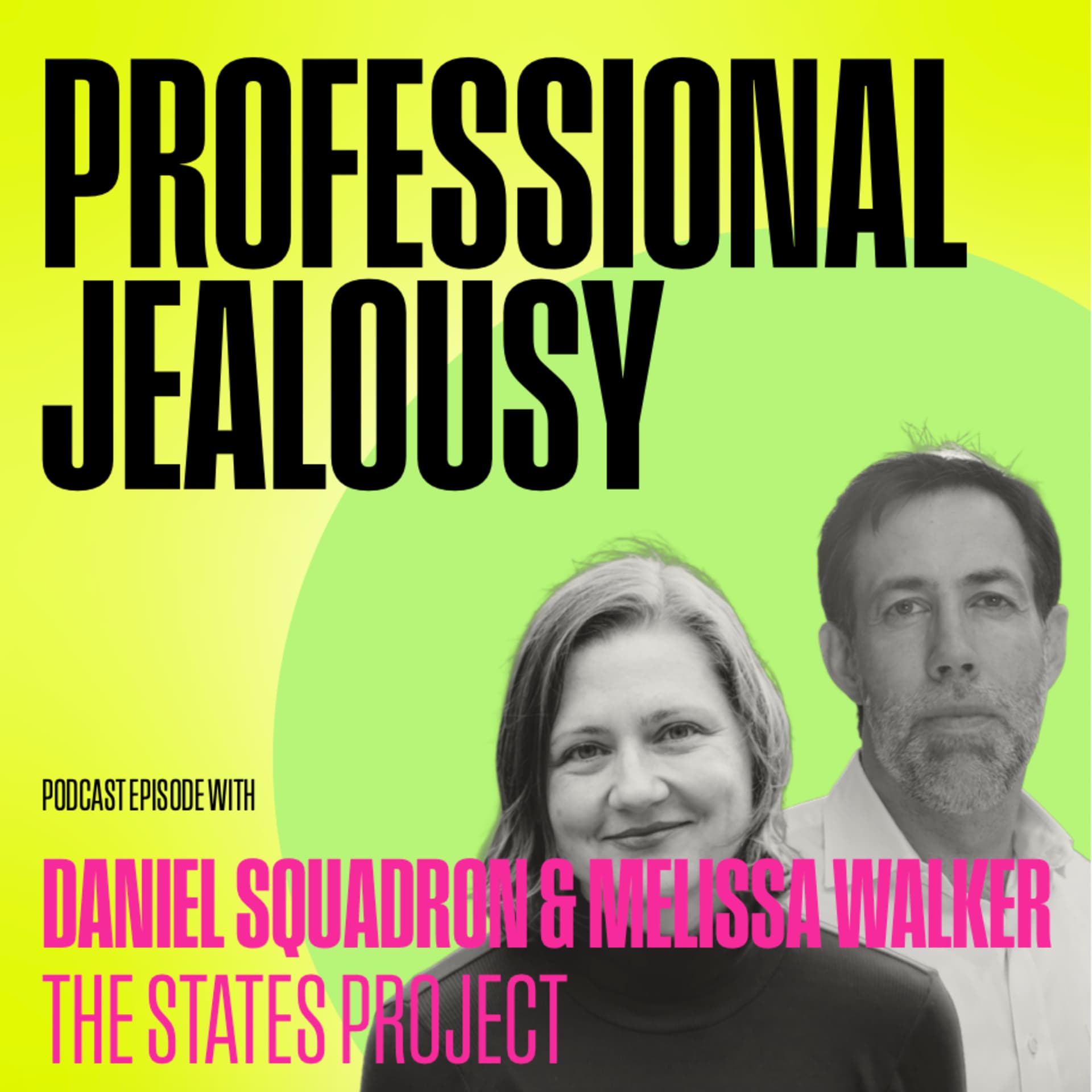
Daniel is a former New York State senator and co-founder of The States Project (launched Oct 2017). Melissa is a former children’s/YA novelist and magazine editor who helped launch the organization’s Giving Circles program.
Key claims
State legislative races get less than one penny on the dollar spent in politics, yet can shift control with minimal votes; in 2024, The States Project backed 59 races decided by fewer than 1,000 votes. The model has four steps: identify where power is on the line across 99 chambers, fund targeted candidates, provide campaign resources, and support governing with constituent services and policy ideas.
Notable examples
North Carolina (won by 228 votes to break a right-wing supermajority); Pennsylvania (held a one-seat majority won by 63 votes; flipped 12 seats; helped elect Speaker Joanna McClinton). Giving Circles: 201 active groups for 2026; average raise about $25,000.
Written by AI. May contain mistakes. Listen to the episode to check what was said.
Chapters
Tap a time to open that second in VOUnderstanding the States Project
0:45 to 4:40
A discussion on the origins and mission of the States Project and its significance in state elections.
“For people who don't know the States Project, can you give us the elevator pitch?”
The Impact of Local Elections
4:40 to 9:36
Exploration of how state legislative races influence wider political outcomes and the importance of grassroots involvement.
“So you pick a state and a candidate and fund it.”
The Giving Circles Program
9:36 to 11:03
An overview of the Giving Circles program and its role in empowering community fundraising for local candidates.
“We have had really a huge range of folks who start and grow giving circles.”
Political Engagement and Power Dynamics
11:03 to 14:00
Discussion on the importance of political engagement at the state level and how it impacts national issues.
“interesting to see, you know, one of the big outcomes is getting people to think about power, think about local, you know, what you can do actually to impact where you live, your local community.”
Impact of Grassroots Involvement
14:00 to 15:00
Explore how grassroots actions can create meaningful change in democracy.
“And the combination of those two things is pretty irresistible for someone who's really thinking hard about how and where to get involved and spend their time and resources.”
Personal Reactions to Political Outreach
15:00 to 16:20
Discuss personal experiences with political outreach and its disconnect.
“But in states, you're not an observer to the destruction of the democracy.”
Understanding Power Through Participation
16:20 to 17:20
Delve into how grassroots movements help understand political power dynamics.
Civic Engagement and Community Building
17:20 to 18:20
Learn about the importance of community in effective civic engagement.
“You know, for me, and I'm sure Melissa will have a different and also true answer, but for me, this is the best way to understand power.”
Collective Decision-Making in Giving Circles
18:20 to 20:00
Understand how collective decision-making empowers individual donors.
“Once you're in this, you become an expert.”
Shifting the Political Narrative
20:00 to 22:30
Examine the shift from top-down to bottom-up political organization.
“So some people, a meaningful donation was$25 and some people, a meaningful donation was$2 ,500 and everything in between.”
Show all 24 chapters
Branding and Identity in Political Giving
22:30 to 25:00
Discuss the significance of branding in grassroots political movements.
“I talk about this in in my book, The Fourth Branch.”
Emotional Engagement in Political Giving
25:00 to 28:00
Explore the emotional aspects that drive political donations and involvement.
“And at any moment, there's something that I and our team would love to make better.”
The Emotional Hook of Giving Circles
28:00 to 29:54
Explore how emotional connections enhance participation in giving circles and civic engagement.
“someone, you get upset about something, you give to the opponent or a commercial, you know, a candidate's ad makes you cry, you're going to give.”
Personal Journeys into Politics
29:54 to 31:54
Discuss personal motivations and backgrounds that lead to a career in politics.
“I'm curious, Daniel, as someone that has never thought about politics as a career, I am curious, what made you take this route?”
Transitioning from Writing to Activism
31:54 to 34:04
Understand how skills in storytelling translate into political activism and community engagement.
“I think the truest answer is, I dropped out of school, college for a year and opened a bar restaurant with some friends.”
Vision for the States Project
34:04 to 36:12
Learn about the ambitious goals of the States Project and its significance for democracy.
“on the news or in the newspaper every day.”
Empowering Individuals in Civic Engagement
36:12 to 39:01
Discover the importance of individual empowerment in civic activism and community participation.
“It took some time before the Constitution, then imperfectly reflected it.”
Future Presidential Candidates and State Power
39:01 to 40:56
Analyze the qualities needed in future presidential candidates regarding state-level engagement.
“So that's what I hope, that more and more people kind of recognize their own power when they engage.”
Identifying Superpowers in Activism
40:56 to 42:00
Reflect on the unique strengths that individuals bring to political and social activism efforts.
“What do you think both of your superpowers are that have helped you get where you've gotten to?”
The Joy of Creation and Insight
42:00 to 43:19
Explore the joy of creating new things and providing insights that delight others.
“You know, I've had a lot of different conclusions on this at different points and sort of state it confidently and see if it sticks.”
Career Advice: The Good and the Bad
43:20 to 44:38
Discussing impactful career advice and experiences in the professional journey.
“Best career advice, worst career advice you've had?”
Pursuing Fulfillment and New Skills
44:39 to 46:19
Focus on personal development through new skills and fulfilling experiences.
“And I had a writer friend say to me, you know, life is really good for writing.”
Professional Jealousy: Inspirations and Aspirations
46:20 to 48:35
Discussing individuals who inspire jealousy and the values they embody.
“I think she is a brilliant organizer and a huge inspirer of people.”
Community Building and Engagement
48:36 to 50:22
The importance of community engagement and building connections for impact.
“I mean, it's a great example of organization and creating impact, definitely.”
Transcript
Automatic transcript. May contain errors.0:00Natasha Jakubowski:Coming up in this episode of Professional Jealousy. State legislative races get less than one penny on the dollar spent in politics. That's ridiculous. In 2024, the States Project was involved in 59 races that were decided by fewer than a thousand votes. There is so much isolation in the world right now, but this is a place where you can have an impact and you can do it side by side with other people. In states, you're not an observer to the destruction of the democracy. You don't feel helpless because you're not powerless.
0:38Natasha Jakubowski:So without further ado, hi, Daniel and Melissa. It's so good to have you both on here. For people who don't know the States Project, can you give us the elevator pitch? Sure. Maybe I'll go first. It's great to be here and thank you for having us. Maybe I'll go first and then let Melissa go, which will sort of track a little bit what we've done here. So I'm a former New York State senator, which is when you start losing your listeners. And I saw while spending nearly a decade in the legislature that when it came to states, the right-wing movement was outperforming politically. They were winning more elections than even they did nationally.
1:22They had a much better ideas ecosystem. They had both politically potent and also goal aligned solutions that their state lawmakers were carrying. And that on my side, I'm a lifelong Democrat. It seemed very few people much cared, and there wasn't much happening about it. So it was extremely frustrating because, you know, I saw that if even 100 people got in a room and decided to change how their state was working, they could. I would berate any time I could get even 20 people in a room, people that message. No one ever took me up on it until I met Melissa and some of her friends in a party that she'll describe.
2:03And it was so inspiring to me that they did take me up on it. That I, along with Adam Pritzker, my co-founder of the States Project, started this organization in October 2017 to try to make sure that the power of states was something people understood better than they had before on every issue people care about, and that we would be more effective for folks who, you know, really believe in representative democracy and effective government and personal freedom and fair markets to have power in states by doing better politically and having better ideas.
2:36Natasha Jakubowski:Yeah, amazing. I mean, it's just so striking that while everyone has been focused on like the big elections, that the state races can impact people more and cost so much less. Melissa, what was it that kind of sparked your interest and got you to kind of help make this happen? Yeah, well, I was writing young adult novels and middle grade novels and editing teen magazines when I first met Daniel. And as he mentioned, I met him actually at a publishing holiday party in December of 2016. So a potent moment for politics in this country, certainly, and one in which I was looking around for like places where I could really have an impact.
3:22And so exactly what you just said, the idea that it's often cheaper to change the balance of power in an entire state chamber than it is to win a single competitive congressional seat really galvanized me because I didn't feel like I was someone who could organize a room and host a U.S. senator. But I did feel like I was someone who could get my friends and my network together and potentially pool enough resources to help shift power in a state. And after listening to Daniel, I really understood that all the domestic issues that I was thinking about in that moment, education funding, environmental policy, health care, civil rights, abortion, even back then, voting rights, gerrymandering, I started to realize that they were all really in the hands of state lawmakers in state capitals, and that I hadn't had eyes on that area at all.
4:11But it turned out that these were a place where I could make a really big impact, and they would be foundational shift for the democracy. So I decided to focus there and eventually helped launch a Giving Circles program at the States Project. And that was a way to help other people bring their networks to this fight as well.
4:33Natasha Jakubowski:Amazing. All right. So why don't we break that down a little bit? Daniel, why don't you talk about what exactly the state's project does? So you pick a state and a candidate and fund it. And then I'm going to ask Melissa to talk about the Giving Circles idea, because it's a super interesting kind of power of community creating movement. Sure. So, you know, there's really just four steps. The first step is to look at all 99 state legislative chambers around the country and try to figure out where power is on the line. because while an inspiring candidate that's exciting on social media can make you feel good for a moment, I found in my time in office, if you're in the minority in the legislature, in any legislature, you're just an observer with an all-access past.
5:25So where can you actually shift power? Look at all the 99 chambers. The second thing is within those states where power is actually on the line, who's really going to be deciding what bills get voted on, whether they're doing harm or good. Who are those candidates and districts? Second step. The third step is provide them with whatever they need to run their best possible campaign. More dollars, the tools and tips that maybe national campaigns get, but grassroots state legislative affairs rarely do. Get them out there on the doors and not just on the phones with special interests and donors. And then fourth, once they're elected, make sure that they have the ideas and the support to govern well, to represent their constituents in the way they promised during the campaign.
6:14So they're doing better communications and constituent services, you know, free turkey giveaways when Thanksgiving approaches, having a real relationship with their constituents, and also having the kinds of ideas that will make a difference. You know, if you think of the 10 domestic policy ideas people most care about. States have done more harm or good on those in the last 15 years than the federal government has. But these are part-time jobs, often with no staffers. And so we're just there to take folks who believe in the American promise and give them the tools to be effective at it. That's the work.
6:48Natasha Jakubowski:Yeah, amazing. Amazing. Melissa, talk So obviously the aim is to help elect people who are going to be pro-democracy. Probably worth pointing out that generally Democrats. And I know that you've had quite a lot of success. any particular recent races that you feel good about sharing in terms of this can actually work? Yeah, absolutely. I think one of the things that's most important for the folks in our Giving Circles program to see is impact. And we have been involved in many, many races across the years that have been decided by a handful of votes. In fact, in 2024, the States Project was involved in 59 races that were decided by fewer than a thousand votes.
7:46And in that year, which was actually a pretty tough year nationally, obviously, we were able to break a right-wing supermajority in North Carolina by a single statehouse seat that we won by 228 votes. We were able to hold a one-seat majority in Pennsylvania that we had won in 2022 by 63 votes. That was an incredible year and a wild victory because we were able to flip actually 12 seats in Pennsylvania that year. And that last one that was won by 63 votes shifted power entirely in Harrisburg. Let them elect the first Black woman Speaker of the House, Joanna McClinton, who's a wonderful partner of the States Project.
8:29And watching those states where there were power shifts has been really wonderful for giving circles who chose those states. So every giving circle can choose what state they'd like to target. After Pennsylvania 2022, I got to call every single Pennsylvania giving circle and say, that was you. Because if every piece of that basket weave hadn't been there, I don't know if we would have won Pennsylvania by 63 votes. And so I think people just seeing like this isn't you dropping something in a giant bucket. This is actually something that is going to make a difference because we are winning or losing on the margins.
9:06And when you shift power in a state, policies change, lives improve. There are absolute results.
9:14Natasha Jakubowski:Yeah, amazing. How many giving circles do you have? And like what sort of amounts are people raising? Like, I know that, yeah, it's just an amazing idea. So I just checked. We have 201 actively working for this year, so for 2026. And hopefully that number will grow some over the years. We have had really a huge range of folks who start and grow giving circles. We see folks who raise, you know, we have some big giving circles that are raising a few hundred thousand dollars, which is incredible. But we have a lot of folks who are raising$10 ,000,$20 ,000 with their networks. And we actually have a program that's kind of an on-ramp right now, which is called 1K at a Time.
10:04And we are watching actually as younger folks start to get involved and figure out that this is a way that they can have an impact and move resources. And we've seen a couple of those new 1K at a time giving circles starting up as well. I think one of the things about giving circles that feels really good to people is that when you can learn how to move resources and actually raise dollars, it helps you walk with more power in your regular life. And it helps de-emotionalize the idea of fundraising. And it can be a math problem. You know, when people say, oh, I couldn't raise$1 ,000. We say$1 ,000 is asking 25 people for 40 bucks each.
10:46Can you do that? And they say, oh yeah, sure, I could do that. And so helping people figure out what those steps are is really, really powerful. And I think a wonderful place for people to start. But we've got everything from$1 ,000 goals to$500 ,000 goals in the Giving Circles program. And the average raise is around$25 ,000.
11:06Natasha Jakubowski:Okay. Yeah, it's just so interesting. interesting to see, you know, one of the big outcomes is getting people to think about power, think about local, you know, what you can do actually to impact where you live, your local community. You know, if it wasn't quite so extreme in culture and what's happening in politics, you know, one outcome of all that craziness is the fact that it's probably a good thing for people to get involved and more, you know, more in the know when it comes to what's happening locally and politically. Do you find that the main driver is like, oh my God, what, just a feeling of powerlessness?
11:58Natasha Jakubowski:Or how do you find people and what is the kind of main hook that you think kind of draws people in? So I do think that people, everyone is looking for a way to get involved and have an impact right now. I think there's a lot of existential dread and fear and worry about what's happening in the country. And people are looking for a way in. Politics can feel like a black hole. It can feel like everything's happening in a dark room and you can't really see the furniture, but it is a place where you can have an impact. And I think our program tries to shine a light on that, not just because the dollars are so much lower, but also because part of our work is to help people develop a political fluency to start to understand how power really works and why there are these 50 mini Congresses across the country that have actually been shaping policy and outcomes on the kitchen table issues, yes, but also over federal power as well as we watch, you know, State legislatures draw the district lines that decide who goes to Congress.
13:06Often when the Supreme Court rules on something, what they are doing is throwing power back to states. So, you know, it was a Mississippi law that took down Roe. And if that one hadn't done it, there were a bunch of other states that had queued up abortion bans with the explicit purpose to challenge Roe. So those laws are coming from states. And when there's a ruling, it's throwing power back to states. So even outcomes of the Supreme Court giving circle leaders say, I'm working on that. I am working in the place where the power lives there. And even on the presidency, you know, states control the vote.
13:39They control who can vote and when and how. And, you know, if the federal government controlled elections, we would already be in pretty deep trouble. But they don't because the founders feared a king and there's a decentralized system here. And I think when people hear those types of stories, they can see that not only is this a place where they can have an impact, but it's also a place of incredible power. And the combination of those two things is pretty irresistible for someone who's really thinking hard about how and where to get involved and spend their time and resources.
14:14Natasha Jakubowski:All right, Daniel, what's the political professional view? Well, I think you might be surprised to hear this from a political professional, but you know, you get how many texts, if you're being glancingly interested in politics, from politicians saying, you need to help us, right? You know, among your listeners, you know, how many of them tried to do something in the last presidential race? If people are being honest with themselves, whether they respond to that text or not, or even what they did or didn't do in the presidential race, did any of them really think that they were going to personally have a meaningful impact on the outcome?
14:50Which doesn't mean it's not worth doing. We know that everyone needs to make the choice to act, to vote, to participate. Among other things, it sends a really strong message. But in states, you're not an observer to the destruction of the democracy. You don't feel helpless because you're not powerless. Literally a single individual's networks, expertise, resources at any level will have a vastly outsized impact. So it's a little bit of saying, you know, it rings empty when people say, oh, you don't know your power because people don't know their power. But the presidency is the single worst example of that.
15:36Where people really don't know their power in our federal system is to change the entire system by focusing where any dollar or minute they have to commit to the cause will have the biggest impact. And that states not just for some state campaign, but for every issue Melissa's already spoken about.
15:57Natasha Jakubowski:Yeah, I definitely I think just before we got on on the recording, I definitely got a text message from Nancy Pelosi telling me, you know, how much she really needed me. And it does feel very. Well, did you respond or decide that we should lose Congress? no i i i definitely i did i mean the yeah the problem is that you i deleted and said please don't spam me because it happens so often and it does feel so removed and like it's not real whereas um having taken part uh uh started to take part in one of the giddling circles i think one of the mechanics is not just that you can see uh see impact but you also get to really think about the process you know you you work as a group um and you think about it and you debate and then you make a decision I think that's one of the powers of um of the kind of mechanic that you've been using um it truly is like a way of creating that kind of grassroots interaction and motivation was that part of how you're thinking about it or that's been kind of something that you've seen kind of grow?
17:15Natasha Jakubowski:Like how much of it was planned versus has just kind of evolved as you've been building? You know, for me, and I'm sure Melissa will have a different and also true answer, but for me, this is the best way to understand power. So democracies are sort of strange things because people with less power come together and choose who has more. Sort of the only structure that's set up that way. You know, an elected official is hired by a bunch of people less power than they have or fired by them. And understanding that it can be dry. It can be a civics lesson. It can be the old how a bill becomes a law.
17:55The practice of participating in states really lets you behind the curtain on power, even if you're not someone who wants to get injured at all, or you're not sure what side you're on on a certain issue, or even in political movements, obviously, in this polarized moment. Many more people have much more clarity. But everything that you see in terms of how parties work, in terms of what it takes to get something done, in terms of the difference between what you and all of your friends think and what your fellow citizens think, these are wonderful, magical parts of democracy that fractured media ecosystem, a nationalized, too big to impact kind of conversation.
18:44Hide. Once you're in this, you become an expert. My favorite stories, actually, are when someone says, you know, I always thought I didn't know that much about politics. I got involved in the Giving Circle and I was at dinner. I was at dinner with some friends, you know, to barbecue on a Saturday night and someone said something about the news and I knew what was really going on. And like, you know, that that itself is a form of power that from the beginning was really important to me. The worst thing for me is when I'm at a family event and I get asked a question about some national headline that has nothing to do with the actual mechanics of how people are making decisions and what's going to impact our lives.
19:28Yeah. Yeah. And I think your question made me think a lot of a lot of different things. I know that you joined a giving circle that recently just did their state selection, which is something that giving circles do do. And it's based on the fact that my giving circle did one 10 years ago when we first started. We're on year 10, which I can't believe. But we wanted to vote on the state that we wanted to impact from the states project's kind of strategic list of states. And letting everyone who had given to the circle have a vote, no matter what they had given. So some people, a meaningful donation was$25 and some people, a meaningful donation was$2 ,500 and everything in between.
20:09But I knew that as we went into that first vote, I was handing a tiny scrap of paper and a golf pencil to people who'd given very different amounts. But we were all heading into whatever state we chose with our total. And the total felt really powerful. And I do think that to your point about, you know, this building community and really engaging with the learning about these states is the glue and a really important piece of this because there is so much isolation in the world right now and there is so much, you know, just people feeling alone. But this is a place where you can have an impact and you can do it side by side with other people.
20:52I think that's very, very powerful. And the last thing that I'll say, the talk about the texts made me think of this. We do have a giving circle right now named Coast to Coast who did a challenge a few weeks ago where they asked their members every time they received a text to make a hash mark and add them up and give$5 for each one that they get over the course of a week to the giving circle. And that was just a really fun way to have people kind of make light of this kind of annoying thing that happens to all of us and a really powerful way to bring the community together to laugh and joke about it.
21:29And I do think, obviously, you know, the giving circles, raising our electoral dollars has huge, huge impact. But the other impact is that there are now 200 groups across the country that are being led by people who have truly like turned on the porch light for strategic political giving in their communities and have become leaders and experts because of their engagement here. And that's growing. And I think that's really good for the democracy, too. Yeah.
21:57Natasha Jakubowski:I'm curious what you, you know, you've created a political organization that has inverted the usual way of doing things from top down to bottom up. And I'm curious, you know, what sort of branding advice or organization advice would you have for someone like the bigger kind of national Democrats to start thinking about? What are the learnings for, you know, how to how to build something that feels more interactive and more meaningful? I talk about this in in my book, The Fourth Branch. political parties by definition are focused in the capital they are focused uh where the most powerful elected officials advocates lobbyists consultants and donors are focused and in our country that is geographically bounded by the beltway and um the idea that some local state senator or a children's book author or a leading marketing and branding expert are going to show up in the Capitol and change the shape of that lake is not realistic.
23:17Again, it doesn't mean that you should exit because the civic muscle is important, but you also should be honest with yourself about that? So I'd say the first piece is we went to a place where none of those folks much cared. That made it a lot easier. The second, and I know this is a cliche, but it has the added, our argument, our kind of counterintuitive case has the added benefit of being true. So when people take the case and try to remember the word salad that I sometimes get caught in or the inspiration that Melissa has shared with them and start searching themselves, they find it's truer even than we were able to communicate in person.
24:03That really creates a positive cycle of them wanting to hear more from us, us being able to deliver more. And then the third, and we haven't always been good at this, and with my co-founder, Adam, and with the team we've had throughout, current executive director of the stage project, Mandara Myers. It is just an obsessive focus on the fact that you're going to have to go back to these people who are, after all, contributing without getting anything in return except their sense of impact and never lying to them about the impact. If you know that you're going to have to go back to people who are committing themselves in this way with actual answers for what happened with the time and money they gave you, it is a really clear focuser on just learning and getting better.
24:56We've met, you know, I certainly have made an infinite number of mistakes along the way. And at any moment, there's something that I and our team would love to make better. But we know that we need to be on that path because we're asking for a sacred commitment from folks, much like the one as a local politician I asked for when I knocked on their doors and asking to vote for a 28-year-old in a Democratic primary for an office they were only vaguely aware even existed. And I will say that within the Giving Circles program, I think one of the most powerful things about branding is that everyone gets their own page and names their own circle and picks their own image and writes their own bio for the circle.
25:41And so it really does become an individually branded piece for people to take out into their networks. And some people name themselves after, you know, where they are. Boston protects democracy. And some people name things, you know, just based on state puns. You know, we have our states, our power and altered states, things like that. So they get very creative with it. And that really creates a sense of ownership over their particular circle, which I think is very, very powerful. And then we have things that we kind of say within the program and that become catchphrases for the giving circles.
26:24One rather clunky one that Daniel likes to make fun of is friends don't let friends give non-strategic political donations. It's a little clunky, but it does land because people do understand that as, you know, when you're reaching out to people, what you're doing is you're giving them a real opportunity to have impact with their dollars. And then another one that I love is we work where the glamour is. We work not where the glamour is, just where the power is, which is, again, a little clunky. But we used to have a sign on our door that said, not where the glamour is, just where the power is.
26:59And those types of things, I think, really kind of echo in people's minds and become a piece of identity for their giving circles that helps them kind of stay with us and continue to do this work.
27:12Natasha Jakubowski:yeah no it's it's interesting i mean i i i definitely think it actually probably changes how people give money um you know versus the kind of the nancy text messages and the kind of very generic act blue um yeah it does and for me personally it it definitely made that sort of thing feel a little like you know not frivolous but pointless when you have more power to impact something and feel like you're you know where the action is going um do you think that's tension that you think about you know how do you make sure it's emotional you know giving really is emotional and there's a lot of non-strategic emotional political giving you get angry at someone, you get upset about something, you give to the opponent or a commercial, you know, a candidate's ad makes you cry, you're going to give.
Read the full transcript
28:08And so with giving circles, the emotional part is baked in. You're doing this with your friends, your family, your network, you're doing this together. And that brings an emotional piece to it. And then the strategy is right there. State legislatures, which maybe doesn't feel emotional for people at the beginning, because it's who are these people and what are we talking about? But I think doing it with friends and family is the emotional hook. And then the strategy can really get in there and start to galvanize people. And we're really asking a lot of people, which works, but, you know, it maybe makes it sort of in a certain lane, right?
28:46Because we're asking people in a world of these very emotional stories on their cable news and their social media feeds and their newspaper website to do something that isn't there. We're asking people to take the responsibility to have the biggest possible impact they can in the democracy, which is a pretty heavy responsibility if you actually think you have a role in that and the democracy is at risk. and we're asking people to understand a level of complexity that you know is not not even a full book long but is longer than a tweet and you know that's a lot all those three things are a lot to ask from people who are busy and distracted and care but feel anxious and you know would like at some part in their life you've got tough jobs tough families somewhere in their life they'd like just an easy win.
29:48And this is a real win, but it's a little bit of a harder one.
29:53Natasha Jakubowski:Yeah. I think the fact that it's local and focusing on some of the, you know, the things that impact you, you know, the roads, the schools, the, you know, issues that are close, closer by is also something which I guess we're seeing also with the affordability and the kind national debate too helps. I'm curious, Daniel, as someone that has never thought about politics as a career, I am curious, what made you take this route? Especially as a mother, I'm definitely thinking about what will my teenagers do and how do I set them up for some good values and some, you know, thinking about what's important.
30:44Natasha Jakubowski:I'm just curious, what is it in your kind of background? Or why do you think you ended up in politics? It's funny, I thought, as you were asking the question, you were asking me as someone who has never personally thought about politics as a career, how did I end up spending more than 20 years in it, which would have some truth. And I thought you were really getting a little deep, I guess these podcasts are really personal affairs, which is a little bit of an answer. I mean, there is sort of a pat answer that has real truth to it, which is that I grew up in a home that focused a lot on this. My mother went to the Mississippi Freedom Summer of 1964.
31:25I was a white woman who had grown up in the South in her 20s. My father actually was part of an American Jewish Congress delegation that marched on Washington. in. These were really important, important things in my house growing up. And that's true. But you know, that was also true for my siblings, not all of whom went into politics, and all of whom are actually really mission driven, committed people in their own ways. So the career choice is, is a different one a little bit. I think the truest answer is, I dropped out of school, college for a year and opened a bar restaurant with some friends.
32:03Great experience was a horribly ill qualified to do it. We got it open, moderately successful for a period anyway. But you know what success was, it was more beer and fried food to college kids. And that the building of it, the dad idea that became a real idea that was interesting. But at the end of the day, like the why felt a little, a little empty. And the one thing about politics is that a lot of hours working on the person who's particularly going to spend a lot of my hours working on whatever project I'm engaged in. And a why at the end of the day just helps me sleep well, and means that more mornings when I wake up, I know what I want to accomplish that day and why it's important.
32:58And I guess baked into all of that is a belief that a politician, whether someone who works for them or the candidate, trying to get votes, trying to be popular, trying to win enormous power that way is admirable, not offensive. And I guess that view is just a quirk I have. But it is one that happens to be good for democracy.
33:25Natasha Jakubowski:Melissa do you think you've found your why um wow that feels like a big question I um I do I mean I think that I it's not as wild a path as it might sound to go from writing for young people to doing this work um because I think that people who write children's books are people who explain very, very complex things in the world in simple ways. And that truly is my role in a lot of this work in bringing in new people to start giving circles, new people to focus on state legislatures as opposed to what they're seeing on the news or in the newspaper every day. And I do think that that actually blends very, very seamlessly.
34:15And I will say that with giving circles, often the biggest bump in the road is that people are like, well, I don't know how to fundraise. I could never fundraise. And when I started this work, after about three months, I had a friend say, oh, how's the fundraising gig going? And I was like, oh, I'm not a fundraiser. I'm flipping state legislatures. And she was like, hmm, through fundraising, right? And I was like, oh, oh my gosh, I think I'm fundraising. But I really hadn't realized it because what I was doing was gathering people in rooms and telling them stories, which was what I was used to.
34:50I was telling them true stories about the power of state governments and how important they were and how much we could impact them. And that to me felt very true to my whole career and like a seamless transition. So it's not as circuitous a path as you might imagine for me to land here. And I do feel every day and I read something in the news that convinces me that like this is the place where I can have the most impact and this is the place where I want to see my kids or I want my kids to see me working at this moment in history. I want them to see me in this fight and doing this work.
35:32Natasha Jakubowski:Yeah, amazing. Gosh, time is flying. What is the kind of longer term vision for the States project? I'd love to hear both of you. Like, what do you, where do you see Hope It goes? And what is success? What does success mean?
35:57For me, I really do believe that the American experiment, the promise that it's self-evident all people are created equal with the right to life, liberty, and the pursuit of happiness, and that government secures those rights with the consent of the governed, is pretty much the best commitment that people have ever made to each other. It's a commitment that's taken time. It took some time before the Constitution, then imperfectly reflected it. It was improved four score in seven years after it was first written and then again, a hundred years after that, and there's still room. But that commitment is a wildly powerful one that requires active democracy.
36:42And even the imperfect founders and framers knew that the states, each state was not a component part of the federal government, but had its own power. And so for me, really delivering this country, delivering on that promise better requires people to be engaged civically, which is not going to happen nationally. So, you know, for me, success is politics utterly focused on arguing the best way to achieve that sentence with enormous engagement in states. It's not a linear answer. There are some linear answers. Like right now, state legislative races get less than one penny on the dollar spent in politics.
37:29That's ridiculous. It's ridiculous. It should be at least, I mean, well, based on purpose, but it should be at least 10 times that.
37:39Natasha Jakubowski:That's one. Two, ideas really matter. And just the idea that we're fine and it's only gerrymandering is BS. We need to be more popular, those of us who believe in American promise. Like we need a super majority. That's a concrete, measurable outcome. But is that for the states project or for a fight for my children and grandchildren to take off? I just don't know. Timelines are never my strength. Melissa? I'll say that I really do want people to understand that they do have power and that it is very, very worth finding the best places to use time and resources and focus. Because I think that the, you know, the defeat comes when people feel helpless and hopeless and when they sit down.
38:34And often when people say, oh, I want to introduce you to a friend who works in politics. She'd be great for a giving circle. I say, I would love to talk to that friend. And please also introduce me to your friend who feels like there's nothing we can do. Because that's the person I want to meet. Because I want to tell that person that there absolutely is something that we can do, all of us. And in these fights, every individual matters. So that's what I hope, that more and more people kind of recognize their own power when they engage. Yeah.
39:10Natasha Jakubowski:Amazing. All right. We're running out of time. I'm going to go to the kind of quick fire section. You know, in political debates, this is the most fraught part of the conversation. I'm going to ask you. Luckily, we're not debating. It'll be okay. I know, not debating. But I am curious, if I put you on the spot by asking the question, who are candidates that you want to see run for president on the non-state level?
39:46There's a couple state lawmakers who I'd love to run for president, but they will certainly not do it if I blow up their spot here. But I'll say this here are the characters. And I don't actually have it. I don't have someone I'm supporting. Here's the thing. Whoever it is better actually fundamentally understand that American promise we were talking about before as the core goal of this country, which I think we have issues with on the left and the right. And they better understand the power of states better than any Democratic president ever has. And those are the two things I'm looking at. Yeah.
40:21Yeah. I also feel like I can't name a name, but I will say that some of our best folks have come from the state legislature. Barack Obama was a state senator. There are people who rise up from this level and who who I hope, like Daniel does, will understand it and engage with state legislatures, even as president. Not forget that, you know, that building block of power. But I'd say if we do have a city and state lawmaker running for president, you'll know that's our person.
40:55Natasha Jakubowski:Okay. What do you think both of your superpowers are that have helped you get where you've gotten to?
41:08I'll say that I feel like in both of my careers, I have chosen sort of a strange iteration of the thing that I'm doing. So for example, when I was writing for young people, I would often go to book festivals and I'd meet folks who had written adult novels and they'd say, oh, your books seem really interesting. You should write a real book. And I'd be like, hmm, these are real books and they're really important. And I now find myself in donor rooms in New York and Los Angeles and people say, oh, wow, you're really good at this. You should work on federal races. And I say, hmm, I actually think I am working on the most important thing.
41:48So I think I often somehow choose the, you know, the road less traveled, for lack of a better phrase. And I think, you know, that's just that's been something that's echoed. Daniel? You know, I've had a lot of different conclusions on this at different points and sort of state it confidently and see if it sticks. It's a hard question, I think. I'll tell you some things that I really enjoy. I enjoy creating things that didn't exist before based on some insight that I think is true and important for other people to also share. I really care a great deal about having a clear goal that I understand.
42:42but I actually think this is this might just be to the moment but you know there's a funny thing about like about magic tricks which is at the end of them they show people a reality they didn't know existed with a sense of delight you know so there's the idea of the magic trick where it's tricking you or where it's actually magic there's the idea where you're actually giving people an insight into a piece of reality they didn't fully understand but it delights them when they see it I really like doing that I've enjoyed doing that in the process of writing this book that's coming out the process of working with some amazing people to build the States project, that was the best part of being in an office.
43:18So I don't know if that's superpower, but it's certainly fun.
43:24Natasha Jakubowski:I mean, there's elements of that that are quite entrepreneurial sounding, plus the kind of inspiration part of it, creating an inspirational what could happen is an interesting one, which which I'm sure is important as someone creating a political vision or a movement. Yeah, interesting. Best career advice, worst career advice you've had?
43:56I got worse. I was once told, don't rock the boat. someone who cared a great deal about me, but I'm glad I didn't take that advice. And the best career advice, actually, best career advice, Chuck Schumer. I worked for Chuck Schumer right here. And he has this thing where he says, the test is when you go to bed Sunday morning, are you looking forward to work? And when you wake up Monday morning, are you excited to get, oh, sorry, actually, when you go to bed Sunday morning, and when you go home Friday night, are you excited to see your family because you've seen and like that's the test of a life well lived and i think it's pretty much the best advice i've gotten yeah that's pretty good melissa my i would say uh i can only think of best which um maybe i just have tuned out the worst maybe my brain i would say that might be a character um but one of the best things i was very worried about kind of leaving my writing career when I went to work full-time at the States Project.
45:04And I had a writer friend say to me, you know, life is really good for writing. And it reminded me that I will come back to the page, which one day I will, with so many more experiences and so much more knowledge about humans, characters, people, situations. And that has helped me relax and fully focus on this goal until I can get back to writing.
45:30Natasha Jakubowski:Yeah, amazing. So anything that you're trying to work on and get better at? I thought we were at the end, not the beginning. It's a long list. I'm taking piano lessons. Wow. And I think that is, you know, I'd like to be able to play like a song every once in a while, but I also think that I'm working on having my brain operate in different spaces. And I think it opens up creativity in all areas to do that. Amazing. I think I'm working on trying to say yes to those things that will give me the most fulfillment and no to those things that feel most important for a reason other than that. yeah yeah saying no always uh always hard figuring out what to say no to um I have so many potential questions but I think we're kind of out of time um last question tell me about someone that you're professionally jealous of um and why
46:44I'm gonna say Stacey Abrams. I think she is a brilliant organizer and a huge inspirer of people. And she also writes thrillers and romance novels at the same time. I'm not sure how she's doing that, but I would really love to figure out a schedule where I could do that too. So I'm pretty
47:07Natasha Jakubowski:jealous of all the things she's working on yeah she's pretty amazing i feel like i haven't heard from her for a while um she's still out there she's still working and i think she has a new book too so it's kind of wild and another person that works on the state level as well organizing interesting yeah okay good on daniel uh so so the two cop-out answers here that i want to go like John Krakauer and Bruce Springsteen. They're both spending a lot of time doing things that seem like they'd be a lot of fun. I'm neither a travel writer nor can I keep a note, but nonetheless. But I'd say actually the true one, the one that I spent a lot of time thinking about is a guy named Paul Wyrick.
47:54He's not alive anymore, but he was a conservative Christian Republican. who founded the Heritage Foundation and Alex, the American Legislative Exchange Council, and the Moral Majority. But mostly what he did is he had a set of values. They were extremely narrow and inconsistent with my own. But he really stuck to those values deeply and then built institutions that were not at all about him that made those values more real in the world. and that's something to really both learn from and aspire to with whatever set of values you carry.
48:36Natasha Jakubowski:Yeah, amazing. I mean, it's a great example of organization and creating impact, definitely. Thank you both so much for giving me your time. I'm hoping everyone has learned a little bit about this super interesting and important organization that I encourage everyone to take a look at. The States Project, you can find it on all the places you would expect to find it, the States Project, you know, social and stuff. Any last pitch and then I'll read out. But yeah, I think it's such a great organization and such a good kind of template that a lot of people can be thinking about when they start thinking of both commercial as well as non-profit engagement and storytelling and movement building.
49:37Natasha Jakubowski:Any last thoughts? And then I'll read us out. I'll just say that, you know, whenever I'm out in the world or looking at social media or seeing, you know, pictures of friends, every time I see a gathering, I think to myself, Oh, look, a giving circle. So I think that it is one of the most incredible models to use for anything that you want to bring attention and resources to. And it can look like a potluck, a dinner party, a book club, you know, friends over for pizza and wine and sushi and beer. And it is really about that community building. And that's what makes it fun, engaging and strong. So just encourage people to look around their worlds and see those possibilities.
50:22Yeah. Absolutely. People, it's a democracy. If you say you love it, then you have a responsibility and an opportunity with that. Yeah.
50:33Natasha Jakubowski:Amazing. All right. Thank you so much to Daniel and Melissa from the States Project. You know, I think it reminds us of so many things, apart from the fact that democracy is important and actually you can actually have impact. I think having a clear vision from what to execute, a bit like the Heritage Foundation in a funny way, is important. Storytelling, breaking stuff down, messaging in a way that creates involvement and participation. And a reminder that everyone has the power to change things if we all participate and have a go. Please take a look at some of the other episodes we've done. You can find them on Spotify, Apple, and YouTube.
51:22Natasha Jakubowski:Get in touch if you have any questions or feedback or anyone else that you'd like featured. Thank you very much. Thanks for having us. Thank you.
51:41you
From the publisher
If you are completely exhausted by national political noise and panic-driven fundraising spam, you are looking at the wrong political map.
On this episode of Professional Jealousy, Anomaly’s Chief Innovation Officer Natasha Jakubowski sits down with Daniel Squadron (former NY State Senator, Co-founder and Executive Director of The States Project, and author of the new book The Fourth Branch) and Melissa Walker (Head of Giving Circles at The States Project) to explore how true political power can be reclaimed from the ground up.
As Melissa puts it: "We work not where the glamour is, just where the power is." 💡By bypassing traditional, top-down political gatekeepers and focusing directly on community grassroots, The States Project has engineered a model that allows everyday friend circles to completely shift the balance of power in state capitols. They have taken complex, intimidating political systems and turned them into a simple, collaborative math problem that trusted social networks can solve together.
Tune in to discover how a former state lawmaker and a novelist teamed up to demystify power, break right-wing supermajorities on razor-thin margins, and prove that real change starts right within your own social circle.
Key topics include:
00:00 – Intro: The Illusion of Federal Power
04:15 – Why Daniel Left the State Senate to Build a Movement
11:30 – Enter Melissa Walker: Translating Politics into Human Stories
18:45 – What is a Giving Circle? (And Why It Beats Traditional Campaigns)
27:10 – The ROI of Grassroots Dollars: State vs. National
36:15 – Overcoming Cynicism: How to Build a Brand People Trust
44:30 – Outro & How to Take Action
Check out:
https://statesproject.org/
And look for 'The Fourth Brand: How State Governments Can Save Our Union' by Daniel Squadron, Co-Founder of The States Project
https://statesproject.org/fourthbranch/