
 Professional Jealousy Podcast: Founder Stories, Brands and Business Innovation
2 Nov 2026 · 47m

 Add vo to ChatGPT or Claude to ask about everything you hear
vo listened to this episode to put together the overview and transcript, so there may be the odd mistake.
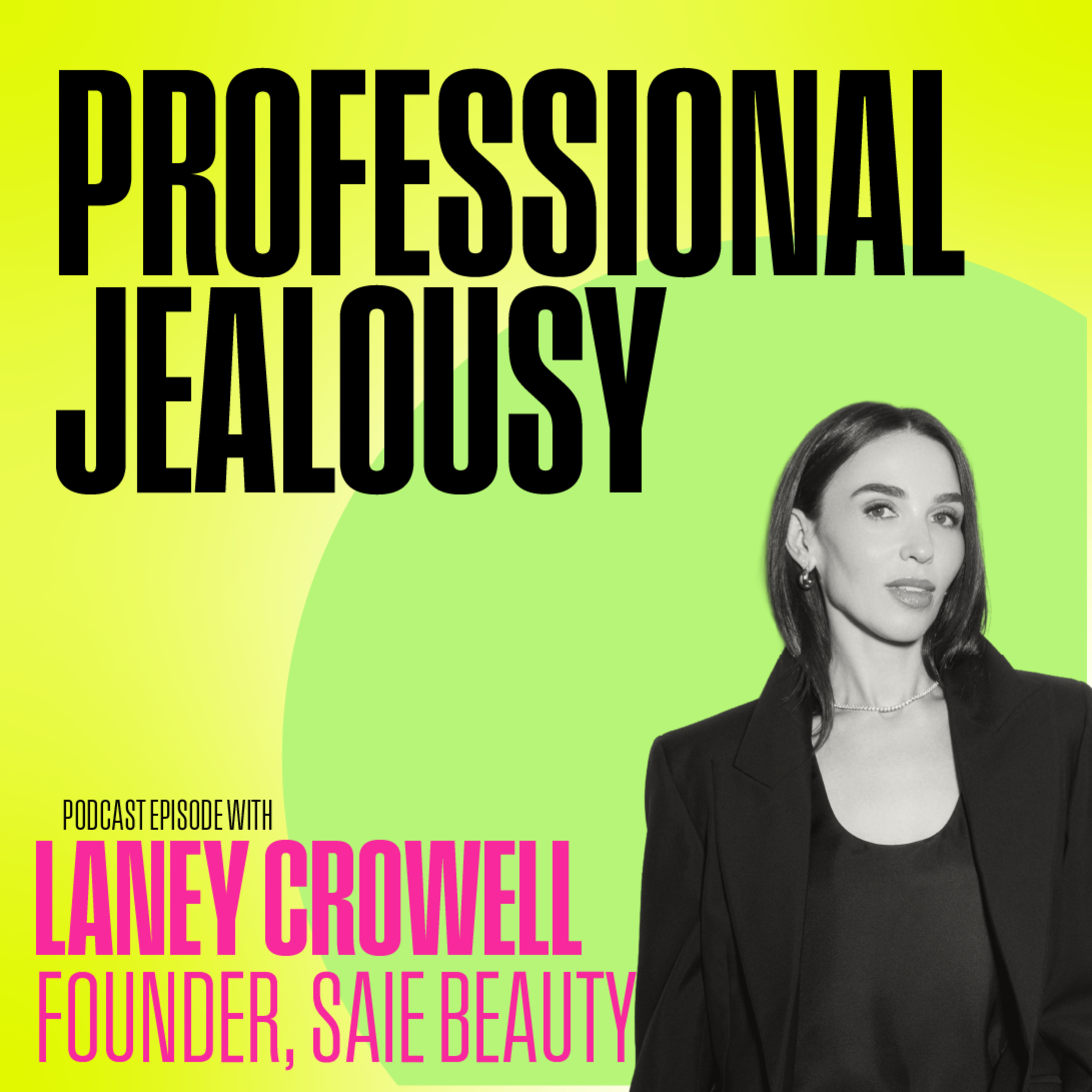
Laney Crowell (Say) explains how she built a pre-launch clean, high-performance makeup brand through community-led demand, pre-launch fundraising, relentless influencer outreach, and later retail expansion (Sephora/All Doors). She also discusses her “formulas first” positioning, what “clean” means to her (self-defined, skin-barrier focused, avoids 2000+ ingredients), and how she sustains intimacy with customers via events and classes.
Founder and CEO of Say; previously worked in editorial and at Estee Lauder; started a blog during pregnancy/family planning that evolved into the brand’s platform/community.
Makeup should improve skin (skincare base + pigment); community drives product and naming (“we say, you say it, we create it”); fundraising success came from pitching persistence (200+ pitches) and investor-ready comps; operations/margins are essential for marketing scale.
DMing 50 influencers nightly (8–11pm) for three hours; raising $1M pre-launch; using $2–3k comps for investors; Sephora initially said “not ready,” then reversed; launched Nov 2019, COVID hit March 2020, Sephora launch Feb 2021; hosted run clubs, yoga/flower arranging on Instagram Live.
0:00Coming up in this episode of Professional Jealousy. I probably pitched over 200 times. With like, you know, 170 of those being no. I would spend three hours from 8pm to 11pm every single night reaching out to influencers over Instagram. Myself, personally. Like literally just DMing there? Just DMing. I would just DM, hey, I love your content. I love your style. I'd love to send you some say. Here's what say is all about. and you either get a response or you don't. And I would DM 50 people a night. I'd been working in New York for free as an intern five days a week, full time. I was doing double shifts as a hostess to pay for rent.
0:47The worst career advice I ever got was to not start say. I was going to ask who said that.
0:57Natasha: hi i'm natasha jakoboski chief innovation officer at anomaly a global marketing agency based in new york and this is my podcast professional jealousy where i'm lucky enough to talk to founders and business leaders that i'm impressed by and want to learn from and maybe just a little jealous of Um, so today I'm talking with Lainey Crowell, the founder and CEO of Say, an amazing high performance, clean beauty brand that honestly, my daughter is always stealing products from me. Um, she thinks I'm very cool interviewing Lainey. So we'll be chatting about her career path that took her from editorial to big beauty brands at Estee Lauder, and then obviously starting her own, uh, blog and why she ultimately started her brand.
1:46Natasha: And with that, hello, Lainey. Hi, I'm so happy to be here. Thank you so much. As I said, you've definitely given me kind of cool creds with my daughter. But anyone that doesn't know the Say brand, can you give me the elevator pitch? Of course. We are a high-performance, clean makeup brand. We have a mission to serve people and the planet. my big goal was always to create the future of makeup which I believe is products that improve your skin amazing um and uh I was very lucky to receive a big bag of products uh many of which I actually have I'm interested talk talk to me about the trigger like what actually made you start the brand?
2:42So I, you kind of alluded to it, I worked in editorial. I love fashion. I love beauty. I love storytelling, I think, first and foremost. And I have dabbled in blogs and social media and all the things, but I also worked at a big beauty company, one of the biggest in the world. And I really learned from the best of the best there. When I left to do my own thing and do some consulting. I was starting my family. I started a blog to have this conversation around what I mentioned earlier, beauty being better and what that meant. And I really meant it from a very big, high-level idea of meditation, nutrition, what are all the things that really, to me, are encompassed in the word beauty.
3:38And very quickly, my community wanted to know about products and they wanted to know about products that were good for their skin and safe during pregnancy. And brands started sending me products to review. My aha moment actually happened on Prince Street. I know you're right there. Where I went to go look for some makeup before going out to dinner and I'd opened this beauty cabinet, you know, that I had created to keep all these products that brands were sending me. And I had a bin for skin, ingestibles, bath, body, hair, and then makeup. And every bin was overflowing except for the makeup bin.
4:25And so it was just very, I can still remember that moment so clearly in my mind because it was that true kind of Oprah aha moment where I could see the white space. I could see the, honestly, just also like the fact that there was demand, but nobody was meeting it. And so I started talking to my community about it. And it's where the name of the brand comes from. My community saying what they want we we say you say it we create it um and i they were the ones my community was the ones that told me the opportunity they said look here is exactly what we're looking for we want a brand that is exciting and feels luxurious we want formulas that are high performance but truly clean which i can talk more about that um they wanted a brand that was at a great price point and that clarity was really what launched say and and my community also said look you're the
5:32Natasha: one to do it yeah no amazing and and you know I I think it did come like when I saw it first which I think it really kind of leans into just a ton of kind of converging trends coming together um you know that as you talked about like the clean the the the impact of wellness people thinking about uh makeup that doesn't just color it actually makes your skin look and feel better um i think yeah it as soon as i saw it it was just so and so you know i don't think that we often i don't think that we often speak to or think about the fact that we have makeup that is dehydrating our skin, damaging our skin, you know, really undoing a lot that our skin, that we're investing in our skincare to do.
6:27So, Say is here to really approach things completely differently. So, you know, our formulas really start as a base of skincare with a little bit of pigment for that color.
6:38Natasha: Yeah. I'm curious, I know it's going to sound silly, but like, uh i read that you sold some of your stock uh for s day and you started fundraising with some people that you'd work with but talk to me about like literally what did you do to get started like how did you find someone to make the uh the the products the formulas like how did you you know did you come up with the name first did you talk to me about i didn't come up with the name first I think I came up with the name actually kind of quite into the process but I the first thing I did was I reached out to people who had started businesses and it didn't have to be in makeup it could have been in anything and I started just kind of figuring out what the next steps were of course I had the benefit of having worked in big beauty so I could see the roadmap I could see the infrastructure I could see the key players that I needed and that was who I went and recruited first.
7:36Not to say I didn't make lots of mistakes along the way because everybody does. I think, you know, my talent in this, during this journey was always that I never let that stop me. Every time I made a mistake, I wouldn't let it phase me for too long. I just would keep moving. um and so i hired a product developer um who i'd worked with at estee lauder um i hired someone for finance which i do think was a was a good hire in the sense of that position was a smart position i don't think i hired the right person um but again like it's all just kind of test and learn. And that was what my stock covered.
8:26I didn't have a lot of, it wasn't a lot of stock.
8:29Natasha: The product, finance, and then you split out. That was it. That was all I could afford was just those two positions. They got equity. And you know, I had to do everything else. And important part was the pitch deck. I knew that I wanted to raise money. I knew that I wanted, say, to be really big. As unknowingly, when I had my blog and I was interviewing all these founders, I had kind of gained a lot of market research. I knew the landscape really well. I had seen people do it bootstrapped. I'd seen people do it who had raised money. I'd seen people who had bootstrapped then raised money. And I knew that I really wanted to be a big competitor and player in the space.
9:17And so I raised a million dollars, which was the hardest raise I've ever done. Definitely the hardest part of starting, say, was the fund rates for me. I was a first-time founder.
9:30Natasha: And without the products in market. So you raised before having kind of... I raised pre-launch. So I was clear on the products I wanted. um i actually had samples like comps made which as you know are quite expensive it's like two three thousand dollars per comp um so that i could show them to investors um and that was all i had i did have the luck of meeting uh capono at combo who um is a very talented um designer and brand he created the brand with me from an aesthetics point of view and when I was in New York I went and spoke to all the big players in branding and they wanted so much money that I did not have and Capono was like let's almost do this like mini brand exercise go raise the money then we'll do the bigger brand exercise almost like a minimal viable brand kind of thing and I think that was actually a big part of our what differentiated us was that we weren't working with one of the big agencies that um it was really this very collaborative experience it was one of my favorite parts of building say um was working with capono and being able to like think about everything the color the name the logo um you know what every little detail of the brand meant and how to be differentiated and really break through the noise um i do think it's it's it's relatively unusual i mean like to to raise successfully i'm sure it was hard um before you've gone into market like any i think a couple of things you've already said are great uh piece of advice for anyone out there you know having comps not just not just a deck uh you know sweating the finances the product how it looks but like anything else that you think uh you would you would give as advice to people trying a similar thing like fundraising is so hard i've got to presume that you come across very well you're someone that people buy into do think you know someone said look i'm i invest in the founder and so i worked on my pitch really hard.
12:00I mean, every single, first of all, I went to everybody. I went all over New York City. I would travel for any coffee, any meeting. I would meet with anybody who even potentially knew somebody who could help me. It was a grind. And every single time I pitched, I would go and edit my deck. I would verbally correct myself for the next time. to the point where, I mean, I probably pitched over 200 times. Yeah. With like, you know, 170 of those being no. Yeah.
12:39Natasha: Amazing. So you raised and then what did you do? Like, how did you then go into market? And how did you use your blog as part of that? well the blog I ended up kind of transitioning into the brand's platforms which was helpful because I had this very engaged audience that was still to this day there's people from that community who were like I've been here for the entire time and the whole journey and I think that's so beautiful and what why I'm such a deep believer in the importance of community and in the truest sense of the word. Like, how are we always here to serve them? Because we don't exist as a brand without them.
13:27I think that, you know, the fundraising, the product creation, the branding, I almost had like an equation in my mind of all the different components I needed for success. And a big part of that equation was a retailer. I always had my eyes set on Sephora. I went to San Francisco a couple of times before we launched and they said, look, you're not ready. Sephora is based in San Francisco, for those who don't know. And I just knew in my heart that it was the place for us to be. And I remember getting the call with them saying, like, you're not ready. and um it was we launched and it was um we got a lot of buzz i really focused on influencer marketing which was kind of my background um it's funny i just talked to a friend of mine mark who started this like protein snack called pogo and we were just it's really new and he's was we were just kind of talking about different things we did and i was like oh yeah i would spend three hours from 8 p.m.
14:41to 11 p.m. every single night reaching out to influencers over Instagram, myself personally.
14:46Natasha: Amazing. Like literally just DMing there. Just DMing. I would just DM, hey, I love your content. I love your style. I'd love to send you some say. Here's what say is all about. And, you know, you either get a response or you don't. And, you know, I would DM 50 people a night. Yeah. So how long did you do that for? And how much product do you think you gave away? The way I looked at it was like, you know, here's what this costs me to send them a box. And they're getting paid a thousand X that to be paid to post something. So for me, from a marketing point of view, it's my lowest investment that I can be making.
15:34Yeah.
15:36Natasha: and um with the highest ROI yeah totally so all in on influencers that was your main form of marketing and then how long till Sephora called you back well because that was our main form of marketing I we made a lot of buzz right out of the game and um I I remember sitting there being like, I really can't believe they haven't called me. I was like, you know, I thought that I know they must have seen it. And then I finally got the guts to email them. And they said, you're not going to believe it. We were drafting an email for you as we speak. And it was very serendipitous. And we started talking again.
16:22And then COVID hit. I launched the brand November 2019, COVID hit March 2020. So I just assumed that the conversation was going to be over and it wasn't. You know, they were so clear on what they wanted and we launched an All Doors in February 2021.
16:45Natasha: Wow. And All Doors, like that's pretty impressive to ramp up. And that's still on the initial investment or you raised more? I did a bridge round and then I did a, so I did pre-seed, bridge, seed in the kind of in the span of like two years. Yeah. Still, that's, that's amazing. So launched in Sephora within a year, all doors. A little bit over a year because the launch got pushed because doors were still closed so it ended up February 2021 yeah um I mean obviously COVID was terrible but it might have been almost a good thing for makeup having you know a little bit of a moment of people not just makeup it was also yeah skincare hair well also just like the look that say is known for you know are definitely a no makeup makeup brand we love um that kind of your skin but better approach to the way you know makeup and um that look really became in vogue during covid because people were at home they didn't really want to be doing all of the steps that they were doing previously um and that i think was a silver lining for us.
18:07Natasha: Yeah. Do you have like one kind of sweet spot consumer? Like who is your consumer or do you have a couple of different segments that you go after or that you think of as your core? Well, I think the fact that you said my daughter is always stealing makeup is a real testament to how multi-generational she is. You know, if you were to look at like our Instagram demographics, for example, but obviously Instagram is its own subset versus other social channels. Our core demo is like, you know, 25 to 35. But, you know, we're also, we just hit a million followers on TikTok. And we play really well in that space as well, which I think, you know, as we all know, skews a little bit younger.
18:53And that's the beauty of Say is that because we, I built Say to be a timeless legacy brand, we are able to speak to Gen X, Xenial, Millennials, Gen Z, Alphas in a really beautiful, unique way.
19:12Natasha: I have another silly question, which is I'm a strategist. So I'm always curious, you know, when I create brands for with with founders or big companies, you know, we have a strategy line and a framework. But do you have like a positioning or a strategy line that you have or any form of framework i'm just curious we do we have our north star which is our mission to create high performance clean products that are safe for people on the planet um and everything is looked through through that lens you know formulas first you know you can obviously digest that mission in multiple ways but you know formulas first is something that i've always believed in like i am the truest consumer i love beauty i love makeup the formula has to be absolutely incredible.
19:59And, you know, clean, which means to me means skin first. You know, we are, we, our formulas are very expensive. We put really special, beautiful ingredients into every one of our formulas so that your skin benefits from it. And, you know, people on the planet, our community is first always. And our mission is to leave the planet better than we found it so we have loads of investment into sustainability everything from our components to the say climate initiative to our female red board say climate board to planet beautiful with sephora to the climate pledge with amazon um we have a lot going on there and we we actually have a head of impact that runs all of that for us which is very unusual in beauty um but it's something that we know is important to our community and our internal community as well.
20:54Natasha: Yeah, I love that. I mean, and I think that's one of the reasons that you've always kind of come across as not just a pretty, you know, pretty packaging, nice branding. There's something more to it. Has the idea of clean kind of evolved as you've grown or has it always been the same? Or I feel like it's one of those. I do. I think that it's funny because I, you know, clean is not regulated. Obviously, there's lots in beauty that's not regulated. And so anybody can say it, essentially. So therefore, what does it truly mean? And so that's why we defined it ourselves from day one. You know, there's over 2000 ingredients that we don't use.
21:41And I think more importantly, what we do use is why people keep coming back over and over again. You know, we formulate everything to be safe for the most sensitive skin, and therefore it works for everybody.
21:58Our cream formulas have fatty acids in them that penetrate your skin barrier, so everything stacked on top of it can benefit your skin. We refer to it as, say, science because, you know, there is so much thoughtfulness that goes into our formulas that maybe most consumers don't want to necessarily think about because it's makeup and it's fun and it's beautiful but you know the consumer whether they know it or not gets to
22:25Natasha: benefit from that yeah interesting i think after what you were saying though about strategy i think that that is um one of the things that is unique about a founder-led brand or a brand born authentically is that you know yes there is a north star and there is a um a a mission and our you know we know who we are but it's also like the feeling inside um that you can't replace when if you're trying to force something or you're attaching a celebrity to something like that makes it I think a lot more difficult for the brand when opposed to having that like authentic um feeling yeah having having a bit of soul versus just being a brand to sell um what I do think it's interesting like what do you what did you have to unlearn from working in big more corporate brands and then becoming a founder and creating a, you know, your own brand with soul authenticity, like, are there any things that you had to let go or do differently?
23:43I was so not a corporate person. I don't know. I think that I, I was always wanting to move really quickly. I think speed is one of the things that I'm really good at and making decisions really quickly. And so that was really difficult for me in the corporate environment. I think I'd be better at it now, actually. But I think I learned a lot. And I think that I brought all of that to the table.
24:15Natasha: Turning it the other way, like, are there any things that you actually think from your experience were just invaluable to helping you actually, you know, not everyone actually, everyone, like a lot of people think about creating their own brand. Not many people actually go ahead and do it successfully. Like, are there any things that you think actually really helped you from what you'd learned over the beginning of your career? I think storytelling is always the thing that I go back to. It, I think it's one of the most important things that you can bring to a brand as a as a founder or as as anybody working at a brand like the ability to continually storytell over and over and over again and in different ways the same way um new ways um old ways like it just it it is the um it's the glue that kind of keeps everything together um you know when i worked in corporate i had to pitch my ideas and i think that that is something that you have to get really good at um no matter what career you're in is being able to explain yourself um and not take no for an answer even when you're being told no maybe you're just talking to the wrong person maybe you didn't explain yourself well whatever it is like if you um you have to get a thick skin yeah yeah um i think that's so right at the more founder as i speak to you know these i think you have to have that kind of ability to just like be focused you know even if you get negative feedback you know not be destroyed by it just you know think about it maybe tweak how you do it and keep going exactly like not don't be oblivious to it but don't let it keep you down are there any things that you think mainstream skincare brands don't understand about uh modern beauty consumes?
26:20I think that consumers want to feel close to a brand. I think that they want to feel engaged with it. They want to feel like they have a little piece of it, whether that's them talking about it on social, whether that's being able to DM a brand and hear a response, um whether that's um having the brand comment on their content i think that closeness and intimacy is really important something that i think about a lot as we grow yeah and um obviously your your
27:00Natasha: brand was built around that like literally what people say as you said earlier but um how do you cultivate that like both from when you were starting like how do you bring people's voices into it? How do you listen and show them you're listening? How do you cultivate community as a brand? I'm interested in, you know, I think it's something that a lot of brands obviously want to do, but don't necessarily do it well or know how to do it in a way that actually works. I think being in person, you know, finding those ways that you can come together, whether that's, You know, I was so surprised like when we hosted a run club, we had so many people wanting us to host run clubs in their towns and we're a makeup brand.
27:51Yeah. I think that just speaks to the power of people wanting to come together, wanting to get feel that that piece of togetherness. And I think that it can that can show up in all sorts of different ways. It can be very low investment. like a run club it can be a higher investment like our arts and culture club which we now have in cities um globally um where we host cultural moments for our community to come together and experience um a museum or a garden or um a trail or whatever that is in the in the area like a guided
28:30Natasha: walk around a botanical garden or something yeah yeah interesting i think that everyone's talking about you know entertainment and in person and that's something that we've been all about from the very beginning even when we couldn't because of covid you know we hosted um you know yoga classes and flower arranging classes over over instagram live just because we knew that that would make people feel good and um to me that's always going to lead to success is for feeling good individually and collectively. Amazing. I didn't realize that. Obviously, I was expecting you to say, you know, in terms of social and your community online, but so events, IRL, actually, is it a significant part of your kind of spend?
29:26You know, it has its own line item for sure. I think, you know, we have our makeup classes that are both digital and in person. In our makeup classes, again, we're just born from our community saying like, we don't know how to do our makeup. And we're like, cool, we're here to help you. You know, you say it, we create it. And I think that that level of connectedness is really hard to foster as you get bigger and older. And, you know, a lot more people are working at the company and more people are part of the community and you have more retailers. But if you keep it top of
30:01Natasha: mind you can always find a way yeah how um especially as you get bigger how do you help employees or internal people joining as you get bigger kind of feel the brand do you have like a way of onboarding or you or new retail partners like how do you build that culture and and brand understanding well we have the say way which is our um it's our kind of mission statement as to like who we are and what we stand for. And, um, I think I probably should do that with new people who join. Sometimes we're moving so fast that it's hard to find that time. Um, I, we do do an offsite once a year that I think is really an important component of that.
30:46Um, and it's really just a time for us to like get together and, um, and have fun and hang and go to the pool. and people are like wait we're gonna be in our bathing suits and i'm like oh yeah you're gonna be in your bathing suits the whole time like weird and and we dance and we we um and it's i think it's a really important part of who we are that we prioritize that and we invest in it and um very little of it is about the business whereas like other people have off sites and it's like
31:19Natasha: you're in a conference room all day and here are the goals yeah that's not at all what our offsites are about our offsites are about bonding okay interesting um just wondering what what makes a good brand to you like describe a good brand are there any outside of beauty like brands that that you consider like you know inspirational good brands i think brands that make you believe in something and feel something. I think great examples that I always look to as North Stars are like Patagonia. You know, they are so loud about what they stand for, and they make incredible products, and they make chic products, and you feel something when you say their name um uh you know i love all the luxury european brands um i think rolex is a really great example i don't know if you know that they are actually a non-profit um yeah they yeah you have to listen to their acquired i i have listened to it oh my god i don't know how i'd miss that but yeah yeah they um the the founder put the entire company basically into a non-profit so they are doing incredible investments for sustainability in the environment um all while creating this incredibly covetable product that gives you butterflies which is always my litmus test yeah yeah yeah i love that um i'm curious so i was when i was reading about you um uh you know you went from film to journalism and i i came across like a just something where it mentioned that you went up to the editor-in-chief of Lucky Magazine in a Banana Republic and then got a job, which is amazing.
33:13Natasha: And I'm just curious, I feel like that says something about your personality. Again, is that reflective of your personality? What did you say? Is that the sort of thing you kind of do all the time? I don't know if I do it all the time I definitely I definitely was very nervous I remember being really nervous um I think at that point honestly I was like kind of desperate I'd been working in New York for free as an intern five days a week full time I was doing double shifts as a hostess to pay for rent um so I do think there was a part of desperation that was part it was um the inspiration for it but um kim kim france was very lovely um she gave me her business card i immediately emailed her um and that was how i got my first job in the fashion news department at lucky which when i and then almost immediately you know how they used i don't know if you remember the magazine used to photograph the team members for different trends and they photographed me for this capri pant trend and I just remember thinking like oh my god like five six months ago I was in LA having no idea how I was going to get to this place and I love those reminders that like anything is possible and you know time is an illusion so you know the the um but I do think you have to put yourself out there and I do think that um I do I have a high pain tolerance in that sense for being able to like keep like to keep going yeah I think that is amazing I definitely um yeah I'm trying to think if I I think I only just I think I realized that you have to put yourself out there so late in my career like uh partly personality partly you know I was just like going along but I do think there's I mean it sounds so obvious but like I think it is those moments where you've literally got nothing to lose um and I think but I think people don't realize like you can make moments like that all the time you just you know and it it might be embarrassing but you've literally nothing to lose um any other things that you think were interesting kind of pivots and ways that have helped you kind of keep going or progressing over time?
35:47I think it was, I saw an interview with Professor Galloway the other day on the importance of location. And I do think that, you know, I moved to New York knowing essentially nobody, but I knew that I wanted to be at the epicenter. And I think that being in New York was very important in my career being just the proximity to editorial because that was my dream was to be an editorial and then um you know to be um in such an epicenter of beauty and fashion um i do think you know depending on your interest you know la silicon valley um there's all of these hubs, but I do think the proximity was important in my career.
36:35Natasha: Yeah, that's interesting. I mentioned, I was introduced to you by actually quite a few people who are all, well, I mean, I was joking about you have your little gang of founders on Long islands um can you talk to that is that is that uh what about moving out of new york and establishing like how important is it to have a community of founders is it because you're founders or because you're friends or like how does it how does it work and i was saying i think it's uh joey they're all going to be on the podcast so joey uh from welfare states uh and at plus uh emily from at Plus, talk to me about how you kind of create your community.
37:28Natasha: And yeah, I'm just jealous of your... I think that I do feel like incredibly lucky that we ended up where we are. We moved to Sag Harbor in March 2020 at the same time as Emily. And Joey already lived here, actually. But, you know, Monique, a bunch of my friends, we all moved here at the same time. So we all met at the same time. And we were lucky that we had these dynamic careers that, you know, we honestly created for ourselves. Like when you look at the different opportunities for women, I think entrepreneurship is such an exciting one because you can become a CEO and a co-founder or co-founder.
38:16and having the friends that I can talk to not just out here but really across the board I think beauty is so special in that way because I have so many founder friends and it's so nice to be able to call friends and say hey I'm having the worst day actually I have another founder friend out here named Marla she lives in my neighborhood and we just go for walks and talk stuff out and I think that's definitely been important in in being able to like keep going yeah yeah it's interesting I've spoken to a lot of founders and I love how generous like a lot of people find other founders especially when starting and really the power of you know paying it forward and I'm always amazed
39:08Natasha: I interviewed Craig Dubitsky a while ago, who I worked with years ago to create EOS, the EOS lip balm. Like I was a little, because I knew him pretty well, I was quite worried about asking him. And my husband was like, he literally will talk to anyone, anyone. So I'm always amazed by the generosity of people when it comes to actually helping other founders. And yeah, it's amazing. I think because it's really hard. Yeah, really hard. Any other, you talked about, you know, as a woman, I think it is really good because you get to create your thing and be your own boss. It's also hard. I mean, I don't know how you found it, whether you think there are elements of being, you know, being a woman making it harder when you pitch for money, when you, you know, start talking about your idea.
40:06I mean, I do think it's really hard, but I think when you're an ambitious person and you have a lot of potential, I think it's harder not to honor those things. And I think, you know, everything's hard or not hard, depending on how you look at it, you know.
40:25Natasha: Anything that you wish you'd kind of known when you started? I wish I knew more about operations. I think I had a little bit of a blind spot to the importance of operations and margin. It was just actually like the one department I hadn't touched at Estee Lauder. And now I'm quite obsessed with those things. And when you realize when you have incredibly tight operations, you then have more budget for marketing. And then you're able to talk to more people. And then you get more scale. and then your operations are able to meet that scale and it just becomes this like really important flywheel. I didn't realize I just wanted to go as fast as I could.
41:15And so I didn't pause to really kind of fine tune those things that now I had to go back and unwind. So that's my, honestly, one of the biggest pieces of advice I give people is like invest in operations.
41:29Natasha: Yeah, get the operations right. It's interesting because one of your two people was a finance person. So there must have been an understanding that that was important. But interesting. I think that's good advice to any founder, especially coming from more of the creative and marketing. Yeah, obviously that was my background. I was a creative social influencer, but yeah. We've reached the quick fire last 10 minutes. I can't believe it. I love so many questions. All right. What's your Desert Island beauty product? glowy super jolly can't live without it that's a good one i i have that um best career advice worst career advice the worst career advice i ever got was to not start say uh i was gonna ask who said that you know what many people said that um interesting um what do you think your superpowers are that have helped you be successful?
42:31I think one is that I'm incredibly sensitive and I'm hyper empathetic and I think that's really helped me in understanding and being able to walk in the shoes of my customers and my community. I think my decisiveness and the speed at which I like to move is a superpower. um some might call it being impatient but i think it's a superpower yeah i always think there's
43:02Natasha: interesting kind of interesting kind of opposites of people's superpowers anyway like yeah so always with everything the yin and the yang for sure exactly anything you're trying to get better at apart from operations? I'm trying to get better at time management. I took Instagram off my phone. I put it on a separate phone to leave in my office because I think I was, you know, it's very easy for me to label something as market research when I think it was actually distracting me from other things so i'm trying to get much better at time management okay um is there any beauty trend that you just wish would die i personally do not love heavy makeup i love a lighter touch a glowier look um i love seeing skin um i don't i never i would never want someone to say like oh your makeup looks so good or um I also I want to look like me and I I love it when other people do too last question um tell me someone that you're professionally jealous of um well I think I'm a little jealous of founders who are able to have multiple businesses um it's definitely something I aspire to at some point.
44:34Jen Atkin having started Way, now Main, Emma Greed with Good American and Skims. I really admire that. And I think it's very cool that they have that bandwidth and ability. I don't know if I'm jealous, but I'm in awe of my founder friends who are all doing it in different categories because I find that to me, those categories seem so daunting. Like Emily at Aplos and Joey at Wolfer and Monique at Maya Maya and Marla at Shelter. Like those are all industries I just don't know anything about so I think that they're like super women um you think your next your next business will be outside of beauty yes definitely I think it would be like maybe adjacent or something like a wellnessy one maybe
45:34Natasha: yeah okay we've run out of time um thank you so much thank you this was so fun I know I'm looking forward to meeting you at the Mercer. Yes, me too. But yeah, thank you so much. For everyone listening, thank you for listening. Please take a look at the other episodes. I think just like with Lainey, there are loads of insights. I loved hearing about how she has just kept moving forward, taking no not as a no but actually as a chance to kind of evolve and just keep going and making it happen um yeah get in touch if you have any questions feedback or importantly anyone else that you'd like to see on the podcast um thank you and see you soon
46:36you
Saie founder and CEO Laney Crowell on building a high performance clean makeup brand, raising money before launch, and why community has to show up in person.
Laney started in editorial at Lucky, moved into marketing at a big beauty company, and launched Saie in 2019 after her blog community showed her the white space in makeup. Natasha and Laney talk about the overflowing bins moment that started it all, why she raised with physical comps instead of just a deck, how personal influencer DMs became her highest return marketing, and how Saie went from “you’re not ready” to Sephora in all doors. Plus the operations lesson she wishes she had learned sooner, and why her worst career advice was to not start Saie at all.
In this episode:
Professional Jealousy is the podcast where Natasha Jakubowski, Chief Innovation Officer at Anomaly, talks to founders, CEOs and creatives she admires and is just a little bit jealous of.
Watch the full episode on YouTube: @professional-jealousy
More episodes: professionaljealousy.com
Scan the code with your iPhone camera
Listen in the app.