Ask ChatGPT

 Remarkable Retail Podcast
10 Nov 2026 · 52m · 19 chapters
Post-election “blue wave” implications for the U.S. economy and retail; Amazon’s move into agentic shopping via Alexa text; retail earnings highlights (Wayfair, Ralph Lauren, Tapestry/Coach-Kate Spade, Shopify); and the keynote theme “Friction is a Signal” (joy vs optimization).
No guest interview in this episode. Hosts are Michael LeBlanc and Steve Dennis. They reference prior guest John Blotner (Wayfair president) and political figures (e.g., Senate-elect James Tallarico) but do not host them live.
Political shift may affect consumer affordability and government paychecks via budget negotiations; retailers should remove customer-resented friction but protect “wow” friction that signals value; agentic commerce may stall when tasks touch identity/meaning (e.g., wardrobe) rather than routine commodities (e.g., paper towels).
Amazon text shopping for Alexa (AFS/Rufus); self-checkout and Dutch chat lines; Buck Mason and an espresso shop as “time well spent”; Wayfair store expansion to 11 stores by 2028; Ralph Lauren 70.5% gross margin and disciplined inventory; Coach up 16% revenue, Kate Spade down 10%; Shopify 6th straight ~30% growth quarter and “agent-ready” stores.
Written by AI. May contain mistakes.
Discussion on the recent political shifts in America and their potential impacts on the retail industry.
“In retail news, Amazon takes a page from Jet Black.”
In-depth analysis of the midterm election results and their effects on the economic landscape.
“So over the years, we've done so at Shop Talk Las Vegas and Shop Talk Europe, the World Retail Congress, the National Association of Convenience Stores even.”
Exploration of Texas's political changes and their historical significance.
“I think many people know the basics of facts.”
Hosts transition back to discussing implications of the political situation on retail.
“if the Secretary of Defense, they like to be called the Secretary of War, will be possibly Which they don't seem very good at, by the way.”
Discussion on how friction in customer experiences signals important trends in retail.
“So this whole direction of where discretionary spending is likely to be next year certainly has some implications on retail.”
Overview of Amazon's new text capability for Alexa and its implications for shopping.
“I guess the more cynical view is this is really just kind of a defensive move.”
Learn about Amazon's competitive advantages and the role of AI in shopping.
“There's another aspect of your just overall reach and ability to command attention.”
Explore Wayfair's recent strong sales growth and their transition to physical stores.
“you want to focus or we want to focus on a couple in particular.”
Understand how Ralph Lauren maintains growth and profitability despite luxury market challenges.
“So Wall Street, even though Wafers put up several good quarters, Wall Street's not exactly a big fan of theirs at this point.”
Discover the central theme of the keynote on enhancing the emotional shopping experience.
“You've been working on it for quite a while, and you've already taken it for a few test runs.”
Examine the balance between reducing friction and enhancing the shopping experience's joy.
“optimizing relentlessly for speed, price, efficiency.”
Explore how friction can enhance the shopping experience rather than detract from it.
“But if you're just trying to do something efficiently, ultimately it is just kind of satisfaction or boring.”
Learn how brands like Yeti leverage storytelling to create demand and perceived value.
“There's also a degree to which people, you know, there's old sayings like, nobody goes there anymore because the line's too long or something like that.”
Discuss the implications of agentic commerce on customer identity and shopping behavior.
“Because I think of a brand like Yeti, which I'm a big fan of, and they are just huge at storytelling.”
Gain insights into how retailers can identify and manage friction in customer experience.
“Well, lots of big thoughts, and we've talked about it before.”
Explore Coach's strategies for growth and success despite market challenges.
“And again, kind of like what we talked about with Ralph Lauren, it's proof that done right, it's possible to have a successful business even with luxury troubles.”
Learn about Shopify's sustained growth and its unique market position.
“The thing I was going to say that I think is a bit different than Ralph Lauren, though I I don't know for sure.”
Understand the potential effects of US political changes on retail markets.
“All right, well, let's wrap the episode with what's on our respective radar screen.”
Discuss the implications of AI on data privacy and consumer manipulation.
“It seems mostly about giving us a lot of money or financing the growth of our huge businesses, manufacturing businesses that we have.”

Get the gist, explore an idea or ask about something said.
 Claude
On Remarkable Retail Podcast, what are the key points of this episode?
Searching your listeningAutomatic transcript. May contain errors.
0:06Steve Dennis: Welcome to the Markable Retail Podcast, episode 319, What a Difference a Week Makes in America episode. I'm Michael LeBlanc. And I'm Steve Dennis. On this episode, we'll surf the blue wave to the shop floor and talk about possible implications for the macro environment, the retail industry, and the future of the UFC with the prospect of Dana White turning the White House press briefings into an actual bare knuckle cage match. of the big political shift in America. In retail news, Amazon takes a page from Jet Black. Remember them, Steve? What was that, Mark Lory's thing sold to Walmart? A little bit of texting, AI texting.
0:41Steve Dennis: Retail results, what we think of them, including Wayfair Ralph Lauren. Consumers tapping the brakes on at least one of Tapestry's brands. Our focus for the episode will be to talk more about your keynote that you're working on and have presented already, and particularly the key element of your keynote. Now, friction is a signal. And then, of course, our popular what's on our respective radar screen. So, Steve, there's a saying here in Canada about our American cousins. Americans will always do the right thing after they've tried everything else. Is your faith in your fellow Americans refreshed today?
1:17Well, yeah, slightly. I mean, it was a little surprising, I guess, to see the Democrats do quite so well and particularly surprising to see what's happened in a few states, including my adopted state of Texas. So yeah, interesting times.
1:33Steve Dennis: I guess half a billion dollars doesn't buy you much in America. I guess this is an inflation thing, right? That was my other observation. But my car, it flips. It flips. I don't know if you noticed that. It flips. I had to discontinue the truck, but the car flips. Yeah, so there's that, yeah. You know, let's talk about, Steve, let's talk about partnerships for the podcast. Yes, listeners will have heard advertisers are great brands that we partner with over the years, whether being presenting sponsors or podcast studio sponsors. Tell the folks a little bit more about that so they can as well explore the wonderful opportunities with Markable Retail Podcast.
2:11Well, with 2027 fast approaching, there are a number of things that people could potentially do with the pod. We might have a little bit of news next week, but one of the things that's pretty fun is when we actually record episodes in person, typically at major retail events. So over the years, we've done so at Shop Talk Las Vegas and Shop Talk Europe, the World Retail Congress, the National Association of Convenience Stores even. So if you are interested in sponsoring our remote podcast studio at an event, this is a good time to reach out because we are actively planning for next year. But of course, there are also opportunities, often at major conferences, for us to do things in private events, not necessarily specific to the podcast, but maybe speaking to a group of customers and prospects.
3:03those types of things. Or just as you mentioned, opportunities to sponsor the series of episodes, advertising, etc., etc. So if you're interested in that, don't sleep on it. Write us, reach out to us. If you want to do so via email, just send an email to podcast at sageberryconsulting.com. That's podcast at sageberryconsulting.com. But we're also available, of course, on LinkedIn and all the other, just about all the other social media, except the one run by the guy who lit a big pile of cash on fire to try to get the election to go a different way.
3:40Steve Dennis: Well, and I can assure everyone, you are an amazing dinner guest. Insouciant conversation will ensue. And the two of us together are almost a bit too much to invite to your NRF client dinner. But if you're looking for a little kind of conversation starters. We're there for you because sometimes that can be a fun addition to any dinner. So reach out. We'll be at NRF for sure. We'll be at ShopDoc for sure. Other conferences, kind of TBD as we flush out the year, as you said. Alright, well let's get into the episode. Let's spend a bit of time on this implication from the blue wave, as it's being called.
4:14Steve Dennis: I mean, we're a week, literally one week later from those results. I think many people know the basics of facts. Maybe not everyone around the world, but take us through your thoughts about it, less from a political angle, more about, of course, the implications on the economy and decisions being made, and of course, to our fellow retailers. Sure. Well, yeah, I think since it was such a big story, at least in North America, maybe not so much the rest of the world, I won't spend too much time on the details, but it is absolutely, no matter how you look at it, a seismic shift in the political landscape here in the U.S.
4:49I believe the technical term for it is an ass whooping because the Democrats have flipped at least seven Senate seats. Two, as we record this on Monday, are still outstanding, but they seem to be leaning towards the Democrats as well. So that will give a big advantage in the Senate. And then in the House of Representatives, still a few seats outstanding, but it looks like the Democrats will net 45 or so plus House seats. So this was fairly unexpected. I think a lot of people thought the House would tilt Democrat, but Senate was a bit of a surprise. I mentioned this at the top, but Texas, we have to talk about.
5:32Well, first of all, some people may have seen our Senate-elect James Tallarico doing the cold open on Saturday Night Live over the weekend. But anyway, the stats are that Texas, which is historically, or at least for decades, been one of the most reliably read states, they flipped not only the Senate seat, plus the governor's office, plus all of the state leadership. And just put that a little bit in context for people that might not be aware, Texas hadn't elected a Democrat to the Senate since Lloyd Benson, there's a blast from the past, in 1988, and no Democrat had won any statewide wide office, this is the senior level, not down at the state senator level, since 1994, which is quite a while ago, remains to be seen.
6:17It may be the case that what happens for the next two years is much more discussion than actual legislation, because while the Democrats now control both, or will in January control both houses, of course, the president of the United States, remains a Republican, and he has veto power over legislation that might be passed, and it's generally pretty difficult for vetoes to be overturned. It would require not only all the Democrats lining up, but a considerable number of the Republicans. But we shall see. I mean, there is one school of thought that says this is the end of MAGA, and that the Republicans will start to say, let's look ahead and perhaps be more challenging of the administration.
7:02So I wouldn't say that's impossible. So we'll just have to watch that. But...
7:08Steve Dennis: And I guess you've got a mid-December checkpoint. I guess the budget has to be approved to run the government by something like December 11th. And, you know, so that's where, you know, do the Democrats hold that up as the Republicans try to get their last gasp of things done. The Dems don't want to start with looking like they're holding up the government as their first thing that they do. And of course, this could affect retailers because it does take paychecks out of the hands of a lot of millions, really, of government workers. Yeah, there are budgetary items that could be held up or used as negotiating levers.
7:46Certainly the Democrats, well, they've already said, and this is not too surprising given how the election the elections turned out that the big issue was affordability. So whether they use their power to push for an end to the war, I think probably by the time most people listen to this, we will see if the Secretary of Defense, they like to be called the Secretary of War, will be possibly Which they don't seem very good at, by the way. They don't seem to be. But in fact, one thing I was going to mention, if people are following my substack, my post from last week was about own goals. And I started off with the political landscape and then shifted into retail.
8:28But in terms of what led to the downfall or the challenges to the Republicans had a lot to do with entering a war that almost everybody thought was a dumb idea, as well as putting forward tariffs. So we'll see which of those policies really get challenged in a significant way and whether that just leads to discourse or negotiating power or actually leads to any new legislation. But if tariffs were to be pulled back quite a bit, if the war were to be ended and fuel prices were to come down quite a bit, if one of the issues from the so-called Big Beautiful Bill was taking a lot of people off of health care and or causing the premiums to go up, so that takes a lot of money out of people's pockets.
9:12So this whole direction of where discretionary spending is likely to be next year certainly has some implications on retail. But it's pretty hard to really understand where that's going to go. And I suspect we'll get pretty well into next year before we get a better sense of that.
9:30Steve Dennis: All right. Well, I think lots more will be happening there. But as I would echo your sentiments about the lack of disruption, I think that's good for retail, right? Not fighting the election, not this big fight, and with our lens on about what happens to retail, it's a big change politically, but there wasn't a big change. There wasn't violence on the streets or riots and all that kind of stuff that tends to be very, very bad for everybody, but not including retailers, as we've seen in France, for example, right? I wasn't going to go there, but since you did, I would say yes. France seems to have a little challenge with that at the moment, unfortunately.
10:05Steve Dennis: let's uh let's jump into the retail news so i mentioned off the top uh there was this great startup ish i guess startup called jet black and and uh it's funny the news came out or report came out a couple of weeks or months ago that there's like 50 people using it even though it was it was very high profile where you could text it this jet black thing and say hey i'm looking for a bed for my kid all of a sudden all this response would come back something that seems very familiar now. Now, this texting thing is new, and Amazon's taken a swing at it. Tell us about it. You know, I had a real question as to how much detail I want to go into on this, because not that it's not interesting, and of course, any big move by Amazon is inherently important, I guess you could say, or in many cases, will be important to retail.
10:50But so many things are happening in the world of agentic commerce that by the time people listen to this, there may be something entirely new. But anyway, just to hit on the news very quickly, Amazon launched text capability for Alexa for shopping, the app formerly known as Rufus, or now people are starting to use the acronym AFS. But anyway, last week for a select group of customers, it was launched. Millions apparently will get access in the coming weeks. And basically, as you were alluding, you text it, suggest what you need, and then it goes and finds product, will build the cart for you, and basically tee it up for you for approval, and then you get delivery updates.
11:36You know, at one level, this doesn't sound super interesting, other than text capabilities, as well as voice capabilities, are becoming more and more common. So, some people are speculating that this is an important first step to Alexa for shopping becoming more of a personal agent, where shopping will be one of its jobs. I guess the more cynical view is this is really just kind of a defensive move. It's just another way into the same store. Many people, of course, just go straight to Amazon and can go straight into Rufus. Is this really that breakthrough?
12:18Steve Dennis: And weren't you and I talking about vCommerce in the days where we'd buy an Alexa device on our desktop and that was it. We were all just going to talk to Alexa and it was going to order stuff. And voice commerce was the next big thing, right? Yeah, this whole conversational shopping thing was another one of these areas which got a ton of hype. I remember, in fact, he will go nameless, but we had a guest on several years ago who made a very big deal about how the coming year was the year of voice commerce. And I don't remember if it was you or me or both of us that pushed back. And he got a little hostile with us.
12:56But anyway, it turns out he may have been a little bit early on that bet. But yes, this has been a thing for a while. I think what's different, other than lots of technology has advanced, is plenty of people are talking to the AI model. So this idea of interacting with a shopping agent as an extension of what people are already starting to do in pretty large numbers with the large language models, I think that makes it much more a possibility that this will become a big thing. But the technology here is not really new for Amazon. They're certainly not first because Meta, Muse, Instinct, DoorDash, and Dot from OpenAI already have this capability.
13:42But the thing you can't, and I was thinking about different ways to try to handicap, I guess, what's going to happen with Agente Commerce. And I was listening to a few things over the weekend. I think there's one aspect of how good is the technology. There's another aspect of how integrated everything is. There's another aspect of your just overall reach and ability to command attention. And it's very hard not to handicap Amazon pretty strongly because they have 400 million users. And then the last thing is the data. It's also unquestionable in terms of shopping data that Amazon has a clear lead.
14:20So when you put all these advantages together, even if this is a relatively incremental kind of change or not particularly differentiating change, you just have to assume the tie kind of goes to Amazon in many things. I think this will be interesting this holiday just to see how many of these text-driven agents as well as just these personal shopping agents and the large language models get used for shopping in general. So it's one of the reasons why people are saying this is kind of the first agentic holiday.
14:47Steve Dennis: Let's talk about retail results. There's plenty of them. you want to focus or we want to focus on a couple in particular. Let's start with Wafer. Yeah, we're at the heart of the retailers that report on September 30th ending. So this is not an investment podcast, as I always say. So we really want to just focus on a few because of what they tell us about where things are going or some implications for other retailers. One of them we have to talk about, I suppose, just because a month ago or so we had their president on. So John Blotner, president of Wafer joined us on the pod. So we got to talk in particular about their physical retail strategy.
15:22So if people haven't heard that, they might want to go back and listen to it. But as far as their quarterly results, they were really quite strong. Revenues up almost 10%. And as we've been talking about probably for two plus years, the home furnishings industry is really, well, almost everything home has been stuck in neutral. So for Wayfair to have that kind of sales growth is super impressive. And And they did manage to improve their margins. So it doesn't look like they're just buying market share and taking a hit on the bottom line. So if you look at their volume growth, really, really strong.
16:00Little lower average order. Now, whether or not that is just something about people trading down a little bit on price point, a little bit hard to tell. They didn't really tease that out. But this is a business that, as we talked about with John, is kind of in transition because if you go back a couple of years, they didn't have any physical stores. They will be up to 11 physical stores by 2028. And, of course, each store is pretty high volume. They're large stores. So we'll see how that all plays out. One thing that Wayfair often gets criticized on, and I think we touched on it a little bit in the episode, is, well, two things, really.
16:42One is their profitability has been pretty much non-existent for most of their history. And they've only had a few quarters where they make money. And even with this strong quarter, their profitability was still pretty, I mean, it was positive, but it was still pretty low on a percentage basis. So is this a little bit of an outlier or is this something that they can continue to improve? But the other thing is they have a fairly weak balance sheet for a business of this size. And now that they're starting to put capital into physical stores, it's really important that they are able to convert to strong operating cash flow pretty quickly, or this will be a bit problematic.
17:22So Wall Street, even though Wafers put up several good quarters, Wall Street's not exactly a big fan of theirs at this point. But it's hard to not look at their results and say those are pretty impressive in light of the category dynamics.
17:37Steve Dennis: Let's talk about Ralph Lauren. Well, Ralph Lauren, I mentioned Ralph Lauren for a few reasons. First of all, we've talked about the general weakness in luxury. And Ralph Lauren continues to defy the narrative. But there are a couple of other things. Ralph Lauren is a brand that has been around for a long time. So here you have a very mature brand that is able to continue to grow. Part of their growth strategy has been doing what we've talked about with a lot of these vendors, which is to more or less kind of hold serve with wholesale distribution, but grow their direct-to-consumer. So that's both online and their own stores.
18:18But just to kind of hit on the highlights, revenue was up 9%. Their gross margin, this is crazy, their gross margin, considering they have a pretty good wholesale business, is 70.5%. So I don't know the exact math there, but if you assume on their direct-to-consumer business, has got to be a number that begins with eight, I would think. Unlike what we have been talking about with some other brands, Asia actually is what really carried the quarter with comps up 23%. North America, though, still grew six, which is not bad. Europe's sort of flattish. And what they're doing, I think, is a great playbook for lots of retailers.
18:57And I think after we do a little diversion, we'll talk a bit about tapestry. But Ralph Lauren has continued to get more focused They have been able to leverage their pricing power, which explains a lot of their strong gross margin performance. Very little discounting. They've been putting money into stores. I think this idea of the stores and some key cities really being kind of the heart of the brand ecosystem. So rather than spreading too wide, making sure they have real strong anchors that drive both the physical and digital in the wholesale business. And they've been really tight on inventory.
19:33And so I think when you compare it to some brands like Nike and Lululemon that have really gotten kind of drunk and disorderly with spreading too quickly and losing their focus, Ralph Lauren's a good example of a brand that's a legacy brand at this point that's really able to be successful. So it's a real testament to their management. And just I was wondering, given the strong performance, particularly the last two or three years, what's going on with their stock? Well, it turns out over the last five years, their stock has tripled.
20:01Steve Dennis: All right, well, let's take a break from the news. Let's get into this focus item. You've got a great new keynote. You've been working on it for quite a while, and you've already taken it for a few test runs. The Soul of the Store, Selling Joy in an Era of Relentless Optimization. That's a title. Take us through the big idea that anchors the keynote. A couple things quickly, some of which we've touched on on the show a little bit, is when we're talking about AI, a lot of times what AI is doing, whether we're talking about generative AI or agentic, is really accelerating a lot of aspects of people just trying to get something off their to-do list.
20:46So I've talked about what we've talked about over the years because it comes from my first book, the difference between buying and shopping. I've updated that a little bit to think more about jobs versus joys, meaning jobs really is just running an errand in many respects. And, you know, it's not that black and white, but generally I'm going to a store, I'm going online because I'm trying to get an errand of some sort done. whereas clearly lots of retail has very little to do with just a functional benefit. You're going more for emotional benefits. What I'm trying to talk about in this keynote is let's understand that there is a bit of a fork in the road here and as all sorts of technology, not just AI, allows certain retailers, particularly the hyperscalers, to just optimize, optimize, optimize around speed, convenience, selection, you name it.
21:41what else can we do if we're not one of those retailers? And I think that's really trying to understand what I call the soul of the store, which is the emotional components, which might be delivering meaning, might be delivering belonging, identity, affiliation, or just plain fun discovery. Inspiration. Inspiration, yeah, all those things. So the particular thing around friction as a signal, which is just one piece of the keynote, is I've been thinking about how much retail has spent two, three decades optimizing relentlessly for speed, price, efficiency. And if you look at the success of Walmart, Amazon, and others, it's worked.
22:21Those businesses have gotten unbelievable at being able to deliver more value on the selection convenience side. But at the same time, it's also taken, I would argue, a certain amount of joy out of shopping. or companies that are trying to kind of out Amazon, Amazon or out Walmart, Walmart, or just at least keep up, have tended to try to move to that side and let's lower prices, let's do same day delivery. And can you really win that race? You know, and we've gone to millions of conferences where people are talking about frictionless this and seamless that. And not that it's not important because in some cases it's hugely important, but it depends a lot on what it is the customer is trying to achieve.
23:08And I've been going back and looking at some others.
23:10Steve Dennis: I think of that in the context, for example, of self-checkout, right? Which is, you know, 10 years ago, the Hosanna of frictionless. Wouldn't it be great? Everybody can just self-checkout. And for sure, there's a use to it. I love doing it at, you know, one or two items in the basket. When do I get 10 or 15 items in the basket? Self-checkout's a hassle. I just want to go get it done. Or, and I think the Dutch did this, They had chat lines, literally. So if you wanted to talk to a human being, like my mom does when she shops, she spends enough time alone. She doesn't need to interact with a machine.
23:43Steve Dennis: She wants to see a human being say hello, and that's a good choice that you made. And I like those grapes too or something. And I think that's a good example of where if you're really customer-centric as opposed to trying to push a technology tool, then you might understand that, well, maybe some people absolutely want to skip the line and they're just about getting done. I don't want to talk to anybody, but other people enjoy the conversation. So I went back and looked, and I'm not going to go into this, but it might be worth coming back at some point to some of the work that Joseph Pine did on the experience economy.
24:16And there's a lot that's great there. I'm sure some people are familiar with his work. If you're not, it's worth checking out. But one of the things he talks about is time well saved versus time well spent. And it's easy to think about plenty of times where I just don't want to spend a lot of time getting something off my to-do list. I just want to get it done. But at the same time, I don't think any of us would have a hard time thinking about where we will spend what some people might consider an inordinate amount of time in a shopping process or a commerce process. So I think if you look back at the arc of history, and this is largely because of what's happened with e-commerce, but now it's happening with AI, retail's put a lot of energy and investment into saving time.
25:03Has it put enough money into time well spent? Some brands absolutely understand this. Others, I think, get a little bit confused because they're not really picking lanes. So I think there's a tendency with automation, generally with agentic shopping to kind of push into this optimization side. And the risk is we lose sight of why we shop because we are seeking connection, meaning, joy, fun, whatever. And AI is not necessarily particularly good at that. And when we talk about friction, I think this is where the tension shows up most clearly. Are we trying to get rid of friction because we want to speed things up?
25:42Or is actually friction not necessarily a benefit? But it shows where the customer is willing to put up with a certain amount of it, because what they get is worth it.
25:52Steve Dennis: You made an interesting point on one of your Substack posts. Do we call them posts or scribes or articles? I don't know. Articles, whatever we call them. Sometimes convenience can be boring, and then you're boring yourself out of a customer relationship. It's boring to shop here because it's so convenient, Don, and it's very boring. And I guess that this is just connecting down to the, okay, maybe AI is a little bit exciting now. Now I go and say, show me the best furniture for my room. That's kind of fun when it suddenly comes back with three results, not four or whatever. But eventually that's just going to become, yeah, that's just another thing.
26:27Yeah, and I think not that exciting sometimes is really just fine, right? Because I don't want, you know, when people were talking about retail is all about experience. And it's like, well, sometimes I don't need an experience. Sometimes I just need to get this thing quickly, right? Or I need to get it at a price I trust. And so, you know, boring can be fine, but if you're counting on that aspect of the experience to be something that differentiates you, you don't want it to be boring. You want somebody to feel something in the shopping experience. So one of the things I say in the keynote is the goal of these optimizers most of the time is satisfaction.
27:06Like it's great that an Amazon box shows up at my door in an hour, but that's not creating any kind of emotional lift. That's just kind of a satisfaction. Whereas when you think about, like think about when we went into a store like Buck Mason or an espresso, you know, you might be there because you just need some coffee refills or you want to get a new pair of jeans or something. But it's very clear that those stores are not built for speed. They are built for a feeling, whether that's, you know, I'm the sort of person that, you know, wants to be seen as a Buck Mason type customer or, you know, it's just fun to go into an espresso and the aroma and the design and the wandering around, right?
27:49So I think you just need to be clear that, yeah, convenience is often what we want, but it's not something really elevating to our human spirit. And I would say similarly with agentic commerce, it may be very fun to discover something new. But if you're just trying to do something efficiently, ultimately it is just kind of satisfaction or boring. It's not elevating.
28:11Steve Dennis: Now, I have a theory based on some fact. The fact is the vast majority of retail shopping is done by women. Yeah. Right? It's also the case that a lot of technology is created by the other gender, men. Right. And I've always thought, particularly when I hear particular platform presidents say, why would I ever want to go into a retail store? It's just so efficient. I don't like shopping. And their orientation is, why would anybody want to go to a store when you can just do this? Because I hate doing this. I find organizations with leaders that both men and women have a much, much broader perspective that shopping can be fun too.
28:52Steve Dennis: Because sometimes I think some of these tech bros, to use a name, think everybody thinks like them. Yeah, I know we've touched on that before. I do think it's it's um you know this too is a little bit over simplistic but there is kind of a left brain versus right brain you know sorting mechanism that goes on here and i do think that's that's often gender tilted um you know and or it's just the world you're growing up in and you just don't you just don't get it so i do think that if you generally view shopping as something you kind of have to do and it's mostly about efficiency then yeah you're going to tilt to a certain a certain size or a certain side or a certain approach.
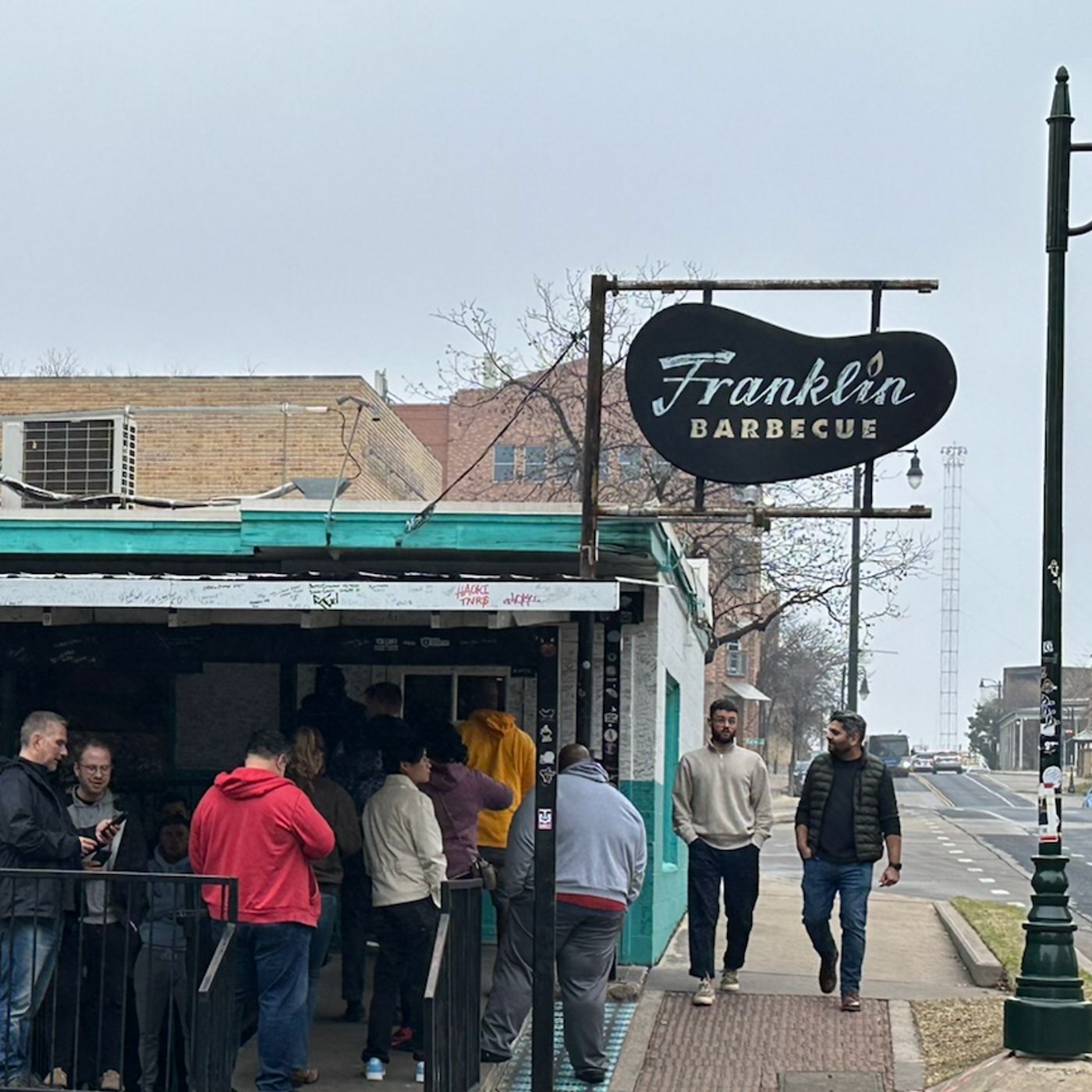
29:32But one thing I think about, and I wrote this in something recently, is when you think about people very much understand how online shopping works for just getting a bunch of items to your place very quickly. The flip side of that is nobody ever waited in line for paper towels, right? You can think about plenty of items that people just need, but you're not willing to invest any real emotional energy or time in it, right? Because it's basically a commodity or commodity-like. So this idea of friction being a signal, I think on the one hand, if friction is keeping the customer or creating any headwind, so to speak, to the customer getting done what they want to get done, then yeah that's an opportunity perhaps for technology to improve the situation um but if there is some friction like waiting online for barbecue which here in texas people do all the time in many places and you know we'll wait two three four hours you know maybe people wouldn't mind the line being a little shorter but lots of people you know tolerate it right why because
30:47Steve Dennis: the line is part of the experience right pretty big signal you and i did some barbecue touring and we went to some places where there's no line, the barbecue was delicious, but it wasn't at the next, the S tier, as the kids would say. When you know you're standing in Franklin's, you're going to have S tier level, and you're going to take a couple hours to get there. I love this idea of friction like a signal, because the fact that you're exploring friction as part of the experience, I think really encapsulates that perspective that you're bringing to the discussion. There's also a degree to which people, you know, there's old sayings like, nobody goes there anymore because the line's too long or something like that.
31:28But I think if we stop to think about and don't get so caught up in what's talked about at retail conferences, there are all sorts of ways that we endure lots of friction. People will wait for months to get into a top restaurant. People will willingly sort through the treasure hunt of a TJ Maxx or home goods. people will pay a lot more often. If you think about a Birkin bag or sometimes even an iPhone, people are paying a lot of money and yet will wait in line, but they may just wait to get it. So it's not just waiting in line, but I think there's a lot of times where the friction that we will endure, whether that's price, time, hassle, wasting time, you could say, going through stuff at a store.
32:18That's the signal of the values. You know, joy, in one way of looking at it, always costs something, not necessarily money, right? It may just be time. So again, I think that if we stop and think about our own behavior, it's quite obvious that friction isn't always the enemy. Lots of times it is, but we shouldn't let the technology dominance, I guess, of what's often in the discourse around retail dominate the discussion. Mostly, we should just be careful what we wish for, because if we don't have the ability to win on convenience or speed or selection or what have you, and we keep pushing our energy in that direction, we just may be wasting our time or chasing our tail.
33:03Are there other ways to add value that is not... I guess one thing I get asked sometimes is, well, if friction is a signal, should you add friction? And I don't think just adding it. Or just create it.
33:16Steve Dennis: Or just create it from nothing. Yeah, I mean, there is a degree of manufactured scarcity, particularly in the luxury industry. But when you think about the brands that have endured, the Louis Vuittons, the Birkins, the Pradas, those brands aren't, that isn't manufactured really. I mean, they definitely don't want their product widely distributed or it will deteriorate the value. But the reason people are willing to wait or, in many cases, or really every case, pay a significant premium is because the brand has created that value through craftsmanship, storytelling, all the other things it's done around the brand over many, many years.
33:56So, yes, you've got to be careful that you're not doing it just to create a moment. and we can think of examples like the Stanley Cup where the hockey Stanley Cup that is scarce particularly for certain franchises but you can have something that's really just a moment an Instagram moment or something that lasts for a little bit of time that doesn't necessarily guarantee it's going to be a thing for an extended period of time so I think you just got to be making sure that the signal's not just a gimmick or something fake, but something that customers will pay for today, but also likely to pay for it into the future.
34:38Steve Dennis: Well, it's pretty complex, right? Because I think of a brand like Yeti, which I'm a big fan of, and they are just huge at storytelling. Their store in Austin, for example, is just full of boats and old trucks. And even their store that we toured in New York, they're trying to tell a story, and they command a premium in their brand. Now they're expanding their line, but compare them. They've done the hard work of building up, And it's certainly not because it's hard to find. They are very accessible. You can find them anywhere. I've never had a shortage of product. But somehow they create that magic of demand, not through as much friction in terms of availability, but just building up storytelling and having people walk through that elements of their brand.
35:20Yeah, and I think that gets to, I mean, we don't have the time to go through all of it, but in the keynote I kind of unpacked the three elements of what I think creates joy and it's meaning, belonging, and fun. And it doesn't have to be just one thing. And I think a brand like Yeti, though, you're sort of the Yeti customer. When you go to the store, you're part of a group of people, your tribe, whatever you want to call it. And there's a lot of things that go into doing that well. It's typically not any one thing. Yeti is a great example of a company that, the way they use color to do visual merchandising, the way they rotate in new colors.
36:00It's all part of a machine that creates that demand and makes you want to be part of that brand.
36:08Steve Dennis: Let's talk about agents, right? Agentic Christmas and all that stuff. Does that just rip the soul right out? And you've been reading some people who've been writing about this. You're thinking a lot about it. Agentic commerce is the thing. It's a pretty soulless experience, right? Well, I mean, and again, like we talked about earlier, things are moving so quickly, it's really hard to make a great prediction. But if you assume that agents are going to continue to grab a greater share of shopping behavior, where does agentic shopping not work so well? And I would really recommend people check out Catherine Black's work.
36:48She's an AT Kearney, or I guess they're just Kearney now, partner, and her substack is terrific. It's called Consumer Decoded. and she's written about a number of things. But one thing that I was reading of hers a few months ago was that agents will take over the friction, really, that the customer resents or notices. And I think that's the same even before in a gentic world. Like, if you're like, oh, this line is so long, or why do I have to go through four clicks to get something in my shopping cart? Why do I have to keep re-entering my credit card data? Retailers know that there is certain friction that just causes dissatisfaction.
37:24And I think part of what she's saying is it's not inherently any different when it comes to where agentic will get most of its traction. It's just that the technology allows, I wouldn't say just, but one of the things that's clearly most powerful about AI in general is the speed at which it can do things or the ability to sort through a lot of data or the ability to leverage knowledge about you to perhaps ask you a question. And so that's clearly an advance in what we're used to in e-commerce generally over the last few years. So I think it's really important to understand that. But she has some data that she shares around where the delegation of tasks really stalls.
38:08And that has a lot to do with your own personal identity or what I was talking about earlier, this sense of meaning and belonging. And her data shows that there's a 17-point gap, or Carney's data, I guess, between things like household supplies, so the paper towel example earlier, and your own wardrobe, right? Because the way you dress typically says something about you. So you're less likely to just give that away to somebody without a lot of experience and trust, probably. But when it comes to just stuff you need to buy all the time, your identity is not tied up in that. And if it happens even faster, even easier, then why wouldn't you delegate that?
38:49So this is a little bit different than friction per se, but it's like where customers won't hand off things to an agent, that probably tells you where they really see the value. It's not just about the transaction being speedy. It's about what the transaction says about me. Or I just enjoy doing it. I think some people, I'm one of those weird people that likes grocery shopping, right? Plenty of other people, for the most part, don't. So that gets back again to this idea of treating different customers differently and not making these sweeping statements that the tech bros think this way, but plenty of other people think different ways.
39:26Steve Dennis: Well, lots of big thoughts, and we've talked about it before. I'm sure we're going to talk about it in broad strokes again, but if you're a retailer listening to this podcast and you wake up, you've had a great weekend, it's Monday morning, what are you going to do about all this? Well, I often say that some of the things I put forward are a little bit too black and white, and this is probably true as well. But I think a simple two-question kind of thing is, which friction do customers complain about? If there's a history of there being dissatisfaction, then remove it. It doesn't have to be with AI.
39:59But if it's significant to the customers, a lot of customers, and you hear about it all the time, that's pretty easy. Go after it. But if consumers are choosing the friction or don't seem to be bothered by it, well, maybe you need to protect it. So I think this is where, as we go down this agentic commerce path, don't just assume that just because an agent can do it, you should let them do it. So really try to understand where that value is created. And in some cases, though, and I was working with another retailer just last month about it, where we were talking about this, One of the things that was clear was they just didn't really know.
40:38Like, they're the really obvious things that they hear complaints about. And there's other things that they assume are important, even though it looks like friction. But they really didn't have a good understanding of which customers cared about it. Is it a big opportunity or not? Has it changed? Because another part of this conversation was, well, we know that this has been important for years. And then I'm kind of like, well, but that's changed in shopping. And so maybe what was true five years ago isn't so true today or won't be true in a year or two. So if you don't have a good understanding of the customer journeys and where the speed bumps exist or where there's an opportunity to kind of what I call amplify the wow, or at least protect the wow that you have, it's probably worth understanding that better because the world is moving very, very quickly.
41:25Steve Dennis: Well, that's a great way to wrap up this segment, and we'll be talking more about it. And by the way, I assume you can be booked for such a keynote at someone's gathering, yes? Yes. Ready to give this keynote? You've already taken one for a test drive, right? I've done it a couple times, and so I might even be not embarrassed to give it. All right, let's wrap the show with a couple of items from the news, and then we'll get to what's on our radar screen. Let's start with Tapestry. Yeah, so Tapestry, which is Coach plus Kate Spade, is another brand. We've talked about them several times. That has really been on a good tear.
42:03And again, kind of like what we talked about with Ralph Lauren, it's proof that done right, it's possible to have a successful business even with luxury troubles. Similar to Ralph Lauren, though one important difference, I think, is they've just continued to get more focused. They've been raising prices. one thing that they have been very focused on is attracting a younger customer that appears to be working really well so just some quick stats the coach business up 16 unfortunately the Kate Spade business down 10 Kate's been really struggling for a while I know a little bit about Kate Spade because we owned Kate Spade when I was at the Neiman Marcus group and I can tell you one of the issues, which seems to be a long-term issue there, overly reliant on product development and design.
42:57And they've been very much kind of a hit or miss in terms of their designs. But they also expanded too, too much. And I think they've been paying the price for that for years. And again, just like Ralph Lauren, though, Coach, their Asian business, and particularly China, is on fire. So it is not the case that you cannot do well in China as a Western brand. Their gross margin is almost 80%, which to me is just crazy, but it shows you the value of going direct in a disciplined way, unlike our friends at Nike, and being able to command a price premium and stay clear of discounting. So they now have an adjusted operating margin of over 23%.
43:39So there's a handful of brands of any size that have those kind of operating margins. And they still continue to open stores, they being Coach, Kate's retrenching. Coach plans to open 40 to 50, well, they'll be net 40 to 50 stores, and that will get them to almost 1 ,000 stores worldwide. So for a long time, it was pretty much a North American-only business, but they've really been able to diversify and become a really, really powerful global brand. So congratulations to them. The thing I was going to say that I think is a bit different than Ralph Lauren, though I I don't know for sure. Long-time listeners will know we talked to some Coach folks a couple years ago that were really working intensely on leveraging their data.
44:22And I think Coach is one of those brands that's been very, very much driven by customer insight, more personalization, and using data to inform their product development decisions as well. And there aren't too many brands that are really super good at that, and Coach appears to be one of them.
44:37Steve Dennis: Let's wrap the episode in Canada. Oh, Canada, Shopify. Let's talk about them. They come up many, many times in our conversation now, and they put out some pretty good results. Yeah, Shopify, I think, is a brand that's been both kind of crazy how on fire their business has been. This is their sixth straight quarter of growth in the vicinity of 30 % year over year. Their gross merchandise value was up 29 % for the quarter, so that is way, way above the rest of the industry. And their revenue was actually up a little bit more because folks might know they're not a retailer in a traditional sense.
45:17They're a platform for retailers. And they've been able to raise their prices a bit. And they are predicting that really this momentum will continue. One of the things that's going to be really interesting about Shopify going forward is how Agentic will affect their business. So on the one hand, they're adding all these capabilities for the folks that are on their platform to build in aspects of what the Amazons and the Walmarts of the world are doing, as well as, well, they're mostly integrating with places like Meta's Muse and Claude's Duet, etc. They basically say that because of the capabilities that are built into their platform, every store that is on their platform is basically agent-ready by default because their stores can access a lot of their capabilities.
46:06Now, whether they're as good as Walmart or Amazon, that's perhaps a separate story. But the thing about Shopify, which maybe people understand really don't, they provide all these shopping capabilities, but they're really a financial services business to a large degree. and how that business will shift over time may potentially make them vulnerable to some disruption. But no matter how you look at it right now, really, really great performance, solid momentum. But there'll definitely be a brand to watch to see as this whole agentic world proceeds, whether they're a little bit vulnerable to, I don't want to say being disintermediated, but some of the payment challenges from Stripe and some others that are building payment processing within their platform, that might be a bit of a rocky road, but so far, so good for them.
46:55Steve Dennis: All right, well, let's wrap the episode with what's on our respective radar screen. I have to think on your radar screen is what on earth is going to happen in the next couple of months, couple of years in the United States of America with the blue wave. Yeah, well, we touched on most of this already. I guess the thing that I was hopeful about was that maybe the polarization will not be so extreme, that there'll be a little bit more of an ability to work together and solve some of these problems as opposed to everyone else going to their corner, whether Dana White is literally involved in that or not.
47:26Apparently, Trump says that was a joke. I think it was a joke because people said to me, or said to him, what the hell are you doing? It suddenly became a joke.
47:35Steve Dennis: Wasn't it also that the speaker who was the voice of the Defense Department was also named Dana White and that he made the mistake? I think there was some confusion there. Yeah. The particular thing, not to get too deep into the politics here, but Stephen Miller, who I think is easily in the top 10 of worst humans on the planet, was promoted from deputy chief of staff to Trump's new chief of staff. And I don't think that's a good sign for any kumbaya going on because Stephen Miller is a very vindictive person. He's the guy behind the very cruel immigration policies as well as a bunch of other things.
48:13I will, rather than unpack this any further, just repeat a quote that some of you may have seen I put on social media, which is Andrew Weinstein, who's kind of a political pundit, said, naming Stephen Miller chief of staff is like looking at a five alarm fire and deciding the problem is a shortage of gasoline. So I think that does a far better job than I can. But anyway, like I said earlier, I think what we'll be looking for is any signs of reversal or progress on winding the war down, whether we will become friends with Canada again, for example, on lowering tariffs and what degree of relief is there for lower income customers because Because just from a retail perspective, obviously, there are many, many people that are getting increasingly challenged by rising prices and other challenges to discretionary spending.
49:06Steve Dennis: Well, on my radar screen, I got this solicitation email, and you and I were talking off mic. We get a lot of emails lately. It seems mostly about giving us a lot of money or financing the growth of our huge businesses, manufacturing businesses that we have. about the renting of my audio from the podcasts to a company that works with AI platforms for training AI platforms. So they go out and they try to find content. Now, as I got that email, I got this other thing in my newsfeed. Google just won an auction. They paid$10 million for a massive internal database set from bankrupt Spirit Airlines to train its AI models and improve products.
49:45Steve Dennis: Now, they didn't buy their consumer data because you couldn't buy that for$10 million. What did they buy? 100 million emails from Microsoft 365 accounts, 500 million teams, workplace messages, 30 million lines of code, historical flight logs, competitive fare combinations, but it's not the consumer data. So all this training of AI systems with the behemoths, it makes me think of a world where these big platforms just get to learn everything about us humans in novel and innovative ways. That's the good news and help us answer questions in a natural way and just make the conversation seem more natural.
50:21Steve Dennis: But perhaps it's also to better manipulate us. Now, that being said, Jensen Huang proves that sometimes the old ways are still the best ways to manipulate people. And funny, by the way, how fast POTUS jumped to his defense, because who hasn't been honeypotted a couple of times anyway? Who can throw the first stone? Anyway, I started to think about, you know, just reading these kind of data points. What are they learning? Imagine if they had you and me, our emails over the past five or six years, to train their data. I mean, it would just be creepy, right? It was like, what the hell? It would probably be mostly things not to do.
51:01Steve Dennis: Exactly, exactly. Anyway, that's what's on my radar screen as we wrap the show and I start to think about AI in marvelous and less than marvelous ways. Anyway, that's a wrap on this episode. Thanks for tuning in. To help more retail leaders discover the industry's leading podcast, please drop us that five-star rating and review on Apple, Spotify, YouTube, or wherever you enjoy your pods. And for more of my strategic advisory services, keynote speaking, bestselling books, and even more retail industry insights, go to stephenpdennis.com. If you are a brand or service provider looking to take your influence to the next level, reach out to us for sponsorship, advertising, or event partnerships.
51:47Steve Dennis: And if you want to learn more about my own keynote speaking and advisory practice, reach out to me via LinkedIn.
Retail has spent decades optimizing for speed, price and convenience, and AI is accelerating that race. Steve Dennis and Michael LeBlanc ask what gets lost along the way, exploring Steve’s new keynote, “The Soul of the Store: Selling Joy in an Era of Relentless Optimization.”
Steve revisits his classic distinction between buying and shopping. Some purchases are errands customers want off their to-do list fast. Others are where shoppers seek meaning, belonging and fun, and where efficiency alone won’t win. At the heart of the keynote is a provocative idea: friction is a signal. People wait hours for Texas barbecue, dig through the treasure hunt at TJ Maxx and wait months for a Birkin bag, because what they get is worth the effort. Drawing on Joseph Pine’s distinction between time well saved and time well spent, Steve argues that retailers who chase Amazon and Walmart on convenience are playing a game only Amazon and Walmart can win.
On agentic commerce, Steve cites Kearney data showing a 17-point gap in shoppers’ willingness to delegate household supplies versus their own wardrobe. Where customers won’t hand a task to an AI agent tells retailers where the real value lives. Steve’s practical playbook comes down to two questions: which friction do customers complain about (remove it), and which friction do they choose (protect it)? Get that wrong, and retailers risk automating away the moments that matter most.
The news segment opens with the macro implications of the Democrats’ sweeping midterm gains, from affordability, tariffs and fuel prices to a looming December budget deadline, and the relief of an election with little disruption. Amazon rolls out text-based shopping through Alexa for Shopping, the assistant that replaced Rufus in May, echoing the old Jetblack concept. It may be incremental, but Amazon’s scale and shopping data make it a serious player in what many are calling the first agentic holiday. Wayfair grows revenue nearly 10% in a flat home category while improving margins, as it scales toward 11 large-format stores by 2028. Ralph Lauren posts 9% revenue growth and a 70.5% gross margin on the strength of focus, pricing power and disciplined inventory. At Tapestry, Coach climbs 16% with a gross margin near 80%, fueled by younger customers, China and data-driven insight, while Kate Spade falls 10%. Shopify delivers a sixth straight quarter of roughly 30% growth as it positions merchants as agent-ready by default, though payments competition could test it.
About Us
Steve Dennis is a strategic advisor and keynote speaker focused on growth and innovation, who has also been named one of the world's top retail influencers. He is the bestselling author of two books: Leaders Leap: Transforming Your Company at the Speed of Disruption and Remarkable Retail: How To Win & Keep Customers in the Age of Disruption. Steve regularly shares his insights in his role as a Forbes senior retail contributor and on social media.
Michael LeBlanc is a senior retail advisor, keynote speaker and media entrepreneur. Michael has delivered keynotes, hosted fire-side discussions hosted senior retail executive on-stage in 1:1 interviews worldwide. Michael produces and hosts a network of leading retail trade podcasts, including The Remarkable Retail Podcast, The Voice of Retail, The Food Professor, The FEED powered by Loblaw and the Global eCommerce Leaders podcast. He has been recognized by the NRF as a global Top Retail Voice for 2025 and 2026 and continues to be a ReThink Retail Top Retail Expert for the fifth year in a row.