Ask ChatGPT
 Remarkable Retail Podcast
13 Oct 2026 · 32m · 13 chapters
Encore episode featuring David Kahan (Birkenstock Americas) on how a 250-year-old German foot-health brand stays relevant through “moment after moment” cultural visibility, strict brand DNA, and engineered distribution.
David Kahan grew up in retail/wholesale, worked at Macy’s, became Reebok’s first athletic footwear buyer, later led Reebok after its Adidas acquisition, then ran Rockport (Adidas portfolio). He joined Birkenstock USA, became CEO of the Americas, and is now president and managing director of Birkenstock Americas.
Never deviate from Birkenstock’s DNA (the footbed as the “chassis” of every product). No tagline; word-of-mouth “missionary” flywheel. Engineered distribution: full-price, disciplined placement, sell-through mindset, and brand-equity protection. DTC is under 10 years old; digital launched around 2016/17 with 10M+ engaged members.
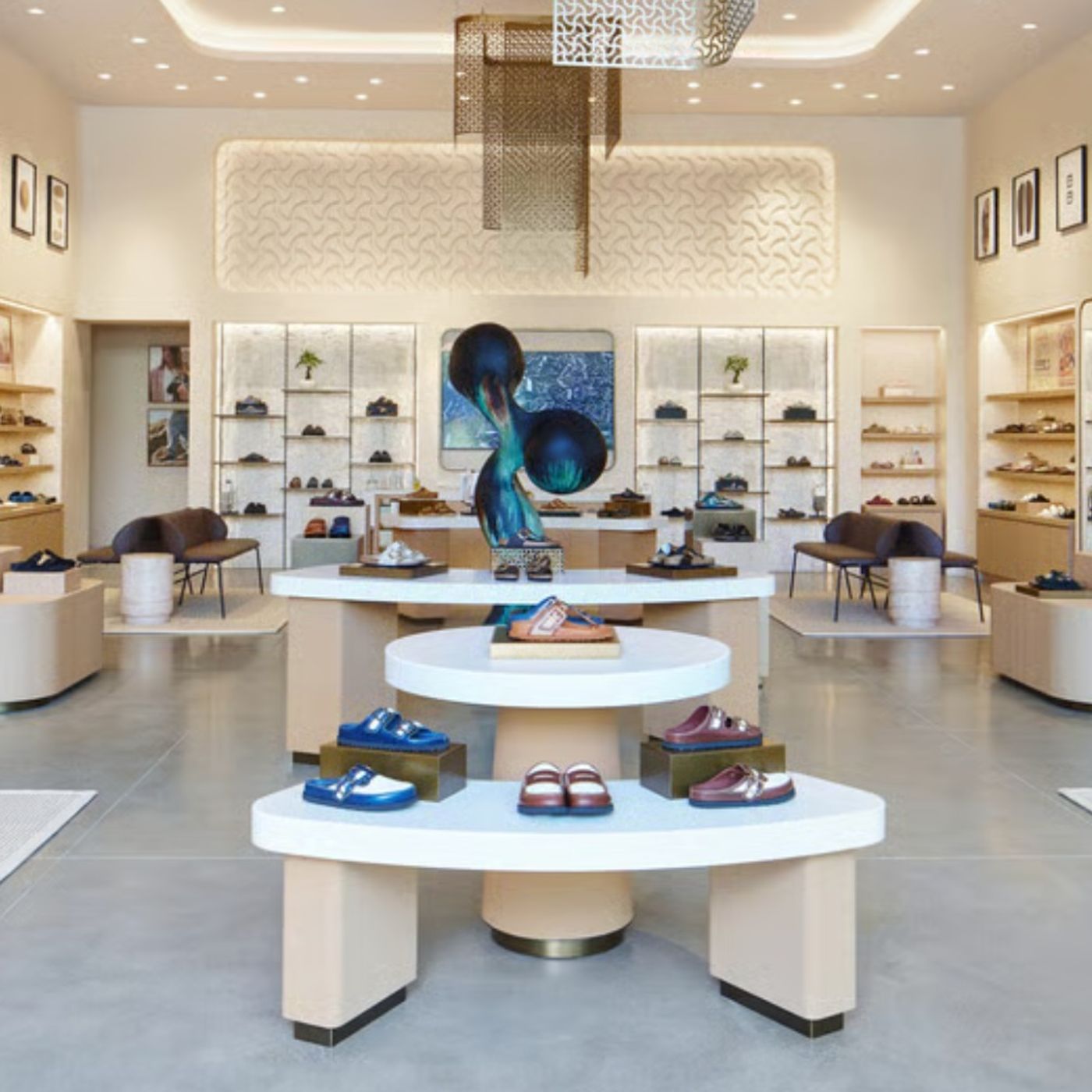
runway/celebrity moments (Celine with B.B. Filo; Francis McDormand in Valentino; Barbie; John Cena at the Oscars; Jason Momoa at Venice Film Festival). Store/community examples: Malibu test store; Berlin concept store “grounded in culture” (~1,300 sq ft).
Written by AI. May contain mistakes.
Discussion on Birkenstock's recent growth and store expansions.
“The direct-to-consumer piece of the business, so that would be their stores and their online site, grew a bit faster than wholesale for the first time ever.”
Preparation for the interview with David Kahn.
“Well, without further ado, we can get into that interview.”
David Kahn shares his journey in retail and the history of Birkenstock.
“We've been trying to get you on for a little while.”
Exploration of the brand's evolution and significant cultural moments.
“But maybe just a tiny bit of history because the brand is, what, 250 years old or something like that.”
David discusses maintaining Birkenstock's core identity while growing.
“And then you have John Cena coming out, you know, completely naked on the stage of the Academy Awards wearing Birkenstocks.”
David reflects on the confidence and strategy behind Birkenstock's success.
“So we never deviate from our DNA and we practice the strictest, the strictest commitment to what we call engineered distribution, which is super important.”
Learn about Birkenstock's unwavering confidence in its historic brand and product commitment.
“Is that a belief nested in this long history?”
Explore how Birkenstock’s disciplined approach to distribution contributes to its success.
“I'd like to go back and pick up on what you talked about, engineer distribution strategies.”
Discover the evolution and importance of Birkenstock's direct-to-consumer strategy.
“And I think that makes all the difference.”
Understand how Birkenstock creates tailored retail experiences that resonate with customers.
“They're a point of customer acquisition for us.”
Learn key leadership lessons for managing a historic brand in a dynamic market.
“What's really unique for us is we have landlords that covet having Birkenstock.”
Learn about essential leadership principles for managing a historic brand.
“But any, you know, as you think about that, you've described often your leadership team and how you focus and where they come from and the work they do.”
Reflect on the conversation's insights and David's journey with Birkenstock.

Get the gist, explore an idea or ask about something said.
 Claude
On Remarkable Retail Podcast, what are the key points of this episode?
Searching your listeningAutomatic transcript. May contain errors.
0:07Steve Dennis: Welcome to Markable Retail Podcast, episode 315. I'm Michael LeBlanc. And I'm Steve Dennis. This week, a special encore episode with one of our favorite interviews from last year with David Kahn, president and managing director of Birkenstock Americas. It's a great discussion about keeping a 250-year-old brand relevant. And Steve, you've got some updates for the people here since we talked to David. Pretty much exactly about this time last year, right? Yeah, I figure we just get folks a little bit current with what's happened with the brand since we talked to David. And it's been pretty good news across the board.
0:42Their revenue from the most recent quarter was up 15%. The direct-to-consumer piece of the business, so that would be their stores and their online site, grew a bit faster than wholesale for the first time ever. That's largely because they are opening some new stores, which I'll talk about in a second. One of the things that's interesting is they're growing their clogs and closed-toe shoes a bit faster than the more seasonal fashion items. So that's, I guess, great for consistency. And part of their international expansion, of course, people would know their European company that has been moving across the world, They are on track to grow their APAC portion of their business twice as fast as the rest of other retail.
1:27So that's both wholesale expansion and some new stores. Speaking of stores, amazing segue right there. They opened 13 of their own stores in the last quarter. So they are up to 124 worldwide. They're hoping to get to, and I imagine at this point they're pretty close to accomplishing it, 40 new stores for 2026. So you can really see the pace of their own store openings accelerating. They now have 15 stores in the United States. They've got a new store in Malibu, which is a bit of a test for them trying to be a little bit more integrated into the local community. So rather than kind of a cookie cutter, pro forma kind of store or concept, it's designed very specifically for this lifestyle center, which is more like a village style town center kind of building with some other DTC brands.
2:25They also opened, I guess just a couple of weeks ago now, three weeks ago now, a new concept store in Berlin, which is one of the larger stores. It's at about 1 ,300 square feet. And this is also one that they call it's grounded in culture, which means they're really kind of drawing on the history of Berlin and some of the art and furniture and other objects that are made by local designers. So I really like that local twist to it. It's kind of similar to what ASAP, the Australian beauty brand, has been doing. And, you know, it's a lifestyle brand. I think that makes a ton of sense for them. So yeah, it's a brand to watch, and it's pretty impressive as we talk about with David, just the whole history and the technology and also kind of the fashion side, which wouldn't necessarily associate with Birkenstock kind of from their historical perspective.
3:16Steve Dennis: Well, and I was very, we've talked in the last episode, we talked about Bloomingdale's and their merchandising. I was very impressed when I saw the Birkenstock space at Bloomingdale's. It was just beautiful. It's very well merchandised and it really, I thought, did a great job elevating the brand. So I know he and David himself and the brand is very well respected amongst fellow retailers. So they see them as a great partner and a great brand to have in their assorbent. All right. Well, without further ado, we can get into that interview. Stick with us or come back next week. We're going to have a special guest interview.
3:50Steve Dennis: I'll give you a bit of a sneak peek hint. We've been talking about this retailer for, I don't know, since the beginning of this podcast, but it's their first time on the show. There's a bit of hint there for those affectionados who have been following us for over 300 episodes. Hint, hint, hint. Anyway, let's hear from David and get his insights into that brand. Well, David, welcome to the Remarkable Retail Podcast. We've been trying to get you on for a little while. We finally made it happen. So where are you coming to us from today? Well, Steve and Michael, it's great to be with you. You know, I'm all over the place, but today finds me on the East Coast, which is good, on my way to New York next week for a few little fashion week type events.
4:39Very, very nice. Well, I'm all over the place, too, but most of that is in my brain rather than physically. But anyway, enough about that. So we've got a lot to talk about, but perhaps we should start just to make sure people know a little bit about who you are, how you got to be, where you are, and the work you do at Birkenstock. Well, I appreciate it. I mean, basically, I've grown up in the retail and wholesale world. I like to say I went from working 12 hours a week part-time in Macy's to 12 hours a day in the executive training program. I fell in love with it. I became the company's first ever athletic footwear buyer back in the day when athletic footwear was just breaking through into the mainstream in malls and in department store assortments.
5:29I eventually made my way to the vendor side, the brand side. And eventually I was leading Reebok when we were acquired by Adidas, or as my colleagues in Europe call it, Adidas. I eventually moved into the brown shoe world when I took over Rockport, which was one of the brands in the Adidas group portfolio. And somehow, maybe having managed, you know, in a German led company, maybe I became known for, you know, being an American guy who knew how to do, you know, deal with that and manage that kind of enterprise. And Birkenstock came along. And I mean, here it is. it's this incredibly iconic brand, probably the most iconic brand in not just footwear history, but almost in any branded history.
6:20And it was a brand that I had a personal connection with. I always wore it. I was a longtime Birkenstock guy, even back when it was like, you know, the weird strange old shoe. And I met the gentleman who became the first non-family leader for Birkenstock, Oliver Reichert, and it's been a match made in footwear heaven for the last 13 years. And I joined as chief executive officer of Birkenstock USA at the time, eventually became CEO of the Americas. And now I serve as president and managing director of Birkenstock Americas as part of our global leadership team. Well, it's been quite a journey Now, the three of us share some history in that all three of us have worked for brands that are several hundred years old.
7:11Unfortunately for Michael and myself, those brands are no longer really operating. But Birkenstock, thankfully, is thriving. But maybe just a tiny bit of history because the brand is, what, 250 years old or something like that. So maybe just talk a little bit about the history and evolution of the brand, and then we'll talk about the amazing growth story. Sure. Sure. Birkenstock dates back 250 years to a small village in Germany where a gentleman by the name of Johann Birkenstock was just obsessed with foot health. He studied, he dedicated his life to orthopedic benefits, and he invented what we now call the footbed, Fushbed, literally an anatomical bed for your foot and quite quite literally it took three generations of Birkenstocks for this concept to evolve to what it is today I mean we shouldn't forget in 1963 the family was laughed off of the uh the show floor at the Dusseldorf trade fair when they showed up with this strange looking cork footbed with the strap across the top so this has been a pretty incredible journey to take this from a small village in germany to now you know the streets of uh cities around the world it's pretty exciting and we managing the brand now consider ourselves just the steward of this incredible family legacy you know any brand that's going to have a history like
8:47Steve Dennis: that is going to have a trajectory and and it's sometimes the case that something unusual happens something unexpected so something unexpected happened in that 250 years talk about it yeah what's most interesting about this brand you know when you think about brands you think about them having their moment so to say this is a brand that has had moment after moment after moment Now we've been able to maintain that moment way more than previous generations. So if you go back prior to our administration, Birkenstock had those little moments. I mean, it had the hippie and the Grateful Dead and the Berkeley thing.
9:30Then it kind of went dormant. Then you had a little grungy thing. And, you know, Marc Jacobs did it. And it kind of went a little dormant. And then Heidi Klum. And then when our administration came on board, we realized that there's something more to this brand. So if you look at the first moment, sure, B.B. Filo on the runway with Celine, kind of like bringing Birkenstock to the fashion world. OK. But what we did after that was really, really important. Instead of just treating it as a moment, we treated it as a moment in time to really crack open the value of this brand. So you think about it moment after moment after moment.
10:18You had Francis McDormand on the red carpet at the Academy Awards wearing a Valentino dress with Valentino collaborating with Birkenstock. You had the Barbie movie, which could have been this moment in time. But what it really became was instead of Birkenstock having a Barbie moment, it was almost like Barbie had a Birkenstock moment. And then you have John Cena coming out, you know, completely naked on the stage of the Academy Awards wearing Birkenstocks. this past weekend at the Venice Film Festival. You have Jason Momoa in a pink suit with pink Birkenstocks with his toes painted pink. So it's moment after moment after moment that make up a lifetime of a brand that just has resonance beyond any trend.
11:12So what I'm curious about is, you know, that obviously doesn't happen by accident, right? So what's the lesson for marketers and leaders around how to take the core of what you have and amplify that like you guys have. Yeah, amplify is a good word because the lesson is, number one, we never deviate from our DNA. So if you look at the Birkenstock collection, every single product, every single one is built on the footbed. It's like the chassis of a car. And then you can say, you know, my colleagues overseas may not understand this reference, but retailers in the U.S. do. We play Mr. Potato Head on top of it.
11:59So the product becomes just the vessel by which we bring the footbed experience being a purpose-led brand to the end user. And the difference with Birkenstock versus most other products is once you wear the product, once you wear it and you have the footbed experience, you go from being a consumer to being a brand fan, a stark, raving missionary. So if you notice one thing, we have no tagline. There's no Birkenstock. Just do it. Basically, Birkenstock becomes this organic, word-of-mouth, missionary-led brand that is almost like its own flywheel. The more products we put in the market, the more people wear them, the more people recommend them.
12:55I mean, the average person who owns Birkenstock in the United States owns 3.4 pairs in their closet at any given time. Now, that's what we can statistically say. Anecdotally, we believe it's a lot more. But I don't think there's many things, let alone shoes, that somebody would own over three at any given time in their closet. So we never deviate from our DNA and we practice the strictest, the strictest commitment to what we call engineered distribution, which is super important. And it's been the foundation of everything we've done here. We never deviate from engineered distribution.
13:39Steve Dennis: I know what you mean about that 3.4. My daughter came home with somebody else at the yoga studio at Grabner, left side of the shoes. She came home with two right side Birkenstocks. So that's the 0.4, I guess. So she's got the 3.4. You know, I just wanted to follow up on Steve's follow-up, so to speak. And, you know, these moments that keep happening, and it's so intriguing, it feels like there's a confidence in you and in the team that organically these will just continue to happen. Is that a belief nested in this long history? Because, you know, sometimes history, you know, you get a bit too overconfident, but there must be some purposeful placement behind it, Or is it just this relentless confidence, as you say, that once people are trying such a great product, it's just going to become part of the culture that this is zeitgeist.
14:27We don't take it for granted and we have a relentless commitment to not be satisfied where we are. I would say we have not just certainty. We have it's beyond that. It's what I would call absolute certainty. But we don't take it for granted. You know, I remember, you know, five years ago, seven years ago, you know, two years ago, some of our retail partners and people in the industry would say, David, when are you guys just going to go on autopilot? And I would always say, like, autopilot. And I always ask the question, is this as good as it gets? Well, what you thought five years ago is not as good as it gets.
15:09It's this relentless commitment to, number one, share the brand with every man, woman, and child on the face of the earth should ideally have the benefit of wearing a Birkenstock product. We say that our addressable market, our total addressable market, is every homo sapien, everybody who walks on the earth. walks on the earth because, and I know if you're some kind of, you know, Wall Street analyst, you probably think you're out of your mind, but Birkenstock is the next best thing to walking barefoot on soft ground. And, you know, as somebody who grew up in New York knows, the average New Yorker walks 3.2 miles every day.
15:56You're not barefoot walking on soft ground. So we provide a purpose-led product to consumers. And what we've done is we've democratized it. So this is something that is within reach of anybody who wears shoes. You know, we're not talking about the 1 % luxury end, although we have a Paris office that does things that are, you know, seen on runways around the world, but we also sell EVA footwear that you can wear to the beach and kick off by the pool. So this is one of the brands that when you talk about amplifying and unlocking value across each distribution channel and each demographic, we believe we have products that can serve the purpose and never deviate from what a Birkenstock is.
16:54I'd like to go back and pick up on what you talked about, engineer distribution strategies. Can you talk a little bit about how, because my sense is not only obviously have you grown a lot and done a lot of product expansion and all these marketing activations, but the way you've been disciplined about going to market seems to be a pretty big part of your success. Is that right? Right. It's it's aside from the brand and the respect for the brand and the fact that we will never, ever, ever do anything to compromise our brand equity. Brand equity is omnipotent to us. I mean, Steve, you talk a lot about, you know, the fact that, you know, there's just a short there's no shortage of retail.
17:44There's just a shortage of remarkable retail. And remarkable retail is consumers coming into contact with brands that they really love. And what tends to happen, especially if you look at recent results, the brands that maintain their equity and are distributed in a manner that's consistent with the brand, mainly full price selling, in the right points of distribution, presented the right way, those tend to be the brands that are in demand. And you guys use the word, and I love that you use it, bifurcation. There is a huge bifurcation happening in the market right now. There's a bifurcation between labels and brands.
18:33And then there's a bigger bifurcation that leads our engineered distribution strategy, which is the bifurcation between brands people like and brands people love. And if you have a brand that people love, you owe it to your raw demographic, the consumers, your retailers, your stakeholders to treat that brand with the equity that it deserves. And that's what we do. Every point of distribution is chosen with discipline. How much we put in each point, we like to say to our retail partners, we're not a sell in organization, we're a sell through organization. Every single person in our Birkenstock America's leadership team, everyone has a retail background.
19:25We all came up through retail. So we don't view the brand through the lens of a sales vendor relationship. We view it as a brand management retail mindset. And it doesn't matter if it's our own D2C or it's through a retail partner. It's one channel of reaching the end user. And I think that makes all the difference. And that's a long way to say that engineered distribution is just never compromise the brand value in any decision to chase short-term results. Can you talk to us briefly maybe about the role of, I forget how many of your own Birkenstock stores you have, but as you look at D2C, whether it's your online presence or it's your own store.
20:14How is that shifting? Yeah, it's funny. 250 years in this whole history, we've only been in the direct-to-consumer business less than 10 years. So how long has e-com been going on? Geez, I was with Reebok when we launched e-com. I think it was 2000 or 2001, maybe. And I remember people laughing like, oh, who's going to buy a shoe online? Ha, ha, ha. Well, for Birkenstock, we didn't launch our digital until I think it was 2016 or 17. So we have a very, very important digital presence, not just in the Americas, but across EMEA and as we expand the business in APMA also. Our digital business allows us a direct pathway to connect with our brand fans.
21:10We have 10 million plus members who are deeply engaged. Retail stores is a different story. Retail stores, we're just really getting into right now. We haven't had the bandwidth until now. We have, we're closely getting to 100 worldwide across the Americas. We only have give or take one or two for opening a dozen. But we will be opening more stores. It will become a more substantial part of our business. Number one, putting on a Birkenstock is a tactile experience. We really believe that somebody sitting and fitting and feeling the footbed and seeing the full breadth of the assortment is something important.
21:58You know, missionary work back in the old days when people carry Bibles happened door to door. So missionary work happens store to store. And we believe in that. Having said that, once somebody comes into our universe through a store and they become an online customer, that's fantastic also. But having said that, you know, we have incredible retail partners and where we show up at retail, we show up incredibly strong. They're a point of customer acquisition for us. I don't want to sound too agnostic to where somebody ends up purchasing our product. But, you know, speaking of the U.S. and the Americas, when you only have 12 stores spread out over 50 plus states in all of Canada, we're in some great locations.
22:50We're very disciplined where we open. We're not haphazardly opening stores. And what's really unique is each store we open is a real community experience. It's not a cookie cutter. Don't take this the wrong way. It's not the gapification of Birkenstock. The stores are unique. So if you're in the Miami Design District, it's one vibe. If you're in Austin, Texas, it's another vibe. and we get rave reviews on the stores. I've been in stores where people walk in that a long time, Birkenstock fans, and it's like, ah, it's like they've come to their nirvana, you know, like the holy grail of Birkenstock.
23:34And then I've been in the store, I've stood there in Soho and people come in and they go, hey, I've heard about this Birkenstock brand, but I've never really come into contact with it. And then somebody in the store quite literally talks to them about the footbed and the benefits of it and all the different styles we have and it's converting people one by one you know this it's interesting listening and reflecting what
24:02Steve Dennis: you're saying about the stores is as does the product assortment change like as you think about it's each unique character you talk about Miami and and Austin do you do you take that right down to product strategy or is this mostly a customer experience customer relationship customer or acquisition. It's also sales, of course, but just expand on that for a second or two, because I'm kind of curious about the inherent strategy and what you called your distribution strategy. Yeah, it's both. It's the experience and the assortment. And it's no different than what we do with retail partners. The assortment for a Nordstrom store in Bellevue, Washington might be different than the Nordstrom store in Aventura.
24:45We have a team of retail analysts and planners where we basically know door by door by door, each Dillard's location, each of our partners, and we understand the differences and the nuances. In our own stores, it becomes even more special because as great as a retail partner is, and I was just in Century City Mall you know right by Beverly Hills and I walk through Nordstrom and I walk by Bloomingdale's and I go oh my god we have mind-blowing brand assortments but it's not you know they just can't house the full breadth of the line so again you go to the Miami Design District where our neighboring stores are Valentino and Dior and you know Christian Louboutin and Louis Vuitton and our assortment in that store is far more premium.
25:42So our 1774 Paris-led collection and collaborations is probably three times the penetration there that it would be in Williamsburg in Brooklyn or on Newbury Street in Boston.
25:57Steve Dennis: And I guess that's how you convince the landlords to let you into their assortment, right? Because they're going to choose neighbors beside those brands very carefully, right? What's really unique for us is we have landlords that covet having Birkenstock. Again, it's not the mass rollout of generic stores. Each store is unique, and we wait. I mean, we are super diligent. We waited two full years until the space we wanted in Soho became available. I'm a New Yorker. Most people walk east-west in Soho, not north-south. I knew that you want to cut between Broadway and West Broadway, so we're on that street.
26:48Newbury Street in Boston, we waited two years. Why? I wanted to be across the street from Nike, Lululemon, and Zara, and I wanted a coffee cafe right next to us. You know, if I could pick a location now, it's near a Pura Vida that's opening, which is this, you know, great little bistro that's opening all over based in Miami. They just opened in Malibu and they're expanding in California. And I think the really, really good retail landlords understand how to curate assortments now just the way a retailer does. No longer is it, you know, suburban mall and just walk through it and go to the food court and everything looks like it was in Fast Times at Ridgemont High.
27:34I really think that the best locations. Great, great movie. I don't want to give you my Spicoli line. Anyhow, best locations tend to be those that have really smart landlords that understand remarkable retail.
27:56Steve Dennis: You know, this has been really a masterclass in thinking about a product that has both longevity and relevance, you know, current relevance and keeping that going. But any, you know, as you think about that, you've described often your leadership team and how you focus and where they come from and the work they do. But any lessons you could share about how you lead that team in such a dynamic business with a product that's anchored in such history and you have a global brand and you have global head office? There's a lot of lessons, I think. But what are the kind of two or three top lessons you'd share?
28:29I think the big ones are, number one, lead with your heart and lead with passion. Nobody and nothing that we do in our organization is bigger than this brand. The brand is omnipotent to everything we do. And we hold the brand with this, like we feel blessed. We feel blessed every day that we have this brand with this heritage. We not only don't take it for granted, we constantly think about how can we amplify it. And I said it at the beginning, but hey, I'm just the steward who's been here 13 years and as many more as I can possibly manage in my life and stay healthy to do. But this is just my part along the journey that's been 250 years and will be another 250 years.
29:21So it's respect for the brand. It's trust across the organization. And it's an incredible level of communication across our global home office in Germany, all of the regions around the world, and people that have spread across the Americas. respect for the brand trust in each other and never deviating from the dna of the brand yet continuing to innovate and innovate and stay true to our mission which is we just simply we sell products that bring people happiness and satisfaction and i think in the world right now as screwed up as the world is people need more happiness and satisfaction and that's what we provide we do it by way of this amazing brand that's that's just simply what we do
30:10Steve Dennis: well david it's been such a great journey on the on the call and on the conversation and congratulations on all your success and we wish you continued success and hey thanks for being a listener too that's a bit that's an added that's a for sure an added bonus so on behalf of steve and i thanks again for joining us on the remarkable retail podcast steve and michael thanks uh we talk about fans a lot and I am one of your fans and I learn a lot listening to the show and I share the show with my colleagues often and I appreciate sharing time with you. Thank you. Thanks for tuning in. To help more retail leaders discover the industry's leading podcast, please drop us that five-star rating and review on Apple, Spotify, YouTube, or wherever you enjoy your pods.
30:56And for more on my strategic advisory services, keynote speaking, best-selling books, and even more retail industry insights, go to stephenpdennis.com.
31:07Steve Dennis: If you are a brand or service provider looking to take your influence to the next level, reach out to us for sponsorship, advertising, or event partnerships. And if you want to learn more about my own keynote speaking and advisory practice, reach out to me via LinkedIn.
31:25Bye.
In this special Encore episode from 2025, Steve Dennis and Michael LeBlanc are revisiting one of our favourite conversations from last year: David Kahan, President and Managing Director of Birkenstock Americas, on keeping a 250-year-old brand relevant. Steve opens with what’s changed since: revenue up 15%, DTC outpacing wholesale for the first time, 13 new stores last quarter, and community-driven concepts in Malibu and Berlin. David then delivers a masterclass in brand stewardship and retail strategy. He traces Birkenstock’s roots from a humble German cobbler to a global fashion phenomenon—revealing how the brand’s success rests on “never deviating from its DNA.” He says every product begins with the footbed, making comfort, health, and purpose inseparable from style.
Kahan credits Birkenstock’s ongoing cultural resonance—from the Barbie movie to red carpet collaborations—to disciplined brand management and “engineered distribution.” He explains how each Birkenstock store is a unique community experience, blending tactile engagement with hyper-local curation. The conversation also touches on leadership philosophy, emphasizing humility, trust, and an unwavering focus on brand equity over short-term sales.
About Us
Steve Dennis is a strategic advisor and keynote speaker focused on growth and innovation, who has also been named one of the world's top retail influencers. He is the bestselling author of two books: Leaders Leap: Transforming Your Company at the Speed of Disruption and Remarkable Retail: How To Win & Keep Customers in the Age of Disruption. Steve regularly shares his insights in his role as a Forbes senior retail contributor and on social media.
Michael LeBlanc is a senior retail advisor, keynote speaker and media entrepreneur. Michael has delivered keynotes, hosted fire-side discussions hosted senior retail executive on-stage in 1:1 interviews worldwide. Michael produces and hosts a network of leading retail trade podcasts, including The Remarkable Retail Podcast, The Voice of Retail, The Food Professor, The FEED powered by Loblaw and the Global eCommerce Leaders podcast. He has been recognized by the NRF as a global Top Retail Voice for 2025 and 2026 and continues to be a ReThink Retail Top Retail Expert for the fifth year in a row.