Ask ChatGPT
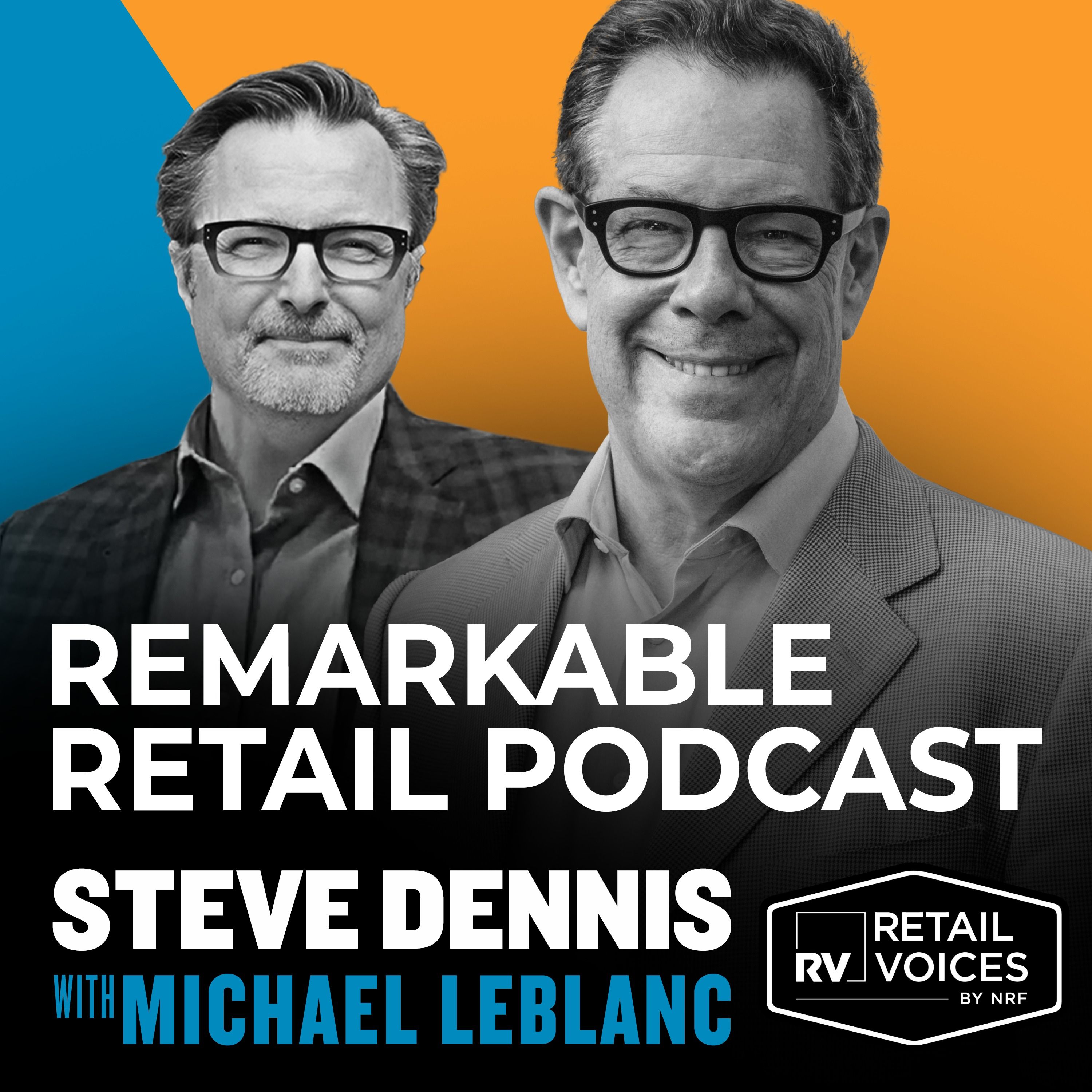
 Remarkable Retail Podcast
29 Sep 2026 · 1h 11m · 24 chapters
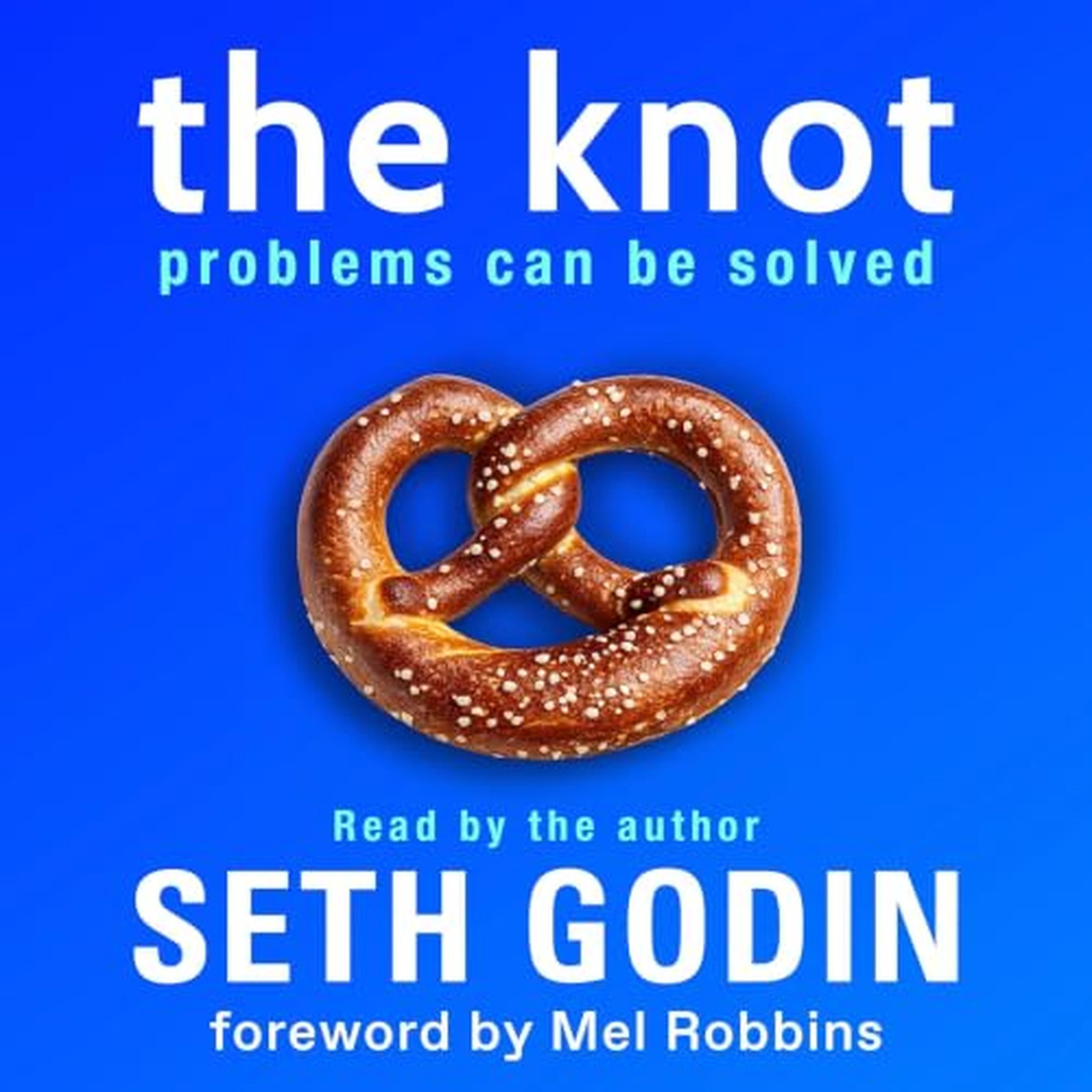
Seth Godin’s new book The Knot, using the Gordian knot metaphor to explain why people and companies get stuck, how to “untie” entanglements by telling the truth and embracing purpose, and how fast disruption (including AI) changes what problem-solving requires. The episode also covers retail news: Costco’s strong quarter, JCPenney’s stalled turnaround, and Stitch Fix’s weak guidance and declining momentum.
Seth Godin (marketing author/thinker; known for permission-based marketing and identity/tribes work; frequent podcast guest). Hosts: Michael LeBlanc and Steve Dennis (retail podcast hosts). No other guests appear in the transcript.
Struggling retailers aren’t stuck due to lack of resources or lack of knowledge; they’re stuck because of “baggage”/identity entanglements in boardrooms—wanting incompatible things (thrill vs safety; status vs change). In fast change, start with purpose, run small experiments, and don’t defend sunk costs; “tell the truth” is the key action.
Alexander and the Gordian knot (knot tied around a pole); Jackson Pollock’s reinvention leading to failure and substance abuse; Kodak vs Netflix; Sears/Hudson’s Bay as “purpose” failures; Google’s delayed AI/search disruption; Kodak board identity fear; Blockbuster missing Netflix; Costco digital up ~20% and net sales up ~11%; JCPenney sales down ~8% and income cut >50%; Stitch Fix revenue up ~4% but guidance weak and clients down while spend per client up ~8%.
Written by AI. May contain mistakes.
Discussion on Seth Godin's influence on marketing concepts like permission-based marketing.
“Going back quite a while, I would say Seth's impact on a lot of industries was really around the idea of permission-based marketing and direct contact.”
Insight into Seth Godin's book 'The Knot' and its focus on problem-solving.
“You just three-peated as an NRF top retail voice for 2027.”
Hosts transition to discussing industry news.
“So more or less, we'll be back to our weekly format.”
Analysis of Costco's recent earnings and market strategy amidst competition.
“Yeah, well, I thought we'd do with, we've got really the tail end of quarterly earnings here.”
A deep dive into JCPenney's decline and challenges in the retail market.
“So, you know, even so, they're seven-ish comp, which is obviously quite strong and they're continuing to open stores.”
Discussion on management turnover and the impact on JCPenney's performance.
“You know, on a side note, I've been in this situation, you have as well.”
Evaluation of Stitch Fix's recent performance and turnaround efforts under new leadership.
“and I was at Neiman Marcus, a headhunter approached me about being the chief marketing officer for Kmart.”
Explore the recent challenges facing Stitch Fix, including stagnant growth and stock value decline.
“Well, we're going to go back to the future a little bit here because we're going to talk about Stitch Fix.”
Seth Godin explains the premise of his new book, focusing on problem-solving through storytelling and decision-making.
“And solving problems involves storytelling, decision making, seeing systems, and making something happen.”
Discussion on how emotional baggage affects decision-making and problem-solving in personal and professional contexts.
“He did these paintings and he came back and had a big show.”
Exploring how human nature influences corporate behavior and the struggles of retailers to adapt to change.
“So we are wired the same way snails and lions and tigers and bears are wired, which is to avoid change and to use fear as a signal to not go extinct.”
Learn why understanding purpose is crucial for retailers to thrive.
“You know, what is that pin you think of when we talk about struggling retailers that we might know or department stores?”
Explore how to overcome the sunk cost fallacy in business decisions.
“You know, there have been a lot of these, I don't want to say platitudes because they're often richer than that.”
Understand the relationship between agency, identity, and corporate decision-making.
“You should get off the plane because it served its purpose.”
Discuss the implications of AI adoption on corporate identities and strategies.
“Yeah, that's a brilliant way to look at this.”
Explore the transition from a race to the bottom to a race to the top in business.
“And when that person gets mixed into an AI universe, it's messy.”
Discuss the challenges of accurately predicting the future in a rapidly changing market.
Learn how radical honesty can impact decision-making in retail.
Uncover the value of hands-on experience in retail to foster empathy and problem-solving.
“But I would imagine from what I've read, because Blockbuster had multiple chances, for example, to buy Netflix for almost nothing.”
Discussing predictions for holiday spending and online shopping trends.
“Yeah, they're really the ones that I guess get the most attention for their e-commerce forecast.”
Exploring the closure of the historic Neiman Marcus store in Dallas and its implications.
“You'd probably just do an extrapolation from what Costco just did, what Macy's just did, what Walmart just did.”
Analyzing Home Depot's impressive stock performance over the past 45 years.
“And that is literally, I want to say five and a half miles up the highway.”
Discussing the shifting landscape of AI in retail and its economic implications.
“improvement retailer in 1981, which is when it went public, reinvested the dividends, it would be worth about$16 million now.”
Examining U.S.-China trade relations and the status of American retailers in China.
“It gets me my thinking spinning about, well, if there's a constraint on the availability of compute and retailers want the compute, then the prices are going to skyrocket.”

Get the gist, explore an idea or ask about something said.
 Claude
On Remarkable Retail Podcast, what are the key points of this episode?
Searching your listeningAutomatic transcript. May contain errors.
0:06Welcome to the Markable Retail Podcast, episode 313. I'm Michael LeBlanc. And I'm Steve Dennis. Back with us on the show this week is the one and only Seth Godin. If you look in the dictionary, if you have such a thing lying on your desk somewhere, take it out of your bookshelf. And if you look in that dictionary under such terms as email marketing, thought leader, wise philosopher of all things marketing and business, You'd probably see a picture of his bespeckled face. He is a frequent guest, a friend of the pod, and a personal friend of yours, Steve. I've got to know him a little bit. Wonderful guy.
0:38Always such bright insights. He's here to talk about his latest knowledge drop in the form of a book, The Knot. Steve, how would you describe Seth's impact on our industry, the marketing industry, and your thoughts about The Knot? Going back quite a while, I would say Seth's impact on a lot of industries was really around the idea of permission-based marketing and direct contact. Because he often takes credit, and I think it's fair to say, for inventing email marketing. And that obviously became quite a big thing. That could be big someday. I think also his contributions in terms of, I guess you'd call it, identity marketing around his book Tribes, super important.
1:23And then, I guess we talked about it in the interview, how many books is it? He's had 22 or 23. Yeah, Purple Cow, one of my favorites. Purple Cow, which definitely is pretty much a straight line to my idea of remarkable retail. Well, yeah, and I think one of the things that people will hear is really interesting about this book. It's not so much a business strategy book or a marketing strategy book. It's really broadly about how to solve problems of all kinds and what gets in the way of doing that and some different ways of thinking about it. It's hard for me to imagine whether we're talking about our personal lives, our business lives, our projects we're working on, that folks will not get some real knowledge and wisdom out of what Seth has to share.
2:05And I definitely encourage people to pick up the book to get the full story. And before we get to our great interview with Seth, we'll be talking about the news of the week, including Costco waiting for the penny to drop, Stitch Fix, and then back with what's on our respective radar screen. So congratulations are in order. You just three-peated as an NRF top retail voice for 2027. Congratulations. Looks like this year I'll have to settle for being your plus one at the events. I did not make the third year. Didn't make the cut in the third year, but starts to get us thinking about the NRF in January.
2:41And lots of our friends and lots of our guests who've been on the show made the list of congratulations to them all. I believe of our guests, Simeon Siegel is the only one who, I think there's five of us that have been on the list all three years. I believe Simeon is one of them, and I think the only one who's been on the podcast before. And, of course, people will know he's been on multiple times. So maybe Seth and Simeon are kind of battling it out for the six-timer jacket, or I don't know where we are on all that. But no, it's always nice to be recognized, and it looks like there will be some interesting happenings at the big show.
3:18So that's coming up, what, three months now? I don't know. Virtually around the corner. I'm already planning my early visit to do the store checks for my retail store tour, so it's certainly in front of mind, and it's coming up fast. And if you're a vendor, by the way, Steve and I are going to be there. So hire us. We can do a live version of the show. We can go to dinner with your guests and impress them with our witty repartee. So reach out. One last thing from an admin perspective. We're going back to mostly weekly. When we hit the summer, we went to every two weeks as a show. And then we both had a very, very busy early fall.
3:54So we kept the pace every two weeks for the pod. But I heard back from a bunch of people who said, hey, I miss you every second week. So good news for them. They miss you. They don't miss me, but they miss you. Well, they miss us both. They miss us both. So more or less, we'll be back to our weekly format. So a bit of admin there on the pod. Now, let's get right into the news. Let's talk about Costco, one of our favorite retailers. They do almost everything right. They just signed a big deal at DoorDash to take national products. They've seen as a bit of a weird laggard in some way, shape, or form, but not really.
4:33They're huge in a lot of ways. Take us through the results. Yeah, well, I thought we'd do with, we've got really the tail end of quarterly earnings here. And I thought for the ones we'll talk about, try to not just talk about the specifics of the retailer, but also tie them back to some broader themes we often have been talking about or come back to. So Costco is really part of my retail's great concentration narrative. So if folks are familiar with that, it's really this idea that more and more incremental sales are going to a small set of retailers, Amazon, Walmart, Costco being the big three, and then there are a few others like TJX that are in there as well.
5:12So that's really the context for retail's great concentration. And we are seeing this continue. Their quarterly net sales were up 11%, or 11.2 % to be specific, 9.4 % comp. So if people have been following at home, that's quite a bit above the industry average, so they would be continuing to gain relative share. Continuing to do well with digital, their digital business up almost 20%. They call it digitally enabled, I guess because that's both a mix of e-commerce that would be delivered directly to your home or office, but also a buy online, pick up and store. Now they are benefiting, as we talked about last time, considerably from what's going on with fuel prices.
5:54And so So a good chunk of their comp is inflated by, as it turns out, mostly the increase in price. Some of what they discussed was it was not necessarily driving incremental traffic year over year. So that's interesting. I think last quarter there was some sense that there was incremental traffic. But this is really just the fact that fuel has gone up year over year. I think the idea of the air was they're seen as a great value for gasoline. lean. So if I'm going to find gas at a better price anywhere, I'm going to go to Costco. It probably takes, I know they sometimes report also X gas. So it probably takes a couple of points off that 11 % growth, right?
6:34But it doesn't take, it doesn't cut it in half. Yeah, I think it was about two and a half percent. I didn't make a specific note of that, but that's my recollection is about two and a half percent. So, you know, even so, they're seven-ish comp, which is obviously quite strong and they're continuing to open stores. I think they're going to be opening something like 25, 30 stores in the US. I think several in Canada. And then the next one I wanted to talk about, and they're always a little bit off the pace because they're a private company and actually a division of what's called Catalyst Brands is JCPenney.
7:05And this one ladders back for me to what I've been talking about for a decade now, the collapse of the Unremarkable Middle. Several people over the last few years under Mark Rosen's leadership have believed, or since Mark Rosen has been leading it, some people have believe that a turnaround was imminent. There have been glimpses of some positive momentum over the last few years, but of late, particularly the last three quarters or so, the results have been quite poor. Their second quarter sales were down 8%, and that's basically a comp number because they haven't changed their store count significantly.
7:43That is materially worse than the other department stores we've talked about now. Folks may remember last time we talked about Bloomingdale's, which is the real bell of the ball, but Macy's and Dillard's flat-ish, Kohl's also flat-ish. So this is clearly worse. Their net income has been cut by more than a half, so their profitability is really stagnating. They pointed to a few stronger categories. They pointed to some maybe self-inflicted wounds that explain this. But I have to say, with several years now of turnaround efforts. And as we talked about with Dillard's and Macy's, the generally good cycle of apparel and beauty and accessories, this is an especially poor performance.
8:31So I think the other thing I would mention, and this has come up oftentimes for me over the years, is people wonder why with pennies being so down in sales pretty much year after year for 15 years, how is it that they stay in business? Now, people may remember they did file for bankruptcy and they went through a restructuring. And what is beneficial to them is they have no debt. The debt's been moved to the catalyst corporate level. So, they're not burdened as some other companies would be by big interest payments and maybe a big payment of principal coming up. Also, their ownership structure as part of Catalyst, they have relationships with brands like the Authentic Brand Group to carry some of their products.
9:21So there's kind of an insetuous relationship between the rest of the portfolio and some of the owners or a portion of the ownership is Brookfield and Simon Properties, who are their landlords. You can't really say if this were like a pure venture capital PE deal, I think things would be quite different. But because of the ownership interests and the way the debt's been moved out, their cash flow is fairly decent. And I would say that the owners, broadly speaking, have an interest in not closing a lot of stores. So anyway, we shall see how this plays out. But clearly no real sign of progress. And if anything, a real step back on the part of pennies.
10:00You know, on a side note, I've been in this situation, you have as well. When I was at Hudson's Bay, we said, geez, you know, we're not going anywhere, but we could erode shareholder value for years at this rate. But it wasn't that great to work there. Like, you know, every day you come in and you're like, you know, we're kind of, we look at the results and everybody's trying hard. And what do you think, what do you think is keeping Rose in there? I mean, he must be, you know, after a few years, the good college try, he's like, you know, I think I'm going to move on. And then that tends to tip the apple cart a little bit and the executives start to leave.
10:33It did at HBC and the best talent starts to go and then it becomes even harder, right? Those days can't be that far away. I don't know. I think it depends on what their deals look like. I don't think we have access. A lot of public companies, you can see the top five executives' compensation packages and their employment contracts and get maybe a little bit of insight as to the timing there. So I don't think that's publicly available. But you'd think that four or five years in that either he's getting to the end where there's not that much of an incentive for him to stay or he just might feel like it's time to move on to better pastures.
11:16There's been a fair amount of turnover there where there are some fairly senior people that have only been there six months, a year, 18 months. But yeah, it's tough. I mean, when I was at Sears, I mean, I think similar experience to you. For several years, as our business got worse, it's just a depressing place to be, and plenty of folks that had good opportunities ended up leaving. Eventually, I got to the point where I was like, I can get the hell out of here. And yeah, it's hard to come to work every day. I remember many times when I would be at a cocktail party or something, kids event hey what do you do oh i work at sears and then you just get like a sad look oh couldn't you get a real job you know so yeah yeah the other thing and i don't want to i don't want to belager this too much but it gets to the point where all these weird randos start showing up you know people who have got no reason uh or no you know they come they come into the business and you're like why are you even here and and uh it just gets even weirder sometimes you know as the business starts to circle the drain but anyway well best of luck i had something quick that maybe we can edit out, but several years after I was gone from Sears and I was at Neiman Marcus, a headhunter approached me about being the chief marketing officer for Kmart.
12:31And first of all, I wanted nothing to do with the Kmart-Sears combination, but also I was like, I'm not really qualified to be a chief marketing officer. And it was a stupid amount of money. So anyway, I didn't, well, who knows? I never pursued it, so I don't know if they would have offered me the job. But I remember thinking, okay, this is a ridiculous amount of money. I'm not qualified. It also turned out, which is more detailed than probably anybody needs, that it wasn't really the chief marketing officer. There was not a lot of control. Eddie Lampert had decentralized and put a lot of the categories in competition with each other, so it just seemed also like it would be an impossible job.
13:10And not too surprisingly, there had been new chief marketing officers at Kmart like every 15 months. So you do get to the point where it's hard to attract top talent because you just feel like you're perhaps jumping on a sinking ship. And you typically have to throw a lot of money at people and a lot of incentives. And people will go because, well, maybe things will break my way and I'll make$5 million or something crazy. But most of the time it does not work out. You either get fired or you never get that money. I had a colleague who went to Sears Canada in the last days for a bucket of money, and it never, ever, ever showed up on his LinkedIn.
13:48And to this day, he denies he was there. It's very funny. All right. Let's move on from beating up JCPenney. Let's go to a place where we have not been in many, many episodes. We're going to go to the Wobbly Unicorn Corner. There we go. And who do we find in the corner? this episode, Steve? Well, we're going to go back to the future a little bit here because we're going to talk about Stitch Fix. Longer term listeners will know that Matt Baer, CEO of Stitch Fix, was on the pod, I guess about six months ago? Shop Talk in March. Yeah, yeah. At Shop Talk. He's relatively new, ex-Macy's executive, relatively new in the role.
14:29And we talked about the turnaround that he was executing. And I would say the turnaround looks to be pretty stalled based upon their just-reported results. Their revenue for the quarter was up just about 4%. For the full year, a little bit better, 6.4%. But kind of what's interesting to me is the mix. The number of clients is down slightly, but the spend per client is up about 8%. And I guess you could look at that a couple of different ways. You could say they're getting more focused on their best customers. But for a business that should have a lot of runway ahead, no pun intended, you would think you could get more growth out of this and you would be acquiring customers.
15:21So that is not happening. The thing that really sunk the stock was they also gave weak guidance. So that's also not evidence of a lot of traction from the turnaround. gross margin was flat. Now, the good news is they have no debt. They have quite a lot of cash on hand for the size of their business. So there's not any kind of issue around financial crises here. And they have the cash to continue to invest in the business. But the shares have fallen. One of the reasons we call these a wildly unicorn for people that haven't been playing along here for the last couple of years, we started to talk about wildly unicorns because there were these typically digitally native type brands that got a lot of venture capital money, went public at very high valuations, so they were unicorns or even more.
16:10I think actually, technically, Stitch Fix would be a Deca unicorn, because at one point they were valued at about$10 billion. Well, their stock has fallen something like 90, I didn't check the exact price, but it's around 96%, 97%, I think. And obviously, this most recent report didn't get them moving in the right direction. The one other thing I just mentioned really quickly is they are planning on spending more on advertising. I assume that is to try to get the new client acquisition moving ahead. Seems a little bit risky in the current environment, but I guess that'll be something to watch on.
16:48But this is definitely a brand, despite some new actions, most of which sound totally reasonable, and cleaning up their balance sheet has really not gotten any momentum to speak of. So hopefully that'll start to change. Well, all right, let's take a break from the news. We'll be back to talk about all kinds of things about holiday and the last call for Neiman Marcus in Dallas. But before that, let's have a listen to our great interview with Seth Godin, all about his new book, The Knot. hey seth godin welcome back to the podcast it seems like you're here uh just about every nine
17:20Seth Godin: months or so how are you i need a i need a byline it's such a treat to talk to both of you thank you for having me well we're always happy to talk to you often it's around the release of a new book and as it turns out you have a new book congratulations i know you've been running around uh talking to various people about it now you're talking there it is there it is the not problems problems can be solved it's true i would hope so man i would hope so actually i have a question you know we'll talk more about the book but it it strikes me that it's a little bit different than some of the other books you've written you know not so much about marketing or so much about strategy more i'm gonna say tactical necessarily uh to problem solving what was the motivation just to go in that direction in the first place so i was i lucked into the idea 25 years ago that i should just say that anything i'm interested in is marketing because marketing isn't advertising or hype or hustle it's the work we do to make a change happen and so all my books are about marketing and none of my books are about marketing and the thing is that it's very difficult to shout your way into relevance and to make a change happen without the active participation of the people you're helping to serve and when i was talking to mel robbins last year about the arc of my work it occurred to me that i kept coming back to this idea that what we do as marketers, as humans, as people in a family or in a job, is solve problems.
18:57Seth Godin: And solving problems involves storytelling, decision making, seeing systems, and making something happen. And in the drive on the way back from that four-hour conversation, the first draft of the book was done because I realized I had something important to say that a whole bunch of people were ready to hear. okay well so let's uh let's talk more about it uh i guess the book really sort of turns on the story of alexander and the gordian knot at least that's kind of the origin story of the title right can you talk about why you started there and i guess just generally what the premise of the book is and what you hope readers will get out of it well so you know alexander's story has been mistold he didn't use a knife he didn't cut it in half with a sword what happened was king midas in the legend took an old wagon and tied it with a complicated knot to the entrance to a small town in Turkey.
19:50Seth Godin: And the first person who could untie the knot would become the ruler of great lands. And at the time Alexander was 20, 21 years old, he came as many people did, saw the knot, but he did something they did not do, which is he realized that in the center of the wagon was a pole, that the knot was all tied around a pole. He pulled out the pole because there was no rule against that. And as soon as he did, he saw how the knot was constructed. And then it was easy to untie the knot. And so the metaphor is there are poles, entanglements, hidden knots in all of the places we feel stuck. And if we do the hard work of having the conversation, telling the truth, and understanding where those entanglements are, which I call baggage, we can drop that baggage.
20:36Seth Godin: If we drop the baggage, then the knot will get untied and we can get unstuck. To a certain degree, a lot of consumer psychology in general is tied around this idea of emotional baggage or finding the things that keep you stuck metaphorically or psychologically. how would you say this is i mean obviously you're not a psychiatrist or psychologist but how would you say your approach is fundamentally different than what might be in the broader field of self help or whatever okay well you just mentioned three different categories psychology psychiatry and self-help so let's just break them out in the way i see them i try to complicate it first you know see if you can entangle that all help is self-help sooner or later unless you're rescuing a drowning person people are going to change when they want to when they can see a path forward and the best books on this topic are the ones that give you vocabulary and cultural ammunition and support scaffolding to get to where you want to go psychiatry is completely off the table because that's largely about medication now but the psychology of it is that when we say you're stuck because you want to be we don't mean that your conscious mind says oh i'm really glad i'm stuck what it means is that we have a but that we want two things at the same time that cannot coexist and i think that the story of jackson pollock really brings it home so in 1940 something jackson pollock was the most famous living american artist by far he was in Life magazine he was an icon for what it meant to be a groundbreaking artist and for three years he could do no wrong his paintings sold instantly recently one of them sold at auction for 181 million dollars which is good work if you can get it and after three years he said to his wife Lee Krasner also an artist I don't want to spend my life doing cover versions of Jackson Pollock I I don't want to just keep painting versions of those paintings because they'll sell, but I want to go back to being on the cutting edge.
22:52Seth Godin: So he shut down his method. He changed the size of the canvases. He changed his philosophy of painting. He went away. He did these paintings and he came back and had a big show. He had all the momentum in the world and not one painting sold. And you have probably never even seen one of these paintings. They're so, I don't want to say the word bad but they don't match what we want from a painting even from jackson pollock and the end result of it is he went into a tailspin substance abuse ended up killing an innocent person in a car crash where he died and that's because he wanted two things at the same time jackson pollock wanted the experience of being on the cutting edge the experience of reinvention but he also wanted to be revered accepted and successful and because he wanted both he couldn't have either and that but explains so much of the typical non-clinical psychological problem set that people confront they want two things they want the thrill and they want to feel safe they want to be seen but they don't want to be seen and if we get to the but and say it out loud we have a chance to untangle things and so you know i've been following your brilliant work on retail the two of you guys and the stores that struggle aren't struggling because they don't have the resources to change they're not struggling because they don't know what's working they're struggling because they have a big butt sitting in conference room seven and they won't name it and so that's why sears is gone because they wanted this but they also wanted that do you think to a degree that's that's just human nature you know wired to you know you've talked about this a lot the lizard brain and you know how fear keeps us stuck and but wanting to move ahead do you think some of this is just human nature how we're wired or is there something about the the corporate system or certain kinds of categories that make it more complicated than it might otherwise be?
24:58Seth Godin: That's a great question. So we are wired the same way snails and lions and tigers and bears are wired, which is to avoid change and to use fear as a signal to not go extinct. That there are no wild animals that like change. There are no wild animals that seek out thrilling new situations because it's a really good way to not have grandchildren. human beings are the only ones that built a cultural environment where that is countered with you get prizes for going to the edge you get prizes for changing the culture for adventuring for leading and that tension is in between the built world the cultured world the world that's driven by economics and scarcity versus the wild animal world of I just want to sit in a hammock and survive.
25:57Seth Godin: So some industries, you know, if you go to work at a water purification plant, the whole thing is about don't screw up. There are no prizes for innovation in a water purification plant. We knew a woman years ago who worked for the CDC and there were people dropping dead in a small town in Massachusetts and she went to research why and it turned out the guy at the local dairy had lost the eyedropper they used to add vitamin d to the milk and he'd been using a handy scoop instead you don't do that don't don't don't do that but in every other space when change happens the people who come out ahead are coming out ahead because they've learned to surf not play golf they've learned to dance with what is coming to them and i tell the story of kodak which is super famous which is the kodak intentionally went bankrupt rather than confront the discomfort of change because they owned most of the important patents for digital photography and compare that to netflix which put itself out of business on purpose so it could build streaming and replace the dvds the key is what reed did which is the streaming committee met in secret and no one from the dvd division was allowed to come because if they invited the dvd people the whole thing would have stopped you know i i find the book both um reflective of your general philosophy and also philosophical in some ways uh you know another version of that you tell early on about the pollock story is the donkey that wants both water and oats and gets stuck in the center and then just goes extinct.
27:41Basically, you mentioned Sears, an extinct retailer. I worked for an extinct retailer as well, Hudson's Bay, which is recently extinct, actually. As you think about, if we draw this narrow, this lens down to our industry about some retailers that have been struggling and bring this all the way back to this idea of a pin in the center of a complex knot, You know, what is that pin you think of when we talk about struggling retailers that we might know or department stores? What is it that they're missing that could help untie this knot? Well, I think they're missing the fact that they need to embrace their purpose.
28:20Seth Godin: They're doing their job as opposed to figuring out what they're here for in the first place. So if you believe that it is possible to rent real estate for less than it's worth and that you can turn that real estate into profitable retail sales, you have defined 100 years of box retailing, right? Hudson Bay going first hundreds of years ago, but Sears certainly taking it to a whole other level. If you figure it out, then anytime you get a lease that's in the right place where it's worth more than it costs you can grow and as soon as that underpinning shifts now the landlord wins and you lose so most of these institutions culturally are built to defend retail square footage figured out all the way back to Paco Underhill and long before that how do we increase short-term sales per square foot so we can get it again and if you shift that away and all of a sudden a store that has no store amazon shows up they're playing by a completely different game shelf space rent all of it completely different and they don't have to suck out too much of your sales for you to go from 105 percent over rent to 94 percent and then you're done and so what's the purpose of being a merchant the purpose of being a merchant is not to enrich the landlord but that's the way they acted the purpose of being a merchant is to create the light that's worth more than the customer pays you in cash to use your reputation your trust your curation your judgment to build a sort of tension that is rewarded by the magic and to use steve dennis's term the joy of shopping and if you're going to defend the real estate i don't know how to help you because the real estate's all overpriced if your rent was one tenth of what it is now no merchants would be in trouble yeah so i'm i guess i have a couple ideas i mean to a certain degree part of what you're talking about is is the classic innovator's dilemma or compete with yourself.
30:39You know, there have been a lot of these, I don't want to say platitudes because they're often richer than that. But one of the things when I was working on my last book and I was reflecting a lot on what Clayton Christensen had talked about, one of the things that just was really struck me, it was super obvious, is that the world's just moving much faster than when he wrote that book. Like, you got to see people coming. You know, this is one of the reasons I've said about Sears. Like, we could see Home Depot because their business was mostly brick and mortar, right? So it took them a long time to go from 5 % of the U.S.
31:11to 10 % of 50, and we still didn't get it right. Now you have digitally driven brands or largely driven brands, and things just happen much more quickly. Now you've got AI. So I just wonder when you think about solving problems, you know, kind of at the speed of disruption, is there something different that people have to contemplate in this environment than maybe they
31:31Seth Godin: had to five 10 15 years ago well yeah yeah i mean what i'm trying to get at is what do you how does the meeting begin does the meeting begin how are we going to do something to make the boss happy does it begin how are you going to do something to make the stock price go up or does it begin with what's the purpose of what we do here anyway and in my experience it's almost never for the last one and because things are happening so fast you don't have time to process it through all the layers of misaligned incentives and hope that you back out at what the customer wants you have to begin with what's the purpose of this work because if the medium changes you're fine with the purpose of the work staying the same because the medium new media will find other ways for you to do the purpose of that work.
32:25Seth Godin: It's not a guarantee that you're going to get it right because every time we shuffle the deck, your old advantages are diminished. But that's the arc that I'm talking about. So I'm not fighting, for example, to save the book. The book is dead. And after a 500-year run, the book is dead. Nobody is ever going to make it work the way it used to because it was perfect. There was exactly the right number of bookstores. The only way to get a book into the world was to take a get a bookstore to take a book out of their store to put your book in that scarcity led to gatekeeping that gatekeeping led to an advantage to and i can go on for hours and then all of a sudden you have infinite shelf space and then you add an infinite number of books and then you get a machine that can write books on demand for free about exactly what you want so i can't fix that it's a situation what i can say is my purpose hasn't changed it's just the medium has changed so instead of defending the sunk cost that got you here get off the plane and go do the next thing yeah i was just going to ask you about the i guess it's the sunk cost fallacy i mean that does seem to be one of the things that really keeps keeps people stuck whether we're talking about individual decisions or corporate group decisions so yeah but yeah i finally came up with a new a new sunk cost analogy maybe this one's better so let me know it was just last week i got it so you have to go to dubai uh you don't want to go but you have to go so you save up some money and you get the fanciest first class suite on the plane and warm nuts the whole thing and after a 15 hour flight you land in dubai here's the question should you stay on the plane because after all you paid 18 000 for that seat and the answer is no, you shouldn't.
34:13Seth Godin: You should get off the plane because it served its purpose. It got you to Dubai. We can now forgive our former self, say thank you for that gift. I don't want to stay on this plane forever. I used it to get here. So that suite is just like a law degree. That suite is just like a series of leases that you have. That suite is all of the things you sweat for that you don't need anymore. And it's okay to say, no, thank you. I got to where we are now. I don't want this junk in my backpack. I'm taking it out of my backpack because I have a new journey I need to go on. So what would you say to people that go, okay, well, I get all that conceptually sounds good, but I work in a company where my boss won't let me do that, or my incentive is structured a certain way, or I'll tell you one of my experiences at Sears, we present to the board and they would just go, well, you know, Wall Street's not going to go for that.
35:11Like that might be conceptually the right thing to do, but we don't have the trust of Wall Street to do the Amazon thing, which is trust us, let us lose money for 10 years and eventually it'd be great. Right. So, so how do you respond to those kinds of objections to what I think a lot of people would agree with and see the entanglements? It's just, they don't, they're not in a a place where they have that kind of agency i guess or they feel my boss won't let
35:37Seth Godin: my boss won't let me is the one i hear the most and i break it into a few pieces the first answer is well of course they won't because you're asking them to take all the blame if it doesn't work and give you all the credit if it does and there's no boss who's going to do that the tactic that works in the small is to do small experiments give credit to the boss when it works take the blame when it doesn't that you're not going to be able to get a blank check to overhaul everything but when someone begins to get traction they're more likely to do it more and i think we saw that netflix did this beautifully with the way that they shifted to streaming but the second bigger one as the world speeds up and the shifts get bigger is maybe it's a situation.
36:30Seth Godin: If it's a situation, it's not a problem to be solved. It's something that simply is the way it is. If you've got, you know, 40-year leases that cannot be broken, if you've got a shareholder base that is in love with a quarterly dividend and doesn't want to see change happen, if it's a situation then you do have agency and the agency is go somewhere else the agency is take what you see and take what you know and don't just blame the system for your failure because you don't get tomorrow over again and you know when people see the world changing it's super easy to deny responsibility blame the system and then suffer quietly but there's no prizes for suffering quietly and that shift you know when google google didn't launch the ai it invented because they saw that it was going to demolish search ads and so they were hoping to gradually make something happen so that the engine of their public share growth would continue because there was no revenue associated with ai and there was an enormous amount of revenue associated with the search that they built okay but someone else is going to launch ai and that decision cost them a trillion dollars that's a lot of money seth can i take you back to that boardroom a little bit so could you connect for me purpose and identity and where i'm going with this is identity entanglements a concept you've gotten you know many of us would go into a boardroom and we'd have that meeting you described and somewhere in that boardroom no doubt is a slogan about the mission or the values of the company and it says you know to you know please the customer and deliver everything you can but what's the difference between that establishing a purpose a purpose and this identity and then this identity entanglement and if you could anchor anchor it in somebody like macy's and i think of it as we went through it at hudson's bay we are this we're not that it says they're right on the board and we can't get out of being what you call an identity entanglement.
38:42Untangle that for us, if you would.
38:44Seth Godin: Yeah, that's a brilliant way to look at this. Identity is based on three things. The urgent one is the freedom from fear. Not actual risk, but things that feel risky. But the other two are status and affiliation. Affiliation is which cohort am I part of? Who are my peers, left and right? Harvard MBA class of 1968. That is my peer group, right? They're making more money than I am, so I need to go work for a bank because I'm in stress. And the third one is status. Who's up and who's down? And so when we think about someone who's on a board, they have unlimited money in the bank. They're never going to go hungry.
39:30Seth Godin: they're never going to not have a roof over their head that is not why they're going to work they're going to work for status and for affiliation and for the freedom from fear so when you go to them and say please trade in the chips that got you the things you wanted for this possibility that something better is around the corner most people's identity who have made it to the board level don't line up that way but when we go to a board and i would never do it at a board meeting. I would do it one board member at a time and help people come to the conclusion that their status will go up by being part of a slightly different thing that has traction.
40:12Seth Godin: That people like them are all doing this thing. That the scariest thing they can do is shrink in place and be seen by their peers as a loser. Those three levers help them say, well it's unanimous we've got to try this and so i don't think the people on kodak's board if they had the chance to do it again would do it the same way they did it but they were stuck because they were a chemical company that made film and their identity when they looked in the mirror couldn't line up with we have to be on the frontier of something we don't understand and the fear of being seen as someone who didn't understand was enough to keep them frozen is is that just a quick follow-up question is that kind of reminiscent of i don't have to be faster than the bear i have to be faster than the bear i'm with uh in terms of fear and the fear of failure the fear of whatever keeping up with my counterparts or my cohort versus the fear of imminent or non more importantly non-imminent demise exactly as hemingway would say you know slowly then suddenly right right I mean, and if you think about the, so what are the two, the AI people, particularly Sam Altman, have done an absolutely horrible job of selling broadly what they're trying to sell.
41:35Seth Godin: That more than half the people in the United States, at some level, when polled, are against all of this change that's happening. Because Sam and others have tried to scare them to death. But they've done two brilliant things and the first one is being able to go to companies ceos and say we can get rid of pesky employees by getting computers to do tasks cheaper than they will and that is part of the identity of many ceos and it's an easy sell the race to the bottom and being able to say your peers are racing to the bottom faster than you therefore you're going to lose and being able to say to them we can do this in a stepwise process let's start with 10 of your coders let's start with four of your junior copywriters and once the metric is in place and cycling they ask for more and more and more and more and more and so that is how we end up with so much adoption and then you see companies challenging their IT department to use as many tokens as possible because the race to the bottom is brutal and you don't want to lose that if you've decided to be on the race to the bottom but that now takes us to this new space which is uh the only chance you got coming out of the end of this is to race to the top which is you got all these unpaid computer interns that make mistakes but they're still unpaid who are willing to do almost anything you can sign them which means that any of your remaining employees are now managers and if if you can write down a job we got a computer that's going to do it already so your employees that are left have to be telling the system what to do that's another identity shift because we've trained the vast majority of humans from the time they were four years old to ask will this be on the test.
43:29Seth Godin: What's the right answer? Tell me what to do. And when that person gets mixed into an AI universe, it's messy. Yeah. What would you, I want to come back to something we started to go down. I mean, you've got this whole bit and you've mentioned it here about, I mean, I would call it sort of radical acceptance, but, you know, tell the truth, get really honest with what's going on. Is it a situation? Is it a problem? But let's imagine, because I don't think we have to imagine very far that even if we do some of the things that we've been talking about or all the things we've been talking about, there's still a lot of uncertainty about the outcome.
44:06And I would say particularly when things are moving quickly, right? I'll just give you another example from my experience. We talked about where the future of e-commerce was going when I was at Sears in 2001, 2002. Or you can think about the digitally native brands 2010, right? That was going to revolutionize all of retail. Well, it turns out only a few of them made it. And, you know, many went out of business. Many are worth like 98, lost 98 % of their value. So you can get into an argument about, am I really in denial about where things are going to end up and I need to really pivot? But, you know, there's a range of outcomes.
44:42So that's a different kind of problem, right? I guess, how do you think the problem of predicting the future correctly?
44:50Seth Godin: yeah well okay so you put your finger on it and you have named it and told the truth which is we are requiring people who have been pampered to go from playing golf to surfing that it from you know if from the era of madmen if you wanted to succeed in marketing you just ran more ads and so usdl volkswagen procter and gamble if you run more ads everything else is going to take care of itself and that lasted for 45 years in a row so for two full career cycles you could just play golf which is line up your putt the the green is a very similar to the way it was yesterday and don't screw up but then there's an earthquake and now successful organizations have to surf which is we don't know what the next wave is going to be like but there's going to be a wave and some people are going to surf that wave and some people aren't the situation which must be universally uh acknowledged is we're surfing you can't pretend to be playing golf we're surfing that's the situation so don't try to change it don't try to get everything to settle down and you know they sort of learned this in bentonville when i spoke at walmart in 2000 they had a giant banner over their executive auditorium i'm not making this up it was six feet tall and it said we can't out amazon amazon this was 25 years ago they gave up and the model was we are so big and going so uh consistently in one direction we just have to pretend that it doesn't exist but the cycles now aren't 25 year cycles they're three year cycles and so what has to happen is you've either got to make sure you have a good enough uh severance package that it's okay if the whole thing falls apart or you have to pick a team that's enrolled in the journey and say to the other people please keep the lights on until i tell you to turn the lights off but you can't persuade people to be on one team or the other if it's not their team the people who want to be on the frontier the folks like you at sears who if they've been given the resources the retail landscape would be totally different today need to stop compromising with the people who are keeping the lights on because someone else doesn't have to compromise at a different organization and so you fall behind and to the people who are sad because they work very hard to get to where they are in retail i have a friend who's 60 something years old and she like earned the next six years of playing golf can't i'm sorry yeah i mean this this sense of the power of agility kind of weaves away through your work, right?
47:52Is that we don't know what's coming next. So, you know, be more agile than, than be more agile than you may have in the past. And you, you also bring up this idea of three words can solve these various entanglements that, that keep us back. And that, those three words are tell the truth. So again, for the, for the audience, for the retailers out there, what, what's a truth that they need to say more often more frequently uh it may not be in a six foot banner but what is it that they need to say to themselves and to each other more frequently
48:22Seth Godin: so the um right at the dawn of google when i talked to people in the book industry because i was in both industries at the time um i would say you know you say that your job is to organize the world's information that's what books do i said so for a million dollars five million dollars let's go build a search engine and the truth would have been we know we could do this but it doesn't match who we want to be when we look in the mirror that's the truth and then you can make a decision about whether that interferes with your professional obligations enough that you need to change your identity because they had so much of a head start and it only took two people to build google so it was doable but they intentionally did not want to do it when i would say to people in the book industry and i'm not saying i'm clairvoyant there's just a couple wins i'm picking out of the past when i would say to them you don't know the name or address or email of any of your readers not one let's just put on the back of the book an email address that they can write to you at to subscribe to get updates so instead of every time you come out with a sequel to a robert spencer parker novel that i'm going to start over again and get the new york times to write an article about it just email this 10 000 fans you're done but they couldn't tell the truth about why they wouldn't do that so in retail the truth that i would challenge someone at the container store or some other mid-sized big box stores how much of your time are you spending serving the landlord and serving the shareholders and how much of your time are you spending finding problems for your customers and solving them regardless of what method is used to do that do the best people here work on your p &l or do the best people here work on solving your customers problems because those are different ways to spend your time and if you say it out loud then i'll leave you alone but i don't think you even want to say it out loud isn't there i'm trying to think of a particular example so i had somebody who worked for me at neiman marcus that hopefully hopefully she's not listening uh that went to blockbuster at a time they were you know trying to turn things around and i remember hearing her very confidently explained to me how blockbuster was going to be turned around and very smart very good problem solver uh i don't know whether it was the situation she was in and denial i don't know if she hadn't done enough of the work to really understand well you know she didn't have the data because she was blinded for whatever reason or not pushing that direction or whatever But there's a knowledge part of this, right?
51:24That and certain kind of intelligence, in addition to just philosophically saying, I'm willing to look at this and I'm willing to change my perspective, right?
51:36Seth Godin: Yeah, well, there's no guarantee. And history could have ended up completely different than it did. So hindsight's 20-20. But I would imagine from what I've read, because Blockbuster had multiple chances, for example, to buy Netflix for almost nothing. when i was at yahoo we had the chance to buy google for 15 million dollars who were blockbuster's customers i believe blockbuster spent most of their time either thinking about the studios or the stores and every decision went through that filter what will this do to our relationship with the studios what will this do to our relationship with the stores and from that identity spot lots of possible options had to have been dismissed because it wasn't going to serve either of those parties and just so say it and then once you know it then you can figure out how to dance around it or accept it well last question for you it's you've been very generous as always uh it's such a treat i think we've been talking for like 10 minutes yeah yeah it's been fantastic i you know from ex post facto explanations of what happened to thinking about the future advice to the retailers and the people listening around you know they feel maybe they're feeling a little stuck maybe they they sense in your words something familiar about their situation what should they sit with tomorrow what's your advice for them first of all of course get the book the knot that's very helpful but give me two more it is helpful so uh i'm told that mr marcus and mr wanamaker spent a fair amount of time on the shop floor dealing with customers and years ago at the dawn of email marketing which i invented uh eddie bauer had me come out and talk to their team 250 people and the ceo was very proud of the fact that all of them had worked on a floor of an eddie bauer store hand selling chinos to people they'd come up through retail and i said well how many people in this room have sold anything by email and it was two i said well that's your problem give everyone in this room 100 email addresses and have them start emailing people who are already your customers and get them to buy a pair of chinos because the amount of empathy that will come from proximity will change everything and so the magic here is to say to seven people who have power at hudson bay go start something anywhere where you personally sell something and solve someone's problem in exchange for money look them in the eye and go do that and then come back and tell me how it went because it's probably not going to be that you're going to go to a defunct failing mall build a fairly antiseptic space sell things that people could buy online for more than they could buy them online for in ways that are not that beautifully displayed i don't think you're going to come back and tell me that worked so what is going to work go figure that out no consultants just you wanted to be a merchant go be a merchant because that proximity of doing it helps us find the empathy we need to solve other people's problems well our guest is seth goden the book the latest book how many is this 20 22 23 we lose track uh you've been very generous over your career with your insights and uh certainly generous with steve and i here today thanks so much seth for joining us on the remarkable retail podcast real treat as always to have you join uh and i would assume the knot is available in all the places that people would want to go buy such things right only in your finer bookstores we're very good well uh thanks again seth and i wish you continued success and continued uh big thought big thinking to help us all through these days these days thank you both go make a ruckus everybody great to have seth back on the show and I'm sure he's got another 10 or 12 books in him.
55:48So you can fill up our an insurmountable lead on me. I'll tell you that much. It's going to be tough, tough to get over that. I noticed and I, you and I both got reached out by the folks at Adobe who regularly publish a holiday forecast. What, what do they have to say? Yeah, they're really the ones that I guess get the most attention for their e-commerce forecast. And so that just came out, and they are predicting. And again, as we talked about last week, you've got to get clarity around what they mean by holiday. So for them, holiday is the months of November and December. They're projecting that holiday spending will be up 6.7 % year over year, which is almost exactly what they predicted last year.
56:32Or I guess it's almost exactly what happened last year, so not really a significant change, which is a little surprising to me because I would have thought with increased fuel costs, and even though this is still small to the total, more agentic commerce. A lot of people say agentic commerce is going to be the thing that kind of re-accelerates online growth. So that's not in there. A couple of things, I guess, just to put a little color commentary around it. One of the things that I think is difficult about the November, December time period, particularly for online, is people have for years now started to do their holiday shopping even earlier.
57:11Some of this is because of the Prime efforts, which I forget the exact date. They're doing it in October, but Amazon will be doing some early holiday-type promotions. That typically causes Target, Walmart, others to do some sort of extra promotional efforts in October. So that'll pull some of the spending forward. The other thing that when I was poking around a little bit on Adobe's track record is the track record's not that great in that they tend to be on the conservative side. I also think that if the consumer sentiment remains weak and their worries about, or the retailers have worries about margin, you get this push and pull of, well, we need to get more promotional to clear the customer and get that sale earlier.
58:04And that may top the sales numbers a little bit, but have a negative effect on margin. So I think this is really the same conversation we have every holiday, which is we don't know how promotional it's going to be. It almost always turns out to be quite promotional. And when we get through the whole thing, really the conversation is about the profitability, not necessarily the exact comp numbers because typically speaking, the comp numbers for a given retailer aren't that different than what they were going into the season. So you had to predict. You'd probably just do an extrapolation from what Costco just did, what Macy's just did, what Walmart just did.
58:43We talked about JCPenney based in Plano, Texas. Now let's move to Dallas where you're domiciled and let's talk about a big store that's leaving that city a storied physical presence, but not so much commercial presence. By the time people hear this, the Neiman Marcus downtown store, which is often thought of as the original Neiman Marcus store, it's not technically the original store because the original store, which was small or burned down, but it is really the first iteration of a true department store. It will have been closed as part of the Saks Global bankruptcy. Store has been on the block for a while.
59:25It was originally going to be closed when Saks and Neiman's merged because it is not a significant generator of sales and presumably profitability. But it has a lot of history because it's been 100 years old or something. I forget the exact timing. It is where the executive offices are. So my office when I worked at Neiman Marcus was on the seventh floor. There's a restaurant called the Zodiac Room, which is a very storied restaurant, special occasion restaurant for people not only in Dallas, but a lot of people that would come to the city, whether they're just tourists or coming for the OU Texas game or whatever.
1:00:04It's a bit of a bit of a pilgrimage. So it's a pretty big story here in Dallas. And I think it's also a little bit of just a sad commentary we've seen with a lot of the historical, you know, original department stores, whether we're talking about Wanamaker in Philadelphia, you know, kind of go around the Horn, you know, Hudson Bay. You know, there's a lot of these classic department stores that opened many, many years ago or real destinations, big holiday stuff. You know, you kind of go through the whole thing. There's a parade, the Thanksgiving parade here, you know. So anyway, it's sad to see.
1:00:40I think it's unfortunately inevitable, and nobody could come up with a good plan, at least so far, of how to preserve it. I don't think there was any scenario where it was going to stay as a large multi-floor retail center, but perhaps people will get creative. But in any event, end of an era, and it is now closed, and I suspect it will not be reopening. From a business standpoint, I'll just mention quickly, for those that follow the luxury industry or those that would be familiar with Dallas, the number one or number two store, I don't know anymore. I used to know. And the chain is the North Park store.
1:01:17And that is literally, I want to say five and a half miles up the highway. So in terms of capturing sales, I think there will be a very easy transfer. So that's one of the reasons why economically, it's not a big deal. It's more of an emotional, historical kind of story. Well, it becomes more of an urban planning story now, right? That's a big gap in downtown Dallas. And how do you, many, many cities deal with the same thing. How do you create vibrancy in a city? You've got this now, this huge, giant piece of real estate sitting empty. And as you say, hard to imagine how and way, you know, okay, put some condos in it.
1:01:53But even that market's not so great right now. So anyway, we wish leaders of the Dallas community best of luck. Now, you asked me a question. what is the highest returning stock of any kind over the past 45 years? And I've been pondering that. And not, just to be clear, any stock, not a retail stock, even though this is a retail podcast. Any stock. So I, you know, of course I started to think about tech stocks, then, you know, like a Google or something like that. I think about, you know what I think, I do think about retail. I do think about all those associates who worked the till in Arkansas for Walmart and are now millionaires.
1:02:29So I guess my mind turns to Walmart, for example, as one. I think AEO was another big one of the year. But tell me, tell us. Don't keep us in suspense. Well, my guess is that if you went to, say, 60 years, the answer would be Walmart. But in the 45-year horizon, the highest returning stock in the S &P 500 has been the Home Depot. If you invested$1 ,000 in the home improvement retailer in 1981, which is when it went public, reinvested the dividends, it would be worth about$16 million now. Wow. Wow. Now, just for fun, I wondered, well, because the other one I thought about was Apple. Oh, yeah. And if you've done the same thing with Apple stock, which is not a pure retailer, obviously, that same$1 ,000 invested in 1981 would be worth a paltry$4 million.
1:03:24Come on. It's still good money if you can get it, but yeah. Interesting. Interesting. Well, good for Home Depot. Fun fact. Interesting to watch them pivot their business, right? Because it's clear the home improvement business is stuck in neutral, but they've really pivoted, and we'll see how it works out for them as they go to the contractor, you know, try to get a bigger share of business that's just net new and net incremental. I think it's a pretty clever strategy.
1:03:48Seth Godin: All right, let's wrap up with what's on our respective radar screens. You go first. Well, this one, I'll try to keep it concise because I have a lot of different ideas here, but I guess I would call it kind of the mood swing that's going on with AI and its impact on retail. And this is a little bit top of mind because not just in Texas, but with the elections coming up, our governor, Mr. Abbott, who I am not a big fan of, was originally all about AI investment, data centers, as fast as you can build them. And it has become a political hot potato even in, well, the state may turn blue, you know, in a historically very pro-business, very red state.
1:04:32he is now putting the kibosh on any new data centers, at least creating a new review process. And of course, we are seeing this in many parts of the U.S. So one of the things I wonder about is, well, how do the AI companies support the growth that they need to support their very elevated valuations if, in fact, they cannot get the capacity? Now, this is not a capacity issue over the next few months because clearly it takes quite a lot of time to build up these data centers. So this is probably two to three years down the road. But if you can kind of see ahead that it's going to be difficult to have the capacity to support the growth of the AI companies, what does that do to the stock market?
1:05:23And does that have a ripple effect? But the other part, just in general, are the issues related to electricity costs and these other things that a lot of consumers, voters, citizens are worried about. So there is some evidence, both in terms of the capacity of the data centers, maybe spoiling the party for those that are trying to keep the stock market high. But I also think there's just this whole question about how much use is really going on. Because I did see a statistic that use is not really increasing as much as I would have thought. What's going on is that heavy users are using it more.
1:06:08But new users of AI is not actually growing very quickly. On the consumer side, not sure quite the data on the corporate side, which is probably where most of the money is, at least in the short term. So anyway, I think we're just kind of in this interesting place where maybe things aren't going to the moon like we would have thought six months ago. You know, that's interesting. It gets me my thinking spinning about, well, if there's a constraint on the availability of compute and retailers want the compute, then the prices are going to skyrocket. Like I think about it on the other side. Supply and demand, yeah.
1:06:40You know, the supply and demand side. That's super interesting. For me, I'm thinking about two things, beer and China. so uh i also think about beer from china i love a good singtow it's a great singtow story um so first of all uh you know in the beer side as of today uh well i guess as of tomorrow no more canadian beer into or spirits into america by the way there's only one major brewery that is shipping beer into america and that's moosehead out of nova scotia you may be thinking that was I don't know, Molson, Canadian, but that's owned by some foreigners. Yeah, that's owned by some foreigners in Colorado.
1:07:19The Coors now has brewed in America. So that's about 10 % of their exports. Now we've, as you know, many provinces here have not allowed beer or spirits from the U.S. into Canada. So it's about a turnaround fair play. We'll see how it all sets out or sorts out. We'll see how that evolves. Just a broader discussion around tariffs. And China. so China had uh leader China had a what looked like a pretty good visit uh to the U.S. last week uh pretty good as in there is no fisticuffs uh there is some lots of flyovers and lots of kind of things going on I'm not sure they how much they delved into the serious issues between them but it looked yeah here's what I have to say it's good that uh two America and China are at least talking and uh you know in the same room together because we want those two powers we want them to be at least be talking uh and as uh who was it um Scott Galloway said at least you're You generally don't go to war with companies you do business with.
1:08:14And I was thinking about the American presence of retail in China. So the number one coffee location, China started with, let's bring some American brands to China, Starbucks, whatever. Then they created their own Luckin. Luckin's got 35 ,000 locations. Starbucks globally is still bigger at 41 ,000. Now I went to a Luckin in Manhattan just to give it a try. So it's interesting how that's evolving. Who do you think is the biggest American retailer in China right now from a dollar amount? Any idea?
1:08:49You might think Apple, but they sell a lot of stuff, right? Right. And, of course, they make a lot of stuff. It's Walmart. Walmart apparently does about$30 billion in sales between them and Sam's. They've been there a long, long time. It makes a lot of sense. I remember when I met Bill Fields, former president of Walmart. He came over to Hudson's Bay. He spoke fluent Mandarin. That's how important China was to the top executives. He surprised me sharing some stories in Mandarin. I don't understand the language. So anyway, I think he spoke Mandarin anyway. I couldn't really validate it. Anyway, I'm thinking of the future of always of trade.
1:09:25We've got a couple of important dates coming between Canada and the U.S. and free and open trade or lack thereof. And then thinking about China and what's in the future for negotiation, of course, for retailers importing from China, where and how and what constraints or what opportunities lie for them and for their business. That's what's been on my radar screen, and that's a wrap for this show. Thanks for sticking with us. Once again, we'll be back more or less on a weekly basis, so tune in next week for our deep thoughts. And once again, congratulations to everyone who made the NRF top retail voice, you bastards.
1:10:04Thanks for tuning in. To help more retail leaders discover the industry's leading podcast, please drop us that five-star rating and review on Apple, Spotify, YouTube, or wherever you enjoy your pods. And for more on my strategic advisory services, keynote speaking, best-selling books, and even more retail industry insights, go to stephenpdennis.com. if you are a brand or service provider looking to take your influence to the next level reach out to us for sponsorship advertising or event partnerships and if you want to learn more about my own keynote speaking and advisory practice reach out to me via linkedin
Seth Godin, bestselling author of more than 20 books, visionary, friend of the pod and the inventor of email marketing, returns to The Remarkable Retail podcast to discuss his new book, The Knot. Seth reframes the Gordian Knot legend: Alexander didn't cut it, he pulled out the hidden pole at its centre and then untied it. The lesson? Every place we feel stuck has hidden entanglements, and the way through is to name them. Seth explains how wanting two incompatible things at once keeps people and companies frozen, and why struggling retailers are often defending real estate rather than embracing their purpose: creating delight worth more than what customers pay.
Drawing on Kodak, Netflix, Blockbuster and Google, he tackles the sunk-cost fallacy with a memorable first-class-to-Dubai analogy, explains how status, affiliation and fear shape boardroom decisions, and offers practical advice for anyone whose boss won't let them change: run small experiments, share the credit, own the blame. Seth also warns that AI is turning every remaining employee into a manager, an identity shift for people trained since childhood to ask for the right answer. His challenge to retail leaders is to trade golf for surfing, tell the truth about where their time actually goes, and get close enough to customers to rediscover the empathy that makes great merchants.
Before we get to Seth, Steve Dennis and Michael LeBlanc celebrate Steve's hat trick as an NRF Top Retail Voice, then it's into the tail end of earnings season. Costco is Exhibit A for retail's great concentration, posting net sales up 11.2% and a 9.4% comp, with digitally enabled sales up nearly 20%, though higher fuel prices flatten the numbers by a couple of points. J.C. Penney illustrates the collapse of the unremarkable middle, with sales down 8% and net income cut by more than half. And in a return of the Wobbly Unicorn Corner, Stitch Fix's turnaround looks stalled as active clients slip and weak guidance sinks the shares.
We finish with Steve unpacking Adobe's forecast of 6.7% growth in November and December online spending, and why margins, not comps, will be the real holiday story. He also marks the closing of the storied Neiman Marcus downtown Dallas flagship, home of the Zodiac Room, and shares a fun fact: Home Depot is the top-returning S&P 500 stock of the past 45 years. On the radar screen, Steve examines AI's mood swing as data-centre pushback grows and consumer adoption slows. At the same time, Michael looks at the halt of Canadian beer and spirits exports to the U.S., and at U.S.–China retail, from Luckin's rise to Walmart's roughly $30 billion business in China.
About Us
Steve Dennis is a strategic advisor and keynote speaker focused on growth and innovation, who has also been named one of the world's top retail influencers. He is the bestselling author of two books: Leaders Leap: Transforming Your Company at the Speed of Disruption and Remarkable Retail: How To Win & Keep Customers in the Age of Disruption. Steve regularly shares his insights in his role as a Forbes senior retail contributor and on social media.
Michael LeBlanc is a senior retail advisor, keynote speaker and media entrepreneur. Michael has delivered keynotes, hosted fire-side discussions hosted senior retail executive on-stage in 1:1 interviews worldwide. Michael produces and hosts a network of leading retail trade podcasts, including The Remarkable Retail Podcast, The Voice of Retail, The Food Professor, The FEED powered by Loblaw and the Global eCommerce Leaders podcast. He has been recognized by the NRF as a global Top Retail Voice for 2025 and 2026 and continues to be a ReThink Retail Top Retail Expert for the fifth year in a row.