Ask ChatGPT
 Remarkable Retail Podcast
22 Sep 2026 · 44m · 18 chapters
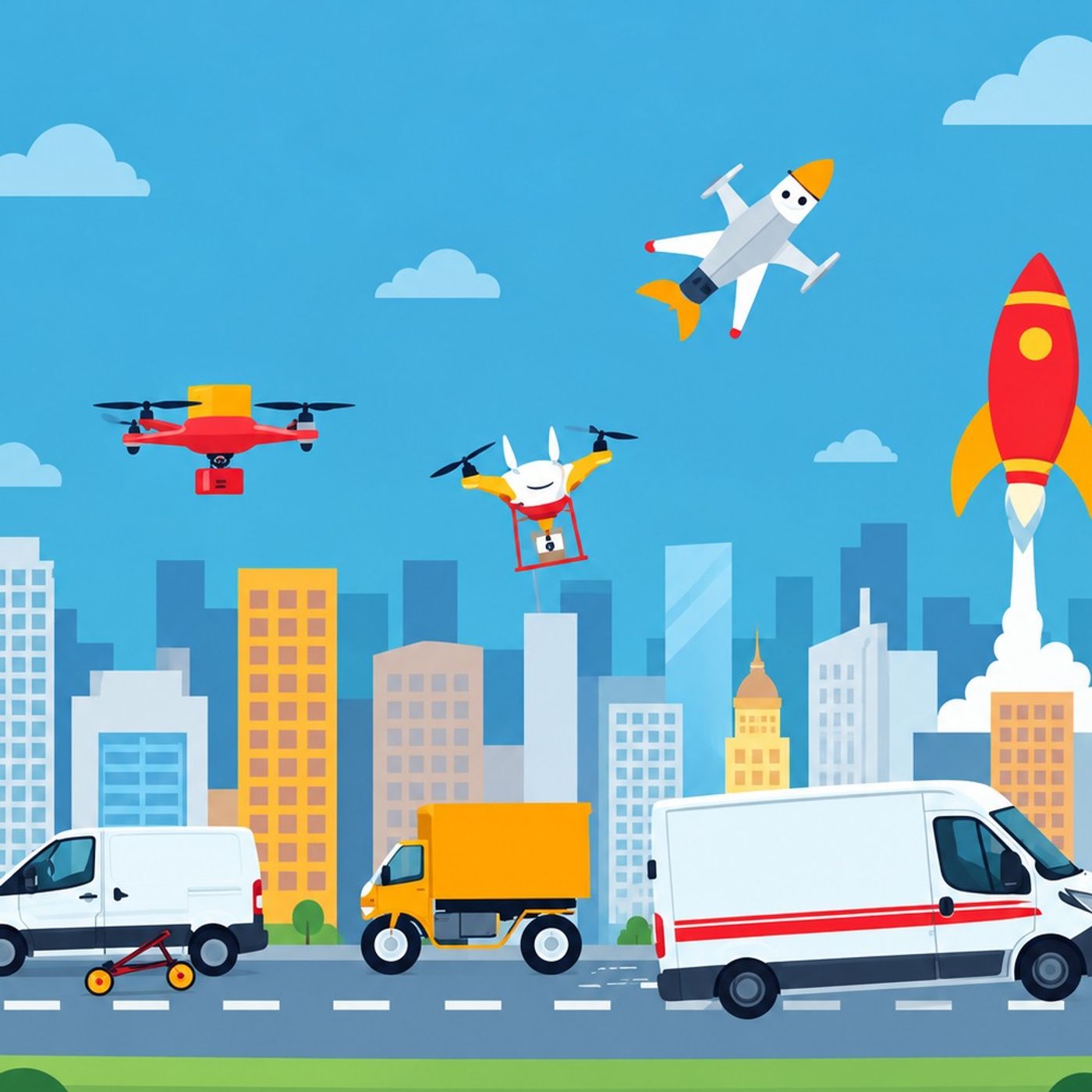
The Markle Retail Podcast episode 312 (sixth anniversary) covers: the Fed’s interest-rate hike and what it means for inflation, housing, and the holiday season; diesel’s surge and how it’s pressuring food and retailer margins; early holiday sales forecasts (Deloitte and Bain) and why e-commerce growth may be influenced by fuel costs; and retail store openings/closings, including Coresight’s finding that closings are down 44% year-to-date and Toys R Us’ plan to expand from ~40 to ~120 stores for the holidays. It also discusses Steve’s Substack post arguing Amazon’s “race to the doorstep” is a “race to the bottom,” focusing on same-day economics, capacity, and habit formation.
none. Backgrounds: hosts Michael LeBlanc and Steve Dennis (retail analysts/keynote speakers). Key claims/examples: U.S. diesel up ~36% YoY; retailers “at limits” on passing costs; Bloomingdale’s comp 11.3% vs Macy’s ~1%; Amazon’s 30-minute delivery via new local delivery stops; Instacart/doorstep delivery is costlier and less efficient than Amazon’s facilities; Kroger sales flat/up 1% grocery category; Inditex August sales up 9%, Zara plans 20 U.S. stores, Bershock “TikTok-native” expansion.
Written by AI. May contain mistakes.
Hosts share personal updates and promote upcoming events, including a webinar and a new book release.
“which I've read several times, so I think I got what you're getting at.”
Discussion on recent interest rate hikes and their implications for the retail market.
“So covering a lot of territory in just under an hour, I think.”
Exploring the correlation between diesel prices and inflationary pressures on consumers.
“But I think we're well above that magic number now, right?”
How retailers are managing increased transportation costs and their impact on pricing.
“diesel just hit an all-time high, up 30, well, regular gas, which we put in our cars, up 36 % year over year.”
Reviewing early holiday sales predictions and their implications for e-commerce.
“Fun fact one, there's a 0.88 correlation with diesel cost and high inflation in food.”
Highlighting Bloomingdale's impressive sales growth compared to Macy's.
“How significant that might be, I've never seen anybody try to quantify it, but it seems like that could be something that might be going on here.”
Analyzing current trends in store openings and closings across various retail sectors.
“Let's talk about store openings and closings.”
Discussing Toys R Us's strategy for reopening stores and the challenges ahead.
“What does it tell us other than the fact that great brands can't be held down?”
Discussion on the challenges and potential of Toys R Us's new business model.
“Now, this is a much smaller footprint than they had previously, so I wouldn't necessarily say that suddenly Toys R Us is going to be back to its glory days.”
Exploration of distribution strategies and fast delivery in retail.
“Let's get on to this sub stack of yours, Pardon the Disruption, which is, you know, I read your post and I love talking about distribution and scale.”
Analysis of Amazon's rapid delivery capabilities and market impact.
“delivery stops, which will allow them to do 30-minute delivery in many cases.”
Insights on the financial implications of trying to match Amazon's delivery speed.
“You don't have to spend the capital, but your profitability will be so much lower and probably negative on a lot of items.”
Examination of how fast delivery changes consumer purchasing habits.
“We'll be right back to wrap our discussion on Steve's Substack post, Is the Race to the Doorstep a Race to the Bottom?”
Explore how Amazon's delivery options influence consumer shopping habits.
“It's more that once you get into the prime ecosystem and once you get into buying more everyday stuff from Amazon, then it creates the habit.”
Learn about Inditex's performance and expansion plans for Zara and Bershka.
“Let's start with the strangely named yet with a familiar name, Inditex, which insiders would know is Zara and some other brands.”
Discuss the challenges Kroger faces amid competitive pressures in the grocery market.
“Would you put them in the same kind of category?”
Understand how retailers are navigating the costs and change management associated with AI.
“All right, well, let's wrap up this episode with our very popular, what's on our respective radar screens?”
Explore the challenges of implementing technology in retail and the importance of change management.
“And she believes that a lot of people are underestimating that.”

Get the gist, explore an idea or ask about something said.
 Claude
On Remarkable Retail Podcast, what are the key points of this episode?
Searching your listeningAutomatic transcript. May contain errors.
0:06Steve Dennis: Welcome to the Markle Retail Podcast, episode 312, our sixth anniversary of the show. I think that's silver or bronze or wood. I don't know what that is. I'm Michael LeBlanc. I'm Steve Dennis. On this episode, Steve and I will be, as usual, delving into the most relevant and compelling news with insight that the retailers love to hear, including what the Fed's raise last week means, why the cost of diesel is making headlines, the first batch of holiday predictions, Bloomingdale as the real story perhaps behind Macy's, what's happening, brick-and-mortar store openings and closing. We'll spend then some time with Steve's pardoned disruption substack post.
0:43Steve Dennis: Is the race to the doorstep a race to the bottom, which I've read several times, so I think I got what you're getting at. Maybe finally. That might be a problem with the writing, I think, rather than the reading. And then we'll be back with news on Indidex and Kroger and finish, as usual, with our very popular What's on Our Radar Screen segment. Now, Steve, you look on camera a little bit different, and you sound a bit different. Where are you, and what are you doing there? I am in a fabulous Marriott courtyard in the north shore of Chicago, and by the time people hear this, with any luck, my older daughter Elena will be married.
1:24She has to say yes, as I understand this. Something like that, yeah. So anyway, that is the plan. So barring something really bizarre going wrong in the next little bit here, she will be betrothed. Is that the word? Betrothed? Betrothed? Betrothed, I think.
1:41Steve Dennis: Very nice. Anyway, hitched. She'll be hitched. All right. Well, that's a lot of fun. So let's get you on and off the mic pretty quick. You're probably pretty busy in all those things that you're doing now. I see, including things you're doing, that you've been doing a few keynotes. You've got a couple coming up, but you also have a Placer webinar coming up that we should remind people about. Yeah, last chance here, pretty much, for the Placer webinar on September 29th, 1 p.m. Eastern time. I'm going to be speaking with RJ Hoteve, who's the head of analytics at Placer. And we've got quite a few things to talk about.
2:21everything like what's going on with malls, what's going on with the K-shaped economy, a little bit about grocery trends. So covering a lot of territory in just under an hour, I think. So look for that. Link in the show notes. Information on my LinkedIn page. One quick mention, if you're listening to this the day it comes out, it is also the release date of our friend Seth Godin's new book, The Knot, which is really a pretty interesting book. It's about problem solving. And of course, Seth puts his unique spin on it. And we will be speaking to Seth shortly. So stay tuned for that. But if you haven't gotten your hands on a copy of The Knot, go do that.
2:57And then you'll hear us talk to Seth about it in a little bit.
3:01Steve Dennis: Excellent. Well, we usually don't foreshadow our guests, but with Seth, as everything will make an exception. He's been a great guest and such great insight. Where is this? Is this 200th book? He's like Stephen King, right? I don't know. 22, 22. I don't know. Wow. Wow. Good for him. All right. We'll look forward to that as I'm sure will the audience. All right. Let's get right into it. Let's talk about retail stories. Let's talk about the Fed. So they raised interest rates. It got me thinking back to a much earlier episode where we were enthusiastic in what's on our radar screen that rates had dropped and we thought that would spur housing and people moving again.
3:38Steve Dennis: But I think we're well above that magic number now, right? Yeah, I mean, I think it's just another example of the unpredictability that we see in the world. Because, yeah, it looked like, in fact, I was checking, I think it was like seven months ago where the prediction was for two or three interest rate drops. Now we just got one. And most people seem to think we'll get another one before the end of the year. And, of course, this all ladders back to inflation not being under control, largely being driven by fuel prices because of the Iranian war, but some other things going on as well. And, you know, I wish I could say I could get particularly optimistic about fuel prices coming down anytime soon.
4:22But U.S. diesel just hit an all-time high, up 30, well, regular gas, which we put in our cars, up 36 % year over year. Europe, on average, is paying about twice what they were paying last year. So this is getting – not that it wasn't serious, but it's getting really serious in terms of how it's affecting people's lives, ability to get to work, pay their bills, feed their family, those very important things that people worry about. And then the other thing, which I saw an interesting Wall Street Journal article that was saying that – because, of course, the fuel costs are baked into transportation costs, which would be very important to retailers moving products in and around.
5:07and it looks like for the most part retailers have been eating the cost of that not necessarily passing very much on but the Wall Street Journal article which is sourced from a bunch of different people they talked to were saying we are at our limits we kind of hope that this too shall pass and it would be more or less a temporary phenomenon and they didn't want to, with all the inflation we've had anyway didn't want to pass any more on because they're worried about consumers' tolerance for that but now they're saying we may be at the breaking point So that doesn't necessarily bode well for the direction of inflation, but obviously we'll have to see how that pans out.
5:42And then again, we talked about this a couple of times. It was one of my radar screen things a month and a half ago about interest rates, and they continue to go up. And like you said, where we were optimistic that it might unfreeze the home market and maybe get some more home improvement projects going, but maybe not so much because the Treasury rates keep going up. It remains to be seen, obviously, how much this will affect the holiday season, but these trends are not particularly great.
6:10Steve Dennis: I'll give you a couple of fun facts about diesel because it certainly came up in my conversations with retailers last week. Fun fact one, there's a 0.88 correlation with diesel cost and high inflation in food. It's almost a perfect correlation. It is very meaningful, particularly in food. If you think of how fresh food moves across from Mexico to America and to Canada, it's very highly correlated. The second thing is retailers on this side of the border, when I talked to them in the spring, they were saying, like, we're getting surcharges. Like, this isn't just direct. All the surcharges, you know, retailers deliver stuff to their stores.
6:44Steve Dennis: And they expect that to continue through their budgeting until first quarter 2027. And so, as you say, there is no escaping this high price of diesel. But all we can do is hope the Ukrainians stop bombing the Russians, apparently, because apparently that's what's driving the high cost. That's obviously the big problem, yeah. Obviously the big problem here. Let's get into, you know, as a young man's mind turned to October, we turn our minds to a holiday. So the first batch of predictions, early predictions are out. What did you make of them? Yeah, I think typically we get or we reflect on four major predictions coming from some of the consulting firms as well as the NRF.
7:26So, so far, we've got Deloitte and Bain. And they're roughly similar predictions. Deloitte's got a 4 % to 4.8 % increase for the holidays year over year. That's got e-commerce up about 8%. That's a little bit weaker, sorry, a little bit stronger than last year, but not dramatically. But also, you know, the whole thing with what part of that is inflation, I think, you know, complicates that a little bit. Bain's got a 4.5 % increase, 9 %-ish increase in e-com. Now, one thing to pay attention to, fans, is that some of these holiday predictions have different time periods. So Deloitte is November, December, and January, which is actually my preferred way of looking at it because January was gift card redemption, returns coming out the whole season, whereas Bain is just November and December.
8:20So they're not exactly equivalent. One of the things I wonder about the e-commerce penetration, because we have seen it go up a little bit, which is a bit of a change where it was kind of smoothing out. and one of the things I wonder about is just are people more likely, I mean it seems to me, that some people would be more likely to shop online because they are worried about the cost of traveling to the store because of fuel cost. How significant that might be, I've never seen anybody try to quantify it, but it seems like that could be something that might be going on here.
8:51Steve Dennis: All right, so one of my favorite videos of the summer was when we did a tour of Bloomingdale's with you as my concierge. And folks can check that out on our YouTube site. But I was very impressed by Bloomingdale's. And we should also be very impressed of what they're doing to the Macy's number. Yeah, Macy's reported last week. So that's Macy's Inc. So that would include the Macy's nameplate stores, Blue Mercury, their beauty concept, and Bloomingdale's. And Bloomingdale's had their all-time, they've been around for a while, all-time highest comp of 11.3%. So that is pretty darn impressive. Macy's nameplate overall was just up about a little bit over 1%.
9:33So they're not exactly lighting things up. But yeah, Bloomingdale's, you know, some of this definitely has to be related to what's going on at Neiman's and Saks. And in fact, the store closings that went on for the most part were completed in the middle of May. So that would have been most of the quarter that those stores were closed. So that had to transfer some business to Bloomingdale's. But Bloomingdale's has been pretty consistently putting up good numbers for a while. So they seem to be firing on all cylinders now, assuming Neiman's and Saks get their act together a little bit better than was the case last year when they were having all sorts of inventory problems and in the news about being in trouble.
10:14I think they're about the only department store that we've heard of that is putting up more than 3 % growth. So just as a quick frame of reference, for Macy's stores, their, I would say, main competitor in a lot of the country is Dillard's, very similar format. Dillard's has historically, or at least for the past four or five years, performed a little bit better than Macy's consistently. They had a very similar weekish quarter with only about 1 % comp. So the whole sector seems to be kind of stuck in neutral with the exception of Bloomingdale's.
10:50Steve Dennis: Let's talk about store openings and closings. There's certainly a lot of energy of that, which brought us together initially as we thought about the myth of the retail apocalypse. Our friends at Coresight have updated the numbers for the year. What did we learn? We have a little bit of buzz about their year-to-date numbers because it showed store closings being down 44%, which sounded quite dramatic. It is important to note that last year was unusually high for store closings. I think some of our listeners may remember, of course, I'd actually predicted that it would be 15 ,000 or so store closings last year.
11:26It ended up being under 10, but that's still a really large number. So there were a bunch of bankruptcies that happened. So anyway, um, pharmacies and dollar stores, right? Yeah. Yeah. For the most part. Now, as far as openings, they are also down and this is the lowest mid-year store opening since 2020. I'm not sure completely what's going on there because we still have lots of store openings from the, particularly from the discount and off price guys are more than a few closures from some big chains like Francesca's and Eddie Bowers. The convenience store category also seems to be going through some pruning.
12:05So some of this may just be the uncertainty in the economy. I think some of it is physical stores in general are flat-ish as e-commerce continues to grow. So maybe just kind of the trends in the market. One important thing, though, that was pointed out is usually we just hear the numbers. We don't necessarily hear the square footage. And on average, retailers are opening bigger stores than they are closing. So when you look on a square footage basis, it's not quite as extreme. And just another thing, which this wasn't particular to the Coresight report, but I've seen several stories talking about how vacancies are really quite low in the best areas and rents are going up in the better places quite significantly.
12:52So again, It's really kind of a mix issue. Very few challenges among the really good properties, but it's the B, C, D space that tend to be struggling.
13:02Steve Dennis: So Toys R Us is in the news opening stores. What does it tell us other than the fact that great brands can't be held down? I'm not sure entirely. I mean, it's a little bit like the Bed Bath & Beyond story where, you know, essentially they went through bankruptcy and were more or less liquidating all their stores. That's really what happened with Toys R Us, at least in the United States. And then they came back from the dead a few years ago, opening, I think, about 40 stores in total in kind of conventional retail space, several airport locations, as well as quite a few departments within Macy's stores.
13:40So they kind of scrubbed the slate clean and I guess could come back with better locations and right-sized for the business. Because I think part of the problem with Toys R Us was over-expansion. Just a lot of stores and toys are available at Target and Walmart and online. So it really wasn't the right business model. So they would appear to be pretty optimistic about going from 40 to an additional 120 stores that will be open quite soon, really, for the holidays. Now, this is a much smaller footprint than they had previously, so I wouldn't necessarily say that suddenly Toys R Us is going to be back to its glory days.
14:18But, you know, maybe this thing can work on a much smaller footprint with a little bit different business model. So I think that'll be interesting to watch. Going from 40 to 120 in one fell swoop is, you know, a little bit on the riskier side. But I assume they must be pretty encouraged by how the first 40 stores are performing.
14:35Steve Dennis: Well, a footnote to that, it didn't work here in Canada. They were bought by Putman Group, and they opened a smaller assortment of stores, and they didn't make it. And, you know, so the phenomenon or the symptoms in the toy category aren't any different here. You know, Walmart, the big companies are hammering it out. So there's not a lot of money left to go around in the toy business. So good luck to them, basically. All right. Let's get on to – let's take a break from the news. Let's get on to this sub stack of yours, Pardon the Disruption, which is, you know, I read your post and I love talking about distribution and scale.
15:14Steve Dennis: And, of course, I think it was inspired by your trip to Amazon because I can see that it got you thinking about the way that they can possibly get this kind of speed to the doorstep. And you've called it in the basically a race to the bottom. So, you know, I think about faster delivery is good for customers. I don't want to call it a trap. Maybe it's a trap, but basically, can anybody keep up with Amazon, and should anybody try? And talk about what you're thinking here in terms of the race to the bottom. A great Seth Godin quote, right? Yeah, and I probably, I don't know that I would change the title necessarily, but I think what Amazon is doing is racing to the top.
15:55I mean, they're creating this world-class capability. The potential problem, what I was pointing out, is trying to keep up with what Amazon is doing and to a lesser degree Walmart may be impossible. And just kind of a quick recap or maybe some things that listeners wouldn't know. So Amazon obviously has been doing the prime two-day delivery, move to one day in many cases, and a lot of same-day and what they call sub-same-day, which is more like three or four hours or even as little as 30 minutes, depending upon the market. So they have continued to expand these capabilities quite aggressively within the last year.
16:37And I know we've talked about this on the pod a few times. Their expansion into grocery, particularly with perishable items, has been a big move. But they also just announced that they are going to be creating this short same-day delivery capability perhaps throughout most of the country, opening a lot of these smaller local delivery stops, which will allow them to do 30-minute delivery in many cases. And so this is really potentially a real game changer in terms of the breadth of products that will be available for very, very fast delivery. Now, they are, I mean, I think one of the things that's really interesting about this, and they kind of changed the game when they decided to invest so much money into all these facilities.
17:31They basically boxed almost everybody else out. I mean, Walmart and Target and others have pretty much given up trying to replicate or come close to replicating what Amazon's doing from a pure distribution standpoint. Most of them now are really relying on fulfilling from stores. So in concept, it's pretty easy to do same-day delivery if you've got a lot of stores, either through your own, like Target's got shipped, or Walmart using its own delivery as well as other services, Instacart, etc. So the capability of same-day is really kind of split. You've got Amazon, which is the ability to do it through distribution facilities because for the most part they don't have stores.
18:15Right. Everybody else, the only way to do same day really is to do it from your stores or selectively in some distribution centers. But the capital to build out all those distribution centers. Yeah. To go ahead. It's just it's just I mean, Walmart's the only one I think who could even conceive of doing it.
18:31Steve Dennis: It's eye-watering amounts, like eye-watering amounts. Oh, yeah. I mean, I don't think anybody, I just, I was reflecting on the note quite a bit today, and you and I were going back and forth, and I was thinking, like, nobody, at this point, the lead is insurmountable in terms of building physical facilities, even if they could find the real estate, for goodness sake. I was focused on, as we think about their expansion, what is it, 2 ,300 cities, I was focused on, and maybe wrongly on, the distribution part. Not the distribution part, but the doorstep part. Because I know some retailers are using the DoorDashes of the world white-labeled.
19:06Steve Dennis: So you're not actually ordering through DoorDash or Instacart, but you're using their fleet of gig workers, basically. Yeah. Isn't that a great solve for that, for the Walmarts and the targets of the world that they can kind of, OK, I'm not going to have to spend all that money on capital. Can they can they match that or am I thinking about this? Well, they can match the offering, largely. I mean, I don't know how many can really do, and it remains to be seen, well, I don't know how many of them realistically, other than perhaps Walmart, could do under an hour delivery or under 30 minutes for a substantial number of products, first of all.
19:43So that offering may be very hard to match. But doing several-hour delivery, I mean, Walmart's already doing three hours or less in a lot of markets. So that is very doable in terms of the offering, and it certainly remains to be seen how many people are willing to pay a premium to get something in 30 minutes or an hour. There's a convenience element to that, but it's not as if there are that many emergencies that you have to get something. So I think it remains to be seen with the percentage of people opting for that. So the offering is easy to duplicate through Instacart. The problem is the economics are wildly different.
20:23It is way more expensive to the retailer to deliver through Instacart, first of all. But also, if you're fulfilling from stores in any volume, this is the problem Target had. They really leaned into fulfilling from stores and it completely got in the way of the regular retail operations. So there's a limit to how much you can do. So, when Amazon is doing 20, 30, 40 times the volume in a given zip code than Costco, for them to try to marry up and compete on a market share basis means they're going to have to incredibly expand their store capabilities or something. So, there's no way to really take up the short, quick commerce delivery without having a lot more space devoted to it, first of all.
21:12So, it's just a capacity issue. You can get the gig workers, presumably. I mean, Amazon's using gig workers too, right? They're using gig workers, but the big difference is if you go to a flex facility, for example, their system is optimized to have drivers come in and volume. That's really different than Instacart guy running into Kroger and picking up three things and then going to 7-Eleven and getting two things.
21:37Steve Dennis: Elbowing out your fellow customers on the journey. So it's dramatically less efficient and you have to pay a premium so that DoorDash and Instacart make money. So, you know, I think Amazon, I mean, they haven't shared these numbers, but you can imagine, first of all, they're 40 % of all e-commerce. So they're just much bigger than anybody else and growing faster than anybody else except Walmart. So, you know, when you just think about the root density that they have and the efficiency of how their supply chain works, their marginal cost of an extra item is way, way lower than the marginal cost than anybody else.
22:16Now, I don't know the exact numbers, but it has to be dramatically different. So the capability is able to be offered. But if the race to the bottom is investing too much and trying to marry up against the facilities, all that does is hit your margin. You don't have to spend the capital, but your profitability will be so much lower and probably negative on a lot of items. So that's the race to the bottom or finishing second in the race to the bottom issue. Now, so I think the real question, really, if you're anybody other than maybe Walmart, which has a very similar business model in terms of product offering and a large marketplace and all that, is how much are you going to chase your tail?
22:58because you're not going to win on convenience against Amazon. You can have a table stakes sort of offering of the ability to deliver same day.
23:09Steve Dennis: The best you can do is a tie, really, at this area. The best you can do is a tie on the offering, on the service offering, but you will be less profitable. Then I think the question really at the margin is how far do you need to go to be a kind of parity in terms of what the customer offers. But you want to focus on reasons that the customer should choose you that are not about ultra-convenience because you're not going to win the ultra-convenience game. It's just really impossible for you to do it at anywhere close to Amazon's volume because they're already so far ahead. So I think that's fundamentally the question.
23:47That's why I say it's a race to the bottom because if you're just going to try to, Amazon keeps setting a new standard and you can really end up chasing your tail by trying to push shorter and shorter times. And you're just going to hit the limits of either your capabilities or the limits of your ability to invest in it. So I think trying to understand for which customers and which product categories, what service offering do you want to have, how much of an upcharge can you possibly have to make up for the cost of doing it, and then really focus your energies, I think, in other places, different product offering, service, et cetera.
24:27But I think, again, it's a little bit of the collapse of the middle sort of argument. If you have, if your target, let's say, where you're sort of kind of the same business model as Walmart and Amazon in terms of being a general merchandiser with value offering, but can you really, what's your differentiation if you can't get close to marrying up or leveling up to their convenience level? It just seems like It can be a real trap that you could get into, and you can end up in kind of nowhere's land. But again, I think one of the big questions, I mean, obviously, Amazon has a lot of confidence to make all these investments.
25:01So they're really, really, you know, really right about it, or they're really stupid, and they'll find out that they invested way too much money.
25:10Steve Dennis: We'll be right back to wrap our discussion on Steve's Substack post, Is the Race to the Doorstep a Race to the Bottom? plus news on Inditex, Kroger, and what's on our respective radar screens right after these messages. Registration is open for a special webinar featuring Steve in conversation with Placer AI's Head of Analytical Research, RJ Harvi. From changing shopping patterns to emerging market opportunities, shifting consumer demand continues to reshape the industry. So don't miss this data driven session unpacking the most important trends defining today's marketplace and the strategies leading brands are using to win retail's future.
25:45Steve Dennis: It's all brought to you by Placer.ai, and it all happens on Tuesday, September 29th at 1 p.m. ET. Register at the link in the show notes or find more information on Steve's LinkedIn profile. Physical retail isn't dead, but boring, unremarkable retail is most definitely dead or dying. So how do you become the compelling signal amid all the noise, distraction, transformational new technologies, and escalating competition? If you haven't read Remarkable Retail, How to Win and Keep Customers in the Age of Disruption, Steve's first best-selling book, What Better Time Than Now? You'll learn the most important trends shaping modern retail today, explore Steve's eight essentials of Remarkable Retail's strategic framework, and be inspired to rise above the rest.
26:30Steve Dennis: Remarkable Retail is available just about everywhere where books are sold, as well as audible and an ebook on kindle for 9.99 are they creating a demand that didn't exist i i know that you know in the course of our careers it used to be four to six weeks for delivery it's funny when i was reading your note two days they recrafted that into two days but how many people genuinely need things and for what occasions and that kind of speed i can think of one my friends in the pharmacy tell me that plan B is the number one requested very fast item, as you say, sub two hours. But are they creating a need that doesn't exist?
27:10Steve Dennis: Or are they creating something that then consumers just get addicted to and say, well, I don't need it necessarily that fast, but I want it that fast. What do you think of that? Well, the answer to that is I think they are to a degree. How big a degree, I'm not sure. Because one of the things that I've had a discussion with several people about this, particularly the people that were out at Amazon with me. And I do think there is this mentality, and I see myself doing this, which is when it occurs to me that I need something, I just order it. And once I order one thing from Amazon, then throwing another thing in the basket, particularly the way they've redesigned the site to encourage that, and they're using intelligence to recommend items that they think you might like or you bought in the past.
28:00I think it's not so much that you need it in three hours. It's more that once you get into the prime ecosystem and once you get into buying more everyday stuff from Amazon, then it creates the habit.
28:16Steve Dennis: The momentum and the habit. Again, it's hard to say how high is up on that. But again, I assume they would not be investing so heavily behind it if they weren't seeing that kind of momentum. Because they do quote, and I include this in the article, that people that use the same-day delivery, so again, that's 4, 3, 1, 30 minutes, depending on the market, are buying more. And whether that's just, well, you want to get a lot of stuff at once and there's a selection bias if you make it easy for me, or whether that's some really changing dynamic. It's probably a little bit of both. Sure. So I think it's really fascinating.
28:55And I guess, again, I'm repeating myself a little bit. I have a hard time believing they would be putting so much capital and investment into this if they weren't pretty sure that it was going to work out well for them.
29:06Steve Dennis: You know, it's funny. If I think back to the keynotes I did five, eight years ago, ten years ago even, I was saying, you know, Amazon is going to own this for a different reason. They're going to be so smart. They're going to know what you want before you even know it. Yeah. You're going to sign up to subscriptions. The stuff's just going to arrive. And it hasn't really panned out that way. How do you think it's going to pan out? Like if you said, well, five years of you and I are having this conversation, where do you think this is going to go? And I guess the last question would be, other than, you know, Walmart and a few big super scalers, is your suggestion that you just don't try to compete against that?
29:40Steve Dennis: You find other things. Well, one thing that Amazon's talked about, and it's an indirect way of answering your question, but they want to go from being the everything store to the everyday store. And they've made a lot of progress, obviously, on the everyday type of items. And now with more of an expanded food offering, that makes them even more so a choice. So I think you can imagine a world, whether it's through agente commerce or whatever, where they have enough of your patterns of regularly bought items as opposed to the random gift or big screen TV that you happen to buy every six years or something.
30:20Steve Dennis: You need another one. But when you're in the everyday type of items, you always like this kind of water. And their advertising business will also be based upon, well, you're regularly buying Perrier. What about San Pellegrino, the fighting brand? So I think I could see where they have so much information, you're on the site so much, that it will be natural for you to maybe download your whole shopping list, have them search for alternative items at a lower price. I think more subscriptions is definitely the more replenishment items. We notice you order your use rate. You can imagine that. And they really haven't had, I think it's the intersection of the ability to save you a trip to the store.
31:04That's the thing that's interesting about the 30-minute or one-hour delivery. It used to be that they really couldn't compete all that effectively other than commodity-type items. But if they can get more of your basket, you start to say, well, do I really need to go to the store? I'm even going to go to the store to pick my own produce or a steak or fish or whatever. And we already know that a lot of people make two, three, four trips to grocery-type stores in a week anyway. So I think it could be very, very significant. And I would be really afraid if you're – and we're going to talk about one in a minute.
31:40But if you're a traditional grocer, I think, you know, you're much more at risk than the high-end guys or the organic guys or the, you know, even more kind of the hard discounter types.
31:52Steve Dennis: Well, that would be my last comment on, as I think about it, I think the groceries is the biggest risk. They're in the biggest bullseye, right, is that replenishment and I need that steak for tonight or I'm having guests come over and all those kind of things for sure. All right, well, and again, everybody read the article in its full glory on Steve's sub-stack, that and other missives and insights. Don't miss it and go over and smash that subscribe button because there's lots of great stuff there. All right, let's get back to the news. Let's start with the strangely named yet with a familiar name, Inditex, which insiders would know is Zara and some other brands.
32:32Steve Dennis: Primarily, yeah. Primarily. What's going on with them? Yeah, we haven't talked about them in a while. And, you know, some of this is to talk a little bit about a more global brand, but they also are making more of a push in the States. You know, like a lot of apparel players, we've talked about a bunch of times, you know, apparel is going through a really good cycle, though. You know, one of the things about the department stores is you don't see to see them benefiting from that cycle. And I think that's more business model than anything else. But, you know, overall, Inditex has been doing pretty well.
33:02Their August sales are up 9%. So that's pretty nice. One of the things I was interested in, because Zara and Zara Home combined are like two-thirds of the business, and I was just curious, how many stores do they have? And it's nearly 2 ,000, and they're in many, many countries. So it's definitely an important brand in Europe in particular. But they have several other brands, and one I think is worth paying attention to, or several are probably worth paying attention to, but Bershock, I think, is a really interesting brand. I didn't know too much about them, but they're kind of like a TikTok native kind of brand.
33:39I mean, they really lean into lower price, very trend-right, kind of like ultra-fast fashion. So much lower priced and younger than the typical Zara customer. And they've been growing pretty nicely. They opened their first store in the U.S. in Miami a few months ago. They're about to open in New York. They've made some moves into India and Brazil. So it's interesting how fast they're going global. You kind of think you might build it out in a few countries because I think they've only got 50 stores or something like that. They're going to be opening a few more. So anyway, but Zara also is setting their sights for expansion in the U.S.
34:21They're going to open 20 stores here in the next year. So that's not massive, but they tend to be in really good real estate. And I've seen they've opened a couple of those are home concepts. So I think they're a really interesting brand to watch, particularly being much more of a multi-country brand.
34:38Steve Dennis: That Bershack reminds me of Goo, right? Uniqlo's. Are they similar? Would you put them in the same kind of category? I think Bershack's a little more fashion forward. But I think roughly similar price points. Okay. Last news item, let's talk about our friends at Kroger, who we're worried they become the poster child, so to speak, for Death in the Middle. They're a big company, but they don't seem to be making up a lot of ground. What did you read from their latest numbers? Well, one of the things, and I decided not to go through this, but we also got the Census Bureau monthly sales numbers. And one of the things that was interesting in that was that grocery as a category, now these are grocery stores, so Amazon and Walmart and Costco would not be in that number.
35:23So it's really more grocery-focused, grocery-only type stores, which Kroger would be in. That category was only up 1%. And I think an episode or two ago, we talked about how the transactions in grocery stores are flat to negative. So I guess people are solving, just in general, are solving for some of the cost pressures by trading down or just cutting out some things to kind of make ends meet. So Kroger is the biggest traditional grocer in North America, would obviously be affected by that. So yeah, their sales were basically flat up against a pretty good comparison. And e-commerce continues to grow, but that means that stores traffic, or maybe not traffic, but store sales are down, which is really the same kind of phenomenon we saw with Walmart.
36:12So I'm not entirely sure what's going on there. They also cut their guidance. So how much of this is just the pressure on the middle? How much of this, Amazon's growth, which has been extraordinary, is coming from somewhere. And you've got to think a decent amount is coming. It's not population growth. It's definitely not population growth. So now the one, I guess, ray of hope is the media, retail media business, which is, you know, I think just about every player that's multi-brand, you know, has a vast assortment of CPG type stuff is doing well. They were up 24%. That's, generally speaking, pretty nice, you know, more profitable than selling products.
36:52So that was the thing that's booing their profits a little bit. But I think, you know, we're going to, unless things really change there, and I'm not sure, it just seems like things are getting more competitive, you know, they're going to have to probably rationalize some stores, take some cost out. But, you know, there's only so much you can do that before it runs out of gas.
37:08Steve Dennis: Well, as I said, let's keep an eye on them that they're not the poster child for trouble in the middle, you know. Yeah. As you often say, shrinking stores isn't the path to growth and path to success. All right, well, let's wrap up this episode with our very popular, what's on our respective radar screens? What's on your screen? Well, I happen to be in Target, a couple of Targets, over the last couple of days in wedding-related matters. And one of the things I was reminded of was that all the Ulta shops in Target are out, and the Target Beauty Studio is in, or at least it's in, in about 600 stores, and presumably be expanded to more.
37:51So you've now basically taken the space that was an ultra shop and shop and you've got this new Target beauty concept. And I think there are a couple things to watch. One is certainly whether this new concept performs well. Beauty is a very important category for store choice, relatively frequent purchase. So doing well in the beauty category, even though it's a relatively small section of a big store, is kind of disproportionately profitable. It's the same reason why Sephora is so important historically to Kohl's, right? So it'd be interesting to see what the results look like, whether they continue to roll it out.
38:29The flip side of that, though, is to take a look at what happens with Ulta, because this was not an insignificant source of volume for them. So you would think some number of Target customers are buying just out of convenience. They like Target. If the product offering is good, they'll keep buying it. But there are probably a few ultra loyalists or more than a few ultra loyalists that will say, no, I really like Ulta. And Ulta's got a lot of stores. I like their brands. Yeah. And I think I wouldn't say that the Target, Ulta at Target or the Target Beauty Studio is like an impulse purchase. But I do think that you're there and it's a convenience play more than anything, if you really love Ulta and you want the full breadth of the assortment, you want the services, presumably you're already going to Ulta because chances are there's an Ulta fairly close to any given target store.
39:23So what that volume shift ends up being, I think will be interesting to see whether Ulta really loses that much. I suspect they won't lose all that much, but I guess we'll know the next time both of these guys report. Interesting.
39:37Steve Dennis: Well, on my radar screen, as you know, I talk to a lot of retailers every quarter dozens of retailers and part of that is I do a deep dive each quarter and I was thinking as many of us are that well one of two things is going to happen these AI agents are going to get so sentient reading the headlines that the judgment day right around the corner so just like holiday so that's pretty freaky but I was also thinking what I was asking them is the ROI of AI and I got thinking of it because I start to hit my limits now, right? I'm doing work on Anthropic and, oh, you're out of tokens. You got to take a break.
40:14Steve Dennis: And it's kind of like controlling screen time, actually, a little bit. So I started to think about, and I asked the retailers about, how are you starting to think about AI? Like, it's all fun and games until the bills start coming in. And a couple of things came up. One was that there's a McKinsey study that one of them quoted that the actual cost of AI implementation is three to one. Three is change management. One is the AI cost. So I think they were like, not surprised, particularly the savvy retailers, that they're talking about the way to really optimize AI at the enterprise level systematically requires a lot of change management.
40:53Steve Dennis: So don't underestimate that. So they're starting to add up the bills and okay we pay a dollar for for these services but we got three more in getting everybody to work efficiently with them in the change management and the second thing is just the bills are starting to roll in you know the the models the platforms have changed to a seat model some pretty big bills are starting to roll in that takes a bit of education you know don't have everybody put their entire model into the i had one retailer tell me that their engineer put their entire model in day one and that was it they were done for the month they were out of tokens for the entire month because it was just like, wow, it's free and there's no capacity and there's no limits.
41:29Steve Dennis: And, you know, it reminded me a little bit of Uber, right? When we first started taking Ubers, which was a great idea, really some venture capital guys at SoftBank were paying for us to drive around on Ubers and now their Uber rates are pretty expensive. So I'm thinking about retailers are now turning their minds to think about, okay, I get this AI stuff. I think it's pretty amazing. Everybody thinks that, but how much is this all going to cost and what's the ROI on all this stuff we're doing. So it was a very interesting series of conversations. Well, one thing I'll just add to that, I had a conversation with a woman who's been the chief technology officer at several large retailers, and she was saying some things very similar to what you were saying, is that people are just starting to understand the cost, but she definitely made the point that people are underestimating the change management, that if you're going to fully, even if you can get the ROI, conceptually that what it takes to really move things through the organization in a significant way is very, very difficult.
42:34And she believes that a lot of people are underestimating that. So yeah, I mean, I think with a lot of technology, it's all fun and games until you have to implement it at a great 10x scale, 100x scale, or you have to pay the bills for it. So, yeah, I doubt it's going to be as easy as some of the hype.
42:56Steve Dennis: And just the pure speed it's moving at, right? Like when we got a computer on my desk at first, there wasn't a lot of change management. You know, you got the computer, it's a clunky kind of thing. But these AI models are pretty slick and they're solving a lot of interesting problems. So, anyway, definitely on my radar screen, as I think it should be on all of our listeners' radar screens as well. All right, that's a wrap on this episode. Talk to you again soon. thanks for listening to learn more about my keynote speaking best-selling books and advisory services go to stephenpdennis.com and don't forget to check out my sub stack pardon the disruption be sure and follow us on your favorite podcast platform or on youtube and give us a five-star rating and review you can learn more about me or get in touch on linkedin or online at emileblanc.co
43:51Bye.
The Remarkable Retail podcast turns six. Steve Dennis opens with the macro picture: inflation remains stubborn, driven largely by fuel. U.S. diesel just hit an all-time high, regular gas is up 36% year over year, and retailers absorbing higher freight costs say they're nearing their breaking point. Michael LeBlanc adds that diesel is almost perfectly correlated with food inflation, and that Canadian retailers expect fuel surcharges to persist into early 2027.
The hosts review the first holiday forecasts. Deloitte projects 4 to 4.8% growth for November through January, with e-commerce up about 8%; Bain sees 4.5% growth and roughly 9% online over November and December. Steve wonders whether high fuel costs could push more shoppers online.
At Macy's Inc., Bloomingdale's posted its highest comp ever at 11.3%, while the Macy's nameplate managed just over 1%, in line with Dillard's. Coresight's mid-year data shows store closings down 44% against an unusually heavy prior year, openings at their lowest since 2020, and a widening gap between scarce A-quality space and struggling B, C and D properties. Toys R Us is betting big, planning 120 more small-format U.S. stores before the holidays, though Michael notes the concept stumbled in Canada.
The centerpiece: Steve's Pardon the Disruption post arguing that "the race to the doorstep is escalating." With Amazon rolling out sub-same-day delivery in as little as 30 minutes and holding roughly 40% of e-commerce, most retailers can at best match the offering through store fulfillment and gig partners like Instacart and DoorDash, at far worse economics. The smarter play: reach delivery parity where it matters and compete on reasons beyond ultra-convenience. Both hosts agree traditional grocers sit squarely in the bullseye as Amazon moves from the everything store to the everyday store.
In earning news Inditex posted a 9% August sales gain, Zara plans 20 new U.S. stores, and sister brand Bershka is expanding fast from Miami to New York, India and Brazil. Kroger's sales were flat and guidance was cut, with retail media (up 24%) the lone bright spot.
On the radar screen: Target Beauty Studio replaces Ulta shops in about 600 Target stores, and Michael shares insights from his quarterly retailer conversations on AI's ROI, including a McKinsey finding that change-management costs run roughly three times the technology itself, plus the shock of seat-based bills and exhausted token budgets.
About Us
Steve Dennis is a strategic advisor and keynote speaker focused on growth and innovation, who has also been named one of the world's top retail influencers. He is the bestselling author of two books: Leaders Leap: Transforming Your Company at the Speed of Disruption and Remarkable Retail: How To Win & Keep Customers in the Age of Disruption. Steve regularly shares his insights in his role as a Forbes senior retail contributor and on social media.
Michael LeBlanc is a senior retail advisor, keynote speaker and media entrepreneur. Michael has delivered keynotes, hosted fire-side discussions hosted senior retail executive on-stage in 1:1 interviews worldwide. Michael produces and hosts a network of leading retail trade podcasts, including The Remarkable Retail Podcast, The Voice of Retail, The Food Professor, The FEED powered by Loblaw and the Global eCommerce Leaders podcast. He has been recognized by the NRF as a global Top Retail Voice for 2025 and 2026 and continues to be a ReThink Retail Top Retail Expert for the fifth year in a row.