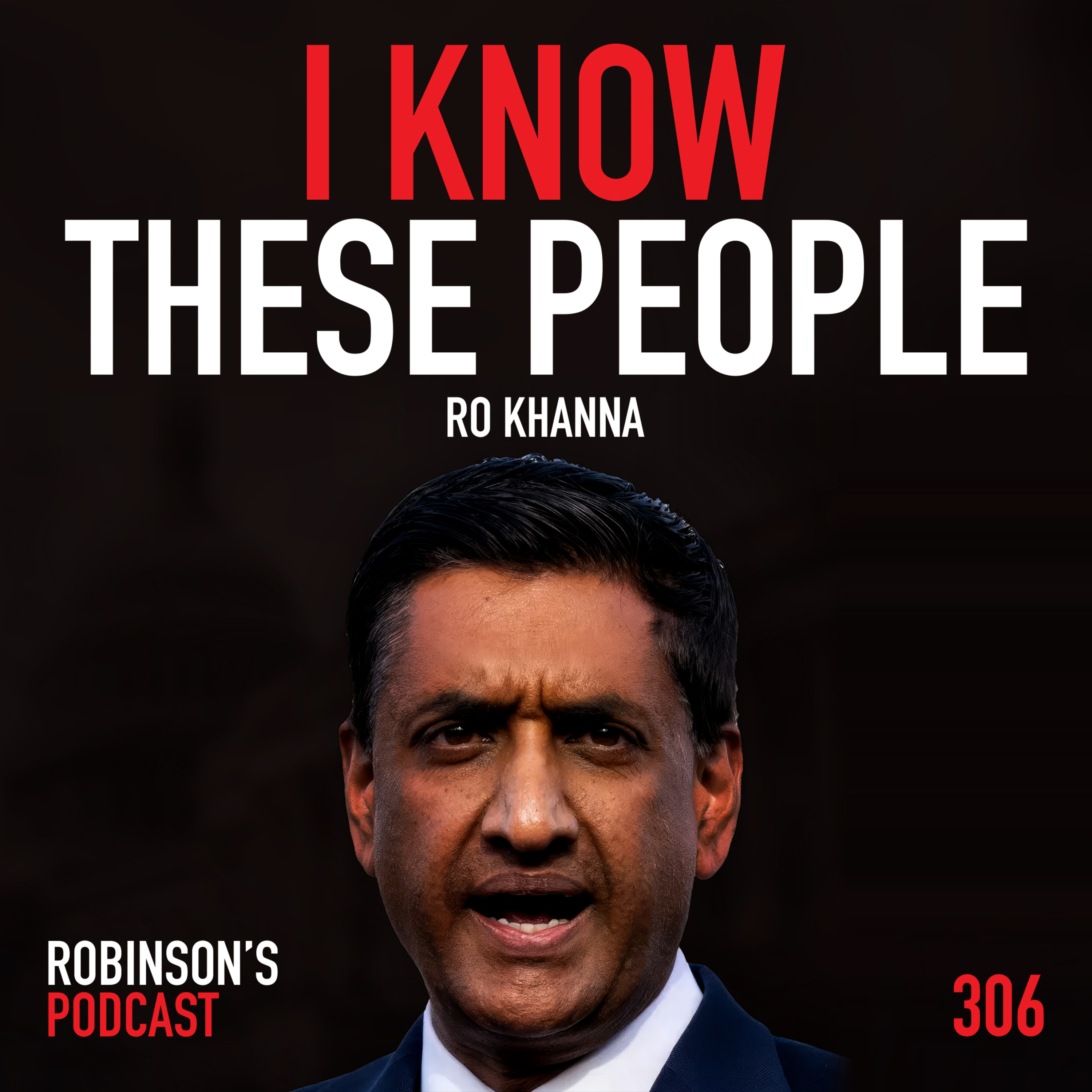
Ask ChatGPT



Richard Wolff argues that “Trump’s America is over,” claiming Trump’s presidency has produced decline rather than strength. He frames Trump’s 2026 electoral appeal as partly fueled by denial and by supporters refusing to admit they were “hoodwinked,” while also claiming Trump’s policies (wars, tariffs, and institutions) have failed.
Richard Wolff is a socialist economist and professor (described as Hegelian; he references his work and a book he co-wrote with Steve Resnick). The episode is an interview with Wolff; the host is Piers Morgan (mentioned as having staged a debate). Wolff also discusses a separate debate with Victor Davis Hanson, described as an elderly commentator who argues against socialism and uses Cold War-era talking points.
Written by AI. May contain mistakes.
Analyzing the current political operation and Trump's self-destruction.
“that ended up being titled the final case against Donald J.”
Discussion on Trump's actions and failures since his election.
“That's why I hope people have that mentality.”
Exploring the military and political repercussions of Trump's policies.
“As one of my friends likes to use the phrase, he delivered an immense nothing burger.”
Reflecting on America's historical trajectory and current decline.
“But when you do it and When you can't, which is where we are, it becomes ridiculous.”
Discusses the importance of acknowledging America's historical issues to move forward.
“You know, that came home to me years ago when I went to Berlin in Germany.”
Explores why a significant portion of Americans still support Trump despite his flaws.
“Partly because those reasons, if they did, would help force them to understand it's over.”
Analyzes the false promises of economic improvement made by Trump and their implications.
“You know, here he is making himself and his family wealthy, which he said he would do, to be fair to Mr.”
Learn about the negative impact of tariffs on investment and job delivery in America.
“If you're having a president who's putting tariffs everywhere and you move to this country, you're taking the risk that the inputs you will need here will be high priced because of the...”
Explore the disconnect between political promises and economic deterioration.
“Well, you know, you're destroying yourself.”
Understand how denial of economic history affects current political narratives.
“But that's really a kind of unfairness because that's true of Mr.”
Discuss the implications of a recent debate between socialism and capitalism.
“Well, Rick, I'm going to bring us back to two years again, perhaps also speaking of denial.”
Analyze how outdated arguments against socialism still resonate today.
“It was, you know, electronically managed from London.”
Examine the economic development of China and misconceptions about its model.
“Because that's what comes out in the year 2026, when it couldn't.”
Discover how the Cold War has shaped the discussion around capitalism and socialism in America.
“and you're having difficulty talking around the elephant, you kind of have to stop and say, excuse me, to the person you're talking with, we've got a problem.”
Explore how the Cold War era stifled discussions around socialism and Marxism in America.
“You were a mouthpiece of Moscow or something like that.”
Learn how the collapse of the Soviet Union reshaped socialist discourse and theories.
“If what you know stopped developing when 1945 arrived because of the Cold War, then you're going to come out of your hibernation cave in 2026 like Victor, and you're going to talk weird stuff that's out of date.”
Unpack the flawed arguments used to associate socialism with immigration and elite wealth.
“He's rehashing, as the people he represents, if you like, he's rehashing an argument.”
Examine how Trump’s inflammatory language is interpreted and defended by supporters.
“And to make his point, he referenced Elon Omar, who owns, he said,$30 million.”
Analyze the justifications for military actions by various leaders and the global response.
“In one of our last conversations, he was explaining to me and defending Donald Trump's use of language, his braggadocio, his threats and bombacity as being the art of the deal.”
Discussing Trump's inflammatory rhetoric and its implications globally.
“this way that Donald Trump uses insults in the press, the way that he gets his message out with this very inflammatory, threatening rhetoric, whether it's regarding Greenland or Iran or whoever it is.”
Exploring the historical context of capitalism and colonialism's effects on wealth distribution.
“They don't want to go there, which I can understand.”
Analyzing Europe's current economic state and its desperate attempts at resurgence.
“In short, it produced a gruesomely unequal world economy.”
Examining how the U.S. and Europe are clinging to colonial legacies amid global resistance.
“England can still beat Argentina and retain the Falkland Islands.”
Explore Richard Wolff's analysis of NATO's actions and the implications for global power dynamics.
“And yet you portray them as putting all of Europe at risk.”
Discuss the current political landscape in America with a focus on figures like James Tallarico and the necessity for grassroots movements.
“I'm sure you'll get plenty more questions about it in the future, and maybe I'll even have some more for you later today.”
Learn about the historical lessons for socialists from past government programs and their impacts.
“And that could be brought together around elections.”
Explore the historical context of the minimum wage and its current implications.
“The answer is we left in the Great Depression, we left the profits in the hands of the corporations.”
Discuss the interplay of money in politics and its effects on socialist movements.
“We know that they have learned how to buy the politicians to get them to leave the minimum.”
Examine the challenges posed by wealth inequality on democracy and voting.
“And as I said earlier today, in a capitalist world, wealth is distributed unequally.”
Explore how billionaires like Elon Musk impact political systems and democracy.
“Trump, hundreds of millions of dollars, to Mr.”
Understand the historical context of voting rights and bourgeois control in society.
“They agree to give each other no argument.”
Discuss the importance of supporting candidates like El-Sayed and Tallarico.
“Then he also said that El-Sayed is another person who just has the gift.”
Learn about the need for organized political movements and their effectiveness.
“I used to watch Holy Name Church, where I lived, organize those.”
Examine the current state of socialism in the U.S. and its evolution.
“You know, we haven't had serious socialism in this country throughout the Cold War.”
Investigate why American students are hesitant to engage in activism.
“And you said at the beginning of our— You said at the beginning of our conversation that the Democratic Party, the Republican Party, they're Tweedledee and Tweedledum.”
Discuss how Cold War trauma affects young people's political behaviors.
“And here's what I've learned, or at least my inference.”
Highlight a Republican congressperson's thoughtful stance on issues.
“Well, as we near toward the final half hour or so of our conversation, we've talked a lot about the Democratic candidates in the upcoming elections, but I haven't really asked you about any of the Republicans.”
Share personal anecdotes from running for local office in New Haven.
“When I ran, as I did, for this, it's called the Board of Aldermen in New Haven, Connecticut.”
Explore the economic challenges faced by New Haven and the impact of Yale University.
“One of my chief proposals was that the city of New Haven, the second poorest city in Connecticut.”
Understand how political candidates are funded and supported by wealthy interests.
“Yale could close streets, reconfigure its everything.”
Discuss the influence of money in politics and its implications for democracy.
“You hear about them because they've been funded by one of these.”
Learn about the organization Democracy at Work and its goals in critiquing capitalism.
“Rick, you've been on the show so many times now, and I don't think we've really talked that much about your organization.”
Learn about the concentration of wealth in America and its societal consequences.
“and instituted, people had won with hard struggles those breakthroughs, they were then all taken away.”
Discover how worker co-ops could transform businesses and empower workers.
“If you want to deal with this problem, if you want to deal with the poverty that this is all about for the mass of people, then this is the way at a basic level to change the society.”
Understand the potential of worker co-ops to provide Americans with more choices in employment.
“And when the press said, well, where will the workers get the money to buy the companies, He smiled and he said, we will lend it to them at zero interest so they can afford it.”
Hear about the increasing demand for cooperative models and how to support them.
“And we're not big enough and rich enough to meet it.”

Get the gist, explore an idea or ask about something said.
 Claude
On Robinson's Podcast, what are the key points of this episode?
Searching your listeningAutomatic transcript. May contain errors.
0:00Mr. Trump has far exceeded my expectations in the extent of his self-destruction. The best of the American empire is behind it. It's almost as if you could say to him, you shouldn't have promised it. No trial, no lawyer, no jury, no confronting evidence, summary execution without anything. What am I watching? This is a political operation. You're lying. I mean, what are you doing? History will not judge kindly what is going on in this society.
0:45It seems to me that two years ago, basically to the day, we sat down and we had a conversation that ended up being titled the final case against Donald J. Trump. And at the beginning of that episode, I asked you a difficult question. Why, going into this election, should people have voted for Donald Trump, which is obviously not your position? I'm going to ask you a similar question today because Donald Trump happened to ask recently that Americans pretend he is on the ballot for this 2026 election. And I want to ask then, what are the best reasons for going to the ballots this November and voting as if he is on the ballot?
1:29Well, from my point of view, which is not likely to be that of a voter for Mr. Trump, I'm hoping that as many Republicans as possible go into the voting booth imagining or thinking that they're voting about Mr. Trump rather than about the Republican Party. And the reason for that is simple. Mr. Trump has far exceeded my expectations in the extent of his self-destruction. I expected it. I'll tell you why in a minute. But he has really outdone himself in turning off millions of Republicans. And I'm assuming a good number of them will express that view, that feeling when they go into the polls early in November, that their disappointment, their regret, their guilt about having enabled this character, that there'll be enough of them that it'll swing the election and that he will face a hostile Congress.
2:47House and or Senate. That's why I hope people have that mentality. There's not that same kind of in-your-face provocation from the Republican Party. Most of the Republicans have either one of two positions. They either decided that the wind was blowing in Mr. Trump's direction, So they became toadies. They became justifiers, excusers, supporters. They fell all over themselves to be. I watched a few weeks ago, after Mr. Trump excluded several news agencies from covering the White House, that Vice President Vance, in a tortured English language essay, supporting him, you know, knowing from the very way you could see he was talking that this was an odious task, but he performed it, as he always does.
3:53So half the Republicans, or some proportion, line up behind Mr. Trump. And the other half have been mostly, with some exceptions, but mostly quiet, not wanting to stand out bad enough that they didn't join the chorus for him. They want to lay low and not be self-destructive with him. And so there's nothing going on in the Republican Party to bring the voters out for or against, really. I mean, the hardcore, I suppose, if you still feel the same way about Mr. Trump as you did two and four and six years ago, maybe you'll come out now. But my guess is that their biggest problem will be an electorate that has very little motivation to come out and support him because they don't really agree.
4:58In my judgment, Mr. Trump's was an epiphenomena. He was a detail thrown up by a historical situation. He's very different from other presidents, as everybody now knows. That was a virtue when he first ran. He was not like all the others, and that's exactly what the electorate wanted. I mean, if I were pushed in another way, Bernie was the same thing, but on the other side. Zoran Mamdani was the same thing, but on the other side. Different from everybody, but that's what people want. They don't trust the professional political class as well they shouldn't. And they vote that way. They vote again.
5:49If you're left wing, you vote for the so-called progressives or social democrats or DSA. And if you're on the right, you vote for the Trump. But Trump has the disadvantage now that he's been in there for roughly six years and make America great again. only in his own social media posts late at night is he, even him portraying such a message. He was going to stop the wars. He's actually added a war. He was going to stop the horror in Gaza. He did nothing of his sort. He was going to end the Ukraine war, I think he said, in a week or some boast like that. nothing. I mean, nothing, nothing, nothing.
6:48As one of my friends likes to use the phrase, he delivered an immense nothing burger. And everybody knows it. There's no, unless you talk to a professional Republican huckster, no reasonable person is going to look at the situation of the United States today and say it is in some way better or stronger. You know, our aircraft carrier in the Mediterranean couldn't have functional toilets. We are at war with a small, relative to us, a small country, 93 million Iranians, and they have stymied the United States. And for me, that is historic. That is the global South, the third world, whatever you want to call it, finally being able to say to the United States, not only will we not let you win, because the Vietnamese did that and the Afghanis did that.
8:02I do want to remind everyone that the war in Vietnam had the United States pitted against the Communist Party of North Vietnam. Who's running Vietnam today? The Communist Party of North Vietnam. That's a large hint about who won and who lost. The enemy in Afghanistan of the United States was the Taliban. Who runs Afghanistan today? The Taliban. Another clue. and have we solved the problem of Iraq? Iraq is closer to Iran now than it ever was. If the goal was to have a weaker Iran, which everything else the United States did, was aimed at, then that was a colossal failure too. And we're in the process of being stymied by the Iranians, only with this difference.
8:56Two big differences. Number one, the Iranians have missiles and drones. In other words, they match the firepower of the United States, at least to a greater extent than the war in Vietnam allowed the North Vietnamese to do. They didn't have any airplanes to speak of. And that was the major mechanism of the United States. Ditto in Afghanistan. They had those little devices. They put by the side of the road. But Iran is telling us, you want warfare with the latest equipment, ballistic missiles, cruise missiles, drones of various... We can do all that. And we can hide them. And you can't get them.
9:45And we can devastate your allies. And we can lay waste to your military bases. None of that happened before. the bases in Vietnam were pretty secure. So I would argue militarily, wow, have we been affected in a negative way, but in every other way. The tariff effort, the whole first year, year and a half of Mr. Trump's second term was devoted to tariffs. Tariffs were an assault on the whole world. One country, the United States, stood up and imposed tariffs on everybody. It was a spectacle. Now, if you're the country that runs the world, that spectacle is kind of part of the game. You do it because you can, and it reaffirms your power.
10:45But when you do it and When you can't, which is where we are, it becomes ridiculous. It becomes absurd. Even the Supreme Court of the United States, otherwise in Mr. Trump's pocket, he put almost half of them there anyway. Even they couldn't go along with it. They couldn't. And that's not because of some great principle. I've never seen a court less committed to identifiable principles. But it was they understood this is craziness. You're not the king of the hill anymore. And for the man who promised to make America great again, to preside over the opposite, that's a rough one. It's almost as if you could say to him, you shouldn't have promised it.
11:41It wouldn't hurt you so bad now had you not. bloviated in his inimitable style about how you were going to make America great again. That's not in the cards. The best of the American empire is behind it. I know that's not fashionable. I know our political leaders, Republican and Democrat, will insist that that's not the case. But it is. And you know something? Most Americans kind of know. You may not want to talk about it either. It's kind of painful news. You've been built up, not just by Mr. Trump. You know, every president has to have a speech when he gets elected about how the best is still ahead of us.
12:29For most of the second half of the 20th century, there was something to that. Just like there was something to American exceptionalism. there was something unique in the second half of the 20th century, post-World War II. But whatever that was, and I'll be glad to tell you what I think it was, but whatever that was, it is not there anymore. And Mr. Trump is therefore presiding over a decline, as Mr. Biden was, and as whoever comes next will be. The only interesting question historically is at what point will the American people force, by public opinion if nothing else, the leaders to begin to be able to say we are in a pickle.
13:28We have a problem. in a way I almost would apply the brilliant organization of Alcoholics Anonymous who say to people if you're going to come and get help here which is what we want to do you have to begin by stopping the denial that you have a problem. You have to come in and say hello my name is John I'm an alcoholic. Very simple very ritualistic but very important as setting a tone and it is thought in the circles of AA to be crucial to your getting out of addiction to alcohol alright we have to get out of an addiction to the nonsense that we are what we aren't anymore and that will require facing our history which we aren't very good at either.
14:31You know, that came home to me years ago when I went to Berlin in Germany. And in the middle of the city of Berlin is something called the Historische Museum.
14:48And I speak German, I read and write German. So I have access that way. in that museum, which covers multiple buildings, is laid out the horror of the Nazi period. You know, and there are people alive today who were alive there. I mean, they're old, but so this is not ancient history in Germany. This is very recent history. Nothing like that exists in the United States. Nothing. The effort, marginal, small, modest, to begin to come to terms, for example, with slavery in the United States, with the ethnic cleansing, the genocide of the Native American people here. There are beginnings, and I celebrate them, and I recognize them.
15:46But a massive museum right in the middle of the Capitol devoted to, no, we don't have that. And one of the things interesting about the Trump administration, horrible but interesting, was the importance devoted to expunging the little bit of historical engagement with our history that we had. I mean, he went through and he didn't like what he saw, the people around him, I don't mean just him, what they saw at the Smithsonian, which devoted parts of itself to this history. And I laud them for it. But they got rid of the director, a black person, Of course. The white supremacy, the misogyny, look at it.
16:36It's all on display, proving to the world that you may have thought this country outgrew all of that. But we fooled you. We didn't. Here it is. And there's lots of it to go around. Well, you know, that has to happen. That has to happen if the United States is going to be adequate to its own future. Right now, it isn't. It's losing. The competition of the Chinese has outdone everything every pundit on the right in this country ever said, starting in the 1970s, 80s, if not earlier, you know, that you can't keep pretending. You can't keep denying. You can do it for a long time. If you know someone who has got a problem with alcohol or other substances, you can be in denial for a long time.
17:37Even when your mouth can't say the word denial without trouble. You can hold on. We're holding on as a society. That's why we voted for this clown, you know, because he was saying, I'm going to fix it all. I'm going to make us great again. And people want that because they have a sense that they lost something in the second half of the 20th century. And they did. They were absolutely unique. Not for the reasons they thought, for reasons they have not yet faced up to. Partly because those reasons, if they did, would help force them to understand it's over. And it's not coming back. And that's a new consciousness that will have to emerge.
18:28It is emerging, but slowly and hesitantly hemming and hawing and two steps forward and three and a half back and so forth. Well, Rick, it is very good to be back in person speaking with you again. I mean, I really love these conversations. I also appreciate the way that you took my question. That wasn't the direction in which I thought it was going to go. you mentioned that in no way is the United States better or stronger than it was. You mentioned the military tariffs, policy pathways that have all not gone well in your view. But nonetheless, there are a significant number of people in the country, at least I think maybe somewhere in the 30 % range now, who really do still admire Donald Trump and want him to be president.
19:29And I'm wondering what you think, and this is the difficult question, if there is anything you can say to this, what are the strongest reasons that those people could have for continuing to support Donald Trump? Well, and I don't mean to be cute about it, but I I believe the answer to your question is that a third of the people being surrounded now, even when they spend their lives limited to, I don't know, Fox News or the narrow part of the spectrum that keeps on celebrating Mr. Trump, that the 30 % you're talking about, surrounded as they are by that, have a kind of dogged determination to hold on.
20:23It's as if they were saying to us, we weren't wrong, because everything that's being said about the man is that he was wrong. There are major parts of the Republican Party that are now running away from him. They were all running toward him before. That's a measure of how bad things have gone. You know, there are serious efforts to use the 25th Amendment to get him bounced out. Major figures leading the cheerleading for him, Tucker Carlson, Marjorie Taylor Greene, and others, are now leading the charge, attacking him. He is terrible as a leader. He is a liar. He has betrayed his ideals. Wow. We're not talking about people that are, you know, quietly backing away.
21:19There are those too. But we're talking about a significant part of his base turning against him. There's almost another one every day or every few days. And I think what that's doing is mobilizing a majority against him, for sure. but also hardening the minority that doesn't want to feel as though they were hoodwinked. That's all. Every flimflam man in the history of flimflam, every crook, every hustler, every swindler, has always had that. The people that are so chagrined by having been taken in that they become part of the flim-flam in order not to have to face that in themselves. Otherwise, they have to ask the question, why was I persuaded?
22:18Why was I gullible? Why did I fall for this guy? You know, here he is making himself and his family wealthy, which he said he would do, to be fair to Mr. Trump. He made a wonderful remark. I noticed it and so did a lot of other people. Before he took office, I believe the first time, he had won, but he hadn't been inaugurated. You know, if I can't make this a paying proposition for me, then there's something wrong with me. Ha ha ha. Okay, he knew he would have extraordinary power and extraordinary knowledge. And between the power and the knowledge, he could make a lot of money, which he has done.
23:02And he is taking more and more pride on things that have nothing to do with the condition of the mass of people. And even if they're not conscious of it, it registers. I'll give you an example. When the leader of China, the number one competitor this country has on everything, technology, culture, warfare, you name it, finances, United States is the biggest debtor country in the world, and China is the number two creditor of the United States in the world. What a joke. All right. But the head of it, Xi Jinping, comes to New York, you know, toward the end of September. And what does, and he also goes to Washington, if I understand.
23:58And what does Mr. Trump show him? The renovated White House. he's eager, takes him all over talks about the carpets and the walls of a home renovation this is like inviting your neighbors over and insisting that they look at the photos of your summer vacation 11 years ago that's not what they are interested in and they'll be polite and they're your neighbor and they'll sit there a bouncing ball Mr. Xi Jinping, who's the soul of diplomacy, was perfectly nice. But Mao must have wondered in his mind, really? That's what you want to show me about your life in the White House? How you've renovated the ballroom?
24:53Are you kidding? And the gift of a golden, golden... Yeah, I mean, it's just tone deaf, tasteless. But I don't care about that. What I care about is that he can't. Well, give me an example because it's relevant to our history. Previous presidents, several of them, when visited by the likes of, say, Mr. Khrushchev from Soviet Union, leaders of important countries. They would arrive in Washington or New York. And then as part of their visit, even if the visit was short, the president would fly to Detroit with the guest. And they would go and visit the auto factories, Ford, General Motors, Chrysler.
25:48And the president, with great pride, would say, look at our working class. They would drive through the neighborhoods where these workers lived. They had their little houses in Detroit, a lot of law, part of Detroit's big city, geography-wide. And he'd point out, you see, many of them are black. We integrate now. We have given our poor black people a good job. And they have a member of the United Auto Workers. It's a good union. They have a health plan. Interesting. showing a foreign leader that the image around the world of the United States as including very rich people look how fancy but also horribly discriminated against black and brown population you know the people that fill the jails that's because the world gets that picture the enemies if not the dubious friends have made that picture quite clear So this is an effort to, he didn't do anything like that.
26:58Now, partly he can't. You know, in 1970, the population of Detroit was 2 million. Today it's 700 ,000. He would have to explain what happened. And if you drive through Detroit, which I've done, you'll see huge sections of it are burnt out empty houses. Blocks and blocks of them. Because those people all left. The two million that became 700 ,000. So he can't do any of that because all of that has deteriorated. And he who made big promises, I'm bringing back or manufacturing. And I promised the first term. The tariffs, why will there? I'm bringing back. Where is the manufacturing? There isn't any.
27:47No one in their right mind would move their factory to the United States. Oh yes, I know, he has photo ops with a half dozen who are doing it. But the reason they don't come is because of Mr. Trump. If you're having a president who's putting tariffs everywhere and you move to this country, you're taking the risk that the inputs you will need here will be high priced because of the... you're not doing that. No investor does crazy stuff like that. You go to a place where you have reason to believe they have a certain level of tariff and it won't get worse. It may be get better or they don't have tariffs.
28:31But in a country that is going nuts with tariffs, using them as a cudgel to get every kind of social and political policy agreed to, you would be nuts to move your investment here. He's his own obstacle to achieving what he said. It makes no sense. So he has to cover that all over because he can't get away from the deterioration. He can't deliver manufacturing jobs. And now the punchline. If you can't deliver the jobs that disappeared between 1970 and 2010, then you can't do what the people who voted for you wanted you to do and what you promised them you would do. Ah, and then you're going to lose them.
29:26And given that elections in our country, you know, between the Republicans and the Democrats, Tweedledum, Tweedledee, a big difference it doesn't make except on secondary issues, not on basic economics and not on basic foreign policy. Well, you know, you're destroying yourself. And that's what he's done. He's made the situation deteriorate. We can argue about how much. Are there some exceptions? Yes. Of course not everything goes in the same direction at the same time. That's always true. But stop, you know. It just, it is. you don't need to fight in this crazy political structure that we have.
30:23It is built in. The party in power cannot do what it promises, thereby leaving the field to the party that's out of power. Who says so? They're not doing it. They change places. The same game is played the other way. There are broadcasters who like to juxtapose a statement by Mr. Trump over the last two years. We have the greatest economy in the world. He says it every week. A statement under Biden. We have the worst economy in the world. We're the laughingstock. I mean, it's childishly easy. But that's really a kind of unfairness because that's true of Mr. Biden. That's true of Mr. Obama, that's true of Mr.
31:13Bush, that's true of Mr. Clinton. I mean, come on. Mr. Clinton's famous. It's the economy's stupid. Well, by that standard, every one of these candidates has had to be told by their enemy how stupid they are, because if they're an incumbent, they're stupid because they are presiding over a decline. Now, if you go back a little earlier, the second half of the 20th century, then they had a bit more justification. Things could get better. There was a chance of that. It was shrinking, but there was a chance. Basically it goes back to what I said before. Are you going to continue as a nation to deny your own history because it's too painful to face what it means?
32:08And the answer so far that this country has given me is, oh, yes, we are. We can hold on to denial. You ain't seen nothing yet. Wait till you see. And we have it, Mr. Trump. We have the greatest economy. We have the greatest military. He's just been defeated. The Strait of Hormuz was open. It's been open for 50 years. He attacks Iran, and they close it. And he can't do anything. There we are. He tried twice last year in June, and again now since February. He can't do it. With a blockade, without a blockade. The games are over. but not in the minds of the people that listen to him. And that's way more than those who vote for him.
33:08Because that desire to hold on, to maintain the denial, that knows no party affiliation. That's ripe among Democrats, too. Well, Rick, I'm going to bring us back to two years again, perhaps also speaking of denial. But we spoke here two years ago. We had this conversation that turned into the final case against Donald J. Trump. And then I promptly got on a plane back to San Francisco, but it didn't make it to San Francisco. It ended up in Las Vegas. And then I ended up having to take a flight to LA. A friend drove me halfway from LA to SF overnight. Another friend picked me up halfway between LA and SF and then took me the rest of the way.
34:00And then I walked into an interview with Victor Davis Hanson that ended up being titled the final case for Donald J. Trump. And my guess is that Piers Morgan or his people saw these two interviews and then saw us talk about them afterward and then ended up inviting the two of you to have a debate. Now, before I ask you about that debate, unfortunately, Victor and I had a falling out. He was always extremely kind to me and I liked him a lot and he gave me a lot of his time. I always enjoyed listening to what he had to say about Donald Trump because it seemed like he really spoke with the voice of a lot of people.
34:45So thinking of him as somebody who is maybe an avatar for those who still really fervently believe in Donald Trump, I would love to hear about this debate that you just had with him. Oh, okay. I don't know him. I have had no dealings with him. So this was my only face-to-face ever with him. And it wasn't face-to-face. It was, you know, electronically managed from London. I don't know where Hanson was. I was in New York. Piers Morgan, I believe, is in London, and so on. And yes, it was staged as a, I guess, a debate between socialism and capitalism or something like that. I take it you're the socialist.
35:35Yes, you guessed right. I found what he said amazing, and not because it was new, but precisely because it was old. It was so old. I didn't say on the program, but I'll say now. I had the feeling that Victor, who was an elderly gentleman, was rehashing the kinds of arguments I heard as a high school student when I was first becoming interested in such questions, learning that the world had this thing in it, socialism, that everybody was telling me was terrible and awful. And I did look up since that he does make those statements. It was very, the arguments were old and in a number of cases grossly out of date.
36:45But to be fair to the gentleman, they were once in date, not out of date. And he learned them then, as I did. And he's held on to them. Because that's what comes out in the year 2026, when it couldn't. And so he's rendered awkward. Why? Because he has a problem now. he didn't have 5, 10, 15, 20 years ago. Now, and this is the way Piers Morgan opened the program, now there's an upsurge of socialism in America. Socialists are running for office. Socialists are winning office. The mayor of New York, the congresswoman in Colorado, another congresswoman in Florida, places where you can't pretend it isn't.
37:42But pretend is the key word here. So no sooner does Piers Morgan set the tone that poor Victor is now kind of on a back foot, he's got to talk about something that he can't dismiss as nobody the way he used to. You know, socialism is a disaster. Socialism never works. That's a quote. It doesn't work. People, young people don't seem to understand. He wrote a pamphlet, which I read, don't seem to understand it doesn't work. Doesn't work? What are you talking about? And he did it in the course of our debate the other day. He mentioned in passing, because they have to do it in passing, China. Why do they have to do it in passing?
38:33Because it's a screaming evidence to the contrary of everything they're saying. So he quickly runs over how we're doing better than China. We're not. By no measure that I understand making any sense in economic analysis, and I know that material, that's what I do for a living. He doesn't, and that's quite clear. So I had to explain to him, not that he heard it, that China is the most incredible experience the human race has so far achieved in the amount of economic development in four decades. Nobody has done that. Not Britain, not Germany, not America, not Japan. Nobody. You know, now, are they building on what went before?
39:21Of course they are. They didn't do it all by themselves. I'm not arguing that. But as an economic success story, what the world needs to do is go to China, sit down with them, and learn what they did. You don't have to do it, but you certainly have to study it because of its extraordinary success. None of that is acknowledged by him. And he dismisses it by mentioning, I think, that the United States is richer per capita than China, which is true, but has been true for a thousand years. It's not really interesting. That's not what's important about China, that it's at a lower level. It's got 1.4 billion people.
40:10It's got a longer way to come. It's come further than anybody else has. So this is cheap dismissal, very close to lying, you know, because if there's an elephant in the room and you're having difficulty talking around the elephant, you kind of have to stop and say, excuse me, to the person you're talking with, we've got a problem. This elephant is here. He didn't do that. He wants to deny. much of his talk was denying what isn't convenient and just harping on a few things. It's extraordinary. Extraordinary. And I'm only interested in why. And you put your finger on it. Because he is emblematic of a whole number of other people who think more or less like that.
41:08And here's what I would argue. And you know, I'm a Hegelian and I'm interested in contradiction. This is the problem of the Cold War. The Cold War, 1945, to say, I don't know, at least until 1990 when Russia, Soviet Union, implodes, but it lasted longer, maybe, to this moment. But in the Cold War, Americans could no longer discuss capitalism and socialism the way they had before. In the first half of the 20th century, in the second half of the 19th century, socialism is 100 years old, and it came to the United States with the immigrants and otherwise. after the world war with the enmity between the united states and the soviet union you couldn't talk about it anymore it wasn't a discussion it wasn't a debate about what would be best for us to pursue here in america no no no if you showed any interest in socialism communism, Marxism, anarchism, and I could throw a few more of those kind of terms in, you were considered disloyal.
42:38You were a mouthpiece of Moscow or something like that. You had to cleanse yourself of anything like it. It took such bizarre forms because you could lose your job, you could lose your friends, you could be in trouble if you—because people who were socialists and communists were—let's be honest—hunted down by the FBI and many, many other private and public agencies and did lose their jobs. They were deported. They were jailed. Their careers were wrecked and so on. and it became a mentality I don't want to know anything about it I learned it in college I think we may have discussed it when I would ask teachers questions I was just learning I wasn't convinced at all yet the way I would become later but I could see in their faces the fear until one of them did me the service in the privacy of the office when it's just the professor and me and the door's shut to say to me, look, I'd be glad to talk to you about it now, but I can't talk to you about it in the class because then some student will repeat to another student about Marxism or something.
44:01And the rumor will spread, nobody means to do me harm, but it'll spread that I'm interested in or knowledgeable. I can't have that. My career at this university, to make sure, Harvard, Yale, and Stanford. And that was true in all of them. My career will be hamstrung if I do this. So here comes the punchline. Over the last 70 years, socialism and Marxism have gone through enormous changes, like everything else. If what you know stopped developing when 1945 arrived because of the Cold War, then you're going to come out of your hibernation cave in 2026 like Victor, and you're going to talk weird stuff that's out of date.
45:02You're going to use phrases that nobody uses anymore. There's nothing wrong with you. You are what you are. But he hasn't kept up. He doesn't have any idea. I mean, when the Soviet—just to give you one example. When the Soviet Union collapses in 1990, every socialist, every Marxist, every communist of whatever persuasion has got a problem. They didn't expect it. They didn't foresee it. What does it mean? Why did it happen? These are crucial for people with that persuasion. They had looked to the Soviet Union, some critically, some not, but as an important—what do you do about that? Well, how do you understand what happened here?
45:53And they all went to work. And in their own ways, they came up with interpretations. I did too. I wrote a book, took me 10 years with my colleague Steve Resnick to publish a book called Class Theory and History, Capitalism and Communism in the Soviet Union, to try to come up with an explanation for what had happened. In the course of that effort, Marxism and socialism were taken many steps further. They were changed. People changed the meanings of those terms because of what had happened, which is as it should be. But he doesn't know anything about that. There's no reference. He's unaware of any of it.
46:42He's rehashing, as the people he represents, if you like, he's rehashing an argument. He's 70 years out of date. Part of the reason he can't talk about China is, if you go back 50, 60 years, China is one of the poorest countries on Earth. China is that country about which Pearl Buck wrote The Good Earth, that novel which depicts levels of poverty that, you know, really blow your mind. So your image of the masses of Chinese poor people. Yeah, China has many things we don't have yet in the United States. a much superior train system, a much superior electronic payment system, a much superior, I could fill in the blank, and it's happening more every day.
47:41But he's unaware. He can't deal with it. And I think that's an American problem. That's part of the denial. They don't want to, they think it was perfectly cute to pay no attention to that. And that's why they're bamboozled now. He tried two or three times to talk about a mystery. What mystery? That people are interested in socialism. And so he came up with the kind of crudest sociological junk to explain it. Here was his explanation. The socialists, the DSA-ers, because again, Piers Morgan opened up saying, They are rich white people. This is from him. And immigrants. He utilized anti-immigrant to explain the rise of socialism, and he used Ilhan Omar as an example.
48:50Okay. What? Gosh, socialism in America is an immigrant. It's foreign. That's a Cold War trope. That's a sad reversion to something that was crude and inappropriate. It's just the same anti-immigrant hysteria that resurfaces under Trump, minus the politics. He adds again the part. You know, white people in America said that about every wave of immigrants that came in. They brought socialism, communism. They brought disease. They brought ignorance. They brought illiteracy. It's a trope of American history you should know about and not repeat to do this. Never been accurate anyway. And then the other part, Victor Hansen tried to say socialists are immigrants and rich elite.
49:57And to make his point, he referenced Elon Omar, who owns, he said,$30 million. See, a rich elite. Back in April, there was a kerfuffle in the news about her having$30 million. She went and defended herself. She has to defend herself all the time. I recently saw that when somebody sprayed her with vinegar, I think, out of a syringe or something at a meeting, she raised her fists and went after the person. Yes. So she immediately gave, showed her tax statements that they were confusing the assets of her husband's two companies, he had a little company, and their joint assets as a couple. Two joint assets as a couple range between$18 ,000 and$65 ,000, putting her in the lower half of American culture, number one.
51:05And the assets of the two companies together were under a million dollars. In other words, her husband has two little businesses, and they together have no money. And that was made clear, and then the issue was dropped. Even the Republicans who threatened to go after her stopped because he brings it up. He brings it up again. Not a word about what I'm telling you. I knew it, and I said to him, you're lying. I mean, what are you doing? I jumped on him. I went after him, partly because Piers Morgan encourages you to break in. his program is famous for people feeling encouraged in that way and doing it.
51:55I don't think Victor Hansen was comfortable with that format. I wasn't either, but I was not going to let that stuff pass. So yes, you're right, he does speak for probably millions of people. But those are millions of people, I would argue, that have no idea of what has happened to Marxism. You know, the number one country in the world isn't the Soviet Union as an exemplar. I have been amazed by how many people I encounter who are not aware of what happened in that country in 1990. When they hear Putin referred to in the same language used about Stalin, they have inferred that it is the same country.
52:55One produced Stalin and now a later leader is Mr. Putin, instead of him being the revolutionary overthrow of the old system. Americans live in a bubble of Cold War legacies that are really hampering them from having any awareness. The emblematic country of socialism now is China. And that means a lot. It means it's not a Western country. Russia was. China isn't. and China has a greater degree of economic development. Russia's, just to help people even right now, Russia's GDP, gross domestic product, rough measure of the total output of goods and services in a year. Russia's GDP now, maybe$4, maybe$5 trillion.
53:56All right? Which is in the neighborhood of European countries like Britain and France and Italy. They have maybe a little bit more. The United States, 30, 35 trillion. China, 20 trillion. You understand? China is a real competitor and catching up fast. Russia and the Soviet Union never were economically never in the same ballpark now China wasn't but the unbelievable economic growth achieved by China has now put them in that running that that has enormous it would take me hours to spell out for you all the implicate None of that plays a role for Victor, you know, Hanson. And he's a nice man, and I'm sure he's a smart fellow.
55:02But that's all outside the realm, and so it's not available to him in a debate. So I haven't spoken with Victor for a long time. In one of our last conversations, he was explaining to me and defending Donald Trump's use of language, his braggadocio, his threats and bombacity as being the art of the deal. And I think that's one of the features of Trump's rhetoric that people, his supporters, really admire the most. And at that time, I think it was Gulf of America. Right now it is Lake of America. the threats, the military threats regarding Greenland have in fact resulted in some sort of a business deal that is very convenient for Donald Trump.
55:52But I wanted to ask you about whether or not you see, because I'm assuming that this is something that Victor would take to be a strength, this way that Donald Trump uses insults in the press, the way that he gets his message out with this very inflammatory, threatening rhetoric, whether it's regarding Greenland or Iran or whoever it is. If you think that that is a strength and how you would answer Victor Davis, how would you, how you would understand Victor Davis Hanson's view on this and how you would reply to it? Yeah, well, Israeli leaders, starting with Netanyahu, explain that everything that they have done in Gaza is a necessary self-defense against the horrors of Hamas.
56:53The whole world, with very few exceptions, thinks of what the Israelis did there as genocide. For them it's not genocide, he says that, it It is a self-defense. And knowing that, it's a gracious humanitarian. And he cites as proof that the Israelis gave polio shots to large numbers of Palestinians. I'm assuming they did. Okay? Why am I telling you this? Because people have very different understandings of what's going on. That's not surprising. The more extreme what's going on, the more extreme the differences of opinion about what's going on. because the Israelis would have to admit to something making them monsters if they agreed that they were perpetrating a Holocaust because it would mean that in some bizarre fashion, a people who were a victim of a Holocaust have turned around to perpetuate one, to perpetrate one on other people.
58:23They don't want to go there, which I can understand. So Mr. Hansen sees it as a sign of strength that Trump is menacing Greenland. Maybe he also thinks it's a sign of strength that he snatched Mr. Maduro and his wife out of their bed. maybe think he thinks it's a sign of strength to murder little groups of people in little boats in the caribbean the number of people so murdered is now over 200 maybe 250 it's been going on for six months the american military zero in on a boat and they destroy it with a missile The boat sinks together with the death of the people on it and the sinking. And when asked about it, the answer is, these are narco traffickers, drug dealers.
59:33No trial. No lawyer. No jury. No confronting evidence. Summary execution without anything. In the United States, if you get caught dealing with drugs, you get a lawyer, you get a judge, you get a jury, and if you're found guilty, you are never killed. It's not a capital crime in this country. What are we doing? Is that a sign of strength? Let me give you now the other argument. It isn't. It's a sign of desperate weakness. This is a weak country trying with bravado to substitute for the fact that it's weak. What the world sees is the last gasp of colonialism, a disease of capitalism that has been dominant for four centuries, that led the little country of Belgium, poor little northwest corner of Europe, few resources, to become wealthy.
1:00:49Why? Because it had the Congo in Africa, the richest area of Africa, a fantastic river, rich soil, oceanfront, everything. And all the wealth of the Congo siphoned off to make Belgium rich. Ditto England, ditto France, ditto Germany. That's where the wealth of Western Europe comes from. Capitalism is an expansionary system. It has to grow all the time. The successful company is the one that makes profit and plows it back into the business to survive it has to grow. Okay this expansionary system makes England a small wet island off the coast of Europe, stupefyingly rich because it has India, a country of a billion, you know, enormous wealth all flowing in to make England rich and green.
1:01:57Okay, the culmination of this is the world economy created by capitalist imperialism. Marx was one of the first ones to say that will be one of the great achievements of capitalism. It will have created a world economy where every part is tied to every other part, which we now take for granted, but was early and new at Marx's time. What Marx didn't talk about, but should have and could have, was that, yep, capitalism created a world economy, but it did a horrible job, because it made a tiny portion of that world economy, Western Europe, North America, and Japan, stupefyingly rich at the expense of the vast poverty of the overwhelming majority.
1:03:01In short, it produced a gruesomely unequal world economy. So yeah, it produced it, but oh my God, what it did. We now live in the era, which Americans are still denying, We live in the era against that. We're the anti-colonial. We come after. The world looks around and says, wait a minute. Yes, we're glad you made a world economy, but you did one hell of a bad job. And we're going to fix it now. And you know how? We're going to redivide. And the country that has gone the furthest, the earliest, and the fastest is the People's Republic of China. And they're the ones standing behind all the others.
1:03:59Iran could not confront the United States if it didn't have the support of China. Russia could not confront Europe if it didn't have the support of China. And that's why suddenly the global south, the BRICS alliance, if you like, emerges as the vehicle to begin to undo, not the world economy, and we'll go back from that, but the unequal world economy, that, that's done. and likely with it, the capitalist system that made it turn out that way. We want to keep the product of the capitalist system, not the system, because the way it did that disqualifies it from continuing. In my view, then, to have the United States enact under Trump, questioning whether we might take the Panama Canal back, menacing Greenland, snatching Maduro, threatening Canada to become the 51st.
1:05:22first day. These are the lame, desperate last gasps of a colonialism that doesn't want to recognize itself for what it is. But the whole rest of the world, the real colonial people who suffered, they understand what this is and they hate it. This is not a sign of strength. Are we still rich enough to force this? Yes, we are. England can still beat Argentina and retain the Falkland Islands. Big F deal. That England would have a war to hold on to a place that has more sheep than people is a sign. that's where British colonialism is and the world laughs. And that's what they're doing with Mr. Trump.
1:06:23He's going to snatch Greenland. How convenient. Greenland has no army, no navy, no air force, no nothing. He can't get Canada. He knows it. Even that, you know. He's pushed Canada toward the EU now. Yeah. everything he touches turns to excrement. That's another issue. But this problem of the last gasp of colonialism, that's crucial to world history right now. If you're honest enough to ask yourself, why would the countries of Europe today destroy their own economies in order to fight to the last Ukrainian against Russia. What are you doing? What's the point here? And the answer is, Europe knows that its wealth is ebbing away.
1:07:31It has been for a century. The European countries are in a mad rush to become tourist attractions. They're done. Why? They have no—the Belgians don't have the Congo. The French don't have half of Africa. The British don't have India. The Japanese don't have Southeast Asia. They don't have it. Then they're not going to get it back. But if they could defeat Russia, they would have at their disposal the largest country by geography on this planet. Russia is immense. And they could carve it up into little places. You know, like they carved up the Middle East into Bahrain and Kuwait and all these tiny little countries that they can then set against each other.
1:08:30it's the last gasp of a new colonialism that might save them and the nasty mr putin won't allow it oh it's such a grief here's the problem for the mass of the europeans this makes no sense at all and they're right it doesn't i want to remind americans because this issue is so important When Russia imploded, promises were made to the Russians. It's admitted by Angela Merkel and others, I'm not making anything up, that the NATO alliance would not push eastward. They did. Poland joined. Then the Czech Republic. Then Romania and Bulgaria and all of them. The last one was Ukraine. That was part of Russia before anyway.
1:09:27Putin had said you can't do it in Poland. They did it. He didn't do anything. You can't do it in Czechoslovakia. They did it. He didn't do anything. You can't do it in Romania and Bulgaria. They did it. He didn't do anything. You can't do it in Ukraine. They did it. He invaded. New York Times. Without provocation, Mr. Putin, huh? What? That's America. Denial is its way of handling complexity. The Russians did nothing about the NATO moving close to their border in all those countries. And yet you portray them as putting all of Europe at risk. They're going to invade over. What? They're the ones who have been suffering your invasion since 1990.
1:10:25and they didn't do anything about it except when you in the case of Ukraine because that was part of Russia and large numbers of Russians lived there you got a problem it's not that way in the other parts so none of that, none of that, none of that so the Europeans are in their last gasp of colonialism and so are the Americans and the rest of the world sees that and you know what it does It makes China, Russia, and the BRICS much more cohesive than they would otherwise be, much more powerful and solidified in their view. They see what the agenda is, and they won't have anything to do with it. So when Mr.
1:11:15Victor Hanson or anyone like, this is a sign of strength. Yeah, sure it is. You keep believing that. It's all strength. Let me go back to the Israeli example. Everything Israel has done in the last 30 years has been done in the name of what was necessary to fight for our security. Is Israel more secure today than it was 5, 10, 15 years ago? I don't think so. I think it is in more danger of disappearing now than it ever was. I know because the European newspapers carried it. Americans don't. The amount of destruction Iranian missiles and drones did in Israel, The amount of destruction Hezbollah, an ally of Iran, located in Lebanon, did because they're right there, right at the Israeli border.
1:12:23Israel, for the first time, has been massively bombed. That's not a sign of security, Jack. That's the fruit of what they've been doing. So it didn't bring them greater security. Here's another dimension. By doing a genocide in Palestine, and despite all the money that AIPAC doles out to American politicians and to American mass media, public opinion over the last two years has shifted from being pretty seriously pro-Israel to being pretty seriously pro-Palestinian. Has that made you more secure in Israel? No, because you depend on the United States. And by having public opinion, as negative as it now is, you're not more secure.
1:13:18Depending on the outcome of the elections, there may be a huge new influx, I don't know yet, we'll see of congressmen and women, senators, who have a very different attitude about the Israeli-Palestine issue than the ones they are replacing. Are you more secure? Was it really smart to be out there doing something that the world and the UN and the International Court consider war crimes and genocide? Really? Has that enhanced your security? Well, if people are living in denial, if they would deny, then what Israel is doing is another example of colonialism at the wrong time. Because that's what they're doing.
1:14:11Greater Israel, if you look at their maps, is the old Israel plus what they got in the 1967 war, plus taking over Gaza, plus the West Bank, plus southern Lebanon. This is settler colonialism. This is what the United States was. It worked in the 16th and 17th and 18th century. It doesn't work now. because the mass of people are now in a consciousness against colonialism. Even those people in Palestine living through an unspeakable bombardment with no military of their own, no defense, nothing. You know why they stay? It's the same reason that the Iranian people are not buckling under despite all the bombardment.
1:15:08they think they have history on their side. And they do. And they're not going to go. And they're going to wait. And they're going to look at their oppressors and say, when this is over, we'll be in charge. And at this point, that's how it looks to me. Well, Rick, I think that we could probably spend all day talking about Victor Davis Hanson and this debate with... Not worth it. Not worth it. I'm sure you'll get plenty more questions about it in the future, and maybe I'll even have some more for you later today. But we have these elections coming up in about a month. Right. Very important. And you mentioned earlier that Donald Trump is a singular figure in many ways.
1:16:04And you said Bernie Sanders, also a singular figure. Mom Donnie, also a singular figure. It seems like we have a lot of characters like that in these elections right now. And I just wanted to ask you about a few of them, about other people in American politics today, just as a snapshot. The first person that comes to my mind, I think I saw recently, I don't know where, but James Tallarico is mentioned more than any other politician right now. What do you think of him? Texas has produced in recent years a horrible collection of politicians. Compared to them, I wish Mr. Tallarico every success I can imagine.
1:17:00Texas didn't always do that. Texas is a place badly hit by the Great Depression, and that produced a bevy of progressive leaders. and it even produced, in as complicated a character as Lyndon Johnson, a person who had one foot in that tradition that came out of the Great Depression. He did create the so-called Great Society. He did pick up that ball and do more with it than Mr. Kennedy had been able to do.
1:17:41on the other hand he feels the need which I suppose if I were working I'm not, but if I were working on his campaign I might also see as necessary he feels the need to pander to what the public opinion of Texans is so I notice he seems to be well acquainted with the Bible and to couch his comments, his criticisms in biblical language and with biblical references. Yes, I understand that is what politicians in Texas do. But I worry about it. because, again, with some notable exceptions, organized religion is not on the forefront of what needs to happen in this society at this time. There are exceptions.
1:18:54It's not a wholesale comment. But the bulk, and that's particularly two of those who call themselves Christian fundamentalists or evangelicals or Pentecostals, their interest is in accommodating to the system. Whatever their focus is, they are not movers and shakers of social change. For Mr. Tallarico to become a senator and to be able to do anything, both for Texas and nationally, he will need an organization that mobilizes opinion to support him.
1:19:49what he has now is an effort to support his winning an election whether he can change that transform it into an ongoing political change machine i don't see it happening yet I don't see signs that it's going to happen, so I worry that he will focus on the election, which partly the situation requires, and then have no movement to back him up. and then I will expect to sit down with him myself at some point, part of a group, and hear him explain to us that while he agrees with what we want him to do, he can't do it unless there's a groundswell of support because you know, and he'll be looking right at me, if I do it without that support, the enemies will just bounce me out of here and bring in somebody who will do what they want.
1:21:02And then where are we? And then I'll look at him and I'll say, you didn't just understand this now. You must have understood this when you were running. What did you do to build such an organization? What did you do even just to convert the vote-getting machine you do have into a political? And the answer is, if he's honest, little or nothing. Because he has two existing organizations of the voter. Right? One is called the Democratic Party, and the other one is called the Church. And they will do for him exactly what they have always done, which is maintain the status quo, tilt a little to the left if you're that way disposed, tilt a little to the right if you're that way disposed, and give us an endless series of Tweedledums and Tweedledees, Republicans and Democrats, until somebody rises up out of the Texas dust and says, like Trump did when he first ran, I'm something else.
1:22:33Watch me. I'm going to say things that you know. None of these conventionally politicians dare to say. I'm going to say white is better than black and male is better than female. I'm going to tell female reporters, shut up, quiet you. What? I'm going to let you know. Mexicans are all rapists. Remember Mr. Trump coming down the escalator and telling us his deep knowledge of the Mexican diaspora and on and on and on. It worked. He did show angry people, angry at the conventional politician. I wish I saw in Mr. Tallarico and many others, he's by far not the worst, that they had some awareness. You've got to build a movement.
1:23:33That's what you've got to do. The very right-wing Republican, that's what they did in the 40 years after World War II. They went to work to build up around gun control, around anti-abortion, organizations held together by meetings, by structures, by an apparatus. And that could be brought together around elections. You're not doing that. Or I don't see it. Maybe it's happening and I'm ignorant. Then I apologize in advance. Maybe Mr. Tallarico. I don't know him that well, so I don't have much to say about him except I wish I saw what I don't see. But, you know, I'm very worried about those kinds of things because I do know what the history of socialism is.
1:24:36And for those of them, and I'm not saying Tallarico is one, but for those of them that are socialists and take that seriously, like Mamdani or Ocasio-Cortez or Bernie Sanders and so on, I have a whole other set of worries that come from my reading of history. And that is that a socialism that asks for the government to do a lot of things for people. Make cheap food available in neighborhood grocery stores. Stop the rise of rents. Have free bus rides. I'm quoting from Mamdani's proposals, and there are others, that always leaves a question. If what you do as a socialist is ask the government for programs, and go even maybe another step and say the government should pay for those programs by taxing the rich, but you don't change the organization of the society, its economics, you will leave in place the people who undo everything you have achieved.
1:25:59That's our history. In the 1930s, socialists, not in name, but socialists ran the country. Roosevelt established a kind of socialism. he did it because below him were two socialist parties a communist party all of which were very large allied with the CIO the greatest unionization drive in American history they got Mr. Roosevelt to make a socialist program and you're watching the DSA position itself to try to do the same thing with a democratic administration. I just hope people understand it won't be the first time. And if it's not the first time, what's the lesson to be learned from the first time so we do it better the second time?
1:26:59The answer is we left in the Great Depression, we left the profits in the hands of the corporations. we said Americans by the millions will go to work in the corporations and produce profits and they will turn those profits even though the workers made it did the work they're going to turn the profits over to a tiny group of people board of directors 10 or 20 people major shareholders another 10 or 20 people and they were angry at the new deal of the 1930s their taxes were raised by mr roosevelt and government program social security first minimum wage first unemployment compensation first government jobs all of these wonderful programs pushed by socialists and communists and unionists paid for by taxing the rich.
1:28:07The rich said, wait a minute, that's not what we want. We want to pay no taxes. And to hell with these programs. So in the 70 years after 1945, they went to work to undo what had been accomplished by the socialists in the 1930s. I could take many examples. I'll just pick one. The minimum wage. Passed in the depths of the Depression, the whole idea was to make no one should work without getting enough pay to live a decent life. That's the whole idea. When was the last time the minimum wage was raised in the United States? Answer, 2009. Wow. where it was set at the lofty sum of$7.25 per hour. And that's what it is as I speak to you today.
1:29:10Over 17 years, from 2009 to now, 17 years, every one of those years, prices rose. Sometimes a little, sometimes a lot. But the minimum wage was never raised. People had to buy less and less because the$7.25 didn't go so far as the prices went up. Did Republicans or Democrats decide, this is outrageous, we are allowing the rising prices to savage the lowest paid workers amongst us? Did they do anything? No. No, they didn't. Mr. Biden didn't and Mr. Trump didn't. They didn't know. They didn't care. Wow. So in the 1930s, we get a minimum wage for the first time in American history. And now the whole point of it is eviscerated, destroyed.
1:30:21They undid it. Therefore, the socialists have to learn a lesson because if they don't, they will be condemned to repeat this sad story. Here's the lesson. You can't leave the profits in the hands of the corporations. We know what they will do with them. We know that they have learned how to buy the politicians to get them to leave the minimum. They may have billion-dollar mansions, but they don't want$7.25, excuse me, wouldn't want to overpay them. I mean, history will not judge kindly what is going on in this society. But one more historical point. All empires, when they go down, witness the following game.
1:31:34The people at the top of the empire, the richest, the powerful, they know, because they're rich and powerful, how to hold on to the wealth they've acquired during the empire, even as it goes down. So what they do is they offload the costs of decline onto the middle and the bottom. Last week, Vice President Vance announced with great pride, having removed 750 ,000 American families from Obamacare. They were fraudulent, he said. We watched last year as Elon Musk, the richest man in the world, take a chainsaw and prance around to symbolize cutting government jobs in the Department of Government efficiency.
1:32:40So they're busy laying off people, depriving them of jobs, and we pay our poorest people$7.25. This is disgusting. And the history will remark, wow, what happens when a whole people become disgusting? People think of it now with the Israelis in Gaza. It doesn't stop there. We've been talking about government programs, free bus rides, subsidized housing. We haven't talked about universal basic income, but that's something that I think a lot of socialists would like. Now recently Donald Trump said that he would be happy to give$5 ,000 to every American if... It's not his money though. If the Republicans win both chambers of Congress, how does the socialists respond to that?
1:33:44Because isn't money what they're asking for? Yes. No socialist ever advocated buying votes. And that's what this is. There's an attempt by Mr. Trump to buy votes. He's hoping there'll be some people out there who, needing$5 ,000 because of his policies, in part, will now vote in a certain way in the hope of getting some money later on if it all works out. I want to remind you that he has offered on many occasions to give people money this way and that. Most of the time, nothing happens. People ought to be aware. It is a crime, at least in my understanding, in this country to bribe people with money to vote a certain way.
1:34:44So there will be court cases against Mr. Trump if any of this ever comes to pass. So no, it had nothing to do with socialism. No socialist that I could imagine with a reasonable intelligence would ever support paying people the vote for the simple reason that socialists find themselves in a capitalist world. And as I said earlier today, in a capitalist world, wealth is distributed unequally. if you allow money into the political process, you're allowing that inequality to reproduce itself. Because rich people, who are much richer than everybody else, are not stupid. And they understand that if you live in a society which embraces universal suffrage, In other words, everybody gets to vote.
1:35:54Every adult person gets to vote. Well, then the majority will win an election and the majority can choose politicians who tax the rich minority. To protect their wealth, they have to neutralize the democracy of the electorate. If you have universal suffrage, then they have to use their money to buy politicians. That way, they can offset the voting dominance of the majority working class and hold on to their wealth. So a socialist who sees all that understands that first and foremost, you've got to get money out of politics. And, you know, it seems to me the experience of Bernie Sanders some years ago, of Zoran Mamdani over the last two years, perfectly illustrates.
1:37:04They knew they were up against candidates who could and did tap wealthy people's big donations. If I understand correctly, the biggest single donation against Zoran Mamdani came from Michael Bloomberg, a former mayor of New York who is also a billionaire who gave huge amounts of money to Mr. Cuomo to defeat Mr. Mamdani. What did Mr. Mamdani do? He organized huge numbers of people. Tens of thousands of volunteers went door to door. That's how he won. He used people to offset the power of the money. Well, a better, quicker way to do that would be to rule money out. It is so gross that we really have Elon Musk, who has given money, if I understand the historical record, to Mr.
1:38:15Trump, hundreds of millions of dollars, to Mr. Paxton now in Texas, the guy running against Tallarico, to the Alternative für Deutschland in Germany, to Farage's reform party in England. He has billions, hundreds of billions. He's on his way to be the first trillionaire, so he can afford to buy parties and candidates in multiple countries. And he does so. How you can square that with democracy or with universal suffrage or with one person, one vote, or any of the other slogans that are supposed to be part of modern democratic society with what we actually do is a mystery to me. It helps me understand why there's so much denial of a colonialism, of our history, and all the rest.
1:39:20because we really are a society that lives in organized denial. And I want to thank the church for being a leading proponent of this arrangement. But we also have the political version, which is we talk about a democratic society in which Mr. Musk can and does by I don't know how many. He could set up PACs that I don't know about, that you don't know about, and give them money, and they give money. The laws have been arrayed. By whom? By the politicians they put in to put in right the laws that enable them to hide the donations. This has become a joke. It's like foreign aid to Israel, which Israel can then use to donate to American politicians, who then make sure that we get money to Israel to pay for the politics.
1:40:22This reproduces itself over time. The military-industrial complex that Eisenhower warned us against, they're the pioneers. They taught everybody. I'm sure they taught the Israelis how to do it. If you're a member of the armed forces and you want more money, you go to the companies you buy guns and bullets and ships from, and together you let the politicians know you want money from this company, well then you better vote for the war. And if you vote for the war, we'll give you a donation. And we have a war, you make a lot of money for the company, which can up the donation, which can get the medical profession copied to hospitals, drug makers, medical insurance and the doctors.
1:41:21The four component industries, doctors, hospitals, medical insurers, drug and device makers. Those are the four make up the medical industrial complex. Same game. They agree to give each other no argument. Let the doctor put in whatever he wants. As long as he writes the prescription for the drug that makes the money, the drug company, they will make sure that the AMA is nicely funded. Blah, blah. That's how you buy. Bourgeois culture has always purchased the democracy. It needed to advocate democracy. And you could see this in America. You could see it in France. Again, the history. The early revolutionaries did not allow the mass of people to vote.
1:42:17The early elections in the United States, after we became independent, only white people could vote, only men could vote, and only people with a minimum of property could vote. If you didn't have property, or you weren't white, or you weren't a man, you didn't vote. And many of those groups didn't get votes for decades or centuries of American history. The same is true in many of the other countries. The bourgeoisie controlled. And if it had to bring the workers in, it brought them in to fight a war. It brought them in to fight the feudal remnants. It needed to give the workers the vote. and then immediately to take it back by making it a question of money, which the workers couldn't do.
1:43:12It is a real story that will be told. You know, people know. When I explain it, there are those nods. You know, I've been a teacher all my life. I can tell, as most teachers can, whether you have the class with you or against you or bored and not giving a damn and wanting to go out and have coffee or whatever you know and I see the people nodding they wouldn't say it themselves they almost enjoy hearing me say it because it's a little scary to say such things and they're very safe knowing they're in the audience. I'm saying it, so if there's going to be trouble, I'm going to be in trouble. They aren't.
1:44:02And I'm glad to perform that function. I see myself in the same role as Richard Pryor's comedic routines. He could talk about sex and make it exciting and funny, and the people in the audience roared because they would never say those things. because you're not supposed to. And he, Pryor, would get in trouble. They could get the enjoyment without the risk. Returning then to these upcoming elections, I spoke with a recent guest and something he said stuck with me. He said, Mamdani, he has the gift. Then he also said that El-Sayed is another person who just has the gift. And I wanted to ask you, now we've talked about Tallarico, we've talked about Mamdani many times.
1:44:53How do you feel about El-Sayed in Michigan? As with Tallarico, he's way better than the alternatives. People like him, we need to have more of that, less of the people he's running. So I wish him every success. I would support him. I would encourage people to vote for him, all of that. But as a sophisticated socialist wanting to make big changes, I just don't see it. And you know, I don't want to appear to be overly critical here. I really don't. I'm grateful for these folks. I'm grateful for their courage. They're standing up. They're doing this. I'm grateful if they win I'm grateful if they don't win I'm just very sad that there isn't a more developed political culture in this society that would have the mass of people generating hundreds of these candidates where are all the other Tallaricos and Syeds on the left, able to think critically, willing and able to make what has to happen powerful organizations.
1:46:24If you don't do that, you're going to leave to the existing organizations, strong and weak. I'll mention again because I don't mind the churches the political parties Republican and Democrat if you want I could extend it the Kiwanis Club and the Eagles and you name it organizations of various kinds business roundtable chamber of commerce these are all groups of citizens who've realized they can advance their material interests by getting together and forming organizations, giving money to those organizations so they have budgets with which to advance their interests. They go to church and there's a basket and they put a little$10 bill or a$20 bill in the basket and they know that the minister will use it for whatever reason, maybe to rent a bus so that the parishioners can go attend an anti-abortion rally, maybe.
1:47:46I used to watch Holy Name Church, where I lived, organize those. My neighbors would go. They'd do a little demonstration and then do a little shopping. What am I watching? This is a political operation. Doesn't call itself that, but who cares? It's actually illegal for a church to do that. They didn't care about that either, and they didn't need to because nobody would touch that organization about that. No local politician is going to be caught dead attacking that church because it was violating the law. The Democratic Party, the Kiwanis Club, the Chamber of Commerce. By the way, in other countries, just to help make this point, what I'm saying is understood.
1:48:42The United States is backward. In France, a country I know well. In Germany, a country I know pretty well. the Socialist Party is organized it has socialist associations in every town in every neighborhood of the city you walk around Paris you'll walk by the Socialist Party headquarters for the 15th arrondissement that's the name of their subdivisions of the city of Paris arrondissement wrong.
1:49:21You get a phone call. I've been in the home of socialists in France, in Paris, sitting there. I remember the first time it happened years ago. We're having dinner, a nice conversation. The phone rings. The head of the family excuses himself, goes in the other room, answer the telephone. We're there for two or three minutes, come back, we sit down, we talk, and the person I'm with asks naively, what was that about? What was that phonical? Which I thought was a bit intrusive, but all right. And he's very happy to answer, oh, he says that's the Socialist Party organizer for this area. I said, oh, what's he calling about?
1:50:07Well, there's a demonstration tomorrow morning to tax the rich of some program. and they need 10 ,000 people at the Place de la République, the major gathering part of Paris.
1:50:25Well, why is he calling you? Well, then he explains to us. He says, well, it's the system. We're members of the Socialist Party. He comes around once a month to ask for money. And then he says, that's the way I get the idea. This is like in church. He understood this man that they give money to the Socialist Party, like they give money to the basket in the church to keep this institution, which matters to them, going. He said, and the way it works is we're allowed to say no. I said, no, I'm not going to that demonstration because we have guests, you, looking at us. But he said, but, you know, that puts me on the hook.
1:51:13because you can refuse, but they keep a record. The next time they call, you can't refuse. And they will say, we need two people, we need three people, we need four people. Up to four they can demand. And if you can only bring two from your family, you've got to go get two from some other family, which they do. It becomes a network to mobilize people. and they don't just vote but they go out to the demonstration they give money they have programs for young people they need a dozen volunteers to set up the food or the music or whatever they're going to do this is a whole and this is just part of their lives like church or anything else and that's what they do we don't have that here You know, I mean, DSA, I'm sure, is moving in that direction because they slowly are learning.
1:52:18You know, we haven't had serious socialism in this country throughout the Cold War. Communists and socialists were persecuted for doing that kind of thing. So they were, they stopped. They didn't trust each other. They were afraid of who would finger me to the police and blah, blah. So now they're rediscovering. And DSA is the first one. Socialism comes in a dozen varieties. In Europe, I'll give you an example. In Germany, there is now the Socialist Party, full of socialists. There's now the Left Party, full of socialists. There's the Sarah Wagenknecht party, full of socialists. There's three parties, all of which, if you ask them, would identify themselves as socialists.
1:53:17Then there are socialists in other parties. So they have different ideas about what a socialist program in and for Germany might be. the right-wing party Alternative für Deutschland is full of people who come out of East Germany and who voted for the socialist party there for 50 years they didn't change their view overnight they're still socialists but they're in a right-wing party alright, how are they doing that? and they'll tell you how they're doing it they have their own subculture within it And the party doesn't want to touch them because they are often very militant and they come out. Their newer members don't have that because they weren't trained in that culture.
1:54:11So Americans are at an early stage in all of this. Something that I really need to keep in mind is that the Democratic Party is not a socialist party. No. And you said at the beginning of our— You said at the beginning of our conversation that the Democratic Party, the Republican Party, they're Tweedledee and Tweedledum. Right. So I shouldn't be surprised that you're not as excited as I might have thought you'd be by the popularity of people like Tolerico. But this does make me wonder whether there are any mainstream politicians, if not in the 2026 elections, but just that are active right now that you do find yourself extremely enthusiastic about.
1:55:03Well, I make a distinction between those who are comfortable self-identifying as socialist and those who are not. Tallarico is not. And El Saeed is not. And it's very clear. All right. Number one. Number two, I understand that socialism, let me do it this way. I've been a professor all my life. So I'm constantly around young people, I would say from 20 to 35, nonetheless. I am now. I'm teaching this semester again. people that age. And so I have a pretty good idea of what socialism means to most of them. And so this depressed me years ago when I first really began to study it. And I'm still a bit depressed about it, but I understand it's historical.
1:56:17If you shut down all discussion, all debate, all public discourse about socialism, communism, other than to denounce it as evil and horrible, well, you know, you've traumatized, in a certain limited area, you've traumatized your population. Here's the way I see it in American students. They won't go to a demonstration most of the time. You know, a fellow student hands them a leaflet. They're polite. They're not nasty people. They take it. They look at it. But they're not going to go. Why are they not going to go? Well, I've had to sit down and sometimes four hours to get this out of them. And here's what I've learned.
1:57:12They're not against the idea of whatever it is that the leaflet's about. They're interested, but they have a vague sense, very vague, it's somehow, it's not a good idea. Something could happen. Something bad could come. I mean, I got enough problems. I don't need this. And so they don't go. Are they interested in the tuition they can't afford? Absolutely. Do they wish the students to succeed in getting this done or that done or this not done? Yes. You ask them point blank? Yes. So why don't you know it'll make a bigger impression on the president of the university if there's a big crowd as opposed to a little one.
1:58:05Right? Right. You get that. I get that. Are you going? No. Why not? And here's what I've learned, or at least my inference. That's the trauma of the Cold War. Millions of people read a headline. Joe Schmo, who lived down the street, was arrested. He's a communist. He was deported back to Lithuania or something. That happened in the 1950s, quite often. The House of American Activities Committee today questioned the witness for being a member of the Communist Party and advocating the violent overthrow of the government. He said he didn't advocate anything of the sort, but being a member of the party, we knew he did.
1:58:59okay you only have to read that two or three times if you're an adult to get across to your child in that moment or later moment some notion that there are things to keep away from it's in the same way that young people like I'll take an example women learn there's certain situations that ought to set off a thing in your brain that there's going to be guys like those seven at Cornell. I don't know if you've been reading that charming story. For our listeners who haven't. Yeah. There was a case at Cornell University. A young woman was drugged and then raped by seven young Cornell boys, men, whatever you want to call them.
1:59:51And the university expelled two of them, if I understand. and made the other five write letters of apology and essays. Essays. Essays. And kept the whole thing quiet. Now, I've been a professor at American universities for the last 50 years. I've been around the block. This happens all the time. And the number one goal of every university I've been associated with, and they are Harvard, Yale, and Stanford. it, just to make sure everybody knows. Their number one priority is to hide it. They don't want the parents of existing students to imagine that their darling daughter or their darling son is in a place where such a thing could happen.
2:00:43So they hide it, thereby making sure it happens over and over again because there's no—and the only reason this is in the papers is that the young girl who was raped and drugged, her family has filed suit against the seven boys, against the fraternity that they were part of, against Cornell. I guess that's it. And so it's a legal case, and now it came out. Parents have a way of conveying to their children, as they should, and I mean, I'm glad they do. I did I have two kids of my own I tried my wife and I we tried I have a daughter and a son and tried to explain to them here are situations you got to recognize them those are dangerous get the hell out of there as fast as you can you know because at nighttime you don't have quite the same attitude towards what you might do as you do in the day yeah everybody has to learn that you're not born with it.
2:01:49So, and, and I would argue that even if you never sit down with your child and could have had the conversation, it's like the birds and the bees. You may never sit down with your child, but you have ways of teaching them stuff, hopefully good stuff and healthy stuff about sex, about physical danger, about, you know, drinking too much, all the different things. And one of them is this thing. Be careful. You can get into trouble when you go to the university. Don't go be with kids who are doing dangerous things. And that's not just drinking or sex. It's also this political agitational stuff. There are all kinds of students who never go there.
2:02:41But when you sit down and talk with them, they agree with it all. And they cheer those students on, but they would never, ever go because it would be crossing a line which usually goes to their parents or whoever took care of them when they were younger gave them to understand. They never questioned it, but they abide. They do what they were urged either to do or to not do. Well, as we near toward the final half hour or so of our conversation, we've talked a lot about the Democratic candidates in the upcoming elections, but I haven't really asked you about any of the Republicans. Are there any who stick out to you the way that Tallarico or El Saeed stick out on the left?
2:03:30Yeah. If I understand correctly, and I mean that, that's a caveat. I don't follow Republican candidates on the assumption that there's not much for me to find interesting there. I hope that's not a mistake. Nothing that has happened to me is suggested, so I stay with it. But I was struck by a Republican congressperson named Thomas Massey. And the reason was I saw him give testimony on the Epstein case, and I thought, this is a man who actually has thought about it. He doesn't have some knee-jerk dismissal, and he doesn't have some hallmark card version of being on the right side. that he's actually thought about this.
2:04:30This is what should happen. I like that. I thought that was courageous. That was as good or better than I had seen any Democrat do. So I was sort of struck. And then, of course, I wasn't surprised that Trump went after him and defeated him or beat him in his district. So that was one Republican.
2:04:58I'll tell you a funny story. When I ran, as I did, for this, it's called the Board of Aldermen in New Haven, Connecticut. It's the equivalent of what other cities call the City Council. New Haven is divided into 30 wards. Each ward elects a member of the Board of Aldermen. And I ran. 1987 to be on the board of alderman but i ran on the green party and halfway through the election before the day of voting the republican party in new haven withdrew its candidate from our ward and endorsed me. So the election came down to the Republican and me. I represented Green and Republican, and my opponent was a Democrat.
2:05:59And so I've actually gotten the support of the Republican Party.
2:06:06One of my chief proposals was that the city of New Haven, the second poorest city in Connecticut. Really? Yeah. And one of the 10 poorest cities in the United States, which it was for many years. And I went to New Haven because it's where Yale University is located. I went to go to Yale. But I settled in New Haven. I got married. I had children. I settled in New Haven. My uncle's a New Haven citizen. And as a, I'm an economist, so I studied the economics. It was an education for me. Yale was ripping the city of New Haven off on a scale. You know, an innocent like me, and I really was, had not been prepared for this.
2:07:01You know, Yale pays no taxes. It is exempted from having to pay any taxes. So the police department, the fire department, everything in New Haven that serves Yale. If there's a fire at Yale, in comes a New Haven fire department with the hoses and the trucks and the whole apparatus. So the city of New Haven, one of the 10 poorest in America, is subsidizing Yale University with an endowment at that time of$25 billion. dollars. This is Robin Hood, which is my slogan. Robin Hood in reverse. You steal from the poor to make the rich even richer. So that was my program to tax Yale. The Republicans liked it.
2:07:51Why? Because Republicans have not had a victory. The last Republican mayor of New Haven was in 1953, almost a century ago. It's a completely Democratic city. And throughout the time I was there, they did the work of Yale. Yale did what it needed through the Democratic Party. That was a deal. Republicans were excluded. Yale could close streets, reconfigure its everything. because Yale is the elephant in the room. Yale is richer than everybody. The city budget in those years was about$300 million, if I remember. Yale's budget, a billion, a billion and a half. Yale, inside the city, was a bigger financial entity than the city.
2:08:51The city had 120 ,000 people. Yale was a community of 17 ,000 people. So the 17 disposed of more wealth than the 120. And all the politics and culture were the same. It was horrific. In the buildings at Yale, democracy was the great word. Everybody talked about democracy. in an institution that practiced the opposite. Well, one Republican that has come up a couple of times in the conversation so far is J.D. Vance. I think you first brought him up. Yes, Mr. Vance. In connection with this tortured English language essay, I think is how you described it. And lately, I've seen in the newspaper, which I apparently read now, an actual paper newspaper, paper.
2:09:48He's been walking back a lot of Donald Trump's remarks and kind of seeing, to the extent that this is possible or believable, the voice of reason behind Donald Trump. But I am wondering not only how you think of him being such a prominent Republican as fitting into the Republican Party and the country right now, but also we're entering the election cycle for 2028 and how you see him as a part of the country's future? Well, I believe he's there because of the usual way American politics at that level works. So you begin with an identifiable economic interest. And then after you've done that for a while, you add an identifiable political interest.
2:10:45these interests early on connect to a right what they have perceived to be a rising politician they often bring in professionals from the republican party or the democratic party or both to advise them who's the hottest young man or woman rising up that we could patronize. And here's what they mean. If that person is a secretary of state in Iowa or a young councilman in Buffalo, New York, or wherever it is, they will get to know him, invite him to corporate headquarters, wine and dine him, impress him, maybe arrange for something that you pay for that he can see or you're prepared to shell out some bucks.
2:11:47And then you basically enter into an agreement with him. It can be written down sometimes, but I've actually seen them. they're like an NDA a non-disclosure agreement when you have sex with the secretary but you're afraid she's going to do something you make her sign the thing or else you fire her and here's the deal we're going to support you but you need to be a reliable spokesman for our interests if you're willing to do that we're willing to support you that's why we've heard of Mr. Vance that's why we've heard of Mr. Rubio it's all the same Rubio, it's a used car dealership in Florida that backed him when he was a Cuban nothing in Florida and Vance, it's Peter Thiel out your way there.
2:12:53In the Bay. Peter Thiel picked him up when he was a little nothing. Really? Yes, and funded him and keeps funding him. That's a story I've heard. I have no expert, but I've heard that. I'm pretty sure. I've seen it. The person, I don't know if you remember a guy from Connecticut. Joe Lieberman was on the city council of New Haven when I ran for office. I've been in the room with him many times. I've worked with him on occasion. That's him. He was funded by Yale and others around there. And he went all the way to Washington as a senator and all the rest. That's how this works. You hear about them because they've been funded by one of these.
2:13:43AIPAC tries to do it as a political organization. They're looking for people they can support until they get to a high position, and then there'll be strong Israeli supporters. And they wouldn't necessarily go to Jews, although they might. They went to Schumer and people like that. But they go to non—it doesn't matter. They're looking for someone who wants a political career and needs a funder, preferably more than one. If you have five, wow. And then, you know, you should understand that each year when it comes time to select a senator or to run from this district or a congressperson, the committee that decides, the people that run the party, they invite interested candidates to come before them.
2:14:39Now, that's to discuss the issues. Bullshit. I've been at these meetings. They're to discuss one issue. Ms. Smith, you are interested in running for Senate? Yes. How much money can you bring? We can come up with X,$58 ,000, maybe$60 ,000. But this race, we believe, can't be run seriously without a quarter of a million dollars. Can you bring up, who do you have? You've got to give names. and there will be phone calls to check that this is not bullshit that you have spoken. And if they can confirm that you've lined up, okay, then we'll go. And if it's not exactly what I just described, it's another piece of theater that does the same.
2:15:33But you've heard enough rumors to know that a congressional, any candidate has to come up with the, It can be his own money. That's very persuasive. If you're a millionaire, you can come up with a million yourself. Whoa, good. Wonderful. But if not, it's okay if you can show five or six rich people who will. Or companies, doesn't matter who will. And they can be foreign. Mr. Trump is a little bit of trouble because his son allowed the bills for the wedding to be paid for by a Russian oligarch. Okay, now what the fuck do you think that's about? That Russian wants something, and giving money to the president's son is how he got it.
2:16:29so the only interesting question is what did he get which is what you will not learn that has to be hidden so now there will be just personal likes my son
2:16:49amazing to watch just because the phoniness is minimal they don't need to be phony it's become routine all of this. Rick, you've been on the show so many times now, and I don't think we've really talked that much about your organization. And I just wanted to end because I want our listeners to know about it and know how they can support it. What is Democracy at Work? Why do you have this organization? Why did you start it? What is it for? Well, Democracy at Work is an organization that begins at the end of this conversation. And that is the way for me to explain it is it flows directly out of what we have been talking about.
2:17:36Much of our conversation, I would say, is a discussion of capitalism and problems that American and global capitalism have now. And Democracy at Work is an institution, an organization that's been around for 17 years now, devoted to developing and to distributing that kind of critical analysis of U.S. capitalism. We do it in a weekly radio and TV show. We do it with videos of all kinds. We publish books. We hold conferences. We teach classes. We really do an amazing array of things. But many of them have resulted over the years in one ever louder question or demand put to us. And it goes something like this.
2:18:43We're persuaded. Either we figured it out on our own or you, democracy at work, have brought this to our attention and made these arguments. And we're at the point where we don't want to hear more of these kinds of arguments. I mean, we'll listen and all that. But where do we go from here? What we want to know is what comes now. If capitalism is as you have described it, and we're persuaded more or less that it is, then the urgent question is, what do we replace it with? What do we do? If the problems are not superficial, not about this candidate or that one, this law or that one, if it's all more basic, which you teach it is, and we do, where do we go from here?
2:19:36So the second part of Democracy at Work is our answer to that question, our proposal of a solution. And let me pick up on something you and I discussed today. After the Great Depression of the 1930s, when progressive programs like Social Security, unemployment compensation, minimum wage, federal jobs had been created and instituted, people had won with hard struggles those breakthroughs, they were then all taken away. And I explained they were taken away because the profiteers, the corporations that get the profit we all produce, use those profits to undo the New Deal. They didn't want to pay the taxes and they didn't want the government to be doing those programs.
2:20:37So we're the answer to that. Our answer is we need to see the basic problem, and the basic problem in this society is that the people whose labor creates the goods and services that yield the profit, that that profit created by us all should not be in the hands of a tiny group of people, the owners of major shares of stock, the executives of the big companies. And by the way, these are the same people. As a reminder, 10 % of the richest Americans own 80 % of the stocks. I mean, it's all highly concentrated. This concentrated small minority used the profits flowing into its hands to buy the politicians who took away from us everything the working class achieved in the Great Depression in the 1930s.
2:21:42And the only way to deal with that problem is not to go to the American people today, urging them to support another new deal, because they're going to say to us, we've been there, we've done that. And that got taken away. So we have to offer now an objective, a goal, that recognizes and deals with the lesson learned from the problem encountered the last time we did this. So we advocate changing the organization of the factory, the office, the store from the top-down hierarchical board of directors, shareholders at the top, and all the rest of us doing the work. We want worker co-ops instead. We want a horizontal, democratic organization of every workplace so that the workers in it work, produce profits.
2:22:50But then the profits are decided what to do with them by those workers, not by somebody else. The workers become their own bosses. That's what a co-op always meant. And we decide, you know, democratic, majority rules. Minority has the right to object, to disagree, but the majority rules. Then, if the workers did that, then the social programs they struggled for, the government program they struggled for, couldn't be and wouldn't be taken away because it would be they who would be taking it away from themselves. And that is not going to happen. So that's our solution. If you want to deal with this problem, if you want to deal with the poverty that this is all about for the mass of people, then this is the way at a basic level to change the society.
2:23:50It doesn't have to be violent. This is a process. Just to end up, a little vignette to show you. Workers these days are doing this all the time. They're forming worker co-ops. here and in other countries. But you may be surprised to know that many a small and medium business is reaching the point where the husband and wife, say, or the brothers who started the business and built it up over 30 years. And they now have 400 employees and they're sitting in, I don't know, Wisconsin somewhere or in Tennessee or in Wyoming. And they're now 65 years of age and they've had a lifetime of building the business.
2:24:38They want to get in their RV and go camping and see America or whatever. What do they do with their business? They could shut it down. But then they're depriving 400 people who they hired over the years. They know them all. They give them birthday cards on their birthday. They don't want to shut the business. they don't want to sell it to another company because they don't know what that company will do with that business maybe screw all those workers they don't want to become a public company sell shares same problem so they can do something now they're just discovering sell the company to the workers convert it into a worker co-op that preserves all of those people's jobs If anything gives them a bigger stake in this company's continuation than they would have otherwise had, because they're now the co-owners.
2:25:40And if you ask the question, where would the workers get the money to buy the company? The answer is, that's where movements like ours, Democracy at Work, come in. Because we're trying to develop the consciousness that would give the answer from a politician. We will. And just to show you how close we are, Jeremy Corbyn, who almost became the Prime Minister of Great Britain a few years ago, that was his program, to create an immense worker co-op sector of the British economy. He was committed to that. And when the press said, well, where will the workers get the money to buy the companies, He smiled and he said, we will lend it to them at zero interest so they can afford it.
2:26:36And why would you make a worker co-op sector? And his answer was, if you go to the north of Italy, the area Emilia-Romagna, it already has. 40 % of that area of Italy is worker co-ops. It's the most worker co-op developed corner of Europe. He said, the beauty of it will be in this country that then Americans will have freedom of choice. They'll be able to say, I want to see what it's like to work in that kind of an environment where I'm part owner, part decision maker, not just I come at eight and I leave at five. But you'll be able to choose. You want to work in that old capitalist system? Go work there.
2:27:23You want to work in a different one? You'll have that choice. You don't have that choice now. We're going to create that choice. And that Americans are supposed to love and want freedom of choice. Well, here it is. That's the rationale. And we are a growing organization because the appetite for that in the United States is now growing. And we're not big enough and rich enough to meet it. So if any of you have a lot of extra money, please donate. So speaking of that growth, I know you have a YouTube channel where some clips like from this episode will come, but where you put out lots of content.
2:27:59You have social media channels. People should donate. How else can they support? Well, you know, we have a weekly half hour show where we do a lot of our work. It's available on 100 radio stations across America. The entire Pacifica network, for example, in California, Texas, Washington, New York, carry the program. We have a newsletter. You go to our website, democracyatwork.info, and everything we do is available through that. The classes we teach, the books we publish. It's becoming a bigger and bigger operation because the appetite in the United States is there. We are feeding an appetite, but we are dependent on that appetite.
2:28:47And all I can tell you is if we had a million bucks, we could do a lot more. Well, Rick, I don't know why I even keep bringing a clipboard to our interviews because I had so many questions written down and I only asked the first one before. I mean, you gave me so much to latch on to. But I'm already looking forward very much to the next conversation, which will be happening quite soon. So thanks so much for joining me. My pleasure. Thank you.
Richard D. Wolff is Professor of Economics Emeritus at the University of Massachusetts Amherst and a visiting professor in the Graduate Program in International Affairs at The New School. He is also co-founder of Democracy at Work and host of Economic Update. In this episode, Richard and Robinson discuss Donald Trump, socialism in the United States, and Richard’s disagreements with Victor Davis Hanson. More particularly, they talk about Richard’s case against Trump, his criticisms of Hanson’s understanding of socialism, American power, European colonialism, Russia and NATO, and Israel. They also discuss James Talarico and Abdul El-Sayed, the history of American socialism, the minimum wage, money in politics, Thomas Massie, JD Vance’s relationship with Peter Thiel, and Richard’s experience running for city council. Richard’s books include Understanding Capitalism (Democracy at Work, 2024).
Richard’s Website: rdwolff.com
Democracy at Work: democracyatwork.info
Understanding Capitalism: democracyatwork.info/understanding_capitalism
OUTLINE00:00:00 Introduction00:01:03 Republicans Should Vote (About) Trump!!!00:07:05 America Is Getting Weaker!00:11:53 Trump’s America Is Over00:14:14 Trump’s America Has Forgotten Its History00:19:12 Is There Still a Good Case for Trump?00:26:23 Trump’s Promises He Cannot Keep!00:34:53 Recap: Richard Wolff vs Victor Davis Hanson 202600:41:06 The Red Scare in the Cold War00:44:23 Victor Davis Hanson Doesn’t Understand Socialism!00:48:06 Victor Davis Hanson Equates Socialism and Immigrants01:05:01 Trump and Europe’s Colonialism Is Over!01:08:48 Russia Is a Victim of NATO01:11:24 Israel Has Been Bombed01:15:52 Richard Wolff’s Problem with James Talarico01:25:22 Socialists Ruled the United States01:28:28 The Rich Screwed the Poor on the Minimum Wage01:33:08 Why Don’t Socialists Want Trump’s Free $5,000?01:35:18 Why Money Must Get Out of Politics01:44:41 Does Abdul El-Sayed Have “the Gift”?01:48:27 French Socialism vs American Socialism01:54:43 Why Americans Can’t Get into Socialism02:03:16 Richard Wolff Is Struck by Thomas Massie02:04:50 When Richard Wolff Ran for City Council02:09:20 JD Vance Is Funded by Peter Thiel!02:16:53 What Is Democracy at Work?
Robinson Erhardt researches symbolic logic and the foundations of mathematics at Stanford University, where he is also a JD candidate in the Law School.