

 Robinson's Podcast
15 Oct 2026 · 1h 25m

 Add vo to ChatGPT or Claude to ask about everything you hear
vo listened to this episode to put together the overview and transcript, so there may be the odd mistake.
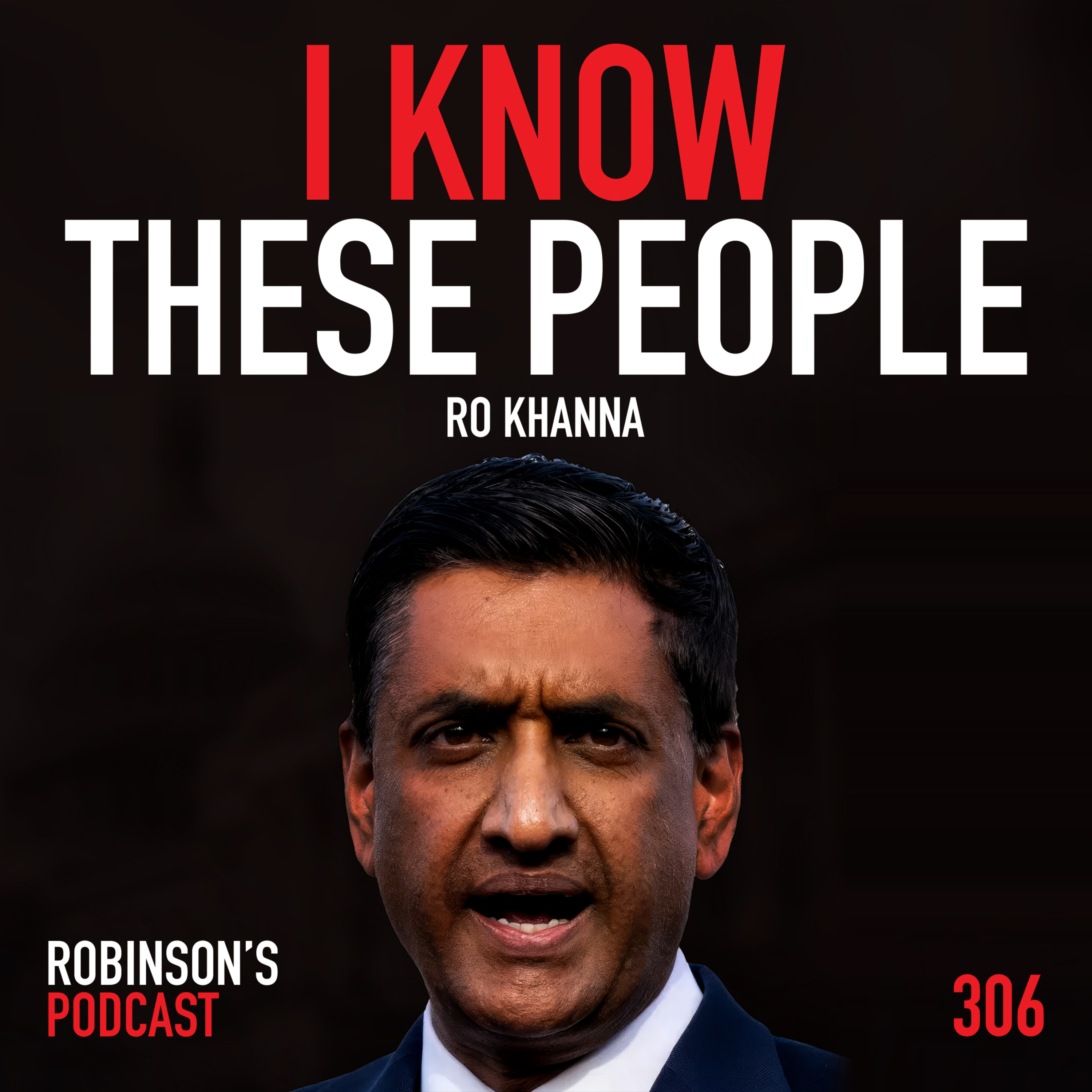
Robert Pape argues the US-Iran war is hard to end because it shattered the prewar regional balance of power. He claims US bombing/regime-change efforts failed and instead enabled Iran to gain leverage over the Strait of Hormuz, weakening US Gulf basing and shifting Iran toward regional hegemony. He also says “cheap mass precision” drones (a “second precision revolution”) let second-tier states like Iran, Ukraine, and the Houthis defeat stronger powers, and that escalation is driven by shifting time horizons (especially US midterms), creating an “escalation trap” that favors Iran.
Robert Pape is a University of Chicago professor and a scholar of political violence and airpower limits. He has written Bombing to Win, Dying to Win (8,000 suicide attacks), and Our Own Worst Enemies (American political violence). The host is an interviewer/podcaster (no further background given in transcript).
Bombing never toppled regimes in ~100 years; Iran gained selective control of Hormuz for political leverage; US power was physically reduced by smashing 13 frontline bases; drone diffusion (cellphone-like GPS tech, knockoff parts) undermines US “1991 Gulf War” precision assumptions; Ukraine pioneered mass-produced precision drone innovation via donor-funded factories.
Hormuz control and regional “David vs Goliath”; Franco-Prussian War as a geography/technology illustration; Ukraine drone production; Houthis as an adopter; Iran as the “third adopter”; Pape’s prediction that invading Iraq would trigger the largest suicide-terror campaign (which he says occurred).
0:00A second-tier country could essentially defeat the strongest country on the planet. Bombing had never toppled a regime in 100 years since World War I. It just has never worked. It did more than fail. It set the stage for Iran to lash back and gain control of the Strait of Hormuz. This scenario is not science fiction. It is real. This is going to lead to a strengthening of the Davids against the Goliath. We're nowhere near the endgame.
0:38I just wanted to start out with, I think, a very simple question that will probably not have necessarily a simple answer. But do you think that, I mean, we're many months into this war now with Iran. Is the United States closer to ending it or to finding itself embroiled in a much bigger one? Finding itself embroiled in a much bigger one than we are to ending it. So at a minimum, we're in the middle. We're nowhere near the endgame. And the core issue is that this war has upended the balance of power that existed before the war in the region. So before the war, this would be February 27. Of course, we have all the issues, Iran's enrichment.
1:25We can talk about all that, but I just want to focus on why the war just resists ending. And it has to do with the upending of a balance of power. So when the war began, the United States was the preeminent power in the region. Israel was a rising power in the region and Iran was a declining power in the region. And I would have said that as well. That was not just, these would have been, I think, a very consensus view. What's happened since pretty much the opening days of the war is that war has first started and now, I would say, shattered the balance of power that existed before the war began.
2:09And that happened because the opening strikes launched into a regime change operation, which had never worked. Bombing had never toppled a regime in a hundred years since World War I. It just has never worked. But it did more than fail. It set the stage for Iran to lash back and gain control of the Strait of Hormuz. And it gained selective control of the Strait of Hormuz. So it didn't just mine it and shut it down. It gained control in a way that it could politically leverage its control of Hormuz. And when that happened, the balance of power immediately began to shift. Now, it didn't shift literally in a day, but it began to shift over time.
2:58And what you have now is America has been knocked down several pegs in terms of its power in the region. And that's literally physically so because the 13 bases that America had right on the front in the frontline Gulf states have been all smashed. Now, some have been smashed more than others. But notice that these are this is a dramatic weakening of American power. And there's more elements of it than that. And Israel, which had been the rising power now, since with America diminished, is much more contained. although not fully contained, still doing operations. But Iran is now the rising power.
3:43And that fluidity in the balance of power is what is making it so difficult to end the war. When wars start, they start from a position of a balance of power. If there's a quick and decisive victory, usually that's just solidifying the original balance of power. But when wars start and they keep going on, it is common for them to upend the balances of power. And it's costly. So this is why as the wars become costly on all the sides, you have lots of people saying, my goodness gracious, can't we just end this war? This is too expensive. Well, in domestic conflicts, you can sometimes get a government to come in and often get the government in to suppress things.
4:35International, no, you can't. There's no government. There's no 9-1-1. There's no government to call. So what happens when the balance of power gets upended in international politics is these wars can go on and they become very difficult to settle. And it doesn't mean they'll never settle, but usually what settles, say, World War I is that the parties come to agree on a new balance of power. Now, those agreements are often what is reflected in a peace agreement, but they don't always have to be written down. But there is essentially a consensus usually will then form at some point on the new balance of power.
5:20And until that happens, it's extremely difficult to end the war. So right now, Iran is on the road to becoming the hegemon, the dominant state in the Persian Gulf. And hegemons in regions often want a sphere of influence. So you see this with Iran's relationship with Hezbollah and especially the Houthis now. And that sphere of influence isn't just an ideological sphere. It's not just having meetings. They're usually these spheres of influences tied to some power issues. In the case of the Houthis, it has to do with control of other oil bypasses or exits out of the Middle East. This is an ongoing conflict, an ongoing escalation about control of that oil or more broadly, the balance of power.
6:19So that's why we are in the middle. We may be actually just the beginning of the middle. We are not anywhere near an endgame. And it's because the United States will not accept Iran as the new regional hegemon. Israel isn't going to accept Iran as the new regional hegemon. Saudi Arabia is not going to accept Iran as the new regional hegemon. And yet Iran and now the Houthis are clearly not going to accept going back to the pre-war status quo ante. They're just not going to do it. And so that's how you get a war. And the war continues. I think this is going to be my 299th episode of the show. Oh my goodness gracious.
7:09Yeah. And something I have found is that sometimes the most naive questions are the best ones to ask. Oh, without a doubt. Because I always encourage in my classes, just ask it because you're what you call the naive question is the working thought. And I say about a third of those who won't raise their hand. Yeah, no, I think that that's absolutely the case. And fortunately, I'm quite content to be seen as naive. So you said that the beginning of the war shattered the balance of power where the U.S. was dominant. And a lot of this is connected to the U.S. giving Iran the opportunity to control the Strait of Hormuz.
7:50And this has led to them becoming really the hegemon in the Persian Gulf. Well, emerging. I want to underscore the word emerging, please. Because people will then come in. Oh, no, they're not. Well, I'm saying they're on the road. Okay, fair. Totally reasonable. My question, though, is it is difficult for me to understand just coming in naively, thinking about how much bigger the United States is in terms of military power, economic power, how it is that this significantly smaller country can retain dominance in this area nonetheless. us? Yeah. So, um, when we look at balances of power in the world, we often will start with aggregate, uh, balances that are very high level at a crude level.
8:47So if you were to look at say raw GDP or GDP as a share of world GDP, so that's a very common metric. I use it all the time in my classes, you would have seen that the United States was 26 % of the world's GDP before, say, January 2026. Iran would be about 1.1 % of the world's GDP, just to kind of give you some numbers here. But what that does, and that crude metric is true. That's an accurate set of numbers from the World Bank. But what it misses are the next level dynamics that we all know who study world history matters for power, such as what is the geography of the situation? So if you're a weaker state and you have the Himalaya mountains, and even though you're weak, you have the Himalaya mountains for somebody, another state to conquer you to go over the Himalayan mountains.
9:50You, that other state could be 50 times stronger than you, a hundred times stronger than you. They're not getting over the Himalayan mountains anytime soon. And so that's why in my classes, to make this point, I sometimes jokingly say, so that's why for China to conquer India, they're about 100 million years too late. Because you know that the mountains grow over time, or they can shrink. But my point is that it really does matter. It really, other factors like geography will certainly matter. And the other factor that will certainly matter will be the exact level or era of military technology.
10:40So if you're in an era where there's been no industrial revolution, for example, and we have had wars, of course, in those eras, then it really is the case that something like the gross product matters much less than the general size of your population, things like that. And then it's not just the size, but in those periods, it was also how much gold did governments have to pay for mercenaries because a lot of the wars were mercenary wars. Today, we don't have anything like that level of technology and how the wars are organized. And I don't just mean guerrilla versus, I'm talking about just in the general era.
11:32So we know that this crude measure of 26 % of the world's GDP versus 1 % right away, geography, that has not been taken into account. The second thing is technology hasn't been taken into account. So once you include, now we have three variables, all right? So it's still pretty basic. And this is, again, you're kind of seeing what class might be like with Professor Pape. Um, what you're seeing is now once we have those three variables, oh my goodness gracious, we can do a little bit more than we could with just the one crude variable. You see, just because you have three and let me give you an example.
12:10So with just that one crude variable, if you go back to 1870 and you're looking at France versus Prussia, you would come to a conclusion that France, because it's economic wealth and its population size, just much, much, much bigger than Prussia. And so you might think, oh, my goodness, there's no way that Prussia could stand up to this behemoth all called France, the regional big power. It's the dominant power of Europe at the time. And you'd be wrong. You'd be right on that metric. But you miss geography and you also miss technology. And you miss some other factors, too. I don't want to literally only make it that.
12:59But what happened in the Franco-Prussian War is France attacked Prussia, and Prussia didn't get defeated in the Franco-Prussian War. In fact, what happened is France got into an escalation trap in the Franco-Prussian War, and Prussia didn't just not be defeated. It gained power. It gained power, and the coming of the Industrial Revolution helped with that. The geography helped because it wasn't just Prussia. There were other German principalities there that came to its aid a bit, not just a bit. And so you ended up with a much more powerful entity that was attacked. It transformed into Germany.
13:48And it did so because of geography, technology, and some other factors. I'm trying to not give you the full lecture. But the bottom line is, notice that if we had only used the one metric, we shouldn't have had half of world history. So it isn't that that metric is not the place to start. It's a good starting place. It's an extremely good starting place. But if you limit yourself to that soundbite metric, so in the media age, you could even call this the soundbite metric of world power. you just don't end up with um very good uh um a fit with world history because world history does not play out that way because there are some other factors now there's not infinite i mean you can go take this too far and have a whole laundry list of you know a hundred factors in which case you have so much complexity you're not explaining anything so i'm not trying to say just throw variable after variable at this.
14:52But I am trying to say that what happened with Iran, again, this is all back in the explanation. You asked me a very great question. And I'm trying to give you the deeper understanding, which is, well, okay, the United States is 26%, Iran's one. How is this working out? It's because Iran has an amazing geographic advantage. Now, they don't have mountains, but they've got Hormuz. So that's a pretty, and it's just right there. You see what I mean, they're not traveling for this. And then secondarily, the technology issue is something I've been writing about and quite a bit. What you're seeing emerge is what I call the second precision revolution.
15:34So we had the first precision revolution in the 1990s, late 80s, 1990s. And that was a revolution in military technology that was really, uh, the province of the United States and maybe a couple of other big powers, but this was so expensive, stealth satellites, the integration of that, this was so expensive that really it was the United States. And that's why in the 1990s, we fought this war, very similar type of war against Iran, and we clean Iran's clock. Almost exactly the dynamics, by the way, with Iran, who is now cleaning our clock. But what happened is that technology, that set of shock and awe, stealth, precision weapons, sensors, satellites, that was so expensive that other states, and certainly not a weak state that only had 1 % of the world's GDP, could ever have matched that.
16:41In fact, a state like China invested 20 years to start to catch up with that. So this is, Russia still isn't in the game, not very much. And so you end up with a situation where we were dominant as the world's sole superpower. That was the unipolar moment. And that is also the moment when everybody started to fear American power. We had an image that we weren't necessarily completely invincible, but we were very likely to be able to end conflicts with states anyway, maybe not every terrorist group, but states relatively quickly. And that is the world of the nineties, the world of NATO expansion.
17:26That's the world of globalization spreading around the world. Well, this war, you see a different technological era. It's the era of cheap mass drones. And what accounts for the cheap mass drones? And if I could, let me just use a prop that I'd like to use here on these things so just one second we love props what accounts for it is the prop we all have in our hands the cell phone those drones are not even as sophisticated as your cell phone your gps here more sophisticated than the shaheed 136 drone gps so what you are seeing in the cheap mass drones is literally the diffusion of all the parts in this file.
18:21And they're also not even the best parts in the world. So a lot of the drone parts that Iran has been using have been coming in as knockoffs from India. So they're really cheap. And this is why those drones that depend on this diffusion of this technology, and this is the second precision revolution. It's not unique to Iran. Ukraine has benefited from this. The Houthis have benefited from this. And so what you end up seeing is the combination of some economic power. where they were 1 % of the world's GDP, a lot due to geography and a lot due to the new cutting-edge technology, meaning cheap mass precision, that explains how a second-tier country could essentially defeat the strongest country on the planet and maintain that for eight months and in fact going forward this shows no signs yet of reversing i wish i were in class with professor cape but i think this is like office hours with bob so it's it's that's what this is you're literally in my office it's it's just as good maybe it's even better but i i really appreciate the example of the himalayas in china because as you as you were talking about the geographical advantage i was thinking yeah but we might be a hundred million or china might be a hundred million years too late for a land invasion but now we have technology like airplanes that might obviate the advantage of the geography.
20:17And I find the explanation of how geography and technology are functioning in this current war to be very, very fascinating, very compelling, but I nonetheless have more questions about it. Maybe we can just start with technology. So I understand the immense benefit of the quote-unquote cheap mass precision that the drones give to Iran. But nonetheless, I think, and it could just be propaganda, I would assume that the United States' expensive mass precision, technologically advanced mass precision, would be able to outmaneuver the Iranian military. And you would be part of the 99, well, not 99, 90 % of elites around the world who would agree with that until today.
21:14Those elites, and I deal with them all the time, and that's in business, that's in government, not just on podcasts like we're doing. They are updating fast. They are updating fast because they, too, would make those assumptions. uh the uh i just came back from not just about a month ago i spent uh two hours at the european parliament with the members of the european parliament and they are updating their assumptions as well see 10 years ago or even a couple years ago under the older assumptions there would all be this question well gee why does a european country have to pay more than two percent of its GDP on defense since America can just finish off any conflict relatively quickly.
22:03And it's got this, as you just said, it's always on the cutting edge of technology. It's now got an F-35 and it'll have whatever coming down the road and so forth. That's not the conversation today. That conversation, that changed. It's so fast how this has changed. And the reason is because we in the United States have been investing in a model of war that is literally modeled after the 1991 Gulf War victory over Iraq, which is the first precision revolution model. And we've been investing in that for 35 years. And that is a model that is now about to lead to in the next two years, another new aircraft carrier coming out.
22:58And as soon as pictures of that start to become public, everybody is going to say, isn't that just a giant hunk of metal waiting to be sunk? And the answer is yes. Now, you might have, folks like me, might have been arguing about that before the Iran war and saying, hey, we should understand we need to think a little differently about our, uh, uh, the next purchase and in, uh, early as 2004 in foreign affairs, I was explaining that instead of going for, uh, the F 35s, um, we should be investing in what I called, uh, better bomb trucks. Uh, these were sort of a cheaper, they would be more, you would get more actual bang for the buck and so forth.
23:48And I got into a giant fight with the chief of staff of the air force publicly. Um, and, uh, it got, so it was in foreign affairs, went back and forth and actually brought him to the university of Chicago. Because if you disagree with me, I I'm actually often want, let's do this in public and right in my backyard, just go for it. Okay. And we ended up coming to a much better meeting of the minds, by the way, because usually we have an actual conversation with somebody. You see, you get a little bit. Anyway, and bottom line is, what we have been doing is we've been going for this leading edge where we have been competing against ourselves to produce the next level outer edge of technology, but not really monitoring very closely.
24:39the emerging diffusion of cheap precision technology coming just right out of the diffusion of, you know, so this GPS, this has been diffusing for over a decade. This is not brand new. And so what's happening is that other countries under the pressure of war, in particular Ukraine, Ukraine, war is the great mother of all necessity. It produces innovations. And it's Ukraine who really melded together for the first time real, I don't just mean a handful of drones, I mean mass-produced precision drones. And they did that without the Pentagon. They did that without the Biden administration. This was not the plan of somebody on the NSC in the Biden administration.
25:33Um, the Biden administration did support the Ukraine war, but I live in Chicago in 2023. I have, I have donors to my center. I was having dinners with certain donors and one of them was telling me, uh, and this is one of the billionaires in Chicago that they were directly investing in new factories for drones in Western Ukraine. And this was as a donor. And so these new factories were not the product of government plans and Pentagon plans. Literally, what was happening is the Ukrainians were making pitches. uh similar you're if you're going to start up a new um podcast or a new youtube channel you might make a pitch to a donor well they're doing the same thing except their pitch was give us a hundred million dollars or be part of a consortium so that we can produce these mass precision drones which by the way nobody had ever done on the planet and that is what started for real the turning point of the second precision revolution.
26:43It's what the economists will call going from invention to innovation, where you actually start to institutionalize the invention and you mass produce it into an innovation. And that happened in, uh, with, um, Ukraine. Then it quickly happened with the Houthis at a much smaller scale. And then, and that was in 2024 and 25. and then Iran just was the third adopter. So you're literally watching that and who's not paying any attention. And it's stunning to me. I would love to see the plans or the, the, uh, the, uh, the worst case that general, um, Kane, that's our chairman of our joint chiefs told to Trump put in front of Trump.
27:32There are surely documents here. And at some point those will be declassified. and I think they should be declassified now. Who are we exactly holding them back from? Because I think we're going to then discover just how far we were not paying attention to the second precision revolution. I want to know, were you really not understanding that Iran would not just use mines to take Hormuz, but drones and mines? and how could that be given the war in Ukraine and the war in the Houthis? Now, maybe I'm wrong. Maybe we fully anticipated the drones, but talking to lots of folks in the military, I'm not getting that image.
28:18So I'm just telling you, this is the big issue with the technology. Let me just say before I go on, I have had 299 episodes of this show and the clarity with which you speak puts you in the top few percent of the people I've spoken with on the show and I've had some really that's a huge compliment amazing so it's really a pleasure to to listen to you talk before we turn to something you brought up at the beginning of this conversation the fact that we're nowhere near an end game I wanted to ask just a little bit about your position as a professor at the University of Chicago. So you're first and foremost a scholar.
29:03You're not a strategist at the Department of War. And what this leads me to wonder is to what extent is your analysis focused on really just producing an objective analysis of the situation? Or are you really interested in trying to figure out the best strategy for the United States to win this war? So if you look at my books, so I have written Bombing to Win, which is an analysis of the limits of air power since World War I. If you look at Dying to Win, where I look at every suicide terrorist attack over decades. I've now studied 8 ,000 suicide terrorist attacks. If you look at my new book, Our Own Worst Enemies, which is focusing on American political violence, you will find some common approaches.
30:06You will find that what I'm doing is, as a scholar, is I am trying to rigorously diagnose and understand the patterns of conflict. So I see myself as a scholar of political violence. I see myself as a scholar that is studying a wide variety of dimensions of political violence. And I see myself trying to understand in a rigorous way patterns that have emerged or changed over time. And now, in course of doing those diagnoses, much as if you were a scholar of medicine and you were going to conduct analysis of patterns of successful and failed approaches to medicine over a period of time in public health, you were going to notice that there may be certain findings, certain patterns that jump right out at you as counterproductive.
31:17And they jump out at you as counterproductive, even if there are huge vested interests on the other side. Now, in the 50s and 60s, that would have been the scholars studying smoking and cancer. So they now today we take all that for granted. But in the 50s and 60s, That was a very, very hot issue. And it was hot because we have all these tobacco companies that are pushing back actively against any of that knowledge. Now, if we look at another domain, let's say economics, you mentioned economics, Milton Friedman. So Milton Friedman is another example of what I'm describing. So he wrote a book called The Great Contraction.
32:02And that book, even though he's written other things, I don't mean to say he only wrote that book, but that book was a very scholarly analysis of what went wrong in the Great Depression. It's a very scholarly tome. It's very analytic. He's diagnosing this. And he then, though, is uncovering some very important findings that matter directly to central banks to this day. And so now I do the same thing. I am looking at these diagnoses. I am discovering patterns. They apply directly. And then just with, say, you can pick Milton Friedman or others, similar patterns here. They also then start to look more carefully at real-time contemporary cases.
32:56And some people say, well, wait a minute. Now you're not doing scholarship. Now you're doing your public intellectual or your this or that. They, I would beg to differ. You see what happens when you take your findings to real world cases is you make them more falsifiable than ever before. And that is something many scholars will resist doing because it's extremely comfortable to be a scholar, have only six people, eight people writing letters for you, getting you promoted through all the fancy, uh, you know, I'm at a fancy place, so I'm very, I've benefited from this system as well. Um, but you, you don't have to worry about influencing or persuading more than say a dozen people because it's the same dozen or 15 people who are going to write letters on you for 30 years.
33:47You see what I mean? And so you, you, and, and, and what, if you put your findings in the real world say, how does my finding apply to this current case? Well, what that does is it's all downside risk. You see, what exactly are you getting out of that in terms of building up your vita and building up your moving up the totem pole of the academic world? The answer is zilch. In fact, you are actually penalized because there's a risk that now you've actually made your work falsifiable. And, um, and so you have a prediction and so forth. And, but what I would say is I tell my students and cause students ask me this question, people ask me this question all the time is I believe in intellectual Darwinism.
34:30I believe in intellectual Darwinism. And I believe that when you put your arguments into the real world, um, that you are forced to then make them falsifiable and false and they could be falsified. And therefore you have to, um, uh, you are under more pressure to have better arguments and you also, you may be wrong in which case you have to update your arguments. And I just right now, um, am teaching a class. So one of my four classes at the University of Chicago is in the Common Core. And it's a class on Hobbes, Locke, Rousseau, political liberalism. Now, Hobbes, for those who don't know Thomas Hobbes, he lived about 450 years ago.
35:20Locke, one of the key intellectual founders of our Declaration of Independence, and Rousseau, one of the key people who essentially is underneath a lot of constitutions that are written around the world today. Now, one of the points I make in the class, I don't overdo it because we focus mostly on their competing logic and they don't all agree by the way, is how much they put themselves in the real world. So for example, Hobbes published his famous book, The Leviathan, and it was so controversial. He had to run away to France because he was going to be killed. And then when it got so hot in France, he had to cut a deal with Charles II so he could come back to England.
36:06And the deal was Charles II wouldn't kill him, but he couldn't ever publish another word. So he only came back very late in life. And then he published, he didn't publish, but he wrote all this stuff that got published after his death. That was hot. And I think these engagements with the real world make you a better scholar because you really are forced to be clear about your, call it your variables. What exactly are your independent variables? What exactly are your dependent variables? What are your scope conditions? I'm using the language of, you know, methodology here, but you are forced to do it with the real world.
36:50And all of a sudden you have all that complexity, you see. So now you're in a position where it really does matter. And it, um, uh, it's one thing to say your arguments that history up until the moment you published your article or your book. It's another thing to say, what does it, what does it explain afterwards? And just to give you an example or a couple of examples, my work on suicide terrorism. So after 9-11, I compiled the first complete database of all suicide attacks around the world, and it led to a unique prediction. It wasn't just data. And that unique prediction was if we invaded Iraq, which we ultimately did in 2003, but if we invaded Iraq, we would touch off the largest suicide terrorist campaign in modern times.
37:42Well, I published that prediction as part of my American Political Science Review article. That's the flagship journal in political science. And it was submitted and it was approved. It was accepted before we actually invaded Iraq. And that prediction came true. Now, that prediction could not have been made on the history of the Iraq war. It hadn't happened yet. And it was also a unique prediction. Other terrorism experts were saying the opposite of what I was saying. They were not, this wasn't just a one of a hundred people all said the same thing. Now, 10 years later, you have a lot of people saying, oh, of course it did this.
38:27Well, again, it's one thing to have the scholarship fit the record up until the moment the piece is published. It's another thing to fit the records afterwards. That's Milton Friedman. That is Keynes. that just using examples from economics that your folks will be familiar with. Um, and that's important and it doesn't mean things don't change. So, um, uh, I just told you, um, the, my first book on air power was assuming this first precision revolution. And, um, and now I'm working on an, uh, an afterward for bombing to win to explain that in 35 years, something happened, which is the second precision revolution camp.
39:12And it's not changing all the arguments in bombing to win at all. In fact, not changing any of the core arguments. It is, however, leading to some different empirical predictions for the world. Well, you're really speaking to the philosopher in me by bringing up falsifiability because of Karl Popper famously. I love Popper's analysis of this. I mean, this is, I still have in my basement. And by the way, Popper, very similar. He has the deep philosophy and then he has the four volume set, Open Society and Its Enemies. And so he's doing exactly the same thing at, I think it was LSC. I'm pretty sure he was at LSC.
39:55He's doing exactly the same thing. So is Isaiah Berlin. What I just want to say is that I really appreciate how, especially as an historian, a political theorist, I mean, the ease with which you can write a tidy narrative to explain the past, applying your patterns, your theories that you've identified to current events makes the theories so much stronger. I also appreciate your commitment to intellectual Darwinism. And I want to ask, I hope this isn't a difficult question, but have you made any predictions about the Iran war since it began that you have found to be just totally wrong and made you revise?
40:38Well, I wouldn't say totally wrong, but there's a similar thing that happened in my predictions about the suicide terrorist campaign and some of the actions in the Iran war, which is they tend to come a little later than their pure rational logic would suggest. So when we do the modeling and so forth, we're often using, even when we include politics as a factor, we're often using some incentive structures. We're often using some game theoretic interactions. And so sometimes they're more formalized and they're literally formal models, sometimes not. But what I have found in my work, and this is going all the way back to bombing to win, is that the predictions of the theory tend to come a little later than the theory itself says they should.
41:37And in fact, when I was working on bombing to win, I noticed that in my historical case, it wasn't just looking, applying to future cases. And so I have a section in my chapter two theory chapter of bombing to win, which is why it comes late. It's literally in italics. And that was suggested to me by a great friend of mine. His name is Haim Kaufman, who was a, he and I were postdocs together. and when you're a postdoc you often find somebody an interlocutor who you will deeply get enmeshed in their work and you're not doing it because you're you're doing it for the love of the work and you're doing it on each other's work and you're just deeply into it and so they can see things and so he he is the one who said Bob you know this is true you should write about it so you see what i mean rather than kind of hide it or whatever and so with suicide terrorism that suicide terrorist campaign did not kick off on day one of us invading iraq it kicked off on month six you see so a little bit later and there's it's interesting to understand why and the big uh prediction here with um the escalation trap is that um we will be very likely that is America to find ourselves in limited ground options, which we have not done yet.
43:09So that's in my mind, very similar to the others. It hasn't happened yet. Uh, I still, I mean, we're just now moving another tranche of 2000 Marines. Um, I I'm not, um, that does not bother me because I'm not poly marketing. Uh, this is not about making money on poly. Now the truth is many people on my sub stack want to poly market everything. So, um, they, they really want a date in an hour so they can make money on it. I just don't do that. And I tell them directly, I just don't do that. This is stages. Um, I am willing to discuss, let's call it these gaps, because I think once you hear the gaps, you can start to understand that it's, it's, um, there's certain reasons why, and this is what I'm intellectually interested in, which is why are the, let's call it the rationalistic expectations that I lay out, uh, tend to come, uh, six months or a year later.
44:12Why does it take some time? I think, and now that I engage with, um, business leaders, political leaders, community leaders. I think the reason is because back to politics. Politics is a lot of friction. It's a lot of friction. Pick another scholar, another famous book, Klaasowicz. Klaasowicz writes in his book, which he wrote, this is in 1800s, about war is politics, but about the friction in politics. While most scholars don't get a chance to see the friction up close and personal across the desk. And just literally this morning, I won't say who, I was meeting with a political leader in the world and we are talking about what might be a way to sort of build some guardrails right now in the escalation trap that's unfolding here between Saudi Arabia and Yemen and the Houthis.
45:12And I'm just telling you, there is friction. it. I'm really glad we've had this more theoretical discussion about prediction and empirical success because it connects directly to your prediction or your analysis again at the beginning of the conversation that we are to quote you we're nowhere near an end game but I wanted to ask you about what your predictions are for the directions in which this conflict could go And you've written a lot about or you've written about a concept called escalation dominance. And I think this favors Iran. So first, maybe we could talk about the situations that favor Iran and then the situations and directions in which the United States could go to maybe counter that.
46:00So just so the people listening know, if they were to go, I now have two subsects because there's so much to talk about in the world. It's not just about Iran. It's about Russia, Ukraine, other areas of the world. So there's, and also a YouTube channel, just so people know, there's more here. So if you're going just the one, you're going to miss a lot of stuff that's happening somewhere else now. And so I am laying out what I would call expectations. Now people want to call them predictions, but this is the empirical expectations that come out of analysis. And I'm laying those out over a period of months.
46:39I'm telling you though more than that, um, which, and I'm glad to go into the details. So if you want to know very specific ones, I'm glad to tell you that such as what Iran might do and how the spiral phase of the escalation trap might play out between, uh, Saudi Arabia and the Houthis, et cetera. But the big thing, since we're having a more theoretical discussion is time horizons, time horizons. So time horizons tend to not be factored into most people's models of IR. I have been taking seriously time horizons for quite some time. And the fact is time horizons change in conflict. They're not a constant.
47:26And this is not captured in our formal models. So formal models, you could say, well, I can include time horizons in formal models and you can technically so. However, they change. And let me explain what I mean. So I explained, um, in the early stages of when, after the United States attacked Iran, um, that there would be a shift in a time horizon that would come in June. And that was because there was going to be a feature of the world that was going to shift, and that would shift the time horizon. And that would be why the memorandum of understanding would never come together. It would collapse right away, break.
48:06It would be the misunderstanding of how the Trump administration went into this. It was the misunderstanding by Qatar and Pakistan as to what this was about. And the issue was this. The issue was that when we started the war, we had a backup cushion to the Strait of Hormuz being shut down, which were the buffers of the Strategic Petroleum Reserve. And so that's why the world's economy did not go off a cliff immediately. And that also gave us an opportunity to open up some, uh, the, the pipeline that already existed, the bypass for Saudi Arabia to get a 5 million barrels of oil out of, um, the other side into the red seat.
48:50But the bottom line is that was going to change. That was not permanent. You run that down, you're out. So you're running out. You're not just using, you see. And so what I explained in June, and this is in a big post and again, forward looking, laying all this out, is that this is going to shift Iran to go on the aggression, on the initiative. They would become much more aggressive than they had been. Nobody else was predicting that. And I know, cause I was on every, I was on all these podcasts. Some of the hosts were very upset with me because they wanted me to say the war was going to end the MOU trumpet signed the MOU professor, babe, don't you understand a president signed that MOU?
49:40And I was just explaining to them. That's just not okay. It's a, and so I, I stuck to my guns and I had made this prediction and I explained why the MOU would just fall apart in the next few days. And sure enough, it did. And then what happened starting on July 7th, Iran went on the offensive. Iran started to initiate. It wasn't playing tit for tat, responding to retaliation. And I, and the reason was because as Iran, as the SPRs were running down, this would create a period of maximum leverage for Iran that it would exploit because it couldn't resist. It just couldn't resist because it's a period of gaining power.
50:24You see what I mean? Back to our power discussion. So that then allowed me to expect the opening of the second front with the Houthis, because you could say it would likely happen in August, late July, August. So if you follow my posts, it might be a week or two delayed. Again, delay is, but it's almost following exactly the trajectory of what I'm saying because of time horizon. So I'm explaining to you more theoretically. The issue is what's the time horizon of the combatants? How were they thinking about time? And it's shifting. It's not just does time favor a permanently. That's like Greenbelt understanding.
51:09I'm going for Brown or Blackbelt. You see what I mean? Yeah. So a little more, not infinitely more sophisticated, but much cleaner hits. So the idea is that time matters. Well, that then allowed me to explain starting in July that the time horizon that was going to dominate is the midterms. So it wasn't just the SPR. That what would quickly happen is the midterms would become the dominant time horizon for everybody. for the Trump administration, whether they said so or not, for Iran, whether it said so or not. And now I believe for Saudi Arabia, the Houthis, whether they said so or not. And what that meant is that between then and still now and the midterms, and by the midterms, I clarified, I don't just mean November 3rd when the voting stops.
52:09I mean, when the count through the counting certification and seeding of the new Congress. So I was, I've been super specific in many live briefings on, you know, I don't know, at least a hundred times on all my different venues that we are in for this escalation all the way through January, not all the way through April, not all the way through November 3rd. And I've been very specific about the time horizon. Now, I hope I'm wrong, but so far it looks pretty much on the money. And it's for what the reason I'm saying, which is the midterms are a dominant factor for all the key actors, including Israel.
52:57It's a key factor. You could try to ignore it, but you just can't. It keeps sucking you back to it. And what the midterms are is about the balance of power in Washington, which is, again, balance of power. So for me, I'm studying in my book, Our Own Worst Enemies, I'm explaining that what's happening in the era of violent populism is this is domestic power politics. And I'm explaining it as power politics, the way you might explain international politics. And it's working very well. It's a different approach. Most people, I don't know anybody's ever done that before, but it is, it is leading to a good diagnosis, unique predictions.
53:41The predictions seem to be coming true. The same thing here. And so the time horizon is what's really, and now in January, I believe there will, we will have another shift of time horizon. I believe it's likely going to be over two years. Again, the cycle of the American, because America is still the preeminent power in the world, even if we've been knocked down a few pegs. And so I think that this will change the lock-in nature of the escalation trap. Right now, the escalation trap, we're kind of locked in it. We can't get out of it. I think the opportunities to get out will start to grow in January.
54:23Why? We'll have longer time horizons. We can do more with longer time horizons in bargaining than you can in short time horizons. Something that I really appreciate about the way you think, it reminds me of a conversation I had with Timothy Snyder a few months ago where he has lots of very powerful and memorable concepts and they're phrased in such a way that it's immediately obvious what they mean and they resonate with you. And the idea of escalation dominance or time horizons, I find that these concepts are really anchoring certain points of the conversation for me, which I find really useful.
55:10We have spent a lot of time talking about predictions. I'm curious, though, what is unpredictable in this conflict? That's a great question. So let's think about this because that's the first time anybody's asked me that question in this whole time. I want to give you some credit here just so everybody knows. Thank you. Because people all want the other side. But what is totally unpredictable? One of the big things that's unpredictable is health. Is health. So we take for granted that we are going to have the same set of leaders and their health is not going to become an issue. And just now the Pope has got a lung cancer.
56:07I just literally heard that on the way. And this could have dramatic effect here. Putin's 74. He's not 64. he's not 44 um donald trump is 80 and donald trump is he's uh working you know um uh a manic schedule um that may be helping um some that may actually be helping a bit by the way because when i teach long classes i notice i feel i get a little bit fitter just by literally having all that energy you have to expand but at the same time that's that's that's uh if he were to drop over tomorrow, nobody would be surprised. They would all, a lot of people would be sad. Sorry to say some might be happy, but, but health is a really a pretty big curve here.
56:55So when you say what is unpredictable, literally there are factors here that could dramatically change this conflict and health is one that comes immediately to, to mind. And you saw that with President Biden, And he, his health was a problem, even when the public didn't know it was a problem. And then suddenly it was his health on display at the debate that created this enormous, enormous problem for the Democratic Party. and to say it was impossible for the Democrats to win, I think is too much, but to say that it was virtually impossible to win after that moment is almost surely right. Democrats won't want to say that because they're going to want to believe their message, their platforms are just so enduring that it will elide the leader, him or herself.
58:06But the fact of the matter is we live in a real world of political friction. And if you, when you had that event with Biden occur, there was nothing he could do about it. He tried for weeks to say it was a one-off, got his wife, all of that stuff here. It wasn't going to matter. And it wasn't, there was, and it wouldn't have mattered if he had resigned the very next day or if he didn't step down and make Kamala Harris president. It was too big of a factor. It was too big of a wrench in the system. And it only worked in one direction. There wasn't some countervailing consequences here. So factor, the biggest thing that just immediately jumps to my mind after, and by the way, I have advised every White House since 9-11.
58:55So it's something where coming in contact with political leaders, and this is included senators and congressmen and other leaders, the Council of Germany, Jacinda Redurn, I mean, just many, many, many major leaders. I think that an issue like health would come to their minds too, because this is something that I don't think the public or political parties would necessarily want to engage with, and strategists never do. There's no book, an article, as far as I know, on the IR impact of health, a leader's health. There is on public health, but of a leader's health. Now, maybe there is, and somebody will email me the brilliant articles.
59:40But I do think that these are pretty big curveballs. When Woodrow Wilson in World War I had his stroke, it's true he was still president nominally. Colonel House then basically took over the presidency and so forth. But this is a pretty big deal. This is a pretty big deal for the entire last year of Woodrow Wilson's presidency to have him incapacitated to the point of not really being there. So these are issues that I think are important. There may be others, and I'm glad to hear your thoughts on this too, because nobody had ever asked me that question because most people want the prediction, you know, false, make this false, they go the other direction.
1:00:24But this is, I think, a very important factor. What are we weaving out all together here? And I hadn't been intending to ask that question. When I do these interviews, I basically know the first question that I'm going to ask. And then I just listen and think as I go. I think this is the best. I think this is the best. I have people on the stage. I host events and I will script out five or six questions here because you've kind of got to that's your, we're just sort of trained to do that. Um, but a lot of times the very best conversations are you have your first question and you just run with whatever they, whatever happened.
1:01:06When I first started, I would be overprepared and I, and I needed to be because I would be so anxious going into an interview with a really esteemed intellectual but i over 299 episodes i have the comfort to just sit and listen at this point but i think the question's important because black swans and that's another really powerful intellectual concept they derail predictions and we inherently we know they're going to come but we can't predict exactly what they're going to be. And it also. Well, so just to give you one black swan that people will more likely than health will come to people's minds, which is a political assassination.
1:01:49So we know Netanyahu is up for election, but obviously President Trump. President Trump is on the stump every day now. It looks like he will be doing at least one rally every single day. And he's had three assassination attempts against him so far. Uh, now I'm, I have every, uh, reason to believe the secret service is doing a, you know, a better job every time. I mean, but they had three, you know, so every single time they will tighten up, they will tighten up. But I just think that, um, that a, um, a political assassination of one of the Western, uh, and I don't mean in Iran. Uh, I mean, I don't mean the killing of the Okhuthi leader.
1:02:30I mean, on the Western side, I think would be pretty important. Also, similarly with Vladimir Putin. So you have a variety of actors here who you knock them out. And through an assassination, this would be a black swan that would be fairly consequential. Yeah, not just assassinations, but think about elections. Donald Trump being elected. It's not a black swan to the same extent that COVID or an assassination would be a black swan, but it was not expected. And it had just think of the ramifications, how different the world would be today if he hadn't been elected in 2016. But going back, you asked me my thoughts.
1:03:16I remember. So that day, there was a talking head show in Chicago called Chicago Tonight. And the Wednesday after when it was absolutely clear Trump was going to win. And I have all these connections of people in Washington in, this was then the Obama administration. So I was listening to what they were saying. And I came on the show and the moderator asked me, so what is this like? What are you hearing? What is the consequences in the world of, say, foreign policy. And I said, this is the equivalent of a domestic 9-11. They are, they are shattered. They had no idea that this was coming, completely blindsided.
1:04:03And the, and the journalist, the moderator just didn't know what to say because they're expecting like a more, oh, it's going to shift us to an isolationist foreign policy, something like that. When is the reality was the foreign policy elite in Washington was, was lit. And still, I think to this day feels shattered by that. Um, we just had the opening of the Obama library here and I never worked for Obama. So I never was in the Obama never paid position, but I just, just know people because they would come through. I know people from the Trump administration as well. And so they came through and there was a large number, a big set of events and they were, we had events at our Chicago Council on Global Affairs.
1:04:48They were supposed to be on other topics. All these people could do was talk about the shattering of their worldview when Trump was elected. Literally the shattering. That was almost a decade later. That's what black swans do is they shatter. But you asked me about, you said you would be curious to hear my thoughts on the black swans. And I certainly do not have sophisticated thoughts about them, but we spent a fair amount of time talking about the role of technology in the war. And you were just recently talking about time horizons and how important they are as they shift in conflicts. Another sort of black swan, but that's to be generous with the term, is GPT, like three years ago.
1:05:35Totally changed the world and is having huge ramifications everywhere. And it is developing. When I say GPT, I mean LLMs and AI. We're not on the ground there. We don't know what's going on in OpenAI headquarters. And to me, it's entirely conceivable, again, not coming from a particularly informed position, but it's entirely conceivable that within a year or two, AI could be leveraged in the war, either on Iran's side, on the United States side, or some third party, to such an extent that it will really shift the conflict in an unpredictable way. So just so your listeners know, and some may already know this, so Iran is already using AI.
1:06:20We, and you'll see in the newspapers, all kinds of reports and leaks out of the Pentagon. One of the things that's happening with Iran's use of drones and missiles is they're not just having a numerical effect now where they have try to have drone swarms that overwhelm with number. They're literally organizing the timing of the attacks in order to essentially make it the most deadly possible, the most destructive possible. And that's being done, the reports are through AI. So AI is helping to construct better intricate interactions with drones and missiles so that the overall package is far more destructive.
1:07:09And that's already happening. You might think so far that it would happen on the defense side. and I have people I know who are looking into that. So far, it's still the offense that's ahead. Now, maybe the defense will catch up at some point and maybe even overwhelm the offense. But so far, as is common in technology battles and war, offense is having it with technology an advantage. But where AI may come in, and this intersects with the other black swans we were talking about with, um, uh, assassination attempts is that I'm, I'm very concerned that what's going to happen as, cause we're having strings of assassination attempts in the United States is that we're not just going to have the use of drones because the first Trump would be assassin used a drone for reconnaissance.
1:08:03And once that happened with air power, it always starts as reconnaissance. Then you always marry something that explodes to whatever the recon platform was. But what I'm working, I'm, what I'm not, I mean, I'm concerned about that, but what I'm concerned, it might be the, the difficult thing to chat that is that, uh, chat GBT or Claude or whatever the, you know, uh, deep sea is going to design for just playing lone wolves, inspired attackers, extremely good tactical programs that they can execute. and they're going to work through the defenses. So that this is something that until it happens, it hasn't happened.
1:08:52And I think that this is, we're knocking on the door on this. I'd like to interject here and ask for an example, but maybe give one first. So I was reading the newspaper yesterday and there was an article about how Chinese cameras are being hacked all across the world for military purposes. What I'm wondering is, do you have in mind like a car that's now electric connected to the web being hacked by AI and just swerving off the road and killing a president or somebody else's car swerving into the president's car? Is that what you mean? Yeah, I mean, that's a great example of what I mean. So right now, just going back to my key prop, our cell phone, we already know that intelligence agencies for years have been able through their cyber attack.
1:09:57What does cyber attack mean? Cyber attack doesn't always mean disabling. Cyber attack can mean taking over the functions and using the functions of something else through cyber. And so what happens with cell phones is that they have microphones and they have screens and they also have cameras. Well, those tools can be hacked into and then through cyber controlled remotely. and this is true even when these are turned off, even when they're turned off. So you might think, well, okay, I'm just going to turn it off. And this is why when you go into, say, the West Wing of a White House, you have to give up your cell phone, and you have to put it someplace physically.
1:10:49This is true in the Pentagon as well. And it's because the devices here, it's not that you yourself will be a spy. It's that they are just that easy to hack into. Well, what I'm saying is this is what governments are doing right now. And they've been doing this for a long period of time. I don't know if it's 10 years, 12 years, but not one year. And it's getting better and better. And that's what you're describing about your, there's some phones and there, or some, some cameras and those cameras are now being used remotely to be able to see things, essentially reconnaissance. Um, and that's something that doesn't have to now be done only by a government.
1:11:35What I'm saying about AI is, um, that, um, the, these, uh, AI programs are enabling much more sophisticated use of ordinary tools. And there is so far no guardrails on that. And one of the places you would expect that it could be driverless cars being, um, you know, dangerously automated. I think we have movies that are showing that if I remember right, there was a movie just out in the last year that was showing how that could be, how that could be done. Um, but what I'm describing is what I'm describing is this becomes much, much more deadly and much, much more consequential. So with political violence of any kind, whether it's in war, the escalation trap or at home, it's not just whether a target is hit or hurt.
1:12:31It's how consequential is that? Because a lot of times the political part of the violence is to amplify whatever the violence is for political purposes. And that is what I'm concerned about. I'm concerned that you are going to get really quite excellent ideas about how to evade Secret Service protection. And they will go to great lengths to hide all the Secret Service protections that are happening. But the more we have more sophisticated chat GBTs, the more they are going to search and search and develop ideas. And these will be ideas that nobody else has really ever come up with before, but it's only made possible by interlinking all these data centers together.
1:13:20And when you do that, now you have the possibility for an invention of a technique. It gets back to cheap mass precision and the balance of power because these technological revolutions they i don't know if this is the right word for it they kind of democratize access to technology they give a much smaller and perhaps historically less powerful in various ways organization capacities to compete with the traditionally bigger powers and just as the drones democratize mass precision, AI democratizes intelligence. And so this leads me to wonder, I mean, do you think that we will continue to see smaller and smaller groups such as going from Iran to then the Houthis having much more power than one would expect because of this access to technology and thus give the United States more and more ever-powerful enemies than we had before?
1:14:38So the answer is yes. And a particular scenario that I developed, this was on my Professor Pape substack in June. And I really did it as a warning for the IDF. It's called a post I put on there called Closing Israel. So I see myself as basically wanting to create stability. And part of creating stability means heads up on what might be coming. So a lot of what has been driving Israel in the last three years, and everybody will understand why, is fear of another October 7. And so there's a lot underneath that. There's a lot, um, and I'm not trying to take a pro-Israel, anti-Israel position. However, based on what you're just said, in my understanding of what was coming is coming with the second precision revolution, I wanted to lay out how this is really going to affect, um, key areas of the world.
1:15:43And one of those areas was Hezbollah in Israel. So Hezbollah already has, um, drones, relatively small numbers, but they, they are using drones and Shahid-136 drones. These have several hundred mile range. And what I wanted to do is lay out what's really likely to happen over the next year or two. Maybe not two months, but not 10 years from now either. Which is that you could see an expansion of those drones being used against Israeli shipping going to Israel's seaports, Haifa, other ports. just as the Houthis are shutting down ships in the Red Sea. And just as you're seeing Iran shut down ships in Hormuz, you can literally see that what is in the very near offing, Hezbollah shutting down ships going into the ports in Israel.
1:16:42If you do that, you are going to disrupt something like 40 % of Israel's domestic product. And it's going to be extremely difficult to deal with because those ships, just like the tankers going through Hormuz, those captains and crews are doing it for a paycheck, not for a drone. They don't want to eat a drone. Well, once you start doing even a small number of these, you're going to dramatically drive up insurance rates. You're going to dramatically start to lower the willingness of shippers to ship. And this scenario is not science fiction. It is not long time away. It is real. And it will be made more likely, I believe, if Israel continues to be offensive in Lebanon, because I don't believe Israel can be offensive enough to conquer the entire Beka Valley, and this is for back to my study of war, and do it in a way you could really cleanse Lebanon as a drone platform.
1:17:54I don't believe it. I don't believe, certainly not for years. And so I think that what's coming here is a rise of the second precision revolution. We just talked about marrying it with AI or advanced intelligence. and this is going to, I think, lead to a strengthening of the Davids against the Goliaths. A big sub-theme or theme maybe of our conversation has been technology. And so I wanted to wrap up just by asking, do you see a third precision revolution coming? And if not, maybe this ties into it. Are there any aspects of technology in this war that we haven't discussed yet that have either played a major role or you foresee playing a major role?
1:18:44So I wouldn't describe it as a third precision revolution, but it might be an extension of the second precision revolution, which is more, which is fully automated attack systems. Um, and so you, um, uh, there are reports that we really didn't have a human in the loop when we used our tomahawks, the American tomahawks to attack the girls school, uh, in Iran, they, uh, burned to death, something like 165 girls. And they were hit multiple times. So this wasn't just a single, uh, errant missile got awry. Now we still don't have the declassified. We can't really look at this in a transparent way to study this.
1:19:32So we have to, we are held back in understanding this. However, the last time I knew that we let a system go on full automatic without a human in the loop was in 1987 in the Persian Gulf with an Aegis class cruiser. That's an American cruiser with missiles and radar. And we put it on full automatic. meaning it's see threat, shoot threat, no human monitoring the threat. Well, when we did that in 1987, we within seconds shot out of the sky, a civilian airliner weaving Iran, killing 200 civilians, many of them Iranian. And that was, as far as I knew, the last time we put that cruiser system in general on full automatic.
1:20:26So when we go to these precision revolutions, we are, we are already in a position where we can make them full automatic. Now, the reason you do that is because you worry that the humans are too slow. They're just not able to keep up with the processing and dot, dot, dot. The problem is this is just ripe for error, ripe for accident. And there's, um, uh, we don't have a large, uh, I don't, I don't have a large pool of, of cases to be able to analyze, but this is one of the things I'd like to know what coming out of this war is how much are we really allowing systems to be on effectively zero human in the loop.
1:21:12That's what I mean by full automatic. And, um, what are the track records of those cases? And I think that this is, I wouldn't call it a third precision revolution, but I would call it a very dangerous trend of where we're, where we're moving toward. Um, with, um, president Trump, he's talking about putting drones on his arch. He wants a big arch in Washington and he's talking about putting a drone platform on the top of those arch. Well, I'm just concerned that we're now talking about drones in a context of Americans. And now I would worry about non-Americans too, just so everybody knows. But I'm just concerned that we need to be even more discussing these next evolutions.
1:22:01And I don't think they're 30 years away. I think they're part and parcel of the second precision revolution, although maybe still an un, not, it's an extension of it. And it's an extension that hasn't quite been developed yet, but it wouldn't be 10 years away. I hope you'll give me a few minutes maybe to soliloquize before, before we wrap. Yeah, I'm curious. First, it's nothing to be curious about, but first, you just mentioned drones in the United States. Of course, I would have loved to spend another few hours talking about Our Own Worst Enemies, which is your recent book, but hopefully we will have time to have a conversation dedicated to that in the near future.
1:22:48I also hope that you notice that I have been reading your sub stacks in this conversation and I will certainly be hoping that our listeners check it out as well as your YouTube channel. I'm going to have links to all of that in the description and maybe even I don't know they have this collaboration feature on YouTube. On the eve of episode 300, I started this show three or four years ago, I think four years ago. I think the first episode was interviewing a mentor of mine at Columbia about the philosophy of math, but then it pretty quickly became interviews with my uncle about his favorite ice creams and all sorts of weird subjects.
1:23:30But then it quickly turned to academic philosophy, and then I decided I wanted to learn more about other subjects, So branched out into physics and art and other areas. And it was only after October 7th that I decided, you know, I'm woefully uninformed about history and politics and world events that I turned to do some interviews about Israel-Palestine for the first time. And I think this interview really exemplifies why that was such a good choice, because I have benefited so much from the last 90 minutes and learned a ton. You answered a lot of, I think, really simple questions coming from me, but in a very sophisticated but digestible way.
1:24:15So I just wanted to say thank you so much for your time. This has been a really great conversation. Well, and I really enjoy it. And I really, I think you can tell that, that I really, uh, I, I love engaging and I love the intellectual part. It's not just intellectual Darwinism, uh, where you try to, we try to say, uh, beat each other or so forth, but trying to understand more deeply. And that's what I really thought we did here. I thought it was just a very deep understanding. and I just so appreciate that because I think that's how we move the world positively. And that's what I think you're doing and I just so appreciate being part of that.
1:24:55And number 299, that's sort of like a badge of honor. Awesome. Well, that's a great note on which to end this. Thanks so much, Bob. Thank you.
1:25:14CEREM компании
Support the Show: https://www.youtube.com/channel/UCsxwneBx6apV1mQ7CbWKfXQ/join
Robert Pape is Professor of Political Science at the University of Chicago and director of the Chicago Project on Security and Threats. In this episode, Robert and Robinson discuss why the Iran war has become an escalation trap for Donald Trump, the United States, and Israel. More particularly, they talk about Pape’s argument that the war has strengthened Iran while weakening America’s regional position, Iran’s leverage over the Strait of Hormuz, and how cheap drones and precision weapons are changing the balance of military power. They also discuss how the 2026 midterms could prolong escalation, the limits of predicting war, how AI could make political assassinations easier, and the risks of weapons operating without human oversight. Robert’s latest book is Our Own Worst Enemies: America in the Age of Violent Populism (The New Press, 2026).
Robert’s Substack (Prof Robert Pape): https://professorrobertpape.substack.com/
Robert’s Substack (Escalation Trap): https://escalationtrap.substack.com/
Robert’s YouTube: https://www.youtube.com/@ProfRobertPape
Our Own Worst Enemies: https://thenewpress.org/books/our-own-worst-enemies/
OUTLINE
00:00 Introduction
00:45 Why the Iran War Is Nowhere Near Over
08:08 How Iran Can Defy a Superpower
15:22 How Cheap Drones Changed the Balance of Power
20:31 Is America Building Weapons for the Wrong War?
29:00 Why War Experts Must Risk Being Wrong
40:25 Has Pape Been Wrong About Iran?
45:33 How Time Shifts the Balance of Power
51:23 Why the 2026 Midterms May Prolong the Iran War
55:16 How a Leader’s Health Can Change a War
1:01:40 How Assassinations and Elections Can Upend the World
1:05:28 Is AI Making Iran’s Attacks More Deadly?
1:07:38 Could AI Make Assassinations Easier?
1:13:36 Could Hezbollah Shut Down Israel’s Ports?
1:18:25 When Weapons Act Without Human Control
Robinson Erhardt researches symbolic logic and the foundations of mathematics at Stanford University, where he is also a JD candidate in the Law School.

Scan the code with your iPhone camera
Listen in the app.