

 Robinson's Podcast
22 Oct 2026 · 1h 1m

 Add vo to ChatGPT or Claude to ask about everything you hear
vo listened to this episode to put together the overview and transcript, so there may be the odd mistake.
Jessica Tarlov explains what arguments resonate with Republicans and swing voters, focusing on how Trump’s economy, tariffs, and foreign-policy shocks (including the Iran war) are hurting GOP prospects, while immigration enforcement and crime/policing messaging still persuade some voters. She also argues Democrats are winning the healthcare debate because Republicans have “abdicated” it by repeatedly trying to repeal Obamacare without offering a replacement, and because Democrats emphasize costs, coverage, and drug pricing.
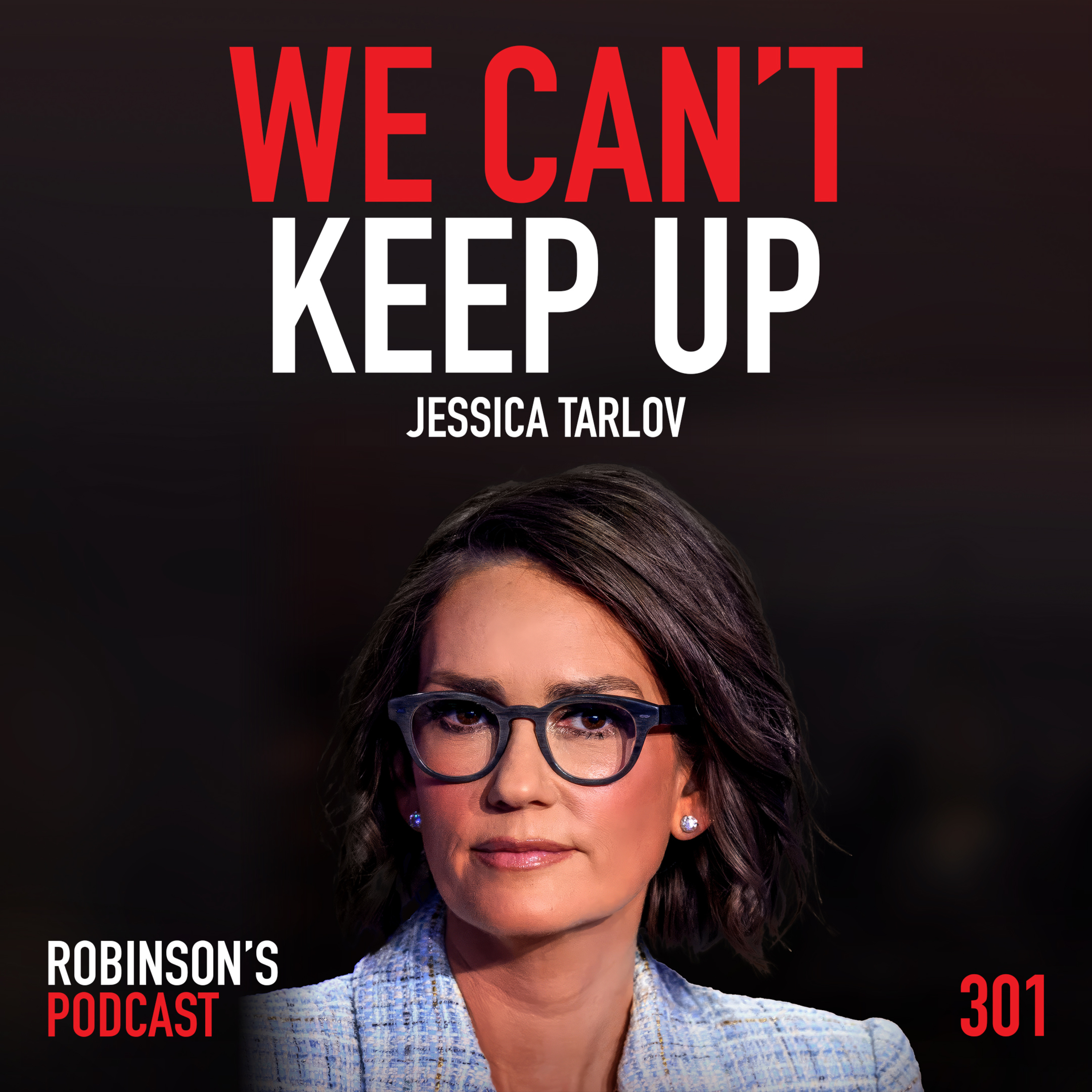
Jessica Tarlov is a Democratic pollster and consumer-researcher with a PhD in politics from the London School of Economics. She previously worked on polling for Mayor Bloomberg and in digital media focused on Gen Z/millennial trends, and she co-hosts The Five on Fox News. (The episode is an interview; no other guest is named.)
Voters trust data-driven advocates who concede when wrong; “against Trump” alone isn’t enough—candidates must fight corruption and offer concrete plans. Healthcare anxiety is a top shared issue. Billionaires sometimes back Democrats due to values and fairness, not just taxes.
immigration enforcement comparisons to Biden-era border flows; Mark Cuban and James Tallarico’s Texas healthcare event; John Ossoff’s corruption-focused campaign and constituent service; Mary Peltola’s Alaska win and “fish/freedom/family” branding; Bobby Pulido’s Texas momentum; the “salad with a comb” Amy Klobuchar anecdote; and discussion of “purple” strategy in Texas.
0:10I wanted to start with a little bit of a difficult question, but I'm sure it won't actually be that difficult for you. But you spend much more time talking with conservatives, I think, than most of my left-leaning guests. And I wanted to ask you, over this past election cycle that we've been going through, what have you found to be the best arguments, even if you don't think that they're good arguments, but the best arguments for Republicans going to the polls in November and voting as if Trump is on the ballot?
0:46Jessica Tarlov: Honestly, it's not going great for them. And I think even the last few weeks or few months, it's really taken a nosedive. I mean, the war in Iran has exacerbated everything. And the fact that Trump has been so unrelenting about the tariffs, you would think he would just take the losses and the court level and pack his toys and go. I will say that one of the arguments that I still find not necessarily to be persuasive but that I understand why it hits for right-leaning or even some kind of centrist moderate folks is on the immigration issue. I mean, obviously, there's been an enormous tide turning against ICE and the way that they're carrying out their business, their work, because they're going after people who haven't been convicted of anything in the United States, let alone charged in a lot of these circumstances.
1:40Jessica Tarlov: You know, people have been here decades and contributed to the economy and the community. But when my conservative colleagues bring up what immigration enforcement looked like under the Biden administration and that hundreds of thousands of people were allowed to essentially stream across the border unfettered and that cleaning up that proverbial mess might lead to some mistakes. I mean, the ones who don't acknowledge that mistakes were made even with Renee Good or Alex Preddy, that's kind of beyond help. But I do think that because Democrats haven't necessarily proven that they have a solid plan for how they're going to address immigration enforcement once they get back into power, that pointing to the chaos of the past administration when it comes to immigration still is persuasive to people.
2:35Jessica Tarlov: And by extension, when they talk about crime and policing and how in a lot of blue cities, even though murder rates are down and all crime metrics actually are better in big blue metropoles, there's still not the same kind of faith that Democrats will execute that job faithfully and well. And you've even seen Mom Donnie, the mayor here, just at UN Week last week talking about that, that if you seed quality of life issues like crime and policing, homelessness, that people lose faith in your ability to be effective governors. So that's what I would say, though. I feel like the midterms are going to be pretty blue in the political sense.
3:24Two comments. I always love learning a new word. and I've never heard metropoles used as a noun like that before.
3:31Jessica Tarlov: It might be wrong. I don't think it's wrong. I don't think it's wrong. No, I like it. Also, something that I was looking forward to was you referencing data because that's something that you're known for. And I think, am I safe to say you feel that you have the numbers on your side in most of these arguments that you're having? Yeah. I wouldn't honestly come to them if I didn't. I think it's much easier and more effective, frankly, in doing my job and being an advocate for a particular worldview if you concede when the data isn't on your side. That's how people learn to trust you also because if you're just constantly on one side, it's ridiculous.
4:12Jessica Tarlov: And that's not how a normal person is programmed anyway. We have pretty heterodox views. um so this idea that we're just going to be you know down the line like these guys always do it right and these guys always do it wrong it's just not natural did you learn a lot of the tools that you discuss in i disagree from being on this show on fox i would say that the show has been the crystallization of a lot of skills that i learned between graduate school and my work as a democratic pollster and consumer researcher. So I did a PhD in politics at the London School of Economics that was based on building a quantitative regression model that I showed up at school not knowing how to build.
5:00Jessica Tarlov: So I had to go and take all of the requisite classes to be able to pull that off and worked with obviously my supervisors, but then just a lot of other smart kids in the program to make sure that I could build the model and then tell the story of what the model was telling us. And I feel like that's what my job has turned into. I'm a database storyteller. And I went and did that in political polling. We worked for Mayor Bloomberg or former Mayor Bloomberg at the time, you know, polling everything from gun safety to soda bans and education reform. And then I went to a big digital media company in the women's lifestyle space and focused on Gen Z and millennial trends.
5:45Jessica Tarlov: So I took all of that from grad school and working in polling and then brought that to the table at The Five, where I've been co-hosting for almost five years now. And it's come to life in a different way and obviously a much more political way. but it's the crystallization of it, I think. In addition to the arguments from problems with immigration or crime, which even if you don't find them compelling, obviously, you can understand where they're coming from. What are the arguments, if not voting as if Trump is on the ballot, but voting right in these upcoming elections, that you find yourself hearing the most when you're talking to your co-hosts?
6:28Jessica Tarlov: that they're making about why one would support the Republicans, that Democrats don't stand for anything besides being against Trump. And in some cases, I can't even defend that. It's not true in all cases. And you see these particular candidates that are just doing shockingly well in purple and red territory. Like no one is saying that about John Ossoff in Georgia, you know, where that seat, originally we had no business having in the first place, we, the Democrats. And now I think a Republican operative said anonymously, but that the idea was that they were going to just try to keep Mike Collins, his opponent, like keep the patient comfortable.
7:14Jessica Tarlov: That shouldn't be happening in Georgia. We shouldn't be, and we'll see what happens on election day, but polling ahead in Iowa and in Alaska and in Texas. And that's happening because those candidates stand for a lot more than just being against Trump. And they stand for a fight against corruption, which I think is the most animating element of this election, no matter how you're going to vote. And Republicans, the average Republican voter also believes in that messaging and wants to see it. The problem is that Trump's corruption is caught up with him. And they're aware of it now. So they're seeing everything from the crypto grift to the ballroom, to the fact that he won't even acknowledge that the tariffs or the war in Iran is having a negative effect on Americans.
8:03Jessica Tarlov: So being just against Trump, it's not good enough. But there are individual candidates that are threading the needle. On health care, they are as well. The need for everyone to have good and decent coverage, whether you call it universal health care like an Abdul El-Sayed does in Michigan, or you make sure like Tallarico does in Texas that people know no one's gonna lose their healthcare, but we have to make sure that there's a more vibrant public option for people who need it. One of the things that sticks out to me immediately about your response is, and we kind of touched on it right there at the beginning, is that so many people just maybe instead of citing data, they just criticize Trump.
8:45And to the extent that the subtitle of your book is winning arguments without losing friends. I imagine being insulting is one of the best ways to lose friends.
8:57Jessica Tarlov: It's not great. No one likes it. One of the, the way the book is designed and why I wanted to have those tips boxes at the end of each chapter is that you would have digestible takeaways that you could use in your daily life. And one of them is to be sharp, but not cruel. and that's how I like to be critical or that's how I like to make fun of an individual if I'm picking on Jesse Waters who I sit next to, who I have a long standing and good relationship with to the people in regular folks' lives, right? Like your friends and family, coworkers, everywhere that it's difficult to have conversations across ideological divides.
9:40Jessica Tarlov: So being sharp without rule is important And I get that feedback a lot from the Fox audience. It's definitely not into my politics necessarily, but know that I'm a good person and that I'm an above board actor, that I'm not showing up with a bunch of canned talking points that the DNC handed me that actually went out. I did my own research. And then I layered in also my opinion and my worldview and saw how it matched up with the data. Getting back to the data again, it's interesting that the way that you appeal to data and discussing the Democrats don't stand for anything point is you appeal to the polls.
10:21Like that's that's not exactly what I would have thought about. How what is the data on the Democrat side for the health care argument?
10:29Jessica Tarlov: Oh, Democrats are winning the health care argument by, you know, 20 plus points. Part of that is that the Republicans have abdicated the health care debate. I mean, Donald Trump's been promising a health care plan for like 10 plus years now, and it's never come to fruition. I'm not saying that where they would end up would sway the public necessarily. But when you say things and you vote dozens of times to repeal Obamacare without a suggestion as to where we should go, people don't think that you're an above board actor when it comes to health care reform. So I think the fact that Democrats acknowledge how important it is for everyone to have coverage, they talk about the cost of these medical bills, they talk about big pharma, the hospital industrial complex.
11:16Jessica Tarlov: I was just in Fort Worth in Texas with James Tallarico and Mark Cuban doing a health care event with them. Mark Cuban, obviously, you know, very enmeshed in this issue, has cost plus drugs, his organization to make sure that people can get affordable medicine, really attacking this industrial complex. You don't see that on the Republican side. And part of that is they don't have a plan. Part of that is I think they fear the wrath of Trump if they spoke out of line. But the Wall Street Journal just a couple days ago came out with a new poll. It was the top 10 issues that Democrats and Republicans agree on.
11:53Jessica Tarlov: Something like 8 of 10 were on health care and the anxiety that people have around health care. That's the most important element of politics. My dad always said to me that the job of the government is to alleviate as much anxiety as possible for the biggest group of people. And that's why you pay people to go to Washington or your local electeds, because they're supposed to make your life better and let you focus on the things that you need to. Right. Like who needs the stress of wondering if your claim is going to get denied? And Republicans have definitely not gotten gotten that memo. It's interesting that you mentioned Tallarico and Mark Cuban.
12:29The reason that it because I didn't know that you had been there with them. It is funny because I hear so much talk about how money needs to get out of the billionaire problem.
12:40Jessica Tarlov: The billionaire problem. But it's all it's always a problem about the right. And here you have. Oh, yeah. Mark Cuban with the left. Totally. And on the ground, like base progressive voters. I saw it in the YouTube comments. You shouldn't be with Mark Cuban. Like even if you think he's a good billionaire. And Mark even made a joke during the talk like, well, you're just going to eat me last, right? You know, and understanding that a lot of proposals that the left puts up come squarely for people with astronomical amounts of money, which he has. You know, he earned it all himself, you know, did it the right way, et cetera, happy to pay more in taxes.
13:19But there is a fight around, you know, going after big money generally.
13:24Jessica Tarlov: And I think for the Tallarico campaign that it was more worthwhile to get the good stock out of it, right? Because Mark Cuban is beloved in Texas and obviously being the old owner of the Dallas Mavericks and the work that he's done in the healthcare space with young people, especially young men of color, that it was a swing worth taking. But it certainly comes with some degree of risk when you're sitting shoulder to shoulder with someone who has enough money that a Bernie Sanders doesn't think they should be allowed to exist. The Republican Party clearly seems to appeal to very many billionaires more so than.
14:06Jessica Tarlov: Well, lower taxes are nice for people with a lot of money. So why is it attractive to somebody like Cuban or Pritzker or Bloomberg? Well, I think they believe in the values of the Democratic Party more than they believe in the fact that their bank accounts should be padded to that level. I mean, even if you took the highest rate of tax that would be levied – and I'm not even talking about the billionaire's tax because even Gavin Newsom is pushing back against that and is in this kind of internal war with California electeds like Oro Khanna who represents Silicon Valley. And his constituents certainly wouldn't like a billionaire's tax.
14:45Jessica Tarlov: I think he has the highest concentration of them in the country actually living in his district.
14:53Jessica Tarlov: But, you know, I think – It's that the values and the morals and what it means to live in civil society matters to them more than what they've got stowed away for their kids. A lot of these people have also signed the giving pledge that they don't necessarily think you're not going to leave your kid with nothing. But there's no reason that your kid needs to be left with$50 billion or whatever it is. And that also some things are just fundamentally unfair. You know, the famous Warren Buffett conversation around how he shouldn't be paying a lower tax rate than his secretary. And I think that that's very persuasive to them.
15:36Jessica Tarlov: And they also live in places where they recognize how important it is for tax dollars to go to the community so that your roads are decent, so that your schools are decent. And for someone like Mike Bloomberg, who went into public service, which is certainly nothing that he needed to do financially and gave him more headaches, I'm sure, than just kind of coasting and hanging around with all of the terminals and running Bloomberg, the journalistic outlet, that they want to be able to give back and improve the lives for as many people as possible. And most of them also have incredible stories for how they got wealthy and what had to go right to get them there.
16:20Jessica Tarlov: That's one of the big fights that I feel like we have between the parties where the Democratic Party says, you know, you didn't build that is how Obama put it, right? There are all of these people that were part of your story going back to your kindergarten teacher, right? And the lucky breaks that you got and the person who saw something in you. And Republicans want to put no limits on that at all. And I understand that way. Someone would say, you know, rent's too damn high, taxes are too high. Like, I don't have a great time paying 52 % in total in taxes because I live here in Manhattan. Latin.
17:00Jessica Tarlov: But I know that that money will be used for people who need it more than me to have a higher quality of life. And also that we need some decent reforms to make sure that it is used better. Like in the public school system here in New York City, we pay, I think on average, something like$52 ,000 per pupil. And our results are in the bottom half of the country. We pay more than LA County per pupil, Chicago. Like, that's not right. And I'm not going to strip my tax dollars from them. I'm not moving to Austin. But Democrats want that too. They want it to be used more efficiently, but we're certainly not going to be cutting it off.
17:39I have more of a personal question because talking to you, I mean, I guess I'm quote unquote a broadcaster as well, but you're a TV host and it's it's just so apparent from sitting down with you that like you were made for this like the way you talk it's just thank you you're like very smart and very quick and it's not like I'm trying to um like pull one over on you or anything like that always not yet yeah not yet but um did you do like debate in high school or like how did you did you just get sucked into this career because it just seems like it was your, like a natural skillset for you?
18:18Jessica Tarlov: Well, first of all, thank you so much. That's a very high compliment because I've watched a lot of your interviews and you don't always say stuff like that to people. So I really appreciate it. No, I didn't, I have no formal training in debate or in television. And my old boss who was Bloomberg's pollster and was Bill Clinton's pollster in the 90s, about a year before the 2016 election, told me that I should start going on camera to build my public speaking skills and that it would be really helpful just as a life skill and to be able to organize my thoughts better. And I had been giving more and more presentations, data presentations, this is what we saw, this is why you should invest in X election.
19:04Jessica Tarlov: But I would not say in any way that I was a concise thinker. And with a PhD thesis, you know this, like you have as much room as you want. And I look back at it and I think, oh my God, I wasted so much space compared to it. It could have gotten to the point like a hundred pages sooner. So I learned on the go. And I think very much my relationship with my co-hosts and the way that The Five works has turned me into this kind of talker because traditional debate that I see, you know, like Model UN or even when I get asked to go and do debates, sometimes it's devoid of the humanity that I think is so important in having conversations about real life.
19:50Jessica Tarlov: Like politics isn't some game. It's how we all get where we're going, like literally getting on the subway, our educations, our relationships with people. It's all informed with how well politics is going in our particular sphere. And I want people, especially people who have different politics than I do, to see me modeling smart, database, fact-driven advocacy, but also a gentleness and a kindness and these strong relationships with people who think differently than me. So get back to the beginning of your response. I don't say things like that to everybody, but something that's interesting, I mean, you go from not being a broadcaster and just speaking to the people you meet in everyday life.
20:38Then you come to a position like this, where I'll be speaking to the leading scholars in a field one day, talking to my first TV host today, and you meet people who are at the very far end of a certain spectrum. Yeah. So I've spoken to people on this show who are just like Noam Chomsky, who are just so much smarter than like anybody you'll ever meet. And you're just at one end of a sort of verbal spectrum. So it is just striking.
21:09Jessica Tarlov: Oh. But anyway, I'll stop complimenting you. I don't want to. No, I mean, words of affirmation are my love language. So like you can go on if you want. I read about that in the book and the broadcast part of this. I think it's really important as part of a larger message about doing this work and doing your work. And I mean basically everyone now identifies as a creator of some kind. It's such a bizarre category to be in, especially once you go and get this fancy degree and you're in these highfalutin circles. And then people are like, oh, you're my favorite content creator. I'm like, is that what I got a PhD for so that I could be, you know, everyone's favorite liberal on Instagram reels or whatever.
21:55But, you know, I think something that's distinctive about the way that I do my job is stylistic and I don't have the voice for doing this.
22:05Jessica Tarlov: And I've gotten a lot of criticism about that, even from President Trump. What do you mean by the voice? Like literally my voice that I have millennial vocal fry. You're familiar with it. It probably doesn't stick out to you. But for a lot of older people who are not used to it. And I even went to see a voice coach and to try to change it early on in doing this. And Roger Ailes, who created Fox News and was the big boss and ended up a terrible guy who sexually assaulted people and just unspeakable things that he did but understood TV programming very well. He called me into his office before the 2016 election, and I had never met him before.
22:54Jessica Tarlov: And he said, like, who are you? You're all over my air. and we talked for an hour about everything, like how I grew up, family politics. And then this voice thing came up and I said, I'm working on it. I'm going to a voice coach. He was like, well, what's wrong with your voice? And I said, oh, it sounds like animals dying, which was some tweet that I had seen. And he said, well, who has the most airtime on our network? And it was this anchor Neil Cavuto, who's no longer at Fox, but he had three hours, which is a lot of real estate. And he said, Neil's voice sounds like a car driving over gravel.
23:33Jessica Tarlov: And the way that I think about programming is that I want people at home to know it's you, no matter if they're in the room with the TV set or not. So you could be three rooms down, but you hear my gravel and you say, Jessica Charlo is on TV, whatever you think about her. And he said also, it's not your voice, it's your content. And that's one of the main rules or maxims from I disagree from the book, that oftentimes you'll get criticism on style because you've won on substance. And that you have to find ways to process that kind of criticism where you can still feel strong about what you've done and understand that people are struggling with your content.
24:17Jessica Tarlov: And so they're lashing out about your style what i've heard about my voice is that and i think it's it's all pretty true is that i'm way too monotone i've tried to not be monotone the other thing is that i speak too slowly and i have never gotten that and i'm no i imagine and i'm probably doing it right now like this i can't stop is that i i just did it i pause at unpredictable times oh and it Does it throw the other – I mean, I'm fine with it. Yeah, yeah, yeah. But it throws people off. It does. A lot of people are like, what is happening here? Yeah, what's going on? Another person who does that, though I have not found it with you, is Bill Maher.
25:00Jessica Tarlov: And I struggle with it on his show sometimes. I'm like, what is – like, what are we doing here? Like, is this going well? Is this going terribly? You know, is it harder to read? But I had not noticed it, Anya. I accept it. I accept it. Well, also to some degree, what are you going to do? I can't change this. No, and it's part of your personality. And we're expressing our personality through all these aspects, right? Like what we chose to wear, if we're hand talkers, not hand talkers, how well we do with eye contact, the intonations in your voice, if you get excitable or not. But that's a big one, I think, certainly in political communication, trying to not let the rage and the emotion of these hot issues turn a good, you know, two minutes of a speech into a struggle session.
25:55Jessica Tarlov: because then people don't take you as seriously, which is why I like data, because it's a lot safer to hang out there than to get into my feelings and just like explode about the implications of the Dobbs decision versus to tell you, you know, in hard facts what what's happening to women all over the country. Well, I'm glad that you brought this back to political communication. I'm glad you brought this to abortion. No, political communication is where I was going. And I disagree in particular, but also more particularly, you mentioned Instagram reels. So taking advantage of this expertise in political communication, I would like to ask you about a couple of the candidates that we've already mentioned.
26:38So let's take Tallarico, for instance. Of course, if you're trying to convince somebody on the far right to vote for Tallarico, you're going to have a problem. but if you're trying to convince somebody on the far left to go out and vote for him, even though they're not excited about him, you're gonna have a different problem. And what I'd like to hear is how you would sort of tackle these problems differently. And first let me ask how in this race in Texas, you would try to speak to a conservative, not necessarily to get them to vote for Tallarico, but perhaps maybe to get them to not vote at all or sway their opinion a little bit.
27:22Yeah, so I struggle with this one because I think that we should have mandatory voting as a country.
27:28Jessica Tarlov: I think it's just an enormously important right. And there are so many people across this world who don't get that kind of privilege and that we squander it too often by sitting at home or not doing the work to figure out, you know, who actually most aligns with how we see the world. I'm not saying you have to turn into me, where I could tell you about the intricacies of, you know, platforms of random candidates in Iowa. Could you? You could? Maybe so. I mean, don't quiz me on it. I'm not going to. But I don't like that. And I don't like from the 2024 election, you know, we paid a lot of attention to the stuff that went wrong.
28:10Jessica Tarlov: And certainly working in media, there were a lot of mea culpa, and aspects of the various autopsies that were conducted that were about, you know, where you show up and what you say when you show up there. And I felt a bit vindicated, frankly, being a liberal that lives in conservative media, because one of the big lessons was, like, why are you not talking to people that you disagree with? And why are you not showing up and having these conversations? And why are you, frankly, not using cultural conversations to get in some politics and just warm people to the idea that a politician could be relatable and is trying to make your life better.
28:49Jessica Tarlov: But one of the big takeaways from that election for me was that if more people had voted, Kamala would have lost by more. And I'm not used to that growing up in the Obama era because that was the time of like the more of us that show up, the bigger margins he's going to win by. And he was able to win a state like Iowa, which I know it's possible now that Rob Sand will win the governorship. And I like Josh Tarkin in the Senate a lot. And there are great candidates on the House side. But Iowa's been ruby red, you know, since Obama. So I know that it could end up being worse for my team. But I want everyone to vote.
29:30Jessica Tarlov: And I get leaving some lines blank. You know, if you say, like, I want to vote for governor, I'm skipping Senate and my congressperson or something, that's fine. But I hate the idea of people just being like, well, I can't get there. So it should be a national holiday, but it also should be mandatory in my mind. So how would I talk to someone on the far right about James Tallarico? Well, since you think everybody should vote, I think that changes the – Do I think that everybody should vote? No, I wouldn't say that. Oh, why not? Don't you think it's a big deal? I do think it's a big deal, but I also think should is a complicated word.
30:13I wouldn't want to press my values onto anybody else. And if for some reason they do not want to vote, they don't like democracy.
30:21Jessica Tarlov: I guess I'm not like jailing people. Right, right, right. I think you're probably where a lot more people are than with me, than where I am. And I'm precious about this. And I find politics really interesting and like being in the weeds about it. But it's depressing to me how many people feel like it doesn't matter and that it's just a cycle, no matter which party, you know, whoever's coming in, it's like more of the same. So when you're out there with Mark Cuban and Tallarico, what do you see your purpose as being? Because it's you don't want to dissuade Republicans from voting because you think that they should vote.
31:02Are you trying to ensure that people on the far left come out and vote for Tallarico or you're just trying to raise broader awareness of him? What is the goal, would you say?
31:15Jessica Tarlov: Well, in that specific event, I wanted to facilitate an interesting conversation between the two of them that would connect with people and that they would see the points of commonality between a political candidate and a billionaire who owned a sports team and cares a lot about people's health care and making sure that they have affordable drugs. So to create a fusion of culture and politics because that's where success comes from. That's what Obama had. Bill Clinton had it in the 90s as well where those two things were more intertwined. So that's what I wanted. I was just the moderator. It wasn't about me.
32:01Jessica Tarlov: But I do think the fact that they wanted me to be the moderator for this conversation was a nod to the fact that I'm a liberal that lives in conservative spaces. Wasn't a far left liberal that's going to come out there and, you know, talk about universal health care the whole time or, you know, talk about what's going on in the Middle East necessarily. necessarily. I'm familiar to people who consume conservative media. And a lot of them don't like my politics. Like I said, they like me as a person and they know that I'm not ill-intentioned. So I think that was definitely part of it. Or I would imagine I wasn't in the room when they were like, oh, Jessica Charlov would be a good moderator.
32:49Jessica Tarlov: But I think there's an understanding that there is a way to talk about politics that doesn't turn people off or polarize. And that's where James Tallarico needs to live. And I was really struck. We interviewed him on Raging Moderates. My podcast was Scott Galloway a couple times, once remotely, but then once in person in Austin, which is home turf for him and obviously very liberal. And he said something that really sat with me. He said, we need to stop with this idea of we're trying to turn Texas blue. We're just trying to turn it purple. And that you have one party rule for so long and you have such bad outcomes.
33:30Jessica Tarlov: I mean, they have double the uninsured rate the rest of the country. Wages lagging behind the rest of the country, the enormous amount of farm bankruptcies. Just turn it purple. Just give someone with a D next to their name a shot and see how they can coexist with Republicans. Like he's going to go to Washington, hopefully, and he's going to go with Ted Cruz. And they're going to have to figure out how to represent Texans as a bit of a unified front. And, you know, he's spoken out about protecting the fossil fuel industry because that's lifeblood there. They're also enormous in renewables and leading the way, though Trump hates to admit that.
34:11Jessica Tarlov: He doesn't want to talk about all the windmills and the solar panels and everything. But that's how I think Tallarico has been able to massage his candidacy in such a way that folks on the right and maybe not the far, far right don't feel threatened by him. It goes back to this alleviating anxiety. You don't want to be a chaos agent. You want to shake things up, but you don't want to scare people. And politics is about figuring out what everyone is afraid of and then making sure that they don't think that you are a thing that's going to make the thing that they're afraid of worse. What do you say to the voter on the far left in Texas who hears that Tallarico wants to preserve or protect the fossil fuel industry and that kind of turns them off because they're very opposed to this idea ideologically and in principle?
35:05Jessica Tarlov: I mean, preserve and protect are probably – like those words I would not necessarily throw into an ad, but that – an understanding that this is about also Texas jobs and that you don't have a green future unless you can keep the lights on and everything pumping and it's a huge economic boon for the state. And this is one of the discussions that has been going on within the Democratic Party about purity tests and where we just snipe at each other like, well, you said this one thing I didn't like or you called an undocumented person an illegal or you didn't say unhoused instead of homeless. Like that's done and over.
35:52Jessica Tarlov: No one wants to do that anymore. My family still does. Really? Yeah. That's so annoying. It is. say about that I mean I am pretty conflict averse and if my family wants me to speak a certain way around them I'm happy to do that oh yeah yes I mean there's no reason to like flip the table over about it but are they so they're like mortally offended if people are talking that way if I said homeless instead of unhoused I probably would just say I would say homeless and then somebody would be unhappy with me and then I would just say I'm sorry unhoused okay yeah I yesterday I was talking to Norman Finkelstein on and that episode will come out I think on October 7th so oh perfect yeah and that won't be spicy at all yeah he kept referring to Donald Trump as a retarded ape oh and and then I and then I referred to Donald Trump through him or quoted him calling Donald Trump a retarded ape.
36:58And my using the word retarded is going to make people in my family like upset with me. But like, what can you do?
37:08Jessica Tarlov: Also, that was part of what we got when Trump was reelected, that you could be free to use the R word. I guess not for your family. Where are you from? I'm from Chicago. Okay. All right. So definitely a lot of libs hanging out there. I mean, I don't think that your family's position on this is necessarily a small faction that feels that way. I think that people are just becoming more strategic about it and learning to live with the fact that you're not going to get everything out of everyone. And that if you don't win elections, all of your bickering about policy or the right words to use when describing someone is moot.
37:50Jessica Tarlov: And that's how Republicans have lived for a really long time. I mean, they have – we think about what we had to do for our tent, right, to make it big enough for everyone from Abigail Spanberger to Zoran Mamdani. Like they let the Tea Party in. They let Donald Trump in. They let white nationalists in. You know, it's whoever could cast a vote, they would take it. Now, I'm not willing to go that far. I'm not campaigning for Nick Fuentes' vote or anything like that. But the self-policing, I think Democrats are very aware of the fact that it has negative electoral outcomes and also it feeds conservative media.
38:27Jessica Tarlov: And then it makes my life worse. So please don't do that because I don't like watching clips of people who come off as sounding so detached from reality, you know, screaming about whatever, about homeless versus unhoused or taking some of these very radical DSA positions like abolishing prisons, which Daria Lee is a Chevalier here in New York City. She's going to have that Harlem seat. She's cool with that and has been pushed multiple times. Like, I don't know how you can do that. Mom Donnie doesn't say that. You mentioned Nick Fuentes, who I'm just guessing you disagree with him on some positions.
39:08Jessica Tarlov: Just like a couple of things. Just a couple of positions. A couple of things. Though his analysis of what's going on with the right is spot on. What is, what would you say his analysis is? Well, how weak Trump has become and how spineless they all are about what they actually believe in. I mean, his, you know, what he thinks about Tucker, you know, that kind of stuff. But he – and granted, he's just trying to get clicks and everyone's a grifter at the end of the day and all of that. But he was calling out Trump's weakness a lot sooner than many on the right. And then folks like Megyn Kelly and Tucker Carlson started following suit.
39:54Jessica Tarlov: But he was definitely an early adopter of this is not what people were promised when they voted for Trump. What I'm wondering in the context of I disagree, is he somebody that you would talk to?
40:12Jessica Tarlov: It's like I have no interest and he has no interest in me. I don't think that the point of the book or what I do is to necessarily have a conversation with everybody, but it's to be prepared if you are going to do it. And that's why I made it this kind of survival manual for these conversations. But I'm not one of those people. I know there are folks like, you know, Mehdi Hassan, who is an insanely good debater, and his book on debate was amazing. I know he would probably be open to talking to anybody. I don't have any need for that. But I do think this conversation around what's legitimate media and deplatforming people is absurd.
40:59Jessica Tarlov: Because most of the time you see people with a platform that's like this tiny saying like, oh, I won't legitimize so and so. And I'm like, they don't need you. Like for everyone going after Hasan Piker. I'm like, he's fine. he has like 3 million people watching him like waiting. How long is he going to take to pee? Like he doesn't need you for any of this. And obviously he wants to play a role in politics. And you see how he is moderated a bit on, you know, taken back some of the things that he said and has accepted, you know, with Angie Nixon, who's running for Senate in Florida, who said quite, I mean, it seemed like the truth.
41:40Jessica Tarlov: Like, I don't even know who he is. And he was like, you go, you run your race. He understands, again, that it's about power and it's about winning elections. And if you don't actually win the seat, then none of this matters. And we're just all fighting with each other for seemingly our own benefit and for clicks. Our time is short. So I want to talk, because we've got these elections coming up, they're, I mean, so important. I want to ask about, I mean, who are some of the candidates that you're personally most excited about? And just given your grasp of the data, I would love to hear how the data supports your excitement for them.
42:20Jessica Tarlov: So some of the bigger names that I think people, you know, who are watching would be aware of, obviously, John Ossoff in Georgia. And I think that he's very much paving the way for what a presidential candidacy will look like, not necessarily his. You know, he's focused on the Senate. I assume if his popularity continues, there will be a big draft on Ossoff movement. Why is he paving the way for that? The reason that, or how is he? The reason that I ask is, I will be talking to my mom and I'll reference quantum mechanics or something and she's like, I don't know what you're talking about. I'm like, doesn't everybody know what you're talking about?
42:58And surprisingly, I think, well, not surprisingly to me, I wouldn't be surprised if a lot of our listeners have never even heard that name before.
43:07Jessica Tarlov: Okay. Well, I'm glad that we're talking about John Ossoff and not quantum mechanics. I have heard of it, but definitely would not do an episode of your show on quantum mechanics. So John Ossoff is a Georgia senator. He is young. He is charismatic. He is running against a terrible candidate, this guy Mike Collins. And he has been talking about corruption as a scourge on the whole political class very, very effectively and has made kind of everyone the enemy of the people and not just saying like the Republicans. He really focuses in on Trump a lot because the grift there is so enormous with the crypto and the government contracts and God knows who's actually paying for the ballroom and like whatever else he's doing.
44:03Jessica Tarlov: But I think that he has found a way to harness this anger and dissatisfaction that people feel with the political class without it seeming like John Ossoff is part of the problem. And he's been racking up endorsements from Republicans because of how good he is at doing constituent service. You can not only get his office on the phone, you can get John Ossoff literally on the phone. Yeah. And he's running ads with all of these Republicans talking about it. He had two big Republican mayors that endorsed him. So John Ossoff is one who I think is great. Mary Potola, who's running for Senate in Alaska.
44:47Jessica Tarlov: She was one of Chuck Schumer, his dream recruits, and he didn't know if she would do it. And she said yes. And she won. They have ranked choice voting there, but she won that. She was eight points ahead of Dan Sullivan, who's the sitting Republican senator. which is like a very big margin since it's a pretty red state. And her motto or like her campaign slogan is something like fish, freedom, and family, or freedom, family, fish. Anyway, she was a fisherwoman and a boat captain, and she just talks and acts like a normal person. And it's been really interesting to see actually this fallout. The New York Times published what would, I think in the olden days, or maybe still for your family, actually, you need to ask your family what they thought about how Mary Patola talked to her staff.
45:39Jessica Tarlov: Because it was one of these articles, you know, I think she used the R word and she apparently had, you know, asked her staff to go feed her pet chameleon. You know, she'd been rough, verbally rough with them, not like an abusive spouse kind of thing, but, you know, an edgy boss. And her husband had passed away around the time that these quotes were from. But, you know, no one would say that it was good behavior. And a lot of us have been talking about how if this were the Democratic Party of just a few years ago, it would be like off with her head. Like, we absolutely can't have this. Like, there was a story from 2019 how Amy Klobuchar, the senator from Minnesota who will be the governor, you know, gets so mad and yells at staff.
46:26Jessica Tarlov: And she ended up eating her salad with a comb because her staffer forgot her fork. And it was like this whole thing. And now people read this about Mary Patola and say, like, yeah, I certainly wouldn't want her to talk like that ideally. She doesn't, I'm sure, think that she should talk about that ideally. But yawn, moving on, let's win this election. So everyone is just kind of hunkered down saying, like, how do we get to the goal? And also that this is actually, to be a little Trumpian about it, it's kind of locker room talk, right? Like people say this stuff every once in a while and not grab her by the pussy necessarily.
47:08Jessica Tarlov: I don't know if that's okay on your show. We encourage it. Okay, great. So Mary Patola is very exciting. And then there are congressional candidates like Bobby Pulido in Texas. There was a new pullout that had him up either 13 or 15, which is just crazy. He's a Tejano singing star. I met with him. He was in town for a conference and had a drink with him. And he's talking about he has four sons. One of them is named Remington, like the rifle, just his favorite gun. It's not usually what you think of for a Democrat. It is Texas. But his opponent is dodging debates. That's something that's going on all over the country where Republicans are like, no, I'm good.
47:59Yeah. You know. I skip that.
48:00Jessica Tarlov: So I love Bobby Polito. Kate Conley, who is running in New York against Mike Lawler, which is close by race. Westchester. Rebecca Bennett in New Jersey. It's like the redux of the camo wave. So in 2018, all of these veterans ran for office, like Abigail Spanberger, the governor of Virginia, Mikey Sherrill, governor of New Jersey, Alyssa Slotkin, Michigan senator, all came out of this class. This might be too in the weeds, whatever. Jason Crow, Pat Ryan. And now there's an even bigger camo wave hopefully brewing and a lot more women too. It's the biggest class of female veterans that they've had.
48:45Jessica Tarlov: And those candidates, I think, have been especially appealing because they feel so no-nonsense. Like, they're not someone who's going to be offended by a language policing thing, right? Like, they're part of the get shit done caucus. So I'm excited. And in a lot of places that you wouldn't think that Democrats could do well, I'm also afraid, even as someone who works in polling, about, like, a huge polling error. Some of it just seems too bad. crazy. Like, could Democrats be up 10 to 15 on the, you know, on the generic ballot? Because the Democratic Party is not popular. It's not like people are saying I'm desperate, you know, for their leadership.
49:26So I need it.
49:28Jessica Tarlov: I'm give me Chuck Schumer. So I don't know. But there are fun people out there that don't sound like automatons and have these interesting backgrounds. They call this group of them the blue collar brigade, people who had real jobs like firefighters and stuff like that, which it may not have the polish of a lot of electeds that we've seen before, but people didn't want polish from, I mean, Trump, I can't even like, I don't even know what that is because obviously he had a lot of money, but he speaks like someone from a bit of a gutter. Well, a lot of those names, it's like kind of like if I started talking about quantum mechanics.
50:13Don't do that to me.
50:13Jessica Tarlov: I'm sorry. It was long. No, no, no, no, no, no. Cutting nothing. But a couple of things really did speak to me. One, I took it, somebody in there ate a salad with a comb. And that's my kind of person. Amy Klobuchar is your girl. She also, you might have seen this moment from this week. It went very mega viral. I don't know if that's a real term. But a Republican senator tried to get Jack Smith, who was doing all the investigations into Trump, remember like the Mar-a-Lago case on January 6th, and they had him come in and testify. And the Senator, Eric Schmidt, like thought it had him dead to rights that he was colluding with the Atlanta prosecutor.
50:58Jessica Tarlov: He was like, and were you at an Atlanta Hawks basketball game? And Jack Smith was like, no, I don't think so. And he was like, on this date, we have the text messages. And it turns out that he was at an Iowa Hawkeyes game to see Caitlin Clark play in Maryland for a DC resident. That's not that strange. Anyway, Amy Klobuchar, who used to be a prosecutor, had this great line about like, maybe you should know what you're talking about before you call someone a dirtbag. You like Amy Klobuchar. I bet also your mom loves Amy Klobuchar, even though the Combs situation happened. My mom is the kind of woman who carries like 10 plastic spoons in her purse because she doesn't know when she's going to encounter a stray yogurt somewhere that needs to be eaten.
51:42So they have a kinship.
51:44Jessica Tarlov: She should work with Amy Klobuchar, who needs utensils regularly and does not have a staffer there to give her what she needs. My mom's not looking for a job, but if she were. Would you want to be paid like no money to work 18 hours a day for someone who might call you a retard? Knowing my mom, it's possible. It's possible. But the other thing that really spoke to me there was Patola's pet chameleon because I recently went to my first reptile convention. And it was important to me for two reasons. One, some of the reptile convention attendees recognized me. Oh, you're a celeb in the reptile community?
52:32In the reptile community, and I didn't know that. The other thing is that I encountered lots of chameleons there, and I had not realized just how cool they are. And I would really like to get a chameleon, but I'm not sure if I can commit to it because I have a cat and a dog, and adding a chameleon could be a little too much for that.
52:53Jessica Tarlov: That's a lot for the household already. And I would be afraid for the chameleon. But I also, I mean, I don't want to make this like too personal. I'm not sure where you are in your relationship journey. um like with chameleons no with people like if you're married or not married like cohabitating or whatever but i feel like taking someone home to a dog a cat and a chameleon is a lot i think for me it would work you think it would be like yeah i could pull that off okay yeah then i mean i i will help you in that journey if you want um it was her kid's chameleon also i think But I'm glad that that spoke to you.
53:40But those are the kinds of things that could drive someone to the polls where you say that Mary Patola, she's a sassy weirdo who actually cares about fish and family and freedom. Yeah, no. You're in. I hope she has more than just a chameleon. I don't know what else is in there. I mean, the reptile convention, they have snakes, they have spiders, they have all sorts of crazy things. I was really just into the chameleons, though.
54:04Jessica Tarlov: Okay. Mm-hmm. I think so Rose Byrne you know the actress the Australian actress so she is I don't know if they're married or just partnered uh with Bobby Cannavale the actor and she won it was an award season and she was winning everything and he wasn't there and she said he had to take our son to a reptile convention like back in New Jersey or something so that's why he's not there with me I thought it was like the most awesome normal thing that somebody could say and make sense. I have daughters and I feel like if I had a son, he would want a chameleon. In the spirit of this whole quantum mechanics thing, I think it would be interesting for me to hear your elevator pitch for, I mean, two of the biggest candidates in these races right now.
54:59So Tallarico and El Syed separately. And I would love to hear how the data supports them in the races that they're in.
55:07Jessica Tarlov: Okay, so it's interesting because El-Sayed should be naturally the easier one because Democrats have held that seat for a very long time. And Michigan is very cool on Trump. I mean, the tariffs and trade wars have negatively affected them. Warren, Iran as well. But because he's a bit further left than the traditional candidate that they would have, like Gary Peters, who's retiring, and Alyssa Slotkin, it's caused some friction. Friction as well over his position on Israel and Palestine has become kind of this lightning rod issue there for them. So the case that I would make for El-Sayed, and he has been consolidating support, so I'm excited about that.
55:58Jessica Tarlov: He is exactly who he says he is. and people want a straight shooter, even if they don't necessarily like what it is that they're saying. And you can tell as someone who has worked in public health that he really wants everybody to not have to fear going to the doctor because of the costs on the other side of it, and that we can do better as a country. And that's what he did when he was in office. That's what his campaign is all about. And I like that he is married up where, you know, he's not part of the DSA. He's a capitalist. He just knows that capitalism is broken. And that's where a majority of Americans are, where they're like, we believe in this system.
56:40Jessica Tarlov: It leads to prosperity, but we're being choked out and the rich are getting richer and we're just hanging out here. I was talking to Ryan Serhant, the real estate agent who runs this huge company with agents all over the country. And we were talking about how people feel today. And he said, there are only three markets right now, poor, rich, and uncomfortable. And everybody basically that we come into contact with, besides Mark Cuban, who I was with, is uncomfortable. And that's people who are earning like even a million dollars in a year, but live in a city where private school for their kids costs$75 ,000 a year and you can't get more than a two-bedroom apartment for, you know, two, three million dollars.
57:31Jessica Tarlov: And that really sat with me. And I feel like El Saad's candidacy and what the progressive left is offering is speaking to how uncomfortable so many Americans are. With Tallarico, I'll go back to the idea. He's not trying to flip your world upside down. He's trying to make it better. He wants to turn Texas purple. He doesn't want to turn it blue. He listens to people. He adapts. He's gone back and looked at past comments. Some of them have been taken out of context. Some of them he just said, I miss the mark. And I think that not only plays nicely with his Christianity and his relationship to religion, but just what we expect of normal human beings.
58:16Jessica Tarlov: I've always thought – and the original pitch for my PhD was to figure out if there was a formula for the perfect apology that would get you out of X issue. And I used Bill Clinton as my pitch model where I said like what did he say exactly that meant that he could get impeached and leave with a 70 percent plus approval rating? Because you think that would be your downfall, right? So what is the secret sauce? What is the formula that makes you good enough to weather these kinds of storms? And one of the underlying points of the PhD and my approach to thinking about politics is that we're all pretty fundamentally forgiving people.
59:00Jessica Tarlov: We will make space for error and mistakes, but you have to own them. And I feel like Tallarico is doing that well. And he's telling people, I'm not perfect. I might not be your dream candidate, but I'm what's here. And Ken Paxton is certainly not what you want. You know, someone who is so corrupt, someone who is so devoid of morals and values and frankly wasn't a good good good governance wise anyway um so that's how i pitched them that was a very good note on which to end but i'll ruin it by saying i would be more curious about the the conversations between clinton and bill clinton and hillary clinton and the apologies there that that allowed him the marital apologies yeah the marital apologies there yeah i mean keeping with the discussion of relationships, the, let's see, what was there?
59:57There was the bringing somebody home to the pet chameleon. There was the love languages. Anna Lemke is a guest I've had on the show many times. She's become a friend. She's a psychiatrist at Stanford. And after our first episode, she's a guest on lots of shows. She said that she feels like interviews are often like speed dating and sometimes you just hit it off and sometimes you don't. and this was a really fun first like speed date interview so thanks i love that and i loved dating
1:00:28Jessica Tarlov: i love my husband also i always have to put that disclaimer and he's like could you stop being so awkward about that it feels like you're justifying our relationship but i loved dating i think it is it's so fun i'm not saying this was like sexy i'm not coming on to you but like you know it's like a sexy interview and this was intellectually sexy so thank you for having me Thank you.
Support the Show: https://www.youtube.com/channel/UCsxwneBx6apV1mQ7CbWKfXQ/join
Jessica Tarlov is a political strategist and co-host of The Five on Fox News and Raging Moderates with Scott Galloway. She holds a PhD in political science from the London School of Economics. In this episode, Jessica and Robinson discuss Trump’s political vulnerabilities, the Democrats’ prospects in the 2026 midterms, and how to argue across political divides. More particularly, they talk about immigration and ICE, healthcare costs, the debate over billionaire donors, and Jessica’s view that Trump’s corruption is catching up with him. They also discuss Democratic purity tests, criticism of Trump from the right, Jessica’s career on Fox News, and the cases for James Talarico, Abdul El-Sayed, Jon Ossoff, and Mary Peltola. Jessica’s latest book is I Disagree: Winning Arguments Without Losing Friends (Random House, 2026).
Jessica on Fox News: https://www.foxnews.com/person/t/jessica-tarlov
Raging Moderates: https://podcasts.voxmedia.com/show/raging-moderates
I Disagree: https://www.penguinrandomhouse.com/books/803493/i-disagree-by-jessica-tarlov/
OUTLINE
00:00 Is Immigration Trump’s Greatest Strength?
03:34 Why Admitting You’re Wrong Makes You More Persuasive
06:04 What Do Democrats Stand For?
08:32 How to Disagree Without Losing Friends
10:10 Healthcare, Billionaires, and the Democrats’ Dilemma
12:25 Why Do Billionaires Back Democrats?
17:39 How Jessica Tarlov Found Her Voice on Fox News
26:19 Can Democrats Win Over Conservative Voters?
27:21 Should Voting Be Mandatory?
32:59 Why Talarico Wants to Turn Texas Purple
34:47 How to Win Progressives Without Passing Every Purity Test
39:02 Nick Fuentes, Trump’s Weakness, and the Limits of Debate
42:01 Why Jon Ossoff Is a Democrat to Watch
44:42 Why Jessica Tarlov Is Backing Mary Peltola
47:16 Bobby Pulido, Cait Conley, and the Democrats to Watch
54:42 The Case for El-Sayed and Talarico
Robinson Erhardt researches symbolic logic and the foundations of mathematics at Stanford University, where he is also a JD candidate in the Law School.
Disclaimer: Robinson’s Podcast is a forum for open discussion. Guests’ views are their own and do not necessarily reflect Robinson's. Hosting a guest does not imply that he endorses the views or opinions they express.



Scan the code with your iPhone camera
Listen in the app.