Ask ChatGPT

 Run the Numbers
9 Nov 2026 · 48m · 19 chapters
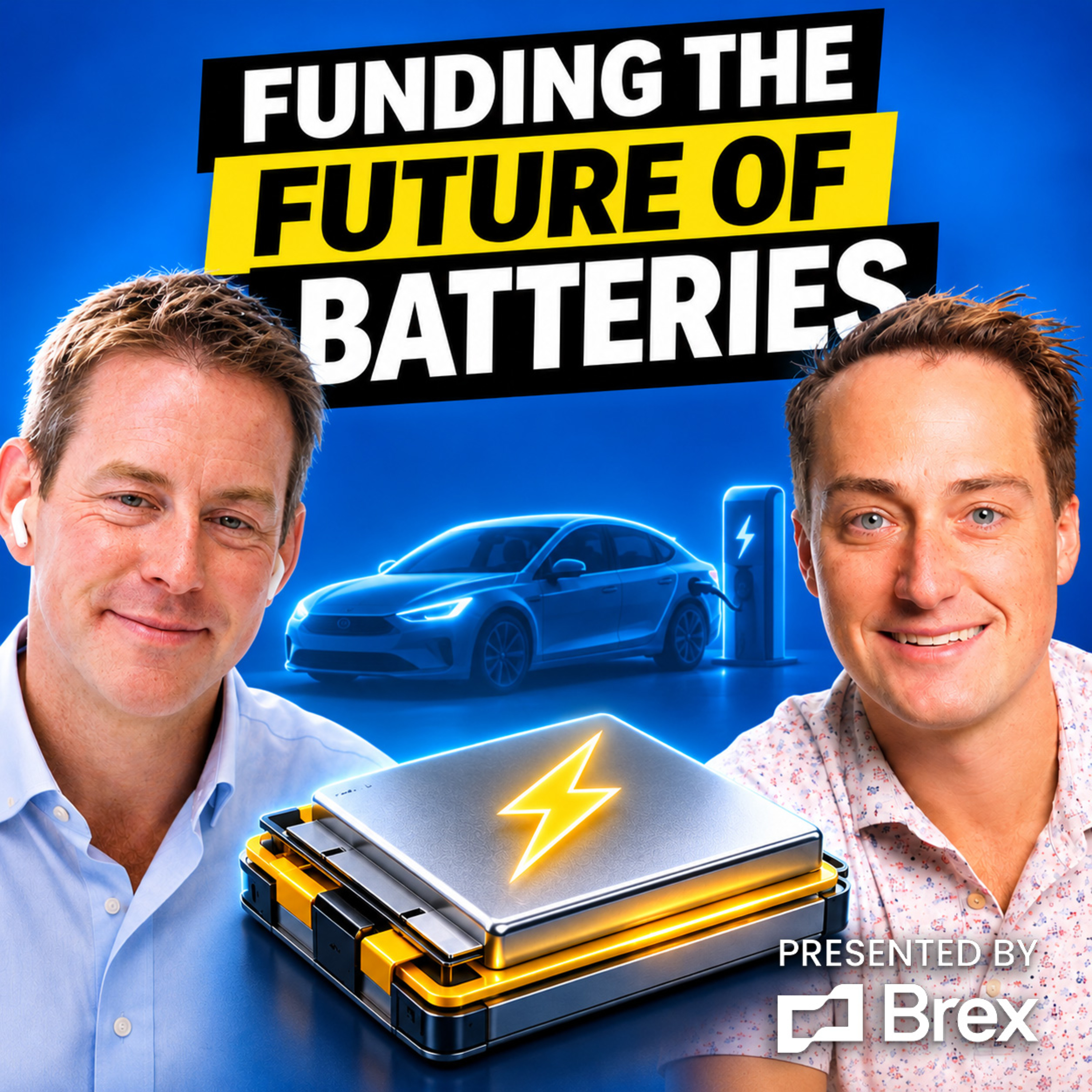
QuantumScape’s CFO Kevin Hettrich discusses how to fund and manage a long, uncertain path to commercializing solid-state lithium-metal batteries—focusing on capital allocation, “saying no,” speed of learning, metrics, and an asset-light licensing model.
Kevin Hettrich is CFO of QuantumScape; Stanford-trained engineer who began as the company’s first product manager (wrote PRDs) before moving into business roles and finance.
Numbers must be self-consistent in corporate plans; a strong balance sheet enables flexibility. Finance and product management are “tension-clearing” functions that force whole-company tradeoffs. Early manufacturing looked promising but failed on cost economics, leading to a different approach. Solid-state lithium-metal requires engineering a thin ceramic that can reversibly plate lithium ~1,000 times.
Vehicle debut at the Munich Auto Show using solid-state cells with Volkswagen’s PowerCo and Audi in a modified Ducati V21L race bike. Cost-gap analysis showed the early approach was ~5 orders of magnitude off for automotive. Licensing adopted in 2024; core tech protected while partners scale ceramics (Corning, Murata). Metrics include learning cycle time, development gates, willingness to pay, pilot-line ramp, and gross margin/capital efficiency.
Written by AI. May contain mistakes.
Kevin Hettrich explains QuantumScape's focus on developing better battery technology.
“Kevin, thank you so much for joining me on the pod.”
Kevin discusses his transition from product management to CFO and the challenges faced.
“So that's the other space that I think is a really neat job.”
Kevin outlines the technical and economic challenges in developing solid-state batteries.
“Can you just speak to like having the patience for such a long feedback loop?”
Discussion on early manufacturing approaches and the need for economic viability in battery technology.
“Because there's that little part in the middle of the battery between the two sides and the cathode that needs to be engineered to make that work.”
Kevin emphasizes the importance of speed of learning and adapting in the technology development process.
“I'll give you a big picture answer and a small picture answer.”
Learn how breaking down large projects into manageable steps parallels NASA's Apollo missions.
“It's effectively a measure of cycle time.”
Learn how breaking down large projects into manageable steps parallels NASA's Apollo missions.
“If you're only on V40 of the plan, you're doing better than I ever did.”
Understand how effective financial planning and controls shape decisions in a company.
“Do you think that your job as a finance function is partially just forcing the company to put numbers behind its beliefs?”
Explore QuantumScape's transition to a licensing model to specialize in battery technology.
“And even after having made that investment, it doesn't really even start producing for another kind of two years.”
Learn about QuantumScape's two revenue streams and their impact on business.
“Once the technology is in the factory, we get a cut of those economics coming back to us, very high margin.”
Discover how QuantumScape navigated business model changes and partnerships.
“While you're simultaneously safer, we just didn't publish a bunch of metrics on safety and we do equivalent or better on all the different metrics that we tested.”
Explore the critical strategic decisions regarding core competencies and partnerships.
“We don't think there's another group or team on the face of the earth that can do that as well as we can in this chemistry.”
Understand the balance between being asset-light and retaining control.
“Is there a point where being asset light becomes we gave away too much?”
Examine the interaction between product development and financial considerations.
“I want to switch gears for a second just to talk about the relationship between product and finance because you've seen both sides of that coin.”
Hear Kevin's insights on mistakes made and lessons learned in leadership roles.
“I hate how you can't use the word genuinely anymore because people think you're using AI to write something.”
Learn about the importance of team alignment and pacing in decision-making.
“As an early product manager in the nascent days of VW, where we were trying to see if there was like a fit with the relationship.”
Discover insights on staying engaged and fulfilled in a long-term career.
“I have a rule that I developed over time I call the eight-year-old man test, that in that kind of last chapter of life, can I look back and have as few regrets as possible?”
Understand the human aspect of leadership and the learning journey of executives.
“So just that everyone is kind of has spots where we're all kind of like learning and trying to stretch ourselves and make mistakes.”
Explore the finance tools used at QuantumScape and some humorous expense requests.
“Can you walk me through the tools your finance team uses to get the job done?”

Get the gist, explore an idea or ask about something said.
 Claude
On Run the Numbers, what are the key points of this episode?
Searching your listeningAutomatic transcript. May contain errors.
0:00A beautiful thing about numbers is that they are precise, like it's not a yes or no, or maybe it is a number. And that a number in the context of a corporate plan done well has to be self-consistent. The balance sheet and kind of capital allocation, we like a big, strong balance sheet. It's your friend when the world is bad and you've got a kind of staying power and the rest of the market is taking a step back. It's your friend when times are good and you can do kind of growth leaning type things. If you can say no, it focuses attention and capital and teams. But it's important to say no and to articulate why so that you kind of put in the back of your head, hey, if something changes, we should come back to this.
0:44It's so easy to add 10 things on the plate that kind of crowd out the three or four that are most important. Is this thing on? Yesterday's price is not today's price.
1:06Most of the CFOs I talked to have a pretty good idea of what their company is going to sell next year. Kevin Hetridge is trying to figure out the economics of a product that's, quite frankly, still being invented. Kevin is the CFO of QuantumScape, a company developing solid-state batteries for electric vehicles. He's a Stanford trained engineer who originally joined the company in product management before moving over to the business side. We spent a lot of time talking about capital allocation, which gets considerably more complicated when you're funding scientific breakthroughs with uncertain timelines and no guarantee that they'll actually work.
1:38Kevin told me about an early manufacturing approach where the technology looked promising, but the economics were so far off that it would never make sense for the auto industry. We also talked about QuantumScape's decision to pursue licensing rather than owning all the factories itself, how you convince investors to fund a company years before meaningful revenue, and his philosophy that finance and product management are both in the business of deciding what not to do. I'm CJ Gustafson, and this is Run the Numbers. Kevin, thank you so much for joining me on the pod. Thank you very much, CJ. Pleasure to be here.
2:08Maybe just to start things off, can you explain what QuantumScape does? We are developing and commercializing significantly better batteries. All the dimensions you care about, smaller, lighter, faster charging, safer, and at scale maturity, also lower cost. And then we take those batteries and we put them in the world's most important products. Just about everything has a battery these days. And candidly, the things that don't would be better products. We target things like electric vehicles, AI data centers, consumer electronics, aerospace and defense, medical devices, robotics, etc. I was digging through your background.
2:43You're a Stanford engineer by trade, and you started as a product manager at QuantumScape. I'm curious what the first business role you took on at the company was. That was our first product manager. And one of my first tasks was to put on paper, what is the product that we're developing in great detail? It's called the product requirements document. I chose that because it's a really neat intersection between engineering and the rest of the business. And together with finance, I think it's one of the functions where you try to take in all the information from the four global functions of the company, which I think of as development, sales, operations, and finance.
3:23You're trying to optimize what is the sweet spot of the product that they can develop, that the development team can develop, the sales team can sell at a certain kind of price point, margin, and volume that the manufacturing team can make where the finance makes sense for everyone. And as you get new information with different development cycles, conversations with customers, the financing climate changes, you're always tweaking that to try to keep it. in the optimum space. So that's the view from the product requirements document. I think you can actually make a very similar lens from the finance space.
3:58Spoiler, I ended up becoming the CFO. So that's the other space that I think is a really neat job. Two reflections. The first one is I've worked with so many PMs, Kevin, over the years, and they're always saying the PRD, the PRD. It literally just clicked now what PRD stands for. Having been a consultant during one of those chapters, I was trained to try to not use a lot of jargon. So thank you, McKinsey, for that training. I'm glad. I'm glad that I've given you that. I was today years old. Well, second thing just to reflect on, I've done over 300 of these interviews. I think you're the first CFO I've had on who's at the company before you could sell it.
4:33Some people consider Better Battery as one of the greatest unmet kind of science engineering challenges on the planet. And we are doing something quite ambitious. Lithium ion is kind of the workhorse chemistry that we use in the world to power our phones and cars. And those were commercialized in the early 80s. Our company is at the point of the spear trying to bring the next chemistry to market, which is called solid state lithium metal. We weren't even sure if the materials even existed that would allow us to develop these batteries. So truly a deep science, deep tech innovation company where our science engineering teams are going to like the limits of what is kind of known in terms of human knowledge and like peering over the side and trying to push it further.
5:20So it's a very, very ambitious company when we started. Individual battery markets can be measured in hundreds of billions of dollars, which is like EV and grid. And that's a little bit of color and context on that. Yeah, it's super helpful because, I mean, everybody listening uses batteries in some way, shape, or form. And we probably hear about it with all these cars going electric, even motorcycles going electric. I think I saw something like you were riding a Ducati across the stage. About a year ago, together with our partners Power Co., which is Volkswagen's wholly owned battery division, we made the solid-state lithium metal cells, worked with Audi to make kind of a motorcycle pack out of them, and then put it into a modified V21L Ducati race bike and drove that across the stage at the Munich Auto Show.
6:08So that was our vehicle debut. We started the company 15 plus years ago, not even sure if the material even existed. To go fast forward all the way to kind of late stage prototypes and powering our first vehicle on one of the preeminent automotive stages was pretty special. Can you just speak to like having the patience for such a long feedback loop? I've never been a part of any company where it takes so long to find your commercial validation. I'll take that both as a compliment. And also I too, we would like it to go as fast as we can. Two things, like one is the size of this, maybe a little bit of an anecdote of what we're trying to do and like why it's so challenging.
6:49So batteries are very demanding things. They need to be small and light. They've got to work with the power. They've got to, the materials have to exist. The bill of materials, how you make them kind of has to work and everything's all interconnected. connected, it's a bit like having 10 or 12 key requirements and each one is an and statement. You miss one, you don't have it. So that's why they're so hard and why it's been such a kind of large kind of problem for a long time. We take lithium ion batteries and we're taking all the graphite and silicon out of them. Turns out you don't need that.
7:20And when you do that, instead of lithium ions being the form it's in when it charges, you plate out pure lithium metal. So having removed all that material, they're smaller and lighter. They're faster charging because it doesn't have to go the same distance. The things we remove tend to be flammable. And then one of the major sources of life loss is also linked to the things that we remove. So it's very elegant. You get all these performance advantages by removing graphite silicon. Graphite, turns out, 95 % of which comes from China. And the elimination of that has some nice supply chain advantages, especially in some geopolitical futures where the world doesn't have access to that.
7:57And that sounds great. The question is, why haven't you done that? Because there's that little part in the middle of the battery between the two sides and the cathode that needs to be engineered to make that work. It's a very thin ceramic material. The material has to be stable to lithium metal. Almost nothing is. In order to make that device work, we're passing one of the most reactive elements on the periodic table through it. So it's a solid film. You pass a metal through it. Imagine like you have like a window pane or something. You put the lithium metal on one side, it literally goes through it.
8:27It needs to do that reversibly a thousand times. Less thickness than a human hair. And the build material needs to be plentiful and you need to basically manufacture it for free while doing the durable requirements of automotive. So it's just wild, all these things stacked up. So that's why it's such a big prize. We have an amazing team of scientists and technicians and the effective pit crew that supports them all. It's because of the prize and it's because of the differentiated technology that there is that patience to put capital at risk because of the size of what is on the other side. You're allocating capital against these technical milestones where the probability of success, I mean, it's hard to know.
9:09And then the end economics of when you finish it, that's still moving around because we function in this live economy. So as the CFO, what are you optimizing for? I'll give you a big picture answer and a small picture answer. Big picture. Is it a big market? Is the product compelling? And will it be when, if you kind of give credit to your competitors as well? If that's true, you're like, okay, I'm heading in the right direction. There's a big market. My customers are validating just how compelling it is. That's a good long-term thing. From the short-term nature, it's like, okay, can I break this up into bytes?
9:39A long-term promise isn't very valuable if you don't exist to get it. So can I break up the value creation into steps? And do I have sufficient capital to kind of get to each one and making sure that you're doing that conservatively and that the NPV kind of continues to solve at every point. One other thing I would highlight is that there's a lot of degrees of freedom. We have effectively every end market you can think of, and then there's a diversity of products and product requirements in there. So that portfolio nature of this does give us lots of degrees of freedom, and perhaps we may talk about some of those choices along QuantumScape's journey.
10:14Early on at QuantumScape, you looked at one of the manufacturing approaches and you realized that even if the tech worked, the economics were nowhere close to what the auto industry could support. How did you figure that out and what did it change for the company? When I joined, I was coming out of the kind of science and engineering side from Stanford as well as the business side. And I myself was like, I think I can be helpful in this context, but I didn't know. It was my high income for private equity and consulting my first kind of operating role. So I did have a chip on my shoulder and did want to try to make a positive impact on things out of the gate.
10:50And this, what you're referring to is, I think, one of the first indications like, oh, okay, I've got a role here. Just maybe one other contextual point. Our CTO, when I was in the process of being hired, I was in the room. Their CEO was like, hey, why are we hiring somebody who doesn't have a PhD in material science? Isn't that the work to do? And our CEO, Jagdeep Singh, is like, no, no, no. Tim, go under Tim. Like, trust me, there are other things to do in addition to the science. So I got there and we were using an R &D tool, which was vacuum based. And just think of it, it kind of makes things slowly.
11:21Wonderful for R &D because you quickly change out the materials and quickly get data points. The speed of learning is a really important kind of metric that we kind of track. Some of the hardware team is like, hmm, I don't think this is going to scale. Then our CEO doing the right thing is like, prove it to me. Like, let's not take anything for granted. Prove it to me. And until you prove it to me, we're making the devices. They're promising now. Why shouldn't I just kind of keep doing that? Let me take this on. So what I did is I kind of talked to a bunch of people, did a bunch of research, and then a few weeks later kind of brought people back in the room.
11:51When I says, okay, let's think about this. What are the different components of cost of goods sold? It's things like depreciation and materials and labor and consumables like electricity and process gases. Those are my columns. Along the x-axis, I put at the bottom, what's the best we've ever done? and then the second line was what is the best anyone in any application on the planet has ever done and then the line above that is what we probably need to be successful in automotive and i just put it out and i was like let's count the orders of magnitude one two three four five six and then the room just exploded they're like and then after that i was like okay fine i'll give you one back we are off of five orders of magnitude is it impossible that we can like innovate our way there, but seems kind of hard.
12:37And then I left and then our CEO, Jagdeep, pulled me aside. He's like, listen, Kevin, that was incredibly valuable to identify at this point. We need to dedicate kind of bandwidth, kind of making our special component far more effectively than conventional means. So that's an example where I wasn't a content expert anywhere, but I was able to kind of create a structure, gather the evidence into kind of a logical format where we could kind of make decisions and then be able to present it and to get people on the same page. So that was kind of my teeth cutting moment at QuantumScape in the first few months.
13:12That's an amazing story because it just shows that you were able to use comps of, it's all you're calling somebody's baby ugly, right? You're saying this is what the market will bear. This is what average looks like. This is what good looks like. This is what world class looks like. And this is where we are, okay? Take the emotion out of it. What do you think about this? Yeah, and let's choose the lowest risk path. Do we want to try to incrementally improve on this method and close that type of gap? Or alternatively, do we want to look for a different way of doing it that has development risk but might significantly de-risk kind of running that equipment later?
13:46And we end up choosing that second path. Kevin, something you mentioned is speed of learning. Can that be a metric? Absolutely. Cycle time of learning, we track it. What is the speed with which you have an idea until you get data back and kind of go into the next piece? It's effectively a measure of cycle time. And that's very valuable for two reasons. One is that you want that to be compressed. And then maybe the why is that you can make kind of micro adjustments as you go. Our chairman of our board tells a story about the Apollo missions. And when JFK is like, hey, we're going to fly to the moon.
14:24Very bold idea. They couldn't even conceive about probably how to do it, but what did NASA do? They chopped it up into a dozen plus steps. It's like, Apollo 1, let's work on the rocket. Apollo 2, let's show that we can get a capsule up. Apollo 3, let's put an animal in the capsule and make sure. a great scientist or a great engineer will take a daunting problem, chop it up into small pieces, and as quickly as possible, try to get data on that piece, incorporate the learning and readjust. And that's also part of the answer to the question you asked earlier of like, gosh, you were there early. If you think about it from like, hey, if the endpoint is like mass commercialization of electric vehicles and data centers, like featuring solid-state lithium, lithium metal batteries.
15:06Yeah, it is kind of a long point. But if you chop it into like, hey, does a material exist? Can you get to a component? Can you get to a single layer? Can you initiate product development and customer engagement? Then get into late stage, then do a vehicle demo and then start a pile on. Those are kind of more tractable things where you can clearly be judged. Am I winning or kind of losing? Is everyone willing to continue on the journey? Customers, investors, our own employees, et cetera. You are what your gross margin says you are. Sorry, my kids are tired of hearing me yell that at the kitchen table.
15:38Dad, I'm too. I don't know what cloud costs are. Well, I do. And cloud infrastructure is the second largest line on most tech P &Ls. And yet, most finance leaders couldn't tell you how it's priced. And as a CFO, I understand there's a non-linear impact to your company's valuation when you improve your gross margin. And the path of least resistance is through your AWS or GCP bill. Because like anything you buy, cloud gets cheaper when you buy it in bulk. In fact, you can get the rate down by 20%, 30%, even 60 % in some cases. The flip side is getting saddled with a bunch of capacity you never touch.
16:13Happened to me once, I think I still got some megawatts in the kitchen cupboard somewhere. That's exactly what cloud capital solves. Cloud capital underwrites the risk so you can realize the same savings of a deep, long-term commitment. Sands the downside. Oh, and it takes no engineering work. Bingo! I've known Edward since back when he was just starting the biz, and it's incredible how much they've saved customers on their cloud bills. That could be you too. So head over to cloudcapital.co, that's cloudcapital.co, and find out how much you could save. When somebody asks, how's business? What they're really asking is, how are your finances?
16:50Because every single decision a company makes is inherently a financial one. I've said it a thousand times, finance isn't just keeping a tally of what went down. You are not the person piecing together what happened the morning after in the hangover. You're the person deciding whether bringing Mike Tyson's tiger back to the hotel is a good capital allocation decision, which means your team can't afford to be living in the past, policing a$30 software charge or slogging through a close that drags on for weeks. Remember, there's a tiger in the living room. That's why you need Brex. Brex built an intelligent finance platform that combines global corporate cards, expense management, banking, bill pay, and travel into one system with real-time controls.
17:32AI handles the grunt work, enforcing spend policy at the point of sale and reconciling continuously so your best people can chase growth instead of chasing paper receipts. Defense handled, Terry Tate office linebacker style. So go play offense. Throw the ball deep. Thousands of top companies, including Anthropic, DoorDash, and Coinbase, already run on Brex. Join them and take back your team's momentum at brex.com slash metrics. That's brex.com slash metrics. Or just tell them CJ Sane. Still in budget season? My condolences. If you're only on V40 of the plan, you're doing better than I ever did.
18:10Keep it up. Here's what I'd want in the trenches right now. Something I can hand a question to that already knows the context of my business. Not a chatbot that's never seen my P &L. and not a bunch of AI features that are hiding in five side panels that I really don't know what to put. That's what Abacom just launched. It's called Abra, like Abra Kadabra. I hope they let me keep that in. And it's one agent for your whole finance team. Ask it something like, what happens to Runway if we push ad spend 25 %? Or what changes has my marketing leader requested to their 2027 budget? Abra pulls together your actuals, your models, and your business context, calls on the right agent to model, analyze, or draft the board pack, and comes back with the answer, plus the trade-offs and the next move.
18:53That's incredible. And for the control freaks, which is all of us, if we're being honest and you listen to my podcast, it shows its work. Abacom's engine does the math, not the AI. Abra, cadabra, only sees what you're allowed to see, and nothing saves until you approve it. Here's the best part. It's included in Abacom as is. There is no extra charge, no add-on. And I have known Avicom's founder and CEO, Julio Martinez, for more than three years. He and his co-founder, Jorge, came out of finance, and this thing shows their work. Most AI makes one person faster. Abra makes your whole team AI native.
19:28I could read you a short code to go type in, but honestly, just tell Jorge and Julio CJ sent you. They'll hook you up. Forgive me because I'm going to sound like a caveman the way I asked this question, but do you look at it ever as it cost us this much to learn this thing? That is a good way to view how we think about our annual operating plan and strategic long-range plan. We have kind of a cadence where every December we set an annual operating plan and every July we send like a five plus year strategic long-range plan. And we think about all the things that we could do. If it's development, it's like, I think I need X dollars to solve Y problem.
20:06And we kind of rack and stack them with the framework from the strategy that we had kind of agreed upon. And then we decide where to draw the line. But that's exactly a fair way of thinking about it. What's the likely amount of capital for me to solve this problem so I can get that particular feature or this particular improvement in the method of making to acquire this customer, etc.? Do you think that your job as a finance function is partially just forcing the company to put numbers behind its beliefs? Yeah, that's certainly a core part of the job is do I have the right plan? And then maybe the sister job to that is do I have the controls that that plan is being executed?
20:49A beautiful thing about numbers is that they are precise, like it's not a yes or no, or maybe it is a number. And that a number in the context of a corporate plan done well has to be self-consistent. And what I find is when you're in a budgeting conversation with an individual function, like so you're talking about with engineering, absolutely do I want the full list of things with every single improvement product feature. And I kind of look at the numbers and I'm not the right one to say, hey, that individual project doesn't make sense. It's only when you put together the whole picture. It's like, okay, now let's look at all the expenditures as a company, sum them up.
21:24Once I put and facilitate, there's a lot of hardworking kind of bright people. It's really a communal effort. Once we put this all together, that's where it gets powerful. Then we're like, okay, now I can come back at, is that the right amount of capital to spend? And if we agree that it's something other, it forces you into a prioritization. On that point though, where do you insist on forecasting something tightly? And where do you just accept that uncertainty is just too high to pretend you know the answer? I love controlling things. I am definitely kind of a little type A like that. So I do also try to have an appreciation that the things we can control and the things we have high confidence in would have a tighter range.
22:03Things like expenditures, if we have a robust pipeline right now, we forecast customer cash inflows across our different verticals. Things that we put more loosely in ranges are things that we don't control or ones where we know that there's a few discrete scenarios could happen. Do you win this new customer development agreement? And if so, this following package of things will happen. We'll take on this development work. We get these inflows. We need these resources to kind of do that. So we use a combination of both of those. And then we also try to flex being more conservative and being more optimistic.
22:41We try to flex down to being more conservative in terms of things like capital planning and setting expectations with the public. And then we try to flex it up to be more optimistic and aggressive when we do internal goal setting. So all these different views we think have uses. What are the top metrics you care about in a business like yours? Long term, it's return of capital to shareholders, top line and margins and capital efficiency. In our current stage, where we're in the early part of the commercialization window, kind of collecting cash flows from leading customers to do custom development, to do samples, to do prototyping.
23:18Some of the operational metrics are just as important. On the product development side, are we hitting kind of gates on time? Can I quantify just how compelling the product is and a customer willing to pay? willingness to pay. On the operations side, again, are we kind of bringing up our pilot line as anticipated? And are we tracking to the learning curve that we think is there? I guess we make improvements and kind of bring up volume and run through more parts. Am I kind of hitting that shape? The balance sheet and kind of capital allocation, we like a big, strong balance sheet. It's your friend when the world is bad and you've got a kind of staying power and the rest of the market is taking a step back.
23:54It's your friend when times are good and you can do kind of growth leaning type things. Am I spending the right amount of money? Are my priorities kind of right or also really important? We were talking to Craig, the CFO of Oaklow recently, and his company makes nuclear reactors. And they're pre-revenue. A lot of money goes into the business. And they have to communicate to the street how they're making progress. And I find it just this fascinating dance because you're doing real stuff. You just have to communicate your progress in a different way so investors understand what they're actually underwriting.
24:26And that's actually one of the reasons when we became a public company, we chose a shareholder letter. That narrative style allows us to include things like photos of the equipment or graphs in terms of product differentiation. We can list very carefully, like here are the different stages of a customer funnel. And we have, for example, we work with four of the top 10 OEMs in the world. With Volkswagen, we have a kind of a quite mature collaboration and licensing agreement. We have three in the stage right before Honda and kind of two others. So we're able to, it's a really nice medium to do that type of communication.
25:02So that's actually precisely to your point. That's why we adopted that. Oh man, I'm such an investor relations nerd. So this is the deep cuts. People on the show who tune in, they appreciate like these micro moments where you go deep on something. And I think like doing a shareholder letter is a beautiful thing in a business like yours? Because to your point, you're trying to paint a story that is so nuanced that, hey, this is how much cash we have. That's not going to do a lot for people. Yeah. And on something like a prototype result, it's very important that we communicate all the conditions on which that was taken.
25:33The context matters in all of these things. And it gives us an opportunity to be precise and to include other objects in there, as I mentioned, like links to videos and graphs and things that help give investors a story that they can use to understand if we're tracking or not tracking to plants. Talk to me about a licensing model. How does that work? We adopted a licensing model in 2024. Previously, we were in a kind of a joint venture model. So taking a big step back, what is QuantumScape very kind of good at? What are we kind of built to do and what have we done to date? Develop incredible battery technology.
26:10And that's a package of the materials, the cell design, the method of making, the supply chain behind it, the equipment, All of that is kind of our technology package. We've been working with Volkswagen well over kind of 10 years. At that time, they continue to be one of the world's leading automotive companies. And during our relationship, they actually went upstream into producing batteries with their group, VW Power Co. When we originally started, VW Power Co. didn't exist. So we said, hey, why don't we do a joint venture for the making of cells? Once they themselves went upstream and said, hey, we're going to invest and become a leading battery cell manufacturer, We said, great, we can revisit where we have that interaction point.
26:51And we said, great, why don't we specialize on the innovation part of it? And we'll work with you. You're already one of the most prominent global manufacturers, and now you're adding battery capacity. Why don't we give you a license instead of doing that kind of JV part? We can both specialize. Our CEO comes from Semiconductor, and we're very consciously picking up the business model that is exhibited there. You have folks like NVIDIA who do chip design, TSMC who kind of makes, and then equipment folks like ASML who do the equipment. The benefits of that is you get specialization. Everyone kind of does their role and you benefit from the size of the network.
27:25And for as an early stage company, kind of keen on cash, it does wonders. To build multi-deca gigawatt hour factories takes billions of dollars. And even after having made that investment, it doesn't really even start producing for another kind of two years. And when it starts producing, it's probably going to lose money until you kind of come down the curve. So to take that completely away and borne by companies who have steady lines of business, who can kind of absorb that upstream investment, big balance sheets, track records, doing that works really well. And even better under our business model, we have two cash flows.
28:02So one of course is the license. Once the technology is in the factory, we get a cut of those economics coming back to us, very high margin. And the second is preceding that are these collaboration type inflows where our partners pay us for samples to do custom type development, to do prototypes. So investors get the benefit of immediate kind of current term feedback that, hey, customers are paying money for the development work that you're doing now. And then we're sowing the seeds for that much larger licensing type model. This is so fascinating to me because you have a higher margin business and product per se compared to your partners, but your partners have more margin in absolute dollars.
28:43And so it's kind of a trade-off between the two. Yeah. And the way this works is the technology creates the size of the pie, like much higher performance batteries make much higher performance vehicles. If you think about just taking the vehicle example, Audis and BMWs and Mercedes, some of the most very high-end, high-performance, beautiful luxury cars. I'm not a sophisticated engineer. I know that there are differences between them, but there aren't massive powertrain differences once you're in that tier. What we're trying to create is a massive powertrain difference where your car goes 20 % to 30 % more miles range of electric vehicle while you simultaneously cut down charge time by half to two-thirds.
29:25My Tesla charges, I'm going to say, 35 minutes, 10%, 80%. We're trying to cut that down to like 12. While you're simultaneously safer, we just didn't publish a bunch of metrics on safety and we do equivalent or better on all the different metrics that we tested. And then finally, life, our kind of best performing A sample cells were showing one quarter of the capacity fade that was expected. So it's like that just blows the minds of our engineering counterparts on the automotive side or just envision just like the lift in vehicle performance. I think on the business model point, Kevin, regardless of what business people may be in, I think like to take you back to 2024, it sounds like you had this, I don't know if you'd call it a come to Jesus moment, but you had to decide like what business are we in here and what do we want to own versus what are we comfortable letting a partner own within this larger ecosystem?
30:15There's two interesting kind of points per question. So one is we had a data point that Volkswagen was excited to do it. But the question is, are our other partners kind of up for that? And we took some risk in moving to that business model before we had like kind of hard proof points from the others. What we since found other people are also equally excited to do that. So there was certainly a risk when we moved there. Would the other customers come along? And the second point is like, what do you keep kind of core versus what do you kind of rely on partners? A good question is what are we uniquely positioned to do combined with some like strategic elements?
30:51So certainly at the innovation on the materials as it translates and with the modifications of a cell design for anything that's novel, that's touching equipment and materials, that's core to us, certainly through the pilot line scale. We don't think there's another group or team on the face of the earth that can do that as well as we can in this chemistry. As soon as you get to a pile line scale, like, yeah, we have a lot of smart, hardworking kind of scientists and engineers and technicians, et cetera. But once it's kind of demonstrated in a pile line scale and it's about doing this at kind of multiple orders of magnitude higher, then you're like, okay, actually, even though this partner doesn't know the core technology, they're very good at the rest of that cost curve.
31:34So to use an example here, we started working with the two top ceramics players in the world, being kind of Corning in the United States and Murata in Japan, who express interest in doing exactly that. They're like, wow, this technology is fascinating. They're both excited for the end market that kind of gets opened up to them in participating in making our specialized component. And then how we do the ceramic is different. We believe we do it probably two orders of magnitude faster than conventional ceramics processes. We gave a name COBRA. In fact, one of them didn't believe that it could be done.
32:07That's what they get. And what we get is the top ceramic partners who know how to take a technology to scale, to drive down the cost as they move up volume, and who are reliable suppliers to our end customers already. So that's like kind of the best of both worlds. To your question, like, how do you put it in that in kind of one bin or the other? Are we uniquely positioned to do it, then we should do it? Or is there someone else on the planet who's probably better at it? Then it kind of goes to the other side. And there's a bit of a strategic overlay, like around the protection of intellectual property.
32:40We always have to, under a licensing business model, we always have to own that core. We want to keep that for the ability to work across industries and also across the product roadmap in time. So that's something where we are unflinching. Remember when pricing was simple? One product, one subscription, one invoice every month. Those days are over. The AI economy is changing how everything gets bought and sold. We're seeing usage-based pricing, hybrid contracts, and something called a credit. The finance systems built for vanilla subscriptions weren't designed for this. This isn't just a rev rec problem anymore, because outdated revenue architecture can kill a great pricing idea before it ever reaches the market.
33:20RightRev lets you recognize revenue in whatever shape it comes in. Whether you're launching consumption credits or testing entirely new commercial models, RightRev gives finance the flexibility to support whatever pricing model comes next. So product teams can keep on innovating and finance teams can keep pace. If you're architecting revenue for the AI economy, learn how RightRev can help. Visit rightrev.com slash CJ. That's me. That's rightrev.com slash CJ. A wise man once told me that every startup is really just a loosely functioning disaster. Ain't that the truth? If your startup needs a little extra support, and let's be honest, who doesn't need a little help now and then?
33:59You're in for a pleasant surprise with Fidelity. Fidelity Private Shares helps early and growth stage companies stay investor ready with cap table, data room, and scenario modeling all in one place. A messy or missing cap table might not just slow you down. It could cost you your next fundraising round. VCs are flooded with pitches and if your equity is confusing or missing, they'll move on fast. Fidelity Private Shares gives founders the structure and simplicity to focus on what actually matters, building your company. If you stay investor ready, you don't have to get investor ready. Check out fidelityprivateshares.com to learn more.
34:34That's fidelityprivateshares.com. I got news for you. The ERP category is finally getting disrupted. And if you haven't heard of it yet, please pay attention. It's the AI native ERP built specifically to replace NetSuite. And it's already won over hundreds of finance teams. Their mission is to make the zero day close a reality and they're actually doing it. We're talking teams closing the books at 1 35 p.m. on the first day of the month. Companies like Windsurf, Mercore, and hundreds of others run their entire finance stack on really. Revenue recognition, close management, multi-entity, native Stripe, and Salesforce integrations.
35:08Woo! Everything a scaling company needs. They've got 5.0 stars. 5.0. Wow. 5.0 stars on G2. They're backed by A16Z and Sequoia. Heard of them and CPA-led implementations that get you live in 45 days. That is simply unheard of in the ERP space. If your books aren't running as fast as your business, check out Rillet. Book a demo at Rillet.com slash CJ. That is R-I-L-L-E-T dot com slash CJ. That's me. Is there a point where being asset light becomes we gave away too much? It can be. And kind of the devil's in the detail. If you think about the first kind of partner or partners who are building those like first of a kind type levels of scale, candidly, they should be compensated more.
35:56You got to incentivize them. Otherwise, they're not going to get out of bed in the morning. At any given time, the whole thing has to work. We need to create enough value so that each partner has a very compelling risk adjusted business case. And that can also change over time. I use the example of someone who's early to commercialize. after several years in the marketplace as the differentiation on an individual product node falls, like our command of that should fall too. So it's dynamic and you try to be fair. And ultimately it's tied to what the next person can do. To the extent that it's like differentiated and compelling, we're in a strong position to kind of capture value.
36:35To the extent that it's proven all the more so, and then the opposites of course are true. Kevin, a lot of our listeners are familiar with ARR type businesses where it's recurring revenue over time. Does a licensing business at scale effectively become a royalty business where you can depend on this recurring revenue stream? In automotive, that's certainly the case just because of the high investment to first develop a model and then to put the factory infrastructure to make it. Often those contracts are for five to seven type years. So once you have a win, if the technology works and you're able to kind of produce it to plan, you have pretty good visibility into that factory ramping up and then to continue to produce for a set of years.
37:21I got a question for you just on capital allocation. because most people aren't building batteries, right? But I do think that everyone is making bigger bets than they were five years ago because of AI. What is building a capital-intensive business like this one taught you about capital allocation? It's kind of from the eye of the beholder. We've been spending something in the zip code of like$40 million on initial kind of research and then later stage develop and kind of pilot line. I would hope that listeners can demystify that, that those types of expenditure levels, and especially when you also add our longer product cycle, that these are possible if you're pointing to a big market and what you're doing is compelling.
38:04I want to switch gears for a second just to talk about the relationship between product and finance because you've seen both sides of that coin. And you had an apt term for it. You said that they're both tension clearing functions. I'm curious what you meant by that. Imagine you get a new piece of data. It probably means that you should rethink all of those different kind of four pieces, like from a sales and customer point of view, from a kind of a product development point of view, from operations or finance. If you move one piece, it tends to kind of jolt the other ones around. For example, like if you want to do another piece of development to get a little extra kind of product feature, maybe that makes your product more compelling.
38:46You can command some higher margin, but then maybe you've created a delay in ramping up your lines. You need to incorporate that. And then you put some pressure on your finances because you just spent money and kind of shortened your runway. It forces you to think from a company point of view, every individual decision. And that's actually, I think, one of the values that the product manager and the finance team does is that an individual employee in one of the functions will kind of see their perspective of it. And we try to bring the rest of the business whole for the good trade-offs and the bad ones to help make better decisions.
39:19Oh, I preach that all the time in this podcast that finance has this view of the P &L. You can't just try to argue for something for your team or see the world through a myopic departmental view. You have to be able to see the full picture and how it's all connected. It's easy to say no to things when there's a lack of consistency. But often we're seen as neutral arbiters because we're effectively just running a process. Like, what are the things that we're trying to do? You come to me with your kind of proposal and all of it. We'll kind of poke holes at it to make sure it's kind of quality check.
39:47But then just kind of how they line up, usually running good process and kind of quality control across the company. And then we make collective decisions. Product decides what the company is or is not going to build. And finance decides what the company is or is not going to fund. I hate when we're called the no police, but at the same time, is saying no one of the highest leverage things that those functions can do? Absolutely. Just focus is such a scarcity in a developmental organization. If you can say no, it focuses attention and capital and teams. But it's important to say no and to articulate why so that you kind of put in the back of your head, hey, if something changes, we should come back to this.
40:31It's so easy to add 10 things on the plate that kind of crowd out the three or four that are most important. Asking for a friend, Kevin, have you found ways to say no more gracefully over time as you've been in the role? Just the why. As a science and engineering culture, it's very logical and very rational. So, for example, if early in the process, I have a scientist or engineer who's very excited about, hey, I think I can push energy density just a few extra percent, but I think I need to do this. I'm not qualified to kind of weigh in on that. And then if I said, hey, I don't think that's a good idea, they'd get frustrated.
41:05It's like, well, why are you doing that? Seems like very kind of subjective. It's only later in the process. We're like, hey, let's all acknowledge we as a company want to spend about this amount of money. And we've run a fair process. We've thought about everything that we can. And we have the criteria to kind of sort them. And you ended up below the line. Like, listen, whatever. We would hold on to that. Maybe in the next budgeting cycle, we'll kind of pick it up. Then like, okay, I get it. Like it was someone is from a neutral position from the vantage point of the company running a process where there's not politics.
41:34We're actually genuinely trying to make good decisions. People kind of get that. I hate how you can't use the word genuinely anymore because people think you're using AI to write something. That's probably true. Kevin, we have a wonderful partner on the show. Their names are EY. And EY is always encouraging me to ask better questions. So this round is called Asking Better Questions with EY. The first thing that I ask to every successful person who comes on the show is what is an example of something you've screwed up on the job before? Could be here or any previous role. As an early product manager in the nascent days of VW, where we were trying to see if there was like a fit with the relationship.
42:14And my counterpart at VW, I was in a conversation with them and then gave what I thought was a reasonable answer in terms of when we could kind of get something done. The mistake I made was to not more broadly have socialized that with the team. My intention was good as, okay, I just want to keep this moving. But then when I got back and realized that I was not on the same page with the rest of my team and I had done something that was too aggressive. My head of sales was not super happy with me for the right reasons. So I remember after hours, call the guy that I had just told, like disturbed his dinner just to like pull back the thing.
42:46So it was embarrassing because I had to like flip flop. And then I was kind of a family guy too. Don't like interrupting that, but it was the right thing to do and kind of caught it early. I've done that. They're just being an ambitious individual. Like I'm going to push the pace forward. I'm going to commit to something on our behalf and I know that our team is great and we'll catch up to it. But then you realize, oh man, maybe some stuff is like going a bit slower can be a feature, not a bug. We have a saying like once you're kind of 70 % confident, especially if it's a reversible decision, you should kind of act and go.
43:16And we're all human. We all make mistakes. And in the event that you make a mistake, quickly recover, learn from it and move on. Next one I got for you. If you could tell your younger self something, knowing what you know today, what would you tell them? I have a rule that I developed over time I call the eight-year-old man test, that in that kind of last chapter of life, can I look back and have as few regrets as possible? And I think how that translates into a career is go work for a company that you're excited about and kind of fulfills your sense of purpose. For me, it's the mission-driven nature of QuantumScape.
43:47And then stay there if you love the people. That checked the box for me on kind of Quamscape from two sides. I mean, in today's age, people change companies every 24 months, even less. You've been there... Over 15 years and held lots of different roles along the way. What's the key to longevity at a company and making sure you stay challenged? Well, the company needs to continue to exist and we all have our part to play in that. A personal point of view, while the duration at the company has been long, there are good things about that. You become expertise in a space. It is something that can have multi-generational kind of impact if you pull it off, bringing substantially better energy storage to the world.
44:33I think it's something worth that type of dedication. And for me personally, the fact that I've had the opportunity to sit in so many different roles over time, from product management to marketing to finance to IT to government relations, operations management, has been like a rotational journey for me where it's some percentage of my head. It's like a new thing that's kind of exciting for me. And by the way, that's another thing I would love to tell my early self is that most people you're working with are probably only 80 % comfortable with what they're doing. And if they're 100%, they're probably not like curious enough.
45:11So just that everyone is kind of has spots where we're all kind of like learning and trying to stretch ourselves and make mistakes. And it's okay to be not 100 % kind of comfortable and just with kind of good work and communication, having the right team around you. That's okay. I remember the first time I realized that the C-suite just didn't have all the answers at all times. It was this moment where I was watching a CEO rehearse his keynote over and over again. He was stumbling over certain parts and eventually got on stage and crushed it. But I remember in that moment, I was saying, this guy isn't perfect and he also doesn't know everything about the company and the product.
45:47And I don't know why it stuck with me. Yeah, we all start off as these wet behind the ear sponges excited to learn things and work hard. And I guess it's all kind of daunting, these new challenges and new endeavors. And I too had assumed that people at the top were like, well, I've got it all kind of locked down. And I guess that some of those initial elements done well never change. More of a technical one for you. Can you walk me through the tools your finance team uses to get the job done? Systems and process. We are a Microsoft and SAP shop. So the whole M365 suite, we use SAP for finance, for planning, for purchasing, for treasury, etc.
46:31We use Flowcast as a closed automation tool, Navon for travel and expense, ADP for payroll, and our AI productivity suite is Claude and Copilot. it. Nice, nice. Last one I got for you. What's the craziest thing you've ever had someone try to expense? One was a pair of like really amazing Nike basketball shoes that was paired with a disciplinary action. And the second that rose a bunch of flags was a pasta maker, apparently very legitimate. We make thin versions of things just as like a proof of concept. And engineers like, hey, I want to make thin versions of this material. Turns out a pasta maker was how we do it.
47:11We actually still have that in our R &D building. Makes me laugh because I feel like the first Nike shoe was actually made on the founder's wife's waffle maker. Phil Knight back in the day. That's right. Oregon. I'm from Oregon. So that's kind of lore. Well, Kevin, this has been an absolute blast. Thank you for joining me on the pod. My pleasure, CJ. Run the Numbers is a mostly media production. Yelling an intro by Fat Joe. Artwork by Meg D 'Alessandro. Nothing said on this podcast is intended to be business or investment advice. It's the sole opinion of me, a guy who feeds his dog way too much ice cream and has a history of net operating losses.
47:44LOL. If you like this podcast, hit subscribe and give us five stars. It will take like two seconds and our algorithm overlords love it. Drink water, call your mom and have a great day. Peace.
In this episode of Run the Numbers, CJ sits down with Kevin Hettrich, CFO of QuantumScape and a Stanford-trained engineer who joined as the company’s first product manager. They cover how to allocate capital against scientific milestones, why QuantumScape moved to a licensing model, and how finance and product both decide what not to do.
—
SPONSORS:
Cloud Capital helps you say goodbye to on-demand rates for cloud. Committing more cuts the rate you pay for cloud infrastructure by 20–60%. Commit wrong and you pay for capacity you'll never use. Cloud Capital underwrites that risk, so you capture the savings of deeper commitments without locking in architecture or putting engineers on it. Go to www.cloudcapital.co
Brex is an intelligent finance platform that combines corporate cards, built-in expense management, and AI agents to eliminate manual finance work. By automating expense reviews and reconciliations, Brex gives CFOs more time for the high-impact work that drives growth. Join 35,000+ companies like Anthropic, Coinbase, and DoorDash at https://www.brex.com/metrics
Abacum puts your actuals, forecasts, models, and business context in one place, so you can update the plan, run scenarios, and answer "why did this change?" without rebuilding the story from six spreadsheets and a Slack thread. Connect your source systems, keep models and assumptions aligned, and give leaders trusted answers while decisions are still being made. Go to abacum.ai/mostly-metrics.
RightRev is a revenue recognition platform built for the AI economy, helping finance support usage-based pricing, credits, hybrid contracts, seats plus consumption, and whatever commercial model comes next. It gives product teams the freedom to keep innovating without outdated revenue systems slowing them down. Learn how RightRev can help at https://rightrev.com/cj
Fidelity Private Shares gives founders the structure and simplicity to focus on what actually matters - building your company. If your startup needs a little extra support (and let’s be honest, who doesn’t need a little help now and then), then you’re in for a pleasant surprise with Fidelity. If you stay investor ready, you don’t have to get investor ready. Check out www.fidelityprivateshares.com
Rillet is an AI-native ERP built for modern finance teams that want to replace NetSuite and close faster. With revenue recognition, close management, multi-entity support, and native Stripe and Salesforce integrations, Rillet helps scaling companies run their finance stack in one place. Hundreds of teams, including Windsurf and Mercor, use Rillet to make the zero-day close real. Book a demo at https://www.rillet.com/cj
EY works with high-growth tech companies to navigate the messy realities of scaling—from regulatory requirements to IPO readiness. By helping teams get it right early and often, EY lets founders stay focused on building while reducing risk as they grow. Learn more at https://www.ey.com/techstartups
—
LINKS:
Mostly Talent: https://mostlymetrics.typeform.com/to/cLTxtAsN
QuantumScape: https://www.quantumscape.com/
Kevin on linkedin: https://www.linkedin.com/in/kevinhettrich/
CJ: https://www.linkedin.com/in/cj-gustafson-13140948/
Mostly metrics: https://www.mostlymetrics.com
—
TIMESTAMPS:
0:00 Cold Open
2:44 From Engineer to First Product Manager
4:33 Why Better Batteries Are So Hard
6:29 Feedback Loops
10:16 The Approach That Didn’t Pencil
11:51 Counting Orders of Magnitude
13:49 Speed of Learning as a Metric
19:34 The Cost to Learn
20:32 Putting Numbers Behind Beliefs
21:45 Where to Forecast Tightly
24:05 Communicating Progress
25:52 The Licensing Model
30:02 What to Own
35:40 When Asset-Light Goes Too Far
36:41 Licensing as a Royalty Business
37:23 Capital Allocation Lessons
38:06 Product and Finance
42:03 Kevin’s Biggest Mistake
43:25 Advice to His Younger Self
46:11 Finance Tech Stack
46:48 Craziest Expense Ever
#RunTheNumbersPodcast #QuantumScape #CFO #Batteries #CapitalAllocation