Ask ChatGPT

 Run the Numbers
2 Nov 2026 · 56m · 16 chapters

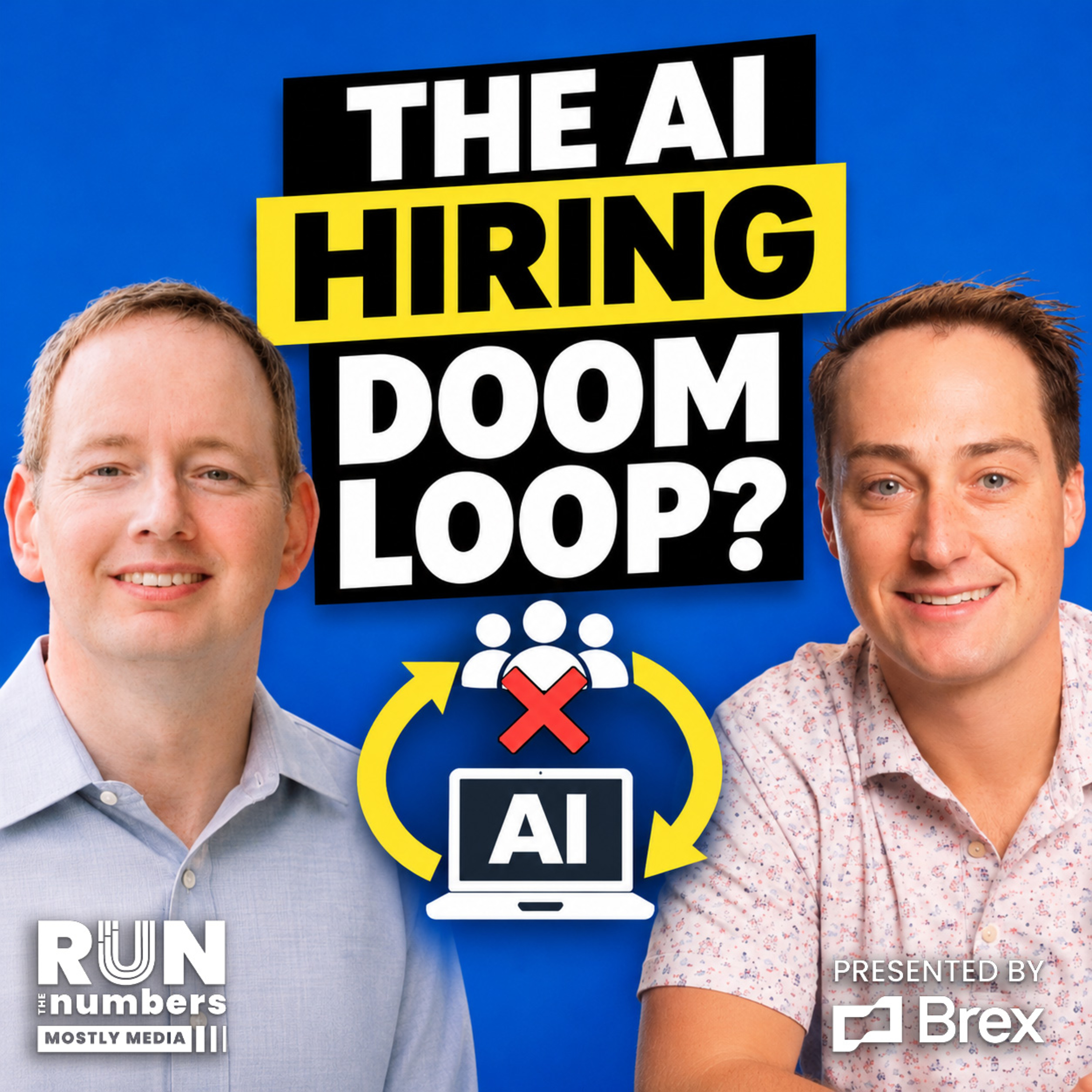
Investors’ “hierarchy of metrics” and how to detect fake or misleading numbers (e.g., EBITDA adjustments, token usage, downloads), especially in AI software.
Cash profits beat “activity” metrics; if CEOs get cagey, investors should lean forward and ask “explain it again from the beginning.” Token “maxing” (e.g., “used X tokens”) can induce spend without proving efficiency. EBITDA can be “wonky” via unjustified add-backs and capitalized expenses; investors should sanity-check against cash, balance sheet growth, and revenue/gross profit multiples.
Brian Neider, Managing Director at Lead Edge Capital; author of “The Hierarchy of Metrics Bullshit.”
Companies bragging about “best place to work” while lacking cash; AI-first firms sharing token counts but with upside-down unit economics and pro forma gross margin assumptions; EBITDA cases where the same business is described as $58M cash EBITDA vs $38M EBITDA vs ~$25M after capitalized expenses; movie data provider RentTrack/Comscore Movies as a defensibility example via sole-source theater box-office data agreements.
Written by AI. May contain mistakes.
Discussion about the hierarchy of metrics and its implications for investors.
“Brian, thank you so much for joining me on the podcast.”
Exploration of how AI is changing business metrics and investor considerations.
“And that was like the key metric at the time.”
Discussion on the challenges of transparency in business metrics and CEO behavior.
“and that becomes a difficult conversation because you're trying to piece together what does this look like right now and the here and now versus what does this look like, you know, in the future?”
Explore the importance of understanding core metrics in business.
“It feels like there are shades of gray when it comes to sins of omission.”
Discover how to effectively ask questions to gain deeper insights.
“class you're already at the 801 level class and you've got a problem so i actually think in many ways the llms chat gbt or claude or any of these things are helpful to people like that because they really want to learn.”
Learn the distinction between company quality and investment valuation.
“I think that you really have to separate the two.”
Understand how market trends affect investment decisions over time.
“I would say more often than not in the growth equity ecosystem, you're going to see funds that are willing to take on really high quality businesses and just pay up for them.”
Learn how to assess EBITDA alongside other financial metrics.
“Their names are EY and they do some amazing stuff on the audit and consulting side, and they encouraged me to ask better questions.”
Learn how to analyze businesses based on EBITDA and revenue multiples, especially in regard to growth.
“that's great, but it's very different if the business is a 40 % EBITDA margin business that's not growing versus a 20 % EBITDA margin business that's growing 40 % a year.”
Discover the complexities of ad back expenses and how they can mislead investors.
“But if you're growing at, say, 20%, 15%, it's like, hey, dude, you're not gonna be able to grow fast enough to outrun the cost structure you're presenting today.”
Understand why accurate financial reporting is crucial for business decisions and capital allocation.
“So it becomes more like a recurring cost.”
Learn how to assess the contribution of services revenue for software companies.
“And then you're going to look at the services business and you're going to say, are they losing money here?”
Explore the differences between horizontal, vertical, and infrastructure software and AI's impact on each.
“of Workday, a partner of Salesforce, do the implementations and help do the training and everything that was necessary to get the client, the Workday and Salesforce clients up and running.”
Explore how AI affects vertical and horizontal software applications differently.
“They're probably going to want some type of accounting software.”
Learn about three distinct investments and their defensibility in the market.
“So I want to go through a few investments that you've made at LeadEdge because I think they show three different kinds of defensibility, if you will.”
Hear a funny story about a unique investment proposal involving a giant check.
“We open up a conversation with our board.”

Get the gist, explore an idea or ask about something said.
 Claude
On Run the Numbers, what are the key points of this episode?
Searching your listeningAutomatic transcript. May contain errors.
0:00I think in the AI world today, the page view sort of equivalent is probably this token maxing stuff that you might have heard about last year. We used X number of tokens. This is a great thing. It really just sort of like induces spend without looking at efficiency. You see a lot of companies that are not levered and they had significantly positive EBITDA metrics for like years, but they've never produced a dollar of cash and they've never issued a dividend. Over some period of time, it just it's like wonky accounting. and you've got to say to yourself, like, what is actually going on here? I think that it's more of a philosophical approach that's not necessarily as much about asking a specific question or not.
0:39It's really having the confidence to say, I don't understand, and then have somebody go back to the beginning. Is this thing on? Yesterday's price is not today's price.
1:01Brian Nieder is a managing director at Lead Edge Capital and the author of one of my favorite pieces of financial writing, The Hierarchy of Metrics Bullshit. The premise is pretty simple. If your company generates cash profits, you'll probably tell your investors about your cash profits. If it doesn't, you'll find something else to brag about. And if you work your way far enough down the hierarchy, you eventually arrive at things like page views, downloads, and being named the third best place to work in Cincinnati. Brian has spent his career sorting through these numbers and figuring out which ones are actually worth paying for.
1:34We talked about the difference between a good company and a good investment, some particularly egregious EBITDA adjustments, and how AI is changing what makes a software business defensible. Where are the moats? And also the time Brian showed up to pitch an investment with a giant Happy Gilmore style check after being explicitly told not to bring a term sheet. I'm CJ Gustafson, and this is Run the Numbers. Brian, thank you so much for joining me on the podcast. My pleasure. Thanks for having me. I've been a fan of Lead Edge for a while. And before I ever interacted with your awesome colleagues in person, how I was actually introduced to you was, I don't want to call it a meme, because I know it was a memo, but like to me as a nerd, finance sort of became a meme.
2:15And it's this like hierarchy of metric bullshit where it starts with, hey, on the top floor, you got cash profits, right? And then it works its way down on the metrics that people will disclose. Then you get to revenue, then you get to GMV. And then at the bottom, like if you don't have anything to brag about, suddenly you're saying, hey, we're the 17th best place to work in Cincinnati. I got to ask you, what was the origin of that? I'll pat myself on the back because I came up with it. And every so often it goes viral on Twitter, Instagram or something. And each time I get a ton of emails about it.
2:53Hey, this thing came back around. We were sort of just getting off the ground as a firm. We were looking at a lot of different companies. And we noticed that there was a lot of sort of trickery in the numbers. A lot of the CFOs didn't want to fully share everything about their business. There was some wonkiness that we would see and things that didn't add up. And it was just really more or less an opportunity for us to contextualize what we were seeing in the marketplace. And there's caveats to that infographic. I think certainly there's earlier stage businesses to which, you know, being the best place to work in a particular locale like that's that's what they've got.
3:33And it's like that and the product and the vision, that's it. But a lot of the businesses we were looking at were later stage in terms of where they were supposed to be. And you're sort of like trying to match up the time frame by which a particular company was founded and has grown relative to kind of like the metrics that they're spouting out. And if you have a company that's 10 years old and has$50 million of revenue, but their key thing is that they're the best place to work in whatever city and they can't talk to you even about their path to profitability. it's awesome and I've often felt this as myself as an operator just trying to figure out which metrics I want to share and which metrics are going to be good characters in my story versus bad but you can totally tell when you hear somebody pontificating on Twitter or on LinkedIn about their metrics and instead of talking about revenue or even like further down instead of talking about monthly active users instead of talking about subscribers they're talking about downloads so I think it just hit home for a lot of people it goes back 20 years by the way you had all of the stuff around eyeballs.
4:34And that was like the key metric at the time. And it's completely changed. What do you think is the equivalent of page views today? I think in the AI world today, the page view sort of equivalent is probably this token maxing stuff that you might've heard about last year, which is all of these companies are being implored to figure out how are they going to use AI? How are they going to use it to be better on the cost side? How are they going to embed AI into their products? And we're seeing a lot of companies who say, you know, we used X number of tokens. This is a great thing. And actually, in some ways, it's sort of a crazy metric because it really just sort of like induces spend without looking at efficiency.
5:13And for some period of time, that might be OK. But overall, we sort of think that that's a metric that probably isn't exactly the right one to be pounding your chest about. Oh, man, I'm totally on the corner of this as a CFO. It's like, oh, we're bragging about activity for activity's sake. Right, exactly. You wrote that if a CEO starts getting cagey about your questions, you're probably on the right track. And I have to admit, like as a human, when somebody starts to be a bit defensive, you also sometimes will kind of pull back. The right thing to do, I think you're indicating here, is actually to lean forward.
5:45What are CEOs most commonly cagey about today? For a lot of the businesses that have been around for a long time, and we invest in software businesses and tech-enabled service business, internet businesses, they need to figure out how far in front they are from an AI standpoint and understand how AI can have some type of an impact on their business. And we see a lot of businesses that have operated for a really long time. They might be a really good business historically, but for whatever reason, they kind of want to bury their head in the sand because dealing with the AI sort of threat and opportunity, by the way, ends up being a pretty difficult thing for them to do.
6:22And so a lot of times companies that we see that are slightly older in nature or have been around for a long time, the most cagey things that I see from them are the resistance to want to talk about how AI is impacting your business. So it's a little bit less so on kind of like the numbers. There's definitely that aspect, and I'll get to that in a second. It's about not wanting to talk about the elephant in the room. And I think that that's a difficult one. For a lot of the AI-first businesses, so businesses that are already sort of using AI or they have AI-related products, it's a totally different story.
7:01And that one, I would pin more on kind of like the numbers. So they'll have a super strong vision on where the world's headed and how they're going to have impact in this brave new world. Oftentimes, we'll find that these companies are very late stage in terms of revenue. So they're more than willing to share their revenue. They're more than willing to share a number of tokens that they're using, but their unit economics are totally upside down. And so you have situations where you have really large cost structures, reliance on other LLMs to run the businesses in the first place. And we see a lot of like normalization of the gross margins.
7:34So you'll have situations where costs are set aside almost like on a pro forma basis with the assumption that in the future, there might be like more use of open source models or costs from the existing LLMs coming down and the token cost decreasing and everything's going to be fine in the future. All that might be true. But oftentimes when you start poking around, the CEOs get a little bit cagey. They might even present some of the data without footnotes. And it's really hard to know what's true today versus what's laden with assumptions for the future. and that becomes a difficult conversation because you're trying to piece together what does this look like right now and the here and now versus what does this look like, you know, in the future?
8:19And that's a completely different ballgame. Right, wrong or indifferent. AI helps us, AI hurts us, we're insulated from AI. How important do you think it is just to have an opinion? Well, it's super important to have an opinion because I think that it's just the way in which the world is moving. And I think that, you know, the idea of burying your head in the sand just is never going to be a good thing. So I think a lot of times we have a situation where we'll see a company that says, basically, we're doing the same as we've always done and things will be fine. And it's okay to have a point of view to say, this isn't going to change in the way in which everybody thinks it's going to change, but you should have some substantiation behind that.
8:54Got it. And on the second group, whose unit economics may not be where they want it yet, are they showing something to you that has weird adjustments to it for what they think the future run rate state is going to be or what's going on there? It's usually something of like what you're talking about. So it might be something where it says, look, here's our actual financial statements, but maybe it doesn't even present the actual P &L. And then there's some type of pro forma P &L where the revenues actually match perfectly fine, but there's some type of assumptions laden in the, usually it's in the cost of weight sold, where they're making an assumption.
9:31They might not exactly be footnoting it. You get the metrics. They say our gross margin is X. And then when you get the actual financials, it doesn't match at all. And then you start asking the questions. And that's where it gets a little bit difficult and awkward. So they have the real revenue, but then they're saying, oh, but by the way, we think Moore's law is going to kick in here and our gross margin actually is going to be 40%. It's going to be 65. Something along those lines. And it's like, well, okay, over what time period is this going to happen? And why did he not denote that this was kind of like the future state?
10:01Why is this showing his 2026 revenues? Well, I think it begs the question, is there a difference between selling your company well and being intellectually dishonest? Where exactly is the line there? It's a hard one. I mean, you want to sell your vision, you want to be bullish, but holding back material data is something that we, like for us, we have a hard time about. It's a lot in kind of how the market is receiving you. So if there's investors that are super bullish in your space and you could get deals closed like without sharing too much data, that's just the market speaking. And don't hate the player, hate the game.
10:35There's a lot of situations where companies might say, look, this is a data pack that we're sharing. There's a tremendous amount of demand for what we're doing, and you could take it or leave it. That's a difficult game to play, but a lot of investment firms are willing to play it. And that's one aspect. I don't look at that as being intellectually dishonest. I just sort of look at that as the companies are sharing what is necessary to actually get the deal done. And there's actually just so much demand that they don't need to be doing anything other than what they're doing. There's other situations that I think are a little bit more acute where maybe there's not that demand for the company.
11:14Maybe it's not one of these situations where, you know, a company says, OK, we're raising and they give a small data pack to 10 different investors and have a billion dollars of demand by the weekend. And maybe it's like more of an ordinary course type situation where a company is willing to share data. Investment firm gives them a diligence request list, says, hey, look, these are the 10 things that we need or 20 things that we need. Could you share? A lot of times what we see is that there's management teams that are consciously not sharing certain aspects of that data. So they'll say, look, you asked for 10 things.
11:47We gave you eight of them. None of them were the single most important thing. And usually the one or two things that they didn't give you oftentimes can be the single most important thing. And there's usually something hiding behind that. And when that happens, you start to question it. And I look at that more as oftentimes more dishonesty rather than, you know, the market's super hot and we're just going to be getting something done. You know, we only need to share what we're going to share. Sort of like selectively sharing in a situation where there should be a little bit more trust. And that's where we have a difficult time.
12:20A wise man once told me that every startup is really just a loosely functioning disaster. Ain't that the truth? If your startup needs a little extra support, and let's be honest, who doesn't need a little help now and then? You're in for a pleasant surprise with Fidelity. Fidelity Private Shares helps early and growth stage companies stay investor ready with cap table, data room, and scenario modeling all in one place. A messy or missing cap table might not just slow you down, it could cost you your next fundraising round. VCs are flooded with pitches, and if your equity is confusing or missing, they'll move on fast.
12:52Fidelity Private Shares gives founders the structure and simplicity to focus on what actually matters, building your company. If you stay investor ready, you don't have to get investor ready. Check out fidelityprivateshares.com to learn more. That's fidelityprivateshares.com. I got news for you. The ERP category is finally getting disrupted. And if you haven't heard of Realit yet, please pay attention. It's the AI native ERP built specifically to replace NetSuite. And it's already won over hundreds of finance teams. Their mission is to make the zero-day close a reality. And they're actually doing it.
13:26We're talking teams closing the books at 1.35 p.m. on the first day of the month. Companies like Windsurf, Mercore, and hundreds of others run their entire finance stack on really. Revenue recognition, close management, multi-entity, native Stripe, and Salesforce integrations. Woo! Everything a scaling company needs. They've got 5.0 stars. 5.0. Wow. 5.0 stars on G2. They're backed by A16Z and Sequoia. Heard of them. And CPA-led implementations that get you live in 45 days. That is simply unheard of in the ERP space. If your books aren't running as fast as your business, check out Rillet. Book a demo at Rillet.com slash CJ.
14:04That is R-I-L-L-E-T dot com slash CJ. That's me. You are what your gross margin says you are. Sorry, my kids are tired of hearing me yell that at the kitchen table. Dad, I'm two. I don't know what cloud costs are. Well, I do. And cloud infrastructure is the second largest line on most tech P &Ls. And yet, most finance leaders couldn't tell you how it's priced. And as a CFO, I understand there's a non-linear impact to your company's valuation when you improve your gross margin. And the path of least resistance is through your AWS or GCP bill. Because like anything you buy, cloud gets cheaper when you buy it in bulk.
14:41In fact, you can get the rate down by 20%, 30%, even 60 % in some cases. The flip side is getting saddled with a bunch of capacity you never touch. Happened to me once, I think I still got some megawatts in the kitchen cupboard somewhere. That's exactly what Cloud Capital solves. Cloud Capital underwrites the risk so you can realize the same savings of a deep long-term commitment sands the downside. Oh, and it takes no engineering work. Bingo! I've known Edward since back when he was just starting the biz. And it's incredible how much they've saved customers on their cloud bills. That could be you too.
15:15So head over to cloudcapital.co. That's cloudcapital.co and find out how much you could save. It feels like there are shades of gray when it comes to sins of omission. It's a good way to put it. You feel like someone who's great at asking questions to get to the core of something rather than asking, hey, what's your net dollar retention? Because everyone defines it differently. it seems like you'd be the type of person who would say, well, if you started with 100 customers and you sold nothing else, how many would still be there? Can you just walk me through your thought process of how you get to the numbers that you want?
15:49I think that you're right insofar as that there are ways in which to ask questions that are more acute or more specific so that you get to the answer that you're looking for. But I think that it's more of a philosophical approach that's not necessarily as much about asking a specific question or not. It's just really having the confidence to say, I don't understand, and then have somebody go back to the beginning or continually kind of asking the question why over and over again until you get to the core. Oftentimes people don't actually have the building blocks that they need to understand things.
16:24And I've been on boards with people who are far more successful than me, who have had illustrious careers. And they sort of assume that they're supposed to know everything. And so a CEO is rattling off metrics about their business and they're nodding their head. And I know that if I asked that person, hey, you know, X amount of bookings or Y gross retention or whatever it might be, can you explain it to me? That person wouldn't exactly be able to explain it. And a lot of that is because when they first started learning about those metrics or contextualizing them, they didn't really ask why how does this work what is this explain it to me like i'm a grade schooler and get the basics down and then all of a sudden it's like you're so far past when you're supposed to know the basics that it's almost impossible to get back to the you know 101 level class you're already at the 801 level class and you've got a problem so i actually think in many ways the llms chat gbt or claude or any of these things are helpful to people like that because they really want to learn.
17:26They actually have sort of a place to ask the right questions and not be embarrassed. Now, as it relates to dealing with diligence and asking questions to management teams, a lot of that really just has to do with, let's go back to the beginning, explain it to me again, having that confidence, almost restating it to them. So oftentimes what I'll do is I'll ask the questions. And then as we're going along, each step of the way, I'm going to recite back to the entrepreneur or to the management team. Okay, here's what I'm hearing. Do I understand this correct? Great. Let's move on. And by me explaining that, I find that it puts us on the same page and my own articulation allows me to sort of contextualize it in my own brain.
18:11And then if I do understand, we can move on. And if I don't understand, then I'm happy to have them dumb it down without any embarrassment. And I think that that's like one of the first things that I learned, you know, 20 plus years ago when I was hired for my first investing job at Bessemer Venture Partners, what we needed to do was we needed to cold call and find companies to learn more about. That was my like mandate, my remit, what I was supposed to do. I had a friend who had done that job at another firm. And the one thing that he told me was, never feel silly asking somebody to explain something again.
18:46That's kind of like how I try to do it. And so there's definitely ways in which to ask the question. You start with 100 customers, you sold nothing. How many of those customers do you end up with? How many of those dollars do you end up with? There's ways in which to do that. And you have to be kind of crafty to get the right answer and make sure that you ask it in a logical way. But a lot of it is the fortitude to tell somebody when you don't understand and make them explain it again, rather than just nodding along. What separates a good company from a good investment? I think that you really have to separate the two.
19:17And when you think through what makes for a good investment, that's sort of at the center. And on one side, you have the quality of the company. And on the other side, you have the quality of the valuation or the structure by which you're investing. And the nexus of those two things makes for a good investment. So each of those dynamics come into play. I'll give you like an analogy that'll probably dumb it down a little bit, but bring it to life that I think anybody could really understand, right? Which is, let's say that you're looking to buy a new house and you're walking down the street, you're trying to identify which house you want to buy.
19:54And you know that that's a street that you want to be on. You sort of look around and you say, oh my gosh, look at this. I've got this house on the right. It is the most beautiful house I've ever seen. It's got exactly what I want. It meets all my criteria. It's got a white flat yard. It's got a swimming pool. That would be the equivalent of like a great company. It's exactly what it is that you might be looking for. The problem is, let's say that on that block, all of the houses were roughly similar to that, not quite as good, but roughly similar. And in the last year, five of those houses on the block all sold for, I don't know,$1 million each.
20:32Okay, fine. Well, what should this house that I'm looking at be worth? But let's say that that house was for sale for$10 million. Herein lies the issue, right? The house should be attainable. It should be around the price that everything else sold for. It's probably worth a million, million and a half dollars, but it's grossly overpriced. And so you have a situation where you have kind of like an A plus company with an F minus valuation, which makes for an investment that's probably not all that great. So for us at LeadEdge, what we end up doing is we try to pick where our quality bar is. And for us, it's like kind of B plus or above type companies that meet a certain number of the metrics that we care about.
21:14And then based off of that, we're evaluating the potential valuation structure that we could get into those investments at. And we want that to be kind of pretty solid too, such that if you combine the two, you're in a good place. It's not to say that every time you do that, it's going to work. And it's not to say that there can't be outliers on either end. So you can have a situation where you have a company, it's the best company you've ever seen. The valuation feels insane and nuts, but it just works. It just keeps getting better. But on the whole, probably it'll be difficult. You could have difficult situations, sort of junky companies that might be unbelievable investments.
21:51So you have like an F minus company, or let's say an F minus house. You got a house on that block that you love, where it's totally dilapidated. Nobody's lived in the house for a really long time. It's just completely run down, but you're willing to do the work. You're willing to do the remodeling. And now all of a sudden it could be pretty compelling. And so in that case, maybe you have sort of like an F minus asset, but you're getting an A plus price and you're willing to sort of do that because that's the type of investment that you're looking for. And so really what it is, is it's a framing of what is generally the quality bar that you want to get over in terms of the quality of the company that you might be evaluating?
22:28And then where does that need to intersect from a value standpoint to get you excited? Which of those two offsetting scenarios where you may have really good on one side, really bad on the other, are investors or even yourself more willing to get into bed with and take a chance on? Completely depends upon the investment firm and their mandate. I would say more often than not in the growth equity ecosystem, you're going to see funds that are willing to take on really high quality businesses and just pay up for them. I think that if you go into like the industrials ecosystem or, you know, you look at some of the buyouts that were done in like the 1980s and, you know, businesses like that, you're going to see a lot of interest in doing deals that are, there's a lot of hair on the asset.
23:15There's a lot of problems with it, but man, there could be some excellent underlying value there. And then, you know, imagine you could throw some leverage on it. You can make some really exciting returns. How is your own definition of expensive changed over the last 15 years? It's hard. I think that we've maintained relative consistency, but it vacillates, right? There's points in time, like if you look at how the markets traded, where the multiples were for SaaS companies in 2020 or 2021 relative to where they might be today. there are periods of time where things get really expensive all at one time and then get really cheap all at one time.
23:53And you have to have some opinion as to where you are on the continuum to be ultimately investing. But for us, I think we've been relatively consistent underwriting an investment opportunity. You could pay a lot higher price if you're going to assume that on the back end five years from now, when you're exiting the investment, you're going to exit at 25 times revenues or something like that. If you keep it consistent and no matter what the market looks like you're kind of underwriting to a six, seven times outcome because that's what it's always been. You feel comfortable that that's where it's going to be in the future.
24:24I'm not making any proclamations in that regard, but if you felt that way, you might have a more consistent underwriting framework and a more consistent view on value. Brian, we have this friend of the show. Their names are EY and they do some amazing stuff on the audit and consulting side, and they encouraged me to ask better questions. So I'm going to try to ask a better question here. This one, I don't know if this one will get by the auditor. So I actually consider myself somewhat of an EBITDA historian. Maybe you could even say an archaeologist. I run around the house wearing my Indiana Jones hat.
24:56You had written about this one company that was simultaneously a 58 million cash EBITDA business, also a$38 million EBITDA business, and arguably a 25 million business after capitalized expenses. How should an investor decide what to take here and what's real? That is a really good, and I've got to tell you a very, very difficult question to answer. So I have my own beliefs, which is you sort of want to look at the EBITDA minus any legitimate add backs to get to some type of adjustment. And then you want to subtract out some of the capital expenditures to the extent that you think it's warranted.
25:36I do think that a lot of investors want to suspend disbelief to some regard. And it allows them to kind of jam things through their investment committees. So it's funny, like I've talked to friends who, you know, very large firms in many cases, when they talk about these businesses, it's like you spend a bunch of time talking about the merits of the business, but you're not really getting into the weeds on it. And what you're doing is you're relying on a valuation relative to an EBITDA multiple, but the EBITDA like isn't real. It's just sort of a made up number. And I think a lot of times, especially at firms where younger investors are trying to push things through, I think that it's often easier for them to like use a bigger number and it just looks better.
26:23It looks cheaper. It looks more reasonable. But to me, part of this is like, you know, you have to be reasonable about it. You have to understand and pick through all of the adjustments. You have to understand really where the cash is actually going. And that's the funny thing. I can't tell you how many companies we look at that are not actually levered because once a company is levered, then you've got situations where you have significant interest expenses and you got to really understand what's going on there underneath the EBITDA line. But I see a lot of companies that are not levered and they had significantly positive EBITDA metrics for years, but they've never produced a dollar of cash.
26:59You look at the balance and it never grows. and they've never issued a dividend. And so there's some of that gets sort of like tied up or eaten up in working capital or whatever it might be. Over some period of time, it's like wonky accounting. And you've got to say to yourself, what is actually going on here? And those are the most frustrating ones to me. So ultimately, what we end up doing oftentimes to almost normalize it is we're looking at some type of EBITDA multiple in the way in which we might define it, which would include some light adjustments based upon things that we feel are reasonable, specifically calling those out.
27:37In many cases, I'm doing some type of EBITDA minus CapEx orientation. That's one. But at the same time, we're actually going to look at the revenue multiple because a lot of these businesses, they look somewhat similar. You could get your arms around them. And if you're looking at both, that's a good thing to be doing. And what we see a lot of is people just throw out numbers. Oh, this should be valued at 20 times EBITDA. Okay, well, that's great, but it's very different if the business is a 40 % EBITDA margin business that's not growing versus a 20 % EBITDA margin business that's growing 40 % a year.
28:11Is EBITDA even the right metric to be looking at? So we try to look at both revenue and EBITDA, and in some cases, even gross profit, just to get our orientation, our bearings about us. How do you decide if a company trades off a revenue multiple versus an EBITDA multiple? Early on, for a lot of businesses that we look at, which might be software, AI, when they're younger, usually they're going to trade on a revenue multiple, more likely because they don't have profits to begin with. And in many cases, they're growing very fast. And so it's the only way to normalize things. I think that as you get into that mid-stage where there's a healthy dose of both profitability and growth, it's really, really important to look at both metrics.
28:49Once you get to the very late stage when a company is much later in its life cycle, growing slower, maxed out its margin profile to some degree, at that point, probably it's most appropriate to look at it on an EBITDA or profitability metric multiple. It's not a hard and fast rule, but that's generally how it'll work out. My rough mental framework is if a company is over$100 million in revenue and they have profitability, if you're growing at more than 30 % year on year, you have the right to trade at a revenue multiple. But if you're growing at, say, 20%, 15%, it's like, hey, dude, you're not gonna be able to grow fast enough to outrun the cost structure you're presenting today.
29:26That's probably more indicative of an EBITDA multiple. I think that's a good framing. What's the craziest EBITDA ad back you've ever seen? There's been a lot of them, especially when you get into, you know, bootstrap founder led businesses. Like the owner's boat, a horse trailer. There's a lot of stuff. Those things are crazy. But in actuality, they're probably pretty reasonable ad backs. The ones that are the hardest to kind of swallow are recurring expenses that the company is going to add back and argue that it's more of a one time thing. So I've seen situations as an example where a company will say, well, we had an inordinate amount of hiring this year.
30:02And so we're adding back, you know, recruiting fees and recruiting expenses because we had a lot of headhunters that we were using. Well, you know, like you kind of like expect that every year and you might have as you get bigger, you have more turnover, which means you need to use more recruiters or hire more people on the HR side. And that makes it difficult. And so when you have things that really are recurring, but you're adding them back, that's tough. I think that you really have to substantiate whether or not it's one time and whether or not it's ordinary course. I bet you look at a lot of companies whose modus operandi is doing M &A, but then they add back the legal expenses and M &A expenses.
30:39What do you think? That is a devil in a detail type question, because if that is the only path for their growth, then you have a situation where, yeah, maybe it's OK to add it back in certain circumstances, but it's going to persist as you continue to bring on new M &A targets and execute on your plan. So it becomes more like a recurring cost. It really depends. That's a hard one to answer without understanding other dynamics in the business in terms of how recurring it is and what the actual margin profile looks like. It's difficult. Anything else on EBITDA that just makes the hair on your arm stand up?
31:15A lot of it just has to do with the recurrence versus non-recurrence. I don't actually mind. If there's some bootstrap CEO that put their boat expenses in there, it's probably not the right place to put it. But the reality of the situation is when we take over the business or when we invest into the business, that's not going to happen anymore. So it's actually somewhat legitimate. If you have expenses for, you know, there's a frivolous lawsuit that you had and it happened one time and you have to deal with a bunch of legal fees, like sure, that type of stuff feels like very, very reasonable and no problem.
31:44It's just things that are recurring, non-recurring. It's not the same exact thing that happens every year, but it's roughly like it rhymes with each other and you just see it over and over and over again, that's where it's just like, guys, this just makes no sense. When somebody asks, how is business? What they're really asking is, how are your finances? Because every single decision a company makes is inherently a financial one. I've said it a thousand times. Finance isn't just keeping a tally of what went down. You are not the person piecing together what happened the morning after in the hangover.
32:14You're the person deciding whether bringing Mike Tyson's tiger back to the hotel is a good capital allocation decision. Which means your team can't afford to be living in the past, policing a$30 software charge, or slogging through a close that drags on for weeks. Remember, there's a tiger in the living room. That's why you need Brex. Brex built an intelligent finance platform that combines global corporate cards, expense management, banking, bill pay, and travel into one system with real-time controls. AI handles the grunt work, enforcing spend policy at the point of sale and reconciling continuously so your best people can chase growth instead of chasing paper receipts.
32:53Defense handled, Terry Tate office linebacker style. So go play offense. Throw the ball deep. Thousands of top companies, including Anthropic, DoorDash, and Coinbase already run on Brex. Join them and take back your team's momentum at brex.com slash metrics. That's brex.com slash metrics. Or just tell them CJ Sain. Still in budget season? my condolences. If you're only on V40 of the plan, you're doing better than I ever did. Keep it up. Here's what I'd want in the trenches right now. Something I can hand a question to that already knows the context of my business. Not a chatbot that's never seen my P &L and not a bunch of AI features that are hiding in five side panels that I really don't know what to put.
33:36That's what Abacom just launched. It's called Abra, like Abra Kadabra. I hope they let me keep that in. and it's one agent for your whole finance team. Ask it something like, what happens to Runway if we push ad spend 25 %? Or what changes has my marketing leader requested to their 2027 budget? Abra pulls together your actuals, your models, and your business context, calls on the right agent to model, analyze, or draft the board pack, and comes back with the answer, plus the trade-offs and the next move. That's incredible. And for the control freaks, which is all of us, if we're being honest and you listen to my podcast, it shows its work.
34:12Abacom's engine does the math, not the AI. Abra, cadabra, only sees what you're allowed to see, and nothing saves until you approve it. Here's the best part. It's included in Abacom as is. There's no extra charge, no add-on. And I have known Abacom's founder and CEO, Julio Martinez, for more than three years. He and his co-founder, Jorge, came out of finance, and this thing shows their work. Most AI makes one person faster. Abra makes your whole team AI native. I could read you a short code to go type in but honestly just tell jorge and julio cj sent you they'll hook you up remember when pricing was simple one product one subscription one invoice every month those days are over the ai economy is changing how everything gets bought and sold we're seeing usage-based pricing hybrid contracts and something called a credit the finance systems built for vanilla subscriptions weren't designed for this this isn't just a rev rec problem anymore because outdated revenue architecture can kill a great pricing idea before it ever reaches the market.
35:12RightRev lets you recognize revenue in whatever shape it comes in. Whether you're launching consumption credits or testing entirely new commercial models, RightRev gives finance the flexibility to support whatever pricing model comes next. So product teams can keep on innovating and finance teams can keep pace. If you're architecting revenue for the AI economy, learn how right rev can help visit right rev.com slash cj that's me that's right rev.com slash cj for a sec i want to move back up to the top of the pnl and this is another thing that can totally be bullshit especially if you're trading out for revenue multiple what's your take on services revenue and what should be looked at as accretive to the company versus not i think that oftentimes we would look at it as two separate line items so you're going to look at what is the multiple of recurring revenue on a software business or an AI business.
36:05What does that look like? And then you're going to look at the services business and you're going to say, are they losing money here? Is it sort of break even? And if they're losing money, it's almost like that's part of your sales and marketing expense, right? It just really depends. So as a shorthand, you're going to look at the overall revenue multiples. And if it's a situation where the services revenue is so remarkably high relative to the software revenue, you have to take both into account. If the services revenue is 10 % of the overall software revenue in terms of size, we get your shorthand and then you could sort of dig in more granularly down the line.
36:39At the end of the day, there's usually some type of services that are necessary. We've actually done pretty well. And there's a little bit of aside from the question, but it's worth mentioning, which is a lot of software companies try to offload their services because they're worried that people are going to look at it and say, gosh, you've got this sort of weight around your ankle in the form of a services business, you shouldn't have that. So companies like Accenture and Deloitte and a lot of the IT outsourcers in India have built enormous consulting practices around implementation of software, ongoing training and integrations and change management and the like.
37:18In the past, we've actually looked at a lot of services businesses who were helping to create the ecosystems for the really rapidly growing software vendors. And that's actually a theme that we really like. And so years ago, Salesforce and Workday really, really take off. We're like, gosh, even the big consulting firms that are trying to help with this can't keep up. There must be a couple of businesses that are services-oriented companies that are drafting off of the growth in these ecosystems. And so we ended up making an investment into a company called Appirio, which we eventually sold to Wipro.
37:58And Appirio sort of helped a partner of Workday, a partner of Salesforce, do the implementations and help do the training and everything that was necessary to get the client, the Workday and Salesforce clients up and running. And then we sort of took that theme and we invested in a company called Hakoda, which provided services within Snowflake ecosystem. And that business was acquired by IBM. Same sort of thought process, which was the big consulting firms are going to have a hard time keeping up with this. There's probably some very specific newer age businesses that can do this. And most recently we made our third play in a similar thematic element, which is a business called Advancing Analytics, which provides services for the Databricks ecosystem.
38:39Same type of thing. There's just so much work to do within the Databricks ecosystem. And there's that. So we like investing in services businesses if they're tethered to the right tailwind and they could be very, very attractive. And usually the bigger consulting firms are excited to make acquisitions there. And as it relates to the software companies or AI companies themselves, usually they're willing to tolerate and do some level of services engagement. But more often than not, they want to push it off because it's not really their exact business. Oh, totally. So one of our friends of the show, Rillit, they have an agentic ERP.
39:14And I was at their conference doing a panel and I met two different people from two different services companies who said, oh no, we specialize in implementing Reillit now. So I'm like, oh wow, there's a cottage industry for this. I can see how that would make you really successful if the platform is really successful and vice versa. A hundred percent. And I think that it's a great way to be investing. It's a great way to be understanding. And with every great software platform, depending upon the complexity, of course, there's usually some type of services engagement, services ecosystem that ends up falling behind it.
39:49And there's a lot of precedent for really exciting outcomes in that regard. So Brian, you break software into three buckets, horizontal, vertical, and infrastructure. Can you just explain the difference between those three and why AI affects each one so differently? Part of this will be purely opinion. Part of it will be a little bit more factual to answer that question. But I think broadly, when you think about software, if you were to talk to a software analyst at an investment bank or something like that and how they might organize their coverage, the world would largely be broken up into application software on one side, infrastructure software on the other side.
40:27And the way that I learned 20 years ago to think about this, and I don't think that that much has changed. On the application side, you could think of something as an application software business if it's selling or if its users are business-oriented users. And so think that non-techie people are the ones primarily using it. infrastructure software. Conversely, usually you have, you will have techie people typically using it. That's how you start. Now, each one of those areas would break down a little bit further. So let's take application software to start. Application software, typically, once you break that down one level deeper, you'll have horizontal applications and you'll have vertical applications.
41:07A vertical application would be something that's very specific to a singular end market. So we have like a business that does software for the cardiac market, right? So patients that have defibrillators or pacemakers, that would be a vertical market within electrophysiology. There's businesses that are public like Appfolio, which has vertical software for the real estate market. You have companies like Procore, which are public, that is vertical software within the construction market. And so that's vertical. Horizontal is more software typically for a business function across any type of accounting software or HR software or marketing software.
41:50In those cases, it's typically not all that important what the end company does. If they're doing some type of marketing function, they'll probably want some type of marketing software. If they're doing some type of accounting software, they're probably going to want accounting function. They're probably going to want some type of accounting software. And so on that side, the application side of the house, you kind of have horizontal and vertical. Now, the question as it relates to AI and how AI might affect it, and this is more of an opinion in my case than fact, whereas the rest is sort of, I think most people would agree on.
42:24When I think about how AI would affect it, I think that in vertical, it's harder. Vertical software is extremely mission critical. Typically, there's a lot of nuance and know-how that only can come through significant conversations with customers, understanding of what they're trying to do, what the outcomes they're trying to get are, and specifically how they go about doing their work. And so vertical software ends up being quite particular, quite tailored to that industry. And I think that while AI will absolutely have effects within vertical software, it's slightly more difficult because the nuance and know-how in those products and how they serve those niche industries are so specific that it's pretty hard to replicate.
43:12On the other side with horizontal software, I think that that oftentimes is looked on, and I would agree, as a little bit more susceptible for AI risk. And the reason is oftentimes those software platforms are more one size fits all. So as opposed to having like really deep understanding and workflows about how a construction firm might need to build out their project, it's more catch all across an entire functional ecosystem. system. And I think that those workflows are a little bit easier to sort of ascertain, understand. And in many cases, that's where you might have issue. So when I think about on the application side, where there's issues versus where there's not, probably more issues on horizontal, less issues for AI on vertical.
43:55There's exceptions to every rule. If you move over to the infrastructure side, and these are more, again, like for software for techie users, there's different buckets within infrastructure, but you might think about network management tools. You might think about cybersecurity tools. You might think about developer tools. And within those worlds, I think that tools around network management, observability, performance monitoring, probably in an AI world doing a little bit better, actually. There's so many more devices. There's so many more agents. There's so much more data flowing through the systems.
44:28It's going to be of the utmost importance to have sources of truth around how to analyze and manage all of that. So absolutely, I feel like there's a tailwind there. Cybersecurity, same type of thing. So much more going on, so much more important to protect yourself. I think that there's going to be tremendous demand. The place where I think that is the most susceptible for AI risk is around just traditional developer tool systems, frankly, because the way in which software development is done today is just so different than it was done even a year ago, two years ago, that a lot of the tools that were created to produce that software manufacturing engine, they're just not as applicable today.
45:08And so it's not to say again that all of them are dead. That's not the point. The point is some of the problems that they were solving are no longer even an issue anymore, not because they've solved it, just because the way in which things are done is just entirely different than the framework under which they were built. And that makes it difficult. That's sort of our framing and how we how we break out the world and how we think about the AI risks as well as the opportunities. I think examples go a long way. So I want to go through a few investments that you've made at LeadEdge because I think they show three different kinds of defensibility, if you will.
45:43You willing to play ball on this? I'm willing to play ball. First one I got for you, Rentrac. I think it's in the movie industry. So maybe you could give me the TLDR of what do they do and what makes that business hard to recreate? Absolutely. So RentTrack previously was a business called Comscore Movies, which was owned by Comscore, a public company, and it's a data provider within the movie industry. They basically collect data from tens of thousands of movie theaters in regard to box office sales. They become the sole source of truth for the performance of motion pictures. And so what ends up happening is they have long-term data sharing agreements with basically every movie theater chain in the United States, as well as a lot of the independent movie theaters.
46:32And they now know what the sales of each one of the movies are on every single screen and every single locale and every single geography and every single zip. And they can deliver that data. And that's ultimately purchased by a bunch of different stakeholders within the industries, most notably the studios themselves. And that data allows the studios to make better decisions around their movie releases, around marketing budgets. It allows them to do a lot of the accounting, for instance. So when you hear a headline that says, you know, XYZ movie just grossed$50 million in opening weekend, that data is typically going to be coming from RentTrack.
47:12And then on top of that, you have a situation where you might have a movie where, you know, the lead actor is being paid some percentage of the gross sales above and beyond a certain figure. Well, how do they get those numbers? How do they understand exactly what it is? Rentrack is kind of the source of truth. And so it's a really nice business. And what's hard about it is they have unique relationships with thousands and thousands of movie theaters and movie theater companies to be able to receive that data and have it flow in in a sort of understandable, legible way. They have unique relationships with all the studios who are willing to have them be kind of the switcherland in the middle of everything, managing all of the data and putting it out to everyone.
47:55It's really a unique asset that's very, very difficult, if not impossible to recreate. You know, there's a lot of ways for them to leverage AI within their business for sure, but you can't just spin up a company to do this because the amount of theaters that you need to go out to, to actually pull the data in, it makes an, you know, effectively an insurmountable challenge. This is great because people always in a hand wavy way are like, oh, well, AI can't replace trust. This is a real example of it. I think that that's exactly right. Next one I got for you, Clearwater Analytics. Clearwater actually is a software business.
48:29And I would say that in Clearwater's case, the reason why we got comfortable with it and get excited about it is more from like a compliance and regulatory angle. So they have a couple of different business lines, but their core business is really becoming the sole source of truth for securities ownership on behalf of any type of institution, whether that's a corporate, a financial, whatever it might be. So you could imagine that if you're a corporate treasury department and you have a significant amount of money in the bank and you have all different bonds that you hold and fixed income instruments that are earning you interest, you want to know exactly down to the penny on a very frequent basis, if not in real time exactly what you own on that day at that time, what interest you're going to earn from it, what that's going to be from your free cash flow forecasting, all that type of stuff.
49:22If you're an asset manager and you have a bunch of client accounts, you want to know exactly what you own, what your clients own, where it's held. And that is really important to get right. And you need that sole source of truth. And so Clearwater Analytics is kind of like the de facto standard for large financial institutions, large corporates to use to manage all of their securities exposure. And it's a very important tool. That one is one where, you know, could somebody theoretically vibe code something similar? Could they come in with some competitive offering? Yeah, I guess theoretically you could do that.
50:00But the distribution angle there, the way the trust that they've built with their customers, the importance around the compliance and management and, you know, being that sole source of truth. It's a very, very special business and a very unique business and one that we don't think is very easy to replicate. All right, this is fun. I got one more for you. And this is a super fascinating company, Electric. Electric is a cool business. So the short answer for Electric is what they do is they are a specialty distributor of medium voltage parts, which are typically components that will go into a data center or into a large-scale utility project that are essential and critical for building the infrastructure.
50:42So there's a large number of what are called horizontal or broad-line distributors that have hundreds of thousands, if not millions of SKUs for things that electrical contractors and builders can buy as components for their data centers or big projects. The problem is that a lot of that componentry, it's not readily available right now. It might be on back order. You need to know how different parts from different manufacturers might interoperate with one another to create a composite view and build the right package for an end customer. And you really need to have a tremendous amount of know-how.
51:22So for a lot of these projects, the customers want the product yesterday. Things are moving at the speed of light. There's shortages, and we believe will be shortages for meaningful amounts of time. And you need a specialized distributor who really understands the market and can offer alternatives, come up quickly to respond to your RFPs, and really be in a position to deliver an entire package rather than a single part here, single part there, but go talk to this other company to get the third part. You want to be able to deliver everything. Electric just has unbelievable deep knowledge in that ecosystem.
52:00And that is the most important or one of the most important ecosystems in the construction industry today. And the company has been doing amazing. So Mario, who's the CEO, is a wonderful entrepreneur, an incredible guy. And he's built a business and it sort of took off. It was his idea. Him and his partner, Tim, really started it and did an amazing job. and they said, look, like we've never built a company. We don't know exactly who we need to hire. We don't know exactly what to do to build this. We just know that we've got lightning in a bottle. And we came in as a partner investor, came into the company and have worked very closely with them to help continue to build it and hire out and shore up their team.
52:39And we are super excited to be on that ride with them. A fun one to end on here. I don't want to be apocryphal here. I heard you showed up to a company with this like giant happy Gilmore style check after they specifically told you not to bring a term sheet. So that is an entirely true story. In fact, I will send you the picture of it. It was a funny one. We find companies oftentimes that we get excited about and we want to make an investment. And sometimes we might already be shareholders in that company. We just want to make a larger investment. Companies have a timetable on which they want to be fundraising.
53:13They will say, look, like we don't really want a term sheet. If we have a term sheet, we have to open up a conversation with our board. We open up a conversation with our board. It's going to lead to like some unintended consequences. We're really trying to finish Q3. And once we finish Q3, let's let's like have a discussion, stuff like that. Totally reasonable. But sometimes we have an inkling that maybe we need to move faster, even though they're not telling us to move faster. And so there was a particular situation where there was a business that we were invested in. And it was probably one of my favorite businesses that we've ever invested in in all of my years at LeadEdge.
53:47They said, look, guys, like we totally understand you're excited and that you want to invest more into the business. We're super flattered. It's going to be a can of worms if you send a term sheet. And we had organized a meeting with them. And I was talking with my partner, Mitchell, and I'm saying, you know, gosh, like what could we do to really shock them and wow them such that they'll never forget that we really want to invest in the business and that when they do decide to raise capital, maybe like, you know, we'll definitely be their first call. Came upon this idea to order one of these like Happy Gilmore style, like giant checks.
54:18It was for a company called Duo Security. We showed up to their office and actually the company was based in Michigan, but we were meeting them in their California office. And I had ordered this big check to a friend's apartment. It was delivered there. I had to take like a Uber, like double XL to fit the check into the trunk of the Uber. And we show up in the office with this giant box and they're like, guys, what in the world are you doing? And we're like, we have something for you. It's our investment proposal. And they're like, what in the world are you talking about? So we pull out the check and we hold it up and we're like, you are our favorite company.
54:52We're giving you a check for$50 million, no questions asked. And they said, you're out of your minds. But I will tell you that a couple of months later, they decided to do a very large funding round. And when they did it, we were their first call and we were the largest investor in that round. That's an amazing story. Small detail. Those checks, you can't actually cash them, right? No, you cannot. Asking for a friend. I knew the answer to that. Brian, this has been an absolute blast. Thanks for joining me on the show. My pleasure. Really nice to spend time with you. Run the Numbers is a mostly media production.
55:24Yelling an intro by Fat Joe. Artwork by Meg D 'Alessandro. Nothing said on this podcast is intended to be business or investment advice. It's the sole opinion of me, a guy who feeds his dog way too much ice cream and has a history of net operating losses, LOL. If you like this podcast, hit subscribe and give us five stars. It will take like two seconds and our algorithm overlords love it. Drink water, call your mom and have a great day. Peace.
In this episode of Run the Numbers, CJ sits down with Brian Neider of Lead Edge Capital, author of the viral “Hierarchy of Metrics Bullshit.” They cover how to spot misleading metrics, the difference between a good company and a good investment, and the worst EBITDA add-backs. They also look at how AI is changing software defensibility, and Brian tells the story of the giant Happy Gilmore check.
—
SPONSORS:
Fidelity Private Shares gives founders the structure and simplicity to focus on what actually matters - building your company. If your startup needs a little extra support (and let’s be honest, who doesn’t need a little help now and then), then you’re in for a pleasant surprise with Fidelity. If you stay investor ready, you don’t have to get investor ready. Check out www.fidelityprivateshares.com
Rillet is an AI-native ERP built for modern finance teams that want to replace NetSuite and close faster. With revenue recognition, close management, multi-entity support, and native Stripe and Salesforce integrations, Rillet helps scaling companies run their finance stack in one place. Hundreds of teams, including Windsurf and Mercor, use Rillet to make the zero-day close real. Book a demo at https://www.rillet.com/cj
Cloud Capital helps you say goodbye to on-demand rates for cloud. Committing more cuts the rate you pay for cloud infrastructure by 20–60%. Commit wrong and you pay for capacity you'll never use. Cloud Capital underwrites that risk, so you capture the savings of deeper commitments without locking in architecture or putting engineers on it. Go to www.cloudcapital.co
Brex is an intelligent finance platform that combines corporate cards, built-in expense management, and AI agents to eliminate manual finance work. By automating expense reviews and reconciliations, Brex gives CFOs more time for the high-impact work that drives growth. Join 35,000+ companies like Anthropic, Coinbase, and DoorDash at https://www.brex.com/metrics
Abacum puts your actuals, forecasts, models, and business context in one place, so you can update the plan, run scenarios, and answer "why did this change?" without rebuilding the story from six spreadsheets and a Slack thread. Connect your source systems, keep models and assumptions aligned, and give leaders trusted answers while decisions are still being made.
Go to abacum.ai/mostly-metrics.
RightRev is a revenue recognition platform built for the AI economy, helping finance support usage-based pricing, credits, hybrid contracts, seats plus consumption, and whatever commercial model comes next. It gives product teams the freedom to keep innovating without outdated revenue systems slowing them down. Learn how RightRev can help at https://rightrev.com/cj
EY works with high-growth tech companies to navigate the messy realities of scaling—from regulatory requirements to IPO readiness. By helping teams get it right early and often, EY lets founders stay focused on building while reducing risk as they grow. Learn more at https://www.ey.com/techstartups
—
LINKS:
Mostly Talent: https://mostlymetrics.typeform.com/to/cLTxtAsN
Lead Edge Capital: https://leadedge.com/
CJ: https://www.linkedin.com/in/cj-gustafson-13140948/
Mostly metrics: https://www.mostlymetrics.com
—
TIMESTAMPS:
0:00 Cold Open
2:37 Origin of the Hierarchy of Metrics
4:37 Token Maxing: Today’s Page Views
5:29 What CEOs Get Cagey About
10:07 Selling Well vs. Intellectual Dishonesty
15:26 Asking “Explain It Again”
19:11 Good Company vs. Good Investment
23:25 Defining “Expensive”
24:32 Better Questions with EY
24:50 EBITDA Add-Backs
28:22 Revenue vs. EBITDA Multiples
29:28 The Craziest Add-Backs
35:15 Is Services Revenue Good Revenue?
39:28 Horizontal, Vertical, Infrastructure
41:44 How AI Hits Each Category
45:06 Moats
52:17 The Happy Gilmore Check
#RunTheNumbersPodcast #LeadEdge #EBITDA #VentureCapital #AI