Ask ChatGPT
 Run the Numbers
12 Nov 2026 · 1h 3m · 21 chapters
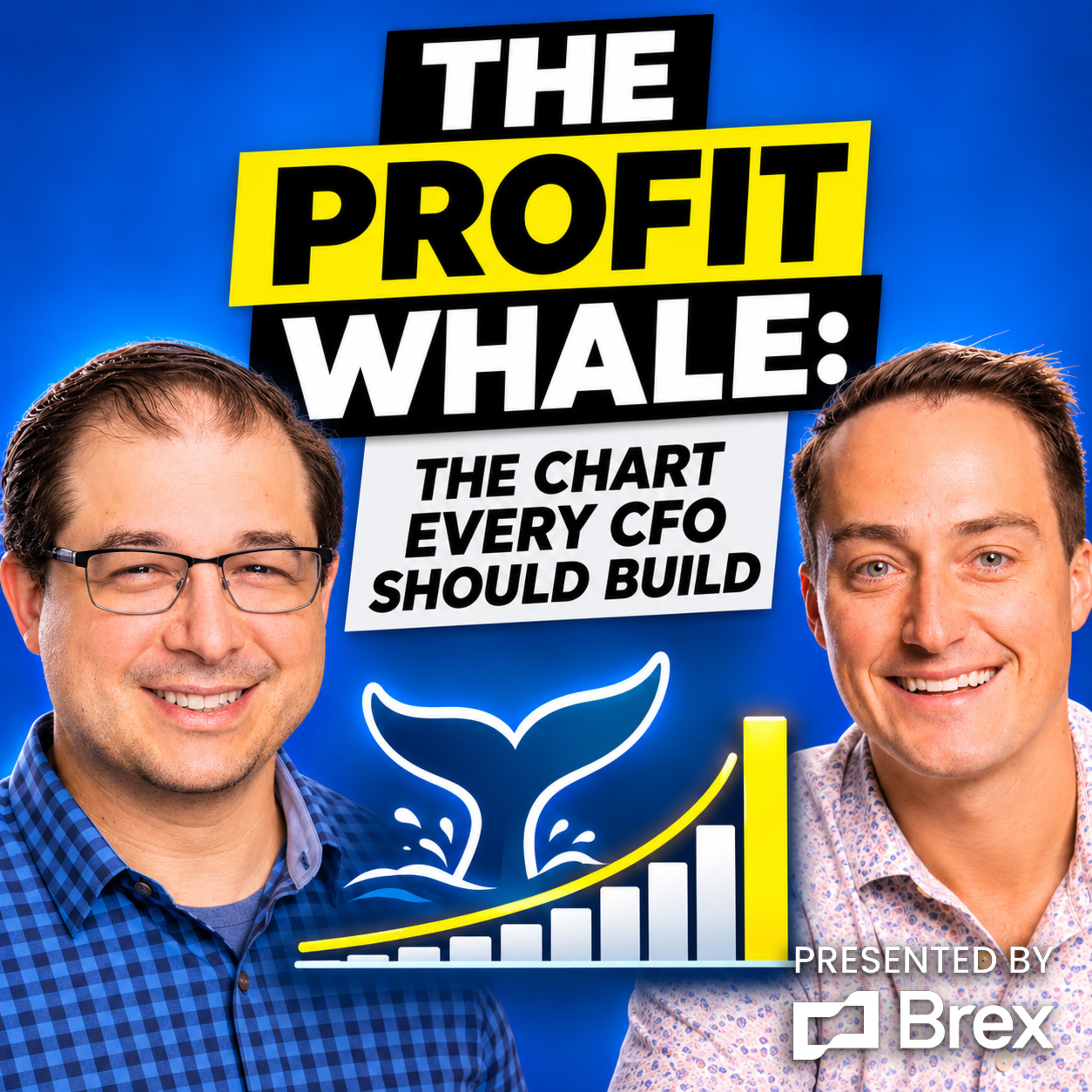
How CFOs can use unit economics and a “profit whale” chart to identify which customers drive most gross profit, avoid over-focusing on cost-cutting, and improve pricing and product decisions. It also covers “hidden multipliers” (small changes with big financial impact) and examples from WP Engine and other ventures.
Jason Cohen, serial tech founder/entrepreneur and author of Hidden Multipliers. Background includes building SmartBear (founded 2002, sold 2007) and WP Engine (managed WordPress hosting; hosted millions of sites; built two unicorns). Engineer by trade; writes extensively on unit economics, pricing, and capital allocation.
Written by AI. May contain mistakes.
Learn how a simple design adjustment can drastically reduce bandwidth expenses.
“This customer was using$4 ,000 a month in bandwidth costs or transfer, meaning moving bytes around.”
Discover the insights from Jason Cohen's experience and his book 'Hidden Multipliers'.
“I've been reading Jason Cohen's blog, A Smart Bear, for years.”
Explore Jason Cohen's background, achievements, and his view on numbers in business.
“Like, not all important things are a number, and the number is a proxy for something that's probably interesting.”
Understand how communities and ecosystems drive success in business.
“Salesforce believes in this so much that they measure what they call the general revenue from the ecosystem excluding themselves.”
Learn about the WordPress ecosystem and its growth as a major platform.
“And for the, for everyone, most people use WordPress, don't have much money, don't want to spend much money, and honestly don't need to spend that much money because the websites don't require it.”
Discover the elements that define a multiplier and drive impactful business changes.
“much of the time because we can't really analyze it like that, even if it's theoretically possible, which is probably not that either.”
Discover the unconventional strategy of incentivizing top affiliates to boost revenue.
“And so you did something that looked crazy to your competition.”
Learn how to visualize and analyze customer profitability through the profit whale concept.
“You know, these, these kinds of conclusions happen like, well, I should spend a lot more time and money on this.”
Explore techniques for optimizing customer relationships and profitability.
“We can immediately get that profit back.”
Understand how analyzing customer data can lead to better business decisions.
“So for example, a lot of times the problem is your own fault, your own product.”
Learn how to analyze customer profitability by identifying key issues and making small changes.
“And every other customer of ours needs it.”
Discover how effective pricing strategies can significantly impact customer signups and business growth.
“I want to move on to pricing because you go deep on this in the book.”
Explore the relationship between pricing, customer perception, and market segmentation.
“You are what your gross margin says you are.”
Explore the relationship between pricing, customer perception, and market segmentation.
“That's cloudcapital.co and find out how much you could save.”
Learn how discretionary budgets influence purchasing behavior in organizations.
“This is still pricing, but it's a different concept than what we were just saying because the concept we were just saying is still relevant.”
Explore the concept of value splitting and its impact on customer relationships.
“Like don't just automatically put those dimensions on there.”
Understand the differences between reducing costs and increasing revenue in business.
“You want to say, because we save you money on leads, you can double how many leads your dollar takes you.”
Discover the exponential nature of customer cancellation and its effects on growth.
Learn how to analyze customer acquisition costs by considering net new customers and retention rates.
“That number, that CAC of net new, however you want to say that, that's also an important metric.”
Explore the philosophical considerations behind selling a business and the financial implications.
“So there's a chapter where I talk about this, of course, lots of things that one can do.”
Delve into the concept of risk versus reward through the illustrative box game analogy.
“I think it was in the 1700s when the mathematicians of the time, I think it was people like Bernoulli and maybe Euler, were trying to think about gambling and probabilities and why people do stuff.”

Get the gist, explore an idea or ask about something said.
 Claude
On Run the Numbers, what are the key points of this episode?
Searching your listeningAutomatic transcript. May contain errors.
0:00This customer was using$4 ,000 a month in bandwidth costs or transfer, meaning moving bytes around. And the reason is they had a Facebook like button that was as big as a movie and it was on their homepage. So the solution was very easy. Just size that button in the normal way and then it's problem solved. What do you do? Fire that customer? How stupid is that? You got to fix this, but you can keep the customer. Revenue going up is 10 times more valuable than cost going down, right? like they're both good we'll take them both happy very happy to see both you don't want to say we save you money on leads therefore you save some money you want to say because we save you money on leads you can double how many leads your dollar takes you high quality materials do cost more and good talent costs more so if the price is low you're signaling this is low quality they do not want to feel like they're paying a high price they want to have high quality and they know that if you charge too little, that is not what people who have high quality do.
1:02Is this thing on? Yesterday's price is not today's price.
1:17I've been reading Jason Cohen's blog, A Smart Bear, for years. For a while, I actually thought he was a CFO because of how much he writes about unit economics, pricing, and capital allocation. It turns out he's a serial tech founder who just happens to be really good at explaining numbers. Jason is also the author of Hidden Multipliers, which is one of the more interesting business books I've read this year. I actually reached out to him after reading a chapter from the book about something called the profit whale. It's an exercise that shows how a small percentage of your customers can account for an enormous percentage of your profits.
1:48We talked about why acquiring 50 great customers can be worth more than acquiring 1 ,000 average ones, how Jason raised the price on one of his products from$35 to$1 ,300 and somehow got more signups, and the customer who was paying him$99 while costing him$4 ,000 a month to serve. Not ideal unit economics. We also get into his decision to sell his company, which prompted a surprising number of strangers on the internet to call him a sellout. I'm CJ Gustafson and this is Run the Numbers. Jason, welcome to the podcast. Hey, thanks for having me. So I'm a longtime reader of your blog. I'm talking about years here.
2:27It was actually one of the inspirations for me to start writing online. And I actually thought you might have been a CFO or a finance person for a couple of years, the way that you just talked about numbers. Maybe to start things off, you can just give us the quick overview of your entrepreneurial journey and how it coincided with starting the blog of SmartBear. I do like numbers. In college, I minored in math, which doesn't mean anything for what we do as a CFO, but it just means I like numbers, I guess. Also, I'm an engineer by trade, so I like the metric side of things. However, you can't just run things by numbers, right?
3:00Like, not all important things are a number, and the number is a proxy for something that's probably interesting. think. So you have to be careful. I think if you don't look at numbers, then you're blind. And on the other hand, if you're only looking at numbers, then you're not really understanding what's going on. But as you say, I'm fine with equations and theories. And I've been doing this for 25 years. I've built four companies. I bootstrapped and raised hundreds of millions of dollars. I've built two unicorns. That's SmartBear and WP Engine. SmartBear, I started in 2002, sold in 2007. That's where I get my online handle of SmartBear.
3:34And so that's why my blog is a smart bear and the podcast I have is smart bear live and so on and then WP Engine is what I've have been doing for the last 15 years another unicorn in that case uh WP Engine is the biggest managed WordPress platform so WordPress being the most popular way that people make websites online and so we host millions of those websites for hundreds of thousands of customers I left WP Engine a few years ago and so in the intervening time I wrote a book and I started a podcast I'm doing this. I'm not here just to promote that stuff. Don't worry. I don't care. We can talk about absolutely anything.
4:06I don't, there's nothing held back. This is not a teaser. Well, I knew I had to have you on because you're a homie when it comes to the cohorts and net dollar retention rates. And I mean, like it melts my CFO heart when I read your stuff. Real quick though, on WP Engine, I'm a business model nerd. I always find it so fascinating when you can have, I'll call it like a broader trend or a larger company out there, or even an open source project and then it spawns this cottage industry. But cottage industry is actually the wrong word for it because you can create a behemoth of a company within that.
4:38You know, people talk about communities. There's the community of this and that. And often it's not clear what that means other than a segment of people. But a true community is people who actually know each other, see each other, maybe in person, certainly online, communicate with each other all the time. And they kind of have each other's interests at heart, not more than their own, but there's a sense of rising tide lifts all boats. And so let's all let's all promote this general thing and try to do it. And then when you add in business, to me, that's what an ecosystem is. So to me, there's, again, a word that's thrown around a lot.
5:10Sure, like a Shopify ecosystem. Yeah, I like to define it as a thing in which all the participants are making more money by being part of it than they would have had they not been part of it. And so you might be, OK, let's take Shopify, a Shopify consultant. Well, if it wasn't for Shopify being itself being so popular and growing, it would be harder to get clients. But now it's easy because you can just say, I'm a Shopify consultant in Topeka, and then there will be a certain number of people and that will just happen thanks to Shopify and vice versa. Thanks for there being all these service providers.
5:39It's that much easier to pick Shopify as a platform because I know that if I need help with anything, I know I'll be able to get anybody. Like there's cheap people and expensive people and local and not local. Like I'll have my pick. And that feels good. To me, that's what creates what I would call a business ecosystem. And so WordPress is definitely that. So is Shopify. So is the App Store for Apple. So Salesforce. Salesforce believes in this so much that they measure what they call the general revenue from the ecosystem excluding themselves. They try to measure that. And then they report that to the street.
6:14And often that number is bigger than their own revenue. And they're proud of that because they're saying that's what an ecosystem means. An ecosystem where one player is taking 90 % of the money isn't an ecosystem, but one where there's many billions of dollars to go around for everyone. Of course, the center player might be the biggest one. That's OK. Everyone exists. And so not only is that nice economically and just sort of, I don't know, I don't want to say ethically because I don't really mean that, but it just feels good. Isn't this capitalism at its finest when we have lots of entities that are successful, cooperative in a higher sense, but then they could compete directly?
6:47Isn't that a good way to do capitalism? It seems like to me, yes. This is capitalism in a good format. That's amazing. When you started WP Engine, how big was the WordPress ecosystem at that time? Did you know that you were kind of hitching your wagon to something that was going to be as big as it was? Well, WordPress is funny because it's big. It was pretty big then. It was something like 8 % or 9 % of the internet then, which is huge. I mean, the internet's big, so 8 % of the internet's a large thing, especially if you're a new company. That's an infinite market size relative to your size and what you could dream about, right?
7:20And now it's 43 % of the internet, which again is mind blowing. And again, infinite unless, I mean, infinite if you're a smaller startup. Okay. It's not infinite if you're as big as WP Engine now is, but it's still very, very big. And the market size is probably not your, your cap or your strategic problem, right? It doesn't have as much revenue though, as one might think hearing those numbers. And that is because WordPress is a democratized platform that's open source. And for the, for everyone, most people use WordPress, don't have much money, don't want to spend much money, and honestly don't need to spend that much money because the websites don't require it.
7:51So it's good. That's a good fit. But that means there's not as much money per customer as there might be for something like taking the other end of the extreme, something like Adobe's Experience Manager, which is their CMS or their website platform for people that aren't familiar with those acronyms. And why do you want to be for picking websites with Adobe? They're enterprise customers. They spend millions of dollars a year each, and there's not very many of them, nor does there need to be again. Well, it's just very different than WordPress, of course. But I mean, Adobe makes more as much money as we do on that product.
8:20We host a million websites. So there you go. Like I said, I've been reading your blog forever. And I actually didn't know that you came out with a book until VP of finance at Dashlane, Taylor Ostott, listener of the show, said, hey, you got to read Jason's book. And I didn't sync up that the book hidden multipliers that he's telling me about was actually the guy who was writing a smart bear. And so I tore through the book in just a weekend. It was awesome. to kick things off here. What's the anatomy of a multiplier? Yeah. So the book's called Hidden Multipliers, which I don't know, it's a little bit of a dorky title, but I found that when I told it to people, they would say, I think they would start using the word multipliers themselves or say, oh, maybe that was hidden.
9:01So I thought, okay, that's kind of fun, I suppose. Of course, we all know there are things where if we make a small change, they'll have a big impact, 80-20 rule, blah, blah, blah. We already know that. It's tricky, even as CFOs with a reasonable handle on how the business operates, it's tricky to find what they are. In other words, what is the number that if we change it a little bit, we would dramatically, let's say, change revenue or profit or even something less measurable, like how fun it is to run the business or how easy it is, how differentiated we are, how innovative we are. I mean, in a perfect world, we would have a diagram with boxes and arrows and rates and flows and numbers.
9:31And these things that I just mentioned that are not numbers would nevertheless be numbers in this. Oh, and also we'd have our competitors in the market, all kinds of stuff, all modeled. and then we'd use math or some simulation or something and find out which of the things we could take small changes to that would have a big change and why. That's what we'd do if we could. Of course we can't. So these things where a small thing can make a big difference remains hidden much of the time because we can't really analyze it like that, even if it's theoretically possible, which is probably not that either.
9:58Or we have a list of 10 things we could do. We're not really sure which ones would have that kind of effect. Or maybe we have an idea, but we're so scared of facing that thing. You know, cancellations really are high and we better find out why, because that means the customers that decided to buy decided we were our promises that we've made on the homepage. We didn't fulfill. So what I found over again, these 25 years of building companies myself, and of course, investing in other companies and things like that, is that there are these things which are pretty common. There's no such thing as advice work, things that are a hundred percent.
10:27Hopefully we all know that, but things that I found repeatedly, let's say that did have this attribute that when you made small changes, they had a big impact on important things like revenue and profit. And why? Because they were connected to some mechanistic thing that's very common in companies, especially tech companies. That's what this hidden multiplier thing is, not just 80-20, but that it's rooted in a mechanistic thing. Therefore, it's predictable, repeatable, and therefore there's things you can do about it. And they're reasonably common, let's just say, so that if you look at the book, at least some of it will be applicable, if not all.
10:59And then the final thing is, this is about stuff that you can do with your existing budget and team. So that's the fourth thing about it. Because of course, there's lots of things where you could get a new team, you could raise money, and maybe you should. That's fine, you know. But this book is about, no, you're already running ads here, or you're already putting something on your homepage. You're already deciding what to build in the product, and so on. Could you behave differently with the same people with the same budget and get a lot different result? That's the question of this particular book.
11:26When somebody asks, how's business. What they're really asking is, how are your finances? Because every single decision a company makes is inherently a financial one. I've said it a thousand times, finance isn't just keeping a tally of what went down. You are not the person piecing together what happened the morning after in the hangover. You're the person deciding whether bringing Mike Tyson's tiger back to the hotel is a good capital allocation decision. Which means your team can't afford to be living in the past policing a$30 software charge or slogging through a close that drags on for weeks.
11:59Remember, there's a tiger in the living room. That's why you need Brex. Brex built an intelligent finance platform that combines global corporate cards, expense management, banking, bill pay, and travel into one system with real-time controls. AI handles the grunt work, enforcing spend policy at the point of sale and reconciling continuously so your best people can chase growth instead of chase and paper receipts. Defense handled. Terry Tate office linebacker style. So go play offense. Throw the ball deep. Thousands of top companies, including Anthropic, DoorDash, and Coinbase already run on Brex.
12:35Join them and take back your team's momentum at brex.com slash metrics. That's brex.com slash metrics. Or just tell them CJ Sane. Still in budget season? My condolences. If you're only on V40 of the plan, you're doing better than I ever did. Keep it up. Here's what I'd want in the trenches right now. Something I can hand a question to that already knows the context of my business. Not a chatbot that's never seen my P &L, and not a bunch of AI features that are hiding in five side panels that I really don't know what to put. That's what Applecom just launched. It's called Abra, like Abra-cadabra.
13:10I hope they let me keep that in. And it's one agent for your whole finance team. Ask it something like, what happens to Runway if we push ad spend 25 %? or what changes has my marketing leader requested to their 2027 budget? Abra pulls together your actuals, your models, and your business context, calls on the right agent to model, analyze, or draft the board pack, and comes back with the answer, plus the trade-offs and the next move. That's incredible. And for the control freaks, which is all of us, if we're being honest and you listen to my podcast, it shows its work. Abacom's engine does the math, not the AI.
13:45Abra, Kadabra, only sees what you're allowed to see, and nothing saves until you approve it. Here's the best part. It's included in Abacom as is. There's no extra charge, no add-on. And I have known Abacom's founder and CEO, Julio Martinez, for more than three years. He and his co-founder, Jorge, came out of finance and this thing shows their work. Most AI makes one person faster. Abra makes your whole team AI native. I could read you a short code to go type in, but honestly, just tell Jorge and Julio CJ sent you. They'll hook you up. Remember when pricing was simple? one product, one subscription, one invoice every month.
14:20Those days are over. The AI economy is changing how everything gets bought and sold. We're seeing usage-based pricing, hybrid contracts, and something called a credit. The finance systems built for vanilla subscriptions weren't designed for this. This isn't just a rev-rec problem anymore, because outdated revenue architecture can kill a great pricing idea before it ever reaches the market. RightRev lets you recognize revenue in whatever shape it comes in, Whether you're launching consumption credits or testing entirely new commercial models, RightRev gives finance the flexibility to support whatever pricing model comes next.
14:55So product teams can keep on innovating and finance teams can keep pace. If you're architecting revenue for the AI economy, learn how RightRev can help. Visit rightrev.com slash CJ. That's me. That's rightrev.com slash CJ. Well, maybe to make it real for people, you start the book with this story about your affiliate program and realizing that the top 1 % generated more than half of all the revenue from that channel. And so you did something that looked crazy to your competition. You called it that crazy. You offered those affiliates double the going rate. Take me through that multiplier. Yeah.
15:32So of course, anytime you see one of these charts where it's like, some people say a power rule, I think you and I know, sometimes it's a power rule. Sometimes people just say that just like they use the word exponential when it's not really exponential. But you know, we've all seen these charts where, okay, it has a thin, important head. It has a long tail and so on. Maybe the tail is important. Maybe it's not. That depends on the distribution. The top seven, okay, that particular number was obviously just our case, but all right. The top seven affiliates represented more than half of all the revenue in the channel, like you said, and the long tail didn't matter at all.
15:59It wasn't a thick long tail. It was a thin useless long tail. Now affiliates, just what that is, is when someone else has distribution channel, like a newsletter, a YouTube channel, a podcast and so forth. And so if they promote you in that, maybe they can get sales for you. And so maybe you'd pay them to do that. Usually pay for performance. So if someone converts through their newsletter, you pay them, that kind of thing. That's what an affiliate is. Anyway, so that's what this channel was. So once you see this, that kind of curve, you already know, oh, so it's important to get those top view affiliates.
16:29So this is already an obvious multiplier by my definition. This is just not terribly insightful or hidden because you know this one, but it was a good example exactly because it's so obvious. So later in the book, here's ones that are maybe not as obvious, right? So we had this realization that if, let's just say seven are the only ones that matter, if we could get them exclusively to promote us and no competitor, then of course we would get the customers, but importantly, our competitors wouldn't have that avenue for growth at all. Now we'd need to pay them because they're making money off of our competitors too.
17:01We have to somehow give them enough money to stop it. The idea was if we pay them a lot more like double, but it's exclusive now, it's still pay per performance, but way more than you might say our direct ROI would suggest would be wise, right? But that's because we were able to compute, all right, here's the ROI that just makes sense from a standard standpoint. But then what else would we pay if we could cause the affiliate to not promote a competitor ever? Well, not more than a dollar and less than$10 million. it's worth something to us. Obviously, this is a subjective thing, so you can put whatever number you want on it.
17:34But once you do, you can then divide that by how many customers this affiliate normally gives you per month and actually arrive at a real number. You could pay that affiliate on top of the normal ROI amount that would justify this idea if it's exclusive. So some of those affiliates did that. And that's how we were able to compute what would be willing to pay for that. And it worked. And what was neat, and I did say this in the introduction, is I was at a conference and there was kind of a circle of people talking and there was a marketing person from a competitor because WordPress is friendly like that, saying, yeah, affiliates don't work.
18:09We've tried it, but they barely send you any traffic. It's really crappy. They just don't work. Only stupid companies like WP Engine do that and they way overpay and it doesn't even work. So they're dumb. So WP Engine just wastes money on it. And of course, I know we caused that reality for that person. So it looked crazy to that person that we would do that. But in fact, it's completely calculated and we cause that reality for them. And as I've once heard someone say, we pinch the oxygen, meaning there was like a little tube that they could breathe from there and you just pinch it off far away.
18:40So all they know is, hey, there's nothing coming out of this tube. They don't understand that you're pinching it. So I'm not suggesting that, you know, this is a tactic that always works everywhere, et cetera. But it's a good example of once you realize that something is a multiplier, certain actions could become possible or feasible, or you could brainstorm them that you wouldn't even, you would never consider before until you realize how, you know, this imbalance and what it, and how a small change in there has a big impact. And therefore you can overspend quote unquote, or spend a lot of time on it.
19:12Like it's worth your time to optimize it or something like this. You know, these, these kinds of conclusions happen like, well, I should spend a lot more time and money on this. I want to talk about the profit whale. Okay. So I often joke on this show, Jason, it's where we describe visual charts in audio format. So take us through this exercise for all the gross profit gurus out there. For sure. And I have a YouTube video on this. So if you go to my YouTube channel, look at profit whale. It's amazing. I watched it. I watched it this morning. Like you did a really good job on it. Thank you. So here I am showing you how to not buy the book, which is really dumb of me to do, but there you go.
19:45You don't have to buy the book to see this thing. And so what you do is you compute the gross profit by customer in dollars, absolute dollars, not percentage. So you have the gross profit per customer, and then you simply line the customers up from most gross profitable in dollars to least, i.e. negative, right? And then you make a cumulative sum and you plot this cumulative sum. So the x-axis is the number of customers you've done so far or the percentage through the customer base, and the y-axis is the dollars of the cumulative sum of gross profit. So of course it starts by going up fast because these are the most profitable customers.
20:19We're adding numbers quickly. So it starts by a high rise. Slope starts getting less as we get into customers with sort of a normal amount of dollars. It caps out at some customers where the expenses equal the revenue. And then it falls as you get to these negative gross profit customers and lands finally on the actual gross profit dollars of the company, of course, because we've accumulatively added it all up. So of course, it's always going to land at the gross profit dollars of the company. You could also do this as a percentage of gross dollars, in which case it would end at a hundred percent, like all of it.
20:47Right. So what's neat. So you get this weird little hump and it's called a profit will just simply because I guess somebody thinks it looks like a whale. Not really, but okay, it doesn't matter. I'm smart bear. This is a profit whale. How common is this phenomenon that it's shaped exactly like this? And the answer is it's completely universal. And in the book, I give some bullet point examples because I didn't want to go on and on with lots of cases. I just wanted to show that it was universal. So there's an insurance company, same shape, consumer packaged goods, same shape, grocery store, same shape.
21:16And here I am, tech company, SaaS tech company, same shape. Well, the head and the tail are really, both of them have a lot of actionable things to do. So you have this profitable head. And the obvious question is, how do we get more customers like this? So in the case of WP Engine, just one of those was like 20 or 40 times more gross profitable than the median customer. So what that tells you, for example, I mean besides the obvious thing of like we got to identify that and then we've got to try to get them like ads and positioning on the home page and I mean we should do all kinds of stuff for them we should even make features for them so that they stick like there's all these conclusions that you come to but then how do you decide who your best customer is well that's what the next few chapters of the book do right a little fun insight there is you can afford to spend literally 10 or 20 times more money to acquire one of them not a little bit more money like an order of magnitude more money that isn't as obvious until you chart it out and realize no that is actually true now that's actually an insight because that's not what marketing and sales were thinking right when i said you could spend more they were thinking okay like up the ads a little bit dot 10x so that's already an insight of course there's many more but that's a quickie but then on the on the unprofitable tail again your mind goes right away to fire those customers.
22:30We can immediately get that profit back. And you might need to fire some, but to me, that's a last resort because there's lots of things that could be happening that you should go through first before you decide that's what should happen for a customer on the end. You do need to do something to the customers at the end because they're unprofitable and you can't have that. And I do want to ask you about that. I want to run you through firing customers because that's something that's difficult to wrap your head around. But first, just to call out the stat, I think in the book that you had at WP Engine, Jason, 50 customers in group A was the equivalent of, I think, like a thousand of your typical customers.
23:04That's right. That tells you a ton about CAC payback period. Yes. But also on the on the unprofitable tail, 150 customers, and this is out of 7 ,700, represented a million dollars of loss by themselves. And we didn't. But if we fired those 150 out of 7 ,700, we would instantly be making another million dollars a year. At the time, I believe we were at seven million in ARR. Like insanely huge, right? So both ends, you have this thing of a small number of customers make a big difference. Oh, look, a multiplier because it's systematic and all companies have this. Here we go. This is why it's in the book.
23:41And what blew my mind visually, and I don't know why I had never done this before, but I had never done the cumulative buildup of gross profit before. I'd done cohort analyses. I'd looked at unit economics of each customer one by one, but just seeing it in that in that sloping fashion adding up to the total it does give you that wow factor on both ends of the tail you always want to do multiple analyses and and different visuals will tell you different things and hide different things right so of course this chart is not like the chart that rules them all of course not none of them are like that in fact that's really bad thinking if you think that right no metric and no chart rules them all but this is a neat one like like this does give you more insights than others or let's say different insights and therefore it's worth it.
24:24If you're just charting it individually, like as a bar chart, you still see kind of these shapes and things, but it doesn't have the visceral impact. And sometimes, and as CFOs, we definitely know this, sometimes you have the insight, but if it's not presented in a way that the other people in the company accept and get excited about, not just accept is true, but get stoked about, you won't get it done. So if you say, hey, we need to focus on our top customers and hey, we need to disposition these customers at the end, we can transform the profitability of this business if we do it, which is true.
24:56And that's the kind of thing a CFO does. Because if all you're doing is recording things in a book, then you're an accountant, maybe a controller. But a CFO is strategically asking, how can this company be much better? And that's the kind of thing the ProfitWheel does or suggests or helps with. But in a way that muggles who are not CFOs can go, whoa, wow. And that makes it really effective. That alone makes it a useful tool. The other thing, and I put this in the book and in the YouTube video, is I do make the same chart, but this time with gross profit margin. Yeah, this remix is really cool.
25:28So of course, that's just the first chart where I'm dividing by cumulative revenue as well. Numerator, denominator. Yeah. Now, the reason I do that is because I just said, like if you visualize things in different ways, sometimes you get different insights, but other things are hidden. When you did this on my data, WPingent data in the book, what you got is a chart where rather than a steep rise and then a fall, it was a flat chart at 80 % gross profit margin, which we all know is a fantastic gross profit margin for pretty much any business in any field, at that tail, it drops to 55%. Oh no, 55 from 80?
26:02Are you kidding me? So as I point out in the book, and I know all your listeners know this, the difference between a software company raising money at 55 % profit margin and raising money at 80 % profit margin is the difference between whether you will raise money at all or not. Very different valuations. Like you probably can't raise money at all because what's going on here, this isn't even a software company versus, oh, this is great. Next question, right? The first chart showed how these customers in the head were very profitable and smart to go get them. The second chart did not show that.
26:30It was pretty flat there because as a percentage, it was pretty flat and good. A big customer at 80 % real-spirb, of course we want more of those, but that's not visible on the chart. But what was visible is just how devastating those last 150 customers were, just how vital it was because if you go to a board meeting and say if we were to fire the following 150 customers by name we would change our gross profit margin from 55 to 80 and then here's a chart like that's that's an insanely good argument which even the first profit wheel chart did not show and other kinds of like data and numbers maybe doesn't show that just goes to show how useful it is to remix this stuff.
27:14And so anyway, you could fire customers and sometimes you should, but there's all kinds of other things we found. And I list these in the book too, because there's all techniques that you want to go through. So for example, a lot of times the problem is your own fault, your own product. For example, we'd have a customer where they're calling TechSport every day and we're like, ah, that's terrible, fire him. But wait, why are they calling TechSport every day? Oh, because it turns out there's this thing they need to do on their sites, this configuration they need to set. Although you need to do that only once a year, they have 300 sites with us.
27:45When a normal person does once a year, they have to do every day. And we don't give them a way to do it in our user portal. We don't let them self-serve that. So they have to call support. That's a product bug, is it not? Like the answer isn't fire the customer. The customer is giving us a gift. Let somebody do that within the portal. Now this person can self-serve. They'll stop calling support. All of a sudden they're profitable. And every other customer of ours needs it. It's just they didn't need it so often that it became obvious. But this is actually better for everyone incrementally. Firing the customer would have been the dumbest thing in the world.
28:16It was our fault and now it's better thanks to that. Why is this happening for each customer? And see if there's a solution where they're not leaving. You know, your product can be better or maybe they just pay more and they don't get to be the most profitable customer ever, but they can just get out of being that bad. But you still keep them because maybe you want the logo or just market share, right? There's reasons to keep a customer, even if they're not the most popular, but maybe they just kind of shave some of the pain out of there. It's worth going customer by customer. Again, that sounds, that could sound crazy.
28:44What do you mean customer by customer? We don't have time for that because it's such a big deal. So impactful. In fact, you do have that time because as you chew through it, you make so much more money, you improve the product. Like there's all these incredible advantages of in fact, going through one by one and asking what's going on. And of course, sometimes you find a pattern and then, you know, 15 more out of that 150, just get knocked down automatically because all 15 use this one pattern. Well, one thing you found in that analysis is you had this customer that was paying you 99 bucks a month, but costing you around 4 ,000.
29:15What was the small change you made to save it? Again, we're a hosting company, which means we are the servers where the websites go. This customer was using$4 ,000 a month in bandwidth costs or transfer, meaning moving bytes around. And the reason is they had a Facebook like button that was as big as a movie. and it was on their homepage or really actually the design of the site. So really every page. And so every time the page loaded, this movie would get downloaded by whoever was visiting their site. Obviously it's not necessary. Some designer had done this. It's ridiculous. So the solution was very easy.
29:47Just size that button in the normal way and then it's problem solved. What are you gonna do? Fire that customer? How stupid is that? You gotta fix this, but you can keep the customer. And then that experience lets us ask ourselves, are there other things like this? It doesn't have to be the Facebook like button, but is there a pattern around things that really shouldn't be that big, but they are? And of course, we don't need to look at thousands of examples, but is there some report where something that's absolutely egregious, we could just look at the top 10 and just take a look? One of the things we found, for example, is that people legitimately had videos on their homepage.
30:20Like, for example, a real estate agent might show you a walkthrough of the site, right? Those also take a lot of transfer. That costs us a lot because we're in the cloud, and it would cost the customer a lot if they were also in the cloud. But there's these services that serve those videos for free. You can do that through Cloudflare, for example. You can put it on YouTube, for example. And there's other services as well. Those are just very common ones. So we realized, wait a minute, if you just move your stuff to a service that's meant for serving videos, your costs go to zero. Our costs go to zero.
30:48We're all happy. And that's meant for that anyways. It's probably better for that anyway. I want to move on to pricing because you go deep on this in the book. And I write about it all the time. I'm such a dork for this. You had this product called Code Reviewer. and it started at$35 per seat. In over four years, you raised the price to$1 ,300. So from$35 to$1 ,300 over four years. But your revenue multiplied and signups increased. How can that happen? Yeah, this happens all the time for newer companies, not usually for mature companies, where you raise prices and signups go up. Mature companies often are in a market that's understood.
31:24Their brand is understood. And so you see in the news all the time, people trying to raise prices. Sometimes that works out. people stick anyway, sometimes not. But with brand new companies, you've almost always started too low. Now, maybe that's okay. Maybe your product doesn't do anything and that's fine, but probably you just didn't have the confidence and you didn't understand who the customers were. That's more likely the reason when the company is new or small. Therefore, it's almost always true that raising prices, you just have room to grow anyway. But the biggest reason is price determines the market.
31:52When the product is$10 a month, you're selecting a certain part of the market because of course, midsize companies look at that and say, that can't possibly do what we need. And so it's just not even in the consideration set to say nothing of enterprise companies, it's even more obvious. So a lot of times when you raise the price from 10 or$20 a month to something like 50, 100, 200, 300, of course, the hobbyists and people and consumers and stuff are like, oh, that's too expensive. And you lose them as a market. But what you gain is the small business or midsize business that says, that's what I expected for what I needed.
32:23Because you're now in a healthier market segment that wants this, that probably has budget for it, they're actively buying and all these things, which hobbyists at low end is often not doing, your signups can go up. Can you say more for how pricing determines your market? Because it sounds counterintuitive, at least in how people approach it. Maybe you can use the example of hobbyists versus professionals. So when Lean Startup came out like 10 to 15 years ago, a lot of people were saying when you interview customers, you should never talk about price because what you're trying to do is understand what is their life like.
32:56And then you're trying over price. And I always, and to this day, disagreed with that. I think intelligent people can disagree. Like, I don't think it's a stupid argument by any stretch of the imagination. And maybe they're right. I don't know. But my philosophy is not like that because I believe the price is just as much what the product is as any feature or as your brand, right? So your brand, how you pick colors, typography, the words that you use, that is selecting people. You're saying either, hey, I'm formal and trustable, or you're saying, hey, I'm just like you. I'm just a person and I'm small and scrappy, or you're saying I'm funny and irreverent, or you're saying the brand matters as to what the product is, how people perceive it, and therefore which people want to buy it.
33:37Just as your brand and messaging and stuff selects for certain people and rejects other people, and that's good. That's its purpose. So do, of course, features. I mean, if you say it's easy to use and I'm not SOC 2 compliant, you're saying, hey, if you're not good at this and you just want something simple, this is probably good. But if you're a larger company and you need governance, I don't got that. So this isn't for you. That's what you're saying. Features select customers. Well, so does the price in my view. This is why I don't think it can be ignored as you're asking, what is this and who is it for?
34:07If you set the price to$10, then an enterprise company looks at it and goes, well, that's obviously can't do all the things I need. And if you set it to$10 ,000 a month, the hobbyist isn't going to buy it. So obviously the price also affects it. I say the price, of course, there's really a whole pricing strategy there. Do you have different tiers? How are they organized? Of course, usually you do have different, have like an axis of usage and an axis of features. Often the axis of features and capabilities has to do with what segment you're targeting and usage is a way for you to, you know, just get paid back on that and just another way to charge more if people are getting more value, we hope.
34:44So, you know, you can see that like Slack is a good example because they're just really obvious about it and pretty much everyone knows what they do. So you can see right there, oh, look, here's where organizations that don't have any money can just use Slack anyway so that they're used to it. This is obviously for quote unquote marketing. And then, oh, look, here's the enterprise plan where they have, you know, the lawyer can hold logs, but other people can't see it. Blah, blah, blah, blah, blah. You know, you can't edit because then the lawyers don't like that. You could see all that in their enterprise plan and so on.
35:10There's other tiers. And usage is also really obvious. Does it save records? How many users can you have? Like usage again, it's like, it's just real obvious what you would do. So their pricing, I think, is a nice example of that. But you could look at things like most CRMs are like that. Most open desk software is like that where there's tiers for market selection and there's usage for how big are you. All of this is market selection though. So I don't think you can leave that to the end to say, what is it? And so even when you're looking at something, like let's say you want to buy a new backpack, surely if you right away notice whether the price is$40 or$340.
35:43And if it's$40, you're like, okay, if this is like a throwaway thing that I need for my kid for a summer, that actually might be good because I don't care if they ruin it. On the other hand, if you're like, oh, it's a$340 bag, you immediately start thinking things like, okay what are the materials are the zippers ykk are the materials really nice okay need it to be waterproof so is it really waterproof because for that money it better be actually waterproof if that's what you need and so forth you just like i'm going to look at these reviews and it better be like phenomenally good if i'm going to pay that much you look at the price early and it colors the whole idea of what is this and what trade-offs am i making and are you willing to make a wise man once told me that every startup is really just a loosely functioning disaster Ain't that the truth?
36:21If your startup needs a little extra support, and let's be honest, who doesn't need a little help now and then? You're in for a pleasant surprise with Fidelity. Fidelity Private Shares helps early and growth stage companies stay investor ready with cap table, data room, and scenario modeling all in one place. A messy or missing cap table might not just slow you down. It could cost you your next fundraising round. VCs are flooded with pitches, and if your equity is confusing or missing, they'll move on fast. Fidelity Private Shares gives founders the structure and simplicity to focus on what actually matters, building your company.
36:54If you stay investor ready, you don't have to get investor ready. Check out fidelityprivateshares.com to learn more. That's fidelityprivateshares.com. I got news for you. The ERP category is finally getting disrupted. And if you haven't heard of it yet, please pay attention. It's the AI native ERP built specifically to replace NetSuite. And it's already won over hundreds of finance teams. Their mission is to make these zero-day close a reality, and they're actually doing it. We're talking teams closing the books at 1.35 p.m. on the first day of the month. Companies like Windsurf, Mercore, and hundreds of others run their entire finance stack on really.
37:30Revenue recognition, close management, multi-entity, native Stripe, and Salesforce integrations. Woo! Everything a scaling company needs. They've got 5.0 stars. 5.0. Wow. 5.0 stars on G2. They're backed by A16Z and Sequoia. Heard of them. And CPA-led implementations that get you live in 45 days. That is simply unheard of in the ERP space. If your books aren't running as fast as your business, check out Rillet. Book a demo at Rillet.com slash CJ. That is R-I-L-L-E-T dot com slash CJ. That's me. You are what your gross margin says you are. Sorry, my kids are tired of hearing me yell that at the kitchen table.
38:11Dad, I'm two. I don't know what cloud costs are. Well, I do. And cloud infrastructure is the second largest line on most tech P &Ls. And yet, most finance leaders couldn't tell you how it's priced. And as a CFO, I understand there's a non-linear impact to your company's valuation when you improve your gross margin. And the path of least resistance is through your AWS or GCP bill. Because like anything you buy, cloud gets cheaper when you buy it in bulk. In fact, In fact, you can get the rate down by 20%, 30%, even 60 % in some cases. The flip side is getting saddled with a bunch of capacity you never touch.
38:46Happened to me once, I think I still got some megawatts in the kitchen cupboard somewhere. That's exactly what Cloud Capital solves. Cloud Capital underwrites the risk so you can realize the same savings of a deep long-term commitment sands the downside. Oh, and it takes no engineering work. Bingo! I've known Edward since back when he was just starting the biz. And it's incredible how much they've saved customers on their cloud bills. That could be you too. So head over to cloudcapital.co. That's cloudcapital.co and find out how much you could save. And this sounds a bit counterintuitive, but I've seen it in the B2B world where a bank or something will look at your software and they'll say, I actually want to pay a lot for this because I equate it in my mind to it being safe and having everything else.
39:32And there's a signaling factor to it and a credibility factor. And to tie it back to the consumer world, my father-in-law has a wood flooring business, Jason. And a lot of the houses he'll do are second homes. And they're around a lake. They're nice homes that cost millions of dollars. And he actually said to me one time, he never tries to be the lowest price on those. He actually thinks that these people fundamentally want to feel like they are paying a high price for this in their house. They do not want to feel like they're paying a high price. they want to have high quality and they know that if you charge too little that is not what people who have high quality do because high quality materials do cost more and good talent costs more so if the price is low you're signaling this is low quality and again sometimes you're fine with that if you just want a sweatshirt for three dollars that you're going to use for hiking and it's okay if it falls apart in the laundry after three days then that's fine you know it's not about good or bad.
40:31It's about matching the use case or the desire. If it's cheap, it doesn't make sense that great talent and great materials would be cheap. That's illogical. They also know it's possible that some people are gouging them because they know they're rich people by the lake. So if it's too much, you might be wary that someone's gouging you, right? So it's not true that they just want to pay as much as possible. In luxury goods, it can be true that they just want to pay as much as possible because the price tag itself is the signal, which is the value that they're getting. So when you have a handbag, it is true that if it's just$10 ,000 for no reason, that is the point of the luxury handbag.
41:09It's like the animal with big horns. Look what I can do. I don't need this, but I can do this because that's how strong I am. That's what the luxury could. So there it could in fact be. The more expensive for no reason is the value the customer is getting out of it. In which case, yes, the more money, the better probably, as well as the style. Of course, it needs to be stylish, I guess, whatever the person thinks. But yeah, that could be. As a CFO, I know how approval matrices work. So even when we're selling sponsorships or something like the newsletter or the podcast, me and sales guy Matthew will always say, well, what space does this occupy in the mind, right?
41:40Like if you're in for making it up$10 ,000, you're probably also in for something up to$50 ,000 as far as marketing budgets go. You have this example of a product you were selling within a data center. And I think you were charging something like$100 or something. But you realize that the people who are buying it, they didn't care if it was$100 or up to$999 the way that their budgets work. Can you explain discretionary budgets and how it factors in? This is still pricing, but it's a different concept than what we were just saying because the concept we were just saying is still relevant. The way people's budgets work, and obviously CFOs, we all know this.
42:15When you give someone a budget for something like, hey, you can ready your credit card for anything under$100. If you tell someone that in the company, you know what's going to happen. Guess who's getting$85 worth of Chipotle today? exactly that whatever is less than 100 bucks they will buy with abandon and let's let's just say it's objects like let's say this is your it department they're buying wires and and an adapter they're not going to be too discerning about that stuff because they can just buy and see like i don't know if this battery is any good but it's no skin off my back i don't even have to report this up so i'll just buy it see if i like it i'll buy more and in fact if i have to buy 10 000 of them because this is now our standard issue for all of our whatevers then i'll have to go through procurement and do the thing.
42:52In that sense, we can see that the way things are budgeted, there isn't just two choices, but the way things are budgeted dramatically changes how the person thinks about what is the barrier for me buying this thing. Consumers, unless it's, again, unless you're selling to rich people, which is not a bad idea, generally do care and generally don't have this mindset. But when a budget is set by somebody else, you're spending someone else's money. The rules of how you spend someone else's money matter a lot. So going to a product that's in In this scenario,$101 might be as much effort for that IT person as$1 ,000, right?
43:22And so they may still buy things that are$1 ,000, but how much consideration are they giving to that? A lot more. There's a huge barrier in front of that. But the barrier is equal whether it's$101 or$1 ,000, which is funny because that's not obvious until I say it, then it's obvious, right? So the difference between, as you say,$99 and$10 is nothing. To them, it's free either way. So I've been at companies before where we win what seems to be this massive logo, like a JP Morgan. And then we discover pretty quickly that it's a small team within the company using it for a small project. That isn't top down.
43:56That's not a signal of top down. It's just the opposite. But you make this great point that software design for small businesses is almost guaranteed to also be purchased by big businesses too. What did that realization mean for your company? Well, the biggest thing it means, and again, the reason that this happens is because teams at enterprises buy stuff. And so the thing that works for a small business, because let's say it's just for one team where it's simple or whatever reason it is, that's what teams at big companies often want too, when they have the ability to do it, which is not always, but sometimes they do.
44:26half people in America work for a big company. So there's a lot there to potentially buy. And generally their budgets are such that it's easier for them to buy that because it's a small thing. We tend to segment customers by the size of the company that they work at. And often for product, that's not the right way to segment them. Demographics, firmographics, often not. And this is why. Because when we sold, let's say WordPress hosting, yes, a smaller company, this might be their whole homepage. But we were also selling to McDonald's and Microsoft and all these big companies. It just wasn't their homepage.
44:56It was other use cases at the company because it wasn't about the size of the company. It's what are they wanting to do with the website? That was the key thing about whether they would be a good customer for us. Now, it's not that the size of the company is irrelevant. We all know from purchasing processes that big companies have different purchasing processes and small ones. So maybe they won't just run a credit card. Maybe you have to be in their vendor, you know, be registered as a vendor and maybe they need certain governance requirements on you. Okay. It's not necessarily identical, but it may not be the primary axis by which you say, what is this product for?
45:26Who is this product for? What is the market like? These kinds of product questions, often the size of the company is not relevant. Now, of course, sometimes it is. So for example, if I were making HR software, the size of the business is very relevant because HR at a company with 20 people is different from HR at a company with 20 ,000 people. And so the size of the company really does matter because it really does select which customers might want to buy it. And no, one team at Google will never buy HR software for a small bit. Like this is never happening. So it can matter. But the question is, is it actually important for your product or market or not?
45:58That's the question. So don't just go right to this industry or vertical or the size of the company. Like don't just automatically put those dimensions on there. Sometimes they're right, but often there's other dimensions that are actually how are you selecting the market? I want to go back to pricing for a second and drill into something more specific, which is splitting the value. Because something we often talk about on the podcast is if I create a hundred bucks of value, call it for a customer, how much should I be able to keep? Economically, it has to be under a hundred dollars, but realistically, do I capture 20 bucks, 30 bucks?
46:31How do you think about splitting the value? Yeah, so it does sound good economically. You generate a lot of value for the customer and you split it with them in the sense that there's a price, that's the part you keep, and there's the rest of the value, which is the part they keep. You want to generate the most value and you actually want to extract the least that still gives you a good company, which sounds a little funny because what an economist would say is extract the most that you can. And I would say you could do that. The customer is going to feel that. And then the perception is they're kind of overcharging me.
47:03I kind of still like it, though, for whatever reasons. but you've created an adversarial negative relationship with the customer as opposed to if they feel like they're getting way more value than they deserve then their view is going to be I love them they're the best I want to keep growing with them I want to give them more business I'm going to tell other people about it I'm going to leave them a good review it's a totally different relationship which in my opinion is a better long-term result for the company a better strategy is to have that relationship with your customers that will get you more growth and profit over time rather than I can extract a few more dollars from them now, but I destroy that entire thing.
47:38That's just a philosophy. And of course you can find counterexamples, but I would rather be one of these beloved companies that people are always telling everyone to buy from and not, let's say the cable company where everyone runs away as soon as they can. And they do. And that's a really crappy business as a result. But okay, splitting the value. So what are we doing? However much you want. Like you said, if you save someone a hundred bucks, you obviously can't charge them a hundred bucks because there's zero value then. And they're just not going to buy it If you save them 100 and you charge 80, it's just not worth it because we all know there's implementation costs.
48:07It takes your attention. You could have done something else. There's opportunity costs for that. Maybe all these numbers are kind of made up. We don't know exactly what will save them. And they're not really, the ROI isn't that precise. It has to be obviously great. Like I save you 100 bucks, I charge you 20. And you're like, dang, this is great. That presents a problem for products that are sold as saving money, saving time, or otherwise eliminating something bad. because when you position the product as eliminating something like time money or other bad things what you're doing is you're saying what the value is i'm saving you 100 bucks i'm saving you an hour you're stating that that's the value okay that's good but then your price has to be something like a fifth of that or it's not worth it you've capped the price you can charge because you've stated what the value is and you can take only a small amount of it you can argue with me i could take a third okay whatever it's capped it's to a pretty small amount now is that a bad business?
48:58No. Saying I save you money and then you do is a good business. Like there's nothing wrong with it. I'm just saying it's like pretty weak strategy. So the other way to do it with the same product, just different positioning, instead of taking away a negative, what positive gets created for the customer by the same product, the positive that they value and would pay more for. So the example in the book is here's a product that saves money on your AdWords spend. So, okay, you saved me this much spend. So I only charge, okay, blah, blah, blah. But what happens when I save money on AdWords spend is I can take that same budget and I can buy even more ads and get even more leads, whether it's in Google or elsewhere.
49:36And if I spend my money to get more leads, my revenue goes up. Anyone listening to this had better know in their bones that revenue going up is 10 times more valuable than costs going down, right? Like they're both good. We'll take them both. Happy, very happy to see both. But obviously if costs went down by a million dollars, we're happy. But if revenue goes up by a million dollars, we're way more happy. You don't want to say we save you money on leads. Therefore you save some money. You want to say, because we save you money on leads, you can double how many leads your dollar takes you. And now what can you charge for that?
50:11If they were spending a hundred bucks to get leads, well, now they can spend$200 to get double the leads, except a hundred of that's going to you and a hundred of that's going to Google because you are cheaper per lead. Therefore, instead of charging$20 for$100 of value, you're charging$100 for$100 of value. You're charging for the value which they're already willing to pay for. Full boat, full price, no discounts. It's such a subtle reframe that more of something good is better than reducing something that's bad. It's better, it's more valuable, and they're willing to pay more for it as a result.
50:42And whenever somebody's brought me, let's call it two different business cases, and one is we want to reduce costs, right? That's a finite thing. It's one for one and you can only go to zero versus we want to grow. I would argue that most businesses will lean towards the view of let's try to increase this in a nonlinear way. You can only reduce costs to zero, but you can more than double growth. Also, there's some floor of what costs can be anyway. Like costs don't actually go to zero, right? So it's not even from one to zero, it's from one to I don't know. that's a great point right ghost is not capped no it's not infinite obviously but it's not arbitrarily capped financially like that there isn't just like this mathematical cap regardless no no there's natural caps out there the market's only so big there's competitors but it's not you that's it's not the structure that's capped like it is for saving money so again not terrible to save money perfectly valid you know this is we're not we're not pooh-poohing it but but if the same product can be recast and you can charge more.
51:43And also again, like just for your product managers and for your salespeople, isn't it better to sell? You know, our customers see a 20 % lift in revenue when they implement this versus our customers see a 20 % reduction in cost when they implement this. Like they're both good. Let's, let's, I mean, Hey, I want to reduce costs for 20%. We all do. That's good. I'll take it. You know? Yeah. But one of these is worth 10 times what the other worth. We do look at multiples of EBITDA. So, okay, fair enough. Like both of them could go into that. But if you were valuing a company, if the company said, oh, look, we grew revenue 20 % year over year versus we saved cost 20 % year over year, both ways, valuation is going to go up.
52:21But which one's better? Which one's increasing? Of course, growth, because you're imagining projecting that out, which you're not doing with costs. Well, you teed me up nicely because all things being equal, we do want more growth, but at some point you do hit this natural ceiling. And weirdly enough, it seems to show up for a lot of companies around the same spot. I often joke that a lot of SaaS companies start to slow down around 20 million in ARR because that's when they run out of friends to hawk their wares to in Silicon Valley who also own companies. But that's more of a joke. I want to talk about the gross ceiling and why cancellation actually is often a gating factor, not market size.
52:58The overall observation is cancellation grows exponentially, but marketing and sales and other forms of inbound grow linearly. As I said earlier, a lot of people use the word exponential when they mean quadratic or they don't even know what they mean. I mean it as exponential. How do I know? Because how do we talk about cancellation? We say things like 2 % per month or we say 85 % retention per year. These are all the different ways of saying the same thing, right? So what does it mean when I say 2 % per month? I mean, I'm compounding 2 % month over month. That's exponential definitionally. That's a multiplier every month.
53:32That's an exponential thing. How would I compute how many people are left over after N months if my cancellation is 2 %? It would be 98 % or 0.98 to the power of months. That's exponential. You just said to the power of months. That's what that is, an exponential curve. But how do marketing and sales work? Not like that. We ran this many ads. We got this many leads. Well, let's buy more ads. That's all the inventory. So we can't. Okay, well, that's not growing exponentially. That's not growing in proportion to how big you are. It's growing based on what we can spend money on. Cancellation is growing proportional to how big you are.
54:04You get twice as big, twice as many people leave at the same percentage. If you get twice as big, it's not true that you'll get twice as many new people signing up. They don't even know how big you are. It's completely irrelevant. Marketing sales is growing based on whatever. It's typically linear, possibly quadratic. I actually have a whole paper you can see online for free. I mean, you don't even have to put in your email address. It's called the elephant curve if you want to see it, where I have tons of data and graphs. So everyone in this show will enjoy that quite a bit. the elephant curve, where I show how when people say exponential, they met quadratic.
54:33And I'll show you why. You showed like Dropbox and Slack in their growth. Yeah. Tons of companies where they say it's exponential. It's really not. And I try to analyze why is that? What's the universal thing? That's not in the book, by the way. I'm doing a really good job not selling the book. It's the anti-sale. It's the anti-sale. Anyway, so sales and marketing is growing like a line, maybe quadratic, but cancellation is growing exponentially. Therefore, cancellation will always win. The exponential line will always win. Early on, when the company's small, they don't have that many customers to cancel.
55:01So it may be exponential, but the basis is low. And so, okay, so they're growing through acquisition fast and the cancellation good for them. But as cancellations catch up pretty soon, you know, half the revenue that you bring in walks right back out the door that month. And eventually all other revenue that comes in walks right out the door and you've stopped growing despite a lot of activity. And by the way, despite CAC, you've paid to acquire these customers, but wait, the same number walk out the door. So you paid all this money so that you can not grow because you've got to fill the whole, the cancellation hole first what if that holds the same size oh my god so it's even worse than you stop growing which you do right there's an asymptote of growth there but also it's costing you more and more money to eke out net growth because it's still costing all this money to get customers they're just so many are leaving all that money's buying you almost no actual new net new customers you probably compute caca i do too as spend divided by new customers and that's how we should define it i mean it can be more complicated but i'm just being rough and that is how you should measure things like marketing and sales because that's their job but from the whole business perspective that's that's actually not a great metric you want to measure the spend per net new customer because that's what the cost of growth is actual growth right so operationally want to measure the teams not that way but when we analyze the whole company we want to ask how much money we're spending for a net new growth so if you're spending all this money for a thousand new customers but 900 leave every month that's costing 10 times as much as it nominally is for CAC because you're spending that whole CAC, but you're getting a hundred customers, not a thousand, not net new.
56:30That number, that CAC of net new, however you want to say that, that's also an important metric. You better be computing that one too, because that's the cost of growth as opposed to is the sales marketing teams efficient and at which segments, which is what CAC is helping you with or cashflow. These are things CAC is helping with, but I'm asking a different question. So when you see that, you go, oh my God, our growth is asymptotic and our cost of growth is also skyrocketing. Both cost and growth, both sides of that is accelerating thanks to cancellations being exponential. So when I say that, it should be like, oh yeah, that's obvious in retrospect.
57:07But are you measuring all those things and reacting and acting and doing things at the company accordingly? I wonder. So there's a chapter where I talk about this, of course, lots of things that one can do. First, the question is, how do we reduce cancellations? Of course, there's a whole bunch of information about that. And the second thing is, could we offset them through things like people upgrading or word of mouth growth. So there's other kinds of offsets that also could be an answer. Jason, we have this wonderful partner on the show. Their name's EY and their slogan is to ask better questions.
57:39They ask awesome questions. They help across accounting advisory and a multitude of other great services. I'm a big fan. And in the spirit of asking better questions, I'm going to actually hit you with, I guess, more of a philosophical one. Because one of my favorite posts you've written is the one explaining why you chose to sell your company and how all these people called you a sellout and all these other mean things. But it was really a choice to move from one side of this curve to another. Can you explain that curve? I think it was in the 1700s when the mathematicians of the time, I think it was people like Bernoulli and maybe Euler, were trying to think about gambling and probabilities and why people do stuff.
58:18Even back then, they had this notion that the way we think about money and wealth is logarithmic. Once you have a million dollars in the bank, having a million and 10 versus a million and a hundred doesn't matter to you at all. And that they were thinking it's kind of roughly log. Obviously everyone's individual, so we shouldn't read too much into that, but something like that's probably true. Without having that in mind, when I was thinking about selling my company SmartBear in 2007, I had this feeling of what it would mean to have a million dollars,$5 million,$10 million,$20 million, or whatever,$100 ,000.
58:47Although small changes in amount of money wouldn't affect me. Large changes would. But on the other hand, as I'm weighing, like, should I sell this company or not? You know, if you could get$10 million, should you try to get 12? And I kind of realized that that's kind of dumb. And really it's the difference between having 10 and zero is so much different than having 10 versus 12. So then I thought of this box game, which since then, again, this was 20 years ago. Okay. So since then I've seen other people do similar things, but that's, you know, at the time, this was all things I was trying to think about.
59:18Suppose someone says, okay, I got two boxes. They're opaque in front of you. Box A has $5 million in it. So if you pick box A, you get$5 million. That's it. Box B has either$0 or$10 million in it right now. I flipped a coin and I really did. I'm not lying. There's no tricks. I flipped a coin. And if it was heads, I put in$10 million. If it was tails, I put in nothing. And that's what's in box B. So who knows? 50-50, whatever that means to you. Would you like box A or box B? Well, I think it depends if I have any money at this point. What do you actually want? I'll take box A. Why not B? It could be nothing.
59:53The expected value is the same. Don't you know probability and statistics? It's exactly the same. Yes, because the expected value of box A is 5 million and the expected value of box B is 5 million. But expected value feels like a shitty way to measure this. Right. Because expected value is okay if you're going to actually run the experiment 100 times and receive all of the results. Well, what if I have one at bat? That's what I'm getting at. Right. So if you have one at bat, expected value doesn't mean anything. I'm changing the probabilities now. 60 % of box B has 10 million and 40 % it has zero.
1:00:23I mean, I'm starting to lean more towards box B, but I think I would still take the guaranteed money today. Box B has a higher expected value. The expected value of box B is 6 million. If this scenario was this, you get to run this experiment 100 times and receive the total amount of money from it. Now, which box do you want to pick? I'm going B then. Right. Because over that, of course, anything could happen, quote unquote, but we know what will probably happen is Box B will probably give you more money. See? So when it's repeated and you get the results of all those repeated things, then things like expected values start mattering again and they're correct again.
1:00:57But when it happens once, expected value is irrelevant. Now you could argue maybe it's not totally relevant. What if it's 99.1? Okay, so irrelevant's a little bit of a strong way to put it. But let's just say for a lot of these decisions, it's not relevant or not as relevant as you might have thought ahead of time. this is basically the way that i arrived at saying well i could sell this business now for an amount of money that's a lot or i could not sell it and maybe i'll get more later maybe not and of course it's not maybe i'll get more later maybe not it's a it's a curve of some kind how do you compute those curves i don't know you probably don't but you can imagine that's why i made the box thing because as you can tell i like to take the complex and make it simple when you do that it's reductive meaning it's so simple to make the box game I just did it has lost a lot of the subtlety important subtlety and detail of the real puzzle it's not accurate but I know that so as long as I'm not confused by that if I've retained the sort of essence of the thing which is definitely now versus risky later and I realize that definitely now is way way way more better for me than risky later kind of no matter what the box game is you start playing with the boxing stuff and you realize I just never want that other thing ever.
1:02:05Any curve that's real, I don't want it. I want box A. Thank you so much for breaking that down for me. And Jason, thank you for joining me on the podcast. This was seriously a bucket list interview, so I really appreciate your time. I had a bunch of fun and I love that I got to just talk about numbers. I want to have you back for SaaS Metrics. Yeah, like I hate LTV, for example. We could argue about that. Thanks, man. We'll have you back on. Run the Numbers is a mostly media production. Yelling an intro by Fat Joe. Artwork by Meg D 'Alessandro. nothing said on this podcast is intended to be business or investment advice it's the sole opinion of me a guy who feeds his dog way too much ice cream and has a history of net operating losses lol if you like this podcast hit subscribe and give us five stars it will take like two seconds and our algorithm overlords love it drink water call your mom and have a great day peace
In this episode of Run the Numbers, CJ sits down with Jason Cohen, author of Hidden Multipliers and founder of WP Engine and SmartBear. They cover the profit whale, an exercise that shows how few customers drive most of your profit, and why fixing a problem customer often beats firing them. They also get into pricing, why selling revenue growth beats selling cost savings, and why cancellations cap growth.
—
SPONSORS:
Brex is an intelligent finance platform that combines corporate cards, built-in expense management, and AI agents to eliminate manual finance work. By automating expense reviews and reconciliations, Brex gives CFOs more time for the high-impact work that drives growth. Join 35,000+ companies like Anthropic, Coinbase, and DoorDash at https://www.brex.com/metrics
Abacum puts your actuals, forecasts, models, and business context in one place, so you can update the plan, run scenarios, and answer "why did this change?" without rebuilding the story from six spreadsheets and a Slack thread. Connect your source systems, keep models and assumptions aligned, and give leaders trusted answers while decisions are still being made.
Go to abacum.ai/mostly-metrics.
RightRev is a revenue recognition platform built for the AI economy, helping finance support usage-based pricing, credits, hybrid contracts, seats plus consumption, and whatever commercial model comes next. It gives product teams the freedom to keep innovating without outdated revenue systems slowing them down. Learn how RightRev can help at https://rightrev.com/cj
Fidelity Private Shares gives founders the structure and simplicity to focus on what actually matters - building your company. If your startup needs a little extra support (and let’s be honest, who doesn’t need a little help now and then), then you’re in for a pleasant surprise with Fidelity. If you stay investor ready, you don’t have to get investor ready. Check out www.fidelityprivateshares.com
Rillet is an AI-native ERP built for modern finance teams that want to replace NetSuite and close faster. With revenue recognition, close management, multi-entity support, and native Stripe and Salesforce integrations, Rillet helps scaling companies run their finance stack in one place. Hundreds of teams, including Windsurf and Mercor, use Rillet to make the zero-day close real. Book a demo at https://www.rillet.com/cj
Cloud Capital helps you say goodbye to on-demand rates for cloud. Committing more cuts the rate you pay for cloud infrastructure by 20–60%. Commit wrong and you pay for capacity you'll never use. Cloud Capital underwrites that risk, so you capture the savings of deeper commitments without locking in architecture or putting engineers on it. Go to www.cloudcapital.co
EY works with high-growth tech companies to navigate the messy realities of scaling—from regulatory requirements to IPO readiness. By helping teams get it right early and often, EY lets founders stay focused on building while reducing risk as they grow. Learn more at https://www.ey.com/techstartups
—
LINKS:
Mostly Talent: https://mostlymetrics.typeform.com/to/cLTxtAsN
Buy Hidden Multipliers: https://shop.hiddenmultipliers.com/
Jason on linkedin: https://www.linkedin.com/in/jasoncohen/
CJ: https://www.linkedin.com/in/cj-gustafson-13140948/
Mostly metrics: https://www.mostlymetrics.com
—
TIMESTAMPS:
0:00 Cold Open
2:40 Jason’s Founder Journey
6:53 WordPress’s Growth
8:44 Anatomy of a Hidden Multiplier
15:11 The Affiliate Program Multiplier
19:17 The Profit Whale
22:56 50 Customers vs. 1,000
25:19 The Gross Margin Remix
29:07 The $99 Customer Costing $4,000
30:53 Raising Prices From $35 to $1,300
31:48 Price Determines the Market
39:20 Price as a Quality Signal
46:12 Splitting the Value
48:22 Saving Money vs. Growing Revenue
52:49 The Growth Ceiling
54:23 The Elephant Curve
55:49 CAC per Net New Customer
57:48 Selling His Company
59:07 The Box Game
#RunTheNumbersPodcast #HiddenMultipliers #ProfitWhale #SaaSPricing #CFO