 Ask ChatGPT



The episode discusses AI pricing and packaging, focusing on who pays for AI tokens/inference costs as venture subsidies fade.
CJ (co-host; references dinners with an economist and prior work at PwC) and Ali (“billing boys” co-host; mentions building AI on top and using usage-based pricing; also cites “Tabs” tooling and experience with overage/finance leakage).
venture-backed firms have been subsidizing AI costs, with average spend estimated at 20%–50% of human capital on AI, while the broader US economy stays ~3%–4% on tech/software; usage-based pass-through is rising (from <10% of users passing costs to 33% by Aug 2026, projected >50% by year-end).
Uber/Lyft early $3.99 rides as an analogy for subsidies; Anthropic $60k bills potentially reflecting $150k–$200k services; “credit” models (Snowflake/AWS/Databricks influence); overages often not charged, causing revenue leakage; agentic commerce may push faster, more real-time usage pricing (Cloudflare CEO Matthew Prince stat: agent web traffic surpasses human).
Written by AI. May contain mistakes.
Discussion on who absorbs costs related to AI within companies.
“We'll get into the usage, the tiers, the credits, all that good stuff.”
Comparison of current AI pricing with historical pricing models from Uber and Lyft.
“but that also has come out in human capital costs.”
Explaining the transition of cost absorption from companies to consumers.
“And it was a revelation that we could call to go to the bars on our phone and it would come and pick us up.”
Discussion on common pricing strategies and their evolution in AI services.
“And it's still being subsidized in an Uber black type framework.”
Exploration of the credit model and implications of overages in AI pricing.
“I think the most interesting thing this year has been everyone assumes these are like AI natives that are passing on AI costs.”
Analysis of financial infrastructures needed for managing AI costs.
“Because my layman's term view of the world with this is we were just struggling for a clean proxy of value because there was so much stuff going on with AI.”
Explore the implications of agentic commerce on pricing and financial processes.
“not a rev ops or sales or product problem.”

Get the gist, explore an idea or ask about something said.
 Claude
On Run the Numbers, what are the key points of this episode?
Searching your listeningAutomatic transcript. May contain errors.
0:00The billing boys are back. We're going to talk about pricing and packaging today in the world of AI. The average venture-backed company now is spending anywhere from 20 % to 50 % in some cases, their overall human capital costs on AI. There's some dude at a Kearney Street dive bar right now screaming to his friends, I invented the credit! And they're like, sure you did, John. I think the most interesting thing this year has been, And everyone assumes these are like AI natives that are passing on AI costs. The biggest growth we've seen here is the legacy companies. I think everybody is using usage-based pricing now.
0:38Even the guy who has texted us and offered to shovel our driveway this winter, Ali, he's using usage-based pricing now. I love it. All right. We'll get into the usage, the tiers, the credits, all that good stuff. But there is one question that I feel like not a lot of people are asking. who's actually paying for this stuff? Do companies absorb AI costs or do they pass them through? Is this thing on? Yesterday's price is not today's price.
1:15CJ, I was at a dinner with an economist a couple of weeks ago in San Francisco. And he said that the biggest question in the market right now is what happens when the broader economy foots the bill. The reality of the situation is the last two years have been maybe the greatest subsidy in history by the venture community that have given billions and billions, if not trillions of dollars, to builders that is now only translating itself to the actual pricing and costs to the rest of the economy. Let me just try to size this for you. The average venture-backed company now is spending anywhere from 20 % to 50 % in some cases, their overall human capital costs on AI.
2:05The general US economy, which has historically spent about 3 % to 4 % of their human capital spend on technology or software, is still at about 3 % to 4 % of costs, putting in some for inflation, but that also has come out in human capital costs. And so we're in this really delicate moment where the assumption has been that the subsidy, which has been mostly a drawdown of costs and who's been paying for it or who's been footing the bill, which is venture backed or highly subsidized organizations that are now having to wake up and make this more sustainable for the rest of the economy. I think there's no question that at some point, everyone in some way has to foot the bill.
2:51Nanoman, are we at a point of transition right now? I think me and you are around the same age. Do you remember when Uber and Lyft first came out and were widely available? When I first moved to New York, CJ, Uber had a$3.99 pass, some small fee a month. And any ride outside of the airport is$3.99. And I used the heck out of it. It was basically for a buck fifty or two dollars more than a train, I could go anywhere. And even for the airport, for those listening, you just go to National or Avis and it's three ninety nine and you just get on the bus and you go there. And it was it was a wild time.
3:24I think that's what you're talking about. So in 2012, I remember during the winter of the senior my senior year in college, there was a cab stand that was really far away. And I was going to school in Boston. It was like 12 degrees. And it was a revelation that we could call to go to the bars on our phone and it would come and pick us up. And it blew our minds as college kids who barely had enough for beer money that we could get all the way to, I think we were going to like Brighton for$12. But if we took the cab where we had to stand in the cold, it was going to be 25 to$30. And I bring all of this up because that is the last time period I remember where things were so heavily subsidized by the VCs.
4:03And I feel like there are many analogs and parallels to where we are now with the costs we're seeing. Because if you get a bill from Anthropic for$60 ,000, I bet you dollars to donuts, it's actually closer to$150 ,000 or$200 ,000 of actual services you're getting. 100%. And for us, most of us are thinking about this just as the Anthropic bill or the open AI bill. But there are probably 30 other tools you buy that still feel like the past. They're a seat, They're a flat fee. They're a one-time product. I have been building AI on top. And most of them have been absorbing that cost. And this year has been really the changing moment where I think that drastically shifts.
4:49And we're seeing it in our tabs data. This time last year, less than 10 % of our users were passing on tokens or AI costs to their customer. As of August of this year, in 2026, we're at 33%. And by end of year, just based on the trajectory, we think it's going to be more than half. And so something has already started to shift. And the folks who, like you and me, are paying$3.99 for Uber, they're now about to maybe transition to Uber share or X costs. And it's still being subsidized in an Uber black type framework. but it's about to get a little bit more real. Well, then I remember, you know, I'm working for PwC a couple of years later and I'm flying around the country a lot.
5:34I would get out at the airport and it actually came to a point where I started to just wait in the cab line because it became more expensive to take an Uber. So you're saying companies are passing this through. This is going to come across as a dumb question, but isn't there supply and demand here? Like how are companies getting away with that? If they pass it on, are buyers just going to go to the cheapest vendor if some of this inference becomes a commodity? I think at the actual inference level, for sure, we're going to see some of that. And I think we're already seeing it like some of my most clawed heavy users are now moving back to Codex or my favorite one I want to call yesterday where someone just said, look, you know what?
6:14Gemini is good enough. And I bundle it with my G Suite and it's the cheapest. On the other hand, though, when it comes to specific tooling, whether it's around how you do legal or how you do marketing. There's still a huge opportunity for some of the best vendors out there to make their products better through tokens or inference, but then provide service on top that you must still buy. I just think the way you've bought them in the past, like software and seats, must evolve because they are fueling that with real inference costs. And it's not sustainable for them to shield that COGS as they've gone 70, 80 % gross margins to it.
6:54Like we've heard, there are many right now sitting at negative 20 to negative 50 % gross margins. I just don't think that's sustainable. And so I don't think that's a commodity. I think you'll still need it from these providers, but they're going to have to, it's not that their costs are just going to go down. They're going to have to figure out a way to pass that through. And we're certainly seeing a huge surge in that this year. With that context, I do want to touch on the pricing and packaging. What are the most common flavors you're seeing companies sell their products in? I think the most interesting thing this year has been everyone assumes these are like AI natives that are passing on AI costs.
7:33The biggest growth we've seen here is the legacy companies, late stage, growth backed, SaaS companies, private equity owned services. And so the reason I bring that context up is the pass on of these costs, if you're listening today, is not a nice to have. If you're not already feeling it, this is an inevitable thing that is coming across your door very soon. It's either because you have new products coming that have these costs in them, or you're going to get a lot of pressure at the board level. If you don't have a variable model, even if you have an AI product, you will not get credit for it from an investor and the street will just price it as a seed based product.
8:14Now, with that context in mind, the most common thing we're seeing right now is some form of hybrid model. What I'll tell you is debt is the old way of doing this, which is simple price times quantity. Those days are gone. And that is a very consumer oriented way of thinking about it. I think what we're seeing is some form of hybrid model in which the company providing the service or the vendor is getting their customer comfortable to commit to some type of bundle. What's great about that is you're still getting the certainty of a certain amount of economics up front. And you're also giving your customer certainty on how much they are buying so they can plan and budget for it.
8:57The second is that bundle or that commit allows you to not lean in one direction too hard in how the product and service is bought. And so we're seeing multi-product within that bundle. And so there's a distribution across. I want to buy seats. I want to buy platform. But I also want to buy agents. I want to buy token pass-throughs. And all of that is starting to show up as a part of that bundle. And so my view is the bundle is most in vogue right now, but is very much hybrid. And it is coming in the form of some type of commitment. What are you seeing in terms of tiers? Because tiers sometimes get confused as, oh, it's kind of like a subscription price, but like within a range, you're going to pay the same thing.
9:40But it's also a commitment model. Where is this? There's an overlap between them or is it just pure commitment based pricing? I think tiers is probably what I would say is the second most common. I think I saw a lot more tiers in the early days. And a lot of it was people just had a hard time administrating the burndown. And so a tier was just a clear way to bump people up and down. I am now with the level of tooling we have certainly with products like Tabs, I think people are able to evolve from it. And I think people just want to grab as much of the top tier as possible. The customer doesn't like just getting bumped up and bumped down in tiers.
10:15And often tiers have a huge delay between when you jump, are you there permanently? And they just become a little bit more difficult to administer in terms of the customer relationship. I've just been amazed by how accelerated the commitment model has become in all parts of the economy. Something I've seen in 2026 is the proliferation of this mystical creature called a credit. But I've also realized that a credit is not a credit is not a credit, depending on what you're talking about. What are you seeing? I think that's right. I think I get on calls all the time and I have to clarify three times over similar to what you just said on what a credit is.
10:54Is it happening? Absolutely. Is it my favorite part of how this is all happening? No, just mostly because it's creating a lot of confusion. And how did we get here with credits? Because my layman's term view of the world with this is we were just struggling for a clean proxy of value because there was so much stuff going on with AI. with all the other services bundled in, used the word bundling earlier, that was happening beneath the surface. Honestly, I think it's probably one of the early companies started to be most prolific in getting this pricing across the board. And some creative person in finance or rev ops just started to push the credit model.
11:34Similar to you, I can't from like a common sense standpoint know why this got so commonplace in the market. I think like there's some person who worked at Snowflake in like 2011 and 11 who came up with this and doesn't get credit for it. No pun intended. So much of this architecture, the good news is it's created a level of familiarity. And I think this is why it's passed on so quickly is like the foundation of how Snowflake and AWS and Databricks and all sold five to 10 years ago has now laid the foundation for how inference AI moves. It's just just made this the mass standard. And it's also created this challenge for not companies with the balance sheet of Amazon or Snowflake that could put tens of millions of dollars of building tooling and teams against this to a mass market problem where a$30 million technology company selling credits to RV parks now has to go through this.
12:30There's some dude at a Kearney Street dive bar right now screaming to his friends, I invented the credit. And they're like, sure you did, John. Get out of here. If you ever find him or her, you and I will put them on this podcast. Ali, do overages create the wrong customer incentives? You'd be surprised right now, CJ, how few people charge for overages. Everyone puts in a contract, but I've been amazed by how few folks actually act on it. If we're looking at it through that lens, I do think it creates the wrong incentive because there's no penalty to hitting the overage in a lot of organizations today.
13:06And the argument I often hear is it creates an awesome opportunity at the renewal. and we're fine with it. And I think in a bull or in a frothy market, that's fine, but it certainly has a huge impact on the gross margins. Overages are fine, but you have to have very prescriptive rules or guidance or an agreement on how to handle it. And you have to then have tooling that can instantly bill an invoice for it or at least provide clarity on if it leads to another tier or an early renewal or some other way to ensure that the commercial incentives are aligned. Maybe talk about just tracking overages because my theory is that most overages don't get charged just because there's not the infrastructure in place to even meter it and catch it.
13:53And it ends up resulting in revenue leakage. Folks, have a track somewhere, but not in a digestible way. Back to what you and I have talked about in another episode. Like to me, this is a finance and accounting, not a rev ops or sales or product problem. And I think this transition of making that very clear has created a lot of poor process and revenue leakage. Now, the green light is, I think, people are now realizing this is a new type of infrastructure you need around your finance and accounting stack. And so I do think we're drastically catching up. But I've had the privilege to work with a lot of pretty well-known companies that are probably bleeding tens of millions of dollars on this.
14:36And these aren't multi-billion dollar companies. These are companies at$100 or$200 million run rate. They have 10 % of loss, just lack of finance and accounting, yet fully getting a grasp of this overage problem. I want to talk about agentic commerce for a second here. It's been top of mind for me because I heard Matthew Prince, the CEO of Cloudflare, speak at Primaries Conference in New York recently. He hit us with this stat that web traffic now by agents has surpassed web traffic by humans, which absolutely freaked me out. If we're going to have agentic commerce going on, is that going to push companies towards real-time usage pricing?
15:13I think so. I mean, I think it's going to at least create a lot more efficiency in how pricing happens and how deals are negotiated. I think a lot of people assume agentic commerce just has to do with the pricing alone. It has a lot to do with how things are marked up, how terms are negotiated. Deals move from agreement to closed one or closed lost. And so I think the speed and velocity is about to pick up. But I also think there's a human control in it that is also just inevitable for some time. And so even if the agents want to move fast, there's open question of how fast can they align with the humans.
15:55And so my bare cases is that the agents may get quite good, but the same things that bring down orgs like bureaucracy and cross-functional coordination start to feed themselves. and to how agentic commerce work. And so that's where I think we're going to see an early accelerant, maybe in a more consumer environment. I think it's going to create new types of opportunities and challenges, but the speed of which this all moves, I think is going to take a little bit more time. Yeah, on the B2B angle, I would argue that purchasing power of these larger companies could pull everything back towards contracts and volume discounts.
16:34and dude, you sent me a net 45 invoice and we'll settle up from there. As fast as I think agentic commerce is about to move in certain areas, I think when it actually comes to getting business get done, there's just too much control in place to make this an overnight thing. Now, where I do think it's going to change is what happens the day after once a deal is aligned. So I think there's a lot of impact pre the deal happening in terms of just alignment. But then after the way agentic commerce gets things to move, whether it's the way an invoice goes out or how someone who's sending the invoice and receiving the invoice, the agents on the other side coordinate.
17:13I think it removes a lot of the human touch that goes into post alignment or post closed one processes. But the middle of actually getting things to get approved, I do think has some barriers ahead of us. And this is probably a good point to tell people that on our next episode, we're going going to talk about how tokens are becoming a new currency and how we're going to hold it down for the underground with this orchestration layer. So tune back in next week. Run the Numbers is a mostly media production. Yelling an intro by Fat Joe. Artwork by Meg D 'Alessandro. Nothing said on this podcast is intended to be business or investment advice.
17:50It's the sole opinion of me, a guy who feeds his dog way too much ice cream and has a history of net operating losses. LOL. If you like this podcast, hit subscribe and give us five stars. It'll take like two seconds and our algorithm overlords love it. Drink water, call your mom and have a great day. Peace.
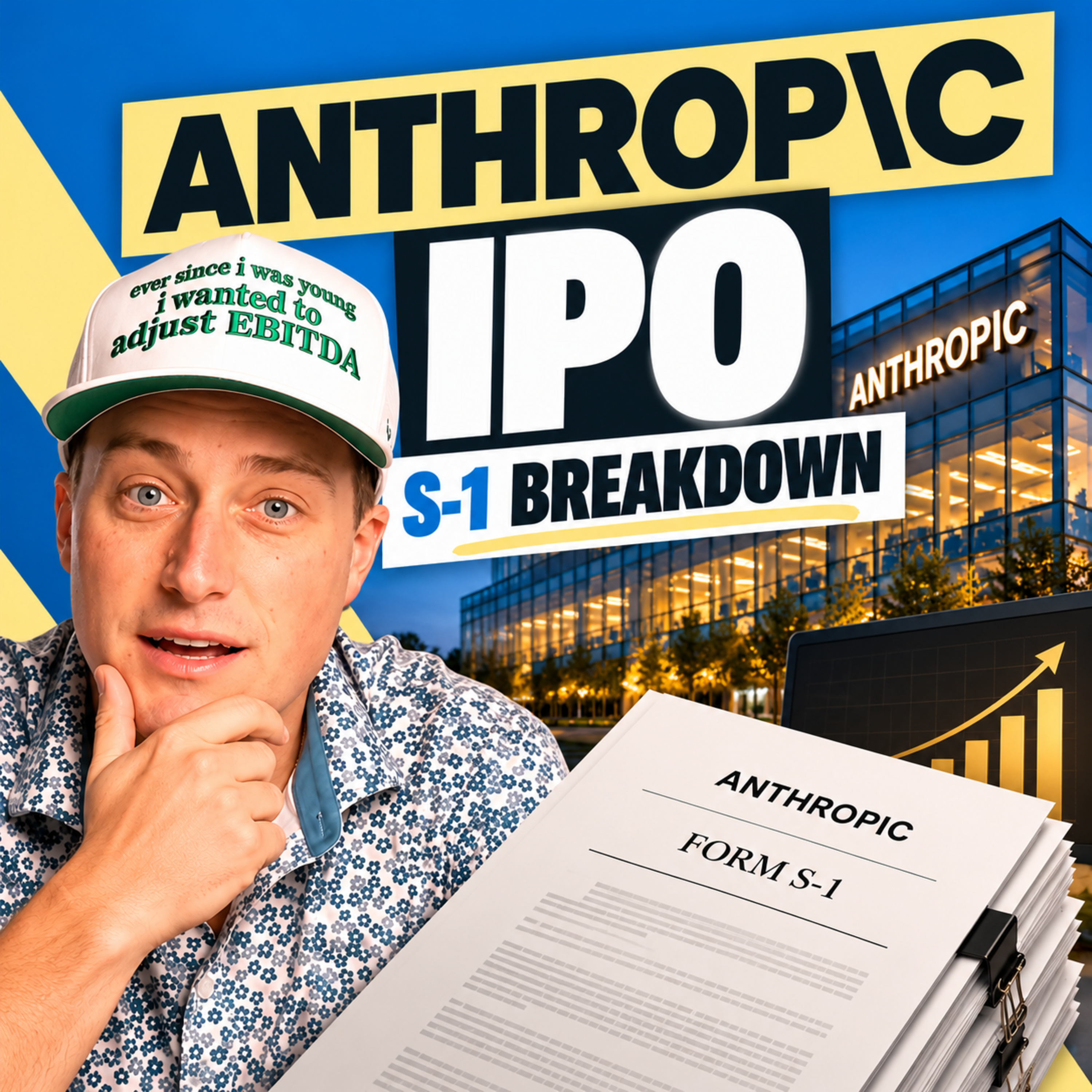
In Part 3 of our Token Series with Tabs, CJ and Ali Hussain ask who’s actually paying for AI. They cover the venture-funded subsidy behind today’s AI prices, why more companies are passing token costs on to customers, and how pricing is shifting toward hybrid commits, tiers, and credits. They also dig into overages, revenue leakage, and agentic commerce.
__
SPONSORS:
Tabs is an AI-native revenue platform that unifies billing, collections, and revenue recognition for companies running usage-based or complex contracts. By bringing together ERP, CRM, and real product usage data into a single system of record, Tabs eliminates manual reconciliations and speeds up close and cash collection. Companies like Cortex, Statsig, and Cursor trust Tabs to scale revenue efficiently. Learn more at https://www.tabs.com
—
LINKS:
Mostly Talent: https://mostlymetrics.typeform.com/to/cLTxtAsN
Guest: linkedin.com/in/ali-hussain786
Company: www.tabs.com
CJ: https://www.linkedin.com/in/cj-gustafson-13140948/
Mostly metrics: https://www.mostlymetrics.com
0:00 Cold Open
1:16 Who Foots the Bill for AI?
1:25 The Venture Subsidy
1:54 Sizing AI Spend
2:50 The Uber Analogy
4:50 Passing AI Costs Through
5:43 Will Buyers Go Cheaper?
7:17 Pricing and Packaging
8:18 Hybrid Commits
9:31 Where Tiers Fit
10:34 What Is a Credit?
12:42 The Overage Problem
14:51 Agentic Commerce
17:30 Next Up: Tokens as Currency
#RunTheNumbersPodcast #AIPricing #UsageBasedPricing #CFO #AI