
In short
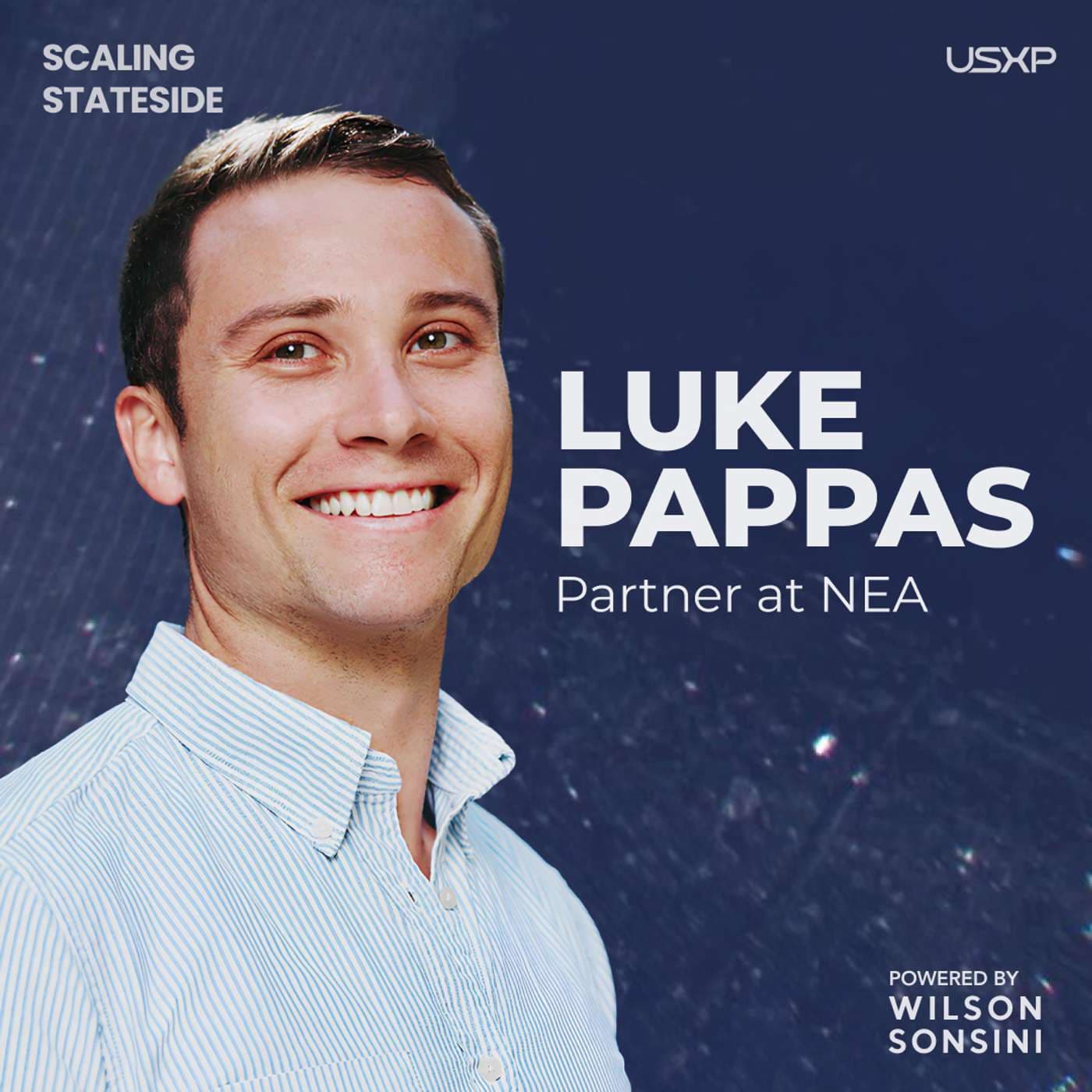
Luke Pappas (NEA) explains how a major US VC thinks about European founders, including pitch style differences, what NEA evaluates in deals, and how NEA builds its European practice from London. He also shares his own path from Stanford baseball to Morgan Stanley to founding and then venture.
Guest backgrounds
Luke Pappas is a partner at NEA’s technology investing practice. He grew up in the San Francisco Bay Area (Sacramento roots), moved to London about three years ago while still covering US companies, and previously worked at Morgan Stanley’s tech banking group. He co-built Q-Status at Stanford (office-hours digital queue).
Key claims
Europe’s startup market resembles the US around 2010 (Spotify/Adyen as proof), and European founders must pitch more commercially and with a bigger-picture roadmap for large funds. NEA prioritizes founder profile and mission at seed, and later emphasizes usage, growth, and team.
Notable examples
Q-Status; Snap IPO modeling; Sona Labs (commercial storytelling); Synthesia and ElevenLabs (later-stage scale).
Written by AI. May contain mistakes. Listen to the episode to check what was said.
Chapters
Tap a time to open that second in VOIntroducing Luke Pappas
0:45 to 3:19
Luke Pappas introduces himself, sharing his background and journey to NEA.
“Luke, please introduce us, introduce yourself, and let us know where in the world you are today.”
Early Career Insights
3:19 to 5:26
Luke reflects on his early jobs and the importance of family influence in his career.
“And Luke, one thing we'd like to hear about is where you got your start career wise.”
Stanford and Entrepreneurship
5:26 to 10:10
Luke discusses his time at Stanford, baseball, and starting Q-Status.
“I mean, first of all, I owe my parents a huge thanks for giving me the opportunity to study at Stanford.”
Transition to Investment Banking
10:10 to 13:10
Luke shares his experience at Morgan Stanley and the skills he developed there.
“But from that, we didn't scale QSATUS commercially.”
Joining NEA and Expanding to the UK
13:10 to 14:01
Discussion on Luke's transition to NEA and opening the UK office.
“And I think for me personally, it's always so exciting kind of seeing that journey take shape.”
Adapting to Life in London
14:01 to 16:44
Learn about the speaker's transition from California to London and their reflections on city life.
“And then I'll ask you about your kind of first kind of 90 days on the ground after that.”
Comparing European and US Entrepreneurial Markets
16:45 to 19:00
Explore the similarities between the current European market and the US market in 2010.
“And also, I think that more broadly, the excitement of the of the entrepreneurial market in the UK and more broadly across the EU, I think is really, really compelling.”
The Evolution of European Startups
19:01 to 22:50
Discover the changes in the European startup ecosystem over the past decade.
“You had companies like Spotify and Adyen and a number of other very large companies today that broke through that sort of, you know, ice in the lake or whatever metaphor you want to use.”
Cultural Differences in Entrepreneurial Mindset
22:51 to 27:48
Examine the contrasting approaches of European and American entrepreneurs in pitching.
“What are the main cultural differences in an entrepreneur's mindset have you experienced coming from the US and obviously now operating in the UK?”
The Spirit of European Startups
27:49 to 28:00
Understand the unique motivation driving European startups and their cultural impact.
“I think in Europe, there's, there's a freshness to it, where it's like, we want to be the first company in this city or in this category, and put our country, put our community on the map, so to speak.”
Show all 21 chapters
Cultural Advantages of European Startups
28:00 to 28:30
Discover the unique cultural motivations of European startups and their impact on company culture.
“And that permeates across all the people that are joining these companies.”
Understanding Investment Thesis
28:30 to 29:50
Learn the significance of investment thesis and the key factors VCs consider.
“Let's talk a little bit about investment thesis.”
Evaluating Early-Stage Investments
29:50 to 31:00
Understand what VCs prioritize when evaluating early-stage startups and their growth potential.
“We can look at the competitive landscape usage across different products.”
Sector Focus and Avoidance in VC
31:00 to 33:30
Explore the sectors that VCs typically focus on and those they avoid, along with the rationale behind it.
“the hands of users collect as much feedback as possible, build up a lot of affinity to a certain product.”
Sourcing Deals in the European Market
33:30 to 36:10
Gain insights into how VCs source deals in the European market and the importance of building connections.
“It's part of, again, why I think we have a very unique investing practice.”
The Role of Networking in Venture Capital
36:10 to 37:50
Learn about the critical role of relationships and networking in securing investment opportunities.
“So we're here for the long haul, for sure.”
Cultural Transition from US to UK
37:50 to 42:00
Hear experiences and advice on transitioning from the US to the UK market as a VC.
“And then, you know, in three or four months of investing, they see the performance and they send us a message on WhatsApp or a call and they say, hey, you should go meet this company.”
Navigating the Move to the US
42:00 to 44:28
Learn about the challenges and strategies for European founders considering expansion to the US.
“from Belgium to California when, you know, early in her life.”
The Quest for Breakfast Burritos
44:28 to 46:02
Discover a light-hearted take on cultural cravings and business ideas while living abroad.
“that we've met and friends that I've made.”
Key Considerations for US Market Entry
46:02 to 49:09
Understand what European founders should prioritize when approaching the US market for investment.
“Luke, as we're wrapping up here, coming close to the top of the hour, how should UK or EU founders be thinking about the US market?”
Engaging with Investors Early
49:09 to 51:03
Learn why it's never too early for founders to connect with investors, even before formal pitches.
“European companies to partner with firms like an NEA.”
Transcript
Automatic transcript. May contain errors.0:11Matt Oxley:Hi, everyone. David Rose here with USXP. Welcome to the Scaling Stateside podcast, along with my co-host, Matt Oxley. We are on a mission to help founders better understand the U.S. expansion journey and the U.S. venture fundraising journey, the pitfalls and successes, and basically better prepare them for the U.S. expansion journey ahead of them. We are having conversations with founders who've already made the journey and with venture capital firms and specifically partners who are funding U.S. expansion for the portfolio companies. And today, we're very pleased to have with us Luke Pappas from NEA.
0:49Matt Oxley:Luke, please introduce us, introduce yourself, and let us know where in the world you are today. Yeah, thanks, guys. So my name is Luke Pappas. I'm a partner with NEA on our technology investing practice. I'm originally from California. I grew up in the San Francisco Bay Area. And actually, my hometown is Sacramento. So a lot of my friends still follow the NBA. I still follow it here in the UK. And I'm a Sacramento Kings fan, which has been challenging the last 20 years. Sorry about that. The early days of, you know, Chris Weber and Mike Bibby and all those guys. But so when I was three or four years old, we moved to the San Francisco Bay Area.
1:27And that's where that's where I grew up. And for the first almost 30 years of my life, like you could draw a 40 mile radius circle around San Francisco. And all of my life was was in that circle more or less until about three years ago when I moved. I've been with NEA now for a little over eight years. and about three years ago, Scott Sandell, who is the chairman of NEA and leads our investment committee and has been NEA's leader for a decade plus now, he called me. We had been investing more and more in the European market and I had been covering several of our investments and one of our close partnerships with a fund called Speed Invest, which is a pan-European seed fund.
2:12And so coming out of COVID, actually, I did our first real trip for like a business trip for the firm. And I was covering a lot of our European investments. We hadn't seen them in two or three years, roughly two years. And so I came back and I was giving a report in our all hands meeting. And I started getting messages from a lot of our general partners asking if I would ever consider relocating. And then Scott called me and I think the firm had been considering opening an office in London for several years. And it was at a point in my career where it made sense to try and take on a bit more responsibility in the firm.
2:47And I was excited to have the opportunity and grateful that Scott and the rest of the partnership thought about me to move over. So I've been living now in London, between London and San Francisco. So I still cover a number of our companies in the Bay Area and my family's there. And I still have a lot of my life in the Bay Area and more broadly across the United States. But so I travel back maybe 10, 12 times a year and still spend a good amount of time in the Bay Area. But I am mostly based in London, covering our European investing practice.
3:19Matt Oxley:And Luke, one thing we'd like to hear about is where you got your start career wise. And we mean early. What was your first paying job? I think, well, first, like if you could consider it a job, I did a lot of work for with my my dad and my brother. and our uncles and just extended family in the Bay Area, working a lot of construction jobs. Oh, that's work. That's work. Early days, you can't really swing a hammer, but you can carry the tools to and from the job site and you get to learn from your family in one of the trades. So it was a lot of good family time doing that. But I think my first official paid job was lifeguarding the Sleepy Hollow community swimming pool.
4:04Matt Oxley:um so a little bit easier than construction yeah a little bit a little bit more relaxed although you do need to be attentive i remember there was uh i never made any official saves but there was this little like little kid who was running on the pool deck and you're supposed to you know make sure no one's running but um uh the thing was he stopped running and then he put this little like inflatable um that wasn't it was like a rubber circle disc thing it would sink in the pool and he put it around his legs and tried to jump in i grabbed him by the hammers before he could get in the water but i think he uh that would have been a technically if he was in the water a safe but uh luckily i think in lifeguarding you always want to stop the problem before it happens so luckily we were able to keep him out of the water nice yeah i love it well um if i may i'm just doing some kind of background reading on you you went from playing baseball at stanford and then you kind of went into Morgan Stanley world and then became a founder yourself and then moved on to VC.
5:07So what I'd love and the real interesting and what we try and do at Scaling Stateside is really understand people's journeys. And then yours is of particular interest because you're obviously a founder that's gone to the venture side of it. So could you just kind of explain that kind of that chapter, that period? Yeah, happy to. I mean, first of all, I owe my parents a huge thanks for giving me the opportunity to study at Stanford. You know, I wasn't a recruited player. I walked onto the baseball team. And my dad actually was the one who inspired me to continue to play. He was my coach growing up.
5:43He played competitively when he was younger. And it was a sport that we shared a lot of love for. And he coached me growing up. And then, you know, high school, you play for your school. And then I had been recruited to a few other places. But Stanford was always the place going up in the Bay Area. You see the best of athletics and the best of academics. And my mom was never a huge fan of baseball. She was actually from Belgium. So we grew up with a lot of our family in Belgium. We would visit them every summer. But I remember when I made the baseball team, she bought an encyclopedia of baseball and just started reading it like cover to cover.
6:16And for me, that was like the opportunity to study and play at a university like Stanford was incredibly motivating, first of all. And I felt a lot of gratitude to the people that got me there. So it lit a lot of fire within me. And I didn't have a lot of time playing on the field, but it was the for me, it was the relationships, the teammates that I became some of my closest friends, the coaches who became life mentors for me, not just in baseball, but but but off the field as well. People who I still feel very grateful to have a chance to call up, you know, if I have a question about something and who are checking in on me and my life as now that I've graduated.
6:53but Stanford was really, I didn't really know much about computing until honestly, my freshman year, all the baseball players, because we travel so much for, for the regular season schedule. You know, you're, if you have a road road series, it's three games and you have one travel day. So more than half the week, you're away from your university. So we try and load up a lot of the graduation requirements outside of that spring semester. And the classes you can take that are recorded, you try and take those in the spring when you're traveling because you can watch the lectures. So all of our freshman class took CSSA, which is the Intro to Computer Science Programming class our freshman year.
7:29And for me, that was the first time I would type in a Word document, but I didn't really understand at all how applications were run by the operating system, how computer resources were managed, all these types of things. And fortunately for me, I sat in that class and everything just sort of clicked. It just made a lot of the logical, like sort of rationale of computer programming, the deterministic nature of it. In my brain, it just made a lot of sense. And so I decided to major in computer science. And I picked up a second major as well, doing something called MS &E, which is like a finance degree at Stanford.
8:01And in my senior year, we were traveling, again, traveling a lot. And I had saved a few of the harder classes for my last semester or last quarter. And, you know, office hours are a challenging time where you might go and there might be two or 300 people in front of you waiting to get helped. And if you're waiting to, you know, you have an hour before your flight leaves to go play, you know, Florida State or play any of these, you know, big, big name schools we were competing against back back in the days, your time is limited. So and we didn't have a digital system. It was like you show up, there was a whiteboard, you see a list of names.
8:33And that's how, you know, if you're at the bottom of the list, you have to wait till you're at the top. So I felt like we should just turn that whiteboard into a digital product. And so a good friend of mine, Michael Fitzpatrick, who was a fellow CIA, he was actually majoring in, sorry, he was pursuing a master's at the time in computer science. He and I had shared a few classes before. We decided to build a digital version of that whiteboard and called it Q-Status. And then we were lucky to have the sponsorship of a few professors at Stanford who rolled it out in their classes. And then it just sort of had this viral, like other, you know, once a TA for one course used it in their course, they would tell other friends, hey, you should use this for all the students are talking.
9:10And so then, you know, after a couple of weeks, most of the computer science department at Stanford was using Q-Satis. And then, you know, other universities started picking it up and we thought about, Hey, can we sell this to barbershops? Can we sell this to, you know, to go restaurants, that kind of thing. And honestly, the use case of office hours was the best use case for that. And so we didn't, we didn't make much progress outside of, um, but it's still used today. I mean, that's, I'll log on and I'll see some of the old classes that I would take at Stanford and see live cues and see students getting, you know, getting helped.
9:41And it's actually also been very helpful for us on the recruiting side. Now, you know, being on the investing part of the world, as we help our companies recruit engineers, oftentimes there's great engineers out of Stanford and they'll sit, you know, I'll have a chat with them and they'll say, oh, you know, you built QCetus. And it's sort of this nice moment where people can connect to him. And I think people who have been through that journey of building a product, connecting with users, you know, thinking about different business models. There's a lot of empathy involved. So it's a nice point of connection for me now.
10:10But from that, we didn't scale QSATUS commercially. So it wasn't a commercial success, but I think it's made a nice impact for the efficiency of the education, you know, kind of journey of a student in a university. So that's been nice to have. But after graduating, I had the chance to join Morgan Stanley and I worked for Michael Grimes and a number of the other tech bankers at the Morgan Stanley Tech Banking Practice on the West Coast. And that was a period of time where, I mean, we were in the office 20 plus hours a day. People talk about investment banking and there's this nine, nine, six culture in venture that people talk about within entrepreneurship.
10:52But investment banking and really any services job, I think it kind of comes down to how much time are you able to give to your clients. And working for a group like the Morgan Stanley Tech Group, led by Michael, I mean, we were always putting our clients before almost every other part of our lives. And so I learned a tremendous amount. I didn't have a finance background. We did more MS &E at Stanford, but it was much more focused on entrepreneurship, not maybe the type of math you're doing when you're advising on an IPO or a multi-billion dollar M &A. So I had to learn quickly. And luckily, I had someone who's now one of my best friends, a guy named Yao Wang, who was sitting next to me on the analyst desk.
11:32And first couple of weeks, he did most of my assignments, actually. He carried his own load and mine as I was learning a lot of the technical complexities of financial modeling and things like this. I look back on those two years and people that we were, you know, our analyst class, we all talk still today. People have gone on to work in hedge funds, other venture firms, private equity firms. It's an amazing network. I was lucky to be the analyst on the Snapchat IPO. So we took, you know, we spent more than 12 months modeling that company's financials. We did three different roadshows, meeting investors around the world.
12:05And for me, that was the one of the defining, if I look back and how I ultimately got to venture, I had some of the company and product building experience from QStatus. But I didn't have much of a network in venture. But having gone through that process of working with one of, at the time, probably the largest privately invested company, you had Snap, you had Uber and a number of others. But working in a company of that profile with so many people in venture who had invested in that company at the time, NEA was a shareholder. And so that was a connection to the firm. And then I also have, as I think back to the people who I owe a lot of gratitude to, there was someone who's been a mentor of mine.
12:42She was one year ahead of me, and she did computer science and MS &E, and I sort of followed her footsteps. And then she went to investment banking, and I followed her example again. A woman named Julia Schottenstein, and she's now leading commercial and business for Langchain. But she was at NEA at the time, and so she recruited me to the firm. And I had met several of the partners through the Snap IPO, so there were a lot of good touch points. and things just sort of, I was lucky to have a chance to interview and lucky to be offered a position. And I look back and it's been a little over eight years now.
13:10And it's incredible how quickly things have gone and how many different components of our, I feel like the venture job I've had a chance to, you know, contribute to within the firm, but that's how I would maybe, those are all the kind of the different inflection points that led me to where I am now. That's awesome. And I think for me personally, it's always so exciting kind of seeing that journey take shape. And the thing that I'm interested to now kind of, I think, unpack a little bit further is you mentioned it when you spoke to Scott and he said to you, right, okay, go and open up the UK, go and open up Amir.
13:51I mean, how much time had you spent in the UK prior to that? What was your first kind of thought when that opportunity kind of came up? And then I'll ask you about your kind of first kind of 90 days on the ground after that. Yeah, happy to. I mean, to be honest with you, I had having my mother's side of the family like in Belgium, and we grew up, you know, with American culture and then Belgian culture as well. So while I lived and our family was always based in the Bay Area, I did feel like I had more of international exposure than someone who just was born and raised in the U.S. and, you know, kind of full stop.
14:30Matt Oxley:So it wasn't totally different for me. And I had also covered, I'd done several trips for the firm before that one I had mentioned earlier, visiting a number of other of our other companies. But I had never considered living outside of California, to be honest. I consider myself a Californian. I love the culture. Living by the coast. you know, beautiful sunny days, hiking, surfing, all that activity. And now you're in London. Yeah, and London is a little bit different. I don't consider myself a big city person. But if you think about cities, I mean, nature, let's hope is going to be there for as long as we have humans on Earth and we can take care of it and preserve it.
15:07Cities, though, are really human built. And so, you know, you can go live in the mountains, you can go live by the coastline and be in nature. And that's where I feel at home and feel very comfortable. But having a chance to experience a city like London or a city like New York or a city like Hong Kong, these places, parts of the world that are massive cultural centers, but are built by humans and built for humans, like to participate in that is a very, very unique thing. And so I feel very grateful. When Scott called me, I wasn't initially, I was, I felt a lot of gratitude to be considered. But I also, it wasn't something that I was really planning for or had thought about before.
15:45So it took me some time to think through. I mean, it's a big life decision to move to a different part of the world, cross the Atlantic eight hour time zone difference to California. But again, NEA, you know, over my eight years, there's certain things I can look back on. And part of why I think this firm is special is comes back to culture. I think, you know, Scott and the rest of leadership consider this firm a family more than a business in many ways. And Scott told me, he's you have to think about this. It has to feel good for you and your family first. We think it would be the right fit for the firm and it would be helpful for us.
16:19You know, you have to also, we're not going to put pressure on you. And so he gave me several months to think through it. This was, you know, our initial first call was in, you know, November of 2020, 2021. And then I took, I did two trips to London in January and February. And I told myself, I can survive these two, like these months, which are feel like the bleakest months in London. And then I'll be OK. And to be honest with you, the excitement of the city. And also, I think that more broadly, the excitement of the of the entrepreneurial market in the UK and more broadly across the EU, I think is really, really compelling.
16:57And that also was exciting to me to ultimately move over. Can you just talk a little bit about that? Because I've read a couple of quotes of yours where you believe that the EU slash UK market at the moment reminds you of the US in 2010 era. Do you still think that? Yeah. Yeah. So what I mean by that is if you look at the U.S. market for entrepreneurship, I mean, NEA has been investing for almost 50 years. The very start of Silicon Valley and first wave of companies that came out of that, looking at Fairchild Semiconductor and the Rebellious 8 and all those companies that came out, you know, in the chip world and the age of Internet switches and routers.
17:40I mean, NEA was one of the firms that was backing those founding companies. So I wasn't investing back then, and I didn't participate in a lot of this. But through the history of our firm and all the stories that have been told, you can look at sort of some of the pattern recognition as things have progressed. And I think in the U.S., we've now lived through almost five different generations of companies that have started, exited. Some of them have endured and are still making a mark in the world today. And there's also a culture where movies like The Social Network celebrate the founding story of a company like Facebook, or now Meta.
18:16And you have all these, these different shows and movies about Apple computer. And I think founders in the US are celebrated and their, their, their, their status is almost on par with, you know, or maybe, maybe in some circles exceeds people who are, you know, film, film stars, or sports stars, things like this. I don't know if that culture was the same level of celebration in Europe as it was in the US. But I think that's shifting. I think you have now all the ingredients that you look and you can say, can we build a category-defining, globally operating company that's headquartered in a European city or a European country?
18:56And to me, the answer to that question is yes. And I think about 2010 is when that started to shift. You had companies like Spotify and Adyen and a number of other very large companies today that broke through that sort of, you know, ice in the lake or whatever metaphor you want to use. And they've proved they proved that if you take a chance on a technology, it's not like you're foregoing a role in medicine or law. And those are those are amazing fields important to our world. But I think, you know, I've looked at my own family. And when we were talking about venture capital, some of my folks, my relatives in Belgium, they didn't understand what the market was or what the job entailed.
19:31And it seems a little bit risky. You're investing in a company that has 10 employees and is loss making to the rational brain. If you don't have a lot of examples of success there, it can seem like a category that is risky. And you can ask yourself, why would you, if you're well-educated, if you have certain skills, why would you take the perception of increased risk when maybe the return isn't as apparent, but some of those early companies showed what's possible. And I think that unlocked the talent layer in Europe to say, yes, we will join a seed stage company or a series A company over, you know, a very nice salary at an established bank or an established law firm or, you know, any other field.
20:08And that was a really important sort of defining moment, I think. And I think about 2010 is when that started to shift. And now I think you also have enough companies that have scaled, that have gone from seed through either an M &A or an IPO or are large late stage private companies. And they have been able to hire, you know, that first wave of companies that sort of that generation, you had to hire people from the US and they would either stay in the US or they would move their families here. But that that skill set came from companies that were being built in the US. But now the VPs of engineering, the VPs of finance from those first generation of companies, they learn from that cohort of talent that moved here or that joined those later stage companies.
20:49And they can become the leaders in this next wave of company. So to me, you have on the talent side, and culture side, I think that you look at Spotify, Netflix has several shows now telling the story of Spotify and it's celebrated. Part of the reason why I think Stockholm in particular and Sweden more broadly is an amazing place for startups today. You have a number of other companies that I think are being celebrated across Europe and the founder journey is being celebrated. That's an amazing thing. The talent now I think is leaning in on startups. And the third leg of the stool is capital. And if you look at NEA, We're a very large institutional investor, and we have a number of different resources that I think are very helpful to companies as they grow and scale.
21:31Several of our peers have similar practices. And, you know, with funds on the order of our size, multibillion dollar funds, having that access to that capital for European companies is now also available. I think Europe had an amazing seed network. If you look at all the different firms, I mentioned Speedinvest, but there's probably 20 other firms. pick any city you want in Europe. And there's two or three that are amazing partners to companies. That capital has helped launch companies. But to scale on a global level, you need to be able to raise your Series C or your Series D. Companies like Synthesia and Eleven Labs in our portfolio that have gone on to raise hundreds of millions of dollars.
22:07That wasn't as easy 20 years ago, even 10 years ago. But now I think you have several large US-based firms that have full-time offices here in Europe. You have increasingly larger European-based firms who are raising larger and larger funds. And I think the LP base across Europe, because there's a lot of attractive talent and attractive capital that hasn't invested as much in venture, but is seeing the returns now and is seeing the impact to our both personal and professional lives that technology can play. And I think that's also going to start investing either directly into companies or into VC firms who then allocate into private companies.
22:43So I think you have all three ingredients now to grow and build companies on a global scale, but that are based here in Europe. And just a final question for me on the culture, because one of the things that we do, we support UK slash European founders on that journey over to the US. What are the main cultural differences in an entrepreneur's mindset have you experienced coming from the US and obviously now operating in the UK? So one of the first things that I say that I've recognized, and I had to adjust myself a little bit to this, because growing up in the first five years of my career in the US, you're used to a certain style of pitch.
23:26I think American founders tend to be much more commercial. And when I say commercial, there is the not so much here's how we're going to make money out of this product, but here's how we're going to present the next five or 10 year roadmap. I think European founders tend to be more understated. It's more of a focus on the next 6 to 12 to 18 months. Here are our tactical things we want to do. And if you're in a 30-minute pitch and 20 minutes of it is talking about, we're going to make this specific hire. We're going to do these three accounts. That's a good level of detail, but you lose the opportunity to paint the big picture.
23:58And for a multi-billion dollar fund, I had to learn this when I joined the firm. I was hearing a lot of these pitches and I think, this is an amazing company. They can raise one more round and it'll probably scale to$100,$200 million of revenue and then exit. And I would bring this into our partner meetings and the feedback was that's a great company, but it's not a fit for our fund size because we need to think of the order of multi billions and how we return funds of our of our size. It's not going to be 100 or 200 million dollar company. It needs to be a billion plus company. And so communicating that in a pitch is a different stylistic, you know, sort of storytelling ability.
24:32And I think it's much more common in the US. The US, I think, is a much more commercial place. People are advertising for everything. You grow up in that culture. It's sort of second nature. I don't find the European culture to be as commercial in that way as American culture is. And so I think it's something that European founders have to learn. But also American investors who are spending more time in Europe need to adapt what they're looking for in the pitch because you could miss a great company. If you're not listening for the right details or if you're tuning out, if you're not hearing what you're expecting to hear.
Read the full transcript
25:04So that was a bit of an adjustment. But I will also say some of the best companies that are coming out of Europe, founders have that commercial ability in full scale. I look at a company like Sona Labs in our portfolio, and we're so lucky to partner with Joel. Heller Mark, who I think has, when we look at founders, technical ability, product sense, and then commercial ability and the ability to be a great storyteller. That's a very rare combination. Oftentimes you find that in multiple people in a company who collectively can carry that workload. Joel had it in just one person, and he was 10 out of 10 in all those categories.
25:41So very rare mix, but that's the type of founder that we look for point blank across the firm. This is not just in Europe or in the US, but we have one global investment committee, and that's the bar we have. And my point of bringing up the story is that those profiles, even though it maybe isn't as common yet, they definitely exist. But that's the example that I think founders of today will look to, to say, okay, if I'm pitching an American VC, this style is maybe what they're expecting. So that was a bit of an adjustment. The other thing I think, you know, in the U.S., the U.S. is a massive country.
26:14We have, you know, you go state by state and maybe some of the culture shifts a little bit. California to Texas is a lot different than, you know, maybe Minnesota and then New York. You know, these are all different. But at the same time, same federal policy that applies, the same language largely. So doing business across states, fairly easy. Doing business across borders in Europe, a little bit more challenging. hiring people, you know, if you're a Nordic space company, hiring somebody in the UK, hiring somebody in Spain, like different language, different treatment of stock options, different, maybe different, you know, some holidays are different.
26:52So it is a little bit of, there is an adjustment, I think that European companies have to go through as well on like, just, you know, everyday life and sort of sort of part of the part of the company building process. But what I would say is, I think where Europe has an advantage, back to the fact that it's, I would say it's breaking out now. I think there is a different energy for European companies right now. As I look at the best in class companies are going to all have their unique cultures. And that's not a comment on that level of company. But I think, I mean, there's all these there's a lot of stories coming out of Silicon Valley now of engineers working multiple different companies, having jobs, three or four.
27:29and the companies don't know this, but people know now how to, you know, if I'm a remote engineer, if I'm a remote product person, or, you know, I can go in the office one or two days a week, and then join this company. And the culture, when that happens is not as consistent, there's not as much of a team first attitude. I think in Europe, there's, there's a freshness to it, where it's like, we want to be the first company in this city or in this category, and put our country, put our community on the map, so to speak. And that permeates across all the people that are joining these companies. And so I think that is actually an advantage in terms of company culture that European startups have, because to be the fifth or sixth company in a market is an amazing outcome, but not the same level of excitement as if, hey, we're going to be the first ones, the trailblazers, or carry the torch for the last generation.
28:23And that, I think, is a little extra motivation. So that's the last thing I would comment on.
28:30Matt Oxley:Let's talk a little bit about investment thesis. I think a lot of, especially first-time founders, don't really appreciate the importance of that concept. And they might think, hey, you're a venture capital firm. You invest in startups. I'm a startup-binding capital. I'm going to come pitch you. Can you kind of talk to what NEAs, how NEA thinks about investment thesis, and then kind of trickle that down to how you think about it. What is a perfect deal for you look like? It's hard to say. I mean, every deal is unique. There are a handful of things I think we put more weight into, and this is probably true for a number of our peer firms as well.
29:06I mentioned Joel and the founder profile that we look for. I think if you find a truly exceptional entrepreneur, whether that's at the seed stage, where I think it matters probably more because the level of upside at the seed stage, there's less data points, but you're investing a lot earlier. So your cost basis is lower. So we put a lot of weight into the founder profile, who we are investing into and what their motivations are, what the mission of the company is as like the number one thing that we evaluate. I think at the seed stage, it's really the majority of what you're investing in because there generally isn't very well built out product.
29:42There's not a lot of data at that time. If you're investing later, we still put a lot of emphasis into the team, but we also have other data points that we can evaluate. We can look at the competitive landscape usage across different products. We can look at your year-on-year growth rate. We can look at some of your core KPIs. I come back to things. People often ask about how much revenue or ARR they should show to raise a series A or to raise a series B. Those are important metrics for some companies and in some categories, especially if you're a classic enterprise software company. But what I think is actually a better indicator is just usage.
30:16Look at how many people in a company, even if you're an enterprise software company, how many people are using the product? Is that usage increasing every day? Because if you see usage, you can eventually figure out a way to monetize that usage. Because if you have someone who's using your tool, that means they're getting value out of it. And so whether you're capturing that value today or you'll capture it in the future, that's one of the values, I think, of raising venture capital is because it allows you to go several years, maybe without having to focus on running a company to a profitable state.
30:45long term, all of the businesses we invest, we believe will become profitable cash generating companies. But sometimes in the short term, either you have to invest in technology, and that can be a loss making several several years, or you want to get your technology in the hands of users collect as much feedback as possible, build up a lot of affinity to a certain product. And then over time, figure out natural ways to, you know, to share in that value creation with your customer base. And so I look at our firm and then I've been trained in the NEA investment model. So I consider these things also how I look at companies, but we put a tremendous amount of weight in the team and specifically the founders who are, you know, when you're starting a company, you have it in your head, but the ability to recruit people to your company, the ability to win early customers and ultimately communicate a vision for a product and then materialize that through engineering.
31:39Those are very, very hard challenges. And that all comes from the founding team. So that's where we put a lot of our weight into. And then we evaluate the size of the market, the size of the opportunity. How much is this product different versus the rest of the, you know, either you're building a new category or you're going to displace existing spend or existing usage. So how do you think about communicating that to the people you're ultimately going to serve? Those are the things that we put a lot of weight into.
32:04Matt Oxley:Are there sectors that you specifically focus on or sectors that you specifically avoid?
32:13One of the, I think the unique things about NEA is that we have been one of the largest and most diversified investors in venture. It's part of the value prop that we offer to our limited partners. So we raise multi-billion dollar funds and then we invest that across many different sectors. And if you look at just the way our team is structured, we have a dedicated technology investing team and a dedicated health care investing team. And so, you know, we have one global IC for each of those different groups. We have our health care IC and we have our tech IC that allows us to invest in, you know, many different categories, not just tech, not just health care and go deep in those areas.
32:49So what we look for are markets that can produce billion dollar plus companies, 10 billion dollar plus companies. There are certain things that, you know, over the history of the firm and in our, you know, what we tell our limited partners that we will avoid. There are certain categories that we just don't feel like we have a lot of expertise in certain substances and things that might be addictive. We've stayed away from those categories. But if it's classic software, if it's classic health care services, biopharma, consumer categories, we've done a number of things in the e-commerce space. For example, fintech is a huge area of focus for our firm.
33:24These are all areas, I think, and if you look at our team, a lot of different backgrounds that allows us to have people who are experts in a given field and lead investments in those areas with high conviction. It's part of, again, why I think we have a very unique investing practice. And that comes back to the people who are making the investment decisions. And I have a tremendous amount of trust in sitting in our investment committees. There's a lot of times I'll hear a company and I'll have very little idea about what the commercial application is, who the customers ultimately are, because it's in a category that I've spent very little time covering.
33:57But that's where I think having the trust within a partnership is a very important thing. And many of our investments that we've made that have generated great returns for the firm have come from places where, you know, one or two people had a lot of conviction in, but it wasn't a category that was maybe always that kind of globally well known within the firm or even more broadly across venture capital.
34:18Matt Oxley:Luke, how do you source deals? I know here in the U.S., NEA is a great brand. So I think if I was raising right now, almost certainly NEA is going to be in the top list of firms I'm going to contact as a proactive outreach. You're sitting in the UK. Do you get the benefit of that great brand in InBounds? Or how are you personally sourcing deals? Yeah, it's one of the things, Philippe Chopin, who we work together in growing our European practice here. He and I talk about this a lot. Really, we feel very fortunate to have the history of the firm behind us. I mean, it's not like we're starting from square zero in building out this practice.
34:59We have the history of our firm, many of the investments that we've made in the U.S. that are well-recognized in Europe. And when we opened the office, we had, I think, 20-plus companies that already existed in the European market. So we weren't building from scratch. At the same time, we weren't here full-time until we moved over. So there was an element of just getting in front of all the local investors and entrepreneurs and communicating, Hey, we're committed to being here. We're growing our team. I've moved here. We're in the same time zone. We're committing resources. And because founders care about that, like you don't want to raise money from someone who's just going to be flying in or out or isn't going to be with you at the same time zone or a firm that isn't committed to being somewhere long term.
35:42Having that kind of change across your board, let's say you're two or three years in a building a company, that can be very disruptive. And so it's one of the things that's unique, I think, also about NEA, the longevity of people, the time people stay within a firm. And we have this approach. We say crawl, walk, run, where we're very deliberate about our actions and we're not going to, you know, all of a sudden scale up really quickly and then scale down really quickly. Sometimes you need to we move quickly with markets, but we don't make the commitment to a place and then decide to pull out, you know, after one or two years.
36:13So we're here for the long haul, for sure. And I think that that really matters to the local, you know, investor and founder community. In terms of sourcing, though, I think the last two to three years, we've spent a lot of time trying to communicate to, again, the local seed networks in some of the best and proven markets across Europe that we do have our office here. This is our investment focus. These are the kind of companies that we're looking to invest in. And we also spent a lot of time trying to build that first sort of foundational layer of new investments once we open the office. And I think looking back now over the last three years, we've put a lot of that foundation in place.
36:54I think we feel very fortunate to have gotten to know several of the leading GPs of top seed funds across Europe who have been very helpful to us in how to think through shaping our practice here, how to be helpful to founders here. And then also just ideating on different investment categories. And then we also are fortunate to partner with some of the, I think, best in class companies and best in class founders. You look at Sona Labs and Joel, Synthesia, you know, with Victor and Stefan, Eleven Labs and everything that Mothy's building there and a number of other companies. These tend to be some of our best references and ways in which we can win that next great deal.
37:33And so we feel very fortunate to have that foundation in place. But that's also that's oftentimes where the best deals come from. Founders will communicate to, you know, they all see the potential in the next great founder. And then they'll refer that founder to a given firm or an early seed investor who sees a company in a place that maybe people weren't looking before, but they backed that first company. And then, you know, in three or four months of investing, they see the performance and they send us a message on WhatsApp or a call and they say, hey, you should go meet this company. and we'll get on the plane, you know, the next day or even same day, fly out and try and meet that company because the pace of deal flow now is incredibly fast.
38:09But that tends to be, I think, the network piece is where, because every venture firm, we're all tracking the same things. People are all doing the same data practices, looking at, you know, different, there's places you can find unique signal, but the period of time that that signal stays unique for is very, very short. I think now, because with the speed at which people can find different data sources and then get insights out of that data. But what I think is differentiated is the relationships piece. And that's where your reputation in the market, your founder references, and your relationships with early investors really matter.
38:43And we've been spending a lot of time trying to build out a lot of trust at that layer. Just a quick question for me. As we inferred earlier, one of the things that we really like to do is talk about the human side of it as well. So I think there's a couple of questions I have for you around how did you find going from the US to the UK? What was that like? What blew your mind? What did you have to learn? But then I think the follow on question is what guidance would you give any European founder looking to make that journey over to the US? Yeah. First part, I mean, I have a love for a TV show called Ted Lasso.
39:24And I was lucky because Ted Lasso was sort of season one, two, and three were unfolding as I was moving over. And that show is basically an American football coach who moves over and coaches Richmond FC, you know, and he's kind of like a fish out of water, but like it makes it, there was a good humor and, you know, things about the different culture clashes. And I feel like I was living Ted's experience sometimes as I was adjusting
39:49Matt Oxley:to the culture here. One thing that was, I think for me was surprising. London is a very British city, but at the same time, it's so international. And I've met people from all over the world. It's been an amazing experience, but I feel very lucky to have met people who have similar, like they were living in a part of the world that was not their home initially. And so that's a point of connection with people. I also was very lucky, you know, someone I consider a very close friend, Peter Specht at Creandum. He and I were actually flatmates for a year. And so we both moved to London at the same time, he for Creandum and me for NEA.
40:22And we were opening our offices respectively for each of our firms. We actually now have offices like four buildings from each other. It's his birthday today too. So shout out to Peter on his birthday, but he was amazing, like not just professionally, but as a, as a friend introducing me to all of his friends here in Europe. And some of those people have become some of my closest friends now. And I think that's part of, I think back to when I was at, you know, back in college. And I, I, I think I mentioned some of the coaches that I played for and how they were mentors in a way. And one of our I played for two coaches who are, you know, top three wins of all time in college baseball.
41:01And when they each retired, they were, you know, I remember them getting asked questions about, you know, what is the best win you ever had or what was the your favorite memory? It wasn't never about a specific win or a specific outcome. It was about the players they coached and the coaches that they coached with and the relationships they built over 40 plus years of, you know, being, building a program like Stanford baseball and then, you know, seeing all the players that come through and then the careers that they would have on the back half of their playing days. And that really stuck with me.
41:32And I think that's what I think is true of venture as well. and finding people like Peter who can introduce you to people and are just good quality humans who are like, for me, I don't think I would have had as easy of a transition if it wasn't for people like that. So I have a lot of gratitude for that. NEA also was incredibly supportive in helping making sure that I had what I needed as I moved over. And then honestly, one of the surprising things is, I mean, the world is so connected today. I think about my mom who moved from Belgium to California when, you know, early in her life. And back in the time where you didn't really have all that you couldn't FaceTime somebody you couldn't get in a plane as easily as I can today and be home I can fly home and be home in like total travel time 13 hours Heathrow Express to the airport you don't check a bag you walk onto the plane like pretty pretty with pretty good certainty it's a nine and a half 10 hour flight and then on the back half you hop in an uber in your home in an hour like it's pretty amazing to be able to go across half the world in in that short amount of time and it's only gonna I think get closer and more and more connected.
42:34But that's been great to experience. I think it's another reason also why, as I tell European founders, it might feel daunting to move to the US, but the world is incredibly connected and you can keep that connectivity if you put in the effort. One thing we were very conscious about doing, and I have been at the firm for five years when I moved over, Philippe, who joined us, he came from a different firm. And so we were, you know, but he had all the local experience. He'd been investing in Europe for, I think, 10 plus years by the time he joined us. So when I tell when we're helping advise companies that are opening offices in the US, we advise something similar, you have your founding team, someone who knows the culture of your company who knows what you're looking for in a new hire, pairing someone like that with someone who's from the market you're moving to.
43:18Now, neither of you are starting from score zero. Like if I moved here and try to do it all by myself, I'd have to build net new relationships with it, you know, the entire market while building out the practice. And Philippe, if he were to do it all on his own, he'd have to learn NEA's culture and all of our investing committees and how do I communicate this to the firm, et cetera. But if you work together, if people feel like I had the NEA culture and experience because I had been five years in the firm and Philippe had the Europe investing experience. And so pairing that together was much more efficient than trying to build either of those from scratch.
43:53We tell our companies the same thing. Take one or two people who are part of your core founding team, have them spend a year or two, or maybe, you know, 10 plus years, if everything works out well, opening that net new office for you, and then find someone who can be a co-leader of that firm or that office that has unique domain and geographical expertise. And then merging those together, I think is a good way to expand. But yeah, there's a lot of things that have been surprising, but it's also been an amazing just life experience to live in a new part of the world and all the cultures that I've been able to experience and founders that we've met and friends that I've made.
44:29And I feel very lucky to have had that experience so far. What's the one thing you miss? Breakfast burritos. So like, I mean, I have my, that's a funny answer. Obviously my family, my friends, eight hours. Well, I say it's not that, but it can be a little bit frustrating because you wake up, everyone's asleep back at home and then you go to your office, you're working when they wake up. They come home from work and you're getting ready to go to bed. So it's not like the, it's easy to connect. I miss that a lot. I miss the beautiful sunshine and the ocean and all the, my favorite cycling routes.
45:06But my like business idea is to open up a breakfast burrito, like little stand in Soho. I feel like, have you ever had a breakfast burrito by the way? Yes. This is the most California food in my opinion. And it's the most incredible thing. You don't expect it to be incredible, but then you have it. You're like, Oh, all of this is in this. And it tastes that good. And if you make it well, like, because I, there's a handful of here in the UK, I've tried almost all of them. And I got to tell you, they're like one out of 10. I have a friend in the US Mojo, my another shout out to a good friend. And he is, he makes the best one I've ever had.
45:37And if I could take his recipe, and just open up a little, it's not that complex, you just need eggs, black beans, some salsa, avocado, cheese, like maybe if you want to put in some like bacon or something, you can have that as an option. And then you just roll it up into a burrito. Like, and it's very, like you could deliver it super well. You don't need to have any sit down areas. It's very good for takeout. It's super fast to make. So I feel like as a business, it could be really, I would invest in that. So I think I want to start one next year. I miss that a lot about California. Yeah.
46:07Matt Oxley:Luke, as we're wrapping up here, coming close to the top of the hour, how should UK or EU founders be thinking about the US market? When they come to you to pitch, is that something they should already have traction there? Is that something they should have a plan to? What are you looking for as an investor from founders regarding the U.S. market when they come to you to pitch? I'll say two things. First one is we get asked a lot, like, when should I move my company to the U.S.? And what I come thinking back on one of the things we talked about earlier about there's a lot of components you can you have available now in Europe to build a company.
46:44I think you can build a company and have it be in Europe for the longevity of the company's life and be globally successful. What I think matters is focus on your competitive advantage. People hear about and feel the allure of Silicon Valley. And you might be a seed stage company. Let's say you're a seed stage founder from Stockholm and you move your company to San Francisco. Now, that might be the right decision for you if you have a network there. And if you have the ability to meet investors, the ability to meet customers and to recruit engineers. But if you don't have a network at all in San Francisco or in Silicon Valley, just moving there, I don't think it's going to help advantage you.
47:19You're going to have to build a network from scratch. You're going to have to meet net new customers from scratch. But if you had just built your seed in Series A kind of stages of your company in Stockholm, for example, let's say you grew up in that city. Several of your friends are now heads of product or heads of engineering or heads of finance at other companies. They can be your first customers. or maybe some of those people that you knew in your first job can be some of your first hires. Like think about your competitive advantage and that network that you built like your early life and your early career in is part of that competitive advantage.
47:53So get those early easy wins. Then when it comes time to series B, I think that's when you have to show, okay, now we have the ability to be truly global. Let's land some of those logos in the U S let's land some of those logos in the UK and more broadly across the world. That's also where having an investor, like a firm like NEA can be very helpful. So we love to partner with companies that the seed Series A and beyond, but Series A and Series B is our sweet spot because that's where I think you can really help shape a global presence. If you're going to go from, let's use the same example, Stockholm to New York, to San Francisco, and you don't have a network there, having a firm like NEA that has one of the longest histories of investing in venture, one of the largest portfolios, argue, like you look at some of our exits across that, you know, you know, the history of the firm, we have touch points to so many different parts of the tech landscape and healthcare landscape that for a founder, like think of us as a co-founder in that way, we can be that founding like relationship for you in the US, help introduce you to net new investors, help introduce you to that head of engineering or head of sales, who's going to open up your, you know, let's say your New York office or your San Francisco office.
49:00And, and that's part of what we've built the last, almost 50 years now for the firm doing. And so I think that's why I think it makes sense for European companies to partner with firms like an NEA. We have the office in London. We have people on the ground here full-time building with you in Europe and more broadly across the region. And then we have a team in the US who are amazing in each of their own fields. And we all work together for the best outcome for the company. And so that's how I would think about going from, We know whether you're in London or Stockholm or Munich or Berlin or any other city and then ultimately expanding to the U.S.
49:38That tends to be a very, I think, successful playbook.
49:42Matt Oxley:Luke, this has been really great. Thank you for making time to talk with us. I'm sure the founders listening will appreciate your insights. This has been really great. Any parting thoughts for founders that we haven't talked about? We want to squeeze in real quick before you run. Just give us a call. I mean, I think sometimes, too, I have heard people worry about, am I ready to talk to a firm like NEA? Am I ready to talk to any of the other firms that we would compete with or partner with that have similar sizes to us? And I think it's never too early. We love meeting companies. When you have an idea, maybe you haven't even left your current role yet, but we can help ideate with you.
50:23We can help think about some of those early hires. And then we may not invest at that first stage, but that's a, for you as a founder, you get to feel for us as an investor and us as a firm. And then we can also understand your vision and your journey better. And oftentimes we might meet a company at the seed series A and then lead the series B or see the pre-seed and seed and lead the series A. But my final thought is it's never too early. So please, please do ping us. We're, Philippe and I are both here in London and traveling to, you know, many other European cities. So either drop us an email or call us on WhatsApp.
50:56I think my number is even on my LinkedIn. So please reach out. And we're always looking forward to having great conversations.
51:03Matt Oxley:Great, Luke. This has been really great. Thank you again for making time to talk with us. Really appreciate it. And we will see you soon. Thanks so much. Thanks, guys. Bye-bye.
From the publisher
In this episode of Scaling Stateside, David Rose and Matt Oxley sit down with Luke Pappas, Partner at NEA, to unpack how US venture capital really thinks and what European founders often get wrong when expanding to the US.
Luke shares his journey from California to London and breaks down the real frameworks US VCs use to evaluate founders, scale, and timing. From seed-stage investing to expansion strategy, this conversation offers a practical, insider view on what actually matters when building a global company from Europe.
If you are a venture-backed founder, CEO, or part of a leadership team considering US expansion, this episode will help you avoid costly mistakes and think like a US VC before making the move.
- (00:00) - Introduction to the Scaling Stateside Podcast
- (03:11) - Luke Pappas: Journey from California to London
- (05:50) - Early Career and the Transition to Venture Capital
- (11:27) - Cultural Insights: US vs. European Entrepreneurial Mindsets
- (22:37) - The Evolving European Startup Landscape
- (25:59) - Cultural Differences in Business Practices
- (28:30) - Investment Thesis and Founder Profiles
- (32:04) - Sector Focus and Investment Strategy
- (34:18) - Sourcing Deals and Building Relationships
- (39:17) - Navigating the Transition from US to UK
- (46:30) - Advice for European Founders Entering the US Market
ABOUT LUKE PAPPAS
Luke Pappas is a Partner at NEA, one of the world’s most established venture capital firms with nearly 50 years of investing history. He has invested across multiple generations of technology companies and played a key role in building NEA’s European presence.
Before NEA, Luke founded a product used across Stanford University, studied computer science and management science, and worked in technology investment banking on landmark IPOs.
🔗 CONNECT WITH Luke Pappas
LinkedIn ⮕ https://www.linkedin.com/in/luke-pappas-78ba5699/
NEA ⮕ https://www.linkedin.com/company/new-enterprise-associates/
QueueStatus ⮕ http://queuestatus.com
🔗 CONNECT WITH David Rose
LinkedIn ⮕ https://www.linkedin.com/in/davidbrose/
🔗 CONNECT WITH Matt Oxley
LinkedIn ⮕ https://www.linkedin.com/in/mdoxley/
🏢 POWERED BY WILSON SONSINI
This episode is powered by Wilson Sonsini, the leading law firm for technology and growth companies. Wilson Sonsini helps European founders navigate US expansion — from entity formation and regulatory compliance to VC fundraising and M&A. Their deep cross-border expertise ensures you structure it right from day one.
US Expansion Partners ⮕ https://www.usxp.co/
🔔 Subscribe for more conversations on scaling to the US the right way.