
In short
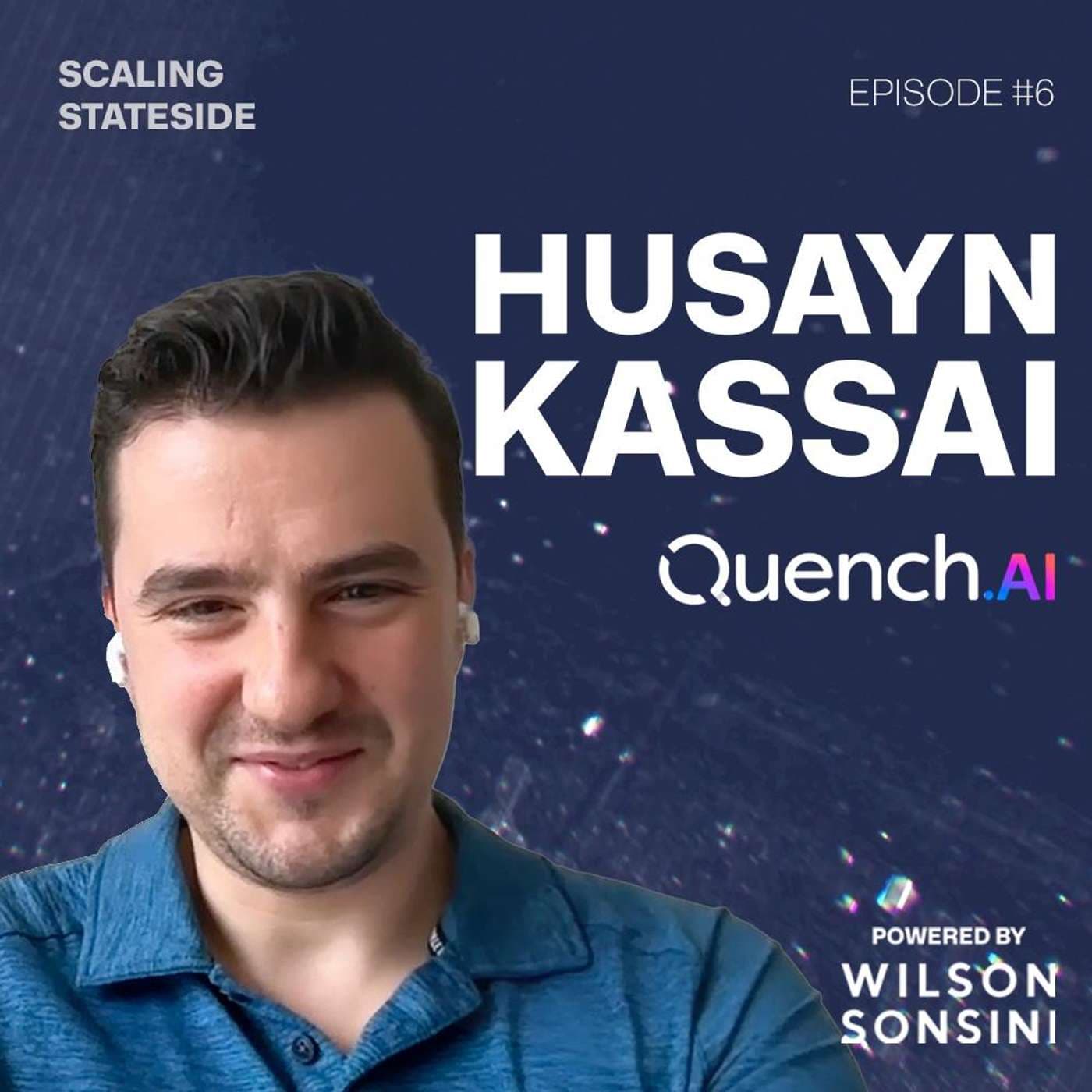
Husayn Kassai (Onfido founder) explains building identity verification from 2010–2024, scaling from the UK to the US, fundraising, and lessons on hiring/culture; then discusses his new startup Quench.ai (privacy-first workplace search and AI agents) and how he’s approaching the US market.
Guest background
London-based founder/CEO of Onfido (founded 2010; full-time 2012; sold 2024). Built Onfido’s identity verification using ID photo + selfie/face biometrics; raised early seed in the UK, expanded to the US starting 2015, and scaled to ~520 employees with ~100% YoY ARR growth (pre-COVID) before exit. Now building Quench.ai for mid-market workplace search across Notion/Confluence/Slack and related tools.
Key claims
Credit-bureau data is insecure and excludes many unbanked/underbanked users; image+biometric verification became “gold standard.” US expansion was driven by strategic urgency (“race for data”), not investor pull. In the Bay Area, product performance amplifies via word-of-mouth; VC intros became major lead gen (he estimates ~2/3 of US pipeline/revenue). Hiring “glamorous” resume-based executives from top US tech firms often failed without culture fit.
Notable examples
UK origin story from parents struggling to open bank accounts/rent after moving from Iran to the UK; early US customer targeting (e.g., car-sharing/Relay) and verification of California driver licenses; presenting to Microsoft CEO Satya Nadella (2018). Quench.ai: GPT-style querying over internal systems without indexing all data; “agentic” workflows and controlled interaction with third-party external agents.
Written by AI. May contain mistakes. Listen to the episode to check what was said.
Chapters
Tap a time to open that second in VOMeet Husayn Kassai, Onfido Founder
0:46 to 1:54
Husayn Kassai introduces himself and shares his entrepreneurial journey.
“have a very special guest with us who's actually a founder who has made the entire life cycle of raising venture capital in Europe, expanding to the US, raising venture capital in the US on the way through the exit.”
Husayn's Early Hustles
1:55 to 3:00
Husayn shares his first paying job and the lessons of early entrepreneurship.
“And the third thing we're going on to is enabling them to better interact with third party external agents.”
From Identity Issues to Business Solutions
3:01 to 5:35
Husayn discusses the personal experiences that inspired him to create Onfido.
“So I tried different companies over the years and then I realized the best return on investment, you could say, is like learning education and investing in myself.”
The Birth of Onfido and Early Challenges
5:36 to 7:20
Husayn recounts the challenges he faced in starting Onfido and raising initial funding.
“And so it doesn't, this system doesn't really offer much protection.”
The Evolution of Onfido's Product
7:21 to 10:12
Discussion on how Onfido's product evolved to meet market needs.
“It's companies that raised seed that were accessible to me or that had a brand name.”
Entering the U.S. Market
10:13 to 11:59
Husayn explains the strategic move to enter the U.S. market despite investor skepticism.
“for this new ecosystem that really wanted to get off the ground.”
Identifying Product Market Fit in the U.S.
12:00 to 14:01
Discussion on the differences in product market fit between the UK and U.S. markets.
“And our current investors, in large part because it was like angels, they weren't necessarily institutional investors.”
Expansion to the US Market
14:01 to 16:46
Learn about the strategic importance of entering the US market for global companies.
“And secondly, we had no US customers to pull us into that.”
Finding Product-Market Fit in the US
16:47 to 19:36
Discover the differences and similarities in achieving product-market fit between the UK and US.
“So I found that this has certainly changed, right?”
Leveraging Investors for Lead Generation
19:37 to 21:03
Understand how to use investor connections for generating leads in the early stages.
Show all 21 chapters
Fundraising Journey and Exponential Growth
21:04 to 23:17
Explore the process of fundraising and the impact of growth on investor interest.
“And the key difference though, in my mind is very little to do with US versus UK.”
Navigating Cultural and Strategic Challenges
23:18 to 26:35
Learn about the cultural adjustments and strategic decisions during rapid growth.
“Like the evidence is that I was on the road far more than our four main competitors.”
Hiring Strategies and Team Building
26:36 to 28:00
Discover effective hiring strategies and the importance of team culture in scaling.
Cultural Fit in Hiring for U.S. Expansion
28:00 to 30:20
Learn about the importance of cultural fit over experience when hiring for U.S. operations.
“that we'd worked with for a year or two that understand the culture, that proven themselves as hardworking and it put the company first.”
Navigating Recruitment Challenges in the U.S.
30:20 to 33:40
Explore the differences in hiring practices and the significance of extended interview processes.
“and they flourish, even though they may only have two, three, five years experience, far and away greater than those who may have had 20 years experience.”
The Human Side of Entrepreneurship
33:40 to 36:20
Understand the personal challenges and realizations faced as a founder in the U.S.
“extended interview and not taking any shortcuts with referencing.”
Cultural Adaptation as a Founder
36:20 to 39:20
Discover how founders can adapt to and respect new cultures while doing business.
“so next year when we go and get a bigger stand and we can show that our technology is also you know, it's worthy of being amongst this greatness.”
Cross-Cultural Insights and Business Scaling
39:20 to 42:00
Learn how cross-cultural experiences can benefit founders in scaling their businesses.
“What are the drivers for that conforming?”
Building a Privacy-Conscious Workplace Search Tool
42:04 to 46:05
Learn about the development of a workplace search tool focusing on privacy and productivity.
“And so the problem I'm interested in is productivity.”
Advice for Entrepreneurs Eyeing the U.S. Market
46:05 to 47:19
Discover essential advice for entrepreneurs from the UK considering entering the U.S. market.
“Before we wrap up, I'm kind of curious what your view would be.”
Wrapping Up Insights and Future Plans
47:19 to 48:29
Reflect on key takeaways and future aspirations for the company Quench.
“There weren't as many approaches or success stories.”
Transcript
Automatic transcript. May contain errors.0:11Husayn Kassai:Hi everyone, David Rose here with USXP. Welcome to another edition of the Scaling Stateside Podcast. Along with my co-host Matt Oxley, our mission is to help founders better understand the U.S. expansion journey, the pitfalls, the best practices, and of course, the human side of that. So we're going to have an ongoing series of conversations with founders and VCs who are funding the U.S. expansion to kind of help us educate the people who are interested from UK or Europe in making that same journey better understand the way. So we're thrilled today to have a very special guest with us who's actually a founder who has made the entire life cycle of raising venture capital in Europe, expanding to the US, raising venture capital in the US on the way through the exit.
1:01Husayn Kassai:So I'm thrilled to have with us Hussein Kasai. Hussein, welcome to Scaling Stateside. Please introduce yourself and tell us a little bit about what you're working on now and where in the world you're located today. Wonderful. It's great to be on. I'm currently based in London. I, as you said, I'm the founder and CEO at Onfido, the identity verification company, started that in 2010, was able to graduate and work on it full time in 2012. I myself left in 2020 and ended up selling in 2024. I have since started a new startup called Quench.ai. We are workplace search, so we primarily help mid-market businesses plug into all their different tools, Notion, Confluence, Slack and beyond.
1:46And then they have a GPT type of experience, able to query and find relevant information within their systems, files, and so forth. And then we're able to run information agents to help automate some of their processes. And the third thing we're going on to is enabling them to better interact with third party external agents.
2:04Husayn Kassai:Great. One thing we'd like to know from our guests while I find it interesting is, what was your very first paying job? i i can go way back to maybe when i was 12 years old i started an ebay business and it was selling foreign music on ebay so whether you call it a job or not yeah i guess it was like self-employed job i charged five pounds for that and um it cost me about a pound to to sort of rip the cds and about a pound to post so it's like a three pound margin and a five pound sale fantastic great way to start it's funny how it's funny how many common threads and music there are with with our guests oh god yeah and then and also that hustle at a young age that's that's the trend that's coming through whether it's paper rounds selling music you know the the way that you're also able to speak about your margins when you're 12 years old is pretty incredible as well that's brilliant um one of the things i i love to get into early is obviously you know talk us through the 12 year old hussein all the way up to up to you now we're obviously two successful kind of you know real kind of venture-backed organizations under your belt talk me through that that that journey your entrepreneurial journey yeah well i was hit pretty hard uh soon after i turned 12 because although the the point you make around the margin i remember that because i thought i had a really great little thing going until a competitor came up and started to sell it for about two pound fifty so it turned into a point where like if i'm spending an hour and i'm only going to make 50 pence it's like it's no longer worth doing so it became evident to me uh you know maybe six months into the first thing i started to sell that it's not necessarily how much revenue you generate, it's how much you're able to protect that and protect sort of the margin.
4:02So I tried different companies over the years and then I realized the best return on investment, you could say, is like learning education and investing in myself. So I went to university. At university, the idea that kept and sort of stayed with me was identity and I really felt very broken. um so i doubled doubled out on that and then and then so from that you you you created a company you saw the the challenge the market was there and then and then what did you what did you do right so with identity that the fact that i saw that there was a problem became evident to me as young as 10 so when i turned 10 my parents moved from iran to the uk my father's iranian and my mother's english And I remember at the age of 10, when we all moved to the UK, they struggled to open a bank camp because it lost their credit history here, because it's been quite a few years.
4:59And secondly, they struggled to rent in their own name. So I realized this credit bureau model that underpins the way we trade is very, very important. And at the same time, quite broken. So at university, when I started to look at how this system works, I saw that half the world's adult population are underbanked and unbanked. So they're not on a credit bureau and therefore aren't able to access services. And the other half, such as us on this call, who typically are on a credit bureau, our information is so easily hacked on the dark web. I can just take someone's date, birth, name and address on the dark web or a social security number if they're in the US.
5:37And so it doesn't, this system doesn't really offer much protection. And yet it's excluding half the world's adult population. and I was quite convinced that a much better way to do this would be to take a photo of your ID and a photo of your face and then sign up in a more secure way which ended up becoming the gold standard the default way that now everyone's verified but if I rewind back to 2020
6:032010
6:09this was not commonplace this was um you have to remember the the iphone like the proper camera option only became available in 2012. yeah so at uh while i was at uni i met my co-founder he his research was using computer vision and machine learning to spot wildlife in a series of 20 000 photos of the jungle and given that in my mind as like hey this is the way we solve the problem with government ids and facial biometrics and then being lucky enough to meet with him and his research happened to be essentially a soft version of the way this could technologically work and then the technological building blocks were coming together as i mentioned smartphones with camera quality insets connectivity getting better so you could like send an image over the internet servers becoming available so you could run on the cloud so you could run machine learning models without having to essentially have expensive servers you just rent the space that you needed So the timing was quite fortunate.
7:06But it was a very tough struggle raising investments in 2012, right? You don't have the many wonderful options that you have now. At the time, I could count on one hand the number of seed funds. And on another hand, I could count the number of actually seed companies. It's companies that raised seed that were accessible to me or that had a brand name. And my struggle was it took over a year to raise that first bit of investment. because when we went to investors, they'd say you have two miracles that need to happen. The first miracle is a technological one. You're saying that IDs over an image can be verified better than the human eye, but we can't see that.
7:45And the second is another miracle, is a behavioral one. People are used to putting their date, birth, name and address and signing up to services. You're expecting people to take a photo and take a selfie like that. Just doesn't make sense to us. And it took some time to be able to overcome those. but it was a very tough beginning in part because it wasn't a well-believed thing but we had strong conviction that this is the way it ought to be right and that was you and your co-founder at that time correct so so obviously you you were successful in raising seed eventually so then talk us through that kind of like from from seed all the way to kind of like you know the fruition and and the exit that you had right so towards the end of 2012 we raised£12 ,000 of investments.
8:34And that was invoice-based investments from Oxford University's innovation lab. It wasn't just invoice-based. It was 90-day invoice-based just to make it extra fun. But you can be sure when you have almost nothing in your bank account, you're going to be very lean. You're going to think through very carefully what you should and should not spend money on. So about six months later, we raised£50 ,000. pounds um then about nine months later we started to raise more than 100 000 pounds it started like building and drip feeding sort of funding to us we got to a point where we were able to build a prototype our first product and we showed in a very simple form that a certain percentage of passports that come through our system we could actually verify at the very least we extract the information from it to verify them faster.
9:23And we in 2013, we got we sort of I feel hits the right time and the right place in the perfect sense. If it were a year earlier, it would have been too early. If we were a year later, it would have been too late. And in 2013, is when the trust marketplace economy started to pick up. You'll remember on demand nannies, tutors, doctors, cleaners and others. All of these need to be verified remotely at scale. And for instance, you got Uber Eats or Deliveroo. It was like fundamental to the business for it to be fast, remote, and robust. And we were frankly the only game in town that could deliver that.
9:59Because again, you can't just rely on someone's date, birth, name, address. You could cheat that system. A government ID and phage biomex became important. So we still didn't have a good product in 2013. But the problem that we were solving without knowing it at the time was such a significant problem for this new ecosystem that really wanted to get off the ground. that those early clients were patient with us. And even though we were chaotic and a mess, they were able to help us build a product to solve that problem and be patient so that we actually got there and demanding. And we were sort of hardworking enough to actually just about make it.
10:36And that's how we, over 2013, built a product to make it strong enough. And then 2014 is when the trust marketplace industry took off and we were lucky enough to be embedded with quite a few of the ones that ended up scaling. I would go as far as to say the ones I ended up scaling were the ones that had helped us build and solve for this problem, just like a two sided thing. And then 2014 was a success. Towards the end of 2014 and going into 2015, we then take that, we took that technology that was now more robust to the financial services and to fintechs. And that's when you had the fintech wave, direct debit payments, PTP lending, neobanks.
11:12And that wave was twice, if not multiple times greater and faster and larger than the trust market place.
11:20Husayn Kassai:When you first started thinking about coming to the U.S., we kind of see one of two models. companies kind of fall into either they are pulled in the U.S. by customer demand, growing customer demand, or they are pushed into the U.S. because they went and pitched a VC on a great team opportunity. It turns out more than 50 % of that is in the U.S., so they closed around, and guess what? They have to go deliver on that now. What was the situation on Fido? Were you pulled in through customers, or were you pushed in through investors? uh neither so we we got ignored by we couldn't even get meetings with most investors up until 2016 and 2017 up until 20 early 2017 late 2016 i only got one term sheet per per round right uh so it was it was difficult this drastically changed in 2017 up until that point that essentially was the case and so for me it was a early 2015 where i explained to our sort of investors of which most were still at that point angels that this what we built we're very early we're serving like a half a dozen customers these customers are starting to scale and their churn numbers are good and we really believe that this next industry not just a trust marketplace but especially fintech is going to be the next big thing so may we please have some more money because we want to expand into the US.
12:42And our current investors, in large part because it was like angels, they weren't necessarily institutional investors. They were like, no, you're still sort of the sub 1 million pounds of revenue in 2015. And normally the rule of thumb is you need to make 20 million pounds in your home market before you go into the second market. 1 million pounds is a long way away from 20 million pounds. But I, along with my two co-founders, we sort of agreed and decided that this ultimately is a race for data. And you have to, we were able to show that if you're the first in the market and you're able to do a good job with some key customers that you feel are going to scale well, and you solve for that problem, they'll A, stick with you as a scale, but B, your product is going to get so strong that you're going to basically be able to take the market as it develops.
13:31So end of, well, early 2015 or end of 2014, I got my backpack and flew out to California. I was lucky at that point, my parents had moved to California. So I went to LA and worked from sort of their house. And we signed our first customer there after a few months and started to basically replicate exactly what we've done in the UK, build for them and get embedded into the US. So it wasn't investors. In fact, it wasn't just that it wasn't investors. It was against what the investors wanted. And secondly, we had no US customers to pull us into that. But it was a strategic recognition that until and unless you're in the US market, you're not really a serious business because in a few years time, you will get a strong US competitor and they'll come to Europe and basically sign up all the customers if you're not there.
14:21And we recognized that it was a race to get the global companies. And the global companies just happen to primarily be headquartered out of the US, especially when you look at trust marketplace and those types of industries.
14:37Husayn Kassai:Did you find when you first, you know, you sold your initial customers in the UK and you come to the US and get this first customer? I think it's super important that the founder does that for a lot of reasons. I think that one of the biggest ones is identifying product market fit. What was your, if you can kind of rewind back to your first kind of customers in the US, did you find product market fit in the US different materially from product market fit in the UK? not not not necessarily because we saw similar patterns so uh car rental you you will really want to go for like the the highly uh scalable high volume and yet important transactions car rental was a car sharing generally like you still have blah blah car right big success um especially across europe you want to go from um liverpool to to manchester you go on blah blah car you can fill three seats with others but obviously you want them to be verified those kind of examples were good so we identified the us ones one is called like relay which is still sort of a very successful um car car rental and car sharing sort of uh platform and so no when i went to the states it was quite targeted i did i was able to get those meetings because we had a product that they were interested in but when i went there i explained essentially look we don't have a sample set for all the different types of californian driving licenses but if you work with us we will we here's the graphs i will show you within this this period and after this certain volume we'll be able to verify these at scale in a in a more secure way than your team could ever do so and any of our competitors currently can so it's quite intentional and we went and we did it the challenge became in the u.s we we still need some basic core infrastructure like some database searches and other things and i wasn't able to get these um databases to give us a contract or to license us because they'd have these compliance and security questions for me and i was like hey i'm on my i'm on the bed in my mother's room like i don't have this sort of like a shredder and this kind of fancy type of gears and equipment and lock locks and things that you want but i i'm here to pay like what do i need to do to pay you for your for access and it was it was it took a while in large part because that that wasn't a good enough answer they they they needed some things and equally it was is if you look at the our registration in the states it's very chaotic we registered as a company first in california and then in texas and obviously ultimately ended up in delaware but it was just far from clean far from ideal because i didn't have the advice I just um uh just kind of like made it up as I went along and what's really interesting in that in that story is you led it and to David's point we don't really see people going against their investor I know they were kind of angels rather than institutional but to have the weather all to go and do that is extremely impressive what I'm really kind of now kind of just looking to understand is you're in a new market you're taking the product that you built in the uk what what what did you have to build a kind of like an american character how did you go out and get those those first meetings tell us about that difference what i really really liked the most about the states was especially in the bay area in san francisco like in my mind it's actually a true meritocracy because as long as your product delivers they companies tend to tell others if it doesn't deliver they will also tell others so it's an amplification factor so if you're good you'll be amplified and if you're not you'll soon be known in the market you don't tend to get that in europe you can really really work hard to impress a company like bend over backwards do whatever we're in it and like they don't tell anyone uh but it's not the case in the Bay Area.
18:34So I found that this has certainly changed, right? We're talking like end of 2014, early 2015. It's been a decade. This is no longer the case. Like you have so many, especially Americans, and that culture has now come through to many hubs in Europe. 10 years ago, it was the case that there was a stark difference in the US. People connecting you, people sharing feedback, people, you know, there's no tolerance for taking it, like not being very, very honest so it was important and our whole approach always was with early customers you're a flagship customer our product will not be perfect and far from it to begin with our rate of improvement will be stronger than what you've seen elsewhere what you could do yourself so we're going to need to go on like a six month journey together to get this where you want but we're here to do it with you if you want us and those are the ones that um it's a lot of it it's expectation management as an early stage company there's not much you can offer other than like a white glove hands-on and like a responsive approach.
19:31So we really, really played to that. And we were so fortunate that who we were selling to were also startups for the most part. And so we spoke the same language. So the patterns and the sort of repetitions and essentially go-to-market for the most part was reaching out in a very targeted way those who we knew had the same problem because we'd seen the similar patterns in Europe and who we added sort of a product offering for. and then the second half of 2015 and going into 2016 investors became the main lead gen approach where the investors at that point started to see us because they saw us in their portfolios they wanted to reach out and i'll be like i'd love to come and meet with you but ahead of doing that can you introduce me to these other two of your portfolio so that way ahead of our meeting they can give you a sense check on whether our product is real or not and i would say without much exaggeration maybe two-thirds of our whole revenue and pipeline for the first three years in the us was actually vc generated because of introductions yeah wow i mean which vc would want to meet with you and potentially talk about investing in your products and not be willing to make a couple of introductions not all of them do obviously like a good third never really made the introduction or two-thirds did and two-thirds opening doors for you and when a VC asks a startup hey check out this this this company you tend to jump on it I find VCs as amazing if you can get it right as an amazing source for lead gen then that helped quite a bit.
21:07Husayn Kassai:Tell us a little bit more about your fundraising journey I was checking out on Fido on Crunchbase yesterday and it's a super exciting story just to see on paper because you have like you said the the original cambridge fifteen thousand dollars and you can steadily progress right and you ultimately are raising from sales force ventures which is like you know a fantastic you know fund in the us then ultimately uh tpc so walk us through that journey as a founder and then also talk to us about the differences between raising in the uk versus raising from us funds right so 2017 onwards things are to go exponential and um so we went from 2016 being at 10 million to 100 million by 2020 so uh 10 to 100 over four years it was pretty good wow when you um when it starts go exponential as you can imagine investors start to respond and then i proactively actually reach out um so it does help when you have more than one investor interest in you when you get a term sheet you can like create some sort competitive tension and get better terms and better valuations and so forth.
22:15So now that we were, we had the luxury of being able to pick, I had both Microsoft and Salesforce as investors, just because there was a ambition to see if there's partnership opportunities and the global, the ambition was always like global to take identity to, to solve that identity problem at sort of a large scale. And the key difference though, in my mind is very little to do with US versus UK. Actually, it's much more about are these investors former operators or practitioners? And in the US, as I understand it, the research suggests that 60 % of VC partners have been operators or founders in the past, whereas in the UK, it hovers around the 10 to 12 % mark.
22:58It's getting better, but it's 10 to 12%. And as in my experience again limited experience uh it's a night and day difference when you've got a vc that is an operator and around the board uh sort of table and that just the questions they asked the advice to support everything else is like fundamentally different
23:18Husayn Kassai:and um were you based during this growth cycle were you based in los angeles did you move to silicon valley did you come back to what were you sitting during this big this 10 to 100 million phase pretty much all over so 2015 and 16 as we got the u.s set up i would spend my like just under half of my time in the states 17 17 18 and 19 it would have been more than half of my time would be in the states but at that point you have to be agile and flexible like we did amsterdam's conference every year my 2020 singapore's my insurance like these conferences uh so every two three weeks i I was more or less on the road and it became, it was like, it was essentially necessary.
24:02Like the evidence is that I was on the road far more than our four main competitors. And that's over time, I feel contributed us to essentially taking over. But it also is important to say, it's not like a lot of the industry, well, whether it's the industry or investors or certainly like our board, they kind of felt that we'd won in 2020. they wanted us we're at 100 million dollars in arr growing at 100 year-on-year so doubling year on year 74 gross margin uh 8.2 out of 10 peak on our culture score and and like a team of 520 um and then the conversation around okay now it's a good time to sell came up and i was like very against it in my view like we haven't won we haven't even begun to win uh we just have a shot now in order to win.
24:51But because of multiples hit about 20X in the end of 2020, right? When COVID really led to identity companies just going through the roof, the board wanted to, they brought in a new CEO to sell the company. And within three years, that growth rate went from 100 % year on year down to 5 % year on year. And 5 % year on year growth is actually quite low. My local grocery store it's growing faster than five percent year on year so uh that for me because without necessarily getting into any specifics if i take the key lesson that came out of it um the team that took over uh was not getting on the planes and going and doing like these conferences uh they just felt like okay we've won this space we just have to ride this out and in this world you just like well where we were that was not the case because we had competitors that were also weren't static they were improving they were sort of building so while our growth rate went down our competitors especially two of them went up and I share that only to share and explain that you frankly haven't won until you've properly won and prematurely taking your foot off the gas pedal doesn't always work out and at that time did you remain part of the company did you not quite not quite I'm the type that either I'm in charge or I'm not and if I'm not I'm going to stand from the sidelines cheer on and help and do whatever and I still would do typically about a day a month a day a month sometimes referencing some sometimes helping like team members and often like even customer support from former founders that had signed a contract with me and would insist that they want to speak with me but no we had a fundamental strategic misalignment and so i just felt that it's healthy that i just completely um disengaged and no longer get involved um even sort of when the exit happened and there was talk of me coming back um a large part of the team that i'd built were no longer there so i just wasn't in a position to go for me it's all about the team you work with it really is not i'd work with uh the most challenging difficult company in the planet if it's with my own team and i wouldn't take the most amazing fast-scaling company uh if it's if it's not my team i just me and my team will work together and then just just back to your team in the u.s the kind of the heavy ground because that that to me is just so fascinating the 10 to 100 you know you you're you're going on the entrepreneur's dream journey and you're doing it in america how was that how was like building that team how was that culturally how was that from a kind of a personal perspective knowing that you've been living in london talk me through that era because that that you know is passing that knowledge on to other entrepreneurs and founders that are going to go through this they've just gone over there what do they need to know I'll say what worked and what didn't work.
27:58What worked well is when we had UK ambitious graduates that we'd worked with for a year or two that understand the culture, that proven themselves as hardworking and it put the company first. You get them a visa, you send them to the US, you say this is the most exciting chapter in your life, make the most of it and you're going to do your life's best work and you're going to learn the most. And if you survive the next three, five years, you're going to be able to go into any high-flying company you could ever want. and those who made that journey, that worked really well. What did not work was when we actually 2017-18 raised larger rounds and could afford to for the first time, went and hired, I'll say based on like resumes.
28:38Who is from the most glamorous? Who's from Apple? Who's from like Google? And who has a resume that says they've got like 20 years experience in this? Who are the high-flying executives we should just like bring in?
28:51Husayn Kassai:That did not work well. at all uh i can't say at all actually certainly we've been very lucky we've got colleagues from amazon has been always always good experience with amazon from meta and these other big companies we've had colleagues who've done an incredible job but we certainly also have had colleagues who were on paper seem to have accomplished everything but when they came they just weren't a culture fit and we delegated and trust them too early uh because of just looking at what they've achieved as opposed to having them prove themselves again at our organization typically what would happen is where it didn't work was a high flyer comes in the first thing they do is hire someone underneath them and then put all their reports to the person that they just hired right uh and they they frankly think that all they're here to do is just to give some orders for a few hours a week and then spend the rest of the week like thinking through what new orders they should give and uh it just just doesn't doesn't doesn't work that way and uh we at some point had um we we had to like pretty rapidly grow we hired a team of six people from one of the top like 10 software companies uh in the u.s and it was without exception a complete failure So back to the lesson is for us, in our use case, those who have proven themselves in the UK, culturally showed their champions and competency proved to take them to the US and they flourish, even though they may only have two, three, five years experience, far and away greater than those who may have had 20 years experience.
30:31save for the couple of exceptional so our exec team are my cro cpo cto all those were complete superstars where they had come from they had impressive resumes naturally they had joined but within a year it was very obvious that you know they are the ones that you'd kind of want as an organization and you could tell because how aligned are they to the culture are they the type to be vertically agile? Do they get this? Like, is there your CTO? When they need to roll up their sleeves and actually ship code if they have to or not. So when you monitor and you stay on it as opposed to like delegating and removing yourself from it, you can see all those things and you can build a special team.
31:14Husayn Kassai:When you first started interviewing potential hires in the US and saying, what was the biggest thing that seemed different from interview or interviewing or hiring people in the UK or your initial impressions about that? And then three or four years later, I think you've done that a whole lot. How did you think about the interviews in the U.S. than you did differently at the start? We were always lucky with the tech talent. In my mind, Europe's greatest advantage is being able to build amazing tech teams who actually not just are very competent, if not as competent, perhaps more competent than some of the U.S.
31:47counterparts, but they stay for longer. That to me is always worth a great deal more. If I look at growth hires and sales, where I primarily was in growth and sales, that's part of the organization. Like, so I was directly responsible for the big difference in the US is especially sales guys. They're just amazing at selling themselves. And you're like five minutes since I, Hey, let's stop the conversation, man. You're on board. And so we had our VP of sales. She was from Chicago. And so I figured, let's just have our American colleagues do the interviews. That helped. That actually East Coast, New York, and that sales hustle culture is, for me, I've not seen it elsewhere.
32:35And you definitely, definitely need that and want that on the team. But hiring and hiring in growth sense became much harder. Mostly, in essence, I still find this, right? You can't go off the resume and what you think they have achieved. If they come and if they perform at a company of sort of cultural excellence, that is definitely a good sign. And you should sort of, that is often a sign that you turn to in the absence of other signals. But when they join, the first three months especially, it still should be seen as an extended interview process. And lastly, you should not overlook or take shortcuts when it comes to referencing.
33:14and referencing takes someone senior so that you can do a private call with a trusted third party or like a mutual connection where on the call they'll give you a genuine reference not someone junior in HR that's just like ticking a box between this date and this date that they come so again looking at people if you have to hire someone experienced right looking at how they come from a culture of excellence when they join the first three months should be seen as an extended interview and not taking any shortcuts with referencing. Doing that and being accountable and responsible. And we all make mistakes in three months, six months.
33:52When you make a mistake, you have a review. So where did we go wrong? Was it a process thing? Was it a bias thing? And how can we not do that next time?
34:03Husayn Kassai:One thing Matt always talks about in his journey with Opal is kind of the human side of the founder. So it's pretty common that you're going to find board members or investors who are wanting to know about your TAM and your go-to-market and those sort of things. When did you make that next hire? There's not enough kind of focus, especially from the board level for a lot of the companies that we speak with around the human side of this. Like, okay, you go to the U.S. and you do this thing, but they don't realize like, you know, maybe isolation or challenges around, hey, you don't have a U.S. driver's license or social security number.
34:36Husayn Kassai:Talk us through kind of the human side of that journey for you, son, where you are in the U.S. as a founder on your own. Walk us through the human elements of all those pieces and parts. Yeah, so one of those is like, my mother wasn't even sure of what we did. And she had a guest over and they were in the kitchen and the guest was going through this app and getting onboarded into one of the platforms. And then my mother just happened to see what she was doing and said, oh, by the way, that's a Sains company. And like this guest of hers just couldn't believe that. And my mom said, no, no, you can go and ask him.
Read the full transcript
35:11like it is his company. So that was a bit of an aha moment for me in that, A, we've not only cracked the US, but, you know, customers really, really like the experience. They want to go through like a pleasant onboarding journey without having to queue up or like emailing their passports to people and so forth. So that is very, very much part of it. The other part was going to conferences and like actually presenting to Satya, the CEO of Microsoft. This was 2018. Things that I'd never, ever thought we'd be able to do and not just like presenting, but him knowing quite a bit about identity and asking really interesting questions.
35:49So these are the things where you, it is part of the benefits of the US is that there's just many more use cases, experiences and frankly incredible companies where people are driving to push the boundaries and being surrounded by those individuals makes you want to do better yourself so if you go to a conference and you're a small company in the us and you see these amazing presentations or these amazing technologies it kind of makes you want to go back to your hq and say let's work even harder so next year when we go and get a bigger stand and we can show that our technology is also you know, it's worthy of being amongst this greatness.
36:30And those are, I guess, when you say part of the human side, that's part of it. And then I think it was, I'm guessing at end of 2018, or there's this one period, I was in like this coffee shop, where this investor said, Okay, yeah, we're done, we're going to be issuing your term sheet, off you go. And just make sure you don't get hit by a bus on the way home, I presume you've got insurance, ha ha ha, right. And I left the building and I realized I think I at some point I did get insurance but I'm almost sure it's expired and we never got it so we very quickly went and got insurance that so that in case anything happens to me like we wouldn't lose out on like the whole company because there's a dependency once you have hundreds of people that ultimately this is not a student society fund anymore it's like people's mortgages and salaries and so in my mind this was my first job my first proper job right i started working on it at university and it's kind of like group so in my mind at no point did i wake up and realize oh this is actually serious or this is not like you know there's mortgages involved like people involved it kind of i never given that mind space to it because i always mostly had fun but when there was conversations around continuity planning do you have insurance and you know key person dependency you kind of realize that if something were to happen, I better take extra care because if a bus hits me, it's going to be really real world implications.
37:52Those kinds of things were a little bit odd for me. And the thing that I like to bring up is I frame it that I had to learn American. So I was like you, UK entrepreneur, went to the US, I ended up spending 10 years there. But in that first nine months, I had to learn american and it sounds foolish to actually say out loud right but i think one of the things we've got is that false sense of familiarization between the two countries we watch the same movies we maybe watch the same shows but it is very different so how did you overcome that how did you really absorb the the culture and ingrain yourself in it because i think there's also a degree of respect that you have to pay once you're you know doing business in a new environment as well so i'd love to hear your thoughts on that so the first thing i say is like the gap between the tech community say in uk especially london and that of the us and especially san francisco the gap 10 years ago i would say is significantly greater than the gap there is now i find that you take the average tech person in london versus san francisco they're going to be much closer to each other culturally and otherwise than in London, someone from tech and someone from finance or someone from manufacturing or media or another industry.
39:16So although there is a gap and there's differences, it's somewhat conforming. What are the drivers for that conforming? The first is playbooks and best practices. We all kind of know that culturally, whether you're in the UK or in the US, like a flat hierarchy is good, empowerment is good, and so on and so forth. You also have amazing expat communities in the US like GBX I'm a member of and I'm a fan of. So amazing British founders that have built successful companies in the US. And it's kind of like a soft landing pad to help you acclimatize the US culture and vice versa. As you have startups and scale ups, you have more and more Americans in the UK and you hire them into your organizations and that automatically diffuses sort of the cultural patterns across the board especially if these americans are the more experienced team members so certainly there is a gap when in rome you have to do as do as romans do you have to in any company and excuse me any yeah both company country and any culture that you're in you have to invest in understanding how things are done there but i find and i'm glad that in the tech space that i'm familiar with between london and san francisco which i'm familiar with the gap is less than it was and that for the most part, both sides are learning.
40:33There are things around, I find in the UK, you still tend to be more efficient. You tend to be more cost conscious. The thinking is, what is the least I need to raise to achieve the milestone? Whereas in the Bay Area, as a result of there being like excess finance capital, in this case, okay, what's a maximum I can now raise? What's the quickest way? It doesn't matter what the burn might be. What's the quickest way I can get to this thing? So balance is always good. And when you have the privilege of being across both cultures, you can kind of maybe even have the luxury of picking what might be appropriate from both.
41:05The last thing I'll say is this thing around cross-cultural kids. And it just so happens that founders that have grown up in different cultures in different countries, maybe at a young age, traveled a lot with their families or otherwise, tend to do a little bit better in like scaling companies. And I think part of that is also because you are open to different perspectives. You understand and you're acknowledged some ground truths and that we're all equal and like talent is randomly distributed and all those things but also you can kind of pick and choose what values you want to live yourself and also have your company aspire to and then just kind of fast forwarding to current day so obviously 20 to 24 is when the company was was sold if that's correct and then talk to us about the the business you're you're building now because i was looking at last night and blew my mind because i think for any mid-market organization that is dealing with a lot of kind of you know infrastructure technology you know i'd love to kind of like hear a little bit about that but also how you're thinking about the u.s market with this this venture as well right i i actually am a big believer in like a founder problem fits and when I was just essentially when I started talking to some investors on my new venture a few of them commented to say look you get a better premium a better valuation on if it's like fintech so why aren't you doing something in fintech I my response you got to remember this is sort of this in 2020 excuse me 2022 so this is during my research phase so 2021 took a complete break met my girlfriend who's now my wife and um caught up with life stuff i just really enjoyed taking a proper year off 2022 is primarily research talked to some investors at that point it was a case of you know why aren't you doing fintech and for me it's like it has to be a problem i'm interested in i think it's amazing but i've done it for 10 years i'm like i'm not interested in it uh 2023 is when i started and we closed our pre-seed two summers ago, summer of 2023.
43:18And so the problem I'm interested in is productivity. And having been scaling like an AI company since 2012, I recognized AI could play a significant role in productivity. So ultimately, while at Onfido, we were just over 520 people, but I constantly struggled with being able to find relevant things. And that was always like a struggle. And also, as we grew into like a few hundred people, when we had a new joiner, it wouldn't just take them two weeks to ramp, sometimes it take them months to ramp in large part because they also struggle to like find their bearings and find how things work and where things were.
43:51And all these issues became like information silos and everything became an issue. I, in 2019, experimented with Glean, sort of a workplace search tool, which I liked a lot, but it was pretty expensive,$50 per user per month. And also the approach is to index and access all of the company's data. The problem with that is it makes sense. So He comes from Google, Google indexes what's available on the open web. The clean approach is to index everything that's within the company. But for us as an organization, that wasn't really an option. And so the beauty of this Gen AI and sort of an energetic approach is that you're able to go into a software tool, Notion, Confluence, Slack, whatever it may be, and find what the user is looking for.
44:36And essentially just pull that without having to access all the data, without having to pull everything. So you're suddenly able to deliver the same results, but for a fraction of the cost and for all the privacy that is needed. And coming from the identity world, privacy, security, you're sort of in the boardrooms, you're in these meetings, you're talking to the banks, you kind of know the mindset. So that takes on to sort of quench our approach is essentially, as I mentioned, workplace search. Well, we're doing it in a privacy conscious first way, starting with a fully agentic approach that over time indexes relevance and proportionate bits of data with the client's consent.
45:13So over time, we're building a contextual layer of how an organization operates. And in our view, once we have that interface between knowledge workers and AI, and that contextual layer is built in, we're very well placed to build information based agents to essentially help you pull insights like what are the three customer tickets from last week or whatever it may be. And then the last stage would be helping that organization interact with third party agents from different organizations coming, but only touching your financial information or an insurance agentic provider only touching your insurance documentation.
45:48and this is the way you'd want to i feel structure an organization to be productive in the long term internally the team can find what they want and run information-based agents when they need to and externally you can have third parties at value but all in a very structured and privacy first way and how are you thinking about the us as a market because obviously you're still in the uk are you seeing that as a as a kind of a market for you you very much so so a couple of customers already uh a few of our investors are in the us uh and for me the what i've done once in the past and what i think is a great model uh and in large part like what not only what i believe in but what our strategy is the tech hq to be in europe uh and the go-to-market hq to be in the us uh especially on the east coast and um you can kind of be in some ways like being spoiled with that right because to get, in many ways, the best of both worlds.
46:48Husayn Kassai:This has been really great. Thanks for making time to talk with us. Before we wrap up, I'm kind of curious what your view would be. If you could rewind before you got on that plane to Los Angeles to go start working from your parents' house, kind of being at that point, what advice would you give entrepreneurs who are at that same stage about the journey ahead? What do you wish you knew at that point? Or what advice would you give those entrepreneurs who are looking from the UK into the US and thinking, I need to go there. What would you tell them? I would say there weren't as many playbooks back then.
47:23There weren't as many approaches or success stories. I would say do a healthy bit of research ahead of time. So as you go and ask for help and structure it effectively from the outset, especially now where one is able to raise a bit more money than you would have been able to 10 years ago. so that when you're doing it effectively, it helps because if you don't do it properly, you tend to get product market fit and start to scale and then it's going to hold you back. You're going to start finding cracks. So if you're going there to win, structure it effectively, put all the processes in place to be able to scale effectively so that if you do hit product market fit in the US, you can just focus on scaling as opposed to having to go and redo the infrastructure and the basics.
48:08Husayn Kassai:Great. we've covered a lot of ground today. Are there any other topics we haven't touched on that we should before we wrap? I think that's yeah, covered quite a bit. Great. Well, we really appreciate you making time to talk with us and share some of your insights. Wish you all the best with Quench going forward and we look forward to keeping up with your progress. Amazing. Likewise. Likewise, Matt. I'll hopefully see you at a VT event soon if not before. Yeah, I'd love to. Yeah, amazing. Yeah, wonderful. and good luck with your board meeting that's coming up next. Thanks, guys. Thanks, guys. Take care.
48:41Bye. Bye.
From the publisher
From £12K seed round in the UK to 520-person company and successful US exit. Husayn Kassai, founder of Onfido, shares his complete journey of building an identity verification company, expanding to the US, and now building Quench AI.
✨ Powered by Wilson Sonsini
📍 KEY TOPICS & TIMESTAMPS
2:03 - The Origin Story: Why identity verification matters (personal experience moving from Iran to UK)
6:45 - The "Two Miracles" Problem: Raising early funding when investors didn't believe
8:18 - Building product-market fit in Europe before US expansion
10:15 - UK to US fundraising strategy (Series A → UK, Series C/D → US investors)
15:30 - Timing your US market entry: Three critical factors
20:45 - The Dual-HQ Model: Tech in Europe, Go-to-Market in US
25:20 - US hiring mistakes & lessons (title inflation, hiring operators vs managers)
28:40 - Navigating US regulatory complexity (state-by-state variation)
32:15 - UK vs US investor dynamics
35:20 - Managing culture across 520 people in multiple countries
38:45 - The exit journey
42:06 - Quench AI: Building privacy-first workplace search
47:03 - Advice for European founders expanding to US
👤 ABOUT HUSAYN KASSAI
Founder of Onfido (2010-2024), scaled from £12K seed to successful exit. Built identity verification into industry standard with 520 employees across London and San Francisco. Raised from M12 (Microsoft), Salesforce Ventures, SoftBank, and others.
Now founder of Quench AI, a privacy-first workplace search platform helping mid-market companies find information across tools and deploy AI agents. First job: Selling music on eBay at age 12 (learned about margin protection when competitors undercut him!)
🎯 KEY TAKEAWAYS
✓ Wait for product-market fit in your home market before US expansion
✓ The dual-HQ model works: Tech in Europe, Go-to-Market in US East Coast
✓ Structure legal, compliance, and operations BEFORE scaling
✓ US title inflation is real—hire operators who execute, not just managers
✓ Each US state has different regulations; get expert legal help early
✓ UK investors for validation, US investors for scaling
✓ Research thoroughly before committing to US expansion
✓ Founder-problem fit matters more than market trends
🔗 CONNECT & RESOURCES
Husayn Kassai: linkedin.com/in/husaynkassai
Quench AI: quench.ai
Onfido: onfido.com
🏢 POWERED BY WILSON SONSINI
This episode is powered by Wilson Sonsini, the leading law firm for technology and growth companies. Wilson Sonsini helps European founders navigate US expansion—from entity formation and regulatory compliance to VC fundraising and M&A. Their deep cross-border expertise ensures you structure it right from day one.
📢 ABOUT SCALING STATESIDE
Helping European founders understand the US expansion journey. Hosted by David Rose and Matt Oxley of US Expansion Partners (USXP).
Subscribe: Apple Podcasts | Spotify | YouTube Follow: #ScalingStateside
━━━━━━━━━━━━━━━━━━━━━━━━
Episode length: 48 minutes Hosts: David Rose & Matt Oxley Guest: Husayn Kassai, Founder of Onfido & Quench AI