
In short
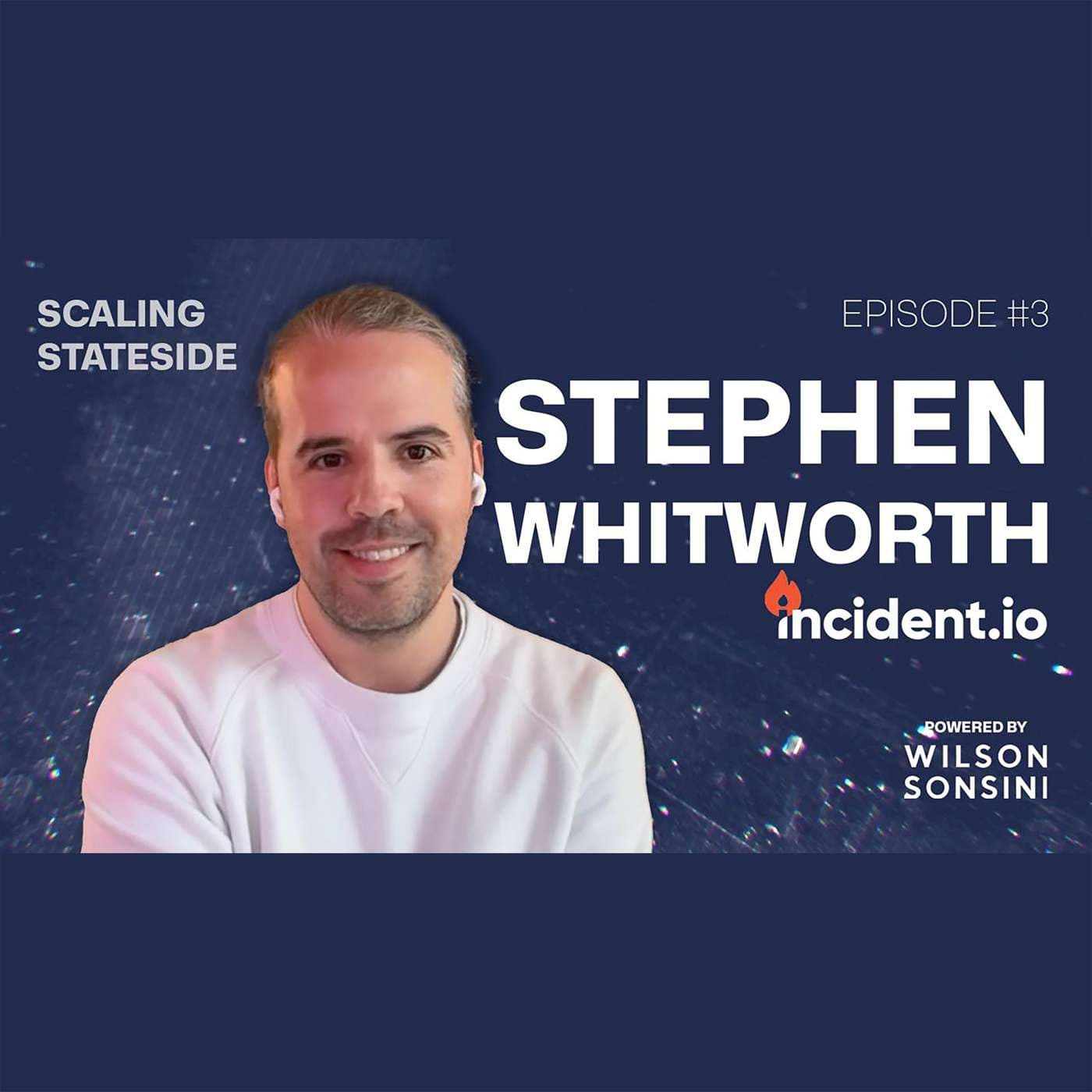
Stephen Whitworth, CEO/co-founder of Incident.io, discusses building and scaling a UK-founded B2B SaaS incident response platform into the US, including product-market fit, go-to-market decisions, hiring/culture, and fundraising.
Guest backgrounds
Stephen is a software engineer turned entrepreneur. Incident.io (launched as a side hustle in Jan 2021; full-time mid-2021) serves technology companies like Netflix and Airbnb, helping teams manage outages and incidents. He previously worked on startups including Ravelin (fraud detection) and Monzo (UK bank), and earlier studied business management and learned coding via Codeacademy.
Key claims
US expansion worked because US demand was “pulled” (inbound demos; 2/3–3/4 customers from the US). Remote-only sales wouldn’t match US time-zone expectations and language/cultural nuances. Culture stayed uniform by hiring for empathy/authenticity and investing in travel/face time. Fundraising in the US can improve hiring and valuations.
Notable examples
moving from a New York office buildout to a larger San Francisco presence; raising Series A (~$30M) explicitly to fuel US expansion; investor names (Index Ventures, Point9, Insight Partners).
Written by AI. May contain mistakes. Listen to the episode to check what was said.
Chapters
Tap a time to open that second in VOIntroducing Stephen Whitworth
0:45 to 2:01
Stephen Whitworth shares his background and the mission of Incident.io.
“I'm the CEO and one of the co-founders of Incident.io.”
Stephen's First Job Experience
2:01 to 3:17
Stephen recounts his early job as a paperboy and its impact on him.
“Well, let's start at the very beginning.”
From Paperboy to Entrepreneurship
3:17 to 4:20
Stephen discusses his academic journey and entrance into the tech industry.
“Yeah, or you can say effective delegation, like whatever your kind of way of doing that is.”
Learning to Code and First Job
4:20 to 7:10
Stephen explains how he learned to code and his initial job in tech.
“So I guess I went to university to study business management, and I would describe that as sort of a degree that, you know, closes no doors but also opens no doors as well.”
Starting Ravelin and the Entrepreneurial Journey
7:10 to 9:21
Stephen shares his experience working at Ravelin and the challenges faced.
“And this was back in the era of Silicon roundabout London technology scene.”
Transitioning to the U.S. Market
9:21 to 12:32
Stephen discusses the dynamics of expanding businesses into the U.S. market.
“But I mean, going from maybe steadier kind of job to make that first leap, what was that like for you?”
Pushed vs. Pulled Into the U.S. Market
12:32 to 14:00
Stephen reflects on how companies he worked with approached the U.S. market.
“And then you mentioned that was your first kind of foray into the U.S.”
Understanding Market Dynamics in the US
14:00 to 16:58
Learn about the challenges and dynamics of entering the US market for businesses.
“it always ended up feeling a bit more like Europe or the UK.”
Product Market Fit: UK vs US
16:58 to 19:06
Explore the differences in product market fit between the UK and the US.
“Because, you know, I feel like that would have been very challenging.”
Transitioning to the US Market
19:06 to 21:41
Discover the decision-making process for expanding into the US market.
“And if you had really the same level of product market fit, two thirds to three quarters of our market is from the US.”
Show all 19 chapters
Founder's Experience in the US
21:41 to 25:32
Hear about the personal experiences and sacrifices made by the founder in the US.
“And it was also, you know, another three hours time difference.”
The Human Side of Moving Abroad
25:32 to 28:00
Understand the emotional and personal impact of relocating to a new country as an entrepreneur.
“I think other stuff that made a difference to sort of kind of getting over that initial hump was backing of great investors that had name recognition in the US.”
Navigating the Move to the U.S.
28:00 to 31:23
Learn about the personal challenges and adjustments faced when relocating to the U.S. for work.
“and it might not be great or easy, but it might.”
Human Side of Business
31:23 to 32:05
Explore the emotional aspects of business partnerships and personal sacrifices in entrepreneurship.
“But it is about, what about the partner that's coming with me?”
Adapting to American Business Culture
32:05 to 36:28
Understand the differences in business communication and hiring practices between the UK and the U.S.
“had to, you know, really understand, you know, the NCAA basketball and March Madness brackets and everything like that.”
Maintaining Company Culture Across Borders
36:28 to 40:54
Discover strategies to sustain a unified company culture while operating in different countries.
“And as a result, you'll be in a situation where if you'd moved to the US with Google or something like that, it's like, oh, I can actually be friends with my coworkers.”
Fundraising Journey of Incident.io
40:54 to 42:03
Learn about the fundraising process and experiences of a startup in both the UK and U.S. markets.
“it's going to feel different to working all on site with everyone all in New York.”
Funding Journey and U.S. Expansion
42:03 to 47:46
Learn about the funding history of Incident.io and the strategic decisions behind U.S. expansion.
“and they'd also backed amazing companies like Loom and Zendesk and all of these things.”
Hindsight on U.S. Market Entry
47:47 to 50:08
Hear insights on what Steven would have done differently regarding U.S. market entry for Incident.io.
“Steven, as we wrap up, again, a lot of people are interested in making the same journey you already have.”
Transcript
Automatic transcript. May contain errors.0:11Matt Oxley:Hi, everyone. David Rose here with USXP. Thanks for joining us on the Scaling Stateside podcast. Our goal here is to help founders from the UK and Europe better understand the US expansion journey and all the steps along the way and best practices and pitfalls. with my co-host Matt Oxley and I. We've invited some guests we think can help shed insights into the topic. And today we have a founder we're very excited to speak with. Stephen, introduce yourself. Sounds great. Thank you for having me. My name is Stephen. I'm the CEO and one of the co-founders of Incident.io. And really, I guess my professional background is software engineer by practice, but kind of zigzag between working at startups and starting startups.
1:05Incident itself is a kind of all-in-one incident response platform. So we mostly work with technology companies like Netflix or Airbnb. And when things inevitably go wrong at those companies, so someone accidentally ships some bad code or parts of AWS is not working, usually those folks are trying to respond as fast as possible. And they use our platform, which is kind of incident management, to go and do that in practice. So the company, I guess, is about four and a bit years old at this point. and I have sort of started the company, been to the U.S., come back from the U.S. We now have like my co-founder over there.
1:50We have a lot of go-to-market. Nearly half the company is in the U.S. So, yes, plenty that we can dive into from a kind of expanding into the U.S. perspective.
2:02Matt Oxley:Fantastic. Well, let's start at the very beginning. Tell us about your very first paying job. Great question. It was a paperboy job, I think, back where I grew up. So I grew up in a place called Harpenden, which is half an hour on the train from London, but outside of what Londoners would define to be London, which is sort of the M25 ring road. So I was in, yeah, it was kind of a place where you can see both roads and fields at the same time. So kind of suburbia. um and yeah i i did it i remember you had to get up at like 5 a.m and i think i lasted for all of about two to three months um i actually managed to hand that job over to my mum um who loved getting up early anyway uh and as a result like she was uh she was more than happy to sort of not disappoint um the local guy at the shop who had like taken a bet on me and given the job So I managed to swap her in to do the job.
3:06And she is also the sort of mom that will definitely listen to this podcast as it comes out. So thank you very much, mom. I appreciate you doing me a solid on the first paper round job.
3:16Matt Oxley:I'm glad you mastered the art of succession planning early. Absolutely. Yeah, or you can say effective delegation, like whatever your kind of way of doing that is. But yeah, I just didn't fancy getting up at 5 a.m. in the morning. to uh to cycle in the rain to to drop papers off what can i say i i love it i mean my background is similar it's like i started with a paper round as well so um yeah very similar kind of like foundational stories there um one of the things i'd love to just dig into if i may steven is you know from paper round all the way through to you know where where you are today can you can you kind of unpack that a little bit for us?
4:01Tell us the steps, the journeys. You know, you said you've either worked for startups or been part of startups. Just going through that, so therefore the listeners can just understand your journey. I think this is a really interesting component of, you know, how one becomes an entrepreneur and the success story that you've seen along the way. Yeah, absolutely. So I guess I went to university to study business management, and I would describe that as sort of a degree that, you know, closes no doors but also opens no doors as well. So you kind of learn a little bit about a bunch of different things and I guess I was going along the kind of default trajectory that, you know, graduates do in 2013, which is, oh, I kind of want to work at, you know, a bank or a consultancy or a professional services firm because that's where, I mean, it's where like the graduate starting salaries were the highest.
4:57And that kind of honestly isn't that true now if you compare it to like software engineering jobs, but I sort of didn't feel that impassioned about it, but was kind of on a, I guess, a trajectory that felt sensible. I did an internship at Ernst & Young in the summer of my second year, and I didn't really enjoy it. Honestly, it felt like, again, interns, a lot of it is just they're creating busy work to kind of, you know, it's a it's like an option to hire you as a person in a year or so um but none of the work was like kind of felt that tangible or real because it it wasn't really that wasn't the point of it um so i didn't feel like that enthusiastic about going and doing that the following year um i then ended up sort of learning or like teaching myself how to code and the background to that is that my brother uh you know he was he sort of learned how to code at you know 12 or 13 years old spent every waking minute sort of like writing software on his computer so when i was you know i'm two or three years younger than him like when i was trying to learn as a 15 year old or 16 year old he was so far ahead of me already that i think he didn't kind of it wasn't the right line here's how you you get started with your very first thing.
6:14He was already so far ahead. So I sort of tried a few times to learn to code, but never really made it happen in practice. There was then this website called Code Academy, which is like credit, honestly, for sort of changing the direction of my life, which was, you know, my girlfriend and now wife went away for the weekend and I saw this ad pop up for it. And I was like, oh, you know, learn how to write a tic-tac like tic-tac-toe game in python in an hour i was like all right well if i'd never managed to learn from my brother at that point like let's give this a shot and then at that point it was the like oh i actually really enjoy this i haven't done any part of this in my degree or you know kind of any of the university side but it feels logical it feels like i'm kind of stretching myself in ways that i didn't know how to do so i then said right well cool i i'm learning how to code.
7:09I don't really want to go and be an accountant somewhere. Where else can you write code? And this was back in the era of Silicon roundabout London technology scene. So Last.fm and Halo and all of these sorts of the first wave of London, or not the first, but a wave of London technology companies. So I managed to cold email my way into getting a data analyst job. at that company. And it was really just an internship to start with. And that kind of gave me the first taste of like, all right, this is how you work. This is what a sprint is, a product team, you know, a CEO. And that kind of taught me, I guess, how to like just the atoms of working there.
7:56And then from that point, I was really lucky. And I think it's just honestly, sort of stuff that's happened in my life that has been pretty common is just random chance puts you random chance that gives you an opportunity to go next. So, you know, Halo had this big credit card fraud detection problem that they solved internally. And I sat in the same room as one of the people that was responsible for solving that. And kind of we then ended up working together on that problem a little bit because I knew some data science-y analysis stuff. He'd previously worked in the police sort of helping catch fraudsters.
8:35And off the back of that, you know, The deliveroos of the world were popping up. You know, again, this makes me sound very old, but like these were the days where you could like press a button and order a cab or order some food. And, you know, people's minds were blown at that point. And that meant that there was this big kind of opportunity for fraudsters to go take advantage of that. So we ended up building a company called Ravelin off the back of that. And that was, I guess, my first introduction to, you know, being at the start of a company where it didn't really feel that risky it was like oh i'm i work with these people they seem smart what's the worst that could possibly happen but yeah plenty plenty happens of after that point but i think uh happy to pause here and go a bit deeper into anything if there's a you know because that was the first point you know that company went to the u.s as well that's amazing and how much of a kind of leap was it for you because i think you know some Some people are very kind of risk averse.
9:35Some people are the other way. But I mean, going from maybe steadier kind of job to make that first leap, what was that like for you? Because what you said about kind of your upbringing as well, you know, I can only imagine that, you know, you've got that entrepreneurial blood in you. So was that always there? Or was that kind of you found the right people to then make that leap with? yeah i think it is honestly for a certain type of person like a lot of the cost ends up just being like basically am i in the right job or am i doing the right thing versus like a thing because again this is the era where like if you're a software engineer there were plenty of jobs for you and as a result you can afford to like look more towards like am i in the right fit versus is how am I going to pay the rent?
10:29So as a result, if I felt comfortable, I was going to get there. My mind was much more around one short life. What am I going to do with it? Am I going to do things that I enjoy? I guess the first thing that actually made that practically possible was raising investment. And again, this is back in 2013, the seed rounds were much smaller those days if you took money from a usbc firm there was a sort of like please tell us when you're going to pack up the london office and move it to san francisco and so a lot of the dynamics have changed since then but we ended up raising sort of a seed round from passion capital oh i think it was you know 750 000 pounds or something and it's like right you know we can pay our rent we can hire some smart people and we can go make like a real go of this thing and yeah it was it was sort of fun it was like the unexpected we didn't know what would happen but at the very at the very least you know if you go up maslow's hierarchy it would be like you know warmth food security and like uh so all of the basics were then covered and with all this stuff it's uh yeah i guess i was just always interested in i had always been interested in companies where like or being in places where I could see the difference and the impact that I made with every hour that I put into the company.
11:54And I could see that at much bigger places, you might not even see the impact that you'd make in the company with every month that you put into the company or every quarter that you put into the company. And something very satisfying about, you know, if you know that the risk is covered, that now every hour that you put in, the business changes and improves, and you've got a new customer because of it or some new features possible because of that. So, yeah, it felt sort of as long as the downside risk was covered, to me I would just spend a lot of time thinking about, like, right, is this the right thing to be doing and am I excited about what I'm going to go do next?
12:32And then you mentioned that was your first kind of foray into the U.S. Can you unpack that a little bit more with this organization? Yeah, so I guess it was the same with Halo and with Ravelin and honestly a bit with Monzo is that a lot of these companies started by building really strong and solid UK businesses. And then they would try and go into the US from a remote point. And with Ravelin, that's the kind of approach that we took. I wasn't super close. I didn't go there myself or I wasn't super close to kind of rolling it out. But we already had competitors in the US there. So there was a company called Sip Science that were doing a great job.
13:21And yeah, I felt like it was kind of instructive and it felt like the business was pushing its way in, in the same way that Halo was sort of trying to like crack the US and Monzo was also trying to crack the US. and that felt different different to incident which is kind of where i am now where our first customers came from the u.s so it was like right and kind of being pulled into the u.s um so ultimately like you know uh it sort of put some effort in to go and make it happen and the same with all the other ones but it wasn't the kind of i guess it wasn't like the home of the business or the center of gravity that for a lot of the organizations I worked for, it always ended up feeling a bit more like Europe or the UK.
14:08So kind of, yeah, it was a, you know, they put some time and effort into it, but they didn't quite get to the sort of US native style that I think some of their competitors managed to do. And do you put that down to, you know, because what I'm picking up from you is that those first kind of like couple of businesses that you mentioned, that was going into the US was very much you were pushed versus pulled. Would that be a fair categorization, or would you speak about it differently? Yeah, I think so. So, for example, if you take Halo, like the premise behind Halo was it was an app designed by three black cab drivers and three tech entrepreneurs where they said, right, you know, we can see the way the future is going.
14:58Like black cab drivers can be way happier, way more money, be way busier if people can book them on their phones. And that's a great place to sort of start with in that, like, you know, direct experience, they know exactly what cabbies want. However, that's not a business view that translates as well to, you know, a New York City cab driver or a Tokyo cab driver and all of that side of the world. So I think those businesses ended up being more like Halo, ended up being a bit more like of a kind of local mindset business where you couldn't build it once, scale it infinitely to the rest of the world.
15:38And then, you know, obviously the Ubers of the world kind of came over and said, well, it's not really about cabs. It's about people that drive that can be, you know, can also take you places. So there was sort of a mechanic that meant that it was also another side of the world that made a difference. And then I think, honestly, another mechanic was probably the funding environment back then, which is if you're a U.S. company, you have 450 million people that you can go sell to instantly and pretty frictionlessly. you have much deeper pools of capital, especially in the B2B SaaS world, you generally have much deeper pools of talent in places like go to market.
16:25So there's kind of this like momentum effect, which is, it's actually incredibly hard to crack, I think, from the outside, if you're not feeling that market pull. And I think, in general, you know, the halos of the world side, I'm not trying to speak too negatively about them, by the way, it's more just, you know, So there's some, I think it ends up being a lot more explained by the demand for your product and some of the market dynamics than it is about exactly how you managed to do it or the will of the entrepreneur. It's like, I think even the best entrepreneurs in the world would have struggled to build an Uber-like business in the US, having started in London or some other place.
17:09Because, you know, I feel like that would have been very challenging.
17:15Matt Oxley:Stephen, is it incident? Have you found that product market fit is different in the UK versus the US or other territories for your product? Yeah, so I guess, you know, I had worked at a B2C company at Halo, then a B2B company at Ravelin doing fraud detection. I then was at Monzo for two years, so a bank in the UK, where that is obviously B2C, and I'm sort of back to B2B again. if I think about product market fit in the UK versus the US, I think what was different was that, you know, our product solves a pretty universal problem for people running software, which is that software breaks, you know, and it might not be very often, but it almost definitely breaks and it breaks kind of what you do when it breaks is actually pretty similar in companies in the UK, in the US, in Australia, you tend to try and get a group of people together and understand how you're going to fix it.
18:18And then you fix it and you communicate out with the world. I'm being sort of very reductive, but that's very different to, for example, my co-founder and CTO came from a company called GoCardless, which was built off of the UK direct debit payment infrastructure. It's like, great, that doesn't exist in the US. It's different in the Netherlands. So, you know, kind of, it was different in the sense between those companies of us having something that we could build and scale to like a, that solved a global problem in a non-local specific way. If I think about what did product market fit feel like differently in the UK and the US, it just felt like we had more US customers.
19:01And I think honestly, you could just explain that by like the US is a bigger place. It has more companies. And if you had really the same level of product market fit, two thirds to three quarters of our market is from the US. So we felt very much more of a like, you know, and it just, it kind of appeared in different ways. It's like, I was in London, it was during COVID lockdowns. It's like, oh, we keep staying up really late to do all these sales calls. You know, it's like, oh, because, you know, San Francisco is calling us and we have to stay up till 11, 11 p.m. So, yeah, it tended to feel like staying up later and later and sort of doing ever more unsociable things from the UK.
19:42And take us through that kind of decision process from you guys staying up late, dealing with those kind of requests from San Francisco, all the way through to actually making a decision for you and the co-founders to set foot in the United States. What was that? Can you kind of break that down for us? Yeah. So the timeline of the business is, you know, we kind of launched it as a bit of a side hustle in January 2021. We then, you know, it went better than we expected. We got a lot of inbound demo requests and we're like, right, okay, cool. You know, we can probably make a real business of this thing.
20:19So we then went full time in the middle of 2021. And from that point onwards, it was two-thirds to three-quarters U.S. customers coming to us from mostly kind of just inbound demand channels. So as a result, it was like, okay, we know that we're kind of U.S. native and D, or at least from a sort of market, like a product perspective, like what do we actually want to do about it? And, you know, one model is like do remote sales for the rest of your life. um i think a you know that doesn't really work in that i think you'll struggle to match people on the time zones they want to be met b i think there's all these little things like do you use s's in your words versus z's uh you know do you have are you a like an ink or a corp uh there's like plenty uh plenty of those things which i think basically i think we were always just very aware of the fact that, you know, for many places in the world, the world is sort of the US's satellite office and like not the other way around.
21:25And as a result, there's kind of this gravitational pullback. So it felt like, you know, if we have so much demand coming from here and people want us to be over there and be with them, it would be dumb for us to just not go do that um so then about a year after we started the company we then built out our first new york office um it was a real sort of you know trying to it was a real like difficult decision i think picking between new york and san francisco to start with because it was a essentially you know coming out the back of covid and this was the pre-ai boom in san francisco san francisco wasn't looking in such a great spot.
22:08And it was also, you know, another three hours time difference. So we kind of took the bet on New York to start off with. And we started building out some go-to-market presence there. So this was, you know, our first BDR team, some of our first account executives. And the kind of vision behind what we were doing was go build the home of go-to-market U.S. native from effectively day one of the company. You know, we went through ups and downs after that. We've now got most of our, you know, people in the U.S. sitting in San Francisco. So there's sort of other decisions that we've taken along the way.
22:50But it was ultimately driven by, I guess, A, verified market demand for the product. B, knowing that we don't want to leave the door open for some U.S. native competitor, like the sort of halo to Uber. it's like nope let's go be the uber of the space um and then three is like you know i'm always trying to think about what the winning version of the company looks like in two years five years from now and it's like am i really convinced that the winning version of the company in five years is people staying up till 2 a.m you know doing remote dials to san francisco i don't think so let's get on with this thing.
23:32And it's much easier to do that as a team of 20, 30 people than I think it is as a team of 200 to 300 people. So let's be sort of dual headquartered from day one. So yeah, it was sort of an interesting choice, but I think ultimately like the right one looking back on it. And then from a founding team perspective, Did you make the journey over? Was that one founder or all of you? Or how did you kind of like split the roles there? Yeah, so it was me that moved over. So I moved over to New York for a little over two years. And the justification was, well, we like, you know, did and until this day have everyone in product development in London.
24:22So as a result, it doesn't really make sense for our CTO, Pete, to go over because he'll just be remote from his team. That seems dumb. Then Chris, my other co-founder, he spends sort of a leg in product and a leg in go to market. So it's like, yes, there could have been a justification to do that. But I think, you know, ultimately, if you're starting a bit behind from a US perspective, which is like, oh, this guy's got kind of a funny accent. And like, you know, like, what is this? What is this company? You know, I've never heard of them. I think what really helps is to make a sort of meaningful, like a meaningful sacrifice or stake in the ground to show that, hey, we are really serious about this thing.
25:08It is not going to be, you know, 950 people in London and two people in some WeWork in Jersey somewhere. It's like, no, we're going to be like, you are going to be as important to us as the rest of the company. And as a result, like the way that we can signal that is by sort of sending the CEO over and have him build that from scratch. So that was what we did. And I think it generally worked well. I think other stuff that made a difference to sort of kind of getting over that initial hump was backing of great investors that had name recognition in the US. So, you know, we are investors at that point where, you know, index and point nine.
25:53And as a result, it was the like, great. I've, you know, I've heard of these firms. They're fantastic. They've backed great companies. so as a result that kind of matters when you're trying to hire leadership for example because you know like it or hate it a bunch of leaders might qualify the companies they speak to in or out versus have they been backed by this firm or is it tier one or all of that fun stuff so um i think it made a difference to the kind of the way we were able to land in the in the country was like, yes, it both helped that it was me, but there was also supporting factors from our investors and other places that managed to make it a little bit easier as well.
26:36That's really interesting. I think we'll come on to the fundraising element in a little bit. But the thing that I'd like to focus on is, in my personal opinion, after spending 10 years in the States kind of growing Opal, one of the things that is not talked about enough is the human side of it. because you as a CEO, entrepreneur, founder are going over to a new market. You know, I call it learning American. You are, you know, you're removed from your friends, your family, your friendship groups, your daily routine, as stupid as the little gym that you go to, or you can't go and see men. You know, it's all these ridiculous things that add up.
27:19How did you find the human side of it? Yeah, I think it was, I think in my DNA, I'm pretty comfortable moving around. So I guess my, like my family, my mum is Canadian. My dad's British. I was born in Singapore, and then I moved back to the UK when I was six. so it's not like I had this kind of you know army lifestyle where I never stayed in a place for more than two years but it was also the kind of my parents often talked about going to Singapore as like well my mum does at least as like the sort of scariest thing that she ever did but the best thing that she ever did um so as a result I was very comfortable with this I'll go to a new place and it might not be great or easy, but it might.
28:10So all of the fun stuff might come in six months from now or a year from now and things like that. So, yeah, I would say I found the U.S. move generally exciting because it was different. I'd been in London since 18, and I moved over when I was 32, 31. So as a result, yeah, plenty of – You know, I can't get excited about new restaurants opening in London anymore. You know, send me somewhere new. And as a result, like, that side was fun. The U.S. was also just an incredibly large and beautiful place. And I'd spent time in, you know, L.A. and New York and San Francisco, but never in upstate New York or never in North Carolina or, like, all of these places.
28:56So that stuff was really fun. And this is sort of nothing to do with the work side, but it was just novelty. and a time to enjoy from that perspective. On the things that were hard, I think one was just really dumb stuff like the time zones and not the time zones in the sense that you have less time with people. It was stuff like I always used to work out in the mornings in the UK. So I'd go for a run or do an exercise class or something like that. And now if I get up at 6 a.m. in New York and I work with a bunch of Londoners, Like I wake up with the virtual in tray of like tons of stuff placed in there already.
29:35And it can be like, hey, this person's resigned or, you know, you need to make a decision on this deal in two hours. And as a result, you just feel very guilty. I think about, hey, I'm actually going to spend two hours running a half marathon before work. It's like that I can basically get up, brush my teeth, pretty much head straight to the gym. So I went straight to work and like no gym for me. So it was little stuff like that that kind of unsettled my routine a bit, but is ultimately a sacrifice. And then I think the friends and family stuff is hard. I mean, there's plenty of people that live around the world remote from their, you know, their parents and friends and things like that.
30:18But it was just little things like, you know, my niece, for example, being born and then you sort of see it's like maybe once a year or something like that um that was a little bit tough and then i think honestly some of it was the a bit of the personal guilt of like hey well me and my wife have moved from london but it actually turns out that i have you know two-thirds of the business in london so i kind of i always felt like uh a little bit uncomfortable with the fact that i would be going back to the place which i've just come from and was very easy for me and then you know my it was like me my wife and our two dogs and it was like oh great you know please fly over here look after the dogs and i'll head straight back to uh straight back to london from where we came so um long and short is it was great i wouldn't have traded it but it wasn't yeah i wouldn't say like better or worse i would just say different there's trade offs and some things trade-offs and others but on the whole i would just definitely like definitely not replaced it, I would still go back and do the same thing.
Read the full transcript
31:22That's awesome. Thanks for sharing that. And I think as part of this series, what we're trying to do is really speak about that human side, because I think there's pushes from people that you've taken investment from, the opportunity, everybody's spearheading towards that. But it is about, what about the partner that's coming with me? What about the things that you're not you're not taking it it is hard and i think this is a this is a great format to be kind of talking this through so anybody that's listening you know is informed by it a long question from me and then i'll hand it over to to david is very much about doing business in the u.s so the professional side of that i mean i always talk about it as like how to learn american in you know sales schools i had to, you know, really understand, you know, the NCAA basketball and March Madness brackets and everything like that.
32:18Because what that did, that replaced the conversations about the weather that you have in the UK, because that's the first five minutes of a sales call. So how did you, how did you find it? How did you adapt professionally and other things that kind of, you know, lessons that you learn or, you know, things that were frustrating to you? yeah i think um some of it was a bit easier for me and that the people that we were selling to were kind of the people like me they were you know engineering sre you know working in startups and scale up so as a result there was sort of still a bunch of shared connection around we could talk about some things versus oh i'm selling customer support or something that i didn't really know.
33:02If I think about like, you know, for example, one stuff that was more challenging, one thing that was more challenging at the start was, was interviewing folks and hiring the first team. And so that incident, I think we have a culture of broadly like authenticity and transparency and what's just like, sort of, I describe it as like sort of taking the mask off. And this doesn't mean like, you know, bring your clown shoes to work style, like everyone joking around and like not taking things seriously it's more just a a general acceptance of like yeah we're kind of all humans we're not great at some things uh you know we're good at other things and just trying to and trying to get an understanding for the shape of the person um and i think in the uk people are sort of self-effacing often to like you know extreme which makes it hard to figure out someone's it's like you know they might undercook something that's actually really impressive um i think in the u.s uh it was really really clear to me that just really really good at having a very coherent story about like your life and your career and why have you made the decisions that you've made um still same to this day and i think that's a real strength like you they should like americans should feel proud and like continue to do that i think the stuff that made it harder for me to drill into was like the kind of basically tell me what you're not good at.
34:27Like tell me where have you struggled? Where did you fail? Where was particularly intense parts of your life? And I'm mostly just looking for like authenticity and transparency and perhaps some vulnerability. And I think, especially with the first hires, I was like, I remember I had to kind of go and do a redo of the final interview for one of the first hires we made. He was amazing. Like, you know, one of the most prolific people in the company. and it was just a sort of like kind of you know I really really like him but I struggled to actually understand who he is as a person um and like what motivates him what does he get excited by what does he do outside of work and it was all very uh very polished uh so I essentially gave him the feedback I was like hey can we just have a more natural conversation about things and like after that that was great um so I guess I over the years I've learned some ways to sort of tease some of that out um but that's again it's uh it's like the you know the darkness is the light or something like that you know um good at good at pitching but makes it harder to get some of the authenticity stuff out um honestly still don't get all the rage about college football so i'm sure i'm gonna get you know absolutely annihilated on this on this podcast for that um but i i just never really new york honestly felt like a bit of a sheltered place for some of that that stuff which is it's all about the restaurants the food you know like sure you go see like the yankees or the nets or something like that but as a result i i felt like i didn't spend as much time diving into a lot of the kind of stuff underneath stuff underneath the hood and then i think another thing that made it a bit challenging was and i i think this is relevant to folks listening is like If you're moving out to the US to do what I was doing and open up the US part of the business, you are going to hire a bunch of people that will work for you.
36:27And these people are not and cannot be your friends. And as a result, you'll be in a situation where if you'd moved to the US with Google or something like that, it's like, oh, I can actually be friends with my coworkers. I can rely on them to introduce me to social circles and things like that. I honestly always just felt pretty uncomfortable with the power dynamic of like, hey, can you, you know, can we hang out on the weekend? Or like, you know, can you introduce me to some people, you know, just feels very like, you know, this is my boss and I guess I have to do it. But so as a result, I think that that was also one of the challenging things was kind of navigating the fact that some way of moving, you know, or like when you did move, you kind of had a bunch of the ways that you might build social networks a bit more cut off from you because, you know, you hire some great people, but couldn't treat them quite in the same way that you would for, you know, if you moved to Google or something like that.
37:31Stephen, since you were pretty early on in both the US and the UK, were there struggles or challenges in trying to keep a uniform company culture?
37:41Matt Oxley:You've talked about that term a few times, very different markets, different time zones. Did you find that trying to have a uniform culture for the overall company was challenging? yeah i we thought about it a lot and i was honestly terrified about it and thought it would be the thing that i thought it'd be the thing that would break the company because you have this kind of boogeyman of like all right uh engine it we and we made it even harder for example by like we would have a both a us and a uk split but then we would also have all of r &d in the uk and then a lot of go-to-market in the us so you're introducing a like cross-departmental split as well.
38:21And it honestly has been a lot, lot better than I ever expected it would be. And I think that is partly to do with the type of people we hire and then partly to do with the investment that we make in it. So if I take the people that we hire, it's generally, you know, a bit more of the kind of authenticity, good communicators, high empathy individuals. So that means that, you know, if you wake up at six o 'clock in New York and you're bombarded by things, you kind of start with this kind of warmer, assuming good intent place, which I think helped. We made active investments in doing this. So first 15, 20 hires we made in the US, we flew them over to the UK at the start.
39:09We flew them over for like two months. That was a bit excessive. We didn't really need to do that. we then went to one to two weeks and this was to kind of kind of ingratiate people in like look i know it's small in new york but trust me you know it's like a it's a proper company we've got like you know like engineers and everything uh everything in london um but also like this is how we work and you know you're you're a rep you're going to need to work really closely with engineers and founders and marketing folks. So go like share lunch with them, go talk. And there was never like a sort of expected, I was never looking at like the ROI of this visit.
39:51It's more just the thing that will kind of destroy the company, I think is creating all these artificial cracks and culture changes and GTM doesn't trust product and all of this sort of stuff. And I think you can actually solve quite a lot of that with, you know investing in travel investing in entertainment um i think to be honest we've probably under invested in it now and maybe got a bit too comfortable with how things are going and you know i i would be very in favor of us just like having more sort of sparing trips where people just go over to spend time with people outside of their domains and to learn other things and and stuff like that so yeah summing it up david i would say uh was terrified about it for some reason didn't go anywhere near that bad and has gone well.
40:41I think part and parcel of, we try to invest in it to make it easier. But also, I think it also depends on the kind of empathy and understanding of the people that you hire. And just so they understand that it's going to feel different to working all on site with everyone all in New York. It's like, we can't make it feel like that.
41:03Matt Oxley:Stephen, walk us through Incident's fundraising journey, because you've had multiple rounds. I think you've raised in the UK from a kind of a global firm and in the US. Walk us through that journey and tell us about the differences. Yeah, so we are sort of Series B company right now. We've raised close to$100 million, like 97 or something like that. So we started off by raising a seed round with Index Ventures and 0.9. So Index is kind of global, multi-stage venture capital firm, backed amazing companies over the years, you know, Datadogs of the world, Figma's, et cetera. And we were really, really close with our original investor because my co-founder used to work for him and had worked for him for quite a few years.
41:53So there was sort of this like natural tightness with the company. We then also spent a bunch of time with Christophe, who runs Point9, and they'd also backed amazing companies like Loom and Zendesk and all of these things. So, yeah, we sort of started off with those folks. We then did a Series A. So that was about$5 million. We then did a Series A of about$30 million the following year, July 2022, and that was explicitly to fuel the U.S. expansion. It was like, well, cool, it's going to be a bit of a stretch to do all of that with$5 million. Like, let's go and raise – we would raise$30 million.
42:35And that kind of gave us a good amount of time to go build out, you know, hire exec leadership. A, the exec search firms to go do that. Hire an office. Like, all of that stuff is materially more expensive in the U.S., I think, just from an average salary basis. and cost of living basis. So just having the buffer to go do that helped. We then raised a Series B from Insight Partners with participation from all of our existing investors in February of this year, so 2025, which was$62 million, which then gave us really the kind of, I guess, the fuel to go and to continue to expand. That wasn't to go build out a Singapore office or anything specific like that.
43:24it was more just this thing seems to really have legs, like let's invest more and more into it. So now we, yeah, so we work closely with all of our investors and it's been sort of a nice blend of, you know, like Insight is a slightly different shape to Index, for example. Insight also does private equity and, you know, we'll do like larger ownership of companies, for example. So it's nice to sort of have a blend of different perspectives and kind of different shapes of firms as well.
43:55Matt Oxley:It's really common, I think, for companies in the UK to choose for a variety of reasons to raise later rounds in the US. What advice would you give a founder who maybe has raised early money in the UK and is thinking about it'd be really great to raise our next round in the US? What are the things they need to know? What advice would you give them? Yeah, I guess I would question the premise, which is like sort of you can raise from US investors in the UK. And it depends the extent if you want, like, does the brand mostly sit within the US or am I in the US when I'm raising the capital? So, for example, if you raise from the Sequoias of the world or the indexes or, you know, the Axels, all of those folks have really large London presences.
44:44So you can feel very comfortable. and these people are, you know, kind of readily available. And, you know, it's not a person in a WeWork. It's material investment. If you're talking about firms that only have places out on, say, the West Coast or places like that, I just think it's, yeah, I would, I think it's probably going to be easier. And, again, this is a bit London-specific advice, but like it's going to be easier probably to raise within local networks because like it or hate it, a lot of venture capital backing is it's a, it's a tight network. It's, you know, back channels are rife. Like, you know, Oh, I heard X is doing this interesting thing and they left Y and they're raising, you know, in two days or something like that.
45:37That stuff is a lot easier to sort of happen in your local networks where you know people quite well. um so if you can make that happen in london and raise from a u.s brand in london i think that makes a difference um i guess my overall advice would be for sort of raising from like european like if i just say uk only fund versus big u.s fund i think if you're going to build a kind of fortress europe uk centric business i don't think it makes that much different honestly like you You know, money is green. I don't think any particular sort of, I don't think any particular advantage is going to come to you from raising from Kleiner Perkins versus, you know, some other fund in London.
46:22If you're going to be in the U.S., materially invest in the U.S., buy amazing people in the U.S., you know, try and stretch to being an upmarket, you know, enterprise sales business. I think raising from U.S. brand investors does make a big difference. it is not the gate. Basically, it's like, I don't make the rules. I just, I just do think that it makes a difference. Again, it comes back to like, this is sort of not people taking a, like a subjective judgment on you and your company. It's more the case of what I mentioned earlier, where like, you'll be sort of ruled out of a, a great sales candidates next job because they have 30 companies they're going to interview with, and they're just going to pick the ones that Sequoia and blah, blah, blah invested in.
47:12And as a result, I think, you know, if you're in the US, raising from those VCs will sort of make you luckier, I guess, in like an invisible way. Certainly doesn't hurt. And from a just purely financial perspective, you'll get generally better valuations. And I would say a bit more of like a risk on mentality. but I think that is also starting to change as well. So yeah, if I had to sum all of it up, if you're going to be in the US, I get US investors on your cap table. That doesn't mean you have to raise in the US. And if they have presences in your local markets, I think that's the best place to start.
47:53Matt Oxley:Steven, as we wrap up, again, a lot of people are interested in making the same journey you already have. If you could do it all over again, like your incident has not launched in the US and you're going to go back and make that journey from the start, what would you do differently or what advice would you give yourself, you know, three years ago? Yes, I would. So we ended up switching the majority of our investment in sort of physical presence in the U.S. from New York to San Francisco. And I think looking back with hindsight, I would have probably done that from day one. because if we work with your tech native, digital native sort of enterprises, they're disproportionately on the West Coast.
48:37So we'd been closer to customers. I think when we did searches for go-to-market leadership, I'd say 50, 60 % were based in the Bay Area or somewhere like it. So it felt a bit like I moved to New York to hire people that were all remote to me. And as a result, it was like, okay, well, I've kind of come here for half the reason, but then I'm not quite getting the rest of the benefit. So there's no, you know, no judgment against New York. There's amazing companies built there. So like look at ramp for a great example of it. But I would probably for our business gone to SF from day one. Other stuff, I think, yeah, I don't, honestly, I don't think anything else.
49:26There's stuff that we could have done. We could have flipped the company into being a Delaware incorporated company. We decided not to do that. It's made absolutely no difference from what I can tell. There's things we did around salaries and in general, for the same role, you'll get paid more in the US. Some companies do this global level of things like that. I think on the whole, we took sort of a bunch of sensible decisions. But I think if I, the main thing that we ended up sort of redoing was like, okay, turns out SF is actually a better choice for our business. So if I could cheat code and just skip to there, that's probably the one thing I'd pick.
50:09Matt Oxley:Great, Steve. This has been really great. Thanks so much for making time to talk with us. Best of luck to you and Incident moving forward. And we hope to see you again soon. Thank you so much for having me. Appreciate it.
From the publisher
Episode Overview
Join hosts David Rose and Matt Oxley from USXP as they dive deep into the US expansion journey with Stephen Whitworth, CEO and co-founder of Incident.io. Stephen shares his entrepreneurial journey from paper boy to running a successful all-in-one incident response platform, and provides candid insights into the challenges and opportunities of scaling a UK-based startup into the US market.
Episode Length: ~50 minutes
Published: [Date]
Hosts: David Rose & Matt Oxley (USXP)
Guest: Stephen Whitworth, CEO & Co-founder, Incident.io
Guest Profile
Stephen Whitworth is the CEO and co-founder of Incident.io, an all-in-one incident response platform serving technology companies like Netflix and Airbnb. A software engineer turned serial entrepreneur, Stephen has navigated multiple UK-to-US expansion journeys throughout his career, including stints at Halo, Ravelin, and Monzo before founding Incident.io in 2021.
Connect with Stephen:
- Company: Incident.io
- LinkedIn: https://www.linkedin.com/in/stephenwhitworth/
Key Discussion Points & Timestamps
Early Career & Entrepreneurial Journey (02:00 - 10:00)
The Birth of Incident.io (10:00 - 17:00)
Making the US Move (17:00 - 26:00)
The Human Side of US Expansion (26:00 - 32:00)
Cultural & Professional Adaptation (32:00 - 37:00)
Maintaining Company Culture Across Borders (37:00 - 41:00)
Fundraising Journey (41:00 - 47:00)
Lessons Learned & Advice (47:00 - 50:00)
Key Takeaways
- Market Pull vs Push: Being pulled into the US by organic demand is stronger than pushing your way in
- Commitment Signals: Sending the CEO shows serious commitment to the US market
- Timing Matters: Easier to establish dual headquarters with 20-30 people than 200-300
- Cultural Investment: Flying new US hires to UK headquarters builds crucial cultural bridges
- Location Choice: For B2B SaaS targeting tech companies, San Francisco often trumps New York
- Fundraising Strategy: US investors provide validation and network effects for US expansion
- Personal Sacrifice: The human cost of expansion is real but manageable with the right mindset
Resources Mentioned
- Code Academy: Platform that taught Stephen to code
- Companies Referenced: Netflix, Airbnb, Deliveroo, Uber, Halo, Ravelin, Monzo
- Investors: Index Ventures, Point9, Insight Partners, Passion Capital
- Locations: Silicon Roundabout (London tech scene), Harpenden (Stephen's hometown)
About USXP
USXP are the launch to revenue experts European tech scaleup companies count on for successful US expansion. Our Team of experienced operators will lead your company through the entire lifecycle of readiness, launch, and scale in the US market.
Hosts:
Powered by
This episode is powered by Wilson Sonsini, providing legal counsel for technology companies and growth enterprises.
- Website: wsgr.com
Subscribe & Connect
Subscribe to Scaling Stateside on your favorite podcast platform:
Follow USXP:
- Website: usxp.co
- LinkedIn: linkedin.com/company/usxp
- X: @usXpartners
- YouTube: @USXPartners