
In short
Scaling Stateside Podcast Episode Notes
Episode Title
The Founder Multiverse: 60 VC Rejections, An Adobe Exit, and the Appetite to Dominate | Alex Packham
Hosts
- David Rose
- Matt Oxley
Guest
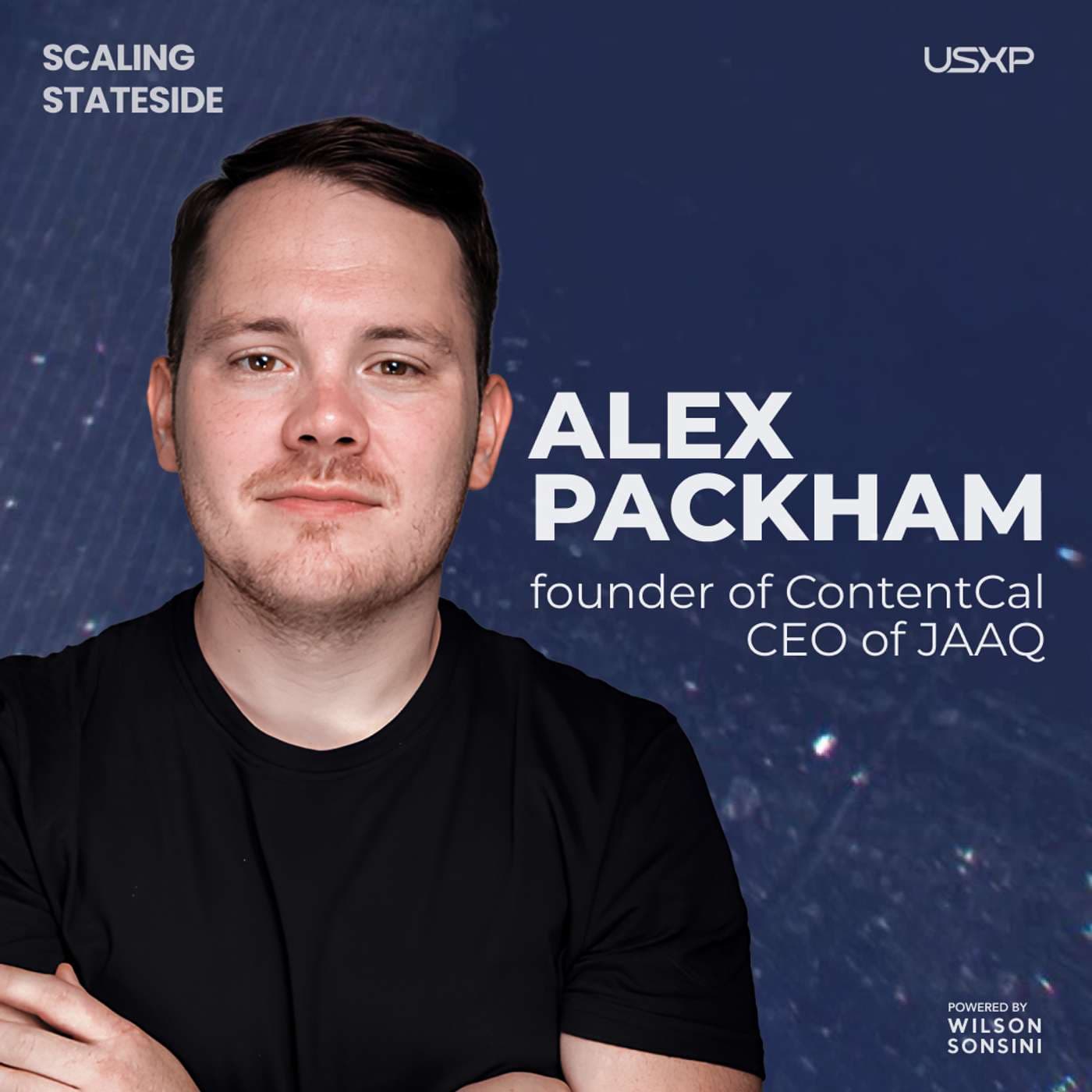
- Alex Packham
- Former Founder & CEO of ContentCal (acquired by Adobe)
- Current CEO of JAAQ (Just Ask A Question)
Episode Overview
In this episode, Alex Packham shares his entrepreneurial journey, highlighting the challenges of transitioning from an agency to a successful SaaS business, the acquisition process with Adobe during the COVID-19 pandemic, and insights into the U.S. market that every European founder should understand.
---
Key Topics & Timestamps
02:58 Early Entrepreneurial Experiences
- Alex reflects on his early entrepreneurial spirit, revealing that he started selling in playgrounds at the age of 14.
06:02 The Mindset of an Entrepreneur
- Discussion on the intrinsic desire for independence and self-creation driving Alex's entrepreneurial pursuits.
08:47 Career Path and Agency Experience
- Alex shares his experience working in digital marketing and running social media for significant brands.
12:09 Transitioning to ContentCal
- The pivot from agency work to building ContentCal, a social media planning tool.
14:47 Fundraising and Venture Capital Journey
- Insights into the challenges Alex faced while fundraising, including the rejection from 60 VC firms.
17:59 Product-Led Growth and Market Expansion
- Discussion on the importance of identifying the Ideal Customer Profile (ICP) for successful product-led growth.
29:59 Navigating the U.S. Market During COVID-19
- Strategies for expanding into the U.S. market amidst global lockdowns.
35:55 The Journey to Series A Funding
- Overview of the transition from angel funding to securing Series A investment.
39:58 The Acquisition Process with Adobe
- Detailed account of the acquisition discussions and processes with Adobe.
45:54 The Human Side of Entrepreneurship
- Reflections on the emotional and psychological challenges faced during the entrepreneurial journey.
50:51 Transitioning to JAAQ: A New Venture
- Alex discusses his current venture, JAAQ, focusing on mental health and wellness.
57:44 Advice for Aspiring Entrepreneurs
- Key takeaways and advice for new entrepreneurs based on Alex's experiences.
---
Key Takeaways
Entrepreneurial Mindset
- Emphasizes the significance of self-motivation and the importance of creating opportunities rather than following conventional paths.
Transition Challenges
- Discusses the complexities of shifting from a profitable agency model to a scalable SaaS business, including facing skepticism from VCs.
Fundraising Insights
- Shares experiences of facing multiple rejections and the importance of resilience in the fundraising journey.
Market Expansion
- Highlights the critical understanding of the U.S. market and the need for a product-led growth strategy.
Acquisition Experience
- Details the surreal experience of negotiating an acquisition with a global giant during a pandemic.
The Human Element
- Stresses the importance of mental health and the emotional toll of entrepreneurship, encouraging founders to reflect on their personal well-being throughout their journey.
---
About Alex Packham
Alex is an accomplished entrepreneur and angel investor. He founded ContentCal, which was acquired by Adobe in 2021. After successfully navigating his earn-out at Adobe, he transitioned to JAAQ, focusing on mental health solutions.
Connect with Alex Packham
- [LinkedIn](https://www.linkedin.com/in/alexpackham/)
- [JAAQ](https://jaaq.app/home)
Connect with David Rose
- [LinkedIn](https://www.linkedin.com/in/davidbrose/)
Connect with Matt Oxley
- [LinkedIn](https://www.linkedin.com/in/mdoxley/)
Powered by
- Wilson Sonsini: A leading law firm for technology and growth companies, aiding European founders in navigating U.S. expansion.
---
Conclusion
This episode highlights the intricate journey of navigating the entrepreneurial landscape, the challenges of market expansion, and the critical emotional aspects of being a founder. Alex Packham’s experiences offer valuable insights for aspiring entrepreneurs looking to scale their businesses in the competitive U.S. market.
Written by AI. May contain mistakes. Listen to the episode to check what was said.
Chapters
Tap a time to open that second in VOMeet Alex Packham: A Journey of Entrepreneurship
0:45 to 3:30
Alex Packham shares his background and entrepreneurial journey, including his exit to Adobe.
“lifecycle of this journey previously, Alex Packham, the founder of Content Cow, who's now the CEO at Jack.”
Early Entrepreneurial Experiences
3:30 to 7:09
Alex discusses his first jobs, including a paper round and selling SIM cards, illustrating his early entrepreneurial spirit.
“Well, take us back to the very beginning, Alex.”
Influence of Family and Independence
7:09 to 10:30
Exploration of how Alex's family's entrepreneurial background shaped his mindset and independence.
“I am not someone who's like a business as usual person, can do the same thing every day, rinse and repeat, etc.”
Career Arc: From University to Agency
10:30 to 13:52
Alex recounts his university experience, social media marketing insights, and the start of his career in London.
“Because I know, you know, through our conversations that, you know, you had an agency that got you to content, Cal.”
Working in Corporates: The Turning Point
13:52 to 14:02
Alex reflects on his experiences at Odeon and Now TV, detailing the excitement of startups and the challenges of corporate environments.
The Journey from Agency to Software
14:02 to 16:40
Learn how Alex transitioned from working in a corporate agency to starting his own social media agency and ultimately building a software company.
“I don't want to go and network with that person to get a promotion and be here for 50 years before they give me like, you know, a reasonable salary and title.”
Building ContentCal and the Learning Process
16:40 to 19:20
Discover the lessons Alex learned while building ContentCal, including the importance of content creation and client engagement.
“You know, you, you, you're kind of like, right.”
Navigating Funding Challenges
19:20 to 22:00
Explore how Alex raised angel investment and faced numerous rejections from venture capitalists while transitioning from a service to a software business.
“But that's an amazing foresight to have at that age.”
The Road to Venture Capital Success
22:00 to 26:36
Learn about the struggles Alex faced with VC pitches and the eventual success of securing funding just before a financial deadline.
“So I had my agency and content cow was a thing.”
Entering the U.S. Market
26:36 to 28:06
Understand the strategies Alex employed to target the U.S. market and the realization of demand for ContentCal from American businesses.
“And Alex, how early or did it happen at all in the conversations with fuel?”
Show all 23 chapters
Navigating U.S. Market Entry
28:06 to 29:16
Learn about the strategies used to penetrate the U.S. market and how early investments shaped the approach.
The Challenge of Product-Led Growth
29:16 to 31:09
Discuss the evolution and challenges of adopting a product-led growth strategy.
“But what we never tried to do, or we did early, but way early, and then we messed that up.”
Building a Remote U.S. Team During COVID
31:09 to 32:55
Explore how the company adapted by creating a remote team in the U.S. amidst travel restrictions.
“There wasn't much for me personally to actually do that.”
Securing Series A Funding
32:55 to 34:37
Understand the steps taken to secure Series A funding and the strategic decisions involved.
“literally doing what this guy was doing, but more permanently based when things had settled.”
Unexpected Interest from Adobe
34:37 to 36:38
Hear about the surprising cold email from Adobe that opened the door for potential acquisition talks.
Navigating the Acquisition Process
36:38 to 39:45
Gain insights into the intricate process of acquisition negotiations and the importance of timing.
The Human Side of Selling a Business
39:45 to 41:29
Explore the emotional and human aspects of selling a company, including challenges faced during the process.
The Human Side of Entrepreneurship
42:00 to 47:10
Learn about the emotional and psychological challenges faced during entrepreneurship.
The Journey to Founding Jack
47:10 to 50:12
Discover the journey from personal struggles to founding a mental health company.
“And I think what this nice is now is a nice kind of connection to what you're doing now.”
Reflections on Critical Inflection Points
50:12 to 53:51
Explore advice on navigating critical decisions in business and personal growth.
Cultural Insights from Adobe's Integration
53:51 to 56:01
Gain insights on the cultural differences and experiences learned during the Adobe integration.
Cultural Insights on Business Practices
56:01 to 58:00
Explore the differences in business culture and work ethics between regions.
Advice for Aspiring Entrepreneurs
58:01 to 1:00:29
Gain valuable insights and advice for founders at early stages of their journey.
“great you have a fantastic entrepreneurial founder story thanks for sharing it with us As we kind of wrap up here, is there any advice?”
Transcript
Automatic transcript. May contain errors.0:11Matt Oxley:Hi, everyone. Welcome to the Scaling Stateside podcast. I'm David Rose, the founder and CEO at USXP. Along with my co-founder, Matt Oxley, we are on a mission to help founders from the UK and Europe better understand the U.S. expansion and entrepreneurial journey. We have guests that include founders and VCs to help tell their stories and help disseminate this information around best practices and pitfalls. And today, we're very excited to have a founder from the UK who's been through the entire lifecycle of this journey previously, Alex Packham, the founder of Content Cow, who's now the CEO at Jack.
0:53Matt Oxley:He's based in London. Alex, introduce yourself. Welcome to the show. Please tell us a little bit about your background and please tell us where you are in the world today. Totally. Thank you so much, guys, for having me on. I'm really looking forward to this. So where am I in the world? I live in Farnham in Surrey. So if you're in America or anywhere outside of, I guess, London or that belt, you'll have no idea on earth where that is. but it's about an hour south of London and I lived in London before that for about 14 years 15 years so I kind of did my London stint and did what lots of people often do here is move out to the countryside and get some fresh air and go into London a couple of times a week and travel internationally a lot so home is uh home is far I'm sorry um my background is I mean I'm an entrepreneur you know through and through I suppose um I have been that way inclined since I was 14 years old.
1:48It's the age old story of people who have always sold stuff in playgrounds at school and always been interested in the idea of building businesses. You know, my dream was not to be an astronaut. It was not to be a footballer. It was not to be a sports star. It was to be a person in business, be an entrepreneur before I even knew what that word really meant. So my main business that I've built, the kind of one that I've known for is Content Cow, which you can see very loudly and proudly behind me. This was a sign that we had at lots of expos that I managed to keep before we sold uh which was storage somewhere that we used to do pin the post on the calendar which was really fun as a competition um and that was a business i built over the course of about eight years um did the full journey as you said which ended up exiting to adobe in december 2021 um and then i've built a bunch of other businesses within that i mean before that after that during that um and really love the concept of creating companies from scratch seeing them through those early stages and then obviously as you go through the process building those companies into something more substantial and then yeah like i said very lucky to go through an exit process with adobe which taught me a huge amount about you know that end-to-end piece like whether it's the product market fit stage through to mna through to doing three years at adobe and doing an earn out you know in a californian uh based business which was really a massive global company right 20 billion 20 billion dollar uh turnover business it was a 300 billion dollar market cap when we sold to them.
3:11I think it was like the 30th biggest company in the world by market cap when we sold. So incredible journey. And then outside of kind of my operator side of life running companies, I've invested personally in about 60 different businesses as an angel investor, advice funds, advice companies, and all that good stuff. So that's me in a nutshell.
3:29Matt Oxley:Great. Well, take us back to the very beginning, Alex. We always like to ask our guests, because it's super interesting with the entrepreneur kind of mindset and background. what was your very first paying job i've got two answers for this um and it's interesting because i don't think i've been asked that for such a long time so one is i had a paper round and that makes me feel old because there are going to be people on listening to this i'm sure just like a jeff won't even know what that is um so i in my local area took physical papers newspapers that were like the free community newspaper and I was paid like like literally like eight pounds or something which is like ten dollars to deliver this to like I don't know like 50 no maybe not that many 20 homes in my local area and that's hilarious saying that because now I literally for the first time ever out loud feel old because literally some people would not know what that even is so that was my first actual ever paid job my second answer which is my first entrepreneurial hit was that when I was younger, SIM cards for phones, believe it or not, and like the whole kind of vibe of mobile phones being accessible to everybody was still quite new.
4:43And I can't remember why, but O2, which is a phone network in the UK, had this free thing online where you could get six SIM cards for free. If you topped it up£10 a month, so you wouldn't even have a subscription back in the day, you'd put£10 on and you'd get like 200 free minutes and 200 free texts and it was like a lorty thing obviously and so i got six of these sim cards for free and i managed to find five or six ways different email addresses to get like 50 of them or something and i used to go and sell them for like 20 pounds each in the playground and i was like to jing so those are my two answers you can see the differences between the paper and i didn't last long i think i did it for three months and then i did the typical thing which most people did which was like hide them somewhere and just sit for like half an hour because i didn't like that and then the entrepreneur thing carried on forever so you can see why uh you can see which
5:29Matt Oxley:will last those are the proper building blocks of an entrepreneurial career that's fantastic the the reason sorry sorry go ahead no the reason why i'm laughing because i had a free paper round as well and it was it was those big bags that you're carrying and then you've got to sort them and then deliver them the papers were like that thick and it was an admiral it wasn't just delivery you have to literally put the leaflets in there yeah it was crazy what was it in your kind of upbringing dna that that you think kind of generated that appetite because obviously the normal kind of path is like go and get a job i want to be a lawyer i want to be whatever it might be what was that from your kind of upbringing that really sparked that i think there were two things so when I was really young my dad always bought and sold stuff like eBay and PayPal and you know when all that was new as well I always witnessed him I was really interested in him doing that I think I introduced him to eBay and like PayPal and then I watched him do it kind of thing as a kid and I just thought that was I don't know I just thought it was interesting right you can make money out of nothing or stuff you have around the house and so I had great exposure at that kind of thing at a really young age my entire family is pretty entrepreneurial and so even as I went through my teens into my early 20s I was always surrounded by entrepreneurs so that really carried me through I suppose in that mentality but the other thing is that and I've tracked this in my own behaviors for whatever reason I've always tried to do things for myself like whether it's independence or whether it's like a streak of that that was taught to me I can't tell you how so it's like the whole nurture nature thing but I've always thought if someone else can do that really well why can't I and if I do it myself I'm doing it for myself and so whether I had an agency at one point which I was like why would I work for an agency or I can start one like I've had brands that I started why would I work for one I can start I don't know I've just got that creator I guess mindset in me is there an element of you see something and you feel the opportunity to improve it is that is that part of it as well or is it just that right is that it's that independent kind of thought as you as you as you say i think it's i love to create things the more i start to really think about it i mean even like two or three days ago i was creating a tv show about the new version of like a dragon's den or shark tank and like you know and then if you went through my chat gpt you'd be horrified by the amount of things and ideas that i've had they're just constant my brain for whatever reason naturally wants to create things and actually there's there's obviously loads of benefits to that but there's also counterintuitive things so So I've only really learned the phrase find a minder binder really quickly kind of thing.
8:09I am not a minder. I am not someone who's like a business as usual person, can do the same thing every day, rinse and repeat, etc. I like to search for new things. I like to find new things, I like to bring things together. So, yeah, that's that's fascinating because I'd like to kind of just focus in on the find a minder binder concept and maybe go through your kind of arc. because obviously the find a binder minder element as you go through content cal you know you went through all of those phases so then i guess my question is what phase of that do you obviously enjoy the the most and yeah talk us through that yeah i learned i learned the hard way in a way that there's a very big difference between being a founder and a ceo and ceos are quite often it's particularly more like scale up or more established businesses, like they're minders in reality, right?
9:01They are there to make sure products work, the business works, there's an operational rhythm, they make things happen. They're not there to necessarily, not exclusively, but necessarily create a brand new product from scratch or find a new market and figure it out or invent something brand new from a technological perspective. So when I was running ContentCal, I had a COO who was fantastic. It was much more of that minder characteristic, but I had to learn how to not do stuff in a way like not just create something new not reinvent the pricing strategy or the product strategy so throughout my journey um I've learned the bits that I'm really good at and I'm good at creating inventing thinking things through solving big problems finding new solutions all that kind of stuff but as soon as you get into what I call what I think of which is right or wrong in the boring stage which is we just need to do the same KPI meeting every monday and we just need to do this we just that's like not my gig um and so i've learned even with jack later stage right that it was a business that was sort of product market fit but still quite early so we're still creating stuff and then it's going to get to a minder stage and i'll know eventually like that bit won't be for me but we've still got to push it through a breakthrough period so yeah it's a useful framework to think through i think as an individual particularly when you're doing lots of different things no that's it's absolutely fascinating you know just just through my own personal experience, I can see the relevance of it.
10:21What I'd love to do now is just kind of go back to that career arc and go back, you know, after the paper round, talk us through those years all the way. Because I know, you know, through our conversations that, you know, you had an agency that got you to content, Cal. Would you mind just kind of talking us through that kind of, that period of your life? Yeah. So the kind of very young entrepreneur bit, paper round, selling SIM cards, selling loads of other stuff over the course of that. I went to university, I went to Cardiff University to study international business management. I was 18 years old at the time, again, super passionate about business.
10:56So I was like, that's the thing I'm going to go and learn. I remember in my second year, so social media was not new, but it was newish. So Facebook was still very large and actually used a lot. Instagram was like brand new. People use BlackBerry Messenger. I think Twitter was super early kind of thing. So these were when social networks were actually more about socializing than kind of business and commerce. But it just started that kind of business and commerce thread. And I can remember very distinctly because I've got a photographic memory that I was sitting at my desk or my laptop, which was like all the time anyway.
11:29And constantly thinking of things about how to make money, although I was more enjoying that university life. And I basically realized it was like a proper penny drop moment, 19 years old, that everything I had bought, so clothes, brands, what I chose and what I don't know, everything that I chose to go through in terms of like bars and restaurants was completely influenced by what I saw on social media. I didn't watch TV. There was no ads on like TV. I was watching and being influenced by because I didn't watch it. Everything I decided to do was influenced by largely Facebook at the time. And I don't know why, but I had a penny drop moment.
12:04I was like, this, this social media thing is not just about me liking friends pictures this is about generating business and demand for businesses and so i went down this rabbit hole on the internet for like four hours of what is social media marketing what are the blogs that are online like what is it about what you know are people doing this or have i just had this like weird thought process and it turned out at the time so bear in mind this is 2011 there was this massive community online people particularly in america who were like social media marketing is a thing and this is real and this is going to be huge particularly likes of gary vanenshuck or something like that and i was like okay this is really validated to me this is a thing and then i spent a year a time freelancing effectively before i even knew what freelancing was managing businesses in cardiff's facebook pages and family friends
12:49Matt Oxley:businesses and stuff like that making money i was like this is unbelievable i'm writing social media posts for money like this is hilarious and learning how to use it and cheating the algorithms and stuff so I did that for two years at university finished uni and then I was like I'm gonna get a job in London because that's quite often what people do obviously that's where kind of most of the gigs are and everyone wants to go and work in the city and I remember applying for hundreds of jobs it was 2011 so it was post-financial crash bear mind a couple of years so it kind of bounced back a bit in the UK but there's still very few jobs for people particularly my age and I got one of the first what I'd call social media management jobs that existed in the UK so that was Odeon Cinemas I love film film was a big passion of mine so I spent two years running Odeon Cinemas social media that was great absolutely loved it and then post that went to Now TV which is like a Netflix competitor here in the UK powered by Sky and that was a big moment for me so that was running social media for Now TV which was a challenger brands to Netflix and Love Film and all these other big players that existed in the UK but it was 40 people or kind 50 people max put in this really like startupy crappy room at sky's offices sky is this huge company here in the uk tv company and it was like here's a load of money we want to take sky tv which was set up boxes like cable tv and we want to turn it onto an internet streaming platform got our best people off my camera zooms in go and figure it out and so i was only there for two years but between figuring out that 40 people turned into about 1500 2000 they scaled it to i don't know the exact number but hundreds of thousands of customers massive brand advertising it was incredible and i got the bug of like whoa like this is a scale up like i hadn't been part of anything like that before the energy um but then as soon as it got minder territory interesting to that art quite as soon as it got corporate because it did because it got big um And I was like, I don't like this.
14:48Like, this is not my gig. I don't want to go and network with that person to get a promotion and be here for 50 years before they give me like, you know, a reasonable salary and title. So I left. I was like, I'm off. And I was off to start a social media agency. So I did that straight away. And amazingly, Sky and Odeon became the first two clients because I kept in touch with people at that agency. I then built up a book of lots of film distributors, B2B businesses, B2C businesses, startups for about two or three years, literally running content for businesses, typical agency stuff, right? Services.
15:19So, you know, creating content, publishing it, running ads, doing websites, the whole shebang, really. And what I'd learned in that process, whether it was your skies, your audience, your paramounts, your really big businesses or medium sized companies, the process of creating content was similar. and there were patterns in it so you've got to draft it you've got to create it you've got to review it you've got to show the client they've got to approve it then you've got to edit it and then eventually once you've gone through that wrangling process you've got to publish it you've got to automate it into the future you might have to do it like late in the evening or something like that you then got to look at the analytics and the performance and see if it performed and this cycle just went over and over again and again you could have been a massive company or you could have been a small business but the process broadly speaking was the same the only difference was if you're a big company there's been more people involved so there was like approval flows and kind of editors and whatever and in a nutshell over a course of two years what you see behind me the product content cal i built uh not as in me but i worked with a bunch of friends and kind of close contacts to build the mvp um that kind of grew over the course of a year and put all the agency clients on it and that was a great hack i had which a lot of companies didn't have at the time but i just said to all my agency customers use this software sold it to a bunch of others and then naturally obviously that grew into a much bigger business over time so i'll pause there just in case there's any comments and questions and stuff but that agency and that whole learning process and that that whole period i've just told you about was like four or five years right that was a process maybe three maybe three or four years max so that that takes us up to kind of what period of time so that would be like 2015 yeah exactly that yeah 2015 yeah so there was kind of a ropey version of content cal that existed but i had customers and had revenue i had an agency which was doing really well actually for its size and shape it was profitable at like 25 people but the moment for me realized was i did um i did an accelerator in 2016 so after that and it was kind of like a juncture for me because i had this profitable business this service-based business had clients had like enviable clients right like in like massive film studios massive brands but i had this software platform that i was like this has legs like this could be a thing and so i did this accelerator for three months in London it's called the accelerator academy and that was for content cal I was like this isn't a business yet this is a software product with a couple of people around it and it was a three-month process and the process was really to teach you how to make a software company so you learn legal you learn sales you learn this you learn that and then you got paired with a mentor and I was paired with a chap called Colin Smith who became an investor our chair and a great friend of mine now and um I came out of it and I was like I've got to give this a go like I've got to try this software company and I've got to try and wait, like morph my agency into this.
17:58So, so what did you do with the age? Cause that's quite a fork in the road. You know, you, you, you're kind of like, right. You're doing professional services agency, you know, because I've been through a very similar model as well with agency. You're only as good as your last gig. It's a very much a people business. You're not creating IP. So no, that was the fork that kind of, I went through. I'm like, right. I want to create IP. I want to create a product that lasts, that has legacy. How were you thinking through it at that time? Was it similar? Oh, very much so, but more messy. The way you've just said it sounds like it's a really organized thought process, which it probably wasn't through at the time in reality.
18:37Yeah, exactly. So similar for me, right? Bear in mind, I was 24, 25 when I was making these decisions, right? Pretty young and pretty inexperienced in the grand scheme of things. And so similar to you, it was like, I know this can scale. I know this has legs. I wasn't really thinking like this is acquirable at this point but I was thinking this is more likely to be acquired than you know an agency for bigger money if it did if it did happen knew it was riskier but to be honest I also just thought it was more exciting I want to learn how to raise money I want to learn how to build software because was that part of your mindset as well because you know you go back to your three kind of modules like the the scale side of it was that the exciting journey that you wanted to do because you know i i look at the entrepreneurial world in the startup world right and you look at all the kind of pinnacle entrepreneurs out there it's like whoa they're the heroes you know was that what you were kind of gravitating to is like i really want to go on this journey and i want to go and see what knocking it out of the park looks like and i want to play in the big leagues was that was that part of it as well two things on that yeah what one was i knew if i was so in my 20s i knew if i was 20 to 30 years old so that 10 year time frame was crystallizing like immense amount of learnings like how do i learn i remember saying this to myself 20 years 30 years worth of work in 10 years and to me i was like if i start a company or if i start two companies or three companies go on the journey whether they succeed or fail i would learn more and so my my honest worst case scenario thought was if they don't work out and i'm 30 years old and i've gone through that very worst case i think i'm going to get at least a really good job somewhere because i would your stuff.
20:15But that's an amazing foresight to have at that age. I have been told many times that I am wiser beyond my years. Yeah, I don't know why. You know, I really don't know why, but I've always... It's very methodical in the thinking. You know, rather than like, I'm going to put it all on... Mine was like, I'm going to put it all on black and you know what, I don't know what's going to happen but we'll deal with it. I mean, the analytical side of it is so much more proactive and useful. Yeah, I'm a highly, highly highly analytical and strategic thinker again sometimes to my detriment in a way but like so sometimes i'd over index on that versus action and then there's a fine balance between those two things as well um but no that that's how i thought about it and genuinely the other thing to be totally up front as well and i'm really passionate about this is that i wanted to make money like i wanted to be like if i make lots of cash at the very least you know i will be free which you know entrepreneur says they want freedom but the reality is right if you are financially free at least it gives you the ability to then choose to what you do and don't want to do um and so i was very unashamed about that i was like no i want to i want to make the money i want to live my life i want to do the stuff i want to do and if i don't want to do something i don't want to do it so i love that because i think that's that's an understated purpose that people people are doing this and entrepreneurs are doing this so what i'd love to do now is get into kind of maybe with ContentCal into fundraising and venture, right?
21:44You've proven it out. You're going in that. What was that like? Talk us through that arc.
21:50Matt Oxley:What I'm wondering as we're talking about your story is, knowing how this works, is venture capital firms and partners, they hate services businesses for a wide variety of reasons. How did you make that transition? did you just all of a sudden this content tells this whole thing i'm gonna go pitch this or do you have to go get your teeth kicked in and a few investors who say we're not going to invest in this services business but this content calving is interesting walk us through kind of that transition because it's hard it would be hard for her to go out to a your i can only imagine like your first pitch you go out as an agency and say oh we want to raise money they're like kid we don't do this yeah i had lots of that yeah i mean so what basically happened was when i was doing the agency we also we didn't need to raise money because it was actually profitable and cash flow driven.
22:34I was very lucky in that, again, just through pure grit, I'd met so many interesting characters in London at this point, because I've been doing this for like three years, let's just say sort of three years into that journey. So I had my agency and content cow was a thing. Lots of people introduced me to contacts. And so I met probably four or five in that three year period, and many more, but four or five really key angel investors, who just understood the business and business angel investors, and they bought their own, they built their own businesses, as they're entrepreneurs. They knew that unlike VCs, the journey is not just black and white.
23:07We can see you've got this agency. We can see you've got the software business. We can see where you want to take it. Will Angel invest in this part of the journey to help you go through that transition? And if the software business plays out, obviously, then you can go on the next phase of that journey. So we, over the course of that three or four years, raised about two and a half million pounds of Angel investment. And again, bear in mind, I'm super young. didn't really know what I was doing to kind of bridge the journey from from an agency to a software company and it did take two or three years to make that happen in that we had an agency that was literally had retained clients etc we had a software business as we lost a client we stopped replacing them you know sometimes we thought we should sometimes you know we had all those challenges but generally speaking we stopped replacing them as the software built out more and we'd raised a bit more money to put into it because it was all drip fed it wasn't like one round it was like 10 angel rounds if you know what i mean over three years we built some more features we want some more customers we put some sales people in it was like a semi-organic process for about two two and a half years to then say we are a software company actually now and we still had some services revenue just dripping in because we did but it wasn't anything too heavy and so um you know to exactly what you just said only then was i able to go to venture and say right guys we're a software business with we were about a million in recurring revenue at this point um pounds or dollars i can't remember let's go out and hit the uh the vc scene because what we actually want to raise is about two and a half million as a sort of late seed round to really then crystallize the last part of that journey from a agency into a fully fledged software business and i went to i reckon 50 to 60 vc meetings and i can't remember exactly what year this was in fact i can't remember what year it was it was 2019 so a bit later on in the journey and every single one of them said no and i'm not joking over the course of six months i ran what you would call the process you create your funnel you've got your deck you've got your financial model you go to all the kind of late seed funds or mini series a funds and every single one of them said no and the reason was yeah you were a service business but you've morphed into this we don't know if that's like you know we don't know if you've really got the chops to build it like into the next stage of software company or some of your revenue still comes from services even though it was a tiny fraction we don't like that you get every reason for a no as you guys would know like in your lives like there could be any excuse and who knows if they're true or not but the best thing about that journey was i was i was i said the best thing was horrendous time because we were running out of money and it was coming to an end otherwise um i met a guy called shiv patel who was at fuel ventures who i fund here in the uk very entrepreneurial they were quite new with themselves as a fund and they had lots to prove and i love the phrase in venture which it's painful at times but i do love it is that you're looking for a market of one i only needed one fund to say yes i didn't need five i mean it would have been great if they did but i didn't need it if one fund says yes you you've got a starting point and fuel ventures shiv who kind of ran the deal said yes right right at the end two months before about to run out money and that was late 2019 and then uh where were we december 2019 obviously went through a small due diligence process the cash was going to close i think it was february march 2020 i presume everyone knows what happened at that point i'll pause there but you can you can piece the story together and i'm happy to obviously talk about more but that was our journey from bridging from like angel through to VC.
26:38So, yeah.
26:40Matt Oxley:And Alex, how early or did it happen at all in the conversations with fuel? Was there an expectation that once you start raising professional money, no longer angel money, but you start raising professional money that, hey, you've pitched us this giant TAM number. Okay, we buy that. I'm assuming that your majority of your TAM or at least greater than 50 % is probably sitting in the United States. Was there a discussion or expectation of like, hey, we're going to invest in you. We really like this, but we want you to go get this giant TAM number. And oh, by the way, that sits in the United States.
27:13Matt Oxley:Was that part of the discussions early on? Oh, definitely. Yeah. I mean, my obsession, if you like, was the States, to be honest with you. So we all knew like the UK is a great market for social media. It's quite, you know, in marketing context, actually, the UK is quite advanced, actually, in terms of like people, it's a very developed market. However, to your point, right, the United States is enormous, much bigger. There are many more businesses. we sold to the SME and mid-market and kind of touched enterprise but we never really went enterprise if you know what I mean so you're talking I think it's like I can't remember the numbers but call it x million in the UK of companies we could go after and x hundred million we could go after in the US and so it was it was an obsession the good thing about content cal was that it was a free trial sign up and the way we marketed the business so if you paid ads and all the typical stuff but because we managed to do seo and kind of uh sponsorships in articles incredibly well and we paid influencers who are there are influencers of social media marketing believe it or not in the us um to promote us right and we did loads of other stuff obviously over the course of the growth spurt we had thousands of leads coming in free trialing from the us um and so as soon as we sold that way and we were doing that late 2019 as we get through that fuel ventures process but as soon as we had two and a half million pounds drop in our bank account and actual marketing budget and we could scale it up we were like whoa like as soon as you start spending it is still small really but proper money in the in america people want this we were like oh my god and we were english you know doing our calls late at night and we're like oh shit this is a real thing we need to figure out how we do this properly so that was an incredible like journey because it's really hard to believe that an accountant in kansas wants to buy your software that you've created in london do you know what i mean like in your head it's just now it's super possible when it's like bog standard but even back then it was like a novelty um and then this at this stage was the concept of product-led growth is that even a term or you guys just stumbled into that plg as a phrase did not exist at that stage yeah i think i think there was early signs of it because you've got to bear in mind like a lot's changed since like 2020 to 2025 a lot's changed in this five-year period so your likes of your intercom products were quite new still and to your point PLG and all the kind of product analytics tools that are out there now this wasn't a playbook basically I mean it was a little bit but it was being made up as it was going along so we did it I mean to your point how did we do it we had a product-led growth approach where it was a free trial really easy to use product very self-intuitive we had great marketing with consumer quality marketing and quite often what we would do is we had a small team of salespeople who would do demos and it was a one demo closed target so it wasn't like an enterprise sales process it was like people you buy online or it's a 30 minute call your goal is to close them on this call and they quite often did more and more often than not if anything because what that says to me is like you were really clear about what your icp was there was no kind of like wavering wavering from that no that's right i mean the challenge with smb is that your icp has become so obviously so broad it you know it wasn't just for accountants it wasn't just for this it It was so many different types of companies, which was amazing because actually you learn quite a lot about how all these companies use social media.
30:30But what we never tried to do, or we did early, but way early, and then we messed that up. But we never tried to go enterprise and say this is a 200K a year product and you get this much professional services bolted on. As soon as we learned it was an SMB product, we leaned in big time. You probably saw there was a large competitor in the enterprise. Just one or two, yeah. um that's fascinating talk us through kind of you because you say that you know you were obsessed or i think it was infatuated with with the u.s did you start making trips out there how did you kind of absorb that you know you obviously had the kind of leads coming in talk us through your relationship with the u.s from that point on yeah well the fun part of this is as soon as we started to get u.s traction you couldn't travel to the u.s because of covid it was literally out so you couldn't go even if we wanted to so for like i can't remember how long it was like six months maybe we couldn't go so what we did is we set up a team here in the uk that would work us hours basically so we serviced that demand from here initially and and we just saw that the marketing rates were cheaper there was much more leads to go after in different towns there was a whole game to be played out in that kind of plg point to getting customers through to the uk but as soon as you could travel and again i can't remember there were all these rules around travel like obviously as we know during covid we sent one guy from the uk who was like i've had enough of living in my house in london and my flat or whatever i'm gonna travel the world we were like right off you go i think he went to mexico and then he like traveled through the us his name was steven and he was like our dude our first dude out of the us and he was just like i don't even think you're technically allowed to do this like to travel there for business and stuff but he was just like living a new life but imagine that job i think he was like in his early 20s laptop travel suitcase i do 10 demos a day and i'm done i saw and i'm closing deals left right and center because it was it was i mean he must have had a great time i think and i hope uh i haven't come in touch with him as much um but again as soon as we learned that so again we couldn't hire in the us couldn't move to the us i traveled out um a couple of times particularly to big events like social media marketing world and a couple of others when you're allowed to travel too but i sort of also realized that in our game, the sales and marketing job was the US.
32:45There wasn't much for me personally to actually do that. They didn't need a CEO character to do anything. We needed salespeople there realistically. So I think by the end, we had three or four people out in the US literally doing what this guy was doing, but more permanently based when things had settled. And the beauty of it was it was predictable. It was like, you get this many leads for this much money. You're going to get this many calls roughly dropping your diary. Your goal is to close this many. The close rate was 50%. and it was awesome. Yeah, absolutely loved it. Amazing. And I think what I'd love to do now is just transition to the kind of the, I think series, you know, A maybe, and then all the way to kind of exit.
33:27So I think everybody's just really fascinated with that story. Yeah, I think the coolest thing about this part of the journey was this point, everything was sort of, it wasn't 100 % predictable, but it pretty was. Like we knew the levers to pull and the business to grow it. It didn't make it easy for any stretch, right? And we were also going through that transition at the time where we were starting to think, should we go more upper mid-market? Should we raise our prices? Do we need to have these features? So there was all these complexities. I don't want to make it sound like it was easy. It was hard to keep doing it.
33:57But by the end of 2020, you know, we got, I think we tripled our revenue. So we got to like three and a bit million recurring revenue. We then were like, right, we want to raise, it was a small Series A in the grand scheme of things. I think it was about$7 million, so five and a bit million pounds. Series A in the UK at that point, that size. So it still would have been a small Series A at the time. But we were like, let's put our foot down for another 18 months, not change a load of stuff, not do a load of different stuff, but like really grow for another 18 months. And then we would do a Series B in 20, whatever that would have been, you know, a couple of years later.
34:31And then we would have positioned for an exit. To us, that was like get to Series B and then I think we're big enough. and so we did our kind of series a in march 2021 because we had traction and it was predictable and fuel ventures reinvested and then a fund called guinness ventures invested with us it wasn't particularly hard to do you know it was i'd bear my cash was flowing at this point if you remember you know 2020 2021 post-covid shock there was money yeah market was good at that time yeah yeah hopping you know all these other businesses getting these wild valuations and bonding um so we closed in march april 2021 and then i remember we started hiring some sort of more senior leaders just to come into the business to kind of run certain departments you know as you grow basically so we got to a headcount of about 80 ish people at this point maybe 90 and then it was a march april may or june 2021 i had this email from a guy called justin wang at adobe and it was an adobe email address but it was to one of my old emails so we had like contentcal.io contentcal.co then we eventually got the.com and i never checked the.io email inbox but i did for some reason this day and it was this email and it was like hey alex i'm justin from adobe's corporate development team uh it said something like we partner we do m &a we're interested in the space love to set up a chat with you nothing else cold inbound email to a email box you don't usually check correct correct so anyone tells you cold email doesn't work it clearly does and and there was no linkedin stalking there's nothing with this it was a cold it was exactly as you just described it obviously i went to linkedin to look at this guy's profile it was like an egg or whatever it is like an avatar like uh imagey photo it didn't look like a real person but i was like i'm gonna try so i emailed him back and we backed with him forward a couple of times and eventually got on this call and it still just didn't seem real bear in mind people work from home and stuff like that still at this point and did this call just did introductions stuff usual stuff and then um kind of thought nothing of it in reality other than this could be amazing adobe might want to partner with us more than anything else and then another two-ish weeks passed and i got this email back saying i'd love to bring a product manager of our team into c content cow and check it out and i was like obviously i'm gonna say yes so just went on did the demo we showed a lady called Michaela who ended up working with later so it's so surreal um you know just looked at the product these were half an hour calls again which in the in the UK we've I don't know this is a cultural difference default but like we quite often should do our calls even if they don't need to be which I don't do anymore these were like these were like transactional
37:08Matt Oxley:25 minute calls that's that's a US uh symptom for sure which is a great thing I think in some ways um I did the next call and then basically these random calls once pretty much like clockwork every two weeks were being like emailed to me like can we show you the product to this person can we can we just talk to you like that was the thing i found hilarious so this was like them running what i think now realize is an amazing buyer process because they were they were warming me up without me realizing at all literally we'd go on calls and they'd be like just want to touch base how's things going any changes on your product strategy you know this was for like two months and then within that i then started to obviously poke a little bit more and ask questions like why do you want to talk to me basically like what's this about and they were super close to their chest like we're really interested in the space we're just checking out we really like what you're doing and they were just they were world class at this process so we're talking like july august time now 2021 i was like to the board adobe keep reaching out to me for these conversations it's really interesting it's really exciting i was getting quite excited because i started to see between the lines like where this could go um and then mid-august or throughout august more and more these calls would go in more and more people would turn up they did this amazing thing which is i don't know if it was on purpose or not where i was asked to do a demo i had covid on the day and it was only me and like five other people from adobe on the call i went on the call and there was like 50 to 60 people turned up and i was like oh shit like and i bet i was sweating but luckily they couldn't see it it was horrible um and i was like whoa this is a bit serious so i did the demo did my thing lied down afterwards you know just like oh my god and then that's when i realized it was serious so then they put in their next catch-up call and i was like guys you've got to tell me what's going on i can't just keep turning up to these things it's too and they're like right we're looking at the space we want to make an uh an acquisition in the space we're really looking at you seriously i think they said something like you're one of three companies that we're really uh in process with which now in hindsight i don't know if i believe or not i never asked them in the end actually but i was like you want a three and we got to keep this process running you know this is how it runs for us and i said i could do that you know naturally that's amazing super flattering incredible like to go through this process video like i'm really excited by it but i've got to raise a series b i've got investors i need to get on with my business plan if we raise a series b i'm going to be doing it in q what q4 q1 q4 this year q1 of the next year i can't wait you know for you guys to tell me whether this is a thing or not and i said it really politely it wasn't like a jarring thing but it i had to create some time pressure so the thing for me was not made up it's like we're going to go raise a series b so they then took that internally and obviously again like create some natural friction in the process because we didn't have another bidder you know it was literally like you want to buy us the time is now guys basically it created a snowball effect was like right they obviously went and did their thing internally came back okay if you want if you're going to do this we're going to do it it's with you i was like okay cool then you go into the price negotiations there's a whole like thing that obviously happened with all of that as well but it went from like casual wish tone to like i was like we need to do this in two weeks if you want to do it and they were like we're going to do it in two weeks as well so it was this alignment thing that happened did it ever happen in person Alex did you actually go to San Jose or is this all over zoom in the entire process of selling my company I met nobody other than one person so I was asked to go so after the deal was signed and literally just before we actually closed it I was asked to travel to the Adobe shortage office to meet I think it was the marketing director of the UK office who had nothing to do with the process by the way so he was like I don't know why I'm meeting you but I've been told I need to meet you to check you're a real person so i sat there and had lunch and these lovely guys named simon morris we had lunch and then i went home and bear in mind i'm talking peak covid i'm talking lockdowns london is not open and then yeah i didn't meet anybody face to face it actually happened yeah it was wild but the kind of expedient version of the story was like two two two weeks to lock it in we then signed terms we then did a three-month due diligence process from september 21 to december 21 which was gruelling to say the least it was really hard um which i could go into and then we closed december 2021 and boom business was sold so wow yeah what a ride it's crazy what what was the because i i we align on this where we like to talk about the human side of things because i think there's this narrative and market which is it's easy and look at that and i think it's back to the kind of the entrepreneurial kind of um you know heroes that people people look at but i want to talk about the the truth of this now and you've been through that process what was the hardest bit there must have been days where you were just like uh what is going on you you've obviously got covid the cloud of covid over you as well that cannot have been easy you've got people's you know mortgages and like you know you're supporting that as well you know and and also you're having to what I call live in the multiverse where to the company you're kind of like yeah this is great we're going to do a series b but then on the other side of it you're also kind of like talking to adobe and you're having to know what multiverse you're in at any second of any day so what was the hardest bit of this and just talk about the human side of it you know what you learn and and all of that because I think that's really fascinating yeah I mean it all sounds so rosy like when you sort of go through what I've just talked about but there were points literally from day one of founding the company through to the day of selling it and well beyond that were absolutely horrendous you know and and I love the multiverse phrase that you've just said because it really does talk about that that's a perfect definition I would say of being an entrepreneur so I can range these right from having an agency to being pretty much out of cash even though we had customers we had clients and a client was going to pay us payroll on a Friday and if they didn't pay us the payroll on a Friday the money wouldn't have gone out and I woke up in the morning this much money was supposed to be my bank account it wasn't having a panic attack at 5am a half an hour later the money arrived and we made payroll right I can that's one example that was a huge mistake which I should never have allowed to happen but we did and you know you You don't know what you don't know at the time.
43:38So stress of that, for example, the stress of having two months cash left when you've spoken to every VC in town and they've all said no, and you think you're done for, and really what you're thinking is I'm managing decline at this point, and then boom, someone comes in. The stress of the M &A process when you haven't been through one before, and bear in mind, this is like a David versus Goliath situation. This is an 80 person company within ContentCal. there are only six people internally who knew this deal was happening in my management team everyone else in the business had no idea adobe must have had hundreds of people working on the deal in reality advisors etc so you would do uh 7 30 to 8 a.m calls with lawyers you do a few hours in the morning of the work you need to do within the business you'd in tandem do any prep you need to do for stuff in the afternoon you would then have a briefing call one o 'clock uh which is with the lawyers and the M &A guys we work with to make sure we're prepared.
44:33And then from 2 p.m., 3 p.m. through to 8 p.m., 9 p.m., you would do calls with Adobe presenting, this is how the product works. This is our marketing strategy. You have to present everything you've ever done, why you think about things. And you're founding calls from 50 people, some of which are really close to the deal and some of which are just there. They've just been told they need to turn up. and then you've got people who support the deal and detract from the deal and think you're great and maybe think you're average and you have all these challenges and we had a massive one which was you know you've got to get these two employees back and i was like because they've developed a lot of the code and i had to figure that out the highs and lows of an m &a deal in a business context at that level of high stakes and also you've told all your shareholders because you have to this deal is gonna well you think it's gonna happen like you said the multiverse is a great phrase i had some of my worst days ever you know throughout that process and you've got life as well right this isn't just business you have your own locked away and you have two bedroom flat in london you can't go out and you're not eating well stress is high i was smoking and drinking i was all encompassing um but it happened you know and so i i think it it's hard to describe I came out of the whole journey from literally 23, starting it through to selling it a different person.
45:55And then the three years of my earn out to where I am now, which is sort of a seven month, eight month period after that, maybe nine month period after that. So I'm still kind of, it's still kind of fresh to me, to be honest with you. You know, the human evolution I've been through, if you like, throughout those periods is, is enormous. I'd say I'm a completely different person, in fact. So it's like, it's incredible to have that level of, accolade and success and financial outcome and all that jazz but you've got to go through your human processing at the same time otherwise as a lot of us know and i did have this problem but you end up depressed basically because you lose your identity and there's all that other stuff so i think the thing is is like i often hit comparisons to like people who um make it in like the music industry really young so if you're a 20 year old star like a justin bieber you blow up that young and then how do you ever match that peak again you've got to really go through your own psycho process if you like to level set who you are and what you're about um because it's not just about one deal it's not just about making money it's not just about this to come out the other side of it as a rounded you know all-encompassing entrepreneur and human being so yeah a long-winded answer but best days worst days middle days like you said multiverse That's wonderful definition for that whole process.
47:13And it's fascinating. And I think what this nice is now is a nice kind of connection to what you're doing now. So I'd love you to kind of just maybe kind of talk about Jack a little bit, you know, what it does. I'd love you just to kind of tell the audience about that. Yeah. Yeah. I mean, I definitely had another word to describe really kind of like a mini mental breakdown posts post selling. And it wasn't just a result of selling. there was lots of other things going on in my life and so I have I had my first encounter with a mental health thing which was depression and I didn't know what the hell it was I had no idea bear in mind I'm this like high octane high optimism entrepreneur person so I was like what the hell was going on with me and it took me six to seven months to even figure out like what was happening and it was all up in here you know um and so I then kind of as I do go into rabbit holes was like well why did it take me that long to figure out what was wrong there was an answer It was a combination of therapy and exercise and whatever else I did.
48:11And then it took me another six months to kind of get my balance back. And then I was, I was like, and I went on a whole personal journey and I was like, no, I feel great. And I understand my mind, my behaviors, my physical fitness, my diet, my exercise. I went on like a rebirthing exercise, if you like. And I was like, why didn't most people, you don't hear anyway, that most people when they go through a challenge, you know, there's no process to overcome this. Not to say that it would be a fixed process, but there's no there's no express way of overcoming it let's say and then I found this business Jack so I'd bear in mind I've been angel investing a lot and I was introduced to this company Jack and it's it was I mean in its first instance when I came across it this was um a year and a half ago ish now it was kind of like a Netflix for well-being so I had all these amazing celebrities all these amazing um doctors talking really openly about and naturally importantly about mental health stuff you know this is what depression is this is chemically what happens when it happens to you this is how diet is uh you know experience throughout that and these things are really good for you and it's not just me as a doctor talking to you have a conversation with this formula one driver who's one of the best formula one drivers in the world who's also had a challenge with this kind of subject and this is what they did to overcome that and all these other topics attached to kind of health and well-being and what i realized was when i saw that i was like well this is like answering these challenges or this express way of learning through the power of content, which is a space obviously I knew really well, right?
49:34So this wasn't a long-winded doctoral kind of analysis of my situation. This wasn't a leaflet. This wasn't a trip to the doctors. This wasn't a random YouTube video either. This was an informative, engaging, vertical video format from a celebrity or a doctor telling me very concisely and articulately what this thing is, whatever that subject might be. And I was like, this is like a no-brainer, isn't it like if if i had that at least i would have known what was going on with me and the world is challenging right we know that people are dealing with anxiety and stress and things like that more than ever before now at least i could do something about it and it would have made me myself choose my own action much quicker because it wasn't the um the thing for me was it wasn't the here's what you need to do next which was the hard part it was the what the hell is going on took me months to figure out so long story short when i saw this idea i was like this is a massive global problem this is a massive global potential solution how do we scale it so i invested in it in august 2024 where we now we are january 2026 so i invested uh in it then i advised it for six months we raised some money through my friend's family and some of my venture contacts i was then asked to join as ceo which was pretty cool i never thought you know leaving adobe or um in general to be honest i'd ever be a ceo of another company if that makes sense but i thought my skill set is really attuned to this i'm really passionate as you can probably tell just the way i'm talking about solving this problem i could do this not forever this is not me being an entrepreneur in a way although i am but this is me coming in dropping my skill set in building value for the period of time i can do it and then whether we sell it or whether we do whatever we're going to do with it or you know when my time is up someone else is there to run it like i can get this to a really good stage and i think it's a great thing to do and you tend to find with extra entrepreneurs you know you want to do your business stuff still but you want to create some impact in the world and for me this is the perfect combination of that really that's amazing actually if you could
51:34Matt Oxley:if you could travel back to that really critical inflection point where you had the services business and you had content cow and you're trying to make that transition and you're starting to talk to venture capital firms about hey can we can we really make a go with this if you could travel back to that that really important time period and have a conversation with your then current self what advice would you give you at that really critical junction probably two things one would be like go away for a three-day solo thing or kind of just go to a coffee shop every day on your own for three or four days and just really think through what you want from this journey because I didn't do that I kind of just worked at it and worked at it and worked it and it sort of eventually sold itself what I didn't do was consciously inwardly reflect what I wanted from the business journey and what I wanted from it in general you know was it a service journey was it a software journey and really think about it really think about it not just like make some notes but like really just go in on yourself before you do everything else basically and you know find a mechanism for doing that and then the second thing would be which i did do but i didn't do it as accurately as i think i should have go and find some people that have been through that before and really really really sound the mouth about it like really again not just a few questions from a few people um and then make your decision as like what you're going to do do it with extreme conviction and do it clarity because if i'd have done that what i've just described versus what i ended up doing the transition might have taken eight months maybe nine months 12 months rather than two years to go through that software so services to software business journey um and i think most entrepreneurs go through versions of those types of challenges right in reality multiple times quite often through the journey so these inflection points to your to your client are like so so important and now i value thinking time more than i value doing time ever um because once you get once you've thought enough about something you you have clarity and you have conviction and i really think it's undervalued time for people i think people will think things through a bit maybe come back to it and then action is the thing we need to do i think you should spend twice as long thinking about something than doing something totally great um i want to go to obviously this is scaling stateside so one of the things i'd like to go to is that the acquisition has happened um obviously there's kind of retention for you going to adobe talk us through that and then you know your your exposure to america and i think culturally working what what that was what you what you learned from that phase yeah that was do you know what that was one of the most amazing things i've ever done if i'm honest with you and it never feels like it when you're doing an earn out at the time because you're you want to be free and you want to be doing your thing so i had a three-year run out at adobe and my gig was to integrate content cow into a series of products across adobe um get that done like you know as quickly and as efficiently possible and then the beauty of my role afterwards actually or the way we did that because we did the integration quite quickly was uh it was kind of like okay you're actually here to roam you know you're here to figure out what you might else if you want to be at adobe and you've got another i think we did the integration in like six months which was like a record for adobe and then we had to do another one just because the way some things were built and then we integrated some other products and stuff like that but basically once we'd done what they really wanted it to do it was like we're going to give you like a number of things we want you to do but other than that go and speak to people and find out what else you can do at adobe bear in mind this is a very big company i've worked at a senior level in these big companies i didn't know that was a thing i was like you're going to pay me to like figure out what i would do i know i'm really used to task oriented things um so i had an incredible experience what was really interesting about it was i don't know whether it is about california the people that work there the way they work the level of intelligence the technology skill sets and product and product marketing skill sets in california are second to none they are the best in the world by a country mile like and there are people there from all over the world right but the machine there is just incredible at building world-class globally you know uh dominant and efficient product technology businesses so i learned how that happens the thought processes that go into it they don't think oh we'll scale here and then we'll go there okay if we're going to build this product how do we get it to be made how do we get it into japan india uk all at the same time you know in an efficient manner and we spend this hundred million on it not like this two million on it it's like how do we go for it and do it properly so that was you know a couple of things um culturally it is it's it's so funny because the language is shared but it is a very different way of working so it's more transactional uh there there are we had 25 minute calls for example adobe which i just learned you know that's just the rules of the game uh there's less chit chat uh you know it's actually kind of straight into business and maybe there's some chit chat at the end of it so those are some cultural nuances but I think the biggest takeaway honesty and the thing that I am sort of jealous of in a way and I wish there was more of this here in the UK was just the absolute appetite to dominate you know if we're going to do something this is what it's going to be this is researched this is how it's going to look this is what it's going to take to build it I want the best people in the world to work on this I want it done in six months I want it marketed to a million customers within that period of those million customers i think 500 000 will convert on a date this level of arl and i want to do that across five countries at the same time boom and i that only exists in that one from my experience there and the ability for that not to be just i want that a year later it's been done i cannot um if i could box that up from a business perspective and put that in everywhere in the world you know you can you imagine the economic output that would happen like i i'm even talking about it thinking i'm so i need to move back to silicon valley kind of thing um it's just the best it's just you can't it doesn't exist anywhere else in the world so yeah that that to me was just both a learning and an amazement in a way i you know i'm amazed by it alex this has been really great you have a fantastic entrepreneurial founder story thanks for sharing it with us As we kind of wrap up here, is there any advice?
58:13Matt Oxley:I mean, you've had an amazing journey. You're obviously very active in the entrepreneurial community and you're an investor. Is there any advice you would give founders who are in the earlier stages and kind of have an aspirant, you know, aspire to have a similar journey? Is there any kind of advice or guidance you would give them at a macro level? I think two or three things. One would be if you're young enough, free enough and have the appetite, go move to America. it doesn't have to be forever but go there for two three four years and go and experience it because just the opportunity there is enormous at the end of the day it is just enormous and the other kind of really big thing is the money is there right the capital there is unmatched anywhere on earth so one would be a hundred percent and i didn't do that and i so wish i did for what it's worth i kind of did a lot of travel there and was there for periods of time i never went there for like a year or two and just absorbed it and you know I'm not dead yet so maybe that'll happen um so that would be one I think the other one would be you know if you've got an idea for a product and a business and you're really passionate about it and you've really stress tested it and it's something you know a lot about and you've got the means to do it you've got the energy and the time just go for it like I didn't know what I was doing for 10 years you know I learned an awful lot over that 10 year period and I accumulated learnings and knowledge but when I was 23 and I started out I didn't know anything about anything in reality and so if you've got that passion and drive really do go for it because it's one of the most satisfying journeys you'll ever go on and I think the other thing is and the last thing I wish I said to myself in a way was take it seriously so take it really really seriously like I took my business journey like it was life or death like it was serious I wish I sprinkled a little bit more enjoyment, shall we say, and softness into that journey, only because I've witnessed people be really successful and not as serious as I was all the time.
Read the full transcript
1:00:12And so I think I was almost like a performance of myself for 10 years in that capacity, if you know what I mean, and kind of reduced some of my normal personality, which has come out later in life, weirdly. So do it, be serious, but, you know, try and enjoy it even on the bad days and bring yourself to it. That's the main thing. Wise words, mate.
1:00:31Matt Oxley:Alex, this has been really great. We very much appreciate you sharing your story with the Scaling Stateside community. Wishing you all the best with Jack and we look forward to speaking with you. Hear your story at Jack on the back end as well. Thanks so much guys. Appreciate it. Thanks so much.
From the publisher
In this episode of Scaling Stateside, David Rose and Matt Oxley sit down with Alex Packham, the mastermind behind ContentCal (acquired by Adobe) and the current CEO of JAAQ (Just Ask A Question).
Alex breaks down the raw reality of the "Agency-to-SaaS" pivot, the grueling "David vs. Goliath" battle of selling to a Silicon Valley giant during a global lockdown, and why he believes the US market possesses an "appetite to dominate" that every European founder needs to experience.
If you’ve ever felt like you’re living in a "multiverse", balancing the public face of growth with the private stress of cash flow, this conversation is for you.
📍 KEY TOPICS & TIMESTAMPS
02:58 Early Entrepreneurial Experiences
06:02 The Mindset of an Entrepreneur
08:47 Career Path and Agency Experience
12:09 Transitioning to ContentCal
14:47 Fundraising and Venture Capital Journey
17:59 Product-Led Growth and Market Expansion
29:59 Identifying the Ideal Customer Profile (ICP)
33:06 Navigating the U.S. Market During COVID-19
35:55 The Journey to Series A Funding
39:58 The Acquisition Process with Adobe
45:54 The Human Side of Entrepreneurship
50:51 Transitioning to Jack: A New Venture
57:44 Advice for Aspiring Entrepreneurs
ABOUT ALEX PACKHAM
Alex Packham is a serial entrepreneur, angel investor, and the former Founder & CEO of ContentCal, a social media planning tool he scaled to thousands of global customers before its high-profile acquisition by Adobe in 2021.
Known for his "wise beyond his years" strategic thinking, Alex successfully navigated the complex transition from a profitable digital agency to a venture-backed SaaS powerhouse. Following his tenure as a Product Director at Adobe, he took the helm as CEO of JAAQ (Just Ask A Question), a mental health tech platform featuring world-leading doctors and celebrities. Alex is a frequent investor in early-stage startups and is passionate about helping founders navigate the mental and operational "multiverse" of scaling a business.
🔗 CONNECT WITH Alex Packham
LinkedIn ⮕ https://www.linkedin.com/in/alexpackham/
JAAQ ⮕ https://jaaq.app/home
🔗 CONNECT WITH David Rose
LinkedIn ⮕ https://www.linkedin.com/in/davidbrose/
🔗 CONNECT WITH Matt Oxley
LinkedIn ⮕ https://www.linkedin.com/in/mdoxley/
🏢 POWERED BY WILSON SONSINI
This episode is powered by Wilson Sonsini, the leading law firm for technology and growth companies. Wilson Sonsini helps European founders navigate US expansion — from entity formation and regulatory compliance to VC fundraising and M&A. Their deep cross-border expertise ensures you structure it right from day one.
US Expansion Partners ⮕ https://www.usxp.co/
🔔 Subscribe for more conversations on scaling to the US the right way.