Ask ChatGPT


 Science Weekly
12 Nov 2026 · 23m · 12 chapters
Three science stories: (1) whether BMI works for diagnosing obesity; (2) COP31 climate talks in Turkey and what’s being agreed; (3) “pink noise” as the physics-like pattern behind enjoyable conversations.
Ian (Guardian Science Weekly host/author; wrote about Dartmouth research on conversation). Madeleine Finlay (Guardian host/interviewer). No other named guests.
BMI is a “blunt tool” because it can misclassify people with similar BMI but different body fat and can affect access to lifestyle advice, GLP-1s, and bariatric surgery. A Lancet Commission proposes waist measures plus an organ-harm assessment; in 800,000 records across UK/US/China/Spain BMI misses ~6% obesity and over-diagnoses ~2%. For conversation, enjoyment peaks with “pink noise”: alternating convergence and divergence rather than constant agreement.
speed dating predicts second dates from higher “pinkiness”; podcast “two dudes talking” shows increasing “pinkiness” over episodes. COP31 focus includes climate finance (pledges down >70% in 2026 per Carbon Brief) and methane/electrification; Turkey co-hosts and has expanded oil plans.
Written by AI. May contain mistakes.
Exploration of how physics can improve conversational skills.
“Well, a group of researchers say the answer lies in physics.”
Discussion on the limitations of BMI in diagnosing obesity.
“Ian, let's talk about something that could transform how obesity is diagnosed and treated.”
Introduction of alternative measures for assessing obesity.
“I mean, you know, whether someone is just given lifestyle advice or whether things ratchet up and that they qualify for medications like GLP-1s or indeed whether they become a candidate for surgery.”
Overview of research findings comparing new obesity measures to BMI.
“And these are reports that are pulled together by dozens of world experts, depending on the topic.”
Discussion on the challenges of integrating new obesity measures into healthcare.
“But it does also leave this group, this 10 to 20 % of people who do.”
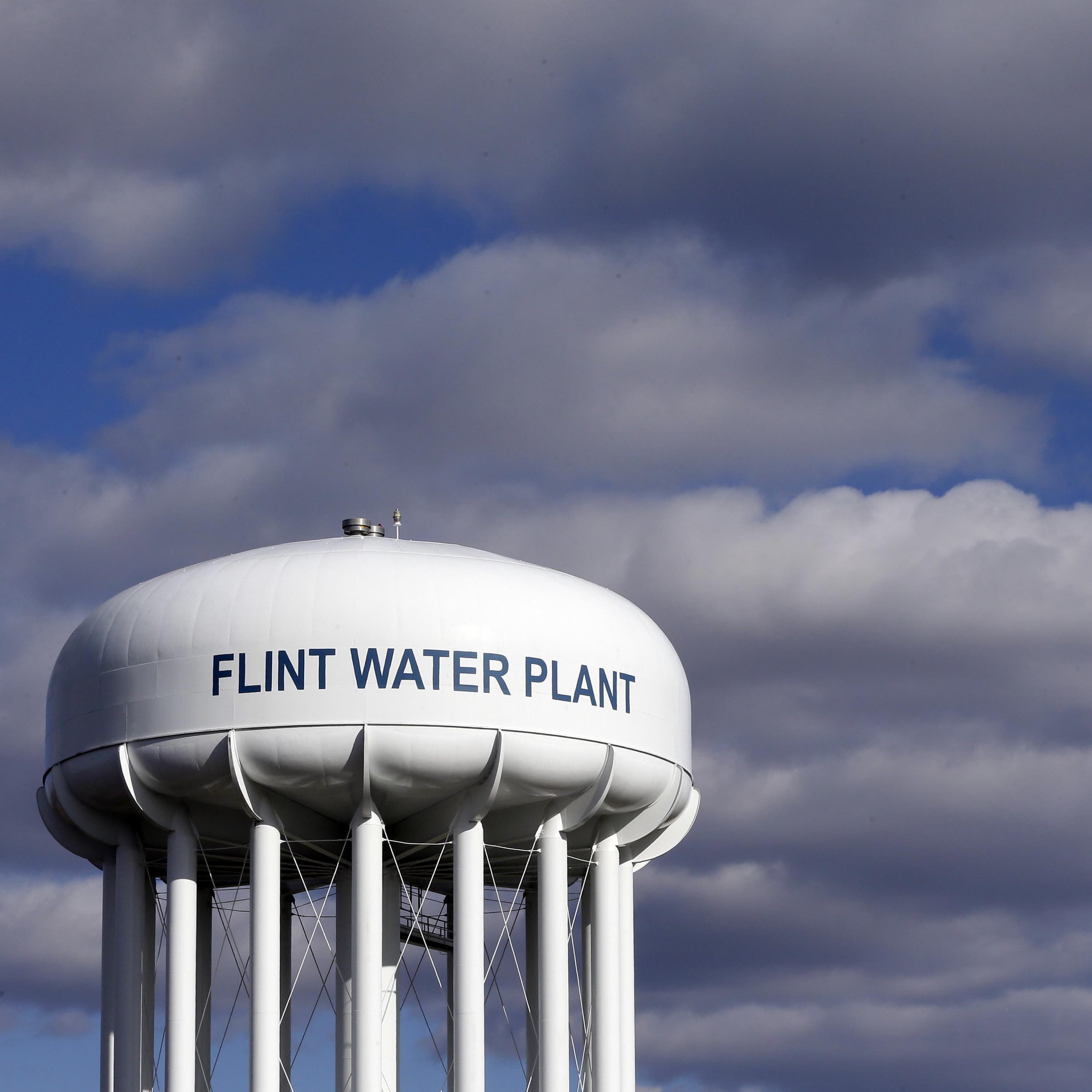
Overview of the COP31 climate meeting and its significance.
“And this comes a decade after the Paris Agreement went into force.”
Discussion on financial pledges made by countries at COP31.
“And although it's very hard to say, oh, well, what would have happened if we didn't have COP?”
Exploring positive developments in climate policy despite challenges.
“Now, when it comes to the action agenda that Turkey's leading on, there are a few different things that will be in discussion.”
Discussion on the implications of COP31 and recent climate actions.
“this particular issue doesn't appear to be on the official formal agenda.”
Exploration of a study on what makes conversations enjoyable, introducing the concept of pink noise.
“Ian, you've written about a study this week from Dartmouth College in the US looking at what makes a great conversation.”
Discussion on how not all important conversations are enjoyable and the significance of emotional connections.
“I think it's interesting in how it feeds into the language we use to describe the conversations that we find enjoyable.”
Discussion on how not all important conversations are enjoyable and the significance of emotional connections.

Get the gist, explore an idea or ask about something said.
 Claude
On Science Weekly, what are the key points of this episode?
Searching your listeningAutomatic transcript. May contain errors.
0:00This is The Guardian.
0:30Bies are made with no high-fructose corn syrup. Gourmet Thanksgiving flavors with the quality you want. Only at Whole Foods Market. Soft, cushy, plush, cozy. Soft, smooth, buttery, marshmallowy, warm. Soft. Socks, underwear, teas, and more. Bombas. Everyday comfort worth obsessing over. Visit bombas.com slash audio and use code audio for 20 % off your first purchase. That's B-O-M-B-A-S dot com slash audio. One purchase equals one donated. Always.
1:16Do you want the secret to a great chat? Well, a group of researchers say the answer lies in physics. And I don't mean talking about thermodynamics on a first date. Another thing to potentially avoid on a first date, climate doom. COP31, the annual climate conference, is underway in Turkey and will tell you what to expect. And one billion people worldwide live with obesity. But is the way we measure it working? Today we're exploring the three science stories you need to know about. From The Guardian, I'm Madeleine Finlay and this is Science Weekly.
2:08Ian, let's talk about something that could transform how obesity is diagnosed and treated. 16 % of adults globally are living with obesity so how is it currently diagnosed?
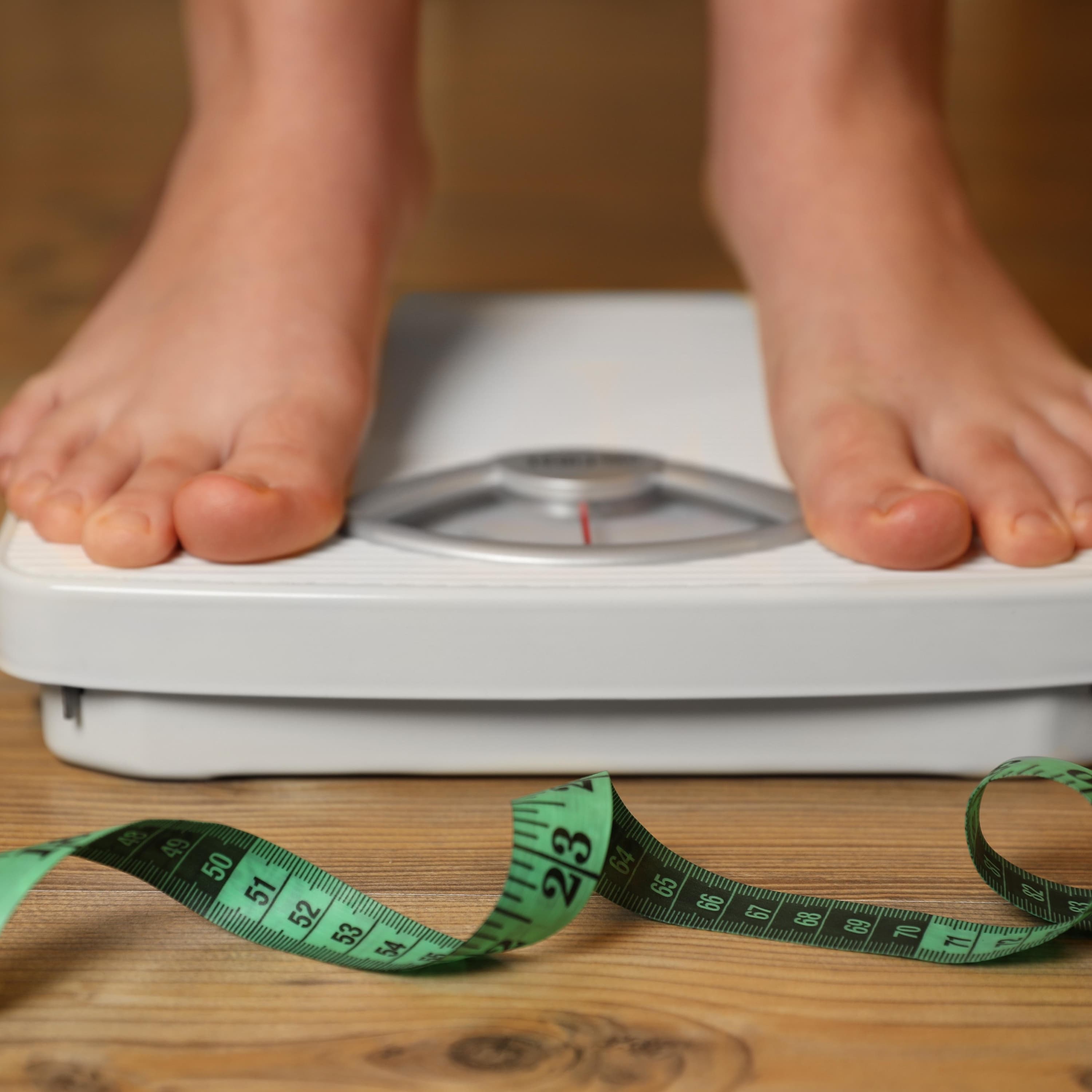
2:24Madeleine Finlay: We use a very simple measure to diagnose obesity at the moment and this is global okay and it's something everyone will be really familiar with BMI body mass index okay and you work out your body mass index by having your weight in kilograms and you divide it by your height in meters squared If you have a BMI between 25 and 29.9, then on this scale you're categorised as being overweight. And if your BMI is 30 plus, then you're categorised as being obese or having obesity. And for a long time there's been this view among medical experts that BMI is frankly a bit of a blunt tool. Why is that and why is it so important to get this right?
3:10Madeleine Finlay: Well, I think we sort of know intuitively that we will know people of maybe roughly the same sort of height and weight that may have very different body fat, essentially. I mean, you can have someone who is largely muscle with a very high BMI, and the BMI scheme will suggest that they're overweight or obese, and they might be the sort of fittest person you know. So it's not accurate enough for picking up who really has excess body fat and who really has excess body fat to the point that it's harming their organs, that it's actually an active disease. And the reason this is important to distinguish is it clearly determines not only how resources are used within healthcare systems, but the treatment that someone may get.
3:54Madeleine Finlay: I mean, you know, whether someone is just given lifestyle advice or whether things ratchet up and that they qualify for medications like GLP-1s or indeed whether they become a candidate for surgery. So bariatric surgery, for example, which would literally sort of shrink the size of your stomach to try and treat you. OK, so now scientists have been looking at an alternative. Walk me through that. So scientists came up with this alternative in what's called a Lancet Commission report last year. And these are reports that are pulled together by dozens of world experts, depending on the topic. And the new idea really comes in two parts.
4:35Madeleine Finlay: The first one is to look at, OK, do you have excess fat in places that's likely to be a problem? So as well as BMI, this involves doing waist measurements, but also waist to height ratios. so what that does is it doesn't look only at your bmi but it looks at where your fat is and obviously if you have a lot of fat around your midriff that is considered a bad sign okay and that is something that will actually get you classified as having obesity there's a second part to it though and the second part is really important what you really want to know is who has active disease and for this bit the doctors do a second assessment which is are there any signs that your organs are already being harmed by obesity, by excess fat.
5:22Madeleine Finlay: And this might be all kinds of things like metabolic disorders, it may be high blood pressure, it may be all the sorts of things that are actually quite simple to test and will show up on people's medical records to see if the obesity is causing a problem. So what did the researchers find? How did these new measures that they looked at compare to BMI? So what the researchers did is they looked at medical records for over 800 ,000 people. And these were in different cohorts across the UK, the US, China and Spain. What was really clear was that BMI is getting it wrong at both sides, if you like, in both ways.
5:59Madeleine Finlay: So BMI was missing about 6 % of obesity in adults, but also over-diagnosing obesity in about 2 % of adults. So overall, you get about sort of this three percentage rise in obesity. I think another thing, though, that was interesting was that if you look at people with preclinical obesity, and you can think about these as people like similar to how people have like are told they are pre-diabetic. So they're going in that direction towards diabetes, but they're not diabetic. If you look at preclinical obesity, about 80 to 90 % of those people who are categorised with preclinical obesity do not progress to clinical obesity over about 10 years, not in these studies anyway, not in these cohorts.
6:49Madeleine Finlay: And that's pretty reassuring. But it does also leave this group, this 10 to 20 % of people who do. and i think what's kind of interesting about this is that you can take say a person with a bmi of 32 and by this new measure you can distinguish between who of those are not obese and are essentially healthy and then you can distinguish another group from those who still bmi of 32 they have preclinical obesity they need to look at sort of lifestyle changes and then another person with the same BMI may actually have this preclinical obesity and really need interventions. So how likely is it that we're going to see these new measures brought in in doctor's offices?
7:34Because you know BMI is so ingrained in our medical system so is this something we're actually going to see?
7:41Madeleine Finlay: It's interesting because there is a sort of an inertia with BMI. You know it's something that GPs and other healthcare workers are doing all the time. But this new measure is clearly better and it's clearly important to do, not only because you are going to be saving healthy people from going through unnecessary sort of medical advice and interventions potentially, but also importantly capturing those people who are sick and really identifying the people who need potentially serious interventions. And I think the requirement to do it and the benefits of doing it are going to be overwhelming. So I think it will be absolutely something that the NHS and doctors take on board, but I am not confident how quickly they'll do that.
8:38Madeleine Finlay: Maddy, as we speak, world leaders are meeting in Antalya, Turkey for the 31st annual COP climate meeting. And this comes a decade after the Paris Agreement went into force. And that gave us real hope on the climate. Tell me what was agreed back then. Yeah, so this was back in 2015. And almost 200 countries agreed to keep the world's global warming at well below two degrees Celsius above pre-industrial levels. And they also agreed to pursue efforts to keep it below 1.5 degrees Celsius. And so we have these annual meetings, COP, the conference of the parties, where the world gets together to do things like work out the kind of terms and conditions to review countries' progress, see what money they're willing to put on the table for things like loss and damage, adaptation.
9:40And so they're really kind kind of every year getting into the details of what they're actually promising to do. But the whole thing is very slow going. And it's even been called this kind of labyrinthine process because it is very bureaucratic. And all the parties have to agree. Now, there are a lot of countries whose economies depend on the production and sale of fossil fuels. And so there have been roadblocks along the way. And also these days we see a massive presence of fossil fuel lobbyists there. So you just see these kind of incremental changes. And I think to kind of really illustrate quite how slow going it's been.
10:27So the first time that countries actually agreed to transition away from fossil fuels, the first time that was mentioned, 2023. And at that point, they didn't even agree a timeframe or policies to do that transition.
10:43Madeleine Finlay: OK, so fast forward to today. You don't need to be a climate expert to know that we're missing our targets. But how far off are we? I have just been a little critical of the process. And I do want to say, first off, that this is the place where we can hold countries to account, where goals are set and where climate is kept on the world's agenda. So it is really important. And although it's very hard to say, oh, well, what would have happened if we didn't have COP? When the Paris Agreement was signed in 2015, the world was looking down the barrel of about four degrees of warming by the end of the century.
11:25Now, the latest science suggests that the North Star that we were going towards, that 1.5 degrees, will be permanently crossed in 2028. And temperatures in the last two years have exceeded that. We could exceed two degrees Celsius by the end of the 2030s. And the EU's Climate Advisory Board recently urged countries to prepare for three degrees of global heating. So let's say we've seen that one degree drop and the world just doesn't seem ready to let go of fossil fuels. I mean, this year COP is being co-hosted by Australia and Turkey. And Turkey just celebrated the discovery of two new oil fields and their plans to expand oil production.
12:16Madeleine Finlay: And that all brings us neatly to COP31, to the COP happening now. What are the main issues around the table this time? So as I said, COP this year is being kind of co-hosted by Australia and Turkey. Now, Australia are leading the formal negotiations and then Turkey are looking after what's called the action agenda. And this is the voluntary agreements. The big one in terms of the formal negotiations, it's finance. The Paris Agreement stipulates that rich countries will provide resources to developing country parties in adapting to and mitigating climate breakdown. Enough money has not been put on the table.
12:59It has not been forthcoming. And according to analysis by Carbon Brief, the amount of public funding pledged to help developing countries tackle climate change has dropped by more than 70 % in 2026. And so that's going to be a big one that countries will be hashing it out because there's going to be a set of countries who really want to need that money and a set of countries who are very reticent to put more of it on the table. Now, when it comes to the action agenda that Turkey's leading on, there are a few different things that will be in discussion. So the first one is the electrification of the global economy.
13:37Another big point will be cutting methane, this extremely potent greenhouse gas, and that can have a massive impact very quickly. But frankly, Ian, some of the early signs are not looking massively positive. The Australian Prime Minister did not mention fossil fuels in his COP summit speech. And despite Brazil bringing a roadmap to phase out fossil fuels, this particular issue doesn't appear to be on the official formal agenda.
14:08Madeleine Finlay: Maddy, it doesn't sound amazingly upbeat from your assessment of it, but is there anything good we can hold on to? President Lula da Silva was recently re-elected as president of Brazil and actually he's overseen a massive reduction in deforestation in the Amazon and that's absolutely crucial. now President Trump and you may well raise your eyebrows why is she bringing up President Trump in the good section of this he did withdraw the US from the Paris agreement but actually there's somewhat of an irony in the fact that Trump's war in Iran has seen a reduction in our fossil fuel emissions I would suspect that it will rapidly go up again whenever that comes to its conclusion, but there has been this very, very slight drop.
15:00And what it has done is it's shown countries that really what they need to do is absolutely get cracking on renewables. On the subject of renewables, there's a massive renewables boom around the world. The global majority of people support climate action. They want to see climate action happening. But I guess to finish off talking about COP, many people do feel jaded and they're looking at this process thinking well what is really gonna come of it and some people have said well we we probably need something more streamlined less bureaucratic I mean time is ticking we say every year we have run out of time so it will be interesting to see what comes out of the next two weeks and whether you know whether we do get anything tangible this year
15:58coming up have scientists cracked the secret to a really great chat
16:13host thanksgiving with industry-leading quality standards from whole foods market There are no antibiotics in their meat department ever, so carve up turkey and spiral-cut ham with peace of mind. Shop organic sides like stuffing mix and cranberry sauce from 365 brand. And guess what? All their delectable pies are made with no high-fructose corn syrup. Gourmet Thanksgiving flavors with the quality you want. Only at Whole Foods Market.
16:48Ian, you've written about a study this week from Dartmouth College in the US looking at what makes a great conversation. And it's all got something to do with a thing called pink noise. Now, before we get on to what that means, what were the researchers trying to study?
17:07Madeleine Finlay: What these researchers were looking at is, OK, what actually makes a conversation enjoyable? And if you look through sort of language literature, often the message seems to be that similar is better. So if we're having a conversation and we're sort of converging on the same ideas and we're saying the similar sorts of things, then that makes for a sort of a good conversation because there's less conflict in it and stuff like that. But I think intuitively we know that that's not really enough. For a conversation to be enjoyable, you don't want to just be agreeing with the other person all the time.
17:43Madeleine Finlay: So that's what these researchers wanted to look at. Okay, so how did they analyse conversations and then what did they find? So they looked at a whole bunch of conversations. They started off with more than a thousand conversations that are between strangers actually. And then after the conversations, they got them to answer various questions, including questions about how much did you enjoy this conversation? How much did you want it to continue after the cutoff point? How connected did you feel to the other person? So you have the text from both sides of the conversation and you feed them into an AI.
18:16Madeleine Finlay: And what the AI does is it basically places each response into what's called a sort of a semantic meaning space. And what I mean by that is you analyse the words and you basically score them according to meaning, to tone, to context. So you can then represent each side of the conversation and each response in the conversation by these numbers. And so if you're going around the same topics all the time, those numbers will be closer together. And if your conversation is utterly chaotic, then those numbers are going to be further apart. And this brings in this concept in physics where noise can have a colour.
18:55Madeleine Finlay: And everyone's probably familiar with white noise. In the old days of TVs that weren't streaming over the internet, you'd have this sort of static and it's white noise. And that's kind of chaotic. And what it means in terms of conversation is that, say, if I'm talking to you, your response may be completely decoupled from what I've just said to you. So we're sort of jumping around quite a lot. So that would be sort of a white noise conversation. at the other end of the extreme you have like a red noise conversation right and this is where you're essentially using the same language you're not exploring new ideas very much you're staying around the the sort of same issue so it might be if i go hey maddie how are you and you're like yeah i'm fine i'm fine too um what do you like in sport and you say oh i like football i like football too incredibly dull and what these researchers found was that the the interesting point the enjoyment from a conversation is really associated with what they call pink noise somewhere between the white and the red and it's not just that there is sort of some coherence and some chaos it's really that you have periods where you are very convergent and you are that's you sort of two together exploring an idea talking about something in depth but someone will then look around for a new topic to bring in and then you'll seize on something together and pull that back in and then you'll converge again on that so you have these periods of convergence and divergence that gives your conversation this sort of pink noise right so pink noise is this like conversational dance where you're sort of moving around one topic and then a new thing will come in and you begin to move around that one.
20:39And that's what makes the dance so enjoyable that these new ideas are coming in. And the researchers I know applied this to two real world scenarios. The first is speed dating. And the second is podcasting, which is beginning to get very meta on us, Ian. It is, yes.
20:55Madeleine Finlay: So when they looked at speed dating, they found that the conversations that ranked higher on sort of pinkiness, they predicted which couples would go on to meet for a second date. They then looked at, okay, what happens in this kind of podcast, right? They call them two dudes talking podcasts, right? Where you have two people discussing whatever they're discussing on their podcast. And they looked at the first 50 episodes for a bunch of different podcasts hosted by two people. And they found that over time, the pinkiness of their conversations increased, which suggested that they were becoming sort of more familiar and more comfortable in their conversations and those conversations were becoming richer and more enjoyable as a result.
21:48Okay, apart from making our conversations more pinky, although I would say that the kind of topics we discuss, I think, have an innate amount of pinkiness in them, Ian, but what are some of the key takeaways from this?
22:01Madeleine Finlay: I think it's interesting in how it feeds into the language we use to describe the conversations that we find enjoyable. We might say, oh yeah, it's really in sync with someone. But being in sync with someone and having a conversation in sync is actually not really what you want. And one of the researchers was telling me, that's like when you're having a conversation with your PhD supervisor about one paragraph of your thesis, and that conversation goes on for an hour. But another point to raise probably is that maybe we want a lot of our conversations to be enjoyable, but a lot of our sort of really good and important conversations, you might not classify them as enjoyable.
22:43Madeleine Finlay: They might be important, they might be really meaningful, and they might be really moving. And one researcher flagged up to me this lovely bit of research on conversations between two people who are very close. And And one of the conversations is with a father whose daughter has learning disabilities and she's in residential care and they're on the phone. And they're trying to they're trying to end the conversation. They're trying to wrap up and say, love you, bye kind of thing. And ending that conversation goes on and on and on. Neither of them quite wants to do it. They say, OK, better get on, you know, and the other one's like, yeah, you better get on.
23:21Madeleine Finlay: And then they lapse back into conversation. And there is so much love in the conversation. and it's really poignant and it's really moving. And you wouldn't say it's enjoyable, I don't think, but it's clearly important. Probably the most important conversations you have are like that. And so I think that's just worth bearing in mind, that having a conversation that's enjoyable is great, but it's not everything.
23:45Well, I have greatly enjoyed this conversation, Ian. Thank you so much.
23:50Madeleine Finlay: Me too, Maddy.
23:55Thanks again to Ian, and you can follow all his reporting on theguardian.com.
24:03And that's all from us. This episode was produced by Josh and Chana, the sound design was by Joel Cox, and the executive producer was Ellie Bury. We'll be back on Tuesday. See you then.
24:21This is The Guardian.
24:32Hi, this is Elise Hugh from TED Talks Daily brought to you by Okta. As organizations rush to deploy AI, agents operating in the dark create massive security blind spots. To bring them out of the shadows, Okta answers four critical questions. Where are my agents? What can they do? What are they doing? And how do I respond if they go rogue? Okta secures AI. Learn more at Okta.com.
25:22Madeleine Finlay: We know homes. Hire the right pro today.