Ask ChatGPT


 Science Weekly
3 Nov 2026 · 19m · 7 chapters
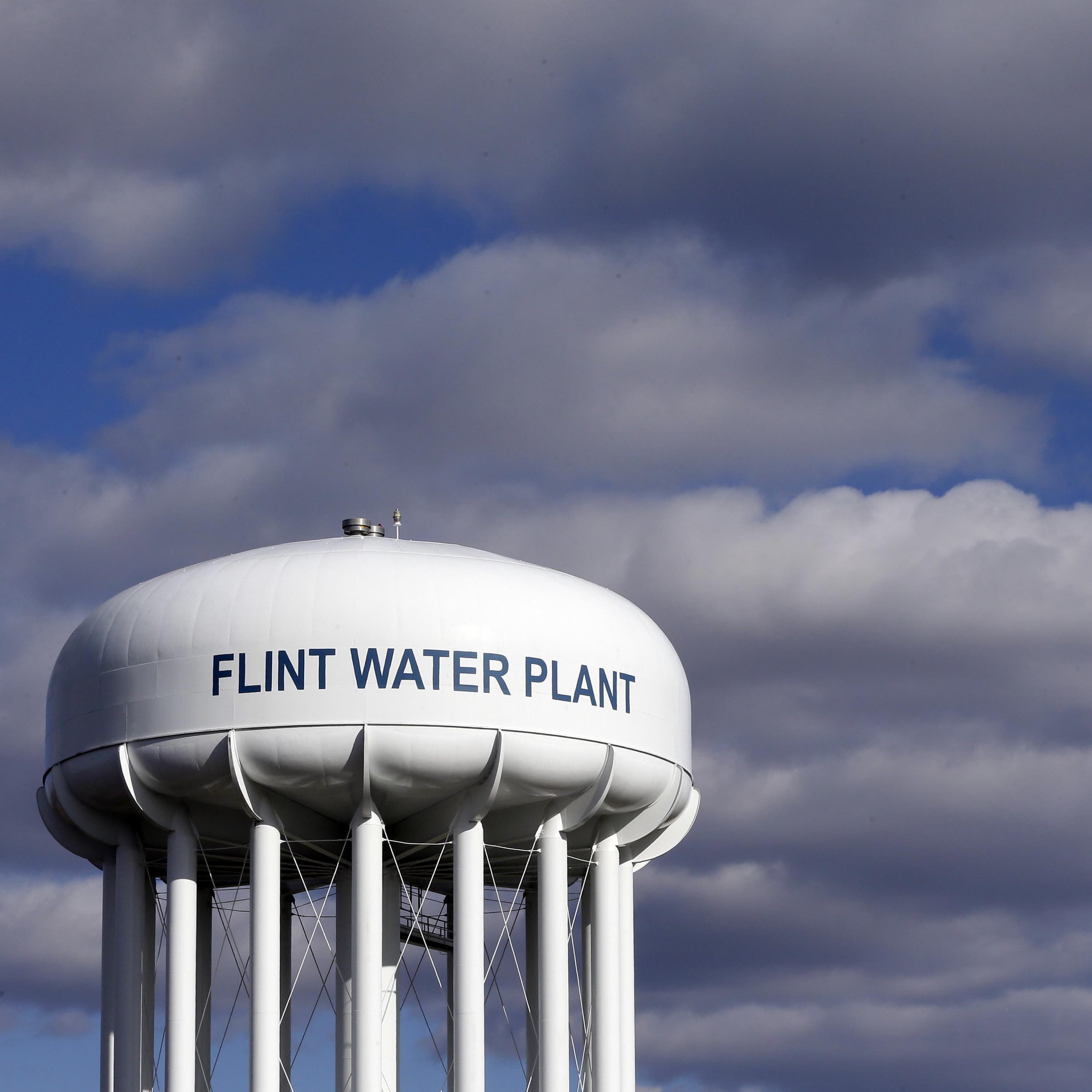
Flint, Michigan’s 2014 switch to Flint River water caused lead contamination because of corrosive water and lack of required corrosion control, leading to a public health crisis and a scientific dispute over long-term child outcomes.
Dr Siddhartha Roy, environmental scientist at Rutgers University; previously a third-year PhD student involved in lead testing in Flint. Mentioned: Leanne Walters (Flint mother who collected water samples); Miguel del Toro (EPA whistleblower who warned officials); Flint residents and a coalition of protesters.
Flint violated federal law; lead levels in one home were far above WHO guidance (average 2,000 ppb; up to 13,000 ppb). Roy’s later analysis of 1.4 million Michigan blood lead tests found Flint children’s blood lead was statistically similar to the rest of the state after the initial spike, so rising special-education enrollment likely wasn’t explained by lead exposure (possible nocebo effect from repeated claims of “lead-poisoned” children).
300 water testing kits distributed in Aug 2015; special-education enrollment increases; Roy’s paper rejected by 11 journals and he later faced community backlash, being labeled a “traitor.”
Written by AI. May contain mistakes.
Overview of the Flint water crisis and its origins.
“Imagine you're a scientist quietly getting on with your experiments and studies.”
Dr. Roy discusses the initiation of their investigation into lead levels.
“So tell us the backstory as to how you ended up there.”
The process of data collection and ethical dilemmas faced by scientists.
“So we sent out 300 water testing kits in August 2015.”
Discussion of the nocebo effect as it relates to the Flint crisis.
“If lead exposure is any indication of life trajectories, Detroit children arguably are doing similar or worse than Flint children.”
Conclusions regarding the impact of lead exposure on Flint children.
“thank God that it was not as bad as first feared.”
Explore the challenges faced by a scientist who questioned the narrative around Flint's water crisis.
“And so they are incredibly grateful to you.”
Discuss the responsibilities of scientists and the challenges of serving the public.
“But yes, I do believe that folks who get public funding, who get grants from our government and who pursue knowledge and evidence, the public is our ultimate invisible client.”

Get the gist, explore an idea or ask about something said.
 Claude
On Science Weekly, what are the key points of this episode?
Searching your listeningAutomatic transcript. May contain errors.
0:00This is The Guardian.
0:30sushi made fresh daily. Fall gatherings never tasted better. Save through November 3rd at Whole Foods Market. Running a small business means wearing a lot of hats. Between managing employees, handling payroll, and keeping up with paperwork, there's a lot to juggle. Luckily, Gusto makes it easier. Gusto is online payroll and benefits software built for small businesses. It's all-in-one, remote-friendly, and incredibly easy to use. So you can pay, hire, onboard, and support your team from anywhere. From automatic payroll tax filing to simple direct deposits and benefits options for nearly every budget, Gusto helps simplify the process.
1:07Plus, enjoy unlimited payroll runs for one monthly price with no hidden fees or surprises. And with automated tools for onboarding and offer letters, you can focus on what matters most. Try Gusto today at gusto.com slash tech and get three months free when you run your first payroll. That's three months of free payroll at gusto.com One more time, gusto.com slash tech.
1:38Imagine you're a scientist quietly getting on with your experiments and studies. And then suddenly you find yourself at the center of a huge public crisis. Not only that, your evidence contradicts the official line. Your reputation and your research grants are at risk, but so is the health of thousands of people. What do you do? It's a question Dr Siddhartha Roy faced when he was part of a team measuring levels of lead in the water coming from taps in Flint, Michigan.
2:16So today, what and who is science for?
2:24I'm The Guardian Science Editor, Ian Sambl, and this is Science Weekly.
2:33Dr Siddhartha Roy, you're an environmental scientist at Rutgers University in New Jersey, and you've just won the Maddox Prize, which is awarded to people who've shown courage and integrity in standing up for sound science and evidence. You won because of your work in Flint, Michigan. Now, there may be listeners and viewers who haven't heard of Flint and what happened with the water crisis there. So tell us the backstory as to how you ended up there. Right. In 2014, in an effort to save money, the city of Flint, Michigan switched its water source from nearby Detroit, where it gets the water from the Great Lakes to the local Flint River.
3:17And this was done because a state-appointed emergency manager was trying to balance the budget, which I don't think is a bad goal. But they switched to the river water, which is more corrosive, a lot more aggressive. And they did not follow federal law in that if you have lead pipes, you have to install what's called corrosion control to manage lead release from these pipes. So a combination of very corrosive water and no corrosion control led to the perfect storm of lead release in the water. Now, I personally, at the time, was a third-year PhD student, underperforming, unhappy with my life trajectory, as every PhD student is.
3:57But my advisor got a call one day from a mother in Flint in early 2015. People had been protesting because the water had turned orange and black. It was causing a whole host of health issues, skin rashes, hair falling off. But this mother had a particular concern that one of her twins was not growing as much as the other. And she just found out that he had an elevated bloodlet level. So, you know, that's how we were introduced to the crisis and how Flint came to light. So after this switch in the water supply, the residents were told it was safe to drink. They had reason not to believe that. So what did you and your colleagues do?
4:40We knew through internal whistleblowers at the EPA, a guy named Miguel del Toro, that Flint was not following corrosion control. We had good reason to believe that there should be high lead in the water. So there were two parts to this. The first part, we sent the Flint mother, Leanne Walters, a bunch of bottles. and she did a lot of testing, collected a lot of water in her kitchen, sent those back to us. The World Health Organization's guidance value for lead is 10 parts per billion. The average lead levels in Leanne's water was 2 ,000 parts per billion. The highest was 13 ,000 parts per billion.
5:235 ,000 parts per billion is what you find at a mining site. So we have this data. EPA's Miguel del Toro wrote a memo to state officials and to the federal EPA, stating in no uncertain terms that a real concern from a public health standpoint is the lack of corrosion control. Look at these extraordinary lead levels. We should do something. We thought our role was sufficient. We provided the data. Suddenly, Miguel disappeared. He couldn't talk to anyone from Flint. He couldn't talk to anyone about Flint. He had been effectively silenced by his colleagues and bosses at the Environmental Protection Agency.
6:00And residents called us, again, truly worried that nothing was going to change. So we sent out 300 water testing kits in August 2015. And residents worked 16-hour days voluntarily around the clock, making sure every zip code was covered. And we got back 90 % of those kits. And it was clear that Flint was in violation of federal law. So instead of just holding this data until we published like researchers typically do, we felt an ethical responsibility to put it online on our website and through social media so that the public and the world could see. And what are you thinking as a scientist doing that?
6:40As you say, you're a PhD student. There are risks in doing this. But what are you feeling when you do that? Are you nervous? It's many things. It's first and foremost a concern for the people of Flint. Nobody trains you how to make a phone call to somebody who's 80, and you're telling her, listen, your lead levels are high. Could you please, you know, consider buying a filter or switching to bottled water for the time being? And her telling you that, listen, I'm on welfare and I'm on a fixed income. There's no way I can afford a$30 filter in the next two months. But I think the coalition of residents protesting and fighting for more than a year, the waterlet data that they were able to get and put forth to the government with our assistance, it convinced the state government and an Obama and a federal emergency was declared.
7:44there's another part to this story the story goes on right you're seeing the effects of this the contamination in the water but then there are concerns about whether some of these children are actually brain damaged and around this time you write a paper that describes what might have been going on in Flint as potentially a nocebo effect. And some of our listeners, some of our viewers might not know what that is. So take me through that. Sure. So very briefly, I'm sure many of your listeners know of the placebo effect, where positive expectations around a treatment or an intervention causes real, sometimes physiological changes for the better.
8:29Its evil twin is called the nocebo effect, where negative expectations around an intervention, a drug, a vaccine, or some life incident can also cause psychological and or physiological harm. Now, coming to Flint and how that might apply, we were shocked to see a front-page headline in the New York Times that said, A legacy of poisoned water damaged children fill Flint schools, where their implication is lead exposure led to lead poisoning of children. they're now brain damaged and therefore they cannot learn. They were saying that because we were now witnessing an increase, a skyrocketing of special education enrollment of Flint children in schools.
9:14And I think it's a legitimate fear given what they went through and how Flint became an international media sensation and every front page and every news headline talked about the lead poisoned or, you know, lead exposed children of Flint. The question is, is that true? Because lead is a neurotoxin and can cause cognitive harm. So we decided to look at the question. We went to the state of Michigan and we said, give us all your blood tests for the entire state for the past decade. That's 1.4 million blood lead tests. So we had access to the blood test of every kid in the entire state of Michigan.
9:52And we put together an analysis where we compared Flint children against the entire state, but we also compared Flint children to Detroit because for more than 50 years, both cities had shared the same water source except for the 18 months that Flint was on the river and they're comparable in socioeconomic and other ways. What do we find? We find that over that decade, bloodlet in Flint was statistically indistinguishable from the rest of the state, including the two years, 2014 and 2015, of the crisis. What else do we find? We find that the bloodlet in Detroit children, possibly because of peeling paint and other issues, was always more than twice of Flint children, including the years of the crisis.
10:44If lead exposure is any indication of life trajectories, Detroit children arguably are doing similar or worse than Flint children. So our key conclusion, lead exposure cannot explain the rising special education enrollment that's happening. Then the question is, what is, right? And we looked at other explanations, and the best explanation that fits the data is that for 10 years, Flint children have been repeatedly told by the media, by parents, by school teachers, by the clergy, by experts, including in the initial years probably from me and others, that they were lead poisoned. and we met teachers who've told us, well, we see children kind of not being able to focus in class and we know that there is lead in their brain.
11:39They cannot learn. And that is heartbreaking. A child told The New Yorker once in an interview, well, they said I'm not going to be smart anyway.
11:53People might be listening and thinking, how can this be? You've just said that the lead was high in the water. You're now saying the lead wasn't high in the children. In fact, it was lower than in Detroit. And so they will think, well, was it all a fuss over nothing with the lead in Flint in the first place? Well, both things can be true. Flint was an environmental crime. The city was in violation of federal law. Lead in water was high. We did find a significant increase in blood lead immediately after the switch. For a few months, it went up. Thankfully, because the water had turned orange and brown and was smelly, many people were actually not drinking the water in Flint while the protests were going on.
12:39So the effect is real. But then it dropped thereafter. So taking a step back and looking at the full picture, thank God that it was not as bad as first feared.
12:55Coming up, how Sid went from local hero to being labelled a traitor.
13:10Naza is the new award-winning documentary that the Israeli government doesn't want you to see. Directed by two of the Oscar-winning directors of No Other Land, Naza reveals the secret systems used by the Israeli military in the mass killing of Palestinian civilians in Gaza. Time Out says, As a work of journalism, it is inarguable. As a work of cinema, it is exemplary. New York Magazine has called it one of the most important films of our time. Naza, the most critically acclaimed documentary of this year, is available in cinemas now.
14:12No antibiotics ever chicken wings and sushi made fresh daily. Fall gatherings never tasted better. Save through November 3rd at Whole Foods Market.
14:26Tell me how this goes down in the local community when you come out and say this, because up until this point, you have unintentionally, I'm not saying you sought this, but you have become something of, and your colleagues, something of a hero for these people because you have investigated on their behalf, you have found the data, and you have shown them to be victims of what happened. And so they are incredibly grateful to you. You then turn around and say, all these kids going into special needs because of their lead exposure, that's nonsense. Something else is going on here. What happened with that?
15:06That is not received well. In both the local community, I have former friends who I love, and we went through Flynn together who will no longer talk to me because they think that we have betrayed the cause. Folks in our field who have told me that even if it's true, I just cannot believe it. You go from being recognized and validated to someone who is a traitor. I should say, after the paper was published and journalists talked to Flint kids who've now become young adults, and in their reports, they are talking about, yeah, I felt like a lab rat growing up. The stigma is real for us, but I'm trying my best and more power to them.
15:56What happened to Flint families should never have happened. I would not wish that on my worst enemy. but they were not poisoned and therefore they can go on to have fruitful healthy happy lives did you ever think when this was going on i just wish i'd never got involved or did you think i'd actually thank god i did yeah i i think it was an education like no other i i loved part one because it showed me the value of science and service to the public It showed how, you know, my advisor, our team of 30-plus undergraduates and graduate students risk everything, reputation, you know, everything to kind of help residents who are in a real need.
16:45And that should be the purpose of science, to reduce human suffering, to improve well-being, and to, you know, push humanity forward. Part two, however, makes you realize that we are all humans, and therefore not everyone will always be on your side. And sometimes if you share the evidence loud and clear, even though there are people telling you on the side, just keep quiet. I don't think it's worth it. Makes you unpopular, makes you unlikely to have a future in science, which I felt was happening to me. I would go for faculty interviews, and antagonism followed me there in more than one interview.
17:26And it got to a point where anyone who claimed excessive health harm was getting funding and was getting published, whereas my paper was rejected by 11 American and British journals. It took three years to publish it, to at least get this out. So I was so depressed, I actually ran away to Africa. I got a postdoc with the University of North Carolina, and I worked on wells in Ghana, and I came away a happy person because that was fulfilling, too. Again, that is science in service to the public. Do you think scientists have an obligation to serve the public? That's a hard question. I think their primary goal should be pursuit of truth and evidence, no matter where it leads them.
18:16But yes, I do believe that folks who get public funding, who get grants from our government and who pursue knowledge and evidence, the public is our ultimate invisible client. We can't forget that. And, you know, other scientists, young people who are considering a career in science, they might look at your experience, read about it and wonder, you know, is it really worth it? why don't I just stay in my lab, do my fascinating experiments or build my device and not worry about the wider world? Like, what would you say to them? I don't blame them. I think that's a legitimate response to the story.
18:57You should know that academia can be petty. You should know that people are more concerned with grants and papers than actually creating outcomes that benefit society, you know, advanced science and stay away from those people and build a career where you're proud of something you've done. I also have survivorship bias because somehow I made it to that. I'd say pick your battles. If you pick every battle, you'll burn yourself. Like what are the most important battles that you're willing to fight given the evidence you have? Pick the right ones and I think you'll be happy with the life you lived.
19:35Sid, thank you. Thank you very much.
19:42Thanks again to Dr Siddhartha Roy. Before you go, if you're a regular listener, you'll know that here on Science Weekly, we love to dissect the latest health trends and explore which ones actually work. So for a future episode, we want to hear your questions about the wellness hacks you've been tempted to try. NAD Plus for ageing? Beetroot juice for athletic performance? Send us a video message with your name and question and we'll sort fact from wellness fiction. Just email scienceweekly at theguardian.com.
20:20And that's all from us. This episode was produced by Josh and Chana. The sound design was by Joel Cox. And the executive producers were Madeline Finlay and Ellie Bury. We'll be back on Thursday. See you then.
20:38This is The Guardian.
21:07www.quadwap.com slash WashingtonWise