Ask ChatGPT

 Science Weekly
22 Oct 2026 · 17m · 10 chapters
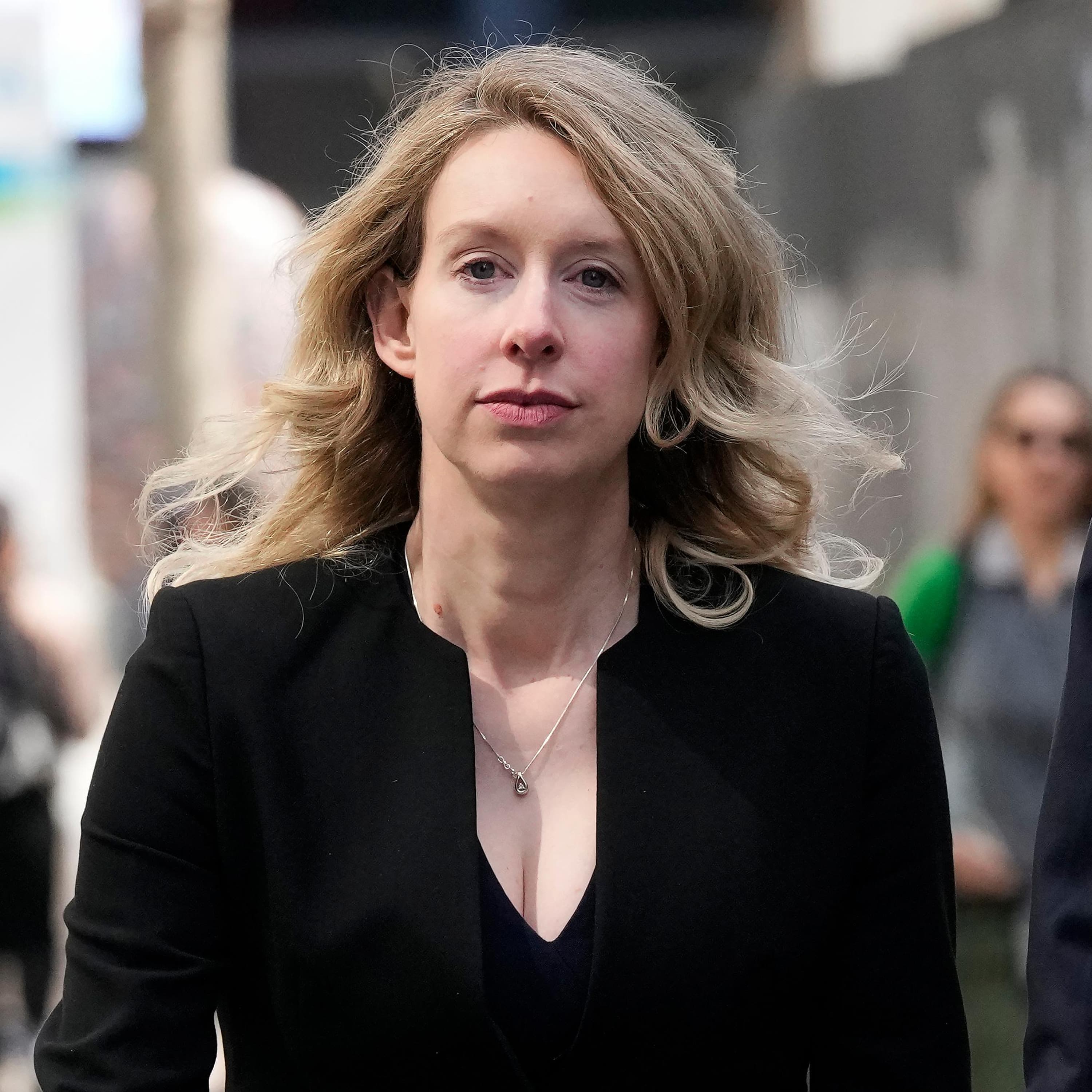
Science Weekly revisits Elizabeth Holmes and Theranos, asking why people were captivated by her claims and why Silicon Valley startup culture enabled the fraud. It also connects the case to ongoing “fake it till you make it” dynamics in AI and biotech, and discusses effects on women founders.
Blake Montgomery, tech editor for Guardian US, who reports on technology and accountability journalism.
Theranos never worked as promised; its Edison machine couldn’t perform accurate small-volume blood tests and results were wrong due to sample dilution. Holmes used Silicon Valley founder mythology (Jobs-like branding, secrecy as “trade secrets”) and lacked serious healthcare scientific scrutiny. Employees warned regulators and the Wall Street Journal; Holmes was convicted of wire fraud and conspiracy with COO Sonny Balwani in 2022.
Walgreens partnership; Wall Street Journal investigation; federal regulators; a Stanford professor’s early skepticism; Holmes’s partner Billy Evans launching a new saliva/urine blood-testing startup despite sentencing restrictions; investor bias against women founders.
Written by AI. May contain mistakes.
Exploring the origins of Elizabeth Holmes and her company Theranos.
“A full suite of lab tests for cancer, diabetes, vitamin deficiency, all performed at your local pharmacy with just a few drops of blood.”
Discussing the success and eventual downfall of Theranos.
“Give me the origin story for Elizabeth Holmes and Theranos.”
Investigating the medical inaccuracies of Theranos' testing claims.
“So employees who were tasked with working for her, listening to her and taking her command, eventually said, I don't think so.”
Analyzing how startup culture impacts scientific integrity.
“What became obvious in hindsight was that no healthcare investors got involved in the company.”
Discussing the implications of the Theranos case on future startups.
“You will often see startups founded by professors who have made a legitimate breakthrough over decades of research, and then like a business guy.”
Exploring the consequences of Theranos on female entrepreneurs in biotech.
“I wondered what you made of that and kind of what that tells us.”
Explore the challenges female biotech founders face due to Holmes' legacy.
“have had on women in the biotech space you know I presume it's already very difficult for legitimate female founders.”
Discuss why Elizabeth Holmes captivates public interest despite her downfall.
“So it seems extremely likely that any female founder in biotech probably had a much tougher time after Elizabeth Holmes.”
Learn how Elizabeth Holmes' story has influenced tech journalism's approach to claims.
“has this changed the way that you look as a tech editor at companies?”
Wrap up discussion with Blake Montgomery about future challenges in tech.
“Well, I look forward to your reporting on all of them.”

Get the gist, explore an idea or ask about something said.
 Claude
On Science Weekly, what are the key points of this episode?
Searching your listeningAutomatic transcript. May contain errors.
0:00This is The Guardian.
0:30sushi made fresh daily. Fall gatherings never tasted better. Save through November 3rd at Whole Foods Market. Your call has been forwarded to an automatic voice message system. A missed call doesn't feel like anything. No red flag, no notifications screaming at you. It just disappears into your call log. And nine times out of 10, that was someone ready to hand you money. That's why today's episode is brought to you by Quo, spelled Q-U-O, the business phone system built so you never miss a call. Here's what I like about it. All your calls, texts, and voicemails live in one place, so anyone on your team can pick up a conversation, see the full history, and respond fast.
1:11No more, wait, who talked to this customer last? And if you're worried about after-hours leads slipping through, Quo's optional built-in AI agent can answer questions and even book appointments while your team's offline. It's the number one rated business phone system on G2, and over 90 ,000 businesses already trust it to stay reachable. Money is on the line. Always say hello with Quo. Try Quo for free. Plus get 20 % off your first six months when you go to quo.com slash tech. That's Q-U-O dot com slash tech.
1:50A full suite of lab tests for cancer, diabetes, vitamin deficiency, all performed at your local pharmacy with just a few drops of blood. That was the promise of Theranos, a biotech company founded by Stanford Dropout turned superstar entrepreneur Elizabeth Holmes. I started Theranos because I believe that building a business is a vehicle for making a difference in the world, that you can do well by doing good. It fooled the media, investors and ultimately landed Holmes in jail. Now a new documentary has put her back in the spotlight. You really feel you did nothing wrong? I did not. How are you where you are right now?
2:39I wish I knew.
2:45So today, what propelled Holmes to the top? And why are we so fascinated by a charismatic founder? From The Guardian, I'm Madeleine Finlay, and this is Science Weekly.
3:06Blake Montgomery, you're the tech editor for Guardian US. Give me the origin story for Elizabeth Holmes and Theranos. How did this all begin? At Stanford University in Silicon Valley, Elizabeth Holmes drops out of Stanford's chemical engineering program to start what eventually becomes a$9 billion company that is based on complete fabrication and lies. She's a very beautiful, glamorous, commanding presence that wooed some of the most famous people globally. I mean, Rupert Murdoch, a former U.S. Secretary of State, they're all investing hundreds and hundreds of millions of dollars in her company, Theranos, which claims to do a battery of blood tests from a blood drop about this big, quite a lot smaller than they normally have to draw from your arm.
4:00and that would be revolutionary if it worked. And it really did help that she was one of the few women who had started a company. This was also the era of the girl boss and she rode that wave along with the Silicon Valley wave really, really hard, really to enormous success and then enormous failure. So as you say, we reach a point where Elizabeth Holmes is this superstar entrepreneur. She's on the cover of magazines. Theranos has this partnership with a massive pharmacy chain in the US, Walgreens. The company is valued at$9 billion. How does this all come crashing down? Well, it never worked in the first place.
4:45So employees who were tasked with working for her, listening to her and taking her command, eventually said, I don't think so. And some of them spoke under extreme threat legal threat to the Wall Street Journal, which broke the story eventually of very cautiously saying, this machine, the patented Theranos Edison machine, cannot do exactly what it says. And the problem with Theranos machines was that they never could do the small, tiny blood test. It always needed to be a bigger volume. So they would add a bunch of stuff to the blood sample that was drawn and dilute the sample. And then the test would be really wrong.
5:27not so good if you're getting a cancer screening a screening for how many like minerals you have in your blood that need to be of certain levels they that might indicate you are quite sick and eventually her employees told the Wall Street Journal this doesn't work and eventually uh U.S. federal regulators prosecuted her for fraud and sent her to prison right so Holmes as you say is convicted with wire fraud and conspiracy alongside company president Sonny Bolwani in 2022. They both end up with long prison sentences. But how did they get away with it for so long? She adopted, especially in like the mid 2010s, she adopted kind of the ethos, the look of a technology company founder of a software company founder.
6:22She wore the black turtleneck, the trademark black turtleneck, and said she had adopted it from Steve Jobs. He's very clearly borrowing from the mythology of Silicon Valley and saying you gotta fake it till you make it, you move fast and you break things. Those are mantras that hold in software. The consequences are not so dire. And the thing that differentiated Theranos from software companies was that that it's giving people medical test results that they base their health decisions on, which are extremely serious, extremely personal, and life-changing. What became obvious in hindsight was that no healthcare investors got involved in the company.
7:07After the fact, it looked like, oh, serious people looked at this and said, it's impossible or you won't tell me. And a lot of what she did was say, this is trade secrets. We can't tell you how this works. We have to keep it secret. which is often true of what Silicon Valley companies do. And the promise is either like you don't get involved and you lose out on a once in a generation wealth opportunity or you have faith in the founder.
7:42Blake, it's interesting that you mentioned that there weren't really serious healthcare investors involved because I wanted to ask about the lack of scientific scrutiny that went on and how healthcare, how science, real science can rub up against and clash with startup culture. Because, you know, when it comes to healthcare generally in science, you know, it can move very slowly. You expect peer review, clinical trials, regulatory approval. Whereas often in the kind of startup culture, you think of that sort of hockey stick graph of growth that that's expected by investors. So how much can these two actually ever kind of work together?
8:26You will often see startups founded by professors who have made a legitimate breakthrough over decades of research, and then like a business guy. And the professor says, you can use my invention, you need to like, the word they often use is like operationalize it and like make it to a company and the professor is like not involved in the company often just kind of wants to reap a financial reward in response to like decades of research and dedication to the field and the business guy is there to do business and there was not in this case there was not the like breakthrough invention by a serious scientist and in fact like in the documentary about Theranos that was produced you know five years ago or so a Stanford chemical engineering professor had spoken to Elizabeth Holmes and said, like, I don't think this works.
9:12I don't think you can do this. And I don't think you're good enough of a student to make me believe in you without reviewing the evidence. And she was kind of the most correct person who has ever been doubtful. Do you think that the case of Theranos has taught Silicon Valley any lessons and that maybe people are a little bit more careful around that line between faking it till you're making it and actual fraud? i mean the line is thin and so like if you do make it it doesn't matter like if you do make it then you already made it and anyone who claimed fraud along the way seems wrong i think in healthcare specifically and like with regards to healthcare tech there has been there are no looms quite large.
10:04In general, I don't think things have changed. I mean, you kind of look at the question of like, is artificial intelligence and that boom faking it till you make it with the stakes of like the entire US and perhaps global economy like on the line. And a lot of companies like aren't seeing the kind of massive return or productivity gains that are expected from AI. we expect these companies to go public at multiple trillion dollar valuations without any like profits to speak of or like very dubious accounting kind of a lot of circular deals like with they call the financing of it all which is hundreds of billions of dollars at this point into question that's like kind of long-term viability vacatil you make it is actually more prevalent than ever and theranos does not loom large in that sense that is a a troubling thought but what if it all works out is sort of the big question.
11:02Like the kind of bubble questions have been looming forever. And like, I don't know. I don't know. What if it all works out at this point? Then they faked it till they made it. One example that I think maybe shows that perhaps Silicon Valley hasn't moved on, or at least will stress test this theory, is the fact that Elizabeth Holmes's partner, Billy Evans, he now has a startup himself, which quite incredibly is supposedly developing a device to do medical testing with small amounts of blood and also this time saliva and urine. I wondered what you made of that and kind of what that tells us. It seems completely bizarre.
11:49And when she was sent to prison, part of the stipulations of what of her sentence was also never, I'm sorry, to not run a blood testing company for many years. and the proximity to another one, certainly I would give a judge pause, I think. But it is incredible that, why would you as a consumer ever trust a blood testing device that has any connection to her is unfathomable to me.
12:22Coming up, what effect did Elizabeth Holmes have on women trying to make it in Silicon Valley?
12:34Democracy is a story we began to tell 2 ,000 years ago and we've stopped telling it. Put culture wars and the algorithm together and what do you get? A crisis of imagination, society and politics. So says Britain's national dramatist James Graham. There's been moments when I've been on my phone in the evening and I've just been swiping, swiping, swiping on Miners' videos and I can feel in my brain the mental equivalent of a nutritionist kebab on the night bus home. In a new series from The Guardian, we hear from the playwright on class, storytelling, empathy. That is not centrist ad, that is not both sides-ism, that is the founding principle of theatre.
13:17From The Guardian, this is Radical Thinking with me, Adit Chakraborty, coming this Saturday in your Politics Weekly feed.
13:33Your call has been forwarded to an automatic voice message system. A missed call doesn't feel like anything. No red flag, no notifications screaming at you. It just disappears into your call log. And nine times out of ten, that was someone ready to hand you money. That's why today's episode is brought to you by Quo, spelled Q-U-O, the business phone system built so you never miss a call. Here's what I like about it. All your calls, texts, and voicemails live in one place, so anyone on your team can pick up a conversation, see the full history, and respond fast. No more, wait, who talked to this customer last?
14:09And if you're worried about after-hours leads slipping through, Quo's optional built-in AI agent can answer questions and even book appointments while your team's offline. It's the number one rated business phone system on G2, and over 90 ,000 businesses already trust it to stay reachable. Money is on the line. always say hello with Quo try Quo for free plus get 20 % off your first six months when you go to Quo.com slash tech that's Q-U-O.com slash tech
14:42Blake looking at this from the other side I wanted to know about what impact this might have had on women in the biotech space you know I presume it's already very difficult for legitimate female founders. Everything that happened with Elizabeth Holmes, did that make it any harder? I think so. What we've found in stories that we've reported about the AI boom, like bear that out. And like one person who spoke to us for a story about like women getting left out of the AI boom, she has found that presenting to investors, she kind of, she's the CEO, but she seeds the investor presentation to her male co-founder because through analysis of like getting investment or not, she's found that he's more likely to get a response from investors than she is, despite, I mean, they're equal co-founders and she is the chief executive.
15:35And you see kind of the leaders of all of the AI companies are men. There are very few prominent women and anything that gives investors extra pause is likely to exacerbate what is already quite a severe imbalance. So it seems extremely likely that any female founder in biotech probably had a much tougher time after Elizabeth Holmes. So we've had an Alex Gibney documentary. We had the hit podcast, The Dropout, which then became a hit TV series. We've had a book and now a new documentary by Nathan Fielder and Lance Oppenheim. So I have to ask, why do you think we find Elizabeth Holmes so fascinating, both before the truth came out and after?
16:23She is this like spectacle of self-assurance and there is no hint when you kind of watch her speak of any doubt of what she's saying. But she is kind of one of the most gifted actors of the 21st century. Just is not in TV or film. and like she is so kind of personally spectacular and her personal life was like quite lurid in comparison to like sam altman or mark zuckerberg uh and what she did was of such enormous magnitude and ties into like these really uh kind of important storylines of the 21st century of like the explosion of tech and it's like incursion on our lives and the creation of these like new robber barons at the heads of all these tech companies.
17:14And then it all just came completely crashing down. There are just kind of endless questions that we can ask about her. And she is like fundamentally unknowable. Like watching her speak, you're like, I don't think any of us are going to be able to figure out what's going on in there. Blake, finally, I just wonder, you know, has this changed the way that you look as a tech editor at companies? Do you have this sort of red flag going where you're looking at, you know, amazing claims from new companies and thinking, oh, I don't want to get caught out. I mean, I don't want to get caught out in the way that you watch some of these interviews with journalists who had profiled her in the documentary, and they clearly spoke to the documentarians out of some sort of like contrition or like an attempt to confess.
18:01I like went to the same school as Elizabeth Holmes and And enormous claims about tech were kind of part and parcel to like everyday life. You would hear fellow students talking about what they had made or programmed and you kind of had to just keep moving and say like, sure. It like has always been part of how I think about tech companies to be a little suspicious and say like, OK, like if you say so, we're going to either not write about that or figure it out for ourselves and test it. it's like part of why I became a tech journalist specifically. It's one of the biggest examples of like tech accountability journalism and like a North Star for all the rest of us.
18:45Well, I have no doubt that there will be more Theranos's coming down the line at some point that will need to keep up. I hope so. So fun. Well, I look forward to your reporting on all of them. Blake, it's been great. Thank you so much. Thanks for having me.
19:05My thanks again to Blake Montgomery. You can find his reporting on theguardian.com. Before you go, I'd recommend checking out the award-winning documentary NASA. Directed by two of the Oscar-winning filmmakers behind No Other Land, NASA reveals the secret systems used by the Israeli military in the mass killing of Palestinian civilians in Gaza. Produced by The Guardian, it's the documentary that the Israeli government doesn't want you to see, and it's now available in cinemas around the world. I really urge you to go and watch.
19:45And that's it for today. This episode was produced by me, Madeleine Finlay, and Josh Unchana. It was sound designed by Joel Cox, and the executive producer is Ellie Bury. We'll be back on Tuesday. See you then.
20:04This is The Guardian.
20:14I felt like I was cheating. It was an overwhelming feeling of guilt. The first chat GPT generation have finished their studies. Some never really started. I can't lie, I still do not feel like any of us should be getting that degree. Black Box The Chatbots a new series from The Guardian Investigates about the strange things happening between AI and us search for Black Box wherever you get your podcasts