Ask ChatGPT

 Science Weekly
29 Oct 2026 · 18m · 10 chapters
What it takes to be an expert witness in court, especially forensic anthropology—how experts explain evidence, handle uncertainty and statistics, and how adversarial cross-examination can distort science; plus how AI might help with digital evidence while courts require explainability.
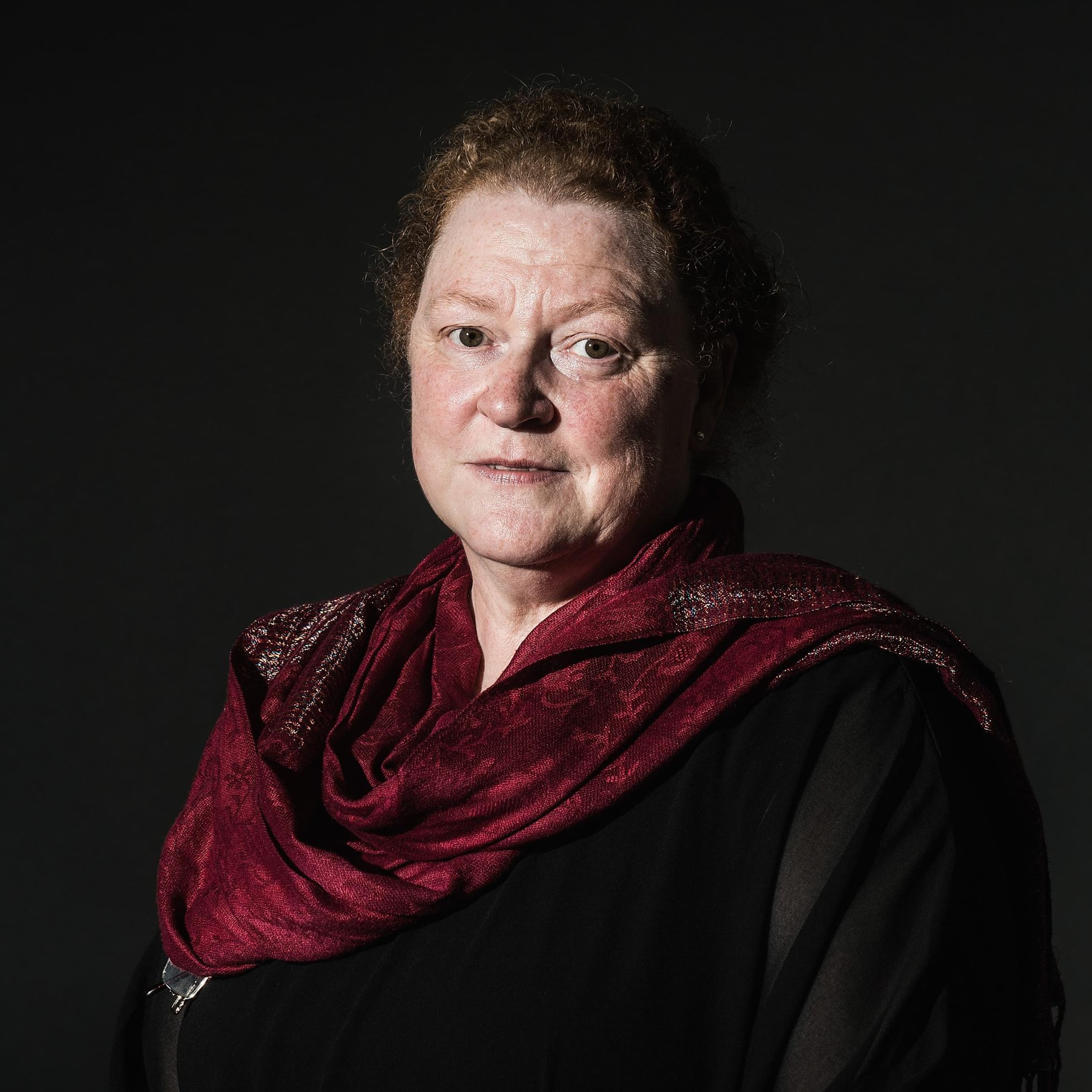
Professor Sue Black, forensic anthropologist and anatomist; led forensic work in Kosovo war-crimes investigations; has identified human remains after disasters and in war zones; has testified in UK criminal trials; worked on UN reporting using images of torture from Syrian detention camps.
Expert witnesses give opinions to help juries understand evidence, not to advocate. Science often can’t be 100% certain, so likelihood ratios must be communicated clearly. Misunderstanding statistics can cause miscarriages of justice. AI can triage digital evidence but “black box” systems are problematic for courts.
Roy Meadow’s shaken baby syndrome statistics leading to wrongful convictions; Sue’s UN-linked Syria torture imagery case; AI hand-pattern detection in child sexual abuse images.
Written by AI. May contain mistakes.
Discussion on the challenges and responsibilities of being an expert witness.
“Pouring over the bodies and bones of the dead, identifying victims of mass murder, natural disasters and war crimes, it's not a job many of us would want.”
Professor Sue Black elaborates on the duties of an expert witness and types of evidence.
“Professor Lady Sue Black, you're an anatomist and world expert in forensic anthropology.”
Sue Black shares her personal experiences and anxieties about testifying in court.
“of criminal dismemberment, of identification of individuals from photographs, particularly in relation to hands and in cases of child sexual abuse.”
Discussion on the emotional toll that expert testimony can take on scientists.
“The courtroom isn't really where as scientists we chose to be.”
Exploration of how statistics play a crucial role in expert testimony.
“And we wrote a report for the UN on that.”
Analysis of the potential for wrongful convictions and the accountability of experts.
“But it seems like that is where we see some problems in cases.”
Learn about the challenges and opportunities AI presents in handling digital evidence in legal contexts.
“If we didn't, we wouldn't have any miscarriages of justice.”
Discover the implications of AI in forensic science and the experts' views on its reliability.
“And so we have this issue with digital evidence becoming like a massive challenge.”
Listen to insights on the future of forensic science and the balance between AI and human expertise.
“But if we're sensible enough to wield it as a tool, then I think those opportunities are fascinating.”
A brief introduction to a new podcast series exploring AI's impact on human interactions.
“Around the time that I was finishing my PhD, I was feeling really awful.”

Get the gist, explore an idea or ask about something said.
 Claude
On Science Weekly, what are the key points of this episode?
Searching your listeningAutomatic transcript. May contain errors.
0:00This is The Guardian.
0:30sushi made fresh daily. Fall gatherings never tasted better. Save through November 3rd at Whole Foods Market. Soft, cushy, plush, cozy. Soft, smooth, buttery, marshmallowy, warm. Soft. Socks, underwear, tees, and more. Bombas. Everyday comfort worth obsessing over. Visit bombas.com slash audio and use code audio for 20 % off your first purchase. That's B-O-M-B-A-S dot com slash audio. One purchase equals one donated. Always.
1:15Pouring over the bodies and bones of the dead, identifying victims of mass murder, natural disasters and war crimes, it's not a job many of us would want. But for Professor Sue Black, it's all in a day's work. As a forensic anthropologist, Sue's work has put her in a lot of grim situations. She's exhumed human remains, been bitten by a venomous snake, and even carried two decomposing heads through airport security. But the toughest part of all? Standing up in court as an expert witness, facing judge, jury and tenacious lawyers. One side wants to prove that you are the world's leading expert and the other side wants to prove you're an idiot.
2:05So today, what it takes to be an expert witness and how science can serve justice or lead it astray.
2:17From The Guardian, I'm Ian Sample and this is Science Weekly.
2:26Professor Lady Sue Black, you're an anatomist and world expert in forensic anthropology. You've conducted forensic investigations after natural disasters and in war zones, including being the lead forensic anthropologist during the international war crimes investigations in Kosovo. You've also been an expert witness in countless criminal trials in the UK. And this is what your new book is all about. What does it mean to be a forensic expert witness? and what does the job of an expert witness consist of? So we have a very specialised role within the courtroom and an expert witness is a witness who is allowed to have an opinion because all other witnesses, you can only talk about what you said, what you heard, what you know, what you saw.
3:16But an expert witness is able to give their opinion, to philosophise based on their own experience, their own learning. And our job is not to be an advocate for one side or the other within the courtroom. Our job is to try to explain the evidence to the jury. And sometimes science can be a little bit of a mystery in that if you think about it, most people, members of the public, who that's what the jury is comprised of, probably the last time they studied science was when they were in school. And our job is to find the words that allow us to explain the evidence, how important the evidence is, which bits they really need to take awareness of.
4:00And what kinds of evidence are we talking about? What kinds of parts of the body might you be talking about? So as a forensic anthropologist, my job is largely about identification, who was the person when they were alive. So I have expertise in the identification of children's remains, of criminal dismemberment, of identification of individuals from photographs, particularly in relation to hands and in cases of child sexual abuse. So those areas of expertise that are outwith, good Scottish word, outwith the knowledge, daily knowledge of members of the jury. You write candidly in the book about what it takes to give evidence in court.
4:41Give me a flavour of what it's like. What it's like standing up in front of a judge and jury being questioned by the seasoned lawyers. What is that experience like? I hate it. It's the bit of my job I hate the most. We have an adversarial legal system, which means we have two sides. And one side of that system wants to prove that you are the world's leading expert. And the other side wants to prove you're an idiot. And one of them will win. And for a scientist, the most important thing that we have is our reputation. and every time you go into court you risk not coming out with a reputation that you went in with and we've had many experts over the years who have found themselves at the the rough end of the justice system and have never worked again but before I go in the night before I can't sleep I can't sleep I'm just so anxious about it um I can't eat breakfast I'm probably going to throw up in the bathroom before I go into the courtroom.
5:44It is just terrifying. But I have, or had, because I've stopped giving evidence now, but I had a routine. I always wore shoes that I could slip off. So the minute I walked into the box, I'd slip off my shoes. Nobody could see it, but I felt grounded. And I always put one hand on top of the other onto the witness stand so that nobody can see that my hands are shaking. The first part of the evidence that you give, it's the side that's retained you. So whether you're prosecution or defence. And so for the very first part of the day and often half the day you're being told how wonderful you are and you know how you are the world's leading expert and there's nobody can do it better.
6:24And you go away and you have lunch and you know that when you come back in the afternoon you'll be cross-examined. And that cross-examination is really painful but it's so important because the science needs to be cross-examined. But it isn't always fair because it is an arena. It's a theatre and we're pawns in that game. And sometimes we'll do okay. Sometimes we just want to get out. We want to give our evidence and we want to get out. So there is this real need for expert scientists to turn up to courts, to do this kind of work. But throughout your book, it's clear that it can take a hell of a toll on people.
7:01Oh, it does. But as scientists, what we want to do is we want to be in our lab doing science and we want to write our scientific papers and we want to get the next research grant. The courtroom isn't really where as scientists we chose to be. It's where we can play a part. And I did a case in Italy and it was a serial murder case and he was called the Monster of Tarazzo. He had links into underworld activities in Italy. He took out a death sentence on a journalist who disappeared and I was informed that he had done the same for me, that he'd taken out a death sentence. And so, you know, you do spend a little bit of your time thinking, is this worth it?
7:45You know, should I really be doing this? And certainly when we go overseas, whether it be in Iraq or in Kosovo, then you're going into war zones as well. Plus the fact that you're doing a job that nobody, nobody should ever have to do. Yeah. And then you have to go to court. Why do I do this job? It's ridiculous. It's great fun. It's great. It's hugely rewarding. It must be fascinating. It is. And I say that I think my court days are finished, but of course there is the possibility that is one that may still come back to haunt me because we worked with the Qatari government to look at the images of torture of men coming out of the detention camps in Syria.
8:29And we wrote a report for the UN on that. And when Assad fled into Russia and Putin gave him protection, when the journalist went in to his palaces in Damascus after he had fled one of the things they found at the side of his bed was one of my books so the very thought that that's sort of a world leader reading your book reading what you've written about things that he's done I think if that one ever gets to the court I think I'll probably have to come back for that one
9:11In court, part of your role, maybe the essential part of your role is to explain, obviously in a way the jury will understand, what the evidence can and probably importantly cannot tell you. But science rarely gives definitive answers. So you're quite quickly into this territory of dealing with uncertainties. You're basically into the world of statistics. I'm interested in why are statistics important in this whole game? So in terms of identification, the only thing you can do with 100 % certainty is exclude somebody. The DNA is different, the fingerprints are different, the face is different, the teeth are different.
9:54It can't be them. When it comes to saying how likely is it that the suspect and the perpetrator are the same individual, you have to come down to statistics. And the minute you stand up in the witness box and you start to talk about likelihood ratios and probability, the jury just clouds over and you can see them thinking, this is my worst nightmare. So you have to be able to convey the statistics in a fairly simplistic form, but it still has to be accurate. But statistics in some cases and at some points in cases, they are critical. But it seems like that is where we see some problems in cases.
10:36And you list some through your book of where things go wrong. And I wonder if you could give some examples there of how stats and numbers have really been used sort of inappropriately or sort of led people astray on juries. I think the obvious one is Roy Meadow. And Roy Meadow was the clinician who gave evidence in the shaken baby syndromes. And I think he was very confident in his own clinical ability because he was apparently a very, very good clinician. But what he did was he strayed into the area of statistics that he didn't understand. And he had inappropriately multiplied a couple of statistics to give a probability that really swayed the jury.
11:17that if you have one case of shaken baby syndrome or sudden infant death, then the chances are if there was a second one, that was unlikely. If there was a third one, although he probably didn't say it, but it was how it was interpreted, it's probably murder. And of course, what we know now in sudden infant death is if you have one, you're statistically more likely to have a second because there's an underlying feature. So he totally misled the jury. not I think through any intent of intending to mislead them but because he didn't understand the statistics and he was so confident in his own presentation he was irresistible to the jury and that's how you had a significant number of women imprisoned for the murder of their babies which didn't occur.
12:06Speaking about court cases sort of more generally now you go through lots in your book there are a lot of examples in there of expert witnesses great with hindsight, but expert witnesses, frankly, talking nonsense, whether they know it or not. And obviously that nonsense can lead to innocent people being banged up or worse in countries that still have the death penalty in places. Only when this country used to have it in the past. It does still seem surprising that this sort of thing still happens. Why is it that the judicial system is kind of incapable of ensuring real expertise? Or is that a bit harsh?
12:47I think it's probably a little bit harsh, I would say, because I would expect that most of the time we get it pretty close to right. But the question is, how many miscarriages of justice will you tolerate? And the answer is you can't tolerate any. because if it was you, your son, your daughter, your mother, your father, whatever, nobody wants that miscarriage of justice for anybody, let alone yourself. And all we can do with hindsight is go back and say, where did we get it wrong? And if we can identify where we got it wrong, then I think there's a requirement on us to go and put it right. But we're not quite sure who's got the responsibility to put it right.
13:26Is it the legal system? Is it the scientists? So I think there's a lack of ownership in terms of who has the responsibility for the standards of science that go into the courtroom. It's not perfect, but there is no system that is perfect. Somebody asked me the other day, do we have a justice system or do we have a legal system? And I think the truth is we have a legal system that tries to get as close to justice as it possibly can. And I believe in it. I believe in the justice system, you know, to the core of my heart. But I do know that in certain circumstances we get it wrong. If we didn't, we wouldn't have any miscarriages of justice.
14:10Coming up, what role could AI play in court?
14:42We'll be right back. Made fresh daily. Fall gatherings never tasted better. Save through November 3rd at Whole Foods Market.
14:57We're in a world now where pretty much every teenager, every adult has a mobile phone and is online. And so we have this issue with digital evidence becoming like a massive challenge. But there must also be sort of real opportunities with technology. I wonder how you see technology coming into the whole system now, whether you think we're going to be seeing AI coming into criminal justice and all the rest of it. So if we start with the digital, first of all, we are just drowning under digital information. So the police, if they secure your phone, your phone may be away from you for months, if not years, because there's such a backlog of, if you think what's on your phone, how many thousands of photographs, how many thousands of messages have you received and sent?
15:48And all of those we'll have to go through. And I think AI will assist enormously in being able to triage what it is that we're looking for in mobile devices. The forensic linguists, for example, who will look at a change in words that you use that might indicate you're becoming radicalised, for example. So AI will be able to pinpoint or at least put a flag in the sand that there's maybe something here that you want to go and look at. But the trouble with AI is that it requires there to be what we call a black box system. So you throw all the information in and you train it to do something, but we're not quite sure what it is because it's a real dark art.
16:31The courts won't tolerate black box because somebody else needs to prove that they can take the same evidence and come out with the same answer. You're still going to need the expert witness who is able to explain to the jury what evidence went in and what evidence has come out and how reliable is it and what weight do we place on it. Finally, Sue, you said you've done your last case as an expert witness. But I wonder what you're most excited about in forensic science today or in the future. So for me, I think it is what's going to happen in that AI world. And my fear is about do we lose our creativity as a species if we rely on artificial intelligence?
17:15But if we're sensible enough to wield it as a tool, then I think those opportunities are fascinating. You think in medicine how quickly we've been able to screen mammograms, for example, and detect breast cancer using AI with much greater degree of accuracy and consistency and certainty than the expert was able to do. So my team, when we look at hand identification in usually images of child sexual abuse, and we trained the computers to identify the anatomical features. And I had a very excited team who said, we found a pattern you missed. I said, I don't think so. I'm the expert here. And of course they had.
17:57And it was just a small vein pattern that I'd missed at the side of the hand. And that gave me a great deal of confidence that actually AI can improve what we're doing. But I'll be watching it from the sidelines. I won't be taking part. You think you'll miss it? No, I'm a great believer in life that when you move forward, you have to leave something behind. You've had a good stint and you've done a bloody good one, right? I think so. I think I'm old enough. I deserve to retire. Thank you so much. You're very welcome. It's my pleasure. Thanks again to Sue Black. Her book is An Expert Witness, Forensic Science on Trial.
18:36And you can find it by going to guardianbookshop.com. And before you go, I'd recommend checking out the award-winning documentary, NASA. Directed by two of the Oscar-winning directors of No Other Land, NASA reveals the secret systems used by the Israeli military in the mass killing of Palestinian civilians in Gaza. produced by The Guardian it's the documentary that the Israeli government doesn't want you to see and it's now available in cinemas around the world I really urge you to go and watch
19:11And that's it for today this episode was produced by Josh and Chana the sound design was by Joel Cox and the executive producer was Madeline Finlay We'll be back on Tuesday See you then
19:29This is The Guardian.
19:39Around the time that I was finishing my PhD, I was feeling really awful. You message your mum saying, I'm struggling. Her reply is suspiciously polished. I called my mum and I just railed on her. I was like, mum, did you just use chat GPT? Black Box, The Chatbots, a new series from The Guardian Investigates about the strange things happening between AI and us. Search for Black Box and listen now wherever you get your podcasts.