In short
Taste Radio Episode Summary: Can A 'Girl' Revitalize An Industry? She's On Her Way.
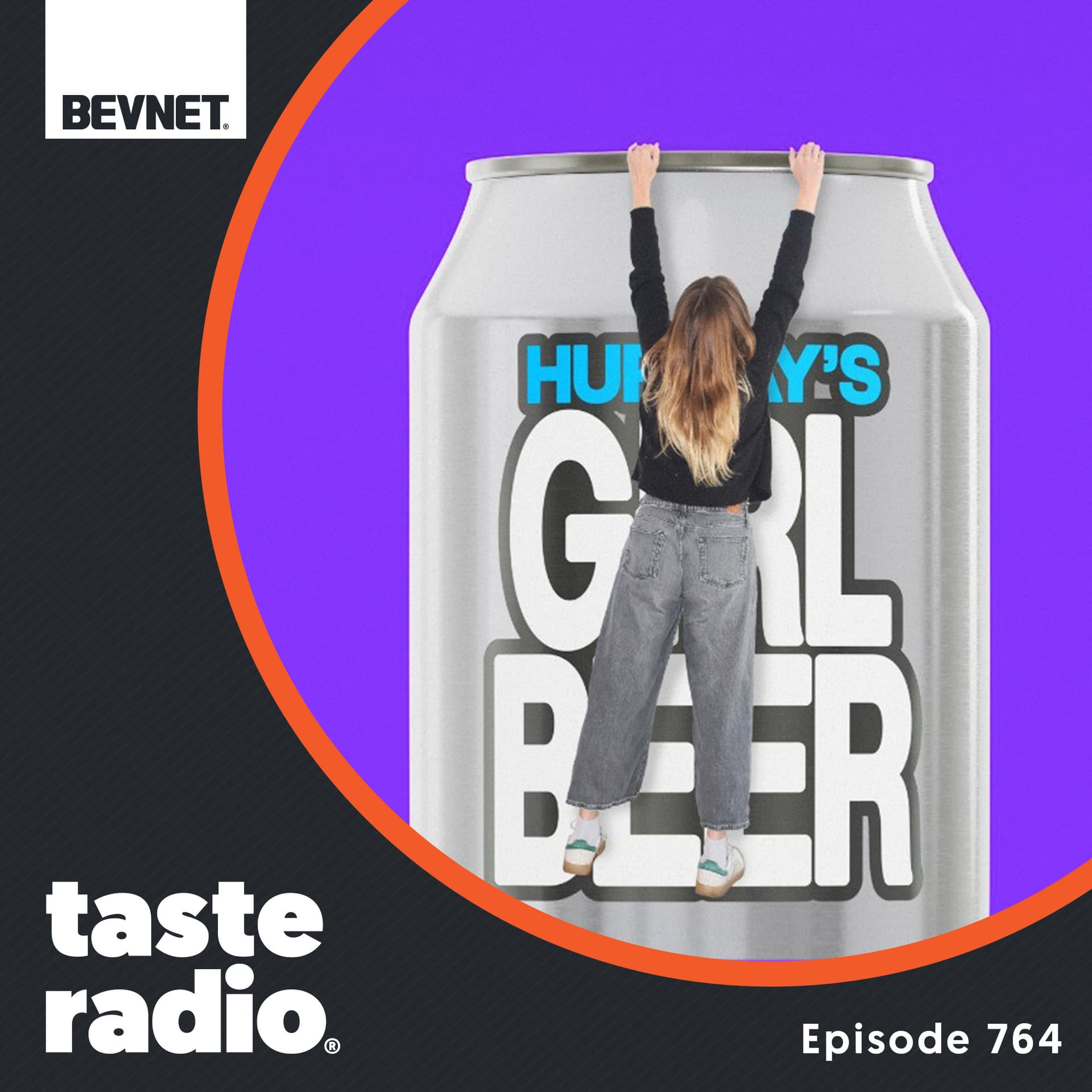
Episode Overview In this episode of Taste Radio, Hurray's founder Ray Biebuyck discusses her innovative approach to the beer industry through her brand, Hurray's Girl Beer. The episode focuses on how the brand seeks to disrupt traditional beer marketing, targeting a demographic that has been largely ignored: women.
Key Themes
- Disruption in Beer Marketing: Hurray's Girl Beer is a conscious rebellion against the male-dominated beer industry, focusing on flavored light beers like Pineapple Yuzu and Blueberry Lavender.
- Targeting Women: The brand aims to attract female consumers, who make up nearly 30% of beer drinkers, highlighting the industry's failure to cater to this audience.
- Humor and Irreverence: The branding draws from stand-up comedy rather than conventional brewing norms, using wit and satire to connect with consumers.
Interview Highlights
Ray Biebuyck's Background
- Career Origins: Ray traces her roots to New England, transitioning from a corporate career in investment banking (J.P. Morgan) and WeWork to the beverage industry.
- Identifying Market Gaps: During the pandemic, she recognized a disconnect between male-oriented beer branding and female consumers, which inspired her to launch Hurray's Girl Beer in 2024.
Brand Development
- Self-Distribution: Initially, Ray self-distributed beer out of a Toyota Camry, securing retail space in over 200 locations across Los Angeles and Orange County.
- Distributor Partnerships: A pivotal relationship with an Anheuser-Busch-aligned distributor helped accelerate growth, placing Hurray's on track to reach 3,000 retail locations by Q1 2026.
Marketing Strategy
- Bold Branding: The brand name and marketing materials are designed to create conversations, utilizing humor to engage consumers.
- Targeting with Precision: The strategy involves hyper-targeting women, reclaiming the "girl beer" label in a positive and humorous context.
Retail and Distribution Highlights
- Retail Success: By focusing on distribution in chain retailers like Whole Foods and Trader Joe's, Hurray's has gained significant traction.
- Future Expansion: The brand is set to expand into multiple new markets, with commitments from major retailers including Walmart and Sprouts.
Key Takeaways
- Innovative Targeting: Hurray's approach showcases the importance of understanding consumer demographics and leveraging humor to create a brand identity.
- Market Opportunity: With a significant portion of beer consumers being women, there is a vast market opportunity for brands that cater to this demographic.
- Importance of Relationships: Building strong relationships with distributors and retailers is crucial for navigating the complexities of the beverage industry.
Featured Brands
- Hurray's Girl Beer
- Shacksbury Cider
- Woodchuck Cider
- Magic Hat
- Ben & Jerry's
- Seventh Generation
- Green Mountain Coffee
- Poppi
- Olipop
- Liquid Death
- Garage Beer
- Surfside
- Budweiser
- Bud Light
- Golden Road
- Elysian
- Busch
- Heineken
- White Claw
- Truly
- Bud Light Seltzer
- Michelob Ultra
- Friday Beers
Conclusion Ray Biebuyck's vision for Hurray's Girl Beer represents a fresh perspective in the beer industry, combining humor with a targeted approach to engage an underserved consumer base. The episode emphasizes the potential for growth and innovation in an industry often resistant to change.
--- Contact and Additional Information For feedback or sponsorship inquiries, reach out to ask@tasteradio.com. Don't forget to share the podcast and leave a review on your preferred platform!
Written by AI. May contain mistakes. Listen to the episode to check what was said.
Transcript
Automatic transcript. May contain errors.0:10Hello friends, I'm Ray Latif and you're tuned in to taste radio the leading podcast for entrepreneurs makers, and innovators in the food and beverage industry. Parade's Girl Beer isn't just another craft brand. It's a calculated disruption in a category that forgot to evolve. Founded by former investment banker Ray Bebuck, Girl Beer is a reimagination of what beer can be, not by chasing tradition, but by mocking it. Witty, unapologetic, and engineered to provoke, the beer market's flavored light beer including pineapple yuzu and blueberry lavender varieties. The result is a satirical female-forward light beer brand that's flipping the script on a category that's long-ignored 30 % of its drinkers, women.
1:01Armed with a marketing playbook that pulls more from stand-up comedy than legacy brewing, girl beer isn't trying to fit in. It's built to stand out. Think liquid death, but with less rage and more range. In a beer market that many are calling dead, Girl Beer sees white space, and it's filling that space with personality, provocation, and product velocity that's got the attention of Whole Foods, Trader Joe's, BevMo, Total Wine Sprouts, and even Walmart. The brand is now scaling fast with the backing of major distributors and a projected 3 ,000 retail doors by Q1 of 2026.
1:42Hey folks, it's Ray with Taste Radio. I am with Jess Infante, the managing editor of Brewbound, and we are supremely honored to be sitting down with Ray Bebuck, who's the founder and CEO of Hooray's Girl Beer. Ray, it's so great to see you. Nice to see you too. I'm Ray V2. Yes, well, you're Ray V2. I think you're Ray number one. I'm just kind of sitting here with you. I'm just a little awestruck, as I think Jess is as well, that you're here at BevNet headquarters in Newton, Massachusetts. I'm just sad my name doesn't match, guys. Well, this is also a big thing for me because it's the first time we've had Jess on Taste Radio.
2:16I am thrilled to be here, Ray. Thank you so much for inviting me. Yeah, well, it's really our honor. It's my honor, actually, because Brewbound is the premier publication, the best beer media publication in the known universe. There could be other universes out there. This is feeling a little Dune-ish, you know, Dune life is... But anyway, but no, Brewbound is the place to go if you want to know anything about the beer industry. I think Ray would agree. Yeah. I mean, believe it or not, I actually refuse to take this conversation unless you are here. So honored. Honored. She did say that. She was just like, you know, I know we had this planned and all, but screw you if Jess isn't coming.
2:55Yeah. You have roots in this area, Ray, right? Yeah. I'm from Vermont originally. So it's good to be back in New England. And, you know, very nostalgic and all of that. If you got to come out here, if you have to leave LA, I would say fall is the time to do that. Yeah. Yeah. Although New England summers, I think, are like the most underrated. But it should be underrated because, you know, you want to just keep people out. I am from the Jersey Shore and I will fight you on that. But Northeast in general, yes. Yeah. Agree. Yeah. Our CRMO stands for Chief Revenue and Marketing Officer. It's a mouthful, isn't it just?
3:27It's a lot. Yeah. We'll just call him Mike. I think that works. Yeah. Mike, who's also a Taste Radio host, he goes to the Jersey Shore a lot. He does. But I agree with you on New England summers, Ray. I think this is an amazing time to be here. The cold winters, the summers kind of make it worth it, but still it's a little bit of an imbalance there. Yeah. I mean, I say I choose when I participate in winter now. That's how I want to live my life. I love that. Yeah. Yes. I mean, it's negative 30 degree winters harden you as a child and I will never go back. But love visiting. Ray is and will always be known as the winner of BrewBound's Pitch Slam.
4:05She won the competition in 2024 at BrewBound Live in LA. There were a lot of really good brands there, but as the moderator on stage, I was just blown away by what you do, your focus, your vision for this brand. Just for our audience, tell us a bit about Ray's Girl Beer and the origins of the company. Yeah, totally. And thank you. It's hard to accept compliments, but I appreciate that. It was a great experience. So yeah, I mean, I'll go back to like me and, you know, where I'm from and how this all kind of came to fruition. So I'm from Vermont, as I mentioned, grew up in New England around some of the best beer companies in the country.
4:44Actually, I think Vermont has the highest number of breweries per capita. They're like five people that live in Vermont. They're all cold, as I mentioned, and they just want to stay inside and drink double IPAs and not see another human. So I was always around beer and beer culture, but I went to NYU undergrad. I was like, I don't want to be in the woods anymore. I'm going to do something different. And so I went to New York City and, you know, studied finance, did the whole investment banking thing after school. The story goes that I was at J.P. Morgan in the healthcare investment banking group.
5:17And my first deal was spinning off the Oxycontin division of a major U.S. pharmaceutical company to sell it to an Indian specialty pharmaceutical company that was going to make Oxycontin for super cheap. And I was like, I don't know if this is how I want to spend my life. This is not like changing the world in the way that I thought I would. I'm 22. What am I doing? And so I just gulped really hard, by the way, because that doesn't sound like a dream job. No, I learned a lot. It was a great training ground, but I lasted a year to the day, quite literally. My parents were like mortified. They're like, you're leaving JP Morgan.
5:54Why would you ever do this? But I had an opportunity to go and work for Adam Neumann at WeWork on his chief of staff team, which was a whole other funny experience. I mean, I preface this by all saying like, I made all of these decisions prior to my prefrontal cortex being fully developed. So I was like, yeah, you know, WeWork could go in any direction. Why don't we just see where this goes? And so I was helping with the IPO process, all the SoftBank funding rounds, any weird idea that Adam wanted to do, you know, he would come to our team and be like, I wanna start a school. And we'd be like, that's probably not a great idea.
6:30And he'd be like, okay, but how do I do it? And so that's, it was a crazy experience. Who plays you in the TV show? No one yet. There's no kind of like lowly analyst, unfortunately. I was really hoping for like Natalie Portman or, you know. I could see it. Yeah, yeah. Yeah, that's a good call. Good work. But no, didn't make the cut. And yeah, so that was like a crazy experience. And I had had a lot of great like corporate training in New York. But by my mid-20s, I was feeling super burnt out and had been in New York for almost eight years at that point. And I love being in cities, but a city like New York, it's so overwhelming.
7:10Quality of life is not exactly the one that was like for me, didn't feel very sustainable long-term. And I was looking for any excuse to press the reset button and COVID hit. And obviously such a difficult time, but I was at the time probably 25. And fast forward, you know, this is like May, June, 2020. I'm hanging out, you know, I'm with my family dog, living on Lake Champlain, figuring out what I'm going to do next. And Vermont has like a really cool startup ecosystem. them. It's very bucolic agricultural. Seventh generation started there, Ben & Jerry's, Green Mountain Coffee. And so it has had this tradition of like really unbelievable nationally scaled CPG brands.
7:54And everyone knows each other. There's 600 ,000 people that live in Vermont. So we're all just like one degree away from each other. And I had gotten to know these guys who started a small alcohol brand out there called Shaxbury. I know you're familiar with them. At the time, they were vertically integrating. This is June, 2020. They had just gotten this big old warehouse. Kind of sounds like how you guys opened the office here in June, 2020. It's like they got this massive empty warehouse, hard to find people to help fill it with equipment and to even just man the canning line or whatever. They were moving away from coat packing with Woodchuck.
8:32And so they just needed help. And they were like, oh my gosh, amazing. This person lives 15 minutes away. Come help us label some bottles. And so I started helping them label some bottles. I was just hanging out with the guys, the founders. And slowly over time, they realized we could help them with other things and help them ended up like, you know, with the equipment financing and buying the canning line and buying all of these supplies. There's a massive can shortage during COVID. So I was like brokering cans from Mexico up to Vermont. I was like, what did I get myself into? Turned into a full-time role and spent a couple of years really helping them run the day-to-day operations.
9:09And that was my first foray into consumer packaged goods. And really the first time that I had seen products go from ideation to being on the shelf. And I was like, you know, it's really interesting. The products we're putting out into the world, they're really reflections of ourselves, how we think how others want to show up in the world. and not to get like woo-woo around it, but really similar to like music and literature and art, right? They're all sort of reflections of our inner minds and again, how we think others work and operate and feel and how they want to show up. And at the time we were making a canned light wine concept.
9:50I believe we were actually launching it with HEB very randomly, had a great relationship with HEB in Texas. and I was one of two female employees at the time. And this is like no shade to the team, really awesome team out there and they've built an unbelievable brand. But there was clearly a disconnect between the decisions that we were making around the product and the brand and who was making those decisions. And this was a product that we'd all decided was predominantly for women. The light wine concept. The light wine, yeah. You know, for women between the ages of 21 and whatever, women who drink was really the concept.
10:29And the team was, you know, again, majority male, male founders. And the brand, in my opinion, the product was great. The brand kind of flopped. And I think it was because there was this disconnect between who was making it and who was consuming it. And I'm like, I remember going to the founders. I'm like, guys, you don't even know what like your wives want. How do you know what like a 23-year-old former sorority girl in Houston, Texas wants? And again, no shade to the team there, but it just started getting my wheels turning a little bit because this was clearly pervasive throughout the industry.
11:05And it was simultaneously helping with a lot of our fundraising materials and coming across some stats that I think reflected a lot of the sentiments that my friends had, especially friends who didn't live in Vermont, right? Because I lived in like this incubated beer world, grew up around beer. You know, my mom's crushing Magic Hat in the summer. Like that's just what I grew up around. But when I went to NOU, I remember hearing anecdotes from my friends being like, I'd never have a beer on a first date. And I'm like, that's so freaking weird. What do you mean? And I'm like, OK, there's something at play here.
11:38And the data that I was seeing was really reflecting a broader trend. 30 % of beer consumers today are female, which is a large base, but clearly for like$120 billion industry, massive opportunity to bring in a new consumer. And this is ever more important. If you look at how alcohol demographics are aging, for the first time in history, the majority of alcohol consumers under the age of 25 are women. And so I started getting to work on really figuring out what it would take to get that net new consumer into the category and bring them away from things like wine or hard seltzers back to beer and introduce them to the world of beer.
12:15Because a lot of the characteristics of beer and the properties of beer are things that these consumers want. It's not necessarily messaged or hasn't historically been messaged very clearly in that way to them. And so I found that, and we can get into the details about, you know, how I came to all of these decisions, but found that if you pair a flavored light beer brand that's really trying to carve out a category of flavored light beer plus a brand that is satirical and bold and in your face and really kind of pushing this narrative in a really big way and bold way, irreverent way, you can really meaningfully change that demographic data.
12:56And so, yeah, we launched in LA in the fall of last year and have been kind of cranking away since then. Yeah, I mean, quite a bit going on with the brand. Before we hopped on the mics, you talked about all the distribution and retail wins that you've had over the past year. We'll talk about that in a moment. But, you know, when I first encountered the brand, and Jess, if you can share your thoughts, it felt really intuitive. I mean, the concept felt like you knew who this is for, you knew what they were trying to say, and even perhaps what the liquid would be like. Was that your experience, Jess?
13:28Yeah. What I have always taken away from Girl Beers branding is that it's smart and funny. And a lot of things that get targeted to women are kind of neither of those. You know, like this to me, you know, I had done an interview about your product for, I think, Bon Appetit a couple months ago. And I was talking to the journalist and was just like, what really strikes me is that this is something that's fun. I'm older than you. But as a 40-year-old mom of a two-year-old, everything that I get bombarded with from the internet and TV and anything is just health and wellness, how to be more productive, all of these hacks.
14:03Yeah. This product is just fun and it's funny. Yeah. And it's smart. To me, the brand lets it know that we are sharing a joke. Yeah, right. Exactly. And it just, it's, I think an opportunity in marketing more broadly. Historically, a lot of brands targeting women are done so around aesthetics. Yes. and how this looks when you're holding it or wearing it or what you look like when you consume this thing. And there aren't a ton of brands. There are some examples of maybe a few, but generally speaking, the very few brands that are so narrative voice driven. And so the goal of the brand exactly was really to create this very minimal aesthetic, allow the consumer to impose their imagination on what the brand means to them and lean into this really like snarky, witty, satirical voice.
14:58And I think it's luckily really been landing with consumers, I think, both male and female, intentionally so. And so anyways, appreciate you vibing with us. I vibe. Yeah. I'm kind of embarrassed to say this because when we were in the room deliberating about the participants in the pitch slam last year, you're really guy heavy. And I don't think that that is, you know, anything that I'm going to criticize. It's just because, you know, beer in general is a male heavy industry. We try so hard to make sure that Brewbound Live and whatever we're putting out on the podcast and on the website, that we're getting a range of voices.
15:43But sometimes it's hard to do that because that's who works in the industry. It's very much so. But there were folks in the room who are like, this might be hard because it's called girl beer. Who's going to drink this? Why were you so intentional about using girl beer in your brand? We're in a world where you need to cut through noise first and foremost and be really direct with consumers. And I think the second thing is, and this is, I liken this to the kind of like TikTok algorithm effect. I mean, I'm sure we're going to look back at the last few years and And there'll be studies about this at some point about how TikTok has really impacted culture.
16:22And I think in our case, the way that we consume and the way that we consume media now is so hyper targeted. When I'm on my TikTok algorithm, I feel like my TikTok algorithm knows me better than I know myself. I'm like, how did you know that? That's terrifying. It is, it is, but it's true. It's so powerful. And what that means is consumers are accustomed and that audience is accustomed to being spoken to in such a hyper-targeted way. And I think where CPG broadly is going and brands are going is focusing on a very, very specific target demographic because that's what we're used to now. And so pairing those two things together, it's like, okay, I want to make ways within this industry.
17:08I really have conviction around the need within this industry. I want to make it really clear what we're doing, but I want to do it in a way that's smart because oftentimes you know the term girl beer has been used in such a like pandering demeaning way in the past and it's like i wonder if there's a way to really reclaim that term and make it our own in a fun humorous irreverent way where anyone can really get behind the joke while still being really clear about our purpose and i think if you compare those two you're able to break through on the shelf and in the algorithm. I'd rather have people talking about our brand than not talking about it.
17:47And so when I go and, you know, see someone checking out at like a Whole Foods, for example, the name alone starts a conversation between the cashier and the person buying it. You know, usually like 70 % of the time, they either ask about the name or like on the packaging, we've like banned all Connors from consuming our product. You guys are so aware of it. And we put it just like right on the packaging. For folks who don't know or aren't in on that joke, what does that mean? Yeah, we just, we took the stance that, you know, we're bi girls for everyone except for Connor. And we're not at liberty to say why.
18:23Connor knows what he did. Connor definitely knows what he did. And we put that right on the card, right? And it's like, if you can show up in stores in a really bold and fun way and drive word of mouth marketing, that's stuff that brands pay billions of dollars for annually. And we can do it for free just by being a reverend and taking that step. There are going to be some people who are like, girl, bear, blah, blah, blah, blah, blah. Like, what is this about? Right. And I think when you're brand building and you keep telling that story and you keep telling that narrative and you're doing campaigns and, you know, you're putting your voice out there, you find that that tone shifts with time where people really start to understand what you're doing.
19:02And I think akin to liquid death. And it really was actually, I was visiting. My parents spend winters in Florida now, and I was visiting them and going to a Sprouts. And I remember seeing someone buy a liquid death at a cash register and had that conversation. They're like the cashier, you know, an older dude. He's like, liquid death. What is this? And they had a conversation about it. And I was like, whoa, Pepsi would pay billions of dollars just to have a few have people have a few of those conversations. and Liquid Death's doing it for free by just taking the leap of having that be their name.
19:37And so it was always with both our consumer in mind and really how can we make a splash within the industry and really be willing to take that leap of faith that we could build a brand that backs that name up. I was waiting to see how long Liquid Death would come up in this conversation because with any really great, interesting concept, Liquid Death somehow is part of that inspiration story. And I think when you said, I'd rather have people talking about my brand than not talking about my brand, that is a takeaway for that. Everyone listening right now should incorporate into their business strategy.
20:13You know, ideas are a dime a dozen. Great ideas might be a buck a dozen. Who knows? But no matter what, you need people behind. You need people believing in your vision, believing in your concept. What was your investor pitch like? What was the response that you were getting from investors when you were going out there and looking for money? investors are inherently skeptical it makes sense they get sent a million and a half pitch decks every day and so you need to have a lot of things working for you however i think that a lot of investors are typically late to a trend and you know it's funny because it's it's like i remember having a conversation the other day with an investor it's like well you know when was the last beer M &A, like, you know, we've been seeing all this soda M &A.
21:00I'm looking at like the functional soda space and I'm like, well, you should have invested five years ago in Poppy or Alibop. You're behind on this trend. And like, you need to be out in front of it. And I think the other things at play are just the headlines, right? Like you're seeing the Gallup data that comes out and you're like, you know, they're seeing these headlines or seeing LinkedIn posts, but then, you know, you might also have one day a LinkedIn post about how Gen Z is actually drinking more. And there's all of this data and noise out there. And for us, where we've had success with raising is really painting the vision of, look, like if you're to bet against us, you're betting against beer as a category as a whole.
21:40And I think it's a really tough proposition to say beer's going away tomorrow. I think it's tough to say the next 10 years. I'd say it's tough the next 100 years. It's massive. It's the most preferred alcohol in the United States, which is actually looks like increased last year, which I think hopefully is a good early signal. And so I think it's really having to lead investors to water a bit around the data that we're seeing and the optimism that we're seeing, right? And so you have to paint the image of, well, there are some brands that I think have not necessarily navigated current dynamics within the industry.
22:17So these are legacy brands that have kind of kept chugging along with their current SKU set, haven't necessarily rebranded, haven't rethought their SKU sets. And what worked in the 2010s for beer isn't what's going to work today. And so I think painting that image of, yes, there's going to be a bottoming and perhaps we're at the bottom, but they're going to be winners within the space that can navigate these trends. And so I think that's the biggest thing that we've had to paint. And really, I think that the biggest misconception right now, and this comes from investors, comes from distributors, it comes from retailers, is that a lot of this data is actually, you know, the kind of stagnation of alcohol and beer is multi-variable.
23:04There are so many things at play. If you look at sobriety trends, for example, they're actually pretty stagnant. Like if you looked at the drinking prevalence over the last 12 months, something like 80 % of Americans, drinking age Americans have said they've consumed alcohol in the last year. And that's been stagnant, relatively very little variation. Even with 30-day prevalence still relatively normalized, maybe some slight declines, we're seeing the biggest declines is actually binge drinking and particularly male binge drinking. And so when you start really breaking down some of these factors, right, there's the Jefferies report that came out that I saw you guys wrote about the other day, where it's like actually the number one cause for declines in alcohol purchases from the surveys that they discussed was about savings and being thoughtful about finances during what looks like the precipice of a recession.
24:00It's much more complicated than what I think headlines show. And I think for us, we've really had to do a lot of work around painting that picture for folks. And I think the tone is starting to change a bit, especially when you see headlines like Garage Beer or the Surf Sides of the World that have really crushed it and beveled and show that there's still tremendous amount of growth within this doom and gloom reset. But it's exactly what it is. It's a reset and there's still going to be brands that win. And I think that's sort of the work that we've had to do. So I started thinking when you were talking about how you pitch investors, you have the added challenge or hurdle of getting to market in that you're a Bev Outbrand and you have to go through a distributor.
24:43So when you're pitching distributors, what are those conversations like? Because they well know everything you just laid out, or at least they should. Yeah. When you present them with this product called Girl Beer, what do you hear from the middle tier? Usually we've already gone to retailers who are really, really excited. and bought in. So always going with strong chain retail commitments in hand helps those conversations generally. And again, distributors like investors are skeptical and should be skeptical, right? They're growing a business. They have to build a team. They have to be thoughtful about how they're building their sales force.
25:22They want to make sure they're bringing in brands that don't cannibalize other brands in their portfolio. They have to be really thoughtful about the way they built their business. And so there's always going to be from distribution and inherent skepticism. I'd say as we've built this brand and gotten more of those chain commitments and proven out the velocity that the tone has changed significantly. So whereas like ghosting on emails, you know, in our first six months has now turned into, okay, let's have a conversation about this. We're interested. I think there is generally within distribution kind of holding pattern around beer as a category.
26:01And so again, it takes a lot of steps. It's having to show those chain retail commitments. It's showing the velocity. It's showing the funding. It's showing that we're willing to put the resources in market. And I think they see like very similarly to the retail reaction, the incrementality to beer. We're all invested in beer staying. And all of us have the inherent interest to expand the category as much as we can. And if we're really providing a solution to that, you know, they're interested. And so it takes all of these pieces and putting these puzzle pieces in place to continue to get that interest.
Read the full transcript
26:42But having that story really down and having that proven track record and market in Southern California is really what's helped with those conversations. Quick break. If this episode has you thinking about what's next in food and beverage, explore BevNet and Nosh Insider, our subscription platform with deeper insights from the BevNet team. Visit tasteradio.com slash insider to learn more. At Pitch Lamb, you had launched two different flavors. Yep. Pineapple, you're doing blueberry, lavender. Thank you. I knew pineapple and blueberry and I didn't know what their buddies were. And you were in six packs for each flavor.
27:20Yep. You were launching to a variety 12 pack, which is one of few skews that I think is breaking through right now, depending on the brand. That's not true industry-wide, but there are certainly a lot of brands finding a lot of success with that pack format and you're expanding flavors. So tell us a little bit about what the strategy is here. Yeah. So just some context for the audience. We launched with Whole Foods, BevMo, and additionally added Total Wine and kind of like the first six months of distributing. We're just focused on Los Angeles and Orange County. And again, for folks out there that don't know about beer distribution, it's a very regionally focused game.
28:03And you kind of cobble together a network state by state, county by county even. And again, more context, Southern California beer distribution is in an interesting influx right now with a lot of M &A, which has made it difficult for early stage brands to really find that partner. And so we self-distributed quite literally out of a Toyota Camry most days, sometimes a U-Haul, depending on the day. Toyota Camrys can carry 40 cases of beer. I was just going to ask that. That's wild. 40 cases. How is the Toyota Camry doing today? So it's actually our logistic manager's grandma's Toyota Camry, believe it or not.
28:40It's okay. Okay. You know, I think we had to pump up the tires a little bit more, but it's hanging in there. I was going to ask if it's kind of a low rider right now because i would assume with all that beer over time those shocks those struts they they've taken a beating yeah they've taken a beating yeah you know they have certainly uh and we did that with those two skews blueberry lavender pineapple yuzu really focused on a tight footprint honing our sales playbook really even down to the neighborhood level of like where are we investing in on-prem versus off-prem and how are we going to build this brand once we sign with distribution?
29:16What are those exact things that we're telling a distributor what's working and what doesn't work for us? And really focusing on velocity and a footprint of, you know, call it just shy of 200 doors probably. So, you know, we did that for the better part of seven, eight months, you know, adding some independence, but mainly with those three chain retailers. And then amidst all of this sort of distribution, these distribution woes in Southern California landed with an Anheuser distributor. And we can maybe talk about the differences between what I mean by Anheuser distribution. Yeah, I think that would be helpful for folks who are listening who are not necessarily knowledgeable about the beer business.
29:52So in every market in the country, there are usually at least two, but sometimes three beer distributors. If there are two, one of them is going to be aligned with Anheuser-Busch InBev. And the other one is going to be aligned with mostly everybody else. But that's particularly Molson Coors. You'll find a lot of Molson Coors houses that also carry Pabst, Boston Beer, Constellation, Heineken. Anheuser-Busch over the years, they used to be a lot more strict with their distributor partners in saying that they'd really rather them not carry anything else because the AB portfolio is very, very large and vast.
30:26Budweiser, Bud Light, et cetera. Exactly. But also Golden Road, Elysian, Bush is doing super well. Like they kind of have a product for everything. The network has gotten a little bit vaster in recent years where some wholesalers are now carrying other things. So if you're in an AB house and you're a product, as Girlbeer is, that AB doesn't have in their portfolio, you probably can get a little bit more mindshare. But in a much more crowded house with a bunch of other products, it might be harder to get that care and attention when your distributor partner can sell thousands of other SKUs. So it just kind of depends on the relationships, which way you want to go.
31:05One of the best examples that I can always think of that I use to explain how this works to people who maybe aren't familiar, is that in the boom times of hard seltzer, Mark Anthony makes White Claw and Boston Beer makes Truly. And those two brands are usually in the same distributor partner. So there's a whole nationwide network of Molson Coors Align distributors that are carrying White Claw and Truly, and the Bud Network didn't really have anything. So Bud Light Seltzer came to be, and that became the third player in this hard seltzer race, simply because those distributors didn't have a product in this really hot category.
31:38And many things have changed today. But to understand kind of what the route to market can look like, you've got to understand these two differences. I did mention that some markets have a third wholesaler that used to be a craft distributor, which is a much smaller, more boutique house. But we have seen a lot of those either close or get consolidated. There's a ton of consolidation in the middle tier right now. What Ray has been talking about is in Southern California, where stone distributing was the biggest craft focused house in the country. And they have since been acquired and merged into now what's called Sunset Distributing.
32:13And it's usually a tough time for smaller brands when your distributor gets acquired or merges because it's just kind of hard to navigate the changes. And I think we're hearing a little bit of that coming out of that market. But that's also super, super recent. Yeah, yeah, exactly. I think for listeners, the key in all this is the distributors are looking for differentiation and brands that can bring velocity that can do really well on shelf. I mean, those are the two keys. And they clearly must have seen that. The ones, the distributors you're aligned with, Ray, they clearly saw that. The differentiation seems pretty apparent.
32:45What about the velocity story? How did you get them on board with that? Yeah, yeah. So just to go through the timeline, we're now six, seven months in, have launched with these retailers, chain retail focused, which was very intentional. I wasn't going to launch the brand without chain retail commitment, just because it's such quality data. It's data that you can bring to distributors, retailers, investors, and it's data that folks look at and trust. And so within the first, even the first two, three months of being with our retailers, we're achieving top 15 to 20 % of canned alcohol velocity.
33:21So across the whole portfolio, which is pretty remarkable. So we're like, okay, okay, like something's working here. This is doing well. And we brought that data to Albertsons was actually our first, you know, we had had some conversations with distributors or kind of like come back when you have chain retail commitments. We're like, but we're in Whole Foods. And they're like, we want more. And we're like, okay, we'll go figure this out. Right, I have a question. Can you go to a chain retailer without distribution in that market? What's that conversation like? Yeah, I mean, it's a chicken and the egg situation and you kind of just say that to them, right?
33:54It's every retailer says you need to have a distributor. every distributor says you need to have retailers. And I'm like, you know, shrug emoji, right? Shrug emoji. Like, what am I supposed to do with this? And so I developed a really great relationship with the buyer at Albertsons and you kind of explained the situation. He was really, really just an advocate for the brand, loved the brand and wanted to mandate us for the fall, which is special because it's not really the main reset cycle for beer. It's usually in the spring. And so if they're slotting you into their fall mandates, it's like sick.
34:24They're really like bought in and really want to support the brand. Did you walk in? Did you email him? Or how did you know who to talk to? How did I know how to talk to Kirk? Either like cold message or was like warm intro. I mean, at this point, I find warm introductions to just move things so much more quickly. And so we can talk about how we win chain mandates now and kind of the infrastructure there in a second. But at the time, I think it was a cold message to him. And he was like, I'm a girl dad. And I was like, okay, cool. Let's talk then. And so he was just a big advocate. I think it was a cold email.
34:58And yeah, he loved the brand, wanted to bring us in. We didn't have a distributor. We'd had all these conversations with distributors, was tough with the M &A landscape. Acquiring another company is a ton of work. They're onboarding dozens and dozens and dozens of new brands. It's so difficult to get the mind share to onboard new brands. And so we ended up lucking out with Straub distributing in Orange County, which is an Anheuser distributor down there that has an extended footprint into Los Angeles. And so they're willing to take a bet on us, you know, clearly had just the velocity data and the beginnings of this chain retail interest.
35:33And once we signed with Straub, we launched with them maybe like a month and a half, two months ago, it just just totally shifted the trajectory of the business. And since then, you know, we signed with Highmark over in Palm Desert, which is another Anheuser distributor out there. and there's been a just total domino effect of now all of these retailers being really excited about the brand and wanting to take us in. And so with that, which goes back to your original question of, you know, the trajectory of the pack sizes, I think a lot of the retail interest and kind of where we're taking the brand helps influence exactly how we're setting up our SKU sets.
36:09We've gotten commitments from Walmart, HEB, Sprouts, you know, continuing with Albertsons, Vons, Pavilions, expansion with Whole Foods, Bebmo, and Total Wine, and Trader Joe's, which has been some really exciting velocity data. And so we have all of those commitments. A lot of them are launching in Q1. So we're looking at, I can't, I'm like, take a breath to say it, like nearly 3 ,000 doors in Q1 going from, yeah, wild across California, Arizona, New Mexico, and Texas. And so we're like thrilled. I mean, it's, it's really great to see this buy-in. And I think it's exactly what we've all been kind of touching on in this conversation is it's not just the distributors that are wanting sort of incrementality within their portfolio, but it's the retail buyers too, right?
36:58And so a lot of folks are trying to figure out how do we drive a new consumer to this shelf? If we were just another light logger, I think it'd be a really hard proposition. But the fact that we're really trying to create a new category within beer with flavored light beer, not to say that there aren't examples of this, but not really like you'll have like a couple of skews on shelf. You know, you have the mango carts and the Cali squeezes and maybe like the Michelob ultra flavored variety packs, but not really like a category built out. I think that they're starting to see kind of the path that we're trying to carve and clearly resonating with consumers that traditionally don't go to the beer aisle.
37:36And so with these retail launches looking to launch. We're launching two mixed variety, 12 packs, and we'll have eight flavors in total, which is sick. Your social is remarkable. And I think Jess would agree. It's pretty fantastic. It's funny. It's very vibrant. You want to engage with the content. Do you have a social media manager? Are you sort of pulling the strings on that? I was actually the only full-time employee at the company until like three weeks ago, which is brutal. So brutal. I have an awesome team of like contractors and freelancers who we've worked with. So, you know, have a great advisors, great group of people behind me.
38:15But like, yeah, it was just needed hands. Hired a full-time social media manager. She was actually helped run a podcast for Friday beers. And so it comes from like a media background and she's really great at, you know, scripting, ideating, editing videos, knows the social landscape really well. And I think really brings a fresh perspective into CPG. No shade to other brands, but I think the CPG world definitely has like a formula and a playbook that, you know, a lot of folks play aesthetic photos and videos of fun cocktail mixes or whatever it might be with your product. And we're really trying to just like do everything except that, like market in totally new, unconventional ways.
38:59and yeah, we're trying to build this really as like a media first brand. So yes, in short, have someone running it and a mind and a visionary behind us now, but it's a group effort on creation and ideation and have some former liquid death people who are like helping us with copywriting and all of that. So have a great team behind us. You're also really tied into comedy. Yes. Which I think helps. There's ways to launch a brand that involve like going like the influencer content creator route, but you've really tapped into comedians. So tell us about that. You know, it's kind of the benefit of being in LA generally is that there are a lot of creatives who want side hustles or to get involved in things and just like looking to do stuff.
39:45The scene has been, and just Hollywood generally has been in just such an interesting kind of point in the trajectory of its business model. And a lot of these creatives are looking for stuff to do. And so we've tapped into a lot of comedians that do our like be a brand ambassador. You know, we do a lot of events and demoing and sampling. And we find that like bringing comedy into the grocery aisle is actually like fun. And this is just like a tangent sidebar, but like really a retailer is a billboard. There's just so many ways you can communicate within grocery stores. And it's so easy to stand out because like a lot of brands are just using their, their old playbook of like aesthetic and cute or like not even right.
40:31Or like communicating all of these very specific facts. Right. And like, we just, for example, made some case stackers that will be, you know, launching with some of our retailers that just say like, we're doubting our name too. Like, please buy this. Like this silly stuff where it's like, we have stuff that's about the product, but that's not what's going to grab someone's eye. What's going to grab someone's eye is what the heck is going on here? Like I've never seen this in a grocery store. And so translating that into our demoing team or sampling team or brand ambassadors has worked really well.
41:03And it just brings levity to someone grocery shopping, you know, on an average Saturday afternoon, you're running into these people who are like chirping you and, you know, being silly and, you know, introducing the brand in a very irreverent fun way is unique and cool. And so not only is it like supporting folks in the industry, but I think also really setting the tone everywhere of who we are and what we're doing. When you said that, you know, if you wanted to invest in Poppy, you should have done it five years ago. Obviously they were sold now. If you want to invest in Olipop, but don't miss out if you're an investor, don't miss out on the early stage concept before it becomes a trend, before everyone is jumping into that boat.
41:45And I think I think Hooray's Girl Beer really, really fits into that bucket of ahead of its time, but with a huge runway for growth. Yeah. So thank you so much for everything. I am so excited for you. I'm so excited for the brand. I wanna see you in Massachusetts at some point. I know. I'll be your first customer. Yeah, I think it'll be in our pipeline. It looks like maybe like a 2028 situation, but we'll make our way. Wow, you really have a timeline. Yeah, I mean, in theory, my beer consumption should be back up to speed by 2028. Yeah, yeah, yeah, yeah, exactly. Once again, Ray, thank you so much for being on Taste Radio.
42:18Thanks, guys. Thanks for having me. That brings us to the end of this episode of Taste Radio. Thank you so much for listening. Taste Radio is a production of BevNet.com Incorporated. Our audio engineer for Taste Radio is Joe Cratchy. Our technical director is Joshua Pratt. And our video editor is Ryan Galang. Our social marketing manager is Amanda Smirlinski. And our designer is Amanda Huang. Just a reminder, if you like what you hear on Taste Radio, please share the podcast with friends and colleagues. And of course, we would love it if you could review us on the Apple Podcasts app or your listening platform of choice.
42:55Check us out on Instagram. Our handle is BevNetTasteRadio. As always, for questions, comments, ideas for future podcasts, please send us an email to ask at tasteradio.com. On behalf of the entire Taste Radio team, thank you for listening, and we'll talk to you next time. Thank you.
From the publisher
Hurray's Girl Beer isn't just another craft brand. It's a calculated rebellion against an industry stuck in the past.
In this episode, Hurray's founder Ray Biebuyck joins Taste Radio editor Ray Latif and Brewbound managing editor Jess Infante to share her vision for a beer brand that doesn't just challenge convention, it openly mocks it.
Witty, unapologetic, and intentionally unorthodox, Hurray's markets flavored light beers, including Pineapple Yuzu and Blueberry Lavender varieties, crafted not to honor tradition, but to disrupt it. The brand's satirical, female-forward positioning flips the script in a category that has long overlooked nearly a third of its audience: women.
Ray discusses how Hurray's draws more from stand-up comedy than legacy brewing playbooks, using humor and irreverence as tools for connection, and conversion. She also reveals how this disruptive approach is translating into real-world traction, with Hurray's on track to reach over 3,000 retail locations, including Whole Foods, Trader Joe's, BevMo, Total Wine, Sprouts, and Walmart, by Q1 2026.
Show notes:
0:25: Interview: Ray Biebuyck, Founder & CEO, Hurray's Girl Beer – Ray traces her roots back to New England and her early career in the corporate world, with stints at J.P. Morgan and WeWork after graduating from college in New York City. She discussed how, at the onset of the pandemic, she stepped in to support operations for a local beverage alcohol brand and recognized a gap in the market: a disconnect between male-dominated beer branding and female consumers. Ray eventually launched Hurray's Girl Beer in 2024 and shares the uphill journey of pitching a new beer brand in a male-dominated, slowing market, and how she carved out a niche by courting an underserved audience. She recalls self-distributing cases out of a Toyota Camry to landing shelf space in 200 retail doors across Los Angeles and Orange County and how Girl Beer secured distribution at Whole Foods, BevMo, and Total Wine. Ray also details the pivotal relationship with an Anheuser-Busch-aligned distributor, which accelerated growth and expanded reach and why she believes the brand is on track for a breakout year in 2026.
Brands in this episode: Hurray's Girl Beer, Shacksbury Cider, Woodchuck Cider, Magic Hat, Ben & Jerry's, Seventh Generation, Green Mountain Coffee, Poppi, Olipop, Liquid Death, Garage Beer, Surfside, Budweiser, Bud Light, Golden Road, Elysian, Busch, Heineken, White Claw, Truly, Bud Light Seltzer, Michelob Ultra, Friday Beers