In short
Four early-stage food brands are profiled through founder-investor discussion: Primus Imports (Greek olive oil and pantry goods), Sfizi (Italian aperitivo snack crackers), Chara Greek Froyo (better-for-you Greek frozen yogurt), and Highrise Food Co. (AM/PM protein bars).
Guests (backgrounds)
- Andrew Dickow, president/managing director of Greenwich Capital Group; former General Mills executive; invested in nearly 20 food/bev CPG companies.
- Damian Primus, CEO of Primus Imports; Juilliard-trained musician turned olive-oil importer.
- Sheila Prakash, founder of Sfizi; cookbook author/recipe developer with Italian food background.
- Ashley Whalen, founder of Chara Greek Froyo; started from a college “better froyo” need; builds a functional frozen yogurt brand.
- Samori Touré and Christian Winfield, co-founders of Highrise Food Co.; Christian leads formulation/brand; started during COVID after disliking mainstream protein bars.
Key claims + notable examples
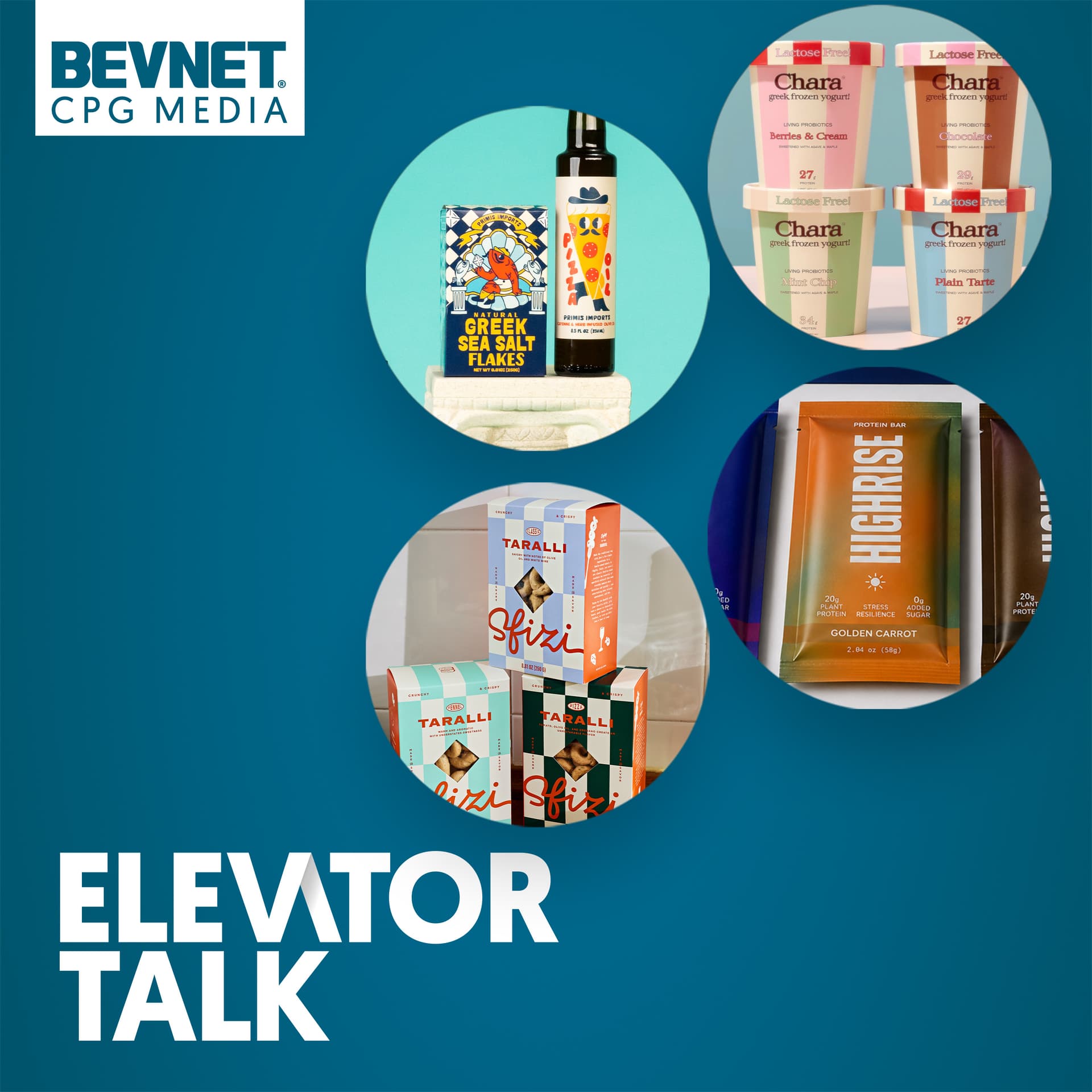
- Primus: quality and early-harvest polyphenols; differentiates via chef/food-business sampling and playful packaging (Greek sea salt flakes; pizza/basil/green chili oils; smaller 250ml bottles to reduce rancidity).
- Sfizi: Turali crackers made in Puglia; aperitivo culture; uses press (Forbes, CNN, Boston Globe, Food & Wine) and fun packaging; flavors include classic olive oil, fennel seed, pizza-inspired.
- Chara: “no gimmicks” Greek yogurt base; low calorie, high protein, live cultures; lactose-free with maple/agave; sells in pints; launched via social + a renovated vintage VW “froyo bus.”
- Highrise: AM/PM bars with rhodiola/rosea/chisandria for daytime stress support and magnesium + tart cherry for sleep/recovery; launching in NYC/NJ via coffee shops and CrossFit activations (Times Square confirmed; Jersey City in progress).
Written by AI. May contain mistakes. Listen to the episode to check what was said.
Chapters
Tap a time to open that second in VOInvestor Insights with Andrew Dickow
0:45 to 1:40
Discussion on the importance of early stage capital for food entrepreneurs.
“One of the most important things that you bring to this industry, which is early stage capital.”
What Attracts Investors?
1:40 to 3:00
Exploration of key factors that excite investors in food brands.
“mind among new founders and entrepreneurs.”
The Blessing and Curse of Experience
3:00 to 5:50
Debate on how industry experience impacts entrepreneurial success.
“Does it help when an entrepreneur has experience in the food or beverage industry?”
Meet Damian Primus of Primus Imports
5:50 to 8:10
Introduction to Damian Primus and his background in olive oil importing.
“So that's how Primus Imports was started, trying to find another outlet to focus my energy.”
Differentiating in a Saturated Market
8:10 to 9:50
Damian discusses strategies to stand out in the olive oil market.
“So I'd be really interested to hear from Damien as to how does he think about being able to differentiate at shelf versus when he has the ability with kind of a captivated consumer online?”
The Importance of Quality and Packaging
9:50 to 12:20
Discussion on how product quality and packaging influence consumer choices.
“little more time in the industry and in the category, I realized you have to have something that kind of differentiates you from everybody else.”
Portfolio Strategy and Focus
12:20 to 14:03
Analysis of product portfolio strategies in food brands, particularly olive oil.
“And that was one of my questions when I saw kind of the legacy branding versus the new branding.”
Entrepreneurship and Product Strategy
14:03 to 15:10
Learn about the challenges entrepreneurs face in product development and strategy.
“I don't think it's as bad as I used to, but I would just say sometimes entrepreneurs are, they're more creators than they are entrepreneurs.”
Building Relationships in Retail
15:10 to 15:35
Understand the importance of maintaining relationships in the retail space.
The Essence of Italian Food and Culture
16:45 to 18:01
Explore the cultural significance of Italian food through Svizi's offerings.
“And I'm glad I think I got Svizzi pronounced correct.”
Show all 29 chapters
Initial Impressions of Svizi Products
18:01 to 19:01
Hear insights on the unique aspects of Svizi products and their market potential.
“Well, I'm on your website right now, and my mouth is watering because I'm looking at all this amazing charcuterie and your products, and it looks like you've got some Negronis on the table, too.”
Navigating Brand Recognition and Consumer Awareness
19:01 to 22:43
Learn how Svizi leverages media recognition to grow its brand awareness.
“Fire away, Andrew, because I have a lot of questions, too.”
Distribution Strategies and Market Penetration
22:43 to 25:09
Understand how Svizi approaches distribution and targeting different markets.
“but I think we're at this point really trying to kind of tackle it at any angle we can.”
The Role of PR and Media in Brand Growth
25:09 to 27:44
Explore the impact of public relations on brand visibility and growth.
“We didn't, you know, really, we always thought, oh, we'll be in the Italian markets.”
Introductory Farewell and Transition
28:00 to 28:20
The hosts wrap up their conversation with previous guests before introducing the next founder.
“And what you've created right now is definitely modern and exciting and fun.”
The Chara Greek Froyo Concept
29:00 to 30:59
Ashley explains the concept behind Chara Greek Froyo, emphasizing its health benefits and nostalgic appeal.
“but essentially we're a better for you Greek fro-yo that our goal is to just bring fro-yo back but make it better.”
Innovative Marketing with a VW Bus
31:00 to 32:05
Ashley discusses her creative marketing strategy involving a renovated VW bus for promoting Chara Froyo.
“Well, I have about a million questions and you answered one of them with chara, which means joy.”
Retail Presence and Growth Strategy
32:05 to 33:38
Discussion on Chara's retail presence, growth strategies, and the competitive frozen yogurt market.
“events of people wanting to try the product.”
Consumer Engagement and Brand Aesthetics
33:38 to 37:32
Ashley shares insights on consumer preferences and the importance of branding in attracting customers.
“calories, and it's still actually tastes good.”
Challenges in the Frozen Food Space
37:32 to 39:47
The conversation shifts to the challenges of operating in the frozen food industry, including supply chain issues.
“Did you mention your price point per pint?”
Origins and Concept of High Rise Food
41:34 to 42:00
Samori and Christian share the story behind their protein bars and the inspiration for their brand.
“And this is Christian, by the way, for our audio audience.”
The Journey to Creating HiRise Protein Bars
42:00 to 44:37
Learn about the motivation and process behind developing HiRise protein bars.
“but it took a little bit longer because I think like a lot of Americans who walked into COVID one weight, we came out of COVID significantly heavier.”
Launching and Marketing Strategy for HiRise
44:37 to 46:48
Discover HiRise's go-to-market strategy and its unique selling points.
“And we hope we can tell you a little bit more about our business.”
Differentiating HiRise in a Competitive Market
46:48 to 48:59
Understand how HiRise aims to differentiate itself in the crowded protein bar market.
“So we really just want to hone in on the AM and PM ritual cycle of it and really try our best to build our brand through that education.”
Consumer Education and Product Positioning
48:59 to 51:47
Explore the importance of educating consumers about the unique use cases of HiRise products.
“and it was something that there was more so that, you know, the answer was I hadn't even considered that, but I would love it, right?”
Pricing Strategy and Brand Identity
51:47 to 53:44
Learn about HiRise's pricing strategy and the significance of its brand identity.
“Because the cafe channel is very nuanced for us, we're just experimenting.”
Insightful Wrap-Up with Andrew
56:10 to 56:36
Andrew shares his reflections on the importance of supporting entrepreneurs.
“And sometimes I think early stage brands forget about that.”
Connecting with Andrew
56:36 to 57:18
Andrew provides information on how to get in touch and engage with him.
“But in the meantime, for folks who are watching and listening and want to get in touch with you, what's the best way to do so?”
Gratitude and Acknowledgments
57:18 to 57:59
The host expresses gratitude to Andrew and all participants while highlighting the show's mission.
“Well, Andrew, once again, thank you so much for being on the show.”
Transcript
Automatic transcript. May contain errors.0:05Hey, folks, I'm Ray Latif, the editor and producer of BevNet's Taste Radio podcast, and you're tuning into the latest episode of Elevator Talk, a series that profiles early stage and disruptive brands from across the food and beverage industry. Today's episode will focus on four food brands whose entrepreneurs will have an opportunity to hear feedback and advice from our co-host for this episode. That's Andrew Dickow, who is the president and managing director of Greenwich Capital Group. Andrew, it's great to see you. Great to see you as well, Ray. Thanks for having me on the show. Excited. Thank you so much for joining us for this episode of Elevator Talk.
0:41And thanks so much for what you do, what you bring to this industry. One of the most important things that you bring to this industry, which is early stage capital. Everyone needs it. And it is one of the most talked about topics that I have with early stage founders. For folks who may not be familiar with your background or your work with Greenwich Capital Group, please tell us all about what you do. Yeah, I started my career, my whole life has been in food and beverage. first 10 years at General Mills and have built this business to work directly with founders, typically family owned in the food and beverage consumer space that are looking to raise capital, looking to be acquisitive or looking to sell their business.
1:24But additionally, I personally have invested directly in almost 20 food and beverage CPG companies over the last 11 years. So it can be a valuable resource for companies that are looking to raise early stage capital and scale their emerging brands. You know, early stage investment, early stage capital is something that is always top of mind among new founders and entrepreneurs. And when I talk to investors in this space, typically the response to the question of, why are you interested in a brand or what makes you motivated to invest in a brand? The reasons are usually pretty simple. But, you know, in your experience, what has really moved the needle most?
2:04What gets you really excited about an initial pitch so much that you want to hear more about it or get to that second meeting and potentially invest in a company? It's a great question. It's the right question. There's a few things I look at. Having done this, I've had some winners and I've had some losers. And so one of the key themes I've seen be successful is when you have somebody bring kind of new innovation or new news to a category that's large but dormant, that hasn't seen a lot of excitement in it. You know, for example, I invested in a popcorn and pretzel company and there hadn't been a lot of excitement in the pretzel category.
2:41And now they have birthday cake pretzels and strawberry shortcake pretzels. The other thing is just is the entrepreneur themselves. And, you know, I've seen businesses that have phenomenal products and bad management. and I've seen okay products with great management be very successful. So those are probably the two things I look for to see kind of get past that first stage gate. Does it help when an entrepreneur has experience in the food or beverage industry? Does that make any kind of difference in terms of their understanding of what it takes to be successful? You know, I think it's a blessing and a curse, you know, from the positive side, it's like, you know, they understand, you know, how hard it is to build a consumer brand.
3:21they understand, you know, slotting and free fills and trade merchandising, and they know all the lingo and how challenging it is to get in front of the right buyer. On the other hand, they know all that stuff. And so they think they know it all. Every category is different. Every brand is different. And also a lot of the times, and I'm guilty of this as well, you know, it's coming from a publicly traded CPG business where you have all of these resources, you know, until you're a$10 million brand, typically the owner is the chief sales officer and the chief, chief everything officer. And so I've seen it be a pro and a con.
3:53So that's not really something that pushes me one way or the other when I'm looking at a brand and thinking about an investment. It is helpful when people realize how challenging it is to scale a brand in the industry. But it always seems like entrepreneurs that I've spoken with have always said, it's better that I didn't know. Otherwise, I may not have gotten into this space, which also sounds kind of counterintuitive for urging someone to enter the food or beverage industry. But the entrepreneurs that have succeeded are typically the ones that have thought differently and thought in a way that didn't currently, it didn't exist in the industry beforehand.
4:29So I think that is a true statement and one that I hope entrepreneurs that have no experience and ones that are relatively green in this space motivate them or motivates them to continue to do what they're doing, even though it's still kind of muddled in these early days. Andrew, I think we have an amazing group of founders and four brands that really fit into the sort of summary of what we were just talking about in terms of exciting ventures, exciting concepts, and entrepreneurs that are willing to get it done. Are you ready to meet our first? Yeah, I'm looking forward to it. Fantastic. All right.
5:09That person is Damian Primus. He's the CEO of Primus Imports. Damien, it's great to see you. Great to meet you. Andrew, great to meet you as well. Primus Imports. So we are a boutique importer and brand specializing in early harvest extra virgin olive oils and specialty pantry goods from Greece and the Mediterranean. I'll give you a little insight into my background. It might help you understand the brand a little bit more. I'm a musician. I hold two degrees from the Juilliard School. Currently play on Broadway and play with major orchestras around the city. During the pandemic, everything shut down.
5:43There was no theaters open. Nobody was performing. So I leaned into what I knew. And that was olive oil coming from a Greek family, Greek culture, olive oil and great food. So that's how Primus Imports was started, trying to find another outlet to focus my energy. And yeah, now we're here. We're here indeed. And I think, you know, Premise, apologies for just pointing out that it feels like there are so many new olive oil brands that come to market and so many exciting concepts, whether it be regional specific or packaging specific and just ways that folks are trying to differentiate in this space.
6:23But if there's one particular point of differentiation that you feel like you can use to help get trial and awareness for premise, what is that? You know, it's difficult because, as you know, the category is very saturated, especially when you go into a grocery store. I mean, you look on the wall, there's 20, 30 different ones. The biggest differentiator would be quality. I mean, a lot of the stuff you find on the shelves, the price point doesn't necessarily match the quality and vice versa. quality is the biggest differentiator the problem is being able to get your customers to understand that quality and to taste that quality it's a hard sell to do on the on the shelves with a product that's not very well educated in the United States well Andrew as I mentioned it seems like we're seeing new olive oil brands crack the U.S.
7:13market in ways that we haven't or at least I didn't expect to see certainly over the last five years So it seems like there is some momentum here. But just in general terms, what are your initial thoughts on on-premise imports and the company's ability to stand out among, as Damien pointed out, a saturated category? Yeah, it's a very interesting brand. As I spend time thinking about it, I've had the opportunity to talk to a number of olive oil brands over the past five years, and particularly a lot more of them in the last 12 months. you know, you know, you know, you're seeing olive oil shots is something that's coming as people are kind of trying to do life hacking.
7:54You know, the one thing that has jumped out to me is exactly what Damien said is you've seen a lot of these brands been able to kind of scale and get proof of concept online. but they really struggle when they try to kind of penetrate wholesale because they're not able to communicate their value-add polyphenols and the differentiation versus kind of the mainstream brand. So I'd be really interested to hear from Damien as to how does he think about being able to differentiate at shelf versus when he has the ability with kind of a captivated consumer online? well you know again the difficulty is um somebody not being able to taste the product right so i find as the the american consumer is very big on taste and on flavor um so just even the high polyphenol or the early harvest extra virgin olive oil unless you're there it's really hard to convince someone to buy it so you really have to lean into um connecting with chefs connecting to people in the food business to get the word out, have them try your product, have them trust your product in order to tell the rest of the world about it.
9:02I think that's one of the only ways you can really do it unless you have a huge marketing budget. And then you can just like blast it in front of everybody. And then when they see it on the shelf, they'll purchase it. But unless it's in person, and they're actually tasting the product, it's very hard to sell the product to a consumer. Well, selling the product to a consumer requires the consumer to get excited about it. And I think that packaging has a lot to do with that. Damien, if you could talk us through your packaging strategy and how you're trying to win over consumers from a label and an actual vessel standpoint.
9:37When I first started Primus Imports, I had a very conservative packaging with my bottle. It's very traditional, you know, buy a fancy Greek olive oil from Greece, looks like this, looks great on the table, looks great next to a bottle of wine. As I spent a little more time in the industry and in the category, I realized you have to have something that kind of differentiates you from everybody else. And I have a few products. My first product that I really like broke out with that was very different was my Greek sea salt flakes, which is this right here. So you put this on the shelf, it sticks out, it pops, it catches your eye.
10:10And I went with working with artists instead of a firm. So I could really like work with the artist to see what we wanted. That was one aspect of what we're putting on the shelves in the salt space next to the other larger brands, which don't, this is kind of like the first of this kind of color on the shelf. Then going into the olive oil space, as far as major retail goes, we didn't push too hard on just the extra virgin olive oils next to everybody else. I found a little white space in the infused and agrumato style extra virgin olive oils, which are the flavored olive oils that were kind of bland and kind of stuck in the past.
10:47So the first one that we put out was my pizza oil. Catchy. Makes you think of pizza. People get a little curious about it just by looking at the label. And then the next two we just actually put out was to go next to it. This is our basil oil and our green chili. So the way I looked at it was quality is always number one. It has to taste good. If it doesn't taste good, don't even put on the shelf because you're just going to run into a lot of problems later and spend a lot of money. If you can match the branding to attract the customer, and then you have the quality to back it up, I feel that's one of the best options I had with a limited budget to reach the consumer.
11:27I love your packaging. I love your labels. Yeah, they're really fun. They're catchy. And it seems like, at least for the pizza oil, it's U-specific. And for the basil oil, and I think green chili, it's somewhat U-specific as well. Andrew, what do you think about that approach as giving consumers not only a reason to buy, but a specific use case for their purchasing decision? I think it's a winning strategy in such a hyper-competitive market. Flavor profiles is how you're going to differentiate. I would say the one thing I'd be very mindful of is the size. So if a consumer is buying something that's a pizza oil that they're using once a month or once a quarter, and then the oil goes rancid over a time, you lose the consumer.
12:12And there's probably an opportunity to be more profitable with a smaller, smaller format. And so there's, I would just be mindful of the actual serving size, but I love this strategy. And that was one of my questions when I saw kind of the legacy branding versus the new branding. So I was happy to see what you've done with the brand. But you know, when I look across the landscape of not just olive oil, but just better for you, People that are winning right now, it's with flavor innovation and it's driving kind of repeat purchase. I also wonder, Damien, and actually Andrew about this as well, which is when you're talking about a portfolio strategy and, you know, premise sells more than olive oil.
12:53I almost wonder if your focus should be a bit more narrowed to specifically your top selling products versus saying we offer all these other products. And Andrew, what are your thoughts on, obviously, the premise is an importing company, but it feels like perhaps the biggest opportunity is in olive oil and focus should be on that particular category specifically. But what are your thoughts on that, Andrew? I used to be very steadfast on the concept of the oil is the hero. And until you've built significant distribution and have built that marketplace out, everything else is just a distraction.
13:32but I've personally been a part of multiple businesses that have, once they've built a brand, even at, you know, three,$4 million in sales and started differentiating with the product profile that fit under a brand that those core consumers have liked, I've seen the core original core product become 10 % of sales over time. So I think you, you know, on the one hand, you know, I've seen some of the other products that you have. I think it's once you have that brand nailed down and you have that core following, if you have an opportunity to leverage the distribution, to scale into new products. I don't think it's as bad as I used to, but I would just say sometimes entrepreneurs are, they're more creators than they are entrepreneurs.
14:12And so they enjoy the idea of new products and innovating versus actually trying to go and build a business. And so that'd be my biggest caution for you as you think about that. Yeah. And to be honest, the certain things I'm doing very intentionally for major retail, as opposed to direct-to-consumer and to the smaller independent shops, The two last oils that I showed you, the infused ones, in the 250 milliliter bottle, which is a smaller bottle to make sure that some people go through a fast, some people will sit on the shelf. But it was intentional to try to create a product block on the shelf for the distributors and retailers to pick up so you actually have a little bit more presence on the shelf.
14:53The pizza oil itself on itself at the fresh market looks a little bit loudly because it is a smaller bottle. so I wanted to create a little bit a couple friends for it to go with but I'm being very strategic from this point going forward as far as now I have a certain number of SKUs I really want to push into a certain number of stores in major retail and now I can just concentrate mostly on that well I can't believe we're out of time because I feel like we could talk for another hour but you know what the good news is we can we want you to stay in touch Damien definitely want you can make keep this conversation going offline or otherwise because I think you've got a great brand, a great company, and I think you've got a great runway for continued success.
15:35So thanks so much for joining us on Elevator Talk today. Please stay in touch. Please let us know if we can help in any way, whether you get new distribution, new retail, new products. We want to hear about it. We want to talk about it on Taste Radio, Nosh, and what have you. So really appreciate the time. And like I said, let's stay in touch. Great. Thank you so much, guys. Tariff refunds can add up fast, but only if your books back it up. Belay helps you get organized so you have the clarity and documentation to claim what you're owed. Text TASTE to 55123 for your free tariff refund guide. Candy freaks, listen up.
16:16Dr. Rotten is here to solve your problems. especially if you crave something gummy, fruity, and crunchy without harmful dyes or a heavy sugar load. Visit eatrotten.com today and feed your freak. Great start to the show. Let's keep it going with our next guest. That is Sheila Prakash, who is the founder of Spitsy. Sheila, it's great to see you. Hi, Ray. Hi, Andrew. It's so, so nice to meet you both. Yeah, thanks so much for joining us on the show. And I'm glad I think I got Svizzi pronounced correct. Did I not? It was perfectly done. So I got the pronunciation down. Let's get the what is it all about down.
16:57Tell us all about Svizzi. So Svizzi is a curated Italian food brand that celebrates aperitivo culture, generational artisans, and the flavors, essence, and magic of Italy. Our first product to launch are Turali, which are light and crunchy snack crackers in three flavors, classic olive oil, fennel seed and a pizza inspired one. They're made the traditional way with just a few simple ingredients in a family owned bakery in Puglia, Italy. And our Turali are really made to make everyday moments more delicious and sparkly. And just a little bit more about our background. We're a husband and wife brand.
17:38My husband is my better half here in the brand. And I have a food background, but not in the CPG space. I am a cookbook author and a recipe developer and have kind of always had a passion for Italy. A lot of the food and the writing that I do for myself is focused on Italian food. Outstanding. Well, I'm on your website right now, and my mouth is watering because I'm looking at all this amazing charcuterie and your products, and it looks like you've got some Negronis on the table, too. So I've got to defer to Andrew while my mouth stops watering. And, Andrew, I mean, I feel like this is a really interesting brand at a really timely moment for food culture.
18:24What are your initial thoughts on Speezy? You know, I lived in Argentina for a year. and when you have this type of product that would fit with a charcuterie and have such a niche and it brings flavor innovation to something that people maybe aren't thinking about every day. They might see it on there at the deli counter or something like that. So I think it's very exciting and you have one of the fastest convenient snacking is one of the fastest growing categories and to be bringing innovation is really interesting and excited. So I'm excited. I have a lot of questions, but I'll keep them at bay for a second.
19:01Oh, no, please ask away. Fire away, Andrew, because I have a lot of questions, too. But the questions you're asking are probably more important than the ones I'm going to be asking. One of the companies I've invested in was a popcorn and pretzel brand that we scaled. And we really drove the business by understanding our core consumer and leading with flavor innovation. And I was following and seeing you guys have gotten some really strong recognition lately. and I think it was Forbes or a couple other of outlets. So I think one, how are you leveraging that notoriety to kind of really build out the brand in addition to your cookbook and having that following?
19:39How are you capitalizing that in a category that's kind of a niche category? You're not in this mainstream category that has 12 facings and you're like trying to build this up, which is exciting and challenging at the same time. We just love to hear more about that. Sure. Yeah. So we're definitely figuring it out one step at a time. Some of the press hits that we've gotten are very recent. So yes, we were in Forbes, CNN, Boston Globe, Food and Wine. And so it's been great because we're kind of hitting consumers that we might not otherwise would have. I think, you know, our target audience has always been people that, of course, have a love of Italy, Italian food, Italian culture, but there's still so many other folks who don't know what Turali are.
20:29They haven't been on vacation in Italy, where it's kind of just a standard part of the culture there. If you go in Italy and you get, you know, a Negroni, they'll often just give you a small bowl of Turali to snack on. So most people, if you haven't had that opportunity, are like, what are you talking about water to rally or they've maybe seen it but they don't actually know what they're called when you start describing that oh they're these small crackers they look like little bagels like oh wait like my you know grandmother used to have those in her cupboard or italian-american or something like that so i think what are we've kind of been trying to go at multiple angles to hit the folks who already have this maybe nostalgia for the product and are just looking for a higher quality of it, which we've never found here in the US.
21:19And then we're also hitting people who just don't really understand it. And I think by using like having our patch packaging be extremely fun and playful has been a huge way to kind of get the folks who don't really know what they are, but they see it on the shelves or on our social media, like, wow, that box is so fun. Like what is inside that. And then also kind of when we talk about our flavors, we were very intentional in choosing the first three flavors of the Turali that we launched with. We always knew that we would do a plain, a classic, because we felt like it would be very approachable for things like cheese boards and charcuterie plates.
22:01And then the fennel seed is very traditional. It's the most actually traditional in Italy. So we felt like that was really made for the folks who like kind of already know. And then we wanted to be fun. And that's why we went with the pizza. We thought that was a really fun opportunity for the folks who might not already know what Torale are, but maybe they have a nostalgia for, we always were comparing like when we were tasting the product to pizza goldfish that we used to have when we were kids in the nineties. And so we thought like, That's a fun nostalgia. There's a kid-friendly aspect to it.
22:37All my nieces and nephews are obsessed with the pizza flavor. So I don't know if it really answered your question, but I think we're at this point really trying to kind of tackle it at any angle we can. And how are you able to, you know, you're building this awareness, probably mostly online and GDC. And it seems from what I can find that, you know, the penetration you have in wholesale is mostly in kind of high-end specialty. I think I saw London Buyerleys as one of your key accounts. Is that right? Yeah, I lived in Minnesota for a while. So, you know, you spend your whole paycheck when you go there.
23:13So, you know, how do you think about, you know, the next level of really getting to the masses in a category that, quite frankly, you know, a buyer is probably not thinking about every single day with regard to like, you know, it's kind of an afterthought. So how do you how do you how do you generate that excitement and leverage some of the momentum you have with those types of folks? Totally. No, you know, it's been actually pretty interesting seeing our wholesale accounts. We are we just hit 100 stores and we are getting a lot of these sort of gourmet grocers, like very small boutique. But we're also getting wine shops because, you know, it's this easy thing when you're picking up a bottle of wine to head to a friend's house.
23:56Oh, pick up a box of Turali. That's a great hostess gift. We've also been getting like florists who are doing curated gift boxes with us. So it's been really interesting to see that like this product can kind of span directions that we didn't expect. We are hoping to get into larger grocery stores, you know, in the future. And I think for us, we do see ourselves at least to start being sort of more in the specialty kind of cheese area of a grocer because we are at that higher price point. But I think because of just how fun the boxes are, they're a nice size. Like I do think they could eventually live, you know, in just more of the general cracker aisle when there is more familiarity with the product.
24:45Yeah, I love, you know, I hadn't thought about you guys have a really interesting opportunity to command a really strong premium and this kind of like specialty gifting kind of there's a whole distribution market for that. And you guys can kind of parlay that with not that much ACV into kind of reinvesting and building out your grocery business. So hopefully that's part of your strategy. It seems like it is. Yeah, it's honestly been a surprise for us. We didn't, you know, really, we always thought, oh, we'll be in the Italian markets. We'll be in the boutique, really nicely curated food stores, maybe the wine stores.
25:19But when we started getting orders from, you know, gifting gift shops and things and shops that really aren't even carrying much food to begin with, it was sort of a moment of like, oh, we we need to talk more about this. Well, one way you talk more about what you're doing is via consumer media. And a mention in a popular magazine, newspaper, online site can go a long way. And I noticed on your Instagram page that you have a call out in Food & Wine, a recent episode of Food & Wine magazine, which can go a long way. How did you get your product in their hands? How did you get them aware of what you're doing?
25:57Sure. So we've been working with a small PR firm. We started working with them in March and it's been just a great opportunity to really get out there. And I think a lot of the storytelling that he's doing, you know, obviously he's going and doing his work and telling about the brand. I think for some media outlets like Food & Wine, for example, I think I am getting a little bit of a benefit of being in the food media space personally. So I think there's a lot of opportunity there still to be had. And, you know, there's some folks know me as an authority already on food and Italian food. So there's excitement around, oh, wow, like she knows what she's talking about.
26:44Like, I want to try this product. So I think for food and wine in particular, hopefully, I think that was one of the reasons we were able to get in there. Yeah, well, the article is titled, After Testing Hundreds of Products in April, These are the 11 we can't stop using. So that's a pretty bold statement for a magazine of that magnitude. Now all you need to do is get Stanley Tucci to know what you're doing and have him popping a few Speetsy on his Instagram. You know, if anyone has his direct line, we're all here. I don't know, Andrew, do you have any friends who know Stanley Tucci? Do you know Stanley Tucci?
Read the full transcript
27:22The only access I have to Stanley Tucci is my son has a Tony's box, and he's one of the narratives, the voiceovers for one of the Tonys. That's as close as I get to Stanley Tucci. He teaches my son ABCs. Okay, well, we'll keep our eyes and ears open. And if anything comes up, Sheila, you'll be my first call. Awesome. We appreciate it. But in the meantime, thank you so much for joining us on Elevator Talk today. Really appreciate the time. I love what you're doing. If it's not clear already, and I think you've got a really great differentiated brand and product that I haven't seen on the market.
27:55And actually, I take that back. I mean, you've seen similar types of products in specialty food stores, but they're really not for the modern consumer. And what you've created right now is definitely modern and exciting and fun. So great. Good on you. And would love to keep this conversation going. Awesome. Absolutely. Thank you so much, Ray and Andrew, again. It's been a pleasure. Great to meet you, Sheila. Well, I am already in love with this episode and I want to keep it going with another really amazing founder and brand. That's Ashley Whalen, who's the founder of Chara Greek Froyo. Ashley, it's great to see you.
28:31Hi, guys. So great to meet you. Thank you so much for having me today. Thank you so much for joining us. We've got Specialty Olive Oil. We've got Svitsi. we've got some Greek fro-yo. We're in the Mediterranean. We're all over. You know, Andrew, we should have just had everything sent to us ahead of time. And then, you know, Negroni would be good to go. Let's do a write-off. Let's go to Italy. But anyways, thank you so much for having me. I'll do a little intro on our product, Chara Greek frozen yogurt, but essentially we're a better for you Greek fro-yo that our goal is to just bring fro-yo back but make it better.
29:09I'm sure you've been seeing if you're on social media or just even in the news that Froyo is having a crazy boom right now, especially in major cities. Lines are just wrapped around the block. So we're a part of making this movement happen of making Froyo back to its nostalgic core of 2016 when it was really in its peak. But with that, we're kind of solving all the pain points of the modern wellness consumer. So one of the ways that we do that is that we package the product, I don't know if you can see it, in convenient pints for at-home indulgence. So instead of waiting in line after you have a nice dinner, you can go straight home, pull it out of your freezer and put on a movie, enjoy it.
29:45But more importantly, you know, we're solving a lot of issues that people had with quality that they would find at a froyo shop. You know, you would go to a froyo shop and you'd see carbo light, fat free, calorie, whatever it was. And I think most of us were just confused how they were getting there in general. With Chara, you know, there's no gimmicks. Our base is Greek yogurt. So we're not really selling you on anything you don't know or trust. Greek yogurt naturally has its properties and we're just helping to elevate it through the product. So it's low calorie, high protein, has live and active cultures inside for gut health.
30:15We also make it lactose free and sweetened with maple and agave. So there's something in it for everyone. I actually started this for myself in college as a pain point that I noticed with me and my roommates. I was a senior at USC. I had seven roommates and we would either drive 30 minutes to an overpriced for your shop or most of the time make dessert bowls, which was just Greek yogurt with all the different toppings we could find. So this was just my way of looking at it and saying there has to be a product out there for me and for my consumer type that is able to solve these pain points of high quality standards that we know and trust and not marketed to the protein maxing gym bro.
30:53You know, we're selling Froyo, not kettlebells. We're trying to, you know, bring back the joy and nostalgia of Froyo. So that's the world we're building with Chara. Chara means joy. So that's what we're spreading. Fantastic. Well, I have about a million questions and you answered one of them with chara, which means joy. Right. Before we get to Andrew, I want to ask about driving around with your seven roommates. Did you do so in your vintage VW bus? So you saw the bus. Yeah. In my notes right here, this is, this is, this is blowing my mind. Ashley sent to us, we have taken off on socials as a pop-up brand where I self-renovated a vintage Volkswagen bus into a Froyo truck to spread the word around Southern California.
31:34This is fun. We definitely had an issue with driving trial just because it's a frozen brand. You can't just make it a backpack brand and show up to events and hand out the product like most things. So I wanted to get creative on a way that we can really create an experience with the brand for people's first time trying it. So yeah, very impulsive, renovated entire Froyo bus to be out and about. It's definitely become a great social moment and people have loved finding it. We're fully booked this summer just for random events of people wanting to try the product. And it's just a great side way of getting the product out there.
32:11So it's been fun. I would say so. And just quickly, you're in a few boutique grocery stores right now, Pop-Up Grocer and Meadow Lane. Anywhere else that you sold chain-wise or otherwise? Yeah, we're in Lenz and Byerly's, which is in Minnesota. And then we're also in a few boutique retailers in Los Angeles. Fantastic. Yeah. Yeah. I think the moment is right for frozen yogurt, especially it feels like there definitely is a sort of a coming back at this point. Frozen can be tough, Andrew, as you know, I'm sure. But I think Chara has differentiated itself enough so that consumers can be looking at this brand and saying, hey, this is something I haven't seen before, which has kind of been my experience.
32:50Is it yours? Kudos for the matching shirt with the brand. I mean, that was like, it was, that's pretty spectacular. It's exactly the same as the packaging. I wonder if you have one for each flavor as well. That'd be, that'd be a good idea. I'm going to look into that later. No, I, so, you know, I'm invest, I'm a direct investor in a company called protein finance, which is a high, high protein, low sugar company. And that's one, it's the fastest growing ice cream in the United States. So I've seen everything that's going on in the category. And so I think it's very exciting what's happening. And I think there's a lot of room for a lot of different winners.
33:21So I'm really interested to see kind of what you what do you see is your do you feel like your point of differentiation is just the high quality Greek yogurt, like that kind of indulgent moment? Or is it something else? Like for for us, for example, it's, it's very simple, high protein, low sugar, it's a quarter of the calories, and it's still actually tastes good. I mean, it's like, very simple. How do you think about what's that kind of call to action for your core consumer for you guys? Totally. That's actually a good point because it's something I've learned in this process of, you know, I was so excited to bring this product to market because I was like, these are insane, low calories, ingredients are clean.
34:01And more importantly, I thought it was amazing that we had living probiotics inside of our product. Like this could be a functional product for people. But at the end of the day, when I was going out and I was, you know, asking people why they purchased this product, they said because it was cute. And I think, you know, there's a lot to be said about just the importance of brand and CPG. I think that people shop with their eyes now. So a lot of people pick it up because they just really align with the brand and they see this as something that matches their aesthetic or their world. And then they try the product and they're blown away and they love the macros that it keeps them.
34:34So I think it's the duality of both kind of merging together in the kind of like bringing in the customer and then keeping the customer. how how are you thinking about the brand you know you have limited kind of retail distribution you have your your your party bus that's driving around you know getting people to try the product like what's your what's your growth strategy is it is it kind of a grassroots effort to try to get build that awareness regionally uh can you talk just a little bit more about that yeah so we've been using social media a lot and that's been really helpful for just getting the word out And so that's whenever we enter a new retailer, velocity really hasn't been our issue.
35:13It's more of just supply chain and making sure that we can sustain more stores and bigger orders. So I'm working on that right now. But yeah, so far, we've done a lot of work with just organic social marketing, getting people to find the product. And then obviously, when they see it, I think they're really excited to finally trial it that that's been the best way of getting it out so far. And where is it? where is it? So like, you know, I've seen there's a company called Smearcase, which does the frozen cottage cheese. And you know, where, where do you want to live on the shelf where you guys think when you're talking to the retailer, like, where do you want to be?
35:49Do you want to be next to ice cream? Do you want to be somewhere else? Like, where do you think you guys win? Yeah, I mean, I think we position ourselves, like you said, similar to a Smearcase or protein pint, something with a functional or better for you aspect to it is where we want to sit kind of right when And you kind of start going down from the Haagen-Dazs, Ben and Jerry's to the more clean ingredients. And then you find us. I'm on your socials right now. I'm on your Instagram page and then your TikTok page. And you seemingly have very different approaches to your creation and content creation strategy for each social media channel, which is great to see.
36:25I think sometimes you'll see brands do the exact same thing across the board, whether it's X, Instagram, TikTok, Facebook. talk about your content creation strategy and why you've been so deliberate on those social channels. Yeah, that's a good question. So I use our Instagram, I would say, to more create the branding of the product and just sustain that and aesthetics, as people know and love, of what the brand that we're building. And then TikTok has been a lot more, I would like to say, like rough edged and more organic of what's going in. I started our TikTok actually a year before we even launched the product just to start building in public and getting people to understand the founder story.
37:07I mean, I filmed myself cutting the wood, building this bus. So like a lot of people come up to me and they say, you know, I've been following you since the very beginning and it's built an amazing community since the start. So yes, our TikTok is very much, you know, the trials, the tribulations, what's gone wrong, what's gone well. And it really helps with people, you know empathizing with this brand particularly not just even because they like the product but because they want to support you know what we're building over here yeah i think that's brilliant it's um you know getting people excited about an idea or concept before it even hits the market um you know gets gets that excitement going definitely seems to work in the restaurant space and the uh and sometimes in the bar space as well but in cpg you don't see it as often Did we talk about price point yet?
37:53Did you mention your price point per pint? It's$8.99 right now, so it's a little more premium. Yeah, I would say so. But, you know, given that it is a small and upstart brand, it's probably in line with what you might expect. Andrew, I mean, just in terms of sort of the long term, where do you think Chara needs to be to be competitive in this space in terms of price point? with protein pints and ice cream for bears. And so I know a little bit more about the functional ice cream space because I follow it every single day. You know, we saw our velocities at anywhere from 4 to 1 to 7 to 1 versus the competition at anywhere from a$7.99 to$8.99 price point.
38:33So if you're delivering on the functional benefit that the consumer is coming to expect and you're delivering on flavor and quality, you can charge that. I do think that you just have so many players coming to the space, both, you know, David, who is known for protein bars entering ice cream. You have Bluebell that's launching a protein ice cream. You have Smearcase. You have Natty. It's just I think there's going to be price pressure for the consumer long term. That's not going to sustain that level of price. But, you know, you certainly should, while you can do it and you have the right velocities, take it so that you can reinvest.
39:07Because, you know, growing a frozen emerging brand is very, very tough from a supply chain perspective. I actually did an interview with the folks from Protein Pines and Andrew, I'm sure you listened to it. And I felt like it was two founders who are in a similar position as Ashley, which are trying to introduce something that's new, exciting, and beneficial to folks that are shopping in that space. And it's tough because supply chain is such an important part, making sure that you're forecasting demand, making sure that you know your co-packing partners and how to manage them as well. And so it's a really important point that Andrew is making.
39:51However, I think, you know, the foundation for what you have actually is pretty, I almost cursed, pretty fantastic. Thank you so much for sharing your story and telling us all about Chara. I really love what you're doing. And I'll be in New York next month and I'll definitely stop by Pop-Up Grocer and try to make products. Amazing. Well, thank you guys so much for having me. I appreciate you taking the time. Awesome. great to meet you, actually. Vibrant Ingredients is the natural ingredient partner powering food and beverage innovation, delivering flavor, function, and protection through a science-backed portfolio.
40:30Vibrant delivers purpose-driven solutions that help brands create extraordinary experiences. Discover what's possible with Vibrant today. Visit vibrantingredients.com. As business grows, financials get more complex. We put together a free guide in collaboration with Belay Solutions to help founders better understand margins, inventory, and cash flow. Download it now at tasteradio.com slash belay. That's tasteradio.com slash B-E-L-A-Y to help your business make smarter financial decisions. This episode is flying by and I have just had a ball so far and I feel like we're going to have another great conversation with our next founders.
41:21They are Samori Touré and Christian Winfield, the co-founders of High Rise Food Company. Samori, Christian, great to see you guys. Great to see you guys. Thanks for having us. I guess we'll just get right into it. And this is Christian, by the way, for our audio audience. I'm Christian, co-founder CEO here at HowRise Food Co., where we make protein bars for active and busy professionals who either want more from their mornings, where they want that little boost to get through a busy day, or maybe they want more from their nights, where you had a long day, an exhausting day, and you want to recover effectively overnight.
41:55we decided to kind of try to bridge that gap with our protein bars. And it all started really in the middle of COVID, but it took a little bit longer because I think like a lot of Americans who walked into COVID one weight, we came out of COVID significantly heavier. And it took us a while to figure out ways to burn that off. And along the way, we successfully did so. And during that journey, we decided, hey, you know, we're trying a bunch of these different protein bars and we weren't necessarily fans of them. And I'm like, you know, why don't we just take our hats off? It started with a text message, hey, I don't really like these protein bars.
42:26My co-founder had the exact same thought at the exact same time. And we were off to the races from there. We tried so many different formulas. We were just looking at the back of protein bars to see where we're in these bars. And we didn't like what was on the ingredient list. We were looking at the macros. Okay, this has 20 grams of protein, but at what cost? We didn't really like the ingredient integrity. So we kind of just put our thinking caps on and our aprons on, and we got down and dirty. And we found, you know, what we believe to be, you know, good, I guess we call them ingredients that you can kind of trust.
42:54But on top of that, we were still trying to figure out, well, what's our what's our market differentiator going to be? Everybody's got a protein bar that they're going to say tastes better than the next one or that has these different macros that you want. My co-founder is plant based. I'm not. I joke with him about that every day because I think he needs more chicken. But in reality, that's a whole group that we wanted to service as well. So we have a plant-based bar. And on top of that, you know, we were also thinking, what can we really give our community that can, I guess, separate ourselves from other protein bars on the market?
43:22And that's where this AM and PM differentiator comes in. We wanted to create bars that would give our audience, number one, a boost during the morning. So we identified two ingredients. And this is through, like, we tried the Lion's Man. We tried the Maca. We tried so many different ingredients. We settled on rhodiola, rosea, and chisandria berry. These are ingredients that are, no, we didn't want to reinvent the wheel. We want to go with ingredients that are tested and tried over time. These are ingredients that help you combat stress and help you kind of without jitters, give you some energy throughout your day.
43:50And then for the nighttime, just simple magnesium and tart cherry extract. These are things that people use on a day-to-day basis that, number one, help you with sleep quality, and number two, help you with muscle recovery overnight. And, you know, from there, it's just been, hey, what can we do to make sure that this thing is going to stay shelf stable? What can we do to make sure that this thing is going to taste good over time? Do we actually like the flavors? Do the people that we're having taste these bars like the flavors? The answer's been yes so far. We love the flavors. Our morning bar is a golden carrot, which is an ode to Samori's mom's carrot cake.
44:18The PM bar is a dark chocolate cherry coconut-flavored skew. Delicious. We love it. And our go-to-market strategy is going to be through coffee shops. So we decided to go with an espresso punch as our third flavor. And we're launching this month. We have a community kitchen based in Brooklyn and Cypress Hills. And we're excited to get the ball rolling. So I thank you guys for having us. And we hope we can tell you a little bit more about our business. Well, thank you so much. That was a really detailed and outstanding introduction to HiRise. I just put an image of your bars in the chat here. And you're still pre-launched because I'm on your website.
44:55This is coming soon. Do you have a sense of when you're going to launch the brand? Yeah, so we'll be launching this month. And do you already have retail stores lined up? You mentioned coffee shops. Do you have a few shops that are ready and willing to take your products? Yeah, we're actually in conversation with about three shops, coffee shops right now in the New York City and New Jersey area. We confirmed one in Times Square, and now we're working to confirm one in Jersey City. And in addition to that, we've also been in conversation with CrossFit gyms, local gyms that we go to in the community as well, as well as different activations across the community.
45:36So in the summer, you will be out in the streets demoing our products, getting real-time feedback from other folks as well. So we have a strategy to be as present as possible, but we found that the nuance in bringing a protein bar to the cafe space, we did a lot of recon in the cafe space. And we found like a lot of the products that they were serving were croissants, muffins, things that really don't elevate your morning. So we thought, what if there's a way to integrate our protein bar to a different consumer base through a flavor profile? And so we decided to create the espresso punch flavor profile specifically to test the market in a cafe space.
46:19And that's how we were able to get our put in the door through negotiation through different cafes. So that's what we're thinking now. And truthfully, we've gotten a lot of good feedback on the flavor. We've gotten a lot of good feedback on the differentiator in regards to the PM and the AM system, because most bars are only for convenience. They're not necessarily there to view you for a specific occasion of the day. And as human beings, we follow our circadian rhythm. So you're supposed to eat specific foods at certain times so you can feel a certain way after. So we really just want to hone in on the AM and PM ritual cycle of it and really try our best to build our brand through that education.
47:06A lot to unpack here. I think the approach is definitely different from a standpoint of flavor, from the standpoint of day part use, from the standpoint of go to market. Andrew, if I can just start with the formulation and creating a protein bar for different day part uses once in the morning and once in the evening, what are your thoughts on that approach? I mean, I was the most excited about this one because I was going to say, what can we learn about the bar space that we haven't already learned? We have David coming in with an alternative fat source to get to lower calories. I've seen probably everything you could see in the bar space.
47:47So it's actually a very interesting thought. Not only is convenience snacking and protein with the proliferation of GLP-1's scaling, but I would be really interested to, you guys have two really large moats to scale. One, a highly competitive bar market, and two, trying to educate a consumer on a new use case for a category that has so many brands, so much competition. So how do you think about that relative to your go-to-market strategy with the coffee shops? Like, how are you going to educate the consumer to say, hey, this is something you could have in the evening? Is it to satiate a late night snack?
48:26Is it to not disrupt their sleep? Can you just talk more about that? Yeah. So it's kind of a mixture of both of those things. I'm sure we've all been in the same place. Eight, nine, ten o 'clock at night, you want a brownie with ice cream and you know you can't have that. Right. But at the same time, you want something that maybe is going to give you that type of flavor profile. And that makes you feel good about yourself. A lot of it is, you know, maybe you would eat something, but you feel guilty that you ate it right afterwards, right? We wanted to create, and it's kind of a cliche, that guilt-free snack.
48:55But on top of that, in our conversations with people, because we wanted to kind of confirm that this was something that people were looking for, and it was something that there was more so that, you know, the answer was I hadn't even considered that, but I would love it, right? And a lot of people, they didn't, it's more so a thing that they didn't know that they didn't know that they need. And there's also nothing like this on the market per se. Like right now when we do our competitor analysis, we have IQ bar that has brain nutrients for the morning. And there's a couple other protein bars that are trying to position themselves as functional.
49:24I think right now, especially where the demographic is going, they're looking for more intentional, I guess, options for their day. They just don't see them, right? And we're trying to position ourselves, A, to be able to educate them and then B, to provide that option for them. So I'm not sure if that completely answers your question, but that's kind of where we're going with this is that we think people are starting to increasingly feel like they want more from their food and we want to meet them at that moment. Yeah, and definitely to piggyback on that, as you mentioned before, like folks are now paying attention to life hacking, they're paying attention to longevity, and just try to find different things that they can implement into their day to day lives that can be impactful for them in the moment.
50:06And I think we often don't think about the specific moments of the day that human beings is how we feel like in the morning. We want to feel good after a workout or before we're going to work during our commute. And at night, we don't want to have these heavy foods on our stomach. We want to we want food that promotes sleep, that promotes recovery, that promotes rest so that when we eat it again tomorrow, we know that it's beneficial for us in the long run. So we're looking forward to exploring that with our packaging, by putting these callouts on our packaging, by just making sure we're reiterating the fact that this is for you throughout your whole day.
50:45And we want to become a part of the system of your day so we can be integrated into your day moving forward. with such a with such a high bar to educate the consumer on this kind of pm use case and i don't want to like dive too much into it but it's like really the key point differentiation which i'm really interested and excited about how do you think about you talked about coffee shops but this seems like the like you know a prime example of where you'd want to do that education on it from a d2c perspective going directly to the consumer building it out building the cash flow for the business to reinvest into retail over time.
51:21What's your strategy there and kind of communicating that? Is D2C a big part of your playbook as well? Yeah, so I think for us, we want to prioritize our omni-channel strategy. We want to continue to bolster our D2C channel and just bring folks from the in-person demoing, from the feedback that we get in real life and sort of convert them over to D2C as well. But really it's just a matter of figuring out what sticks. Because the cafe channel is very nuanced for us, we're just experimenting. And we want to experiment with different channels to see where our base is. So D2C won't be neglected. It's definitely going to be a large priority for us as well.
52:03What's the price point per bar? Or what would be the price point per bar at retail? At retail, we're looking between$450 and$475. And wholesale about$250 to$275, depending on the relationship. Yeah, I think, you know, the retail price point, it's definitely going to require that education that Andrew was talking about and making people aware of why they're paying the price that they're paying, you know, for a protein bar. And actually, you know, the description of it as a protein bar, I think almost, I mean, it's the most easy way to describe what you're doing, but it doesn't encapsulate everything that you do and everything that's going into that.
52:42Did you consider a different name or did you consider a different way to describe what you're doing? So, and we, and a different name, no, we are high rises. We're both from Brooklyn, New York. You know, we've been around high rises our entire life and we, it's a double entendre, like you want to rise high. Okay. And then in regards to just explanation of what we do, honestly, we simply say we make an occasion based protein bar for sustained energy in the morning and evening recovery. Simple as that. But I do think that there will be a level of education that's necessary. But I think once we tap in and cross that threshold for folks who like, okay, we understand what this bar does.
53:24There's no other bar in the market like it. And we are playing in two categories. We have the recovery and life hacking category at one, but we also have the nutrition, better for you protein bar category than another. there. So we created, like Andrew said, we have two motes that we can really, really push through. And we're excited and looking forward to our go-to-market. Yeah. Well, I'm excited to try these, especially the golden carrot. I've never had a golden carrot or any kind of carrot-flavored protein bar out there. Oh, it's based on my mother's carrot cake, so I can guarantee you'll love it.
54:01I love carrot cake. And I think that's why it really stood out for me. But Christian, Samari, thank you so much for taking the time. Really excited for what you guys are doing. Really excited to see your products in store. Again, I'll be in New York next month and it'll be a thrill for me if I can step into a coffee shop and see some high rise and be like, I knew about this brand before anyone else did. We'll make sure you get some. Absolutely. Well, thank you so much again. And please stay in touch. If there's anything we can do to help along your journey, any introductions we can make, please let us know.
54:32We're here to help you guys as much as talk about what you're doing. Thank you so much. Thank you, Ray. Thank you, Andrew. Awesome. Nice to meet you guys. I got to tell you, this is a group that I won't forget too easily. Some really interesting concepts and founders who seem totally committed to what they're doing, and I love it. I mean, that is really the essence of an entrepreneur. And I think what gets us out of bed every day, right, is talking about these brands or investing in these brands and And I saw a lot of really good stuff today. I heard a lot of really good stuff today. Just in general terms, out of the four brands that we saw, out of the founders that we talked to, was there anything that stood out sort of in the aggregate collectively that got you really excited?
55:14You know, collectively, I love when somebody is bringing kind of new news and new excitement to a dormant category. So you kind of had that with three out of the four of them. And so if done right from an execution strategy and a kind of business development strategy, you can win, but you truly have to have a point of differentiation. And then you have to get the product in the consumer's mouth. And that becomes challenging when you have a frozen brand or you have an olive oil brand. And so there's certainly some hurdles. And then, you know, on the last one, it's like when you're talking about, you know, bringing innovation to a very niche category, there's a real opportunity there to make it mainstream.
55:54So I think all of these brands have some hurdles to overcome, but I think all of them are very well positioned if they can kind of focus on execution and not forget that they are their chief revenue officer for quite a while. And sometimes I think early stage brands forget about that. It's been a thrill having you on the show, Andrew. I think you brought so much insight and guidance and great advice to the program and shared so much with the entrepreneurs that joined us today. And of course, the ones that are listening or watching the show, I really sincerely appreciate it. We've got to have you back on the show soon at some point if we can get you back on the show.
56:36But in the meantime, for folks who are watching and listening and want to get in touch with you, what's the best way to do so? Yeah, thanks for that. Once again, I really enjoyed it. You know, if I would do this, and I've just always been in the food industry, and I love working with food entrepreneurs, it really gets me excited, both locally and a national level. So I think this is, I feel grateful and humbled to be a part of this. If you do want to get in touch with me, our website is, we're Greenwich Capital Group, greenwichgp.com, and you can find all my personal information there. And anybody that's doing anything in food and beverage consumer, whether it's early stage, mid stage or late stage, I'd love to have a conversation and see what I think I do to be helpful.
57:19Fantastic. Well, Andrew, once again, thank you so much for being on the show. I'm going to be bugging you pretty soon on email or otherwise trying to get you to come back. But it sounds like you enjoyed yourself today. So I'm excited to see you again. And we got to connect IRL as soon as possible. But once again, really appreciate you being on the show. Absolutely. Thank you so much. You're doing a great service for these entrepreneurs. Consumer is so cutthroat. And so hopefully they're getting some value added. They just get one nugget that changes something they're going to do for the better.
57:54And we're giving back to them as well. So really appreciate it. You're doing a great job. Thank you so much. Thanks so much for saying that. And thank you so much to all the entrepreneurs who joined us today on Elevator Talk. Thanks so much to everyone watching or listening. And thanks to our incredible team at BevNet, Nosh, and Taste Radio, the best in the business. Signing off for everyone, I'm Ray Lateef, and we'll talk to you next time.
From the publisher
The latest episode of Taste Radio's Elevator Talk spotlights innovative leaders from Primis Imports, Sfizi, Chara Greek Froyo, and Highrise Food Co. The founders and operators introduce their brands and share recent company updates and milestones.
This week's special co-host is Andrew Dickow, the president and managing director of Greenwich Capital Group.
Andrew offers insightful questions, thoughtful feedback, and strategic perspective alongside regular host Ray Latif, editor and producer of the Taste Radio podcast.
Early-stage food and beverage entrepreneurs are encouraged to apply for future episodes of Elevator Talk. Participation is free, interviews are conducted remotely, and it's a unique opportunity to pitch your product, share news, and receive expert feedback from industry leaders.