In short
Taste Radio Episode Summary: How Archer's Aim Helps It Generate $300M In Annual Sales
Podcast Overview Podcast Title: Taste Radio Description: A leading podcast for entrepreneurs in the food and beverage industry featuring interviews with industry leaders and discussions on emerging trends and innovations.
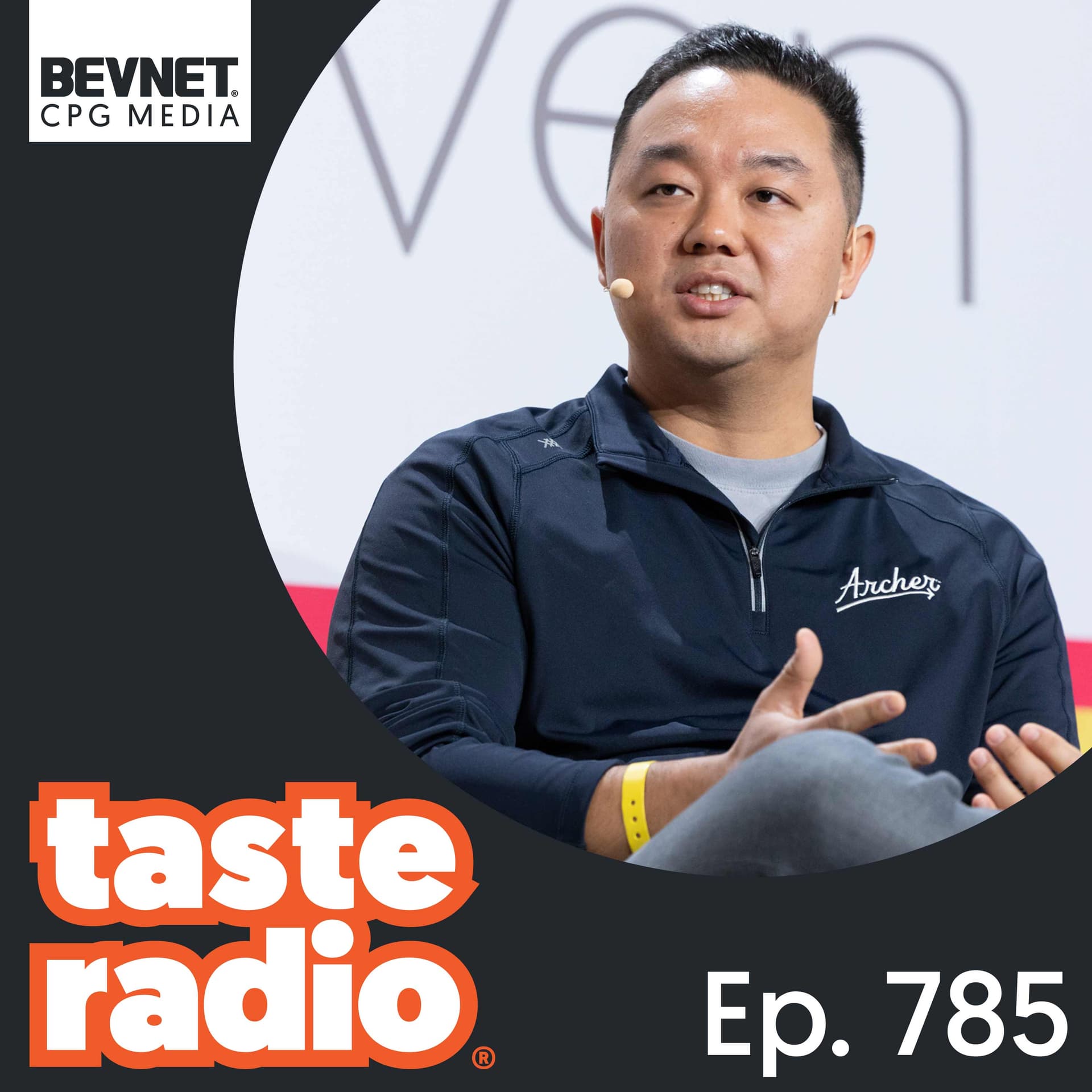
Episode Details Episode Title: How Archer's Aim Helps It Generate $300M In Annual Sales Episode Description: Eugene Kang, founder and CEO of Archer, discusses how operational excellence, disciplined execution, vertical integration, and timely innovation propelled Archer to $300 million in annual sales.
Key Points Discussed
Guest Introduction
- Eugene Kang: Founder & CEO of Archer, previously Country Archer.
- Discusses Archer's transformation into a significant player in the meat snack market.
Operational Excellence and Growth
- Emphasis on operational excellence as a core strength contributing to rapid growth.
- Achieved $300 million in annual sales through:
- Disciplined execution.
- Vertical integration allowing for cost control and quality assurance.
- Strong partnerships with retailers (e.g., Whole Foods).
Company Rebranding
- Archer's transition from Country Archer to simply Archer in 2023.
- Simplifying the brand name enhances memorability and modern appeal.
- Focus on building brand equity through campaigns like "Stick to Real."
Market Positioning and Consumer Insights
- The explosive growth of meat sticks and how Archer positioned itself to capitalize on this trend.
- Insights into consumer demographics:
- Notably attracting female consumers alongside a broader audience.
- The significant role of new households entering the meat snack category.
Innovation and Product Development
- The balance of data-driven and gut-feeling approaches to innovation.
- Importance of offering portability, protein, and satiety in products.
- Discussion on the launch of new products and flavors, including a focus on maintaining quality.
Pricing Strategy and Economic Considerations
- Importance of communicating value to consumers, especially during inflationary periods.
- Emphasizing the quality of ingredients and the benefits of their vertically integrated model.
Personal Insights and Entrepreneurial Journey
- Eugene reflects on his upbringing and the challenges of entrepreneurship in the CPG industry.
- The significance of patience, discipline, and long-term thinking in scaling a business.
- The pride in seeing products on shelves and building a strong team.
Conclusion
- Eugene expresses excitement about Archer's journey and future, emphasizing a collaborative and supportive team environment.
- Acknowledges the ongoing challenges in the food and beverage industry, particularly around consumer value and market competition.
Key Takeaways
- Operational Excellence: Key to scaling and maintaining quality in production.
- Brand Rebranding: Simplifying brand names can enhance recognition and market positioning.
- Consumer Focus: Understanding evolving consumer demographics is essential for growth.
- Patience and Discipline: Critical traits for navigating the complexities of scaling a consumer packaged goods company.
Brands Mentioned
- Archer
- Slim Jim
- Huy Fong (Sriracha)
Contact and Feedback
- Suggestions and feedback can be sent to: [ask@tasteradio.com](mailto:ask@tasteradio.com).
- For sponsorship opportunities, contact via the same email.
Final Thoughts This episode of Taste Radio provides valuable insights into the strategies that helped Archer become a leader in the meat snack industry, emphasizing the importance of operational excellence, consumer insights, and a strong brand identity in today's competitive market.
Written by AI. May contain mistakes. Listen to the episode to check what was said.
Transcript
Automatic transcript. May contain errors.0:10Hello, friends. I'm Ray Latif, and you're tuned in to Taste Radio, the leading podcast for entrepreneurs, makers, and innovators in the food and beverage industry. Archer's journey to$300 million in annual sales has been driven by an unwavering focus on operational excellence. In this episode, founder and CEO Eugene Kang shares how disciplined execution, vertical integration, and precisely timed innovation transformed Archer from an upstart jerky rebrand into one of the fastest growing meat snack companies in the U.S. Eugene unpacks Archer's recent rebrand, how the company positioned itself ahead of the explosive growth of meat sticks, and the importance of building durable partnerships with retailers like Whole Foods.
1:02He also explains why patience and long-term thinking remain critical traits for CPG founders Navigating Scale.
1:39pitch slam in 2023. Yeah. Actually, one of the winners actually came up to me during lunch and we're like, it's been a while now, but you remember, I was like, of course I remember. Like, how are you guys doing? And she shared with me that her and Jared, I think her husband or boyfriend, I think husband, right? Yeah. They're launching their product in Costco now. Yeah. Cocada. Cocada. And I was like, amazing. That's incredible to hear. And so, yeah. Yeah. Wonderful people. Brianna and Jared, the founders of Cocada, which is a coconut spread, first of its kind. And I think that probably had a lot to do with decision because you got to be different.
2:12You can't just be a Me Too product. You know that. Yeah. Yeah. Archer, formerly known as Country Archer. The artist formerly known as Country Archer. Yeah. Yeah. When did you guys decide you needed to keep it simple? Like instead of going from, you know, the Facebook to just Facebook, like it's kind of similar. You guys went from Country Archer just to Archer. Yeah. Yeah. Yeah, we dropped it this year with the launch of our rebrand. But it's been a journey, you know, that was kind of intentional. And, you know, everything that we built leading up to that was more or less going that direction no matter what.
2:42Because if you think back to like their first refresh that we did on the brand in 2020, you notice this kind of movement towards Archer being really big on the front of the pack, Country kind of shrinking down. And so that was like the first phase of like what eventually would be this move to hopefully one day drop Country. we weren't entirely sure but as we did research with the consumer and started talking to the consumer we realized like most people actually just call us archer anyway so it was just a natural thing for us to say okay let's just drop country it's also kind of lengthy archer just feels cleaner it's cleaner it's easier remember it's like this right and you know the the goal for us is to be a distinctive meat snack brand and so we figured archer just makes it easier Yeah, I mean, I always like simpler.
3:27And Country Archer, it gives it sort of a homey, classic Americana feel to it. But I think Archer gives you a lot more leeway to, and I guess, room to grow into other spaces, other channels, be interesting and appealing to other people as well. Yeah. And I also feel like it's more modern. And that's kind of where the brand has been heading. And frankly, where the category in the segment is heading. So it just made a lot of sense. Before we hopped on the mics, I talked about how this is not the first time you've been on Taste Radio. This is the first time you and I have sat down for an interview.
4:05But the first time you joined us for an interview for Taste Radio was actually seven years ago. And it was at Expo East, the former Expo East. There's no Expo East anymore. Baltimore. Yes, in Baltimore. It wasn't even the Philly version. That's right. You sat down with my colleague and Taste Radio co-host Mike Schneider. Yep. And you mentioned that to this day, there are people that talk to you about that episode. And I'm curious about what people recall or bring up about the conversation. Yeah, yeah. So the episode talked about, you know, how we kind of broke into the scene. Because I think in 2010 at the time, everyone was still talking about jerky and how crowded of a space jerky was.
4:41And I told Mike, you know, how we broke through was through real smart innovation and, you know, our partnership at the time with Hoifong Sriracha, which is the famous rooster bottle, soy sauce, or sorry, hot sauce, was our way into getting, you know, into the doors of a lot of large national retailers. And so that story has been kind of resonating for a lot of folks. And it's funny, like when I was telling you before we got on the mic, you know, even to this day, when I interview anyone that's accepting any role in the company, you know, I try to chalk up the last 15 to 20 minutes in an interview to ask them, hey, ask me any questions about the role, the business, et cetera.
5:18And they always joke about, hey, I heard that interview on Taste Radio about the Sriracha story. That's really cool. Walk me through that. And so, yeah, it's one of my like proudest moments, not the Taste Radio itself, but the Sriracha story. Well, I know. The Taste Radio should be your proudest. It does, for sure. Telling the Sriracha story on Taste Radio. On Taste Radio, yes. You know, we are the number one podcast for the food and beverage industry. So I'm not surprised that you're, you know, just daily getting people coming up to you and being like, tell us more about your experience on Taste Radio.
5:48You know, I think about the meat stick market and how much it's changed and evolved and most importantly, grown in recent years. And, you know, the old running joke back in the day was like, oh, we're going to create a better for you Slim Jim. Yep. And, you know, everyone's just like, OK, well, why does anyone want that? Who's going to eat a better for you Slim Jim? Clearly a lot of people, a lot of people just, you know, on a surface level. Where is this growth coming from? Who's eating all these meat sticks? Well, I think one of the things that we're really experiencing here is it's entirely new households.
6:26And it makes sense, right? If you think about the meat snack category, it was always a jerky and stick. You know, there was two segments with the meat snacks. It was jerky and sticks. And when you think of sticks, just kind of logically, just through like the most iconic brand is Slim Jim. And when you look at the ingredients of a Slim Jim, it's not better for you, right? And so I think when we launched Styx, it was a very logical innovation launch because it's directly adjacent to jerky. And if you think if you're going to be a meat snack brand, you have to be in Styx, right? So, you know, we started in Styx, as we talked about the Hoifeng Sriracha story.
7:07So when we launched Sticks in 2018, we thought it was a logical step to becoming the Better For You premium meat snack platform brand. But what we did not anticipate is the growth of the consumer and just the attraction of that portability meets protein meets satiety. And that's exploded in the last three years. Right. So and through data, we've now found out that's not only a new consumer, but they're coming from other categories like bars, puff snacks, popcorns, dried fruit, et cetera. Because of the protein. It's the protein. It's the portability. And yeah, it's the tighty. If you had to pick one of the three things, satiety, protein, or portability, I think for me, because I was a jerky eater, it would probably be the portability and the convenience factor.
7:55Because I don't, I'm going to sound like a germaphobe because I am one. I don't really like touching like the jerky. I don't think I'm alone in that. No, you're not. You're not. The thing I would say, though, it's as much as you want me to pick that one attribute, I honestly think you needed all three to experience what we're experiencing now. And I'll tell you why. A, we all know protein is just the most sought-out nutrient now for consumers. But you can get protein in other snacks. It doesn't have to come in at meat steak. Portability also could come in the form of bars, for example, right? Bars are portable.
8:26You can put it in your purse or your wallet or you can carry it in your backpack and you can snack on it. For a second there, I thought, and some folks in our audience I'm sure thought, you meant a meat bar. There have been those in the past. Yes, there is. Actually, I should have said on the panel that is one of my mistakes is launching a meat bar. But I'll put that aside. Okay. And then you have the satiety piece because all of a sudden you have this portable protein snack that's, you know, real protein, real animal protein. And it's zero sugar and it tastes good. And it's not like I'm eating a chocolate chip cookie dough bar.
8:59Right. And so all three just check the perfect box for that consumer and this new consumer. And that's why we're seeing this explosion. So within the last few months, I had an opportunity to sit down with the founder of a rival brand that is also growing quite fast. And just for context, Archer right now is going to do north of$300 million in sales in 2025, which is amazing. So, you know, between you and some of these other brands, maybe a couple of the other brands in this category, there's a ton of growth that folks are seeing. But he pointed to female consumers, women, as being a huge growth driver of their business.
9:42And it was interesting to me because I felt like that brand had a really masculine vibe to it. And I think Country Archer originally to me also felt a little bit more of a masculine kind of brand. With the rebrand, it's a little different. I think your logo skews sort of gender neutral. You have a color scheme of orange in this navy blue that I think is also very appealing to a large segment of the population. Do you see yourself as appealing to a wide range of people, wide swath of the population? Is that very intentional or do you really feel like you need to speak to a consistent target consumer?
10:21Yeah, no, we're definitely targeting the broader audience. And, you know, for us, we've always wanted to be, it's intentional on the redesign. We wanted to be, we were always a premium positioned brand because of our attributes, better for you brand, but we also wanted to be approachable. You know, there's a lot of premium brands that are sometimes unapproachable by the mass, you know, audience. And for us, we always wanted to be an approachable but elevated brand. And so we feel like the rebrand is achieving that. And to your earlier point about female consumers, absolutely, we see the same thing.
10:56The female shopper is the largest consumer base that's driving the growth, but it's not as if the male consumer is not consuming it. We actually just think it's more of like that is now becoming just the pantry snack and everyone in the household is consuming it. And look, for us, we don't want to speak to just one specific demographic. You know, that's why our campaign that we launched this year, our first, you know, our first national brand campaign of, you know, stick to real is kind of predicated on this like idea around. And if you haven't seen it, I'm sure we could drop a link later. But like it's around unreal moments that we see in our life.
11:31But then at the end of the day, you stick to what's real. And, you know, you've got the snack that's portable. It's real ingredients. It's real protein, animal based protein. And it just checks a lot of the kind of the need states for a lot of consumers. The rule of thumb for CPG brands is you can't be everything to everyone, at least when you start out. Yeah. When do you realize that you can actually become everything to everyone? When you have a product in a segment like ours that's growing at the rate that it is, I think you start to realize, well, why couldn't you, right? You know, I do think that there is some truth to when you're starting out CPG, you want to be very targeted and focused, specifically when you distribute it from a channel perspective, right?
12:08We all know that a lot of brands start natural or et cetera. Once we started seeing the broad adoption across grocery, mass, club, and natural, it was clear like this is not just a natural-oriented brand. It's a brand and a product that's frankly being enjoyed by a mass population. How do you know when you have permission to go from a channel that you're doing really well in to a channel where you don't really have that data yet? Because the typical or at least the prototypical place where you would see meat snacks and specifically meat sticks was convenience stores, right? Yeah. Now you see them everywhere.
12:47Yeah. You know, when you're talking to those retail buyers, is it a data story as much as it is a trend story? How do you convince them that this is going to bring incremental value to their stores? Yeah, I mean, it's definitely a data story. And it's also a macro story, too. It's beyond just the consumption at the store level. But it's also, let's just face the facts and look at the data and where consumers are coming from, from other categories to ours. What are they seeking? They're seeking protein. And so as you kind of lay out this broader consumer story as opposed to just like, hey, I'm kicking butt over at, you know, X retailer, you should bring it in, you know, Y retailer, right?
13:23It's more like there's a general shift that's happening at the consumer level. And we're trying our best to educate our retail partners on that, right? And look, it doesn't hurt that where we were doing really well at are kind of marquee retailers where a lot of people look to and go, okay, if it's working over there, I don't want to miss out on the boat. So it's a holistic data story as opposed to saying, here's some great data that we have, but it may not necessarily apply to every aspect of a retailer's business. I mentioned that you're going really fast. You know,$300 million plus in revenue is just spectacular.
13:56So congratulations on that. And what's even more impressive is that you're outpacing the category as a whole. given that there are some pretty serious players in this business who are continuing to press on the gas. I'm curious as to how you're moving faster than they are. Yeah, I mean, look, I think the category is growing. Frankly, us and one of the two brands that are actually driving a lot of the category growth. So if you removed one of us, it would actually show not the same growth rate that you'd see in the category overall. and I'd say how we're kind of keeping pace or how we're kind of outpacing the category of is, look, for us, we're incredibly disciplined about how we think about our innovation pipeline and where we go actually after distribution.
14:46And for us, we try not to go too wide. We try to go really deep with our retail partners. And when we kind of exercise that, we see great results, right? For us, our retail partners that we launched with back in 2018, we're still continuing to work with them on how do we go deeper with you and how do we continue to grow in the category. What's an example of a retail partner that you had in 2018 that you still have a good partnership with and making it work? Yeah, I mean, Whole Foods is a good one. I mean, when I launched with Whole Foods, we got two items in there, two bags of jerky, right? And we've expanded that to now, I think we're up to 15 SKUs now.
15:24Well, I see a lot of Archer at Whole Foods, like way more than I used to. Did something happen this year in particular? Or maybe it's just the... The new branding. Maybe it's the new branding, but we've had a pretty good depth of distribution year over year, and you have a great team that does a good job at that. But I think that's a good example of the partnership of where we were in 2018 and it being, ironically, just a jerky business to where we are today in 2025 with 15 SKUs and all ranging from bags jerky to single serve to family-sized offerings to multi-pack sticks to individual sticks, right?
15:56So, you know, we're really trying to continue to, like, master our own category. And we're constantly thinking about, like, what are the need states for the consumer? And we've learned, like, look, the consumer that consumes jerky is different than the consumer that consumes sticks. And so we're just constantly just trying to understand that need state and try to educate our partners. By the way, you just reminded me, I need to go to Whole Foods because your multi-pack minis are on sale. They're on promotion right now. Are they really? Yeah. Eugene. gene of course they're on you should know this i know you're like arm's length from but no in all seriousness i think i mean i love when i see it on promotion because you know meat sticks are not inexpensive i mean they're a premium product and i feel like in this day and age everyone's always looking at prices no matter if you're you know live in an affluent area if you if you're part of an affluent family or otherwise and i think it's really important and incumbent upon food brands to make their products as accessible and as affordable as possible.
16:58And you can do that a lot more easily, I think, if you have your own manufacturing facilities, right? You've operated vertically for a long time. When did you think about the importance of doing so and how have you scaled that vertical integration over the years? Yeah. Yeah. When I bought the business, when I started the business in 2011, it came with a factory. Now it was a small factory. It was 2000 square feet. I call it a glorified commercial kitchen. I mean, I stumbled into vertical integration because, you know, my family background is, you know, they're immigrants from South Korea. They own gas stations.
17:34Right. And I was always taught as a young kid from my father, like own the real estate, own the real estate whenever you do business. And so it just inherently in my DNA, I was, you know, just thought you have to have an asset. You can't just build a brand. Right. So, you know, I stumbled into it, but then as I continue to grow the business, I've learned like, A, all the big players in this category, right, the conventional guys are all vertically integrated. B, the co-packing landscape is actually not robust, right? So there was actually an inflection point for our business where we could have been a co-packer and just stick with that business model.
18:07But I had such high aspirations for the brand and pushing the brand. So for me, it was like very obvious, okay, like we stumbled into it, but we're going to stick to this vertical integration over time. And that 2 ,000 square feet went from 2 ,000 square feet initially to 14 ,000, and we tacked on another 16 ,000. Fast forward today, we have two facilities, one that's in San Bernardino, California, that's over 70 ,000 square feet that produces all of our jerky products in-house. Used to produce cold-pressed juice, from what I hear. Yeah, that's right. Yeah, it was the old Evolution Fresh processing facility.
18:39Yeah. Yeah. You know, that facility produces all of our jerky products and a little bit of our sticks. And then we just opened up our second facility in Vernon, which is about like 15 minutes away from downtown L.A. Vernon, those that don't know, is like kind of the, you know, industrial capital of the West Coast. If you've ever watched season two of True Detective, there's a Vernon type city. That's a big part of that season. So Vernon is a city. It sits outside of L.A. It's its own city. They have their own police, own fire department, etc. And there's only like 30 people that actually live in the city.
19:14Like it's purely industrial, right? And so you've got massive legacy companies that build there that they're still processing. Like GT is facility. GT Day's facility is in Vernon. So we found the old former Farmer John facility that made the famous hot dogs and bacons. And it was vacant. And so we took that over and just opened up that facility to produce all of our sticks. You know, when you own your own assets, there's a lot that goes into it. I mean, there might be long-term debt. There's the actual cost of owning the equipment and maintaining that equipment. And so, you know, outlaying the money to operate, own and operate your own manufacturing facilities is not necessarily something that a lot of entrepreneurs can do, but it's proven to be such an important part of your business.
20:05Did you realize, I think, at the time in 2018 that you would be here? I guess, how did you assess the potential for your business such that you lined the company with the ability to, at one point, own what you own right now? Does that make sense? Yeah. Yeah. Like, kind of like, how did we see seven years out and kind of where we are today? Yeah. I guess I've asked this question of entrepreneurs before, which is how do you balance ambition? And I can tell you're an ambitious person, Eugene, with potential. Well, first of all, you have to give credit to a good team. We've got an incredible operating team from all the way from operations down to finance to sales and marketing.
20:49And look, what I would say is back in 2018, when we first launched Meat Sticks and we did that interview, we had no idea what Sticks was going to become. And so you have to be incredibly disciplined on what you know and what you're good at. And so when we launched Stix, we didn't launch it making the products because there would be a whole new set of equipment. So I said at the time, look, we're going to work with this co-packer and launch it because they make Stix. They do a really good job at it. We make jerky. And so it's too early in the game to start investing in equipment. So you just got to be disciplined on that front.
21:22And when we launched Stix, we stayed nimble. But when it quickly started taking off, we had to start laying down the pathway of like, okay, eventually we're going to have to vertically integrate this product. Now, along the way, things change and evolve. Like the co-packing network just got consolidated and consolidated and all of a sudden like became this big behemoth. And frankly, without them, we will not be here where we are. And look, along the way, you have an honest conversation with your partners and say, look, as you know, I'm not just another brand that you produce for. I do have vertical integration capabilities.
21:54I do make jerky. And so like, eventually one day, like that is probably going to be the pathway for us. So you might not want to need to build more additional capacity for me because I'm starting to start laying down the brick. So it's, it's as much as I like to say that, you know, it was this mastermind plan from 2018 to now it wasn't, it was more like, we always knew that at some point we want to vertical integrate, but timing is always the question mark. And, and when is the right time? And look, it doesn't hurt when you have, you know, when you're scaling your business and you've got, you know, uh, your north of a hundred million, all of a sudden you start to see, okay, like we're in a much different financial position, right?
22:27Our balance sheet is in a different position. Now we can actually start entertaining a bigger capital expenditure, like building your own stick facility. Do you see more value in your manufacturing capabilities or in the brand itself? Because earlier you had said, you know, we could have just been a manufacturer of jerky and meat sticks. And you said, no, I really believed in creating a brand. But where is there most value in your opinion yeah i'd say our biggest value leading up to this year was our operational chops you know and i don't think just manufacturing i think broadly speaking like i think we have a master class team in terms of like logistics and like how do we think about saving money on like everything range from packaging to to ingredients and we're just a really good operating team and i would say that we always were strong commercially right like we always thought about like what's the right products what's the right attributes what do consumers want but we never really put a big emphasis on the brand.
23:23And I'd say the team that we have today, their goal has been what's the one? It's the one goal. It's like, look, you guys now got to get the brand to get to where it needs to be, given that we've done all this upfront work around the commercial and operational side of the house. Right. So I'd say up until this year, I'd say our biggest strength has been our commercial chops and our operational chops. Moving forward, I'm incredibly bullish on our marketing and our brand advantage. Operations, if you have a good operations team, it can make a humongous difference in your brand, but I've never really dialed this down to a specific strength, right?
24:00And you mentioned something just now that I think probably answers my question or my query here, which is when you're talking about operations, essentially you're talking about saving money and not wasting money and making sure that you can bring costs down where you can as often as you can. Is that essentially what you see in terms of the vision for and the reason for being for your operating team? Yeah, I'd say saving money for sure. Productivity is always there. But I also think just execution too, right? Ultimately, the goal is to save money. But even something as like getting logistics. Logistics is completely understated in the early days of building a CPG business.
24:43But as you start to scale rapidly, you won't know it. And then you realize your logistics is a nightmare. But having an incredible operating team to start thinking about your routes and your truck lanes and where your 3PL warehouses are located and thinking about those inner transfer. Like those are the little details that like we just are. They're pretty big details. They're big in hindsight. In hindsight, but I think in the moment, when you're busy building your business as an entrepreneur, you're not thinking about those things because you're just constantly trying to move from point A to point B.
25:14But as you start to scale the business, you start to realize that point A to point B starts to get really taxing if you don't start really fine-tuning that piece. Do you know everything about your operations business as much as you feel like you need to, or do you feel comfortable delegating those responsibilities? You know, I hate to say this, but honestly, the operational side of the business is one where I still am heavily involved in. and to a fault, right? Like I'm still the guy like making deals on all of our protein procurement purchases for the year, the contracts. I don't think you need to be sorry about that.
Read the full transcript
25:42Well, no, I say that because like I do think that at some point entrepreneurs have to figure out how to delegate to the team. But like for me, my golden rule is, you know, we talk about this team as a leadership team all the time. It's like, what are the most vital things that could break the business? And like those are the things that I just will never let go entirely control of. Like I just have to cost them on. Like to me, protein is a big percentage of our cost of goods. And so I'm always going to have my eyes on the ball there. You're still up at night thinking about our protein sources.
26:11Where are they coming from? I just was on a vacation with my family, and we visited South Korea. And their version of cattle there is called hanu, which is like their version of wagyu. And it's so tasty. And all I can think about on our whole family trip was like, how do I tap into the hanu market? And my wife was like, can you just not do that right now? I just need you to be here. and all I can think about is this Korean cattle market is so on top. We have to figure out how to get meat sticks into Korea using the Korean cattle. You're a true entrepreneur. I think about beef all the time. That's a quote.
26:47You should mic drop right there. Eugene, I think about beef all the time. I think it's important to be on as often as you can be as an entrepreneur. But yeah, there are times you need to unplug. again i get the sense that you're really ambitious and competitive person am i right in thinking that is yeah i'm pretty competitive i'm pretty ambitious too but yeah is it important to be competitive like as an entrepreneur i mean you have to be i mean like every category is increasingly getting more competitive and the brands that are coming into the space every day whether it's my category and anyone else like it's it's definitely competitive.
27:26Now, I don't think it needs to be a zero-sum game. And I actually think that is some of the flaws in the ecosystem today, where there are certain entrepreneurs that just wanted to make it a zero-sum game and it has to just be like one player. I don't think that's right. But how do you stay competitive, but realize that it's, I almost like it to like, there are athletes that are competing. And when you're on the floor and you're competing, you're trying to win the game. But off the court, you could be friends and you could try to trade notes, right? But I do think when you're competing in the space, you're trying to be as competitive as possible and win for sure.
28:02But do I think it's a zero-sum game? No. But I also don't know if you need 10 brands, you know, hawking out the same product either. Quick break. If this episode has you thinking about what's next in food and beverage, explore BevNet and Nosh Insider, our subscription platform with deeper insights from the BevNet team. Visit tasteradio.com slash insider to learn more.
28:49think about innovation, is it a lot of times kind of still a gut feeling because you know the brand so well, you know your consumers so well, or is it really very much, again, like a data-driven approach to innovation? You know, I think it's a little bit of both. And here's what I'll say. And here's why I say that, you know, the data will tell us, hey, consumers don't want to get too far off the beaten path with flavor expansion. And we know that. But then we'll launch something like a beef taco, which isn't in the kind of conversation from the data perspective, but it does incredibly well for us, right?
29:21So like, I think there's an intuition that is in play for sure. But data helps us when it comes to like thinking through like pack formats and, you know, multi-packs, et cetera, like getting smarter on pack innovation. And I think we try to use our gut where we can on, you know, does that kind of flavor expansion make sense or not? Because it's so hard with the data. If you're trying to create a new flavor, the data's not going to really show you whether or not that's going to be successful. You could do surveys, but no one really knows. How much of your innovation strategy plays into your pricing strategy?
29:54It sounds like it does based on what you're talking about. It does, yeah, for sure. I mean, I would say it plays a big role, I think. Because most of our innovation is around PAC and PAC formats, price-back architecture is very vital for us. So we try to be very conscious about channel conflicts and our price-back architecture in general. Do you feel like if you could, you would only sell single-serve format products? Because I feel like the margins are highest probably for the single-serve or single-format. Yeah, for sure. Yeah, I mean, if you could. But I mean, like, you know, let's take our mini sticks.
30:27It's, you know, obviously it's the cow that gives us milk, right, in our business today. That individual mini stick is in various different count sizes depending on where you shop at. But for me, it's like we're still producing that individual mini stick, right, in masses. And how it shows up, whether it's a 28-count bag or a 16-count bag or 8-count bag, for us, like that end is not really going to be the biggest needle. Like that doesn't really hurt our operation. At the end, we're still producing that mini stick day in and day out. And so we're trying to get smarter about when we do pack innovation and price-back architecture, like how does it tie into our operational side of the business?
31:08I almost feel like the multipacks of the mini sticks are a really good introduction to the next generation of meat stick consumers and meat snack consumers to begin with. I see a lot of younger kids eating them. And then as they get older, they're going to be eating the larger sticks and the bags of jerky and so on and so forth. And I think, I don't know if that was intentional or how much of that is intentional, the mini stick as a trial to the brand. But it feels like it's a natural extension of what you're doing. It is. I mean, look, my parents are immigrants from South Korea. So again, I grew up in a retail environment.
31:39They owned gas stations and liquor stores. And the most iconic, memorable snack for me as a kid was actually not a Doritos or Cheetos or anything like that. It was actually that small 25-cent Slim Jim that was on the counter table. And I would eat that like crazy as a kid. And I remember thinking to myself like – You're still alive, which is good. Yeah, well – yeah. But it was memorable for me, right? And even to this day, we joke about it as a team of like that item is still a big item for Slim Jim. And it's actually still growing, believe it or not. And it, you know, as a consumer through my journey, like you start to go get the taller sticks as you get older.
32:20Right. And obviously I don't consume that anymore. But for sure, it played a role of how we thought about our many sticks and the eventual sizing up, et cetera. Yeah. I'm not surprised it's still growing. I think people are looking for affordable, accessible, as I mentioned, protein. And, you know, as it becomes more expensive to eat and live in America, you know, you're looking for products like that. I guess does the current state of the economy, how much of that factors into your long-term strategy? Because hopefully at one point we'll get out of this rut where groceries are just so ridiculously expensive.
32:54I talked about this with my colleagues earlier today or actually yesterday. and I was saying every time I go to the grocery store now, and I price shop, I look for stuff that's in promotion. Like, you know, when Archer's on promotion, I'll buy it. But every time I go into the grocery store and I buy like, I don't know, 10 items, I end up paying like 100 bucks. Look, the inflation is real. And, you know, we know, you know, from the data and talking to consumers, you know, everyone's feeling the pain for sure. I mean, their grocery bills have gotten higher and, you know, for various reasons. and look for us what we're trying to do and I think we're we're not doing a good job of it right now but I think we will next year is how do we communicate value to the consumer in a what is relative to to to our brand and what we stand for so what I mean by that is look I think we're going to be entering in an environment where everything around us is expensive and I think consumers are gonna have to be really choiceful about what they decide to purchase in their basket and in their pantry and if we want to be one of those items that are always going to be a staple which we've enjoyed so far we have to make sure that we scream value and value doesn't necessarily mean showing up in price it also could mean hey how are we messaging it to the consumer saying like look this is portable it's protein you are getting value because it's if you compare that to other snacks where you don't get that same portability, individual wrapped protein, et cetera, we want to make sure that even in this inflationary environment, we are still actually valuable.
34:31We're still giving you value, if that makes sense. Yeah, it does. And look, I will tell you, as a brand that's vertically integrated, we are able to be a little bit more nimble in our pricing. but look I think the whole CPG ecosystem has a you know has a role to play here in the upcoming year about how do we make sure you know the consumer is finding value right because I think you know for the longest time you know everyone's been talking about better for you and health and health and wellness oriented brands and premium brands we're going to an era where I think the consumer is is going to have to reevaluate what what does value mean to them if that makes sense And value means portability, protein, but real and quality.
35:16And I think your tagline of stick to real, if people can see or if you're able to communicate value in the fact that you are a real quality meat stick and meat snack brand goes a long way with that consumer. They're willing to pay a premium, even though that premium is sort of affordable in the big scheme of just eating animal-based protein. Yeah. If you are buying an ultra processed snack and it's more expensive than it used to be as a consumer, I too would be pissed. I'd be like, what what's going on here? Right. And I do think that reckoning, which we're already seeing in the data is only going to continue to accelerate.
35:56And I think, again, the consumer is going to have a real moment of truth, I think, as they progress into the next year. What does value mean for me? Because on an absolute dollar basis, I'm going to have to make some trade-offs. And what are the needs? And what are the nice-to-haves? Are your folks still around? They are, yeah. Are they happy? Are they proud of what you're doing? Yeah, they're definitely proud. My dad and I, he's still my best friend. We talk every day about, you know, life. And, you know, it's always funny for him because he's, I think for him, he's a serial entrepreneur. And I think he's always joked, like, I never wanted you to be an entrepreneur because it's a stressful thing to do.
36:39What did he want you to be? I don't know. Like, every good Asian parent, like, every Asian kid, like, be a doctor or a lawyer or something like that. Some kind of white-collar job. But, you know, here we are, so. Yeah, it's cool. Well, I grew up in a family where my dad was an entrepreneur and he owned a chain of gourmet food stores. And I wouldn't say it's ironic that I'm in the business that I'm in right now, but it's funny that I have this opportunity. I never made the leap. I never, I guess, had the guts in so many ways to own my own business like that. But I'm sure that no matter what your dad says, he's really happy that you're in the business you're in right now because it's a tough business.
37:17and I think more than anything, if you can make it as an entrepreneur in CPG, you can pretty much do anything in life. You could go back to school and become that lawyer or doctor if you want to. Oh man, it's high praise. Like we were just in the room with a bunch of founders in the audience and you know, look, I will stress this. Like it is, there is, I mean, like I have not been privileged to work in any other industry, but I would say in CPG, there's something so romantic about seeing your product on shelf and seeing consumers pick it up, it is so rewarding, man. I mean, even now, I still, like, when I go to stores and I see the product, like, I just, it's cool, right?
37:55And that's what's rewarding. But, look, through that, there's, behind the scenes, there's a lot of, like, heartaches and pain and a lot of up and downs. And, like I said, in the room, I was like, you know, they asked, like, what's one of the advices you'd give? And I'd say, look, it's just being patient, you know? And if you're in the game, if you're going to be a student in the game and you're in it for the long haul and you're not here to just make a quick buck, You just got to play the long game. And, like, that category manager is not returning your phone call. Like, trust me, like, whether through, like, sheer fortune or not, like, they're going to eventually return your phone call, and you will get a shot, right?
38:30And how you capitalize on that is going to be the interesting thing, right? And that's to each his own. But I just think you have to be incredibly disciplined and patient in this game. Yeah, great advice. And, you know, it worked out for you, and it's worked out for Archer. We're still grinding. We're still grinding. Well, look, I'm sure you've had some knocks at your door, some phone calls from bigger companies saying, hey, you know, anytime you're ready to jump off this train, we'll be there for you. But I think you're right. You guys are still growing. Yeah, no. I mean, look, you know, for us, like I'm having so much fun.
39:04We have such an amazing team. You know, for me, it's like we've got such – what gets me excited outside of seeing our product on shelf is the people we have in our business. I mean, it is so much more fun building a business with the right people around you. Eugene, I can't thank you enough for taking this time. It's been such a great conversation. I know our audience is getting a lot out of it. It's thrilling. It's really thrilling for me. I sound like a broken record because I talk about this all the time. It's thrilling when I get to meet an entrepreneur earlier in their business. I know you bought the business in 2011.
39:42and you were on Taste Radio seven years later, but like another seven years, you know, you've been doing this 14 years now and just the growth that you've seen, the fact that you've become a household name, a household brand, I mean, that just doesn't happen. And so when we see things like that, when you see this like young scrappy brand and now one that's doing$300 million plus in business, it's just, it's so exciting for me. I appreciate that. I really appreciate that. Congratulations on everything that you've built at this point. Let's sit down again really soon. Yeah. Thanks, man. Thank you.
40:16Thanks.
40:19That brings us to the end of this episode of Taste Radio. Thank you so much for listening. Taste Radio is a production of BevNet.com Incorporated. Our audio engineer for Taste Radio is Joe Cratchy. Our technical director is Joshua Pratt. And our video editor is Ryan Galang. Our social marketing manager is Amanda Smirlinski. And our designer is Amanda Huang. Just a reminder, if you like what you hear on Taste Radio, please share the podcast with friends and colleagues. And of course, we would love it if you could review us on the Apple Podcasts app or your listening platform of choice. Check us out on Instagram.
40:54Our handle is BevNetTasteRadio. As always, for questions, comments, ideas for future podcasts, please send us an email to ask at tasteradio.com. On behalf of the entire Taste Radio team, thank you for listening, and we'll talk to you next time. Thank you.
From the publisher
Archer's journey to $300 million in annual sales has been driven by an unwavering focus on operational excellence.
In this episode, founder and CEO Eugene Kang shares how disciplined execution, vertical integration, and precisely timed innovation transformed Archer from an upstart jerky brand into one of the fastest-growing meat snack companies in the U.S.
Eugene unpacks Archer's recent rebrand, how the company positioned itself ahead of the explosive growth of meat sticks, and the importance of building durable partnerships with retailers like Whole Foods. He also explains why patience and long-term thinking remain critical traits for CPG founders navigating scale.
Show notes:
0:25: Eugene Kang, Founder & CEO, Archer – At Nosh Live L.A. 2025, Eugene discusses the rebrand from Country Archer to "Archer," revisits the company's early breakthrough – a partnership with Huy Fong Sriracha – and its expansion into meat sticks in 2018. He talks about Archer's rapid scale and how disciplined execution and new household adoption is helping the brand outpace the overall category. Eugene explains how two owned manufacturing facilities enable cost control, quality, and pricing flexibility, and highlights operational excellence as a core strength. He also talks about how a renewed push to build brand equity through national marketing like the "Stick to Real" campaign has supported brand growth. He underscores the importance of patience, discipline, and long-term thinking in CPG, balancing data with intuition in innovation, and delivering clear value to consumers amid inflation.
Brands in this episode: Archer, Slim Jim, Huy Fong