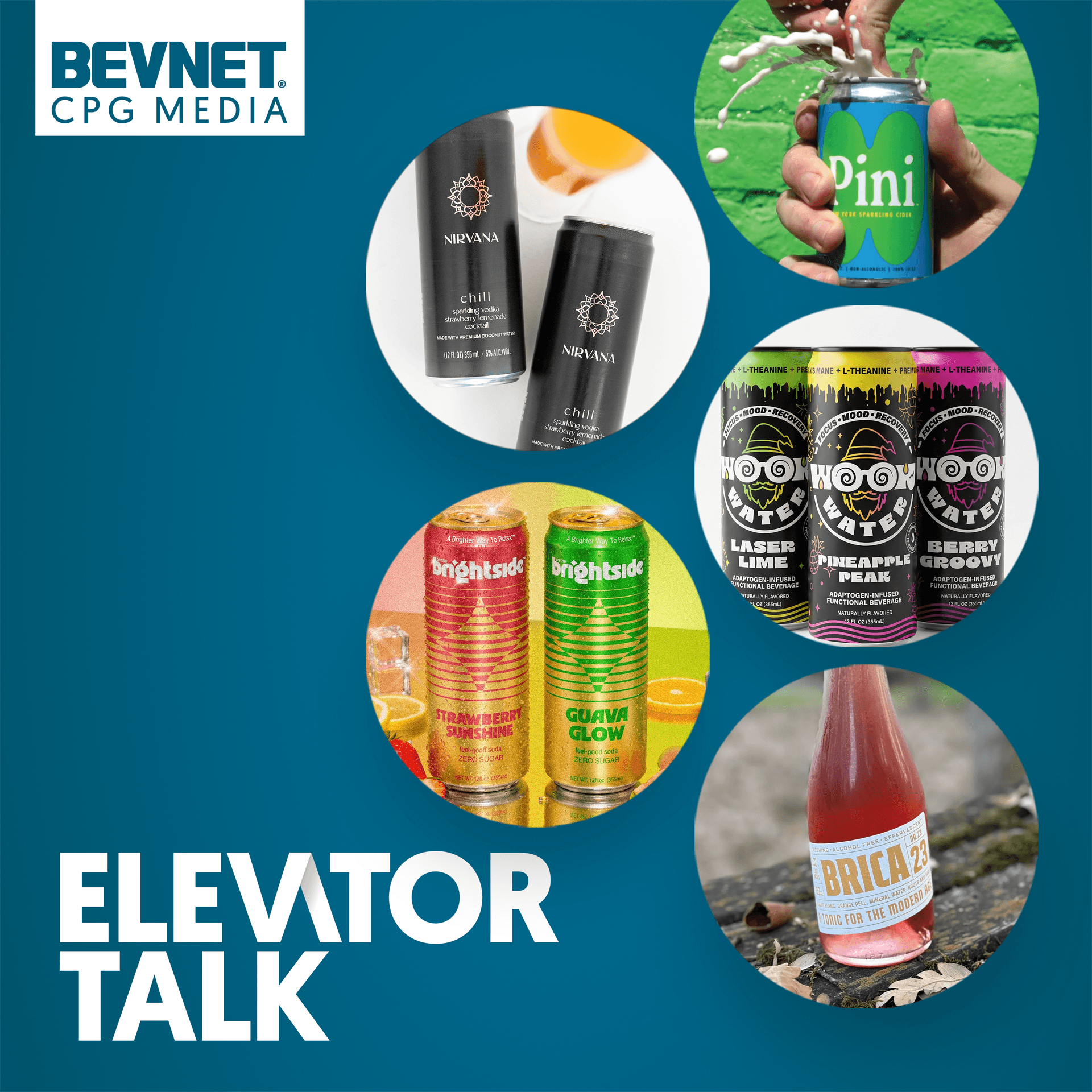
In short
Unilever’s acquisition of Grüns and what it signals for CPG; “peak protein” across formats (chips, pasta, ice cream, soda); and rising consumer concern about bottled water’s “health halo” amid microplastics/PFAS and packaging (PET vs aluminum/glass).
Guests
Ray Lateef (editor/producer, host) and John Craven (co-host). Brad Avery (senior reporter at BevNet and NOSH; co-host of CPG Week; also a Boston Celtics fan).
Key claims
Grüns reached ~$500M valuation quickly (founded 2023) and is positioned like a daily supplement with repeat consumption; protein is increasingly used to drive growth beyond gut-health soda; brands should avoid “GLP-1 friendly” claims as too niche; bottled-water trust is shifting due to microplastics/PFAS perceptions and FDA labeling changes.
Notable examples
Grüns vs Liquid IV; protein chips (Cloud), protein pasta (Kaizen), protein ice cream (Protein Pints), protein soda/extension (KOYA), protein pretzels (Crisp Power), and sour candy/dates (DADDL, Behave super sour skulls).
Written by AI. May contain mistakes. Listen to the episode to check what was said.
Chapters
Tap a time to open that second in VOWelcome Back and CPG Week Overview
0:46 to 2:56
Hosts welcome Brad Avery and discuss the podcast network's offerings and previous topics.
“Yeah, how are you feeling about the Celtics?”
Introducing Grüns and Its Market Impact
2:57 to 4:22
Discussion about the Grüns acquisition by Unilever and the brand's market positioning.
“We talked about - And Grunz, that came out of nowhere.”
The Gummy Trend in Supplements
4:23 to 5:40
Exploring the success of gummy supplements and their appeal in the market.
“But when I heard about the deal, I can't be the only one.”
Daily Consumption and Consumer Loyalty
5:41 to 8:06
Insights on the importance of daily consumption for CPG brands and building consumer loyalty.
“I think we had about 7 ,000 doors, which is not that much, but I believe they do a lot of online business and that's how they've been able to get to$300 million in revenue.”
The Future of Protein Supplements
8:07 to 9:21
Discussion about the potential for protein supplements in different formats and their market viability.
“If your consumer is someone who will pick up your product once a month or once every two months, it might be a tougher, longer journey for you and your brand for sure.”
Innovations in Protein Products
9:44 to 14:03
Overview of new protein-containing products and their reception in the market.
“Well, of course I mentioned protein because it is the hottest functional ingredient in food and beverage right now.”
The Protein Trend in Snacks and Beverages
14:03 to 15:12
Explore how protein is being integrated into various food and beverage categories.
“hell do we have protein pop tarts see but i mean all the things that you mentioned ice cream pasta I mean, I guess to some extent, chips, like, would normally have some level of protein in them anyway.”
Innovative Approaches to Consumer Demand
15:12 to 17:46
Discuss the challenges brands face in meeting consumer preferences through innovation.
“You know, like there is a point where like, I don't know, you're going to feel full in a different way from drinking protein soda than you are just, I don't know, regular old soda, right?”
The Future of Protein Marketing
17:46 to 20:00
Analyze the evolving marketing strategies surrounding protein products.
“And my guess is that at some point, the difference will be that we just won't see protein in giant letters on so many packages.”
The Role of GLP-1 in Food Trends
20:00 to 23:05
Examine the impact of GLP-1 drugs on food product development and consumer behavior.
“I mean, this is not like an anomaly here.”
Show all 18 chapters
Concerns Over Water Quality and Packaging
25:54 to 28:00
Discuss the rising consumer concerns regarding water purity and packaging materials.
“You know, everyone loves water in any format.”
Concerns Over Microplastics in Water
28:00 to 28:45
Discusses the growing consumer concerns about microplastics in bottled water and its impact on purchasing decisions.
“And I think I tried to look a little bit into the science of it.”
Alkaline Water and Health Implications
28:45 to 29:44
Explores the health implications of consuming alkaline water from plastic bottles and the need for brands to address consumer concerns.
“alkaline water, and I feel like alkaline water has been to the benefit of my overall health.”
Challenges in Addressing Microplastics
29:44 to 30:59
Addresses the challenges consumers face in avoiding microplastics and the need for industry-wide initiatives to tackle the issue.
“But, you know, I think it's right now just this thing that we sort of know is not good, but also know is like super prevalent.”
Emerging Consumer Behavior and Brand Responses
30:59 to 33:11
Discusses emerging consumer behaviors regarding plastic packaging and how brands are responding to these concerns.
“It needs to be an industry initiative to work on cleaning up the system.”
The Rise of Glass and Aluminum Packaging
33:11 to 33:48
Examines the increasing popularity of glass and aluminum packaging among consumers concerned about plastic.
“They're still focused on sustainability and on better for the environment.”
Sour Watermelon Dates: A Candy Alternative
33:48 to 34:30
Introduces Datl's new sour watermelon dates as a healthier candy alternative and discusses taste testing.
“Well, it's a story we'll continue to follow for sure on BevNet.”
Behave's New Super Sour Skulls Candy
34:30 to 36:05
Covers the introduction of Behave's new super sour skulls candy and shares reactions from the taste test.
“I don't typically smell my dates, but that's a new one.”
Transcript
Automatic transcript. May contain errors.0:10Hello and thanks for tuning in to Taste Radio, the number one podcast for anyone building a business in food or beverage. I'm Ray Lateef, the editor and producer of Taste Radio, and I'm with my co-host for this episode, John Craven and Brad Avery. The Groons boom, peak protein, and growing questions about the health halo of bottled water. We're breaking down trends shaping innovation across food and beverage, and what they signal for where CPG is headed next. Brad, welcome to the studio. Welcome back to Taste Radio. It's been a while. Glad to be here. Yeah, how are you feeling about the Celtics?
0:51Feeling pretty good. They looked pretty sharp the day we're recording this. They just dominated game one and looking forward to game two. In addition to Brad being a sharp journalist in the food and beverage industry, he's also a diehard Boston Celtics fan and has been for a long time. I'm pretty bullish about their chances this year. You know, at first I wasn't, and then I increasingly have been feeling more and more like they seem like the best position in the East. The Knicks blew game two. I'd say them and the Pistons are the only real competition. So I think they have a strong chance of at least getting to the finals.
1:31I don't know how they will stand against OKC or the Spurs, who I think are probably the two top picks for the West. But I think even then they could take that to a six or seven game series. I just got right into the Celtics because Brad is wearing a hoodie, a Boston Celtics hoodie, and I can tell he's wearing it very proudly. Yeah, I got this at the garden. Yes. And he's holding a Dunks and a cigarette, too, just to make them pull Bostonian. And a Celtics hat and Celtics shoes. He starroed his car on the way here. Oh, boy. Just for context, Brad Avery, who is a reporter, a senior reporter for BevNet and Nosh, and also a co-host of the CPG Week podcast, is filling in, joining us, not really filling in, joining us this week with Mike and Melissa.
2:11OOO out of the office. But Brad, this isn't your first time joining us on Taste Radio. And I'm really glad that you're bringing some of the CPG Week fun and banter to our show today. I think people don't necessarily realize that we have a podcast platform here at BevNet CPG. So many podcasts. Of course, we've got Taste Radio, as I mentioned, CPG Week. Melissa hosts the Non-Base podcast. And we have the BrewBound podcast, which of course is hosted by the incredible BrewBound team. So if you are interested in any of those, I highly recommend you subscribe to one or all four of the, obviously you're in the Taste Radio, so I hope you're subscribed to this one, but one or all four of the podcasts, it'll keep you engaged and informed about what's happening across the food and beverage landscape.
2:55Yeah. I mean, last week, Monica and I sat down, we talked about the Grunz acquisition by Unilever. We talked about - And Grunz, that came out of nowhere. Now, What is Groom's bread? Groom's is a pretty new brand, relatively speaking. It's only a few years old. It is a gummy brand, functional with a lot of institutional investors behind it. It was only found in 2023, but already reached$500 million valuation. It's crazy because it's a gummy brand that's intended to replace, I would assume, your green juice or some of your supplements. It's just an easier form of consuming your nutrients. Right.
3:29Right. And I think we've seen a lot of these types of gummy plays. And Gruen's is one that managed to come out the gate really fast, well-funded and well-positioned to compete in a really tight space on the shelf. Yeah. Where is it even sold on the shelf? Is it sold with supplements or is it sold next to, I guess, better for you, snacks? I believe it's a supplement. I believe it's more positioned like a supplement. But this is also when you consider what Unilever is doing, where they are dividing up their company and offsetting a lot of their frozen products and their other food brands and then focusing a lot more in on these gummies and supplements.
4:10It gives us sort of a vision of where Unilever is also planning to be going in the future. I was shocked by this deal. Frankly, I had never heard of Grooms before. Come on. No, it's true. It just kind of came out of the blue. Maybe that's just reflective of me as a poor journalist and poor podcaster in this industry. But when I heard about the deal, I can't be the only one. I can't be the only one. You never heard of Gruen's? No, I'd never heard of Gruen's. I mean, look, it's one of those brands that, sure, if you're just paying attention to beverage and snack foods, it would be pretty easy to miss because it's neither, frankly.
4:46But, I mean, I think it tangentially, as you pointed out, is kind of like an alternative to something like an Athletic Greens. obviously it's edible right i would hope so if we're talking about it and i think i think the branding of it looks very much like something that you would see in this space i mean i think i remember the first time i saw it a couple years ago and it was definitely one of those like i stopped and was expecting it to be like a traditional food or beverage product and you know i think what they for sure managed to do is brand you know essentially a supplement in a way that made it look like an approachable CPG product rather than something that is just like, I don't know, traditional supplement like selling you on hardcore science, technical branding type of thing.
5:36Right. It's competing more with like Goalie and those types of brands. Yeah, 100%. But I also believe its footprint isn't that huge. I think we had about 7 ,000 doors, which is not that much, but I believe they do a lot of online business and that's how they've been able to get to$300 million in revenue. Yeah, I mean, I think what's really interesting about it, though, is, you know, the low footprint probably, or retail footprint, probably also means that the consumption by the individual consumer is really high, right? And, you know, meaning that, like, if you start taking it, you're probably not like, I'm going to take this Rando supplement, like, occasionally, you're taking it, like, every day.
6:15And I think that is kind of an interesting lesson for a lot of CPG brands, just to remember that, you know, certain categories really require like, you know, intense repeat consumption, you know. And I think that is something that separates like high value CPG companies from sometimes lower value CPG companies. Yeah, it reminds me of the deal that Unilever did with Liquid IV, which was done in 2020. they acquired the brand for a reported$500 million. And from what I recall, so much of Liquid IV's business at the time was at Costco. I think it was a really high percentage of their sales was in Costco.
6:55But the deal with Unilever clearly gave them a much broader presence and ability to go into different channels, into different retailers, and not just put all their eggs in one basket, or at least most of their eggs in one basket. It feels like Groons has that opportunity as well. And for a numpty like me, maybe I'll start seeing in places like CVS or places that I shop normally. Yeah, exactly. And it seems like a CVS type of product and liquid IV, I now associate in my head with like CVS and the drug channel because it's so prominently positioned there. I mean, to John's point about daily consumption, obviously supplements is one of the best categories to be in for that.
7:29It's just a matter of being able to differentiate yourself and get that foot in the door in that space because it is so crowded, because it is so competitive and because you need to earn consumer loyalty. Once you have that loyalty though, And you, you know, I don't want to say you're good for life, but you are in a strong, strong position if you have that consumer loyalty because that is a daily product. They're always going to be needing more at a certain point. Totally. If you can get a consumer that's going to buy and eat or drink or, I don't know, what's a supplement? Consume your product on a daily basis or even a weekly basis.
8:05I think that is the key. If your consumer is someone who will pick up your product once a month or once every two months, it might be a tougher, longer journey for you and your brand for sure. So I think you're 100 % right that the key to Grooms was people using it on a very regular basis. For me, I'm still going to stick to my green juice, but that's just me. You do you. Yeah, me do me. I wonder if there's got to be a protein supplement coming out soon, like protein in a gummy. But I don't think anyone's really got to the point where it tastes as good as it needs to. I'm sure it already exists.
8:42No, for sure it already exists. But I haven't seen anything that's sort of mainstream. I mean, it might be pretty hard to pack a meaningful amount of protein into a gummy and, well, just due to size. But also not make it literally like, God, what would it have to be? Like a compressed nugget of protein? A piece of chalk? A piece of chalk is probably, you know, we're going to see protein chalk pretty soon. Yeah, some sidewalk chalk. The really big ones. And then when you erase it, when you take the erasers, maybe this is really old school. Oh, you would beat them and they'd make a little cloud.
9:15How about protein Play-Doh? You make your little stuff and then you just eat it. Vibrant Ingredients is the natural ingredient partner powering food and beverage innovation, delivering flavor, function, and protection through a science-backed portfolio. Vibrant delivers purpose-driven solutions that help brands create extraordinary experiences. Discover what's possible with Vibrant today. Visit VibrantIngredients.com. Well, of course I mentioned protein because it is the hottest functional ingredient in food and beverage right now. How do I know? Because we get samples of new food and beverage brands and products every week.
10:01And to my left here is just a sampling, just a sampling of some of the things that we've received over the past couple of weeks. They include Cloud's new protein chips. These are nacho chips or tortilla chips. This is a nacho flavor. It contains seven grams of protein per serving. I sat down with Cloud co-founder and CEO Jeff Rubenstein in a recent episode of Taste Radio when he talks about this introduction of chips to their brand. Of course, they are best known for in their flagship line of snacks is their protein popcorn. Also, a brand called Kaizen, K-A-I-Z-E-N, which makes protein pasta. In this box of fusilli, this 8-ounce box of fusilli, there's 80 grams of protein and 15 grams of fiber per serving, 6 grams of net carbs.
10:54How many grams of protein per serving? Let's see, 20 grams per serving. So there's four servings per container. If you eat one serving, you get 20 grams. Just cover it in raw steak for extra protein. I guess so. Of course, we have some protein pints, ice cream. I sat down with the founders of this company at Expo West, and we recently featured that interview in an episode of Taste Radio. 30 grams. 30 grams of complete protein per pint. Banana? Banana gram slam. Slam. Love it. Banana gram slam. Of course, our dear friends at Koya. I don't know why I'm calling them their dear friends. It's probably because...
11:29I don't know. We've known some of those folks for a long time. Chris Hunter. Chris Hunter. We've sat down with him many times. Koya, earlier this year, introduced their Protein Pop, which contains 10 grams of protein per 12-ounce can, 4 grams of fiber, and 2 grams of sugar. This is their Golden Whip variety, which sounds pretty good. I mean, there's a bunch of other ones. I'll mention Layered Superfood. They've got their Unsweetened Protein Coffee. It's got Lion's Mane mushroom, and it's made with 10 grams of protein. I don't know. I just, and this is why I'm happy you're here, Brad, because you're on the ground in the trenches talking to these founders, whether they're early stage or established, and everyone is just throwing stuff at a wall and hoping it sticks.
12:13I feel like that's what an innovation strategy is at this point for so many people and so many brands. Are you getting a sense that any particular category is resonating more with consumers as it relates to the incorporation of protein? It's hard to say exactly if one category is doing better than another without having the data set in front of me, but I do think there's an element of natural daily use as we've been talking about with the supplements. Is this a product format where protein is going to slot in naturally, or are you disrupting the actual ritual of how you would consume this product?
12:51And I think that is what you're looking for. And that's why when I see something like protein chips, it feels a little more natural to me than, say, you know, something like the protein ice cream or some other product that you're going out of your way to add protein into your diet that isn't naturally there. Or, you know, protein pasta, you're making dinner, you're making a meal out of that. You know, two ounces of pasta seems like a small serving to me personally. Four ounces. It's four ounces, actually. Oh, four ounces. Okay, great. So it's a better serving size, and it's going to be filling.
13:27So it makes sense that you could put protein into pasta. You have a healthier product that way. People are concerned about carbs. You cut pasta out. There's solutions. Are you fitting a mealtime? Are you fitting a snack? I will say that as we talk about peak protein, and everyone has sort of started talking about peak protein, it seems, there is the anecdotal element of the people in my life who are not involved in the industry when they start commenting on why is there so much protein in everything that's how i kind of know that it's you know it's arrived and perhaps it is already at its peak for for sure that you know the people who are not in this world day in day out are recognizing it and questioning why the hell do we have protein pop tarts see but i mean all the things that you mentioned ice cream pasta I mean, I guess to some extent, chips, like, would normally have some level of protein in them anyway.
14:20Like, beverages are kind of the worst offender, really, in that soda, like, would never, ever have protein unless you specifically added it, right? Protein ice cream, for sure, they've added protein to increase protein levels or, I guess, you know, dried pasta as opposed to fresh pasta made with eggs maybe doesn't have protein, but whatever. Those are all products that would have some level of protein in them. I think it's, you know, it's interesting in that it's, I think maybe part of the issue is just more the marketing and kind of trade dress of this stuff, as opposed to there being a problem with protein being in anything.
14:57I mean, it's still just, we talked about this on another episode, but it's like, we're essentially saying that this product has some sustenance to it that maybe it didn't have before or we've increased it. Because I think that kind of is what it does at the most basic level for even a beverage. You know, like there is a point where like, I don't know, you're going to feel full in a different way from drinking protein soda than you are just, I don't know, regular old soda, right? And the sodas in particular sort of reflect a different dynamic as well, which is the need to continue innovating in the modern soda set beyond gut health.
15:36Obviously, Poppy and Olipop have really dominated that space, and there's other players like CulturePop that have been able to own the gut health moment. But that category has started seeing shakeout of brands that aren't able to compete at the level, and protein is the new way to continue growing that space, which is why we're seeing Koya and a lot of other brands come in. Now, with Koya, you have a protein drink brand. This is a protein brand that is extending into soda, whereas I think we see a lot of soda brands trying to extend into protein, and that's a little more questionable in my opinion.
16:12That's a really good point, Brad. It makes sense for Koya because they already started out as a protein smoothie or protein—how would you describe their products? They're vegan protein shakes, maker, plant-based products, and they've always played around. I mean, they had a keto line for a bit when keto was the trend, and they were able to pivot away from that and pivot into juice smoothies at a certain point and other types of product formats. And at Expo West, Koya was actually sampling a, to be finalized, still enhanced water protein drink. Interesting. and i want to go back to one thing you said ray which was the throwing stuff at the wall to see what sticks i mean look i think you know and to be fair i'm not saying that's true of all brands and their innovation but look it is kind of true of all emerging brands and entrepreneurial efforts regardless and i don't think that's a bad thing i mean there is you know and i guess my point of saying this is I don't want to like crap on anyone.
17:15And, you know, I think that a lot of brands are just trying to figure out what the consumer wants next. And that is just by virtue of what it is, like kind of a messy, ugly, try, fail, repeat, you know, kind of situation. And again, I think you are seeing a lot of entrepreneurs and even bigger companies following this just in that it does plug one of the big holes that exist in a lot of you know snack beverage products which again is that sort of like you know what does this do for me right and protein is a little bit of like a you know cure-all for that to some degree whether or not the consumer will actually accept that tolerate the flavor etc like you just got to get out there and try.
18:06And I think that this does seem like one of the more worthy sort of trends that we've seen where, you know, it does feel like a lot of these products that are doing this are going to stick, or if nothing else, be a catalyst for, you know, their category evolving. And my guess is that at some point, the difference will be that we just won't see protein in giant letters on so many packages. The protein will probably stay there, but this whole like, you know, I mean, you're holding one what is that a purely elizabeth protein granola and again i'm not i'm not crapping on purely elizabeth great product but that is kind of like what a lot of companies are doing it's like trying to get your eye right to the protein it is the biggest font on this package i would absolutely agree with that that part of it is that protein is just an essential ingredient for life i mean we need it in our diet so it's kind of funny to have it as a trend when it's something that it's never going to not be a trend in a way you need it but i think your point about the marketing trend of pushing protein really hard.
19:08As we talk about evolving our food system overall, the entire push for health and wellness and better for you and getting rid of dyes and getting rid of ultra processed ingredients, protein is going to sub in very well into, I think, formats like chips, as I mentioned. Or I'm looking at the protein pretzels right there. What brand is that, Ray? The protein pretzels are, it's called Crisp Power. It's the name of the brand. I'll tell you personally, we've had those in the office for a little while. On days where I've come to the office, I've skipped breakfast. I'll grab those because it's going to be more filling.
19:43It serves as a meal replacement as well as a snack that way. There's useful approaches for this, particularly as innovation improves, flavor improves, and we can fill in for that area where we were just shoving sugar and dyes and other additives into our snacks. And look, we've seen this before. I mean, this is not like an anomaly here. I mean, two really recent situations that feel somewhat similar are like the plant-based trend where there was giant-ass plant-based on products or even organic where brands for a while really wired their brand into being like organic. you know in some cases as part of the name and you know now it's kind of like we've just got that USDA organic seal and you say it in a more kind of low-key way and you know I think that's what we're going to see with protein at some point like the badges that everyone has on the front of their bag or or can container whatever of how many grams I think that's generally like a pretty good shift that we're seeing you know calling out protein calling out calories calling out sugar or carbs, what else do you need to know?
20:53You don't need to scream protein at me at a certain point. The consumer will just get that. The one thing I hope not to see on front of PAC is the term GLP-1 friendly, which I know a lot of these brands, their innovation strategies are focused on the potential for more consumers to be using GLP-1 drugs and need this added protein, need that added fiber because they're not getting it in other foods that they should be eating throughout the day. But I kind of feel like a lot of brands, and people have talked about this. I mean, you know, Jeff Rubenstein from Cloud very much is big and bullish on the fact that more consumers are going to be on these drugs, and they're innovating to that trend.
21:36But I just think general, again, I mean, everything always comes back to moderation. Everything always comes back to, does it taste good? Does it fit into my lifestyle? Am I trying to force something into my diet? And if you're trying to do that, and that's why you're coming out with these new products, I just don't think that's a great strategy. My take on that is that GLP-1, very much a real major trend. I'm not denying that, but it is sort of the new form of keto. For sure. Keto is a new form of Atkins or whatever it can be for. It is the next diet trend that we put on product formats. What I think, to John's point, and what we were just saying earlier about protein being a natural part of the food system of what we need for life, protein is never going to just go away.
22:22It will always be a mainstay. And I think by not putting GLP-1 on your product label, what you're saying is this isn't a specialized diet product. This is just a better-for-you food. And the consumer that's not on a GLP-1 drug isn't going to think, oh, well, this is a specialized diet food just for people on that particular track. It's a turnoff for everybody else. I mean, that's always how I felt about like, I mean, I remember all the Atkins products, you know, and some of the keto ones. It's like, okay, so you're telling me I need to read the ingredient label here, you know? Is it worth eating this keto product if I'm not on the diet?
22:57And so I know it's going to be high fat and therefore my body's not in ketosis. So I'm not going to be burning that fat. Should I avoid this entirely? That's what goes through my head because I never did the diet. Yeah. Yeah. Well, one of the best parts of our New York City meetup held last week on April 17th at the offices of Anshin, thank you again to everyone who came out, thanks to Anshin for hosting just an outstanding event, was how many people brought samples. We had a ton of attendees who brought samples. I think we had at least 30, 40 different brands represented at the meetup. And it was interesting to see where early stage entrepreneurs are going in terms of innovation and launching new products.
23:38And I certainly expect that we're going to see even more of that at our next meetup, which is being held in Austin. Austin on May 7th at the office of Nutrible, the maker of C4 and the primary investor in Bloom Nutrition. Very, very excited for that meetup. It's happening once again on a Thursday, May 7th from 5 to 7.30 p.m. You can learn more about it and sign up at tasteradio.com slash meetups. Thank you so much to all of our partners for the events, including Vibrant Ingredients, Belay Solutions, Corner Market Communications, Next Foods. These are all amazing brands and service and supplier companies that you need to know.
24:19Check them all out. Tasteradio.com slash meetups. Of course, we cannot talk about events unless we're talking about the event. BevNet Live, New York City, 2026. It's happening on June 10th and 11th. Early registration is ending. What does early registration mean? It means that you can sign up today and you can save money on your ticket. I've said this a thousand times on the podcast. You know you're going, right? Why would you not get your ticket now and save money? It's a total no-brainer. And if you go to BevNetLive.com, you say, okay, of course I'm going to the event. You sign up now, you'll save money.
24:57And then I want you to come to me at BevNetLive and say, Ray, thank you for that tip. because you saved me money that I'm going to use on dinner or a hot dog. You'll definitely save more than you can buy a hot dog for. Yeah, how expensive hot dogs got? I know. What are you doing? Where do you eat? Well, there's new protein-infused hot dog carts in Manhattan. I was there last week, as I mentioned. So you're getting like 50 grams of protein per hot dog. It's$8.95 now for a hot dog. Okay, so you do need to save that money. I'm making this all up. Is this like one of those – what was that brand of hot – was it Ballpark that had like the cheese-filled hot dog?
25:29I don't want to talk about that. Or maybe they could just fill it with like a cheesy protein slurry sort of thing. Everything about that sounds horrible. On a protein bun? On a protein bun. Anyway, BevNet Live, New York City, 2026. You're going to be there. Go to BevNetLive.com. Registration is ending this week, as in Friday. Save money and get your tickets now. So I believe that we're going to see no less than 15 to 20 water brands at BevNet Live. And why? Because everyone loves water. You know, everyone loves water in any format. Can, plastic bottle, glass bottle. But I think the healthy halo of water is under attack.
26:17And Brad, you wrote about this very concept, this very topic in a recent article on BevNet. Actually, more specifically, in BevNet Magazine. Yes, both in print in BevNet Magazine and on the website, I wrote about the, I'd say, the shifting health halo of water. And one of the things that came up when I was looking at the water category this past month that really fascinated me was a few people mentioning the rising concern of microplastics and PFAS. and those types of contaminants that are having an impact on the healthy perception of water. It's very funny that the FDA just finally updated their labeling requirements to say that, yes, you can call water healthy.
27:04This was something you couldn't actually do on a label until very recently. Which is the strangest thing. It was so funny. You just got to laugh. You can't say water's healthy. but now you can and as that's happening there is this rise in concern though is the water i'm drinking pure and the packaging is going to have a big perception on that and you know plastic is still king in the category it's still the most convenient format but this is where we're seeing brands like path when path is a maker of or a brand of water in aluminum bottles or you know canned water brands, you know, like Open Water coming in, and they're seeing some people beginning to adopt the product, both because they care about the environment and the sustainability message, but also because, hey, is my PET plastic bottle leaching into what I'm drinking?
27:58And that's a rising concern. And I think I tried to look a little bit into the science of it. There's, you know, some concerns that majority of microplastics come into the water from the source rather than from the packaging it's in at the moment. There's some reports that go both ways about it, but overall, this is the perception that consumers are definitely increasingly taking, and that's what's driving at least some purchasing decisions. It's definitely driving my purchasing concerns. I haven't changed my consumption or purchase habits as it relates to Essentia, which I drink a lot of. Which Ray's holding right now in his hands.
Read the full transcript
28:33I'm holding a one liter bottle of Essentia in my hand right now. I probably drink one of these, a day. And frankly, I'm starting to wonder if it's not a good idea to do so. I am a big fan of alkaline water, and I feel like alkaline water has been to the benefit of my overall health. But in a plastic bottle that I drink a liter of each day, it's a little concerning. And so I think water companies are going to have to address this and address this in a very prominent and public way because people are getting more concerned, especially for younger consumers who have heard about the dangers of microplastics for a long time, grew up on hearing about the dangers of microplastics.
29:16If you're cultivating the next generation of your consumer base, what are you going to do? How are you going to start talking to people about this? Certainly, it's not as broad and mainstream an issue as it might be. Plenty of people are drinking bottled water, but it's something that's in the back of my mind often and it's it's concerning yeah i think a lot of the challenge with this concern or whatever you want to call it is that right now there isn't really like a path for a consumer to truly make change in their life to avoid microplastics right i mean i think it's it's one of those things that right now like obviously it's a concern but But I would just caution brands that are out there trying to be the educators of this that I think there is still sort of something bigger that needs to happen here to get consumers to really kind of care about this and be aware of it in a way that will make that sort of a meaningful, you know, differentiator outside of, of course, maybe some really high end consumer.
30:21But, you know, I think it's right now just this thing that we sort of know is not good, but also know is like super prevalent. You know, I think of, you know, you're thinking about it when you're drinking bottled water. Like, I don't know. I was thinking about it. I was in a restaurant. Like, if you look in the, you can see in the kitchen, there's like a million plastic containers touching like every element of your food. Right. So, like, cool, I've stopped bottled water, but what do I need to do? You know, like, is this even achievable? What's a target, et cetera? You know. It's a hard onus to put onto the consumer and onto the individual when it's the type of issue that really does need to be addressed federally.
30:59It needs to be an industry initiative to work on cleaning up the system. It's something that I think as an individual, like you said, there's no avoiding it. You go to a restaurant, it's like, well, they're putting everything in plastic. So just because your home is all Pyrex glass and you'll never microwave a plastic container ever doesn't mean that if you go eat out that they aren't just sticking a plastic container in a microwave. Right. And to be clear, I'm not at all suggesting that CPG companies should not care about this or should not try to do anything about it. my point is more that I think if it is like the literal, I don't know, cornerstone of a brand's marketing, I would really caution on that just in that I think that's not a good business decision.
31:44That's it. Yeah. I don't think I've seen any brands that are specifically marketing about around that. I mean, I think, I think we will, there definitely are some that are starting to like, you know, talk about this, you know, or testing their product or taking steps to like, you know, reduce it. But yeah, I think it's a challenging message right now. It's a challenging message. But again, I think it's one that brands should get ahead of and have a strategy for because consumers are going to be asking a lot of questions and continuing to ask even more. It's not a topic that's going to go away.
32:19Slightly disagree that it's imminent, but we'll see. Okay. Well, maybe not eminent, but I think, again, if you consider Gen Alpha, Gen Z, and all the information they're getting about microplastics and its impact, or at least potential impact, on your long-term health, drinking bottled water, even if it's a very convenient format, may be something that people avoid more often. And if you avoid it more often, of course, you're not going to sell as much product. Right. And, you know, I would still say that this is an emerging behavior shift and emerging in the sense of like truly just beginning to take note because, you know, I spoke with Nicole Doucette over at Open Water and, you know, she mentioned this to me, but that's not like what they're leaning into.
33:11They're still focused on sustainability and on better for the environment. There is this little trend that they're beginning to notice of consumers adopting the brand because of concerns about plastic packaging. But that's not at all involved in their messaging or what their focus is on. But it is something that's happening. Same at Icelandic Glacial I spoke to in that story. And they have glass package products. They also have aluminum products. And they have plastic products. And glass is one of their strongest, fastest growing categories, but it's still a minority of their portfolio. Plastic is still the dominant seller.
33:47Yeah, yeah. Well, it's a story we'll continue to follow for sure on BevNet. You're going to need some water with the sour watermelon dates. dates i um we've we've highlighted and spotlighted the emergence of dates as a candy alternative via flavoring that is reminiscent of candy so datl is a new brand that's come to market d-a-d-d-l we just got some samples of their new sour watermelon flavor and their sour cola flavor which uh brad have you had these yet no i haven't what do you want do you want to try the sour watermelon and there's sour cola. I'm kind of curious about the cola because that sounds the most unique.
34:25Okay, you've got to catch this on three. One, two, three. We did it! I got it. Alright, okay. Let's rip this open. He's going to rip that bad boy open. John, I know you've already had these. I've had those. You've had those. Okay, Brad. Oh, it smells like cola. Brad smelled that first. Okay, I like that. I don't typically smell my dates, but that's a new one.
34:46Don't even go there, John Craven. Just why? Why? Oh, that is very good. I mean, that tastes like cola. It tastes sour. It's sweet. I definitely see it as like a true candy alternative for sure. Yeah. All right. How about some actual candy for sure? Behave, which is a maker of Better For You candy, including their gummies. It's actually specifically gummies. I'm going back for another date. There you go. Go ahead. It has introduced a new super sour skulls variety. This one has grapefruit, tangerine, and yuzu flavors. Two grams of sugar per pouch. according to the package it's extremely sour brad you want to be the guinea pig on this one too all right on three one two okay we got it yeah just because ray can't throw it doesn't mean i can't catch it oh all right so super sour skulls yes i like behave i just soup oh he didn't you barely smelled that one it's a gummy it's not extremely sour it's sour i'm worried that you You might need some plastic water bottles.
35:51It's not like a warhead. Okay. It's like a little above a sour patch, kid. Okay. Okay. Yeah, I like it. I'd eat it. Well, you can keep that package, Brad. Thank you. So generous. Brad, thank you so much for joining us on Taze Radio today. Can you come back soon? Absolutely. Okay, cool. In the meantime, folks, tune in to CPG Week. New episodes drop every Thursday, and you can find them on The Nosh. And you can also find them on Apple Podcasts, Spotify, or your listening platform of choice. That brings us to the end of this episode of Taste Radio. Thank you so much for listening. Taste Radio is a production of BevNet.com Incorporated.
36:33Our audio engineer for Taste Radio is Joe Cratchy. Our technical director is Joshua Pratt. And our video editor is Ryan Galang. Our social marketing manager is Amanda Smirlinski. And our designer is Amanda Huang. Just a reminder, if you like what you hear on Taste Radio, please share the podcast with friends and colleagues. And of course, we would love it if you could review us on the Apple Podcasts app or your listening platform of choice. Check us out on Instagram. Our handle is BevNetTasteRadio. As always, for questions, comments, ideas for future podcasts, please send us an email to ask at tasteradio.com.
37:09On behalf of the entire Taste Radio team, thank you for listening, and we'll talk to you next time. Thank you.
From the publisher
Grüns landed a $1.2 billion acquisition less than three years after launch. Added protein still dominates shelf space – but how much runway does the trend really have left? Meanwhile, bottled water is facing growing scrutiny as its long-standing "health halo" begins to crack.
We unpack the headlines and trends shaping innovation across food and beverage – and what they reveal about where CPG is headed next.
Show notes:
0:20: Brad Is Back. Big Green Deal. Do We Need Protein In This? On To Austin. The Plastic Problem. – BevNET and Nosh senior reporter Brad Avery joins the show as the hosts unpack Unilever's acquisition of fast-growing functional gummy brand Grüns, and why strong repeat purchase and DTC momentum can drive outsized valuations even without broad retail distribution. From there, the conversation turns to the still-surging "protein in everything" wave, with a look at new protein-forward launches spanning chips, pasta, soda, and coffee, and a candid debate over which formats feel intuitive versus engineered. The hosts also dig into how brands are factoring in the rise of GLP-1 drugs when shaping innovation pipelines. Ray thanks attendees of Taste Radio NYC Meetup, highlights the upcoming Austin meetup, and previews BevNET Live NYC 2026. Brad shares insights from his recent reporting on the bottled water category, where concerns around microplastics and packaging are beginning to chip away at its long-standing health halo – though behavior change remains early. The episode wraps with a tasting of sour innovations, from date-based candy alternatives to low-sugar gummies.
Brands in this episode: Grüns, Goli, Athletic Greens, Liquid I.V., Koia, Khloud, Purely Elizabeth, Kaizen, Protein Pints, Pop Tarts, Laird Superfoods, Crisp Power, Poppi, Olipop, Culture Pop, C4, Bloom, Ballpark, Essentia, Path Water, Open Water, Icelandic Glacial, DADDL, Behave, Warheads