
 Ask ChatGPT

- Podcasts
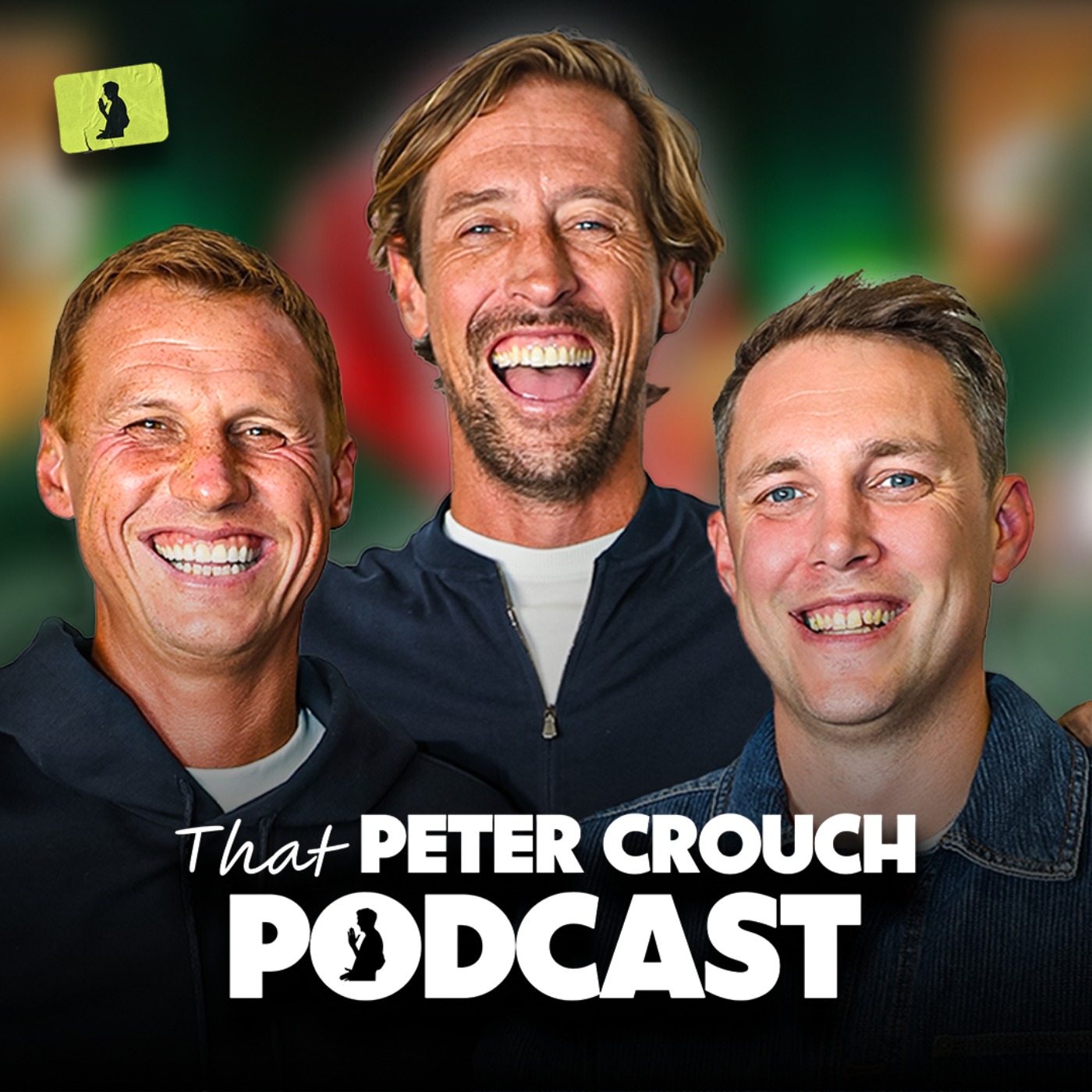
- That Peter Crouch Podcast
- Hal Robson-Kanu: Football Nearly Broke Me—Then This SECRET Formula Saved My Career
That Peter Crouch Podcast2 Jul 2025 · 54m · 18 chapters

Hal Robson-Kanu: Football Nearly Broke Me—Then This SECRET Formula Saved My Career
In short
Hal Robson-Kanu discusses his career-defining knee injuries, how a “turmeric co” recovery blend (made by his father) helped him return to pain-free football, and how that mindset carried into his Euro 2016 success with Wales. He also covers his early Arsenal-to-Reading journey, his famous quarter-final goal vs Belgium, his post-football pivot into a health-food business, and mental health pressures in pro sport.
Guests
Hal Robson-Kanu (former Arsenal youth; Reading long-term pro; Premier League striker; Wales international; founder behind Turmeric Co). Hosts: Peter Crouch, Chris Stark, and Stephen Sid.
Key claims
He suffered two major ACL injuries at Reading, chronic swelling/inflammation, and an adverse reaction to anti-inflammatories (blood in urine, severe nausea). Within six weeks of his father’s raw-ingredient turmeric blend, he became pain-free and returned to elite play. He credits togetherness and preparation changes under Gary Speed for Wales’ Euro 2016 momentum, and says pro football has more depression than other industries.
Notable examples
Euro 2016 quarter-final vs Belgium (his Puskas-nominated goal); learning the Welsh anthem on Gary Speed’s first camp; giving the recovery drink to teammates at Reading (limited supply).
Written by AI. May contain mistakes.
Chapters
0:45
A Sweaty Welcome
Light-hearted banter about the heat in the studio and setting the mood for the episode.
“stopped paying the electricity bill yeah but listen we're cost-cutting it not only i lost the dressing room it's you know we're running a shit show of a business i'm sweating already It's going to be a sweaty episode.”
2:28
Injury and Recovery Journey
Hal shares his struggles with injuries and how he discovered a natural remedy for pain relief.
“That's why we brought you in, I believe.”
5:35
The Birth of a Secret Formula
Hal discusses the development of a turmeric-based blend that aided his recovery.
“That is actually incredible and an amazing explanation about it to be honest.”
8:07
From Arsenal to Reading
Hal reflects on his journey from being released by Arsenal to finding a new home at Reading.
“was with Gareth Bale at Tottenham I was like he was so fit he was so fit strong quick I was like what an athlete what's he eating and I was watching his dietary, fucking beans on toast.”
13:24
Boot Boy Experiences
Hal reminisces about his early days at Reading and the importance of humility in football.
“So you when you're a young lad at Reading whose boots were you on?”
14:00
The Evolution of Football Culture
Learn how the culture of football has changed and the importance of boot boys.
“was old school then you know football's changed massively and even in the last decade again it's changed so much so like so much so to the point where in football they don't even have boot boys anymore.”
17:00
Overcoming Injuries and Building Resilience
Discover how facing two cruciate ligament injuries shaped resilience and perseverance.
19:00
The Secret Formula Behind Euro 2016 Success
Explore the factors that contributed to Wales' success in Euro 2016, including teamwork and belief.
24:30
Reflecting on the Impact of Gary Speed
Reflect on the influence of Gary Speed on Welsh football and the national team’s evolution.
“I know there were certain people that really struggled with it.”
28:00
Memorable Moments in Football
Explore the unforgettable moments that define a player's career.
“And thinking, what the heck have you just done?”
Show all 18 chapters
29:50
The Impact of a Goal
Discussing the lasting impact of a significant goal on a player's life.
“So Belo, we're all blowing at this point in time and it's 1-1.”
31:30
Transitioning from Player to Entrepreneur
Hear about the challenges and decisions involved in transitioning to business.
“Is it just a pint it's put in front of you?”
34:30
Mental Health in Professional Sports
Examining the mental health challenges faced by professional athletes.
“You weren't tempted to put your name on it.”
38:40
The Coach's Perspective
Understanding the pressures coaches face and their impact on players.
40:00
The Role of Therapy in Sports
Discussing how therapy and mental health support can aid athletes.
“Because I'm feeling if it's going to solve the hand.”
43:22
Funny Moments and Messages
Hosts share amusing anecdotes and answer listener questions.
“Availability and coverage vary by state and insurance plan.”
47:50
Approaching the Manager: A Player's Perspective
Discussion on whether players should approach managers about game time.
“But I was wondering, does this sort of thing happen in real football?”
54:50
Gareth Bale and Team Dynamics
Insights on Gareth Bale's character and the dynamics in the Welsh team.
“dragon or something being in the presence of someone yeah i'm gonna invest i'm gonna make you an offer it's a new new new podcast sponsor crouch it's three pound for 50 of the company No, it's a pleasure, mate.”

Ask about this episode
Get the gist, explore an idea or ask about something said.
 Claude
On That Peter Crouch Podcast, what are the key points of this episode?
Searching your listeningTranscript
Automatic transcript. May contain errors.
0:00Chris Stark: Hello and welcome to that Peter Crouch podcast with Chris Stark and unfortunately no SIDS today. Yeah, no SIDS today. Do you know where he is? Apparently he's on his anniversary. Right, he's been getting around a bit of late hasn't he? Yeah, he has been, yeah. I don't know. Shouts are I've lost the dressing room. I don't know. But we should introduce our guest today, it's Mr Hal Robson-Kanu. How are you? Very good, thank you very much. Thanks for having me, Crouchy. it's great and welcome to the chumber one bar it's great you're hanging out with us today can we just start with an apology about the heat um there's no air con in the chumber one bar sadly so we're having a deal with well we've got some fans we've got some fans but i mean there's one for us and one for the guys behind the cameras it's right crouchy stopped paying the electricity bill yeah but listen we're cost-cutting it not only i lost the dressing room it's you know we're running a shit show of a business i'm sweating already It's going to be a sweaty episode.
0:58We should say as well, if you're going to hear fans in the background, there was a huge debate as to whether we should be allowed them, but we've got to draw the line somewhere. Yeah, yeah, yeah. Hopefully it went in for the quality of this podcast. I've got a real sweaty arse right now. Yeah. It's not pleasant. You boys are in trousers.
1:14Chris Stark: Yeah, I know, we are. We are. But just before we start, we get into how we are here. What have you done to your hand? Well, I don't know if I really want to say it. It's a strong hand. it does look like one of those um i've actually just come from the hospital there's a hospital down the road from here so i've just come from here it's um uh so a couple of days ago i was in the swimming pool took my little lad i'll be honest with you took my little lad uh swimming and uh he was in the swimming pool having his lesson right and his kids come up to me and uh his mum and my wife were chatting away.
1:53So I went down to give him a high five. And you know, we do that high five at the side down below. You're too slow. When he did the side one, he's, he's done, done me there. He's absolutely.
2:07Chris Stark: Hold on. You've broke your, your little boy's done you. Bango. Someone else's little boy's done me with the old at the side. Really? But he's gone at it like Andy Murray or something. You've got the follow through. Forehand. Injured by a five-year-old here. Christ almighty. I've got something for that. Something that helps with recovery. So we'll talk about that later. Yeah. That's why we brought you in, I believe. Yeah, that's why we had to help the hand. But talk us through it. Like, obviously, you know, what are you up to at the moment now? Obviously, we've got the turmeric shots here. Raw Hydrate.
2:40Chris Stark: I've spoke to you before. I am a subscriber. Love that. To the turmeric shots, I have to say. Yeah. I believe in it. But talk us through it. Yeah. so basically like a lot of people won't realize like my background as I was a young professional left arsenal joined Redding as a 15 year old I suffered two major ACLs so knee high challenge basically my left knee snapped in half and beyond my right knee complete anterior cruciate ligament rupture went to the surgeon had surgery reconstruction 12 months later began playing and training again and the first game back I did exactly the same injury and again you'll you'll know like doing your ACL like it's a big deal so I went back to the same surgeon and the surgeon basically said like look firstly like it's going to be very hard for you to play at the level you thought you were going to play at and secondly like you're never going to play without pain or restriction again um and so went through the surgery um was committed to my dream was playing in the Premier League, like as a young lad, like that's what I wanted to do.
3:42Went through the rehabilitation another 12 months. And as I began playing and training again, I was just constantly hampered with pain, inflammation and swelling in my knee. Like I'd wake up in the mornings and my knee would be a balloon. Like I'd have to get like fluid extracted out of it every other day. Now had chronic tendinopathy in my knee as well. So I was struggling to physically like compete and get back to the level that I was at previously. So spoke to the physios and docs at the club and was like, I'm really struggling here. I need like support. And they kind of said like, the surgeon told you this was going to be the case.
4:16You're going to have to get on with it. But what they did do, they said, look, we can prescribe you some anti-inflammatories and painkillers. So I started effectively popping these anti-inflammatories, painkillers, things like ibuprofen, paracetamol, diclofenac. And within two weeks, my body had a complete adverse reaction to them. So I started passing blood in my urine, severe nausea couldn't sleep and it got to a point where i had to stop taking this standard medication but i was still constantly hampered with this chronic pain inflammation and swelling and so it was at that point in time that my dad and i basically began asking the question like there must be a natural way to reduce pain inflammation and swelling and we basically went on a research binge began looking at various different cultures around the world various different you know civilizations ancient asian cultures ayurvedic practices and we began to come across like relatively readily available ingredients but ingredients that weren't in a convenient format so things like whole watermelons things like pomegranates pineapples ginger roots and turmeric roots but it was all about having them in their rawest format and over a sustained period of time and anecdotally they reduced pain inflammation and swelling and yeah long story short is you know my dad sourced all of these ingredients began blending them into this like golden liquor and within six weeks of consuming this blend I was completely pain-free and so that was the journey of what is now the tournament code that's how it came about and I used this blend effectively as my secret weapon throughout my career so a couple of months later I was able to get back playing and training a year later I made my first team debut at Reading Football Club year after that I made my international debut for Wales and then a year after that I made my Premier League debut when we got promoted to the Premier League with Redden and I was able to do all of that pain-free.
6:00That is actually incredible and an amazing explanation about it to be honest. I always remember you know that decision we've talked about it before wrestling with leaving football it's a big decision so Matt is you know one of the biggest decisions that you must come across in your career because it's hard to end something but this business side of things you kind of felt that was that was something that could take you out of football to be honest like I wasn't never really thinking about it as like a global or massive business it was more just like how can we get this product into people's hands like how can we actually help people right because I it helped me it helped my family it helped my friends it was helping a few of my teammates at the time whenever they had an injury you know my dad would have to produce more because I'd give it out to them because we wanted them back on the pitch and so your teammates were all on it but made by your dad yeah yeah exactly so it was um yeah it was nuts it was a crazy time but did they get a funny reaction from players um they would always like and i did it like discreetly but as i as i went through my career they'd always be wondering like what what are you what you have like what is that you're drinking with breakfast like what are you having like and i'd be like oh it's just something my dad makes like i use it to help recovery etc but then i began giving it to a few of my teammates so when i was at redden at the time you know paul mcshane stephen quinn like they used it for a couple of weeks and were like, you need to bring that back in.
7:22And I'm like, my dad can only produce so much because it was impossible to produce any more than a couple of hundred a week. So yeah. I wonder if that still exists at Reading, but it's named after you. It's a bit like, there's this video I always like, and it was when Mahrez was at City and he ordered the same food. It was this chicken pasta. I think it was Mahrez, this one. and so then every player would go and order this but it was by his name it became a tradition I wonder if it I reckon it's a Riyadh pasta and I reckon it lives on maybe it's the same with you did you have this anywhere?
8:03Chris Stark: no sort of food or drink tradition no like I said I think the biggest one was with Gareth Bale at Tottenham I was like he was so fit he was so fit strong quick I was like what an athlete what's he eating and I was watching his dietary, fucking beans on toast. I was like, I was eating these beans. So I started getting on it and I didn't get faster. Now you see, what you should have had is more of a business mind here and started producing the beans with your father. Yeah, exactly right. Exactly right. Well, obviously, we're getting to your career, right? It's a shame Sid's isn't here because there's quite a lot of similarities between, obviously, you were at Arsenal as a kid and then ended up at Reading.
8:41Chris Stark: That took us through that process and how hard was that to come back after being let go by Arsenal? Yeah yeah yeah so I joined Arsenal as a 10 year old so I began playing Sunday league football sort of seven eight years old I was the goalie and yeah never really got a look in like my best mate his dad was the coach and but my favourite player at the time was Peter Schemeichael so I was like more than happy being in goal and I think I played like a season in goal did all right um but I would never get an opportunity outfield and in one game the striker at the time um got injured so he had to come off and there was one sub because you always had like one sub in in the Sunday league and you know bit of a you know chubby fellow couldn't really get around the pitch and they were like oh well put him in goal and the pal up front so I've gone up front so I've gone up front and I think we were losing the game like 4-1 and we ended up winning it like 5-4 and I'd scored all the goals and so yeah like began playing regularly in the Sunday League I think I scored like 70 goals in 20 games in a season and then got scouted by Arsenal and as a 10 year old went to a trial at Hairland and Liam Brady was the academy manager at Arsenal so ended up signing with them and was with them for five years like it was an incredible experience and it was obviously during the period of Arsene Wenger and the Invincibles and everywhere was just immaculate you know it's like all of the school boys you'd get to head off to Shenley once a month watch the first team train and it was just like eye-opening to see like the standard and how everything was just like immaculate from the entrance to the pitches to the food and so that was a really good like upbringing of standards who were the players there at that time so it was all the invincibles so it was Vieira um Henri um Adams Sidwell uh so he would have probably been in the academy yeah so he's probably been yeah coming through um like it was Jermaine Pennant was beginning to break through yeah yeah Ashley Cole Ashley Cole Robert Perez like unreal it was incredible and you'd get to go to all of the home games as a as a school boy but I was relatively small as a kid so I was a late developer and at 15 like I was playing I remember playing in games where like my teammates some of them had like beards full-grown beards and were like physically developed they'd obviously gone through that you know growth spurt and I just wasn't that physical and Liam Brady pulled me aside and said look we think you've got a great left foot um but like physically we don't think you're going to be strong enough to play for for Arsenal's first team so we're going to let you go and that was like the first real like experience of disappointment in my life like you know I remember leaving Hell End in tears you know my dad trying to console me and it was like what do I do now like my dream was to to have a career right and so yeah a couple of days later um Brent got a call from academy manager at Reading and um it was Brendan Rogers.
11:53And he was looking to put a group of players together, build an academy where basically they built a pipeline of young players who could break into the first team. And he took me up to Reading, me and my family, took us to the Medesi Stadium and said, look, this is a project here and we feel you can be a massive part of it. You know, you've come from Arsenal, you understand, you know, how to play football. We want to build footballers within this club. So signed for Reading Football Club, 15, and it was brilliant. and it was Steve Koppel was the manager, first team manager at the time. And they were really passionate around building this academy and getting players into the first team.
12:29So as a sort of 15 year old, you know, I was playing, training with the reserves, you know, train every once in a while with the first team. And they wanted to make me one of the youngest ever players for Reading. So I was playing reserve team football and that was when the injury happened to my knee. So that anti-recruciate ligament happened in a reserve team game. I think I was probably maybe a couple of months away from playing in the first team. But that set me back for two and a half years. So for two and a half years, I did not kick a ball. But eventually managed to, as I said, come back and getting back into the first team physically was the biggest challenge.
13:07And yeah, once I'd fully recovered from the surgeries, within a few months, I was back into my usual flow and managed to break into the first team. And then that was the journey into professional football. and you know what it's like like it's always touch and go and particularly with the surgeries I had like there were nights when I would cry myself to sleep because it was impossible like I was close to getting released you know close to not getting that professional contract but in the end like obviously just managed to persevere and and forged out you know half decent career. So you when you're a young lad at Reading whose boots were you on?
13:44So when I signed as a scholar i was a boot boy for steven sidwell um they've been a question
13:54Chris Stark: how was he um did you give a good tip at christmas yeah to be fair like he was that they were and it was old school then you know football's changed massively and even in the last decade again it's changed so much so like so much so to the point where in football they don't even have boot boys anymore. And I think that's absolutely absurd. You know, it's the, it's the best grounding, you know, having to be in training before all of the first team, those winter months where you're cleaning the boots and you're having to crack the ice outside in the water tub, like, you know, builds that character.
14:28Um, but yeah, we, we had a few old school, um, heads in the team, obviously city Graham stack was there for a while, you know, James Harper. Yeah. Yeah. So, um, so we had it was a good culture like old school but good culture and it was ultimately about like respect discipline you know and and turning up when when you needed to and and that was that was something which for me was really good and city was brilliant with me like i probably doesn't even realize
14:59so to be fair i'm still waiting for it so yeah
15:01Chris Stark: i was on david ginola's boots and uh and and les was the one you wanted les fernand was the man right you give you that 200 quid at christmas and um i remember ginola uh he didn't give me anything right and i was like i need one player a year and everything so i had to tap les i said just to let you know but david hasn't given me anything and uh he said no in my in our culture we always always um like happy new year and i was like which he totally blagged it he obviously didn't know the rules but um yeah give me 60 quid I still remember David Howells was the other one he was good yeah nice it means a lot don't have to be a young kid like that and as a kid like you're you know when I was a scholar I was earning 55 quid a week you know so if you get a tip of two three four hundred quid it's massive unbelievable yeah the second year as a scholar I was Louis Elite as boot boy and he he said to me at the start of the year he was like listen he was like for every goal that I score I'm going to give you a tip of 50 pounds and by Christmas he'd scored 10 goals in the league and I was absolutely buzzing.
16:07I was able to get all of the Christmas presents. I've not heard of this one before. So you were on a goal bonus. Performance related. Performance related. On the idea that the boots being extra, like you had a roll. Yeah, yeah, yeah. And again, like that's, so for me, like now in football, none of the scholars do it. Like it's absolutely absurd.
16:24Chris Stark: It's a shame because it kind of gives you a connection to the first team as well. Correct. Because you're then now around them all the time. You know, you forget the boots, they let you know. You know, they're not cleaned in the right way. You get told. I don't know. It just creates a kind of link between you and the first team. It's a good thing to do. It sounds like a structure that exists, say, in professional kitchens with chefs and the different levels and how you rise through the ranks, the military. It feels to me that structure probably benefits, especially characters that need a bit of direction or discipline.
16:52Chris Stark: Yeah, definitely right. 100 % of footballers definitely need that, certainly at a young age. But we have a saying here, this is the Chumba one bar, obviously. The Chumba one bar song is you get knocked down, you get back up again, right? and back stronger is another theme of ours you have a cruciate um injury at that young age how like how mentally tough is that you haven't broken through yet you know you're not a player yet how difficult is that mentally to overcome yeah so i think like a lot of people won't have known that i had two cruciate ligament injuries like particularly even in football like everyone thought i just came through the academy you know went through the usual path but to go through that I think like it really helped me build like that perseverance and you know that discipline and you know for any young kid out there like I was never the best footballer the best you know technically you know the best tactically but one thing you could guarantee from me is like every single day like I turned up and I gave my all and I think like that goes such a long way because when you're in a game in a first team and you know people's livelihoods are relying on it right like if you get relegated you know people lose their jobs at a club whether it's you know the kit man or the you know the canteen lady and it's like it's real it's real life and so how do you build a team that you can rely on the turmeric co is the whales of the beverage yeah industry because they are the underdogs they've got pepsi belgium right and they're and they're mixing it with the big boys i see what you're saying i'm trying to say and also i mean i think you're right what you're getting me thinking now is this was this the secret sauce to euro 2016 without did you have everyone on this stuff yeah yeah so there was a limited supply available because at that point in time my dad was still making in the kitchen and we were away for long periods so he was having to send it out in parcels to me um but yeah like I was using it throughout and um it was my secret source which helped me allow to you know create a special moment for for the nation yeah we obviously we've skipped a little bit and obviously I want to get on to West Brom and Reading as well but but since we're there we have to obviously talk about that Euro 2016 and and what a special experience and you know how how did it come about was it just all the stars aligning and all the all the players being kind of in the prime of their life at the right time because you know it's way Wales is in football terms it's the it's the first they've ever gone right yeah yeah it was it was an insane moment in time and like it would be so hard to like replicate that again like you said you know we had a global superstar in our team you know but then we also had like real top top talent the likes of you know Aaron Ramsey, Joe Allen, Ashley Williams who who were all playing you know major clubs or being linked to these major teams and that's like yeah you need that to perform at any international level right because it's the highest level of professional sport but what we also had was that togetherness and that commitment and that internal belief that you know if we all turn up like we we can do something that hasn't been done before and and yeah that's what we did it just it felt like there was an amazing togetherness like the crowd was just like it was amazing I was in the fan park you know I was in France it was it was incredible the atmosphere everything about it was just just being able to create something like that obviously you know my time with England it was it was a bit disappointing to be honest we had good moments we had great moments but in major tournaments we didn't really fulfil expectations whereas obviously with that tournament it feels like you kind of overachieved really and to give the people that much enjoyment must have been so special and we saw it and and we were feeding off that as well like it wasn't a case of you know we felt we felt completely aligned with the nation and with the fan base like we knew the impact that we were having on the nation as we progressed through the tournament and won those key games you know had those special moments and that sort of feedback loop like just generated that momentum what made that feedback who was kind of who did you most feel that from how was it relayed to you i know the management staff quite well i did my coaching badges in wales uh so i know ash obviously yeah uh because coleman and some of the backroom team yeah and good people right yeah very good people very good people and and look like for wales as a nation i remember i made my debut under john toshack and um when i made my debut uh Wales were 140th or something in the world and I turned up to this first camp and no no disrespect to you know John Toshek but it felt like a Sunday league set up like the balls weren't ready um you know there wasn't really any organization or any prep done um the team was sort of named last minute and it was like what's going on here and my expectations were you know I was thinking, goodness me, like, it's going to be amazing.
22:10And I came away thinking like, you know, that's not quite what I was expecting, but John Toshak, he didn't last long in the role and Gary Speed obviously came in. And I remember the first camp under Gary Speed, we turned up and everything was immaculate. Like the balls were immaculate. Everything was fresh. Like the cones, the pitch was all prepared the sessions were prepared the schedules the agenda the itinerary was all done in advance and everyone was on time for everything because of Gary Speed and so he was the real catalyst for that group of players within the nation and even like little things right he said he said at the time like one of the things he said in his first camp was look like I know we've got a lot of players here who might have been you know born in you know England or born in other parts you know of the world but you have Welsh heritage like one thing that I expect is that everyone learns and sings the national anthem so I remember like on that first camp like sitting in the room with Neil Taylor who's the left back played for Swansea and he was teaching me the national anthem I was literally like learning it learning it and like little things like that just built that togetherness and that momentum and off the back of it again you know tactically there was a lot of work that they did and they changed our approach made us solid as a group so we weren't we weren't easy to break down and I think that's where when you get to international level if you go gung-ho toe-for-toe with the majority of international teams you'll just get picked apart and so all of that happened and we began to get momentum and we had Craig Bellamy as a senior player in the team as well and he was like performing really well for us and he was driving those standards under Gary Speed and yeah like we went on some crazy runs um you know I think we went sort of five six seven unbeaten at international level which is very hard to do and um yeah like that was the real catalyst and that gave us that sort of platform to ultimately achieve what we eventually were able to achieve under Chris Coleman who obviously took the helm yeah I mean
24:22Chris Stark: How difficult was that? I don't want to get too deep into it. How difficult was that when, obviously, the news about Gary Speed? I know I was close to quite a few players. I know there were certain people that really struggled with it. How did you find it? Yeah, I still remember the moment hearing the news. And it was certainly surreal. And for us, as a group, we all looked up to Gary Speed. And the likes of Aaron Ramsey, Gareth Bale, like you everyone respected him massively and you know even craig bellamy like he was the what gary sue was was one of the few people who bella's wouldn't wouldn't wouldn't say a word to wouldn't cross because it ultimately out of respect right and so i think that part of it made it really hard to sort of deal and process with it and it it had a real you know knock on effect for us as a group but again like that togetherness like we had to come through it somehow and it was really it was a challenging time and when Chris Coleman came in like we were on the you know we were ascending as a nation and we were really performing well and credit to Chris Coleman coming in and stepping in at that time because he really handled that you know he navigated that time that turbulent time to sort of give us that stability as a group and then reinforce the original direction that gary speed had put in place and we began to get that momentum under you know under chris coleman and and yeah went on to to do what we did okay so we're kind of skirting around the fact that you scored one of the greatest goals in tournament football we've got we've got we've got to break we've got to break this down I was watching this go live it got nominated for a Puskas award yeah it did did it yeah it did isn't it I've played football my whole life right and I've scored I've scored a few goals that I'm very proud of but one thing I never did was score in a quarter final with a major from my country in a moment against a team far higher ranked than you in the and the manner of the goal I think Johan himself right the great man himself would have been proud of that croif yeah um talk us for it it was um it was it was insane it was insane and and like yeah like i think that start in 11 for belgium was like it's like three quarters of a billion pounds or something stupid like that and And we had played Belgium twice in the qualifying stages of the European Championships.
27:03And we were kind of just their bogey team. They couldn't really break us down. And we knew that if we could get a bit of magic from like a Baylor or Rambo, like we'd have a chance here. And they scored early on in the game and we were like, and Belgium, I think they were ranked number two in the world at the time. and again, playing between the lines, like they could control the game. Like you were doing a lot of running when you went into a game against Belgium. And we were thinking, this is going to be a long night. Like they could tear us apart here. And we just like managed to get, you know, some solidness into the team in that first half and managed to not concede again.
27:43And obviously Ashley Williams got the equalizer and we went into halftime 1-1 and it was like, we're in a game here. They're like, we could do something here. And then we've gone out for the second half. And to be honest, it is just a blur to me now. Like, all I remember is being sat in the changing room after and Gareth Bell just staring at me. And thinking, what the heck have you just done? And I was like, I honestly don't even know myself.
28:13Chris Stark: Do you ever have a moment like, I do it sometimes. I remember getting in my first squad and it's the first game in the World Cup. at 2006 Paraguay. I'm playing for England and I'm starting and I'm sitting in the changing room and I'm looking around like Beckham, Owen, Lampard, Gerrard, John Terry, Rio. And I sat in the changing room and I thought it was World Cup. I'm like, how the fuck did I get here? Did I get here? Yeah, it was one of those moments. How did this happen? It was one of those moments. Wow. Honestly, honestly, it was literally, it was like that. And like, you know, at the time I was, I'd just run down my contract at Reading.
28:52Like, Reading weren't investing into the team. Like, we'd come down from the Premier League a couple of years before, had signed a new contract with them, ran down my contract because I was thinking, you know, it's just not got the direction as a club that I want to be at. And I wanted to be back in the Premier League. So I'd run down my contract going into this tournament, which again, I wouldn't recommend to anyone because... Nervy, right? Nervy, yeah. Injury, anything. Injury, you know, performance. you know you're getting judged all the time and so yeah like I think it was just such an insane moment and you know like you're saying they're like when you look back on your career when you finish your career you realize that careers are literally built on moments and you know some players will go throughout their entire career and not have a moment they still have a decent career and might have an amazing career but they don't have moments right which are remembered and And yeah, like I basically just had a moment and I'm so grateful for it.
29:46But yeah, how it came about, like I can't tell you.
29:49Chris Stark: Well, listen, we're going to dissect it if you don't mind. Obviously, what are we? 50, we're second half here, aren't we? Second half, yeah. So Belo, we're all blowing at this point in time and it's 1-1. And yeah, Belo, Ramso does it all of the time. Comes into me there and I'm just thinking, oh, see you later. Oh my God. Yeah, so. You sold two of them there. Yeah, sold two. Exactly. He's sold two of them. I mean... But it's quite funny. So in the replay, you'll see like... Neil Taylor is running and open. So look, Neil Taylor's here on the left-hand side. He's literally open. That's why everyone was running towards him.
30:27So he's run. And he's shouting. He's like, how? He's like, how? And I could see him, but I was like, oh, I think I could create a bit of space. Yeah. And I'd bodied him. That's what I like though. That's what I like. Yeah, yeah, yeah.
30:38Chris Stark: So what I love about the goal, there's so much flair and technique, but the strength to hold him off and then the presence of mind to use Debron and Cruyff it. And then obviously in that situation, you can blaze that or you can panic. You've done the Cruyff and the calmness to tuck it away. Yeah, no, I saw it and I was like Courtois and he looked massive in that goal. Like there I can see him in my peripheral and I'm thinking he is massive. So I was like low and hard, managed to put it in the back of the net and I never did it again. So it was fine. yeah honestly it gives me goosebumps honestly i just you know i like people i just like to see people doing well and like that was a special moment yeah but off just off that sorry pete like just off that is it must still get talked we're talking about it now if you go into a pub in wales is this the goal that they come and talk to you do it like at least once a year Is it just a pint it's put in front of you?
31:35Chris Stark: At least once a year, I'll just go to the centre of Cardiff and go, cow has arrived. No, it's like Cardiff is nuts. You can't really go to Cardiff too much. So I kind of just keep my head down and, yeah, sort of finish my career. I'm grateful for what I did, but it is nice when someone mentions it every now and again, you know, it feeds that ego and you're like, oh yeah, it was quite a good moment. It was a special time. but yeah. That's such a good idea, Pete. This is what should happen if you don't have a statue in the middle of Cardiff is once, maybe you're right, once it'll be six months, once a year.
32:10Yeah, there must be like a walkabout
32:12Chris Stark: or something. You know, but you know like them human statues on the South Bank, you just put yourself out a little plinth and just stand on there for one day. A temporary human statue. Special. You deserve it though. It's, as you say, phenomenal to have a moment and to be remembered with a moment like that. And also, you know, like you've been let go from Arsenal, you know, obviously you've struggled, you've had your injuries, you know, and then you end up with something like that that you can hang out on. Let's not belittle your career. You know, you had a fantastic career. What was it, 10 years at Reading, were you?
32:47Yeah, so 10 years at Reading. West Brom. West Brom, went to West Brom after that. So again, after that, it was like, you know, there was a lot of opportunities. Like a lot of them were like international and sort of silly money, like China and, you know, Turkey and Abu Dhabi. And it was like, no, my aim was to get into the Premier League. But I wanted to go to the Premier League where I felt like I could actually feature in the team. You know, I didn't want to go in as like a real squad player. And so, yeah, I ended up signing for West Brom back in the Premier League. They had done really well that season.
33:21Tony Pulis was the manager. And from a style of play, like physically, I felt like I could really perform well under him. you know he wanted his strikers to be mobile you know to to hold the line run the channels um so that was really like a strong part of my game so yeah signed for them and we had a decent you know few years there and yeah like you know we had a number of years in the Premier League had some great times great great moments and you kind of got to a point where I was 31 and still playing in the Premier League but the business was growing relatively quickly you know i believe that we could have a tangible impact on society um there there there isn't as much disease and ailment in the world than there is today like there hasn't never been as much as there is and it's like why is that for me a big part of that is our food system you know and lifestyle and so yeah i just felt the opportunity to build a global brand and business with a product range that actually works was um was an opportunity to take so I decided to finish early professional football and focus solely on on the business that's such a difficult thing to do though
34:30Chris Stark: like obviously you love the game you can tell as much as I do and um for me letting go of the game was so hard and I think you have to make a conscious decision obviously you must have been obviously going well but I still think it's a brave decision you definitely could have had offers elsewhere um were you in talks elsewhere yeah yeah there was a quite a few talks and it was just like I said it was almost like do you sort of play out your career and you know move to a club you know you gotta move your family you gotta move there's it's a big commitment and that's the thing like as much as as a fan base and supporters like you see your team turn up for 90 minutes on a Saturday like you don't really realize the level of commitment that has to go into turning up ready to perform for 90 minutes on a global stage yes like the benefits and the rewards are all amazing you know so it's an incredible lifestyle but you you have to sacrifice so much and that's why like in football now like you see you know i find it so funny when people be like you know compare a player or you know oh it's who's better messi or ronaldo and someone would be like oh yeah no ronaldo's shit man like messi's the one you're like fuck it do you know how good he is like to get he's gone through so much to get where he's yeah and it's like and even like uh whether it's a premier player or championship player or even like league one players like to get to where they have got to it's harder to become a professional footballer than it is to get into oxford or cambridge like it is the creme de la creme and so yeah like i just respect that so much but for me at that point in my life it was more like look i genuinely believe I can create something, you know, which will supersede what I've done in professional football terms.
36:12You weren't tempted to put your name on it. You didn't want to go down the Dr. Pepper route.
36:16Chris Stark: Dr. Pepper? Is he a real doctor? Is he a real doctor? Yeah. No, no, no. So we kept it nice and basic, the turmeric co. But yeah, like within it, you know, the business now, like we obviously had to set up manufacturing. We had to scale manufacture alongside the growth of the business. So we had to upscale that. You know, I run operational manufacturing teams. We've obviously got, you know, sales and marketing teams within the business. But yeah, for us, like we're playing now in a equally competitive space where you have to turn up all the time. You have to show up. You've got to give your best.
36:50You need to be the best in order to perform. And performance for us is getting the product into people's hands and getting the testimonials back from them and seeing the impact that we have.
37:00Chris Stark: So this is making me feel slightly guilty about playing Mario Kart with um Marco Naovovich and Bojan when I was 32.
37:10We started dabbling with podcasts in a bizarre way it was a very similar turn of events for me
37:17Chris Stark: because the podcast kind of took off and you know I had a book that went really well and I found myself kind of in this space and I was a lot older than you you know I retired at 38 but it was kind of like I maybe could have done another year but I kind of thought you know these this is going well and I'd pursue this kind of career and you know, it's going well. No, but for me, I felt better physically than I had ever done at the age of 31. So it was very much a conscious decision. But like, yeah, one thing I would say about professional sport, and I mentioned how competitive it is, professional football, like they're looking at players and understanding like behind the scenes of you know the pressures that players are under like I would say like there is more depression in professional football than in any other industry like there are a lot of players who struggle with their careers but then also that transition from career into you know what you do post you know and if you think professional football is lots of adulation you know lots of rewards for what you're doing but it's it's only there for a very short space of time when you look at like life in the grand scheme of things and and I think there's a lot more that needs to be done around like the mental health side of you know professional football and professional athletes in general but for me professional football is such a high intense highly focused like high pressurized environment where the care isn't really there it can feel from the outside at least it's quite unforgiving in places as well there's a footballer obviously not going to name who um who basically had to stop playing because he was suffering from depression but the way he described how the manager was dealing with him i just felt it it seemed totally unsympathetic to his situation um because it was almost viewed as a kind of this is a private problem for you to deal with and yes there could be offers of support and that but it came back to the fact the managers choosing players that then play that weekend and he just didn't feel supported in in that way yeah i imagine that's something you must have experienced quite a lot in the game yeah like you there's no way that you could knock on the manager's door prior to a game and be like i'm really struggling here gaffer like regardless of whatever manager you know and it's not sort of discrediting managers but simply because they're so focused on getting the result on the weekend like it's such a highly pressurized environment and it's like if you went in and said i'm struggling like you you wouldn't be involved in that playing squad on Saturday like simply because the risk is too much but yeah it's um it's definitely something that needs to be spoken about more and actually like support mechanisms and frameworks actually delivered in because yeah like I've seen it a lot and I've had a lot of players reach out to me because they've sort of seen me do that transition from sport into you know a different industry and be as passionate as in that industry as I was about sport and so yeah like I've seen it and I can see it happening firsthand so yeah would you get into managing or coaching or would you would you bring that side of the game into your life again um no I think like it's such a massive commitment as I said like as a manager you need to be even more committed than the players like you need to be first one there last one leaving um you know to to be successful so yeah for me at this stage like I'm 36 years of age I'm still relatively young generally but yeah like I'm clear on what I'm trying to do and focus on have you sponsored a football team yet?
40:55yeah we've done a few partnerships we've not done front of shirt sponsorship yet we'll aim to get to that it's got to happen it's got to happen yeah so we need it's got a little West Brom or a Redding yeah it would be pretty cool so but yeah we're working towards it so watch this space for sure great
41:13Chris Stark: alright well listen I'm a regular with the turmeric. I'm a subscriber, as you know. Talk us through the raw hydrakes. Can I have one of these? Because I'm feeling if it's going to solve the hand. No, honestly, that little Suarez thing you've got on you, on the Benzema on your hand. Benzema. Do you want me to open it? You might have to open it. The minute you have that shot, it's going to come off. Embarrassing, mate. Honestly, mate. You'll be high-fiving five-year-olds in no time.
41:45come on have it down in one mate so so you the thing is with this it's not some miracle cure it's the idea of a balanced healthy lifestyle i'm imagining yeah correct yeah so there's like there's nutrients macronutrients micro a bit of spice gone down in one there we go there's a little bit of a kick in there therapy's biggest impact doesn't show up in some dramatic breakthrough it shows up in the smallest moments you bite your tongue instead of escalating you put your phone down instead of firing off that text you say what you actually mean instead of what would hurt someone else the most nobody applauds those moments but they quietly change your life that's what growing feels like and And that's exactly what Grow Therapy is here for.
42:32Grow is therapy that works, covered by insurance. Sessions average$21 with insurance, and some pay as little as$0, depending on their plan. There are no subscriptions, no long-term commitments. You just pay per session. Grow connects you with thousands of high-quality, licensed therapists across the U.S., offering both virtual and in-person sessions, nights and weekends. You can search by what matters, like insurance, specialty, identity, or availability. And you can book a therapy session in minutes and begin in as little as two days, not the national 48-day average. See if you could pay as little as$0 for therapy in seconds at growtherapy.com slash start now.
43:15That's growtherapy.com slash start now. growtherapy.com slash start now. Availability and coverage vary by state and insurance plan.
43:52hairs on my chest there's none there smooth as a dolphin is it yeah yeah yeah yeah give it a shake but then this one so this is whole crushed watermelon juice um so again like pure hydration like and this is our innovation so this is a new brand that we've launched look stocked in Sainsbury's but natural electrolytes hydrates much better than typical sort of like hydration sports drinks which are laced full of sugar and sweeteners so yes that's lovely that yes I'll be
44:30Chris Stark: honest with you I had a few at Ascot yesterday yeah perfect timing the raw hydrate is ideal for exactly how I'm feeling yeah nice all right listen how great to have you on mate we've got a couple of messages if you wouldn't mind sticking around for us yeah yeah absolute pleasure
44:50Chris Stark: Right, I've got a few messages here, if you don't mind. Hi, Peter Crouch, Stephen Sid, Ron Chris Stark. Very formal. Could you please tell us more about your appearance on Rio Ferdinand's World Cup wind-ups? I've watched the show at least once a year since it came out. I'd love to know the process behind you getting murked. Kind regards, Alex Skolnick from Newcastle. This needs to come back, by the way. Murked? well it was his version of Punk'd wasn't it remember Punk'd yeah of course Rio did one around the World Cup and then you got murked I did get murked yeah and it was basically Robbie Fowler at the training round said to me there's a guy a big Liverpool fan who's doing a big development in Dubai or somewhere he wants to come meet you and I was like look Rob I'm not really that interested and he was like you've got to come meet him because he's given him half price I went there stay away I thought there's something going on there was a very small man who answered the door and he got on a ladder to look through the peephole.
45:49Chris Stark: Obviously, I couldn't see this, but there was a camera on the show. And he answered the door anyway. Anyway, these two kind of women in dressing gowns kind of ran through. I was like, whoa, what's going on here? Then all of a sudden, these Russian gangsters come in and they take the man who's doing the pitch and they threaten to cut his hand off. And I'm like, whoa, what's going on here? Anyway, Rio comes in. It's a bit like Beatles about it. I remember, you know, he got in a bit of trouble for that because he did Becks. Didn't Becks end up running down the road? So David Beckham got, because it was around a time where it was just carnage for him.
46:25Chris Stark: Yeah. He's getting papped everywhere he goes. So he got in the footwell of the car. Yeah. Underneath the Lowry, hiding. But the camera's already rigged with a camera, right? So we're just seeing kind of a glimpse into his lifestyle where he's hiding in the back of his car. Goodness me. And he's got a hat on. Anyway, he gets in the car, He drives out, and then he kind of pops up when he's realised he's shaking the little paparazzi off. And then he jumps up, and the fellow goes, oh, David Beckham. And he goes, yeah, yeah. He goes, oh, I'm going to take you to my friend. He loves you. And he's gone, no, mate, I'm just going to this shop, and then I'm quickly going back.
47:02Chris Stark: And he goes, no, no, he'll love it. And obviously he panics. So he's driving through kind of Moss Side, Manchester now. And Beck's just thinking he's getting kidnapped, right? so then he just jumps out the car starts running down the road and now Rio's running after him and like running down the middle of Manchester with the camera crew going no Bex it's just me imagine you're in that traffic jam yeah when you see Bex running down the road crazy we should on that as well you know it's a couple of weeks old this news but I don't think we've had a chance to catch up on it finally got the knighthood Sir David Bex Sir David Beckham Sir David well done congratulations keep grafting it's what you're saying keep grafting yeah yeah yeah okay alright let's move on Crouchy Sid Walsh Stark and Robson Carnot today regards to all your family playing FIFA or FC 25 whatever it's called these days I get approached by a reserve playing telling me they are playing well at the moment and hope they won't be benched I reply with a nondescript I haven't made my mind up on the team yet or some nonsense as it's a computer game.
48:13Chris Stark: It doesn't really matter. But I was wondering, does this sort of thing happen in real football? Do players approach the manager and ask to play? Did any of you ever do it? Cheers. That's Gordon Hart's fan up in Body Scotland. Do you want to answer this one? Yeah, sure. Do you want to see the manager? Yeah, like to be honest, I think any player, if you're not playing, you're knocking on the manager's door all of the time. So yeah, like if ever I wasn't being featured, like you want to know why. and yeah I think it's it's easy for a lot of managers if you're if they've got a selection issue to go with like the less hassle so sometimes kicking up a fuss it can work in your favor so yeah how about yourself I 100 % agree with that like I think these days though things are different like I think a lot of players would hide behind an agent now like I remember seeing it and it was something I disliked towards the end of my career I was like if you've got a problem you know go and see the manager you know it's like we're all grown men here yeah I think sometimes you know I see I kept seeing it all the time towards the end of my career like agents coming in and like family members and I'm like always get it all the time but then if that's happening all the time do managers now expect to have to deal with agents and therefore you look a tad unprofessional if you go to the manager yourself or do you think nine times out of ten a manager would probably respect it.
49:32Chris Stark: I genuinely think manager would respect the fact that you go face to face and speak to, you know, and also hiding behind social media and putting agents putting, you know, something out or sometimes, you know, we've had it with wives and brothers and sisters. You're like, hold on a minute. Like, I think if that was me as a player, I'd be, I'd be embarrassed by that sort of thing. Yeah, but it's another generation now, isn't it? Like, and I think the culture in football has changed. Like, there's a lot more, there's a lot more like mollycoddling of players now because, it's a different generation, like, and a lot of the players now probably have grown up with social media, like, at the forefront of their lives, so, that human one-to-one connection that you'd be like, you know, gaffer, can we ever talk?
50:14Like, they just don't get it.
50:15Chris Stark: But you know what I remember? I remember a couple of times where I'd go in in the morning fuming and played the week before and I'd go, right, and I'd kind of chill on the way to training a bit, listen to a few tunes and by the time I get in there, I was like, oh. not as angry as I was you know so I remember going up there and going right I'm going to do it I've got to do it I walk up and I go I'll just go and get a cup of tea and then you kind of build yourself up to go no I've got to do it I've got to do it you couldn't shit yourself so I end up going right I'm in because sometimes you know Harry Redknapp's got you know cut you down people like that like Rafa and explain the situation you can end up out of the team for a lot it can do more harm than good sometimes yeah it's true it's true Okay, last one.
51:00Chris Stark: Hello to three of the buggers. I'm emailing in from Christchurch, New Zealand. I grew up in Brentford, not too far away from the old Griffin Park stand, not too far from us. Yeah, yeah. Fellow West London boy. Correct. On the last podcast episode, you asked if there were any 20 mile an hour speed cameras anywhere in the UK. Oh, yeah. It is a football podcast, Hal, but sometimes we get into the nitty gritty and some serious things about 20 mile an hour cameras. It just so happens there is a 20 mile an hour speed camera on the Ealing Road in Brentford. I checked Google Maps. It's still there. I reckon you should get together some absolutely rapid Premier League players and see if you can get any to trigger the speed camera by sprinting past.
51:39Chris Stark: This is why we were talking about it. We were saying, what a great photo would be if you can be fast enough to trigger a speed camera. Could Gareth Bale, if we look at it here, we've got Nunes, Mbwemo, Minta, and Alanga all over 20 miles an hour in the Premier League last year. 22 miles an hour. What was your top speed crash? We did look at it. I was third slowest of all time. Is that correct?
52:08Chris Stark: That's not bad. Barely mind, that was one season I struggled out you had an injury. There you go, Adam. That was from Adam, that message. What we can do is add that to the list of things that we need to try. Can you mark that down, Ross, that we need to get Gareth Bale on the Ealing Road?
52:27Chris Stark: right how just before we go how good was gareth bale like you know and also think of that the dynamic in the wales dressing room sometimes you've got kind of leagued wales players or you know players from league one mixing with the likes of of ramsey joe aden as you say and gareth bale how is that dynamic yeah to be honest i think the biggest thing like in that well welsh team like there was very few egos and obviously you played with bale like he's you you know, likes nice things, likes to do things properly, but he's not got a massive ego. Like he's not going to, he knows he's the best player, you know, he knows what he can do, but he's not going to be sort of rubbish in another player about where they're playing or whatever.
53:06So I think that was the first sort of like element of the ability for players at different levels, whether it was, you know, champions league through to championship or league one, being able to play together but yeah like I just remember I think it just it was about to move to Madrid so it was under Andre Villas-Boas that season and we had a camp mid-season and it was a 11 aside on half a pitch but it was quite tight because the width was only the 18 yard box so it was a real tight session like everyone's playing like 11 v 11 and he was like off the striker it dropped off I was playing in front of him and uh fullback uh Neil Taylor's like pinged the fizz the ball into him like in the pocket and he's like spooned it so he's it's gone sort of like waist high up to Balo and it's probably like three feet to the side of him and I remember just like thinking there's no way he's gonna control that at all and he's just literally plucked his foot up in the air moved his body and touch the ball and the ball's literally like been killed dead stop in his path and i was like that is insane like that ability to control really yeah it was just like that is like like world class and yeah like i saw him do some insane things with with the ball yeah incredible
54:27Chris Stark: player it was a privilege well also a privilege to have you on today how and uh you know good luck with the business i know it's flying um but it's it's something that i've had in my life for while now i remember i interviewed you a while a while back i think you might be even still playing um it might have been just before the euros actually yeah yeah and um i remember you put it onto me and you sold it to me then and obviously you sold it to me again now also i feel like a dragon or something being in the presence of someone yeah i'm gonna invest i'm gonna make you an offer it's a new new new podcast sponsor crouch it's three pound for 50 of the company No, it's a pleasure, mate.
55:10Chris Stark: You're a top guy. I really appreciate it. Thank you for having me, guys. Cheers.
55:18Colon cancer is on the rise. It's the second deadliest cancer and the number one cancer killer of people under 50 in the US. Yet it remains one of the most preventable cancers. If you're 45 or older and at average risk, it's time to talk about screening. Cologuard Plus is a non-invasive at-home collection kit that requires no prep can be completed in about 15 minutes and is 95 % effective. If you've been putting it off, you're not alone. But timely screening matters. Let's talk about what isn't talked about. Talk to your provider or request ColoGuard Plus online, Rx only.
From the publisher
On this week’s episode of That Peter Crouch Podcast, Pete and Chris welcome Welsh legend Hal Robson-Kanu on the pod!
From youth football rejection to that unforgettable Cruyff turn goal at Euro 2016, Hal opens up about his rollercoaster of a career—one that includes two ACL ruptures, founding a multi-million pound wellness brand, and becoming Wales’ unlikely hero on the global stage.
The lads dig deep into Hal’s journey, how his homemade turmeric shots went from his dad’s blender to supermarket shelves, and why inflammation might be the root of most modern-day health issues.
There’s talk of brutal Premier League realities, the dressing room dynamics no one sees, and how football still fails players when it comes to mental health.
Plus, what it’s really like being a boot boy for the one and only Steve Sidwell, why David Ginola was tight at Christmas, and the story behind how a promised £50-a-goal bonus proved surprisingly lucrative for a young Robson-Kanu.
It's a brutally honest, hilarious, and inspiring insight into a career that's anything but ordinary.
Chumbawamba
00:00 – Introduction
02:39 – Hal explains the brutal knee injuries that nearly ended his career
05:31 – How a homemade turmeric blend made Hal pain-free in 6 weeks
10:22 – Discovering other turmeric drinks were “glorified apple juice”
13:05 – The transition from footballer to founder of The Turmeric Co
18:14 – Arsenal rejection: Hal’s emotional first career setback
21:08 – Why boot boys mattered and how that’s now lost in modern football
25:17 – Going head-to-head with Coca-Cola: Hal’s startup battles the giants
27:19 – “The Wales of wellness” – Euro 2016 and the underdog mentality
35:08 – The legacy of Gary Speed and changing Welsh football forever
38:36 – Breaking down that Euro 2016 goal vs Belgium—step by step
44:18 – The hidden sacrifices of being a professional footballer
47:02 – Depression in football: “There’s more than in any other industry”
55:00 – What’’s Gareth Bale really like?
Follow our Clips page https://www.youtube.com/channel/UCLNBLB3xr3LyiyAkhZEtiAA
Check out The Tumeric Co: https://theturmeric.co/?tw_source=google&tw_adid=708157495343&tw_campaign=7849628782&tw_kwdid=kwd-419768594878&gad_source=1&gad_campaignid=7849628782&gbraid=0AAAAACp5U-P796xb6MtfvlpW_ovT2_zCW&gclid=EAIaIQobChMI3_eS6N6RjgMVCYxQBh16bjEGEAAYASAAEgJtFPD_BwE
For more Peter Crouch:
Twitter - https://twitter.com/petercrouch
Therapy Crouch - https://www.youtube.com/@thetherapycrouch
For more Chris Stark
Twitter - https://twitter.com/Chris_Stark
Instagram - https://www.instagram.com/chrisstark/
For more Steve Sidwell
Twitter - https://twitter.com/sjsidwell
Instagram - https://www.instagram.com/stevesidwell14
#PeterCrouch #ThatPeterCrouchPodcast
Hosted on Acast. See acast.com/privacy for more information.
More from That Peter Crouch Podcast
All episodesWe use cookies.They keep VO running smoothly and help us improve it. Privacy policy