
 Ask ChatGPT


 The Business of Fashion Podcast
16 Oct 2026 · 33m · 11 chapters
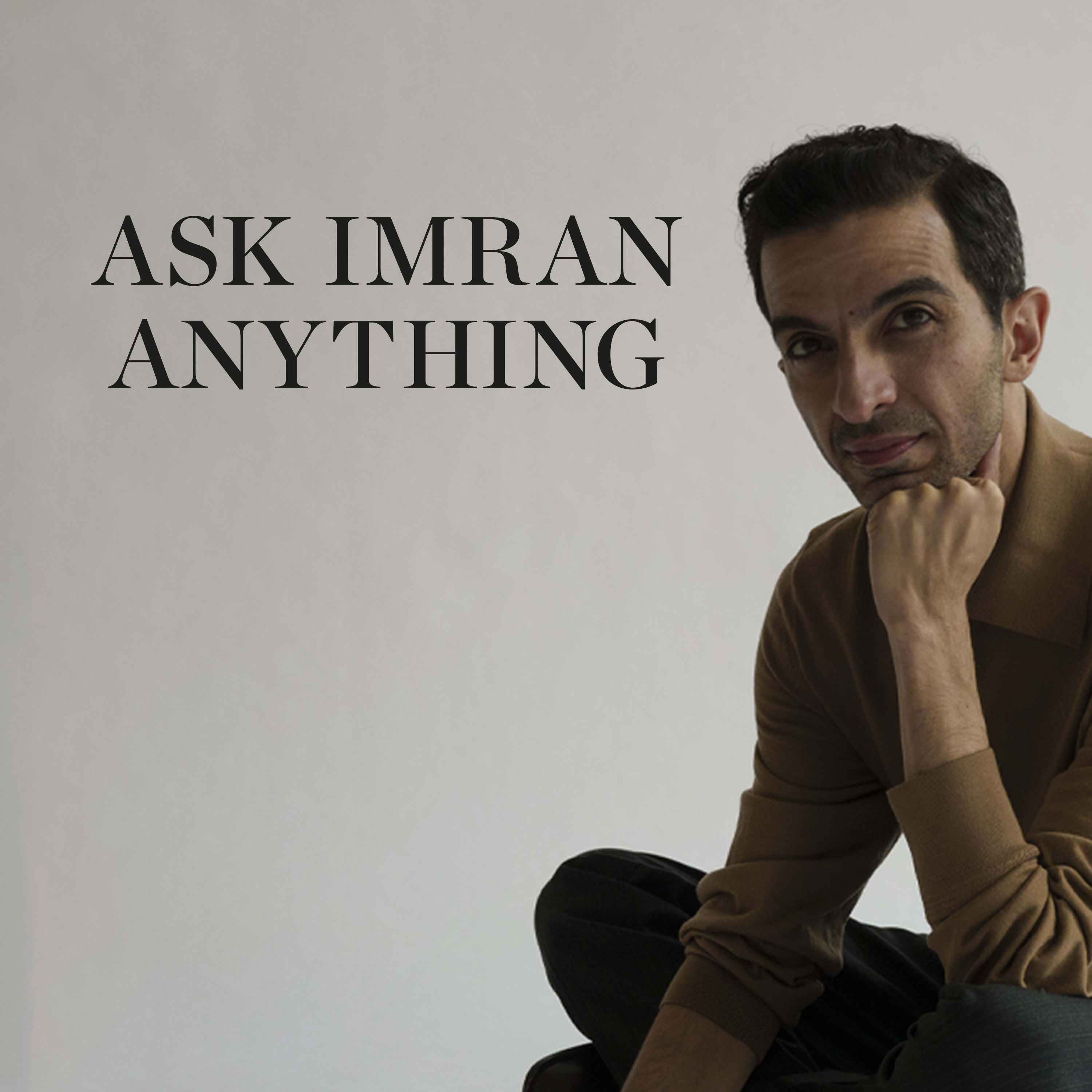
Imran Ahmed (Business of Fashion) answers listener questions on Gucci’s future under Demna, the value of fashion “vanity” metrics (EMV/MIV/VIT), balancing creativity with commercial performance, AI’s impact on luxury marketing, and regional/cultural fashion topics (Latin America; Indian craft credit; writing/creativity).
No traditional guests. Questions come from listeners/students and industry figures, including fashion students (London), an MBA student (Columbia Business School, NYC), and multiple listeners from Latin America and India; Imran is the sole host.
Gucci’s latest Milan show (“The Store”) is the clearest Demna vision, but momentum and emotional/value connection still seem lacking in a tough luxury market. EMV/MIV/VIT are “vanity metrics” and don’t reliably predict long-term brand health, revenue, or profit. AI can’t replace human taste/judgment; it’s an efficiency/creative thought partner. Luxury brands should credit and compensate artisans when using heritage techniques.
Gucci’s Times Square show and multiple Demna-era collections; Dior front-row celebrity attention as an EMV example; Chanel’s strategy alignment as a creativity/commerce “magic” case; Prada Kolapuri sandals and Fendi mirror-work/atelier collaboration (Maria Grazia Curie + Chanakya) as credit/appropriation contrasts.
Written by AI. May contain mistakes.
Exploring the current state and future vision of Gucci amidst confusion.
“I'm Imran Ahmed, founder and CEO of the Business of Fashion.”
Discussing the tension between fashion creativity and commercial success.
“I think that what they're doing is very confusing, honestly.”
Analyzing the significance of EMV, MIV, and their impact on brands.
“I'm Kaylin and I'm a fashion student based in London.”
Discussion on the relevance of various metrics in business.
“And if you're looking at those metrics, as well as some of these other metrics that may contribute a little bit to that, then I think that's okay.”
Exploration of the irreplaceable human touch in creative processes alongside AI.
“My name is Rashita Vyas and I'm from Ahmedabad, India.”
Discussion on the significance of the Latin American fashion market and the hosts' interest in it.
“And I wanted to ask you, should luxury companies pay more attention to the Latin American market and why?”
Examination of the use of Indian artistry by luxury brands and the ethical implications involved.
“The next question is from the Marie Illustration on Instagram who asked about Indian craft.”
Insights on merging creative and analytical skills in professional life.
“I'm doing my MBA at Columbia Business School with the intention of scaling my art practice.”
Learn how to combine analytical and creative skills for success in fashion.
“And it's still a defining conversation that we have at BOF here every single day.”
Discover how writing can enhance understanding and creativity.
“because where you dig into those intersections, I really believe you create incredible value.”
Explore the impact of Tim Blanks on understanding fashion through writing.
“I just wanted to know who is your favorite fashion writer?”

Get the gist, explore an idea or ask about something said.
 Claude
On The Business of Fashion Podcast, what are the key points of this episode?
Searching your listeningAutomatic transcript. May contain errors.
0:00Being a serious business owner takes hard work, patience, and a drive to keep moving forward. So it's important to find a serious business card that goes the extra mile. With the VentureX Business Card from Capital One, you earn unlimited double miles on every purchase. And with big purchasing power, you can spend more and earn more. This is your sign to take your business to the next level. The Capital One VentureX Business Card. What's in your wallet? Terms apply. See CapitalOne.com for details. This episode is brought to you by Macy's. I love seeing what comes through each season, but keeping up with every new trend can honestly be a lot.
0:38So, I like the idea of treating the new season less like a complete wardrobe reset and more like a cheat sheet for a few things you might want to try. For autumn, it's all about richer colours and textures. Think chocolate brown, deep greens, grey and stone, with suede coming through in everything from handbags and jackets to shoes and accessories. Dark indigo denim is also having a moment, which is probably one of the easiest ways to make something you already wear all the time feel a little fresher. Macy's brings all those trends together in one place, so you can work out what exactly fits your own style, rather than feeling like you need to follow everything.
1:22Hi, this is Imran Ahmed, founder and CEO of the Business of Fashion. Welcome to the BOF podcast. It's Friday, October 16th. This week, by popular demand, we are back for the third installment of Ask Me Anything, where listeners from around the world send in their most pressing questions about what is happening in the fashion business today. This time, the conversation starts with what happened in the latest round of fashion shows, specifically what's going on at Gucci, whether metrics like earned media value are worth anything at all, how brands can strike the right balance between creativity and commerce, and where human judgment still remains integral, even as AI becomes part of our everyday work.
2:06Thank you to everyone who sent in your questions. Here's Ask Me Anything on the BOF podcast. Hello and welcome to Ask Me Anything. I'm Imran Ahmed, founder and CEO of the Business of Fashion. We have received more than 75 questions this time. Obviously, we could not get to them all, but what we've tried to do is organize them together by theme and get to as many of them as we can. So without further ado, here's Ask Me Anything. My question is, at this point, where do you see the future vision of Gucci? There's such a papery of things they're doing, from the Times Square show in New York, to, I don't know, to this collection now, to stories, to what they're selling, to handbags, to bringing back previous models.
3:04I think that what they're doing is very confusing, honestly. And not sure as a guest that I understand what their vision is. And why should I be wearing Gucci or purchasing Gucci? Is it quality? Is it fashion? Is it back to time for days? It's just very confusing. And maybe it's me. This is the reason I'm asking. Maybe you have a vision that is more clear to understand as an outside customer of Gucci at this point. The future of Gucci. I think that's a topic on a lot of people's minds working in luxury fashion at the moment. It's one of the most frequently asked questions, at least that I get, almost on a daily basis.
3:50There were at least four of you who asked this question. So clearly we had to start this episode with the future of Gucci. It's not an easy question to answer, if I'm honest. I'll start by saying, like, why is this such an important question? For the carrying group, Gucci represents a disproportionate share of both revenue and profit. If Gucci is not working, then carrying is not working. And in recent years, Gucci has not been working. You know, sales have continued to contract even up until the most recent quarters. and even after Demna had been appointed as a creative director of the brand and some of his collections began to appear in the store.
4:40So the question is really are we seeing any real momentum to get Gucci back on track and what does that look like? I thought the most recent collection in Milan last month was probably the sharpest, clearest, most focused expression of Gucci that we've seen from Demna thus far, in part because we'd seen so many different versions of Gucci, from La Familia in the theater to La Primavera, which was that super hard show, to the Gucci core show, which took place in New York City. This most recent show, The Store, just kind of clicked. He showed the men's looks first lots of preppy looks lots of bourgeois looks easy to understand none of the like skin tight body con stuff that we saw in that primavera show and then he showed the women's looks second and you know we saw those looks on people like amanda harlick and sabine getty and you know other women of stature and all of that was like kind of an understandable vision for gucci i guess the remaining question i have is is it enough in this very challenging market where the luxury industry is not growing customers are even more discerning even more demanding about value and design innovation and kind of an emotional connection they want from the fashion products they engage with.
6:23That I have yet to feel that from Demna's Collections. So let's see. But it is a big strategic question for Luca DeMeo and all of the executives at Caring and I know they're thinking about it every single day. Hi, I'm Ron. I'm Kaylin and I'm a fashion student based in London. My question for you on the podcast was how do you explain the gap between brand management increasingly pushing, forcing or restraining design towards commercial performance? Thank you. Finding the right balance between the creative side of fashion and the commercial side of fashion, that is the holy grail. And when it clicks, when it works, it can feel a little like alchemy or magic and when it doesn't work when it's not working you can also feel that too but you need both and so i don't think it's by definition a bad thing or a wrong thing that some clothes or things that are put on the runway are wearable and commercial because that strategy might make sense for a given brand.
7:39I also don't think it's necessarily a bad thing if all you see on the runway is like really creative expressions. It really depends on the specific brand you're talking about, the strategy they're going after. What you absolutely need to know is you need to have an explicit decision about what that balance is for a given brand. And so what brief and strategy the team at Balenciaga have for that brand with such an incredible history, both from the past and in the recent past with people like Nicolas Ghesquière and Demna. What brief did they give Pierre Paolo as a designer, as a creative director to say, this is what we're trying to do with this brand.
8:26It's up to Pierre Paolo to find a creative expression for that. I get the sense that the brief was, can you mine the heritage of Cristobal Balenciaga? And then can you also keep the customers that Demna managed to attract during his very successful 10-year tenure there? Are those things even compatible? I don't get it. I don't understand it. Pierre Paolo is undoubtedly one of the most talented fashion designers in our industry. It can't just be about Pierre Paolo. It's like the conversation I had with Marc Jacobs on this podcast very recently, which is like just by changing the designer, that's not the only thing strategic business people need to think about when a brand is going through a transition or a change.
9:18They need to think about all of the different pieces. Changing the designer alone doesn't work. On the other end of the spectrum, the reason Mathieu Blasie at Chanel is working is not just because of Mathieu Blasie. It's because if you talk to Bruno Pavlovsky, the president of fashion, or you talk to Lina Nair, the CEO of Chanel globally, or if you talk to Mathieu, or if you talk to the marketing teams or the merchandising teams, they're all singing from the same proverbial hymn sheet about what Chanel is trying to do now. And yes, there's no way it would be working without Mathieu's creativity, but he is injecting that creativity into a wider operation, a wider business with a really clear strategy of what they're trying to do at Chanel for the next decade and longer.
10:07He spends time with those merchandisers and those teams and they're in constant dialogue. It is not this battle. It is not this friction. There may be debates, there may be disagreements, but ultimately they're trying to do the same thing because they all have the same strategy. That's what it takes. That's this balance of creativity and commerciality. And when it works, like it's working at Chanel, it does feel like magic. That's why, you know, Chanel was so successful at the moment. Producer Olivia jumping in here, on behalf of Samandaria, who shared a question on Instagram. They ask whether the metrics of EMV, MIV, and VIT have real influence or are they just meaningless numbers for brands?
10:56What should brands look for when signing an ambassador? You read my mind. I was just raising this topic with our editorial team earlier this week about these metrics. EMV or earned media value. M-I-V, media impact value. I mean, all of these metrics, they're vanity metrics. In a way, as one of our team members said this week, they're designed for marketing people to ask for money for finance people. And it's not a coincidence that many of these metrics are measured or communicated in dollars. It's not 100 % clear how they come up with that dollar value, but they use dollars because it perhaps helps those people get the investments that they want to get for their marketing expenses from the finance people who are often unlocking those budgets.
11:54But is that the right way to be measuring things? Aren't these just metrics that are making us feel good about what we do? When I look at those metrics I'm like just because a brand like Dior gets four Thai celebrities in the front row and those Thai celebrities who have incredibly engaged fandoms, and by the way, I love some of these Thai celebrities. They're like really smart, really talented, really engaging, and really fun people. But just because you get them in the front row and their fandoms talk about it a lot, does that mean Dior won Fashion Week? And therefore, if they won Fashion Week, does that actually translate into the metrics that really matter, long-term brand health and commercial performance that we really don't know and if that was true Chanel which is the top performing brand in luxury fashion market right now Chanel is up 16 percent in the first half of 2026 in a flat luxury market Chanel's not showing up as the number one brand so I just don't see the link between these EMV, MIV etc etc.
13:07and commercial performance which ultimately is what business executives look at to figure out if their creative and commercial strategies are clicking. Now I don't want to completely dismiss these metrics out of hand because they might make sense as part of a wider portfolio of other metrics and if we keep in mind that the dollar value we're putting in front of them is really kind of invented. It doesn't really mean anything. So you just need to look at the direction. So if like a brand is ranked number one or if a brand is ranked number three and like you can kind of look at that as an order of which brands generated the most attention.
13:44But you can't really look at it as science because this doesn't feel like science to me. It feels more fast and loose. So just keep all that in mind and consider that the brand metrics, the business metrics that really matter are long-term brand health, revenue, and profit. And if you're looking at those metrics, as well as some of these other metrics that may contribute a little bit to that, then I think that's okay. We'll be right back with more on the BOF podcast.
14:21This episode is brought to you by Macy's. I love seeing what comes through each season, but keeping up with every new trend can honestly be a lot. So, I like the idea of treating the new season less like a complete wardrobe reset and more like a cheat sheet for a few things you might want to try. For autumn, it's all about richer colours and textures. Think chocolate brown, deep greens, grey and stone, with suede coming through and everything from handbags and jackets to shoes and accessories. Dark indigo denim is also having a moment, which is probably one of the easiest ways to make something you already wear all the time feel a little fresher.
14:59Macy's brings all those trends together in one place, so you can work out what exactly fits your own style, rather than feeling like you need to follow everything.
15:11Being a serious business owner takes hard work, patience, and a drive to keep moving forward. So it's important to find a serious business card that goes the extra mile. With the VentureX Business Card from Capital One, you earn unlimited double miles on every purchase. And with big purchasing power, you can spend more and earn more. This is your sign to take your business to the next level. The Capital One VentureX Business Card. What's in your wallet? Terms apply. See CapitalOne.com for details.
15:43Hi, I'm Ron. My name is Rashita Vyas and I'm from Ahmedabad, India. and I'm also the founder of The Edit India, an independent fashion publication. So my question is that in a world where AI can generate beautiful campaigns, editorials, and even brand strategies, what will become the rarest and the most valuable skill that luxury brand still want to hire humans for? And how can a student start building that advantage today? Of course, we would never be able to have any Ask Me Anything episode without a question on AI. And so thank you for your question. I appreciate it. I guess in the first instance, I kind of disagree with the premise of the question in the first place, because I don't think AI on its own can generate beautiful imagery, smart campaigns, and effective strategies on its own.
16:40In order to use AI in almost any application, it still requires a human to work with it. The human is still like a fundamentally important part of how those processes will work in the future. It's just how the human is involved, where the human is involved that's changing but human taste human judgment human experience those things are absolutely still necessary to create imagery and campaigns and strategies that work so i don't think we're in an era where you can just go to ai like create a campaign for me you know create some imagery for me and you just post it somewhere and hope it works that that's just not where we're at i don't think we'll ever be there what is changing is the role that ai plays as a thought partner um as a efficiency partner as a creative partner in how you might come up with some of those assets like ai can help generate multiple options it's up to the human to say well there's a bit of this option that's interesting there's this option and by the way there's this other thing that i would like to insert it just becomes a more iterative process and so i think human judgment human taste human experience are all fundamentally important to any creative process as it stands and ai will inevitably pay a role in some of these processes but the human sits at the center and it's just how that human plays their role that's changing.
18:30And so my advice to people looking to kind of find a role and like really learn how to use AI in this kind of iterative approach and don't underestimate the value of seeking out real things, real experiences, physical magazines, going to museums, experiencing culture, like building up your human taste, judgment, and experience because that's going to be priceless in the age of AI. Hi, I'm Ron. My name is Hernan and I'm from Chile. And I wanted to ask you, should luxury companies pay more attention to the Latin American market and why? Hi, I'm Ron. My name is Maria Jose Cordobes. I'm from Quito, Ecuador.
19:15And my question is, are Latin American brands on the radar for business of fashion? Which and why? Hi Imran, my name is Gabriela Duerni. I'm from Brusque, a small city in southern Brazil. And I would like to know, what is your perspective for the future of Brazilian fashion? Hi Imran, my name is Felipe. I'm from Medellin, Colombia. And my question is, what is your opinion about Colombian fashion and trade shows as Colombia Moda? There are so many of you who sent questions through from Latin America, where I know BOF has a really loyal and dedicated following. First of all, Latin America remains one of the fastest growing fashion markets in the world.
20:03You know, it is a diverse market. It is a multifaceted market. And it's a really exciting market. And, you know, I've actually had the chance to visit Brazil on a number of occasions. I've never been to Colombia, but I'm hoping to come towards the end of the year and get my feet on the ground because of course I know designers like Joanna Ortiz and Esteban Cortazar and others. And I'm hoping to kind of get a burst and look at what's happening there. Colombia Moda, a trade show. We know Sebastian, who is a BOF 500 member. So yes, I'm really keen to spend more time in Colombia. Latin America is on our radar.
20:46And Brazil is one of my favorite countries in the world. And of course, over the years, I've gotten to know people like Oscar from Ausklin and the team from Farm Rio and Natalie Klein from NK, the designer Aaron Martin from Michi. There's all of these exciting names, exciting creative people who are based in Brazil who I've been getting to know over the years. So absolutely, it's on my radar. And absolutely, I want to spend more time boots on the ground in Latin America. and I look forward to meeting more of you when I'm there, hopefully in Colombia and Brazil later this year. So stay tuned. The next question is from the Marie Illustration on Instagram who asked about Indian craft.
21:33They said, we have seen luxury houses like Prada using colligory footwear, Fendi incorporating mirror work in their bags and Saint-Lavon drawing inspiration from Indian blouses. What is your perspective on this trend of using centuries-old Indian heritage artistry? How can the industry move forward by properly acknowledging and fairly compensating the Indian artisans behind these beautiful techniques? This is a really important question about how to properly credit Indian artisans whose work for decades has been used in Western, in European luxury fashion. the issue has come to the surface again because of recent incidents like Prada and the Kola Puri sandals and the Mira worked Fendi baguette bag and you're raising really important very valid questions around credit and compensation I guess I think about it this way you Indians are very generous people.
22:49Anyone who practices yoga or Ayurveda or drinks turmeric lattes, growing up in my home, we called that haldi dhud, or like, you know, turmeric milk. There's, you know, there are elements of Indian culture that have been exported around the world and are widely practiced. and I think some people don't even know that these things come from India so it's a wider issue than just fashion but Indians are generous I think we as Indian people like to see the influence of Indian culture reaching all corners of the planet that's that's quite special for a culture you know especially as you say centuries old ancient culture where some of these practices traditions artisanship have been around for ever and they've been passed down from generation to generation generation like that is amazing and the fact that it's lasted so long and is being used all around the world, in a way that is evidence of its enduring value in our contemporary culture.
24:13That being said, I see the Fendi baguette situation and the Prada-Kolapuri situation is very different. And here's why. Maria Grazia Curie worked for a very long time with Chanakya, the very specialist Indian atelier run by Karishma Swali in India. All women artisans. I've been there myself. I've seen the work they do. I see how they train these women in all of these age-old skills. Maria Grazia and Karishma have worked together for a very long time going back to the time when Maria Grazia was originally at Fendi and Valentino and then Dior now back at Fendi that for me is an example of how these things should work you know Maria Grazia is investing in and spending time with the artisans and with the people who are kind of overseeing their work and building a long-standing relationship.
25:24Now, perhaps the one mistake Fendi made was on the product page. They didn't explain that this was an Indian technique and educate the customer about where it came from. That, in my view, would have added value to the way the customer perceived and understood that product. and it would have given due credit to the artisans and the heritage that that work came from. For me, that's really different, however, from the Prada situation with those sandals, Kolapuri sandals, which come from Kolapur in India, which anyone in India knows, because they're like a signature style, they just appeared on a Prada runway without any reference to where they came from, without any relationship to those artisans.
26:17That felt like a real case of appropriation, where you just take something from a culture and you put it on a high fashion runway. Now, to remedy things, Prada did go and visit Kolapur. they built the relationships with the artisans, they're even having those sandals made there. We should acknowledge that they've tried to make amends for the errors that were made in the way those sandals appeared on the runway. And hopefully in the future, Prada won't make the same mistake again. And hopefully other brands will understand that if you're going to take something from a culture, credit the people, make sure they're properly compensated, and use it as a way of educating your customer about where the product comes from because that makes it even more valuable.
27:12Hi, I'm Ron. My name is Layla. I am in New York City. I'm doing my MBA at Columbia Business School with the intention of scaling my art practice. A question for you regarding the intersection of creative edge and analytical rigor. How have you navigated these two sides of yourself throughout your career? And would you say you've become a better creative as a result of your business acumen and vice versa? I love this question because balancing right brain creative thinking and left brain analytical thinking has kind of been one of the defining themes of my career, maybe my entire life. when I was younger I was very nerdy in school during the day very academic and in the evenings I was like really creative kid you know studying musical theater and drama and public speaking and like surrounded by creative people and I always kind of felt like those two things were compartmentalized like they were separated and when it came time to like pick a career for a variety of reasons like I never considered a career in a creative field as even a possibility for me and so I took this like really analytical path I studied business I worked as a management consultant I went back and did an MBA and like everything was about exercising this left side of my brain and it wasn't until I was 29 years old and really struggling with my work and feeling like every day when I was going to work I was leaving a big part of myself out of the equation at home and also just feeling a little like I don't know feeling a little like I was missing my full potential and so the big question I had was like well how could I combine my analytical skills with my creative skills that was like really the founding question of BOF, which was like, how could I bridge the creative side of fashion with the business side of fashion?
29:29And it's still a defining conversation that we have at BOF here every single day. Just at lunch today with some of our team, we were talking about right brain and left brain thinking. And so my advice to anyone who's kind of grappling with this left brain, right brain, creative analytical thing is like don't let people put you in a box you don't have to be just a creative person or just an analytical person you can be both and yes there is power in those intersections and if you've been lucky and privileged enough to train both sides of your brain like I was figure out a way of using both I mean your path to doing it might be completely different from mine.
30:18But what I've learned is that there's real value at the intersection of creativity and business. And so I recommend that you look into it, that you dig into that, because where you dig into those intersections, I really believe you create incredible value. I hope that helps. Hi, Imran. My name is Mariana. I'm from Mexico City, but I'm based in Barcelona, in Spain and I'd like to ask you what's one concrete thing you've kept doing since day one? One concrete thing I've done since day one. I guess writing things down. you know from a pretty young age I kept a journal I wrote down how I was feeling and I don't think I knew it back then but the simple act of writing things down helped me to understand my feelings helped me to clarify my ideas and helped me kind of release things from inside my head and my heart.
31:33And I have all of these journals in a big box at home. And when I've had a chance to go through them, it's kind of amazing because I can really see the different things that I was grappling with or debating or appreciating at different times in my life and it's a real gift and I think perhaps that's why when I started first writing down my reflections on what I was observing when I first started exploring the fashion industry I think that's that's why it ended up being a blog and a newsletter and like why I was drawn to it and then maybe why it resonated with people because I'd been doing it my whole life in private and all of a sudden I was sharing a bit about that process with other people and I think the more you write the better you become and so the more I began to write on BOF the better a writer I became So I've been writing things down in journals and on POF for a very, very long time.
32:44So I guess that's the thing I've been doing since day one. Hi, Imran. This is Rati from Sydney. I just wanted to know who is your favorite fashion writer? My favorite fashion writer, it will probably come as no surprise, is the inimitable Tim Blanks. And Tim and I have now worked together for 10 years, which is kind of remarkable because I grew up watching Tim on television in Canada and reading what Tim used to write for fashion magazine, which was based in Toronto and the reason I love Tim's writing so much is because it always helped me understand fashion in a way that my mind wasn't trained to interpret there's always a cultural reference sometimes I'll have to go look up what it is because I don't know what it is i don't know what tim's referring to there's a layer of insight and understanding there's a mutual respect with the designer like tim's and he also has this like magical ability to kind of like intuit what a designer was inspired by or thinking about sometimes even before the designer has told him.
34:20I've seen it. Umpteen occasions when Tim mentions some book or exhibition or movie and the designer's like, how did you know? So he's just got, he's like a savant. So, you know, the writing is beautiful. It's filled with insight and sensitivity and it's really human and constructive. And there is no other writer like that. your passion. That's Tim Blank's.
35:14Being a serious business owner takes hard work, patience, and a drive to keep moving forward. So it's important to find a serious business card that goes the extra mile. With the VentureX Business Card from Capital One, you earn unlimited double miles on every purchase. And with big purchasing power, you can spend more and earn more. This is your sign to take your business to the next level. The Capital One VentureX Business Card. What's in your wallet? Terms apply. See CapitalOne.com for details. When you're running a growing business, the right systems can unlock your full sales potential and make fulfilling every order effortless.
35:47Switch to ShipStation before peak season so you're prepped and ready before the rush hits. ShipStation connects Shopify, Amazon, TikTok Shop, and over 200 more marketplaces with one platform that does it all. You can manage orders, sync inventory, track returns, all automatically. Everything your operation needs, all in one place. Upgrade your shipping operations to stress-proof your biggest sales days and capture every bit of potential revenue. Go to ShipStation.com and use code AUDIO and get 30 days free.
This week, by popular demand, we are back for the third installment of Ask Me Anything, where listeners from around the world send in their most pressing questions about what is happening in the fashion business.
This time, the conversation jumps off from the latest season of shows, specifically what’s actually happening at Gucci, whether metrics like Earned Media Value (EMV) and Media Impact Value (MIV) are worth anything at all, how brands can strike the right balance between creativity and commerce, and where human judgement still remains integral, even as AI becomes part of everyday creative work.
Key Insights:
Additional Resources:
Hosted on Acast. See acast.com/privacy for more information.


