
 Ask ChatGPT


 The Business of Fashion Podcast
10 Jul 2026 · 57m · 19 chapters
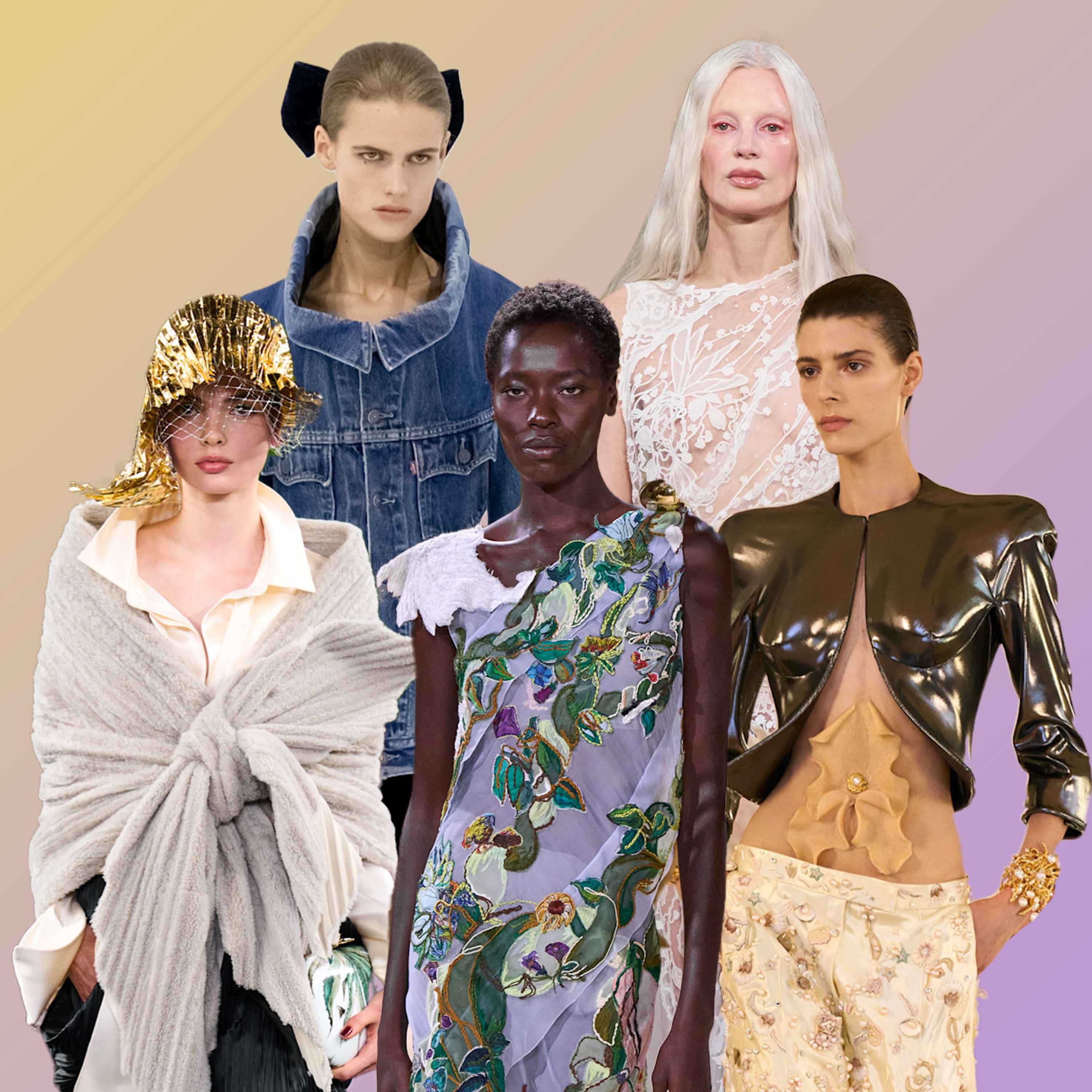
Tim Blanks (Business of Fashion) and Imran Ahmed decode Paris haute couture week during a record heat wave, arguing couture’s job is to keep “wonder” alive through extravagance, restraint, and storytelling—while also noting concerns about decadence and over-embellishment.
Tim Blanks, fashion journalist and editor at Business of Fashion; Imran Ahmed, founder/CEO of Business of Fashion (host).
Couture felt “untroubled by commercial considerations” and unusually joyful this season. Couture can’t solve reality’s problems, but it can preserve wonder. Some designers push embellishment to extremes that may strip beauty; social-era decadence shows up on and off the runway. Independent designers are gaining momentum, with couture acting as a platform for new talent.
Chanel (Mathieu Blazy) fairy-tale “Gabby and the Beanstalk,” including “magpie’s nest” tweed and a magpie motif; Dior (Jonathan Anderson) open-air Rodin garden show inspired by Linda Benglis, featuring tied bar jackets, Kerala embroidery, and a “dandelion” coat; Schiaparelli (Daniel Roseberry) “call of the void” latex/silicon risk; Balenciaga (Pierpaolo Piccioli) couture echoing Valentino 2018; Jean-Paul Gaultier (Durand Lantink debut) arcane, organic, body-altering silhouettes; Standing Ground (Michael Stewart) David-vs-Goliath buzz, scarification-like beading, regal hourglass/fishtail forms.
Written by AI. May contain mistakes.
Overview of standout couture moments and designers from the season.
“And Michael Stewart, an independent London designer, debuted his very first couture offering, working obsessively to achieve his vision of craft through his signature beading technique.”
Tim shares his experience and impressions from Paris Haute Couture Week.
“Well, you're still in Paris, actually, aren't you?”
Discussion on the significance of couture in providing wonder and escapism.
“I was watching the footage from the Balenciaga show, and there were all these aerial shots.”
Exploration of the balance between decadence and restraint in couture collections.
“I generally don't like talking about things that I wasn't at.”
Details about Mathieu Blazy's collection and its fairy tale storytelling elements.
“because couture has just become, in some cases, this platform.”
Discussion on the joy and emotional resonance of couture collections.
“And the little monodier of the chicken had a little egg inside.”
Explore the joyous and practical elements of Chanel's latest couture collection.
“people need at a time when, as Robert One pointed out in that comment, the world is a pretty dark place.”
Delve into Jonathan Anderson's unique storytelling in his recent Dior collection.
“He has said from the very beginning that he must be given the time to experiment.”
Discover how contemporary designers achieve both weightlessness and visual substance in couture.
“And even, and he says There's no such thing as seasons anymore And as we stood in a 38 degree heat wave, contemplating a full winter couture collection.”
Learn about the differing approaches of two designers in haute couture and their experimental nature.
“Now that I have access to all of this atelier and I'm building relationships with all these people, how can I push them to their limits?”
Explore the innovative direction of Schiaparelli and the themes of risk and creativity in couture.
“You know, the work in progress in both cases.”
Examine the evolution of Pier Paolo Piccioli's design aesthetic and its connections to past collections.
“Well, that was Jason and the Argonauts, not Odysseus.”
Discussion on Balenciaga's unique approach to couture and ready-to-wear.
“Cristobal Balenciaga was such a unique designer, he was such an incredible master of so many different strands of creative thinking.”
Analysis of Duran Lantink's unusual silhouettes and their impact.
“And Duran's had a Bit of a rough go at it In his first Is that all good?”
Discussion on the risk-taking and boldness in Lantink's couture collection.
“I mean, well, I guess it was organic, the sense of pipes with stuff spurting out of them.”
Overview of Michael Stewart's buzzworthy collection at Paris Couture.
Exploration of the narrative surrounding new designers in the industry.
“Give us a sense of what that, first of all, why do you think that show was so buzzed about?”
Discussion on the artistry and execution behind haute couture collections.
“with, you know, people who love fashion.”
Discussing the emergence of young talent in haute couture and the passion driving them.
“I mean, I love that people can have those moments even during the time when it seems so much of fashion is dominated by these mega brands.”

Get the gist, explore an idea or ask about something said.
 Claude
On The Business of Fashion Podcast, what are the key points of this episode?
Searching your listeningAutomatic transcript. May contain errors.
0:04Hi, this is Imran Ahmed, founder and CEO of the Business of Fashion. Welcome to the BOF podcast. It's Friday, July 10th. I missed couture season for the first time in years, but that made it even more valuable for me to catch up with Tim Blanks on everything that happened this week in Paris amidst a record-breaking heat wave. At Chanel, Mathieu Blazy built his sophomore couture collection around a fairy tale he found in Gabrielle Chanel's own library. Dior's Jonathan Anderson tore down the walls of the usual tent in the gardens of Musée Rodin, staging an open-air show inspired by the sculptor Linda Benglis.
0:45And Michael Stewart, an independent London designer, debuted his very first couture offering, working obsessively to achieve his vision of craft through his signature beading technique.
0:58Tim Blanks: Couture stepped up to the plate to be couture and provide that sense of wonder that, you know, couture was always the pinnacle of fashion where you really saw what designers and makers and ateliers were capable of doing, a pinnacle where they were untroubled by commercial considerations. And I thought that this season definitely felt like one of those seasons. This week on the BOF podcast, Tim Blanks joins me from Paris to break down the haute couture season that was. Here's Tim Blanks on the BOF podcast. Hi, Tim. Hi, Imran. Welcome back. Well, you're still in Paris, actually, aren't you? I am.
1:44I came back to Paris to do this podcast. Funny, funny, funny. Well, I'm glad to connect with you. this was the first couture season I've missed in a very long time. So it's a bit of a role reversal, Tim. A few seasons ago, you missed couture and we did this. And I'd been there and you watched it on the screen. And this season, it's going to be the other way around. So I'm going to really look to you to guide me through what it was like. I watched it all on my phone last night, actually. And as opposed to stretching it out and watching it as the shows came through, I kind of watched it all together in about 30 minutes last night.
2:36So a very efficient way to experience Couture Week, I must say.
2:40Tim Blanks: But all those months setting up to years of work for all those designers, my goodness. I did not feel jealous about missing the heat. I was watching the footage from the Balenciaga show, and there were all these aerial shots. And you could see everyone violently fanning themselves with whatever fans they provided at the show. It looked very, very warm. But before we dive into specific shows, were there any general takeaways you had about this season? Well, a little like you, Imran, I was only in Paris Monday and Tuesday. So I missed Wednesday, which was Balenciaga and Gauthier and Robert Wan. But so, you know, I was looking at photos and reading commentary.
3:31Tim Blanks: And I was very taken by something that Robert Wan said to Tiziana Cardini from Vogue. He said to her that couture may not offer solutions, but it can keep wonder alive, precious resource when reality seems determined to extinguish it. Now, I always like sweeping statements like that, but I think that kind of applied to, it seemed to apply to just about everything I saw or saw pictures of. I generally don't like talking about things that I wasn't at. But in this case, you know, there was this sort of prevailing, I thought, this prevailing feeling of extravagance in a way. that couture stepped up to the plate to be couture
4:29Tim Blanks: and provide that sense of wonder. That couture was always the pinnacle of fashion where you really saw what designers and makers and ateliers were capable of doing at a pinnacle where they were untroubled by commercial considerations. And I thought that this season definitely felt like one of those seasons. Yeah, I get the feeling that actually it may have gone to an extreme now in some cases where I was looking at some of the collections from some of the Indian designers as well last night. And it's almost like, in some cases, there's a race to create the most elaborate, the most extreme, the most embellished, embroidered silhouettes so that people can trot out these statistics and say, you know, this took 17 ,000 hours or this took, you know, this many beads or whatever.
5:40You know, like you just, it's almost like, yeah, I certainly gathered that sense of wonder and that organic theme of nature that we saw come through last season seemed to come through again this season. But in some cases, people are just taking it to an extreme that, I don't know, strips the beauty away a bit.
6:01Tim Blanks: And do you think it's also slightly decadent? Yeah, too decadent. And you know what they say, that decadence, I mean, I don't know, you will have much better context on this, but we're living at a time of extreme decadence for certain parts of our society. and the narrative around the extreme wealth in focus, especially around all these tech billionaire IPOs and valuations, and also the types of people that show up at Fashion Week now, which come from these billionaire empires. You know, there is a lot of decadence on the runway, but also off the runway, because couture has just become, in some cases, this platform.
6:47And as I was experiencing it on social media, yeah, some of it seemed overly decadent.
6:54Tim Blanks: Well, Victor and Rolf, as usual, managed to nail a statement that could possibly be a key statement of the season when they had one look called decadence and one look called restraint actually mounted on the shoulders of the two models. It's funny, I mean Mathieu Blaisie said to me that Couture is not meant to be viewed from afar And his collection was very much A much smaller collection, much smaller show Yeah, did they tighten the venue? No, it was in a different part of the Grand Palais It wasn't in the exhibition hall Yeah, it was much more compact but it allowed you to see the clothes much better than they're going past in the distance but he he so that in a way um I mean he's saying he's but even from afar is when you're sitting in the front row of a fashion show and the clothes go past as as they would in a fashion show he he when he's talking about looking at couture he's talking about being in it and looking at it experiencing it for yourself you know the the the amount of work that goes into a couture collection the amount of work that goes into the fabric the fabric development it's really highlighted by a house like Chanel where there were things that were embedded in the tweeds that was so tiny my my poor old eyes had trouble even seeing them but they're there you know they're there and It's so funny that you say that because as I was watching the video from Chanel yesterday evening, one of the first things that came to mind was, A, like it seemed like the venue had been somehow tightened or now I understand that there was an altogether different space.
8:47but also those Chanel clothes it feels like you need to see them really up up close you know and like you and I went and did that preview I don't know a couple seasons ago or last season like he's like the way he approaches fabric development and the whole storytelling and the thinking about it it's so much better when you can hear it straight from him and you can touch the garment with your hand and look at it, you know?
9:12Tim Blanks: Well, he talks about, there was one fabric he called the magpie's nest. This comes back to that wonder that Robert Wan was talking about. Mathieu was thinking about fairy tales. He was thinking about Chanel's story, Gabrielle Chanel's story, trying to relate it to Jack and the Beanstalk. You know, the notion of this sort of humble human who clambers up a beanstalk or a social ladder to find the goose that lays the golden egg. And so there was that analogy. There was this fabulous cartoon that launched, that was a teaser for the show that was like Jack and the Beanstalk, but it was little Gabby and that little Gabrielle in Rue Cambon.
10:04Tim Blanks: He called it Gabby and the Beanstalk. So the whole show meshed all these fairy tale elements, integrated them really fully, like extraordinary. It was, you know, the monodier of the little, was a chicken, not a goose actually, because apparently in France the fairy tale is a chicken, not a goose that lays a golden egg. And the little monodier of the chicken had a little egg inside. There was all this nuts detail that you would never know unless you actually had the thing in your hand. But with the fabric development, I was talking about that tweed, the magpies in Esports. He thought of Chanel as a magpie.
10:44Tim Blanks: She collected things, bric-a-brac. I don't know if she was a hoarder, but he was talking about the bric-a-bracness of her work. And so this sort of magpie motif, it was fully elaborated on. And one of my favorite looks that I saw anywhere with what I have seen online and actually in shows, which was a very, very simple black suit, a sleeveless top and a skirt. and around the neck was, and there was a magpie, a little magpie sitting on one shoulder plucking at chains and little shiny little objects. And they were the collar of the look, the magpie's collection of shiny things. And I thought, apart from the fact that the simplicity of the look was just so stunning in the context of that show, just the story like like this is this is what mature was talking about the the narrative the narratives that fashion can expand on um very very strong in the whole season i thought that the the sense of storytelling i know it's become a an enormous fashion cliche but the stories that chanel was telling that were elaborated on in the clothing which is were the the kind of quintessential private pleasure for the couture customer who is this couture customer is this woman who's who's going to be buying these clothes is she the is she the wife of a of a tech trillionaire I mean the the frenzy around Chanel suggests that everybody's kind of gone hysterical about it but totally you know one of the things from your review that struck me was I guess he had originally planned to do something a lot more paired back and then he happened upon the little book with the was it is it was it the book that he came across that had the font de fe fairy stories yeah yeah and so like I get this sense that he's irresistibly drawn to this kind of storytelling because you know even from his very first ready-to-wear collection, just the way he would talk about those clothes.
13:22The couture show that we did the preview for in January, he's just, I feel like he's so, he gets, he kind of stumbles across something and then he gets obsessed with it. And then it turns into this thing that fills an entire world or universe. You know, we, that phrase that everyone's using probably just as cliche now as storytelling which is world building you know he creates these worlds around these collections and those worlds are like what what the other emotion that i i feel always when i see them is like it just feels happy and joyful and and like and and the escape that people need at a time when, as Robert One pointed out in that comment, the world is a pretty dark place.
14:19So this is just a happy escape. It's just very simple.
14:24Tim Blanks: But I don't think he would say it was escape because he's very committed to what he talked a lot about adventures of the everyday. There's a fairy tale and there's the adventures of the everyday which he felt were he felt was the essence of Chanel that's that's sort of pragmatism so maybe it's an everyday escape because like as much as I know he insists these are clothes he actually wants women to wear and you know compared to many of the collections that I saw you know these are amongst the most wearable of the couture collections like in terms of clothes that people can wear certainly but they are so ornate and magical so you know it's a very unique woman that can wear these kinds of clothes every day although it's interesting seeing how many people at the show were wearing some of the flights of fancy that were the flightiest the flightiest fancies from the collections he's already shown i think that that that this juxtaposition of the fantasy or the fairy tale element and the practicality um was he's very he's very committed to that as well is is is what makes it it's created with such joyousness that you're you're right that that i think that that's the thing about chanel i think the the the happiness is proving to be extremely contagious there is no subtext there's no side with chanel it's just what you see is this is this kind of joy of creativity and then the beauty of creativity and it's it's it's like you know people are catching it it is very contagious and and i felt that in in the show you know the the music and the setting it's all very uplifting and um joyous you can really feel that even if you're not there so now that how many is this his second collection yeah sixth collection overall the other thing i'm curious to hear from you is how you think his approach to chanel is evolving you know because one of the things that's been on in my mind, possibly since the so-called Blasimania hit back in March, is how much he will change and evolve his approach to Chanel over time so that it continues to be contagious and interesting and doesn't become expected.
17:13Tim Blanks: I think if you look at what he's doing, what he's done so far over the collections that he's shown, the shows he's done, which have all been quite different, different locations, different atmospheres. The big thing was how does he insert himself into Chanel? And I think it's his character that he's obviously enraptured by her. and, you know, finding that little book of fairy tales in her library, which was tiny. You could just overlook it. Tiny little old book. The things he finds out about her that kind of dovetail with his feelings about things, I think how it develops is that it's just to me it's like an endlessly unfolding lotus.
18:06I mean, it's so beautiful.
18:10Tim Blanks: And it's so just loaded with meaning in a funny way. I can't imagine anyone losing, you know, you've got a coat that's like the blanket on the bear's bed that Goldilocks is sleeping under. But you open the coat and there's Goldilocks sleeping under the blanket painted into the lining. I mean, these things, you need to see them. Describing them, it sounds a bit bizarre. but they're so they're just so beautiful they're so reassuring they're so um you know he thinks he thinks people will enjoy these things well he has faith i think that that that people's sense of joy people's need for happiness those things aren't being extinguished in the world and it's a wonderful wonderful thing that we can find that in fashion it makes it gives fashion a sort of meaning that it's maybe been missing for a while but um and how will chanel change uh it will change as he changes yeah i mean he's he's owning it now yeah well he's he's the leader isn't he like i think everyone everyone inside and outside the industry i've you know managed to pop into Chanel stores in several different parts of the world over the last five or six weeks, you know, Thailand and Vancouver and New York and London.
19:44And you get a lot of the sense of how a collection is being received by speaking to the sales associates. Now, of course, this couture collection won't be available in stores. But if we think about couture as the kind of ultimate creative output of a designer at this level you can just sense that there is this he's really galvanized everybody in that company yeah i think but i
20:11Tim Blanks: think he's showed everyone everywhere with with everything he's done all the collections he's done what fashion's capable of you know and in in in a really positive way in in a in a really uplifting um and i think that i hope that he's he will he will unleash all of that in everybody else you know that that you know i'm very passionate about about the renaissance of independent designers with independent retailers to to promote them and i i would hope that the success of somebody like him would would be a kind of even if you know you're right he's showing even if it his couture he shows, but all the other things he shows, would provide a kind of inspiration to everyone.
21:03We'll be right back with more on the BOF podcast. The hardest part of starting a business isn't the work. It's convincing yourself to actually begin. I almost talked myself out of launching my podcast. I had the idea, had the time, and spent months overthinking it instead of just going for it. And it can be hard to make that leap of faith. Trust me, I know. When I started my business, I wasn't even sure what I was doing. What if I make a fool of myself? What if no one buys my products? Now, I know I was in the right in believing in myself and launching my business. Sound familiar? Shopify exists for exactly that moment.
21:39When the idea is real, but the setup feels overwhelming. Their templates help you build a stunning storefront with no coding, no designers, no headaches. And when customers are ready to buy, Shopify checkout makes it one click for returning shoppers, which means more and fewer abandoned carts. Plus, their built-in AI assistant, Sidekick, is there whenever you have questions in real time. No extra login needed. All you need is the idea. Shopify handles the rest. If you're serious about hearing your first start your free trial today at shopify.com slash bofpodcast. You heard that right. Start your free trial today at shopify.com slash bofpodcast.
22:20Tim Blanks: Jonathan Anderson is one of fashion's great storytellers as well and what he's doing in his own collection is the stories he is telling the world he is building there for want of a better cliche is so wonderful and so endlessly kind of rewarding to explore and he did that at as well that was really a huge part of his success at way of a duo is a very different proposition in the sense that it's so massive and he has all those different areas all those different zones of conflict that he has to resolve right across the whole spectrum and what's amazing about what he's doing at Dior I think is that it's just so personal for him I think that's a real that's a real indication of the faith that the management LVMH management has in him that the freedom he has to take an artist like Linda Banglas, who is, you know, who spent a lot of her career in, she was, some of her most pointed work was referencing how she was treated by the patriarchy of the art world.
23:31Tim Blanks: And he, bringing her in as the fulcrum of this couture collection he showed was it's just the kind of audacious thing that he does extremely well because he had he obviously can't see any other way to do things and then the way he does do them which is I think very impressive what I what I really liked about that collection was it felt like a kind of subtle comment from him sly comment I should say was how the unfinished quality that came through. He has said from the very beginning that he must be given the time to experiment. He hates the fact that fashion makes up its mind so quickly these days and people are kind of hung out to dry.
24:20Tim Blanks: But the experimental quality of his work was very much on display in the Dior collection, which is a fascinating thing to see. I mean, obviously, because he's experimenting. He's, you know, he has happy accidents. He has not so happy accidents. And, you know, there's a lot. He's showing a lot of different ideas. And I thought the story of her, of Linda Benglis and living between New Mexico and Santa Fe and Kerala in India, which kind of motivated the collection on one level. On another level, completely shaped the way it was shown remarkably. And with Paris and this heat wave that people are just obviously obsessed with.
25:09Tim Blanks: He took down the walls of the tent on the garden of the Musée Rodin, where Dior always shows. And we were sitting in this, it was like a veranda in Southeast Asia or something. So it was open air? It was open. There were no walls. So we were sitting, there were ferns sprouting through the floor and then the gardens of the Musée Rodin and the crossbreeze. You can only imagine it was this gorgeous crossbreeze until the place got packed with people and then the crossbreeze kind of died down. But it was such a beautiful setting.
25:45Tim Blanks: And the freedom he has given, it felt like a very free environment for an haute couture show. and then he he approached the sort of icons of the house the bar jacket and and um so on and with it with that very free hand that like linda banglis loved the knot so these bar jackets and coats were tied and um he he fabric she used like um metallics and a cellophane things she used in art we he used in the clothes that's kind of I mean I suppose people would say that's a bit literal I don't know um and sometimes they they really really worked sometimes they were they were I mean I thought he did a wonderfully wonderful things with the bar jackets and then the decoration the decoration on the clothes were um were you know things from Kerala like like working with embroiderers in India and using traditional techniques.
26:47Tim Blanks: India is a real fertile stamping ground for haute couture, isn't it? Well, unbeknownst to a lot of people, there's so much couture that's actually partially made there, with some of the beading and embroidery. Obviously, the billion-dollar question in everybody's minds was what did Taylor Swift's wedding dress look like? And he showed a very spectacular wedding dress at the end, and I thought, wouldn't it be a typical Andersonian twist if that was actually the dress? But the wedding dress had this wonderful kind of desabillé. Is that the word? Desabillé? Yeah. Undressed, right? And a quality of like the dandelion flowers and the embroidered ferns.
27:38Tim Blanks: Ferns are very much Part of Linda Banglis' Vocabulary So there was a lot of ferns everywhere But also he showed coats Like a coat that You know, like he said It's as if you'd been running through a field With a lot of dandelions So there was stuff stuck to the coat I mean, I love details like that And it was a fall winter collection And even, and he says There's no such thing as seasons anymore And as we stood in a 38 degree heat wave, contemplating a full winter couture collection. Even though there were coats and there were quite solid looking coats, they weighed, they were gossamer light. They just were like this feather light.
28:26Tim Blanks: You know, something that mature obviously talks about all the time as well as lightness. And that to me, with my, you know, my untrained eye is one of the prodigious feats of of of couture artisanship that clothes can be so they can have they can have this visual substance and they can weigh absolutely nothing i'm i'm eternally gobsmacked by by that and um i think that that both these both these designers have really you know they've achieved so much technically in the in the short time they've they've had access to the these incredible resources the the ateliers of these grand couture houses the two greatest couture houses yeah and they've both had access to incredible resources they approach their work very differently yeah um and as you said you know jonathan's i mean when i met him in uh december and previewed his first couture collection he kept using the word laboratory you know it is experimental it is this kind of, I just want to try.
29:36Now that I have access to all of this atelier and I'm building relationships with all these people, how can I push them to their limits? How can I push myself to my limits? And how can I test the potential of this creativity? And his is very much like, this is a work in progress. When he spoke at the Financial Times Luxury Summit in Puglia a couple months back, you know, he made that comment that, you know, like for me, you know, this is like continually a work in progress. It's not going to be resolved instantly. And that was very much my experience with him at Loewe is that he kind of refined Loewe very much over time.
30:18It became something, you know, after many, many years of working at it. Whereas Mathieu's Chanel seems so resolved already, which is why I had that question for you about his, you know, how it was going to evolve and change over time. I guess what I'm curious about is, do you see, and, you know, despite the difference in their approach, do you see any aesthetic links between the kind of output of their creative processes? Because when I look at it, I do see something. But I'd love to hear your thoughts on that.
31:02Tim Blanks: Well, the lightness, I think, is one connection between them. I think also there's a sort of, you know, you think of couture as being quite constructed traditionally. And I see that there's a sort of, there's an appreciation of deconstruction. in both their work which feels to me like a young like a you know a sort of next generation well not next generation because obviously deconstruction is on a new idea but it feels that they're from this that school where maybe they were looking at people were looking at conde garcon or prada as much as they were looking at dior and balenciaga you know so So there's that sort of that element, which feels to me very modern.
31:52Yeah.
31:53Tim Blanks: I was just thinking about the way Jonathan approaches things and what Mature is doing as well. There's an excitement. There's always an excitement. You know, the work in progress in both cases. I think they've introduced elements of unpredictability that are exciting, that are super interesting to write about and to see unfolding. you don't know what's next as opposed to other designers who who elaborate on themes you know these two uh they're they're explorers well that might be a good moment to move on to Schiaparelli because Daniel Roseberry took a very different direction this season and you spoke about it in your review it particularly was about the materials that he used the latex you talked about i think you talked about the tendrils coming out of the body yeah yes latex and silicon yeah which always have this really they've they have this weird it always reminds me of vivian westwood when she had her sex shop in the 70s before they opened seditionaries Malcolm and Saffirian Open Seditionaries and the sort of shivery latex and that was the kind of thing you see in sex shops.
33:33Tim Blanks: You know, it immediately said subversion in a context like haute couture. And I thought it was, you know, he talked about how he felt like last couture season, the show called The Agony and the Ecstasy had been such an incredible consolidation, breakthrough and consolidation for him. And when he went to do this season, it wasn't there anymore. He found he was blocked. I thought, wow, I wonder what happened. I mean, it's so intriguing. His show notes are the best show notes in the history of fashion, I think. They're just so riveting to read. I hope that they all end up compiled in a book. So this show, he was talking about the call of the void.
34:19Tim Blanks: There was this voice on the soundtrack that turned out to be his, talking about when you're driving along and you know on a road and you want to turn the steering wheel to the right and drive off the cliff like like you have this weird kind of tug to do something completely and almost destructive you know when you're standing on the curb and there's traffic streaming past and sometimes you start swaying and you think oh i could just go over right now and be crushed by a bus the abyss the abyss yeah the call of the abyss great show notes and so he's taking taking what he what he felt was a huge risk and he did it was it was it was a it was a very it was a a risk of a show i saw this other thing i saw because the odyssey is obviously going to be one of the big movies of the year and it seemed like he was looking at sort of grecian pleating and so on as well i thought white white goddess gowns a little bit as well but the i thought it was i thought it was a very very perverse collection he he's a he's a he's a fascinating designer and but you know when you see some of the things he created with with the latex and the and the and then the these body bits he his artist i did i do think it's these days you cannot do a fashion show without having an artist to reference he mentioned matthew barney who did a series of shows slash performances called Cremaster that were hugely influential, I guess, around the time that Daniel was at college.
35:57Tim Blanks: And very, very fetishistic, hugely fetishistic things and these enormous elaborate performances that were filmed. And he was bringing that into Scapparelli. I think Scapparelli would really have appreciated that. I think. He's made something of that kind of gold signature
36:26embellishment in a lot of his collections from the very beginning of his Schiaparelli tenure. And I noticed that that was largely absent this time around. Do you think it was an intentional move to kind of move away from that? Because there was a certain point where you'd be sitting at the show and everyone would have those bags and the jewelry and then the clothes, all with that gold embellishment. There seemed to be an intentional shift away from that. Yeah.
37:01Tim Blanks: Well, that's the call of the void, isn't it? He's plunging into the unknown, the abyss. God knows what he's going to do next time, but that's good. That's exciting. Again, exciting. and unpredictable unpredictable if i use that word again yeah yeah i mean because i guess while every collection's always been
37:26incredibly well executed presented and explained maybe it had become a bit more predictable and this was like a really big change in although i did like last i did like the last season the
37:41Tim Blanks: the season that he felt was a consolidation and a kind of, and a come, you know, everything coming together. And this is it. I've got my Holy Grail. I've got my golden fleece. Well, that was Jason and the Argonauts, not Odysseus. Yeah. And then to just break, to break like that. Curious. All right. Well, it was also the very first couture collection from Pier Paolo Piccioli at Balenciaga. And I'm curious to hear your thoughts. I know neither you nor I were there in person. So like me, you saw it play out online. Yeah. Yeah, I was looking at the Balenciaga photos and I was very reminded of, and I think everybody else was as well, very reminded of Pierre Paolo's breakthrough couture collection at Valentino, spring 1918.
38:42Tim Blanks: 1918? Like I said, I should really bring my thinking up to this century, shouldn't I? Yeah. 1918. 2018, where he first showed the white tank with the baggy pants and the insane Philip Tracy hats and everything, and the colour in that collection. I mean, it was one for the ages. And I know I was telling you that there's a funny thing about fashion. It's a bit like musicians who make one album, a total breakthrough album, and they get measured against that album for the rest of their careers. It has to happen to everybody, Bowie, Springsteen, everybody. And so that spring 2018 collection, very much the mood of that was in these clothes, I thought.
39:29Tim Blanks: and it was really good to see him do that, I thought. Looking at that, you're thinking, ah, this is why he, because to be honest, he hasn't made sense to me at Balenciaga yet. And this collection made a little more sense just because it felt it had the grandeur and the sort of ease of the two things that he does very well with couture. Like that first look, the white tank and the chinos with that jacket, the baggy chinos. That was that to me is a sort of quintessential patchouli look. And it was followed through the color palette, the kind of sculptural feeling, but the easiness, the fluidity of all of that.
40:21Tim Blanks: So I felt this was almost like the statement of intent for him, his real declaration, his real sticking his flag in the sand for Balenciaga. You know what Angelo Flacavento said in his review for BOF was that this was couture in the old sense of the term, asking for Avedon or Penn to take a picture, But despite how huge the outing looked, what stood out the most was the extent to which the action took off exactly where Piccioli left off with his last Valentino Couture show. So not quite the show that you mentioned, Tim. But do you think that this was, you know, this is Pier Paolo's Couture? Or do you see links to Balenciaga?
41:14Tim Blanks: I would go even further back than Angelo. Like I said, spring 2018. Do I see Linkstreet? Yeah, I do. I think the volume, the grandness of it, I mean grandiosity. Yeah, I think the – I feel that Demner also in his couture, the scale was a sort of secret. But that was – again, that was – I mean, Balenciaga was the master.
41:51Tim Blanks: And you're trying to evoke that mastery when you're doing Balenciaga couture. I don't think it's possible, frankly, but to duplicate it, Cristobal Balenciaga was such a unique designer, he was such an incredible master of so many different strands of creative thinking. I guess I wonder how you reconcile this couture, this grandeur, with the collection that we saw for his ready-to-wear collection in March. And I guess for me what's a bit more fuzzy is how it all fits together. You don't try. You don't even try. Why not? because uh you'll you'll just it's that's a hiding to hell i think we just start here and just see what happens after this okay one show that really caught my attention and which i was quite excited to see actually even just watching it on my phone last night was Duran Lan Tinks Jean-Paul Gaultier Couture Show And Duran's had a Bit of a rough go at it In his first Is that all good?
43:17Hello
43:19Tim Blanks: Yes, good thank you No, no, no I'm just in the middle of a podcast I'll be down right afterwards Okay, bye They're just kicking me out of my room I love that bit. We should keep that in the recording. That's fun. Yeah, Duran Lantink's Jean-Paul Gaultier Couture show had some of the most unusual silhouettes that you had to kind of see from the side in order to grasp what he was doing.
43:58And I mean, I'm not sure they were clothes that people would actually wear, but they were really interesting to look at.
44:05Tim Blanks: They definitely fill a room. Yeah. Take a lot of space around anyone wearing those clothes. But talk to me about what you grasped from his debut there. At the couture, his first couture. Yeah, exactly. It's not like he surprises us with silhouettes and volumes and kind of alien protuberances and things. It's kind of one of his motifs. I mean, I thought it was this fabulously arcane and very organic feeling. I mean, well, I guess it was organic, the sense of pipes with stuff spurting out of them. It was quite, it was as peculiarly sexual as he, as only he can be. And kind of, kind of strange alien orgasms.
45:07Tim Blanks: But, and then Leon Dame in that, his whole body pushed sideways. It looks like his organs have been completely displaced. I mean, this, we're looking at photographs. So we don't know in reality, maybe the illusion wasn't quite as alarming as that was. But I absolutely love that. I like the wit and the slightly disturbing quality of it. The fearlessness of that. I'm really appreciative of that. I thought that for anybody who was actually looking for something, a piece of couture daywear, that Durant Atlantic's denim jacket for Gauthier is the best denim jacket they will ever see in their lives.
45:58Tim Blanks: I think that denim jacket was incredible and very, very, I mean, Gauthier himself was sitting in the front row, so he would have fanning himself furiously. And he would have, I think he himself would have really appreciated that. Now, he was talking about Louis XIV and Marie Antoinette, and so there was elements of French history in the collection. um you feel that it's you feel that it's a manifesto and that this couture collection is a manifesto and i just i'm keen to see what what it's a manifesto for again excitement and unpredictability i just love i love it because it's just so I've never seen anything like it I mean maybe you have Tim But I have never seen anything like this And I appreciate the risk taking And the boldness of doing something so otherworldly Like it's from a different universe Well it looks and ballsy too Because some of it looks literally quite ballsy we were talking about Matthew Barney and Cremaster as an influence on Daniel Roseberry this feels this feels very Matthew Barney-ish to me as well that there's a sort of you know Duran he doesn't just change silhouettes he changes bodies he changes the actual you know the actual form of he changes the human form with the work and there's another super strong narrative for you as well that that you can make up an incredible story to go with these clothes this is definitely not everyday escape um there was another debut not of a designer at a big historically important couture house like Balenciaga or Gauthier, but rather an independent London designer, Michael Stewart, who somehow managed to put together a collection that it seemed everybody was talking about in Paris for Standing Ground.
48:26Give us a sense of what that, first of all, why do you think that show was so buzzed about? It's hard to create that kind of buzz for us small independent London brand in the middle of the highest to high fashion weeks.
48:43Tim Blanks: Okay, you go back, go back to our first, we talked about Matthew Blasey at the beginning, the fairy tale, David and Goliath, the origin story of Jack and the Beanstalk, Jack and the Beanstalk, the boy and the giant is David and Goliath. Michael Stewart is David and the fashion industry is Goliath. And I was talking to somebody before the show and they said this very very somebody who knows the industry absolutely better than almost anyone else i know and he said we're looking for a hero and i think it's really that that there's a he is a completely new kid on the block this is only the second time he had ever had his clothes in front of an audience you know he had one show in london which he doesn't really talk about and he had this a couture show in paris the and he michael stewart himself his skin is alabaster white he's his head is completely hairless he has this huge russet beard speaking of giants from fairy stories he looks like he if he'd had a club he'd been waiting up the top of the beanstalk for jack to get up there you know he looks like something out of a out of a celtic fairy story and and the his focus is so clear and and and so i'm wavering on what he does this and the technique he's developed with the the seeming with um buried in beading it looks like scarification like angelo said angelo also referenced azadine lyre and charles james which are the two things that spring to mind as effortlessly when you're looking at his clothes as spring 2018 springs to mind when you look at Pia Paolo Pacholi's clothes for Balenciaga.
50:31Tim Blanks: The sort of majesty of these, they are absolutely uncompromising. There's a sense that he does this because this is the only thing he can do, you know, in the sense that he doesn't have budgets, he doesn't have a huge team of people working. He just has this very pure idea, which he realizes in his tiny little studio on 1AZ The Strand in London. You have no idea. If you went into this room and saw it, you could not credit that these clothes come out of that space. And I think all of that feeds into, you know, fashion loves that story, the David and Goliath story. I think it's interesting that Olivier Tayskens came back this season as well.
51:18Tim Blanks: And he had the same kind of vibe about him when he launched ESL Yeah, he was a wonder kid for the fashion industry Yeah, and Michael Stewart is a new one You know, young And it's interesting that the silhouettes, like Tyskin's silhouettes But also very grand and kind of regal And it's interesting that Michael Stewart's silhouette it, that sort of floor sweeping, kind of imposing, very, very uncompromising, the corseting, the hourglass shape, the fishtail. It's not Morticia Adams, but it's a very uncompromising. In this time, when we're talking about Mathieu Blasier, or we're talking about Jonathan and Anderson and there's sort of the kind of ease and the lightness and everything uh these these clothes have a they if you never knew who Michael Stewart was before you know who he is now and I mean I'm just impressed by the execution it looks impeccable yeah yeah but if you saw where it's being made you just it would blow your mind and this is really this is really like the artist in is Garrett kind of stuff.
52:45Tim Blanks: And I think there's something about that which resonates with, you know, people who love fashion. This is the couturier. This is Charles James working in the Chelsea Hotel, you know, in his bedroom in the Chelsea Hotel. This is one element that people like to be, maybe they really love being reminded that this is what couture is as well. Couture isn't just, isn't only the huge spectacles multi-million dollar extravagances and it doesn't have to be you know more more more like the most exaggerated shapes the most you know like as we were talking about at the very beginning it can be really detailed meticulous yeah meticulously executed and and but from afar like you just look at the pictures and it's not overwhelming it's not like exhibitionism for the sake of like making a spectacle it feels so meticulous it's quite overwhelming in in in the in the flesh its presence is so strong yeah he showed one pair of pants and it's otherwise it's all these long these long column gowns and coat column columns with the fishtail trailing on the floor behind um he showed one pair of pants just to shoot just to show he said he said i can do day wear but I don't want to.
54:09Tim Blanks: This is not what my clients come to me for. I can do day wear. It's like, that's what I mean about being completely uncompromising. The thing I thought was really interesting and I've seen this happen in the past where John Galliano's show at Salish Lumberger's mansion, the show that really kicked his career off in Paris, got him the job at Givenchy and so on and so forth. When you see who's there working with him on the show, when you see who the models are and you see the hair and the makeup and the Pierre Giorgio booking the models, and you see everyone coming together to support this completely new talent.
54:46Tim Blanks: That's another moment where the industry says, ah, something's happening here. Duffy's hair for this show, honestly, I thought, was some of the best hair I've seen in a fashion show. And you also did Chanel, believe it or not. I thought the hair in Chanel was really good as well. and the makeup was really strong and it just it had a complete integrity the show and I do understand why people were buzzing about it yeah well I'm really sorry I missed this one in particular because it feels like he's not I know but it feels like it was a bit of a fashion moment I did meet him when he was at the LVMH prize and he won the award for savoir faire and it seems like that's very apropos given what he's managed to do i guess this is one to watch for yeah but but and really i mean what will he do with his what will he do next i mean this this feel this felt to me like if he never did another fashion show he's really he really said he really he really made what he wanted to make and showed it the way he wanted to show it and you know you feel obviously he doesn't want it to be the end but you could feel if it did end he'd die a happy man but I don't want to say that it's a horrible thing to say a very morbid note to end on No, well I think the optimistic way to end is that we have a really bright new talent to watch and you know I'm so glad that he got the opportunity and the support from the industry and the collaborators he worked with and Kirsten McNanamy closing the show.
56:29I mean, I love that people can have those moments even during the time when it seems so much of fashion is dominated by these mega brands.
56:39Tim Blanks: But look at, you know, all the people we talked about, look at the sort of the median age of the couturiers coming down. It feels to me like we can say these are young people, really. Most of them are pretty young. Yeah, I guess this was a young people without the resources of Chanel or Dior, you know? Yes, yes. And so this is why that's very special, because I can't imagine what it takes to execute at that level in that context. Absolute blinding obsession. Right. Yeah. Obsession. I mean, you have to be obsessive. You have to be obsessive to be a fashion designer anyway. but to see obsession on all of the people we've talked about, actually, to see obsession expressed in all these different ways in the face of the forces that are trying to extinguish wonder, as we go back to what Robert Wines said at the very beginning.
57:41Tim Blanks: It didn't feel like the moment, but it did feel like a moment. So I'm excited. I will look forward to it next January. and thank you for walking me through your couture experience as usual as usual my tongue was in a knot you know i was back in 1918 uh no as always it's you're always a great person to learn from tim so thank you thank you and thank you all for listening and i hope that you all have a wonderful week and summer and summer well i will be back with the next week's episode but you're bidding farewell at least your voice might not be on this podcast until the autumn but you know i'll be back here i'm going back to ibiza enjoy no i will i will thank you all right thanks tim
I missed couture season for the first time in years, but that made it even more valuable for me to catch up with Tim Blanks on everything that happened this week in Paris amidst a record breaking heatwave.
At Chanel, Mathieu Blazy built his sophomore couture collection around a fairy tale he found in Gabrielle Chanel's own library.. Dior's Jonathan Anderson tore down the walls of the usual tent in the gardens of Musée Rodin, staging an open-air show inspired by the sculptor Linda Benglis. And Michael Stewart, an independent London designer debuted his very first couture offering, working obsessively to achieve his vision of craft through his signature beading technique.
This week on The BoF Podcast, Tim Blanks joins BoF founder Imran from Paris to break down the Haute Couture season that was.
Key Insights:
Additional Resources:
Hosted on Acast. See acast.com/privacy for more information.


