Ask ChatGPT
 The Business of Fashion Podcast
3 Apr 2026 · 52m · 25 chapters
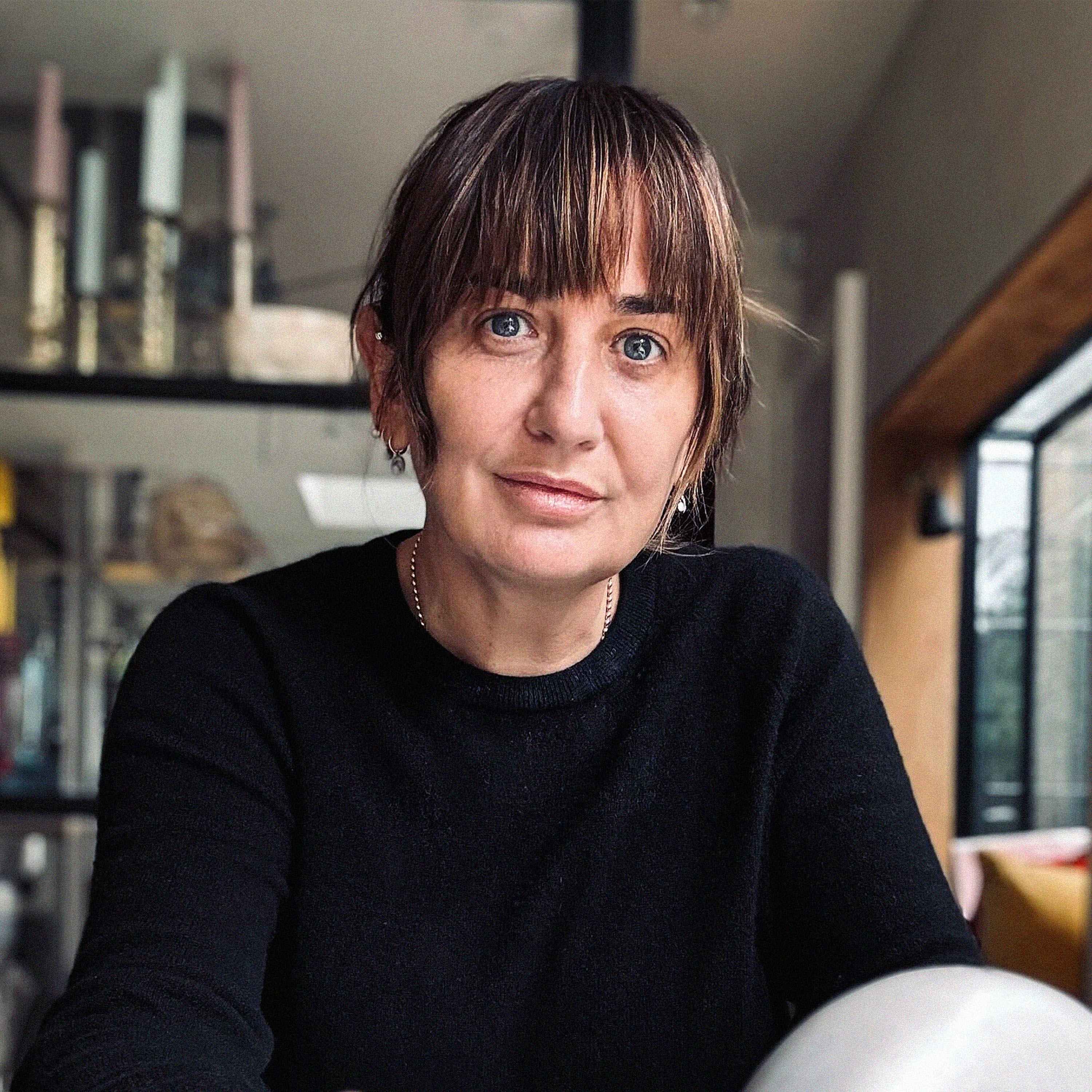
Faye McLeod, former Louis Vuitton visual image director, explains luxury window and facade world-building as “street theatre” that creates emotion, engagement, and store traffic; she also shares her origin story and how she builds teams and concepts globally.
Faye McLeod grew up in Glasgow, Scotland, after living in places like Jamaica, Namibia, and the Middle East. At age five, she was trapped in a concrete box in the desert for about a day, using imagination and therapy afterward. She studied fashion design in Glasgow, discovered window design at a shop, then worked across retailers (Selfridges, Topshop, Liberty) before joining Louis Vuitton for 16 years. She’s now building her own studio and previously collaborated with designers like Marc Jacobs.
Windows are “democratic” because you can’t retouch or hide; they must feel authentic. Great windows blend emotion with business goals. Luxury often misses that creative should be a feeling, not just visuals. Consistency comes from strong teams and local artisans, not repetition.
“Tiger Tail” for Chinese New Year at Vuitton Chengdu (a giant, interactive tiger-tail-like installation that people cut and took home); Vuitton “New Bond Street” “cabinets of curiosity” windows; Vuitton “Trunks” in New York; a golden sun on Place Vendôme; the 200-meter “ship” facade in Shanghai Taikoo Li (polarizing but culturally successful).
Written by AI. May contain mistakes.
Discover the latest spring fashion trends focusing on pastel colors and soft details.
“I always think spring is a perfect excuse to dress a little softer and a little bit more romantically.”
Faye shares her fondness for window displays and their impact on public perception.
“Faye McLeod, welcome to the BOF podcast.”
Faye reflects on her adventurous upbringing across different countries and cultures.
“Have you always been the kind of person who's taking things in?”
Faye recounts a traumatic childhood experience of being trapped and how it shaped her creativity.
“like surrounded by like beaches and nature and like golf buggies and going out into the desert with my mum, like digging for bottles and crystals.”
Faye details her unexpected path into the world of window design and her initial inspirations.
“We flew back to Glasgow and my mum and dad like didn't leave Glasgow again.”
Faye discusses the importance of storytelling in window displays and their relevance in a digital age.
“Clearly this moment at the age of five, you know, that did not come up in my research.”
Faye emphasizes the emotional engagement that effective window designs can create.
“But I guess when you think about storytelling through window concepts, why is it, you called it democratic right now.”
Faye discusses the emotional impact of window displays on passersby.
Exploration of the dual role of window displays in creativity and driving sales.
“I love when people get joy from it and they understand or they smile or it's that something or people come up to me and say like, I want to do that.”
Faye shares insights on how to develop innovative window display concepts.
A detailed account of the creative process behind the Tiger Tail window display.
“kind of marks a specific moment or show or campaign or whatever it might be.”
Discussion on how the Tiger Tail display engaged audiences and fostered participation.
“So I came into Vitan, presented the idea.”
Faye explains her collaborative approach with fashion designers for window displays.
“Because the store is going to come in there eventually, right?”
Faye recounts her journey and growth in the world of visual merchandising.
“And then one day, like she said, oh, can you go down?”
Faye shares her aspirations to inspire future creatives in merchandising.
“Like I'd always want goosebumps on my arms, you know?”
Discover how Faye McLeod absorbs diverse perspectives to create inspiring window displays.
“And I was like, really, I take everything in, right?”
Learn about the challenges and strategies in creating uniform window displays worldwide.
“So through the collaboration with Mark, you started getting much more involved.”
Faye shares her journey of moving from LVMH to starting her own company and the emotional aspects involved.
“And I've learned from him, you know, like I've been in, I'm in that, where I kind of, I look at what he does and I look at what the CEO is doing, Pietro and everybody.”
Explore how Faye was influenced by her collaboration with Virgil Abloh and her aspirations in nurturing talent.
Faye discusses the difficulties and disciplines she has learned while establishing her own studio.
“So now do you work across the group, like not just Vuitton?”
Understanding the importance of emotional connection in luxury brand experiences and window displays.
“Or what is it about being a founder that's challenging?”
Learn about the importance of feeling in the creative process and Faye's experiences with iconic projects.
“That's part of the process that I have to do is I've got to feel an idea.”
Faye shares valuable advice for those seeking careers in visual merchandising and window displays.
“But what advice do you have to offer for someone who wants to find a career in this very specified, specialized world of windows, the theater of windows?”
Explore how collaboration and understanding within a business foster creativity and innovation.
Faye discusses the significance and cultural impact of large installations like the Vuitton ship in Shanghai.
“because I'm always trying to work out so we can come up with the idea, we have to produce the idea and we have to do it within budget.”

Get the gist, explore an idea or ask about something said.
 Claude
On The Business of Fashion Podcast, what are the key points of this episode?
Searching your listeningAutomatic transcript. May contain errors.
0:00Faye McLeod: I always think spring is a perfect excuse to dress a little softer and a little bit more romantically. And apparently Macy's fashion experts are saying that pastel dream is the trend to know right now. What I love about it, it's not really going like full head-to-toe pastel. It's more about those softer details that make an outfit feel fresh and a bit elevated. Think delicate florals, lace, ruffles and sheer layers alongside flowy dresses or tailored pieces in lighter tones. It feels polished, pretty and very spring, but still easy to make your own. And you'll find it all at Macy's.
0:42Hi, this is Imran Ahmed, founder and CEO of The Business of Fashion. Welcome to the BOF podcast. It's Friday, April 3rd. During Faye McLeod's 16 years at Louis Vuitton, she was responsible for the house's windows, facades and fashion show sets. the work that made people stop on a pavement somewhere in the world and look up. She helped define how one of luxury's most powerful brands translated its identity into physical, public-facing experiences hundreds of times over across dozens of countries. I love the fact that the windows are a democratic space, like you're talking to the people on pavements and people can love it and people cannot like it and that's okay.
1:28You can't retouch. You can't hide anything. You've just got to be authentically you. And I think that's what I'm really good at, is being just me. Now, in a new phase of her career, Faye is building her own studio and bringing her instinct for emotion and world building to other brands and clients. This week on the BOF podcast, I talked to Faye about her path into window design, the emotional logic behind her creative process, and why this was the right moment to strike out on her own. Here's Faye McLeod on the BOF podcast. Faye McLeod, welcome to the BOF podcast. You spent 16 years as a visual image director at Vuitton, the person responsible for literally the windows in hundreds of stores all around the world.
2:26You're the reason people have stopped on a sidewalk or a pavement somewhere in the world and just kind of looked up. It's such a pleasure to have you here. when was the last time something made you pause and look up i pause and look up a lot yeah yeah like every day like i'm i've got a curious mind um do you know what this morning i paused and looked up i was looking at the cherry blossom like i was coming down like bayswater and i stopped and looked up and cherry blossom just makes you so joyful absolutely i saw them on westbourne grove last night just near um where i live and you can see them all yeah and it's just first of all it's beautiful yeah second of all it's such a great reminder that spring is finally here yeah so that made you pause yeah it does i guess looking up and being very observant, it's part of what you have to do all the time in your work.
3:33Have you always been the kind of person who's taking things in? Yeah, I have always. So I grew up in Glasgow, Scotland. I come from a small shipbuilding little town. What's it called, the shipbuilding town? Claybank. Claybank. Yeah, it's where they built the QE2 and all different ships. My dad's an engineer. My mom's a social entrepreneur. And I kind of grew up, like, I just grew up with a curious mind and I'm always taking things in and looking at the world and just appreciating, I think, the world we live in and the colors we live around and the objects. And, yeah, I've always been like that.
4:18When your parents tell you about what you were like growing up, what stories do they tell you about little Faye? So little Faye, three months old, we moved to Jamaica. My dad's an engineer, so he was away building power stations. And so we lived in Jamaica, we lived in Namibia, we lived in Middle East. So I lived in Bahrain and Alain. And so I kind of grew up surrounded by beauty, you know, like surrounded by like beaches and nature and like golf buggies and going out into the desert with my mum, like digging for bottles and crystals. And I've always been kind of around. That's kind of how I grew up.
5:02And then when I was five, I had an accident and my world changed because we were actually living in Alain. And one day accidents happen and I actually fell down a hole, a drain in the desert. Like a well? Like a well. And I fell down a really deep hole and I was trapped in a concrete box. Do you remember this? Yeah, I do. Yeah, I do. And I actually I've done quite a lot of therapy over it. But I think that's what makes me so good at designing in boxes. Because I had to use my imagination to survive. Like I was trapped in there. How long were you down there? For a day. And I had to swim in water.
5:48Yeah. And I was in a concrete box. and the only way out was a circular pipe at the top of the box. And I walked... Could you see light? I could see a circle of light, the sky, and that's all I could see. And I was trapped in a concrete box for like eight, nine hours. It was like a day. So it was like, I mean, my mum was pregnant with my brother. And I just had to use my bravery. I had to use my imagination and kind of survive in this box. And could you communicate with anybody? Nobody could hear me. I was so far down the sand, so it was in the middle of a desert. And I was so far down inside this box that nobody could find me, nobody could hear me.
6:34And eventually, like the search parties came out and I was found and I was pulled out of it. And when I was pulled out of it, all I remember is like, all I remember is our life changed. We flew back to Glasgow and my mum and dad like didn't leave Glasgow again. My brother was devastated. I had this life of like growing up in like beautiful countries and Jamaica being like one of the countries I loved. I mean, what a stunning place, you know. Yeah, beautiful. And so, yeah, so Glasgow was my home from then. So that moment was clearly a defining moment to you. Tell me more about the insight you had just now that designing boxes, you're good at designing in boxes.
7:19Like, why do you think it came from that moment? So I think when I was trapped in there, I think I believe that I had to go inside myself to survive. Right. Like, so I had to use my imagination. I had to tap into what goes on inside your body when you're in a situation where you could die. right like you could never be found your body can never be found you could never be found and I think I'd really tapped into that and I believe spiritually right I'm spirituality is something that I I'm really I'm open about you know like it's how I work it's how I create and I believe that when I when my good creative comes in flow I do go inside and that's something that I've really thought about because I'm like, how did I get into windows?
8:10Like when I started my career, why am I really good at this? Like I'm good at designing in a contained space and I've got no fear. I feel brave in that space and I really tap into that. Like I'm aware of that I'm quite courageous in everything I do. Like I come at things like with heart. I come at things with speed and I just pour like love into what I do and it's what I've always done and I've done it without even thinking you know like some people would be maybe a little scared about going to a big brand or to work with other with companies but I like go at things with like real force and real openness and I'm not scared of being in the dark you know yeah clearly Well, let's go back to when you first, you said, you know, how you ended up getting into Windows.
9:12Clearly this moment at the age of five, you know, that did not come up in my research. I don't tell many people that. Well, thank you for sharing that with me. Because from there, you know, you came back to Glasgow. when did you discover that there is even a career for developing or creating concepts for windows I'm glad you asked me that one um I didn't know there was a career in it right I really didn't I'm from Glasgow it's not luxury houses not something that's that's in every street corner in Glasgow but like I was studying at school and I was really into art and I was I'm good at it And so when I decided, like from an early age, my dad was always traveling, right?
10:01So I decided I wanted to travel. And the only thing I thought I could do was to be an air hostess. So I decided I was going to be an air hostess. And my art teacher, this guy called Mr. McDonald, he called my mom and said, listen, your daughter's got a really special eye. I'm going to build her portfolio and you're going to send her portfolio to art school because she shouldn't be doing, I think she should be going to art school. And how old were you at the time? I was about, I was 16, 17. Okay. And so my mum did it in secret. So I decided I was going to be an air hostess and my mum submitted my portfolio and I got in.
10:44And I studied fashion design. Where was that? Just in Glasgow in a place called Cardona College. And I wasn't really that good at it, to be honest. Like at the weekends, I would work in a shop at weekends. And one day this girl said like, do you want to come in the window and help me? And I went in the window and I came alive. I love the fact that the windows are a democratic space. Like you're talking to the people on pavements and people can love it and people cannot like it. And that's okay. You can't retouch. You can't like hide anything. You've just got to be authentically you. And I think that's what I'm really good at is being just me, you know, like the creative that you do is just so honest and it's there, you know.
11:34so that's how I got into doing windows and then I ended up getting a job at Selfridges and where I worked with Vittorio Adichie oh wow who's amazing legend yeah and he's he's still my friend today and he always like I'm really proud of you um so I worked with Vittorio Adichie and I then went from there I went to Topshop where I worked with Jane Shepparton another legend another legend like she's like she's iconic and amazing and again still a friend today which is amazing and and then i went from there and i went to liberty where i worked on the rebranding of liberty and then i went to america where i worked for limited brands out there and then um and i was out there and then louise trotter came knocking at my door and she brought was she at the time she was she was working on jigsaw so she was rebranding jigsaw because jigsaw um it was they were about to rebrand and louise was the creative director and i was the visual director and it was a match made in heaven uh she's still she's just wonderful and she she brought me back to the uk and then she went off to paris to work for joseph and then i went to paris to work for viton so that gives us a sense of like all of the different places that you were before you ended up at Vitorne, which has I think been your kind of longest standing gig.
13:05And we'll get to that in a minute. But I guess when you think about storytelling through window concepts, why is it, you called it democratic right now. I understand that. But why is that even relevant anymore? The kind of window concept. Everything's becoming digital. Everything is moving so fast. People don't take that much time to kind of stop and look anymore. But isn't it beautiful when you can do it? Isn't it beautiful when a window stops you in your tracks and you engage with it? What I love for Windows and what I think we've been doing really well at Vitan for a long time is I always want windows to be with the emotion right where you tap into something that you didn't know before you know like where you can go into the archive and you can pull out these beautiful little stories from like 1924 like all of those gaston years when you can tap into the past and then you make it modern and then you bring it into the future and you get to create these little vitrines of of wonder you know like that's what I'm always we're always trying to do is just really try to stop people on the street like that's my thing like I love when people like get their their fingers on the glass or you can always like like right now I'm always wanting people at Christmas time for example right I want I because I'm we put windows in and then I stand on the other side of the street and I watch people I do I like and some people now know that I do that like I do it in Shanzi Lise and I sit and I just, I stand on a watch because I always want to know how people react to the work.
14:50And I love it. I love when people get joy from it and they understand or they smile or it's that something or people come up to me and say like, I want to do that. Like I want that as a career because I didn't know this job existed. And I didn't know that that's what people could do and get paid well for it you know and but is it is it is it then more like a creative act for a brand or is there a real kind of business goal around it like are you actually trying to get people to go into the store or is it more just a creative expression for a brand I think it is I think it is both I believe that that you can get people through the door and people can feel, because people can feel like it's like, like it could be a barrier, you know, like, oh, I don't want to go into that store.
15:48Because it's intimidating. It's intimidating. And I believe that what we, that what I do and what my team do is we take that barrier down. We create that emotion or that sense of joy or humor where the brand feels like more heart. and then people believe that it's just much more of an engagement. And yeah, I try to take the defences down of the brands that I work with and just really tap into the heart energy of it. And I believe that the windows are street theatre and that you should entertain and you should engage. And I've been trying to toy with the idea, like because everybody takes photos of our windows and i believe if you do really good windows it's a great backdrop and that sharing of social media it just amplifies and and so yeah i like i love yeah it could be both basically it could be both a creative expression for the brand but it also can be a brand building tool it can be something that brings people to the stores i don't know if you remember the first time we met do you remember yeah i came to your studio near paul neuf in paris and i was trying to learn about how visual merchandising yeah when it came to windows in particular worked yeah and i found that conversation so illuminating and i was hoping that we could replicate a bit of that conversation today because i don't think necessarily everyone understands like how much work and thought goes into the creation of these concepts so could you maybe just let's pick one of your favorite concepts that you've ever done okay and let's start from the beginning of how how you come up with uh a window display or a window concept that kind of marks a specific moment or show or campaign or whatever it might be.
17:59Okay. There's so many to choose. I know, but you have to choose. Okay. I don't know which one. There's so many. There's the Yaya Kusama, where there's the Tiger Tail. Tiger Tail is always a favorite one for me. So then let's do Tiger Tail. The train show. I don't know. Yeah, let's do Tiger Tail. Okay, Tiger Tail. First of all, what was the original source of that idea? Okay, so Tiger Tail, it was Chinese New Year. It was the year of the tiger. And it was when, remember when brands were getting into cultural appropriation? Like, you know, it was... They were finding themselves in some hot water.
18:35Yeah. And, like, I believe in China, like, we've done really brave creative in China. there's a there's an energy and a courage um when we create in china and i love um creating there i've done we've just done the ship in shanghai which was which i want to talk another epic one so we're coming up with the idea okay so you have the tiger how do you create something where we're opening shangdu shangdu is the most beautiful store in the world like it's so beautiful and it's kind of old and new and there's a just the architecture like what the teams have done there is just phenomenal and we were coming up with the idea and we were like I had this idea like I was getting my car cleaned right like I was in the car wash and I was thinking you know I've always wanted to do like you know like the brush brushes that clean your car I've always been like oh there's something an idea in there and then and I came back and I was like I've got this idea guys and all the team and I was like okay what about if we had we were doing we did a tiger tail and you were searching for the tiger but the tiger was never there right so we took the tiger tail and it was a little bit like a car wash brush and it actually went through every bit of the architecture of the new store so it went in through a window through every single floor upstairs, downstairs, through buildings, and it went into the more heritage side of it.
20:08And it just went on and on and on. There was no end to this tiger tale. So I came into Vitan, presented the idea. It was Michael Burke at the time. And I was like, listen, this is a wild idea. And he was like, it's amazing. Like do it, do it, do it. And then Ramon, who's the president, and Michael Shriver were like, just do it, do it, do it. And we installed it. So this was just at the Chengdu store? Yeah, just at the Chengdu store. And we installed it. And one of the things I love about what we do is watching the crowd sing back, right? And it's something that you cannot control, right? With creative, you cannot control it.
20:50You just put it out to the universe and see what happens, right? and the crowd sung back. We had lines of people with scissors cutting the tiger tail and taking it home. So I didn't see this display. I'm trying to... It's that thing? So the team afterwards made it all into little keepsakes. Should we take it down just so that we can see it because I want everyone to understand. Let's just put it here. I didn't plan that, by the way. I just, I thought it was like, it was a good omen to put my tiger tail. Just explain that to us again, because I don't. So this thing was wound throughout the whole store.
21:36Yeah, so it was a huge tiger tail. Like, it was huge. It was like four feet wide, three foot, four foot wide. And the tiger tail was all made of like, of these kind of spiky tiger tail finish. and this is like a like a it's like a foam yeah and it went through the store it went out the window and it went through into the next building and then yeah then people were like queuing up and taking their bit of the tiger tail because it was good luck and that was a window scheme that I loved it because people really sung back to you and they everybody loved it it was very interactive experience it was like an immersive thing right like people participated in it yeah but we never knew you just you didn't know it was going to end up being that yeah and it's i think that's the best when you when you do something and you get a response that you could never have like i love it i love it i love how humans humans nature is you know like when we did the new york trunks right like that was another one and now when i go to new york it's the first place i go and I just watch people and people are like kissing by it, you know, like it's become like, it's now officially a tourist attraction.
22:58But is that a temporary thing? Yeah, that's covering the building. Because the store is going to come in there eventually, right? They're like building it behind. But the reason it's trunks and stacked because the building's coming down behind it. So one trunk comes off, another trunk comes off, another trunk comes off. Oh, wow. So it all makes sense. So, you know, when I met you, the thing that I was so fascinated about is that you'd work with like a fashion designer. At the time it was like Marc Jacobs or if it was Kim Jones. Yeah. And you take one of their show concepts.
23:29Faye McLeod: Yeah. You turn that into a window. Yeah. And then you'd replicate it all around the world. Like how did that work? Talk a little bit about the collaboration with some of the designers. Yeah. So the first window I ever did for Vitan from start to finish was New Bond Street opening in 2010. And it was a really big deal for me because it was in my home, like London, it's where I learned my craft, right? And I'm sure a lot of people were like, do you think she's going to do that? Do you think she's going to be good at Beaton? And so I had a lot to prove, you know, like I was young and I was like, I was really kind of, I was excited about being in my home turf and doing windows where my family could see it, you know, come down from Glasgow and come and see the work.
24:18And so I wanted to do, the whole idea there was about doing cabinets of curiosity. So I turned the windows into cabinets of curiosity. And when I was at Vieton, when I first started in Vieton, I remember one of my first days, I used to always see the cool people getting out at floor two, right? And I was getting out on floor four. And I remember saying to my boss at the time, Sevreen Merle, what's on two, right? Like, where are all the cool people going? And she was like, oh, that's Mark Jacobs' floor. You'll never go there. And then one day, like she said, oh, can you go down? Mark wants you to take him through New Bond Street windows.
24:55So I went down, took him through the windows. And he's like, honey, like, good luck. And I was like, okay. And then we did the windows. Good luck, why? Because I think he said he was like, I don't think anybody had done such. they were a little complicated let's just say there was a lot of work and a lot of curiosity and I was really looking at creating windows that felt very London like they're very like a collector right so it was they were yeah they were very different to what Vuitton had done before and they were beautiful before but these ones every window is different because when When I came into Vuitton, every window would be designed the same and it would just be in repetition.
25:45And I believe every window should be different. It should be like, you can only get one. You mean every window in a specific store or do you mean every window at every store at every part of the world? No, every window in a run of windows, right? I believe that they should be like, that should be a journey, right? So you have one window that is different, next window, next window, next window. So like in the work I do, you'll never see the same window in repetition. So you're talking to Mark about the cabinet of curiosities windows and? And then he came to, we'd opened a store and he came to the store and he was like, where's Faye?
26:22And I came down and he's like, bravo, these are so good. They're better than what you presented. And I was so happy. I was so delighted because he's just, I mean, he's just such a legend for me. And the next day I got on the Eurostar and I went back to Pontenave and I got a phone call and they said, can you come down to two? And I went down to the cool people floor. And Mark said, listen, Faye, like, and he was with Katie Grand at the time. And he said, if you can do windows like that, you can do fashion show sets. And I was like, no, no, no, no, I can't do fashion show sets. And he said, no, no, I'll build a team around you.
27:03So that was how my career developed because he really saw something in me that I hadn't seen in myself. And he built a beautiful team around me and I learned from like some of the world's best on set design. And I got really welcomed into a little crew of like super talents. and I had really, I had so much fun, like learning how to get out of a window and into a space where I would always design it as if I was sitting in that seat and how the show would feel. Like I'd always want goosebumps on my arms, you know? So is that then how they started to see this connection between the show sets and the actual windows?
27:50Yeah. Because you were getting involved in the early stages of the process. Yeah, because I was really privileged, you know, like I was sitting in that team with Mark and all of those amazing talents. And I was like, really, I take everything in, right? I take every mood board, I take everyone's energy in. And I sit with it. And then I was like, there's just so much rich creative here. like you like look even looking at materials on the collection the buttons the everything about it and then I would go and I would do what I do which is like I take it all in I take all the different perspectives I listen to the CEO I listen to the CMO I listen to the artistic director I take my magic is like I take everything in I sit with it I let it like work out like my sleep I I sleep a lot and process.
28:43And then I'll come up with ideas for windows that feel magic, you know, because I always want to inspire the future generation of people that want to do what I do, you know. And I want people to be really engaged with the work. Because one of the facts for me, I can count Christmases by Bird of Goodman windows. it's part of my thing you really admire what they do i do like i grew up um like my first interaction with a window was going to barney's and having my nose pressed against the glass at simon dunan's work you know like and i remember being 18 i think i was going to buy my first calvin klein jacket or something and uh and i remember going to to barney's and i was actually like standing on the pavement going, I'm going to do that.
29:40Like, that's what I want to do. And then I went around to Baird Duff Goodman. I saw what Linda does. And I was like, I'm going to do that. Like, that's the career I want. And it happened. It happened. We'll be right back with more on the BOF podcast.
30:02So through the collaboration with Mark, you started getting much more involved. with the actual show sets. And then those show sets started manifesting themselves as part of the windows. And then those windows would be replicated all over the world. I mean, that was what I was trying to learn from you when we first met. Like, how did you make that happen so that a window display was consistent in terms of quality and impact anywhere in the world? Because when we started getting into the details of how to do that, it was complicated. Yeah, I built a phenomenal team. I really like, I look at my time in Paris as like going to luxury university.
30:47I learned about the people, the talent, the savoir faire, like how to build like super powered teams. And that's something, the talent in Paris and the talents that we have globally at Vitan are absolutely incredible. so yeah so I kind of I mastered the art the way that I put teams together though I put teams together like like soccer teams or football teams you know like it's like you look at people from all different disciplines and you put everyone together a little bit like what Mark did to me when he put me into the shows like you I think it's really important to to create dynamic teams from all different disciplines and make them all work together.
31:35And that's what we do so beautifully there. You could have the design, the creative ideation, the technical and the production, and then the master. The thing that's beautiful is how do you install them all over the world and make everybody take that creative and then put as much passion into the installation as much has been put into the original idea. And that's something that is really important to how I work. How do you do that? Because there's all these people that maybe you've not even met some of them in a store in Jakarta or something. And how do you get them to put the same energy into it?
32:18I did a little film called The Art of Windows. Because how I look at it is when you go to the theatre, right? like when you do theatre travels, all these people are producers. They produce that. So it's about taking that creative and handing it over with such love that it goes into their hands and then they're so passionate about it. And then when people are standing on the street and looking at the work, they're owning it. You know, because it's not my work to own. It's everybody's work to own. And that's something that I really try to do and everything but it's about having people that are better more talented than me in the team and then we all work together and yeah you build a community of creative talents that the work is our work you know it's not any one person's it's our it's a collective so after all of that after this like incredible run i think 16 years yeah every time yeah you told them you were going to leave or you decided at some stage you wanted to leave and then you shared that news with them I mean why what was it in you that made you feel like you needed to make a change good question I believe that I think everybody has an entrance and everyone has an exit and you know when your time is is right you know and i have i have this my mom's an entrepreneur right my mom i grew up watching my mom build her businesses and i've always wanted to build a business like i've always wanted it all my life right like i've all i admire monsieur arnault like Like he's just, he has been so good to me, right?
34:14And I am so loyal to him. And I've learned from him, you know, like I've been in, I'm in that, where I kind of, I look at what he does and I look at what the CEO is doing, Pietro and everybody. And I've been in that brand so long and I put so much love into it that I didn't want to leave, right? Like I really didn't. So I came at it with full, like my heart is so grateful, right? But it's been 16 years and I want to go and build a company, right? I want to build an amazing company. And they basically said, well, we don't want you to leave either. So we came to a solution where I could build my company and they would give me a long-term contract.
35:01So I'm still doing all of the creative and I'm still pouring all the love into it. but I do it now from my business and it allows for Vita on for someone else to kind of step into that role you know like because it's always good to know like that because I've worked with such beautiful people and such amazing people so I still get to do all the work I still get to pour the love in and I still get to see all my friends that are all there and and I get to build my business at the same time which part of why I want to do that is um the UK has been really good to me right like his book helped me build a career and Paris has been so good to me and and I have so much love in my heart for it but I want to build studios that bring in creative talents and grow them and I think working with Virgil for such a long time yeah I was going to ask you about that you know the um the collaboration with Virgil what what were you going to say about well Virgil for me was about he was another for me he's one of the greats right like I got four years with him working really closely with him and we got to do work that I'm extremely proud of and it's got so much heart energy in it that I watched him and I watched how he opened doors for others and and he brought in youth into um and youth and heart and and he kind of planted seeds and watched people grow and and i want to do that like i want to i want to do that like in the uk i want to do it in shanghai i want to do it in paris i want to you know like new york i want to build studios that that people want to come and work in that's the best thing about building your own company in a way right which is i mean it sounds like you have the best of both worlds because you can still do all the work that you love doing but you're building your own organization and you're nurturing talent you know through through that process because you're having to find all these people on your own to kind of make all that work possible yeah like the community you build is so important for me it's it's one of the most important things for me is the talent and how that love that you put into your studio, it allows other people to grow, you know, and good work comes from it.
37:31Like, I think for me, like working with LVMH, like I've just, I pour so much love into it and I get the, like when any brand that they have wants to do windows or facades, They just pick up the phone and it's a beautiful position to be in. So now do you work across the group, like not just Vuitton? Do you do other stuff as well? I've just been, I've worked, so Ramon, he was the CEO of Vuitton in China. He's just gone to Fendi. Okay. So I just did some windows for him. But yeah, right now it's just Vuitton at the moment. And you're also working for brands outside of LVMH, which probably opens up your kind of palette in terms of what you can do.
38:20Yeah, we did the Nike and Skims, and that was important for me to do that straight from when we first opened the company. And that was great because that was about a female form, and I'm really into wellness and fitness and things, so I really was excited about doing that collaboration because we created like massive female sculptures of and not retouched. So it was athletic female form. And very rarely do you see that. You always see everything and it's retouched and you don't see, you know, like that form. So it was a bit like going into the Grand Canyon. I wanted it to be where if you went in, you could get your content and it would just you would feel like you were kind of going through kind of apertures of rocks and beautiful landscapes.
39:12What's been the most challenging part of setting up your own company?
39:19Being a founder is challenging and I've learned to be very disciplined. I've learned to go to bed at 8pm. I've learned to become really balanced in my life. I'm probably quite strict. I don't really socialize very much anymore. And that's responding to what? Just the workload or the pressure? Or what is it about being a founder that's challenging? For me, it's the energy like I am loving it like I love the freedom of building a studio I love working with Mark my partner and he he built Spring Studios so I we're building building something that I don't think has been done before because I look at how the world of of creative is and I I believe that our magic is like we build worlds together.
40:19And I've been building this studio, for example, like in London, and just bringing all these amazing talents into it. It's been so much fun, but it's also trying to find those talents. What's been really exciting is people that have worked for me for a long time before are now coming back. And I'm having lots of phone calls from people saying, hey, I'd love to work in your studio. And that's really exciting for me. That's probably what I'm loving the most. What do you think luxury brands most consistently get wrong when they're trying to build experiences? maybe sometimes they forget that that creative should be a feeling you know it's not just all what you see it's how you feel so I think sometimes you gotta put yourself as that person on the pavement or that person sitting on that seat that's for throwback you know at a fashion show.
41:33So I think maybe feeling. Yeah. It's funny you say that because when we're planning some of our events at BOF with our team, I'm always asking, how do we want people to feel? That feeling bit is really important because when you're world building, isn't just about the way it looks. World building is also about the way it feels. I've always, I think that's what I bring to the table whenever I am working. I can't create without feeling. That's part of the process that I have to do is I've got to feel an idea. And I know if I present a creative idea and it's not right, I feel it. Like I remember the sun on Vendôme.
42:22Do you remember the sun on Vendôme? We built a golden sun on Place Vendôme. On Place Vendôme. Yeah. Over the whole thing? Yeah. did you ever see that no I didn't when was that so that was that's been back five times actually but that was the opening of Place Vendome and you only have the one chance to make a first impression that's what Michael Burkall used to say to me and we we had an idea for that and it was the 29th of July so before August holidays and I presented an idea and I knew it wasn't right I just knew I went to bed at night and I was like that's not right that idea's not right and I went over before everyone was going on their holidays and this was being installed in October and I came back and I said I've got the idea and I basically, we studied Louis XIV, the Sun King and then we came up with the idea of building the sun on Place Vendôme and it was 347 scaffolding poles and I got the idea because I was in a gong bath and the gong bath, the sound bath and that was the sun.
43:29And when we installed it, it became the thing everyone always remembers about Place Vendôme. I can't wait to go see the photos of that because I don't think I got to see that in person. So, Faye, we're almost out of time and I'm clearly in this phase of your career after having worked at so many companies, after having dedicated a good portion of your life to Vuitton, after having set up your agency, clearly a big focus for you right now is talent young talent people who might not even know like you didn't know that there was a there is a career in this for someone for whom this conversation resonates who's pressing up their face against the vuitton windows or the bergdorf windows or the barney's windows oh the barney's windows no longer exist So just the Bergdorf windows.
44:24But what advice do you have to offer for someone who wants to find a career in this very specified, specialized world of windows, the theater of windows? For me, like I chapped on doors, right? Like I sent my resume and I send those DMs on Instagram. send like play in windows in your local like villages and cities you know like play like like get creative like go to art school like or even come in our studio like I always reply to my DMs I'm that's what you're gonna get a lot of DMs now that's all right I don't mind okay I sit and I go through them yeah because it's important right like it's for me that that's that's a into um yeah i always reply to my own dms faye dreams a lot faye dreams a lot that's her that's faye's instagram now i mean you might get you might get quite a few following this chat and and i guess lastly like what do you know now that you wish you knew back when you were starting at viton how do i wish i knew I wish I knew you just had to pour love into everything you do and not maybe I got too anxious you know like my let my anxiety get the better of me sometimes and I didn't trust myself but now I just pour love like I just get a big jar of love and I pour it right on top of everything and that's how I come at all of it so that and I wish someone had told me it wasn't it was about an orchestra of people like when I went to Vitan I kind of came into this huge business and what the way that I look at it now is that as an orchestra right like you've got so many brilliant talents in that company and it's not just about one person it's about everybody it's about all of the artisans everybody in that company and how you all orchestrate together and that's kind of like I'm probably in the side with the tambourines or something you know like or the triangle um but probably a triangle because I like triangles um but yeah it's an orchestra and and you just find your place you know like and you just have to just how do you find your place like how do you know which instrument you have to play that you can contribute to this music making because I believe it's about how you feel right like I know that I'm in my happy place when I'm in a creative space creating and I love learning like I absolutely love it like that's what Es Devlin and I share like we're always learning right like we're always kind of taking it all in so when you work in an organization like that like I'm always like listening so intently to Pietro right like what does a CEO want from me what what do what does that creative have to do like listen to the CMO listening to the artistic director listening to the like I'm always listening and taking it all in and then trying to work out how does this creative solve what they need me to solve?
47:52How does it solve it creatively? How does it solve it financially? And most people don't know, but the CFOs are usually my friends in companies because I'm always trying to work out so we can come up with the idea, we have to produce the idea and we have to do it within budget. So I'm kind of like all encompassing. So I'm always thinking about everything as a whole and maybe not a lot of people think that way, but that's how I come at it. Well, I think a lot of people, creative people sometimes either feel intimidated or constrained by business, right? And I think the way I always think about it is actually the business side of our industry, whether that be in designing clothes or creating window concept, it's what sustains and makes that creativity possible, right?
48:48And the things that you've been able to do at Vuitton, this like huge, the largest luxury goods brand in the world, none of that would have been possible without the business side of Vuitton working. So you need that side. You need that to make it work. Absolutely. Like, for example, the ship in Shanghai. Oh, yeah. Let's talk about the ship. I knew you. I'm like, OK, let's go ship. Yeah, let's finish with the ship. Because I have to say, when I saw that ship, I was like, what? That's crazy. And I was like, oh, it's so big. But like, why was that the right thing for Vuitton? Okay, so the ship was polarizing, right?
49:31You're either going to love it or you're going to hate it. And we knew that when we were doing it. But when we were designing it, so it was a function, right? It's a facade. It's covering a building. The building is going to be covered. It's what everyone does when they're doing a building. And when we were sitting with the idea of we'd just done the trunks on Fifth Avenue, we wanted to do the next one in Shanghai. and when you look at the building the building is a ship if you look at it right you showed me outside and we were going to put a box on top of it like how lame is that you know and so when we were designing it and all of that comes in our studio and when we were designing it I remember Ansel like Ansel was like it's a boat and we were like oh my god we're a travel company this is so good shanghai's a poor like then when we started to go into the archive like all the captains all lived on the same street so this is in taekuli and what was beautiful about this whole idea was when we did it like we presented it was five ideas i presented it and like got to the fourth and the ceo ramon was like this is so boring and i was like okay we've got a wild card next and then we showed the ship and he was like jumping up and down right like I've never seen him like he was over on zoom and he was like this is it this is it and then you've got to go in to build right so what the beautiful thing is we design it all here we're like a service right so we like design the ship we're like design service and everything we do we make locally so we got all the artisans from all over Shanghai.
51:12And then we made that ship. And it's 200 meters long. It's incredible. And the Savoie Faire that went into that, right? Like everything, like the color, the rivets, the anchor, like everything, we poured that, see that big jug of love? We poured that right on top because it felt right. You needed a big jug of money to do that too, right? Because it's quite an ambitious... It's there for a long time, Imran. I think it's the number one store in the world. Wow. So basically for that one, the data on that, that Taikouli mall had 30 ,000 people a day. When we first launched that boat, 300 ,000 people a day.
51:59That became culture, right? That ship became culture. Well, it's kind of like now when people visit Paris, they have to go to the Champs -Élysées. Vuitton store. These stores have become, for good or for bad, they've become part of the cultural experience of a city. Anyway, we've run out of time, Faye, but I'm really grateful to have spent this time with you. And I want to spend some more time diving into some of your projects. It's like, maybe one day we can do something together. Thank you so much. I really, I really respect everything you do. And I'm really glad also to be in your BOF 500. Well, it was well Well deserved.
52:37Well deserved. Congratulations. Thank you very much. And thanks for your time today. Pleasure. The BOF podcast is edited and produced by Olivia Davies and Eric Bria.
Faye McLeod has built a body of work that sits at the intersection of retail, image-making and brand building. During her 16-year tenure at Louis Vuitton, she created some of the luxury industry’s most visible physical expressions – from windows and façades to fashion show sets. In that time, she helped define how the house translated its image from the runway and the archive into public-facing experiences around the world.
“I love the fact that the windows are a democratic space. You’re talking to the people on pavements – people can love it or not, and that’s okay,” she says. “You can’t retouch or hide anything. You’ve just got to be authentically you. And I think that’s what I’m really good at – being just me.”
Now in a new phase of her career, McLeod is building her studio, Closer, bringing her special mix of emotion, world-building and collaboration to other brands and clients.
On this week’s episode of BoF Podcast, McLeod joins BoF founder and CEO Imran Amed to discuss her path into window design, the emotional logic behind her creative process, and why she decided this was the right moment to strike out on her own.
Key Insights:
Additional Resources:
Faye McLeod | BoF 500 | The People Shaping the Global Fashion Industry
Role Call | Faye McLeod, Visual Image Director | BoF
Hosted on Acast. See acast.com/privacy for more information.