
 Ask ChatGPT


 The Business of Fashion Podcast
9 Oct 2026 · 1h 9m · 26 chapters
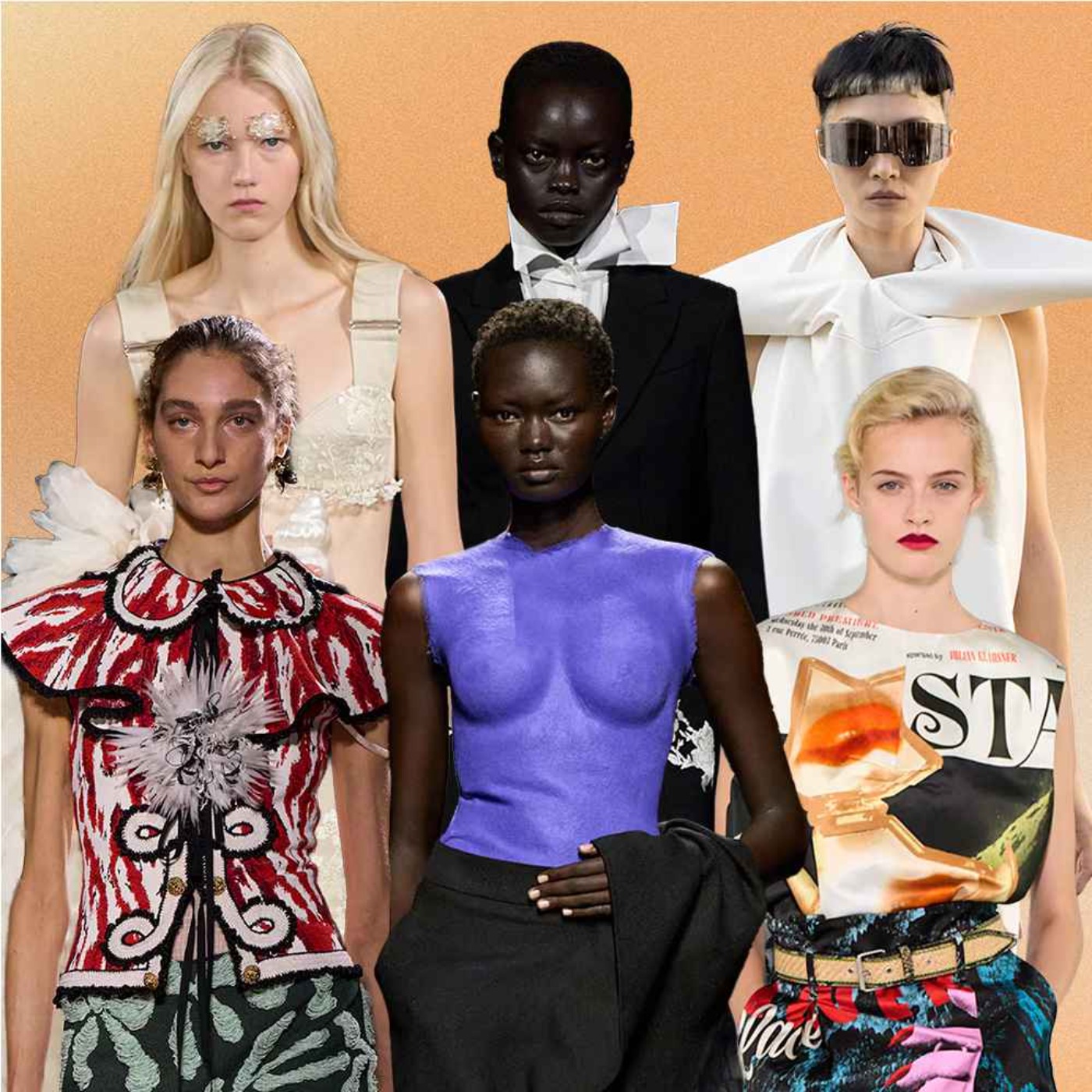
A season-by-season recap of Spring/Summer 2027 fashion shows, arguing that “independent thinking” and human-scale creativity are re-emerging inside an industry pressured by scale and quarterly targets.
Imran Ahmed, founder and CEO of The Business of Fashion (BOF), hosts. Tim Blanks, fashion journalist and writer for 30+ years, longtime BOF contributor and show watcher.
Written by AI. May contain mistakes.
Imran and Tim discuss the rise of independent designers in fashion.
“With almost half a million customers and over a trillion dollars of secure payments, Bill isn't new to intelligent finance.”
Imran and Tim discuss the rise of independent designers in fashion.
“But the thread we kept coming back to was bigger than any one show.”
Tim shares insights on the recent London Fashion Week shows.
“Welcome to our seasonal conversation about the fashion season that was.”
Discussion about the standout shows by designers like Erdem and Simone Rocha.
“in london which um has had some challenges in recent seasons you know the the energy in London has never been the same, you know, since COVID really.”
Exploration of how retailers interact with independent designers.
“Because if you think about the peak moments of the last few decades, it's often been when designers feel like that.”
Tim discusses Christopher Kane's return to fashion with Mulberry.
“or doesn't rely as much on big department stores or big e-commerce players, but really, you know, through these really, really highly curated independent stores.”
Explore how Christopher Kane's collection for Mulberry showcases storytelling through fashion.
“seems to have its roots deep in the English countryside.”
Discussion on the current state of London Fashion Week and its appeal to buyers.
An analysis of Demna's recent collections for Gucci and his evolving vision.
“And of course, you know, the most, you know, important moment I'd say in Milan was Demna's, I think it's his third collection or fourth collection.”
Examining the impact and reception of Demna's latest collection for Gucci.
“And, you know, I thought it was really smart.”
Examining the impact and reception of Demna's latest collection for Gucci.
“And very clever to divide it into a men's half and a women's half, I thought, to make the two statements very distinct, because I think they were stronger for not being mixed.”
A discussion on Miuccia Prada's collection and its reflection of her classic style.
“Prada has this quote the skirt is my t-shirt Mrs.”
Explore the impact of shared trends in the fashion industry and their commercial potential.
“And so interesting that this season they decided to do this show.”
Delve into the personal revelations from an interview with Mrs. Prada.
“And for anyone who hasn't read that story, you absolutely must read it.”
Discuss the evolving landscape of Jill Sanders and original designers in fashion.
“The one other show I wanted to touch on in Milano, Tim, was the Jill Sanders show.”
Examine the transformative work of designer Rick Owens and his latest collection.
“Because we might as well talk about Rick Owens.”
Reflect on Anthony Vaccarello's legacy and the impact of his final show at Saint Laurent.
“I thought that there was a real sorcery in this collection.”
Consider the implications of Anthony Vaccarello's departure for the future of Saint Laurent.
“But yes, as of Thursday, October 8th, there is no confirmation.”
Discussion on the potential departure of a key designer from Saint Laurent and the implications for the brand.
“It was like, this did feel like this is where his career at Saint Laurent was going.”
Exploration of how large fashion brands are struggling to connect with consumers on a personal level.
“the business side is performing as well as to just assume that you can just change a creative director and everything's going to change.”
Reflection on Issey Miyake's influence and how his legacy is being carried forward by Satoshi Kondo.
“We'll be right back with more on the BOF podcast.”
Explore how the human element in fashion shows resonates with audiences.
“But also the staging of that show with the dance troupe and the one-man band who supplied the soundtrack.”
Discuss the transition of legacy designers to new creative visions.
“That Julian has definitely got his own vision of Dries.”
Delve into how Mathieu Blasi is redefining Chanel's approach to fashion.
“And finally, Tim, let's, you know, it wouldn't be a complete review of the season that was without talking about Matthew Blasi Chanel.”
Learn how independent thought drives creativity and success in fashion.
“With all the virtues of that, the designer being entirely engaged with every level of the product, the sheer joy in the making, the sense that there's nothing.”
Learn how independent thought drives creativity and success in fashion.
“built on over a trillion dollars of secure payments.”

Get the gist, explore an idea or ask about something said.
 Claude
On The Business of Fashion Podcast, what are the key points of this episode?
Searching your listeningAutomatic transcript. May contain errors.
0:00With almost half a million customers and over a trillion dollars of secure payments, Bill isn't new to intelligent finance. It's the proven way to simplify Bill Pay and maximize cash flow. Want to learn more? Visit bill.com slash proven for a special offer. This episode is brought to you by Macy's. I've got to say, one of my favorite things about autumn is finally being able to properly dress again. And for me, that means layers, and especially a really good sweater. Cashmere is a classic for a reason. It's soft, lightweight, warm, and it's one of those pieces that you can bring out year after year.
0:41Macy's has a huge range of cashmere styles, designed in-house and made with two-ply yarn construction. So they're built to last without completely blowing your budget. And if you want something with a little more personality, statement sweaters are having a moment too, especially Fair Isle. I love the idea of pairing one with a baggy denim or a silk skirt, and then adding a leather jacket or trench as it gets a little chillier. So, if you're ready for sweater weather, Macy's has everything you need to make your autumn wardrobe feel cosy but still elevated.
1:18Hi, this is Imran Ahmed, founder and CEO of The Business of Fashion. Welcome to the BOF podcast. It's Friday, October 9th. Every season when the last show in Paris is over, I sit down with Tim Blanks to make sense of what we've just seen. Tim has been watching and writing about fashion shows for over three decades. This season, he spent time with Mewcha Prada, Demna, Rick Owens and Mathieu Blasie. And he can tell you not just what a collection looks like, but what it means. In London, two of the city's most established designers, Simone Rocha and Erdem, reached what Tim calls career heights. Christopher Kane returned to the runway, this time at Mulberry.
2:02In Milan, Demna gave us the clearest picture yet of his Gucci. And in Paris, Anthony Vaccarello said goodbye to Saint Laurent after a decade, a departure the house confirmed today. But the thread we kept coming back to was bigger than any one show. In an industry dominated by giant groups trying to meet quarterly targets, there is a renaissance of independent designers and independent thinking. And you can find that same spirit in places you might not expect.
2:34Tim Blanks: One theme that I think we will probably be expanding on if we get a chance to do more of these conversations over the next few years is the renaissance of independent designers and independent retailers. Because really that is what fashion is all about, ultimately. It is about this individual idiosyncratic statement, this passion, and that applies not just to the designers, but to the people who sell the designers. Tim and I talk about the season that was and whether fashion's independent spirit can survive inside an industry built for scale. Here's Tim Blanks on the BOF podcast. Hello, Tim. Welcome to our seasonal conversation about the fashion season that was.
3:17Are you ready? I'm ready. You know, people really look forward to this conversation. I have a lot of people, including the new BOF 500 Class of 2076 member Dylan Kelly, say he looks forward to this every season. So now I feel like we better deliver, Tim. The pressure is on.
3:36Tim Blanks: Thank goodness there are good things to talk about. Yeah, I mean, overall, before we dive into the details, what did you make of this season? I feel I, because of my other deadlines, I feel that I didn't experience it as fully as everybody else did. But, you know, there are so many conversations that people are having about what fashion is doing, what fashion needs to do, and how people are responding to that. And I think a lot of that conversation has been sparked by what's happened with Mature Blasier at Chanel. Because what happened there is just so full of possibility. And so I think that has kind of made people look at things in a slightly different way.
4:33Tim Blanks: That there is hope. There are opportunities to make significant changes. um so let's hope that we saw green shoots yeah i mean i think i wanted to start this conversation in london which um has had some challenges in recent seasons you know the the energy in London has never been the same, you know, since COVID really. And I remember a time in the early 2010s when on a Monday of London Fashion Week, you could see Christopher Kane and Jonathan Saunders and Roxanda and Erdem and Burberry. And like that day, you just go from one amazingly creative show to another. And then after, you know, after COVID, you know, some of these businesses no longer exist.
5:36You know, some of them have gone out of business. Some of them have held on and continue to kind of hold the flame of London up. But something started to shift this season. You know, it's not certainly not back at the apogee of, you know, the decades before, But there was some sense of London finding its feet again. And, you know, as we looked at the schedule before the week began, you know, Christopher Cain was back, this time showing under the banner of Mulberry. You know, Sean McGurr from McQueen brought his show back to London. You know, there was an M &S show in London. There was an H &M show in London.
6:19And then, of course, there were the stalwarts of like Roxanda and Erdem and Simone Rocha. So, you know, before we dive in into some of the details of shows, like what's your take on what's happening with London now? Are you feeling that too, that there's like a bit of a, there's a sense of maybe London coming back?
6:42Tim Blanks: Well, I saw designers who were really part of the establishment. I'm especially thinking of Simone Rocha and Erdem, who reached career heights. So as much as the schedule is full of people in London and names that I don't know and that I expect I'll hear about at some point in the future, it was those two pillars of the fashion establishment here pulling two extraordinary shows out of their hats at this stage in their careers. That really made me think that there is something going on in the sense that people feel inspired and hopeful and actually maybe even sort of anything goes reckless, which is often a really good place for designers to find themselves in.
7:34Tim Blanks: Because if you think about the peak moments of the last few decades, it's often been when designers feel like that. I have nothing to lose by doing what I'm going to do. so I think Simone and Erdem did that with their shows I thought Erdem's show had a particularly wanton quality that was quite enthralling I mean he does he's always done people on the women on the verge of a nervous breakdown quite well with all the restraint and everything you do feel a volcanic force building and in this in this show there was just this explosion of sort of subversive energy. And Simone? Like, why was it a career high for Simone?
8:15Tim Blanks: Again, there was a sort of wildness to it. It felt more, it felt sexier, which is a funny word to apply. And her shows are often very sensual and they have a sort of peculiar eroticism. But this one was very, I thought this one was very direct. I mean, I felt like there was a kind of Spanish influence in it, you know, Velazquez or Goya or somebody. There was a sort of a kind of bloodiness to it, a sort of fierceness that I found very attractive. She does fierceness very well. And she's definitely toyed with altered states in her shows in the past. but I thought this one had a sort of decadent kind of aristocratic flair to it.
9:06Tim Blanks: It felt very mature to me. So what do you think that means for London's establishment designers like Erdem and Simone when they're reaching new creative heights in their collections? You know, once upon a time I would have said retailers would be very excited to see those collections. I don't know what's happening in retail so I can't really say that anymore it'd be nice to think that people are coming to London to look at London again but I don't know you'd know more about that business context than I would one theme that I think we'll probably be expanding on if we get a chance to do more of these conversations over the next few years is the renaissance of independent designers and independent retailers and you could see these two collections as being very, very strong statements of independence.
10:02Tim Blanks: And you can imagine them appealing to retailers who wanted to make those kind of statements in their stores. And this is what would have happened in the past. I hope it's what will happen again, because really that is what fashion is all about, ultimately. It is about this individual idiosyncratic statement, statement, this passion, and that applies not just to the designers, but to the people who sell the designers. These people also have their own boutiques, of course. So, you know, that will give people reasons to go to their shops and explore the full story. I hope. I hope. I definitely feel that coming back.
10:45Everywhere I go, Tim, like, you know, all around the world, when I'm traveling, these independent stores and the kind of synergistic relationship slash incentive they have to collaborate with independent designers who can offer something new. Because in a luxury landscape that's so dominated by these big brands, it's the independent designers who can offer something that customers can't find everywhere you don't see umpteen versions of the same thing you know at a party or walking down the street you know they really offer something special we recently ran this story on the renaissance or like new energy coming out of japan with this menswear labels you know and i was there a few weeks ago and it was just remarkable just talking to these brands because it's not even like they had strategically set out for this interest to happen.
11:49It's just happening because that's what customers want. And therefore, that's what independent retailers want. And you see this whole through line, this whole new pathway that, you know, bypasses or doesn't rely as much on big department stores or big e-commerce players, but really, you know, through these really, really highly curated independent stores. And so for brands like Simone and Erdem and I guess, you know, others on the London Fashion Week calendar, there is this emerging opportunity. Of course, the industry remains in a really challenging place and the economy remains precarious. And, you know, there's so much uncertainty that navigating all of it as an independent brand can be very, very challenging indeed.
12:37Indeed. So, but yeah, so it's good to see London firing up its energy again. What were your thoughts on Christopher Kane at Mulberry? I know you spent quite a bit of time with Christopher before the show.
12:49Tim Blanks: And, you know, in his heyday, he was one of my five greatest designers of all time, practically. I mean, he was so, he's an absolute genius of a fashion designer. And it was really, It was so exciting to see him back in an environment where he could tell the stories that he loves to tell, those stories that only he can tell. So twisted in a funny way. In a funny way, funny ha-ha and funny peculiar. And I think you could see the goodwill that greeted his return at Mulberry. the universal goodwill the comments online that people were so happy to see him back i mean it's only been well three years since he closed his business um i suppose that's a very long time for but many many years since he's shown yeah on schedule because of course he had that whole period where they changed the business to more of a direct to consumer business like i can't remember the last Christopher Cain show I saw.
13:53And obviously, connecting with Mulberry,
13:56Tim Blanks: it seemed a bit incongruous. But Mulberry being one of those heritage houses, which seems to have its roots deep in the English countryside. And what he did, the story he told, using the mulberry tree as his focal point and using what people do, what tree surgeons do with mulberry trees. Tree surgeons use axes, and axes got Christopher Kane's vivid imagination working overtime. So he did this bag that was called the chop. Mulberry's all about those very solid kind of, those very solid bags, very country classic style bags. Although Mulberry is also about that crock-covered philofax that yuppies worshipped.
14:49Tim Blanks: But he did this bag, the chop, which was modeled on the bags that axemen carry their blades in. The bag I thought was great. Somebody actually said, oh God, it could be a new baguette. um well i just wondered what you could put into it you know like it maybe works for well you put a little blade you put a little blade into it all those all those killer women out there that want to keep hold their weapons yeah i mean the shape was cool but you know if i think back to the really successful mulberry bags not only that they are they are what what What was the line from Succession? They were capacious.
15:28Tim Blanks: Extremely capacious. Yeah, extremely capacious. And that was the opposite of an extremely capacious bag. And in its opposite of capaciousness, it was a signature Christopher Cain piece. So to see his personality injected into Mulberry's bloodstream like that, it made you excited to see what happens next. And I thought the collection was very heavy on leather, which I didn't mind. But again, it had that sort of perverse decorum or something that he's very good at. And every look had a story. And my favorite piece was the anorak, the orange anorak. A lot of comments said it looked like Kenny from South Park.
16:14The Snoop. What did you call it? You had a name for it.
16:19Tim Blanks: Oh, what did they call it? The Snorkel. The Snorkel. And they remembered the girls they went to school with, the bad girls from their high school, seminal inspirations for Chris and Tammy, his sister. These girls from school have been totem poles for the Canes from the very beginning of their careers. The girls at school who would wear their snorkels summer and winter, and it'd be their going out look. It would be their go to school look. Because, you know, they came from a poor neighborhood up north. and it was just you know this the snorkel i loved it i loved it on the catwalk i love the story i love the idea of people wearing snorkels it's just an anorak but it's a christopher kane anorak so yeah well it will certainly be interesting to see where that goes for me like the best yeah the best thing about a christopher kane collection was always the idea of theme and variation and he'd take like a single idea and he would just find so many ways and it would feel like many many many ideas so it's it was nice to see him back and here's to hoping that London fashion week finds its energy back I know that Laura Weir and the British Fashion Council are doing their best to make some changes and try to make it more accessible for emerging and and independent brands and trying to get more press to come over and trying to get more buyers to come over but it's a real slog because fashion month is a slog and so asking you know a lot of the buyers i spoke to in in paris they did not go to london um so you know i think they're still facing an uphill battle but um i think it starts with what happening what's happening on the runway And if there's interesting things happening, then people might be more inclined to kind of make a detour.
18:15And energy and a real energy too. Yeah. So then we went over to Milan. And of course, you know, the most, you know, important moment I'd say in Milan was Demna's, I think it's his third collection or fourth collection. if you count the Gucci core. There's been a number of Gucci collections that we've seen since that La Familia show in the theater that they constructed in Milan one year ago. And I think people were looking for a real clarity around what Demna's Gucci is. Because up until now, I still, I don't think we really know.
19:00Tim Blanks: He keeps promising that. And he did say that this was his Gucci. Okay, so was it? Do you get it now, Tim? Do you understand? It's funny. I really like this show. And speaking about the, we just talked about the incredible goodwill that Christopher Cain had in London. I mean, the ill will that greets Demner just blows my mind. I mean, what did he do to the world? It just is unfathomable. Are you talking about online comments, Tim, or also industry? I'm talking about the online commentariat. I think people in the industry, most people I spoke to, liked the show. Because the Primavera show in February was so hard.
19:48Tim Blanks: And it was so, you know, coming at the same time as that Ryan Murphy show, The Beauty. It just felt like, it felt so dystopian to me. that vision felt it was harsh. And I was thinking, no, this can't be his Gucci. You spent quite a lot of time with him before the show. A lot of the feedback I heard was like, oh, finally we get to see what his Gucci is going to be like. Demna himself said, this is my Gucci. But why did it take us so long to see that? Why didn't he do that for his first show? He said that was the expectation that he would do that for his first show. He would do something like that.
20:26Tim Blanks: But he really needed to find his way through Gucci. So he explored all those different elements, the hyper-bourgeois element, the Tom Ford element, the people who go to Gucci to buy like a simple shirt and peacoat element. You know, the sort of classic Gucci customer from 100 years ago, practically. This is a process for him. He is so fiercely articulate when he talks about what he does that you almost wish that to shut people up, they could just listen to him and explain what it is that he does. Obviously, you know, when I was talking to him, I mean, he addressed the charge of cynicism. People call him a cynic.
21:07Tim Blanks: I think that his life experience has been a very, very intense and difficult evolution for him personally. I think he had a lot of issues with himself that he's been processing over the years. And I think he's kind of come to grips with all of that. But I think Gucci was a research project and he was given the time to research. So he took the time to research. I guess he's researching in a public sphere. And everyone's watching the research happen. Whereas someone like Mathieu Blasie was given that year to do the research in private. And this is this whole thing with our industry being in such a rush to kind of get things done.
22:03And I think maybe one, and we'll get to Chanel a bit later, but one of the smartest things that they did, and which Hermes, by the way, has also done with Grace Wales Bonner, is they're saying, we're going to give them time to figure out what they want to do. and you know perhaps the situation at gucci with you know sales cratering didn't allow caring to give him that time and space to really kind of do the research but i have to say this collection if this collection was the first collection we saw from from damna i think the whole narrative that we hear around gucci in the industry but also uh online might be really different because it was an undoubtedly stronger expression of like both Damna and Gucci.
22:50And, you know, I thought it was really smart. And I thought what was really well done was there was something for everyone. You know, there was, you know, there was a little bit of that breath and range. That's what Linda Fargo actually called it to me when we were walking out of the show. She said, I said, what did you think of this show? And hopefully Linda doesn't mind me quoting her. But she said, I think there was real range and for a brand as big as gucci you need that kind of range it can't be so specific because what the problem with the previous collection is so many people couldn't see themselves in it so i'm really happy that we finally saw this i guess you know big question now is like how quickly is all of this going to end up in the stores you know how quickly can the whole image of gucci catch up to where demna's at now because if he continues on this track then i think he really might be on to something and you know caring might have found after some time many years you know let's think about this as like you know after alessandro michele left they've been searching for a new path for gucci and that is you know at least four or five years now so they you know they they're really counting on making this work but i think at least from a creative standpoint, from a runway statement standpoint, from a merchandising standpoint, because of course we were all in a store that Demna created as his show space.
24:19This is a step in the right direction.
24:21Tim Blanks: And very clever to divide it into a men's half and a women's half, I thought, to make the two statements very distinct, because I think they were stronger for not being mixed. We'll be right back with more on the BOF podcast.
24:40With almost half a million customers and over a trillion dollars of secure payments, Bill isn't new to intelligent finance. It's the proven way to simplify bill pay and maximize cash flow. Want to learn more? Visit bill.com slash proven for a special offer.
25:01okay well Prada co-creative directed by Mewcha Prada and Raph Simmons is you know undoubtedly another one of the most important shows in Milan and this season one of the favorite things that you taught me this season was that Mrs. Prada has this quote the skirt is my t-shirt Mrs. Prada
25:25Tim Blanks: She told Charlie Rose when he interviewed her. Yeah, I sent you that clip, remember? And that's so, it's the whole show was built around. 63 skirts. 63 skirts. And it felt like an older Prada show to me, like a Prada show from days gone by. Does that resonate with you? Yeah, it totally resonated with me as a sort of reflection of her golden era when season after season, she would just move the dial, you know, and the clothing echoed that, I thought, the skirt and the bra top, you know, that was a very sort of classic combination for her. I loved this collection for that reason. I mean, people said, oh, it's Prada doing Prada, as in that was a sort of lazy thing to do that but you know Prada doing Prada what could be better than that really for Prada and for people who love Prada there was a the sort of the twists the little subversive kicks the kind of flirtation with ugly chic the the sort of benchmark things from Prada, moments of Prada past, but I felt it was a necessary reassertion.
26:50Tim Blanks: I think that anyone who loves Prada would love this collection. And I don't think that means that it was creatively lazy or anything. I didn't find that at all. I just felt there was a lot to enjoy in the show. I thought everything was strong. I thought the accessories were strong. I thought that as separate, so lots of really lovely individual pieces, but just as a coherent statement, it was just, it was Mewcha Prada. And I haven't felt her that strongly in a Prada collection for a while. It's been very much about Mew Mew for her, but I thought it was very encouraging to see her put herself back in the main collection to such an extent.
27:40And by the way, it totally makes sense for Prada to do Prada when so many other people are doing Prada. You know, like the influence of Mrs. Prada on the runway this season with all the bra tops and everything. It was everywhere. So she kind of...
27:57Tim Blanks: And the skirts. Yeah. The skirts. I mean, it's so interesting that you could see a skirt and think Prada owns the skirt as a signature statement. And so interesting that this season they decided to do this show. And it was the same season when everyone else, a lot of other designers kind of referenced this Prada as well. And so it's kind of nailed. And in terms of a trend coming out of the season, like bra tops and all of that, it seems to have been a through line all the way from New York to Paris. So, you know, there's something in the, I always think that's one of the most amazing things about the fashion industry is.
28:38It's like everyone kind of some way ends up in a similar place. And commercially, by the way, I think this will be an extremely successful collection. Some of the recent ones were more challenging from a commercial perspective. But you can see lots of options here for lots of different women, which I think is really exciting. You spent some time interviewing Mrs. Prada for our BOF 500 cover story. And for anyone who hasn't read that story, you absolutely must read it. Because in his own way, as always, Tim is like really shed a light on Mrs. Prada in a much more personal way than I've ever seen or heard anywhere else.
29:27I felt like I was really getting to know her as a person this time, Tim. So thank you for doing that story. I mean, do you have anything particular that stood out from the time that you spent with Mrs. Prada?
29:39Tim Blanks: Well, thank you for saying that. I felt that was a conversation I've been waiting to have with her for a long time. I mean, I've interviewed Mrs. Prada in the past. But this conversation, I felt weirdly connected with her. I think it's something to do with aging. You know, I just think that you reach a point in your life where the experience you're having is to do with something so universal that it transcends a normal interview situation. You're actually talking about, there were things I really wanted to ask her. There were things I really wanted to know how she felt about. And they were personal things.
30:25Tim Blanks: And I was surprised that she was as open as she was. And she was so good-humored. And throughout the conversation, she really is an extremely entertaining person to talk to. She laughs a lot. And when she laughs, it makes you laugh. And I felt that while I was talking to her, I felt like I was learning stuff, which is what I want to happen when I'm talking to people these days. especially if I feel that our experience of life is kind of somehow more, is somehow drawing closer rather than, you know, it's rather than being some abstract person from another time and place. I feel we're very connected.
31:10Well, we'll include a link to that story in the episode notes so that all of you who haven't yet read Tim's deep interview with Mrs. Prada can easily find it. The one other show I wanted to touch on in Milano, Tim, was the Jill Sanders show. Simone Bellotti has built a real fan base amongst the fashion cognoscenti. I think it remains to be seen how that fashion insider following translates into kind of a wider commercial and business success. But there's no doubt that he's starting to really bring something interesting to Jules Sander.
31:56Tim Blanks: But I'd put him in the same category as somebody like Christopher Kane. Just an original. A real original. I didn't see Jules Sander. But it definitely was one of those shows that people were talking about. And when I look at it online, it rewards contemplation. I hate that feeling when you're looking at photos and you think I really had to be there to get that. And I would love to have been there. But he is going to be a great designer. He is a great designer already, but I think he's going to become a very significant person in fashion. He has the right approach. And he is, like I said, he's just an original thinker and another hugely entertaining person.
32:43Tim Blanks: So I'm excited about that. You know what I've noticed is that some of the most interesting designers at the moment are actually not these larger-than-life characters, the caricatures that people outside fashion often assume a fashion designer is. So you have these Simone Bellotti's, or you have the Satoshi Kondo's, or you have the Sarah Burton. Some of the best designers right now are these people who are really just focused on doing their work. and he's certainly one of those categories. I'll never forget that time when you and I were at that Bali show, and we were like, wow, that was so weird and interesting.
33:26And so we went backstage, and he had that clock, and he had all of the stuff, and we were like, this guy is so interesting.
33:35Tim Blanks: And it's all still there, all those weird little things that he pulled into the Bali collection, all that research that he did, that's his attitude to life. Which I love. I love a quietly confident designer that doesn't need to shout. And like, I love that. Can we talk about who the king of that is? Who is that? Rick Owens. Yeah. Okay, well, let's move to Paris then, okay? Because we might as well talk about Rick Owens. And I think Rick Owens as a designer, I mean, I wouldn't say he's like quiet and in the same way and in the background in the same way as you know condo or the lottee but yeah there's there is something he's one of these people that you notice you know he makes a statement in and of himself you know he absolutely rules for being so fiercely himself always you I could talk to him all day, all night.
34:42Tim Blanks: I just listened to him just talking because he's just such a fascinating person, more and more fascinating as time goes on. The same thing, talking to Mutua Prada, that issue about aging. As we all age together, as we all inch our way through life from, you know, 20 or 30 years ago when I first started talking to these people, maybe even longer in some cases. You know, obviously we're all 20 or 30 years younger. And now it's, like I said, there's a certain universal experience about aging that draws you together, draws people together in some way. There's this sort of instant kind of curiosity about where they are on their particular journey.
35:26Tim Blanks: And Rick is just somebody who honestly wears his heart on his sleeve about everything. And this was such an incredible collection. It was such a change of direction also. I mean, how when somebody refines their aesthetic to the degree he's done that, and his shows are always wonderful, but you just said he's making one statement and he's evolved this incredible statement, the Rick Owen statement, and then he does this, which is like a completely new energy. Yeah. And you think he just never stops. I feel like that happens with him every once, every few years. Like he has a certain thing and then he finds another thing and then he explores that.
36:14And then maybe when he's tired and people are getting tired of it, and this felt like one of those moments where like, because some of the stuff that he showed, they could be like red carpet, you know, like beautiful red carpet moments or those, I don't know what you call those things that close the show with the like like octopus-y, stretchy, coily. Pipe clean. Those things. It was his lingerie.
36:40Tim Blanks: It was his lingerie. I mean, it was just, and I just, what I remember is like, as they were walking down that runway with all the like steel runway with all the little holes in it, they just kept getting caught in the holes. And so they'd stretch until the model had walked so far away that it would bounce out. And like it would, you know, ping back. And it was just, I was like, did he plan that? Because it looks so, it just, it was so cool. I love this show. I thought it was really interesting. And there was a real, often his idea of beauty is quite challenging. But maybe we're just, no, it's not that we're used to it.
37:21Tim Blanks: That suddenly his idea of beauty looks beautiful. It's not that at all. Because his idea of beauty is still challenging most of the time. This time, it was beautiful. Yeah. I mean there was a lot of just sheer beauty in what he showed I mean those gowns at the beginning They were woven from seatbelt material or something That he'd made this new luxury fabric from I mean he is like an old time alchemist He's like a wizard in his castle Just making things out of other things Making extraordinary things out of actually quite banal things and making this absolute magic. I thought that there was a real sorcery in this collection.
38:06Okay, let's rewind back to the beginning of Paris Fashion Week. It's Tuesday night and we all head over back to the Place Trocadero and rumors are swirling that this is going to be Anthony Vaccarello's final show for Yves Saint Laurent, a house where he has been in place for 10 years you know when he first took on that role he closed his own namesake brand to focus on it which turned out to be I think the right decision because it ended up being a really successful tenure and we walk up those steps overlooking Eiffel Tower and we walk into this like gilded environment with these huge gold chandeliers just shimmering all around a runway that looks like the pavement on the street.
39:06And just a sense of anticipation of, you know, what does this mean? What does this show mean for Anthony? And what does it mean for the House of Saint Laurent? If indeed it's his last show, which I think by the end of the show, we all realized it probably is. give us your like take on everything that happened at that show and what it means for Anthony and what it means for the house he's always done a show built on one or two of Saint Laurent's ideas that very very focused
39:44Tim Blanks: shows that where repetition is the power of the show so this was a show about gold but it was a show that just made you think about all the associations of gold from power and wealth to pagan gods. I thought that it was just quite overwhelming and you look back at the photos you know sometimes you look back at photos you're like oh it's not giving me what I felt while I was there but boy the photos of the show were almost better than the show itself. They were so incredible the way that show was staged with the chandeliers and the candelabra Just all the different tones of gold that he showed across the whole history of gold from its earliest times in most pagan context to its most sophisticated manifestations.
40:38Tim Blanks: And then ending with black as a sort of envoir. You know, this is his farewell to Saint Laurent. And we are assuming it's a goodbye. I mean, I still don't know. Has it been 100 % confirmed? It has not been confirmed yet. But maybe by the time this podcast comes out or shortly thereafter, it'll possibly be confirmed. But yes, as of Thursday, October 8th, there is no confirmation. It's his last show. Yeah. All right, but let's say it is his last show. He got to say goodbye on his terms. and I think it's quite interesting. He left the bar. The bar is raised so high after that. It's a bit like a top vat, really, to whoever comes after him.
41:32Tim Blanks: I know there have been rumors about who that person might be, but the single-mindedness of his vision is quite overwhelming. It's imperial fashion. And Anthony Vaccarello is such a quiet, unassuming guy. And the power of that, the incongruity of that has always been enthralling. He's shown such extraordinary collections over the years, you know, based on latex and lace and a sort of that kind of decadent, narcotized sensuality that Saint Laurent was very good at. And this was the apogee of it all. It was like, this did feel like this is where his career at Saint Laurent was going. The chandeliers were like golden crowns.
42:25Tim Blanks: The clothes were like coronation. You know, it was a sort of particularly grand culmination of his career there. Do you think that they're making a mistake if this is his last show?
42:48Tim Blanks: uh well who who's making a mistake by letting him go by letting him go if it is his last show one i would assume that something like that is mutual yeah i'd be i mean you can't really assess that until you see what he does next he told me ages ago he wanted to be a movie producer yeah and he has produced he is producing films and he has a production company but whether that's I know I can't imagine I would be good if that's what he did that would be a real Helmut Lang Martin Magella style so he might disappear into the sunset like this might be the last we see of him as a designer oh what do you think?
43:25I don't know I mean you know him like a lot better than I do I've only met him very briefly many years ago for coffee
43:34Tim Blanks: like I said if he did do this sort of you know, jump the fence into a completely separate career. It would be like Helmet or Magella, leaving at a time when, you know, leave them wanting more. And that collection did. I don't think it was sad at all. You know, it was celebratory. For sure it was celebratory. It was just tinged with sadness because people were wondering if that was the last show. And I guess the way I see it, if I'm like sitting in the HQ of caring and I'm looking for, I'm trying to make the Gucci formula work. You know, there's an issue at figuring out what the McQueen
44:29positioning and design statement ethos is going to be. balenciaga is still resolving its recent demna past with its current pier paulo situation and which by the way is the other big rumor going around that that you know that might be over too so there's a there's a designer issue to fix there, potentially. Like the one brand that has like the clear identity, the clear creative strength is Saint Laurent. So part of me, if I was them, I think I would be like, I'll do everything I can to keep that part intact. And so obviously I have no idea what's going on behind the scenes and how this all precipitated, but it certainly makes Luca Di Maio's job much more challenging if there's also now a new configuration to figure out for Saint Laurent.
45:39The one thing that he has going for him is Bottega Veneta and Luis Trotter, who, by the way, did a great show in Milan, which I really liked. but I just I guess I'm just it's hard to know what's happening behind the scenes and it's probably not right to speculate but I just think that it's another challenging situation for caring to navigate so it'll be interesting to see what happens in the coming weeks and if if indeed they do have a new designer confirmed for this role and so it just kind of reminds me of what you know Mark Jacobs was saying to me at the interview I did with him where I like the the kind of default strategy for when, you know, the business side is performing as well as to just assume that you can just change a creative director and everything's going to change.
46:28Everything's going to get fixed.
46:30Tim Blanks: Well, we were talking about independence before and, and what we see it carrying with these big houses in turmoil feels like a curious mirror image of, of, you know, the other end of the spectrum. um giantism is in is is in trouble a little bit yeah and i think giantism because we're entering a period where i think people just want this kind of human scale you know human connection human touch and when you're like a multi-billion dollar brand with hundreds of stores and thousands of skews and replicated products it's hard to it's hard to fit that and i think you know these big brands are very good at customizing and adapting to the needs of those like super high net worth customers you know because they spend so much money and like three percent of customers drive 40 percent of sales or something but now everybody regardless of whether you're like you know a high net worth customer or you're like splashing out your once a year luxury purchase as a you know young professional in shanghai or new york like you still want something special too you don't want the same thing that everybody else has and these big brands you know those young customers that you know they want this like emotional connection with the the brands they engage with and it's harder and harder to find that in these big brands so you know the the puzzle of how they're going to fix this is interesting.
48:09Tim Blanks: Well, how does that relate to a house like Dior, for example? I mean, what Jonathan Anderson does for himself is the epitome of what you were just talking about, about people finding something, finding themselves in a brand, because the brand has such quirk and such creativity and such a humanist approach to the whole notion of creating a lifestyle, basically. Dior is so far away from that and so far away from that idea of winkling out yourself from a little, a curious little corner of the fashion industry. Yeah. I mean, and it's a really interesting juxtaposition because, you know, JW Anderson and the way Jonathan is approaching the strategy to that business, hyper curated, really special, unexpected collaborations, the store in Pimlico like the whole thing just feels so like the antithesis of big brand luxury and meanwhile you know he's taken the reins at you know one of the biggest houses that's you know a historic French house and has this amazing heritage and history and this like great list of designers that came before him and it is proving to be a challenge you know it is hard I sometimes wonder about the just sheer breadth of the role that he's taken on and how much one person can do but I also wonder you know if it's a time thing for Jonathan and I've said this before and you know people are probably bored of hearing me say it but like when he was at Loewe it didn't like happen overnight that Loewe became this clear vision that everyone It took many seasons.
50:03Tim Blanks: I thought it was gratifying to see how much there was of Jonathan in this Dior collection. And I think it was, I think you could see that in the bags and the shoes. I love the bags and the shoes in his show. I love that he did a gardening shoe, like a rubber sole gardening shoe, which was shown with a beautiful Dior outfit. That felt really Jonathan, right? Yeah, completely. And the shoes that were patent versions of photographs he took in the garden of Houghton House, where Rose Chumley, who they make the honey for his own collection. He thinks she is the kind of woman that he thinks of when he's designing.
50:43There's a sort of eccentricity to that. There's a real kind of strength of character.
50:54Tim Blanks: and how you apply that to the Dior is obviously part of his challenge. It works really well with his own brand, but to inject that into Dior, which I think he's managing to do, but how much opportunity do people get to experience that intimately? His best ideas are very intimate ideas, And when they're scaled to a show like that, to a business that size, that challenge is just huge. But you're right in saying that, and he has said this too, he wants time. Yeah. And he deserves it. I mean, let's be honest, he left that Loewe job at the end of March 2025. And he did his first men's show. two and a half months later, he didn't do a couture show.
51:53Then he did his women's show. Then he did a couture show. I mean, it's been a nonstop race. And I think this is one of the other things I just don't, I just don't understand why everything is such a race for these companies. Like why, you know, sure, you're going to see some kind of like dip for a bit. But just, you know, giving the time and space for things to click and come into place is such an underutilized strategy in fashion because everything is like.
52:32Tim Blanks: Well, they're answering to the market. And look at what's happening in the AI industry as well. It's just this rush. Yeah. Because they have to answer to the market. And I think that, you know, mammon rules. And it's another reason why independence is going to become more assertive because it just is crushing. Creativity takes a whack when that happens. Certainly. We'll be right back with more on the BOF podcast.
53:09Tim let's talk about Issey Miyake by the quietly confident designer Satoshi Kondo featured beautifully by Angelo Flacamento as one of our VO 500 cover stories
53:23Tim Blanks: wow that show just wow it took me back it took me back to I mean Issey's shows in the 90s were so, they were just such unique things. They didn't reference anything that was happening anywhere else in fashion. They were like cultural events. He would have the Frankfurt Ballet or the Chinese State Opera or whatever. There would be something happening to contextualize the show. And Kondo just understands that. He's a true acolyte in that he interprets Issei's work in his own way so it doesn't feel like a like a carbon copy but he he captures a spirit and he makes it attractive to an audience now who wouldn't know Issei Miyake if he fell down in front of them in the street but and for anybody who who remembers Issei, it's just a joy to see these shows, to see that kind of incredible spirit, one of the true masters of fashion, to see it living on in this way, living on in a way that the house is just so relevant to...
54:44Tim Blanks: It's everything that Issei would want it to be if he was still here um but it's not not crippled by respect and and it's it's it's it's growing organically um you know like if you think of great designers like armani um i'll be curious to see how everything that people loved about him is still is how that is thought of in say 10 years because, you know, Issei's brand has been around for a long, long time. And to see it still being an absolute, at a kind of peak still, never left the top of the mountain, but for the legacy to be so beautifully shepherded into the future to make it something which works so well for now, I mean, it was a beautiful show.
55:45Tim Blanks: The clothes were as beautiful as they ever are. That combination of form and function, which is that sort of extremely Japanese thing, and really never really better than at Issei. But also the staging of that show with the dance troupe and the one-man band who supplied the soundtrack. The whole thing was just an incredible experience. Not a huge in-your-face kind of multi-million dollar extravaganza. It was so human, the whole thing. Exactly. There's that word again, that human thing. The reason I think these kinds of things touch us and move us right now is because that's what people are seeking.
56:40And yeah, it wasn't like a massive production, but it was so much more effective than some of those massive productions. Actually, I think that's often done to distract people from the clothes because the clothes don't live up to it. And in this case, the two things just complemented each other. The thing I learned from Angelo's piece that I think is so interesting is that part of the reason why this young man, Satoshi Kondo, has been able to channel Mr. Miyake without carbon copying Mr. Miyake, to use your words, is because they had this period of overlap where Mr. Miyake said, you're now in charge.
57:25and Kondo had this kind of towering figure, Miyake-san, watching over him while he was making the transition and sometimes he would get negative feedback and sometimes he'd get encouragement but it was in a way that dialogue, that overlapping succession planning and thoughtfulness that okay I'm not going to be around forever, I need to anoint someone else but I'm going to stick around for a bit. It's kind of similar to what we see happening at Dries Van Noten, actually, where Julian Klausner, who worked for Dries for a very, very long time, is now on his, I think, his third show for the house, his third women's show.
58:10And Dries Van Noten is there in the front row, and he's not, he may have moved over to Venice, but he's still watching. And maybe that period of having worked for someone, than working with someone while they're still watching. And then it prepares you for the moment when, as has happened with Kondo, that Ismiyaki, the man, is no longer around. Maybe now's a good time to talk about that Dries Van Noten show, Tim. What do you have to say about that one?
58:41Tim Blanks: That Julian has definitely got his own vision of Dries. And I mean, that was a legacy that going into it, you can only imagine how heavy that legacy would be in its own funny way, because Dries was the most idiosyncratic of designers. And he also left such a broad legacy. I mean, it spanned so much English eccentricity, American psychedelia, Belgian surrealism. I mean, he just had a whole spectrum of things, which could be overwhelming. But then also, it's interesting to think of Julian working with him. And, you know, you have to imagine in that situation, you'd go home and you'd think, now, if that was my brand, I would do this, you know, and then he has the opportunity to actually do that.
59:32Tim Blanks: I think that's a very interesting scenario. Yeah, it feels like, I think when we were walking out of that show, it took a bit of time to kind of unpack it for me. but I do see your point that he was finally kind of making making it his own and kind of pushing out there beyond because it must be hard with the master watching as it were but people responded really really well to that show it had a very distinct vision and it had if you're looking for if you're looking for something that is a sort of that is a rather beautiful reaction to what's going on everywhere else. That show was it. But anyway, good luck to Julian, because I think, you know, that's another legacy we want to see live on.
1:00:18Okay, so let's talk about Michael Ryder and Celine, because that show is becoming quite an interesting weather vane for the industry, I think. And for me, a lot of it is how it's put together, because it's always this like very clever, distinctive styling. And what I see happening is the styling elements that he uses on the runway. I see young fashion kids adapting or using that styling trick. I saw a few of them at the BOF 500 actually coming to the event with, you know, they're really taking direction from the the way he puts things together into the way they wear clothes in everyday life, which I think is really quite interesting.
1:01:09Tim Blanks: I get the sense from speaking to people about that show, speaking to a lot of my friends about that show, that he's just going to be huge. I mean, they're totally buying the attitude. and it's not even the specifics of it. It's just the general feeling of it, the kind of the energy, the optimism, what they feel is a sort of newness. So that's a real watch this space story. What's also watch this space is when you're kind of stepping into a very, very specific heritage left by Hedy Sleeman and before that by Phoebe Philo. You know, carving out an identity and finding out the customers that want attitude, as you called it.
1:02:09That's what I think is taking a bit of time. You know, what I'm hearing is it's not necessarily clicking commercially yet, but you've got very smart CEO in Severin Merrill and a really talented creative person in Michael Ryder. You know, I'm really rooting for them because I think it's, I just, I like the way it feels at that show. I find that show really, really, ever since the first one, I just, I don't know, something about It just, it clicks with me. And finally, Tim, let's, you know, it wouldn't be a complete review of the season that was without talking about Matthew Blasi Chanel. You and I were super privileged and lucky to go spend some time with him over an hour, almost an hour and a half with him on Saturday before the show.
1:02:58And what I'd like you to share is of course everyone's raving about the show, but a lot of that is based on what people see on the runway. Why, what should people know about what Mathieu is doing behind the scenes that's not necessarily visible on the runway?
1:03:17Tim Blanks: In that huge space, which I continue to think doesn't really serve the close as well as a presentation where you can actually see the detail. But then, you know, the whole thing is you go and look at it afterwards and that's really the experiences for the people who are buying it, and they'll see it in the stores. What I thought about this show, and I wrote this actually, was that it makes you realize that fashion is an act of faith, and it's something that people have to believe in for it to work, for it to be convincing. you you can't you can't see a kind of splinter of cynicism or anything it destroys the illusion it just has to be a completely genuine genuine experience the way you i'm with you're making a connection with a designer who is you know making a connection with you um the the happiness of the happiness of that show, the happiness of those clothes is what is making people just lose their minds over them.
1:04:29Tim Blanks: There's nothing ambiguous about Chanel. And it's such a cornucopia. I mean, it's every look had a different bag and a different pair of shoes. I mean, we saw that in the studio where he, and I was just looking at like the rows and rows of bags and shoes that hadn't necessarily, assigned to a specific look, Jack, and I asked Matthew, I'm like, do you design, like, do you work on all of these? Obviously, he's not physically designing all of them, but is he, are you overseeing all of this? And he was like, you know, yes. You know, he has multiple, he has three different teams working on three different shows at any given time.
1:05:14Plus he has a dedicated team on bags and a dedicated team on shoes. Plus he has all of those 19M ateliers like Le Sage and Le Marier and all of these incredible artisans. And he is like this incredible conductor. And yes, it starts with this like feeling of joy and happiness. And it's often inspired by a quote or a way that he sees Gabrielle Coco Chanel that, you know, maybe we haven't seen her before. And somehow he turns that direction. Maybe it's his like his music notes. And he's leading all of these people. And by the way, in the background, he has a real support partner in Bruno Pavlovsky and a leader like Lina Nair.
1:06:14And like, it's the whole thing is working. And so what I think people really need to understand about why Chanel is working is it's not just because of Mathieu. It's because, yes, Mathieu is critical to the equation, but he's making the whole thing work with the right, you know, when Bruno and Lina and Mathieu talk about it, they're talking about Chanel in the same way. Like it's all aligned.
1:06:39Tim Blanks: Do you also think of Chanel in a funny way as being an independent fashion house? I was going to say, yes. With all the virtues of that, the designer being entirely engaged with every level of the product, the sheer joy in the making, the sense that there's nothing. Obviously, there are pressures and people have to be answered to. But that's what I get from him. He's an independent designer. I mean, he comes from Margiela. He's the love of what he does and the sense that he's able to do so much and the idea that I want to do this. I've got this idea. I want to do it. Obviously, the scale of Chanel means he has people who can help him do it.
1:07:31Tim Blanks: But that's kind of really independent thinking when he says, I want to be able to knit something that's unknittable. Yeah. And they'll go do it. They'll go do it. up with knitable sequins. Yeah, and it'll take two years and they don't have a deadline. He'll say, we'll work on it until we get it right. Yeah, it's independent thinking. Well, it's independent thinking in an independent business because it's not a publicly traded business. So Chanel's not answering to those quarterly analysts. They can really take a long-term view. Now, apparently their sales are up 16 % in the first half of 2026.
1:08:06So the response has been fast and furious but wow i mean wow just really inspiring to see that and like you said at the very beginning of the conversation like a real benchmark like something that you know we can all find kind of confidence in because you know chanel can do it yeah not and not do what they
1:08:25Tim Blanks: do but find out how they exactly find out what the impetus is what the what the understanding is there? What the sort of the kind of empathetic connection between everybody that makes that work? I mean, it does start and end with him. It does start and end with somebody who is just able to communicate so well. The sheer joy of what he's doing and it makes people happy. Yeah, that's that creative quotient we've been talking about for our BOF 500 cover stories. You can't do it without the creative, but it's not the creative alone that makes it all work. And that's a kind of key lesson for all of us from Chanel and so many of the other designers and independent brands that are finding a way to make it work in this challenging fashion market.
1:09:21Tim, you and I have both got to go, so we're going to leave it there. There's so much more we could have talked about.
1:09:27Tim Blanks: but I know we these need to be longer but actually we both have to go we both have to you have to climb every mountain in Switzerland I do and you have to climb your own mountain so thanks for thanks for your time and thanks everyone for listening and hopefully we will see you back here next week on the BOF podcast thank you thank you Imran and thank you everybody
1:09:58Thank you.
1:10:27Tim Blanks: built on over a trillion dollars of secure payments. Visit bill.com slash proven for a special offer.
Tim Blanks, editor-at-large at The Business of Fashion, joins Imran Amed for their seasonal review of the Spring/Summer 2027 shows.
In London, Simone Rocha and Erdem delivered what Blanks calls career heights, and Christopher Kane made his debut at Mulberry, which brought the label back to the London schedule. In Milan, Demna presented his third show for Gucci, and Miuccia Prada and Raf Simons built Prada’s collection almost entirely around the skirt. In Paris, Anthony Vaccarello staged his final show for Saint Laurent, a collection built around gold. Kering confirmed his departure on Oct. 9.
But the thread Blanks and Amed kept coming back to was bigger than any one show. In an industry dominated by giant groups trying to meet quarterly targets, there is a renaissance of independent designers and independent thinking.
Blanks says independence is the theme he expects to return. He describes fashion at its best as an “individual idiosyncratic statement, this passion, and that applies not just to the designers but to the people who sell the designers.” Amed adds that independent stores around the world are looking for designers who offer something customers can’t find everywhere.
Key Insights:
Additional Resources:
Hosted on Acast. See acast.com/privacy for more information.


