
 Ask ChatGPT


 The Business of Fashion Podcast
18 Oct 2024 · 1h 19m
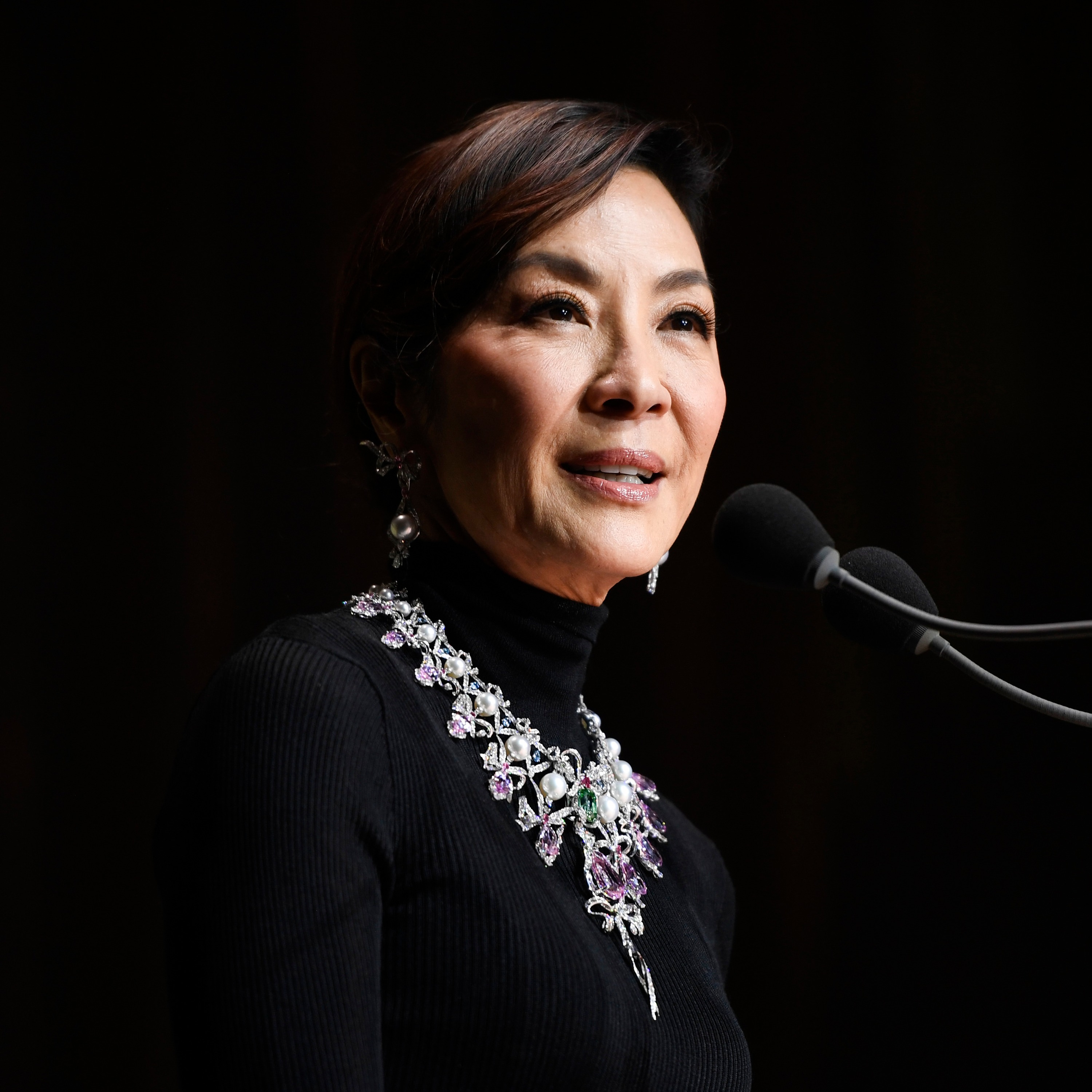
In this episode of The Business of Fashion Podcast, host Imran Amed engages in a conversation with the acclaimed actress Michelle Yeoh. The discussion explores Yeoh's remarkable journey in the film industry, her recent achievements in fashion, and her perspectives on age, success, and cultural representation.
Written by AI. May contain mistakes.

Get the gist, explore an idea or ask about something said.
 Claude
On The Business of Fashion Podcast, what are the key points of this episode?
Searching your listeningAutomatic transcript. May contain errors.
0:04Hi, this is Imran Ahmed, founder and CEO of The Business of Fashion. Welcome to the BOF podcast. It's Friday, October 18th. This week, we continue our special series of interviews with our BOF 500 cover stars. Michelle Yeoh has captivated audiences for decades, from her role in Crouching Tiger, Hidden Dragon, to her Oscar-winning performance in Everything Everywhere All at Once. Throughout her storied career, Michelle has consistently pushed boundaries, proving her versatility both on and off the screen and breaking paths as an Asian woman on the global stage. Now, at the age of 62, Michelle has scored coveted global ambassador roles at not one, but two of fashion's top luxury brands, Balenciaga and Bottega Veneta.
0:52Fashion also changed from, it's not just about dressing the younger people, right? You have to find different generational representation of it. And I think what I represent is to be proud that you are different, that you are older and there's nothing wrong. You know, it's like, I think just before the Oscars, there was a silly television commentator who turned around and said, you know, you're past your prime just because you're 50 or something like that. It's like, how dare you? How dare anybody tell you what you are capable of? I travel to Paris to sit down with Michelle and explore her winding career journey, understand how she's conquered the fashion industry, and to hear the lessons she's learned along the way.
1:41Here's Michelle Yeoh on the BOF podcast. Michelle Yeoh. Hello. Hello, Imran. It's so nice to be with you. As I just said, I've been looking forward to this conversation. Oh, gosh. Some of it is inspired by conversations you and I had in the past. Some of it has been inspired by some Michelle Yeoh film binging I've done over the last week. Lots of reading, just diving into your life and your career. And when we were texting about this, I said, you know, it's just so inspiring to see a career like this. Span so long. spans so long, but then also have so many different facets to it. So many challenges that were thrown your way, so many unexpected directions that it took.
2:37So that's what I want to unpack today because for the series of interviews that we're doing with our BOF 500 cover stars, we're exploring people's careers, their definition of success at really pivotal moments in their careers. And right now is a super pivotal moment in your career. And we'll get to all of that in a minute. But, you know, in short, my goal is to examine how you think about success, how you've managed when things have not gone your way, where you find the drive and motivation to keep going, because it's really inspiring for lots of people. And we're here in Paris at the Plaza Athenine during the Olympics, but you've been going back and forth between shooting in Prague and participating in the Olympics as part of your role as a member of the International Olympic Committee.
3:29So it's actually a really good moment to think about success because we've been seeing it play out on our screens. We've been watching all of these incredible stories. So I just wanted to start really with how you think about success at this stage in your life, at this stage in your career. How do you define it? Like, what is success to you? Actually, that's a very interesting word. What is success? What does it really actually mean? I mean, if you look at the dictionary, it means something that you are successful at, that you've achieved in other people's eyes, that, you know, you've reached a certain goal.
4:03For me, I think the most important is that I have truly loved what I've done over the years. Then I can look at myself and think, I've had successes. I'm still being successful because of participating in the IOC, in projects, in movies, in TV series that I engage in by choice. And I think when you are able to do that, to have the freedom of choice, then I would see that as being successful. I don't think it comes by the numbers or the box office or whatever it is. Sometimes you make a movie that you are... Fortunately for me, I've always chosen the movies or TV series that I partake in. So in that way, I feel very gratified.
4:57I feel very fulfilled that I was not obliged to do something that I would not be proud of. And in my eyes, that is a huge good. That's a gold medal. As life goes on, I think in other people's eyes is they do measure it by whether it's monetary, whether it's what everybody else deems as being accolades, all that. And yes, in the movie business, getting the Oscar is the highest accolade one would be able to achieve in a career. And if you think about it, the Oscars is really an American accolade, right? So if you get a BAFTA, that's a huge accolade. If you get, whether it's the Cannes Film Festival, the Berlin Film Festival, those are high achievements.
5:48I don't think a lot of us or all of us set out in what we do to say, I'm doing this for that. I am doing this because I love what I do. I love that project. I love the people that I'm going to be working with because that takes me time away from my family and the people that I truly want to be with and love. So you have to love it in order to make that sacrifice. Yes, I truly believe in that. So in my span of my career, I've been blessed to be able to choose what I want to partake in. And I think that's a true blessing in many ways, in all ways, in fact. You know, when you say you're successful, then there are failures, but that's like a heartbeat.
6:34There are up and down. God forbid it's flatline. I love that. So you see the failures as being part of the rhythm. Yes. And failures are what makes you learn. If you're only successful, how do you know that that's that way? Because life is about hardships. And then in comparison, you have amazing moments, but it is the journey. It's not just the destination. And in that journey, that's where you learn, that's where you grow, that's where you meet, that's where you engage, and that's where you have a full life. Otherwise, I think when you become too comfortable in doing things that you think you're really, really good at and not try something else, then you will do the same things over and over again.
7:23And I do look at my career or what I do as finding things that I'm not good at or meeting with people that I have no idea what their work is, but learning from them. And I believe that will give me a full life. I learn from little kids. I learn from people who are very experienced. I learn from people who are also making a new journey, a new adventure. And I think that way I will continuously be engaging into our gift of life. So let's go back to where it all started. As I said, I've been reading about you and studying you and watching your films over the past few days. And it strikes me that one of the really unique elements of what you bring to the world is someone who's genuinely bridged cultures from east to west you're like a cultural bridge for people who want to understand and bridge these divides that we often feel in the world you know you said just now that the oscars are really an american accolade but you grew up in malaysia yes you were born in malaysia A multiracial.
8:37A multiethnic, a multilingual, a multifaith, a multiracial country. You were born just as Malaysia was gaining independence from the British. And just as the country was forming as Malaysia in 1963, you were born in 1962. What was it like growing up in Malaysia? What do you recall from that time and how did that place shape who you are today? I think as a child growing up, not just in Malaysia, but in a small city called Ipo, we're surrounded by mountains and hills. And so we're in a valley. It's very outdoors. I remember because my parents, especially my dad, loved the sea and he loved the mountains.
9:20So over the weekends, we would always go out. So I was a nature baby. But I think what was most important was we never saw differences in different cultures because we grew up together. Like I grew up with the Muslims, the Malays, the Indians, you know, Hindus, Chinese, whether they're Buddhist or Christians. And if you ask a child at that time, what race are you? They would look at you and go, are you asking us to race? Like, you know, do a hundred meters dash. What do you mean? Yeah, they don't see that we are different because we embrace each other's cultures and we grew up with each other's cultures.
10:01And I think that has always been such a solid foundation for me as a person when I traveled out to England to study and then I went on to Hong Kong to work, that everybody was the same. Everybody had differences, but you embraced it because it was natural. So there wasn't like, oh, you are this, so you are different, and I am this. So we never were put in a situation where we had to choose what we were or how we acted to be different. We always respected, we understood the cultural differences between a Muslim and a Hindu and a Buddhist. And so we never questioned it, we just took it in our stride.
10:42And I think that set a solid platform that when I face the world, I don't see that. I only see how I could learn from different cultures and, you know, really understand the beauty about the differences of who we are and what we are. So as a young woman growing up in Malaysia, what were your dreams back then? Oh, I was very much engaged in the world of ballet and dance and all that. I mean, I went to the cinemas because my mom is a huge movie buff. I mean, she traumatized me with horror movies like Dracula and all that, even as a very young age. But we saw movies from around global movies. We watched Sound of Music.
11:24We watched Tarzan because my dad loved nature, right? And then we also watched the Hindi movies. And we watched Malay movies with subtitles and all those kind of things. So we always grew up with a multicultural, lingual movies. Yeah. But not once, you know, as a child staring at the silver screen, you know, and being taken away by all the images and stories that was in front of me that I wanted to say, I want to be up there. I want to be one of them. I want to be able to tell stories like that. My world was always, I wanted to be somehow involved with the world of dance and ballet. So I went on to England to study ballet.
12:06Thought, you know, every day was from nine till five was just all the different forms of ballet, tap, the classical. So this was your 100 % focus, like you were planning a career in ballet. I thought not as a ballerina, because, you know, being Chinese and the shape and form, we did not fit into the classical look. But, you know, you think, it's okay. As long as I could come back to Malaysia and have my own school and one day share the love of ballet and dance with little kids, you know, and I would be happy with that. And in fact, that was my goal. That was one of the plans to be, well, then life is always, you know, puts things different, shuts one door, but opens another window.
12:54And I think that's what it is, is opportunity. opportunity and you being open to say you are given the chances to do something very different do you turn around and say oh you know and cry in the corner and say no but this is what I want to do or step forward and go all right this is how you would try a different path there was an injury at one point right that that kind of got in the way of your plans for dance what happened well Well, you know, I was doing advanced ballet and I took an extended holiday because I was back in England and I took an extended holiday back in Malaysia. So when I got back to England, the warm-up classes that you normally do for the first week or 10 days is very important because generally when you go away for two months, you go away for a holiday, you're like, yeah, whatever.
13:46Even though you are playing squash, you're swimming, you're doing physical things, it's not quite the same as ballet. Ballet is one of the most strenuous and most demanding physically on your toes, your knees, particularly your back and all your flexibility and all that. And when I came back, instead of taking it slow, typical of all ballerinas, athletes, we are not very sensible sometimes. It's like you want to get straight back into it. And so I started with a small injury, but that's what we do. We always try to work through the pain because that's what we do. You know, we have bloody blisters in our toes, we grit our teeth and we work through the pain.
14:32But that was not the instance where it then created a more severe injury in my back. And fortunately at that time, I was seeing a physiotherapist for my feet. And then she said, you are walking very funny, and that's not right. So then I say, yeah, I think I pulled something in my back. So then she had me do, you know, they test you and go, okay, bend forward, sideways. And my movement was so limited. She goes straight to x-ray. We have to find out what it is. And I remember at that time, our specialist for the school turned around and say, did you ever think of instead of ballet what would you have done and then you know um no I yeah why is he asking me that question exactly you're like well I thought maybe because my dad is a lawyer and you know I thought oh that was a one little off thing that maybe I could do something that my dad did but nah this is what I want to do and then he said well this is maybe a good time for you to think oh gosh yeah and that was you know how when you see your dreams shatter in front.
15:40I literally saw a mirror go like, and it suddenly hit. I think I was like 17 at that time. And so, you know, the reality was a bit too much to really absorb. So then Mrs. Hammond, our principal, she called me into her office and she goes like, darling, just think of this as another opportunity. It's like, there's so much to dance. It doesn't have to be a dancer. You could be a choreographer, you could be this, you could be a... Then the reality sinks in and you go like, okay, luckily, you know, my parents, they've always taught us to be, don't panic. Whatever happens, don't panic. All right. Take a breath, step back, reassess and go like, that's not the end of the world.
16:30It's the end of the world if you're lying there and you can't move and you're on your deathbed or something like that, then that's it. But maybe the universe is saying to you, there are so many opportunities out there. So it's okay, right? So then Mrs. Hammond was really called. So she called a college nearby and she said, you know, I have this student and she's good. We will make sure she gets all her O's and her A levels so that she can go to your college. Because it was one of the first few colleges that afforded a creative arts degree. And so instead of just dancing, I had to go back to my books.
17:10They were like, ah, my God. Were you good at school? No, I loved, but this was like much more fun, right? I mean, I'm good at English, literature, all those kinds of things. I'm not a bio, and I'm not a physics or mathematics, that kind of student. So then it was like, it's okay. Buckle down and go, I'm going to get my A's and O levels so that I can go into college. And that college actually opened up my horizon in the sense that there was choreography, there was so many other movements, like modern dance, contemporary dance, all those kinds of things, because ballet is always like this. And then suddenly, you know, you're taught to dance inward.
17:51And so it was a new challenge. But, you know, at that time, it was really funny because I took a minor in drama. And I thought, well, either music or drama. I thought, well, drama could help with, you know, body movement, blah, blah. Oh, my God. I hated it so much. That was when I first discovered I had stage fright. Because I realized that if I have to speak, like, off the cuff, I had stage fright. Really? Oh, my God. Oh, geez. You would never know it now. I still do. I mean, if I have to go and, you know, you're on stage and you're going like, please call my name. Like, oh, shoot, if they call my name, I have to go up there and say something.
18:38It's like, what am I going to say? It was like that. So it takes you so much courage to just get up on those steps and stand there and go like, thank you. And then your heart is racing. You forget your name. You're sweating. I am sure at that time, if you had said to my drama professors that one day this kid is going to make it in Hollywood, I'll bet my last pound. That's not going to happen. So then how did it happen that you got into the film world? So you go to this college in the UK. Right. You expand your artistic repertoire into other fields. I was going back to Malaysia and I have a very good friend who had started a very successful chain of ballet schools.
19:31And, you know, she was like, why don't we be partners and take this on together? In a way, listening to Mrs. Hammond's advice, saying that there's other ways that you can be part of the dance world. Exactly. Then at that time, my mom had enrolled me to be Miss Malaysia. unbeknownst to me. Wait, she signed you up? She signed me up. So how did she inform you that she had? She had no choice but to inform me because I was the hundred semi-final, after like, I don't know how many thousands of girls from the whole of Malaysia. So they narrowed it down to - Based on a photo or something? Based on a photo.
20:09Okay. And all the, you know, your credits or whatever it is. And then after that, they narrowed it down and they said the last hundred sort of finalists or semi-finalists will have to meet in Kuala Lumpur. And that's when the judges will meet you. You'll have your photos taken. So they see that the photo that you sent actually match with the photo and who you are. So my mother had no choice but to tell me that, oh, by the way, you have to go to KL next week. I'll be like, why would I want to go to KL? I'm planning to go back to London, right? And then she, in a very roundabout way, she got my brother.
20:45She had her friends sort of like say, oh, yeah, being part of Miss Malaysia will be so fun. And, you know, it's so good for if you want to be a dancer, a teacher, that moment on the stage. And in the end, I agreed to do it so that it would get her off my back. That was like, OK, if I do this for you, you will never do something like that again. So we made a deal. So I went to KL. So I was one of the finalists. And then I went on to win. So I stayed in Malaysia for the year as Miss Malaysia to do my duties, you know, as an ambassador for Malaysia. And how did that feel? It's not something that you would have pictured for yourself?
21:27I think it really, truly was a very, very good experience. I learned a lot about my country, not just Ipoh and Perak, where I'm from, because you are the ambassador of Malaysia. and that encompasses 13 states and then Sabah and East Malaysia as well. And you can't sell your country if you don't know it. And that's always been one of my, I guess, a plus on my side. It's like I don't endorse something unless I know exactly what I'm saying and that is true from what I believe. So it gave me an opportunity to really get to know my country. So it was a good year for me and it was coming to an end. Then I receive a call from a very good friend from Malaysia who was in Hong Kong and said, Mr.
22:14Dixon Poon has seen a photograph of you and asked if you would come to Hong Kong and meet with them, possibly make a commercial. So then my friend was so excited and I was like, okay, fine. So for the people listening, like who is Mr. Dixon Poon? Well, there is big history. So Mr. Dixon Poon, at that point, he had a Dixon, the jewelry. He also, he was a very good businessman. He had brands like Charles Jordan, Paul Ruff, Lauren, Guy LaRoche. So he was in the retail business. And he always thought that one way to put his brands on the big screen was to do it through actors and all that. So he signed on like Jackie Chan, Chow Yun-fat, George Lam.
23:02And then he at dinner with my friends, he would say, oh, we haven't found the right girl to. And then my friend whipped out my photograph and say, how about her? Miss Malaysia. Yes, exactly. And he was like, oh, if she's interested, you know, it'd be nice to meet. So then I went over, you know, exactly when there is an opportunity, you sometimes just have to seize it and go like, what have you got to lose? Yeah. Right. So I went to Hong Kong. I remember meeting with Dixon. And then the next thing I knew was I met with John Sham, you know, Po Chi Leung, the director and producers of his commercial.
23:39And they say, you're going to be filming with Seng Long. And I go like, OK. Okay. And Sing Long didn't register because I don't really speak Cantonese at that time. And the next morning, I think at six, we get, you know, normal thing picked up, straight into hair and makeup. And I see this guy running over towards me and I go like, God, he looks so familiar. And I go, oh my God, it's Jackie Chan. So you were filming a commercial with Jackie Chan. Yes. Yeah. That was your first time in front of the cameras doing that thing. Yeah. So it was like, you know, that's life, right? And then that led to a long career in Hong Kong.
24:23Yes. That one moment. That one moment. All it takes is one moment, right? Yeah. All it takes is like one event that pivots. You never know when those moments come, but when they do come, are you ready for it? So that's why I always feel that don't just say that it's sit and wait. While you're waiting, you should prep yourself to be ready for what you want to do or just be prepped, right? So that when the moment comes, it doesn't slip through your fingers. So tell us about the career in Hong Kong and doing stunts and being an action star and, you know, what it took to go from being trained in ballet to being in front of the cameras and then doing.
25:13I mean, I was watching some of the stunts. I mean, how do you even learn how to do that? It's insane. In Hong Kong, I didn't learn. I just did it. You know, I think years of training as a dancer, and I've always been an athlete, whether it's diving, swimming, athletics, I've always been very, very sporty. And junior squash champion of Malaysia. I read that too. The physicality of whether it's sports or dance or ballet has always been very inherent in me. I love that. That's what I love to do. But my first movie in Hong Kong was the very typical. At that time, it was the guys who did the rescuing, who did all the martial arts and did all the stunts, like Jackie and Sammo and Jet Li.
26:03And, you know, they were the heroes. And the women were relegated more to the damsel in distress. Go, save me, save me. And I'm like, oh, no. But my first movie was very much that. I played a social worker, you know, like always bullied by, you know, the bad kids. And the guys would come to the rescue. And when I was in the film, I was looking at Sammo, and you know Sammo Hung, he's the big guy, but he's agile. And as I watched him do the choreography and the fighting and all that, I go, this is exactly like John's. This is like choreographed. We all know what we are doing, but it's how you transfer the energy and the speed of the rhythm.
26:47But it is choreographed. It's not random. is not just say like two guys go, okay, fight it out. Everything is pre-planned and thought out. So then I was very fortunate that one of the wives, Tina, of our producers said to our producers, he says, you know, you bring Michelle. At that time, I was not called Michelle yet, Chukeng, to Hong Kong, and you put her in the same box as you have all the other girls that we have. why, right? Then why, you know, take that effort to do that? Why don't you let her blossom and be who she possibly could be? So at that point, I thought I would love to do action.
27:28First, because my Chinese was not that good. I don't read Chinese, but at that time, they also didn't have scripts. And then when they said yes to the possibility, I went straight to register myself in a gym where I knew the stunned people, very renowned Hong Kongs, action actors who were training there. Because these guys were not really action actors. They were action people. They'd been trained as kids, whether they were in a performing troupe or something like that. They've been part of that world. But to get into that boy's world, you have to prove yourself. It's hard enough - Well, you were breaking a boundary.
28:08Yes, but it's hard enough as a man trying to get into that circle, let alone a woman trying to get into that. They sort of look at you and go like, okay, within two seconds, you're going to be in that corner going like, eh. Right. Right, because we do hit each other. There is contact, but then there is agility, there's speed, there's respect. There's so many things that go into the box. The most important thing I felt when I watched, because one thing learning in my world of dance is we watch, we analyze, we are very critical. We know where the motion is coming from. And that really helped me.
28:47But I was very fortunate. The stunned people, people who trained at that gym were very generous. Maybe they were curious as well. And then at some point, you decide to step back from it all. and you got married to Mr. Dixon Poon. And there's a choice you made that so many women actually have to face and think about when they're getting married and thinking about starting a family and about how do you balance all those different priorities. I see my sister doing it all the time. She's a very successful pediatrician, but she's also a wife and a mother. So talk us through what was going through your head.
29:28You discovered this thing that you were good at. You were a boundary breaker. You were doing things that women hadn't done before. And then you decided to stop. Actually, what you've said has put a very good sense to it all. It's like I am a great admirer of women who can juggle and balance. But it's also a two-way relationship. That woman also has a partner who is working with her. It's not like you're the woman, you're the mother, you should do the housework, look after the children, and I'm the man, I can do my own thing. And that has changed so dramatically. Whereas there's a balance. There's an equal side.
30:07It's not like whose job is more important. In the past, in the long, long ages, where it's the man who is the breadwinner, that's why he is the one that goes. But today, it's very, very different, right? So, yes, for that moment when you're pregnant and all those kind of things, if you're an actress, there's a lot of adjustments that can be made. You've seen so many actresses who are in the midst of doing a series or something, be pregnant and have the baby and get back to work. It's everybody working together rather than saying you have to make a choice. Right. Just because you're pregnant, you should decide to step away.
30:46And I am in great admiration of people who work with each other and not just the couple, but the people who are around you. But for me, I don't know how to balance. I don't know how to multitask in that way. It was a very personal way, a choice that I felt because I've always done things like that. It's all in or not at all. So I decided I'm going to step away from this because, you know, being an actress is something that I love. But being a wife was something that I loved more at that time. So it was a very conscious choice that I made. And then you didn't have children. No, no, I couldn't. Was that a disappointment for you?
31:29Oh, my God. It was like another mirror shattering moment. But, you know, that's life. I mean, I wish everybody can always have whatever they wish for. I already have so much, so many things that I can be grateful for. And if that's the way it is, it's something that you have to accept and be able to move on. Do you remember the conversation you were having with yourself at that time? And how was it different, perhaps, from when the first mirror shattering moment happened when your ballet dreams were kind of upended? How did you process what was happening? Because you'd made these sacrifices or these decisions, maybe it wasn't a sacrifice, but it was a choice.
32:12A choice, yeah. You made a choice, said this is what I'm going to do, and then it didn't work out. But life is full of these choices. They don't always work out the way you want them to be. And I think sometimes you also have to be very sensible and responsible towards the people that you love. And also, you also have to realize what are their dreams. And in 10 years' time, if their dreams are not realized collectively, it will be even more difficult to come to terms with it. I guess, I don't know, maybe it's been, I've always been very sort of, in a sense, practical to think, I know what will come.
32:58What is the outcome of this, right? That's only one outcome if you can't have kids. And how to accept that reality, whereby at first it's always very hard because, you know, you're in denial or your partner is also in denial. and you think, no, we can cope with this. But you know it's not going to happen that way. So it is difficult. But I think because at that time, I'm at least more, 10 years, a decade older then, and also have seen much more of life. You know, time gives you an insight into not just your own lives, but people around you, and you can see it. And I think that's when you are sensible and you look, always look, because you learn so much from when you look, not just at yourself.
33:47What do you mean when you look? You learn. When you look at what's happening around you, it's like I respect what is going on, but I also look and I learn. I see the different lives that happens in front of you, whether people that you know well or people that you don't know well or in the passing. And this is something I don't know. I don't know where I've learned this from, but it's something that I've always like quiet time where I sit and I observe. And I find that that's where I learn a lot from what's going on around me. And so, you know, it's easier for you to come to terms with things, learning to holding on, letting go and always letting go, because that's the only way you can move forwards.
34:33Because if you, you know, when people ask, oh, what do you regret? It's like, why dwell in what you regret? That's in the past. And you have to move on, learn from that and move forwards and keep moving forwards because that's what life is about. We'll be right back with more on the BOF podcast.
34:58So up until that time, your career was really focused in the sphere of like the Hong Kong film industry. in Asia. And then James Bond comes calling. I mean, this was a quite pivotal moment for you because you go from someone whose career has been focused on Asia to this big global moment. How did that all happen? At that time, it wasn't so much so that happened to me. It was like, you know, Hong Kong was enjoying, they were the best in Southeast Asia. The biggest market was Korea and Japan and all that. Korea had not come to the stage where Hong Kong movies, the glory days of Hong Kong films. And what was next?
35:49What was in the eyes of all filmmakers? Hollywood, right? Hollywood is the place to be. That's the ultimate goal of any filmmaker to make it in Hollywood. And quite a few of the big directors like John Woo, Choi Haak, they all went to Hollywood to make a Hollywood action film. And John Woo's producer at that time, Terrence Chang, who also worked with me when I was at D &B, he was the distribution manager and we would travel to distribute the films for D &B. So we became like really good friends and we still are to date. And so when he was out in Hollywood, I remember getting this call from him, Terrence, and said, you know, why don't you consider coming to Hollywood?
36:37And, you know, when you are so happy in your own environment and thinking, oh, this is, I'm having so much fun here. Why do I want to go all the way there? So you had never thought about it? I never did. You know, that's the interesting thing about me is like, I don't go like, oh, I want from this and I want to do that. All I want is like, I want to do this and be happy doing this. And then something else comes like, am I going to be happy doing that? Nah, not doing it. So it's not like this is that. So this whole idea of people creating vision boards and setting long-term goals, like that's not me.
37:12Because when you do that, you limit yourself. What if that doesn't happen? Are you going to say, no, I'm going to keep at this? Then you close off opportunities that could maybe lead you that way, right? you don't know. So it was never, oh, I want to be a Hollywood star. I was happy. I was having a, you know, I was enjoying my life. I was doing things that I wanted to do. And Terrence said, why don't you come? Just come for, you know, a visit. And so then it was like, okay, I'll take the opportunity to meet with people. And one thing I found consistent was like they always say, oh, you speak English.
37:53You're like, duh. And I go, you know, you hear all these people say, oh, well, in Hollywood, a lot of people only focus in America. Like maybe some people has never even traveled to Asia. They don't know Hong Kong from Malaysia, from Japan or whatever it is. And then one day I just went, oh my God. So when he said that, I turned around and said, well, the flight over here was 13 hours. It was long. So I learned. What were the other misconceptions that people had about Asian cinema or Asian talent or Asia in general that you had to kind of overcome? They are no concept because our market was not big enough for them to feel that, you know, they should bother with us.
38:37Yeah, really. The one thing that why do we look at the American market? The box office is enormous. It was all about America. They've had a much, much longer history than the rest of the world. I mean, they started it all, you know, with no talk to talkies to all these kind of things to what it is today. So we have to give our respects and pay our dues to that. So when they don't recognize us, you go like, oh, God, do I want to be in this industry? First of all, I walk in, I suddenly, you're a minority. I'm like, why do you even use that word? I'm Chinese. I think there are more Chinese in the world than all of you.
39:21Even the language that was being used, it's just so everything was seen through an American lens. And I'm not using, and that's a pun too, but like everything, the way that the American industry, potentially even now, like it's seen through this like a very Western centric point of view. But they've always been like that. And it takes time to change. I think in the last five years or so, because we've been also pushing it, pushing the boundaries with women, with gender equality, with all those kind of things, with, you know, different cultures, different faces. I mean, if you look in movies that was before, you would never find like a whole TV series where it was all Asians.
40:07Right. So it is still taking time. We can't sit back and say, well, we've done the job. Yay. hey, we are on solid ground because we are not. It's so obvious we are still not. The disbalance is still there. But that's when we have to try even harder and keep pushing. So when we have the gold house, when we have all these, you know, with the Asian Pacific people, we all come together. And that's what the African-Americans have been doing. They came together at a much earlier stage. So they have a much more solid base of African-American movies and TV series, you know, their standing is much stronger than ours.
40:46Ours have always been. It's also, I think, sometimes with the Asian culture and mentality, it's like, let's just keep quiet, low, profile. Also, it was historically more splintered because there is this whole hierarchy of like the way Chinese people see Japanese people or Korean people see, you know. We split ourselves up in many ways. And so like when you bring people together. You have to be together. Exactly. There's so many different battles, you know, to keep pushing. And it makes interesting, challenging at the best of times. And I think that's what keeps us motivated, you know, that we don't sit back and say, okay, it's in the box.
41:27So back to Tomorrow Never Dies. How did you end up taking on that role? What happened? Oh, okay. It was really them. So I went, I did go over to America. I took some meetings. I remember meeting with one of the executives from Sony. At that time it was Sony and MGM, that group. And Barbara Broccoli was in England. And they said, oh, it'd be interesting to see you in a Bond movie. But the way they said it, it was like, what? So I took up a pill and I threw it at him. I guess I'm not playing that kind of Bond girl. You're not going to be the like. No. Yeah. No, not with those like pussyfoot or whatever.
42:08No. So then they wanted a Bond girl who was not just a femme fatale. Because all the previous ones, you know, it's really that. And then one of, I think one of the writers say, oh, you know, they have this Asian actress in Hong Kong who is blah, blah, blah. And then so my name came up and then they wrote the story and all these kind of things. And I remember getting the call to say, Barbara Broccoli is in Europe. And I was in Italy at that time. And she would love to meet you. And I was like, hell yeah. And I love Barbara to death. And at that time, in D &B films, my name was Michelle Khan. Oh, yeah.
42:51I wanted to ask you about this. So before it was a Chinese name. Yo Chu King. Yo Chu King. Then it was Michelle Khan. Yeah. And then now it's Michelle Yo. Like what was the... Oh, God. So at that time in Asia, they don't care about your English name because on the posters is always your Chinese name. So my Chinese name is Yang Jiking. So they know that very well. And then they said, well, you know, because we're distributing it in Europe and they had a very strong base in like France and Germany and England and all those. So it's easier for them. I mean, I should have been like Arnold Schwarzenegger.
43:25It's like, you just learned my name. But you know, when you're a newcomer, you think, okay, I'll conform to your wiseness. So I thought, Michelle, I like that name. I'll choose it. Then they said, yo actually is very easy. But because it's spelled Y-E-O-H, people have this tendency to go like, yo. You know, they just make it more complicated. It's just one syllable, yo. Right. So then they said, oh, it's hard for them to, can you make it sort of like more Western sounding? So then someone said, how about Khan? It still has Asian roots. And then my uncle called my dad and said, did Chukin get married to an Indian?
44:09Because it's Khan, right? It's a Muslim name. Right? So then my dad go, no. Then he called me and go, why did you change your name? I'm like, no, no, no, that's just a stage name. So then they went, okay, we better not do that. And then finally, when I met with Barbara, when she was trying to locate me, She tried to use all the different names, but I was traveling with my then fiance and we had checked the room in another name. So poor woman, she was like calling America and calling me and all those kind of things. So when we, after my audition with Pierce and I was in the thing, Barbara, and we sat down and go like, let's fix your name.
44:48You should choose your name. And so I went, yo, I should have my own name. It's kind of crazy that the world operated in a way where those of us with names that might be a little bit difficult for other people to pronounce, we are asked to change our names. Exactly. So now I love the Koreans. They keep their names. No matter how difficult other people might have to say, they still have it. And bravo to that. So making a stunt film in Hollywood is really different from making an action film in Hong Kong. What did you learn through that process of making Tomorrow Never Dies? Like, how is it different?
45:30Oh, my God. It was like, they were so good to me. They brought my stunt team from Hong Kong. And I think my stunt team at that point had not experienced this. They sent them the model of the set. Generally in Hong Kong, actors, a lot of the times the stunt coordinators don't know what they are filming. Let's say we're going to start filming in an hour. So in that hour, I will go and do my hair and makeup. The stunt team will walk in here and go like, okay, this is your setting. What can we work with? Yes. So when they actually got there, they already knew the layout and everything. So I get to work.
46:10And then 15 minutes later, I walk past the green room for the sunboys. And they're all there. I go, guys, come on. People would think that we're lazy. You have to go. Then they go, we've already five different setups for them, you know, with the previous and all those kind of things. So now we're waiting for them to choose what they want because they work so fast. And the minute you say, oh, instead of doing that, how can we change it right away? And then the same for us. We don't rehearse for two weeks. We get in there and go like, okay, now you do this. So that film, Tomorrow Never Dies, kind of propelled you into a whole new audience.
46:51Yes. Immediate global audience. That was in 97. It came out in 98, 99. But it was very interesting. I didn't actually make another movie until Crouching Tiger, Hidden Dragon. Exactly. And I was just going to ask you about that. you turned down lots of roles. Because I felt that they were still very much in the world of where it was very stereotypical for an Asian woman kind of role. There was always a need to, why was an Asian woman there? So unless it was in Chinatown or it was a takeout or this or that, then you don't have to explain it. Because the Asian woman would not be sitting behind the desk of a as a GM or a politician or this or that.
47:40She would be where she's supposed to be. And I felt purely because I am so blessed and I could choose what I wanted to do. Having saved enough money from, you know, working in Asia and thinking, okay, now that I have the opportunity to say No, because if I keep saying yes to this, that means I agree this is what we are and what we should be. I'm not saying that everybody has to think like me, but I believe that there are a few of us who can make and push the change. We have to grab that opportunity to do it. And I don't want to be part of something that I don't believe in. I can't play a role where I think like, oh, no, I feel wrong.
48:30It feels bad. Then why do it, right? Unless you need to pay the rent and unless you need to keep the electricity bill on. So at that point, I was very fortunate that I could wait and wait for Crouching Tiger, Hidden Dragon. And why did you take that one on? Oh, my God, Ang Lee. Because I remember I was doing the publicity for Tomorrow Never Dies. So I was in L.A. And Ang doesn't really do things by accident. He is a planner. He sees what he wants to do. And I think already at that point, I met him the first time in New York when they had a little retrospective of mine when we were doing Supercop in New York.
49:10And he came with his wife, Jane, I love Jane, to introduce themselves. And, you know, Ang Lee at that time was Ang Lee, the Ang Lee. And I was like, so then when I was doing Tomorrow Never Dies in the premiere and publicity, and they said, oh, the director Ang Lee would see if you could have time to have coffee with him. I'm like, hell yeah. So he came and, you know, Ang is very, very humble, very quiet-spoken. And he says, oh, now you're a big movie star. I don't know whether, and I'm like, I can't believe he just said that. And so he said, oh, he had always aspired and wanted to do a martial arts movie.
49:50And the way he described the film that he had in mind, you know, it's like you see someone doing a watercolor. Yeah. And it comes to life. And I'm like, okay, whenever you're ready, I'm there for you. So and that took until 1999 before he was ready because he takes, he really takes care into all of that. That film is like visual poetry. I was watching it again this morning. You know, I haven't watched that film in 20 years or something. But it's still... And watching it now, I don't know, this morning I was like, wow. It must have been amazing to be a part of that. Yes, it is. Just to learn from the great master.
50:31Yeah. It was, you know, the way he thinks. Because it's not just the main cast. It's everything. Yeah. Like he will cast every single person who needs to be there, the material that's used for the costumes, the way we look, the way we talk. He was very specific because before he got to that point, he had done so much research about this because this was like a childhood dream to make, you know, martial arts is all in your imagination. This is a world, you know, that you create from the comic books. It's like your dragon and your thing. So it was his dream and he wanted to realize that dream. And so to be able to be part of that was very, very special.
51:16Were those scenes, the ones where it looks like you're floating from a building to a, were there ropes on you? Wire. Wire. Because I was like, how did they? See, that was the amazing thing of the Hong Kong cinema. They really, I believe, the ones who had the imagination of how you went from rooftop to rooftop you know the one thing that you see me i'm running down the corridor i jump up and i i'm down the wall yeah at the beginning yeah right it's why but then it's seamless even i go like what i'm jumping up this what okay fine crazy rich asians i actually forgot that you were in this movie yeah i forgot that you were in that movie that's good i scared a lot of people you know and And I think the way I remember that film was it came from like more of a almost superficial stereotypical view of Asians.
52:10But as I watched it again yesterday, these other messages came through to me about family, respect, respect for elders, like all these values that as Asian people that are so embedded in me. And it made me think of my own relationship with my mother and my parents and that filial piety. Yes. That was one of the first all Asian movies. Yes. You know, at that time, 2018, when they sent me the script, I read it and I said, no, I turned it down. Well, you know, you've read the book, right? It's a fun book. It's like - It's a superficial book. Yes. Yes, exactly that. Then I'm thinking, do I want the rest of the world to see our culture just as that?
52:59No, because I feel there's so much more to our, it doesn't have to be a heavy drama. It can be a lying movie. It can be like this, right? But I had met John Chu when Crouching Tiger 2 came out in LA. And I thought, this young man is, I like him. I really like him. So then I got a message to say, would I Zoom call him and let him talk to me? And thank God I met him. If I hadn't met him, I would have said, Why am I wasting my time? Because if that's the script that you're going to shoot, it's not what I want to do. And at that time, I remember thinking, OK, if I meet him, I want to see what he's done before.
53:40And John has done his step-up movies. But I was most impressed with the documentary he did on Justin Bieber. Really? Yeah. Because, you know, we all know Justin Bieber, the pop star, the blah, blah, blah, blah. Is he a spoiled brat? He does this, he does that. But watching that documentary, you see a very talented, lonely young man. He goes back to his hometown. He goes back to his old studio. And I like that John picked up on that and focused on that rather than the glitzy, you know, the concerts. We all see the concerts. Who cares? That's the story we already know. Yes. What's the story underneath?
54:21Exactly. What is the human story? That's the one that's going to touch you. So because of that, I said, okay, I will speak to John because I like this young man. So I spoke to him and, you know, the formality, blah, blah. And so I said to him, so what kind of a movie are you thinking of making? What's the tone of your movie? Is it going to be like Hangover? I mean, that's one of the highest grossing comedy movies in that. Because the script was written like this, like the book, right? So if he had said, oh, yeah, we're going to have the parties and then I would have said, good luck, have fun with your film, because that's what it's going to be about.
55:00But he says, oh, no, if I did something like that, my mom would be the first one to kill me. So you knew that he had that audience in mind, which is like... Right. And he had that sensibility in mind to be sensible, to be sensitive to the feelings of a mom, because the way it was written was like the mom was just mean and cruel. And in fact, my godson had said to me, Kaima, please don't do this film. If you're going to play the mother, please don't do it. And he goes like, because the mother is just horrible. And so when he said that to me, he says, no, because if I did that, my mother would kill me.
55:41And he goes like, no, because it's not about the bitchy girls. It's not about this kind of things, because those are the things that you've seen in other movies. right so what is your story about so then we went on to talk and all that and i go okay then in that case i will await your next draft and so they brought in adele and nina richardson who is the producer on it they were so sensitive to the culture respectful of the the asianist and adele lim who is malaysian and married an american so she had the sense and sensibility of both worlds The East and the West, just like you. Which is very important because that was basically more about that story.
56:25We have that saying, you know, you're like a banana, yellow on the outside and white on the inside because you only understood what you lived only in America. But that was a very interesting journey that we all had. Which brings us to... Wicked! Well, no, everything, everywhere, all at once. All at once, right. Yeah. And you've obviously had to speak about this so many times. So I won't belabor the point. But you know, when I, when I think about this film, especially having watched Crouching Tiger and all the other films recently, and it really brought together everything, all of your training in martial arts and action films, it brought together the more human stories.
57:11stories. This film was like a turning point for you. When you received that script, how did you react to that script in the first instance? Like what did you, did you have a feeling about it? A feeling that, oh my God, I've never seen something quite so insane and original. It really was like all the things I've done in 30 years, all put into one. And when I met with the directors, that was what they said. They wrote this for me. Previously, they had written a male version. And then they went, no, because the male version would have been easier to finance, male action star, right? So then they went home and go like, let's focus, who are the most like women, strong women are important in our lives.
57:56And this is another story that we want to tell from that perspective. So I guess they did say that because of my career and all the different things that I have done, from action to Memoirs of a Geisha to Crazy Richie, all these things that are so different from each other, it gave them the platform. It's like if we have a science fiction movie, right, all the different universes, it's that one person who's gone to all these, and that's Michelle Yeoh, that, you know, she will be able to do this. And I said, what if I said no? And they said, I don't know. They did call the character Michelle Wang at the beginning.
58:36And I said, that's a deal breaker. You have to change the name. And I remember Daniel's, the Daniel's face is still like, why? You know, it's you. We did it for you. And we're like, no, because she needs to be a real person. Evelyn needs to be a real character. And every time you say the name Michelle, the audience will, oh, is this Michelle trying to be this person? You know, oh, why does she look like this? Then you distract. It's like when you say you forgot it was me who was in Crazy Rich Asians. That's what I need my audience to do. Every time they see a film that I'm in, it's not seeing Michelle trying to be Michelle Yeoh.
59:15It's about that character. Yes, it's all about that character. And the Daniels, you know, when I received the script, it was like, this is crazy. This is insane. like some of the things I don't even understand you know because I'm in every scene for all the different universes so I said I have to meet these two guys to see if they're really ready to be committed insane or that really geniuses you know and and they will be able to do it in such a way even with no money but creatively and I don't think a lot of people thought because it's a it's a small indie film, right? It's A24 and A24 has always - Highly respected.
59:55Highly respected, championed, you know, these new, and I've always said that I want to work with new directors, new blood, because they see something that's very relevant to today, right? I mean, I work, of course, with the greats because they are the greats. But with these young, you have to give them an opportunity to show you something new and also make you do something that's not you. That's the whole point. That you would never even have imagined for yourself. Exactly. That's the whole point of this journey, right? So how did you prepare for that film? Oh, God. The only way I, with all of my scripts, first of all, I have to know the character.
1:00:35I built her history. I have a diary. Who is Evelyn Wong? Where did she come from? And in the whole process, fortunately, in this story, it gives you a very clear she comes from China. You know, she was brought up by the very dominant dad. You know, the mom was very subservient. And then she decided to go. So and all that was very, very clear. And then up to the point of where she is today. So once I am locked in and I know who is she, then the rest becomes very easy. because the rest is like life, unexpected things that come your way. So every day when I go onto the set, I keep a very open mind because I trust my directors.
1:01:21That's when I say I choose who I work with. Because once I choose to work with you, then I have to trust you. I have to believe that you have the right vision. And because when I don't like to get onto the set and question you, I'm going like, why am I doing this? You need to be all in by that state. Yes. It's like when I'm there, I don't question you. There are different movies that works in different ways. So you have to work with the flow, you know, instead of working against it and try and put you ahead of everybody else. Because I truly believe our, like making movies or TV series, it has to be collaborative.
1:02:00It's never about one person. Even though you are the storyteller, it's still a collaborative. You have to work with your lighting people. You have to work with your DOP, your gaffer, your director, your showrunner, the people who are your writers and your actors. How do you navigate that? That is the beauty about what we do. So last year, when you became the first Asian woman to win an Academy Award, only the second woman of color to receive that kind of recognition from the Oscar, you received the award from Halle Berry. Why did it take so long for an Asian actress to be recognized in Hollywood?
1:02:40Honestly, when was the last time that you had a very prominent Asian actress role in a very prominent movie. So there were no roles, basically. There were no films. There was no opportunity. There were not that many. So why do you think that was? Because a lot of the times the studios or the producers thought there wasn't a market for them. It's like Crazy Rich Asians when they did it. It ticked all the wrong boxes. It's a romantic comedy that hasn't been working for many years before that. All Asian cast. Oh, God. The last one was, what, Joyla Club? That was like 20-something years ago. So it was all the things, and it was saying that, oh, you know, no one wants to see an Asian hero or a heroine or, you know, know about.
1:03:27But we have to keep pushing it and say, you're wrong. They do want to see it. So after Crazy Rich Asians, you had Minari. You have all the different things that came out. And then, of course, with the Korean movies. But it was a Korean film. It wasn't an American movie. So it has to be, which, you know, we keep forgetting. Oscars is an American institution. Yes, like BAFTA is an English institution. So we keep thinking, oh, why don't we? Because unless you make a movie that is like in Brandon Fraser's movie, The Whale, Hong Chao, would get recognized because she could play a role in there. And we need more of those kind of roles.
1:04:10Because if I look at all my peers, if they get nominated this year, chances are they will get nominated. I mean, look at Emma Stone and Jennifer Lawrence. It's like Constance because they have such a wide repertoire of films that gives them the ability. I mean, it's competitive for them as well. You know, who gets that role to be able to be up there? Right, but there's so many more roles for them. At least there's so many more. For us, it's like us going like, please, you know, make it. But it has to be an American story or an American somewhere else, but still, because we have to remember this is about America.
1:04:48And does that kind of external validation from a Western or an American film academy, what does that mean to you personally? I think any kind of validation is validation because it's like appreciation from the people that you work with, that you admire, that you respect, saying, well done. We love what you do. It is validation. And, you know, in our industry, that's what we live for. We need it to know that this is how all the hard work that you've done. And it is depressing. It's very sad. you know you put in as much effort in a big budget movie or a small budget movie and when it doesn't work it's heartbreaking and you can see because everybody puts in the same amount it's just that we just have to find more opportunities so that we get a seat at the table because for the longest of time we didn't have the projects that gave us a seat at the table and that's what we have to do is to make those kind of projects.
1:05:52I watched this video this morning. It was the reaction of your mom and everyone back in Malaysia when you won. Very exciting. I'm proud of my daughter. I love my daughter. My daughter is a hyperking girl. And it was all over Asia. Oh, my God. On Weibo. I mean, in Korea. China, everywhere. What that moment represented. I swear to God, it was like you hear the roar. It was amazing. Yeah, it was. So obviously I'm here to talk about the business of fashion and I wanted to talk, you know, I've spent a lot of time talking about your film career. But like you said earlier in the conversation that, you know, when you endorse something, you have to really believe in it.
1:06:44As a female actress, when you get older, sometimes those kinds of endorsement opportunities don't come. So what happened after you won that award? You have this incredible reaction all throughout Asia. When did the fashion industry come calling? To be fair, they've always been with me, even in Hong Kong. Because remember, in Hong Kong, it's still quite a big industry. Like I worked with Jojo Armani, with Valentino. So we've always had a relationship. But you were never an official ambassador, right? No, no. What changed? I think the biggest change was, you know, fashion changed. It wasn't just me.
1:07:26Fashion also changed from, it's not just about dressing the younger people, right? There's the other groups that are just as important. And when we look at, well, I'm not going to wear what the 20-year-old is going to wear. It's just not right. I mean, it's also with beauty products and things like that. You don't need that kind of beauty products when you're a 16-year-old. You already have the skin or whatever. But with fashion, it's the same. You have to find different generational representation of it. And I think what I represent is to be proud that you are different, that you are older and there's nothing wrong.
1:08:06You know, it's like I think just before the Oscars, there was a silly television commentator who turned around and say, you know, you're past your prime just because you're 50 or something like that. It's like, how dare you? How dare anybody tell you what you are capable of? And what your prime is. And what your prime is. And the worst is like because we allow people to dictate that. We allow some people to put us in the boxes and say, because you are over 40, you shouldn't be doing this. You should be doing this and this and that. And so as you get older, people tend to put you aside even more.
1:08:45And if you allow that, then you will always stay at the side. And I think in my generation, you can see Demi Moore, Nicole, you know, the younger ones, or even older with Judi Dench and Helen Mirren and all of us, you know, we stand up strong and say, yes, we have wrinkles on our face. So what? So do you. There's nothing wrong with that because we are who we are. And I think that is what the fashion world has latched on to, that we need strong representation like this. We want our followers to feel that, you know, when you wear us, you're making a statement as well. And how much of it do you think was because not only were you this Oscar winning actor, advanced in her years, but also because you bridged East and West?
1:09:38East and West. Yeah, I think that's a big play because I think we both recognize how important both sides are and how we need each other. We've always needed each other. It's unfortunate that there are waves that make cracks in between. Even when I was in Hong Kong and making that effort to come out to the West to do more things out here was so that I could create that bridge. And in arts, this is one of the best ways to do it. And for me, fashion is not just about clothes. It's creativity. It's an art statement. There's so many levels of when you look at it from the fabrics, from the genius of what they come out with and how you present it.
1:10:25It's art. And I want to see more of that, how the different cultures embrace each other. And you know, in the East, it's from Korea, Japan, India, China, all those, the Southeast Asian, the smaller countries. We are so rich in that. And it's nice to be able to have that mixture and everybody working together and in tandem with each other. And the Balenciaga Ambassadorship, how did that happen? And why, of all the fashion brands that probably were courting you, why that brand? Damn no. Like I say, I have to understand and believe in a vision, right? I love like the other big brands and what they are.
1:11:15But sometimes it gets lost in the big house of fashion. And I found that with Balenciaga, they were culturally very deep. But at the same time, they were pushing the boundaries of having someone like Demna, who was very edgy, who was very today and still at the same time, very classical in many ways. And before we proceeded, we sat down with each other. We had a long time. Just as you with any of the film directors. Correct. Same approach. Same. always the same approach. Because I think at the end of the day, it's not what's on paper, you know, the contractual one. If you and I cannot come to terms or agree with the look or whatever it is, why am I working with you, right?
1:12:02I wouldn't want to wear what you designed for me. So it would be wrong in my head. So I love like Cedric and Johan and Demner. I love that whole group of people who believe in that brand. So that was how it happened. I want to talk a little, very quickly about the IOC because we touched on it briefly. And then I want to just ask some advice. But on the IOC, I mean, that's a similar thing, right? That's something that happened recently. Oh, no, this took a while. This took a couple of years into convincing the IOC. I had it in 2023, it happened, right? Last year, it happened. But prior to that, how you could even get to be elected was a process.
1:12:44So was that something you wanted? This was one thing that I really, really wanted. Because I've always loved sports. Sports has been part of my life. Like dance has been part of my life. And I love the message and the spirit of what it's supposed to bring. Peace, working together through sports, you know. So over the years, you know, I'm on the board of the Sioux Foundation, IPI, you know, like AMFA and all that. I work with them. I am the UNDP Goodwill Ambassador. But the one thing that, I don't know, it was like, yes, because I believe in what they're doing. And the only way to really participate is to be part of it, not just to watch it from afar.
1:13:28If I didn't believe it, I would just watch the games as a game. But the IOC is not like, I guess the easiest way for me to make a comparison is like if you go into a production, if let's say I'm a production house or I'm a studio, That's what the IOC is, right? Every time you choose a host or the next four, we've already chosen one in 10 years' time. All the things, it's like when you choose to green light a film, all the things that come into play, you have to put in your bed, you have to tell us what you're doing, what it will cost, why it is this, and all this kind of stuff. And it is fascinating because the rest of us only see what happens every four years in the Olympics, but you don't see all the work that goes into it prior leading up to these two weeks of games.
1:14:17And that for me is the fascination of how different people from obviously all the different participating countries, a representative from each country that will come in and they will advise each other and the president, you know, to how to make the next one better, more sustainable. And I felt that I wanted to be part of that journey. So just to conclude, there's a lot of people listening or who'll read this story, who look up to you and who are at a much earlier stage of their life trying to figure out how to make it as meaningful and as purposeful and as successful as yours. I mean, you know, we talked about success at the beginning, but what's your advice for people looking to achieve?
1:15:05Hard work. Yeah. Be prepared to work hard. First, you must find your passion. What is it you really want to do? And it's hard when especially some youngsters know what they have their dream and they pursue it. And be prepared that, you know, dreams don't come true at the drop of a hat. It took me 62 years before that dream come true. But that is an ultimate dream. So I'm very lucky it came. But the journey is something that you should treasure. That, you know, it is, yes, it will be up and there will be a lot of downs, but don't let the downs knock you out. Take it as a learning process because, you know, without failures, there won't be success.
1:15:49And I think that's what it is. It's like, you must be prepared to work. Don't feel entitled. There is no entitlement in this world. You know, you might be born more wealthy than somebody else, but if you yourself want to be successful, you have to work hard. You have to be prepared to make sacrifices. You have to be prepared. And that's, I think, one thing that I would be prepared. You know, when the opportunity comes to you, you are ready. Right. You said that earlier, and I thought that was really true, which is like, you don't know when that opportunity is going to happen. I say, you know, the harder you work, the luckier you become.
1:16:27What about for someone who's struggling, and maybe they're having their mirror-shattering moment are in the middle of it right now, and they're trying to figure out how they get to the other side of it. Well, hope. You know, you have to believe that there is hope, that there is something better that's going to be out there. It's like when that mirror shattered, I'll look for another mirror. Unfortunately, that's what life is about. Don't give up hope. In the next few months, Wicked is coming out in December? No, November. November. November 22nd. So what can we expect? Because this is a completely different Michelle.
1:17:03It is a mind blowing generational like movies. Well, this Wicked One is coming out and John Chu. I mean, he's really brilliant. And Mark Platt, who is the producer. I mean, he has the musicals in London and in New York and they have it's been around for 20 something, 26 years. But they waited for now. I think they were waiting for the right director, the right cast, to bring it to reality. I remember walking onto the sets thinking, this is incredible, because they built the sets for real. They built Munchkinland. They built Emerald City. John Chu planted nine million bulbs, tulip bulbs, so that you don't feel everything is just CG.
1:17:50when you are there you feel like you are part of something breathtaking and ariana grande and cynthia jeff goblum jonathan bailey yes what a cast oh my god wait till you hear them sing well there's so much more to come i am so grateful for this time we spent together especially i know you were so busy and we had to work quite hard to find this this time but it was so worth it. Thank you so much. I'm really grateful. And I think it's going to be very, very inspiring for so many people to hear this. It was fun. Thank you. The BOF Podcast is edited and produced by Olivia Davies and Eric Bria.
Michelle Yeoh has captivated audiences for decades, from her iconic role in Crouching Tiger, Hidden Dragon to her Oscar-winning performance in Everything Everywhere All at Once. Over her storied career, she has consistently pushed boundaries, proving her versatility both on and off the screen, breaking paths as an Asian woman on the global stage.
Now, at the age of 62 Michelle has scored coveted global ambassador roles at not one, but two of fashion’s top luxury brands — Balenciaga and Bottega Veneta.
"Fashion has changed, and it’s not just about dressing younger people," Yeoh says. "You have to find representation across different generations, and I think what I represent is being proud that you are different, that you are older — and there’s nothing wrong with that. Just before the Oscars a silly television commentator said, ‘You’re past your prime because you’re 50-something.’ How dare you? How dare anybody tell you what you are capable of?”
This week on The BoF Podcast, BoF founder and editor-in-chief Imran Amed sits down with Yeoh to discuss her winding journey to the big screen and why fashion is finally embracing older women.
Key Insights:
Additional Resources:
Hosted on Acast. See acast.com/privacy for more information.


