
 Ask ChatGPT



In this episode, Zac Posen, a renowned fashion designer, discusses his journey and transformative role as the Creative Director at Gap Inc. after closing his eponymous fashion label in 2019. Posen shares insights on redefining success, his vision for revitalizing iconic brands like Gap, Old Navy, Banana Republic, and Athleta, and the importance of creativity in the fashion industry.
Written by AI. May contain mistakes.

Get the gist, explore an idea or ask about something said.
 Claude
On The Business of Fashion Podcast, what are the key points of this episode?
Searching your listeningAutomatic transcript. May contain errors.
0:04Hi, this is Imran Ahmed, founder and CEO of the Business of Fashion. Welcome to the BOF. podcast. It's Friday, October 11th. This week, we continue our special series of interviews with our BOF 500 cover stars. Zach Posen first burst onto the fashion scene in the early 2000s, gaining acclaim for his glamorous designs and dressing Hollywood's elite. After almost two decades, he closed his label in 2019, finding himself at a crossroads that eventually led to a meeting with Richard Dixon, the new CEO of Gap Inc., a declining fashion business that a number of leaders had attempted to turn around unsuccessfully since the brand's heyday in the 1990s.
0:46He sat down and we started talking about what he was doing here and brand new at Gap Inc. and what he was dreaming. And he asked me kind of where I was at in my career. And it started to become these questions, well, these are where my values sit. And he's like, well, these are where my values sit. And within five minutes, I knew that there was something very special. It was a kismic moment where there was like a magic connection where I saw that I had met my dreamer. That meeting led to Zach's new role as creative director of Gap Inc. and chief creative officer of Old Navy. I traveled to GAPS HQ in San Francisco to sit down with Zach and explore how the latest chapter in his creative journey is changing the way he thinks about success and professional fulfillment.
1:37Here's Zach Posen on the BOF podcast. Zach Posen, how are you? Doing well. It is such an exciting moment to be here with you in San Francisco in a very unexpected place. Probably three or four years ago, maybe it was five years ago, the last time we sat down, I never would have predicted that we'd find ourselves here. And there's a whole backstory to that, which we'll get into. But today, as part of this series of special interviews we're doing with our BOF 500 cover stars, we're tracking the careers of all these incredible people at very pivotal moments. And the last seven months for you here has most certainly been a pivotal moment.
2:28You know, starting in the fashion industry at such a young age, thrust into the media spotlight, building your own business, pulling it back from the brink, closing it down just before COVID. And now you're here. And, you know, there's so much to discuss. I wanted to start with the way you think about success. As someone who was thrust into this industry at a very young age and had a lot of attention on you, a lot of expectations, but has now gone through some ups and downs. Yeah, of course. When you think about success now, having this experience behind you, what does success look like for you now?
3:16How do you define success? Great question. Well, I'm honored to be here and to be part of this collective and at this incredible moment. I'm so happy that you're actually here to capture this. It's really cool. And what a great question about what is success. Yes, I think that through my experiences, ups and downs, great change, professionally, creatively, personally, globally, over the last 25, 30 years, I've watched a lot of change. And definitely because I was thrust so young and also put myself there and put myself forward. Success for me is really about being able to be creative. Success is about human connection and about true happiness.
4:16And what is true happiness? One is never probably truly always happy, but I have the ability every day to work with incredible people to inspire them. Success for me is about being able to inspire a larger public, to be able to work within my own creativity and to use that and what I represent to help a larger public be in touch with their own creativity. Because to me, creativity is as essential as sleeping and eating and everything else wonderful in life. So that's real true success for me. In the fashion industry, like this idea of what is success, you know, could be when I started, you know, this, you know, great anxiety about how a collection was reviewed from, you know, points of view of reviewers or writers that I had great respect for.
5:13And then I watched through my career a whole digital evolution or revolution that changed that and who those voices were and players there. Obviously, success gets driven by how well a collection did seasonally. Or for me, it was always about success was the completion of a piece or just working on a construction of a piece obsessively in a more maybe profound but also simple form. But being able to create for me and having that honor is truly success. Right. So you went back to the very beginning. Before the spotlight and the accolades and the attention and the celebrities and the big shows. And you and I discussed this in our last podcast.
6:07And for those of you listening or watching, you can go listen to that podcast. because there's a whole history of... People seem to like that. I think I listened to it a while ago, but I still get feedback. Well, it's a kind of timeless conversation. But as I said at the start, when we finished that conversation, I never imagined we'd be here. Me neither. That's what's amazing about life. Yeah. Like life, career. When my company was closed and my trademark was sold and I found myself in COVID and locked down, you know, I didn't know if I wanted to go back into fashion. I took a step back, and I also got perspective on the industry, right?
6:51And I kind of started to see, like, what felt priority. And I also felt like I started to see more global perspective in an interesting way. It was like, oh, you're not as in it. It's not in the red carpet game, because, like, there's no red carpets, and that's not interesting. I wasn't in a media project runway game. I wasn't in the department store land game. I mean, it was like kind of, it's like, oh, like really what matters to me. And it was definitely at that moment less. And I figured out different ways to try to support myself filming videos, using my social media platform to do collabs, sponsorship.
7:38I mean, I had to figure it out. And at that point, I agreed to take on my first commission. Within my company closing, I, with the people that bought my trademark and IP, I was allowed to make one-of-a-kind pieces. And I accepted it. It was like probably a year and a half out, but I knew it was there. And yeah, I kind of was like focusing on my, on getting in as good shape as I could be and strong as like building a strong core and foundation to then build on. Then around August, 2020, I knew that New York Fashion Week was coming up. And so for me, it's like my clock, right? That it's like so ingrained in me more than half of my life.
8:29Like the clock starts to go. And, you know, although we were still in lockdown, although it had been opened up, I had come back into the city and I felt the energy of the city. And I had this profound feeling from when I started my brand, which really was a decision that me and my family had to make right in the aftermath of 9-11. And I had a very similar feeling, and I thought, my city needs me. And I took it upon myself and figured out that I wanted to drape within New York City, just for, like, the sake of it, the sake of creation and just showing creative process. Nothing too calculated. It was actually like really pure in its formation.
9:23And I said, okay, I'm going to do it in Central Park. You know, like drape in Central Park and then quickly learned you can't just like set up and drape in Central Park. In the middle of a pandemic. In the middle of a pandemic. And so I was building these ideas and shapes. But I was back on a mannequin. I was back on a forum. How did that feel? How did it? Great. Warm up. There was a warm up time. uh it's getting my hands um nimble and kind of new strength in hands i think that because i had physical core strength um i actually had different kind of strengths in manipulating and moving material because it is like a dance with a form i mean then there's the flat patterning and the perfecting there on the more technical side but just expressing and sculpting and in in space it felt exciting.
10:18So I wanted to take it further and I got in contact with the parks department and I'm pretty sure they let their first, they gave me the rights to film in Central Park. And I think it was like the first granted filming rights probably in Central Park during the pandemic. And impromptu it was Fashion Week and I kind of created these, it was around the pond and it was this you know kind of speed drape being where I created these just kind of different characters kind of mythological kind of angelic as kind of a love letter to New York and that was like in and out and then I think COVID picked up and like lockdown kind of came down I spent some time here in California and kind of another recalibration came to to Los Angeles and Malibu and kind of assessing whether another love of mine and another form of storytelling and entertainment and filmmaking and storytelling was going to really be where I was focused.
11:30The entertaining community for me actually has always been an easier business community and creative community to interact with. Than fashion. Yeah. Why is that? I don't know. It just is what it is. I think partially because as a young adult, I first went out to Los Angeles for my first trunk show and Oscar weekend in 2002. And it was kind of my first time as a young professional, young, young adult kid, was able to be living in a city, not as a student in London at St. Martin's, not in my hometown of New York. You know, that was kind of a city and a community that I could form my own identity in.
12:22I think probably my love of theatricality, human character, just my love of film. It just works. I love the American, I love the idea of the magic of dreaming. And that's such a big foundational part of what Hollywood is, right? It's this like self-created idea of self-creation. And that's really cool and powerful. And probably one of America's greatest global contributions, I mean, to change the world, right? It taught, you know, where we're going to quote Andrew Lloyd Webber here. But I don't know, it's sunset, you know, the new way to dream, right? I mean, it really changed that. And I mean, that leads to other really important cultural figures.
13:16Warhol, I mean, is totally, you know, deep into the Hollywood system and, you know, iconography and that blur to art and commerciality and human creation and interpretation. But despite all of this personal affiliation you had with this industry, I guess at some point you resolved that actually you wanted to go back to fashion. I was contemplating what it would look like to create a studio within a studio. That's really what I was playing with, right? Was there a place to create a new independent studio to have room for kind of lower budget films with newer talent and directors? Because I felt like there was a void, right?
14:07We were still living in that industry and kind of the mega hits. And I have so many friends that are emerging filmmakers and emerging artists and actors that it was just like, where is that? And where's that content to create during this moment when there is space to do it? You know, there I was and kind of the world had opened up. I had found the love of my life. and that was like this incredible, bizarre epiphany that happened. And, you know, it was like a beginning of a beautiful life we were going to be building together. And he was at a really incredible, Harrison was in an incredible moment in his life and career.
14:58At the time, he was at the New York City Ballet. So I would say that the New York City Ballet kind of became my second home. I got Harrison and was so supportive to get him back on stage and kind of reenter after like a two-year basically hiatus for him. And seeing the discipline that that takes of training is pretty unprecedented. And especially with the New York City Ballet. And so I learned that. So I lived in what I call the state theater for a good two years and watched that and definitely learned a lot about movement and form and simultaneously started taking slowly one-of-a-kind commissions.
15:44I started working with one co-collaborator as a draper and then started to figure out how to make these pieces. I didn't have a place to work. And so I kindly asked my parents and my father if I could work in his studio where I grew up in Soho. If I could work within there so he can work within my working space. He wasn't living there since COVID. And he allowed me to do that. But it's also where I started my company. I mean, when I started my company, it was in my parents' living room. And so I had this whole full circle moment where all of a sudden I'm like alone in a space where I started. I mean, it's really, it was like, this is where I'd be as a teenager on weekends, like cutting clothing.
16:30And here I am. I, you know, had, I just turned 40 and I'm like, I'm like full circle, like back home, back with like the glue gun that my dad let me like play with at like four years old. Like I'm still here. And it felt protected and it felt like safe space. And it became this kind of creative, for the next two years, this very sacred space. And, you know, selectively, to support myself, the projects kind of kept coming. And I was able to create really exciting pieces, some out there in the world that we've seen and some that, you know, are for private clients and they remain that. And that's a really beautiful relationship as a designer who does one-of-a-kind pieces to have that, to fulfill somebody's fantasy when they're making a piece.
17:23But it also was very freeing creatively. It wasn't designing into a merch plan. It wasn't confined. It was like if you're given the opportunity to really express a customer's inner desires and fantasies out, that's a cool medium to be able to play in. and then got commissions from the outside world. I did this dress for Drake for his tour that was really interesting. And like out of left field, like Drake wants a version of the Claire Danes light up dress and we're just not getting it. Can you do that? And it has to fly and he has to sing to it or taking, you know, getting asked to attend the Met Gala.
18:10And I had a piece in the exhibition, which was a huge honor. and then taking Debbie Harry as my date and then thinking kind of about what she might mean about American fashion right now, but in a new envisioned way. Yeah, I mean, I was pretty busy at this point, but I was busy with time. So at what point were you beginning to think, okay, I'm ready for, I'm ready to move out of this kind of experimentation, creative, pure creative phase into like a more structured role? And I imagine the gap wasn't the first place you were thinking about. So about a year or two into COVID, I started to kind of explore options, other opportunities within fashion, started having some pretty high-level conversations directly with some brands, and it was an explore.
19:08It was still COVID. So it felt a little unknown. and it wasn't like people were having runway shows or even, you know, it was like luxury, although, you know, we did see some form of like a boom in some places, still at question. Like the foundationals of like fashion weeks or physical retail even were in question. But it also gave me perspective in looking at luxury and meeting with these brands about my value system, right? I mean, I was kind of like bringing in value systems about these kind of what-if questions. And these what-if questions were like, what if you can do something at scale? What if you can work with technology and all of the advances in the digital world that are happening?
19:55Is there a way to do this responsibly to our planet and our home? Because, I mean, our greatest designer in the world is Mother Nature. Like, she is it. And we live, we're like, we're guests for a moment there. And it's all in relation. And I think that putting all those elements together and even what can a brand be beyond clothing, right? Can a, you know, brands, you know, today we see how they're interacting becoming either, you know, bigger storytellers, content creators, and how it builds itself and defines. So this is where like my head was at. I don't know if some of the brands that I was meeting with were there yet.
20:40And, you know, I put a great deal and all out on the table. You know, some of them I thought not for me. Few of them I thought this could be really exciting and interesting. Some of them had people in the positions already, so it felt very uncomfortable in terms of conversations. But with anything I do, I give it my all, right? So I felt very, when I did put work together, I felt very strongly about it. And through that experience and exercise, when it got serious, it kind of made it clear to me, like, and it was like, maybe this isn't for me. What about it wasn't for you? It felt too familiar.
21:20Right. So it was more in the line of like a luxury. Yeah, it was luxury. High end. For sure. Oh, no, no. It was like. Couture, the whole. Yeah, the whole thing. Yeah. The whole luxury couture world. Yeah. And it was exciting, of course, right? And like to how to think about how to build that out and where hospitality sits in there and what does the home world look like? And, you know, I mean, very specific. But I had never third-party kind of done, you know, kind of a full-body checkup of a brand in that way. Like real excavation. like going, what is the truest DNA of a brand? You know, does it actually have deeper meaning to it?
22:07Does it really have beyond these few key moments of cultural significance that? It also started for me to be reflective about legacy of one's work. We work in an industry that moves so quickly that to create real cultural moments with pieces or pieces that have meaning are fleeting. There's just so much. And there's so many, wow, amazing pieces being created by so many incredible creators now. Like, what are those moments that capture, that become pieces that stay forever? And it kind of started to feel a little wasteful in a way and unattainable. And I also, through my career, and especially I think within being in media understood this responsibility to inspire and to interact with a larger population than just luxury fashion talks to.
23:05And so you were already thinking that? Yeah. About that before the gap? Yeah, it was there. Living in, you know, doing costumes, living in ballet world and also like kind of, you know, what the fuck am I going to do? Yeah. Like, how am I going to support myself? Like, for real, like, whoa, like, we've stretched it out. We've gotten here. We're piecing this thing together, this thing. You know, watching the love of my life's, you know, creative career, watching him do a retirement. I'm, like, here, this interim period. And a friend called me and said, what do you think about Old Navy? I'm not sure.
23:51like what about Old Navy? And what do you think about Gap? When's the last time you had been into an Old Navy store when you got that? Oh, probably as a teenager. Right. So you hadn't even been in there for 20 years or so. No, I hadn't been in Old Navy, but I'm not, I'm surprisingly not a crazy fashion snob in the sense that like, you know, I go into Walmart. Like I go high-low, right? I always say like, you know, M &M's to like Maison de Chocolat. Right. They're all good. They all have their place and time in my life, at least. And so I thought, okay, would you be interested in meeting Richard Dixon, this new CEO?
24:34And I thought, sure, why not? What's there to lose? Who knows? And so we set up this meeting. It was just a very casual kind of have a coffee or a tea or a drink. It turned out French fries in a corner table at Balthazar. It was on my birthday. And I had also chosen pretty impromptu to actually celebrate my birthday, which I hadn't done probably in like two decades consecutively after this random just meeting. I was meeting people and in walked Richard. He walked in. He had this kind of, I'd say, a cross between rock star and this kind of elegant Jewish Kennedy thing happening. Walked in and a kind of cool regality and eccentricity.
25:35And then he sat down. Basically not your typical, like, business executive. Different kind of business executive walked in, and he sat down, and we started talking about what he was doing here, brand new at Gap, Inc., and what he was dreaming. And he asked me kind of where I was at in my career. And it started to become these questions, well, these are where my values sit. And he's like, well, these are where my values sit. And within five minutes, I knew that there was something very special. It was a kismic moment where there was like a magic connection where I saw that I had met my dreamer.
26:19And is part of what made you aware of that in such a split-second moment, the fact that you'd had this time to step back, that you'd had this time to reflect on things, that you'd had this time to kind of reprioritize so you had clarity about what those values are and you were able to articulate them to someone else. Probably, yeah. I've had a lot of time to have that breath of a moment or a beat. I can't say for sure, but I would imagine so, yeah. I mean, I had gone down building a digital couture house, right? I mean, I'd gone through all different kind of concepts. While we'd be draping, we'd be building business plans, you know, in the NFT space.
27:01Like, it was like, here's what's happening. but then realizing, like, I don't want to learn personally how to program on Clo. I'm happy to work with Clo, and here at Gap Inc, I'm working with Clo every day with my teams. But, you know, I, like, went down all these paths. I was like, this is somebody who's seeing the future that I see. And so what did he say to you in that meeting, Zach, about what he wanted to bring to these four incredible brands? here that, you know, all of which need a refresh and a reset. Well, there was two things. He was very aware of, you know, and open about where, and the world was open to know about where Gap Inc.
27:47had been and its history. And he needed somebody to bring creative wind into this company. and as a force of believing in the power of creativity and working to build that out within each brand. We were formulating as we were speaking. We were saying, like, what if, why not? Like, what is this about? Well, the purpose of what we're doing, hopefully, is to build a better world. You know, we bridge the gaps to build a better world. And that's kind of where we came to in this idea. And obviously there were foundations. If we're going to go into the future, we better be, you know, obviously always customer-focused, obsessed, like, no, this is not about, like, the runway.
28:44This is about, like, customer-focused. This is about how we communicate our storytelling and the extensions of what storytelling can be beyond just a denim shirt or a pair of jeans or a dress. So was that fundamentally what was missing, this idea that, you know, The Gap, Old Navy, Banana Republic, Athleta, these all have become like, what these brands needed was, you know, they were already fixtures in the American retail landscape, but the kind of magic was missing. And the magic comes from the storytelling that's infused in kind of these brands. When Richard sat on stage last year at Voices, for example, we watched some of those amazing commercials that were made with the khakis and the denim and all the dance.
29:34And so like, in a way, you had been looking at this like Hollywood opportunity. But part of what your remit here at The Gap was to bring some of that storytelling into this business. Absolutely. What was clear to Richard and I is that this is, you know, building a brand is about being part of the cultural conversation and moving at the speed of culture and actually being able to help move culture forward. Right. So that was the goal. And it was very clear that, you know, he was clear Gap, you know, was, you know, was a beautiful canvas for creativity, right? And it was about expression of human character.
30:09And I grew up with the iconic Gap portraits and, you know, swing ads and khaki ads and all of them, like, they were part of the cultural conversation. and throughout my career, you know, I had had moments where I interacted in the cultural conversation. Like that was a big driver for me. Like some people had those New York Fashion Weeks. For me, it was our cultural calendar that I always, you know, created and built with my teams. And that was interesting as well as Fashion Week, of course, but it was like that continual conversation that you can shape and change culture through one's creative work or brand building.
30:49and you know I thought so I were looking at the whole portfolio I mean power of she women's empowerment celebrations of form body and health like totally cool I mean you know I had questions like whether it was you know why can't we add men's in there or you know and we're like okay we'll keep it to women's there uh banana republic was like and is to me this incredible opportunity as the dark horse of our brands. It also is a storyteller. And over the past few months, we've kind of focused it on the idea of the modern explorer. That's what it, what is this to redefine what this is and back to its original roots?
31:31It's about exploration. And how does that tap into contemporary social media and kind of this desire we have about all traveling the world, exploring, learning, nurturement, you know, with humor in there as well. And Old Navy was like this huge behemoth opportunity. I had no idea of the scale of it. And it was just like broken down to me, right? It was like, you know, this is what it is and we, I would like you to take the helm of this brand creatively. It's a big organization. It's been through a lot. There's building blocks to do there. But what an amazing opportunity. You know, I had no idea.
32:22I mean, the stats are just there. And I think it was like unknown. And also, unlike maybe some of those opportunities you were looking at in Paris, a real challenge, a really different context, a completely new way of channeling your skills towards solving a different kind of creative problem. Yeah, I mean, we were eating French fries, and it came very clear to me in this moment. I said, and we were forming the job. It wasn't like, this is the job. It was a back and forth and a really open conversation. Like, what are your goals? What are your dreams? I was like, I want to have a family one day, and I want to use all of my skill sets.
33:05And that came to it. It was like, I want to, you know, I said, I don't think actually necessarily, even though it's my like secret sauce in draping and forming that it's actually probably the best use of my skill sets. And I have a lot of energy and a lot to give to inspire a larger country of Gap Inc here. And that's how that kind of came to be. And one week later, I flew here for a follow-up secret meeting. It was like through an elevator shaft. In the cloak of darkness. Kind of in the cloak of darkness. I think like one person clocked me. Of course, the one person who clocked me like passing through an elevator happened to like work.
33:49It was like the sister of like somebody who's a close friend of mine and also like produced all my fashion shows for years. So like that came back really quick. And I met with Io, our CEO of Old Navy. And I met with Amy, who is our head of people, who was about to join as well. And had a great meeting with Richard. I was like, okay, this is getting exciting. I'm interested. I'm intrigued. And we started, you know, to kind of formulate what the role that he had in mind. Richard and I were kind of building this role. I think like the mother goose in me. felt that there was a real need and a new role to build, to nurture and work alongside him together across all the brands.
34:41Like a business partner. Like a business partner. I knew it in that moment. I mean, as I said, it was kismic in that moment. I felt it through. I left those french fries heading down to my impromptu birthday party on the Lower East Side, and all of my community and my friends, they knew. They just saw it on my face. They said, something happened. They're like, there's a sparkle on your eye. There's like a pep in your step. Something exciting is happening. You know, I'd kind of gone over that, the hump of, you know, of the rebuild of the mourning of a closure of a family and a company. but I was ready to join a larger family.
35:28And, you know, I call Gap, Inc. a country. It's a large population of creatives. That creativity needed to be unleashed. We needed to have, I needed to be a creative partner to Richard as he so carefully and creatively looked at this business and meticulously kind of was rebuilding it. And I was like, I can be a partner to you in this. Four days later, after a few Zooms with Richard, he's like, I think I need you to get you back on the plane. I want to get this moving. Can you come out here? It's our board presentation, and the board wants to meet you. They have their concerns, and we're a public company, and that's going to be important in such a big role as a creative director of Gap, Inc., and my creative partner in this journey.
36:17So, okay. And I got on a plane, and I walked. They finished a board session. They walked out of the boardroom here in San Francisco, and they did like a fire round. Each one of them got like their time to just shoot fire round questions about how I saw the industry, how I saw tech working with the company, each brand, where I saw opportunity. What was the toughest question that you got asked that day? I'm trying to remember. I'm sure it was probably like an AI question, digital transformation question. I can't remember actually what the tough, they were all tough, but it was on, it was, you know, kind of on point and just them understanding, I think, that I wasn't like a Mugatu or some crazy idea of some out there designer that I was going to really roll up my sleeves here.
37:12You were grounded enough to come in here and do the hard work. Not a figurehead. Like, it's just, you know, and that was a very clear distinction with Richard when I met him. I said, you know, I said, I, in my career, have had many different hats. A lot of times for different licensing partners and different kind of other situations where I had to be a public face or a caricature in a way, to some degree, was Mickey Mouse, right? It was like, I was a face for brands and had to do that. I said, I don't want to just be a figurehead here. Like, that's just not interesting to me. You know, in fact, I'd rather actually be more hands-on in the work and building this.
37:54And whatever you need from me in that perspective, I'm fine to do it. It's easier for me. I'm experienced in that. But I want to be in the work and really hands-on holistically with the teams building each brand. from overseeing the product first, working on the marketing, retail experience, and extensions as we build this incredible Gap Inc. umbrella and what that means. What does Gap Inc. mean? And so then I came. It all worked out. Crazy time in my life. About six months before that, my mom got diagnosed with a very intense cancer. And so I was living that through the negotiation of this, final stage of negotiation, or even more self-questioning.
38:52It was like a final test. I mean, obviously, my mom was really sick. She was in the hospital. And I was, you know, in rural Pennsylvania doing, like, negotiation, final calls, trying to reach Richard. My mom's there like unconscious. It was really crazy. So it really, really forced a question like, do I really want this? Is this really the commitment that you're going to make and that this is going to be a marathon? This is about being a long distance runner. This is, you know, not a quick sprint. Right. And, you know, Richard, are you going to be patient? Because this takes time. Like, I've built a brand.
39:35I've rebuilt the brand. These have even kind of greater opportunities and also deeper roots that are going to make it harder, too. And how can we take each one of these, assess our talent inside of each one of these, grow the talent inside, bring in exciting people, just, like, turn it up with each one. And then, you know, once we have, like, the strong foundation, where we build from there. we'll be right back with more on the bof podcast
40:10so when you arrived here what did you find as you started like there's so much history in this brand this i mean there's so each one yeah each one deep deep but let's start with the gap because it's the one i think that's in the forefront of so many people's minds when they think about this company is just like the archive of imagery and designs and history here like what did you discover here that you i mean i opened the vertical files and started seeing the original prints of all the iconic gap ads i mean it was amazing i mean there are rows and the and uh the contact sheets so it's not just the final image there it's like annie leibovitz oh it's annie it's steven uh de marshall Bollier, Herb Ritz.
41:01I mean, you name it. I mean, the collective's there, but also all of these incredible icons, some friends, some unknowns, just that have been part of the history of Gap. My own personal history of it. I mean, I grew up, I went to school on Bleecker Street. A Cross was one of the earliest themed Banana Republic stores right up the block on 6th Avenue for a long time of the village was the Gap kids and the original Gap. I mean, I wore, probably got on sale, but I definitely wore like, you know, the pocket tee, like all these elements there realizing. I was looking at Gap brand. I was like, well, these staple pieces, you know, not only are these as fabulous as like, you know, your eggs and milk, which is so fabulous.
41:51I mean, each one of these are icons. in themselves. Gap brand itself is the star. I mean, there's a modernity and an elegance to the brand that are timeless. And like, that's very rare. So where did, in your diagnosis, in having arrived here and looked at everything, where do you think Gap lost its way? Like, how did it lose its relevance in the cultural conversation? Its relevance as like one of the high street brands or retailers that everyone would go to. It's relevance as a business. What was missing? What went wrong? Well, I think that the changing landscape and I think Gap had a formula and it didn't evolve.
42:41and I think that to build a business, you know, there were choices made with best intention and business intention, I imagine, as well, you know, that really made it, you know, purely kind of just merchant and you need to be kind of, you know, you can't only be merchant-led. There has to be a balance between brand-led and merchant-led And that has to have a healthy balance. Like, they have to— And so that balance was out of whack. I think that balance was out of whack. I think the retail model had gone stagnant. I think— What do you mean by that? Well, I think there hadn't been a real strong update to the identity.
43:28I mean, when Gap went through its different reinventions, they were game-changing inventions that changed the face of retail. I mean, historically, even famously, like, overnight, to surprise the consumer. And that's really cool. That means it was moving culture. It hadn't moved culture a long time. And then, to be very fair for the living brand, because I think each brand is alive, like, they're actually living beings and creatures, like Shinto, about brands themselves by the many people there, was that the landscape had changed. Fast fashion had entered fashion. Direct-to-consumer had entered fashion.
44:10The whole landscape had become filled, and competitors came in really strong and took market share. And they had lost a generation. I mean, we literally have a jump skip, right? I mean, I'm born in 1980. My generation of friends and fans now are getting, like, reintroduced to the gap. and then it's like but a lot of my friends have like young adult children now right and they didn't grow up with it in the same way right and so it's like how do we reintroduce that generation into it now and kind of get the next generation part of that excitement and it's like that new generation of consumer which we don't want to lose our existing consumer How do you get that new consumer reinvigorated?
45:04The existing consumer, we're not going to take our product or their, his or hers or them's project away. But we're going to make them feel cool again. They should have a reason to be here. So talk to me about, like, say you're sitting down with one of these, like, young adult children of your friends, and you're trying to explain to them what the gap, the new gap led by you and Richard stands for. Like, what is this new gap? It is a canvas for creativity. It's a self-expression brand, and it's a brand that allows you through its classic pieces to have human expression and character. That's what those iconic portraits were.
45:44That's what those ads were. Those were pure kind of joy and expression and a celebration of life. So when we see Divine walking in the Met Gala steps in that incredible denim structured gown, similar to the kinds of gowns that you would have created back in the day, but in a completely gap material. That is a form of the self-expression that you're talking about. Absolutely. She absolutely represents everything about this brand. She's an artist. She has honed her craft. And I wanted to celebrate her. It was like time to celebrate this incredible artist. So Divine was this incredible kind of moment.
46:34I mean, I had been here for a few months. So it's really in the inner workings of looking at Old Navy and our processes of working here. I mean, it was like a real, the integration into all the processes here or are nothing to joke about. I mean, this is a very corporate culture, but it's also a creative culture. And processes here have also been created themselves. And there's processes that need to go. There's processes that we need to, like, refine. Processes we need to, like, adhere to that are great. And probably new processes you need to put in place. And new processes we're making. Yeah.
47:12And it's just, like, taking it all in at every level. I have never worked more intensely or harder in my life. I am so in it on a daily basis with such joy and love. And bringing that energy every day to each brand and all my brand heads and creatives is so important to me. It's a lot. It couldn't be more different than what you did before. Not just in terms of market positioning, but just in terms of sheer scale. Sure, the scale is here. How do you manage it? The fundamentals, though, are very similar. Right. I know that sounds crazy to think, but actually, I mean, business fundamentals of, you know, kind of your budget, you make something, you hopefully make a profit on it.
47:57You try to. You can make it up through volume. You hope you ship it on time, and you hope you sell it at full price. Those are the fundamentals. And that's true at the high end and the low end of the market. Absolutely. Like, whatever scale it is, there's a margin. There's a profit. that you hope you can sell through the product. I mean, that's the system. We're selling a world and dreams, but we're also selling pieces that are made and designed. It's behemoth. It's nonstop. Richard and I are passionate and driven and relentless and take challenges face-on daily and celebrate our successes as well.
48:42At this scale, you know, you can get in the weeds and get very detailed. And I care about every detail. Right. I'm meticulous. And, you know, I could spend hours on, like, a window. Just, you know, I could spend a week on a window if I could. But you can't afford to do that. You can't afford to do that. So you have to bring in the people. You can't be flip-floppy. You kind of have to, like, part of it is just, oh, you want to make the right decision, but maybe sometimes you're not. And sometimes the right decision is actually just owning it and sticking to that plan and then supporting the teams.
49:15So seven months in, the last couple of earnings results have been really, you know, positive. The market's receiving it well, stock prices up. But from your perspective, leaving the business metrics aside, what is the key progress you've made thus far here at The Gap? What are the things, and obviously Old Navy and Banana and Athletic, what are the things you're most proud of so far that show that you're making progress against this goal to bring these brands back into cultural relevance? Well, we're in the cultural conversation. So let's start there. We're in the room, right? So for me, business aside, creatively, each brand has its voice.
50:00and we've defined each brand's voice. And so you have the tone of voice and then you have the brand identity. And I was able to, for most of the brands, work with the teams in refining, defining, and getting past their corporate and brand identity voice. And that's really important. So like Old Navy is different from the Gap house? Totally. And I just want to say, seven months into it, I am literally like, I don't even think it's a scratch on the surface. I'm really at the foundational beginnings of this. I hope that I'm learning just as a human till like my last day on this planet. Like that's the goal, right?
50:43Keep your ears open and be open to learning and being able to teach. And hopefully I can have that dialogue. But I feel like each brand has a much clearer direction and kind of guardrails of what works in here, what doesn't. So Old Navy being our largest brand, you know, second largest peril brand in North America. After Nike. After Nike. Mind-boggling. The stats are wild. Yeah, mind-boggling. What that takes to make those stats is one of the most impressive, incredible leadership teams, the most impressive leadership teams I've ever worked with, bar none. They blow my mind every day. Like, I'm in awe of them.
51:37I took this job. I was like, what did you do before? I did customer segmentations for a decade at Starbucks. Here are the analytics. So, you know, from there and, you know, this and then I owe his experience at Walmart. I mean, these are really strategic, smart business people they're all good people and that's really cool and it is a community and family and all the challenges, celebrations that happen with the family but where I'm at today I feel like we're just at the beginning we're like but the plane has left the gate we are ascending so we're in the sky we're like we've come there we're leaving there and it's like we're here we're like starting there and it and it and we're out you know we're we're all um working together acclimating to a new force and energy that we bring in uh i'm deeply proud of the work that we've done and the brand purposes on the gap ink level which we'll share with you which are really powerful and it goes down where each one of them foundationally attaches to a brand that's the first work I did here.
52:51First work, I was in a boardroom with empty Post-its with like a whole team of brand presidents and CEOs and our senior leadership of the whole corporation. And I was like, what's, what do we stand for? Who are we? And it was like, it was kind of everything you imagine in like slightly esoteric California comedy mode, right? It's like, what's going to happened now is it like, you know, corporate twister, like bonding, exercising there. But it was really great because I got to learn kind of how everybody starting to learn how everybody thought and also what was needed in the company, like what was missing.
53:29And then from there, it started to go into every brand. And first and foremost, with Old Navy as the largest in our portfolio working on the brand reinvention. And I came in and I started to hear it. And I had to like have this moment where I was like, everybody, like, Richard, I think you should come listen to this. Like, we need to listen to what's happening here. Because there was a lot of analytics. They were very intense. I mean, I just say it was this moment like, oh my gosh, did I make the right choice. This is rough. It was hard. It felt depressing and sad. I was like, no, no, no, no. We are able to provide something so special and rare for such a large population.
54:17This really, truly ties into the power of what good clothing and fashion can be that is accessible to everybody. And that democratization of style or fashion was like the world's greatest opportunity. and then a brand that had such a reverence and humor and changed the game in the marketing and kind of balanced this idea of fantasy and dream to iconic pop culture moments, surprise moments, into its marketing, and also was a leader also in changing the face of retail. I mean, they had shopping carts originally, right? It was that first grab and go. It was just huge. And I said, we need to look at this brand through a different lens.
55:05Like, it was like we were working with an incredible company called Collins. They'd done all this research. And we'd focus that there was, like, the thrifty find, you know, it was like a thrifty shopper. Then there was, like, the on-trend seeker that would find it there. It was like the different elements there. And we worked really together with my head of design, Sarah Holmes. Brad, who's our head of merchandising. Benaz, our CMO at Old Navy, and Io, and then at moments we'd bring senior leadership and Richard and the rest of the larger team in just from Old Navy. And we came up with this concept of we invite you to come play with style.
55:45Very simple. And each word with specific meaning. and then we started to work like a sculptor
55:58or in an operation to basically take what we have and evolve it. I don't think it's a reinvention. I don't think it should be. I think that would be a disservice to a brand and its beauty of its identity and a large business, very responsible for every decision made. How do you slightly evolve it so that people don't even notice the evolution that's going to happen. And we started to work on a new brand identity, which we're still in the process of, starting to slightly evolve a logo. How do you modernize everything, make it more competitive, but also more contemporary, approachable? I mean, every little detail from font, every brand, including Old Navy, its own color identity system.
56:43You know, like having a full physical of each brand. Like, you know, your body scanning everything here and working with research from the outside world, from perspectives, from the gap lifers that are here that are attached to each one of these iconic American brands to refocus it and make it ready for its next stage into the future. I wanted to conclude with some advice for young people who are listening to or watching this interview, trying to navigate their creative careers in this industry, which, as you've noted, has irreversibly changed over the last 15, 20 years. What's your advice to someone who's looking to find their way in today?
57:35What's important for them to think about? Great question. I can kind of get emotional about that because I have such deep care and love for young creators and in the sense of like what they're entering into. This is a wild theme park called fashion. In this industry, it's changed a lot. My advice for emerging creators entering the fashion world is to know that creativity is a lifelong pursuit. This is a long journey. You just can't ever expect to know where that path is going to take you. Know that this is a full life choice of a commitment. It's about being a long-distance runner. You can't foresee the path and where it will take you.
58:31But every day know that if you are able to work in this industry, to be able to work in a creative field that is art and commerce and understanding that fabulous, amazing, magical pendulum that has to be in balance, you are so lucky and so fortunate every day. and as trying and tiring and challenging as this career and business can be, you have an opportunity to make this world a little bit more beautiful and to inspire somebody every day through what is inside you and then put it onto somebody. And that is such a gift. Whenever it's hard, just remind yourself, how lucky you are to be able to do that.
59:26I would also say for young creators, respect business. This is a business. You can choose to be a pure artist and all respect to that. You can find your own path. There's no rules about that. You could make one piece a year and if that piece has that value and that's what you need to support to make the next piece, then that's amazing and that's what it's about. But if you're going to be in a marketplace and put your creativity and work and expression or just point of view, maybe it's just like you like the style and attitude of something and that's what your point of view is and that's really valid and important too, that it's lasting.
1:00:08I mean, these pieces, you know, things don't just disappear or evaporate. You're making something and putting it out there. That's responsibility. you're not going to be able to control everything you know as much as you'd want to as much as I like to every minute like you have to be bigger picture of it as hands on at the same time and it's just finding that ability to parlay that if you are going to be the face of your company I tell a lot of emerging talent that like understand where you stand in that I think that I see young creators often you know get overwhelmed or confused about it but understand that in some form or fashion, you are living your brand.
1:00:48And you are the face of your brand, and maybe sometimes the face of your brand is being incognito, Mr. Margiela. Like, you have those choices. But in today's world, where people are so interested in the creator behind social media, so human brand character driven, you know, you have to be really clear on how you're going to interact into the world. And if you want to get something to a larger scale and it's your own brand under your own name, you're going to be on that journey with it. And, you know, know where your skill sets are and where your comfort level is. But most likely you are going to have to be the face of your brand.
1:01:31And you have to get comfortable with that. I mean, in my career in the past, that I was able to see behind the scenes, into places and people that I never would have ever imagined. And I feel like I'm at the next chapter and really just at the beginning of it. And I feel that with Richard and I, I really met my man in that sense, my businessman in that sense. And he is an incredible and sensitive and strategic leader. and a force. Even in the seven months that I've been here, I've seen, and with all his career and his experiences, I've seen his growth. And it's a really beautiful thing to witness and watch with pride and joy.
1:02:25I mean, I feel the way I feel about him watching him on stage give a presentation and seeing that evolve. And he's so amazing at presenting and his leadership. In the same way, I feel really proud of my design leads, my creative leads in my company. When we complete a store and knowing all the teams that go together with it, being able to talk to the people that are doing like the visual display in a store and knowing what that is. Like every element of that represents a part of us. And it's pretty powerful every day and a lot of responsibility, a lot of future dreaming to do. yeah it's exhilarating exciting and I'm really excited about the future of Gap Inc well I am equally excited and grateful for the time we spent together thanks and yeah everyone should like watch this space because I think as Zach says this is this is the beginning of the comeback kid at the comeback brand so congratulations yeah the BOF podcast is edited and produced by Olivia Davies and Eric Bria.
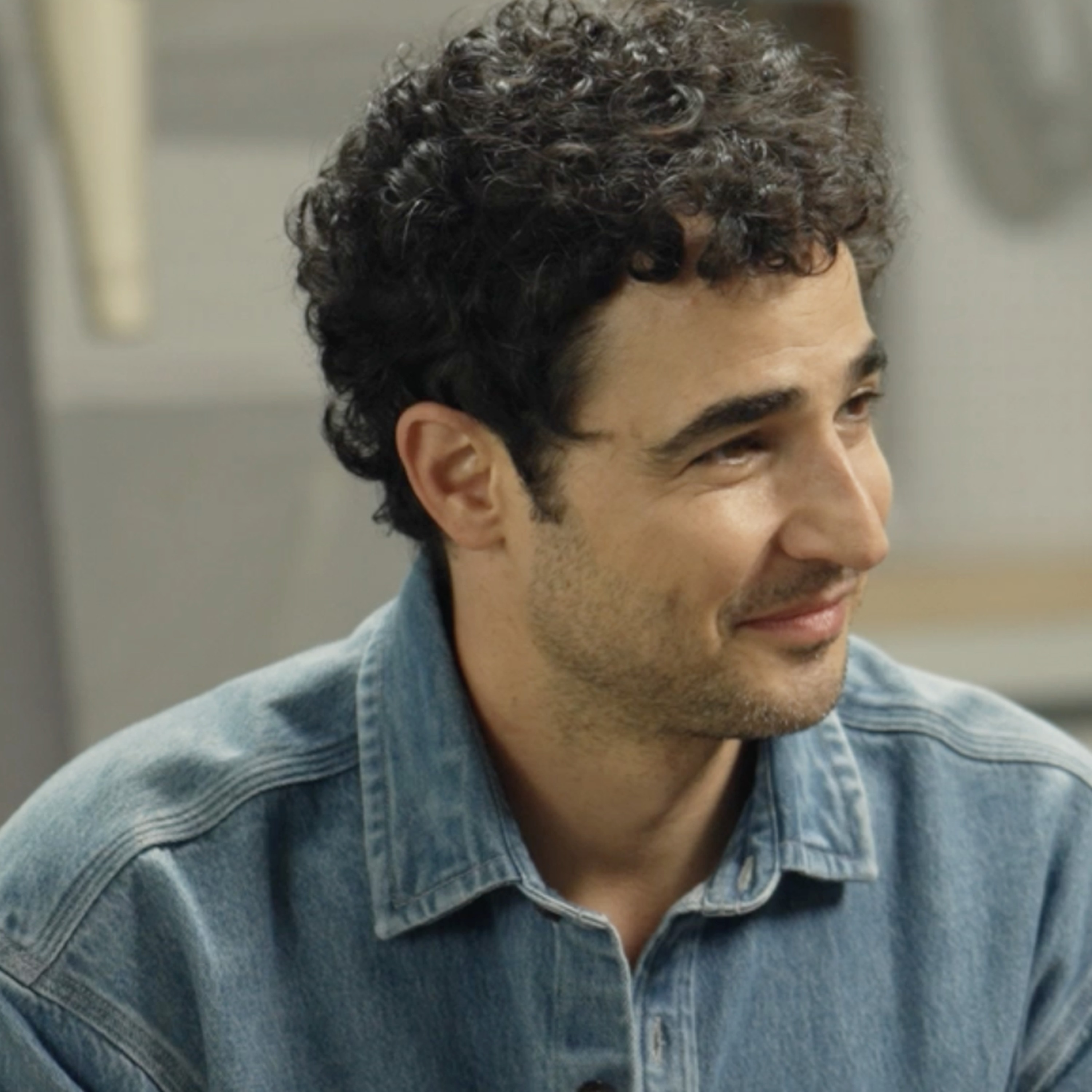
Zac Posen burst onto the fashion scene in the early 2000s, gaining acclaim for his glamorous designs and dressing Hollywood's elite. After nearly two decades, Posen closed his label in 2019, finding himself at a crossroads that eventually led to a meeting with Richard Dickson, the new CEO of Gap Inc., and the chance to join the company as creative director. Now, he's on a mission to bring cultural relevance and excitement back to brands like Gap, Old Navy, Banana Republic, and Athleta.
“Within five minutes [of meeting Dickson], I knew that there was something very special. It was a cosmic moment where there was like a magic connection, where I saw that I had met my dreamer,” Posen says.
This week on The BoF Podcast, BoF founder and editor-in-chief Imran Amed sits down with Posen to explore his journey of redefining success, his transformative role at Gap Inc., and his vision for the future of fashion.
Key Insights
Additional Resources:
Hosted on Acast. See acast.com/privacy for more information.


