Ask ChatGPT

 The Business of Fashion Podcast
11 Jul 2025 · 43m
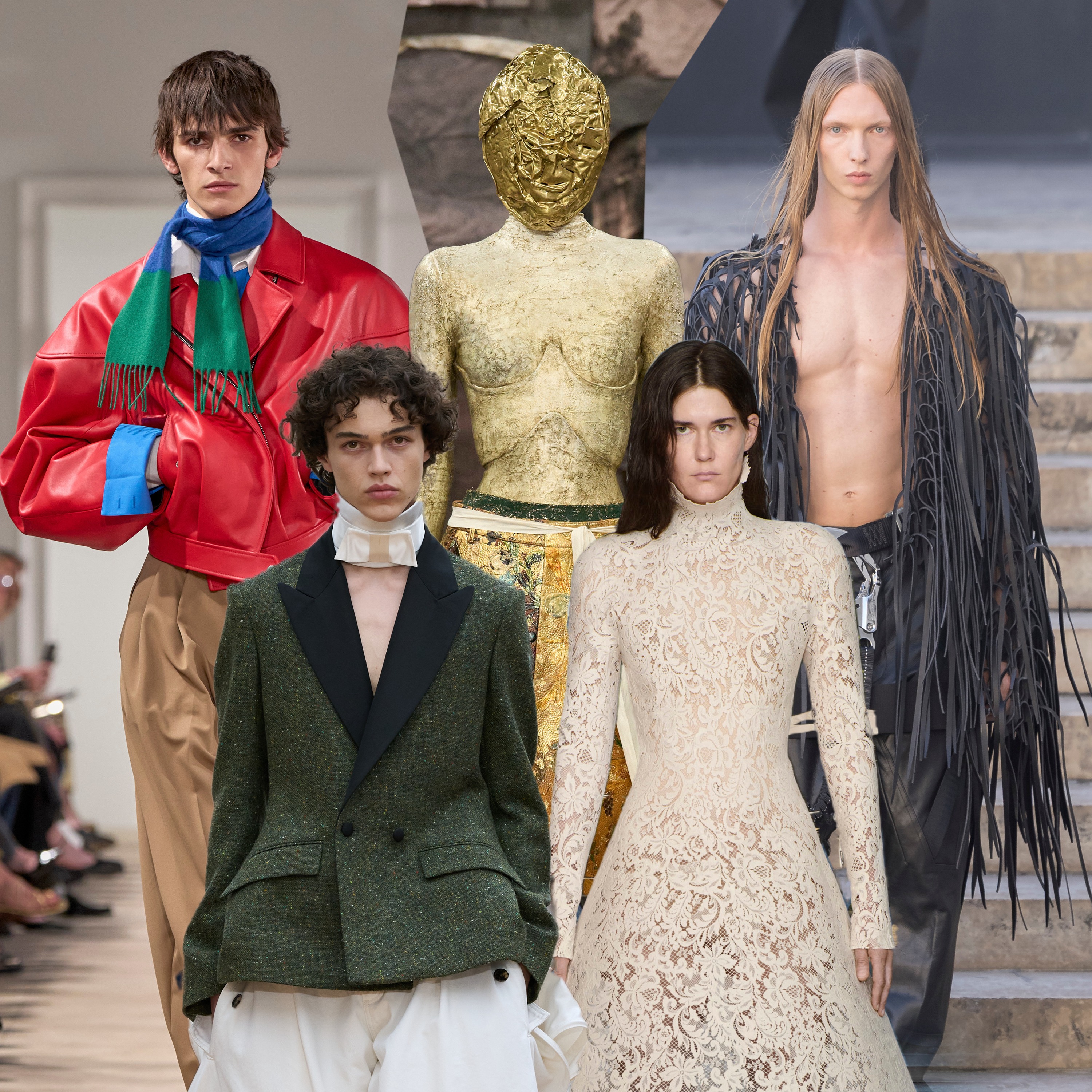
This episode reflects on a pivotal fashion season marked by changes in creative leadership at major luxury houses, including highly anticipated debuts and significant farewells. Key discussions include Jonathan Anderson's debut at Dior, Rick Owens' unique presentations, and Demna's last show for Balenciaga, alongside a critical analysis of the luxury market's evolving dynamics.
Written by AI. May contain mistakes.

Get the gist, explore an idea or ask about something said.
 Claude
On The Business of Fashion Podcast, what are the key points of this episode?
Searching your listeningAutomatic transcript. May contain errors.
0:04Hi, this is Imran Ahmed, founder and CEO of the Business of Fashion. Welcome to the BOF podcast. It's Friday, July 11th. Well, Tim Blanks and I don't normally get together at this time of year to have a seasonal review of the collections that I've just shown, but with the menswear shows and Paris Couture Week and all of the debuts in fashion, including Jonathan Anderson at Dior, Michael Ryder at Celine, and Glenn Martins at Maison Margiela, as well as some important goodbyes, Demna's final show for Balenciaga, and some perennial favorites like Rick Owens, Tim and I sat down for a special episode to discuss the most important collections, the standout looks, and of course, the designers who brought them to life, and what this means for the state of luxury fashion at a time of great change.
0:55And so without further ado, here's Tim Blanks for our seasonal review on the BOF podcast. Hello, Tim. Welcome back from Paris. Hi, Amon. It was hot there. It's hot here in London. And exhausting. Why exhausting? I don't know. When I was sitting in the Dior show, I thought, somebody had told me that they'd gone to great expense to climate control that environment because they had those two priceless Chardin paintings that they'd borrowed from the National Gallery of Scotland and the Louvre in a stunning display of LVMH's ability to move mountains. and the two quite small paintings mounted quite low on the walls.
1:43So I don't know if everybody in that place actually even got to see them. But anyway, it was so hot in there. I was feeling for the Chardins as I was feeling for myself as well. Yeah, they said it was climate controlled, of course, because they had to protect the paintings. But that was by far one of the coolest venues I've attended at the shows over the past couple of weeks. Since you brought up Dior, should we start with Dior for our seasonal wrap up? Bit of a grab bag this time, isn't it? Yeah. Well, I mean, we're going to be covering some men's and we're going to be covering some women's and we're coming some couture.
2:17So it's like Fashion Week seasons don't really mean anything anymore. But you've been spending quite a bit of time with Jonathan these past few weeks doing previews and interviews about not just, you know, his plans and his vision for Dior, but also his plans and his vision for his own brand. And I'm curious to hear your take on what were the key things you took away from the conversations you had? And then how did that come to life, both in the show that he did during men's and then during that incredible retail installation he did at the Gallery Joseph in Paris this past week? Well, he makes it quite clear that that as far as he's concerned, Dior is a sort of alien, an alien entity.
3:07And J.W. Anderson, his own thing, obviously, is his baby. But it's bringing so much to fruition. He's reconceptualized the business. Dior is like a performance for him, like a role. And J.W. Anderson is the real Jonathan. It's his authentic self, right? Yeah, I mean, his authentic self is so multifaceted that, I mean, I've found the installation where his team recreated what the shops will look like, his own stores will look like, really exciting. It was just so, it was really like being inside somebody else's head in a way that you never ever get to do in fashion. His role model, he said, was Terence Conran, who really changed the way Great Britain thinks about interiors in the 50s and 60s and 70s.
4:08He has a similar goal here, not to the full extent that Conran did. I think this is a little more idiosyncratic. But still, I mean, there's a real fantastic ambition there. And Dior is a, I mean, the ambition attached to Dior is obviously on a different scale. That challenge, and we're only just seeing the beginning of it. I mean, I felt even as enormously conceptualized as that Dior show was, it was really just the appetizer for a whole lot more that is coming. I bumped into him at the store installation as I was like poking around and looking at all those collabs. What I asked him was, is the men's we saw a hint of the women's?
4:57Are they brother and sister? Are they boyfriend and girlfriend? Like what's the relationship between the two? And he kind of didn't really answer that question, but he said, I have three years in my head and I'm not going to show everything at once. Oh, I felt he was on a mission to manage expectations for sure before the show. Yeah, really, he was basically saying, give me time, which that idea popped up in a few other conversations I had with other people at other houses during the week. That with the incredible amount of change that's coming in September, people are very sensitive to a churn because as we've seen in the last few weeks, the numbers of the luxury market are just really plunging.
5:40And I think maybe it's registered with the powers that be that so much change all at once could seem like an incredible breakdown of the stability and the kind of the sense of security that the luxury market needs to project. And I think Jonathan is very, very smart about that. I mean, for all of that, I don't think the show was particularly conservative in any way. It didn't feel to me like there was nothing tentative about it. I thought it was a really good wrap-up of everything that he does. I mean, I saw everything he does in that Dior show. You know, his interest in art, his interest in artisanship, his work at Lueve, his work for himself, and his work at Uniqlo was all in that collection.
6:32Talk about a high-low statement. It really was quite fascinating to watch that. And then especially when you see the prices, the proposed prices for some of those things. I mean, I can't believe that one of those coats is apparently 200 ,000 pounds or something. It's interesting because that's not the only brand that told me this week that when those very high spending customers come to look at the collection after the show, they spend money. and they spend tens of thousands, hundreds of thousands of dollars in placing orders on items that they're only going to get a year in the future. So that very high-end part of the luxury system is alive.
7:17And I think those brands know how to engage those customers. They've got a good formula for it. They understand their tastes and preferences. For me, the bigger question about when I was looking at the Dior show was, and by the way, you know, a lot of it was very covetable. It's like, how much are the jeans going to cost? How much are the sneakers going to cost? You know, how much are those sweatshirts going to cost? Because I think it's those opening price points where brands have really hiked up the prices a lot and made so many of these brands completely inaccessible to kind of the aspirational customers that end up driving real growth and momentum.
7:55I remember my mother saying more money than cents, you know, as she would tut tut over something that had galled her. I mean, do you think it reaches a sort of crazy one upmanship level? I think it already reached that crazy one-upsmanship level. And I think now is the time for the reality check. And that's what's really happening. I mean, in conversations with lots of CEOs and executives this week, I can tell you they're all thinking about what those entry-level price points should be. and they know that you know it's very hard for them to bring prices down on existing items but they're thinking about that architecture because luxury always worked in this pyramid where you had this like very very high-end customer spending at the top you know on very very scarce exclusive hard to get and long to make items but then you always had this pyramid of stuff at the bottom And I think it's that pyramid that that that structure has been kind of bloated in the middle now.
9:00So, like, there's a lot of stuff at that middle section of what used to be a pyramid, which is just too expensive for most of the kind of entry level customers. So they're thinking about what they can put at the bottom. But you know how people are so familiar with all these prices now as well. It just feels that we know so much more about what things cost and who's buying them and so on and so forth. And when you have Rolex robbers, you know, zooming around Mayfair, can you even imagine a time when there'd be kind of people hauling off$200 ,000 Dior coats at knife point? You know, it feels like this sort of gap between haves and have-nots is being absolutely teased and tortured.
9:45And I just can't imagine that it won't reach some kind of breaking point. You know, the whole Marie Antoinette's name popped up a few times this week and in various contexts. You can guess which ones. And I was thinking, yeah, that's, you know, it's in people's heads. Do you think the$10 million Birkenberg will be remembered as a as a touchstone? I just think that this reality check moment is causing all of the industry to just re-evaluate not just the creative side of what they're doing, but also how they go to the market. And they must do that because, you know, there's been a lot of discussion around whether this is a cyclical or structural issue.
10:27And, you know, I firmly believe that it's both. there's a cyclical element an economic cycle element to this in a very unusual post-COVID environment that we're in where there's that boom after COVID and now everything's kind of come back down to earth but then also there's some structural issues that the industry is having to grapple with We'll be right back with more on the BOF podcast
11:01So, as we think ahead to, like, Jonathan's Dior and, you know, Jonathan Anderson, the brand, what are you looking forward to seeing? Well, I, as I said, I loved what he showed for himself in that mock-up of what a store will be for him. Because the garden tools are beautiful, beautiful things. The sweatshirts are beautifully embroidered with very sly kind of insinuating messages. Anonymous trade and anonymous faggot and anonymous love, I think, was the most accessible, was the perhaps least provocative. I loved the books that he's going to be publishing. I mean, it was hyper aesthetic. There was a really fantastic twist on function for stuff, the various little bits of modern design, not modern design, but classic design, the Charles Rennie McIntosh stool, the artisanal chair from Wales.
12:09I mean, the porcelain from Wedgwood. It was so broad and touched on so many different areas of people's lives. And I think the fact that he's opening a store in Pimlico, which is London's design community, is focused on that particular area of London, and it's owned by the Grosvenor Estate, who insists that only a certain percentage of merchandise that sells in those stores can be fashion merchandise because they want to preserve the nature of that area. and Jonathan has a particularly lovely location, but he won't be able to put as much fashion into it as you'll see in his other stores. So his emphasis will be more on the artisanal side of the business, the things like garden tools, those amazing, incredible watering cans.
13:02I mean, just extraordinary objects. Fashion thrives on storytelling and narrative and everything in that store is so loaded with a story that I imagine, especially in Pimlico, because there's a lot of people who walk around that neighborhood, the people will discover him who never knew who he was. And it will be a whole other... It's interesting that he's just starting Dior, the biggest thing he will probably ever do, at the same time as he starts this, which is the kind of thing you imagine somebody doing at the end of their professional lives as a sort of very humanist kind of giving back to the community in a funny way.
13:43It felt like just like really one world, which was his world. And it was like all curated and organized in a way that it was all together. So there was like Wedgwood China in that like sky blue color next to a matching sweater in the same blue. And it was just it was so cleverly executed. And it felt so this overused word authentic to him. I thought it was amazing. And it feels to me like that's maybe in a way where the luxury market is going. You know, it's going to be really personal, storytelling, impeccably curated items. That would be a lovely thought if that was the case, because even down to the fact that the bones of the shop are based on the shaker philosophy.
14:29So everything is hanging off hooks on the wall or even the shelving units and everything. I guess ultimately chairs will hang off the hooks off the wall as well and you know Shaker is so humble I mean obviously the way Jonathan has adapted it with the velvet walls and everything it's not quite as humble but there is still a kind of simplicity to it that I find and that when you're saying if this is the way luxury is going to make luxury so idiosyncratic it's like a wunderkammer, that place where you collect all these things that really are an extension of who you are. And, you know, Conran made people think about their lives in a completely new way.
15:16It would be interesting to see what happens here. I guess he's also operating at a completely different scale. And like with all the pressure that those big houses have to continually grow and operate at, you know, multi-billion dollars. I mean, obviously, those big companies will have a very hard time finding that same idiosyncratic, personal, authentic approach. But it's just interesting to have a different proposition. And it's like such a different direction from his brand. And I also felt like he put so much of himself into Loewe. And clearly, Dior has such defined codes and there'll be more constraints for him to work within.
15:58now he can put all of that same energy that he put into Loewe for him he can just put into his own brand which is kind of clever right so there were these little um cups that looked like the Loewe candles it was like the same color tones you know I I think I think it's great but also think about um that a very sly reminder of how much he actually was Loewe you know you you look at his store now, you look at the kind of complexity of that proposal, and you just see how personal the way they was to him, and how this is a kind of vindication. And it's quite sly as well, I think. It's going to be quite funny to see.
16:40And the ambition is to grow them much, much, much bigger. You kind of lose that personal touch, and then that becomes a bit more like this anonymous merch. Well, you know what they'll do there is when something sells out, it sells out. It won't be you know, the stock will be changing all the time. It's not a seasonal proposition. So if you love that Irish breakfast set with the little pigs that he remembered from when he was a child and he had the company remake them, they don't even do that they don't even make that patent anymore but he had them redo this patent for him because he remembered it from loving it when he was a child.
17:16Obviously there was a pig sweater next to it. This is, he was saying about the Wedgwood. When it's gone, it's gone. And I like that too. So you, you will all, it'll, you know, those stores that you like Conrad, where you would go back to it all the time, the Conrad shop, because it was always in motion. And that's, that's the same proposition here, I think. Yeah. I was with that designer, Jérôme Maje, who has that sunglasses and opticals brand, Jacques Marimage. And he does the same thing. Like they only make a certain number, sometimes only 20 of a certain design of a eyewear, and then it's gone and it never comes back.
17:55So I don't know that there's something in that. Obviously, it's hard to scale that, but there's something in that. And it's going to be really interesting to see Jonathan's proposal for women's wear, the sister or the girlfriend or whatever ends up being in October. But should we rewind back a little bit and finish off the men's shows? Because I know you wanted to spend some time on Rick Owens because that unique presentation of menswear was one of your favorite moments. Tell us why. Oh, I just, it just, how he does that season after season is just incredible. How he manages to scale up every season.
18:34Like that particular presentation with the the models clambering up that ziggurat mounted in the middle of the reflecting pool at the um at the palais de tokyo i mean it was creepy it it it was a bit sort of 28 um years later it was a then when they came down the ziggurat and they and they went in the pool and they were diving into the water and it was just so elemental the whole thing and then the the clothes stand up to the presentation you know it's not like you come away and you don't remember what the clothes look like and then we go over the road and there's this incredible retrospective of his career and the consistency of his work from the very first clothes he ever made to now i mean that that is one of the great narratives of fashion i think from from the the The A to Z of Rick Owens, of course, the whole problem of having a retrospective, he was quite funny about it.
19:32You know, it's like it's something you do at the end of your career. And, you know, it's like a lifetime achievement award. And obviously he's got a way to go. But I do I really think as an independent, I mean, as an independent designer, managing the degree of success that he's attained with no compromise. There is no compromise in what he does. more and more and more and more he's just a beacon of hope and i and i actually find it's interesting because you know in the course of his career he's obviously plumbed the depths of dystopia quite often and and created very dark spectacles but there is so much light in what he does now yeah and i think you know he's really earned the right to do things that way which is so rare and well i think the light that you're referring to i've just noticed more recently he's he's been talking about how he wanted to create a place where people who don't subscribe to conventional notions of beauty can find a place where they can fit in, you know, and it's always so remarkable at his shows and presentations, because you can really see that all come to life.
20:42And I think Rick makes people like that feel like they're basically, they're not alone. There's a, like, he brings them all together, which is kind of amazing. And that's become quite a political statement in recent years that that that's become a point of defiance with what's happening in the world. And I think that's also honed what he does. I mean, those kiss boots are practically, you know, the Stan Smith trainer of our days. Yeah. of our day. Who would ever have thought, speaking of making 10 of something and discontinuing them when you've sold them all, how many of those Kiss Boots are out there in the world now?
21:22Have you ever tried them on, Tim? With my luck, I'd fall, I'd shatter my ankle, and that would be it for me and Kiss Boots for the rest of my life. I don't want to tell you. I have to tell you, I did try them on once. I think I have a video of me in the Machine A store in Soho. I tried, I mean, they're impossible to walk in, for me at least, but they did give me like a lot of extra inches of height. Yeah, how did you feel way up there on your heels? Oh, it's like you're in a different stratosphere, quite literally. You and I don't go to the men's shows that much. We both went this season because we wanted to catch Jonathan's debut at Dior.
22:03Was Is there anything that stood out to you at men's? Well, I only saw Mike Amiri's show, and that was also so, the phrase is sui generis. It was so much its own little world coming out of L.A., and I was fascinated by that show. I suppose the analogy might be Tom Ford in his heyday there, but it was even more sort of playboyish than that. with beautiful fabrics and incredible detailing, very, very rich. I think maybe there is a, I guess it's upper echelons of sporting figures. I want rappers maybe, but also showbiz entrepreneurs, you know, all making their billions out on the West Coast that he's dressing them up.
22:57I just try to imagine maybe they all go to the same secret places and sit around together dressed like that. Because I know the rise of the private club has been a story that BOF has been focusing on. I mean, there's a certain attitude to that Mike Amiri show. And he did a dinner later that evening that I went to. So I got to get a better sense of like who his community of people are. And there was an Indian rapper I met named Bad Shah. There was like this, like, you know, there was all of these characters from all different parts of the world that want that kind of attitude in the way they present themselves.
23:35How would you describe the attitude? It's not really it's not really like the attitude that once upon a time you would have talked about. It's what they call ballers, but it's more, I don't know, it's a lot more elegant. Is it like a louche attitude? Yeah, loose elegance, but loose kind of extravagant elegance. And they all seemed so happy in those clothes, a lot of oversized tailoring. And I would have a hard time pulling off those clothes, but people seemed to love it. My highlight was meeting Benny and Rish from Overcompensating at that show. Oh, yeah. Which was awesome, because if you haven't seen Overcompensating, you should watch that show.
24:19It's great. You were friends for life within about five minutes. I was impressed. I was just, I love that show. It's good. Nikhil and I watched that show in like a matter of days. And I know Benny's trying to get the second season greenlit. So good luck to him because I thought that show was exceptional.
24:40We'll be right back with more on the BOF podcast.
24:49Let's move on to couture because there was obviously a lot of interest in this couture season, not least because there were two important debuts. should we talk about margela first because i know you spent a bunch of time with glenn martins and as everyone knows glenn martins has been the creative director of diesel for the past number of years and recently he was named the new creative director of maison margela and had the not easy task of stepping into a role which you know the last designer to play that role was john Galeano and obviously John Galeano's last Maison Margiela show is one of those shows that you know is probably going to go down in fashion history so Glenn had his work cut out for him and Tim you spent a ton of time talking to Glenn before the show you did a preview before the show and then you attended the show I mean how do you like now that you had all of those different perspectives to consider.
25:53How do you evaluate and kind of interpret what he was trying to say? Well, you know me. I've been saying Glenn Martin's is the future for years. Yes. Between his own brand, Y Project, and the work he's done at Diesel, he's just a quiet force. I feel that he almost rose like without being and he was he was noticed and i shouldn't say that that he but there was no fanfare there was no like it wasn't like one of those partly because it partly because he he was designing for diesel and people have a very clear conception of what diesel is and as he himself says you know the most amazing things he makes for diesel don't get produced but he goes on making them and at diesel he's learned how to process things work with things you know make fabrics make extraordinary fabrics he's learned all these different processes of fabric treatment which are couture treatment are basically couture couture worthy treatments that when they use the diesel don't really get the attention that that they deserve but of course that Maison Margiela he's been able to do all of that because as he said he's never been able to buy fabrics for more than 18 euros a meter and now he's buying them for 80 euros a meter and nobody says anything so it's thrilling to see somebody when their actuality meets the level of their ambition that was a thrilling show everything about that show the walls and the floor of the venue it was one of those things it was absolutely complete the music the way the whole thing came together and he was keen to take his audience somewhere the way he used to feel about fashion when he was growing up when it would take him somewhere else and couture was obviously is obviously a meche which could do that and that's what that show did it was a challenge especially because some of the things you're looking at were incomprehensible the work had gone into them, the amount of attention paid to the surface of fabrics, embossing and painting and gilding and paper mache-ing and, you know, level after level after level.
28:07And the proportions were, you know, quite majestic. He's a massive fan of history and, you know, Renaissance, Middle Ages, so on. He just bought himself a castle, a little castle. It's only got three bedrooms, but nevertheless, it's a castle, three bedrooms, but it has two moats. You know, he's going to be living in his castle, and he just has this absolutely amazing fantasy about fashion, which is rooted in the street. He talks about what he wants to do at Maison Margiela. He wants to take it back to the street, which is where Martin Margiela, you know, he would do shows in car parks and schools and things.
28:48He was really one of the first people to ground fashion in something in reality. Speaking of Martin Margiela, the founder of the brand, I wanted to ask you, as someone who attended those Margiela shows, what through line did you see there from what Martin did? Like educate us a little bit about because, you know, you and I spoke a bit about the masks that Glenn put into the show. But what other elements would you highlight as being kind of really faithful to that original legacy? You're saying it was grounded in the street, but from a design perspective, from an experiential perspective, what should we have looked out for?
29:29I think the proportions were quite margela, the very skinny arms, the very long skirts. I think that the upcycling and the recycling element in that collection, I mean, my favorite, one of the men's looks was a one euro pair of jeans and a four euro polo shirt that had both been painted. The jeans were painted white. Margiela used to paint clothes and the polo shirt had been papier-mâchéed and then studded with recycled jewels when they called them jewels. But that elevation of the banal, the elevation of the ordinary, I should say. Margiela, to me, I talk about alchemy and fashion a lot. Margiela was an alchemist, the way he was able to transform plastic.
30:18Glenn used plastic as one of the foundations of the show, like an haute couture show that was based on plastic paper and paint. And I mean, as opposed to Chiffon and Tool and Organza and Duchess, which was still there as well. They were all in the collection too. But this fantastic dialogue between reality and fantasy, the humble and the aristocratic. I think Glenn was able to push it a lot more than Martin did. Martin was an incredible conceptualist, but obviously he didn't have budgets like Glenn had with this show. but if you looked at one of those outfits you would have said martin margela if you looked at one of the outfits from the show uh the other day you would have you could you could see martin martin margela and i'd love to know what he thought of that show i hope that glenn gets to meet him and find out because obviously galliano's last collection for margela it was one for the history books, but it's been 18 months since that show.
31:27And so enough time has elapsed that this was a step back into Margielaland. Yeah, because did you think what John Galliano ended up doing for Margiela, particularly with that last show, was that, do you think that was also an interpretation of Margiela or is that more John Galliano for Margiela? Well, no, I think he used a lot of Margiela's techniques. Yeah. I think they really appealed to him, that décortique technique, which he talked about a lot, really appealed to John. It was very much, I think when John was working with his own brand, I think he was aware of Margiela as well. So I think every designer, Margiela is one of those designers who just wielded an influence so far beyond his commercial weight, you know, carried a very big stick.
32:20Yeah, I think John was not amazingly true. No, I think John Galliano's imagination was unparalleled in fashion. So he was able to bring himself into Margiela's orbit. And I think we'll see here the same thing, the kind of symbiosis between the founding ethos of the house and the incredible blazing talent of its standard bearer. It's a similar but different situation at Celine where Michael Ryder came in to take on leadership of that brand and did a debut of men's and women's collections before Couture Week officially started. And Michael Ryder had spent 10 years at Celine working during the Phoebe Philo tenure.
33:14And, you know, Phoebe is the one who really kind of put that brand firmly back on the fashion map. And then subsequent to that, of course, Hedy Sliman took over. So he was taking over from these two looming figures, one of whom that he worked with closely and the other one who's obviously a very, very influential figure in the history of fashion. in the last 25 years. I know you weren't able to attend that show in person because you were doing an interview, but looking at it from what you saw online, how do you think that new Celine is developing or the new new Celine? Well, because I had all these messages from people saying, at last, something to buy.
33:55I was like, really? I was so curious to see what the show offered me. I thought he kind of coalesced all the various strands of Selene together but I've and all the analyses of Selene over the years I don't think Michael Coors has ever had the attention he deserved because I actually thought he did an extremely good job at Selene you know in the days when Narciso Rodriguez was you know there were so many really good Americans it was when Mike Jacobs first came to Louis Vuitton as well when Americans really made an impact in Paris Yeah, and so I actually, when I looked at it, I saw Michael Kors quite a lot and that kind of period of Selene.
34:39And then everybody, I left it to everybody else to say, oh, yes, there's Phoebe and there's Eddie. And I think one thing that Michael Ryder has going for him is that everybody really, really likes him as a person. So he arrives on this tidal wave of goodwill. So I'm very keen to, you know, see how that develops with him. people want him to succeed yeah they do there were so many people there you know there were people there who attended the show from ralph lauren you know where he worked just before celine there were people there from his phoebe era days at celine you know he had a lot of supporters and industry people attend because i think you're right i think he has a lot of goodwill i only met him briefly after the show.
35:28I've not really met him before, but he's just, he's definitely got like a very friendly demeanor and persona about him. And I think, you know, to your point around all those messages that you got from people saying, finally, something to buy. I mean, I actually think Celine as a brand in the post Phoebe era became like a really, really desirable product-led brand because there's probably no one better in fashion and creating like the perfect products than Hedy Sliman was. And I'm sure that the people at Celine didn't want to throw all of that away because that product-led approach has really helped them.
36:04It's now like the third biggest fashion brand at LVMH. It's overtaken Fendi. So they needed to figure out a way of continuing from where Hedy left off, but also give Michael Ryder a chance to kind of bring his own perspective into it. And I thought the styling of that show is where a lot of the creativity was. There was a lot of products for sure, but I thought it was presented in a way that was really fresh. And for a lot of people, it kind of reminded of the styling at the Dior show by Jonathan Anderson, which is interesting when you see that happen in two different places. And Jonathan was at that show.
36:41I wonder what he was thinking as he saw it was going down. Well, I saw baggy pants with white Capizios for men. and I do believe I remember that look. I think when David Bowie was touring the Let's Dance album, that seemed to be a look that was prevalent at the time. White Capizios aren't my favorite shoes for sure. No. Well, we'll see. I think the silhouettes for men were really interesting and I'm actually sure a lot of women will want to get into those clothes too, so it was interesting that they showed the men. Well, that's what people said after Dior as well. There's going to be a lot of women looking at those clothes.
37:18so that kind of brings us to the end Tim there were some swan songs at this last round of couture shows as well and you and I were talking about Daniel Rosemary's comments at Schiaparelli that this was the final chapter in a trilogy for him before he completely changes what he's doing there, changing the creative process changing the way the atelier and the design teams work We also saw a kind of interim collection from the studio team at Chanel while everyone's waiting for Mathieu Blasi to start. And then there was also the Armani show with Mr. Armani in absentia. And then, of course, there was the last Demna Balenciaga show, which was a swan song as well.
38:04So like we're really at this moment where there's this like we're on the cusp of a lot of change. Well, yeah, a handful of goodbyes and an armful of hellos. I mean, Armani, just imagine if that was Armani's last show, that would be very sad if that was his last show. But it did have a very, when he described the outfits as looking like lines of ink, the very, very linear, very, and black, all black, and these very linear looks, very rigorous. I said I would still love to see him do one more Midnight Blue collection because I think when he does those North African Sky at Night collections they really are so gorgeous and sensual and remind you of why he is who he is I did wonder with the Balenciaga collection I mean it's going to be so interesting to see that really whetted my appetite for Gucci because he said goodbye to his Balenciaga, to his Balenciaga.
39:09And I just wonder, he said goodbye to it. I mean, he's not going to, he's obviously got a whole new bag of tricks up his sleeve. And I'm sitting there obliviously watching Elizabeth Taylor walk down the catwalk in her slip dress and mink coat. And maybe I was not looking full on at that moment. And I thought, oh, it's this singer Ray, who I love, the English singer Ray, who does look a little bit like Elizabeth Taylor. And then backstage, of course, Kim Kardashian as Elizabeth Taylor. And I thought, well, that's very convincing. I guess it was a bit heat struck. I wasn't seeing things right. The most interesting thing that he said backstage, I think, was this, which was at Balenciaga.
39:53There were not a lot of codes that he could work with. So he needed to inject Demna codes into that business. And I think Demna codes are the ones that everyone in the industry got to know from Vetements. And so that whole Demna look that Balenciaga has become known for is really inflected with the Demna aesthetic. But there were so many signs that he is closing the chapter on that aesthetic. The first is that he said backstage, he said, at Gucci, I don't have a limitation on the number of codes. That brand is rich with codes. So I don't need, you know, at Balenciaga, I needed to put more of my own codes into it.
40:39But at Gucci, I have so much to work with. That was point one. And then point two, he did this retrospective of his time at Balenciaga. I don't know if you managed to catch it at the caring headquarters, Tim, but it basically started with the very first look of that model Eliza from that very first Balenciaga show that kind of created an earthquake in a fashion back. I don't know exactly what year that was, but, you know, I'll never forget that show. And it kind of took you through the entire history of everything that he's done. And there was this very clever magazine or kind of brochure that went along with it, made to look, of course, like a cosmopolitan magazine.
41:21And it just all of that just felt like he is really closing the chapter on that Demna aesthetic and that what we can expect is something different. I just, I don't know. I know everyone is worried or some people are concerned that, you know, it's just going to be more of what we've already seen. But I feel like there's more and more signals that what we're going to see in September is going to be really different. Yeah, yeah. Well, I guess that's it for this time. We don't normally do one of these at this time of year, but we thought it was good to do it given all the change that's happening. Well, obviously, when September, when we get back on October, we're going to have a whole lot more on our plate.
42:05Oh, yeah. I mean, we might need to do like a special double edition because there will be so much to discuss. I was just reading in The Guardian this morning about, no, it wasn't The Guardian. It was something else. What heat does to your brain capacity. And what does it do to it? After 25 degrees, your ability to think straight decreases by a certain amount for every degree after 25 degrees. So I think my brain capacity has decreased a lot today. I was feeling particularly inarticulate there and particularly useless with my technology. Yeah, you know, I'm not feeling so articulate today, too.
42:42So maybe for everyone listening, you'll forgive Tim and I. We maybe didn't deliver our best conversation. But thanks for your time as always, Tim. We're scintillating when we're in cold temperatures. Exactly. All right. Well, have a lovely rest of the day and stay cool. Thank you, Imran. The BOF Podcast is edited and produced by Olivia Davies and Eric Bria.
The latest fashion season marked a period of significant transition with new creative leadership taking centre stage at some of luxury’s biggest houses. Highly anticipated debuts at Dior, Celine and Maison Margiela set the tone for a new direction, while designers like Rick Owens continued to redefine the emotional and aesthetic parameters of fashion. At Balenciaga, Demna bid farewell to his iconic aesthetic, setting the stage for his upcoming tenure at Gucci.
Against this backdrop, BoF’s editor-at-large Tim Blanks and editor-in-chief Imran Amed discuss the realities of a shifting luxury landscape and the growing tension around pricing, accessibility, and the future structure of the luxury market.
Key Insights:
Additional Resources:
Couture’s Age of Experience, Experience of Age | BoF
Hosted on Acast. See acast.com/privacy for more information.