
 Ask ChatGPT


 The Business of Fashion Podcast
1 Nov 2024 · 39m
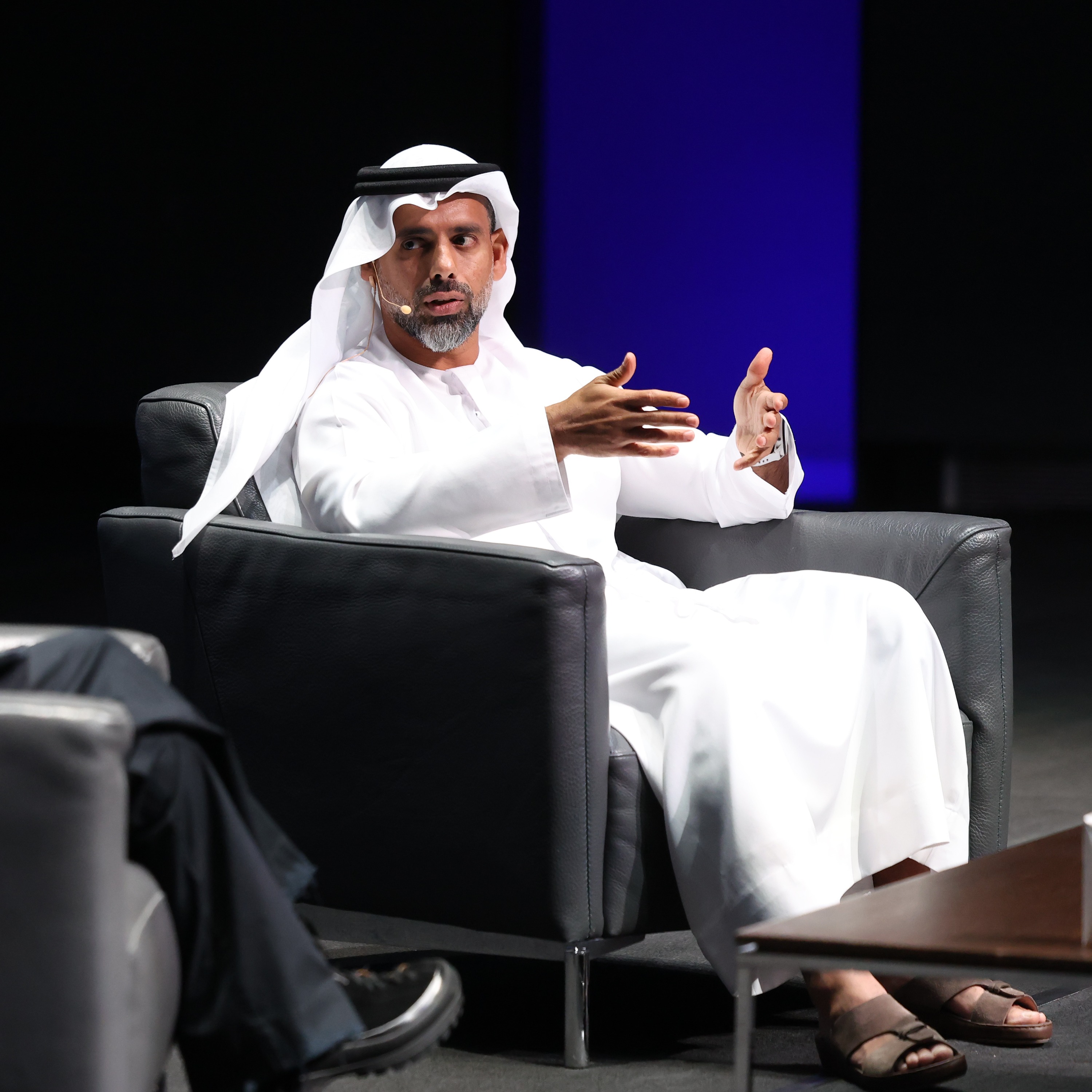
Khalid Al Tayer, Managing Director of Al Tayer Insignia and CEO of the luxury e-commerce platform Ounass, discusses the evolution of the Middle Eastern luxury market, emphasizing a customer-first approach in e-commerce, the importance of respecting local consumers, and the emerging opportunities for regional talent in the luxury sector.
Written by AI. May contain mistakes.

Get the gist, explore an idea or ask about something said.
 Claude
On The Business of Fashion Podcast, what are the key points of this episode?
Searching your listeningAutomatic transcript. May contain errors.
0:04Hi, this is Imran Ahmed, founder and CEO of the Business of Fashion. Welcome to the BOFest podcast. It's Friday, November 1st. Last month, I traveled to Kuwait and had the pleasure of sharing a stage with Khaled Altair at Oud Fashion Talks. As managing director of Altair Insignia and CEO of UNAS, he has a unique vantage point on the growing luxury market in the GCC countries. In his first ever public interview, Khaled shared his insights into the rapidly evolving luxury market in the Middle East and how developing his business with a customer-first mindset has enabled him to build Unas, one of the most powerful e-commerce platforms in the industry.
0:46The brands that have taken this customer as a very important customer and respects them are seeing benefit. The ones that say, that approaches this customer as, they're just going to buy what we make and we're going to do, I wouldn't say an absolute minimum, but just a good enough job because we're busy somewhere else, are not benefiting from this customer. Respect the Middle Eastern customer. This week on the BOF podcast, I sit down with Khaled to get his views on the wider luxury industry slowdown, understand the shifting preferences of customers in the Middle East, and learn how he is creating opportunities for regional talent to flourish.
1:31Here's Khaled Altair on the BOF podcast.
1:39Good morning, everybody. We are absolutely delighted to be back here for Oud Fashion Talks in Kuwait and really grateful to Zainab, as always, for including us in these conversations. Khaled Altair and I had a really nice coffee in Dubai earlier this year. And so when I learned that he and I were going to have a conversation here on this stage, I was really excited because I think getting inside the head of an executive like Khaled is a rare opportunity, but also he has a lot to share. Khaled, first of all, thank you for coming and accepting our invitation. I thought we could just start with an overview of how you ended up in this wonderful business we call the fashion business.
2:26and if you could give us an overview of the Altair group and all of the different core activities of the group as you see it. Thank you for inviting me, Imran. And I was sharing with Imran that this is my first official interview because of two reasons. Number one is I can't turn down Imran. I really admire what he's done with the business of fashion. I can't turn down Zainab and I admire what she's done with Erud. and Kuwait has always been an important part of my upbringing. Kuwait has always been the center of the creative industry, I would say, in our part of the world, so I've always looked up to it.
3:06So I'm honored to be here. I'm happy to share, and the other reason why it's my first interview is because as a group, we're always in stealth mode, so this is fun. I'm happy to be part of a conversation. Who we are as a group, it's a family-owned business out of Dubai. It's a multi-sectoral business. So we're in automotive, we're in retail, we're in real estate and other sectors. If I double click on retail, this is a business the family has been in since the late 80s. So in the nascent stages of luxury retailing in the Middle East, and in fact, when the group opened its first stores, which were Giorgio Armani and Bulgari in the early 90s, it was the first time that the luxury industry went into franchise in this part of the world.
3:54Fast forward to today, I would say we are in three different sub-platforms as a retail business. And I look at our overall retail business is a platform that enables brands to maximize their success in the Middle East and allows customers to access luxury in the Middle East. That's how we look at the business. The three sub-platforms are our franchise business, which is the core since the early 90s. And there, we're mainly a department store player. 50 % of what we do is department stores. So So you may know people who live in Kuwait, Bloomingdale's in 360 Mall. We were very happy to launch that.
4:39It was a great partnership with Tim Dean. We originally launched it in Dubai, in Dubai Mall. We also, the first one was Harvey Nichols in Dubai. So that's sort of part of the franchise platform. Then we have a lot of other brands that we operate in franchise. The second platform that we have is many of our partners over the years wanted to take direct control of their business. And so now we have 13 brands under joint venture where they run the business and we support them. So the Caring Brands, some of the LVMH brands, Prada Group, Zenia, Brunello Cucinelli. So we're very happy to kind of have the privilege to kind of work with them to maximize the success.
5:15Then something that's very near and dear to me, eight years ago, we launched our luxury e-commerce platform, Unas. And that was a strategic move where we said, okay, we have a leadership position in physical brick and mortar luxury retailing in both fashion and beauty, including the department stores, it's time for us. The Middle East was primed to go into online at scale. Now there have been other entrepreneurs that went into the online world prior. There have been since, but we went into it at scale. And that journey has been a very unique journey. And I would say sort of a new chapter in my life.
5:57So these are effectively the three divisions, sort of the franchise, the joint ventures, and online predominantly on us. Okay. It's a very interesting time in the world of luxury. LVMH reported this week its Q3 results. And for the first time that I can remember, they reported actually a 5 % decline in sales. I think a lot of the luxury sector has been feeling the impact of slowing demand in core markets like China and Europe. But this is the first time that we've really seen it come to the surface at LVMH, the sector's global leader, with some of the strongest brands, some of the best known brands, and really decades of expertise in operating in the sector.
6:48And I think there was maybe a sharp intake of breath when those results came out because they didn't meet analyst expectations. And I think the industry has been kind of waiting to see, well, what's going to happen at LVMH? It's the industry's bellwether. I would love to get your take on the wider slowdown in the luxury market and then how that is or is not manifesting in the Middle East. You and I talked to a lot of industry executives and it is a difficult time in the industry right now. A lot of it is attributed to China and the decline of China right now. But I think there are some other factors that are at play.
7:33And I think a lot of them were born as part of the whole post-COVID evolution or recent evolution of the industry. One is, I think there's been a dramatic escalation in pricing. And that worked while governments were pumping cash into people's wallets and where people were not able to travel as freely. So that translated into significant sales with specifically the luxury industry, I think, out of many sectors. Fast forward, there is inflation. People's disposable incomes are a little bit less, especially the aspirational consumer on a global level. And people are favoring experiences and travel.
8:21So it's sort of like a huge psychological rebound to experiences. As a result, the customer is saying, no, I'm not going to pay what I used to pay five years ago, 50 % more or 100%. I think there's that factor in play. And what we're seeing is the industry is recognizing it. And I think you're going to see product architecture readjust over the next coming seasons. The other thing is it's just a movement of trend. I mean, there was a move back to logo streetwear at scale. Then you see that it's kind of commoditized. And you see it across the spectrum, by the way. I mean, you see the results of Nike and the situation with Nike and others.
9:05And so the customer, there's logo fatigue in a way. And that's why quiet luxury has been doing really well. So I think trend is also going through a rebalance. So it's not just economic factors. I think there's industry-specific factors with pricing and trend that are all coming together to put this challenging situation here. The Middle East, however, is a little bit different. It's been, I would say, a shining candle in the industry generally because of the resilience and the growing sophistication of the Middle Eastern customer, especially the GCC customer. And since COVID, the brands have recognized that and invested more in better store experiences, better customer experience, better assortment, more specific activations.
9:55I think all that showing love to the Middle Eastern customer has allowed them to get a better dialogue with that customer. And hence, the market has been a little bit more resilient here. So what does that mean in terms of growth? You know, you and I were talking about the difference between the physical retail business that you run and Unas, which is, you know, this kind of very dynamic e-commerce platform, only seven or eight years old, but growing very quickly. Can you give us a sense of what the dynamic is in those two different channels? Post-COVID, this has been a fast-growing market up until a year ago when the unfortunate situation started to happen up in Ghazam.
10:44And since then, what we've seen is stores have been flat to negative over the last year. Kuwait and Qatar have been specifically affected on the sales. why, because the psychology and the consciousness of people here was emotionally distracted somewhere else. But interestingly, in the last six months, Kuwait has been the fastest growing market in the region. But generally, when you look at it for 2024, after great growth from 21 till the end of 2023, this market has been flat to negative in stores. E-commerce, however, at least I can say from an Unas perspective and the other data that we get in the market, is the channel has been growing.
11:34So the Middle East is always a late but fast adopter, provided you have the solutions, and that's in all technology, the best services that eventually come. And so what you're seeing is the pace of growth of the online channel in the Gulf is amongst the fastest on a geographic level worldwide on a calm basis. We're in a very good position with Unas where we're taking a significant share of that growth. And so we're seeing very high double-digit growth with online generally, and Unas is on the top end of that, where stores are very much flat. And so I think the pie of online versus store is completely, is shifting.
12:16And something that I talk to, my job is to try to imagine what the future looks like and engineer the path backwards, right, to today. And I always say, I have a true belief that in the next few years, and you can debate when that's going to happen, but it's in the medium term, that 50 % of the sales of retail will be online. Why can't we believe, what stops it from getting there? I read once an article recently that South Korea got to about 50-50 share between physical and online. So if you believe that, the question is then, well, how do you play a part in that growth? So I think we're on that path as a total industry in the region.
13:02And so I think Stores will play a very important role from an experience point of view, and online will play a very important role in what we call luxury convenience and solving for a different consumer journey. That's a really interesting difference, I'd say, from what I'm hearing from executives in the West, where there was this notion during COVID when everyone was shopping at home, the penetration of e-commerce was rapidly growing. And there were these predictions that there was a step change in e-commerce penetration during COVID. And I saw some charts where after that step change, it was just going to continue up from there.
13:39And what we're seeing in the West is actually customers are really looking to get back into stores. They want that human interaction. They want the advice from a sales associate. They want to experience and try on and experience the brands in person. Is that dynamic different here then that you see the e-commerce penetration getting to, say, 50 percent in the medium term? I think there are different attributes here than there are in Europe. You may say they're probably closer attributes to the Gulf to the East, where e-commerce still is on the rise. And it's also how those executives approach e-commerce as a channel.
14:25Everybody has a different perspective to it. If you look at it from a brand perspective, brands have a different approach. They have to focus on brand equity. They have to focus on the store experience and how they can take it online. If you look at it from a pure player perspective, as we do with Unas, we come at it from luxury retail, key principles, but also technology first principles. And I have a lot of these conversations with executives. And recently I've been asked, they said, why are you still growing? And I said, well, we just look at the world differently. We're trying to solve for a customer journey.
15:08You're solving for your brand. And in solving for the customer, we believe the brands are going to benefit. So that's how we're approaching it with a different lens of how we see e-commerce grow. And I think it's still day one. We're still ambitious, but we're humble. And we know that we have a lot to learn, a lot to do. So talk to us a bit about that customer journey and that customer. I mean, I think for a long time, you know, you and I discussed this earlier today, and I think it was a really interesting insight. I think, you know, when global brands look at this region, for a long time, it wasn't a priority.
15:47You know, they look at the region with dollar signs in their eyes, but without a lot of care and attention. What, in your experience, with your vantage point of having the franchise operations with Harvey Nichols and Bloomingdale's, the joint ventures with these top luxury brands and the insight into the online behavior, what are the things that the market in the West perhaps doesn't really understand about the customer here and how they are now shopping, what they're prioritizing, how they're thinking about pricing and quality? Let me give you a stark comparison. The brands that have taken this customer as a very important customer and respects them are seeing benefit.
16:32The ones that say that approaches this customer as they're just going to buy what we make and we're going to do, I wouldn't say an absolute minimum, but just a good enough job because we're busy somewhere else are not benefiting from this customer, respect the Middle Eastern customer. And what does that mean? Now you're seeing brands opening stores and the artwork that is going into these global flagship stores is in collaboration with local artists. I think that speaks to something. Creating collections with regional talent, you know, a capsule collection. I think that says something. Having not lip service type of activations, but having important culturally thoughtful activations that they do in this market.
17:21That's important. Investing and making sure that their stores are not just okay, but are some of the best in the world. And more importantly, recognizing that you shouldn't take advantage of the customer and not price at 25 % plus before VAT refunds, but price within an acceptable margin. I mean, I respect what Chanel has done and saying, look, globally, we're going to price within 5 % because anyways, we have some costs to move the inventory. So that's a fair adjustment. We can't control currency movements, but we'll do our best. That's pricing with integrity. And I think within that range, you know, the 5 % to sub-10 % is something that I've been preaching very adequately with all the luxury brands.
18:04I think the market deserves that respect. It deserves that attention. And I think you're seeing part of that happening today. I think we're just a few steps from them really recognizing this is an important market. Why is it an important market? Because globally, the Gulf, just these six countries, if you look at it from an economic point of view, it's the eighth largest economy globally when you put them together, just over$2 trillion. dollars. That's sort of a stone throw away from Italy and France and about the same or just slightly smaller population. And growing much more quickly. And growing much more quickly.
18:43I actually say in the next handful of years, we're going to be bigger as the Gulf, bigger than the Italian economy. That's massive when you look at it 20 years ago and 10 years ago. And I think France is not so far away. Within the next decade, there's the possibility that the Gulf will be bigger than the French economy. As a result, the luxury brands make anywhere between 5 % to 10 % of their global sales here or with this consumer as they go around the world. And so we're relevant. And to have that relationship, you have to elevate the way you engage with this customer, how you treat this customer, your investment here.
19:20Thankfully, with everything that's happened post-COVID and the slowdown, they're recognizing the importance of this customer and they are changing this dialogue with this customer and their investment. We'll be right back with more on the BOF podcast.
19:40A big part of the customer base here and a big part of the growth that you were just referring to is going to come from young people. This is a market with a uniquely young demographic profile. As you see consumer behavior shifting in the region, as younger people are coming into the market, the very famous Gen Zs and then the Gen Alphas that will come after them. How do you see customer behavior here changing vis-a-vis luxury brands? How are these customers different from their parents? The generational shift happens every decade or so. First, it was the baby boomers. That's where the spend capacity was, and then it moved to the next generation.
20:27Today, the most important customer in the luxury industry is the millennial customer. That's where the largest share of spend is coming from. And Gen Z is coming in. And Gen Z, as everybody knows, and you may know through family, through children, through interacting and seeing these kids in the malls, they just have a different behavioral pattern. The way they consume content, the way they recognize and create their own trend. But the end truth is, if you want to look at it from a business narrative, is they're important, but they're not there yet. But they do set trend. They do set trend and they pick up trend very quickly, but they also switch trends very quickly.
21:14And the other thing you recognize is they don't have a very big wallet either, but you still have to cater to them. Because if you're looking at a business over the next 10 to 20 years, they're going to grow with you. And so you have to understand their behavioral patterns and you have to cater to them. The way we've approached it is saying, when I look at our peers in the industry for online, we approach our merchandise assortment in three parts. We say we're a luxury platform, so we definitely have the very important luxury assortment, and we try to always find international luxury brands in that to keep it fresh.
21:53The second thing that we say is, well, there's a great fashionable customer there, and not their wardrobe, even if they're millennials, is not always going to be uber luxury brands. They want to have a casual life. And also you have the Gen Zers. So that's where we play with trend brands. Like we play with fear of God, we play with Kith, we play with, and these are great partners. And that's how we've accessed that. And I think having that, balancing that portfolio between luxury and trend, we call them trend brands, creates a little bit of energy. And you recruit the customer, that young customer here, and every now and then they'll buy an expensive luxury item.
22:31And the third play that we feel that we have an important role in this part of the world as we are growing and we'll do as much as we can is the local creative talent. So I think Unas has become the largest retail point of sale for the regional creative community, whether it's in beauty, jewelry, fashion. I think we represent close to 150 brands and growing. And I think we have a role to play. And by the way, it is the most successful subcategory out of all. The way it's growing, the maturity of the creative talent here and the way they're evolving and their fast pace of evolution. It's great.
23:10You know, we're allowing them to reach consumers and consumers to reach them in a much more effective way than trying to find them in multi-brand stores that are scattered around different parts of this region or in their own stores as they mature. Is that in part because these younger customers are maybe proud of coming from this region? They see affinity with these brands that perhaps they don't find with a Kith or a Saint Laurent, these Western brands? I think so. And because the products that are coming from the creative talent here are great and are becoming better with time. I think the customer here is creating their own fashion narrative.
23:56And that's a sign of maturity. I think the best demonstration of that is Kuwait. Kuwait is the most forward resident, I would say, Gulf nationals in terms of the fashion narrative. The UAE, specifically Dubai, is influenced by the international community, whether they're tourists or international residents in big scale. But definitely what you see in the Gulf is their voices are coming out in a different way. And it's a matter of enabling that. And you'll see this departure. What we're seeing is this new design view with time moving away from that globalist Western aesthetic. And it's great. Yeah.
24:41When you describe the positioning of Unas, it sounds to me like you got a little bit of Essence, you got a little bit of MyTheresa going after the top luxury customer, you got a little bit of Net-A-Porter. I mean, it's quite unique that you've combined 1 ,200 brands on one platform when the strategy that seems to be emerging in the West is each of these platforms is finding its own customer. I'm curious what you make of the consolidation happening in the global e-commerce market. Earlier this month, MyTheresa confirmed that it was acquiring Net-A-Porte and Ux, which previously had merged together.
25:22You had Matches Fashion shut down. You have Farfetch in a kind of existential crisis with its new owner, a Korean owner. How does Unas compete in this market? What do you think of what those players are trying to do here? And why do you think Unas has become the most formidable player in the market? I'll touch on three points. First, consolidation in our industry has been a trend over the last few years. the emergence of LVMH and Caring and Richemont, you see that brands survive by having a platform that enables them to be successful. I think that's also a reflection of a franchise business. We're able to run professionally because we run multiple things under one base or platform.
26:09We saw that there was going to be consolidation in the global e-commerce industry because there were so much of the same. And they were competing for the same consumer, and they were not making money. And so you saw that, with the exception of MyTereza, and Michael Klieger runs a very good ship there. And so you saw that eventually, there was going to be some form of consolidation. You heard it from the brands. They were saying, well, it's just everybody's doing the same thing. We're going to make some bets. So I was surprised with how fast it happened. I didn't realize when Matches and Farfetch and how fast that happened.
26:49And now within a year, MyTeresa and YNAB came together. All that within 15 months. I didn't expect that. I saw that it was going to happen. Now with regards to Unas, we looked up and still do look up to these companies. I mean, we started as nothing, as a small startup. And I will tell you, it's been a very interesting and difficult journey because corporate entrepreneurship is not easy to create a disruptor within an established traditional enterprise. And that's a whole different discussion. But we knew that we had to come up with solid foundations to get this business running. I mean, we went back to technology principles.
27:36We call the first principles. And so if you look at e-commerce, you win with either pricing, assortment, or service. We knew playing the price arbitrage game, which some of those players were playing and eventually led to their demise, is not a sustainable model. You mean, you know, radical discounting, basically. Radical discounting, heavy couponing, global price arbitration, depending on which geography. That was cowboy country, the brands didn't know, but the brands now know. And if you continue to misbehave, they will stop working with you. So we knew we had to play with high price integrity from day one.
28:14Assortment, we knew we had to be regionally relevant, but we started with a much smaller assortment. So when we started, it was less than 200 brands. And today we have just over 1300 brands across all categories in eight years. And where we said we will try to win and we built our whole strategic initiatives and approach was on service and localization. What we saw was that it's sort of a David and Goliath game. We're coming at it. We're small. And so where can we win? We said we'll win through localization and high level of service through focus. Those brands, and I still haven't seen the successful outcome of playing a global e-commerce player business model yet.
29:07I think MyTheresa is doing it by focusing on a high net worth individual luxury consumer. And so they're finding them in different parts of the world because you need to. There's not enough concentration, one geography. With Unas, we said, we're going to put blinkers on, and we're just going to focus on the Gulf. That's it. We're not going to be distracted with the world. We don't care about solving for even our local customers when they go to Europe and ship to them. We're not going to do that. We're just going to focus on the Gulf. And we started to solve for the customer experience of the Gulf.
29:39And one of our biggest catalysts of success, even for me I remember there was when we started we were going around lobbying with the brands to get them on board and I had an idea I said well how are we going to solve for service and I called I called my colleague I was I remember I was in Milan and I called my colleague and I said hey I wanted us to figure something out he said what do you want I said well can we deliver in an hour And he said, are you nuts? This is not pizza. I said, I'm going into a meeting here and I need to get this brand. Just can you think about it? And he came back to me a couple of days later and he said, are you okay with two hours?
30:23I said, done. Let's do it. And that's how we started. Is that across all the regions? No. So we do two hours in Dubai. We do three hours in Riyadh. and we do same day UAE today. We do across the region, we just hit 80 % of orders same day, next day across the Gulf. And a small prelude, we're going to start trialing select categories first. We're going to start small. We always start small for our Kuwait delivery. So... Breaking news. So we have the privilege of Bloomingdale's, right? So Bloomingdale's is the market leader here when it comes to multi-brand retailing between the store and online.
31:12And they took a cue when they went online to say, OK, let's just let's do fast delivery. And they're able to convert in four hours. And so we're going to leverage that infrastructure and start small and then build up over time. But most of our orders for Kuwait arrive next day. And so we're fanatical about super fast delivery. And so 80 % of all orders, this is what a lot of people don't know. 80 % of all orders in the Gulf, we do with our fleet. We built an Amazon for luxury. So Unas is more of a logistics company as much as it is a technology company. And we started with two cars and a shopping cart.
31:52We had to work hard. And we have a great fleet in the UAE and in Saudi. And now we're going to be working in Kuwait as well to extend that. Okay, we're almost out of time, but I have two more questions. The first is to just get your take on where the luxury sector here in the Middle East and globally goes over the next three to five years. As I said at the start, this is a really interesting moment. I don't remember a moment when so many of the executives, the Western executives I'm speaking to, are so uncertain and so unsure about what the future holds. So, of course, I would love for you to help me out.
32:35And just give me a sense of, from your vantage point, how do you see the market playing out over the next few years? Let's take 2030 as a snapshot. Based on global trend, based on Bain analysis, based on our trajectory of how we see the market channels evolve, we believe that e-commerce in the industry will constitute north of 30%. So somewhere around one third of all luxury consumption. And luxury consumption, I mean fashion, beauty, jewelry, and watches will be consumed online. and I think that's quite significant. That's one in three transactions happened online. Stores are only going to evolve towards better experiences.
33:23You'll see that brands will do less is more. Lesser, smaller stores, bigger flagships. The right flagships, right locations, better experience. I think you're going to see more and more love given to the region here with content creation, working with the content industry here also to elevate further. We're seeing a lot of that happen already. You're going to see merchandise and assortment becoming more and more relevant for this consumer. It's happening, but I think you'll see a completely different shift by 2030. And there's going to be a lot of great regional talent that would, and I really look forward to it, emerge into having their stores next to the big luxury brands, not in another corridor of the mall.
34:15That's where I would love to see that. And we can enable that by giving them a voice through our platforms to allow them to get there or participate in their evolution. We feel we have an obligation to do that. But I see 2030 with much more regional talent penetration in the industry, in all sectors, beauty, fashion, even the jewelry sector. I'm sure that's music to the ears of a lot of the entrepreneurs in this room, which brings me to my final question. For a young entrepreneur, designer, someone who's thinking about building their own business in this region, what advice do you have to offer them so that they can be part of your 150 regional brand representation you know what what do you say to them because you know i feel the same thing happening here but also happening in other frontier markets around the world where there's this like growing ecosystem of entrepreneurship growing confidence around the ability to create their own brands but it's hard This is a tough industry.
35:23What's the advice you have to offer for someone looking to break through? I'm not a teacher or motivational speaker, but I'll share with you my experiences. What I've learned in my journey, first and foremost, it's all about team. Having, surrounding yourself with the right people. I have one of those here. Joel, are you here? Can I raise your hand? Hi, Joel. well. In my journey, I've allowed my team to have absolute liberty of dissent. So my team challenges me and tells me I'm wrong, probably half of the time. So I try to build trust by allowing them to have ownership. And when they have ownership, they really drive the business like it's their own.
36:05So I think an entrepreneur is a unique character. It's their vision. And so they're very protective of that. But having people around you that enable success is very important, very capable people, and allowing them to really be part of that journey, to own that journey with you. I think that for me, with any entrepreneurial journey, you can have someone who's brilliantly talented on their own, and they can muscle through all of that, but it's very rare and difficult. I think having people around you is important. The second thing is fanatical focus. Don't get distracted. And many times I've been asked, why don't we do this new sub-business?
36:43Why don't we go to this market? Why don't we do that? And I have to thank my team for telling me no. And so focus on what you're doing and get it right. And get the data, get the cues of what's working. The customer is going to tell you. You may have a vision that may be a little bit ahead of its time. Stick with it. Get the right data. Evolve. We run Unas as test and learn. We don't know. we'll try something, we'll A, B test it, we'll learn, then we'll go with it. It's not what we feel. It's what the customer tells us. We have an idea, we'll test it. If it's right, we'll go with it. If it's wrong, we'll kill it.
37:20So have the ability to test and learn and move quickly. Use that from the technology industry. And then go through stages. We always say in the first three years of UNAS, prove that it works. Next three years, make sure it scales a little bit. Be patient with your growth, don't overextend yourself too early. I think that's one of the things that an entrepreneur is very ambitious, that wants to go, wants to run, wants to do that. I think it will come with time, focus on execution. Be patient. I think you have, creativity is great, but execution is important. What we do with the regional talent is we try to be part of their journey.
38:01We try to find those that have the ability to be great with their product, great with their pricing, but also dependable, that season on season they will deliver, right? They're able to go through this very difficult process in a, unfortunately, mechanical way. So these are the things that I think are very important for creating a successful business. Not bad for our first interview, right? Thank you. Thank you. Thank you, everybody. The BOF podcast is edited and produced by Olivia Davies and Eric Bria.
Khalid Al Tayer, Managing Director of Al Tayer Insignia and CEO of the luxury e-commerce platform Ounass, leads one of the Middle East’s most powerful retail networks. In his first public interview at Oud Fashion Talks, Al Tayer shares insights into the rapid evolution of the Middle Eastern luxury market, the region's growing influence on global trends, and how his business approaches e-commerce with a customer-first mindset. He also discusses the strategic importance of respecting and investing in the Middle Eastern customer while creating opportunities for regional talent to flourish in the luxury landscape.
“The brands that have taken [the Middle Eastern] customer as a very important customer and respect them are seeing benefit. The ones that approach this customer as, ‘They’re just going to buy what we make, and we’re going to do … a good enough job because we’re busy somewhere else,’ are not benefiting. Respect the Middle Eastern customer,” shares Al Tayer.
This week on The BoF Podcast, BoF founder and editor-in-chief Imran Amed sits down with Al Tayer to discuss the growing influence of the Middle Eastern luxury market and how businesses can succeed by prioritising the evolving needs of the regional customer.
Key Insights:
Additional Resources:
Hosted on Acast. See acast.com/privacy for more information.


