
 Ask ChatGPT


 The Business of Fashion Podcast
22 May 2026 · 51m · 24 chapters
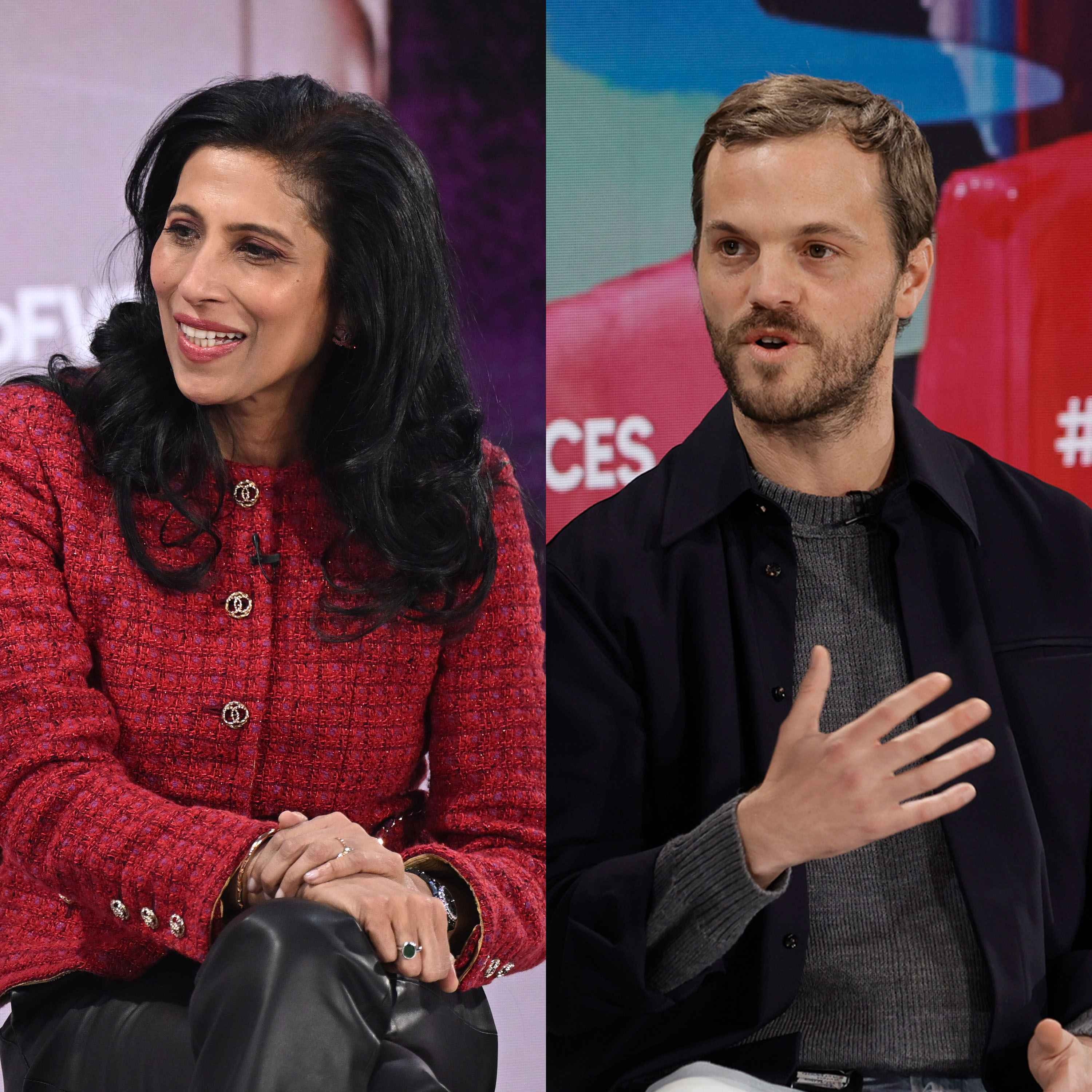
Chanel’s 2025 momentum is framed as the result of CEO Leena Nair’s long-term investments in retail, manufacturing, and people, plus artistic director Matthieu Blazy’s creativity. The episode centers on a shared belief that fashion’s most valuable asset is the human hand: craft, human relationships, and “timeless technology” that supports (not replaces) artisans.
Written by AI. May contain mistakes.
Discussion of the leadership dynamics at Chanel and the impact of new artistic direction.
“The excitement alone was enough to change Chanel's trajectory.”
Leena Nair discusses her experiences and motivations in the fashion industry.
“Really honoured and I'm humbled to hear all the speeches this afternoon.”
Nair shares her upbringing in Kolapur and the challenges of gender norms.
“I know a little bit about your story because we've, over the last year or so, had the opportunity to spend a little bit of time together.”
Nair reflects on her career journey and the resilience needed to overcome obstacles.
“It was a lot of determination, resilience.”
Nair discusses her experiences with gender bias and the importance of empathy in leadership.
“I mean, you and I know what it can be like to work in India.”
Nair emphasizes the importance of supporting others in their career journeys.
“In everything I've done, I have tried to question norms, be a role model, share my stories openly and do whatever I can to champion and sponsor and make it a more equal world.”
Nair recounts her emotional transition from Unilever to Chanel and what influenced her decision.
“Was that because it was the path of least resistance for you or did you explicitly choose that path because it was aligned with the way you wanted to lead?”
Exploring the allure and iconic status of the Chanel brand.
“Like, seriously, you need to get a handle on yourself.”
Discussing the pivotal decision to join Chanel and its values.
“or what did you learn about Chanel that made you say, yes, I was a Unilever lifer, and now I'm going to move to Chanel?”
How an outsider views the fashion industry and its dynamics.
“in the world and to be inspiring for the luxury sector and be transformational was something that drew me.”
Highlighting the significance of human craftsmanship in fashion.
“I know how to manage 150 ,000 people, you know.”
Exploring common misconceptions about the fashion industry from an outsider's view.
“I must humbly say that it's a learning journey.”
Discussing the emotional connection and cultural significance of luxury.
“And that was good for me to say that we have the resources, we have the long-term thinking, and we have the responsibility.”
Talk about Chanel's heritage and aspirations for the future.
“You know, luxury has existed for 3 ,000 years.”
Articulating Chanel's commitment to sustainability and social responsibility.
“because that'll give you a little bit of where I'd like Chanel to go.”
Discusses the importance of artists in forecasting cultural trends and innovation.
“And we work with artists across films, music, dance, theater, cinema, Now, name it, game design, because we want to support emerging artists, put the focus on arts and culture in a very, very big way.”
Explores how leaders can navigate complex global challenges with humility and curiosity.
“I wanted to close with some advice and to break it down into two parts.”
Offers advice for young women aspiring to leadership roles and overcoming societal barriers.
“Is it okay if I ask you one more piece of advice?”
Matthieu Blazy discusses the significance of craft in fashion and his creative philosophy.
“That was Lena Nair speaking at BOF Voices in November 2023.”
Explore the significance and uniqueness of handmade fashion items.
“Sometimes it's ugly, and sometimes it's gloriously beautiful.”
Discuss the creative impulse behind reimagining ordinary clothing items with luxury craftsmanship.
“And I like the idea that sometimes we need to use technology to support the craft, but it cannot come all from the machine, especially at Bottega Veneta.”
Delve into the idea of transformation in fashion and how it relates to identity.
“The whole idea that we can make something for the everyday where only the person that wears it knows that it's wearing something very, very special.”
Engage with the discussion on cultural influences in fashion and creating universal appeal.
“There is this question of cultural appropriation, which is a very relevant question.”
Learn about the creative challenges and innovations in the realm of high fashion.
“So I think it's interesting to have this.”

Get the gist, explore an idea or ask about something said.
 Claude
On The Business of Fashion Podcast, what are the key points of this episode?
Searching your listeningAutomatic transcript. May contain errors.
0:04Matthieu Blazy: Hi, this is Imran Ahmed, founder and CEO of The Business of Fashion. Welcome to the BOF podcast. It's Friday, May 22nd. This week, Chanel reported its annual results for 2025. Revenue rose 2 % to$19.3 billion, defying a luxury downturn. But the number that has caught the industry's attention wasn't the top line. It was the acceleration. In the second half of the year, Chanel's sales grew by high single digits across every category and every region. And this was even before designs by the house's new artistic director, Mathieu Blasie, had even arrived in stores. The excitement alone was enough to change Chanel's trajectory.
0:52Matthieu Blazy: This momentum has two sources. One, of course, versus Blasie, whose runway debut last October has sparked what the industry is calling Blasie-mania, hour-long cues when his first collection finally landed this spring, instant sellouts, and a level of excitement Chanel hasn't seen in years. The other is the leadership of CEO Lena Nair, who has spent her tenure investing heavily in Chanel's retail network, its manufacturing, and its people, building the foundations that allowed a creative spark to catch fire. All of which sent me back to BOF Voices in November 2023, when both Nair and Blasi appeared on our stage, on successive days, in separate conversations.
1:40Matthieu Blazy: They didn't know they would end up working together. At the time, Blasi was still leading Bottega Veneta. Nair was two years into her tenure at Chanel. But listening back now, what strikes me is how clearly each of them articulated the values that would come to define their partnership. Nair, an outsider who came to luxury from three decades at Unilever, spoke with me about what surprised her most about the fashion industry, the human hand behind everything.
2:11Leena Nair: There's so much painstaking attention to detail that there's so many passionate, dedicated people. Because I came from FMCG. It's industrialized. Everything is industrialized. It's mass. It's physical availability and mental availability everywhere. Here, it's precious. So it's the preciousness, the handwork, the qualitative stuff that goes in making things that last for generations. I want you to use stuff that you have for generations. Restore it. Have memories associated with it.
2:43Matthieu Blazy: And the following day, Blasie, in conversation with Tim Blanks, described craft not as tradition, but as something more radical, as part of his work at Bottega Veneta and Margiela. The thing of craft, it's a debate we have a lot with the team, but also with the artisans. It's a timeless technology. And I like the idea that sometimes we need to use technology to support the craft, but it cannot come all from the machine. Two leaders speaking from different vantage points on consecutive days arriving at the same conviction. That in an industry being reshaped by technology and scale, the most valuable thing you can protect is the human hand.
3:27Matthieu Blazy: First up, here's Lina Nair from BOF Voices 2023 on the BOF podcast.
3:36Leena Nair: I must say I'm delighted to be here. Really honoured and I'm humbled to hear all the speeches this afternoon. I'm so glad I could make it here today and listen to the speeches. Imran, it's been a gift. Thank you to all of you who spoke. You really inspired me.
3:53Matthieu Blazy: Thank you. I know a little bit about your story because we've, over the last year or so, had the opportunity to spend a little bit of time together. And I want to start with your personal journey. We were at a dinner the other night. And I was seated next to some people who've known you for a very long time. I hope they said good things.
4:14Leena Nair: You never trust friends to do the right thing.
4:17Matthieu Blazy: They said the most amazing things. But one of the things that they reflected on the most is where you've come from. So I want to start with Kolapur. Kolapur is a small-ish city in India. I don't think most people in this room will have heard of it. Can you tell us a little bit about what it was like in Kholapur when you were growing up?
4:40Leena Nair: You know, the world of luxury, refinement, sophistication was a million miles away from where I grew up. I grew up in a small town. I mean, the first proper school for girls that came up. You know, I grew from seventh. The school grew to eighth standard. We did eighth and grew to ninth. So we literally are called the first batch. So your school had never had those grades.
5:06Matthieu Blazy: You were the first ones.
5:07Leena Nair: We were the first ones to get to that.
5:09Matthieu Blazy: And was that because it was a school for girls? A school for girls.
5:12Leena Nair: It was a school for girls. And I grew up always hearing, because gender norms were so strong, you would always hear, girls can't do this, girls can't do this, girls can't do this. And after a point, I had to stop listening. I mean, I remember my mother saying, oh, my God, you're so ambitious. Who's going to marry you? Like, this is such a problem. And, you know, one of the most sort of comments I would get is, you're so talented, you should have been a boy, you know? You would have all the opportunities in the world. So, to me, if you had told me that I would have the opportunity to do what I'm doing today, Imran, I would have thought you're smoking something.
5:47Leena Nair: Or, you know, something seriously wrong. It's not possible. It was a lot of determination, resilience. I knew I wanted to do something. I wanted to have a voice in the world, but didn't know exactly what it meant.
5:57Matthieu Blazy: Did you have a dream job?
6:00Leena Nair: Not really. It was a step-by-step. I wanted to do engineering because mostly everybody tells me girls can't do engineering and I'm good at maths and science. It was more like that. It was a lot of it was sometimes determination, sometimes resilience, sometimes anger, frustration. So I did engineering, electronics and telecommunications, enjoyed it, did management studies and joined Unilever as a management trainee. 30 years. 30 years, absolutely loved, learned all aspects of business, worked in factories, worked in supply chain, worked in sales, worked in marketing. I mean, I have so many stories of what it's meant to be the first everywhere because, you know, the first woman in a night shift, the first woman who was in sales, doing sales in Ariana in India, one of the first international expatriates from India to come into London for Unilever and so and so forth.
6:47Leena Nair: So I've known what it is to be underestimated hugely. I've known what it is to be an outsider. I've known what it is to be told I'm not good enough because I don't meet some invisible standard or benchmark. And I think it's been really, you know, a lot of support, because I absolutely believe in mentors, network support. It's been a sense of a learner mindset saying, yeah, I don't know it, but I'm going to figure it out. And having enormous curiosity and humility, always feeling like I'm a learner. Day one, I want to put a big L here. I'm a learner. Every day there's something new to learn. I'm going to learn the hell out of everything.
7:25Leena Nair: So it was that what kept me going. And in the stint in Unilever, you know, I had the opportunity to learn all aspects of the business, learn how to make money, all the growth drivers, profitability drivers, how to galvanize and inspire teams. So it was a really good grounding in all that for me. In those more than two decades
7:45Matthieu Blazy: that you were at Unilever. Three, everyone. Three decades. You don't want to know my age. Three decades. I mean, you and I know what it can be like to work in India. As a woman going up the ranks in a very, very conservative, gender-biased business environment, how did you navigate that? Tell us some stories of the things that you had to do, you know, even with the most drive and determination, no one gets to where you got without a bit of grit, perseverance, craftiness. Like, what did you have to do?
8:23Leena Nair: You know, there's so many stories, Imran. I think there is a Bollywood movie in somewhere. Maybe, you know, we, yes, we have, there's a movie in there, you know. I'm not telling all my stories. I'm keeping some for you, you know. But, you know, it's like a daily story. we talked about the safety and security that Skylar spoke about, and I've worked in really remote places. I have like road trucks with Lipton tea in the back going and delivering sales. One of the factories in the South that I was working in, I was the only woman in the entire industrial estate. So every morning as the buses came in with the workers, there would be a pause at the gates of our factory.
8:59Leena Nair: So everybody could look out, peep at me, and then go through because I was such an alien. So every day would be a story like this. So it's taken a lot of strength and self-belief. It's taken a lot of saying, what do I stand for? What am I doing? What am I doing? And that's why I'm so passionate about purpose. Always start with the why in mind. Why am I doing this? That's given me strength. My husband's been a huge support. We had an arranged marriage. Thankfully, dad chose well. So it's all good. You know, going to be 30 years we've been married. So it's really determination, resilience, having constant thirst to learn.
9:38Leena Nair: I even ran a podcast, Learn with Lina. I don't think that many people have learned with me, but I tried very hard to demonstrate that no matter how senior you get in a company, you can learn. You can learn new things. You can unlearn. You can revalue yourself. Also, you know, I've really, really believed in empathy, in kindness, in compassion. Those are not words used in business. I mean, when was the last business leader who was praised for being empathetic or kind or benevolent? I really, really believe in that. I think it's so important to be just kind to each other. I mean, we are human beings for a reason because we have humanity.
10:11Leena Nair: So for me, that's been very important. Every voice matters. You know, I know the names and faces of everybody in my business. People tell me that 30 ,000 people, it's no problem. I will know it. I will know their stories. I will know where they come from because it matters to me. It matters to me what happens to them. When I'm in a meeting, I listen to every voice. Because somebody will present, some are shyer, but every voice matters. So it's been a very strong people orientation, a sense of believing in the collective. I really feel the days of the superhero leader who has all the answers is way behind us.
10:44Leena Nair: I mean, listen to the complexity of the world around us today afternoon. How can one individual have the answers? So collective problem solving, collective creation, collective ideation, collective getting together is really important to me. So it's been a lot of those things that have helped me along the way. But very, very important for me, Imran, is lift as you climb. It's so important because I feel the privilege, I feel the responsibility of making it easier for those who come after me. If I've felt unsafe in a place, I've gone and battled to change the hotel location in that place or make it safer for the women who come after me.
11:20Leena Nair: In everything I've done, I have tried to question norms, be a role model, share my stories openly and do whatever I can to champion and sponsor and make it a more equal world. So lifting as I climb, others who feel like me, outsiders, minority, all the first, woman of color, brown. I didn't know I was brown until, you know, instead of I started coming to England, you know. It's Indian, first Indian, first Asian, first this, first... You know, all of that is enormous privilege, but it has enormous responsibility and I never ever want to forget that. Okay so one other thing
11:58Matthieu Blazy: that makes you unique for a CEO I mean is that you've come through the HR path and I'm curious was that an explicit decision and if I was going to make a generalization it's often women that play the HR roles. Was that because it was the path of least resistance for you or did you explicitly choose that path because it was aligned with the way you wanted to lead? Like, how did that happen?
12:25Leena Nair: You know, for me, it's always been important. I mean, in the way I lead, putting people at the center of everything I do, because I really believe if you look after people, their growth and development, their dreams and aspirations, they will look after the business. They will help you with ideas and really care about the institution they're part of. So it was very early in my career, I started discovering the passion for that. I mean, it doesn't matter you're running production, you're galvanizing and inspiring people. You're doing leadership roles. It is about galvanizing and inspiring people.
12:56So I started
12:57Leena Nair: gravitating more and more towards that. To be honest, I genuinely believe that for me it was never about the power or anything about being CEO. It was about because I believe business needs to have a voice in the world. CEOs of influence, we can make change happen. Okay, so I'm curious to hear about the fateful day when you're ensconced in your really really important role at Unilever
13:21Matthieu Blazy: as I said in my intro responsible for the well-being of 150 ,000 employees and you get a call from Chanel I mean tell me what was going through your mind how did that happen what did they say to you. What was your initial reaction? Gobsmacked, you know, and I hadn't seen it coming.
13:47Leena Nair: And to be honest, I was in tears because I loved Yundelieva so much. And I was like, no, I'm not going to leave Yundelieva. This isn't going to happen. And, you know, my husband at one state said, honey, you're not getting a divorce. You're just leaving and joining another company. Like, seriously, you need to get a handle on yourself. But I said, given 30 years of my life, if I'd learned so much, grown so much. But Chanel is a beautiful brand. I mean, who doesn't love Chanel? Oh, my God. You know? And what's not to love about fashion and fragrance and beauty and makeup and watches and jewelry?
14:20Leena Nair: Now you know how it goes. And joining Chanel and, you know, the last year of traveling all over the world, I mean, it's been almost two years, so it's gone quick. And the first year, I really traveled everywhere, went to all of our manufacturing locations, went to see our production, creations, et cetera.
14:34Matthieu Blazy: Before we get into that, beyond the glamour and gloss, and all of us work in this industry, we know that behind all that glamour and gloss, it's a lot of work. It's a lot of passion, dedication. I want to hear about your listening tour in a minute. But first, I want to understand this pivotal decision. He doesn't give up, does he?
14:51Leena Nair: I thought he'd be tired by now. This pivotal decision to join, what was it that sold you?
14:59Matthieu Blazy: What did they say to you? or what did you learn about Chanel that made you say, yes, I was a Unilever lifer, and now I'm going to move to Chanel?
15:09Leena Nair: Because I saw the influence and impact that fashion has in the world. I saw the work we do with philanthropy. Not many people know this, but Chanel is one of the world's largest philanthropic organizations working for women and girls. Knowing that made a huge difference. The way we were thinking about sustainability, and I'll talk in a minute how that's something I passionately want to take forward and give it more wings. It was the opportunity to be exemplary as our brand. Our brand is highly integrous. It's so high on integrity. It's loved by everyone. And the opportunity to lead this brand and bring that exemplary nature and be able to inspire the rest of the luxury sector, and I don't say this lightly, to be exemplary at some of the things that have a positive impact in the world and to be inspiring for the luxury sector and be transformational was something that drew me.
16:08Matthieu Blazy: So at the time when your appointment was announced, I started getting calls from people. Media organizations started contacting me and saying, I hope you were a good boy and said good things. They said, well, why do you think they picked Lena. And, you know, I'd only met you that one time in Davos for like one minute, so I could only hypothesize. But why do you think they picked you?
16:33Leena Nair: You know, that's really for the boat to answer, you know. Well, no matter what I say, it's either going to sound extremely arrogant or it's going to sound like, oh my God, you know. So not an easy one. It's for the boat to answer. But, you know, I do think I'm constantly told about what I don't have when I come to luxury. Oh, you're the ultimate outsider and you don't know this and you don't know that. But to be honest, I know global sales, scale, size, globality. I know how to manage 150 ,000 people, you know. So I have worked in all aspects of business. The principles of running a business, the principles of bringing home the bacon, the principles of being a leader who can engender followership are transferable across industries.
17:19Leena Nair: But that's for the board to answer. You should ask them when you meet them.
17:22Matthieu Blazy: I will press you on that. I have my own theories. You know, just now, you said when you were going into that manufacturing plant in South India somewhere, all the men were kind of peeping in and you felt like a little bit of like an alien. One of the times when you and I sat down, I said, well, you're kind of like an alien in the fashion industry. Indian by nationality, a woman CEO, a person of color from the consumer packaged goods background and with a background in HR. So I'm curious, with your alien perspective, when you came into our planet, the universe, the fashion universe, what did you honestly think about this industry?
18:00Matthieu Blazy: Like, what were your reactions?
18:03Leena Nair: Because it can be kind of crazy, this industry. You know, this is the moment people say, oh, my God, how can someone from HRBCU, how can someone from FMCGP, it's exactly the kind of conversation that gets some gene inside of me saying, what the hell I'm going to show you? I must honestly say that, you know, so there's a little bit of bring it on sense that's there in me always. Like, really? We can't do it? Say Zoom. I'm going to break the rulebook. Tell me where's the rulebook. I'm going to break it. But I must say, it's been a fascinating journey. It's been absolutely fascinating. And I knew so little.
18:41Leena Nair: I must humbly say that it's a learning journey.
18:43Matthieu Blazy: What was the biggest surprise for you about this industry?
18:47Leena Nair: Firstly, the fact that human creators, human creation, craftsmanship, self-affair is so important. This is all made by hand. It takes 200 hours of beautiful work. It's just amazing to see. I mean, Bruno Paoloski, our president of fashion, and I had the opportunity to receive Our Majesties this year, King Charles III and Queen Camilla and Bridget Macron to 19M. Ladisna Femme is a place where we've housed 600 artisans with incredible skills, representing 10 mizons there, things like pleats. How do you pleat? Milner work, feather work, embroidery work. It is just mind-boggling to think how you set diamonds on a watch.
19:31Leena Nair: It's done by hand. the ultimate craftsmanship. I mean, I didn't know it took 200 stages to create a bag. And it takes five years of working with a dummy bag before you can actually work on a proper bag. So this human creation, human creativity, human skills, human fingers, that was huge. The other thing was, we are a mega industry. Mega brands, mega scale, mega boutiques. We have resources. We have the responsibility to make an impact on some of the challenges that we heard today. We absolutely do. And that was good for me to say that we have the resources, we have the long-term thinking, and we have the responsibility.
20:09Leena Nair: And that's the responsible leadership point.
20:11Matthieu Blazy: What do you think is the biggest misconception? Like for an outsider coming into this industry, what do you think people on the outside don't understand about fashion?
20:21Leena Nair: that there's so much painstaking attention to detail, that there's so many passionate, dedicated people. Because I came from FMCG. It's industrialized. Everything is industrialized. It's mass. It's physical availability and mental availability everywhere. It's precious. It scares. You don't make... I want you to yearn for it some more. We don't make enough. So I want you to yearn for it some more. So it's the preciousness, the handwork, the qualitative stuff that goes in making things that last for generations. I want you to use stuff that you have for generations. Restore it. Have memories associated with it.
21:02Leena Nair: The fact that the client and people relationship, the client and the boutique assistant relationship is so central. It's a human relationship that actually drives this trillion dollar industry. That relationship is so central. That's why when I hear about AI, I feel so strongly that we have to preserve this human creation, human creativity, this work with hands, this craftsmanship, this warfare, this relationship. We can't miss out on it. And the vitality of the sector. The prospects for the sector are bright. How many sectors can say that? You know, the young are engaging. By 2030, 100 million more consumers will be talking to luxury, engaging with luxury.
21:43Leena Nair: But 30 % of luxury consumers will be Gen Z and Gen Alpha. I mean, that kind of vitality not many sectors have. And they're bringing such a strong attitude of buy less but better, financial investment, make less but, you know, use it for longer. Absolutely the right attitude as they engage with this category. And the other thing that struck me coming to luxury, and we're such an emotional powerhouse, we're such a cultural powerhouse, I passionately believe there's a place in the world for beauty, meaning. A thing of beauty uplifts us. You go for a walk in nature, you see something beautiful, you see a gorgeous painting, you feel an upliftment.
22:22Leena Nair: You know, luxury has existed for 3 ,000 years. Everybody wanted to look good, differentiate themselves. People made jewelry when they didn't have the tools and wore it. They made makeup out of unbelievable things in nature. So it is something that's so true to being human. So to me, the cultural powerhouse we are, the emotional powerhouse we are, is not to be underestimated. And that was big for me to see.
22:48Matthieu Blazy: Now we'll get to some of my hypotheses. So prior to your arrival, while I'd say Chanel, as you alluded to, is almost unparalleled in the luxury space in terms of its heritage and storytelling. And we saw that at the Victoria and Albert Museum. We can see that behind us. Chanel also has a reputation for being a bit old-fashioned, a bit elitist, and a bit slow-moving when it comes to digital innovation. So when you think about your role, and one of the things that has come to mind for me is like, how do you modernize the corporate culture and the way Chanel exists in the world? For example, I didn't know that Chanel is one of the largest philanthropic organizations in the world and invests a hundred million in all of those charities you mentioned.
23:43Matthieu Blazy: Chanel doesn't talk. It's very secretive. The owners are secretive. The whole brand feels secretive. Is that part of the role to just open this up?
23:54Leena Nair: Ask this man when I'm sitting here talking to him. How secretive are you? You know, like I said, I have absolutely fallen in love with Chanel because I discovered so many things. It's a gem that I have absolutely fallen in love with. The company, our people, our 35 ,000 people are so passionate, so dedicated. We are so long-term in our thinking. Our independence gives us that long-term thinking. So for example, we genuinely believe that if you focus on the brand, look after clients, look after people, think long term, you will have the financial results. And this is not just in talk. This is how we perform.
24:33Leena Nair: This is how we evaluate and pay people. So this long term thinking is an absolute distinctive feature of Chanel. But let me tell you how I'm thinking about the future with Chanel because that'll give you a little bit of where I'd like Chanel to go. I would love for Chanel to be a beacon of inspiration for the next hundred years. The story of a woman, Gabrielle Chanel, who 100 years ago, remember this is when women didn't have the vote, women had no signs of equality, they couldn't participate in Olympics, was at a time, through the clothes she made, transformed the way women saw themselves. It was about giving women freedom of movement, trousers, no corsets, but importantly supporting women to be and become whoever they wanted to become.
25:17Leena Nair: So I'd like us today in Chanel to do things that 100 years later, people will look back and say, thanks to the people at Chanel, because they continue to inspire us 100 years on. But that's easy to say, 100 years beacon of inspiration, it sounds lofty. So what's behind it? What are the things that we can do? And for me, distills into three things. And you better listen, Imran, because I'm going to quiz you after this. I'm listening. To see whether you're really listening. Three things that I'm going to see. One is to have a positive impact in the world. And I'll talk a little bit about it. The second is in the world of AI, to be relentless in protecting human creation, human creators, human relationships.
26:00Leena Nair: And third, to be always part of what's next, to shape what's coming, to be out there shaping what's next.
26:07Matthieu Blazy: This is that innovation piece.
26:08Leena Nair: And I'll tell you a little bit more about those. So positive impact in the world to me is about sustainability and philanthropy. They have to be exemplary in these areas. So sustainability, I would like Chanel, and our team absolutely buys into it, would like us to be exemplary in how we role model environment and social sustainability in the world. And that's really ambition with the customary Chanel integrity that we want to do. I would definitely see things like restoring to nature, investing in circularity, taking care of everybody in our ecosystem. We work with so many suppliers and partners who have been with us for years, for generations, for decades, make sure we're taking care of all of them, promoting the autonomy of women.
26:51Leena Nair: Those are the kind of things I'd like us to be exemplary at. And foundation continue to strengthen the work, the work that we are doing, make it visible, get more coalition of the willing to amplify the work we're doing. Human creators, human creation, to continue to do things. I mean, we have partnered with the Princess Foundation to train people on craftsmanship skills. We've committed to training 1 ,200 people every year for the next three years in these beautiful, valuable skills. We're continuing to invest in human relations. Like I said, the client and the care is really, really important.
27:24Leena Nair: And what I was struck in Chanel is the respect and care. I fit right in because the care and respect people have for each other is huge. So this benevolence, this kindness that I'm speaking of is really embodied in the company. So it is easier for me to fit in because I saw that in the culture. and it's easier for me to feel comfortable and not feel like an outsider. So focusing on these human relations is important. And to be always part of what's next. And we believe, like our founder did, because she always talked about I'm learning French. You know, so it's about being part of what's coming.
28:00Leena Nair: And, you know, we believe artists in the world know where the world is going. They can smell it. And we work with artists across films, music, dance, theater, cinema, Now, name it, game design, because we want to support emerging artists, put the focus on arts and culture in a very, very big way. And that's part of continuing to stay in the cultural ecosystem, shape it, learn from it at all times. We're also investing in innovation in a big way. I mean, we just had our top 300 leaders last week where we went through an innovation festival and went through all of the space exploration fabric that could live, breathe.
28:34Leena Nair: So we have invested in about 30 startups, partnering with academic institutions, thought leaders. So it's really about questioning ourselves to be part of what's next. So if we keep this positive impact in the world, that intent, if we leave our founders' DNA of always being part of what's next, and if we continue to take care of human creation, creators and human relationships, all the humanity that we saw in the afternoon that inspires us then we will be a beacon of inspiration for the next 100 years. So that's really what I want to put my focus and energy on.
29:10Matthieu Blazy: I wanted to close with some advice and to break it down into two parts.
29:16Leena Nair: Do I send an invoice for this?
29:17Matthieu Blazy: The first is, you know, one of the reasons it was appropriate to have you in this session is because you're a global leader. You're a leader that's had to lead in the context of all of the things that we discussed here today and the many more that I couldn't fit into a two-hour content session. What advice do you have for leaders who want to lead in a global context like this where you don't know what's going to happen the next day? Uncertainty is everywhere. There's polarization. There's technological disruption. There's human rights issues. There's war. Like, how as a leader can you equip yourself with the ability to lead in such a complex world?
30:03Leena Nair: You know, I was listening to today and everything is on agenda of every CEO. AI, you bet. Geopolitics, the issues we're seeing across the world, absolutely. The conversations we're having about inclusion, belonging, absolutely, on everybody's desk. So I think to me, the most important thing is to lead with an enormous sense of curiosity and humility. To really, really listen, to listen to diverse voices, to listen to different perspectives, however uncomfortable that might feel. To know that this is a time to lead with vulnerability, to lead saying, hey, the problem is complex. I don't know all the answers, but I'm determined as all of us are to find the right answers, to find our way of solving for this problem.
30:50Leena Nair: So a sense of curiosity, a sense of humility, enormous openness, enormous looking outside, you know, looking at the challenges and opportunities. There's so much in the world. I feel like why do we spend so much time fighting with each other in the world when we have so many big problems to solve for and so many big opportunities to go for. So it's really bringing that spirit of outside in, thinking ahead of the curve, making sure we are open, curious, humble, and retaining your humanity and humility. It was a journey for me also to be more vulnerable. I remember a couple of times, it was COVID, and we were doing these town halls every week with all the people.
31:30Leena Nair: And I was just going to step up on stage for the town hall, and I got a call that my mother was hospitalized for COVID in India. And there was no way I could, you know, stand on stage without breaking down. and when I lost my mother to COVID. But at that time, I stood on stage and I said, I have no answers for you today because I'm in no position to talk. You know, my mother has meant everything to me and she's battling. And I realized that people understand your humanity. They understand that your vulnerability is what connects you to them. They go through the same struggles. So to me, in this world, being an authentic leader who's prepared to be vulnerable, who's prepared to say, I know this, I don't know this, we're going to do this together, and to bring enormous humility and humanity in everything we do is hugely, hugely important.
32:26Matthieu Blazy: Thank you for sharing that story.
32:37Matthieu Blazy: Is it okay if I ask you one more piece of advice? The other advice I want to ask is, you know, on behalf of young women. You are, as I said earlier, a real inspiration. And I went back to read some of the comments that people posted. I think that post got 60 ,000 likes. An average BOF post gets like 10 ,000 likes, you know, 5 ,000 likes.
33:04Leena Nair: And I just read some of the comments. I really think that invoice piece is serious. I'm doing some real work for Imran here.
33:11Matthieu Blazy: What advice do you have for young girls who want to have an impact on the world?
33:16Leena Nair: You know, it's such an important question because, you know, before I give advice, I really want to make us alive about the context. We've come a long, long way, but we're still so many years away from any kind of gender balance in the world. I mean, we need more female leaders in business. We need more female leaders in climate negotiation. It's a tiny percentage, climate leadership. We need more female leaders everywhere in politics. So I really, really want to see more female leaders, more women leaders rise up to be able to shape our system, break our world, change it. but I know it's hard because it's constant messages of somehow you're not a leader enough I mean it might be blatant in some of the cultures and lands we've grown up in but it's blatant I mean I've walked through so many corridors of power in businesses it's like photos of male CEOs for the last 300 years or some such thing like always these insidious messages that somehow leadership is for men.
34:29Leena Nair: You know, you go into a toy store, you still don't find it's dolls in the female section, even today, 21st century. So the daily signals that women really are not meant to lead is so insidious and so much into the fabric of our society. And that's the context I want to give in mind while giving any form of advice and my advice to women is be unafraid to try and express your ambition and what you want to do. You know I've met so many senior men and women in my role in HR and now as CEO and I'm generalizing a lot here so men please forgive me but by and large most of the talented men who speak to me speak about how they're so ready for the CEO role and you know they really need to be getting it very soon because can I not see how great they are like they're almost there and the women can barely bring it to themselves to say more than I really want to do well in my current job you know and then we'll see what's next etc and I really want to encourage you to be intentional to say I want this because if you can't express ambition in those words to yourself, to your CEO, to your mentor, to someone who supports you, how can it ever be translated into reality?
35:49Leena Nair: So I really want to encourage you to be unafraid. But I don't want you to think I'm asking you, oh, here's another CEO telling us to dream big and be ambitious. It's easy for her. But I'm telling you because I know this. I have lived this. I know how hard it is to make a point when you're an only woman in the group day after day, year after year, in a factory, in a boardroom, in a sales room, in a marketing meeting. I know the feeling. So truly, truly, truly find people who can support you to be able for you to be unafraid to say what you feel like, to say that I want this and I'm prepared to be determined, to learn, to get there.
36:29Leena Nair: And so what if you fail? People have to shoot for the stars for us to reach anywhere, maybe the moon. But you know, really, really put yourself out there, be unafraid and ask. And make sure you're supported by a network of people who can help you do that, who can help you practice that, who can give you courage, who can say it's okay, one bad boss didn't listen, you'll find someone else. You know, so my advice is just be there. And I really tell the women in the audience, you know, reach out to other women, other men, anybody in your network. This is fantastic. You're going to make a whole lot of friends, a whole lot of people who can support you.
37:06Leena Nair: It takes a village to grow a child. It takes a village to build a career. I don't know how many men and women have supported me for me to be reaching where I am. So please, please, please be unafraid. State your kick-ass ambition. Have no fears.
37:20Matthieu Blazy: Amazing.
37:20Leena Nair: Go for it.
37:30Matthieu Blazy: I'm going to give you a break now. I am so grateful. This meant a lot to me personally. I reached out to Lina's team about this interview shortly after she was appointed, which is almost two years ago. But it was worth the wait. Thank you very much. Thank you. We'll be right back with more on the BOF podcast. Picture this. It's late at night and you're scrolling through your feeds. When all of a sudden you see it, that one product that you've been looking for. You click on the link, add to cart, maybe even shop around a little more before finally hitting checkout. As you're filling in your address, you realize you don't have your card anywhere near you.
38:10Matthieu Blazy: That's when you see it, that purple pay button that has all your information saved, making checking out as simple as a simple tap of your screen. Shopify is the commerce platform behind millions of businesses around the world and 10 % of all e-commerce in the U.S. From household names like Allbirds and Chubbies to brands just getting started, Best yet, Shopify is your commerce expert with world-class expertise in everything from managing inventory to international shipping to processing returns and beyond. See less carts going abandoned and more sales go with Shopify and their ShopPay button. Sign up for your$1 per month trial today at shopify.com slash bofpodcast.
38:51Matthieu Blazy: Go to shopify.com slash bofpodcast. That's shopify.com slash bofpodcast.
39:03Matthieu Blazy: Get rewarded just for shopping with Simon Plus. Don't miss Memorial Day sales at Simon Premium Outlets and Mills. You can get points at scores of stores, access to exclusive offers, and exciting surprises. You've got an extra day off, so make it pay off with the best deals from brands you love all in one place. It's a summer kickoff thing. Join today at simonplus.com. Rewards program term supply. See simonplus.com for details. Mom, can you tell me a story? Sure. Once upon a time, a mom needed a new car. Was she brave? She was tired, mostly. But she went to carvana.com and found a great car at a great price.
39:44Matthieu Blazy: No secret treasure map required.
39:46Leena Nair: Did she have to fight a dragon?
39:47Matthieu Blazy: Nope. She bought it 100 % online. From her bed, actually. Was it scary? Honey, it was as unscary as car buying could be. Did the car have a sunroof? It did, actually. Okay, good story. Car buying you'll want to tell stories about. Buy your car today on...
40:01Leena Nair: Carvana! Delivery fees may apply.
40:06Matthieu Blazy: That was Lena Nair speaking at BOF Voices in November 2023. The following day, by sheer coincidence, Mathieu Blazis sat down with Tim Blanks for a wide-ranging conversation about his creative philosophy, from the hybrid garments he made at Maison Margiela to the leather trompe l 'oeil pieces that defined his years at Bottega Veneta. What Blanks drew out of him is a design philosophy that's still visible in everything Mathieu is doing at Chanel today. The idea that craft is a timeless technology, that cultures from around the world can be woven into something universal, and that when someone tells him something is impossible, that's when the real work begins.
40:52Matthieu Blazy: Now, I feel that the stories that you're telling with Bottega Veneta are very much the antithesis of what we've been hearing, what we will be hearing later on. You know, the rise of technology in fashion and the importance of technology. The emphasis at Bottega is on craft and is on the hand. Yes. And, you know, this session is called, this talk is called Fashion Alchemy because it really is, I think, the most powerful thing about fashion for me is that it is contemporary alchemy, that it takes base materials and turns it into what the alchemists, you know, the gold, the idea of gold. And it does that through craft.
41:34Matthieu Blazy: And craft has always been critical to you. I think of the things you did for Maison Margiela when you worked there that were still some of the most exquisitely strange hybrid clothing I have ever seen. I mean, kind of haunts me in my dreams. It looks like... Do that again. We talked about Frankenstein. Yes. And I hear Frankenstein in fashion, in a way, using craft to transform things. Sometimes it's ugly, and sometimes it's gloriously beautiful. Yes. So the importance of craft for you. I mean, I've always been interested in craft in general. Even before I knew fashion existed, you know, the idea of making stuff in the woods with your brothers.
42:20Matthieu Blazy: It's just the idea of making with your hands. When I arrived at Margiela, I took my office out of the studio and I put it inside the atelier. And it was nice because it was not just me thinking on my own and then give it back to the people that we were actually making together. Another thing that I like a lot at Margiela was the idea of juxtaposition. So you have an idea. It's an idea that everyone knows. You have two ideas. You juxtapose them. You create something new. About technology, it's something that, you know, I'm from the generation where we used to see everything produced by Nike and everything is glued.
42:58Matthieu Blazy: And, you know, we have this constant obsession of like what's new, what technology is going to bring on the table. And I got a little bit bored of this way of thinking. It's not because it's produced by a machine that it looks new. So at Bottega, who has a wonderful story of craft, I basically went back to the roots of making. When you make something by hand, it will always have a little mistake, which is not a mistake, which is part of the process. For example, there is one bag, we do it, and then another artisan do it, they will never look the same. So in 99 % of the company, this would be a discarded product.
43:41Matthieu Blazy: At Bottega, I want to celebrate this. So when you go to the store, you won't find twice the same product. So you have the idea of a series, of course, but it's never the same. One artisan cannot finish the work of another artisan. And can something handmade then represent, you mentioned new, and the sort of tyranny of the new, but can something handmade represent something new? Just because it's always different. Of course. The thing of craft, it's a debate we have a lot with the team, but also with the artisans. It's a timeless technology. And I like the idea that sometimes we need to use technology to support the craft, but it cannot come all from the machine, especially at Bottega Veneta.
44:27Matthieu Blazy: I would work for Nike, I would have a completely different approach, or maybe I would, you know. But in the case of Bottega, it was important. For example, when we did the leather denim, it's stitched by machine, but then the skins are selected by hand. There was a lot of question about what kind of leather can we use to mimic denim? Is it a Napa? Is it Nubuk? We all sit at the same table. And then the printing process is a technological process. But at the end of the day, the product is still very artisanal. It's not something we can mass produce at all. I have to ask you about that because it really was one of the most intriguing things I saw in fashion in the last few years that Mathieu did an Oxford shirt and a pair of jeans and a few other items that looked like an Oxford shirt and a pair of jeans.
45:19Matthieu Blazy: Kind of felt like an Oxford shirt and a pair of jeans, but they were actually made from leather. And it was the most incredible trantelure thing. Yes. But at the same time, when it looked like an Oxford shirt and a pair of jeans, quite ordinary, quite banal. Very banal. Very banal. But just ordinary. Boring. Yeah. The whole idea of making them in leather with only the person wearing them. Yes. You, they were made from leather. Otherwise, you look, oh, there's a person in a boring Oxford shirt and jeans. Yes. What was the impulse? What was the creative impulse behind that? I was starting at Bottega Veneta and then I watched the movie Closer.
46:00Matthieu Blazy: And then the last scene, you have Natalie Portman who walks in the street and she's wearing this denim and a tank top. So it's actually quite a boring outfit. But at the same time, it's very universal. And she has a confidence and I thought, wow, she looks sublime. Everyone looks at her, women included. She's strong. and then I was very interested by this idea of boring clothes, clothes for everyday but you know every fashion company produce denim and I was wondering how can we with the craft we have at Bottega how can we push the making so it really becomes something precious, luxurious but we don't change the look because obviously what I like about denim is also what it means socially in our environment and then there was something that I kind of like because obviously it looked like cotton but when you touch it or you're getting touch which is quite perfect as well which is quite nice can I touch it it's cotton yes exactly but you can touch me later
47:15Matthieu Blazy: And maybe I already have. The whole idea that we can make something for the everyday where only the person that wears it knows that it's wearing something very, very special. Not just consider the image of a product, but also the way it feels. This I thought was interesting. Because that is actually the principle of alchemy. Yes. It's the transformation of the self. Exactly. The alchemist, the transformation of the alchemist, that was actually what the alchemist's aim was. So that particular Oxfordshire and Jean's look is about transformation. Yes. It's a weird kind of Frankenstein moment. Yes.
47:59Matthieu Blazy: Yes, it's... You know... Perverse. Yes, as well. But the power of fashion, I think, is that you can become whatever you want to be. For example, I used to have boots when I was a kid and I was always turning them down like a puss in boots, you know? And then suddenly in my mind, I was really becoming this. I was transforming myself into this kind of a fictional character. If I would put a little na-na-na, I was becoming Tom Sawyer. And with the clothes we develop, I hope that when people wear a piece that they appreciate they can somehow become another person or what they want to be, like try to evolve into another character.
48:47Matthieu Blazy: Because lately, from that beginning at Bottega, where you did this trompe-l 'oeil, which was the transformation of banality, there's a real extravagance now in the clothes. There's a real complexity and you're telling a global story. Like at Margiela, you used to choose from different centuries almost. different eras, make these hybrid things. You're traveling the world now. It's like craft is universal. Yes. There is this question of cultural appropriation, which is a very relevant question. And I think it demands an answer, you know. And we were talking about it with the team, and I was like, how we can borrow, how we can represent something that feels universal without tapping directly into something that would be produced in, you know, with the cultural knowledge in Mexico or in, I don't know, Jakarta, places from around the world.
49:45Matthieu Blazy: And then I thought maybe it was interesting to attack the problem differently and try to make something very, that feels universal. So what we did is that we looked at several countries, several, they call it costume. I don't like the word costume, but like traditional costume or Brittany, Russia, South America, Southeast Asia. And basically what we did is that we tried to blend those information to somehow create a kind of new culture. But I still wanted to represent the idea of something that feels universal, but also from other parts of the world. It's something that now we are exploring and that I want to, of course, continue to exploring.
50:26Matthieu Blazy: You're making this under the umbrella of luxury. So is this a way of making luxury relevant? You know, when you're quoting from so many other things, humble and quite extravagant. Yes. Is this consciously a way to make the idea of a brand like Bottega more relevant to more people? I don't know. I found Bottega relevant in any case. I'm not talking about what I do there. I talk not even as a brand, but maybe as a house. The way the products are made, the culture of the company when it comes to artisan, when it comes to, you know, it's a Bottega. So the fact that the masters, we are making a school now where the masters are also going to pass their knowledge to younger generation.
51:23Matthieu Blazy: you know when I started at Bottega I said also to the team I think maybe we can root it back in Italy first so we did an Italian trilogy but what's interesting about Bottega is that it's also a company that comes from Venice which is a carrefour of influence from north to west, east to south and then comes the global discussion so now we are a global brand and we need to talk to the world so our customers are in Korea they are in US, everywhere in the world. And I think there is fundamentally, I don't want just, I want them also to find something that could look like them, where they also recognize themselves in a story that is not just Italian.
52:09Matthieu Blazy: So I think it's interesting to have this. You know, sometimes people will say it's too much information. I think sometimes too much is not enough. I think we have to push those limits and those boundaries. I also love the idea that working with a team so closely, that you challenge them to make impossible things. Yes. And I think that's another thing I would take away from the alchemy, you as an alchemist, is you're also this master of the impossible. And that seems to be a very conscious thing for you. Yes. You know, it's very easy to make an embroidered dress. what's not easy is to integrate the technique within the material itself so for example I'm not adding a payette on a silk dress I'm trying to have the payette immediately already made in the fabric and there is nothing I love more than asking something to the team and here it's not possible if I hear it's not possible then it's going to be a great adventure and then I'm going The push more, more, more.
53:09Matthieu Blazy: Thank you very much, Mathieu. I can't wait to see. This is like a book. Every collection is a chapter. Yes. And you're writing a really ravishing book there. Thank you so much, Tim. Thank you. Thank you.
53:26Matthieu Blazy: Get rewarded just for shopping with Simon Plus. Don't miss Memorial Day sales at Simon Premium Outlets and Mills. You can get points at scores of stores, access to exclusive offers, and exciting surprises. You've got an extra day off, so make it pay off with the best deals from brands you love all in one place. It's a summer kickoff thing. Join today at simonplus.com. Rewards program term supply. See simonplus.com for details.
53:56Leena Nair: Do you keep hearing podcast ads, like this one for example, but always wonder how you actually get involved with them for your own brand or organization? Well, it's easier than you think. We're Acast, and we give you the platform to do it all yourself.
54:11Matthieu Blazy: Browse thousands of popular podcasts, choose the shows that match your perfect audience, set your budget, and launch. And if you want a hand, our podcast specialists are there to help you launch with confidence. This is podcast advertising without barriers. Get started at acast.com slash advertise.
This week, Chanel reported its annual results for 2025. Revenue rose 2 percent to $19.3 billion, defying a luxury downturn.
But the number that caught the industry's attention wasn't the top line — it was the acceleration. In the second half, Chanel's sales grew by high single digits across every category and region, before designs by new artistic director Matthieu Blazy had arrived in stores. The excitement alone changed the trajectory.
The momentum has two sources. One is Blazy, whose runway debut last October sparked "Blazymania" — hour-long queues when his first collection landed this spring, instant sell-outs, and a level of excitement Chanel hasn't seen in years. The other is chief executive officer Leena Nair, who has invested heavily in Chanel's retail network, manufacturing and people, building the foundations that helped a creative spark catch fire.
All of which sent me back to BoF VOICES in November 2023, when Nair and Blazy appeared on our stage at Soho Farmhouse on successive days, in separate conversations. They weren't there together. Blazy was still leading Bottega Veneta, while Nair was two years into her tenure at Chanel. Listening back now, what strikes me is how clearly each articulated the values that would define their partnership.
Nair, an outsider from Unilever, spoke with me about what surprised her most about fashion: the human hand behind everything. The following day, Blazy, in conversation with Tim Blanks, described craft not as tradition, but as something more radical in his work at Bottega Veneta and Margiela.
Two leaders arrived at the same conviction: in an industry reshaped by technology and scale, the most valuable thing to protect is the human hand.
Key Insights:
Additional Resources:
Hosted on Acast. See acast.com/privacy for more information.


