
 Ask ChatGPT


 The Business of Fashion Podcast
6 Jun 2025 · 56m
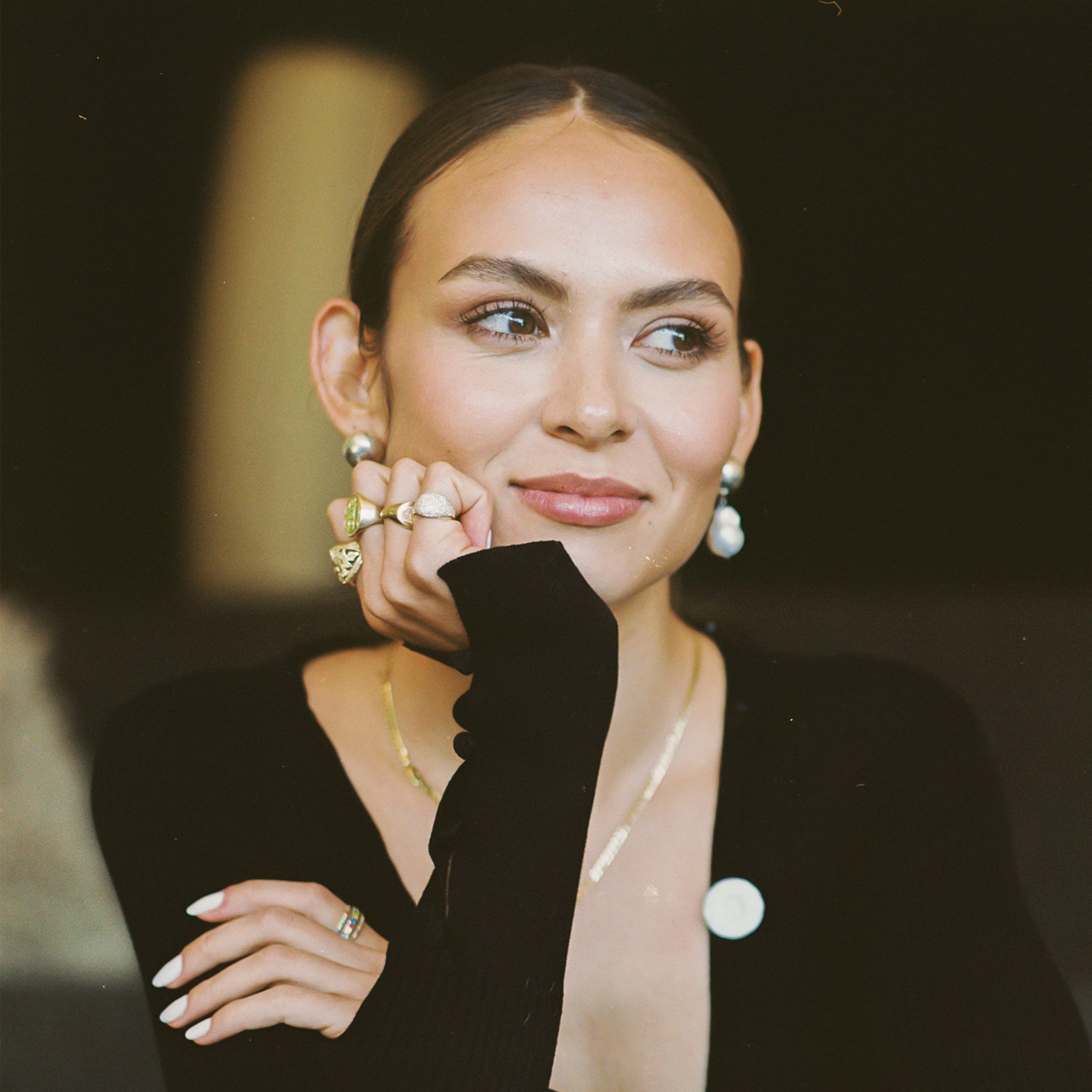
In this episode, Emily Oberg shares her journey from growing up in Calgary, Canada, to becoming a prominent figure in the fashion world through her brand, Sporty & Rich. Hosted by Imran Amed, the conversation delves into Oberg's entrepreneurial spirit, her strategic business choices, and the importance of building an aspirational lifestyle brand.
Written by AI. May contain mistakes.

Get the gist, explore an idea or ask about something said.
 Claude
On The Business of Fashion Podcast, what are the key points of this episode?
Searching your listeningAutomatic transcript. May contain errors.
0:04Hi, this is Imran Ahmed, founder and CEO of The Business of Fashion. Welcome to the BOF podcast. It's Friday, June 6th. Emily Oberg has turned her early passion for fashion and streetwear into a thriving cult brand called Sporty and Rich. She grew up far away from the fashion world in Calgary, Canada. After moving to New York for a role at the media company Complex, Emily quickly built her profile as a tastemaker in the streetwear scene. But eventually she got the entrepreneurial itch and leveraged her experience to turn sporty and rich, which had started as a mood board on Instagram, into a multi-million dollar brand with a dedicated community following.
0:48I think anything that's aspirational, people want to be part of that. You know, our sweatshirts are not like they're$150. It's not like we're selling a$10 ,000 handbag. But I think that t-shirt represents the lifestyle and the world that we have built. On a recent trip to Los Angeles, I had the opportunity to sit down with Emily to reflect on her unconventional path into fashion, how she made strategic business choices to grow her business, and the significance of world building in creating an aspirational lifestyle brand. Here's Emily Oberg on the BOF podcast. Emily Oberg, welcome to the BOF podcast.
1:31Hi. We are in Los Angeles, but this is a long way from home. It's not ever happened before that I talked to someone who's also from Calgary. That's crazy. I've not met like anyone else from Calgary. In LA? In LA. Wow. Well, I've never interviewed anyone on this podcast who's from Calgary. So it's a distinct pleasure because this has never happened before. So usually when I'm asking people about where they grew up, you know, I'm hearing about a place that I don't know anything. But that's not the case this time. So tell me about growing up in Calgary. You know, what was that like for you? I mean, as you know, I feel like any time I say Calgary, people are like, what is that?
2:20But it's cold and it's kind of like the Texas of Canada is how I describe it to people who don't know what it is. It's an oil town. It's like mostly service industry. Very boring. Nothing creative going on. Very small. Is it still like that? Because, you know, it was kind of like that. I'm older than you. When I was a kid growing up in Calgary, that was the 1980s. Yeah. Do you feel like it's still like that? Yes. I mean, there's obviously a small creative scene anywhere, but it's not huge and definitely nothing in fashion really going on. So it was quite isolating because I felt like my interests didn't really align with anyone that I knew or hung out with.
3:05And I wanted to leave as soon as I could. Really? Well, what were your interests growing up in Calgary? I was always into fashion. I always wanted to do something with clothes and brand. From the beginning? From the beginning. So when I was growing up, my dad, who's from the Philippines, moved there when he was about five with his parents and siblings. And his sister was a buyer for Club Monaco for many years. Yes, go Club Monaco. And I don't know, I was really close with them, with my aunts. And I just remember her telling me about her job and what she did. And she was like always very stylish and into fashion and labels and that kind of stuff.
3:49So I think that's what really inspired me from a young age. And so at first I was like, oh, I want to be a buyer like her. But now I'm like, that's the worst job ever. I can't do math to save my life. So no, forget that. But yeah, I just, I wanted to like be around fashion. What was it about fashion that drew you into it? You know, growing up in Calgary, fashion was obviously, for me, it was also really, really far away. And I had this show called Fashionphile, which was hosted by this guy named Tim Blanks. Yeah, I remember that. He was like my fashion hero. He now works for BOF, which is kind of a very interesting full circle moment.
4:27But that was my window into fashion. You grew up in Calgary much after I did. Like, what was it that drew you in? Who were the brands or people that you were following? I mean, it was definitely my aunt was a big part of it. My dad was also always into, he was like always a sneaker head and he was always into streetwear. He was like a skater when he was in high school and he still collects sneakers and was always into like Stussy and Nike and, you know, all the streetwear brands. So I think I just grew up around people who had really good taste, number one, and who just already liked that kind of stuff and like shopping and clothes and all that.
5:03But that was pretty much it. I mean, I guess it wasn't until I was maybe like 15, 16 that I started to, that's when the blogs all started, like Sartorialist, Hypebeast, Complex, Hystinabiety, all of those blogs. And it was just like this subculture that I feel it had such a moment. And that was like the peak of it. Now it's not really the same anymore. No one really cares about, I don't know, streetwear blogs in the same way. And the whole industry, I think, has changed. But yeah, at that point, it was like you religiously followed these websites and checked them every single day and wanted to know what was going on at all times with all these brands.
5:44So how did you start to take steps? You said you knew you wanted to leave Calgary. Like how did you start to take steps to get closer to this world that was so kind of mesmerizing for you? So I started working when I was quite young. I think my first job I was 13 or 14. I like lied about my age because you're not allowed to work when you're that young. But I worked for this store called Aritzia. Of course, the Canadian store. Yeah. It's doing so well now. It's doing so well. Yeah, it's incredible. So I worked in the store. I was a salesperson. I was so bad at it because I'm very shy into myself and to go up to people I don't know is like gives me so much anxiety.
6:24So I was terrible and I always got in trouble for it. My sales were always horrible. And then eventually I was like, I want to be in the back room. I want to do stock. Like I want to be unpacking boxes and I don't want to see anyone. I don't want to be like forward facing at all. So I started doing stock and then there was this program in Vancouver, which was like kind of like a basic fashion program like an introduction to every kind of facet called Blanche McDonald was the school in Vancouver so I moved to Vancouver when I was 18 and I went to that school for a year I stayed for another year I worked at Holt Renfrew and I was just saving up and I was like my dream was to one day move to New York I didn't know how I was going to get there but I would do like little photo shoots with my friends and style them and just like try to build up some sort of resume, I guess.
7:13And then that's when Complex found me and reached out to me and offered me the job to like be the face of their, yeah, I guess their sneaker channel. How did they find you? So I was styling some shoots for like some local brands. In Vancouver? Yeah, in Vancouver. And I think they had seen one of the shoots that I did just by covering it or something. And so, yeah, one of the editors at Complex emailed me and I thought it was a joke at first. I was like, this is insane. And they emailed me and I had like a few video calls. And then like two weeks later, I moved to New York. Wow. Yeah, it was crazy.
7:50I mean, that was literally your dream coming true. Yes. And so when you arrived at Complex, I mean, just now you were saying that at that time, those websites, those streetwear websites where this like had this massive cult following. They had like a very, very tight hold on the attention of people who were interested in streetwear. And what was it like walking into complex and work? Sometimes when you see the inside of a place that you've only ever seen from the outside, the two don't add up. Like what was it like for you? It was such a pinch me moment. I still look back on those years as like some of the happiest years of my life because it was more than I expected, like in a good way, because I didn't have any idea of the inner workings of these websites.
8:38And I didn't know, I had no idea about journalism or media or writing or video or any of that. So I was just so excited and just so happy to be there and to be given that opportunity. Like people always say I have a horseshoe up my butt because I'm so lucky and I always get these amazing opportunities. But I think part of it is believing that it will happen for yourself. And obviously there's the hard work and the skill and the talent that takes you far. But I was so happy. Like I remember every single day for those three years just waking up and being like, I'm so lucky. I'm so excited to go to work today.
9:14It's just like the best feeling ever. And then I met my best friends there too. So that was also so fun. So few people can say that about their first job. Yeah, I know. So what was your job there? Yeah. This was when like the whole YouTube and video component of websites had just started. So they were launching their video platform. And it was similar to, I guess, MTV News back in the day. It was called Complex News. And we would essentially just report on news stories about sneakers, sports, culture. Like I was primarily focused on like the sneaker and the apparel world. So yeah, I would just report on different stories every day.
9:56We did like three to four videos a day, but they're quite short. They're about two to three minutes long. And then I started doing the Supreme lineup videos and that became like a big thing for Complex. And I mean, I still see those clips pop up all the time because they're so iconic. So were you doing everything like writing the scripts, thinking about the story ideas, you know, editing the videos? So I would sit with the editors and I'd be like, we want this asset. I want it to be like this, cut this out, blah, blah, blah. But yeah, I was writing it. I was on camera and like the ideas were mine as well.
10:29And yeah, it was so fun. How did you, you know, without any training, how did you know what to do? I was very bad when I first started and I got, I remember my old editor being like, you need to get better and figure this out. Otherwise, like you're not going to have a job. And I was like, okay, let's fucking go. So, and from that moment, I was like, I'm just going to figure it out. I'm going to learn from everyone that I work with. I'm going to write as much as possible, just get as much experience. And just like, I think in those situations where it's like literally survival, you just figure it out.
11:01You make it happen. So. What did you learn about what it takes to create a really successful short video that works on the internet? I mean, so much of it was like clickbaity stuff, which I didn't love because, you know, I don't necessarily care about like celebrity news or these things. And that's a lot of what we would cover. But I think it's just like you need a good headline. The more you can say and the less words, the better, just to make it very like precise and succinct. And yeah, I don't know. I think with the Supreme videos, those always went viral because it was just entertaining. It's like you always got some kid to say something outrageous and hilarious.
11:45And I think it was just, I don't know, you want to like capture people's attention. And I think the Supreme videos was a big part of that. And that was like the most successful thing that we did. So for those of us who don't know, what were those Supreme videos, the lineup videos? Yeah. So, I mean, Supreme launched a collection every Thursday, I think it was back then. I don't know if it's changed, but we would go out early in the morning because those people would be lining up all night. They probably start at like 2, 3 a.m. So we would go early. We would go and talk to everyone in the line. We would ask them why they were there, what they were buying, what they did for a living, how they could afford to spend thousands of dollars without having a job because they obviously didn't have anywhere to be.
12:28And, yeah, it was just so much fun. Like we met these characters. We saw some of the same people every week. Like, I mean, the Supreme lineups and just Supreme in general at that time was such like a monster. And I think it was fascinating for people who didn't really understand it. And the people who did understand it, they loved it because it was like everything they wanted. Yeah. I love how you still use the word lineup, which I think is only a Canadian thing. Is it? Q or something? Well, we say Q in the UK, but in the US they say get online or get in line. But in Canada, we say lineups. Yes.
13:04You retain that. Okay, so you're in this job three years in. It's your dream. You love the people you work with. You're having kind of like everything that you had imagined for yourself. Yeah. Why would you leave? Well, even though I loved the job, I never wanted to be a journalist or be in media. I wanted to be on the fashion side of things. So I knew in taking that job, it wasn't exactly what I wanted to do long term, but I knew that it would open every single door for me and I knew it would get me to where I wanted to be. So, yeah, I think after three years, I was like, at that point, I would have been 23, yeah, 23, 24.
13:44And I was like, okay, I need to start figuring out what I want to do long term. I think I kind of did my time there and it just felt like, okay, I need to move on now and like start to build my life and my career and something that I really wanted to be in. So I remember at the time I met Ronnie from Who Owns Kith, just through Complex, you know, we always covered Kith everything. And we had a good relationship and I had mentioned to him that I was thinking about leaving and I wanted to work on the brand side of things. Were you pitching yourself for a job? Yeah, I was, but I didn't think anything would come of it.
14:18I was just like, okay, let's see. Yeah, just dropping it in there. Yeah, why not? And then he offered me the role of creative director of the women's brand, which at the time had kind of just started to launch. It wasn't as big as the men's brand yet. And so I took it, and I did that for a year. I had done Sporting Rich on the side this whole time, though, So even while there was that complex, that's when I started it. And then, so after a year, I was just kind of like, I don't really want to build someone else's dream. I wanted to really do my own thing. And I figured out that's what I really wanted to do.
14:54So yeah, I moved to LA. I was also done with New York. I was like, I'm exhausted by the city. Yeah. Well, let's get to that in a minute. Because I read on the recent Substack that you published, you wrote something like this. You said, I remember putting up two photos beside my desk when I worked at Complex. One was of Michael Jordan and one was of a Celine Phoebe era campaign. To me, the combination of the two photos was the perfect juxtaposition and had the feeling of exactly what I wanted to create, a merger of sport and luxury. So you have this whole thing, this like intersection between sports and luxury or like streetwear and luxury.
15:35It's been there for a while. Yeah. And it was kind of incubating while you were at Complex and Kith. So talk to us a little bit about that side hustle. So you're working these jobs and in your spare time, you're just publishing this blog, I guess. Yeah, I was doing a lot. So I started the – Sporting Rich started as an Instagram. Okay. Just posting like mood board photos. It was kind of like the end of Tumblr. So I started using Instagram as Tumblr. Just posting old photos I would find, reference photos. Just anything I saw. It was like a mood board. Yeah, it was a mood board. And was there any strategy?
16:12Like you just published something when you came across an image, you just kind of stored it on Instagram. Yeah, just randomly would post. Sometimes I'd post like 10 photos at once, 20 photos at once. It was just like so freestyle. And then I wanted to, so I really wanted to work on the print side of media and complex. Our print was very like, it was very small. Like the web and the video was the main focus, the main driver. So that wasn't really an opportunity for me. And I was like, I want to do my own print magazine. So I turned Sporting Rich into a print magazine. While you were working? While I was at Complex, yeah.
16:47And they didn't care? No, I spoke to them about it and got their blessing because obviously it's a little bit of a conflict. But they were supportive and it wasn't really anything that they were doing. It was quite a different concept. So they were like, yeah, sure, whatever. And I did it on my free time so it didn't interfere with work or anything. I was also DJing at the same time. I was doing like a lot of things. That's just what it is when you live in New York. You can never do enough. So yeah, I did the print magazine. I did four issues. And I released some clothes randomly. I would go to Models and buy Russell blanks and get them embroidered at this place in Chinatown and sell them and ship them out myself.
17:26And yeah, I did that for a little bit. And then I kind of didn't really have time anymore when I started Kith. You were, in a way, doing what in today's parlance they call world building. Yeah. You know, you're like creating this universe and you're experimenting with different things. Yeah. And you probably, maybe you didn't realize it then, but you were kind of laying the groundwork. Yeah. For something that could eventually become a business. Yeah. But you're testing things. You're testing products. Yeah. You're testing the print. You're putting out all this imagery. Like what was the response that you were getting?
18:06Like how did you get feedback from the market and from customers to kind of help you navigate? Because the best thing about having a community like the one that you've been building now is all the feedback you can get, right? Yeah, I mean people loved the mood board aspect of it and they loved the magazine. That was something that I wasn't really expecting, but it always sold out. And yeah, it was something that I loved to do. And I was looking at them the other day for the first time in years, and I'm like, these were so good. It was actually such a moment. What was good about them? I did so many cool interviews.
18:41I interviewed Sade's guitarist. I interviewed Basquiat's ex-girlfriend. I talked to her about how mental illness correlates to creativity. And I talked to this guy, Chi Moju, who's now passed, who shot all of the most iconic images of Dr. Dre and Tupac and Ice Cube and NWA and all these amazing rappers. I had these like anime illustrations done by this really good artist of girls wearing like my favorite sneakers. And it was just like everything that I loved, I kind of, I created it. And I put it into this physical thing. And you were doing it all by yourself? I was doing it all by myself. And you say you weren't interested in media, but everything that you just described is what an editor at a media publication does.
19:24Like sourcing interesting interviews, coming up with interesting visual concepts. So you kind of were doing that. I think I got more into it when I was at Complex. Yeah. But I felt that was still more on like the fashion side because I was making it more of a fashion magazine. But yeah, I think that was like a passion project for me. It wasn't necessarily something that I saw long term. Right. Okay. So when did it go from passion project to this is going to be my full-time focus? Like you're at Kith, you're doing kind of what you said you wanted to do is work on the fashion side. What happened that you decided that that wasn't right for you?
20:05I think it was just I kind of started to get that entrepreneurial spirit of like, okay, I want to build my thing. And I want to be in control of my future and control of whatever it is that I'm building. And that's hard to do when you're just like an employee. and Sporting Rich, it was always like in the back of my mind of something that I felt had legs. So I was like, I need to, like, it's kind of now or never. I need to like give this a shot and I can't wait much longer. And that, it was also part of me wanting to move to LA and be done with New York. Yeah. Earlier you alluded to the fact that you were actually not in a good head space either, like living in New York anymore.
20:46What was, what was going on for you personally? Yeah, I think I became really sad after leaving Complex because I never had a college experience. And I feel the way people bond in college and have that, those kind of formative years. Like Complex was that for me. And I, you know, I'm still best friends with some of those people that I met. It was such like a family. And I think going from that to a place where I didn't know anyone, you know, I was like, I was the new kid. was quite difficult and I really missed them and I missed the job. And I think I had just felt that like my time was done there.
21:26Like I had done everything I wanted to accomplish in New York. And what was it about Los Angeles? How did you decide that this was the place? Yeah, I had never really been interested in LA before. I'd gone there for work for some complex shoot sometimes, but every time I came, we were like in traffic the whole time. And I just kind of saw a side of LA where I felt wasn't that nice or beautiful or pleasant. And so it never appealed to me. And then I remember after leaving Complex, I came out here for a week to visit a friend of mine, Nick, who has a brand called Anti-Social Club. We were good friends at the time.
22:02So I came to visit him and I just fell in love with LA. It was like, we drove around Mulholland and we went to Sugarfish and like all like the cliche LA things. I remember the weekend Starboy came out like around that time, that album. And we just listened to it the whole time. And I was like, I am in love with LA. Like I need to live here. That was the soundtrack. That was it. Yeah. And from that moment, I was like, I'm moving. I'm going to quit my job and I'm going to move. Did it feel risky? In a way, but I think I like risk because it, where I feel most people, it scares them. It kind of excites me and it makes me feel like that feeling of being uncomfortable.
22:40I really liked that feeling. And so I was more excited and I have like a trust in myself that I'll always figure it out. So I think when you have that, you know that you'll be okay and there's like nothing to really worry about. But you didn't have a job when you came here, I didn't have a job. Not only were you changing cities, you kind of made this decision that you were going to try to focus on sporty and rich. Yeah. I mean, this is not an inexpensive place, you know, and you needed to make a living and you're also in a new city and there's a, there's a lot of unknowns. So you like lean into that kind of discomfort.
23:17Well, so when I moved here, I got a roommate, which made it more affordable. And I had saved up a bit of money and I was, I was doing a bit of like Instagram jobs, like social. Like influencer jobs. Like influencer stuff. Yeah. I was doing a bit of that and I was also consulting for some people, like helping them with their campaigns and marketing. Okay. So I did a bit of that, which was decent money. It wasn't amazing, but it wasn't bad. It was enough to live. And then I think after a few months, I was like, okay, I really need to now try with a brand and just see how it goes. Okay, so give us a sense of like where Sporty and Rich was at that stage in terms of reach, in terms of business model, in terms of like, you know, the overall setup and then what you had to build in order to start really turning it into a company.
24:13So the magazine was done. I'd done the last issue and I decided I wasn't going to do it anymore. It was too much work and it was too expensive. And the clothing, I probably released a few sweatshirts once a year. but very small. So I wouldn't even say it was a brand at that point. It was still just the mood board was like the main thing. Got it. And then like around six months after I moved to LA, I met my ex-boyfriend who's my CEO. Still? No, still. Okay. Yeah. And he had a brand. He was from Paris. He was living in Paris. He still lives there. So he had a brand. He had experience with brands and that was all he ever did.
24:55So he, you know, wholesale, logistics, backend, finance, those kinds of things he knew, which I didn't. And so when we met, he started helping me a little bit, just like as a favor, being nice. And then eventually we decided like, okay, let's really pursue this and let's really build this brand. And so we use some of his team that he had for his brand for Sporty and Rich. Okay. And was there a strategy that you had in mind about how you were going to scale it? We did pre-order for the first year on all products. What kind of products were you selling? It was just like t-shirts, hoodies, sweatpants, hats, very basic, just merch.
25:39Okay, merch. And it just says Sporty and Rich on it. Yeah. And what was the response? So I remember the first drop we ever did, we did like$40 ,000 in like three weeks, which was insane for me. I was like, that's more money than I've ever seen. Like this is crazy. So that's when I knew I was like, okay, we have something we need to just keep going with this and pursue it. And we kept doing the pre-orders. I think it was probably every like three months we did a launch. I was doing the campaigns and the photo shoots myself. I was pretty much doing everything except wholesale, which we did start soon after.
26:17And who bought into it? One of our first was Selfridges. Okay. Yeah. So you'd reached the UK already in the first. Well, I think because the brand was on Instagram, we already had an international reach just off the bat. And so, yeah, we had Selfridges and then we started getting some other really good accounts, a couple in the US, some in Asia. I remember the magazine was carried by Collette in Paris. and yeah, his team, he had like a really good sales team. So they focused on that. And then it was COVID. Oh. And that's when everything changed. What changed? So I thought that the brand wouldn't survive.
26:59I was like, people aren't working. They're not making money. There's no way anyone is going to be shopping right now. I didn't understand the basics of how the economy works. But a lot of people thought that, right? Right. And then it turned out that people were gorging on fashion. Just nonstop. It's all anyone was doing. Especially the kind of products that you were selling, right? Exactly. Yeah. It was like the perfect storm. And I remember a lot of good girls were wearing it, like Hailey Bieber, Rosie Huntington, Elsa Hosk, Emrata, like all these girls were loving the brand. How did they get it?
27:35Did you send it to them? I think some of their stylists would buy it. Yeah. Because we were gifting, but I didn't like have contacts for these people. So I wasn't really doing that at that point. Or maybe you guys were gifting it to their stylists. I don't even think we like knew her, their stylists. We were like so small at that point because we didn't have a team doing that. It was just me. Okay. So I would send it to like cool girls I would see on Instagram. But yeah, when these girls were, I don't know, maybe they somehow they got it. Yeah. But they were wearing it and it was online. And I remember we did a drop during COVID.
28:10This was still pre-order. So we went from doing like$40 ,000 per drop, whatever. And one day we did like$600 ,000. In pre-orders? In pre-orders. And I was like, holy shit, I can't do this. Like we're not set up for this. Yeah. There was issues with production. People couldn't go to work. Our stuff was made in LA. It still is. People couldn't go to the factories because it was COVID. But like, it was like everyone had to stay home. So there was that. We had an issue with production. We had issues with our labels. We had logistical issues. You know, it was like the shipping nightmare, which all brands faced.
28:48It was just like a total backlog of packages. It was a nightmare. How did you navigate that? So we were not set up as a real brand. We had Shopify. That was it. We had Shopify, which is very basic. But lots of big brands are run on Shopify. Yeah, but there's also like backbone other kind of technologies. Like we use something called NetSuite, which you kind of need to connect the wholesalers to the back end, the production to the back end. Just like everything needs to kind of like live on this backbone. We didn't have that. So we set that up immediately. I remember I was on calls like every day of the week for two weeks.
29:31There were like three-hour calls. They were telling us about the software and I didn't know what, it was like they were speaking Chinese. I was like, I have no fucking idea what they're saying, but I was figuring it out. And we implemented it and we made it work and we changed all of our production over to another factory and we got a customer service person. We got things together very quickly and we figured it out. But that was a moment that I knew I was like, this is like make or break it. We either figure it out and we grow and we become a real brand or we don't and this brand stops now. It also seems to me like one of the keys to the success here is the pre-order bit because you didn't have to take any financial risk on producing stuff that you didn't know people necessarily would buy or not buy.
30:16Yeah. Right? But when people pay$600 ,000 in advance. Yeah. And then you have to go produce it. Yeah. It helps from a cash flow perspective too, which is what a lot of people who are starting a small business don't really understand, especially in fashion. You know, the cash flow part of the business is like really, really tricky to navigate. It's tough. Yeah, we didn't have any money to start the brand. Like I said, I did everything myself. My partner helped. And yeah, if we didn't do pre-order, we couldn't have run a business. I didn't have money to buy, you know, stock and quantity and have that stuff sitting on the website.
30:52So it was great until it wasn't. You can do pre-order up until a certain point and then it's just not sustainable. So what happened that you had to change direction with that? It was that COVID order. It was that our factory was used to, you know, maybe a hundred pieces a month. And then we had this order and they were like, yeah, this is going to take six weeks. And our lead time, we promised like three to four week delivery. To the customers. Yeah, after they placed the order. Okay, so you had to tell them it was going to be late? We made it work. We pushed, we pressured them. We got a lot of orders out, but we got a lot of like return, like not returns, I guess, refunds, people canceling their order because it was taking so long.
31:32And, you know, there's just major delays. But we did get a lot of those orders out and then we changed our factory and then we didn't do pre-order and that kind of saved us. It's a good thing for when you're starting a business, if you don't have any cash to help finance the production in advance. But obviously, from a customer experience perspective, it's much better if someone places an order and they get the product quickly. Yeah. Right. Okay. So take us to like where you were by the time all the lockdown started lifting and COVID was kind of ending. Like what was the state of the business then?
32:04The business grew. It was just at a crazy pace. We got so many new wholesale accounts. Everyone wanted to carry the brand. Everyone, everyone, everyone. Stores that I was like, you know, just fans of. And stores that like I would go and be like, wow, this is an amazing store. And I couldn't even believe they were asking to carry my brand. So wholesale blew up. Online got so much bigger. And eventually my brand became so big and so much bigger than my CEO's brand that he stopped that brand entirely. And everyone was now a sporty and rich employee. Wow. So everyone in Paris. Okay. So you have this kind of really established set of relationships with all these stores, and then you decided to open your own store, right?
32:56And so that's a whole other ballgame in terms of building a business because there's upfront CapEx on fitting out the store, there's a deposit for the rent, and then there's filling that store with product. And we talked a few moments ago about world building, like opening a store and taking the world that you've built digitally and making that come alive in a physical space. Like, how did you think about that? That was the most fun for me. I still love it. It's still my favorite part. So, yeah, we opened in New York about two years ago. But that was also a risk because, again, the CapEx is extremely high.
33:33You don't know if it's going to work. We were an Instagram brand. And, you know, we were online. It was based on, yeah, online shopping. You don't know how that's going to translate to real life. It's like, is anyone going to come to your store? There's no way of telling. So in building that store, I really wanted it to reflect the world. As you mentioned, I want people to come in and like feel what Sporting Rich is beyond just shopping. You know, so we have the cafe. We have a spa in the back, which has facials. and I just wanted to bring the Sporting Rich world to life as much as possible. So we did that.
34:11And then the store has done really well. It's doing so well that we just want to keep opening them. Like a store a year would be my goal. But talk to us a little bit more in detail about the world of Sporting Rich because, as you said, it was an Instagram brand. It was a mood board. You know, it was Phoebe Philo, Celine, and Michael Jordan, right? So like it's when you now you're describing the brand and the world that you're trying to build, talk to us about that world. What is that world? Who do you see in that world? Yeah. And why is that world appealing to people in today's culture? I think the world is the combination of luxury and kind of casual sportswear.
34:56But beyond that, it's this aspirational world of country clubs and this country club aesthetic and tennis and going on holidays in the south of France or in Italy and, you know, wearing like a vintage watch or an Hermes bag with some vintage sneakers or like a sweatshirt. Like that's the whole vibe of the brand. And I think it's really apparent when you look at it. I think it's something that people, they get right away. Why do people want to be part of that world, though? I want to be part of that world because for me, I always dream to be successful and to just be able to have the freedom to do what I wanted, to go places, to live life in this full way.
35:44And it's not necessarily about the monetary things and money and the rich lifestyle. That's a part of it. But I think it's this greater sense of living like a full life. And I think anything that's aspirational, people want to be part of that. You know, our sweatshirts are not like they're$150. It's not like we're selling a$10 ,000 handbag. But I think that T-shirt represents the lifestyle in the world that we have built. So interesting because I was just thinking as you were talking there that there's certain people who will never be able to afford that$10 ,000 handbag. But because you've created this world where the$150 sweatshirt sits alongside the jet set trips to the south of France, in a way that sweatshirt is part of that world.
36:39And by buying that sweatshirt, it's like your way of, or someone's way of getting a little piece of that world. That's the first thing. The second thing is, for a long time now, people have been talking about high-low aesthetics. Once upon a time, there was a universe of brands that sat at the top, and then there was a universe of brands that sat at the bottom. And the two never met. They didn't mix together. But now the way a lot of people live is they go to Uniqlo for their t-shirts and they go to, I don't know, Celine for their jeans, you know. So in a way it's that kind of high-low lifestyle as well.
37:14Totally. It's like the combination. I think the combination is what's so nice. Like I think if you see someone in like a head-to-toe runway look, it looks ridiculous. But, you know, someone with style who combines that with like a$5 Hanes t-shirt or like a vintage pair of denim or like a basic pair of sneakers and just like elevates like and adds a Chanel jacket or something. It's so much more interesting, I think. It's the ultimate form of taste, really. We'll be right back with more on the BOF podcast.
37:53So you launch the brand, it blows up during COVID, you open a store, the business is growing, and now you have to think about category expansion. If you really want to build a world, it can't just be about clothes. If you want to have a store that feels interesting, it can't just be about merch, to use your word. How do you think about which categories to go into and to kind of almost earn the right to move into new categories? For me, I think about what makes sense for the brand and what, it's so personal to me. It's so like, it's who I am. So I make things one that I want and that I love. And two, that I feel if I were a consumer from the outside looking in, would I feel that this makes sense or is it kind of like a money grab.
38:43And I think everything for us feels very organic and feels like something like the sporty rich girl, what would she wear and want? That's what I always think. So the sporty and rich girl, what would she wear and want? Beyond clothes, what was your first category? And then how did you kind of layer on things from there? I'm obsessed with working out in tennis and Pilates and fitness and health and all that. So for me, the natural progression was just like sportswear, true sports wear, active wear, tennis skirts, you know, stuff you wear on the court, stuff you wear to the gym. That just made sense and was something that I wanted for myself.
39:24And so that's a big part of our business. And then it just became more and more like, okay, in winter, what do you want? You want a cashmere set? You want a nice puffer jacket? You want a nice cashmere coat? And I think all these little things, they just slowly, we've introduced them and kind of tested them. We still test a lot of things and we see what works. And what's working? Everything. No, everything's working. The biggest part of our business is still the fleece and the merch. So I want to get away from that. And we've done really well with the knitwear and the outerwear, but I think it's just about exposing people to it more.
40:01We just started all that stuff about like maybe two, three years ago. So every season we do it a little bit more, a little bit more, a little bit more, and just like slowly build that up. But you've also done stuff outside of clothing, right? So you, I know recently you moved into sexual wellness. That's a different brand, but yeah. Well, it's, it's a different brand, but it's still me. It's still you. And is it available in the store? No, it's not. It's totally separate. Okay. Yeah. Well, we'll talk about that in a minute, but are there other things that you launched under the sporty and rich brands that aren't clothes?
40:34I mean, we have except like eyewear accessories. We have some bags. We did leather goods and just little accessories. But I think it's kind of all merch in my mind. And my goal is to kind of create what Supreme did, which I think what they did best was people just want it because it says Supreme. They don't necessarily care what it is. I mean, they literally made a brick that had Supreme embossed. And people wanted it because it says Supreme. And that's just the power of a brand. Even Chanel is this way. They make paddle boards and like tennis balls that are$1 ,000, but people want it because it's nothing special.
41:16There's nothing different between a Chanel tennis ball and a Wilson tennis ball. Except the branding. Exactly. And that's like the power of brand is so interesting to me. Okay. So then let's talk about the non-sporty and rich categories like supplements and sexual wellness. I was reading some stuff about you earlier and someone kind of compared you to Gwyneth Paltrow. Yeah. And, you know, how do you feel about that comparison and the Goop thing? Is that, is that, because she's, you know, Gwyneth's built a world as well. And she's moved into the wellness space as well. Also sexual wellness. Like she's done it all kind of under Goop.
41:55Like you've decided to launch them as different brands? Yeah. I don't mind that comparison. I mean, she's an icon. She's a legend. She's great. I really admire her and what she's done. I feel what I'm doing is a little bit more, I guess I would say more in the fashion space and she's more in the wellness space. Though I love wellness, that's kind of like the messaging of the brand. It's not necessarily like in the products that we are making. I chose to separate Sporting Rich from my new business, which is Central Sport, because I just thought it would be a good idea to diversify and to just have different things and it's not really the same identity.
42:34It's similar, but they're different. Is it the same customer, do you think? Sporty, which has a lot of male customers and central sport to me is for like the cool woman. Less about the street where kind of hype beast men, which is a big part of our customer for sporty. Got it. And so when you're moving into these different categories, it's completely outside your realm of expertise, right? Like wellness, sexual wellness in particular, like how do you get smart on these kinds of categories and do something that can stand beside, you know, competitors in those markets that are probably experts at it?
43:13Yeah. I mean, it's just about educating yourself on the products and the landscape, I think is a big part of it. And also trying things yourself, like being a guinea pig for your own products, which I have always been since the beginning of Sporty. But again, I think that it's more about the brand and kind of the positioning of sensual sport and the images and the visual identity. To me, that's the more interesting part. The products are great and I'm interested in that too, but it's much more interesting of like, okay, how do we stand apart from these competitors? It's all about image. It has nothing to do with a product.
43:50Okay, so it's in a way, is it an adjacent world to sporty? Yeah. And how would you, you just told me about this sporty and rich world. Like how do you describe the central sport world? Central sport, I mean, I just think it's like, there's no cool, beautiful sex brand that I feel is not tacky or cheesy. I feel they all kind of have like a stigma and they're all you know it's like lots of pink and purple and kind of like cliche and I wanted central sport to be like what is like a cool girl gonna buy if she wants to go buy a sex toy like where is she gonna go none of these brands appeal to that girl or guy and yeah it's more just about like what would they be excited to buy what would they not be maybe ashamed to buy?
44:48And what would they want on their nightstand that like looks cool with all of their nice jewelry and handbags and whatever it is? It's interesting because I think there's also a role for education around a category like sex toys or sexual wellness, because one, there's the stigma you mentioned, but two, because of that stigma, a lot of people just don't know very much about that world. So in a way, you need to be able to introduce customers to a category that maybe they weren't drawn to before, didn't feel comfortable exploring before. Yeah, education is a big part. I have a newsletter for Essential Sport, which is focused on this.
45:28I think educating people on their own sexuality, on sex in general, like how we think of it, the ideas around it, obviously using sex toys and how to even do that. But yeah, I think it's so odd to me that like in our society, it's like sex sells and sex is everywhere you look. But to like go and actually buy a sex toy for a lot of people feels like, ew, I would never do that. Yeah, you're absolutely right. It's like the most powerful marketing tool. Yeah. Definitely a marketing tool that's used in fashion and beauty. Yeah. So in a way, sex toy is a natural thing to be sold that way. So are you thinking about that in the way you market the products as well?
46:15Yeah. I want to kind of market them in a way that feels like it's, you're buying like a luxury skincare product or accessory brand. That's kind of how I view it. And so, you know, the campaign and imagery and the identity that's all more kind of editorial and feels a little bit more fashion and stylized than just focusing on like naked girls and like just not being so literal, I think, with it. Okay. So what's the state of the overall business? So you're kind of running two brands now? Yeah. Like how are you juggling all of that and what kind of team and support do you have in place to do everything that's required?
47:00Because I read that your business is doing more than 30 million dollars a year in revenue. Like that's a sizable thing. Yeah. So for Sporty, we have about 40 people and they're all based in Paris. I'm the only one here, which makes it a little difficult Lots of early morning phone calls. But I have a really good team with that. The biggest thing I've learned is like you have to know what you don't know and you just need to surround yourself with people who are the best at what you're not good at. So I'm not trying to do everything. I'm not trying to run finance. I'm not trying to be involved in logistics or the warehouse or in shipping or the online experience.
47:39It's like I do what I know I'm good at, and then I hire people who are really good at those other elements. And I think that really helps, and that's the best way to run a brand. And I just, I work smart, not hard, so I don't necessarily spend a lot of hours. But when I do work, it's very efficient, and I get things done very easily and quickly, I think. So I'm able, it doesn't feel like I'm working crazy. It's actually very manageable. And central sport is still so small. It's just me and one other person right now. So that's like a passion side project. And let's see what it turns into. So it's your own side hustle from your main hustle.
48:17Yes. It seems like you always want to have something that kind of you're doing for like the creative outlet and the thing that's new. Yeah, I think, you know, I love Sporting Rich and it's really my baby and I'm so attached to it and so involved. But I've always felt this way. And it's like once you start making money from the thing that you love and once it starts to turn into like a job, you don't love it the same way anymore. And you kind of look at it differently. Not that I look at it in a negative way, but I just want something that's for me. Like that's what the magazine was. It was just like it was totally selfish and for myself and not something that where there's like pressure to sell or goals or targets or a team that you need to worry about sustaining and supporting.
49:06And it's more just like I'm doing this because I love it. And then we'll see if it turns into something. Yeah. I mean, I think that's a really wonderful sentiment. Because if you can have that outlet of doing something just because you're excited about it without the pressure of having to meet any goals or targets or pay 40 employees, then you're in a way creating an environment to incubate something and learn from something without pressure of everything that comes with running a business. Yeah, I think the why is so important about why you do things. And with Sporting and Rich, it was like, it wasn't because I wanted to build a successful brand or make a lot of money or any of that.
49:49It was more just like, I wanted to do what I love. And I wanted to wake up every day and have that feeling of being excited and feeling fulfilled and having a purpose and just feeling passionate about it and being like, I'm proud of this. And I love what I'm doing. I think that feeling is so, it's such a big part of like just feeling happy and feeling good in your own life and being content and being fulfilled. And I think a lot of people are missing that. And I feel like so lucky that I found that. So for someone who's looking for their why, but doesn't know where to start. Yeah. What do you advise?
50:29Because I meet so many people who are, they know they're not happy in their current situation, but they're not sure how they can transform their job, their environment, where they live or whatever it is that's, you know, not contributing to the happiness they're looking for. Like, what advice do you have for people who are looking to find their why? I think where people go wrong is they're so caught up in what does my family want me to do? What do my friends want me to do? What should I be doing? What do I want people to see me doing? And it's so external, where it's such an internal personal, it should be such an internal personal thing where it's like, who are you without these outside opinions, without all of these outside influences?
51:17You know, people see people with a brand and someone making millions and flying on private jets and having these crazy watches and fancy cars. And it's like, okay, you want that life, but do you actually want to have a brand? Like, is that actually something that would make you happy and you want to do? And I think most of the time they don't want that. They want the things that come with what it is that is responsible for those things. So I think it's more about like what would make you happy to wake up every single day and do. forget about the money forget about what anyone would think about it and I think the happiest people have that like my dad I think is by far one of the happiest people I know and he's a mailman and he loves it and he's built his life in a way that's just like he gets to do everything he loves he mountain bikes he fly fishes he goes to the mountains every weekend like he's just loves what he does and he plays hockey and I think there's it's so important to just like build your life in a way that you want to wake up and just be excited to live it and not be like, oh, I have to do this.
52:21Like we don't have to do anything. So I think it's just about just, yeah, what is it that you love? It's true. It's like also the trappings of success, the things you mentioned, the material things, the luxury goods, the fancy holidays. You know, there's a lot of people who have all of those things and they don't have happiness either because they also don't have their why. Exactly. And so finding that thing that for everyone it's different, you know, building the life that is right for you and the things that bring you joy and the things that kind of speak to your inner purpose. Yeah. Finding that is the key.
53:04It's the key and it's not easy. So I do, you know, have a heart for people who are struggling with that. I think I was so lucky to find it quite young. But yeah, I think as you mentioned, some of the most successful people who have everything on the outside are some of the loneliest and unhappiest. And I think all those external factors kind of just add more noise. And then it's harder to get out of it because I think if you're someone who makes millions and you have this lifestyle, You have the mansion, you have the cars, the vacations. Like you kind of feel you need to keep that up. So to give that all up and to find what you love, maybe it's being a plumber.
53:44You're not going to make the same salary, but maybe you'll be the happiest person that you know. I think they call it the golden cage or something, right? Because you have everything that's supposed to bring you happiness, but it doesn't. So looking ahead, you know, you've built this company from nothing. You're building another company. You're only, how old are you? 30? 31. Yeah. You have a long life ahead of you. I mean, as you look to the future, what are you looking for? I am very happy with everything that I've built. And I think I want to be challenged more. I definitely know the brand has potential to become bigger than it is.
54:28I mean, it's still quite small in my mind. there's still so many people who have never heard of it who don't know what it is I think I would like to you know we've never raised money we're self-funded we've never taken on any investors and I think it might be time for that because you can only grow up to a certain point on your own you know we put the money back into the company and we we do as much as we can with what we have, but if we want to expand retail and, you know, just get a new audience and grow online and all of that stuff costs money. And so I think that's what I would want to do in the next year is probably bring on an investor who could help take it to like a$300 million a year brand.
55:14And yeah, I think that would be a challenge for me because I know how to go from zero to 30, but 30 to 300 is a different thing and it's like different beast and so I would like to work with someone who knows how to do that and who could yeah help take us there well I wish you the best of luck thank you it's always nice to meet a fellow Canadian I know and a fellow Calgarian and in spite of some of the things that we mentioned at the beginning I don't know about you but I'm still really grateful for growing up in Calgary because it kept me me too I don't know. I think it just really shaped me in ways that I think are really important to who I am today.
55:55So for any Calgarians listening out there, I still love Calgary. It's beautiful. I love it. And it did give me a good perspective. Yeah. All right. Thank you, Amini. Thank you. The BOF Podcast is edited and produced by Olivia Davies and Eric Bria.
Emily grew up far away from the fashion world in Calgary, Canada. After moving to New York for a role at the media company Complex, Oberg quickly built her profile as a tastemaker in the streetwear scene.
But eventually, she got the entrepreneurial itch and leveraged her experience to turn Sporty & Rich, which started as a mood board on Instagram, into a multi-million-dollar brand with a dedicated community following.
"I think people want to be part of anything that's aspirational. Our sweatshirts are $150, it's not like we're selling a $10,000 handbag, but I think that shirt represents the lifestyle in the world that we have built."
In conversation with BoF founder Imran Amed, Oberg reflects on her unconventional path, her strategic business choices, and the significance of creating an aspirational lifestyle through her brand.
Key Insights:
Additional Resources:
Hosted on Acast. See acast.com/privacy for more information.


