
 Ask ChatGPT


 The Business of Fashion Podcast
20 Feb 2026 · 56m · 30 chapters
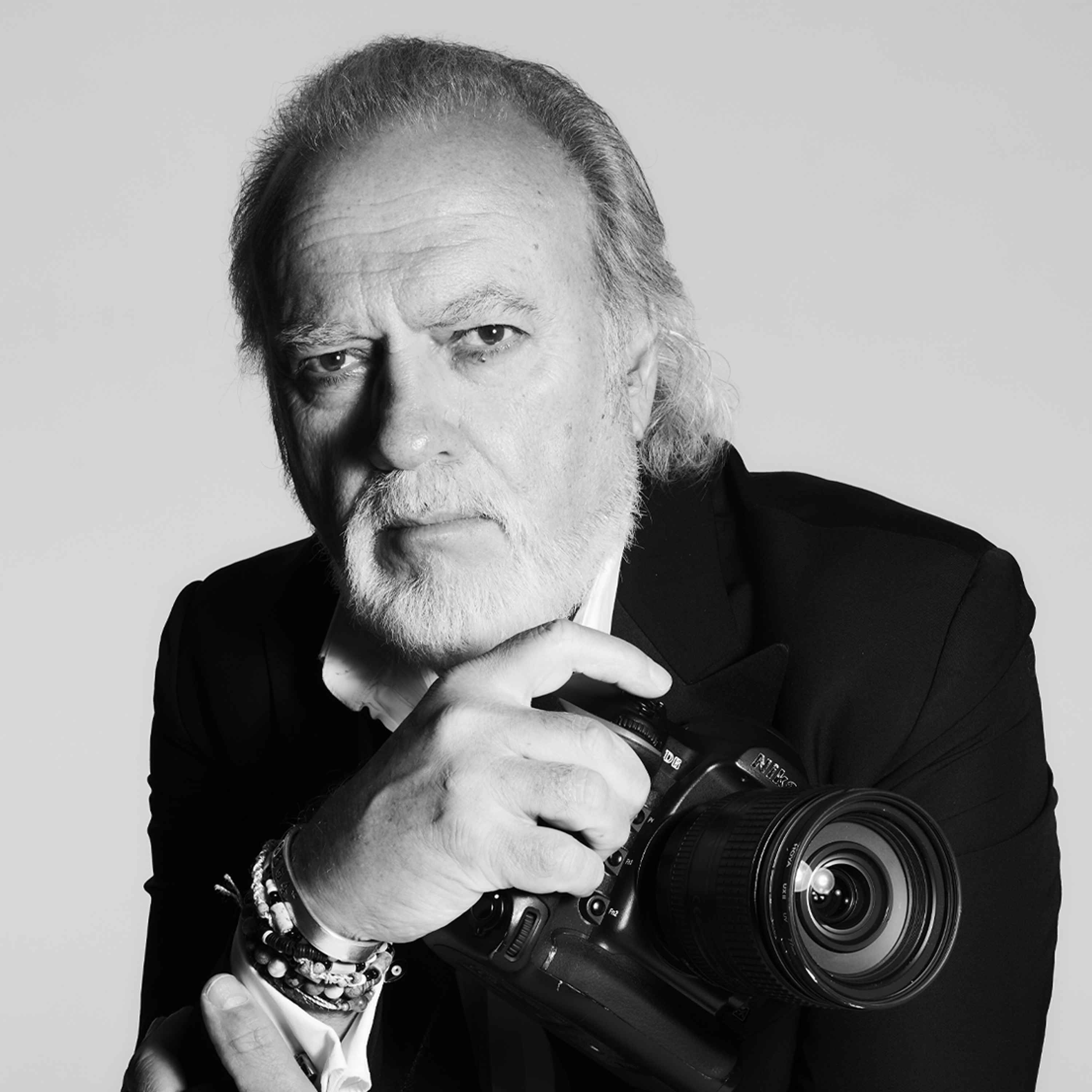
In this episode, Dave Benett, a renowned party photographer, shares insights on his nearly four-decade-long career capturing the evolution of celebrity and style in major cities like London, Paris, and Los Angeles. From documenting concerts with iconic artists like Madonna and Prince to attending after-parties with Princess Diana, Benett discusses the intricacies of event photography, the impact of social media on his craft, and the significance of building relationships within the industry.
Written by AI. May contain mistakes.
Exploration of Dave Bennett's extensive career in party photography.
“The difference between a journalist and a photographer, for example, at the party, a journalist can miss something and be told about it.”
Dave shares his childhood experiences in Mauritius and its significance.
“I never thought I would get to interview you.”
Discussion on Dave's move from Mauritius to England and its challenges.
“So in 1969, he comes back to becoming the prison surgeon, Walton Prison in Liverpool.”
Dave recounts how he stumbled into photography through a friend's suggestion.
“He said, oh, you're in a place called Liverpool.”
Details of Dave's early experiences as an apprentice in photography.
“and then then i come to london yeah go to a school called william ellis north london again at large grammar schools just that it's the edges of the grammar schools where I'm a late boy and another late boy comes down.”
Dave describes his initial forays into news photography and the excitement it brought.
“So you had Sporting General, London News Service, Fleet Street News Agency, Barrett's.”
Narration of Dave's first significant photo opportunity and its impact on his career.
“He said, why don't you be a photographer?”
Dave discusses his love for photography and the challenges faced in his early career.
“and they start to show you how to print.”
Discover how an unexpected event led to a career in photography.
“Have you got your camera with you, Dave?”
Learn about the challenges of balancing photography with a minicab job.
Understand the significance of working at a major television station.
“then everything changes because then they take you seriously.”
Explore the decision-making process between still photography and moving images.
“But again, for some reason, because they offered me after about two or three years there, did I want to be a cameraman?”
Learn about the shift from news photography to capturing celebrities.
“Now, Regine's was a very famous Parisian club.”
Hear fascinating stories about encounters with iconic celebrities.
“You've got a guy who's 26 probably by now.”
Explore how the 1980s marked a significant shift in celebrity culture.
“The 1980s were that era when celebrity became a thing, right?”
Learn about the photographer's experiences capturing Princess Diana at social events.
“One of your most famous photographs is of Princess Diana and Liza Nella.”
Gain insights into how the royal rota system manages media coverage of the royals.
Discover the unique interactions and experiences of a society photographer with royals.
“There's no royal rota on this part of it.”
Examine how fashion began to merge with celebrity culture in the 90s.
“be inside as a standards photographer i mean i used to be with princess margaret the queen's sister backstage all the time because she loved ballet and opera.”
Analyze Princess Diana's significant influence on fashion and culture during her time.
“So like this is the 90s, basically, that it really, fashion and these other cultures.”
Explore how camera technology and social media have transformed event photography.
“getting to know some of the big figures, being one of the only people there with a camera.”
Learn the photographer's strategies for capturing high-profile events.
“And you actually spend four hours just campaigning the room, just making sure you're in the right place at the right time.”
Understand the significance of timing and presence in event photography.
“And, you know, luckily you run with your karma.”
Discover the formation of a new boutique photography agency and its mission.
“And then five people will want Dave on the same night.”
Explore how industry changes are influencing the approach to photography.
“The idea also, you know, we've got about eight photographers running around now.”
Learn the key elements for capturing great party photographs and building rapport.
“that you'll have girls come and shoot some stuff.”
Discover how to blend into celebrity environments and create meaningful interactions.
“It's like properly black, you know, because you want to be, as you're right, if the camera was down, you'd think you were a guest.”
Explore the changing business models in party photography and the impact of social media.
“You know, this is what I'm starting to observe.”
Understand the hard work behind party photography and the misconceptions surrounding it.
“I suppose, you know, I think I read it more like they would get paid by the host and then the host would give away the pictures.”
Learn how to engage with subjects at events to capture memorable moments.
“And then for those people who want to catch your eye, Dave, because like they want you to, people want you to take their picture.”

Get the gist, explore an idea or ask about something said.
 Claude
On The Business of Fashion Podcast, what are the key points of this episode?
Searching your listeningAutomatic transcript. May contain errors.
0:04Hi, this is Imran Ahmed, founder and CEO of the Business of Fashion. Welcome to the BOF podcast. It's Friday, February 20th. If you've been to a major party in London, Paris, or Los Angeles, chances are that Dave Bennett was there too. For nearly four decades, Dave has been a constant presence documenting the evolution of celebrity, society, and style in all the spaces and places where culture is happening. From concerts with Madonna and Prince to after parties with Princess Diana and the rise of fashion as a pillar of culture, Dave has really seen it all and along the way become an expert at the art of working a room.
0:48The difference between a journalist and a photographer, for example, at the party, a journalist can miss something and be told about it. Photographer can't. Whatever you're doing, you've got to make sure your eyes are everywhere. This week on the BOF podcast, Dave and I talk about what it really takes to cover an event how party photography has changed in the era of smartphones and Instagram, and why relationships, not just access, are everything. Now, he is launching the Dave Bennett Agency, a boutique model designed to protect quality, mentor a new generation, and adapt to an era where everyone has a camera, but very few know where to stand.
1:32Here's Dave Bennett on the BOF podcast. Dave Bennett! Hi there. I never thought I would get to interview you. This is very exciting for me. I can't remember the first time I saw you taking pictures at a party, but it's so long ago that it feels like you've always been there. I had no idea that you were born in Mauritius. So for the uninitiated, where is Mauritius? And what was it like growing up there? So Mauritius is a tiny dot in the Indian Ocean, just east of Madagascar. And it makes a lot of noise for such a small place, Mauritius, to be honest with you. It's an idyllic island for beaches and lots of hotels.
2:28It's that sort of place. But very busy, busy guys out here. They're very busy in finance and all sorts of things. And skullduggery they're up to at the moment. But the Mauritius I was born in was really just turning towards independence, circa 1967. Independence from? From England, yeah. So then obviously became part of the Commonwealth. And my childhood, I see that all happening. You remember it? Yeah, totally. What do you remember the most? Mauritius was a playground for us. It was so innocent. We'd just run around, get in trouble because when a cyclone was arriving, my father sent the car to get us and we decided to walk home because we realized that everyone would be indoors so we could steal the mangoes and lychees.
3:24Cyclones, mangoes, lychees are definitely not something one encounters here in the uk so when did you first come here so i first came here in 62 64 again because of dad and i lived in north north london north finchley and then went back and then my first lady my mom and i get divorced and then he meets an uh a new lady she wants to come back to England. So in 1969, he comes back to becoming the prison surgeon, Walton Prison in Liverpool. Oh, God. Okay. Yeah. And so... So were you living in Liverpool then? So then Richard and I stay in Mauritius for a year while he's organizing all of this with his new wife.
4:14And we live with, again, with family, with aunts and uncles. And again, the life 11 years old, and Richard was 12, just gone to secondary school. We used to walk and see an uncle who was in the ministry and literally think Paul Louis, the capital, was our playground. We'd just walk into anywhere and just mess about. That was the life. So finally in November 1970, we take the plane thinking we're going to London. and I wake up the next day and I said, where are we? He said, oh, you're in a place called Liverpool. So then I did a five-year stretch in Liverpool from 70 to about 75. That must have been a real shock.
5:03Oh, yeah. Huge change, right? So you're talking about Ted Heath, talking about immigration, funny how stories are, immigration, Docker strikes, three-day week. so all of that you know negativity was flying around when we first got there so at what point in this journey did you first pick up a camera not nowhere near it okay i mean literally i think my father got the sunday times and that was the only newspapers and that was on for show probably you know on the coffee table um not an idea about media not didn't even know that world even existed you know we were running around liverpool was really in the end quite fun and then then i come to london yeah go to a school called william ellis north london again at large grammar schools just that it's the edges of the grammar schools where I'm a late boy and another late boy comes down.
6:13What's a late boy mean? Comes in sixth form. I arrived at sixth form. So because I'd already done my GCSEs, so I come in sixth form. And the headmaster welcomed me. I was in English, lit, French, British government, art, those sort of things. And a young guy came down from, he's Welsh, but he'd come from Highgate Boys School. He didn't like the boarding school. and he and I became pals because we were both lay boys and his mother was a journalist and now it starts okay so she happened to live 300 yards from school beautiful little uh a flat apartment so like all good boys we were cuckoos we were I was in there I was a second son by the end of the first term and we were just hitting that age of 18 just getting on towards 18 years old we bought I'd found a 50 pound car from a cousin of mine which kept on breaking down but everyone was starting to have new cars up in that part of the world and Paul realized that his mother had a company car, brand new, and he could drive it because he was her son.
7:33So you guys were free. Yeah. But the deal was this, and this is so ridiculous. The deal was that we'd take her into Lugget Circus where the Daily Mirror was. She was a big columnist for them. And wherever she was in London, we'd pick her up. And so we did. ludgate circus you know my first job in london was right near ludgate circuit and was where fleet street that's yeah that's like so fleet street is where all of those newspapers were based luckily for me i don't realize this but i end up this is once this well this all goes towards catching the last years a fleet street a fleet street yeah yeah so basically our a it was the summer of 76 i'll never forget it was the hottest summer in london everyone was sunbathing people were having such a great time london was really you know kicking those and the a levels came in not as good as we expected too bad too bad and paul my friend said oh my mom's got me in this agency in farringdon road just off or in expert market off farringdon road it's a shortcut into Fleet Street if you don't want to go to university or local paper because the agencies in those days all the way circled Fleet Street.
8:57So you had Sporting General, London News Service, Fleet Street News Agency, Barrett's. And what were these agencies? These agencies were exactly what they are. So now we talk of Getty and Schatzelstaff. So it's photographic agencies. Photographic and news. So these young guys would be listening to the police radio, the company, you know, and they know the court cases. Because, in fact, the system in England is that the newspapers don't really see a court case until it's reached magistrates court. All those other, it's the agencies, they pick up on it. London, you know, Southwest News, London News Service.
9:38So you were photographing outside courthouses and stuff? Yeah, yeah, yeah. So this is, so basically he got the intro and he said to me, what are you going to do? And I said, I don't really know. He said, why don't you be a photographer? I said, what do you mean? He said, you know those guys that were at the bar, you know, in that stab in the back, wherever we were, these guys are actually very famous photographers, Ken Gavin, Mike Maloney, all these guys. I said, yeah, they're all pretty cool. well, I'd like to do that. And he said, okay. So you literally became a photographer because your friend randomly suggested it to you and you'd never considered it ever.
10:17And this must be a BOF podcast first because usually everyone who's on this show, they say, you know, I dreamt of becoming a stylist or I wanted to become a designer. No, no, no. You just stumbled into it. It gets worse. So then obviously I go for an interview not to be a photographer, but to be what they call an apprentice, what they were called lads. So like, imagine Charles Dickens, imagine Oliver Twist, the Artful Dodger, that sort of period. Yeah, these sort of guys, that sort of. So I go, I get an interview. So I go to the Swiss Cottage Library, get a book out on SLR cameras. Not because I'm going to amaze him with pictures, but at least I know what I'm talking about.
11:05But when he says to me, if he did, but he actually didn't bother at all. He just said, oh, hi, you're a bit old because you should be 16. I've done my A-levels. But, okay, we'll give you a go. And basically what a lad is, is a kid that washes the prints, keeps everything clean in the dark room, and they start to show you how to print. So it's a real apprenticeship, your training. And then your biggest job of the day, ready, was to run to Fleet Street with 10 envelopes with the photos of the day and slip into the newspapers, get past security, get past everyone and hand your envelope to the picture editor.
11:50So once the editor has those photos. He'd open them up and go, oh, let's see what Sporting General have done today. So the agencies like PA are coming through on the wire. There's only AP and PA. So all these pictures were given by hand, all printed in a 10x8 sign. And then if they ran one of your photos, agency would get paid. Yep. It'd be stamped on the back. Your copyright would be stamped on the back. How much would they get paid to run a photo, do you remember? i'd say well you know between minimum of 50 pounds to no to you know if he was used well 200 pounds 300 pounds you know on the front page yeah and that increases and then finally decreases but yeah yeah wow okay so how long did you do this kind of photography for so i actually so I needed a camera.
12:46Now, Jill had another son, Simeon, and he had an SLR. This is your friend's brother. And they were going to LA. And the morning of them leaving, we were all kissing, bye, good luck, Simeon, mum. And I just noticed that his SLR was sitting on the sofa. So I just threw a pillow over it and he forgot it. You just didn't ask. Why did you just ask him? can i use your camera anyway and um so that was my camera i've still got it and how many years did you use that camera about six months as all okay because once i started i realized and it's amazing how lucky is it that you'll find a job that you very quickly understand and And so it's a classic.
13:44You're in the dark room, you're cleaning, this is your job. I was a bit old, to be honest with you. So that did affect me because the money they were paying was£15 a week was really for kids who were at home.
14:00And the classic, oh, there's no one here. Can you go and get a photo? Can you take your camera? Have you got your camera with you, Dave? Yeah, black and white film in it. Go and get a photo. There's been a raid around the corner. and I go around, there's a policeman holding a plastic bag with a gun in it. And in those days, that was so rare. It was newsworthy. So, and that's the first time I take a picture, get back, the guys print it and we run it to the papers. I think it made the Daily Mirror. So circa 1977, yeah, kind of about then. And you did that for how long? So two things happened. One was I did run out of money.
14:41and a lovely friend of mine turned up and he said Dave how's it going I said I really love this I really love what this is I'm going to do it but um I need some money and he said well amazing I found this job you drive these girls around they give you money and he looked both ways and he said they call it minicabbing and I have to be honest with you I went I bought his car from him for 80 pounds and what was it a Wolseley 1640 off I went and used that money to keep sustain my photography so that's so interesting because your ostensible job was photography but in order to do that job you needed to supplement that income with being a minicab driver totally and it first of all i tried to do both and then it just i got too tired i worked at night it was a night cabs and really much more cowboyish we were both in double denim moccasins long hair yeah and the girls were yes you take the italian girls up to lunch to to the west end and then you know then you bring people home and that really was true and you made the money and then i bought the proper cameras.
16:01And once you buy proper cameras, then everything changes because then they take you seriously. So what changed for you? Two things happened. I started working for the agency as a young photographer and they asked me to go to Thames TV. And this is another one of the hugest breaks in my life. I went to Thames TV, a show called Thames at Six. Okay, wait a minute. so i didn't move to london until 1999 and most people who've listened to this who are listening to this don't live in the uk yeah what is thames tv is a huge so itv news is itn it's the commercial stations of england so in the old days it would be granada southern Thames.
16:49So Thames, as in the area of Thames, and Thames Television. Okay. And London Weekend Television is actually LWT. That's what it is, London Weekend Television. So all these TVs. So it's basically a local television station. But a big one. And an important one. And then obviously everyone would import the ITN news into. Ah, okay, got it. So what happens is my agency sends me there. Yeah. Because they didn't have any agreements. You're going to love this story. with the ACTT for what was coming, the future for television, was what they call a one plus one TV crew. One plus one being cameraman and sound man in a car to react to any bank robbery or anything that was going on.
17:37The ACTT, which was the all powerful union in those days, had no agreement attempts. so they negotiated NUJ photographers could shoot incidents around London What's NUJ? National Union of Journalists which photographers were a part of so we I was sent to Thames TV and that was one of the biggest breaks of your life? Yeah because I walked through the door I was only a young and the place was run by women as opposed to being run by men. Grumpy old men with braces on. But now this place was, you know, all the key jobs were women. So a young Dave Bennett slotted in there quite easily. Why does that environment work better for you, Dave Bennett?
18:30It was just, you know, we just got on so well. And I realized, and the income was three times the amount of Fleet Street. And I very quickly worked out that you could do three jobs in a day, and each one of them was paid practically a shift in Fleet Street. So that became very important. But again, for some reason, because they offered me after about two or three years there, did I want to be a cameraman? And I said, no, I don't actually. I want to be a stills photographer. How did you, I mean, because ostensibly becoming a moving image cameraman is like the next layer of technology, right? So how are you so, how did you have that conviction that you wanted to stick to still imagery?
19:20Because you were everything. You were the director. You were the cameraman. You were the screenwriter when you're a stills man. Right. but once you become a moving image man you give some of that away someone else is telling you how to shoot what to shoot when i saw it and i was like whoa don't want that yeah so i stayed in luck you know and that was my that was the you know okay yeah so at some point in this news journalism television fleet street all of this stuff that you're doing how do you go from taking photos of guns in plastic bags on the street and riots to taking pictures yeah and riots and all the stuff that you're to taking pictures of celebrities celebrities so okay even as i was in television i suppose the difference was i was quite you know i'm a grammar school boy i'm i probably should have gone to uni i didn't photography i'm not i'm not a i'm not a blue collar guy i'm a you know i'm very looking for the better side of it all the time and um thames offered me that because we they had a a new lady turned up called sandra harris and she was australian and she wanted to run i've got to tell you about the thames tv we're talking about here so thames at six had a presenter called bill grundy on it and bill grundy had to do an interview with this new pop group called the sex pistols okay so bill grundy one of the old vanguards of the old system so he would show them up to be the completely unruly crew that they are so he let them brackets have some more drinks in the green room than they should have done maybe and they came and he was going to show them up so they came on the show and he dared them and they started swearing and it was the famous sex pistol swear word interview of course what happened was bill grundy got sacked and sex pistol became world famous so he was on the today show which was the magazine you know the showbiz show and now that became thames at six and then became thames news now thames news had slots for radio music and showbiz and sandra harris asked for a young guy to come out with her at night and work so i start working really even before i start properly because i don't forget one of the biggest jobs I did for her was the opening of the new Regine's Club.
22:18Now, Regine's was a very famous Parisian club. But they were opening a location in London. It's now called the Rue Gardens. Oh, okay. Which has now been reinvented for the umpteenth time. Umpteenth time, but that's the original. Yeah. Regine came in from Paris. The opening night had Sylvester Stallone, Bridget Nielsen, Dolph Lundgren, Anko. It was that big an event. Now, a great colleague of mine called Richard Young was already doing the night work. Yeah. And he had it sewn up. But they allowed a TV guy in. And that was you. So is that, did you already know Richard then? No. That's the night you guys met?
23:05That's where we met. So we met there. Because you two are like. Yeah. I mean, when I first started going out to parties and stuff in, in London, it was always you and Richard. Well, we were Batman and Robin, wasn't we? I mean, so, okay. So that was your introduction into entertainment. I'm a news guy. I literally said, can I go now? I'm done. I mean, I actually had color film of all of this. I used to just give it to them. Not interested. I wanted to be Don McCullough. That's who I want to be. So there's nearly five, six, seven years of this. I don't change over till about 85. and I've, you know, so as I say, I'm literally one of the young guns of news work and we always work at night.
23:49We'd be the first at a big bombing. We'd be the first guys at a shooting or whatever it might be. That's what I love. So if you aspire to be this kind of serious journalistic news photographer, why did you switch? Financials, probably. Really? yeah in the end so the party photography just paid a lot better when then yeah well we're talking no we're talking about we're talking early pap as well yeah party photography isn't actually paid that well because once you're in then you're part of it it's the other bit the paparazzi the paparazzi so did you ever do that the paparazzi stuff totally so hang on a You imagine this.
24:32Okay. Imagine this. You've got a guy who's 26 probably by now.
24:41Flash, MGBG, you know, MGB, can't. I meet a beautiful woman. We have a baby. Suddenly, it's not about just money to your pocket, is it? You have a family to take care of. That's right. And you're sitting in these photographers' room, and these kids are walking in, money coming out of their ears. not knowing one end of a camera to the other practically. And they'd been chasing Madonna and Michael Jackson. And the newspapers have gone mad for it. And we're sitting there being chased by villains and dodging policemen and IRA bombs and whatever we're doing for£35 a day. And I'd already been quite social.
25:29I did a lot of work at the time for the Sun and the Star we were their night guys so we'd already been to the clubs like Stringfellow we knew of them probably socially more than working so when we saw that I must admit I thought you know what I think I better cross over here and of course because if you can chase a police van from the Old Bailey to get a picture of a killer in the car, you're going to be able to chase Michael Jackson down the road. And, of course, it was pretty simple, really. And also, because you're a general news photographer, when you cross over, it's quite easy. You can do everything.
26:12So you can do a photo call. You can do a concert. I mean, in those days, we had a great time for us. Bruce Springsteen concerts, Madonna. Madonna, some pictures I've got of Madonna in concert, it's unbelievable. And Michael Jackson, so many of his. And once we started getting connected, you got more and more of this. Sure. And Prince, oh my God. The 1980s, I mean, you were just going to say the Prince. Prince. Do you have a story? Well, a million, a million stories. I never forget the first time he came, or that we were aware of him anyway. I think it was Earl's Court he played. He had the black leather trousers and the white shirt on.
26:57His feet never touched the ground. He was in midair all the time. People at London just went, wow. And he then would take that concert and go to the Camden Palais and play for another two hours. Yeah. It was just insane. We met him at Gatwick Airport. For some reason, he flew into Gatwick. He must have come from Europe. And we had such a laugh following him and his most gigantic security guard, the biggest man. I've got a great picture of Prince in the lift and these two guys looking at me completely confused. Why is this guy still here? And they hadn't realized I had my foot on the door so that it wouldn't close.
27:42And they were looking for all the buttons. They were touching everything. And Prince could see what I was doing and he was laughing his head off. He was literally laughing his head off. So you could take a picture. We got a picture of him there. And in London, he was crazy. He would party. I mean, literally, he lived that crazy life. The 1980s were that era when celebrity became a thing, right? It was building up. I mean, let's be honest. We've forgotten that there was celebrity in the 30s and 40s. You know what I mean? Yeah. But everyone was so polite. That's the difference, isn't it? Whereas now, the 80s is when this starts.
28:21Yeah. Proper. So you have Michael Jackson, you have Madonna. Yeah. You have Prince. You get all of those. And then you have Princess Diana, right? One of your most famous photographs is of Princess Diana and Liza Nella. Right? Tell us about that photo. Yeah. So Richard and I, you know, as I say, Richard Young and I, we were very lucky. Apart from being really personable. everyone loved us um we were we were society photographers we were in fact we were if you think about it you're recording what society was doing so we weren't but and we were showbiz so we weren't royal photographers we photographed the royals but when they came into our world and the relationship really did make a difference so i was very fortunate if i someone was to have a book launch and they said oh by the way princess well it's coming you know quietly and that's and they said well we told her you're here and she said that's fine mr bennett's that that's fine because i would just photograph her arriving and meeting the host and then she could go off and chat to all her friends she felt safe exactly and it was the same with richard and i we both had that relationship and it really paid off for us and that really did pay off for us as as the doors closed later on in you know so then those photos that kind of access that night we were at uh the premiere for stepping out and of course liza it was a big deal for liza and we went to do the after party at the langen hotel it was a new hotel at the time and suddenly someone said you know, Princess World's coming.
30:07No, she can't come. She's not supposed to be coming. There's no rota here. There's no royal rota on this part of it. But she broke it because she wanted to sit and chat to Liza Minnelli about dancing. And the royal rota, just so people know, is when they assign one photographer from a group of media. Yeah, the royal family created this with their press office so that they wouldn't have, you know, because everyone would want to, especially, in fact, especially when diana arrived then they really had to start using that so much more yeah so they basically have one one guy from magazine one guy from newspapers one tv crew one radio crew and that would be and then they distribute that content and everyone can say this yeah exactly another photo probably maybe your most famous impactful photo is one of liz hurley in that dress so again by now i'm more inside than i am outside yeah so again that's one of those things that happens as we grew up coming out of the 80s into the 90s and also you know i was very fortunate the papers i worked for particularly the standard had such a broad palette of work that you would be inside as a standards photographer i mean i used to be with princess margaret the queen's sister backstage all the time because she loved ballet and opera.
31:35So literally, again, it would be Mr. Bennett from The Standard. You must have seen some amazing stuff, Dave. And she was a very classy lady. I did the Queen Mother's 99th birthday at the Theatre Royal Haymarket. The owner, who still is, Arnold, asked me to be the house photographer. So I was. And I have a moment where I'm in the room and all the cast have come to meet the Queen Mother. It was quite a big cast in the Royal Rooms. And the Queen Mother's talking to Patricia Routledge, the star of the show, and I'm trying to get to her, and the Queen's in my way.
32:25and i'm only a young guy right so i'm going i'm going you can't be like ma 'am can you get out of the way so i went ma 'am i'm at mom she went i suppose you want me to move
32:39i'm sure that didn't pass the royal protocol when i first encountered you yeah was at and i know your remit is much wider than the world that i inhabit but i encountered you at fashion yeah parties and at some point well fashion becomes rock and roll fashion when did when did you see that happen like how did that was always always been there always been there but we start to see it when i suppose with Kate Moss, Naomi.
33:14The fashion awards start to happen.
33:22Obviously, it's just that, you know. Vivian Westwood. Vivian Westwood. And that all starts to happen. So like this is the 90s, basically, that it really, fashion and these other cultures. Diana, put Diana on top of that. because she becomes, I mean, she could, I cry sometimes when I think of what a shame because she was already creating this amazing period of culture and art and music under her patronage, you know, which would have worked because I'm the king now, the Prince of Wales, but he was very much still into his polo, his sporting. So Diana's course would have been amazing. It was already happening.
34:10We'll be right back with more on the BOF podcast.
34:17You built your whole career on being exclusively inside these rooms, getting to know some of the big figures, being one of the only people there with a camera. And now we're living in an era where everyone has a camera. Yeah. How have you seen the way party imagery or event photography has changed in the era of both camera phones and Instagram? Yeah. It's all changed, right? Well, so two things here. The power of the individual has increased massively. but we could debate you know is it selfish to be that possessive of your image or some of them are so huge that they don't want seems like they don't want to give anyone else anything it's all about them and then they go and do something really silly which is they put it on instagram and then all the people they don't want to have it can just take it so it's that's always made me laugh that you know um but the good thing for me is that they still need what we do because we're shooting for a client we're shooting for someone else we're shooting for the audience the newspaper and there's a skill that comes with that of how you take a photo what you're looking for in the photo when you've got people with their own cameras you know their own phones taking their own pictures they practically have only one use for them and obviously don't get me wrong if someone's got five million followers well then that's fine i guess it raises the bar though on what you need to deliver i think sometimes people are quite they underestimate what it takes to cover an event and i've you know you've seen me i've seen you and you've done some of our events historically like so what's your strategy now for like when you walk into a room and you're covering like what's your approach for taking photographs well you think about it when you're doing a really big party like vanity fair you're only one or three people in that room the other guy's probably the biggest american photographer kevin mazer and then they'll have a a wire image photographer and then you if i'm in there so now you actually dissect the the party you work out exactly where you need to be for their for the initial arrival or where they come so you connect with all the people that are in the room then you work the room as and when new people arrive you make sure you you see them spot them don't have to go straight away you go somewhere else, come back later.
37:12And you actually spend four hours just campaigning the room, just making sure you're in the right place at the right time. And, you know, luckily you run with your karma. I do run with my karma a lot. What do you mean by that? Run with your karma? You just happen. You will be in the right place. I mean, last year, I, um, Vanity Fair. The one after the Oscars. Yeah, in LA. The party of the year, probably not, you know, especially in Hollywood. And so two things. One, my antenna, keeping an eye out for Adrian Brody, because he now won the BAFTA and won the Oscar. And so did the young actress as well.
37:56So my radar is running there. Mikey Madison. Yeah. And I'm in the middle of the rooms. And the room suddenly is completely swarmed with stars between Kim Kardashian, the Jenna Girls, just so unbelievable amount of people and directors and everyone. And then out of my corner of my eye, I spot Timothee Chalamet arriving with Kylie. now even for me that's a i've seen that i've seen i love him he's a great kid and he seems to be going the right way in my opinion he seems to be you know not letting everything get to his head and he's great and now but there's a moment now where it's a it's an important picture and we just your karma means that you're in the right place for that picture and that's what that's about so in the age of instagram in the age of mega celebrity in the age of infinite distribution this kind of photography still matters and i guess one of the reasons we set up this conversation is because you're setting up a new boutique agency and i have to say dave i was a bit confused when i got the press release because i was i always thought you had an agency because i will be at an event someone will take my picture and i'll show up on getty but it's not you but it says dave bennett so i always assumed there was this like this is exactly why we've decided to do this okay so i've been with getty for 22 years now and obviously it's always dave bennett dave bennett getting him just dave bennett and the clients the world we're living in now started about 15 years ago where people started saying, I want Dave to come and shoot this job.
39:51And then five people will want Dave on the same night.
39:56So the idea, the premise is this, would you mind if I send one of my very good guys? He shoots it. It goes out of Dave on it. Getty are happy. The client's happy. But everybody wants you. No, I know, I know. But then, yeah, but this is the premise. Next time it'll be me. because you have to accept that a job has to expand. So sometimes it won't be me, but next time it will be me. And then there's an OZ going on here. You make sure that you're there the next time for that person. But what exactly has changed then? So now it can be Max Chisati for the DBA, for the Dave Bennett Agency. So is it a little bit like the Billy Farrell Agency in New York?
40:41Yeah, same idea. So you're a satellite agency. But Getty run with Wire Image. They run with WD. They run with AFP. So your images will still run on Getty? It will be the same. Platforms are the same. You won't create your own platform like BFA has in New York? No. We're staying with Getty. What it does do is, one, it means that the company and young photographers can feel that they're not being... got covered, suffocated by Dave Bennett. So basically, they actually get their own credit now. Yes, exactly. And they're just part of DBA. Yeah, exactly. Got it. Yeah, which means that, you know, so that encouragement there.
41:25And also, it means I feel strong enough as well that, you know, that my client base will accept that. But some clients say, no, we just want to say Dave Bennett because that's what they want. So, you know, we have to be flexible on that. But, yes, the idea. The idea also, you know, we've got about eight photographers running around now. We've got four girls, four boys, because, you know, the world's changing. Tell me about that. So, like, in so far as the world is changing, how has that changed your approach? Well, I found that you're definitely getting some pressure that you'll have girls come and shoot some stuff.
42:14Maybe because the movie's a style of... Right. And I found that although I would say, oh, my guys are good, they can do anything. I get that. I understand that. So what I've done is Camille, who runs me, my daughter Camille, I've encouraged her and she's found four girls that we use all the time. And they're brilliant. And what I've tried to do is help them, well, just without telling them, but keeping an eye on their quality of work, getting it up to a level. And then your confidence is brilliant then, Because now you know, you can, someone says, oh, can we have a girl? Yeah, sure. What advice do you give them about what makes a great party photo?
43:04Yeah. So the two things I do, one is obviously, importance is one is to be, never be too forceful. You know, politeness is like the big, the big player here. Being fun. And then if you're fun, it comes back towards you. And people are fun towards you. and creating a relationship and then the picture happens within the moment it gets taken you don't really you don't set that up you know you find a combination and then and also being there just when the combination work that's that bit of karma just when someone's just seen each other so you give them that second to say hi but the glow of the meeting is still there so when they turn to you a lot of my photography is is is posed as well yeah because i find that being um being a fly on the wall photographer at celebrity parties is difficult they don't like it particularly because they like to give you their best side yeah their best shot yes so you can do it a little bit if you if you're really subtle about it but if you're flashing it if you've a little flash in your hand you have to you have to be there with them and then if they give you a fun picture it's because they want to which sort of works you know yeah i have noticed that about you is that at parties if you didn't have a camera in your hand and if everyone didn't know yeah who you were you could almost be yeah like one of the guests right you kind of try to blend in yeah oh that's a big right again very important the biggest mistake a lot of young photographers make is that they they they walk in with a slightly workman attitude and their dress is not right i always try and dress without overdressing to be part of so for example any major function i will either be pure black or black tie yeah and you see me in black tie a lot yeah because i want and my black tie is Ralph Lauren.
45:10It's like properly black, you know, because you want to be, as you're right, if the camera was down, you'd think you were a guest. Yeah. Because you want that. You want that relationship. Yeah. You know, I'm very fortunate. I've worked with a great friend of mine, Jonathan Borems, introduced Richard and I at the time to all of that Ocean's 12 and 13 crew. So literally the gamut of Hollywood stars were suddenly guys that you were actually we were on the tarmac at nice airport when the when the gulf stream landed and george clooney brad pitt matt damon all opened that came up and they saw us stand there and they literally went god you guys get everywhere then we spent three days with them Now, that relationship carries on.
46:00Yeah. Last year in Venice, George and Amal, George saw me in the bank of photographers and climbed over to shake my head. Because you've known him for that long. You've known him for that long. That's the relationship that you're trying to create. because you can then bring, you know, sometimes when you're working for clients, you're the guy that everyone gives the responsibility to to make it all work. You know, obviously some Hollywood events, you've got massive publicists who will not let you do that. But for lots of the other events, you know, you might get a Gucci photo party and they get five or six different celebrities in there.
46:53And now if you're not able to work with those guys to create moments, but at the end of the night they go, oh, that wasn't very, oh, you didn't do really very well, did you? And you could say, well, you didn't bring anyone, you didn't do anything because actually what you were expecting was the photographer. yeah it's it's and it's funny because sometimes there's like a really shit party but because they've had a really good photographer the way the yeah the way the party looks in photographs you go makes it look way better than it was that's right in person because they knew how to like bring people together that's that thing that you that's what you pay for practically right in the in the profession yeah you know and i'm i'm if i was going to mentor anything that's what I mentor yeah and I think where you pass and fail as a day-to-day photographer would be in being able to get hold of the party understand it and then get hold of it and make it work what do you make of this new generation of photographers that aren't affiliated with an agency that aren't yeah you know they have like there's the German Larkins and the Robins and there's all of these yeah you know the there's a whole bunch of them now that no no and they have their own business and i think they actually make more money by selling images to the people at the parties then that's the new that's the new model right because the talent inside those rooms they want good photos yeah yeah yeah yeah well it's an interesting one isn't it because some of them are just friends that go with these people and then they become their photographers and they've actually upped their game quite a lot so they've got you know so their clients which are their friends then what they tend to be on instagram or social media more than anything yeah i don't know whether the quality how that would actually break into a paper magazine level a lot of black and white shot you know covered a lot you know compared to color um so what it what what is great about it is that it makes the the host feel happy that they've had a party and there's all these pictures from it now whether people most of the guys i know don't want to buy them they want to be given them so the host might yeah i think the exchange is that they get invited to the party the host of the party gets lots of photos so they make no money from the photos that they give to the host, but they make money by giving those photos to some of the guests.
49:43Okay, yeah. I mean, that's, yeah. You know, this is what I'm starting to observe. It's like the business of party photography is starting to change where, like, everyone is looking for content. Yeah. I suppose, you know, I think I read it more like they would get paid by the host and then the host would give away the pictures. That also happens. That's what, yeah, that's what it tends to be. That also happens. I mean, those are the two models now, I guess. I think, I suppose it's interesting how media has become practically a bad word because you're, if you're shooting for their social, oh, come in, come in.
50:29If you're shooting it, yeah. But if you're shooting it for media, then you're kept at the door. So it's quite interesting that how, and you know, your media. So question is, would you, if you have a party or if someone like, let's say someone like Kate Moss threw a party, she wouldn't want your guys in there. Yeah, we would, we would typically get photos from the people who organize the party, but But if it was our party... No, if your party is different, of course. But we want multiple media in there because we want the images to... That's what I'm saying. So that system we're talking about where they're actually starting to not want media coverage.
51:17What they want is actually just their own coverage. Yeah, they try to control everything. So what happens is most of the time, the only reason why they're not allowed to do it or they can't do it It's because the payers of the party, which are the clients, want it to be, you know, in the magazine. They want it to be in the newspapers or online papers. So that relationship is always in balance now. Yeah. Yeah. Because when you want those clients want a level of photography. Yeah. So like the people we invite to be inside our room is like people we know who are going to deliver high quality imagery.
51:56because that's the stuff that's going to spread. Anybody can stand out on the red carpet, right? But if we're going to... Okay, so we're almost out of time. Before we go, I'm just curious, what do you think... What do you think is the biggest misconception people have about party photography or fashion people have about party photography? I think it's a lot harder work than you think. I think that's probably anything. photography is always see the difference between a journalist and a photographer for example at the party a journalist can miss something and be told about it photographer can't and that is the one thing when you're you know whatever you're doing you've got to make sure your eyes are everywhere and that's why a lot of people say oh you know you didn't talk to me last night i said no i couldn't because i was too busy keeping an eye and again part of that karma you're working a room of 200 people 300 people your karma aerial has to be up looking for where that you know and then you go oh my god so-and-so's in and so-and-so's over there that have they met yet oh they will be and then now you can't help you can't be chit-chatting having a laugh with friends because you'll miss it and i suppose that's the thing that the amount of work the stress level and the bigger the party, the bigger the stress.
53:25Because you are being, and you just said that, when you throw a party for your business of fashion, the guys inside have to deliver because you want to have a set of pictures that really shows your party. Now, if they're not, you know, so obviously there's a balance that you've got to make yourself look like you're having a good time, but you've got to keep your eye over it. Yeah, work comes first, basically. And then for those people who want to catch your eye, Dave, because like they want you to, people want you to take their picture. Oh, yeah. What do they, what do they need to do to have you take their picture?
54:04Well, obviously girls, it's easier for girls because they tend to be easy to photograph. And all of them, they practically become my, my, my friends. Yeah. So most of them, you know, and the young guys, up and coming guys, you can always tell someone who's got a glint in his eye and he looks cool. And you quite often go, hey, let's get a picture of you. So, you know, which is all part of the game, isn't it? The game of fashion that we all play in there. We've all got a role. and I suppose I'm that doyenne of image making practically. Some people go you know Dave, if you hadn't photographed this guy it wouldn't have happened, but he did and he did, and girls so yeah, I mean I think it's something interesting about someone That's what motivates you to take that picture Yeah, that's right Well it's been fascinating hearing about your life from Mauritius to Liverpool to the party scene in London and just you know I think sometimes people don't really consider that there is a business layer to everything in our industry right and there's a talent that's required to do the work that you do and uh I'm pretty glad that you're no longer chasing ambulances and that you get to yeah we get to see you around me too so thank you for sharing your story with us such a pleasure The BOF Podcast is edited and produced by Olivia Davies and Eric Bria.
If you’ve been to a major party in London, Paris or Los Angeles, chances are that Dave Benett was there too. For nearly four decades, Benett has been a constant presence, documenting the evolution of celebrity, society and style in all the spaces and places where culture is happening.
From concerts with Madonna and Prince to after-parties with Princess Diana and the rise of fashion as a pillar of culture, Benett has seen it all and become an expert at the art of working a room.
“Journalists can miss something [and] be told about it. Photographers can’t,” he says. “Whatever you’re doing, you’ve got to make sure your eyes are everywhere.”
This week on The BoF Podcast, Benett joins Amed to talk about what it really takes to cover an event, how party photography has changed in the era of smartphones and Instagram, and why relationships — not just access — are everything.
Now he is launching the Dave Benett Agency — a boutique model designed to protect quality, mentor a new generation of photographers and adapt to an era where everyone has a camera, but very few know where to stand.
Key Insights:
Additional Resources:
Hosted on Acast. See acast.com/privacy for more information.


