
 Ask ChatGPT



Written by AI. May contain mistakes.

Get the gist, explore an idea or ask about something said.
 Claude
On The Business of Fashion Podcast, what are the key points of this episode?
Searching your listeningAutomatic transcript. May contain errors.
0:00Hi, this is Imran. Before we get started with this week's episode, I wanted to let you know we're launching a new segment on the BOF podcast called Ask Me Anything. I received so many excellent questions from people all over the world about the state of the fashion industry. Now, you'll have your chance to have your questions answered here on the BOF podcast. We want to hear from you. If you have a burning question, head to the DMs in BOF's Instagram and send us a voice note. Or send a voice note to podcast at businessoffashion.com. I can't wait to hear what you come up with.
0:41Hi, this is Imran Ahmed, founder and CEO of The Business of Fashion. Welcome to the BOF podcast. It's Friday, September 6th. Just in time for the start of Fashion Month, this week I'm pleased to share a conversation with Lias, aka Elias Medini, one of the most compelling and authentic fashion communicators to have arrived on the scene. Lias' takes on fashion shows and editorials are incisive, honest, and well-informed. Lies' journey has been shaped by his belief in the emotional power of storytelling, which he sees as central to fashion communication. Using TikTok and Instagram to communicate his thoughts and opinions, his fashion roulette videos and witty runway dissections have captured the attention of hundreds of thousands of viewers.
1:31Recently, he has been bemoaning the dilution of creativity across the fashion industry. We've lost the mindset of thinking that it's possible to be creative and make money for the company. Because the golden age of designers is over. Now we're like, any designer is disposable. Like this, we've seen it. It's the musical chairs every month. There's everyone leaving, everyone coming. This week on the BOF podcast, Lias joins me to discuss how he uses storytelling in his work, how he developed his fashion persona, and why he believes the golden age of fashion designers is over. Here's Lias on the BOF podcast.
2:20Lias. Bonjour. Medini, welcome to the BOF podcast. Well, thank you for having me, Imran. This is a huge honor, really. I've listened to BOFs for the longest time. Have you really? Yeah, for real. And actually, some people, a lot of them texted me on Instagram, DM me, being like, Imran mentioned you in the BOF podcast. I was wondering why I got that message. I got a message from your agent or your PR that you pronounced his name correctly. Yeah, no, that was a huge honor and this an even bigger one. Well, no, it's my honor because I have been observing you from afar. And it's always as someone who, when I first came into fashion, was a new voice.
3:08And I kind of navigated being a new voice in this space. I'm always on the lookout for new voices. And your new voice is a really interesting one. It's important. It's fresh. it's honest and it's exciting and you're using new media formats. And I'm just, I'm so curious to learn all about it. But before we do that, we actually have not sat down before. So this is going to, usually before I do a podcast with someone, I sit down with them and I want to chat with them first. But what we're going to have today is like a very authentic conversation because it's really our first chance to get to know each other.
3:44Yeah, we've been introduced, but never actually sat down. And we have never had the chance to sit and get to know each other. So tell me about you. First of all, explain your name. Because the reason I was asking on that episode with Tim, you know, saying Lias, I hope I pronounced his name correctly, is because, you know, it's not a name I've ever encountered anywhere. So where does it come from? Well, that's why I chose this name, because it's four letters, first of all, which is so rare these days to have a name of four letters. and I think it's important as well to dissociate yourself from the persona you want to show the world so I had to find something that was close to my real name but still a bit different edgy that allowed me to be another character or another multitude of characters in that name and adding a y to it l y I think is very I don't know it's interesting for me there's a sense of weirdness to that Y, a letter that I miss from my own name.
4:52Because your other name or your real name is Elias. Elias. E-L-I-A-S. Exactly. Got it. So where did Elias grow up? What was he like growing up? What inspired him? What excited him? What were his dreams? Ah, he always had crazy dreams. He grew up in Normandy from an Algerian French family, 50-50. My dad is from Algeria and my mom is from Normandy, where I grew up, in Rouen, actually, which is a city filled with history. You know, John of Arc got burnt at the stake there. Monet painted the cathedral there, you know, in different seasons, which is a very known French series of painting. There's so much history there, but sadly, the fashion and the show business world that I longed to be a part of was not present there.
5:49So at one point I had to move out. But I studied drama, theater. Yeah. Yeah, I did 11 years of that in Rouen at the Conservatoire. And what kind, I mean, I studied drama too, so we got that in common. But what kind of plays did you participate in? What kind of parts did you play? Humor, mostly. I loved humor. We did Moliere, but like crazy Moliere plays where I played a lot on body humor. Just, how do you say, desarticulé? Disarticulation. Exactly, and all of that. And hearing the people laugh was, I don't know, such a thrill. And I always wanted to make people laugh. But because also when you make them laugh, you can, I think, make them cry as well.
6:36because laughing is the hardest thing you can do, make people do. And once you catch them in that vulnerability of laughter, then you can make them cry in an unexpected way, which also I'm trying to do sometimes with my approach to fashion shows and the narration I build. So young Lias is trained in theater, but longs to be part of fashion? Before fashion, it was cinema. Yeah. Because cinema, I've been a lover of that medium forever. And the acting, I wanted to be an actor before I realized that it was complicated to do auditions and get roles. So why? Because you have to fit a specific criteria imposed by someone else.
7:25And I don't want that. And what criteria did you not fit? Well, I'm queer. I'm Arab, but also I'm French. So I'm like, this in-between is always a bit weird for people, binational people. And I didn't see myself really be a part of the audition process. And like, I don't think I had the confidence either. because you have to build a strong fucking skin in order to let people judge you on the basis of your... And they're going to say no a lot. And they're going to say no. I remember when I was trying to get roles when I was growing up. You too, you did? Oh, yeah. But my additional thing was I was really small.
8:09So they'd always cast me in roles like the Mad Hatter or, you know... The funny, no? I played Puck in Midsummer Night's Dream. Oh, okay. And I also played Pickpocket and Oliver and I played, I paid all these quite mischievous roles, but like when it came to actually getting cast in like a professional capacity, like that was just not possible way back then for sure. You know, so this was probably 25 years before you were navigating that. So, so when cinema didn't work or was not a possibility or not something that you thought could work. No, I thought I could be a director. Okay. And I still think I can.
8:47I still think I will. But fashion was another way to create stories and create a character based on, well, clothing. And my dad was, he's still a professor in sociology. And I think that sociological aspect, I brought it to clothing somehow. And that's interesting to know why someone dresses like that and what it means they are in this society. and that's also being a director, creating stories. I think there is a lot of sociology in that, you know. So how did the fashion thing happen then? Like, where did that come from? Honestly, I think Lady Gaga. I saw there was this little moment you had about that the other day on your account.
9:37But like, why Lady Gaga? Because Lady Gaga created characters through her fashion, And she tried to articulate messages and talk through her clothing, which I never thought was possible before. So, yeah, I think it was during the Born This Way era. So 2011, I think I must have been 12 in class. I didn't listen to anything. I was just drawing those shoes, the crazy Hill-less shoes, the Tatiana shoes. and that was, I don't know, my first way of touching fashion. And at the age of 12, did you already identify as queer and growing up in a place like Normandy in an Arab family? How was that for you?
10:23And what did Lady Gaga represent in terms of an escape or a sense of acceptance? Well, she represented the world to me, really. I think she was a way out for me. a fantasy where I could be whoever I wanted. And that was the whole Bondi-Sue era. That was what she was doing. And she did it for so many other people than me, but I felt accepted by her. And in class, I used to paint my nails with the crayon, the pencils, because I could just wipe it away when I came home. And that was me being queer at school. And was that hard? Like just be having this kind of division or this space, two spaces. But I always was used to having those two things because I'm biracial.
11:16And I don't know, I navigated quite freely. I think for me, it was a way to be a character. And both of those extremes of my persona were characters that I could amplify. But yeah, and I kept that. I think fashion is a way to become someone else. Maybe I've lost myself in that and I still don't know who I am. But at the age of 25, you're still discovering who you are. And you've now got this pretty incredible opportunity to do that in such a wonderful creative way that it kind of combines your passion for storytelling, your interest in fashion as a form of self-expression and using new technology.
12:02So tell me, how did the whole like Instagram and TikTok thing, like, where did that come from? Okay. So I came to Paris to study cinema. Okay. The cinema people, sadly, they're not the funniest people in the world. And they're not the... What do you mean not the funniest? Because when French people say funniest, they mean something different. Yeah, no, I made it in the English way. They're not the most cool people in the world. And they're not the most accepting people in the world. So I didn't find the sense of belonging in that cinema crowd. So I started going out with fashion people. How did you meet the fashion people?
12:45I had one friend, he's called Valentin Fabre. He's still a photographer. We connected through Instagram. I mean, I'm chronically online since the age of maybe 10. So all of my biggest friendships I've made through social media. And we used to go out at night and he had these fashion friends and we went to these fashion parties. And it became this way of creating this superstar persona at night. And I fell in love with that. What was your favorite persona or character that you developed at that time? I've always loved wearing suits. So this very formal character, even when I was 18, I was like wearing suits and ties.
13:32And I think that was very funny because I was shocking people by being pretty trashy in the way that I behaved and talked. But when they first saw me they didn't expect that at all. It's quite subversive right? Yeah I think it's very fun to wear a tie and then shock everyone by saying by slurring all night you know. And so you're going to all these fashion parties you're getting introduced into this world. Yeah and then I fell in love and I started developing my taste for fashion by talking to people and then I started being like wait but I'm having all these opinions and everyone is having them because I'm sharing them at parties with people and no one is voicing them.
14:15No one is saying when this brand is literally making fun of its customer or like taking them for stupid people. And I'm like, okay, I think I should speak up. Yeah. Because there's this phenomenon in the fashion industry, which is a lot of conversation happens behind closed doors or in hushed tones over dinner. And then everyone kind of falls into line in any kind of public format. Which is crazy to me because it's hypocrisy, first of all. And how can you be bought so much that you forget your values sometimes because it's also political, a lot of the things that are said about some brands. And I was like, okay, I think that is a way to make a little fun of the brands, have a new, I don't know, a tone that is a bit more radical.
15:07And I went to Loïc Prigent, which I knew because I was supposed to do an internship with him, yes, prior. And during that interview for the internship, which was maybe in 2019, 2018, he told me after the meeting, he took me in the corner and he was like, whatever happens, I think he knew I was not going to get the internship. He was like, don't worry, you're going to eat Paris alive. Amazing. Tu vas bouffer Paris, he said. What do you think he meant? I don't know. He saw something in me, which I didn't at the time. And I was like, okay. Sometimes all it takes is for someone else to see something in you, right?
15:53Really. And then I started believing it. So I went with this project to him. You know Mademoiselle Agnès? Yes, of course. to do with the La Femme, Lanvin, La Femme, Balenciaga, blah, blah. And I was like, okay, it would be cool if I was the man, the Balenciaga boy, the Rick Owens boy, the blah, blah, blah. So I went to pitch it to Loic and Loic was like, wait, this is really interesting. So I did the whole pilot in my apartment, dressing up as characters and blah, blah, blah. And he loved it, but then he was busy, blah, blah, blah. He took a long time to reply. And I was like, I really want to do it now.
16:29I know this is the time I need to do it. And I went to GQ France, Pam Boy. I went to saw him and I was like, okay, I have this project. And he saw it. We had a huge meeting and he was like, okay, let's do it right now. Say no to Loic. And I said no to Loic. And I did it with GQ. So I was the Balenciaga boy and it was amidst the scandal. And so it blew up. The first video, three million views, I think, on my channels. And GQ Friends, I was like, I texted them. I was like, look, three million views. And they were like, well, you made the views, we didn't. And I was like, oh, so that's how the industry works.
17:11Okay. So they didn't want to continue the partnership after because the views were on my channel because I reposted. And I was like, okay, so I don't have that big production behind it. So I cannot have all the looks. I cannot have the, you know. So I was like, okay, I need to do something alone in my small room. And I just started voicing my opinions about fashion. And I think it pretty much took off. Do you remember some of the opinions that you shared that perhaps were being spoken about privately in fashion, but no one had set out in the open yet? Well, a lot of the Vogue covers, I know everyone was praising them.
17:53And I was like, but am I just not seeing what everyone is seeing? Am I dumb? Or is everyone lying? And I think it was that. So I started just saying it like it is on my TikTok and just saying this is a bad cover and this is why. And I started with covers. Then I did the shows and the first Sabato de Sarno show I really didn't like. And I think most of the industry did not like, but no one wanted to say it. So I took the bullet. How do you say? Well, yeah, you bit the bullet to use the English expression. But, you know, I think people really respect that because quietly people are probably nodding and saying, yeah, well, he's right.
18:39That's right. Or that's an interesting point of view. Or even if I disagree with it, someone has the courage and the strength and the fortitude to basically say what they really think, which this industry has traditionally been very short of. You know, historically, we've had these amazing critics like Kathy Horan and Tim Blanks and Susie Menkes. and you know when I was growing into my role in fashion like those were the names I really looked up to because they each had their own voice their own way of talking and thinking about fashion but they also said what they really think and I know when we posted our review of Sabato De Sarno's show you know Tim's review you know he was pretty critical of it too and I know that we got some feedback about it do you get brands and people getting upset with you?
19:29Well, I was blacklisted from Balenciaga for quite some time. Really? Yeah. What did you say about that? It was because of that 3 million views? No, no. I think that was okay, even if I know, like, I was not already big at that time. Yeah. So it's okay. I was not getting any invite anyway. So I was like, fuck it. But after all of that, I just praised them. I was really supporting them amidst the scandal because I thought it blew out of proportions and I didn't think anyone was satanic there. So I just, I don't know, I stood by them. And I never got an invite or anything from the brand, but every time I saw them, they were like, oh, we love you, we love you, thank you for the reviews, but never nothing in return.
20:19So at one point I was like, okay, so now I should be true to my voice and say it like it is when it started becoming less good, Balenciaga, in my opinion. And the Shanghai show was not good, in my opinion, and I voiced it. And after that, they were not happy. But then at Vogue World, I met the CEO and he came to talk to me and he was very nice. And he told me, you know, it's harsh to hear sometimes, but I'm really glad we have you, your voice, and would love to have you at the Couture Show in two days. So, I don't know. it's a lot to navigate right because like in order to do what you do in order to do what i do you have to navigate the balance between having access and being able to maintain your point of view and your opinion which is why people were interested in you in the first place so how are you navigating that how are you thinking about that i found the genius idea.
21:27What's that? It is doing narration around the fashion show. So I take each look and I create a story. That is not necessarily the story that the designer had in mind, but I create my own story. A story from this look, it starts white. So it means it's pretty much bridal and then there's black arriving and then color and all of it builds a story that I create 100 % from my perspective, maybe based on some show notes, but it gives me the opportunity to not say if it's good or bad. I'm just telling the story of the show. And I think that is also allowing me to bring the cinema aspect and the storytelling, my upbringing and my education to fashion.
22:19So I think this is the perfect thing. it doesn't piss anyone off. But Lies, don't you think part of what makes your point of view powerful is that it's clear and that it's fearless? And so I would never want to see you dilute what you're doing because you don't have to say whether it's good or bad. That's true. But now I'm at a point where I don't need to review because I still do reviews. I do storytelling shows, but I also do reviews. But those reviews, I don't feel the need to do them. At the beginning, I used to do like three videos a day. So I used to review everything. And now I'm just like, you know, I'm just not going to do it if I'm not stimulated by even by a show or a campaign, whether it's good or bad.
23:08I'm just, if I'm not stimulated, I'm not going to do a review. we'll be right back with more on the bof podcast
23:21so who in the industry are you really excited about right now who do you think is doing amazing work give me three names names willie chavaria obsessed why oh because i think he's representing a demographic that had no voice in the fashion industry. So I'm always going to advocate for that. I'm woke. I think everyone should be. Moa Lola. I love Moa Lola. I know it's a bit controversial, but I'll always stick by her. I think what she's doing is amazing and she would need to do it on a bigger platform. Why do you think she's not had that platform yet? honestly i don't know what would you say i don't know i think right now for any emerging brand coming from marginalized background challenging context unusual path into fashion it's even harder than it ever was yeah so we have this awareness around creating an industry that's more inclusive that is more sense of diversity globality cultural awareness but the day-to-day realities of the business are so much tougher now that even like really interesting talents like moa lola are facing yeah you know incredible hurdles like so many hurdles and yet all the caring designers are white white male so it's oh yeah i don't think we're evolving towards a very inclusive industry but i'm still gonna be advocating for it and the third one would be just because i think he's having an exciting moment in his career and i'm just dying to see what he's gonna do next and i love him he comments my videos does he yes how does that feel for you Crazy.
25:22Crazy. At Vogue World, he came to me with Alexi Roche, which I know a bit from online. And he was like, I'm such a huge fan. He said that to me. What do you mean? That must be a crazy moment, like pinch me moment. I was like. Did you go to that show? The Margiela show? No, I didn't. You didn't? I did not. Neither did I. But even just watching the video, you got a feeling of. Why do you think what he's doing has elicited that kind of reaction? We just hadn't seen that level of storytelling in quite some time. I don't know, in a decade maybe. But it was just such a universe that he created where every part of that universe was flawless.
26:10It all made sense. It was an engrenage that created this, I don't know, illusion of being immersed in another world. And the fashion was fucking exciting. So many new techniques and everyone was a character. And when I saw that, I was like, okay, I think I'm on the right path. I think I understood what fashion needs at the moment. because I always thought that it should be character-driven or like storytelling-driven. It's also because he hasn't diluted his voice. The same lesson that applies to you and your new path in this industry as a storyteller, like staying true to your voice is so important.
26:57I'll write that down, Imran. Yeah, don't lose that because that's the thing that, you know, it's hard. And people will try to co-opt you and people will try to change you. But in order for you to continue on, you're just at the beginning. You're just, you know, it's so exciting. And I think so much of what we're seeing creatively in fashion, I noticed none of the designers you mentioned are from any of the big houses. And so much of the fashion that we're seeing right now is merchandised, productized, corporatized. Yeah, this is so exciting. This creativity, this is why I've been kind of droning on about this message now for the past few months in my weekly letters and sometimes on this podcast.
27:43I really feel such a big difference in this industry than when I first entered and there was like Giles Deacon and there was Gareth Pugh and there was like, you know, Provenza Schooler in New York. There was all of these like really creative young designers. I'm like, where are these people now? And why are we not giving them the chance? Yeah. So talk to me about when you see these big brands and, you know, very talented people working in these brands. It's not for a lack of talent. Like, what do you think is going on? Well, money is going on. Obviously, it's all about that. And I think we've lost the mindset of thinking that it's possible to be creative and make money for the company.
28:28Because the golden age of designers is over. Now, well, like, any designer is disposable. Like this, we've seen it. It's the musical chairs every month. There's everyone leaving, everyone coming. And they don't give people enough time. They don't. You know, John has been at Margiela for... Ten, yeah. Ten years. He only had that moment ten years in. Because sometimes creativity takes time to incubate. Exactly. You know, I don't know. Did you go see the exhibition that they created of his work? Eva invited me. but I think it was so eye-opening for me really the level of research that had gone into it every character had a research book made up of a hundred pages or more of reference images of fabric images of mood images just like the amount of work that goes into creating like that you can't do that eight times a year literally right but somehow he kind of did it when he was at dior but we saw what he does.
29:32We saw what that led to. Yeah, exactly. Right? And there's a cautionary tale there, which is like in our industry, we need to give creative people the time and the space to let their creativity bloom. That's what we need. So as we look ahead to fashion month, what are you looking forward to? Multiple things. But I'm going to have a new approach this season because last season I've built all these characters and went to shows as them. And I have a friend working with me. She was the assistant of Galliano, actually, for years. And she's helping me create these looks. She's Polina Badia. She's an amazing stylist.
30:14And we've created looks for each show. And it was very time-consuming, but so fulfilling. I felt like I was paying homage to the brand while going in a character that represented them. but it's mentally hard to sustain you know like so much things to do in a day on top of doing all my content at the shows and reviewing I have now to build a character so in September I'm not going to do that I'm going to just create one character and stick to it for the whole month and I think that's going to allow me, first of all, to show the discipline of the craft and also to focus on the collections, because I think that's also something everyone has learned that they cannot really change in between each show because it's impossible when you're doing all of the shows.
31:11So I'm looking forward to having one persona, a new one that I'm going to debut in New York. Oh, wow. Okay, so this episode is going to go up the week before New York Fashion Week. Perfect, Ben. So watch out for Lias on the streets of New York. On the streets of New York. On the streets of New York. Definitely not on the streets of New York. No, no, no. You know, with this new persona. Yeah. Lias, one thing we haven't talked about is like, how are you going to make a living from this? I mean, how are you making it work? Well, surprisingly, I'm making it work amazingly. I think, I don't know, the industry has welcomed me in a way that I would have never imagined.
31:51So I'm beyond thrilled of being welcomed in that industry. I'm doing deals and I have to refuse a lot of them because now I'm trying to be picky and just do what I really am enthusiast of doing. So give me an example of a deal that you've done that you've been really enthusiastic about and maybe some kinds of deals that you don't want to do. Yeah. I worked with Loewe for the Met Gala. They were like, okay, we're going to dress all these people and we want you to do a review on all the Loewe looks. And that was really exciting because I love Loewe and I think they had a great year at the Met Gala.
32:35So it's good when brands like that approach me, which I align with. Moschino, we did something as well. That was pretty fun. I was at the show and we were like doing this silent review where I was sat and like just reviewing the looks just with facial expressions. And that was something that's cool because they also let me have creative freedom. I think that's the main important thing. Did Loewe have, like, if you had not liked one of those Loewe red carpet looks, would you have been able to say it? Yeah. I talked about the Anna Wintour look. I don't think it was the best. I mean, you know, it's pretty simple.
33:18And I just said, the Bob was here. The Bob was here. The Bob was here. I'm not saying it's bad. I'm just saying that's all I have to say. Yeah. You say a lot by not saying anything. Exactly. Actually, another deal that I had, that's really cool. It was for Pirelli, the calendar. Oh, yeah. They flew me to Miami, first of all. So I missed Couture, which, but still. Were you on the shooting of the calendar? Yeah, I went on the shoot. Was it Ethan James Green? Yeah, yeah. I love him. No, it was so good. And it's going to look insane, you'll see. I saw, I don't know how I knew he was doing it. I must have read it somewhere.
33:56I think now they announced it. Okay. Yeah, yeah. Yeah. So I was doing interviewing on set, all the models and Ethan, and also doing like fun backstage thing. And they really let me like do what I wanted, which I think is what is going to make the content good. So in a way that answers my question about what you don't want to do. If being too restricted or like having to follow a brief from A to Z. I'm not going to do it, brands. I'm not going to do it. You heard it here first or second, everybody. That's so exciting. No, it's so exciting. I'm so happy. How do you feel now? I've been constantly working for one year and a half.
34:41Really, I think I have like had two days off. But I loved it, you know. And when the ball is rolling, I just keep on rolling with it. And August has come. And the first week of August, I felt the worst I've ever felt in my whole life. And not because of the Olympics. Not because of that. Why? I think it's because I haven't processed anything for a year and a half. It's just what's happening. And I was like going with it. And mentally, I didn't have time to process anything, even the stress or the, you know, the highs are highs, but the lows are lows as well in this industry. So all of that, I didn't have time to process.
35:27And I've had crazy anxiety, panic attacks, like for a week, it was horrible. I had to go back to my parents' place. And I think it was my body, my mind recalibrating to a new way of life and a new way of thinking that I just hadn't processed for, yeah. My anxiety kicks in a little bit when I'm aware that people are watching. What triggers it for you? What is it? It's the opposite. When I know that no one is watching. Really? I swear. Why? I think that's so messed up, but there's something psychologically wrong with me. But when I know I have to, you know, be the character, it's okay. But when I have to be myself.
36:10This is turning into a therapy session. It's a therapy, baby. That's a very interesting thing. It's like, you know, I once did this 10 day silent meditation, no reading, no writing, no speaking, no eye contact, no music, no eye contact, no eye contact. So 10 days just with myself. And actually it was the hardest thing I've ever done. Yeah. But I really recommend it to people because when you have to spend that much time with yourself and there's nobody watching and I think that's, you're on your own. There's reckoning that happens. Like you can't lie to yourself about anything. You have to be at some point, once you finish playing mind games with yourself and stop passing the time, you just have to be honest with yourself about what's important to you, what you care about.
36:59I recommend that for you. Yeah. You've come to that conclusion of what was important? Oh, yeah. That's why I started BOF. No way. Coming out of that, this was 2005. I was working in management consulting and I was really unhappy. And I was going to that meditation retreat. It wasn't a retreat because I don't like the word retreat. It was like a meditation practice. It was like very active. There was no retreat in it. Yeah. You know, retreat feels very passive. This was a very considered intentional thing I was doing because I knew I had something to fix, which was this deep feeling of unfulfillment inside me.
37:43And so when you are with yourself, yeah, I can see that that can cause anxiety too, because it's hard. Yeah. No, but I've learned a lot from that one week at my parents, really, because I left my phone and everyone texted me. We're like, oh, you're not on your phone. What's happening? And everyone knew there was something. But I felt so grown after that. My mom gave me stones, healing stones that I recharged on the full moon, you know. So it's like I've learned quite a lot. And now I'm not that, I don't know, my relationship even with my phone is a bit more healthy. So, yeah, I think you have to go to the point of breaking in order to know that something is not working.
38:25Or at least I had to. The other challenge that you faced, which is really quite curious and interesting for someone in a visual field, is that you're colorblind. I'm colorblind. So explain, there's different types of colorblind. What colorblind do you have? I couldn't say exactly, but I don't see the tone. You know, like the curtains? Yeah. What color are they? They're like a beige-y yellow. Yeah, okay. So it's not a real color. For me, it's not a real color. Nothing sticks out. You know, it has to be pop colors. Otherwise, I don't see them. You know what I mean? Yeah. It's like a bright red, a bright yellow.
39:03And that's why for so long I loved those pop colors and Jeremy Scott's work, you know. The Moschino McDonald's collection stuck with me until now. It's an incredible collection for me because the colors are so striking. They give me life. I don't see that in every day. Does it also have another impact on you? Because when sometimes I talk to people about conditions like being colorblind or being hearing impaired or any other kind of disability, it actually forms a sharpness in your other senses. so you become if you have a hearing impairment maybe your visual senses are sharper like maybe that's part of why you respond to fashion too because and you're into this kind of 360 multi-sensory storytelling thing because it enables you to express yourself and interpret things across a variety of different senses no i'm a hundred percent sure that it gives me something more or something different.
40:06I know it's, for me, it's not a disability or whatever. It's just a gift, literally. Yeah. And that's why I wanted, I don't know, I did an interview with Galliano. I talked to him on camera and I was like, he would understand. So I told him I'm colorblind in that video and no one knew. I never told anyone. and yeah, he responded to it and I'm sure that's something he can understand because he has that, I don't know, he would get that. Last question. Yeah. There's another young kid out there somewhere, maybe hundreds of them, maybe millions of them who are growing up in a place far away from fashion but are somehow intrinsically drawn to it.
40:55Maybe it's even giving advice to your younger self. Like if you want to break boundaries and bring something different, what's your advice to someone who's trying to find their own path? Have no fear. But it's very easy to say, but I think fear is the biggest issue for anyone's confidence. And just have no fear. I never had any fear just going to talk to someone because I always thought everyone is equal. And I still think that it's not because it's Anna Wintour that I cannot talk to her. I really think that. So if I ask to talk to Anna Wintour or like go to talk to her, it's not out of disrespect.
41:38It's just out of a place of like, we are the same. She's just another human being. There is no fear to be had. So go for it. And I always had this mindset and I think it helped me a lot in opening doors. And also having no fear of posting on social media and no fear of dressing like this or that, even though these days I think we cannot avoid fear. Even me, sometimes I'm fearful of going out in high heels or whatever. Because people in the streets are maybe less tolerant. Exactly. I think there's a privilege in being rich is that you can take the Uber. You cannot do that when you have no money.
42:26And I don't take Uber ever. So it's like I have to confront myself with the reality of the subway. So how am I going to do if people are harassing me on the metro? Well, I'm going to be fearless and I'm going to show them that they should be scared of me. And I think all of that is building a fake confidence that is going to propulse you. Just be fearless. And if you're scared of doing it, do it. Like Ches. You're amazing. No, you are. I'm inspired by you. That was amazing. Really? Yeah. For real? Thank you. No, honestly, I said at the beginning, this is the first, because usually the first time I meet someone isn't on the podcast.
43:10I've already had a chance to build a little rapport with them. So I understand what questions I want to ask. Yeah. But this was really special. Really? Yeah. Well, thank you. It means a lot. You're special. Coming from you. I'm really excited for what's your journey and what's going to happen with you. Well, thank you. You're going places, Lias. Well. Just follow your own advice and don't lose your voice. Your voice defines who you are. That's true. Thank you. No, thank you, Imran. Thank you so much, really. The BOF podcast is edited and produced by Olivia Davies and Eric Bria.
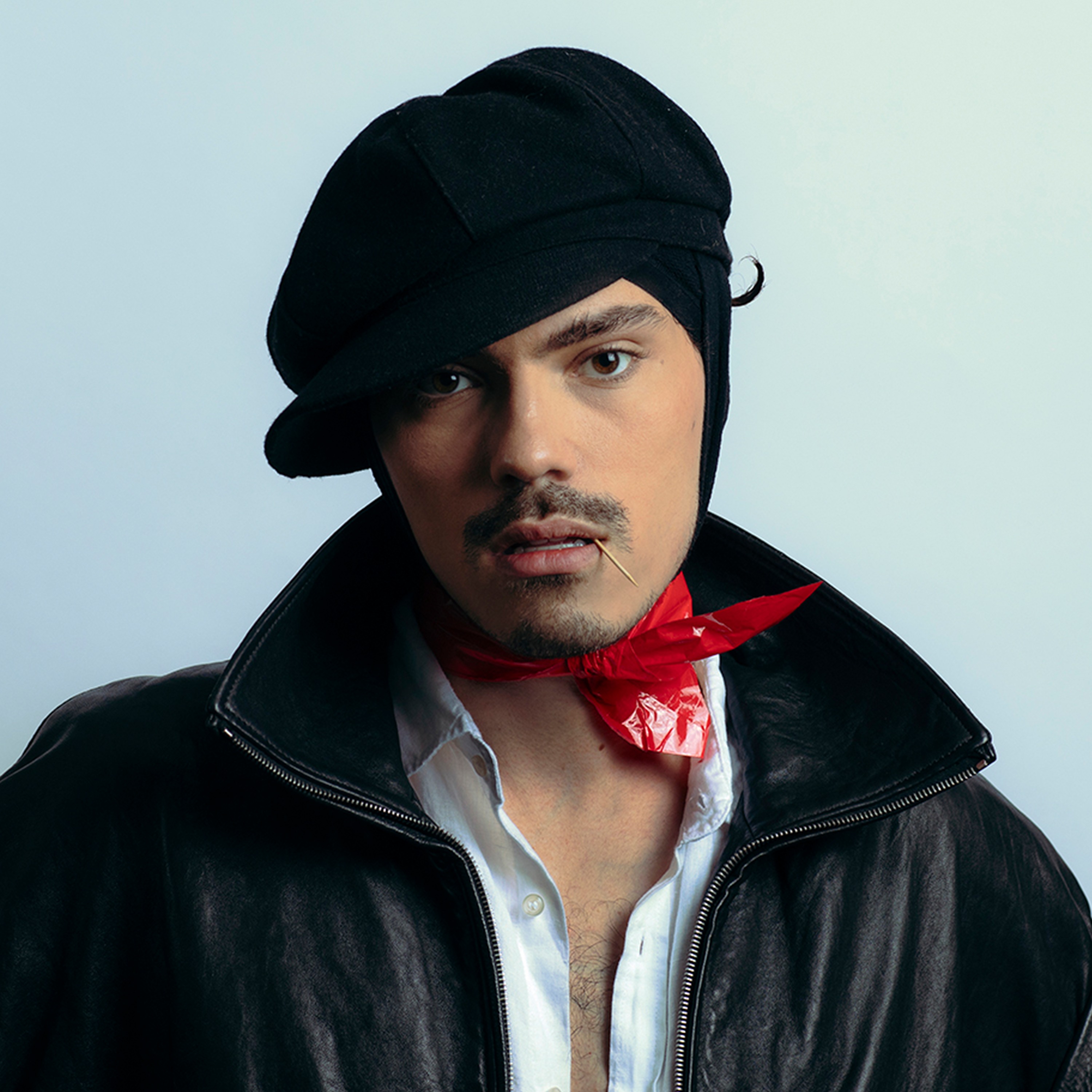
Fashion narrator Lyas is one of the most compelling and authentic fashion communicators to have arrived on the scene, and whose takes on fashion shows and editorials are incisive, honest and well-informed.
“I think we’ve lost the mindset of thinking that it’s possible to be creative and make money for the company, because the golden age of designers is over,” he says. “Now, every designer is disposable. It’s like musical chairs—every month, there’s someone leaving, someone coming.”
Lyas’s journey has been shaped by his belief in the emotional power of storytelling, which he sees as central to fashion communication. Using TikTok and Instagram to communicate his thoughts and opinions, his fashion roulette videos and witty runway dissections have captured the attention of hundreds of thousands of viewers. Recently, he has bemoaned the dilution of creativity across the fashion industry.
Key Insights:
Additional Resources:
Hosted on Acast. See acast.com/privacy for more information.


