
 Ask ChatGPT


 The Business of Fashion Podcast
2 Oct 2026 · 17m · 9 chapters
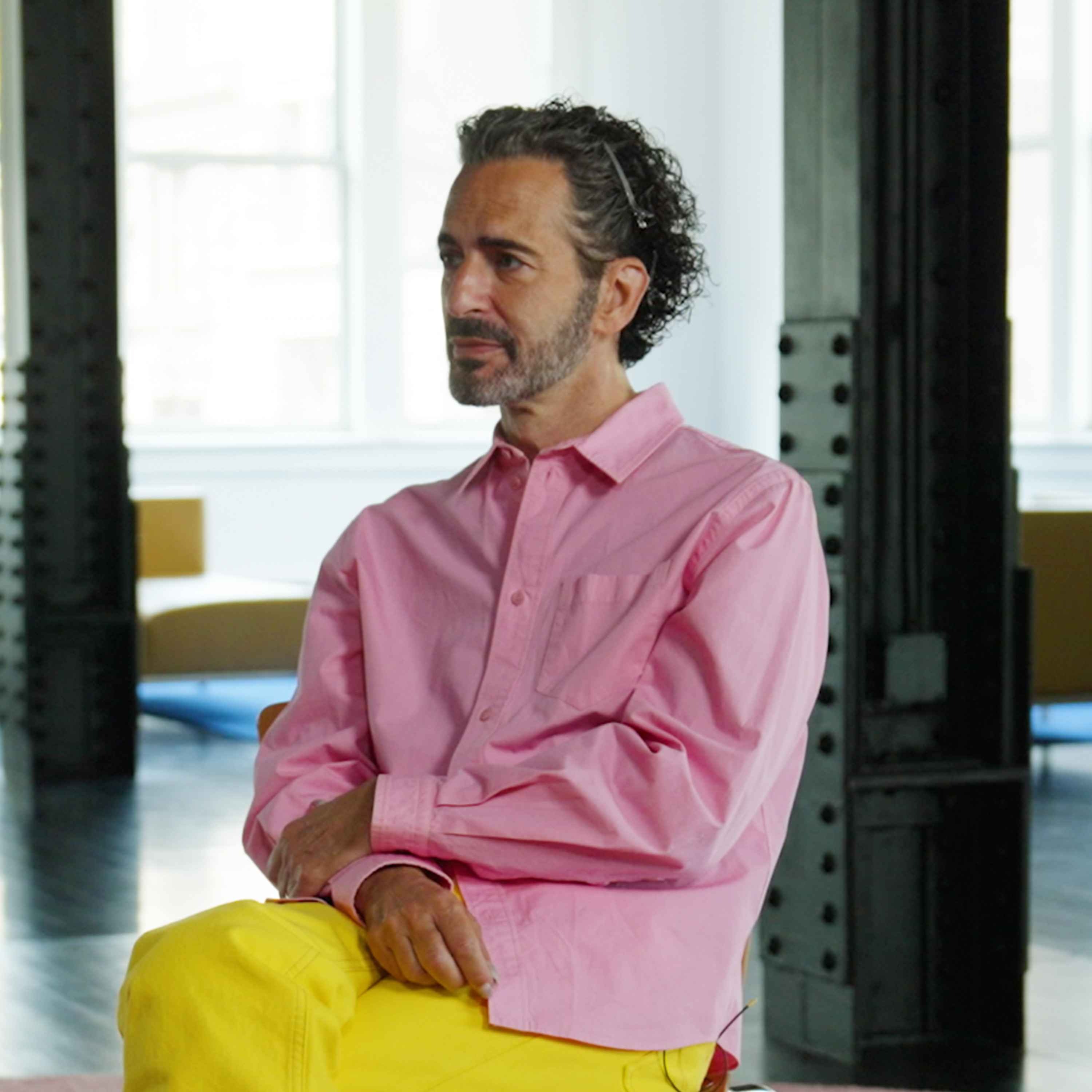
Marc Jacobs discusses his transition after 29 years with LVMH, arguing that fashion’s problems aren’t caused by “creative” people, and that replacing designers or changing logos/stores won’t fix structural industry issues. He also reflects on “gratitude,” abundance, and how he defines success beyond quantity/scale.
Marc Jacobs, longtime fashion designer and founder; recently moved on from LVMH as his namesake brand was acquired by WHP and G3 (deal closed September). Interviewer: Imran Ahmed, founder/CEO of Business of Fashion.
Non-creative business decisions drive dysfunction; industry is exhausted and even unclear on who’s where; success shouldn’t be measured by size/number/production volume; independent creatives can still flourish by trusting instincts.
Pandemic-era shift back to “five collections a year”; shopping examples include Chanel jackets, Versace, and Saint Laurent.
Written by AI. May contain mistakes.
Discussion on Marc Jacobs' transition to new ownership and its implications.
“When you're running a growing business, the right systems can unlock your full sales potential and make fulfilling every order effortless.”
Discussion on Marc Jacobs' transition to new ownership and its implications.
“Earlier today, we introduced the BOF 500 Class of 2026.”
Marc Jacobs shares his thoughts on design and current industry challenges.
“to acquire the Marc Jacobs business from LVMH in September.”
Marc Jacobs discusses the emotional impact of his creative journey and recent changes.
“You can read the in-depth story on BOF on October 7th.”
Exploration of the misconceptions about designers' roles in the industry.
“is like thinking about, I mean, before the show is thinking about not only the process and what we've done and how it's come together, like all the feelings that, you know, occurred during that process.”
Discussion on the structural issues facing the fashion industry beyond creativity.
“but there's also kind of freedom or like a new phase?”
Marc Jacobs reflects on the potential for emerging designers in today’s market.
“thinking that this all hangs on a creative person.”
Insights on following one's instincts and the creative process from Marc Jacobs.
“I was reminded of this the other day, um, about all of the conversations that went on during the pandemic.”
Explore Marc Jacobs' thoughts on instincts and the meaning of legacy in his career.
“So I think, yeah, it's not advice, but it's my experience is that, you know, if you're really, if you're really into it, you can overcome anything.”

Get the gist, explore an idea or ask about something said.
 Claude
On The Business of Fashion Podcast, what are the key points of this episode?
Searching your listeningAutomatic transcript. May contain errors.
0:00When you're running a growing business, the right systems can unlock your full sales potential and make fulfilling every order effortless. Switch to ShipStation before peak season so you're prepped and ready before the rush hits. ShipStation connects Shopify, Amazon, TikTok Shop, and over 200 more marketplaces with one platform that does it all. You can manage orders, sync inventory, track returns, all automatically. Everything your operation needs, all in one place. Upgrade your shipping operations to stress-proof your biggest sales days and capture every bit of potential revenue. Go to ShipStation.com and use code AUDIO and get 30 days free.
0:30Hey guys, it's Drew from the comment section. Some days my skin just needs a little coverage and other days I wanna go full glam. For those everyday moments like running errands or grabbing coffee, I've been loving the Merit Minimalist Stick because it's a foundation and concealer in one that gives me a really natural skin-like finish. But when I want more coverage, I'm reaching for the Hourglass Vanish Concealer every time. I know I'm not the only one who struggled to find the right foundation or concealer shade, which is why I always shop at Sephora. They have the best brands all in one place with so many shades, coverage options and finishes, plus expert beauty advisors, free samples and shade matching tools both online and in store.
1:10So whether you're looking for barely there coverage or full glam, Sephora can help you find your match.
1:22Hi, this is Imran Ahmed, founder and CEO of the Business of Fashion. Welcome to the BOF podcast. It's Friday, October 2nd. Earlier today, we introduced the BOF 500 Class of 2026. 100 new members being added to our ever-growing index of people shaping the global fashion industry. You can explore the new class at businessoffashion.com. Earlier this week, we revealed this year's BOF 500 cover stories featuring Mewcha Prada, Mark Jacobs, Givenchy's Sarah Burton, and Issey Miyake's Satoshi Kondo, examining the ineffable creative quotient that turns clothes into things of desire. But of course, creativity is just one part of the fashion equation.
2:11It is not something managers can simply turn on like a light switch. Designers need sufficient time and resources, and teams that know how to translate their visions into commercial products, not to mention the best factories, strong retail networks, and so on, to make a fashion business tick. Recently, Marc Jacobs has been grappling with some big changes at his namesake brand, opening a new chapter under new owners WHP and G3, which closed a deal to acquire the Marc Jacobs business from LVMH in September. As the deal was coming together over the summer, Mark met with BOF contributor Eric Wilson to discuss life after LVMH and whether he can work with his new business partners without losing his soul.
3:00You can read the in-depth story on BOF on October 7th. In the meantime, I wanted to share a conversation I had with Mark after our cover shoot. Amongst other things, I asked him for his views on all the new designer appointments in our industry as a potential solution to the ongoing fashion slump. What I see is a bunch of non-creative people thinking that this all hangs on a creative person.
3:29Marc Jacobs: And I think it's just a big mistake. I mean, the world is in a place, regardless, you can put a different logo over a designer's head or you can change the store that his clothes are available in. And it's, there's an exhaustion, I think, from all of this stuff. And I don't know that the world even knows who's where at any given point. Here's Mark Jacobs on the BOF podcast.
4:00Welcome. Thank you. I love the colors. Thank you. They look amazing. And we're on a pink carpet too. We didn't even plan that. I know. It just worked out. I you know this is a very interesting time for you as a designer for you again a founder um your most recent show was called gratitude and the show notes named all these people who shaped you why was this a moment for you to look back at you know what was it what were you thinking or feeling? I think at every show, there's an automatic, like I can't avoid it even if I try sort of feeling of like the past and what came before and where I'm at.
4:49And it's always just very emotional. And I think that's been consistent for all the years that I've been doing this is like thinking about, I mean, before the show is thinking about not only the process and what we've done and how it's come together, like all the feelings that, you know, occurred during that process. And so as you can imagine, um, you know, one of the things I was thinking about was like, where will we be going in our new, uh, iteration of, of our company and, and my work life? Yeah. You wrote also about recognizing abundance in life's most uncertain moments. Is that how you're feeling now, right now?
5:37But is this a transition and change? I think this is not just about, that was not solely about work.
5:44Marc Jacobs: That was, it's like sometimes, I mean, I believe you get these messages and when certain ideas or concepts, thoughts repeat, you know, you receive them from different sources, et cetera. Pattern recognition. Pattern recognition. Thank you. I didn't realize there was an easier way of saying it, but pattern recognition. Yeah. I'd had lunch with a friend and she was talking about someone in her life who use the word gifts all the time, you know, especially in times where one feels discomfort or anger, whatever, that redirecting it as a gift, no matter what it is, was like the way to go. And I like that.
6:28So the word abundance to me represented all of these gifts. You're this transition after 29 years with LVM8, something like that? I guess so, if you say so. Does that in a way give you a sense, there's uncertainty in all of that, but there's also kind of freedom or like a new phase? What are the feelings?
6:56Marc Jacobs: Well, I mean, obviously I've given this a great deal of thought and had lots of feelings about it and spoken to the people I'm closest to here at Marc Jacobs, you know, my immediate team. And the reality is that I had a great time at LVMH. You know, I had a really incredible period of time with wonderful people at Louis Vuitton. And I think there were moments even, well, at Marc Jacobs, some really great things that occurred and that happened only because we had LVMH behind us. But in the last few years, several years, you know, it's just evident that they're not going to, that we're not going to do more.
7:36Marc Jacobs: We couldn't go anywhere. I mean, we might have a tote bag that's hugely successful and we might have a show that's been like applauded or we might launch beauty, whatever. But LVMH was not going to open stores or money into this place. And so I think part of what we all thought with that news, or what I thought with that news is that, you know, I don't know where it'll go, but I know that I believe that there's an opportunity for something to change and grow, which certainly wasn't the case if we stayed or we remained at LVMH. It would have just been a maintenance program, which is all it's really been in the past decade plus.
8:23Yeah. Yeah, you have this really interesting vantage point because you were part of this system that's now being completely re-evaluated. I'm sure you followed that season last September when all the houses were changing all their designers. And there was, you know, there's all sorts of questions about like what's not working in the industry. from your vantage point, having been part of that European Paris system, what do you make of all the shifts and changes?
9:00Marc Jacobs: I think my vantage point would mean, I mean, to me, is the vantage point of a designer, of a creative person. And what I see is a bunch of non-creative people thinking that this all hangs on a creative person. And I think it's just a big mistake. I mean, the world is in a place, regardless, you can put a different logo over a designer's head, or you can change the store that his clothes are available in. There's an exhaustion, I think, from all of this stuff. And I don't know that the world even knows who's where at any given point, It's hard to keep track. But does it really matter? It just all feels, I don't know.
9:52Marc Jacobs: I think the problems, I mean, there are probably many problems, but I don't think the creative is to blame. You know, for all these things and difficulties, there's a world that's in trouble, you know. And why shouldn't fashion be affected by it? I just think that sometimes these people, I guess business people, oddly look at something as having one solution that comes from one person. And it just seems utterly ridiculous to me. Yeah. The way we were framing it up is that this is actually not an issue that's a cyclical issue. This is a structural issue that the industry is facing. and there's multiple things that have shifted and changed all around the same time yeah and just changing the designer is not enough well i think i thought that's what i just said like in some way that the creative keeps getting changed around without looking like it's it's just to me it's like it seems completely absurd you know but um i mean nobody's saying like we make too many clothes or we produced.
11:06Marc Jacobs: I mean, it's so crazy. I was reminded of this the other day, um, about all of the conversations that went on during the pandemic. And it's like, and then as soon as they could, everybody was just like, ah, it's over. Like, let's go back to doing five collections a year. Let's, you know, let's do couture ready to wear five shows pre-faulted that let's get one designer who oversees it all. And then let's not have those clothes be available in the shop. And you just think, like, wait a second. So you're wondering why things aren't working, you know, in a world where things are tough anyway. Like, I don't know.
11:42I don't know. On the other end of the spectrum, independent brands, new brands, young designers, emerging designers, people who are just starting out where you were a long time ago, three decades ago. Do you think they have a shot today? Can you build today what you built back in the day?
12:08Marc Jacobs: There's zero point of looking back at what things were like. I mean, we didn't have smartphones. When I was doing this, and we did have buyers that were talking about skirts had to be like 21 inches or 25 inches. It was just a different world completely. Fashion and the world, the world. was different. So, um, but I think absolutely, I think, I don't know what the future will look like, but, um, I don't know any more than anyone else, but I think there's always opportunity for, uh, creative voices to flourish and grow. Maybe growth will mean something else. I mean, I hope growth will mean something else because this idea that size and number and quantity, like that's what success is.
13:03And I think that's a big, that's repeating this old mistake, you know, like what success is, right? Or how you define success. It's like, I don't think that's working right now. Yeah. I'd asked you about independent designers, you know, building their own thing, maybe in a new way. Is there, it's not really advice, but like, what would you, what would you want them to know before they get into this world?
13:39Marc Jacobs: Yeah, I don't think they're specific to fashion. I think, you know, again, as a creative person, you do your best to trust your instincts and to go with your instincts and your gut and the desire to make something and create something is so big that you can overcome all the rest. You know, I think, I know first in my experience, I've been up and down and in and out and, you know, I just never lose this desire to make clothes and be a part of this fashion world. So I think, yeah, it's not advice, but it's my experience is that, you know, if you're really, if you're really into it, you can overcome anything.
14:23What happens when you don't follow your instinct? Well, I don't follow my instincts sometimes. And sometimes I regret it. And sometimes I'm glad I didn't. But it's a kind of ongoing thing for me, the conversation about instincts. Because sometimes I just don't, I get so confused by my own thinking or my overthinking. And I'm like, when someone says, trust your instincts, I'm like, well, I don't know what my instincts are anymore. And I know what that means. That means I'm so confused in that moment that I don't know if I'm thinking or feeling things clearly. You know, I'm not, yeah, kind of in a paralyzed place.
15:05But yeah, but then I'm not alone either. So I'm in a small group of people and we share with each other what we're thinking and what we're feeling. and, you know, through a process that's often challenging and difficult, we come up with something that we can then look back at the last few months and say like, oh yeah, right, this is the manifestation of all those things
15:26Marc Jacobs: that we were questioning, thinking instinctively or not instinctively, you know. At this pivot point for you, you know, when you're about to go through all this change, I mean, I imagine you're also thinking about the chapters of your, Or this is like maybe, you know, the time when you start thinking about legacy and what does, I know you don't like some of these words I'm using, but just, how do you, do you think your impact is understood? Do you feel like it? I don't care. You don't care? Well, no, because I think it's, this is all in the, I'm not, I don't know. I mean, of course, I'm like everybody else.
16:10Marc Jacobs: I have an ego, but do I do this because of what it's what I'm going to leave behind? No, I'm doing it because I enjoy working on a collection. We enjoy being actively engaged in making something creatively and not, I have never been so interested in a conversation about like how many small leather goods are we going to ship and how much, you know, what is made for outlet and all those things that are like part of the fashion business, but they're not part of the fashion business that I am interested in or that I participate in, that I love. And legacy or like the idea of building something to leave it behind, it's like, yeah, I'm not that interested.
16:54What part of the industry are you, like what is exciting you right now? Like who is, when you're looking at it, it gets your little fashion heart beating? I don't know. I think there's always something. I mean, I can say what I personally am excited about in terms of shopping. Well, I've been buying a lot of Chanel jackets lately. And I think there's an energy there that doesn't exist anywhere else in the world, like ever. Like, you know, Chanel is Chanel. It's like Vogue is Vogue. And it's just been very exciting there at the moment.
17:27Marc Jacobs: So it's been fun that they're shopping. And then I, you know, I went shopping at Versace and we went, and I love going shopping at Saint Laurent. I'm a fashion victim. I love clothes. I love to wear clothes. I love to shop for clothes. I love to look at clothes on my time off. So, you know, so it continues. Maybe the names change over the years. Maybe, you know, I taste changes. But it's still those same basic ideas. It's like shopping, wearing, watching, looking. Yeah. Okay. Well, thank you for your time. You're very welcome. And yeah, good luck with the next era. We'll see. Could be good. Could be bad.
18:12I don't know. Well, we'll be watching and rooting for you. Thank you. Thank you.
18:34Thank you.
19:04Join the 4 million businesses using Stamps.com right now with code podcast and get your free welcome gift. Stamps.com code podcast. Taxes and fees apply. Hey guys, it's Drew from the comment section. Some days my skin just needs a little coverage and other days I want to go full glam. For those everyday moments like running errands or grabbing coffee, I've been loving the Merit Minimalist Stick because it's a foundation and concealer in one that gives me a really natural skin-like finish. But when I want more coverage, I'm reaching for the Hourglass Vanish Concealer every time. I know I'm not the only one who struggled to find the right foundation or concealer shade, which is why I always shop at Sephora.
19:43They have the best brands all in one place with so many shades, coverage options, and finishes, plus expert beauty advisors, free samples, and shade matching tools both online and in-store. So whether you're looking for barely there coverage or full glam, Sephora can help you find your match.
Today, we introduced The BoF 500 Class of 2026: 100 new members added to our ever-growing index of people shaping the global fashion industry. This year’s BoF 500 cover stories feature Miuccia Prada, Marc Jacobs, Givenchy’s Sarah Burton and Issey Miyake’s Satoshi Kondo, examining the ineffable creative quotient that turns clothes into things of desire.
But creativity is just one part of the fashion equation. It is not something managers can simply turn on like a light switch. Designers also need sufficient time and resources, and teams that know how to translate their visions into commercial products — not to mention the best factories, strong retail networks and so on — to make a fashion business tick.
Recently, Marc Jacobs has been grappling with some big changes at his namesake brand, opening a new chapter under new owners WHP and G-III which closed a deal to acquire the Marc Jacobs business from LVMH in September.
Over the summer, Jacobs met with BoF contributor Eric Wilson in New York to discuss life after LVMH — and whether he can work with his new business partners without losing his soul. The full story is out on BoF on Oct. 7.
After the cover shoot, Jacobs sat down with Imran Amed to talk about what’s next for his business and reflect on the ongoing fashion slump. “What I see is a bunch of non-creative people thinking that this all hangs on a creative person,” Jacobs says. “And I think it's just a big mistake.”
Key Insights:
Additional Resources:
Hosted on Acast. See acast.com/privacy for more information.


