 Ask ChatGPT


The episode discusses the burgeoning market for modest fashion, projected to reach $428 billion by 2027, while illuminating its fragmented commercial landscape and the challenges it faces in achieving global recognition.
Written by AI. May contain mistakes.

Get the gist, explore an idea or ask about something said.
 Claude
On The Business of Fashion Podcast, what are the key points of this episode?
Searching your listeningAutomatic transcript. May contain errors.
0:04Hi, this is Imran Ahmed, founder and CEO of the Business of Fashion. Welcome to the BOF podcast. It's Friday, May 9th. It's a pivotal moment for modest fashion. Spending by Muslim consumers on fashion is projected to hit$428 billion by 2027, marking significant annual growth. Yet despite booming demand, modest fashion remains commercially fragmented and struggles for global recognition. Emirati fashion designer Rabia Zaragpur was a pioneer in modest fashion, founding her namesake brand after confronting the severe lack of modest clothing options in post-9-11 America. A very huge aha moment for me that, wow, we are so neglected.
0:54And why are we neglected? Why isn't there a single label, a single brand, catering to the needs of our women? Driven by this observation, she launched her brand from her grandfather's garage in Silicon Valley, determined to bring modest fashion to mainstream runways. Karim Tura, founder of the Istanbul-based e-tailer Modenisa, initially tried to convince modest fashion brands to move online. When they declined, Tura took matters into his own hands, building a global e-commerce powerhouse from scratch. Then I realized that the clothes that we put on ourselves is not a piece of fabric. It's a part of our identity.
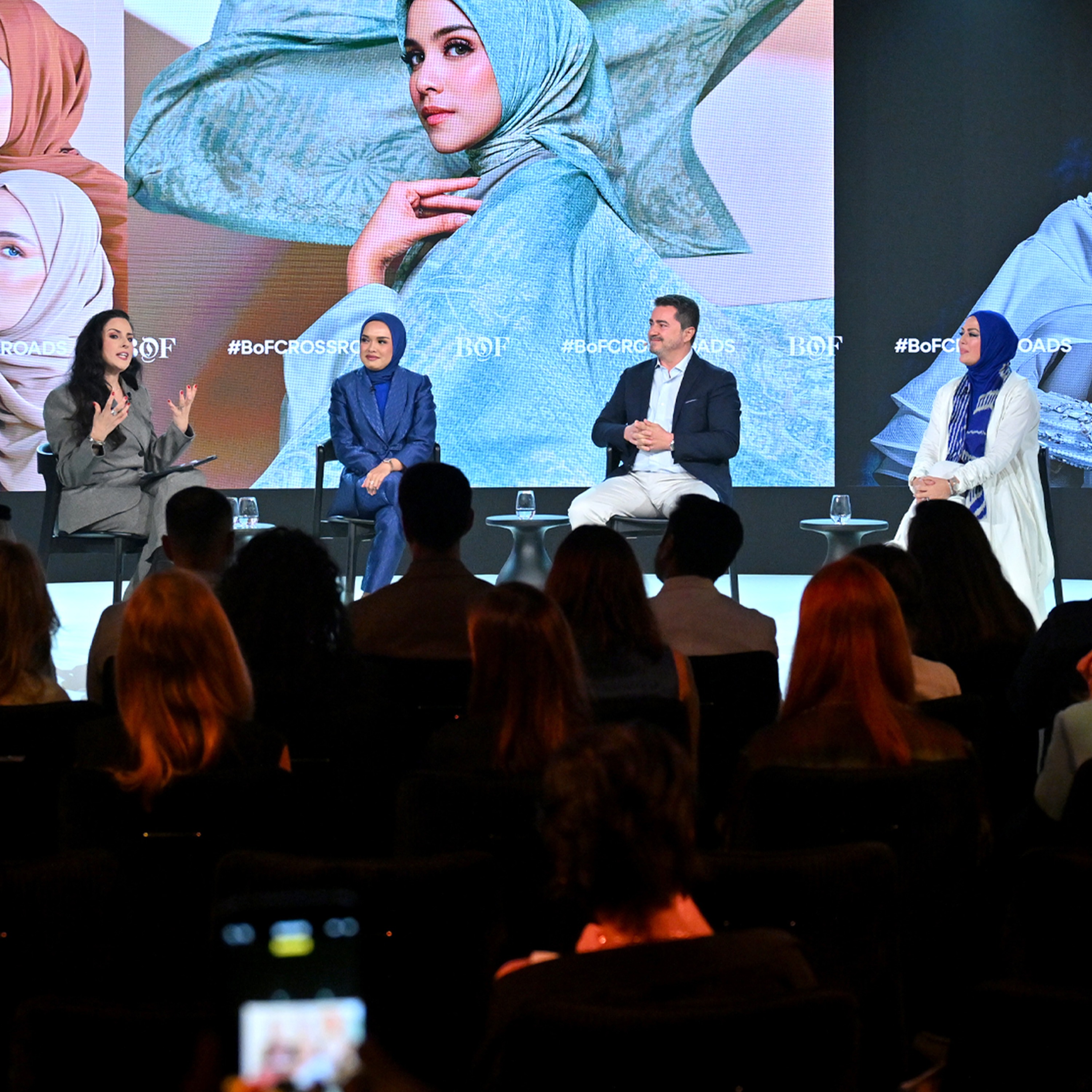
1:39It's a part of our self-confidence. For Linda Angreya, founder of Indonesian modest fashion brand Bandit Scarves, now CEO of the Modinity Group, the absence of modest fashion brands in major Indonesian shopping malls was glaring. She seized the opportunity, growing her brand from a single scarf line into a multi-brand group with over 100 retail locations across Southeast Asia. We have one shared mission. Modest fashion is not only accepted, but actually expected in all fashion runways, global fashion week and every retail space all around the world. This week on the BOF podcast, in a compelling conversation with Forbes Middle East presenter Sally Moussa at BOF Crossroads 2025, Rabia, Karim and Linda explore the growing influence of modest fashion, discuss its evolving presence in mainstream markets, and walk through the necessary steps for modest fashion's sustainable growth, authentic collaborations, and global recognition.
2:52Here are Rabia Zaragpur, Karim Tura and Linda Angreya on the BOF podcast.
3:03This is a segment of the fashion industry that has long been overlooked, but now it is absolutely undeniable the impact of modest fashion. but it isn't just about numbers. It is about identity, representation, and reclaiming the narrative of who we are. And so as we are talking today, modest fashion is at a turning point. It's culturally rich, yet commercially fragmented. It's expanding fast and yet still fighting for recognition and representation on the world stage. And so to explore what's next, I'm super excited to have this incredible panel with me today. And so before we launch into this whole idea of modest fashion being at a crossroads, I'd like to hear from each and every one of you.
3:59And Linda, if I can start with you on why you decided to enter the space of modest fashion. What is it that you wanted to create and what is it that you wanted to change? Actually if I can start with my own experience since I was a child like I am a girl that has not really fortunate childhood. I actually coming from a very simple village girl even electricity wasn't even exist during my childhood and I see that there are so many unfortunate women who actually want to make something in the world and then seeing my mom as a single mother has to provide for the family, I promise to myself that one day if I am older, I'm going to do something that is not only for me, my family and my mom, but also for other women all around the world.
4:56So that idea came in when I was sitting in a shopping mall, seeing like in high-end shopping mall in Indonesia, from 10 women passing through, like seven out of them are wearing hijab. But at that time, I went to the concierge and then asked, there is no single modest brand in that retail spaces. So I decided to take a step back and then see if there is nobody gonna start and do it and make a change and that's when I feel like I need to do this so I started to do a brand called button scarves like just nine years ago I started with just a simple dream that I wanted to create something as an answer to the woman just like me who wanted to dress modestly but still feel you know the way we wanted to be modern just like I look today.
5:56It's stunning. Can we just agree? Yeah. Thank you. Long story short, like few years later and now today, we are becoming from a single brand to a modest fashion house with more than 100 stores present in high-end shopping mall in Southeast Asia. So representing Southeast Asia for modest fashion to the world has been my dream because I've always wanted to do something for a woman because seeing like my mother having to provide for the family I feel like a woman has to stand out by herself no matter what don't get me wrong I always got support from my husband if if I don't get 100 % support I'll never come to this stage yeah incredible congratulations on what you've built and it truly is phenomenal.
6:48Thank you. Yes, absolutely. Amazing. Karim, if I can come to you, you know, with Modernisa, you've of course built one of the world's most successful fashion e-commerce platforms. Talk to us about what got you into that space and how you really revolutionized it, not just from a modest fashion perspective, but also the fact that it was e-commerce and you took it global god i'm excited i have nothing to do with fashion before and i started with an anger because i spotted the need i saw the potential and i was trying to convince the modest fashion players to come together and build a platform i talked to every each of them and try to convince them to come together.
7:40I was not intentionally getting into it. I was trying to put them together. This was 20 years ago. It was like in 2010, 50 years ago. All of them said identically, our people don't buy from internet. I said, this is a global need. This is a silent cry. Don't you see it? Don't you hear it? And they said, no. Then I realized that the clothes that we put on ourselves is not a piece of fabric. It's a part of our identity. It's a part of our self-confidence. And those guys are, you know, making them lack away from those women. And those women were begging from them. And I said, what if I get your clothes and sell by myself?
8:30Give it to me. They couldn't say no twice. They said, okay, we'll give you some inventory, you try. I put my money in and I started to try it. The first days of Indonesia was in May. I was looking for long-sleeved shirts for modesty. And all I could find in Turkey and Istanbul was 19 long-sleeved shirts because the summertime came and everyone was looking for short sleeves. 19. By time, we have reached to 7 ,000 long sleeve shirts at Modernisa. We reached to more than 100 countries worldwide selling piece by piece. We reached out to 6.7 million customers all around the world. And we made the first Modest Fashion Weeks in the world.
9:25And we all together put Modest Fashion into the map. and we believe all the women, regardless of their beliefs, they deserve to look their best without compromising their beliefs. Absolutely. This is the purpose. This is how I started, why I started and built everything around it. And that conviction just brought everybody who has been, as you say, for so many years, and I know myself included, being in Australia and also starting a label 27 years ago, when it was unheard of, people were begging for it. And it took brands like you to listen and to bring that to the market. And I'd like to come now to the first lady of modest fashion, Rabia Z.
10:13Rabia, talk to us about your story and how you came here to this space and really led the charge. Thank you, Sally. Look at these inspiring stories. I think with modest fashion, the beauty is that we started something out of our own struggles, right? Personal, they're very personal stories. So mine's very personal as well. I mean, I'm from here, raised here. I'm living in the U.S. at the time, very late in life, sort of in my 20s, I discovered the beauty of hijab and I got into the spiritual side of our beautiful religion. Sadly, months into it, wearing the hijab, which growing up here, my parents never forced or pushed or nothing.
10:54So I decided to wear hijab and then within a few months 9-11 happened. And when 9-11 happened, obviously it was not a very good time to wear a hijab and experiment with hijab fashion at the time. Now my background is in mainstream fashion. I went to fashion school in New York. I worked at Valentino. So being the fashionista from New York, I had two dilemmas. One was, okay, wearing hijab is now an issue because I started facing hate crime. And the second thing was my little bit on the superficial side, which is fashion. I just I couldn't find anything to wear I couldn't find anything fashionable to wear and this is you know in 2000 2001 you couldn't find like Kareem said you know basics just basics of long sleeve something that would cover your hips like just the basic everyday clothing which was a very huge aha moment for me that wow we are so neglected and why are we neglected why isn't there single label, a single brand, catering to the needs of our women.
11:55And so I took charge and I created my brand, my namesake brand, Rabia Zee, and the first e-commerce label as well in the world, the first e-commerce site at the time, from my grandfather's garage in Silicon Valley. Very cliche story, but it's a fact. And as they say, the rest is history because what was beautiful during that time, just it was, for me, it was about creating solutions. How can I just help women like myself to just make one aspect of their lives easier, which was just things we take granted here in our beautiful city, which is just dressing modestly when you want to, you know, just so, and Abayas at the time, obviously in America was not an option.
12:35So like I said, that's how we got started, but then it wasn't enough because what started to happen is online, we had suddenly this community, this beautiful community got built and women were complaining about different things that I didn't even think of at the time, you know, things like, well, I don't feel beautiful anymore. I can't get a job with a hijab on in the West. And, you know, just like things that, like I said, we just take it for granted living here. So my phase two was moving back here, back home. I wanted to sort of prove a point that, OK, modest fashion can be absolutely shown on a runway.
13:18We can be, we are up to par. We have the talent. Our women are dynamic. We love style. We love fashion. And we can do it within a balance. And so that phase two was another hard journey because I was ridiculed in the West and in Western runways. I had both sides, ridiculed, but also encouragement because I got to show full hijab on runways in London, in Miami, in New York. And it just blew up from there. But like I said, it wasn't enough. And for me, having to do this at a time when I had no sort of guidelines, I had to learn through trial and error. And sadly, when I did take a step back to just, or let me just brush up my skills a little bit in fashion, and I'm not going to take names, but the one school I went to here, again, I was ridiculed that what is this modest fashion concept?
14:11Fashion is not about modesty. It's about showing skin. There's no beauty if you don't show skin. Interesting that you say that, Rabia, because, you know, from there, we're seeing now major fashion labels take on modest fashion, creating their own collections, creating edits as well in that space. So is this a good thing for modest fashion, for the biggest brands to be taking modest fashion on? Or does it dilute what modest fashion is about? Is there a right way to create these collaborations? Is it a good thing in order to bring modest fashion mainstream? I think so. Absolutely, yes. As long as it's done authentically, as long as it's not tokenism.
14:59There needs to be authenticity and they need to understand our values and work with us. You know, if they work with us, they'd have better, I think, better solutions. I'm not saying this to critique, but I think women that do dress modestly can definitely say that we're not just about kaftans. All we see in the Ramadan collections and edits is the blingy kaftans again. But we're more than that. We're about sustainability, ethical practices. We're about creativity and innovation. You know, why can't you make that kind of stuff for me the way you do for your other consumers, right? Linda, personal expression and making sure that it is something that is unique, that is exciting, that is fashion forward.
15:43How do you create that balance between creating modest fashion collections that are global, but also they have that uniqueness. They have that local relevance as well, particularly someone like you who has really scaled it in an incredible way. So I think for us to scale it, but to also deliver the message to global world, we need to focus on what relies behind the reason of being modest. It's like the way we want to dress modestly, but also we want to feel good about ourselves. We want to feel comfortable. I think if we are putting that concept into whatever we are doing and creating collection, I think it will easily translate it into good collection, but still fit in modesty values.
16:34But you can still resonate to all around the world, to the mainstream fashion. Because when I'm wearing clothes, I feel like I'm wearing modest. But just yesterday, I'm wearing clothes from one of our brand. It's a Malaysian designer. everybody says wow this is so great and people are commenting from brazil they are from japan they can relate to it and i can see that now modest fashion is more and more accepted all around the world why we have to be afraid of it because i think we build it from inside out we are not somebody from the outsider who is trying to enter this space because actually we are a space, right?
17:18Do you agree with that, Karim? Yeah, absolutely. And like you say, I mean, there's two things here. It's a vehicle. Modest fashion is a vehicle for storytelling, for the world to see who we are, because for the longest time, and I think there's still, unfortunately, elements of that even today, that Muslim women are still not seen for who they are, the powerful women that they are, the creative forces that they are. And I think modest fashion is such a powerful vehicle for that, that we get to tell our own stories through how we dress, and we get to decide the narrative. And I think that that's amazing.
17:57But also, Karim, and you would see this through your business as well, that modest fashion is not just for Muslim women. this is becoming more and more a global movement where women from all backgrounds and and all faiths are deciding that they want to dress more modestly for various reasons yes yes there's a slogan we we had years ago we make fashion modest again because it was modest before for the longest time yeah and it's gonna be modest again revealing yourself is you know being powerful is you know So hiding yourself a little bit makes you a little more powerful, we believe, I believe. It will be a global trend, I believe.
18:42That's why. Let's talk a little bit about this moment that we are in right now in terms of the crossroads that we are at with modest fashion. What are you seeing is that, I'll start with you, Karim, but for each of you, what are the biggest challenges that you're seeing for the modest fashion industry? how it's evolved to where we are now but where we need to take it next and the challenges there I'll take it from two sides one is online fashion if you do online fashion right now the cost of acquiring a new customer is getting higher and higher every day and the everything stores can afford it because they can sell next day the dishwasher liquid to the same lady but you're selling hijab and the next hijab purchase will be after three months if you're lucky that's why there is a crossroad over here how you collaborate with the everything stores is one thing we should be thinking about the second thing is we need more and more brands coming from inside and And this is also only possible if you combine the experience of the other retailers and those enthusiasm of the designers together.
20:01Like the designers and the businessmen need to come together and, you know, encourage those designers, you know, pick some of them and give them a lead. Create partnerships for up and coming designers. We need space for that. We need partnerships with the people who already been there in a different line of fashion. If we can create that, that will be a great thing for us because we are the colonized self. We need to bring our own brands to the world right now. Absolutely. And I love that you touched on the need for modest fashion to exist within the wider fashion framework and the wider retail framework as well.
20:47And coming to the point about bringing up young talent, this is an area that you're very passionate about, Rabia, in terms of what kind of help does the new generation need to really be themselves, not only creatively, but to also have that business know-how that can make them very successful entrepreneurs in the space? Exactly. So again, unfortunately, because it's still such a sort of new space, we don't have institutions that specialize in modest fashion as yet. We have a small academy. I run a mentorship program. And I did that really because, again, from my own experience, not having anyone in this space to guide me and just learning through trial and error, though I had amazing mentors like Inji who encouraged me so much from day one that you go ahead and do this.
21:35There's a need for it. Go ahead and do this. and I appreciate that. And then with institutions, so like I said, it would be great if we could like, you know, the inspiring Tory Burch, they have a fellowship. If we could create things like a fellowship or maybe collaborate with them and do some sort of a joint collaboration, a joint fellowship, that would be amazing. That's one. The other thing that I wanted to also touch exactly to Kareem's point that we need more brands and creating a brand, though, especially in our part of the world, it's easy. When I say easy, it's because, you know, we have a lot of creatives and we do live in a tailored culture.
22:14So it's very easy to get in there, create a capsule and do that. Obviously, that sort of hobby needs to be taken a bit more seriously, which is what I try to do in the mentorship program, is because we have a lot of creatives, but they're just running it as a hobby and they're not taking it seriously. But to be honest, it's not their fault either, because what we need is we need funding. We need some sort of an incubation and we need funding. I know a lot of our brands, you know, we've had ups and downs. And to be honest, there's a whole lot to do with the investments and funding and whatnot. So that aspect is also crucially important.
22:50And I hope that, you know, we have investors that would come and invest in modest fashion space and labels and brands. It's so critical. Linda, I'd love to give you the final word on this in terms of what you want to see in terms of the industry moving forward where is it at a crossroads now where do you want to see it move forward and as well from your experience creating that community that drives a brand forward I think for me really we're at the crossroad whether we want to go fast by going alone or we want to go far but in order to go far we have to go together that path I took when building a modest fashion conglomerate we called Modinity.
23:31Now, managing eight brands' portfolio, we are going together. Each brand has their own voices, has their own colors, but we have one shared mission that we wanted together to bring modest fashion is not only accepted, but actually expected in all fashion runways, global fashion week and every retail space all around the world. I know that everybody's been listening. Modest fashion is not something that we should be wishing for. It is expected. And that is an amazing way to end this fantastic panel. Ladies and gentlemen, please join me in thanking our phenomenal speakers. Thank you all so much.
24:15Thank you. The BOF podcast is edited and produced by Olivia Davies and Eric Bria.
It's a pivotal moment for modest fashion. Spending by Muslim consumers on fashion is projected to hit $428 billion by 2027, marking significant annual growth. Yet despite booming demand, modest fashion remains commercially fragmented and struggles for global recognition.
Emirati fashion designer Rabia Zargarpur founded her namesake brand after confronting the severe lack of modest clothing options in post-9/11 America.
"In 2000, you couldn't even find modest basics," Zargarpur says. "That was a huge aha moment for me. We are so neglected. Why isn't there a single label catering to the needs of our women? And so I took charge and created my brand."
Kerim Türe, founder of the Istanbul-based modest fashion e-tailer Modanisa, initially tried to convince existing brands to move online. When they declined, he took matters into his own hands, building a global e-commerce powerhouse from scratch.
"The clothes we put on ourselves, a piece of fabric, it's part of our identity, part of our self-confidence," Türe says. "We believe all women deserve to look their best without compromising their beliefs."
For Linda Anggrea, CEO of the Modinity Group, the absence of modest fashion brands in major Indonesian shopping malls was glaring. She seized the opportunity, growing her brand from a single scarf line to a multi-brand group with over 100 retail locations.
"We want to feel good about ourselves, we want to feel comfortable," Anggrea says. "If we put that concept into whatever we are doing, it will easily translate into a good collection but still fit modest values."
This week on The BoF Podcast, in a compelling conversation with Forbes Middle East presenter Sally Mousa, at BoF CROSSROADS 2025, Rabia Zargarpur, Kerim Ture, and Linda Anggrea explore the growing influence of modest fashion, discuss its evolving presence in mainstream markets, and outline the steps necessary for sustainable growth, authentic collaborations, and global recognition.
Key Insights:
Additional Resources:
Hosted on Acast. See acast.com/privacy for more information.