Ask ChatGPT


 The Business of Fashion Podcast
3 Jul 2026 · 25m · 10 chapters
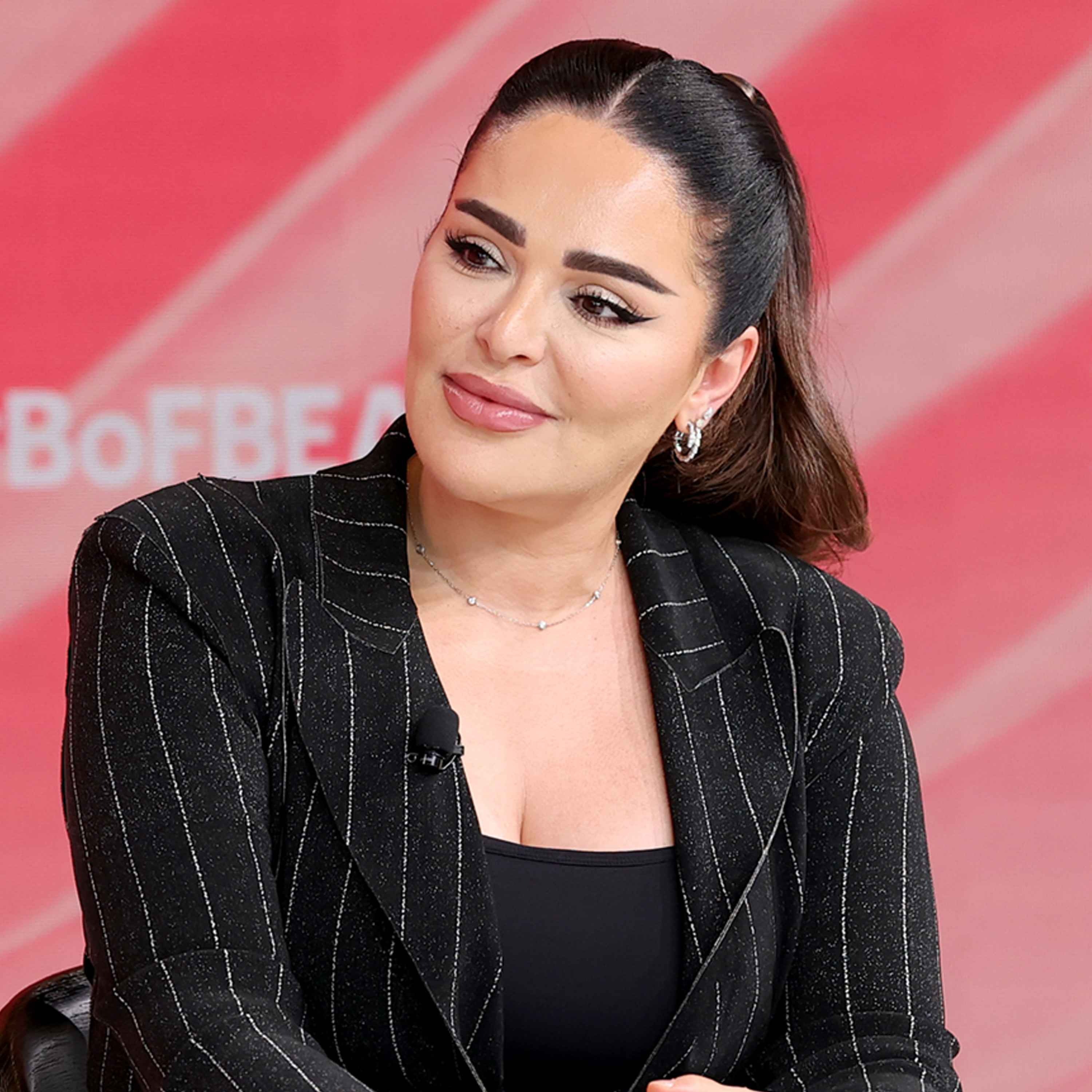
Mona Kattan discusses therapy-driven self-awareness about codependency, then how she gained the courage to build Kayali (K.A.L.E.) independently from Huda Beauty—culminating in a 2017 internal incubation, a corporate carve-out, and General Atlantic backing after TSG’s exit.
Mona Kattan is a Middle East–rooted entrepreneur and fragrance collector (thousands of fragrances). She co-founded Huda Beauty with her sister Huda Kattan, previously worked in banking, then moved into PR and entrepreneurship (including a beauty salon). She later became the founder behind Kayali.
Partnerships can blur vision; independence is needed to protect a founder’s North Star. Therapy revealed a pattern of never building solo. Founder-friendly investors matter more than valuation.
Dubai fragrance rituals (layering oils, oud, Coco Chanel with oud oil). Kayali’s carve-out from Huda Beauty; General Atlantic board described as patient, experienced, and story-focused. She plans a decision by Q1 2028 on strategic sale vs more capital vs IPO.
Written by AI. May contain mistakes.
Mona shares her lifelong passion for fragrances and its cultural significance.
“Such an honor to be here with all of the amazing people and especially with you, Imran.”
Mona recounts her path from banking to starting her own brand within Huda Beauty.
“Men were wearing Coco Chanel and putting, like, oud oil with it and making it so unique.”
Mona discusses the complexities of working with family in business settings.
“You need millions of dollars to start a brand.”
Mona reflects on her personal growth and the need for independence in her career.
“I had no intention of ever pulling out of Hidabiti like my I'm still supporting Hidabiti at that time I was very involved.”
Mona explains the stages of separating K.A.L.E. from Huda Beauty and the benefits of independence.
“So it's one thing to have that realization.”
Learn how to effectively manage family relationships in a business context.
“And you can become private again, because that's what she wanted.”
Discover key insights on selecting investors and maintaining creative freedom.
“But I think I'm so focused on what I'm trying to do and build that that just hasn't crossed my mind yet.”
Understand the importance of long-term strategies in entrepreneurship.
“Even the nice investors want to make lots of money.”
Explore the challenges and truths about being an entrepreneur beyond the glamor.
“I mean, like we were talking about influencers earlier.”
Learn why strategic planning and patience are crucial for long-term success.
“I don't have, like, I really love working.”

Get the gist, explore an idea or ask about something said.
 Claude
On The Business of Fashion Podcast, what are the key points of this episode?
Searching your listeningAutomatic transcript. May contain errors.
0:04Mona Kattan: Hi, this is Imran Ahmed, founder and CEO of The Business of Fashion. Welcome to the BOF podcast. It's Friday, July 3rd. Mona Kattan has been collecting fragrances for most of her life. That obsession eventually became Kayali, a fragrance brand she built inside Huda Beauty, the global cosmetics company she co-founded with her sister Huda Kattan. In 2020, something shifted. Mona entered therapy and uncovered a pattern that ran through her entire entrepreneurial journey. She had never built anything entirely on her own and began to ask herself what it would mean to do something fully by herself. And I am a very collaborative person, but I don't want to sacrifice my vision.
0:53Sometimes having like a partnership where it's like you have to decide like both feet have to go in the same direction doesn't really work. if you're not able to decide on your own. So that's where I just realized if I want K.A.L.E. to survive and thrive, I need to really create my own path.
1:09Mona Kattan: That path was made possible through a complex corporate carve-out that separated K.A.L.E. from Huda Beauty and brought in General Atlantic as K.A.L.E.'s new backer. Last week, Mona joined me on stage at the Business of Beauty Global Forum in Napa Valley, California, to pull back the curtain on that corporate split and dive deeper into the realities of building a brand within a multi-stakeholder ecosystem. Here's Mona Kattan on the B.O.F. podcast. Such an honor to be here with all of the amazing people and especially with you, Imran. Thank you for having me. Of course. um before we get into the the journey of being a founder I want to start with your earliest memories of fragrance um I know you've become like some extraordinary collector 4 ,500 a little bit more more now probably 5 ,500 like take us take us out like where does that all start I always find that People sometimes ask me, did you know you were going to do this job?
2:21Mona Kattan: Of course, I didn't know I was going to do this job. But I did know from a very young age, I was just drawn to the fashion world. Is it the same for you and fragrance? I would say it's the same for me and fragrance, but also beauty and entrepreneurship. Since I was the age of 13, I knew I wanted to be an entrepreneur. I fell in love with stories that I read about people taking an idea and making it happen, the whole rags to riches story. I also went through a depression. Where's Tina? She talked about that. And I fell in love with Tony Robbins and I started really obsessing with personal development and like really learning how to set goals.
3:02You know, so from a very young age, I just discovered that, you know, one day I want to create my own path. and fragrances is definitely something that's always resonated with me. I've loved fragrances since I was a kid. Like in terms of my senses, my sense of smell was always the strongest to me, like more than visual, more than hearing, more than anything. Whenever I'd smell something, I would just remember it so deeply and I'd connect it to an experience, a person. But I'd say my passion for fragrance really skyrocketed when I moved to Dubai. I moved there 24 years ago, a very long time ago, and just reconnecting with my roots, which are Middle Eastern, and seeing how my friends that I met there would wear fragrances, I found it so, like, just it completely expanded my mind.
3:49And I was like, you're putting oils on first, and then you're doing the perfumed smoke, and you're putting it on your clothing, your bedsheets, your house, and then you're putting so many different types of perfumes, you're layering, you're mixing. Men were wearing Coco Chanel and putting, like, oud oil with it and making it so unique. and I was like, there was no rules. So I think that it was really foundational to creating KLE. You know, the people I met really inspired me. The rituals I saw were just, I felt like they needed to be shared with the world. And yes, that's when the obsession went from being like a normal thing to probably a little bit insane.
4:24Like, I'm like, am I okay? I don't know. But it happens to everybody who moves to Dubai. Like, it's just such an infectious culture. Yeah, I love beauty. I love entrepreneurship. and I really love fragrances like no other.
4:39Mona Kattan: So it's one thing to be obsessed with something. I mean, we all have our personal obsessions. It's another thing to build a business around it. So you have this very unique personal story intertwined with your sister, right? It was also, had an entrepreneurial bug. Talk to us about how you first got involved with Huda Beauty and then within that business you decided to create a kind of sub-business of your own. Yeah, I mean, you know, for me, my journey was very different. It kind of started before even the Huda Beauty journey started. I left my career in banking. I studied banking, also like Tina.
5:24My father asked me to do so, and I did it out of respect for him and out of just believing he knew the right thing to do. Did banking for a year, and a year and one month later, I put in my notice because I was like, I know I want to do more. I felt held back. I wanted to contribute more. It was a big bank. It was like 12 ,000 people. So I was so limited to like a very narrow job description. And I had so much hunger. So I was like, I don't know what I want to do yet, but I know I don't want to do this. So I left and I just started doing PR. Had no background in PR, but everybody that I met was like, you belong in PR because when you talk, when you love something, you won't shut up about it.
6:00This is 2009 before social media really was a big thing. It was still very traditional at those times. But I'm a very obsessive person. I'm very passionate. And also, I just didn't know what to do. My friend was like, let's do it together. So we started an agency together. And I was doing PR for so many different brands. One brand that I reached out to was one of my favorite fragrance brands. And I asked them, I was like, can I do your PR for you? Not enough people know about your brand. It was also really expensive. I couldn't afford it. So I was like, can I have free perfume? And they were like, OK, we're going to give you a very small rate and free perfume.
6:31And I was like, done. Let's do it. And that was my first time really getting to know a founder story on a deep level. It was a couple. The brand is called McAuliffe. It's a French brand that's still very, like, too small for what it is. It's such a brilliant brand. It should be much bigger. And I was like, you know what? I really want to do this one day. So actually, my first samples are from 2010, 16 years ago. Like, I was, like, back then just thinking maybe one day I could create my own brand. Again, I always knew I wanted to do my own thing. But everybody that I met was like, you don't have enough money.
7:01You need millions of dollars to start a brand. and I believed them. And so I met investors, and I got so close to a really big family, a big business family in the UAE. Last minute, they were like, oh, we just can't do this right now. So I kind of just put my dreams on the back burner, but it was still there. It was always like, one day I want to make this happen. The concept from back then was probably a lot more regional, but it still was very similar. It was like four different fragrances, layering them together, creating emotions. And then I started a beauty salon. And through that beauty salon, again, like the love for glamour, the love for beauty, the love for business.
7:36It was my first real entrepreneurial experience where I had employees, I had a proper trade license. And I got that 360 business experience of like learning how to hire, set up your IT, do the legal work, like every single part of the business was what I was doing because we didn't have enough money to have like management. While I launched the salon, that was 2012, I actually was supporting Kuda then. I was doing her PR for free. I told her to start a blog because at that time in 2010 when she started, it was like the only way to get awareness if you didn't have money. So she started the blog.
8:12And when I was sourcing products for my salon on Alibaba, because I was trying to get cheaper products from China, because in Dubai the market was so crazy, I found lashes. And I was like, Koda, what do you think about creating a lash brand together? I found like great suppliers online. What do you think about starting a brand? And she was like, if you can help support on the business side, let's do it. So we started the brand with her and my sister Alia. We did it together. It was just the three of us for quite a long time. And it slowly grew into something much bigger than that. But from day one, it wasn't really planned.
8:43There wasn't this grand master plan of like creating a full color line and making it extend and then launching KLE under it. it just happened naturally. You know, I think at that time, my vision was to create this big, like big group of companies with the family, which it slowly changed over time, because I realized, you know, for me to really make Kale what I want it to be, I need a fully dedicated team and my own resources, which happened over many years, you know, the realization.
9:10Mona Kattan: Yeah, I mean, it's interesting, because in a way, working with family, they know you better than anybody else. But working with family also creates this blurred line blurred lines between professional and personal so when you decided to create Kali or incubate it internally what were the benefits of doing it that way and what do you think perhaps held the brand back from what it could be I mean at that time I had no I had no intention of ever pulling out of Hidabiti like my I'm still supporting Hidabiti at that time I was very involved. So when I was first incubating KLE, it was January 2017. That's when the actual brand started the development.
9:53I always pictured, like, creating the business together. We had a lot of resources. We raised capital that year with TSG. They're somewhere in the room. So we had these amazing investors backing us, giving us resources, giving us support. So at that time, I think, you know, first of all, I never imagined leaving my family. I just never thought of it. But secondly, we had great resources to help support a very tiny baby, which, you know, for the first three years, Kayla, was very tiny. Actually, probably even longer. It just snowballed over time. You know, from like 2022, it started to snowball.
10:27But in the very early days, it was kind of a make it or break it incubation period. So I think having so many great resources was definitely very important. I think that I realized that in 2020 when I think everybody started doing therapy maybe I mean I did that's when I was like oh my god I can't believe I am codependent my ex told me I wasn't I like I didn't believe him because I was like you know when exes tell you things you don't listen but he's like you're too codependent and I was like no I'm not and then I realized I am and I was like what would independence look like well when you say codependent
11:05Mona Kattan: What does that look like? Before, and it wasn't only, you know, business with my family. Every business I ever did was with a partner. And I think there's very different, it's very different than having a partner and an investor. You know, with partners, you have to co-create your vision. You know, you have to decide together what does the North Star look like. And, you know, when I was working with my family, I always had to sacrifice what I truly wanted because it wasn't fully in line of, like, what everybody else wanted. and I think for me, I have a very clear vision of what I want and everything, you know, but I think it was clouded because I was like, I realized I couldn't do what I wanted because I had to like ensure that we all made the decisions together really, but after going through therapy, I just realized there is another way and I don't necessarily need a partner, have amazing support through my team and I am a very collaborative person, but I don't want to sacrifice my vision, like and I'm sure you feel that way with BOF like you're you have such clarity of what you're trying to do for the industry what you're trying to change how you're trying to create impact and sometimes having like a partnership where it's like you have to decide like both feet have to go in the same direction doesn't really work if you're not able to decide on your own so that's where I just realized if I want KLE to survive and thrive I need to really create my own path So it's one thing to have that realization.
12:30Mona Kattan: It's another thing to communicate it to other people, particularly your partners, right? So when you sit down with Huda, with whom you've built two businesses at this stage, right? Yeah. How do you express that in a way that maintains the personal relationship that's always going to be there? Right. While also being able to separate the professional relationship. I think it happened in stages. You know, I think at the very beginning, I wanted more resources. And I wasn't really willing to take no for an answer. So I started doing things on my own. I was paying for things on my own. I set up an entity on my own.
13:13And I was like, let me just do what the business needs, even though I'm not getting a yes from, like, the group of companies and everything. but I think that it happened naturally. We also had to, I think it was such a blessing, we had TSG, again, I don't know where they are, but Colin, there's Colin, so you know, we had to solve for them wanting to eventually exit once you have private equity. We all know that they eventually want to exit and return their funds to their limited partners, their investors, so she also had to solve for that, so I thought when we started planning, because of course you have to work so far in advance.
13:48And like 2023, we started talking to bankers and deciding like, what does the route look like for the future? I was like, I have an idea. I was like, how about we carve out Kelly, I can, you know, then become independent with a new partner. And you can become private again, because that's what she wanted. So I think that because it all happened in stages, it wasn't like I immediately told her that I don't want to work with a family anymore. I just, it was like, let's, let's problem solve together. Let's figure out a solution for everyone. And I do think in the end of the day, the stars aligned and everybody got what they wanted.
14:21And it's probably healthier and better for everyone because I also feel that I am a very, I don't want to say bossy person, but I like to be involved in everything. And I was also like, I want to be involved in everything you're doing. And I think at one stage, she was like, you don't need to be. Like, we've got an amazing team now. And I was like, I got bored a little bit because I like to problem solve. I like to create. I like to build. So yeah, I think it was a blessing for everyone.
14:46Mona Kattan: Yeah. Building something with your sister is possibly like one of the most like intimate things that you can do, right? So when you go your separate ways, now that you have a bit of distance, what's different now? What do you miss about the way things used to be when you were working so closely together? I think it's too soon for this question. Right now I'm like nothing. 18 miles. I'm like, I'm good. um it's too soon I think I mean I think you know because I'm still like we're although we we signed our deal in February but the deal closed was May 30th our carve out was January that's when we finished it so we're still like in that carve out pains stage of like really needing to stay focused um I'm a workaholic I barely see my family I barely see my husband really see anyone if like we're not working together I just don't see um people so maybe what I miss is like the trips for work because that was the only time we had time to bond and like do other things.
15:44But I think I'm so focused on what I'm trying to do and build that that just hasn't crossed my mind yet. Maybe in like five to 10 years, I might think about it, but not now.
15:54Mona Kattan: All right. No. One of the other things you had to do as part of the kind of exit for TSG was to choose new partners, right? And you had to find your own investors. General Atlantic backed KLE. there's a lot of founders in the room who are making those kinds of decisions about with which investors to work with you now have experiences of both starting with TSG exiting with TSG and starting with General Atlantic like what what were you looking for what wisdom do you have to share about how to navigate those decisions because it's not just about who's going to give you the highest valuation is it no it's not and I think that um you know first time around I think there was a little bit of naivety from all of us.
16:40You know, we did want the highest valuation. And I'm not going to say there's any regrets because everything happens for a reason. But this time around, of course, who it is matters. But we all know, like, the blue chip investors, which TSG is, GA is, you know, what really matters is the deal and the people on your board. You know, so that's what I was really looking for is, like, the right deal terms that would still allow me creative freedom, still allow me to have a balanced relationship with my partners. I wanted freedom and independence, so I didn't want to go from going from not having it to not having it again.
17:15So just ensuring that we had the right deal and the right people on my board. My board members are two amazing women, and they're incredible.
17:24Mona Kattan: What makes them good board members? They're very experienced. They're patient. They're founder-friendly. They care about the story. They're not only money-driven. I mean, look, investors, it's their job to be money-driven. That's what they're in the business of, is making money off of people's money. But, you know, they're also caring about the story, the long-term health of the brand. You know, because for them, it's not only about, like, pumping and dumping. They want to see it succeed because they have a track record to protect. They have a reputation to protect, too. And that was something I cared about because, for me as well, like, with Kayali, like, I don't ever really want to retire.
18:01You know, that's not something that I ever see for myself. so I'd love to work on KLE forever so working with partners that also care about that long term health of the brand and what you're building is very important and reputation ask around, ask for advice ask for other founders who worked with people but really work on the deal terms, get a really good lawyer and really good bankers those things really matter make a huge impact
18:29Mona Kattan: Last night at dinner you and I were talking about your relationship with General Atlantic, which sounds incredibly positive, but at some point, they're also going to want an exit, right? Even the nice investors want to make lots of money. Of course, they have to. Even the founder-friendly investors. It's their job. And you just said you wanted to potentially work with Keali forever. Earlier, we were hearing around how Unilever Prestige thinks about buying into brands and keeping founders involved. How are you thinking about exit timelines and strategies? Like where does Keali go from here? I'm an overthinker, so I have like tons of spreadsheets already.
19:10I have different like scenarios. You know, I think it's too soon to say, like, again, just because we only got our independence. We haven't been a fully formed company for even a year yet, like as a carved out company. So I do think it's too soon to speak timelines. it's too soon to really give that. And maybe it's also confidential. Like, I don't really want to share that. But I do have it in my plan, in my calendar, like Q1 2028. I need to decide, like, what...
19:38Mona Kattan: Q1 2028. Yes. That's very precise. So why do you need to decide then? What do you need to decide by then? What do you need to decide by then? I need to decide whether or not we're going to work on selling to a strategic, raising more capital, or doing an IPO. If it's an IPO, of course, it's going to take many years, probably three years or longer even. If it's a sell to strategic, it will also take at least a good year to do a good job. And again, you never know. It could happen sooner. It could happen later. We don't know what will happen in the industry, in the economy. Many factors are really important.
20:19But what I do know is I really want good partners because, again, I don't want to retire. I don't want to, I'm not here to pump and dump this brand. That's not my intention. I want to stay with it. You know, I think there's so much more to be done.
20:31Mona Kattan: I can totally relate to that feeling as a founder. So last question, that 13 year old girl who was interested in fragrances and beauty and wanted to be an entrepreneur. what do you wish she knew then that you know now about what an entrepreneurship journey is like because I think you know so many of the media are guilty of these narratives around you know the the glory of entrepreneurship the the kind of credit you get publicly for it The money you make, there's all of this narrative in the media about why being an entrepreneur, but the reality is a lot more stark than that. Oh, yes. I mean, like we were talking about influencers earlier.
21:28I'm sure everybody who is sitting here as like being an influencer, you get a lot more money as an influencer. I was being paid more money when I was an influencer in fragrances. It's not just glory. It's long term. If you really want to be successful, you need to be in it for at least 10 years, minimum, right? Like you can't just build an amazing. It happens, but it's rare. You can build a great brand, sell it in five years, but it's very rare. You need to be invested long-term. You need to understand that you might not make any money for the first four or five years. You might even be just pouring all your savings into it, and it might fail.
21:59That's just the reality. I've had failed businesses before and many learnings from those experiences, so you need to be comfortable understanding that it's not only the positive. It's not only going to be one way up. It's going to be a roller coaster. it's going to be tough and you really need to be in it out of like the pure obsession and passion for it um and you also need to it's it's it's about everything that you're not told it's not about the money it's not about the the awards it's not about these glossy things if you do it for those reasons don't do it like just be an influencer and I'm not saying I'm not discrediting influencers that's also a tough job but you get the satisfaction much quicker you know if you want to be a real entrepreneur.
22:41Like you need to be in it for the long term and you need to be ready to like ride a lot of waves. Like it's, it's going to be a rollercoaster.
22:47Mona Kattan: What keeps you going in the hardest moments? Um, I think I'm a neurodivergent. I'm just obsessed. I don't have any other choice. I'm like, what else am I going to do? Um, I don't, I, I don't know. I don't have, like, I really love working. And I think that, um, I've learned through reading about other people's stories, other, you know, journeys people have had. If you never get up, give up, you eventually get there, you know. So why give up? I mean, even if, like, you have a goal, even if you reach it by the time you're 80, you still reached it. So, like, be patient. You know, I think a lot of people are too, you know, they're too impatient with themselves.
23:27Like, some of the best stories happen over a journey of 30 years, you know, or 40 years. Like, I'm not in a rush. Maybe when I I was younger I was more in a rush but I think that once I hit like 35 I was like oh I've got
23:40Mona Kattan: plenty of time but by Q1 2028 you need to make a decision I have to have everything in my calendar I have OCD I have to have things planned and you know how it is like if you don't plan in advance like time flies yeah five years flies like this yeah so if you don't have like a rolling five to eight year plan you're going to be so behind and that's something that I just you know I think maybe in the past they didn't think far ahead enough. It was more like one year, two years at a time, and you just can't do that. You need to think five to eight years at a time and update it all the time when you get more information, more results, like keep updating your plan.
24:17But yeah, I think it's something that we should all do, whether you're an entrepreneur, it's personal goals, leadership goals, whatever it is, we should all have a long-term plan and keep updating it.
24:29Mona Kattan: All right. Well, we'll all be tracking your progress, but thank you for sharing your story. Thank you so much for having me. Thank you. I love you.
Mona Kattan has been collecting fragrances for most of her life. That obsession eventually became Kayali — a fragrance brand she built inside Huda Beauty, the global cosmetics company she co-founded with her sister Huda Kattan.
In 2020, something shifted. Mona entered therapy and uncovered a pattern that ran through her entire entrepreneurial journey: she had never built anything entirely on her own. She began to ask herself what it would mean to do something, fully, by herself.
“I am a very collaborative person, but I don’t want to sacrifice my vision,” she says. “Sometimes, in a partnership … having to move both feet in the same direction doesn’t really work if you’re not able to decide on your own. That’s where I realised that if I want Kayali to survive and thrive, I need to create my own path.”
That path was made possible through a complex corporate carve-out that separated Kayali from the Huda Beauty group and brought in General Atlantic in as Kayali's new backer.
Mona joined BoF founder and CEO Imran Amed on stage at The Business of Beauty Global Forum in Napa Valley, California, to pull back the curtain on that corporate split and dive deeper into the realities of building a brand within a multi-stakeholder ecosystem.
Key Insights:
Additional Resources:
Hosted on Acast. See acast.com/privacy for more information.