
 Ask ChatGPT


 The Business of Fashion Podcast
26 Jun 2026 · 30m · 12 chapters
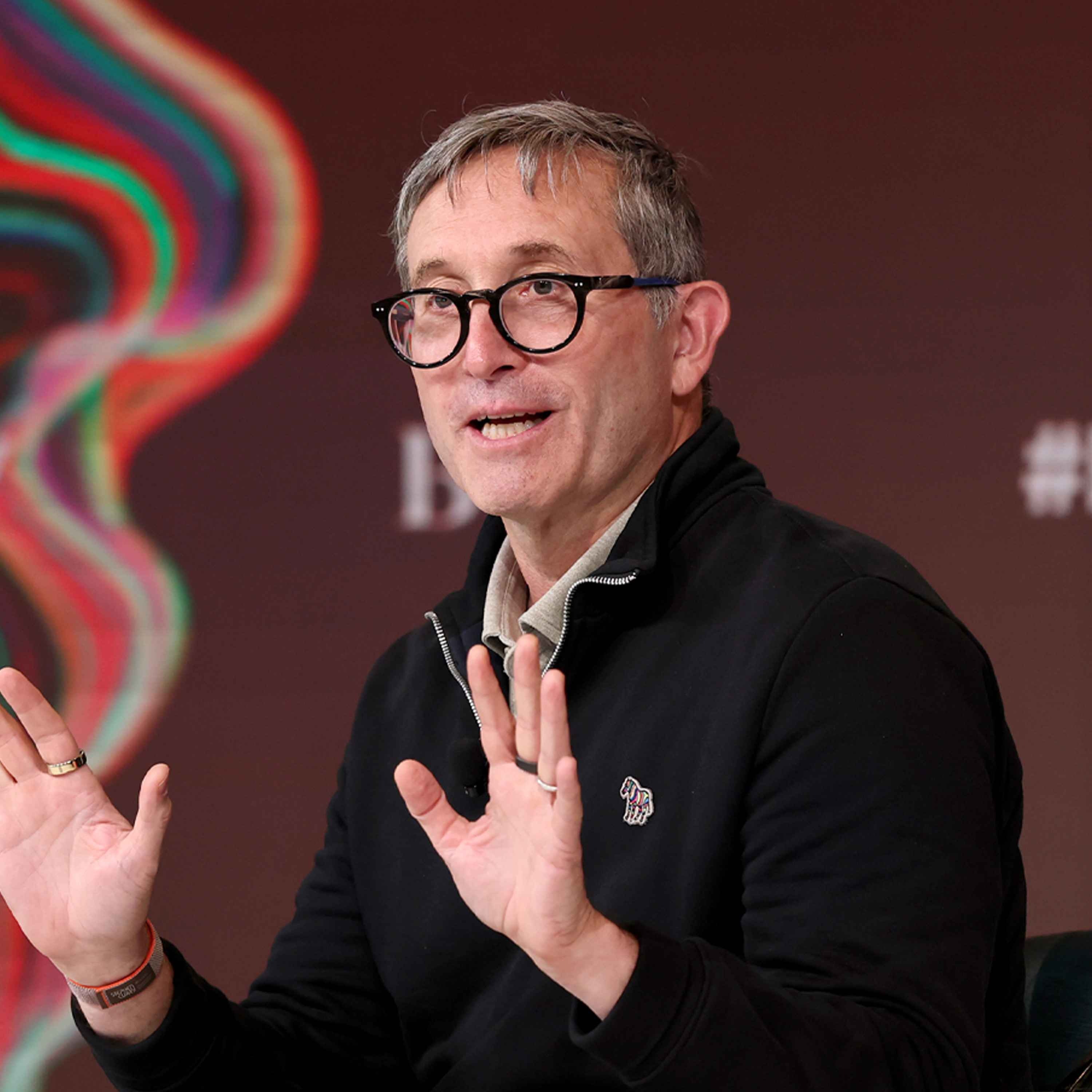
Oura CEO Tom Hale discusses Oura’s “health intelligence” vision, its IPO, and how wearable biometrics can power personalized predictions and behavior change.
Tom Hale is CEO of Oura (joined in 2022). Oura began in Finland as a Kickstarter project by three founders; Hale presents the company’s strategy and growth.
Oura is building a “large physiological model” that predicts short- and long-term health outcomes from continuous biometrics. Oura’s growth is attributed to women’s health use cases, retail expansion (better sizing), and HSA/FSA accessibility. Privacy is “non-negotiable,” with employees unable to access individual data; HIPAA-like constraints are cited. Membership (not the ring) is positioned as the product, with high retention (80% at one year; 85% at year two).
“Symptom radar” alerts during COVID (temperature/HR/respiration/HRV changes in ~25–30 minutes); a Paralympian whose alert led to an appendix diagnosis before rupture; period prediction (fertility/contraception use). Acquisitions: DoublePoint (gesture interpretation from wearables) and Galen AI (AI interpreting wearable + lab data for clinicians).
Written by AI. May contain mistakes.
Tom Hale discusses Oura's growth and its role in health intelligence.
“This summer at Macy's we have the Kate Spade tulip tote which is structured but easy to carry all day and jelly sandals are the shoe of the summer.”
Tom Hale discusses Oura's growth and its role in health intelligence.
“million in annual revenue to$1 billion in revenue last year, achieving an$11 billion valuation.”
Tom elaborates on Oura's growth factors and the importance of retail.
“Tom is possibly one of the busiest men in San Francisco at the moment as he's readying for this IPO.”
Discussion on how Oura influences user behavior for better health.
“And then the third thing, and I think, you know, this is probably an interesting study in how to think about pricing.”
Examples of how Oura users benefit from insights on health and wellness.
“We think of ourselves as being in the behavior business, not in the ring business or the fashion business or anything like that.”
Tom discusses competition in the market and Oura's intellectual property approach.
“So I think the experience of any pioneering company is that when you go out and you do something new and pioneering, there are lots of people who come into your space and start to encroach on it.”
Learn how Oura prioritizes data privacy and security in health tracking.
“In fact, it's one of the reasons why, you know, people have asked us why we have a membership subscription model.”
Explore the strategic importance of recent acquisitions for Oura.
“And particularly in healthcare domain, you can't lose that trust.”
Understand the implications of a busy IPO market for Oura's future.
“I mean, everyone's, I'm sure, followed the recent success of SpaceX and their IPO and the ups and downs of the market since then.”
Discover how Oura aims to redefine healthcare with personalized insights.
“Everyone should have a device on their body.”
Examine how Oura influences user behavior and health choices.
“powerful place and maybe opportunity that we have.”
Learn about what truly affects longevity and health span through everyday choices.
“Did you drink two hours before you went to bed?”

Get the gist, explore an idea or ask about something said.
 Claude
On The Business of Fashion Podcast, what are the key points of this episode?
Searching your listeningAutomatic transcript. May contain errors.
0:00This episode of the BOF podcast is brought to you by Macy's. Sometimes the accessory is the outfit. This summer at Macy's we have the Kate Spade tulip tote which is structured but easy to carry all day and jelly sandals are the shoe of the summer. Translucent, lightweight and just really cool. Oversized sunglasses and the same clear vibe tie the whole look together. For beauty, Clarins Lip Oil and the new La Vie Belle Body Mist from Lancome. Find it all at Macy's, in-store or at macy's.com.
0:39Hi, this is Imran Ahmed, founder and CEO of the Business of Fashion. Welcome to the BOF podcast. It's Friday, June 26th. The boundaries between technology, wellness and luxury are blurry. Wearable technology is no longer just about tracking steps. It has become a sophisticated tool for lifestyle optimization, personal health intelligence, and a subtle statement of identity. Now there are more devices than ever to help us in this pursuit, but at the cutting edge is Aura. Under the leadership of CEO Tom Hale, who joined the company in 2022, Aura has grown from$220 million in annual revenue to$1 billion in revenue last year, achieving an$11 billion valuation.
1:27Last month, Aura filed for an IPO that could be one of the most significant public market tests for consumer health technology so far. We are a health intelligence platform that will redefine the future of healthcare. Everyone's already got a supercomputer. Everyone should have a device on their body. There should be a machine intelligence that is personalized and customized to that individual and a large physiological model that is making predictions about health outcomes in the short term and the long term based on your ground truth of biometrics. Tom joined me on stage in Napa Valley, California during the Business of Beauty Global Forum 2026 to unpack how the company plans to build a large physiological model to redefine the future of the global healthcare and wellness landscapes.
2:13Here's Tom Hale on the BOF podcast.
2:19Thank you very much. All right, we have a lot to cover. Tom is possibly one of the busiest men in San Francisco at the moment as he's readying for this IPO. So I'm very grateful that you carved out some time to be with us. I also should be upfront about a couple of things. I have been wearing an Aura ring for six years. Thank you. After I fell in love with the Prada, I became a very small shareholder in Aura. I recently sold about 90 % of my shareholding, but I'm still a small shareholder, so I just wanted to be very clear up front about that, that I come to this conversation as a neutral observer, but I'm also very passionate about this company and this product and I'm super grateful that Tom is here for us today for those of us Tom in the room who are not familiar with Aura perhaps you could just give us like the 60 second origin story what's the lore every every cool company in the world has a foundation story what's Aura's story?
3:30Kickstarter in Finland three guys with a dream that a health ring could transform the way health is practiced, envisioned that they could do it, and here it is 13 years later, and we actually are in the middle of transforming the way health and how individuals prosecute their health. So I understand you've sold 5.5 million rings. As of last year. As of last year. More, I guess, more as of now. Yeah. About half of that has happened in the last 12 months or so. What explains this like inflection, change in inflection point growth trajectory over the last 12 months? It has been a wild, wild ride.
4:13Anybody can imagine that. And the three things that really affected us, the first is actually women's health. Women were underserved, certainly by wearables. We sort of made some very good decisions about use cases for women and that drove our growth and it flipped the constituency of our customer base from mostly men to mostly women. Really? Yeah so that was the first thing. The second thing was we went into retail and I think the marketers and retailers who are here would understand that because some of what makes Aura interesting is has some of the properties of jewelry. People think about it not necessarily as a piece of technology with feeds and speeds but as something that they'll wear on their body 24-7 and at a very well-fashioned event like this.
4:58You might see that as opposed to wearing a, here's my new watch. What do you think of it? Do you like it? It's very nice. Hold on. So retail turned out to be a huge transformation also because you have to size the product. And so going into a retail outlet and putting your hand in our little sizing thing was a much better experience than how we do it today, which is we ship you a sizing kit, you size yourself, you tell us what size, we ship you the ring, multi-step process. So that was the second thing. And then the third thing, and I think, you know, this is probably an interesting study in how to think about pricing.
5:34Maybe those of you who own Oura Rings, thank you very much, appreciate you. They recognize that we have taken a premium, not a low price approach to the market, and that premium has accrued to us in lots of ways, not the least of which is that people think of us as a as a high quality jewelry brand, which we are, but also they think of us as a tool that should be trusted, you know, with their most intimate data. But that pricing strategy makes it harder to provide access to people who might need or benefit from the product. And so one of the things that we did and we were the first to do was we made the first wearable that was accessible through your HSA or FSA program so that your employer set aside pre-tax funds could be used for this device because it was a health device, not a jewelry device.
6:18HSA or FSA for those of us who don't? Health, savings account, flexible spending account. So basically some portion of your paycheck is put into these accounts. It's pre-tax dollars. And then you could use that money to buy an oral ring and basically use a credit card-like experience on our website. And you type in your HSA credit card and it gets charged against that account. Interestingly, what happened was we were surprised to find that that shot through the roof in the last week of the year because, of course, that's when your HSA, FSA funds might expire. but interestingly it turned out to be a year-round way that people got access and we've been very successful so those are the three things that really catalyze the business okay I obviously have my own experience with the ring and how it changed my behaviors but I'm sure my experience isn't reflective of the kind of general experience or 70 percent of the audience yeah but like what how what tell us some of the stories about how this device yeah actually changes the way people live.
7:15It's one thing to get people to buy a ring. It's another thing altogether to get people to change the way they live. I think that is a spot-on observation. We think of ourselves as being in the behavior business, not in the ring business or the fashion business or anything like that. We're in the business of helping people make healthy habits over the long term. And the thing is that for everybody, that's actually a slightly different story. For me, healthy habits were things like not drinking too much coffee and wine in order to fall asleep at the end of the day after being all jacked up on coffee and changing that habit was transformative for me.
7:46For other people, you know, one thing that's surprising about Aura for some people is that one in four Aura Ring customers tell us that they use the Aura Ring to manage their chronic illness. And their chronic illness could be something like ME-CFS, chronic fatigue syndrome, could be POTS, postural orthopedic tachycardia, could be lupus, could be IBS, could be a bunch of things, but it's generally not well served by the traditional health care. And so as a result, having a tool which gives them an insight into their physiology and how they're doing is really powerful. I mean, so maybe they're not trying to get 10 ,000 steps in.
8:19They're trying to not get 1 ,000 steps in because if they get more than that, they could have a crash. Or maybe they're really worried that if they get a small cold and they're immunocompromised, that small cold could put them out of commission for three weeks. So the power of this tool as a health tool is actually really surprisingly different from somebody who's sick versus somebody who's healthy. Most people think of wearables as the tool of the healthy wealthy, you know, who are trying to optimize or trying to, you know, hit some goal and, you know, achieve some longevity magic or something.
8:47That's true, but it's actually really, really valuable for someone who's not well. Maybe a couple of examples here that are compelling. So who here in the audience has ever had a symptom radar alert on their, yeah, I see a couple around here. So this is basically us looking at your biometrics and seeing a set of signals happening in a very short amount of time. And those signals are the kinds of things that indicate that your body is starting to have an immune response. So this is your temperature rising, even a very small amount. It is your heart rate elevating a little bit. It's your respiration changing.
9:19It is your heart rate variability taking a dip. And all of these things happening within the space of about, you know, 25 to 30 minutes means we're actually pretty sure that something's coming for you and your body's starting to respond to it. It's a really interesting capability we developed during COVID. So this turns out to also signal that your body's under a kind of stress. And so here's an example. There is a Paralympian. He was getting these symptom radar alerts. He went home to visit his family for the weekend. And he said, you know, I really think I should go to the doctor. And they were like, don't be a wuss.
9:50You're a Paralympian. you don't need to go to the doctor. This is bullshit. This device, I don't trust that. And he's like, I don't know. I kind of feel like maybe I should. And he ultimately ended up staying for the whole weekend, not going to the doctor. And when he finally returned and went to the doctor, the doctor said, it is a good thing that you came today because your appendix was about to burst. And you could have died within 10 hours of sepsis. So that kind of like, we call it a check engine light for your body or an early warning system on your health, that sort of predictive power coupled with behavior change, that's a little bit how I think about the two sides of the value.
10:25Behavior change happens because you see the quantitative and meaningful and trusted change in your physiology based on behavior change. I drink less coffee, I get more sleep. Okay, check. That's easy to understand. I change the way I eat, I actually feel better. I change the way I eat, my blood sugar stays within a certain range, as we were looking just before we were here. Those kinds of things are behavior modification, but prediction and understanding where you're headed with your health journey turns out to be like sort of a superpower. I'll give you just one more example. I have daughters, I have kids or women.
10:57And for them, when they were in middle school, if they had had a device that could predict their period within a half a day, which is one of the things that Orrind can do. It makes a prediction about your period based on the change in your body temperature, which everyone knows is a way you can do fertility or avoid getting pregnant, which is contraception. But we make this prediction. if they could have known within a half day when their period was coming guess what it would have been a superpower for them and their their 13th and 14th years which I remember both fondly and distinctly it would have been a real it would have been transformative for them and so our vision is is like how do we become something that you have on your body it it meshes into your the background of your life it's not something that's like another digital mouth to feed it's not asking you for attention it's not trying to engage you it is trying to support you on your journey whatever that journey is, and that we imagine we can be that for you over your entire life.
11:49Well, what would that look like, and what would that be, and what would be the different use cases and behaviors and things that we would do? That's what we are, that's what we've set ourselves against, and as you pointed out, that's why we've achieved this valuation, because people are starting to believe that vision, which was imagined 13 years ago in a Kickstarter garage in Finland, they don't really have garages in Finland, but you get the idea, has actually started to come true. All right. So I think the experience of any pioneering company is that when you go out and you do something new and pioneering, there are lots of people who come into your space and start to encroach on it.
12:24Right. So Samsung has a ring now, a smart ring. Yeah. Apple's reportedly working on one. There are, I call them dupe brands, trying to take the kind of aura form factor and given your premium pricing have gone kind of undercut your pricing. Yeah. I think in India especially. So what are you doing to keep your competitive advantage in this kind of really interesting new market that's starting to grow? Well, first of all, they say that imitation is the sincerest form of flattery. So thank you. All of those competitors have seen the market opportunity, and we're at the beginning of this category, so we're not really too worried about, like, it's a market share battle and price is not the most important thing.
13:09But to answer your question directly, the kinds of things that we have focused on, the first is actually science and validation. And the thing is, is that, like, you might think, oh, well, okay, that sounds like a lot of, like, people will say, yeah, they have science and validation. But, you know, I think we're talking to the medical community. 11 % of Oura Ring wearers are doctors or nurses of some form or another. And as a result, that kind of credibility, you can't buy that. You have to earn it. And you can't buy that even if you bring a ring to market and you're as powerful as a major conglomerate company might be, even though what they really want to do is sell you a ring as well as a washer, dryer, and a refrigerator, and a bunch of other things.
13:45They don't really care about your health. So that's the second thing, which is that we're really oriented and focused on your health. We exist for your health. We're not there to take your data and do something with it. We're not there to sell you another device. we are there to make you have a healthier, longer life. And that is a really important, like, property of Aura as a brand. That is all we exist for. In fact, it's one of the reasons why, you know, people have asked us why we have a membership subscription model. And the purpose is we don't want to have any incentive to do anything with your data other than serve you with it and to invest more and more in serving you with it.
14:17So that's the second thing. I think the third thing about competition, and this may surprise people, but we have invested very heavily in intellectual property. And it turns out there's a reason for that, because intellectual property turns out is a way of protecting yourself against, you know, we put probably, you know,$250 million of work and maybe, you know, millions of people hours at work, and we're protecting that investment. And Samsung is in the middle of learning this less than the hard way. Right. Yes, I know that there's some legal conversations happening, which I will... We'll quickly move past.
14:50I'm not that interested in legal conversations. I am interested, however, in the mention you just made of like the sensitivity of managing data around health and building the kind of trust required for people to say, okay, you can hold my data. You know, you've moved into, you know, not just readiness and stress and women's health and metabolic health and glucose. I was like, as you think about this growing set of data, how are you thinking about protecting that data? We all know that cybercrime is a growing, you know, hacking and all this kind of stuff is a big issue. But also, there's an opportunity in bringing all of that data together.
15:30So there's a risk in managing the data, but there's also an opportunity. Yeah. So privacy and security is a non-negotiable for us. I mean, it's sort of, as you said, it's a property of the brand. You need to trust us. If we're able to see 14 days before you're pregnant, that you're pregnant, that's really sensitive information in a lot of different contexts. And so we think of ourselves as bound by the same kind of privilege that a doctor and a patient might have. We certainly invest in our technology in a way to ensure that that's true, to make sure that there are not data breaches. In fact, one of those copycat companies that you mentioned actually did have a massive data breach where everyone's health data was exposed to the internet.
16:06Wow. I mean, that's terrible. And so part of the benefit of a premium brand is that we can invest to make sure that that never happens. So we do take that kind of approach. There's certainly been people who have had concerns about privacy, and I think we think of ourselves as bound by the same kinds of constraints as something like HIPAA. If you know, that's the Health Information Portability and Privacy Act. And the thing that's interesting about that act is that it is actually true that most technology companies are going to be much better than most healthcare companies in terms of defending your data, just simply because of the kinds of investments that technology companies make relative to that.
16:40We have both the margin and the time and the energy and the expertise to do that. Anyway, HIPAA is part of our fabric of the way we operate. Many people ask me, can you see my data? And I say, I cannot see your data. There's literally no scenario in which I get access to your information. Same is true of 99.9 % of the employees in the company. They cannot query an individual's data. It's just not possible. The system doesn't allow it. So privacy is a non-negotiable. And maybe more importantly, the trust that comes from that is critical to us. It's something that, and you guys all know this, You can earn trust and it might take you 10 years.
17:16You will lose it in a second. And you cannot afford to lose it because if you do, you're dead in the water. And particularly in healthcare domain, you can't lose that trust. Okay. You've recently made some interesting acquisitions. There's two I want to talk about in particular. One is called Galen AI and one is called DoublePoint. Can you talk a little bit about what those companies did and for a company that's on track for an IPO, like why and how they fit into your future vision? Yeah, so I'm a technologist by background and training. And for me, acquiring small teams with really good technologies is part of how you build a company because you can get something that's maybe not completely formed, but you have domain expertise, you have technology, all those things.
18:00So that is a playbook that we have run. We've done four acquisitions. Those are two of them. I'll take DoublePoint first. So DoublePoint is a company that uses the data off of wearable devices to make gestures interpretable and meaningful. So for example, let's just say for the moment that you could use your Aura Ring to pay. You needed to alert the device that you could actually instantiate a payment. So you might go like this and then put your ring in front of the payment terminal and pay. So the gesture detection, that's what DoublePoint does. They did it extremely well. The demo that they gave us that caused us to buy them was that they showed someone running and he's like this and his music stopped and he went like this and his music played and he went like this and he changed songs and that's the capability And because we believe that this is a, if this is a device you have on your body 24-7, what else might it do for the world when it's able to say, this is Tom, these are the devices he controls, he just gave this input, what would you like to do with that?
18:51I'd like to unlock the door, I'd like to unlock the computer, I'd unlock the phone, I'd like to blah, blah, blah, you get the idea. So that's double point. Galen is a bid on AI. They were a company, came out of Stanford, they were building AI for clinicians using wearable data. And so what they do is they take all of the data that they can get access to, your blood tests, your wearable data, your biosensor data. I'm wearing a blood sugar monitor right now. We were looking at it. And making sense of that and interpreting and then providing input to users and to clinicians both about what does that mean, making sense of the data.
19:24Which turns out that's actually the valuable part of this, right? For me, like knowing that I wasn't sleeping well wasn't helpful, knowing that if I changed my behavior about alcohol and coffee, would. So this mechanism is something that Galen had developed. We incorporated them in the company. We've added them to a team that we already had working on this, and we're going to continue to build in that direction. Because for those of you who don't know, there are not enough doctors on the planet to change the curve of preventative health. And AI is going to fill an access gap for people who don't have access to care.
19:52It'll fill a time gap where doctors have 12 minutes to spend with you once a year. Maybe you could have a portable doctor with you at all times, monitoring you for every second of your day. and maybe it'll fill an access gap that allows the costs of care to be much more available to people. Let's spend a few minutes on this impending IPO. You and I were just chatting right now. There are a lot of IPOs happening. I mean, everyone's, I'm sure, followed the recent success of SpaceX and their IPO and the ups and downs of the market since then. There's also upcoming IPOs for Anthropic and OpenAI. it's quite a noisy, busy, buzzy time to be doing an IPO.
20:37Is that a good thing or a bad thing for a company like yours? I think it's both. The reality is that we're fortunate enough to be kind of what the bankers would say is an end of one company. By the way, an IPO is just a financing event. It's also weirdly a branding and marketing event. You know, we were just talking to somebody outside, and they were like, we have these giant, you know, 10-foot-sized rings that we put in our malls in London, and we should put those in Times Square when you go public. I was like, that's a great idea, you know, millions of people walking by seeing aura rings. So in many ways, it's actually just another event.
21:12I don't think of it as something that crazy or unusual. It's not the end. It's really the beginning of the next stride of the company. To answer your question directly, the reality of all of the IPOs that are happening right now is that they're actually going to shake, I think, loose a bunch of capital that's been seeded in various equities around the way money has been allocated for a long time. It's already shifted. To invest in SpaceX, you had to move money out of something else to put money into SpaceX. That's actually good for us, weirdly, because I think it's actually going to shake money out that will be used not just to invest in OpenAI or Anthropic, but to be investing in a company like Aura.
21:48Okay. I haven't seen the details of your S1 filing because it's confidential. But imagine I was on the other end of the table as you were doing your road show. I'm now imagining that. Okay. And I'm sitting there and I'm sitting on like a big pile of cash. And I'm deciding. I'm also imagining that. I'm also imagining I'm on stage in a public forum being live streamed. Sure. Which, by the way, is not imagination. That's not an imagination. That's not imagination. You don't have to imagine that because that's the case. But imagine I'm trying to decide whether I put my money into one of these explosive, potentially AI companies or into Aura.
22:24What's the elevator pitch you're giving to the investment community? We are a health intelligence platform that will redefine the future of healthcare. How? It's as simple as that. How? By continuously monitoring. Everyone's already got a supercomputer. Everyone should have a device on their body. There should be a machine intelligence that is personalized and customized to that individual and a large physiological model. You've heard of an LLM, large language model. We're a large physiological model. That is making predictions about health outcomes in the short term and the long term based on your ground truth of biometrics.
23:02And the value of that is some portion of the value of the$5 trillion healthcare industry today. Okay. when I look at your revenue mix... This imagination is going very, very well. Well, I mean, I happen to have, you know, this long relationship with Aura. And so when I first bought my Aura ring... I'll cut to the chase. Don't sell. Too late. No, but I'm curious about the revenue model because, you know, when I first got my ring, it was just the ring. And then when you, I think, later upgraded some of the software, some of us were grandfathered in for like a lifelong subscription. Thank you very much.
23:46You're welcome. But others who buy the ring now have to pay a subscription. As you think about the revenue mix going forward, how is that likely to shift? And how does that impact valuation? Well, I will defer the conversation on the second part, the valuation question. That's not something I can talk about, unfortunately, given where we are. But what I can say is, and this might be, I don't know, not surprising, or maybe it is surprising to people, but the retention of Aura with the subscription membership model is literally off the charts. I've been in subscription businesses my entire life.
24:19Our retention at one year is 80%. Netflix and Spotify are not, they're below that at one year. And by the way, there's convexity after you get to year two and year three. The retention in year two is 85%. So it's a convex curve. Now, why is the question? And the question is, it's like, well, it's obviously not something that is just like a fad. It becomes a habit. It becomes something that you do. It's not something that you don't trust. It's something that you do trust. It's not something that is just one thing. It's actually a series of journeys that get linked together. You might come from women's health and learn about sleep.
24:51You might come for sleep and learn about cardiovascular arterial stiffness. You might come for heart health and maybe learn about stress. You might come for stress and learn about the power of exercise. Like all these things are journeys that could be strung together over the, again, maybe over an entire life from the onset of menstruation all the way through menopause. That's the kind of thing that yields a subscription retention. And the very simple way of thinking about it, and for those of you who are in subscription business models or thinking about it, there's a simple equation that you should really keep an eye on.
25:21And that's the value to price equation. And what we do is we make sure that the value is a multiple of the price. and that's what yields high retention because people look at that and they say, does this deliver more than the$6 a month of a price that I pay? And the answer is almost always yes. And so I think as we look ahead, membership ultimately becomes, think of it as like in some version of the future, it's your entire health equation. Now, maybe we're not providing all the services of your health. Maybe we're not your doctor and your insurer and your pharmacist and all the, maybe we're not that, but maybe we're that front door.
25:58for that. And maybe we're the early warning signs that tell you that, man, you really should be talking to this doctor and you should do it soon, or you should be talking to this doctor, but maybe in six months time, you're going to see a trajectory that you need to get on that's going to change your life. That's an incredibly powerful place to be. And the properties of being something that's on someone's body is we have the ground truth. And the ground truth is that your body doesn't lie. When something's happening in your body and we can see it, like that's a really powerful place and maybe opportunity that we have.
26:25So to answer your question, I think the membership is actually the product. The ring is not the product. The ring is a mechanism that makes the membership valuable. The ring is only one device. We looked at a really interesting company recently. They have a device that's adhesive on your stomach and has a microphone and it has a temperature sensor and has a PPG sensor and other things, but it has a microphone. Why do you think that's interesting. Well, because your digestion, by the way, it creates a lot of noise. Oh, wow. Right? I mean, I'm sorry to go there, you guys. This is like, you just ate, you know, we just had lunch.
26:57But there's a signal that's contained in that. And by the way, that signal turns out to be pretty interestingly rich. There's all sorts of things that can be derived from that signal that is really meaningful, whether you're healthy or sick. And so as you think about this vision of maybe aura being not just a ring, but being a cloud of wearables that are purpose-built to different devices for different purposes. If you're a performance athlete or if you're sick or if you're trying to change your metabolic dietary habits, all these things, wearables have a really important property, which is that they're on your body and they're giving you information that's the ground truth.
27:30And it turns out that's really powerful for changing behavior. Just ask anybody who's got an aura ring because they will say, well, the number one thing that changed about my behaviors after I got an aura ring was, what do you think? I drink less alcohol. Okay. In fact, so much so that the CEO of the Boston Beverage Corporation cited Aura as a reason for missing his quarter.
27:55And I'm not joking. It literally is the number one behavior because what you see, everyone knows if you have 12 tequilas, tomorrow's gonna suck, right? You know that. But what if you have half a tequila? What if you have a quarter of tequila? What's the margin? What about the timing? Did you drink two hours before you went to bed? Or did you, you know, I don't wanna be pro day drinking, but the reality is that that's actually the way to do it. And so that kind of notion of like giving you ground truth information about what your choices are and how they affect your physiology. And as you think about that in the long term, we're talking about longevity next, right?
28:29The kind of compounding of those choices over time, guess what? The things that affect longevity, I'm sorry, I hate to say it, it's not cold plunges, okay? Believe me, I love a cold plunge as much as the next guy and I'm a serious sauna user, but the reality is, is the things that are going to affect your longevity, and maybe more importantly, your health span. I say, I like to joke, it's, it's, there's already the best possible pharmaceutical that you can get for longevity. It exists already. It's available for free. Anyone can do it. It's called DWINTME, which of course is like most pharmaceuticals, a combination of, of, uh, consonants, so you can barely pronounce it, but it stands for do what your mother told you.
29:10DWINTME, which is eat well, sleep well, get exercise, be in contact with other humans, manage stress effectively, make sure that you are not drinking alcohol. All those things compounded over time, those are the predictors of health span, not, you know, IV drips and cold plunges and, and, and, and, and, and. And of course, longevity is a great product. Who would not want to live forever? Anybody in this room, show of hands, don't want to live a long and healthy life. Everybody does it's a great product, also because your customer's never going to come for you, because they don't know that it didn't work until the day they die.
29:47Okay? So, small choices compounded over time, that is what works. Tom, good luck with the IPO. Thank you very much.
30:11Hey, it's Paige from Giggly Squad, and I want to let you know that if you want the newest and hottest beauty products, you have to go to Sephora. I'm obsessed with the One Size Liquid Blotting Paper Spray. It's the first of its kind blotting spray that mattifies for up to eight hours. It's unreal. There's also the Summer Friday Shade Drops SPF 50, which basically lives in my bag at this point. Oh, and the Kayali Eden Plush Pear smells so good. It's sweet, warm, and addictive. like people literally stop me and ask what perfume I'm wearing which you know I love so if you want the makeup skincare hair and fragrance products everyone's about to be obsessed with shop only at Sephora
The boundaries between technology, wellness and luxury are blurring. Wearable technology is no longer just about tracking steps; it has become a sophisticated tool for lifestyle optimisation, personal health intelligence and a subtle statement of identity. Now, there are more devices than ever to help us in this pursuit, and at the cutting edge is Oura.
Under the leadership of CEO Tom Hale, who joined the company in 2022, Oura has grown from $220 million in annual revenue to $1 billion last year, achieving an $11 billion valuation. Last month, Oura filed for an IPO that could be one of the most significant public market tests for consumer health technology so far.
“We are a health intelligence platform that will redefine the future of healthcare,” says Hale. “Everyone's already got a supercomputer … on their body. There should be a machine intelligence that is personalised and customised to that individual, and a large physiological model that is making predictions about health outcomes in the short term and the long term based on your ground truth of biometrics.”
Hale joined BoF founder and CEO Imran Amed on stage in Napa Valley, California, during The Business of Beauty Global Forum 2026 to unpack how the company plans to build a “large physiological model” to redefine the future of the global healthcare and wellness landscapes.
Key Insights:
Additional Resources:
Hosted on Acast. See acast.com/privacy for more information.


