
 Ask ChatGPT


 The Business of Fashion Podcast
17 Jul 2026 · 22m · 9 chapters
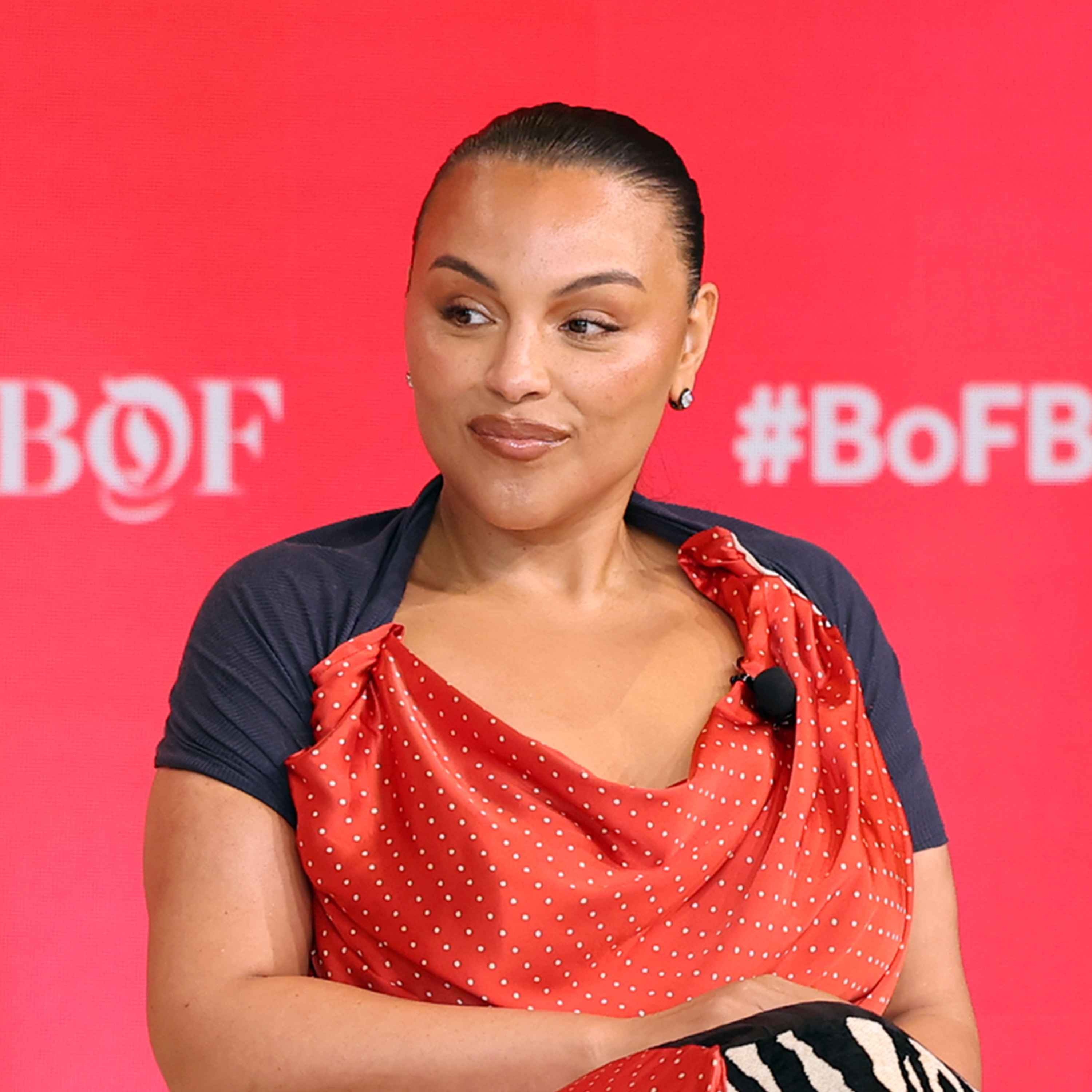
Paloma El-Sesser discusses purpose-driven representation in fashion and beauty, the pitfalls of tokenism and “aestheticized” DEI/body positivity, and her shift from modeling other brands to building her own body-care line centered on personal, ritualistic lotion/oils.
Paloma El-Sesser is a plus-size model and influencer known for runway and major campaigns (including Pat McGrath Labs, Glossier/Into the Gloss, and Fenty Beauty). She grew up with African-American mother’s body-care rituals (“lotion on” after shower) and studied psychology and literature; she also began online via Tumblr/MySpace.
She didn’t “claim” body positivity because it was founded by queer Black women; movements get flattened into aesthetics; lasting change requires real-life dignity, not rainbow branding.
Discovered as a waitress at Miss Lily’s; Dame Pat McGrath made her the face of Pat McGrath Labs; she plans a science-backed, object-forward, non-mass body-care brand.
Written by AI. May contain mistakes.
Exploration of Paloma's background and rise in the fashion industry.
“You don't get out the shower and not the lotion on.”
Paloma discusses her plans to launch a body care brand rooted in personal rituals.
“Here's Paloma El-Sessor on the BOF podcast.”
Paloma reflects on her modeling experiences and the impact of body positivity.
“So when Pat approached me, I, one, was aware of fashion, but not the intricacies.”
Discussion on how Paloma's modeling is intertwined with activism for body positivity.
“People were tired of hating their bodies, of subscribing to a certain standard that was inescapable and people were unhappy.”
Paloma shares insights on trends in beauty, fashion, and diversity movements.
“I knew that my purpose had to arm me to deal with a world that I was one unfamiliar with and that fundamentally did not want me.”
Exploration of Paloma's influence on social media and the essence of confidence.
“anthropological standpoint that people respond to what they respond to.”
Paloma discusses her excitement and vision for her new beauty venture.
Paloma discusses her personal experiences and upcoming beauty venture focused on body care.
“I've heard that you're interested in starting something of your own.”
Paloma discusses her personal experiences and upcoming beauty venture focused on body care.
“Cases won, audits completed, jobs saved.”

Get the gist, explore an idea or ask about something said.
 Claude
On The Business of Fashion Podcast, what are the key points of this episode?
Searching your listeningAutomatic transcript. May contain errors.
0:04Paloma Elsesser: Hi, this is Imran Ahmed, founder and CEO of the Business of Fashion. Welcome to the BOF podcast. It's Friday, July 17th. Diversity and body positivity have been important themes shaping the fashion conversation over the past decade. Few people have lived that gap and pushed back against it more visibly than Paloma El Cesar. She's walked the biggest runways, landed the biggest covers, and used her platform to challenge the industry standards on bodies, beauty, and who gets to be seen. Now she's taking that authority somewhere new, building a body care brand rooted in the rituals she grew up with.
0:47My mother's African-American. You don't get out the shower and not the lotion on. That's crazy. The central tenets of my work obviously are steeply rooted within the body, but I would love to see body care be personal and esoteric and ritualistic and beautiful. And I think what's so powerful about this expansive tapestry of beauty that we have today is that so many different types of people get to meet themselves and find belonging in those different brands.
1:15Paloma Elsesser: Paloma sat down with executive editor of the Business of Beauty at this year's Business of Beauty Global Forum to talk about staying true to herself amid the pressures of tokenism and why, after a decade building other people's brands, she's finally thinking about building one of her own. Here's Paloma El-Sessor on the BOF podcast. Paloma, I'd like to think that everyone in the room already knows you, obviously, but I want to start by talking about your modeling lore. I mean, it's the story that I think every girl kind of dreams up when they want to become a model. You were discovered as a waitress at Miss Lily's, the fantastic New York restaurant, for those of you who have been.
1:59I was a terrible waitress. Absolutely terrible. And you were also discovered on social media. Yeah. And Dame Pat McGrath found you and made you the face of her new campaign when she was launching Pat McGrath Labs. Correct. This is not a typical story. How were you able to kind of break into this industry in such new and innovative ways? Great question. Thank you. It's also, I'm so happy to be here. I feel very honored. Beauty is so deeply entrenched in my Genesis story. like you said, I started with Pat. I was working at a restaurant. I was really just a girl in New York doing my thing rough around the edges, but always a preoccupation with fashion, beauty, image, objects, all these different things that I was cultivating, a kind of community or an aesthetic or an energy online.
2:54This was like pre what influencer would be titled. I was just a girl on the internet. I loved Tumblr. I loved MySpace. I loved all of these platforms. So when Pat approached me, I, one, was aware of fashion, but not the intricacies. Like, I didn't know how to pronounce Loewe. Like, why would I know that? Like, you know, like, things like that. So when I got approached by her, I did know her from this iconic Jessica Stamm ID cover. And I obliged. I was like, okay I was um on tour with my friend who's a musician I was tour managing him for the summer crazy and I did my first photo shoot with Pat and subsequently it's interesting to think about lore or history or legacy that so much of my beginning started with beauty I was gold 001 Pat McGrath first phase phase one glossier like in the into the gloss offices like pink pouch like Emily shooting pictures of me in the office, first Fenty Beauty campaign, and many others subsequently.
4:04So it's really a part of my DNA. And it was interesting. It's interesting to be here now and to speak on it, you know. You know, obviously your origins really were in beauty. I mean, I remember that Glossier campaign and Into the Gloss. I remember those articles. but fashion really took off for you and in step with where you were in fashion there was another trend rising which was the body positivity movement and inadvertently you became the face of that movement but you also told me the other day that you never really claimed it will you describe that for us I think what's interesting about all of these industries beauty fashion media overall, is timing is such an inexplicable force that exists in the success or the growth of anything.
4:59My timing was that the industry fashion that I'm talking about was desperate for something new. People were tired of hating their bodies, of subscribing to a certain standard that was inescapable and people were unhappy. There was a desperation for something new. So I think the demand for models to have a voice was almost, it was like people were like foaming at the mouth, like they wanted a new experience. And I came in kind of open-eyed and afraid, but excited to be a voice in that. I think as a person who's always occupied a bigger body, like different sizes of that, I became very familiar with my body at a very young age.
5:49So I was able to articulate my relationship with my body, I think, in a new way that fashion hadn't really experienced. So I think I didn't also come in, like I said, being like I'm a body positive activist. I was just a girl in my body having my picture taken who had some thoughts. and it kind of positioned me, I wouldn't say unfairly, I'm grateful. It's a profound privilege to speak on behalf of these issues and to transform how women and people see themselves. I don't take it lightly. However, I have always been passionate about understanding oneself, being familiar with oneself, getting intimate and close with oneself.
6:36The body positive movement was actually started by queer black women who occupied much larger bodies than mine and I even did. So it just was unfair for me to claim that because I was not the arbiter of that. I was just a part of a conversation about communicating with our bodies, if that makes sense. Yeah. Was it hard to be part of a trend or to feel like you could have, I mean, it's a decade later. You've had a very long career for modeling, but was it hard to be part of that trend? I think, I mean, as I said before, it wasn't hard. I think when I started modeling, I knew that the luxuries weren't going to feed me.
7:23So ultimately, I was in school for psychology and literature, also doing a lot of different jobs and doing a lot of things. I had to be rooted in purpose. I knew that my purpose had to arm me to deal with a world that I was one unfamiliar with and that fundamentally did not want me. So it was difficult in many ways looking out and seeing no one who really looked like me backstage, not seeing women on shoots, people whispering about my body, all these different things or just an energy. but I knew that my imagery could be activism, my imagery, making that picture, essentially putting myself forward on behalf of what it could do for other people was enough for me.
8:14I wouldn't say it's been the easiest road. I've been, yeah, modeling now for 11 years and it hasn't been the easiest road, but what has been consistently the touch point is what it does for others and what change it might affect. We've talked a lot today about sameness and homogeny, homogenousness and the desire for that. And when I think about the body positivity movement and even the DE &I movement, those are trends that came and went, unfortunately. How do you feel about, you know, obviously you were also part of that, the DE &I movement, and we all saw what happened after George Floyd's murder.
8:57But when you think about those things and being a part of them, you know, superficially in a way, but also carry the weight of that, like how do you navigate that? I think I have navigated some high points of reflection and hardship within my career as it pertains to that. And how I have actually dealt with it is I'm a very curious person. I heard another woman mention that. But I have a thirst for knowledge and a thirst for understanding. And that if I extract myself, Paloma, the me-search of the thing, and I put in the research, I have to understand that all movements pendulate, all culture shifts, zeitgeists are created worlds are created out of our own control and that at times and in my case historically I've almost been sucked into that vacuum but it has nothing to do with Paloma as an individual my humanity my thoughts my worth my being it's that like from like an anthropological standpoint that people respond to what they respond to.
10:12So I think when we were dealing with a heavy-handed era of how we understood liberation, oppression, diversity, people swung. And I think it's unfortunate and something why I'm still so passionate about the subject is that so many of these movements have been aestheticized in a way that has flattened it. Like, obviously, like, we look at pride, happy pride, incredible month. But now we think about pride as, like, an ice cream flavor and rainbow when it's actually, like, the survival of queer people in the world. Like, when we understand representation and diversity or, like, for specifically around bodies, it's not like a neon bathing suit and stretch marks and I love myself every day.
10:59These movements and these things relate to the precarity and existence of our lives. Like my, the importance of my work rests on desire, sex, body, I mean, eating disorders, like all of this is like real life existence, the way that we interact with our bodies on a day-to-day basis. So I feel sad sometimes about that reality of there being so much excitement, but I think the lesson is that we have to take these movements, take these kind of like high points of culture and commentary, and hopefully what we get from it are these nuggets about how to transform our lives that make lasting change instead of it just being tokenized and aestheticized and forced down our throats.
11:51I think that kind of authenticity that you project and possess, as well as your confidence and it doesn't feel like girl boss confidence. It feels like real confidence is what has made so many people attracted to you on social media, you know, interested in the things that you're talking about, whether it's esoteric books or, you know, the products that you shop or your apartment. And so you've kind of become, well, maybe you were always an influencer, but you've become a next-gen influencer in a way? I mean, yeah, I think that influence, the root of influencer, again, it can feel reductive, but the essence of the word is influential, you know, it's like how we make influence on other people in life, and I think whenever I've been asked that question or commented on the idea of, like, confidence, I have to get really familiar, like, where that comes from because I still struggle all the time but the confidence was a response to being very young feeling very different and having to explicitly figure out what I liked about myself because the world wasn't going to tell me what it what it was so those interests whether it be esoteric books or niche fashion or objects from around the world that outfit my house that's what makes me me and so that's what I get to share with the world and I find it so restorative and so empowering that the predominantly women I think probably I think via my metrics 79 percent are are responding to that intimacy and that excavation of like what makes me me and I think also back to like my genesis is that like I was a curved flood size whatever whatever you want to call it who wasn't this like glamorous like sexy bombastic girl I was like I said like I was in a supreme hoodie downtown doing my thing reading weird books and working at weird restaurants and like that was my story and I think so many more people resonated with that than I thought because just because you occupy a voluptuous more sexually presenting body doesn't mean that you subscribe to all those things so I think that there was a resonance with that and I still hold very true to that that like that's what works for me and that's what works for my girl and I know my girl really well I believe in my girl you know and And you're evolving.
14:35And I'm evolving. Yeah. I've heard that you're interested in starting something of your own. And you've started something on your own. Will you tell us a little bit about your new beauty venture? Ooh, nervous. I think it's a really natural progression of all of my interests and the things that I value most. if you know me I I will say myself I have very soft skin you can touch my arm of course you can touch my arm I mean her agent told me you have to touch Paloma's arm anyone can touch my arm I'm soliciting myself for arm touching anyone's available I'm available for arm touching but yeah like that was just came from cultural experience like I'll just say it blankly like my mother's African-American you don't get out the shower and not put lotion on that's crazy like my boyfriend's white he's like wow what I was like yeah babe this is what we do um but with that I think I've always been so transfixed by that kind of ritual and like indulgence and and acquaintance with my body and that's some of my earliest memories of understanding the contours of my body which was through body care and lotion and oils and potions and things of that such So I'm working on developing a lotion.
15:55I'm really excited. I think that the central tenets of my work obviously are steeply rooted within the body, but I would love to see body care be personal and esoteric and ritualistic and beautiful. I think we get to outfit our lives beautifully. I think beauty itself is such a powerful industry because it gives glimmers of access into a world that we might otherwise not. You know, someone can afford a Chanel lip balm before they can afford a Chanel bag, but they still feel that belonging, that apartedness. And I think what's so powerful about this expansive tapestry of beauty that we have today is that so many different types of people get to meet themselves and find belonging in those different brands.
16:44And I find that how I've been reflected of understanding and value that I would love for someone to have access to that, to my world and that kind of belonging. You know, I know we've talked about the lotions and we've talked about the oils as well and like kind of the full gamut of what you're planning, but body care as a category is booming. It's not just the doves and the avenos of the world that have luck on the market. And it's quite sexy now to be a body care brand or to have a body care brand. What are your ambitions in the category? I mean, you certainly have a number of followers, but maybe it's not a billion.
17:27You, I bet, would have your choice at retailers or investors just based on the way that you present and your idea. But how do you think that your brand is going to stand out? And what does success look like for you? I think success is different for everyone. I think it's interesting. I've talked to different friends who are either investors or work on boards or have their own product. I think I have to understand my product around my world as this incredible tentacle of expression. The same way if I wrote a book, I would want it to be honest and authentic and representative of who I am. That, for me, isn't mass.
18:12I'm not a mass girl. If I was mass, maybe I would have a billion followers and I would be for everyone, but I'm not. But I am for a huge demographic of people. what I also believe is that the younger generation yes they want like fab fast grab but in the same way they want access like they're looking at a Phoebe Philo coat and they can't afford it but they want that beauty product version they want to outfit their rental apartments on the lower east side with something gorgeous on their countertop and that's the way that I see it I see that I want to make a product that's object forward, that is science-backed, essential, ritualistic, and personal, because that is who I am.
19:02I have an amazing friend, mentor, person, who was just like, don't try and make anything that isn't you. Like, this is ultimately, as a front-facing person, as a visible person, like, that's what people want. Like, I could make, I could try and make something different, but it's not what I know. My home is my body, is myself, and I am so excited to bring that to the world, not because I'm like, oh, this is amazing or this is great, but because in that same purpose that somebody might find belonging and dignity and respect and excitement in that same way that, by example, I found in the work I've done in my modeling.
19:46You have a lot of beauty friends. who have been mentors to you. Some of them are here, Cassandra Gray. Yeah, where is she? Pharaoh Meaty, who's been here many times. I'd just like to ask, you know, you're such a curious person, and you're embarking on this new venture. What do you need to learn here from these people, from outside, from your community, to make this successful and true to yourself? Yeah, I think that I am in the very like romantic, cushy idea part of this. And like I said, I am extremely ambitious and thoughtful, but I am not like a metrics girl boss, you know, that's not what, like, even my team, we have a very emotionally and harmoniously led team and way of being.
20:45So I think my learning would be bringing the hard evidence. You know, I, speaking of girl boss randomly, like obviously because the algorithm be algorithming, I got some, like Sophia Amoroso was, came up on my Instagram and she was talking about how this is always like your first idea is not almost ever what it ends up to be. So I think my curiosity has to be a guiding force, but like rooted in wanting it to feel authentic, wanting it to feel beautiful and wanting it to feel personal. But in the actual like business organization of it, like I'm so open and curious and excited to learn about, you know, like that isn't I didn't grow up with any money.
21:33I've figured some things out in my life, but like just in the same way I heavily rely on my business manager, I would heavily need to rely on someone, too. Thank you so much, Paloma. It's been such a great conversation. Oh, thank you so much. Thank you, guys. Thank you.
22:17Cases won, audits completed, jobs saved. Behind every one of those moments is a professional who needed to get it right and did. Thomson Reuters builds the technology that sharpens insights, speeds up decision making, and powers the outcomes that matter. So when professionals act, the impact is felt by everyone. Be a changemaker. Visit tr.com forward slash changemakers. Do you keep hearing podcast ads like this one, for example, but always wonder how you actually get involved with them for your own brand or organization? Well, it's easier than you think. We're Acast, and we give you the platform to do it all yourself.
22:55Browse thousands of popular podcasts, choose the shows that match your perfect audience, set your budget, and launch. And if you want a hand, our podcast specialists are there to help you launch with confidence. This is podcast advertising without barriers. Get started at acast.com slash advertise.
Diversity and body positivity have been important themes shaping the fashion conversation over the past decade. Yet a gap remains between the industry’s ideals and its reality. Few people have experienced that gap – and pushed back against it – more visibly than Paloma Elsesser. She’s walked the biggest runways, landed the biggest covers and used her platform to challenge the industry’s standards around bodies, beauty and who gets to be seen.
Now, she’s taking that authority somewhere new: building a body care brand rooted in the rituals she grew up with.
“My mother’s African American. You don’t get out of the shower and not put lotion on. That’s crazy,” says Elsesser. “The central tenets of my work obviously are deeply rooted within the body, but I would love to see body care be personal and esoteric and ritualistic and beautiful,” she continues. “I think what’s so powerful about this expansive tapestry of beauty that we have today is that so many different types of people get to meet themselves and find belonging in those different brands.”
Elsesser sat down with executive editor Priya Rao on stage at this year’s Business of Beauty Global Forum to discuss staying true to herself amid the pressures of tokenism and why — after a decade spent building other people’s brands — she’s finally thinking about building one of her own.
Key Insights:
Additional Resources:
Hosted on Acast. See acast.com/privacy for more information.


