
 Ask ChatGPT



In this special episode, Imran Amed discusses the ongoing crisis in the luxury fashion industry, marking it as the most severe since the Great Recession of 2008. Amed emphasizes how the existing business models for luxury brands are faltering due to changing consumer behaviors, particularly a slowdown in Chinese spending and a shift among aspirational buyers.
Written by AI. May contain mistakes.

Get the gist, explore an idea or ask about something said.
 Claude
On The Business of Fashion Podcast, what are the key points of this episode?
Searching your listeningAutomatic transcript. May contain errors.
0:04Hi, this is Imran Ahmed, founder and CEO of the Business of Fashion. Welcome to the BOF podcast. It's Friday, January 31st. This week, I'm pleased to share a recent conversation I had with Bob Safian for the Rapid Response podcast. Some of you may remember that I spoke with Bob last summer about the state of the global fashion business. We had such a great response to that episode. So I'm pleased to have been invited back to discuss the current state of the luxury industry. We recorded this conversation in December, on the day that Mathieu Blasie was confirmed as Chanel's new creative director, the latest move in an unprecedented shake-up of the creative and business leadership ranks at luxury fashion's biggest brands.
0:50I have never seen this volume of change in the leadership of big fashion companies ever. And as you pointed out, it's not not just on the creative side, which is what I think the mainstream culture tends to follow. It's also on the business side. With this week's news that Kim Jones is leaving Dior and Glenn Martins has been appointed to the creative helm of Margiela, the rapid change in the luxury sector seems set to continue into this year. And while Richemont Burberry and Alvia Mage have posted better results than expected for the final quarter of 2024, There's no doubt in my mind that the industry still has a lot of work to do in order to shake off the current crisis.
1:37Here's my conversation with Bob Safian on the BOF podcast. This is probably the most severe crisis that I've seen in the luxury side of the fashion industry since the Great Recession. the template business model and approach that the luxury industry has been using for the last decade or so it's running out of steam so you have this slowdown happening in in china on top of that you have a wider slowdown amongst aspirational luxury customers who were gorging on luxury products during the pandemic and on top of all that bob you and i spoke last time about the creative side of the industry, just losing a little bit of its magic.
2:25And so, you know, I think what's exciting about a time like this is it forces companies to innovate.
2:35That's Imran Ahmed, founder and editor-in-chief of the Business of Fashion. Imran was previously a guest on Rapid Response last summer. I wanted to talk to him again because since our last conversation, the fashion industry has seen a dramatic wave of turnover among its top design leadership and its top business leadership at brands from Chanel to Gucci to Burberry. Imran explains what's been driving these convulsions, which retail and luxury brands are standing out, and what to look for in 2025. He also shares insights from an insider gathering of global fashion leaders and talks about several areas of overlooked opportunity, including what brands can learn from Oscar-winning actress Michelle Yeoh.
3:19Plus, how businesses are prepping for a new Trump administration and more. It's a compelling tour of an industry in transition, so let's get to it. I'm Bob Safian, and this is Rapid Response.
3:37I'm Bob Safian. I'm here with Imran Ahmed, founder and editor-in-chief of The Business of Fashion. Imran, great to see you. Likewise, Bob. When you were on the show a few months ago, you talked about how the fashion business was in need of a makeover. And then since then, I've seen this like burst of turnover among the label designers, also among CEOs, Gucci, Burberry, Givenchy. Is this the reckoning that you saw coming? Is this just sort of standard turnover for the industry? It seems dramatic from an outsider's perspective. What's going on? It's pretty unprecedented, this level of turnover. I have never seen this volume of change in the leadership of big fashion companies ever.
4:30And as you pointed out, it's not just on the creative side, which is what I think the mainstream culture tends to follow. It's also on the business side. And is it a reckoning? Yeah, I think a lot of companies are coming to the end of the relationships with some of the people that have been leading those companies. New names are coming to the fore. Some of the names that are emerging in the top roles on the creative side are mostly new to the mainstream public, although they may be somewhat well known to fashion insiders. But yeah, this is a pretty unprecedented level of change. The new leaders, like the new wave that's coming in, is there anything that connects them?
5:14Like, is there a new theme? Is there a new direction? Well, sadly, I don't think there's a sense that the people that are coming up in some of these roles are kind of from a new template. In fact, a lot of the industry has been kind of shocked to see that the same kind of demographic, usually a white man, is taking the top job at a lot of these big companies. And actually, that's something that, you know, I think a lot of people in our industry are just really wondering about because it's not like there's a shortage of talented, you know, female designers in the fashion industry. There are. And for an industry that primarily targets itself at women, you know, apparently even for menswear, women are the primary buyers because they're often buying for their partners.
6:10And so, no, sadly, I'd say, Rob, the names might be new, but the template that the industry is drawing upon is quite consistent with what we've seen in the past. And the new business leaders, are they offering the promise of any new business creativity or sort of the challenges that you see this business being in? Like, there's not a lot fresh yet. Well, probably the most interesting and exciting new business appointment was made two years ago now. And that was when Chanel appointed Lena Nyer as their new CEO. Lena came from outside the fashion industry. She was a top executive at Unilever. But not only was she outside of fashion, she came from the HR or the people side of the business.
7:03And so that was quite an exciting new appointment. She was the first woman of color to be appointed in one of these really, really big top jobs. We are seeing a lot more women come through on the business side. You know, the former CEO of Miu Miu, Benedetta Petruzzo, was recently named to a new very senior role at Dior. So we are seeing women come through on the business side, but it's on the creative side where I think there's a bigger gap. And I think the reason I found Lena's appointment so interesting was because, you know, it showed that, you know, at least someone was thinking about the value of the outsider's perspective in our industry.
7:41Most of the executives that you see rising into these top jobs have grown up in the fashion industry. You've said that we're in a luxury crisis, and it sounds like it's part design and it's part business. Do you feel like there's progress in this crisis? I mean, I know you've also talked about the death of extravagance, which is maybe more cultural than just what the industry itself can do. This is probably the most severe crisis that I've seen in the luxury side of the fashion industry since the Great Recession of 2008, 2009, after the collapse of the global financial system and when everything almost fell apart everywhere.
8:26The reason I think some people are calling this a crisis is because it seems like we've reached a point, Bob, where the template business model and approach that the luxury industry has been using for the last decade or so, it's running out of steam. And that is driven by a number of different factors. I mean, first and foremost, the industry has highly relied on the growth of the Chinese market in order to kind of propel the luxury industry to new heights. Anyone who's been following the Chinese economy knows that there's a consumer confidence crisis happening there, which is linked to a wider real estate crisis.
9:08And so the Chinese customer spending has slowed down significantly. A lot of brands have caught themselves being overstored and over distributed in a market that's slowing down. So you have this slowdown happening in China. On top of that, you have a wider slowdown amongst aspirational luxury customers who were gorging on luxury products during the pandemic because they couldn't spend on travel and they couldn't spend on dining and they couldn't spend on all the other things that they wanted to do. So that's another thing that slowed things down. And then finally, I do think there is more of an internal existential crisis around how customers are responding to the current luxury template.
9:51There's questions around ethics and sustainability. You know, a couple of big luxury brands, Dior and Armani, have been caught up in this pretty serious investigation by the Italian authorities around the supply chains of their products in Italy. So some customers are really questioning, well, you know, if a bag only costs, you know, 50 or 100 euros to create, and you know, it's being made under conditions that don't seem to be entirely consistent with the dream that these luxury brands are selling. It's really calling into question the value that, you know, those customers see in those products.
10:24there is this whole question around the price hikes. Brands were able to increase their prices by 50%, 60%, 70%, 80%, and they've reached a limit now. So they can't increase their prices anymore. In fact, some of them are going to really start to think about their whole pricing architecture and if it's out of whack. So there are so many things happening all at the same time that a CEO at the top of a big luxury house right now is grappling with a bunch of things. And on top of all that, Bob, you and I spoke last time about the creative side of the industry, just losing a little bit of its magic.
10:58You know, a lot of it has become templatized and commoditized. And so, you know, I think what's exciting about a time like this is it forces companies to innovate. Because the market isn't growing super fast anymore, in order to grow, in order to succeed, you have to take market share from someone else. in order to take market share from someone else, you have to be offering something different and special in the market. And there's a couple of brands that are doing that. I mean, if you look at the performance of Miu Miu, which is part of the product group, that brand has been growing at 90 % or 100 % year on year, which is extraordinary in the current market environment.
11:39And then you have other brands like Brunello Cuccinelli and Hermes, which are consistently growing at a really good pace because I think they're creating products that have this kind of timeless, luxury, highly qualitative element to them. So you can't succeed doing things the same way that you've done over the past 10 years. You do a big annual gathering of global fashion and luxury and tech leaders, your Business of Fashion Voices event. The latest one took place just after Donald Trump's re-election as U.S. president. It was that week, right? What was the mood and reaction like among the attendees?
12:18Yeah, well, the interesting thing about voice is it's a genuinely global event. So we had about 200 people there from something like 25 different countries. But of course, you know, as it was a industry gathering, there was a lot of hand-wrigging around what the return of Donald Trump is going to mean for the industry. And I think the one thing that's most concerning for the industry is this threat of increasing tariffs by 20%. And obviously, for an industry that operates with global supply chain, price increases that are brought on by tariffs and the impact that that's going to have on the American customer and still the most important consumer economy in the world.
13:04That is a big concern for people. Do you see the leaders, fashion and retail leaders, like making changes, preparing, gearing up? Are they waiting? And I guess the other question is, is it like different for a fast fashion brand versus a luxury brand? Or is it like across the board? I think it's across the board, you know? And so like the luxury brands are already grappling, as I mentioned just now, with this whole issue around pricing. and they're trying to rethink their pricing architecture. Customers everywhere, whether they're on the kind of more high street side of the market or whether they're shopping more regularly on the luxury side of the market, I think one thing that's consistent for everybody is we've been through this period of extremely high inflation.
13:56And although inflation may have slowed down, the prices that we're all paying for everything versus two or three years ago, So it's 20 to 25 % hired. And I think, you know, that's really impacted a lot of the way people are thinking about where they spend their money. Luxury customers, just because they have a lot of money doesn't mean they don't care about value too. You know, nobody likes being taken for a ride. One of the trends you talked about at Voices was India. India's economy, you know, poised to keep soaring, but that most of the popular brands are domestic. It sounds like there's potentially opportunity there for global luxury and retail brands, but they're struggling.
14:41As long as I can remember, the industry has been talking about, is India the next China? You know, they were looking for that next big propeller of growth. and you know if you'd asked me this question five years ago bob or even three years ago i would have said you know i think there's still a lot that needs to be established and proven in order for india to really take its position as like you know one of the very big markets in the world but i think we're at this tipping point right now we are genuinely at an inflection point some of it is driven by sheer demographics, the growth of the middle class market there.
15:23India is the fastest growing major economy in the world, is soon to be the third largest economy in the world. A lot of the challenges that the industry has faced up until now around retail infrastructure, around bureaucracy, around local cultural norms, all of those things still exist. but it's starting to change. There's new airports opening, there's new infrastructure in terms of retail opportunities. Access to broadband, mobile, internet is ubiquitous in India now. So all of the factors that have kind of made it hard for brands to penetrate the market are starting to shift. I think the one thing that brands have to contend with, whether they're luxury brands or mass market brands, is the point that you raised earlier, is that there is this very vibrant local fashion industry in India.
16:20The way people dress in India is more of a kind of cultural fusion. If you walk the streets of Shanghai, most people are wearing Western clothes. If you walk the streets of Delhi or Bombay, people are wearing a mixture of Western handbags or shoes, sometimes with, you know, a traditional korta or, you know, the clothes that Indian people wear, have been wearing for, you know, thousands of years. And so trying to figure out where you fit into the Indian customer's lifestyle, that's what a lot of the brands are contending with. And there is a lot of local competition. So, you know, the Indian market is on the precipice of something really big, but it's not going to be easy.
17:07Yeah, because it sounds like the challenge is both style, you know, culturally as style and also culturally as how business operates in India, which has not necessarily been cracked by the fashion industry from outside. No, it hasn't. And, you know, the smart brands are going to really find the right talent. Indian local talent empower those leaders to help them make decisions that are right for that market. I so enjoy talking to Imran because he's unfiltered about the problems facing the fashion industry, which otherwise tends to hide behind showmanship when it comes to business. Imran understands how creativity and financial outcomes are linked, a truism for all industries, really.
17:55And while he's not shy about pointing out shortcomings, he's also always on the lookout for new areas of opportunity. After the break, we'll talk about sustainability and tariffs, how Adidas and Nike are reacting to new competition, and what actress Michelle Yeoh can teach us about untapped markets. We'll be right back.
18:20Before the break, we heard Imran Ahmed of the Business of Fashion explain why the industry has been wracked by a wave of leadership turnover. Now he talks about the sustainability missteps of retail and luxury brands, the opportunity offered by what he calls silver spenders, and why Adidas and Nike have become vulnerable to challengers. Plus, why he thinks the high volume of fashion weeks around the globe is a waste. Let's jump back in.
18:53another topic i wanted to ask you about that a lot of business people are talking about right now is is sustainability and i'm curious how much conversation there was at voices about that i mean the fashion industry has often talked a good game when it comes to climate initiatives but as businesses of fashion has reported like big brands consistently fall short sort of focusing on buzzy things that get attention rather than delivering against decarbonization targets. Do you see that changing anytime soon or is this sort of backsliding routine inevitable? I'm sad to say that I just don't see the level of urgency amongst the leaders in the industry to really make the necessary change.
19:39And I think if you ask an industry to police itself and make decisions itself on how it should operate when it comes to certain things around what's good for greater society or the world at large. These companies are making decisions based on what's good for them. And what's good for them isn't necessarily what's good for the planet. And I think the result of that is we're going to require really serious regulation from governments around the world. The EU is taking a leadership role in this in terms of like really starting to lay down some serious rules around how you can dispose of excess product, you know, how you operate your supply chains.
20:27Without that kind of regulation, Bob, I just don't see the change happening. You know, probably one of the most alarming things for me at least, or surprising things that came out of our annual report, The State of Fashion, which we publish every year with McKinsey, was that every year we survey hundreds of senior executives in our industry around the world on the top issues on their agenda. And this year, sustainability could just continue to fall down their priority list. And in a way, I understand why that's happening, because I just gave you a litany of things that these executives are having to grapple with, you know.
21:05But as a result, this year sustainability fell off. I think it fell from 29 % thought it was a top issue down to 18%. The level of urgency on this issue that we need for the industry to take action is just not there. Yeah. At Voices, one of the opportunities that I saw that you talked about was the rise of what you call silver spenders, population over 50. Are brands beginning to pivot towards silver spenders? Should they? They absolutely should. If you think about the established markets, those are all heavily aging populations. There's an opportunity with older customers that the industry has really overlooked.
21:52I mean, this is an industry that has constantly prized youth. There's been an obsession in recent years with the millennial customer, with the Gen Z customer. And I think what our silver spenders theme from the state of fashion was trying to say is that actually there's this overlooked demographic of people, many of whom have high levels of disposable income. They don't have to support their children anymore. Their lifestyles are changing. and thinking about what those customers need is imperative for brands that want to continue to be successful in markets in East Asia, in Western Europe, in North America.
22:30I had a really interesting conversation with the actress Michelle Yeoh on this topic earlier this year. She has been named a brand ambassador for Balenciaga and Bottega Veneta, two of the biggest brands in the caring group. One of the reasons that, you know, they picked Michelle is she speaks to a whole different demographic. So yes, some brands are beginning to realize that, you know, as Lip Mash Michelle said to me, your life doesn't end at 50. You know, she proved to the world that, you know, when she won her Oscar for Everything Everywhere All at Once at the age of 62, that, you know, she's still getting started.
23:06You know, now she's this one of the stars of Wicked, which is like ripping up the box office all around the world, you know. So I think there's this growing notion and understanding that, you know, this idea of aging customers as being boring and stayed and they're interested in fashion. Like Michelle can wear anything and look amazing, you know, and she's an incredible ambassador and she's an incredible role model for lots of women who are like, I still want to feel fabulous and look fabulous, create things that are suitable for me as well. One of the speakers at your voice event was the co-founder of athletic shoe brand On, David Alleman.
23:43And On's part of a cohort of these newer brands that really scaled significantly in 2024, while Nike and Adidas sort of stalled a little bit. Do you think that trend's going to persist in 2025? Like, are there things that you learned about On's strategy that might continue to make it hard for those big players? Yeah, I mean, we had a theme in our report around challenger brands and the success of challenger brands, particularly in the sportswear category. I would also include Skims in that category. And we had David Alleman alongside Jens Greed, who's the CEO of Skims. And what those two brands have managed to do is tap into culture.
24:29you know and they've managed to tap into culture in a way that feels really authentic um you know of course roger federer is affiliated with on now and was from a genuine connection and appreciation with the product that was created and this was the lesson i took um from both jens and from david which is they are brands that have really focused on product innovation and i think this is where some of the bigger companies have really struggled. I mean, Adidas is doing quite well right now, but a lot of its success is predicated on bringing out some of its old models. I think this idea of just constantly going to your archive in order to reignite interest in products that you created before, clearly that can work and Adidas is doing really well.
25:15But what On and Skims are doing is they're really focusing on product innovation. And it's this combination of product innovation with really understanding how to tap into culture, that's been a really magical formula for both of those companies. It feels to me like Nike too has really sort of lost its way in some ways in tapping into culture when really it was for so long the leader in that, even as, you know, challenger brands tried to come, Nike was still sort of a step ahead, but they've just lost a step. They were so good at that at one stage. I mean, their marketing before was so much associated with like athletes and that everybody could be an athlete, but people would buy into that brand because a lot of their innovation was, I remember when I went to the Nike campus in Portland many years ago to interview the CEO, Mark Parker, like a lot of what he and I talked about was all of the innovation stuff.
26:11And I think really where Nike and Adidas to a certain extent have lost their ways, they're just not innovating like some of these challenger brands are. So don't count them out just yet. You know, I think as with all things, you know, when you face competition, you have to change new leadership at Nike. And I think they've really understood the challenge they have ahead of them. So it'll be very interesting to see what happens next year. AI is sending ripples through all industries. How are fashion and apparel designers reacting? Are some designers and brands leaning into AI tools more? Are others leaning away?
26:50What's the conversation? I think as with a lot of things, AI, I think everybody's using it, but not everyone's talking about how they're using it. And I think that's the right thing. I think people are figuring out what is the potential of this tool. As you know, Bob, we're in the most nascent stages of the development of this technology. And if there's anything that I've learned is that when you're at a technological inflection point like this, if you don't start experimenting with it and trying it, you get left behind. So most of the smart, creative people and business people I know are trying things out.
27:31The most interesting kind of takeaway I've had so far was in a conversation I had with the interior designer, Kelly Wurstler, who's, you know, incredible creative. And she's been using AI and very open about it in her creative process. And, you know, basically what she said is like, it just enables us to generate a lot more ideas. It still requires a human to go through and edit down those ideas, refine those ideas, maybe combine some of the ideas together. And I'm seeing the same thing in fashion. You know, lots of people are using AI to generate ideas for their mood boards, but they're also doing archival research and, you know, looking at what celebrities are wearing and, you know, checking out stuff from, you know, other brands.
28:20And they're grouping all of those things together. So AI is just one early input into the creative process. But to create something really genuinely novel, interesting, disruptive, creative, beautiful, you know, a human has to be involved. I think it's a mistake not to try to understand what inputs AI can bring into your creative process, but it's also a mistake to sit down and think that one day AI is going to design everything in fashion because I don't think that'll happen. So given the financial and competitive crisis that luxury and fashion are going through, do you see the fashion calendar evolving as we go and look to 2025?
29:11Are you adjusting your approach to the various fashion weeks at all? the truth is like i could go and anyone who works in fashion could go to a fashion week every single week of the year there is a fashion week happening somewhere on this beautiful planet of ours every single week so i have cut back significantly on the amount of fashion shows and fashion weeks i attend just because it just at the end of the day just started to feel like it was eating up into my personal time. I think the industry did talk about reducing the number of fashion weeks. There was a talk about consolidating fashion weeks.
29:51There's still some questions, I'd say, if we're being really honest about the future of New York Fashion Week and London Fashion Week, because they are shells of their former self in the post-COVID environment. A lot of the the kind of brands in London and New York has started to shift their shows to Milan and Paris. Paris in particular has really consolidated its position as the true global fashion capital when it comes to Fashion Week. I mean, as you talk about it, it just seems like it's so much effort. And I don't want to say waste, because obviously all the different Fashion Weeks, they provide an opportunity for promotion and they push release of new creativity.
30:37But, you know, there's a certain point where maybe it's too much. Honestly, Bob, I think it is waste. It is waste. But, you know, I said earlier, the industry's looking for a new model and maybe part of the model needs to be like, well, you know, in this world that we live in now, how do we really need to be engaging with brands? If you look at, there's a brand called Jacquemus, who also simon paul jacques is probably like one of the most successful independent fashion designers in the industry he does two shows a year on his own schedule he chooses a place you know that means something to him that's usually you know cinematic beautiful and picturesque and he creates his like incredibly memorable shows and those shows go viral but a brand like dior or a brand like vuitton or a brand like you know gucci or they're doing like four or six or eight or 10 shows a year.
31:32And they're doing these shows in multiple cities, and they're doing replica shows. And they're just, it's a lot. It reminds me in some ways of, you know, what Apple did with sort of creating its own events around its own products, as opposed to getting lost inside, you know, a sea that is CES, or, you know, one of the other enormous, like, tech industry things. That's exactly what it is. But, you know, as I mentioned, we're at this moment where innovation is going to really matter and brands are going to find new ways of doing things. And it's the brands that really think, okay, if we were doing this from scratch for the time that we're in, for the mindset that customers currently have, for the budgets that we're working with, for the reality of the planet and its boundaries, how would we do things now if we were starting from scratch?
32:22That's the question I wish more people in our industry were asking. And I really thought, I have to admit, I was one of those people who thought that COVID and reflection and stopping, the whole world stopping was really going to change things. I really bought into that narrative. I was wrong. And, you know, we're back at it. What's at stake for the fashion industry in 2025? Well, I think the thing I'm most looking forward to is as a result of all of that turnover we were talking about right at the very beginning of our conversation, there's going to be a lot of new designers debuting. I think the creative reinvention of our industry is going to start with what some of these designers are doing on the runways.
33:10I'm exhausted after 2024. It has been, you know, it has just been a relentless year, but I'm also really excited about what's to come. Well, Imran, this has been great. Always great to talk with you and learn more about this. Thanks so much for doing it. Thank you for the chat. Listening to Imran, I hear him trying to focus on the fashion industry's positives, even as the negatives weigh things down. Optimism is so important in generating innovation. And there's no question that the creativity of designers will continue to bring new fashion wows. Maintaining that same optimism about fashion as a business and sparking the business model creativity that the industry craves, that feels like a taller order in 2025.
33:57For established industries and businesses, it often takes a crisis to spur dramatic transformation. But a little desperation isn't always a bad thing. I'm not always one to take a fashion risk. It's just not my thing and I can't really pull it off. But a business risk, that's got to be part of our daily uniform. In today's world, the practices of yesterday can become stodgy and out of date in a flash. We need to be ready to strut a different kind of stuff. I'm Bob Safian. Thanks for listening.
34:40Rapid Response is a Wait What original. I'm Bob Safian. Our executive producer is Eve Trow. Our producer is Alex Morris. Assistant producer is Masha Makutonina. Mixing and mastering by Aaron Bastinelli. Theme music by Ryan Holiday. Our head of podcasts is Lital Malad. For more, visit rapidresponseshow.com.
35:08Thank you.
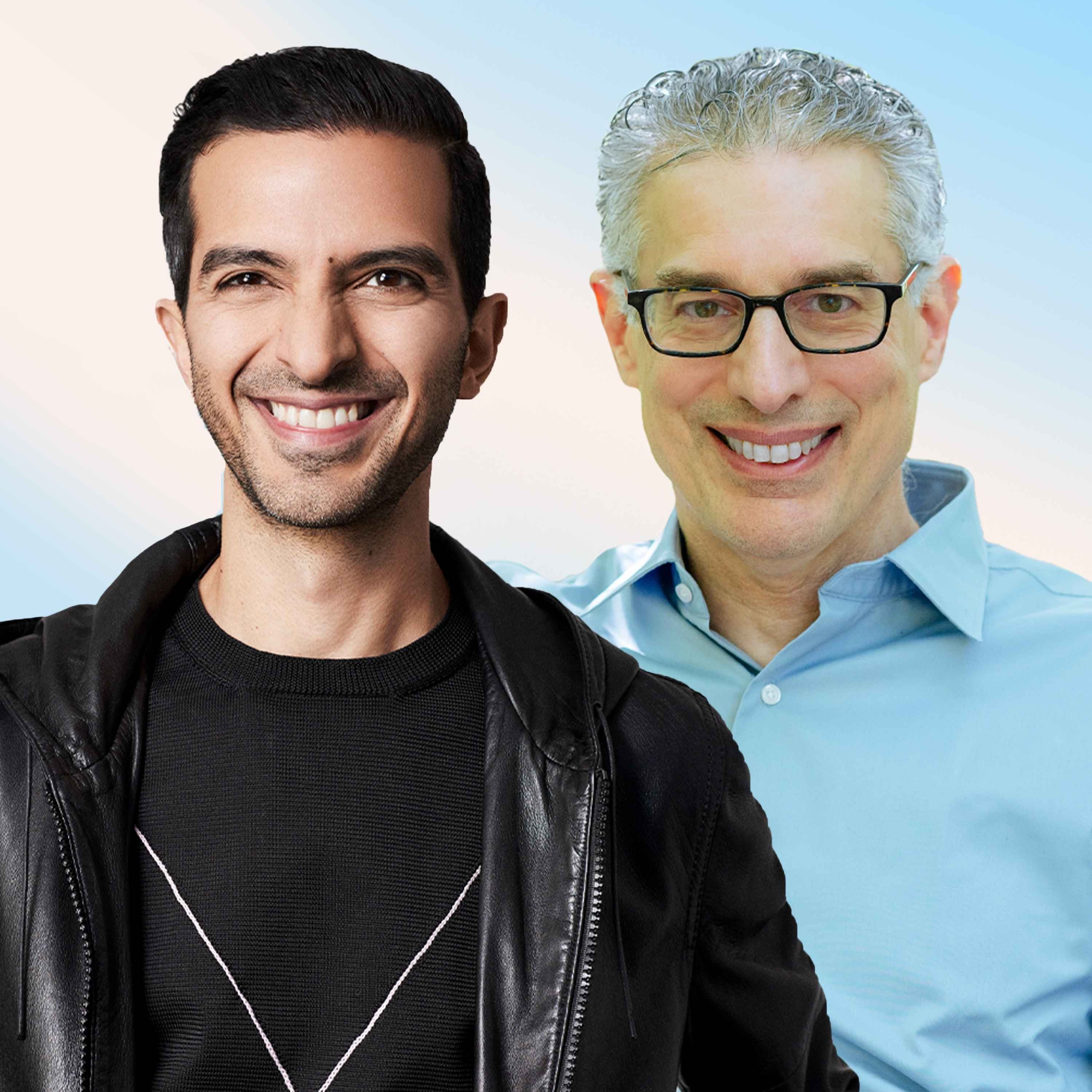
In a special episode, BoF founder and editor-in-chief Imran Amed joins Bob Safian on The Rapid Response podcast.
“This is probably the most severe crisis that I've seen in the luxury side of the fashion industry since the Great Recession of 2008,” says Amed. “The business model and approach that the luxury industry has been using for the last decade or so is running out of steam.”
In their conversation, Amed and Safian discuss the cracks in the current luxury formula, the untapped potential in older demographics, and how brand and product innovation have the potential to revive the sector.
Key Insights:
Additional Resources:
Hosted on Acast. See acast.com/privacy for more information.


