
 Ask ChatGPT


 The Business of Fashion Podcast
31 Jul 2026 · 58m · 17 chapters
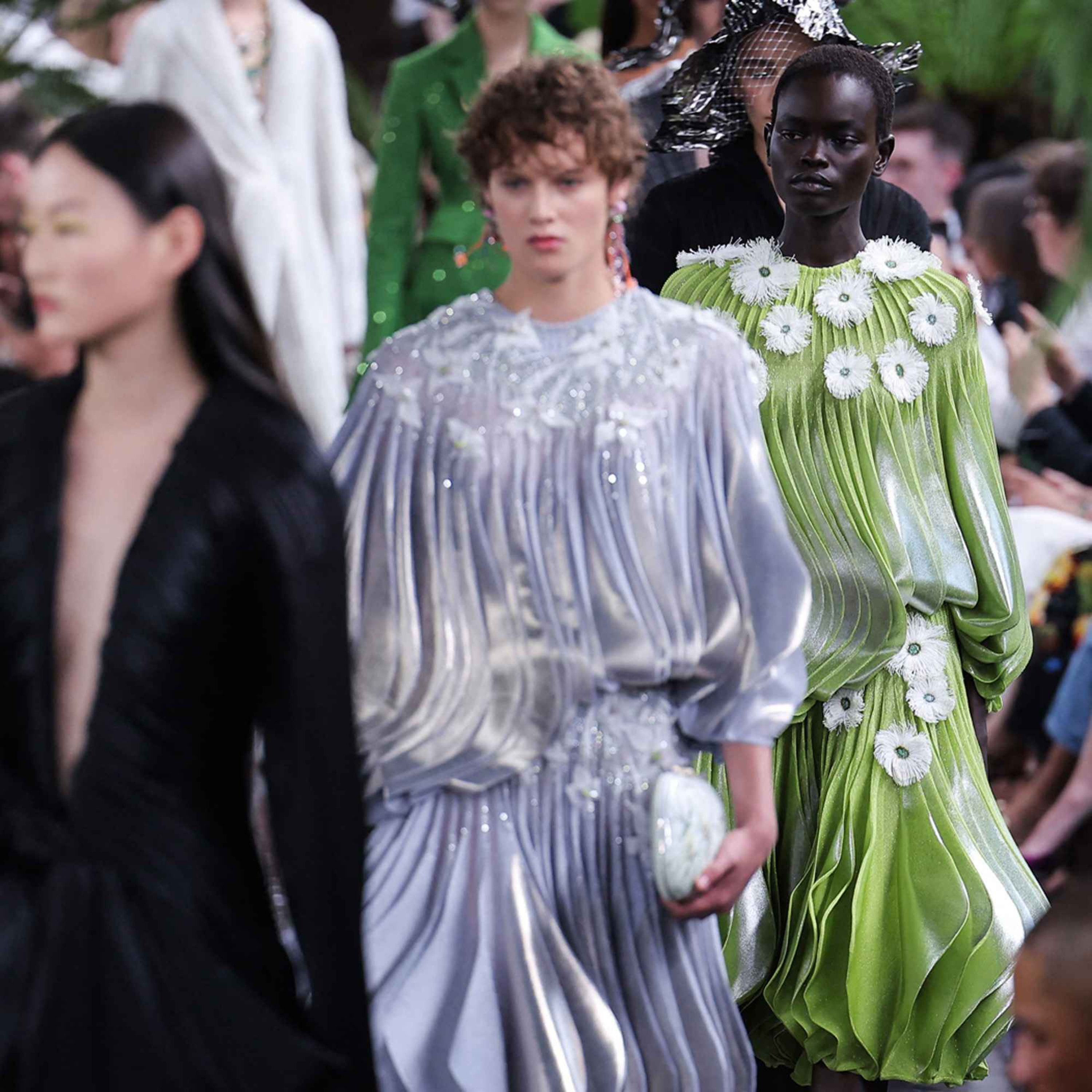
Jonathan Anderson (creative director) explains how he’s “turning around” Dior through a patient, craft-first approach to couture—reframing couture as an endangered skill, building a six-month “lab” cycle, and expanding couture beyond dresses into bags, jewelry, and shoes with provenance and new materials. He also describes Dior’s client experience and a three-part show-to-exhibition-to-public program at the Rodin.
Imran Ahmed, founder and CEO of Business of Fashion (host). Jonathan Anderson, founder/creative director of JW Anderson and now Dior’s creative director; previously restructured JW Anderson after LVMH investment. Sheena Butler-Young, BOF senior correspondent (interviewer/segment lead).
Couture is a “PhD” of institutional craft; Dior protects endangered hand skills. Dior’s couture process can’t be rushed—he changed the cycle to six months. Dior can “do anything” in couture (no “no”), and the archive can be reinterpreted without being trapped by it.
hand-pleated tulle “candy floss” structure vs machine pleating; couture jewelry using meteorites and powder-coated enamel; upcycled bags with textile provenance; shoes built on a new couture last over six months; archival Dior dresses remade/repairable for clients; Rodin exhibition with Magdalene Adondu and Christian Dior sketches.
Written by AI. May contain mistakes.
Discussion on Jonathan Anderson's challenges and learnings at Dior.
“Hello and welcome to The Debrief from the business of fashion where each week we delve into our most popular BOF professional stories with the correspondents who created them.”
Jonathan shares insights on the emotional and historical significance of couture.
“Jonathan Anderson, welcome to the BOF podcast.”
Discussion on the intricate craftsmanship and techniques in couture design.
“And I would have probably nonchalant would have said something like, well, I think it's irrelevant or something.”
Jonathan describes his experience working in the Dior atelier and learning from artisans.
“well, in a weird way, what Dior is doing and other couture houses, which there's not very many left, are kind of protecting this endangered craft as a kind of national symbol, ultimately, of making.”
Exploration of the creative process, challenges faced, and the potential in couture.
“I think what is interesting is it's like a kind of little mini city of people.”
Explore the unique creative process within couture at Dior and the freedom it offers to designers.
“Did you ever come with an idea and they said, no, that's just not possible?”
Learn about the challenge of respecting Dior's heritage while innovating for the future.
“And then while we're kind of testing like weird and wonderful things, like it can be in bags, it can be in shoes, it can be in a last, it could be bonding techniques, it could be hands, it can be so many aspects.”
Discover how Dior is redefining couture accessories with storytelling and historical context.
“you have to kind of in the morning remind yourself that you have to take the journey that is right for the brand that you're in, not for what is needed.”
Learn how the integration of industrialization and handmade techniques can redefine luxury accessories like shoes and jewelry.
“So it's sort of like, and we might learn something through industrialization and handmake of say the Lady Dior, where we're kind of like, we're going to take this textile and we're going to recondition it.”
Explore how the interaction with couture clients is evolving and the importance of understanding their motivations and desires.
“So another big change that you're making is with the interaction with clients and beyond.”
Understand the significance of experiencing couture in person and the impact of exhibitions on public perception of fashion.
“I wanted to show that Magdalene is a huge inspiration for the show.”
Explore the intense pressures faced by fashion designers in a fast-evolving industry.
“But at the same time, the audience is nearly kind of like our approach and lead to Hollywood.”
Understand the multifaceted components and teamwork needed to succeed in fashion branding.
“And, you know, because that was a business that needed completely restructuring.”
Learn about strategies for sustainable practices in fashion shows and events.
“And I think with like, when I look back at my time at Loewe, I think it's a beautiful brand.”
Discover the significance of meeting influential figures in fashion and their impact on design.
“I've never worked at the atelier like that.”
Explore the impact of John Galliano's advice and philosophy on Dior's creative direction.
“and when you meet a hero like that in the job that he did, when you go to the museum and you see, and every single person probably listening, you know, he changed fashion and, And I wanted to bring him back in.”
Discuss the excitement and expectations surrounding the new Dior collection.
“And by the time this conversation comes out, the collection will have been out in the world.”

Get the gist, explore an idea or ask about something said.
 Claude
On The Business of Fashion Podcast, what are the key points of this episode?
Searching your listeningAutomatic transcript. May contain errors.
0:00Introducing Meta Glasses. You have questions, they've got answers. Hey Meta, what's the capital of Peru? Lima. How do you say, where's the restroom, in Spanish? ¿Dónde está el baño? Hey Meta, is a hot dog a sandwich? Technically no, spiritually yes. Hey Meta, what should I do with my life? That's one of life's biggest questions. What do you think? Ask anything with the new Meta Glasses.
0:39Hello and welcome to The Debrief from the business of fashion where each week we delve into our most popular BOF professional stories with the correspondents who created them. I'm senior correspondent Sheena Butler-Young. Somewhere between the fitting room and the checkout, a lot of shoppers now do the same thing. They flip the tag, not to look at the size. Introducing Meta Glasses. You have questions, they've got answers. Hey Meta, what's the capital of Peru? Lima. How do you say, where's the restroom in Spanish? ¿Dónde está el baño? Hey Meta, is a hot dog a sandwich? Technically no, spiritually yes.
1:20Hey Meta, what should I do with my life? That's one of life's biggest questions. What do you think? Ask anything with the new Meta Glasses.
1:35Hi, this is Imran Ahmed, founder and CEO of the Business of Fashion. Welcome to the BOF podcast. It's Friday, July 31st. When I sat down with Jonathan Anderson in his Dior Atelier last December, he hadn't shown a single couture look yet, and nothing he'd designed for the house had reached the shops. He was, by his own account, still working it out, joking that every fitting felt like doing a PhD, learning an institution with its own rules, its own hierarchy, and its own way of making.
2:10Jonathan Anderson: I live off pressure. This was a very different type of pressure. It takes time for people to get used to this. I remember when I did my first show at Louisville, people were so not sure about it. I definitely was not sure. I remember, but like that took time. And it took time. And, you know, because that was a business that needed completely restructuring. Jonathan's first products landed in Dior stores on January 2nd. Six months later, this week's LVMH half-year results showed that the Dior turnaround is starting to bear fruit. Listening to this conversation again now, you get a sense of how big a task Jonathan was undertaking.
2:50Here's Jonathan Anderson on the BOF podcast.
2:57Jonathan Anderson, welcome to the BOF podcast. Thank you very much for having me. Do you know, I was thinking, do you remember we sat down for that conversation when you were just moving into your first post-LVMH, JW Anderson offices. I think that was, what year was it that you...
3:21Jonathan Anderson: That was in, I'm trying to work out which building. I think that was in Shackle Lane. Yeah, or something like that. And that was just when they, LVMH, had invested in JW Anderson. So that was... That was 10 years ago. Wow. Yeah. Okay, so it's been... It's been 10 years coming. We're sitting here in the space where typically you're doing your men's collections. Yeah. But now you're doing old couture fittings here as well. Yeah. And women's. And women's. And it's December 16th. Yeah. So by the time this comes out, it's going to be many, many weeks later. But it was really cool just now to have a look through all of your ideas and how you're thinking about couture.
4:08your first couture collection. And I guess I wanted to start with when you're thinking about, you know, you have these 18 collections you're doing. Some of them are for JW Anderson. Some of them are for Dior. What do you see as the purpose of couture? First for you as a creative person. And then also in this massive enterprise that is Dior. Like what's the goal or the purpose of couture?
4:37Jonathan Anderson: Well, it's the first, if someone had asked me about a year and a half ago about couture, I would have been like, I had never projected myself into couture. I never really understood it. And I would have probably nonchalant would have said something like, well, I think it's irrelevant or something. Oh, really? I probably would have said something like that. Why? Because I never really understood it. I never understood the glamour behind it. You know, there's always something very glamorous or something very kind of at bay or something with the idea of the hierarchy of fashion. And now? And now I have a completely different understanding of it.
5:23Jonathan Anderson: I feel like I'm doing, I kind of joke every time I'm in a fitting, I feel like I'm doing like a PhD in couture. Because I have an amazing atelier. And it's every day you are learning the process of something that has been done for so long in France. trimming it's it is a kind of it's an institution in itself there's rules there's um there's so many different things you can and cannot do and and in a weird way i was trying to work out how do i approach that or something or how do i how can i relate to it or something i was at the beginning i found it very difficult to relate to until they did one dress and then i was like okay I'm kind of addicted.
6:11And so the purpose of couture, like, you know, in the, in the like reinvention that you're, you're bringing to Dior, like now that you've understood it a bit and you've seen the inside, like how do you see it fitting into what you're doing here?
6:27Jonathan Anderson: For me, it's a kind of like, it's a very emotional process, actually. I find it quite emotional because I think it's sort of like, it is something that is steeped in history and people who have been working for many, many designers inside this house who are still here. So you, in a weird way, you have to go into kind of like, like performative mode that yes, I can do this. And at the same time being like, I'm totally confused. Like imposter syndrome. Yeah. But I was trying to think about like, you know, couture itself. And I was trying to work on how do we reframe the narrative of all of it. And I was thinking of things I like in craft and what I have done in craft over the last 10 years in my previous job.
7:09And I was thinking, couture is kind of like an endangered craft as a mindset, a mythology and making with hand. And I was thinking, well, in a weird way, what Dior is doing and other couture houses, which there's not very many left, are kind of protecting this endangered craft as a kind of national symbol, ultimately, of making. And I, once I kind of was got into that mind space, then I was able to work out, okay, well, what do I want from it? Or what is new for Dior ultimately in, in a kind of landscape that's had some of my heroes in it for me. And so when you first kind of stepped into the atelier and you kind of were trying to figure out what you, where you were going to start, Was there, what was the first image or idea that was lodged in your creative brain that you, that was, what was the starting point basically?
8:11I think my starting point was one of my dearest friends is Marilyn Le Donde, who I have worked with many times. And I think her vessels for me are the idea of form and silhouette. And I was thinking that is what Dior was so great at, is in the silhouette, like the sketch. and um i have this like one vase that i like i love of hers which for me was always like a body
8:39Jonathan Anderson: and she always she always jokes and she's always like well for me that vase is like naomi campbell and i was like okay well what what is a dress that is a vase that ultimately is naomi campbell and what is that in in couture so i kind of showed them this vessel and i was like i like the idea of it was pleated and it looked like it was being spun like as if like the movement of clay as you build it yeah and i don't really sketch but it was the first time i kind of sketch something on a piece of paper very badly and i was like can we resolve this and then it to finish it off like dior we put a bow on it and that was that was about a month and a half into the job right and so that was just before the summer and so that shape yeah or form kind of made its way into the ready-to-wear, the women's ready-to-wear, right?
9:34Jonathan Anderson: Which was like kind of mid-resolved. So it was quite interesting to see it like it's like going to cut and shorten. Right. But the structure is not what the structure is in couture. Yeah. So what's the difference between the ready-to-wear version and the couture version? Inside the one in couture, you have these tiny lines of tulle that are gathered, which make this like kind of candy floss, is what I would describe it as. and they build this very, very light structure which holds the shape so that you can push it in and then it has memory. Whereas the one that we had in the show was more done by Belen.
10:10So it was like a bit more of an industrial process and then it was done by machine pleating, whereas this is hand pleating. So everything is pleated by hand onto the carcass of the shape and then stitched down to keep the shape.
10:26Jonathan Anderson: and when i when i saw the 12 of it on then i then i was like okay we have to open the women's wear show with a kind of shorter version of it but i was like this is why dior is dior and this is why dior couture yeah needs to exist in a way it needs to exist because they are practicing a skill that if we if you don't practice would disappear you know because I think what people forget in Ikechor is that everything is done by hand. Yeah. And what has taken me a bit of time to get used to it is that by doing things by hand, things become a lot rounder. You know, like the seam is a lot rounder. It's less flat.
11:09Everything becomes slightly more rounded ultimately, which has taken me a bit of time to get used to. And when you started meeting some of the people in the atelier, some of them, as you said, who've worked with many of your predecessors, what surprised you most about their skills, the way they work, their dedication to this craft?
11:31Jonathan Anderson: I think what is interesting is it's like a kind of little mini city of people. And like you have the she shop and the butcher, that's their little area. So they stay in their own, like somebody who does flu only does flu. There is no cross-pollination. It's very like they take on a look and they look after this look through the entire process. So it's like super highly specialized. To the point where it's sort of certain things have to be given to certain people. Right. You can't kind of go, let's be crazy and move it around. So this for me was like, it was quite interesting to meet all these individuals that were all had a completely different personalities in very different buildings.
12:16You know, so you have like the historical atelier, which is above the store. Then you have like four other ateliers that are doing like little camps of people. And then you also have some of the like the embroidery houses and the feather houses and all. So you have all these different people that you were, they come in and then you're briefing on these tiny little swatches. And then they become this, you know, it might be a fabric that I found. And then we're trying to like, is there a mill that still even does it? Is that for you? I mean, you've worked with so many craftspeople and makers and artisans over the years.
12:53Is it intimidating? Of course.
12:58Jonathan Anderson: I think I'm still intimidated. Until the show was done, I feel like a bit, as you said, a bit imposter. I think people don't comprehend until you're, there's not many houses. There's probably five or six houses in the world at the scale. then there's only so many houses that do couture which is this other layer of the world of a brand so it takes time to in a weird way go into this ecosystem and you have to be able to perform like that which is very scary and quite intimidating but for me it's what i i feel that i learned when i was at the welfare is you have to start somewhere and in a weird way it's about progression you have to learn through it and once you've if i go to work and it becomes a formula then you get bored and then you don't enjoy it so in a weird way everything i do at the moment is for the first time so it'll be the first couture it's the first year is going to be everything first so you're and you're meeting hundreds and hundreds and hundreds of people and they're trying to in a weird way grab a hold of this like running buffalo like you're trying to grab onto it and stay on it so for me yeah it's incredibly into i think couture adds this other weird um and i would never really care but weirdly when you're inside the house in Paris, there is a kind of, it comes with a different thing.
14:37Did you ever come with an idea and they said, no, that's just not possible? Or are they able to do anything?
14:42Jonathan Anderson: They're able to do anything. That's what, there's never no. In a weird way, it was like, for me, it's nearly like cars. It's like, here is an archetype for a brand new car. And it may never be able to go on the road, but we are going to make it happen. You know, I quite like the, you know, it's like in fabric, you'll be like, do you think we can reproduce this 16th century fabric? We won't be able to get it like this, but we will be able to do it like this. Or we will get a mill that can reopen looms to do it. That must be quite refreshing as a creative person because you hear no a lot normally, right?
15:21And it's the one part of the business where there is no no because it's just about sheer creativity and making. Wow. So it's very kind of like, and we changed the kind of the calendar for it. Because I was just like, I cannot do a couture show in 30 days. Like, it's just impossible. So I was like, let's change it into like a six month cycle. Which is kind of the old way of doing things, right? And we just work on it like we, you know, for me, it was like, okay, this is we're going to do a project with Magdalene. I want it to be about form. I want to be about these three different things. Off we go.
15:58and in a weird way, then you enjoy the look, and through the process, I'm enjoying kind of like, rejecting it, or embracing it, or kind of, do we want to add more? Do we want to take, you know, so it's a kind of like an experimentation. For me, it's going to be a lab.
16:15Jonathan Anderson: And I think because of designers that have been there before, like John, Christian Dio himself, they have opened the door of this idea of like, fantasy and i was thinking to myself like why why do people come to dior for fantasy you know like but ultimately it was birthed out of the idea of fantasy it comes out of a troubled period fantasy and i think it's one of the dna's of the world i think people go to it because they want something you know a bit romantic they want it to be a bit over the top they want it to be about fashion. So, so for me, it's sort of like, A, it's quite petrifying because you're kind of trying to, you've got this like back catalog that is like genius.
17:03And then you're trying to, A, respect the codes of the house and then slowly bring codes, do you know what I mean? Because I think that's been the biggest challenge I think over the last year is dealing with like audience and a business and trying to be like, I'm in a bubble, but then at the same time, I'm trying to listen to outside the bubble where you're kind of going, the brand needs this in the moment. I think this is where couture has been kind of a bit like, um, an escape because it's sort of a bit more kind of where I can kind of sit and spend time in the evening going through the archive, going through how do we develop every single fabric from scratch?
17:46How do we develop every shoe last from scratch? So that you cannot do in a month. That takes six months. Right. You said just now a lab. Tell me more about that. How is it a lab for you as you think about this lab in the wider Dior universe? Yeah, because I think we can run it over six months. And then while we're kind of testing like weird and wonderful things, like it can be in bags, it can be in shoes, it can be in a last, it could be bonding techniques, it could be hands, it can be so many aspects. But you might learn something through that and then go, actually, we've opened all these looms now.
18:27We might as well use that into men's, like utilize it. Because now that we have it, we can then, we know that we can do that fabric. So, okay, we'll put that in. Let's experiment with bags that make, are gestural bags that make no sense in the everyday world, but they're kind of an interesting object. But there might be something in hardware or construction. Okay, let's maybe try that into it. So for me, it's more kind of a thought process that I think can be interesting. It feels to me like you've always kind of worked that way, never with these kind of resources. Like you've always had this approach of like doing something quite experimental and then somehow maybe it turns into something that.
19:09Something that sells. Yeah. But I think what is, because you're in a weird way, you're kind of like, this allows in a weird way, two blocks of continuity throughout the year. Those two six month blocks. Where inside of that, you have like two men's, you've got two pre-collections, you've got two ready-to-wear collections, and then you have pre-falls and capsules. So in a weird way, it kind of, for me, this becomes the backbone of the brand. Yeah. And then it then breaks up the creative cycle. And that's why I think, for me, it's sort of going into next year. William, when this comes out, it will be next year.
19:49Happy New Year. Happy New Year. For me, it's sort of nice to kind of start the... I like to start a year as a year because in a weird way, I came in midway in the year and it's really nice to go, okay, this is going to be like men's, then couture, then the woman's, then it'll be the resort, then it will be the woman's. It means I can go through the cycle again. But with fabrics are mine or shoelace are mine, You're trying to build your own library. But what you realize, when you're in a house like Dior, you want to get them so that they're long-term things. I want them, I think, in Leuven, I had to start from nothing.
20:36Here, I'm coming in on like, everyone has like a vision of Dior. And that's this whole thing about like, how much do you think about what people outside this bubble want and how much how much do you feel like kind of confined by the archive right and how much do you lean into your own creative instincts i think for me i think i had two months of this year where i was just like it was like kind of being in a kind of sound cooker of information you have like you're a looking at the business you're b looking at like what you want to bring to it you're kind of closing off a chapter in um in a brand that you're 11 years i had re-branded and re-changed jw honest and so you were trying to like put all these kind of components together and at the same time i was
21:34Jonathan Anderson: to think what do i do in dior that ultimately creates a blank space and that's what the shows were about it was it was to try to kind of propose a question to myself and pose a question to the audience which is like well what do we see dior as you know because i think as a designer i will build a vibe or a kind of culture around a brand but then everything will be different you know You know, you will have bags, you will have core product that will build the business. But the energy of each show has to be a different energy. And I think when you're in a big machine, you're trying to work out, like, how do you get the system to work around that when it was doing more of a singular kind of look?
22:22So you're trying to go, OK, well, I want Couture to go this way and I want Men's to go that way. But they all also have to be linked. linked yeah so you're trying to work out how do you cross-pollinate all this so there is a language
22:35Jonathan Anderson: that is built so and i think it takes time i think that i think that's what i realized with noise today is that um i know what is right because that's why i'm here to do the job and you have to kind of in the morning remind yourself that you have to take the journey that is right for the brand that you're in, not for what is needed. It's very easy to hype something. But I think when you're dealing with structure and you're dealing with collection planning, you have to deal with that. Because that is the real part. That's the realism. That's the stuff that no one wants to know about. But ultimately, if you don't, then you will have that bite you on the other side if you don't.
23:20So I'm trying to kind of, with Delphine, work like put down like concrete blocks you know some will end up being sand and then you'll have to rebuild it but you're trying to build solid platforms like industrialization you know different manufacturing but you know delphine myself we can bring a lot more knowledge on bags whereas this is ready to warehouse a bag brand you know so it's sort of i'm doing the reverse of what loewe was loewe was a bag by putting fashion culture and this is me putting bags into something which has a huge fashion culture. So it's, and it's a learning experience. Yeah.
23:59So when we were looking just now, I was, I mean, and maybe you can just kind of walk us through the different elements because there were, as I expected, a whole bunch of looks.
24:11Jonathan Anderson: Yeah. But alongside all of those looks and some of the processes that you walked me through, there were also one-of-a-kind pieces. There were bags, there was jewelry. like the universe of couture you've expanded it for what at dior in a way no i was trying to think of like like when when i was younger i was always there was these like books which were on designers little small books you get in libraries and i was always obsessed by like jean paul gautier when he would do like a couture show it would be like it was like an entire theme and it was like you nearly had to buy the entire look to get the vibe it was like bracelets and shoes and bags and hats and mittens and and i was thinking like in a weird way you're kind of set you know in couture today there is only so many people in the world can buy couture and this is not uh this is not a secret do you mean this is sort of there's always a pinnacle there's always a pinnacle in life so for me it was like well how do i get the same excitement of myself looking at couture of like say something like Gauthier, where it's like, it's everything.
25:17Jonathan Anderson: You believe in the editorial character. You know, it's sort of like, it's multiple components, or it's just a dress, you know. So that's why I was like, how do we get back? How do we do bags of couture? How do we do jewelry and couture? So like, in like, for example, in jewelry, I wanted to look at this idea of like, using technology and looking at powder coating onto enamel, onto aluminium, and then using found objects or precious things like we have meteorites that were found in Argentina and then those are going to be mounted onto like carbonized silver. So it's like looking at technology and then something in the outer world that we have no idea what's happening.
26:02But then you have like Roman cameos that are then mounted onto things or you have portrait miniatures, you know, that are then recombined. So that was like something where I thought, okay, well, if you're going to buy a piece of couture jewelry, it should have some sort of like story behind it. Do you know what I mean? It's sort of like, I'd never touched a meteorite. Here was meteorites. We're going to use it. You know, it's sort of, it has like a kind of a talking point or like something you're kind of like curiosity. And it's still precious because I don't know about the availability of meteorites, but
26:36Jonathan Anderson: like feels like very very rare they're rare but they're not as they're not as crazy um like some of them can be they're like this big but when they're this small it's you know it's not so bad and i quite like that it's sort of like there is a childlike curiosity in the idea it's like i remember as a kid used to get these magazines where you get like stones in them each month and you would like you buy the magazine it would come with like a stone in it and then you would collect all the stones. So it was like, for me, it was like, that was what jewelry was going to be about. Like, you know, like all these kind of like antiquities reformed into something.
27:13And then bags became split into two parts. One was going to, is to do with like, what is upcycling in a couture way? Do you mean like, what is that? So it's like the reusing of raw material is one. Then there's like looking at 18th century or 16th century French fabrics found where every single piece we have, like when you buy the bag, you get the history of that piece of fabric, what mill it was made in, if it was made in Lille, if it was made in like a certain type of loom. So each bag comes with a kind of like a list of components of like the history of that textile. It's the provenance basically.
27:53And I think in a weird way, that's what I want to bring to it. It's like, that's what I, when I buy a piece of art or I buy a ceramic, you're trying to find newness in something that is old or you're collecting something in period. So it was, how do you merge that? So it's sort of like, and we might learn something through industrialization and handmake of say the Lady Dior, where we're kind of like, we're going to take this textile and we're going to recondition it. what can that be in the bigger ecosystem of the brand? Start small and work out bigger, you know? So that was a kind of like take on accessories.
28:32And then, you know, shoes for me, I wanted a complete new last from scratch. Like where it was like, we're going to like meticulously spend six months until we get that incredible curved heel that we saw. Yeah. And it was like, for me, Dior, like you have Vivier who does these amazing shoes. And I've always been obsessing. He always had this leaned, angled shoe. And I was like, well, what happens if it was more modular? If it was like the entire back of a shoe is a heel. But that takes time. You're trying to work out, does it hold the body? Is there a balance? But you want it to be perfect. So theoretically, you know, someone could buy just a couture shoe or just a piece of jewelry or just one of those upcycled bags.
29:18Jonathan Anderson: And I think there's a way then that you can enter couture on different levels. Some people don't want an entire dress. Some people want to have an object that means... I was trying to work out how I would buy it. And I was thinking I would want a really nice bracelet. Or I would want... What would I as a guy want from it? And I think this was the kind of thinking, which was more about this kind of eccentricities within couture and this idea of the nuance of it. We'll be right back with more on the BOF podcast.
30:02Introducing Meta Glasses. Hey Meta, any last minute tables for two tonight? Sure, there's a great Italian restaurant 15 minutes away. Hey Meta, where's the nearest flower shop? Five minutes away, straight down Broadway, past the bodega. Their lilies are trending on Instagram. Just saying. Hey Meta, am I forgetting anything else? How about setting a calendar reminder for next year? Meta glasses, available in more than 20 styles. So another big change that you're making is with the interaction with clients and beyond. Yeah. How much did you think about the couture client as you did this? Did you meet anybody?
30:49Jonathan Anderson: I went and met some of the biggest clients I have. And I just got back from China and I met some more there. I met some in America. And I have been kind of like working out who else do I want to attract to the brand as well. And it was just interesting to kind of think of different, like, it was a different mindset than I was. Like, you know, it was really interesting to speak to. How is it different? Because they want it. It's either they want it for occasion. A specific occasion. And they're thinking in advance. They're like, oh, well, I'm going to this thing and I think this would be. Or you've got people who actually just collect clothing, who are fascinated in the history of fashion and just collect clothing.
31:32Jonathan Anderson: And then there's newer people who have just started to understand. like it's like being part of a world like they they go in to do a fitting and they meet the atelier it's like it's a whole kind of process and the interesting thing on the first week of working here I was when I went to the atelier I was like they were remaking dresses like from like 57 or like the first Dior show or and I was like they must be for the museum no no the what the Amazingly at Dior, we will remake those dresses for clients. You can order a dress from a show. It could be 20 years ago, 30 years ago. And we will make it for you still to this day.
32:19Jonathan Anderson: Wow. And at the same time, we will repair those dresses. Right. So is that a bit liberating in a way? Because if someone wants that archival thing, you don't have to recreate that. You don't have to recreate it. And at the same time, it does give you a bit of a reality check. Yeah. That these things do stand the test of time. You know. And then the way you're going to interact with clients and engage clients. Like this is more than just a couture show happening at the Musée du Rodin. It's a, walk us through the whole thing. So for me, the show is the silhouette, the idea, the fallacy, the dream.
32:58Like here is it in a, you know, 15 minute band. which is for a reduced audience because of capacity, and ultimately it's a fashion show. After that, we then go to the, straight after the show, I go to the Villa Dior, and I will set it up into cabinets, and the client will be able to see every single component, and it will be laid out in the Villa Dior. What is the Villa Dior? So it's a space that they have for VIC clients, and it's a place where you can kind of, you can kind of go there and get made,
33:30Jonathan Anderson: you can get anything made. Okay, so this is a permanent space? Yeah, it's a permanent space. And what we've done is we've redone it more like a home setting. And it's going to be, but then it has like, you'll have all the jewelry encased. It will be more laid out like a kind of exhibition. So this is like the re-see in a way, but a much more elevated one. So it'll be every single detail. We will introduce the clients over like two hours where we can introduce each product, tell them things about. They can meet the people of the team. So they can meet like Alberto or Juha or like all the guys. And will you be there?
34:06And I will be there. And then we will kind of do the old school kind of like, this is what this is about. And this is why it is what it is. We do that. And then it will be X amount of days of selling. And then in that period, so we will have 11 looks will be then in the show venue. So that will happen for clients. So you have the show. Then we have the clients. And then we have the final part, which is the part that I'm most excited about. And it's the part that is new for Dior, is that the show venue will then turn into the Rodin. The show space will stay up and it will then be turned into an exhibition, which will be on Magdalene Adondu, Christian Dior himself, and the new couture collection.
34:53So we will then do with school groups. We will do with art students. We will do with general public. Anyone can go. It will be free. And what, do you sign up online or something? Yeah, and you just go and see it. Why did you want to add this third component, and why is it the thing you're most excited about?
35:11Jonathan Anderson: Because I think I was trying to kind of think about what I felt about couture before I got to Dior, which was like, why? And I was thinking that if you saw a dress that is taking more than 4 ,000 hours that one person has meticulously put together, a photograph is never going to tell you that. You know, you have to kind of see it. And then I wanted to show my influence. I wanted to show that Magdalene is a huge inspiration for the show. You will be able to see what we're doing with her in terms of bags and in terms of other things that we will put on show. And then showing from each time will show from the archive different things.
35:51So this one will focus on Christian Dior. So it will have all the forms. It will be Magdalene and Christian Dior in conversation. And what I end up doing is kind of like a catalyst of that. So then you'll see the sketches of Magdalene, you will see the sketches of Dior, you will see the sketches of mine, and all mixed together. And then from that, so this is just as important to me as the fashion show, because I think it's where there's only so much you can see online. and I think in a weird way I'm kind of inviting people who want to go and see it to see something physical because it may change your mind you know it might change your opinion of it you know because
36:34Jonathan Anderson: I think it's sort of I think the great thing about Dior is Dior does a great exhibition when I think of great exhibitions in fashion Dior is very good at an exhibition so why not exhibit it something current as opposed to waiting till like what a for a retrospective or something so you because i think it's sort of like this is what clients are saying this is what you're seeing in real time go and see it now because now because i think you know it's like the opening dress that we were looking at where you have like layers it looks so simple as a structure but when you realize that underneath is great is like hundreds of lines of tool that are all stitched together and then engineered in this way you will see that in the flesh more than you will see in a flat image on the catwalk the cat the catwalk can be a bit of a trick and i i know because as a designer i have had to use that trick you can use a set as a trick you can use You can sell people a kind of flashpoint, but the clothing is not right.
37:43No matter what you put around it, it will, no matter how much it in the moment, we're so used to fashion right now as we do shows, consume it and that's it. And some people only consume that flat image.
38:00Jonathan Anderson: And that's it. Yeah. And it's kind of weirdly, I was talking about it with someone a couple of weeks ago in real in depth over a bottle of wine. Which is why I started in fashion. What I loved about fashion when I was doing windows at Prada was that you would watch a Prada show and then we would have to work with the team to come up with windows and then you'd have to foresight the windows coming. And in the beginning you would look at the show and you'd be like, what is that? What is that? and then like you would be selling the current collection that we were trying to sell the current collection then you would be like slowly the new collection was about to come in six months and then you would be like oh i want that now i think what has happened now is we have kind of gotten to this weird habit where we do shows and everything for impact and bam to kind of win people's talking ultimately or like we like we hate we like we hate but we don't digest anymore so we just like we kind of it's like nearly like that you put it in your mouth and you spit it out yeah it's like perfume it's like you know like when the at the end like in the he gets eaten by everyone but what i love about fashion for me was it's about the future you create something people take time they distill it it goes in store and then you discover it again so for me this is a kind of a test weirdly to kind of see does it help part of like local or community ultimately to look at it in real time yeah to maybe go actually it was actually different but not everyone goes to the showroom yeah but you know i mean yeah well this helps people i guess they get that chance to digest it.
39:50It also makes me think of, you know, following your ready to wear show, there was that watch party. And I feel like there's this thing happening. I mean, I know Italian Vogue is doing more of this in Milan as well, where they're like this idea of fashion week just being for insiders and the kind of outsiders get to look at it on social media. There's this movement of like bringing more people in to see it, the real bits of it. Cause so much of it then just is consumed on the surface or understood at the surface.
40:20Jonathan Anderson: But we don't go deeper. Yeah. And I think, I think this is what, I think the learning lesson for me in the process of like, and I'm at fault too, because I kind of go, oh, well, Loewe was like this. It was just, it was always, but then you realize you were there for 11 years. Yeah. So in a weird way, I'm expecting 11 years in one year. But at the same time, the audience is expecting of it like, tomorrow yeah and you're trying to grapple with where you want to go what is needed for the business where the audience is seeing it and then there comes a moment where you have to just go into the zen-like experience which is what i said earlier which is like i get up in the morning i know what i'm doing and it will be there will be good days and bad days and i think that's what you start to you start to get a thicker and thicker and thicker skin through the process because you have to because you have to always be thinking what is relevant in six months yeah not right now you know it's sort of i think this is the trick it's also like a really challenging time yeah for the fashion industry so i think offering some more texture and more depth helps people to understand or being real about it you know i feel like a fashion has this thing where i think the audience see me as a designer and you live this like you know you're a designer so you turn up and it's like i don't know what i don't know what they think sometimes but the reality of fashion today in the scale of fashion the media pressure of fashion the size of it it's not 10 years ago no fashion has grown like crazy maybe too much and maybe and maybe there might be a kind of recaliburization.
42:16But at the same time, the audience is nearly kind of like our approach and lead to Hollywood. We don't care. We just want the end product. But at the same time, I think we have to kind of be more rational.
42:32Jonathan Anderson: We have to kind of, in a weird way, as a system of designers and the brands, as much as there is competition and there is like, there will always be a sliding scale of things. But at the same time, if we don't, somehow unite behind it change is inevitable and it i think we think change is just a new thing change has happened in fashion in big cycles like this before the difference we have now is the media exposure on it is ginormous yeah it is part of the popular conversation yeah but we forget that because we that's the whole point of fashion is to forget and keep going you know me so i think it's sort of i think sometimes i i feel for so many designers because i i know what it's like to go through it and i do sometimes go there is moments where you go well we literally saw you take that deep exhale on loik's video backstage because it's just so much right because i think i think for all designers in that season i have never it was nearly like it was the most bizarre moment of my life because it was like the anticipation of something that you're only starting on a journey of the audience is only just about going for it and you're trying and the pressure on it was it was that that kind of like release yeah because in the end as much as i have to be like the designer the like drive drive drive you in the end there is a moment where when you are finished it is that kind of like nearly handing in an exam you're like well you're a human right and i think i think in the online discourse around fashion and fashion designers and the fact that it's become part of popular culture part of what's lost is the fact that all of these things that people are saying all about all of these people yeah humans online like they're humans yeah and it it's sometimes i know the pressure can be but it's intense but i live off pressure this was a very different type of pressure and the good thing is it is the it's quite good because it's like behind you it's like kind of like it's like okay we just started so we can move on from like you know couture will be that still thing of the first of it and there will be a but at the same time it it means i can just get on with the job yeah you know because in a weird way, it takes time for people to get used to things.
45:00Yeah.
45:01Jonathan Anderson: I mean, like, I remember when I did my first show at Loewe, people were so not sure about it. I definitely was not sure. I remember. But, like, that took time. And it took time. And, you know, because that was a business that needed completely restructuring. And I think the bigger the brand, you realize it is not just a designer. There is so many components. There's the people, there's the windows, there's the CEO, there's the financial person there's a there's a merchant there's you know I was looking at this thing where it's like you know one grounding which I think is really good because they're kind of like they're celebrating the people yeah all of the that's Olya's thing she does they're recognizing all the talent all the talent but at the same time I was thinking to myself like the other people that are part of that is like the people do the window and the people do the merchandising and so they're number crunching it it may not be creative but they work in a creative business they have to try to work out how to make a designer's dream come true yeah and it's sort of like that's where i think to pull the veil down you have to do it in all categories because a fashion show is not just me i am just the conductor i've said this throughout my entire career and every single person can have their own transparency on it but you have to do that equally across it's that proverbial it takes a village right it takes a village it takes a lot of people the other thing i just wanted to touch on really quickly is what's really interesting is for the first time the dior men's show and the dior couture show are going to happen in the same space yeah was that out of like pragmatism that you did that is it like you know are we trying to be more budget conscious i don't think it was it wasn't it wasn't to do about budget it was more to do about like why why in one week should we make 2 000 chairs yeah why don't we just make a thousand chairs and use them both right two different contexts yeah i think it was just trying to work out ways to focus utilize building a tent that the manpower that goes into it in a weird way like a theater yeah You do act one, act two.
47:14And then act three, because there's exhibition. So you take it down and it kind of unfolds. I think it's very important that we, as we are all dealing with in every single company, no matter if it's fashion or not. The environmental part of it. Most shows that we do, depending on where they are, all that gets reused into the windows. And, you know, the ceiling for couture will then go to Venice for fine jewelry. So a lot of it's going to get reused.
47:41Jonathan Anderson: Yeah, because the amount of work that goes into it, like to make a chrome chair, it takes six months to get it done. You know, like it's like a piece of furniture. Like it's sort of like, you know, like with the men's, the chairs that we're using in this are the chairs that we've been using for the last two shows. They've just been now chromed. Okay. So that already I've been able to get, I will get four shows out of one chair. Right. Whereas in the past it would have been. It would have been like, bye-bye. you know so i think this is where i think each thing has to be a learning when you learn something then you put it into the system and it becomes part of your vocabulary and i think as much as everyone else is looking at it i am thinking about that every day like you know what do i do to try to make it cost efficient what am i thinking to do it where it's environmentally friendly how can I get more like younger people involved you know I mean like for me like I've always believed inside the teams especially in the web and especially here it's like the younger the talent the more opportunity the more that younger talent can learn inside a brand like I did then the better this industry will become so for me Dior is is such a big kind of metropolis that it can have so many aspects of that so and this takes time and that's what i find exciting the most is that you have to kind of set out your your own kind of private vision for the future and then you cannot do it overnight you have to slowly kind of be like okay we're going to sort this out and then we're going to get this and if it doesn't happen this season we'll get it next season you know i think if we take that approach then i think we can get to a better solution in the end.
49:35And I think with like, when I look back at my time at Loewe, I think it's a beautiful brand. No matter if I was there or not, it's a beautiful brand. And I think Dior has that and you've got to kind of take it on to the future again. So you've got to kind of... And you probably didn't know when you started at Loewe where it would end up. So this is a journey, right? I have no idea. And I think that's what I love about what I do. I think that's what all designers love. In the end, it is about creation. But I have to have the responsibility to the thousands of people who work here to make sure it works.
50:16do you know what I mean? So I have to kind of it's a balancing act so it's sort of like you're trying to kind of make sure that the customer that is existing who is loyal to the brand which has evolved over the years meets with my new aesthetic and you don't want it to be like hot and cold water you know, I always have this
50:37Jonathan Anderson: like vision of like when I started this brand and then I started to work in it, it's like there's always this like Instagram video of like salt water and like natural water meeting and how they don't mix yeah you don't want that in store yeah so like you have to be able to cater to the current client base which is why those meetings you had are important but you're also trying to cater to new clients are trying to big into the business that's a fine balance right balance so you're trying to keep people like slightly entertained you're trying to keep this but you have to do that the brand that dior is is not the size of were they yeah it is you know Dior is it is a is a big machine and it has a big audience yeah that expects certain things from from a brand's heritage you know so it's very grounding the process I think you know because everything is a learning experience and I think that is can be tough on days as I am only human but at the same time it is incredibly rewarding because you're kind of like Like, you know, it's a couture.
51:44Jonathan Anderson: I've never worked at the atelier like that. I've done that in bags with ateliers of that scale. But in clothing, I had a very good atelier, but this is a kind of different scale. So let's go back to the very beginning, because when you walked in to the atelier, you had a meeting with John Galliano, and he brought some cyclamen flowers in. Tell us that story for... So I had finished the woman's collection on a week before the show because of the noise and the nervousness of the whole thing. I had asked Olivier, do you think John would come to see the collection before I go and do press previews?
52:33I would like him to see it because when I was at university, he was like a hero. And still to this day as a hero.
52:40Jonathan Anderson: And he is Dior in the public imagination. Still to this day. You know, because what he built was like this big in the kind of rebirth of fashion. Because in a weird way, after the 80s, fashion then suddenly became part of the popular culture again. You know, like it kind of just bloomed. So I was like, would he come? Anyway, and John very kindly agreed to coming. And when he turned up, I've only met him twice in my life. First when I joined Loefe and then here. And he came with his wonderful boyfriend. Alexi. Alexi. And they turned up and I just thought it was like, I really loved him being, even though this is not the building he was in, I loved him being back in Dior.
53:31Do you know what I mean? I, you know, for me, it was just like, it was like, it was like a kind of like, I felt like it was like, oh my God.
53:38Jonathan Anderson: Full circle moment. It was a full circle moment of being like a student and then looking up to him and still to this day, look up to him. And then he, he came with these two bunches of sicklemen, wild sicklemen that he had like kind of tied black ribbon around and they were like perfect. and then he had this like bag of um food from tesco so like sweets and crisps and doritos and things like that for the team and we had this great chat and it was just it was a very kind of calming process in something where you're kind of like walking into something there's not many people would understand bar him and i because of the excitement i just i found them the most I love wild cyclamen when you go at like, you know, about two months ago, you will see it all underneath the forest floor.
54:36And it's a plant that always reminds me of my childhood.
54:39Jonathan Anderson: And then he brought them and then they went into these two things. I was like, they became this sort of like talismanic kind of thing that I was like, I'm very superstitious. And I was like, okay, that is a starting point for this collection as a kind of pink and black, you know. it was like it was nearly like a kind of like uh meant to be and then it became the the ceiling of the entire uh so like that show is uh the under of a forest where they grow it's all a mirror the invitation is an entire remake of the posy in a box but real the headpieces are where like we have embroidered all the flowers individually by hand so they're like these kind of tufts they are the gift and then you would put it on because what I love about John is that it is emotional everything is like a kind of an emotional he is when I've ever received flowers the best flowers are from John Galliano they are like perfect like everything is like there is an etiquette and there is a kindness that, and I was just, so that's where it all started.
55:54Jonathan Anderson: And I think that's amazing. It's like three 60 for myself and it's, and it's sort of, um, and when you meet a hero like that in the job that he did, when you go to the museum and you see, and every single person probably listening, you know, he changed fashion and, And I wanted to bring him back in. And, you know, you need the advice from someone like that, especially in a house like Dior. What? Did he give you any advice? The one line that I think was, because he's, John is incredibly intelligent, was, the more that you love Dior, the brand, the more it will give you back. Interesting. What do you think he meant by that?
56:42Jonathan Anderson: I think it's the more that you love the people in it, the more that you give into it, the more that you kind of, the more it will give you, it will tell you what to do. And I think I do use that. Like sometimes you, you need these little, like you need these little tidbits of advice from people because it is daunting and you need these little things to kind of make you feel, okay, I am going in the right direction or maybe I'm not, you know, it's sort of, I needed to do that. You know, sometimes you have to do these certain things to kind of actually just to just to be in reality you know it's sort of like when you have this like mountain of a creative like galliano it is better to kind of confront it and be at one with it than kind of be petrified of it you know and and for me Dior as much as Christian Dior started the brand Dior for me when I was young was John Galliano so and I think for a lot of people it is you know so it was humbling in a it's a really beautiful moment and it's a beautiful sentiment and it feels like you have put a ton of love into this yeah and you've made it accessible to so many more people than would normally have been able to experience Dior couture so So I can't wait to see the show.
58:09I can't wait to see it all come to life. I'm so grateful that you shared so much of that with me before the show. And by the time this conversation comes out, the collection will have been out in the world. But yeah, I can't wait to see it. Congratulations.
58:28Jonathan Anderson: Thank you very much for coming. All right. Thank you.
58:38Thank you.
When I sat down with Jonathan Anderson in his Dior atelier last December, he hadn’t shown a single couture look yet and nothing he'd designed for the house had reached the shops. He was, by his own account, still working it out — joking that every fitting felt like doing a PhD, learning an institution with its own rules, its own hierarchy, its own way of making.
Jonathan’s first products landed in Dior stores on January 2nd. Six months later, this week's LVMH half-year results showed that the Dior turnaround is starting to bear fruit.
Listening to the conversation again now, you get a sense of how big a task he was undertaking.
Key Insights:
Additional Resources:
Hosted on Acast. See acast.com/privacy for more information.


