
 Ask ChatGPT


 The Business of Fashion Podcast
4 Oct 2024 · 1h 5m
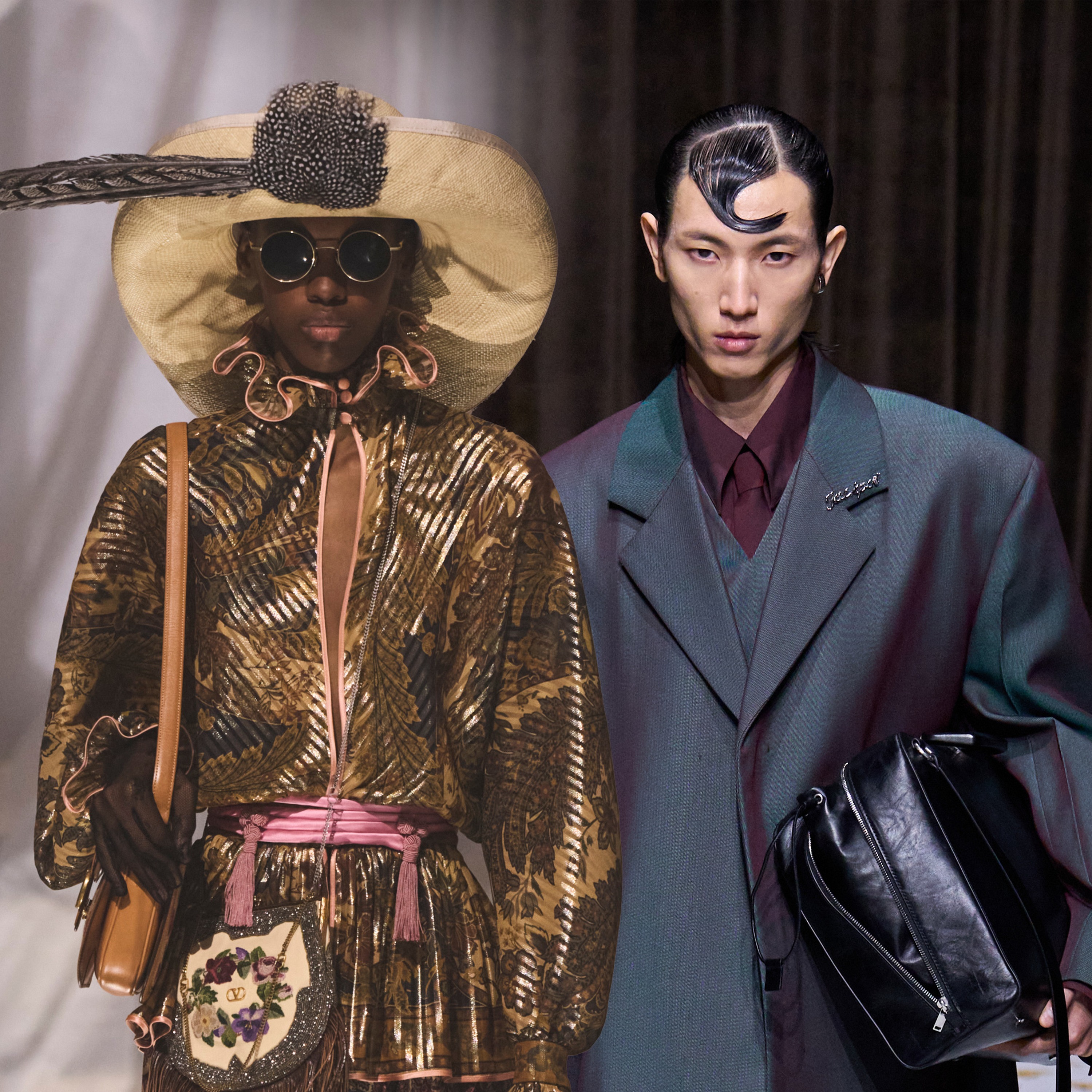
In this episode, Imran Amed, founder and CEO of The Business of Fashion, and Tim Blanks, the editor at large, discuss the Spring/Summer 2025 fashion shows amidst global economic challenges. They analyze how designers are responding to current events and the evolving landscape of the luxury fashion industry, emphasizing the balance between restraint and creative expression.
Written by AI. May contain mistakes.

Get the gist, explore an idea or ask about something said.
 Claude
On The Business of Fashion Podcast, what are the key points of this episode?
Searching your listeningAutomatic transcript. May contain errors.
0:04Hi, this is Imran Ahmed, founder and CEO of the Business of Fashion. Welcome to the BOF. podcast. It's Friday, October 4th. Amid economic uncertainties, a global luxury industry slowdown and conflicts erupting around the world, designers at the spring-summer 2025 shows grappled with balancing restraint and expression, leading to collections that sought to make deeper emotional and intellectual impact. Meanwhile, mega brands scale back extravagant festivities surrounding Fashion Week as they batten down the hatches with budget cuts and streamlined shows. So I think as a general caution, I think there's a realignment.
0:45I think the state of the world is more conducive to reflection than extravagance. But it was the designers who took creative risks who stood out the most this season. At Marnie, Francesco Risso created a cinematic spectacle that transformed a humble material like cotton into expressive designs, emphasizing simple beauty amid global turmoil. Alessandro Michele made his highly anticipated debut at Valentino, honoring the legacy of the founder, Valentino Garavani, while infusing his own signature flair. And at Loewe, Jonathan Anderson played with scale and perspective, encouraging audiences to engage with unusual silhouettes and to rethink traditional aesthetics.
1:31This week on the BOF podcast, I sit down with Tim Blanks to unpack the highlights of Fashion Month and discuss how the current global climate is influencing designers and brands amid all the turmoil. Here's Tim Blanks on the BOF podcast. Tim, welcome back to London. Thank you, Imran. How was your return trip? How are you feeling? Fine. I left the closets full of clothes hanging in my hotel room. So that tells you the state of mind I was in when I checked out. Oh, no. Really? Yes. You know how they talk about pregnancy brain? I think they should talk about fashion week brain, too. Well, mine was a traffic jam brain.
2:13I mean, if I'd had to sit in traffic for another hour, not moving, you know, it's so weird when you finally look at your Google map and it says your 26 minutes drive from your destination and five minutes walk. I mean, it just happened all week. It was just... That was the theme of the week, actually, just sitting in... Traffic. Interminable Paris traffic, which, yeah, I don't even know how the Chambre Sandy Cal can, and the Federation can fix that. You know, there is one thing they can do. Stop having shows on the outskirts of Paris. It's quite a big city to circumvent when there's gridlock from beginning of the trip to end of the trip.
2:54But even just going small distances sometimes would take 30 or 40 minutes. It was absurd. Thank you, Pierre. But we're here, as always, to reflect on the season that was. And the Fashion Week season that we've just come through, it came at a pretty pivotal moment for the wider luxury sector. I met with quite a number of top CEOs and top creative directors this season. And And the overarching theme from the CEOs was, I wouldn't say they were panicked, but there was some very deep concern about what's to come. One executive said to me that after having a pretty good first half of the year, sales just began to plummet in July, almost like someone turned on a switch.
3:47And in China, a critical market for the sector, sales are down in some places like 30 % or 40%. And so as the Q3 results come out in the coming weeks, we're really going to get a picture of just how deep this luxury crisis is. And what that's meant for Fashion Week is a real sense that people were pulling back on spending. You know, there was a couple of seasons ago, you know, post-COVID when there were so many big dinners and celebrations and activities that surround Fashion Week. And this week, brands had pulled back. A lot of things were just stripped back to bare bones or nothing at all in terms of the festivities.
4:35And even some of the shows, you know, designers were telling you and I quietly that they had to work with a lot less this season. So it's made it a really interesting season because I think both the creative and business leaders are thinking carefully about what they should be doing as the luxury sector enters this new phase. I think it's worth pointing out that it's not just fashion. I have gallerist friends who've had boom years, and this year, even their wealthiest clients who don't actually have to think about things like downturns aren't shopping. They're not buying art. So I think as a general caution, I think there's a realignment.
5:16I think the state of the world is more conducive to reflection than extravagance. So it's across the board. In fact, a couple of designers were saying to us in our backstage pass interviews that they had to think about what to put on the runway at a time when a war in the Middle East is escalating, when the war in Ukraine is soldiering on, looking like there's no end in sight to either of these two conflicts. So there was a lot of wider context this season that I think, for me at least, made it a really interesting season, because I was thinking about all of these things as I was taking in the shows, and it's been a pretty intense couple of weeks.
6:03we started in milan and everything began with francesco risso at marnie francesco risso is like a ringmaster you know francesco is one of these very interesting designers that in that you don't know what to expect because every season both the collection and the venue and everything are so different from season to season, it changes a lot. And this season, we walked into this venue and it was like a bunch of single chairs, all separated from each other in this kind of maze kind of layout. And when we got backstage, I just remember the first person we saw was Leon dame with this like incredible makeup and like a dress looking like divine and pink flamingos yeah well you know the thing about francesco riso remember when he appeared on stage dressed as the white rabbit from alice in wonderland well that's his spirit animal so there's always a sense of going down a rabbit hole in his shows but when we walked in and we saw leon looking like divine.
7:16Francesco had Leon written across his t-shirt. And that's a movie where Jean Reno is a hired killer who protects a little girl, Natalie Portman. I thought, wow, this is a funny kind of cross-reference for a fashion show. And he said he was thinking of the collection as his child, like, you know, something that needed protecting because the world is inhuman and cruel. and then he went on to say he didn't think that beauty would save the world but it's what we could do that it's his mission it's fashion's mission to focus on beautiful things as a sort of defense I guess and then he proceeded to show a collection which was based on what he called his beauty routine a sort of morning afternoon and evening progression from very very simple beginnings like just almost like workout wear to very very elaborate evening looks at the end most of it made from cotton which i thought was a feat a technological feat he loves rawness though i think that that's the paradox of mani under his creative directorship is that it's very sophisticated but it's also very raw i mean even the fact that it was all made from cotton basically all made from carton and there's a sort of unfinished quality to it even when it's super sophisticated it has this sort of unfinished edge to it which i find fascinating also when he has that soundtrack of the three people playing grand pianos and it started off and by the end they were pounding the pianos and there was this unholy crescendo of people banging on grand pianos and that's kind of money you know it starts with a little thread of cotton and it ends up in this kind of glorious chaos yeah I mean one of the things we can rely on from him is consistent creative risk-taking which is I think for him probably it's not seen as risk-taking but in an industry that's been kind of overtaken by this idea of quiet luxury shows like his are really special because you know it's like a real fashion show it's like something exciting to watch on it's a sensory experience and not just about showing merchandise to buy but just an experience very cinematic i think yeah and actually that was one thing i thought about you know shows that we enjoyed in milan from kim jones at fendi which had a very strong feel for the 20s and i thought feel for the 40s as well to Jill Sander which was another show we really enjoyed which just felt so much like David Lynch to me and I know there's lots and lots of David Lynch quotes in fashion there's been a lot over the years but there was just something about the shiny nocturnal quality and those lurid colors that were inspired by the work of a Canadian photographer Greg Girard who a lot of his work was covering the Asia, well, Hong Kong specifically, and I think Shanghai and some other Chinese cities, as the economies exploded over the last few years.
10:29So there was lots of like nighttime shots and shadowy and neon, and then Lucy and Luke Meyer printed those images onto the clothes. It was a lot more overt than Jill Sanders' been, I think, a lot more, I wouldn't say literal, but there was something about the kind of the slightly lurid nocturnal romance that really gave the collection a huge jolt and also you know I just love David Lynch and anytime I see a big curtain backdrop for a show I'm just back in the red room at Twin Peaks. And then there was that incredible soundtrack with the chromatics and a bunch of musicians associated with Johnny Jewell And, you know, when we were talking to Benji B afterwards, he said that, you know, Luke and Lucy came to him with this like very specific brief that that's what they wanted.
11:19So he went and created this soundtrack, which I'm lucky to have on my phone because Benji sent it to me. I mean, it was just like, you know, when you go to a show and like everything just clicks? Yeah, yeah. That was one of those moments. But also when it clicks, but it really clicks because it's a bit of a surprise. I like Jill Sander a lot, but this surprised me. Why were you surprised? It had an edge. It had a dark, lurid edge. I think Jill Sander has this kind of preconception, well, justifiably, that it's quite an intellectual collection. But this was shiny and, you know, lots of chameurs and shiny fabrics.
12:05and it was very, very, I wouldn't say sexy. I thought it was very sexual. There was definitely a sexual undercurrent in it. Yeah, but remember the movie In the Mood for Love, the Wong Kar Wai movie? Remember the amazing lighting in that film? And I know there was Greg Girard's photos and there was a chromatic soundtrack, but I was also getting quite a lot of that Wong Kar Wai movie. Also with the Asian elements, the Chong Sam. The Chong Sam, exactly. Well, when you said that to Luke and Lucy backstage, stage, I remember Luke's reaction, which was like, you always know, Tim. You instantly got the feeling.
12:39And that was one of my favorite shows of the season, for sure. And talking about the element of surprise, our other favorite show in Milan was Bali. And also talking about an incredible soundtrack. Like you say, when it clicks, when you're watching a show and you're really loving the show, and then the music just adds this whole other thing, And really, you can never, ever underestimate the power of a soundtrack in a fashion show by this Swiss-Nepalese musician called Aisha Devi. Oh, interesting. I'm going to look her up. Oh, I went on to Spotify and this is tons of stuff. This is kind of modern orchestral stuff and kind of huge and not pagan particularly, but ceremonial.
13:26which is funny because when you look at the clothes the clothes did not have that scale and did not have that ceremonial quality but they really worked with oh it's funny that's a mystery of fashion and insoluble mystery of fashion talk about ballet i've been hearing people buzzing about simone balotti the past couple of seasons i went to the show last season and it was fine but something really provoked me this season because there was, I don't know, as I was watching it, it kept my attention for the whole show, which is a real feat in this day of short attention spans. And it was just weird in certain ways, but weirdly beautiful.
14:15People often say to me, oh, I know you love that show, but I didn't get it from the photos. and ballet just that what we saw just doesn't live just doesn't sing through the catwalk photography unfortunately because it was a cumulative thing i mean first of all his inspiration hugo ball the man who basically started invented the dada dadaism after world war one and he had found this whole photo of a hugo ball costume from a performance piece that he'd done in zurich in 19 i don't know 16 or something and that was the inspiration for that silhouette the very kind of almost like a pointy very a soft shoulder like romeo gili used to do those coats that almost had no shoulders to them and then in leather which is a ballet thing of course being an accessories company the shoes are extraordinary so we went backstage and we were asking about the shoes and then he had someone go and bring back this pair of shoes which they presented to us in a glass box from the archive yeah it was this pair of red sandals with a strap on the heel and that really interesting you called it a clump in your review like those shoes were also from the 40s yeah 1945 yeah but then there was a lot of leather in the collection there was a shape that he based on the the swiss cowbell you know there were the Swiss elements and the mountain flowers and the hand-painted, also hand-painted magic mushrooms on one of the more bell-shaped dresses, because I was getting a little bit of a trippy thing going on.
15:54But those bell-shaped skirts that were based on a cowbell and all the cowbell references in there. I mean, he was very true to Bally's origins, I thought, but in a very, in the kind of perverse way that makes you feel like you're in the presence of a real designer? It'll be interesting to see what happens with Bali because although it's got this really interesting creative momentum and certain editors are really buzzing about it, the business was actually sold in August. So I think what we saw was still a reflection of the strategy for Bali under the auspices of that Swiss holding company called Jab.
16:39But they sold it to this company that I hadn't heard of called Regent, which owns brands like Club Monaco and Escada and other brands that I've never heard of. Well, Club Monaco and Escada are both pretty big. Club Monaco and Escada are big, but they're really kind of troubled brands. Escada was also sold in kind of a distressed situation. I think it was the Mittal family that sold it to Regent. Club Monaco had been owned by Ralph Lauren for years, but now, I don't know, it seems like it's in a bit of limbo. And so it'll be interesting to see what they do with Bali, but I had never really heard of this company called Regent.
17:21So when you have this creative momentum, maybe they got lucky and they'll be able to seize it and do something interesting with that brand because it's kind of been, it's been a brand that, you know, has just been kind of flying. Yeah, it's been, it's had a number of creative directors passing through. Yeah, and it's just, there's never been a moment. So now that this moment has come, when they have this clearly very talented designer who used to work at Gucci in the driver's seat, well, let's see what they do with it. I thought he was such an interesting person too, when we were talking to him, very unlikely.
17:56he's um very obviously another great thinker his references for that collection which he carried through into the clothes that we saw i love it when someone shows you a mood board and it's so focused yeah and it's obviously not just being put together for the post-show conversation it actually is something it's not just pictures of a bunch of references that you've seen on a thousand mood boards before it was stuff like the cowbells and the shoot it was very very interesting It was educational, that mood. Yeah, we both walked out and we were like, wow, that was interesting. I learned a lot about Dada that day and I came back to my room and I read even more.
18:35So I was very happy to be there. A show we can always count on for creative excitement in Milan is the Bottega Veneta show. But I don't think anyone was expecting what we saw on that Saturday night in Milan. And we walked in and it was in the same venue as normal. But all of the seats were these animals, like these animal beanbags, clearly like very high end, very expensive, very beautiful beanbags. I think a lot of people wanted to buy right away. That was a fun party game to start a fashion show with instead of people complaining about whatever, downturn business or being stuck in traffic or whatever.
19:20Everybody was like, oh, what's your animal? Because everybody got a different animal. And we were very slyly told that our animals had been picked to match our personality. And I couldn't even imagine what poor Bottega employer had to match animals to the hundreds of people who showed up at that. And what was your animal, Tim? And why do you think they picked that animal for you? Loaded question. Well, when I walked in, one of the first things I saw was a big red fox. And I thought, oh, I hope I get a fox. And I did get a fox. I mean, with a beautiful big tail. I don't know who has the idea that I'm a fox because I'm hardly a...
19:55I think you're quite foxy, Tim. ...fast-moving little thing. Oh, it was fun. It was fun. Some of the creatures were quite hard to work out what they were. But I liked the whale. His tail came up behind the people who got the whale. And then the people who got the whale were like, why did I get the whale? It was very funny. And a couple of unidentifiable ones that I think were penguins. I got a puppy dog. So I don't know what that says about me. Call your therapist. Still eager and keen. Yeah, I'll look into it. And the collection, Tim? It's a wonderful synthesis of extreme craft and a sort of extreme normality.
20:42And for me, Mature Blasey, he's very narrative driven, very character driven. And like every individual on the catwalk has been carefully thought out, so carefully thought out, kind of mind blowing. You know, the reason why, one of the reasons why we were all sitting on big animal beanbags was because the theme of the collection was kind of, I guess, child's play. He talked about how childhood is an adventure of the everyday. And he talked a lot about E.T., Steven Spielberg's E.T. Not that that was particularly evident in anything we saw, but it was just in his head. And all of us sitting on beanbags, he compared it to the mother when she opens the closet door and all the stuffed toys are lined up in the closet.
21:26And E.T. has disguised himself sitting amongst all the stuffed toys. So she just breezes over him. I thought he was weaving backwards and forwards between how children see adults and how adults see children. in a way I think that might have been what the thrust of it was that when children look at adults they're a bit they're they're intrigued and they're very curious and then sometimes when and when adults look at children playing they kind of get their they get their sense of playback so the the worldliness rediscovers innocence and the innocence has some insight into worldliness like you know there was a there was a guy he he called this particular character and this this one really stayed with me he called a um milanese businessman who dropped his little girl off at school so he had a knapsack over his back and on the knapsack there was a a little bunny rabbit it was a pink knapsack so there's this businessman walking along that it's you know a bottega businessman i think the top that his suit jacket or his top had a very interesting closing that It wasn't, you know, it wasn't really a suit.
22:35But he had this pink backpack on with a bunny and that was his little girl. And he dropped her off at school. You know what I loved? I loved the other way around when you saw those men and women wearing shirting or blazers. Like, you know, if you put on your dad's blazer or you put on your... Yeah, dress up. And they were like these really oversized shapes, but it looked so cool. My favorite one was the one with the shirting. I wish I could remember the look number. But like the shirt was just absolutely huge. And it went almost down to the person's knees. But it had this like incredible shoulder and an incredible shape.
23:15I loved that bit. You know, and I think, let's be honest, Bottega is a leather goods business. You know, it's probably like 90 % of revenues or more even come from leather goods. So it enables Mathieu to like really take fun risks with the ready-to-wear. Well, he called all of that chic awkwardness, didn't he? The oversized stuff that was, you know, there was that one dress that he described this particular character as somebody who was going to their first big job interview and was nervous and had bought a dress for the occasion that wasn't actually super appropriate, but it didn't fit very well.
23:52I thought, why is the designer doing this kind of sack dress or smock or whatever that did look slightly uncomfortable on the model? And then to top it off, he'd kind of pulled the collar a bit askew with this frog brooch that was crawling up the front of her dress. And this was this poor girl was heading off to an interview and not feeling great about herself. And I imagine it must be really fun when you're working with that point of view in your head, that you're looking at clothes and you're creating a narrative for them. But then you wonder when somebody goes into a shop, they say, oh, I really want to dress that makes me look like I'm going to my first big end euro and I'm really nervous and maybe I picked the wrong one.
24:31It's so curious. Yeah, well, I don't even think they have to do that because he has the freedom to just be really, really creative. And he takes that consistent message of pushing craft forward and experimenting with all the techniques that he and his studio have been like really, really pushing these past few seasons, but he doesn't have to worry about selling the clothes. But it's also interesting, the details, like, you know, the cigarette butt top and the dress that was decorated with matches, plain black dress that was decorated with matches, because this is part of the adventure of the everyday that, you know, the kids mustn't smoke, Kids mustn't play with fire.
25:15You know, the dangers to childhood. But I mean, when you see them incorporated into a fashion collection as major, as Pateka Veneta, I mean, those are those kind of little psychological twists that I gravitate towards because it makes the catwalk so much more interesting. And those huge wigs, I think they were made out of leather strips or something that were like these helmets. They weren't wigs. I guess they were like helmets or headdresses. I loved it. Wasn't it Raffia? Was it Raffia? I don't know. But you could imagine, I, of course, you know, because my go-to is the Babadook. I imagined those figures were kind of slightly distorted.
25:56You imagine kids looking at those slightly distorted figures coming towards them with a great big Raffia wig, helmet covering their faces. Bit spooky. Probably the most scrutinized show in Milan Fashion Week these past few seasons, and this season was no exception, was Sabato De Sarno's show for Gucci. Last season, Tim, you called him stubborn because you felt like he was very much sticking to the same approach around whatever he has been trying to do there. but this season you softened it somewhat. And you said that he was obsessively, almost painfully true to himself. What were you getting at?
26:41I had a long, long talk with him before the show. And it was a really good conversation. It was really interesting because actually we were, when we were talking about things that, I mean, he curates that book every season for Angkor, Gucci. This time he created a book about female Italian artists. And I thought it was, I thought, well, that's a nice curatorial little piece. And then he did those bags in the show, the bamboo bag, to celebrate the anniversary of the bamboo bag. He gave bamboo bags to 10 Japanese artists to interpret in their own way. And I thought that was a really nice curatorial initiative.
27:16But I think what I felt with this show is he is absolutely obsessed. Like this season, his obsession was this notion of casual grandeur. And on his mood board, he had a handful of photographs. It was Jackie Onassis with Mirella Agnelli and Jackie Cicely Raswell with Jim Capote. And there was Franco Sanzani's first cover from Italian Vogue, the first issue of Italian Vogue. She ever edited in 1988 with a white shirt by Gianfranco Ferre, whose white shirts are one of the most, I think, one of the most iconic items of clothing in the history of fashion. that were just so magnificent and actually embodied the idea of casual grandeur really beautifully.
28:00But the problem is when you evoke notions like that, I think you have to have the gas in your tank to live up to them, live up to the expectations you might be creating for people. So my feeling is that if I said stubborn last time, he's a bit of a self saboteur because he creates this context for what he does, which is actually quite alluring, because he can't really match that resonance. I know, I understand aspiration. I would never, ever deny people aspirations. They're critical. But if you aspire, you're also going to be disappointed at times. So I was loving his curatorial stuff, and I was disappointed in his fashion.
28:47So if you were the big bosses at Caring now, you know, we've seen a number of shows by DeSarno. What would you be thinking? Because I don't think you're the only one, Tim, that feels like we've yet to see a grand vision that people can really understand and buy into that's distinctive from what everyone else is doing. that's grounded in Gucci's heritage, but also has a fashion point of view. And I think this is like, maybe what those guys at Caring are struggling with right now is because they want it to be fashion, but they also want it to be timeless heritage. And it feels like, as a result, it's a bit muddied.
29:33Sabato focuses on four elements, maybe three of them really relate to a classic idea of Gucci. And there would be the tailoring, the leather, and the very 60s moment when Gucci dressed the jet set. So he very much draws from those three wells. But if you talk about the Gucci legacy, you have the Tom Ford years and you have the Alessandra McKellie years. Look how different those two things are. how the legacy that is left by those two amazing moments in Gucci's history is the fact that a single individual managed to turn around the fortunes of the house in no time at all. But for another designer following in their footsteps, I mean, what does that designer do?
30:19Does that designer do Tom Ford? Or does that designer do Alessandro McKellie, which is what everybody has in their heads? Or does that designer do himself? Yeah. So, or does that designer do something completely different? Completely different. When we interviewed Alessandro in advance of his Valentino show, which we'll get to in a minute, one of the things he said to me about Gucci was, Gucci is an empty box. You can put into it whatever you'd like, you know? And so it doesn't have to be linked to Ford or Michele. It could be De Sarno. But I think what we're looking for is like, who is De Sarno?
30:54What is De Sarno? Yeah. Well, the thing is, it doesn't have to be Tom Ford or McKellie, but if what everybody has in their heads is that amazing moment under McKellie, that's unfair to whatever designer is in the role now. And it's unlikely that you will be able to duplicate that success, especially, I think, if you make a stand, if you make a very bold stand. Say if Tom Ford went into Gucci now after McKellie, do you think that he, whatever he did, would be able to make as much of an impact, as strong an impact as McKellie did to kind of distract people from that legacy and create a new story for Gucci?
31:37That's the problem is creating a new story for Gucci when the old stories are just so overpowering. And that's a very, very thankless task, I think. Well, it's a task for a top creative director who could come in and put his or her own really strong stamp on it. And I think what we haven't seen is a really strong stamp. You know, yeah, it's a big ask, but it's like also a huge opportunity in one of the biggest houses in the industry to really, really have a creative impact. And, you know, when you talk to the folks at Caring, you're in advance of this appointment. And after the appointment, they said that, you know, Gucci has under Michele and under Ford was known for setting the fashion agenda.
32:23And they wanted to continue to set the fashion agenda. They also said that they wanted to move away from this situation, which they found themselves under Michele, which was that the designs became so much associated with a specific moment that people tired of them. So they're really trying to strike this balance between fashion of the moment and timelessness. And I'm afraid with this, we don't have either, really. So I think probably, you know, Francesca Bellatini, who's now the co-deputy CEO of Carrying and who's like really working with all of the CEOs and designers on really setting clear creative and business strategies for the houses.
33:04Like what it's, you know, and one of our BOF 500 cover stars this year, like what her real big challenge is, is to work with the team at Gucci to really clarify the brief for what do they really want this brand to be about now. It seems like very muddy to me. I still think the challenge for whoever it is, is a pretty thankless one for the next while anyway. I'd be very curious to see who could come along and grab the reins at Gucci in a way that was so convincing that the world galloped to Gucci's pace again. Well, since we're on the topic of Gucci and Alessandro Michele, I guess it's a natural moment to talk about what was undoubtedly the most anticipated show of the season, You know, both you and I had the opportunity to sit down with Alessandro this summer in advance of the show.
33:59So we have pretty good understanding of what he was trying to do, which was to animate this house of Valentino and the stories and the personality behind the house and that rich archive into something more dynamic and interesting. Did he succeed? Yeah, completely. I thought the show was magnificent. And the quicker we can unhinge him from Gucci and just talk about McKellie at Valentino, the better it will be because his respect for Mr. Valentino's legacy was so visible. and his excitement at being able to realize the visions he's had in his head for a long, long time was so palpable. I feel I've said this ad nauseam.
34:53But Valentino was always a sort of load star for Alessandro McKellie through all his years, I think, through all the years that he worked Fendi, Gucci, wherever. I think it was Valentino in his head that was this sort of guiding light in a way. Even during his time at Gucci? Oh, yeah, totally. And I think it's very easy. It's too easy to look at Valentino and say, oh, he's doing the same thing he was doing before. He's doing McKellie. That's what I was saying before about him going into Gucci. What he did at Gucci had no precedent in Gucci, but it did have a precedent in Valentino. So there's a sort of consummation, a natural consummation, you know, like lovers meeting after decades of being apart and that kind of explosion of joy.
35:51You know, the people who were critical of that show and who didn't love it, and there were more than a few of those, said that it veered into costume, that it veered into... Vintage haunted house. Yeah. And so, like, what do you think of that perspective? I thought for the purposes of the show, the way the clothes were shown, he had a very very young casting and i always imagine the clothes on people you know not a model casting so i think that the the costume element they're very very rich and i suppose that that that when people accuse the collection of being costuming it's because they don't see it existing in the real world.
36:46But I do see it in the real world. I see the enthusiasm that the, it was very, very polarizing response. I'll agree with you on that. Well, can I cite some data for you? I did a poll on Instagram, we got more than 3 ,800 responses, and 40 % said, yes, I like the direction this Valentino is going. And 60 % said, no, oh, this doesn't feel like the Valentino we need. So indeed, it was very polarizing. Yeah. And then that response, the Valentino we need, you know, how many of those people who are saying we need whatever their vision of Valentino is, are actually the people who go out and buy Valentino?
37:27Well, I'll tell you, one of the people who replied in the comments to the post that I put up of the video is an old friend of mine from university who's been a loyal Valentino customer for probably 20 years. A real customer, not just an online commentator. And hello, Sylvie in Austria, if you're listening. And, you know, she was really not into the show. So I do think there's a Valentino customer that's expecting more of what we saw during the Pierpaolo years that's not going to be served by this brand anymore. But then what about the Valentino customer before Pierpaolo who wasn't served by the...
38:08it's the Pier Paolo years. It's just that fashion carousel. And inevitably, when a designer goes into a house, there's always a whole bunch of very partisan people who say, oh, but we loved, you know, like when Maria Grazia and Pier Paolo went to Valentino, remember how they were received on their first few collections? It was venom. And now it's all Pier Paolo, bring Pier Paolo back. It's just the way these things go. Of course, these people, the Pier Paolo brigade is saying, bring him back when they're looking at what McKellie did. I loved the show. I surrendered to the show, the set, the music.
38:45The music was extraordinary. That beautiful lullaby, whatever the song was, it did have a kind of eerie lullaby quality, the kind of sitting in that pavilion of dreams that he'd erected to stage the show. And what I thought was interesting for the people who were pro is how quickly their appetite for McKellie's vision had been restored. He's only been gone a couple of years. And it was already you could feel one thing this season, how many people, how many designers spoke out against the idea of quiet luxury and how numbing that was for everybody to have that dangled as a sort of goal for fashion.
39:27No, exactly. I think, and, you know, the way I've been kind of making sense of it in my head, which maybe is a bit too analytical, but, you know, Gucci at its height, you know, when Alessandro left, was turning over around 10 billion euros a year. Valentino did something like 1.4 billion euros last year and didn't grow. In fact, I think it shrunk a little bit. And I think there's a lot of customers from the Alessandro era Gucci that are no longer being served by what Gucci is offering. And I think if under Alessandro, Gucci could be a 10 billion euro business, then certainly under Valentino, he could at least double that business.
40:14And that will be seen as a huge success because I think this idea of quiet luxury, you know, one executive of a big department store said to me, I said, so what do you make of this quiet luxury thing? And he said, Imran, the women are tired of it. The men are still buying their Brunello Cuccinelli and their Loro Piana and their Zegna, but the women are tired of it. And we loved the Valentino show because we know that customers are looking for that kind of expressive fashion, that kind of fashion that is really, really special and is not just interchangeable with other polo shirts and muted tops from other brands.
40:56But notice that Alessandro, I think, spoke to both of us about how he doesn't want Valentino to explode. And to him, it's not a$10 billion business. It's not that kind of a proposition at all. But having said that, the bags and the shoes in that collection were incredible. Yeah. And there were a lot of bags, and they were incredible. And let's be honest that the reason the folks at Mehula and now their investor partner at Caring have taken this step with Alessandro is they want to grow that business. It might not be what Alessandro is expecting. And maybe the goal isn't to make it a 10 billion euro house, but to double the size of the brand in the next five years, I think could still keep the intimacy of what Alessandro is looking for.
41:43But they're looking for this business to grow. I mean, obviously, this is all going to happen now in what is a very troubled luxury environment. And growing that business is not going to be easy. But with the new energy that Alessandra is bringing into the house, I think they have a really good shot. Yep. And as one of the pro brigade, I would say that it was great to have him back. And it was something that I'd missed anyway. So I'm really happy. Yeah, and I love going to a show and feeling that kind of emotion and expression. Because there was a lot of big shows this season where we walked in and we left and there was like no emotion or no feeling at all.
42:27And we need that in fashion. Okay, so we've probably spent enough time talking about Alessandra Valentino. But, you know, one to watch for sure. It's going to be really interesting to see what happens there. We'll be right back with more on the BOF podcast.
42:50Another show that made it into our top 10 this season, alongside Valentino, was the Saint Laurent show by Anthony Vaccarello, which kind of had two phases to it, which is this kind of... I almost thought they were like professors or intellectuals in these like oversized tailoring. And then during the day and then at night, they became these like party girls in those jewel encrusted blazers and tops in the jewel tones. But what was your take on Saint Laurent, Tim? Anthony Vaccarello did a men's show in June. He did a men's show that was based on Yves Saint Laurent's personal style. and he carried that through to the women's show.
43:38So that big section of tailoring was the very formal, the eyeglasses, the hair and everything. It was very Yves Saint Laurent's own style. And then as Angelo Flaccovento pointed out in his review, the second part of the show was more Lulu de la Falaise who was Yves' longtime muse and right hand in the design studio. So it's impressive the way Anthony Vaccarello manages to stage such enormous spectacles based on such really intimate ideas. I thought the set was very interesting, that circular, that Oculus, I guess, that lined in gold. It just was begging for a shaft of moonlight to come down and kind of illuminate the whole thing.
44:30Yeah, you said that in your review. Yeah, it was just so, it was so evocative of, so sort of dreamy and evocative. I thought, I mean, I'd be very curious to see those clothes in the street, that tailoring in the street, that kind of monumental, it was monumental, that tailoring. the party dresses I thought were gorgeous. No, like I said, to imagine, to see those clothes, I just wonder, I wonder in the way that, you know, sometimes you look at a show and it's very easy to tell whether there's an appetite for it or not. If that, oh, that's going to tickle a fancy or touch a nerve or whatever. Like the Mew Mew shows did like a few seasons ago.
45:14Yeah. Like everyone Everyone wanted those clothes. Yeah. And the minute you see something, you know it's going to click because you can feel the energy lift in the room. And Vaccarillo's stance in this show was it was ultra power dressing. I mean, it was real power dressing. It was the kind of man-tailored, huge shoulders. It was serious. And I don't know. Is it a sort of fabulous cosplay? is there an audience that will click with? Who's saying, yes, I want that. I want that back. Like, there seem to be so many things coming back from the past to reassure people. I mean, everybody does say that tailoring booms in uncertain times.
45:58And that was tailoring. Boy. Well, he hedged his bets because then he also did the party dresses. I thought that second passage was absolutely gorgeous. The colors were incredible. The colors. Well, you know, everything with Saint Laurent was all about color. Like, he was the best colorist ever. I loved it. I thought it was beautiful. All right. One of your consistent favorites and mine at the shows is Jonathan Anderson at Loewe. As usual, we trekked out to that. Is it a chateau in the outskirts of Paris? Yes, it's a chateau. Vincennes? Isn't it where Marie Antoinette and the family were taken when they stopped leaving Paris in their coach?
46:44I think that's where they ended up before they were taken back and executed. Yeah, we ended up there too, in a big white Loewe box, this time with sheet music or plastered all outside the box. and unlike previous shows in which the interior was quite elaborate with some like artwork or interiors or sculptures there was just one single tracy emmon piece right in the center of the runway we were all sitting in a circle and there was that tracy emmon piece with the little bird on top, right in the center of the runway around which everyone walked. And you spent some time chatting with Jonathan for Backstage Pass After, and you talked a little bit about what he was thinking.
47:35He actually was also talking about movie making, Tim, this season, which was something that came up quite a bit in your reviews. Well, because he's just been working with Luca Guadagnino, and he did Challengers, and he did Queer, and they're both important films. I was more interested in this whole notion of the point of view, like the little bird on the totem pole. That idea of the bird on the totem pole kind of like, I thought, felt like a real statement about a point of view, because that's what he was talking about afterwards, is he likes to challenge people's points of view by showing them something that makes them wonder, how would I wear that?
48:15How would I sit in that? And if you looked at some of those clothes, there was exactly that notion embodied in some of the outfits he showed. I thought the show connected with what he'd shown in London a few weeks earlier in very subtle ways. I mean, the idea of in London, he showed those sort of, he called them tutus, those leather tutus. And I thought they looked a bit like UFOs. The models were kind of inserted into a UFO. And here there were the hoop skirts. he was talking about if you viewed them from above, they looked like they were hovering. So that was a notion that connected. And also those tiny little shifts he showed in London.
48:52Here they were long-sleeved, but tinier, if anything. I thought it was Twiggy in London and Edie Sedgwick in Paris. But, you know, my favorite things in the collection were the composer T-shirts and the artist T-shirts made of white feathers, the little bird up on top of the totem pole, and then the feathers kind of translated into the clothing. But was the sheet music printed on the pavilion, was it Mozart or was it Bach? There was definitely one of those feather shirts, said Bach. Yeah, and Mozart, and then there was one for Monet, and there was one for Van Gogh's Sunflowers and Irises. And he was talking about these white feather t-shirts and the images printed on them were kind of like high culture.
49:36but the fact that they were t-shirts was kind of low culture the feathers and the pictures were high culture and the t-shirts were kind of low culture and he had this notion of people when they go to a concert or a or an exhibition they'd like to take something away so it's like tourist art like a souvenir the idea of him incorporating those ideas into a fashion show this is super interesting to me. He actually said when we were talking that, you know, he'd often wished he could have been a musician or a painter because art and music last. But now he's realized that fashion lasts too because clothes are a way that you remember things.
50:20And that's why a t-shirt from an exhibition is a memory. And so he puts that into the way they show. Same thing with the rings. You know, his invitation was a ring and the ring being a symbol of commitment. And he's taking that to mean he isn't going to keep on changing all the time. He's going to evolve ideas instead of changing season on season. He's interested in giving the audience time to catch up with him. So that's, you know, there's such a work in progress, that house. I love the way that the models were told to hold their hands behind the flare of the skirt. So you had, for example, like Mira Arganaz, like there was the very short skirt and her hands were behind the flare.
51:11So they look like they're dangling from below the skirt. But he always does gestural stuff like that. There's always something to do with the hands. Like, yeah, that's interesting. Paris Fashion Week always concludes with the big three on Tuesday. And we had Chanel, Miu Miu, and Louis Vuitton. Quickly on Chanel, Tim, I did another poll about that show and asked our followers what they thought of that show and if Chanel needs a creative director. I mean, more than 70 % of people said yes, they absolutely need a creative director. But I thought it was quite a good show done by the studio. What did you think?
51:51Well, what are they called now? They're called the creation studio, the team, the kind of place-holding team before a designer comes along. And you know what? A number of people said this in their coverage of the thing, of the show, that speaking of polls, wouldn't you love to do a poll of Chanel clients and ask them, well, A, who they think the designer is? And somebody suggested that probably a lot of them don't even know Coco Chanel's dead, never mind Karl Lagerfeld or anybody else. And I really feel that you have that creation studio and they're doing this collection. It was also all about birds.
52:30And there was a big birdcage in the middle with a swing, which was reminiscent of Vanessa Parody, Coco commercial with Jean-Paul Goude from 1991. And the venue, the Grand Palais with the wraps off after that long renovation, God, it was so cavernous. The sound in that show was appalling. there's the echoing booming through that huge big space i thought the space was pretty soulless well it was i think in that space i don't know if it was budget cuts or a creative decision but it seemed to me like when carl used to show in that space you'd walk in and it was an experience it was massive and that would be part of what like absorbed some of that echoing that you're talking about this time it was it would be massive but it would be it would sort would be spectacular.
53:19It was huge, but they filled the space with a supermarket or a space shuttle or an iceberg. You know, if you're going to do a show in that space, you really need to use that space. Like, although that birdcage was sizable in the middle, it didn't fill the space. That being said, I thought the show itself was like a really good placeholder show. Yeah, really good. Pretty, light, very commercial, but not kind of boringly so particularly. There was way too much in it. I mean, it was just the never-ending fashion show. But, you know, anybody who buys Chanel, they're going to go into a store and they'll merchandise the hell out of that and then keep the customer satisfied.
54:07Oh, and then, of course, in keeping with the bird theme, I thought this was a really interesting little touch at the end. Of course we knew somebody was going to climb on the swing in the birdcage, but we just didn't know what they were going to do. So it was Riley Q, Elvis's granddaughter, came out and sang When Doves Cry. The second time we've heard that soundtrack, because I'd heard it the day before, obviously not Riley Q, but it was Prince at the Stella McCartney show. So that's always funny when that happens, because we had two rings as invitations, because Balenciaga was a ring and then Loewe was a ring and then we had repeated songs.
54:45I love that about fashion. And what would Coco Chanel think of Elvis Presley's granddaughter singing at her fashion show? Carl would love it. I thought it was beautiful, actually. I loved it. She's got a really nice voice. Yeah. Okay. And then there was Miu Miu, which has become like a really important moment in Paris, even though it's like at the very, very end. and I know you have a lot to say about Miu Miu and Prada every season Tim what what was your perspective this time well what I love this season because you know Miu Prada is my is my all-time favorite for decades and I've kind of missed her in fashion a little bit I've missed everything that she represented for me over the years that her particular wit and her particular approach to sex on a catwalk and humor and the fantastic skewed vision that she was able to to present season after season after season just changing and and just never resting and always always posing so many interesting questions and making such beautiful clothes while she was doing it so I've kind of missed that a little bit and in Milan I I felt her more on the catwalk, more on the Prada catwalk than I've felt for a while with her collaboration with Raf, their team.
56:08Because she seemed to be so focused on Miu Miu. But there were references in the Prada collection to past Prada shows. And so memories came flooding back. And then in Miu Miu, I felt the same thing in Miu Miu, actually. that one of the most famous Prada collections, early Prada collections, I always thought of it as the ugly motel cover, the couch cover from a motel somewhere, those very big kind of Werner Panton style patterns that popped up in Miu Miu again. But the staging of Miu Miu was incredible. I mean, sitting in that sort of virtual printing press while there was an illusion of this newspaper being printed over our heads called the Truthless Times.
56:57And if you explored all the articles in the newspaper with your QR code. Well, that was interesting. They printed the newspaper, but then to read the articles, you had to use a QR code. But that huge big statement about truth and, you know, who controls the narratives in society and everything. And then she showed a work that, she showed a collection that was, for all of that kind of techno challenge of the staging was really about this real human physicality, which she does so well. Even there's something, some of the models had a little line of glitter on their top lip, like they were sweating.
57:38I don't know why weird little things like that appeal to me so much, but also the slip dresses that when she does that thing, they look like they've come out of a trunk and they're a bit crushed and they're not done up at the back. And they're just so – oh, then Willem Dafoe. I called him Big Daddy because I was getting a cat on a hot tin roof moment and then Big Daddy comes down to catwalk in the form of Willem Dafoe. But the rest of it, that way she used something as simple as white cotton. It takes us back to Marnie, actually, the circularity of fashion weeks. You know, like you were talking about the rings.
58:11We got a ring from Jonathan. We got a ring from Demna. that certain things kind of play out through the season, sort of little rivulets of stories. Well, Francesca Riesa worked at Prada for a long time, of course. And the white cotton, but then she, really plain white cotton dresses, and she plops this extraordinary embroidery on it. And it's just this kind of, these fabulous dichotomies that this sort of dialogue between pretty and ugly and sexy and demure and all these little, she manages to get everything contradictory into one look. And I don't think there's anybody who's ever been able to do that.
58:52Well, there are people, I just can't think of them right now, but she just does it with a real consistency. Yeah, I love that. So as we reflect on the season that was, Tim, to conclude, strikes me there's a lot of houses right now that are in a bit of limbo. They're either without a creative director or rumored to be looking for a new creative director, or the creative director is clearly not working out and we're expecting more and more change. As a team, yesterday we were talking about the average tenure of the average creative director at a fashion house seems to be getting shorter and shorter and shorter.
59:30one of the things that you and I talked about this season is that there's there is this whole new generation of designers that should really be in the running for some of these roles that you know really give a sense of optimism about the future of fashion where it's going and for some reason their names are not always in circulation like we keep hearing the same old names so I thought it might be nice to conclude with just discussing the designers that make you optimistic, Tim, that really you think could be those future creative directors in some of these houses and deserve an opportunity to show what they can do with the resources of a big house.
1:00:07We've talked about this before. And I think that I'm just really probably conservative in my vision. I don't understand why the big money doesn't set these guys up on their own. But then a lot of them don't want to have their own brand. A lot of them are perfectly happy working for a house. And it's the same names that we've said for the past few seasons. Nicola De Felice, who's at Courage at the moment, whose work I love, whose attitude I love, who is destined for greatness. And he's young. I love Glenn Martin's. I've said that over and over again. He doesn't have Y Project anymore. He only has Diesel now, which is huge, obviously, but he's doing an amazing job there.
1:00:48But, you know, he said he'd like a tailoring gig because he loves tailoring. So Adrian Apiolozza at Moschino, people that will be in the fashion dialogue for years to come because they're all young. They'll be probably, they'll all outlive me by decades. Who else can you think of? I mean, I could even go back to somebody like Craig Green in the UK. Yeah. It's funny. I was talking to someone yesterday about why Craig Green isn't just this huge entity in fashion. and i'll often mention casey cadwallader in this context because i think he's a very good designer he's done a great job at mugler but it's very specific and this season budget cuts and so on he's he had to iris down his presentation very very tightly focused and true to a brief but i'd love to see what somebody like him did with a brief at another house well it's like you know when you look at what Shemana Kamali is doing at Chloe, you know, she's one of these new ish talents that, you know, has never been a creative director before, but she's really breathing, really, you know, exciting new life into that brand.
1:02:00And I feel like some of these other brands, like instead of going back to the same old names, it would be nice to give one of these younger upstarts a chance to show what they can do. That's what LVMH did with Jonathan Anderson at Loewe 10 years ago this year. and look what that turned into. And Alessandra Michele Oguchi. I mean, yeah. Like, you started off talking about risk-taking. I mean, nothing ventured, nothing gained. I also thought Duran Lantink. Oh, we didn't even talk about Duran Lantink. What a great show that was. What a great show, and what a point of view. If being a nice human being gets you stuff in life, we'll see what happens there.
1:02:41Well, I liked what you put in your review, which is like he came out with that pretty extreme silhouette. That's what he's become known for. But you can see he's refining it. And he's finding new ways of exploring that silhouette in maybe a way that's maybe a bit more wearable and also sticking to this upcycling process. And, you know, just there's so many layers of it that I love. But just visually, it's also really exciting. Well, you know, with Jonathan Anderson talking about letting the audience, kind of giving the audience time to catch up. I was sitting in the Duran Atlantic show and those white denim shorts went past with the big fins sticking out the front, like the back of a caddy facing forward.
1:03:26And suddenly in my fashion fever, I thought, oh, I really, really like those. Duran's giving us time to, as Jonathan would say, sit on it. Well, how do you sit on it? Well, he's giving you time to work out how to sit on it. suddenly there it is and it's like so we can maybe conclude with the image of tim blanks wearing a pair of shorts by duran lantic in ibiza with a big fin um that's that's an image that you're going to leave in my head from from this conversation too for your therapist um and and then you they're quite useful too because i think you can hang things on them when you're when you're out and about.
1:04:10Anyway, yeah, that is an image. But just leave it there. Leave it as an image. I think the future of the fashion industry is in good hands with some of these younger designers that haven't necessarily had a big role in the house yet, but certainly deserve an opportunity to show what they can do. And I think that's part of what we need in the industry to move away from this lack of risk-taking, the safety, focus on safety and being safe. You know, like that's just boring. It's like what I said about Duran Lantic, that those clothes are like a physical realization of independent thinking. And that's what we need, more independent thought.
1:04:48I think independent retailers, independent thinking, you know, fashion needs more of that. Absolutely. Well, on that note, Tim, I am always grateful to pick your brain a little bit about your perspective and share it with everyone. Slim Pickens today. I'm the guy who left his clothes hanging in a closet in Paris. Well, you could always wear a pair of Duran Lantink short. It's so versatile. Thanks, Tim. Thanks, Imran. The BOF Podcast is edited and produced by Olivia Davies and Eric Bria.
Amid economic uncertainty, a global luxury industry slowdown, and conflicts erupting around the world, designers at the Spring/Summer 2025 shows balanced restraint and expression, resulting in collections that sought deeper emotional and intellectual impact. Megabrands scaled back fashion week festivities as they battened down the hatches with budget cuts and streamlined shows.
“I think there's a general caution and a realignment. I think the state of the world is more conducive to reflection than extravagance,” says Tim Blanks, The Business of Fashion’s editor at large.
It was the designers who took creative risks that stood out. At Marni, Francesco Risso created a cinematic spectacle, transforming cotton into expressive designs, emphasising simple beauty amid turmoil. Alessandro Michele made his anticipated debut at Valentino, honoring the legacy of Valentino Garavani while infusing his flair. At Loewe, Jonathan Anderson played with scale, encouraging audiences to rethink aesthetics.
In this episode of The BoF Podcast, Imran Amed sits down with Tim Blanks to unpack the highlights of Fashion Month and discuss how the current global climate is influencing designers and brands.
Key Insights
Additional resources
Hosted on Acast. See acast.com/privacy for more information.


